Sanchez, Manolo
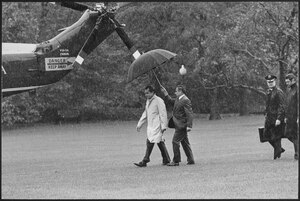
Manuel "Manolo" Sanchez served as President Richard Nixon's personal valet throughout his entire administration, providing intimate daily assistance from January 1969 until Nixon's resignation in August 1974. During the taping period of February 1971 to July 1973, Sanchez was a constant presence in the White House, managing the President's wardrobe, meals, and personal errands. Known for his fierce loyalty, Sanchez frequently appeared on the White House tapes interacting with Nixon, who treated him as a close confidant and sounding board amidst the growing pressures of the presidency.
President Nixon met with his personal valet, Manolo Sanchez, in the Oval Office to discuss the specific location of various documents. The brief exchange focused on administrative organization and the retrieval of paperwork necessary for the President's immediate use. Following these brief instructions, Sanchez departed the office.
President Nixon consulted with various staff members regarding administrative matters and staffing inquiries. The primary focus of the discussion involved evaluating the professional background and political reliability of Joseph E. Parker, a Washington insider with extensive experience in Congress and agricultural policy. Nixon sought to assess Parker's suitability for a potential role, specifically noting his Democratic affiliation and his reputation for being savvy on Capitol Hill.
President Nixon met with H.R. Haldeman and various staff members, including Peter Flanigan, Henry Kissinger, and John Ehrlichman, to deliberate on high-level personnel appointments, government reorganization, and legislative strategy. A primary focus was identifying a strong, business-oriented candidate for an ambassadorial role to navigate international economic negotiations and counter State Department bureaucracy. The group also discussed managing the President’s public image regarding economic policy, the Alaska pipeline, and Vietnam, while addressing the need to discipline administration officials who publicly diverged from official policy. The President emphasized a preference for direct, high-level policy control and instructed his staff to bolster communication efforts and strengthen the administration’s political messaging.
President Nixon met with H.R. Haldeman and Alexander Butterfield to discuss White House public relations strategies, including the coordination of scheduling for the President and First Lady Pat Nixon. The discussion emphasized the need to avoid overlapping events and focused on improving media coverage for administration initiatives, such as outreach to Black communities and upcoming policy messages on education and revenue sharing. Additionally, they reviewed recent press reactions to the situation in Laos and discussed potential future media appearances, including a possible educational television program on narcotics.
President Nixon met with his personal valet, Manolo Sanchez, in the Oval Office to coordinate logistics regarding the President’s daily schedule. The brief interaction focused on administrative arrangements for Nixon's upcoming appointments and personal movements. No significant policy decisions were made during this meeting.
President Nixon and H. R. Haldeman convened with senior advisors and staff to coordinate administrative messaging on foreign trade and economic policy, with a focus on enforcing stricter discipline among cabinet officers. The President also consulted Henry Kissinger on national security matters, specifically seeking to navigate the ongoing friction between Kissinger and Secretary of State William P. Rogers while managing the sensitive public relations aspects of the Vietnam War and the Laotian operation. Additionally, the President issued directives regarding internal staff management and requested an investigation into a recent security leak concerning the Strategic Arms Limitation Talks (SALT).
President Nixon met with Manolo Sanchez and Stephen B. Bull in the Oval Office to discuss logistical arrangements or personal scheduling matters. The brief recording consists primarily of room noise and muffled background dialogue, preventing a clear understanding of substantive policy decisions. The exchange concludes with a general acknowledgment regarding the need to proceed with current plans.
President Nixon met with his personal valet, Manolo Sanchez, in the Oval Office to discuss personal arrangements. The conversation focused on a logistical request regarding the President's coat. The brief interaction concluded with the two men departing the office immediately afterward.
President Nixon met with his personal valet, Manolo Sanchez, in the Oval Office for a brief informal interaction. The primary focus of the meeting was the serving of refreshments. No significant policy decisions or administrative actions were documented during this short exchange.
President Nixon met briefly with his personal valet, Manolo Sanchez, in the Oval Office. The two discussed lunch arrangements before departing together. This brief interaction reflects the routine personal logistical coordination between the President and his staff.
President Nixon met with Joe D. Waggonner, Jr., Juanita Morris Moody, John C. Whitaker, and Richard K. Cook to discuss oil production concerns in Louisiana and potential impacts on national energy policy. Waggonner introduced an official from the Louisiana Department of Conservation, who presented data suggesting that claims of artificially suppressed oil production were unfounded and explained the industry's struggle with declining drilling rates and rising costs. The President acknowledged the technical complexity of the issue and directed his staff, particularly John Whitaker, to coordinate a follow-up meeting with relevant administration officials to ensure a more informed approach to oil regulation.
President Nixon met with his former law partner Milton C. Rose to discuss private legal and personal matters, specifically the wills of Elmer and Momdouha Bobst. They reviewed executor arrangements for the Bobsts' estates and the future activation of the Elmer and Momdouha Bobst Foundation, ensuring that Nixon's role as a potential director would not create conflicts or adverse publicity. Additionally, the pair discussed the status of their former law firm, Mudge, Rose, Guthrie & Alexander, potential advisory roles for Elmer Bobst regarding national cancer research initiatives, and scheduling for upcoming White House events.
President Nixon met with journalist Henry Brandon to discuss the complexities of the modern presidency and the evolution of American foreign policy. The conversation covered the transition from the post-war era's clear geopolitical boundaries to the current need for pragmatic, sophisticated, and mature leadership in a world defined by nuclear parity and internal domestic challenges. Nixon reflected on his decision-making processes regarding Vietnam, Cambodia, and Laos, emphasizing his approach of maintaining perspective while navigating the constraints of a "new isolationism" and intense public scrutiny.
President Nixon met with his senior staff and advisors to discuss communication strategies for the administration's policy achievements and historical outreach. The group explored ways to better leverage the President's personal historical expertise, such as his recent presentation on John Quincy Adams, to improve public perception through televised forums rather than relying on the mainstream press. Nixon emphasized the need to bypass the press corps by speaking directly to key demographics, including the elderly and youth, while instructing his staff to maintain stricter control over who is permitted to discuss substantive policy on television.
President Nixon held a brief, informal meeting in the Oval Office with his personal valet, Manolo Sanchez. The interaction served as a routine check-in between the President and a member of his domestic staff. No substantive policy matters or administrative decisions were recorded during this brief encounter.
President Nixon and H. R. Haldeman met to coordinate upcoming staff meetings regarding domestic and foreign economic policy involving Henry Kissinger, Peter Peterson, and John Ehrlichman. Nixon also collaborated with staff members Marjorie P. Acker and Rose Mary Woods to finalize a personal letter addressed to British Prime Minister Edward Heath. The President explicitly directed that a copy of the correspondence be delivered to Ambassador Walter Annenberg for his personal files, while strictly prohibiting its distribution to the State Department.
President Nixon met with H.R. Haldeman and Ron Ziegler to coordinate political mobilization strategies following his March 4, 1971, press conference. The discussion focused on leveraging the President's recent media performance to promote his domestic agenda—specifically revenue sharing—while coordinating briefings with Nelson Rockefeller, George Romney, and John Connally. Additionally, they evaluated press reactions to the President's stance on the war in Laos and reviewed polling data regarding Democratic challengers.
President Nixon met with several advisors and staff to discuss a range of topics, including public relations, economic policy, and military strategy. John Connally provided updates on his efforts to stabilize the economy and manage relationships with key figures in the business and political sectors. Additionally, the President consulted with William H. Carruthers regarding the technical logistics and staging of future televised press conferences to improve his communication with the public.
President Nixon met with his personal valet, Manolo Sanchez, to coordinate his immediate schedule and personal logistics. The discussion served as a brief administrative interaction to facilitate the President's departure from the Oval Office. No significant policy matters or substantive political decisions were recorded during this brief encounter.
President Nixon met with his personnel and recruitment team, including Frederic Malek and H.R. Haldeman, to discuss strategies for improving the quality, loyalty, and management of administration staff. The President emphasized a need for aggressive recruitment of competent, goal-oriented individuals across government departments while downplaying the importance of rigid partisan affiliation, specifically noting his preference for capable conservative Democrats over liberal Republicans. The group identified several departments and agencies, such as Transportation and the Office of Intergovernmental Relations, where performance and personnel changes were deemed critical to the administration's effectiveness.
President Nixon met with Donald Rumsfeld to discuss Rumsfeld's future role within the administration, emphasizing the need for him to gain experience in foreign policy through a high-profile position such as Special Trade Representative or a diplomatic posting in Japan. Nixon stressed that Rumsfeld should prioritize positions that offer significant responsibilities and international travel to prepare him for potential future political roles, such as a Senate run in Illinois. The conversation also touched upon the political necessity of projecting strong leadership and effective communication, particularly in light of the Vice President's struggles to connect with younger voters and the public's perception of the administration's economic management.
President Nixon and Secretary of the Treasury John Connally met to discuss pressing economic and administrative issues, primarily the potential government loan guarantees required to prevent the financial collapse of the Lockheed Corporation. They also addressed the ongoing DuPont brokerage case and the need for internal reforms, including the potential for salary reductions among affected stakeholders. Nixon instructed Connally to coordinate with David Packard and others to develop a strategy for seeking Congressional authorization to provide the necessary financial stability for Lockheed.
President Richard M. Nixon met with his valet, Manolo Sanchez, in the Oval Office to address brief personal matters. The conversation was limited in duration and did not involve substantive policy discussions or administrative action items. Following the exchange, the President departed the office shortly thereafter.
President Nixon met with H. R. Haldeman and Henry Kissinger to discuss the progress of the Laotian military operation (Lam Son 719), the status of textile trade negotiations with Japan, and strategic communications regarding Vietnam troop withdrawals. They assessed the military situation in Laos, specifically reviewing enemy casualty and supply figures to evaluate the campaign's effectiveness. Additionally, the President reviewed his recent public appearance in Williamsburg and strategized with staff on how to better manage public opinion and press relations ahead of his April 1971 troop withdrawal announcement.
President Nixon and Press Secretary Ronald Ziegler met with technicians to coordinate the logistics for an upcoming interview with women journalists. The participants established strict ground rules for the session, limiting discussion topics to Pat Nixon’s birthday, the role of First Ladies, and women in politics. They also determined the technical setup for the interview and planned for the distribution of the transcript to journalists who were not in attendance.
President Nixon met with a group of female journalists in the Oval Office to discuss the role of the First Lady, his personal philosophy on leadership, and his family life. The conversation covered a range of topics, including Pat Nixon’s character and public stamina, the influence of political wives on their husbands, and the President's own daily habits and management of time. During the discussion, Nixon emphasized the importance of maintaining privacy while fulfilling the public responsibilities of the presidency.
President Nixon held discussions with H.R. Haldeman and John B. Connally regarding the management of the Lockheed corporation crisis and upcoming legislative strategies. The conversation focused on delegating authority for the Lockheed loan negotiations between Connally, Peter Flanigan, and the Defense Department, while also touching upon trade negotiations with Japan. Additionally, Nixon and his aides evaluated the effectiveness of presidential communication methods, specifically questioning the impact of frequent minor speeches versus targeted, high-profile televised appearances.
President Richard Nixon met with his personal valet, Manolo Sanchez, in the Oval Office for a brief discussion. The conversation remains restricted due to the presence of personal and returnable material, and the transcript is largely undefined. No substantive policy decisions or administrative actions were recorded during this brief interaction.
Manolo Sanchez met with unidentified individuals in the Oval Office to conduct brief, routine business. The available records for this recording contain no substantive dialogue, as the primary segment was withdrawn for non-historical reasons. No significant policy decisions or strategic developments occurred during this brief encounter.
H. R. Haldeman met with Manolo Sanchez in the Oval Office to engage in a brief, non-substantive discussion. The conversation was limited to small talk regarding the weather. No policy matters or official administrative decisions were addressed during this interaction.
President Nixon met with his valet, Manolo Sanchez, to coordinate logistics for an upcoming trip involving close friends Jack and Helene Drown. The discussion focused on scheduling details, travel arrangements for the First Lady, and the packing of suitcases for a departure planned for March 21, 1971. This brief exchange served to finalize the personal itineraries and preparation requirements for the President's associates.
President Nixon met with Federal Reserve Chairman Arthur F. Burns to discuss the state of the national economy and manage public perception of their working relationship. Nixon emphasized the importance of maintaining a united front to avoid fueling media speculation regarding potential policy disagreements, while Burns outlined his concerns over a looming international monetary crisis and interest rate strategies. The two agreed to maintain close, private coordination on economic policy while keeping their options open regarding further fiscal stimulus until April economic data became available.
President Nixon met with his personal valet, Manolo Sanchez, in the Oval Office for a brief, three-minute interaction. The conversation consisted entirely of a withdrawn segment classified as personal and returnable material. No substantive policy discussions or administrative actions were recorded during this brief encounter.
In this meeting, President Nixon, John Mitchell, and Thomas Pappas discussed domestic and international affairs, focusing on the administration's political challenges and the need to maintain American global influence. Nixon expressed frustration with domestic critics, including intellectuals and the media, while reaffirming his commitment to a principled end to the Vietnam War that would protect U.S. credibility and honor. They also reviewed geopolitical situations in Greece, Italy, and Yugoslavia, with Pappas providing advisory input on foreign relations and the political climate abroad. The President signaled his resolve to pursue his policy agenda despite domestic opposition, specifically mentioning his upcoming meeting with the Congressional Black Caucus.
President Richard Nixon met with his valet, Manolo Sanchez, at the Old Executive Office Building to coordinate administrative logistics for the day. The discussion focused on the President's personal schedule and the handling of specific documents, including a reference to an unknown document described as a yellow copy. The brief exchange centered on managing the President's immediate movements and operational protocols.
President Nixon met with his personal valet, Manolo Sanchez, in the Old Executive Office Building to handle a brief personal request. The primary purpose of the interaction was for the President to ask Sanchez to bring him coffee. The exchange was short and focused exclusively on this administrative task.
President Nixon met with his personal valet, Manolo Sanchez, to address routine logistical matters. The brief interaction centered on the President's preference regarding his lunch request. No major policy discussions occurred during this exchange.
President Nixon met with his valet, Manolo Sanchez, in the Old Executive Office Building to coordinate the President's upcoming afternoon schedule. The brief discussion focused on logistical arrangements and the timing of Nixon’s next appointments. No significant policy decisions were made, as the interaction was limited to personal assistance and time management.
President Nixon met with his valet, Manolo Sanchez, in the Old Executive Office Building to discuss the placement of a silver plate. The exchange, conducted briefly and partially in French, centered on the physical arrangement of this item within the office. The interaction concluded with the President confirming the item's new location as directed by Sanchez.
President Nixon consulted with Rose Mary Woods to gauge the public and political response to his televised address on Southeast Asia. The conversation highlighted positive reactions from key figures, including Vice President Spiro Agnew, Secretary of State William P. Rogers, and Attorney General John Mitchell, while noting the President's personal emotional investment in the speech. Nixon decided to place follow-up calls to Agnew, Rogers, and Hobart D. Lewis to acknowledge their support and discuss the strategic reception of his remarks.
President Nixon initiates a brief telephone call to reach evangelical leader Billy Graham. The exchange primarily involves the President coordinating with the White House operator to connect with Graham, with staff members Manolo Sanchez and an unidentified individual present in the room. No substantive policy discussions occur as the recording documents the logistical setup of the requested communication.
President Nixon consulted with his close associate Charles G. "Bebe" Rebozo to gauge public reaction to his recent televised address regarding the war in Southeast Asia. The discussion highlighted the effectiveness of the President's personal anecdote about young Kevin Taylor and the utility of using visual charts to demonstrate his progress in ending the conflict. Rebozo advised Nixon to set a firm deadline for the Paris peace negotiations, an idea the President indicated he intended to pursue within the coming months.
Henry A. Kissinger and White House valet Manolo Sanchez engaged in a brief, informal interaction within the Oval Office. The discussion centered on personal social plans, specifically regarding an unidentified man taking a woman to the movies and Sanchez's opinion on the matter. No policy decisions or historical actions were recorded during this brief exchange.
President Nixon and his valet, Manolo Sanchez, discuss personal arrangements and scheduling, specifically regarding an upcoming trip involving the President and the First Lady. The conversation touches upon the logistics of a boat, reflecting the informal and personal nature of their professional relationship. No major policy decisions or executive actions were established during this exchange.
President Nixon met with departing Taiwan Ambassador Chow Shu-kai and later with Anna C. Chennault to discuss U.S. foreign policy toward Asia, specifically balancing commitments to Taiwan with new diplomatic and trade overtures toward the People's Republic of China. Nixon emphasized his administration's continued support for Taiwan despite minor symbolic trade relaxations, while also coordinating private channels to maintain communication with Chiang Kai-shek and South Vietnamese President Nguyen Van Thieu. The participants explored utilizing Chennault as an unofficial liaison to navigate regional political sensitivities and concerns regarding U.S. policy shifts.
Henry A. Kissinger met with White House valet Manolo Sanchez in the Oval Office for a brief exchange. The recording consists entirely of withdrawn material, leaving the substantive content of their interaction unknown. No specific policy decisions or significant developments were recorded.
President Nixon met with Secretary of State William Rogers and several staff members to discuss two primary agendas: the public relations strategy for Tricia Nixon’s upcoming wedding and the administration's foreign policy maneuvering regarding China and Vietnam. Nixon emphasized the need for a choreographed, graceful presentation of the wedding to the press while explicitly rejecting over-exposure on talk shows. Regarding international affairs, the participants discussed the necessity of capitalizing on the ongoing withdrawal from Vietnam to secure domestic credit for broader diplomatic achievements, including the recent opening to China and progress on arms control, while maintaining a firm stance on security and defense appropriations.
President Nixon, H.R. Haldeman, Henry Kissinger, and John Scali met to integrate Scali into the White House team, specifically to manage press relations and provide strategic counsel on foreign policy. The President emphasized a cautious, long-term approach to publicizing his China initiative, prioritizing secret diplomatic channels over immediate publicity to avoid alarming the Soviet Union. They also discussed future personnel changes within the State Department and Defense Department, the strategy for a potential summit with the Soviets, and the ongoing handling of the Vietnam War.
President Nixon met with his personal valet, Manolo Sanchez, in the Old Executive Office Building to discuss the President's upcoming professional schedule. The brief interaction focused on logistics regarding an unspecified service or event. No significant policy decisions were made during this routine administrative coordination.
President Nixon met with his personal valet, Manolo Sanchez, in the Executive Office Building to discuss mundane matters, specifically concerning the local weather. The brief interaction reflects the routine personal exchanges between the President and his long-time aide. No significant policy decisions or official government actions were recorded during this brief segment.
President Nixon held a broad-ranging meeting with H. R. Haldeman, John Ehrlichman, George Shultz, Henry Kissinger, and John Connally to discuss domestic and foreign policy priorities, including economic strategy, upcoming personnel changes, and bureaucratic management. The participants reviewed positive retail sales and GNP growth, evaluated the political viability of energy and environmental proposals, and strategized on handling potential civil service and diplomatic appointments. A significant portion of the discussion focused on managing the administration's political image, navigating legislative obstacles in Congress, and addressing the status of long-serving officials like J. Edgar Hoover.
President Nixon met with his valet, Manolo Sanchez, to coordinate the President's evening schedule at the White House residence. During the brief exchange, Nixon directed Sanchez to retrieve specific notes needed for his personal use. This meeting served as a routine administrative interaction to facilitate the President's transition from his office to his living quarters.
President Nixon met with his personal valet, Manolo Sanchez, for a brief, informal conversation in the Old Executive Office Building. The dialogue appears to center on casual remarks regarding acquaintances and employment matters. No significant policy decisions or official government actions were recorded during this short exchange.
President Nixon met with H. R. Haldeman to discuss political strategy for the Anti-Ballistic Missile (ABM) vote, emphasizing the need to avoid early deals and keep the administration's position firm until the final vote. Following the swearing-in of William J. Casey as SEC Chairman, Nixon conferred with his staff and Arthur F. Burns on domestic economic management, public relations, and the importance of projecting a more passionate and committed image to the public. Finally, Nixon met with Dr. Rainer Barzel of the German Christian Democratic Union to discuss the status of Berlin negotiations and the political implications of Willy Brandt's Ostpolitik, during which Nixon reaffirmed the United States' commitment to maintaining a federal presence in Berlin.
President Nixon met with his personal valet, Manolo Sanchez, in the Old Executive Office Building for a brief, informal interaction. The exchange focused on minor personal logistics and the status of the President's wristwatch. No significant policy decisions or historical developments resulted from this brief communication.
President Richard Nixon met with his longtime personal valet, Manolo Sanchez, at the Executive Office Building for a brief private exchange. While the specific details of their discussion remain undocumented due to the brevity and lack of transcript for this encounter, the meeting reflects the routine administrative and personal interactions between the President and his primary valet. No significant policy decisions or executive actions are recorded as stemming from this brief engagement.
President Nixon met with Mark I. Goode to discuss the logistical planning and personnel requirements for an upcoming reception for the diplomatic corps. The conversation centered on establishing strict protocols and managing the guest list, which included considerations for staff, William P. Rogers, various members of Congress, and White House communications aides. No definitive policy decisions were recorded, though Nixon emphasized the necessity of implementing a hard rule regarding event management.
President Nixon met with his personal valet, Manolo Sanchez, in the Old Executive Office Building to review the President's upcoming daily schedule. The brief discussion served as an administrative check-in to coordinate official movements and time management. No significant policy decisions were recorded during this brief encounter.
President Nixon met with his personal valet, Manolo Sanchez, to discuss the logistics of the President's upcoming schedule and personal arrangements. The brief interaction focused on timing and environmental conditions, specifically referencing a recent issue involving smoke or fire in a chimney. The conversation concluded with the President preparing to depart his office.
President Nixon met with his personal valet, Manolo Sanchez, in his office at the Old Executive Office Building. The brief interaction focused on the President requesting the retrieval of his briefcase from another location. Sanchez complied with the instruction before departing the office.
President Nixon met with his valet, Manolo Sanchez, to coordinate administrative directives for his staff. The President tasked Sanchez with relaying instructions to Rose Mary Woods, Marjorie P. Acker, and a third individual identified as 'Muck' to initiate a parade process. Additionally, the brief exchange included a request for coffee.
President Nixon met with H.R. Haldeman and Henry Kissinger to strategize on public relations, presidential image, and the management of sensitive foreign and domestic policies. The discussion focused on projecting an image of "courage, boldness, and guts" in response to anti-war sentiment and the upcoming May Day demonstrations, while simultaneously planning for the administration's recent trade initiatives with the People's Republic of China. Nixon also expressed frustration with his Cabinet's lack of outspoken loyalty and instructed his staff to push a more coordinated, positive narrative regarding his leadership and the state of the economy.
President Nixon met with his personal aide, Manolo Sanchez, in the Old Executive Office Building to discuss the current weather conditions. The brief exchange focused on evaluating the temperature and precipitation outside, serving as a casual check-in regarding the day's environment. No major policy decisions or administrative actions were addressed during this brief interaction.
President Nixon and his valet, Manolo Sanchez, engage in a brief, informal discussion concerning the etymology and cultural associations of certain words and religious institutions. The exchange focuses on the President's curiosity regarding the origins of specific terminology and the nuances of religious identity. No major policy decisions or significant administrative actions result from this personal dialogue.
President Nixon met with his valet, Manolo Sanchez, in the Old Executive Office Building to discuss personal staff matters. During the brief interaction, the President inquired about the identity of a woman he had encountered or considered for entry into his office space. The conversation reflects the President's internal administrative oversight regarding visitors and the management of his personal quarters.
President Nixon met with his personal valet, Manolo Sanchez, in the Old Executive Office Building to discuss the daily care and exercise of the President’s Irish Setter, King Timahoe. The brief exchange focused exclusively on coordinating a walk for the dog, reflecting the informal and personal nature of their interaction. No policy or administrative decisions were addressed during this short discussion.
President Nixon and his valet, Manolo Sanchez, engage in a brief, informal discussion regarding Sanchez's schedule and the current weather conditions. The conversation highlights the President's demanding workload and his perception of being confined to the office throughout the weekends. No formal policy decisions or official actions are recorded during this exchange.
President Nixon and Henry Kissinger met to strategize for an upcoming press conference with the American Society of Newspaper Editors and to coordinate their diplomatic approach toward the People's Republic of China, Vietnam, and the Soviet Union. The President emphasized a cautious, step-by-step strategy for diplomatic normalization with China to avoid appearing overly anxious, while also discussing the ongoing conflict in India and Pakistan and the necessity of maintaining neutrality. Kissinger was instructed to coordinate with Senator Mike Mansfield regarding these initiatives, and the two men reviewed communication tactics for managing the press and potential congressional inquiries.
President Nixon met with his longtime personal valet, Manolo Sanchez, in the Old Executive Office Building. The brief interaction focused on facilitating Sanchez’s access to the President's office. This conversation highlights the routine administrative and personal arrangements required to manage the President’s daily schedule and inner circle.
Manolo Sanchez met with an unknown woman in the President's office to facilitate administrative coordination regarding the President’s daily schedule. The discussion focused on organizing an upcoming meeting between the President and an unidentified individual. No further significant policy decisions or substantive actions were recorded during this brief encounter.
Secret Service agents and White House valet Manolo Sanchez met briefly in the Oval Office to facilitate logistical instructions. The interaction occurred as part of a routine transition or security coordination involving the President's personal staff. No substantive policy matters were recorded, as the brief exchange primarily involved administrative movement within the office.
President Nixon met with his personal valet, Manolo Sanchez, in the Old Executive Office Building to handle a brief, routine request. The conversation lasted only three seconds, precluding any substantive discussion of policy or political strategy. No significant developments or administrative decisions resulted from this limited interaction.
President Nixon met with his personal valet, Manolo Sanchez, in the Old Executive Office Building to handle personal affairs. The brief interaction focused on a specific request involving the handling or transport of personal items referred to as "drops." No significant policy decisions were recorded during this short, private engagement.
President Nixon met with his personal valet, Manolo Sanchez, in the Old Executive Office Building to request refreshments. The brief interaction focused solely on the President's request for coffee. No policy matters or significant administrative decisions were addressed during this short exchange.
President Richard Nixon met with his personal valet, Manolo Sanchez, in the Old Executive Office Building. The brief interaction consisted of a specific request made by the President to his aide. No further details regarding the nature of the request or subsequent policy developments are available due to the limited duration of the recording.
President Nixon summoned his personal valet, Manolo Sanchez, to his office in the Old Executive Office Building for a brief, informal interaction. The exchange was extremely short in duration and lacked substantive discussion regarding policy or administrative matters. No formal decisions or significant actions were recorded during this brief encounter.
President Nixon met with his personal valet, Manolo Sanchez, in the Old Executive Office Building to coordinate administrative logistics. The discussion centered on the President's upcoming schedule and the handling of his briefcase. The interaction concluded with the pair departing the office together shortly after 8:00 pm.
President Nixon consulted with his aide Manolo Sanchez regarding the strategic significance of retail sales data. The brief exchange highlights the President's focus on economic indicators as a priority for his administration. No major policy shifts resulted from the call, though it emphasizes the President's direct involvement in monitoring economic trends.
Stephen B. Bull and Manolo Sanchez met in the Oval Office, joined by an unidentified individual, to discuss logistical arrangements regarding forthcoming communications with Charles Rochester. The group also addressed administrative matters concerning office furnishings and coordination with the General Services Administration. The conversation concluded with a brief exchange regarding the setup and appearance of cultural election materials.
President Nixon met with H.R. Haldeman, Charles Colson, and other staff members to discuss political messaging strategies and the management of congressional relations. The group focused on fostering a more optimistic, disciplined tone among Republican supporters while strategizing ways to critique opposition figures like Senator Edmund Muskie. Additionally, they deliberated on media presentation tactics, specifically regarding public appearances with members of Congress and how to effectively highlight the administration's policy successes.
President Nixon met with his valet, Manolo Sanchez, in the Oval Office to discuss the President's daily schedule. The brief interaction focused primarily on coordinating logistics for the President's lunch. No significant policy decisions were recorded during this brief encounter.
President Nixon met with his personal valet, Manolo Sanchez, in the Old Executive Office Building to review the President's upcoming schedule. The discussion centered on logistics and travel arrangements for the President's departure from the office. No significant policy decisions were recorded during this brief administrative exchange.
President Nixon met briefly with his personal valet, Manolo Sanchez, in the Old Executive Office Building to discuss the President’s upcoming schedule and personal comforts. The conversation centered on the ambient temperature on the porch, leading to Nixon’s decision to relocate his activities there. Sanchez also provided the President with a cigar during the brief interaction.
President Nixon met with his personal valet, Manolo Sanchez, in the Old Executive Office Building to address logistics regarding a telephone located outside the office. The brief exchange focused on verifying the location and accessibility of the phone. No significant policy decisions were made during this logistical consultation.
President Nixon met with Rose Mary Woods, Ronald Ziegler, and others to discuss administrative matters, personal gifts, and the President's public image. The conversation touched upon the positive public reception of the President's recent remarks on welfare and foreign policy, as well as the need to monitor political rivals like Ted Kennedy through informal channels. Additionally, the group coordinated scheduling details and reviewed logistics regarding upcoming travel and correspondence.
President Richard M. Nixon met briefly with his personal valet, Manolo Sanchez, in the Oval Office. The recording consists entirely of a withdrawn segment, precluding any substantive discussion of policy or administrative action. No significant decisions or developments were captured during this brief interaction.
President Nixon met with his personal valet, Manolo Sanchez, to coordinate the logistics of the President's upcoming afternoon schedule. The two briefly discussed the timing for a future appointment, ensuring alignment on the day's agenda. Additionally, the President made a brief, ambiguous remark regarding feedback he had received from an unidentified group concerning his personal well-being.
President Nixon met with his personal valet, Manolo Sanchez, in the Old Executive Office Building to discuss the President's daily schedule. The brief interaction focused on logistical coordination and administrative movements for the President's upcoming activities. No substantive policy decisions were recorded during this short meeting, which concluded shortly before 3:08 pm.
President Nixon met with his personal valet, Manolo Sanchez, in the Old Executive Office Building to discuss personal scheduling and logistics. The brief interaction focused on the President's upcoming commitments and arrangements for the remainder of the day. No substantive policy decisions were reached during this administrative check-in.
President Richard Nixon met with his personal valet, Manolo Sanchez, in the Executive Office Building for a brief private consultation. The discussion served as an opportunity for the President to provide specific instructions to his long-time aide. Although no transcript is available to confirm the precise subject matter, the brief encounter underscores the routine administrative and personal coordination maintained between Nixon and his immediate domestic staff.
President Richard Nixon met with his personal valet, Manolo Sanchez, to coordinate scheduling and administrative matters. The brief discussion focused on managing the President's immediate agenda and transitions between meetings. No major policy decisions were reached, as the dialogue remained limited to routine logistical arrangements.
President Richard Nixon met with his longtime valet, Manolo Sanchez, in the Old Executive Office Building. While no transcript is available to document the specific substance of their exchange, the meeting serves as an example of the frequent, informal interactions between the President and his personal staff. The conversation concludes with Sanchez departing the office shortly after the brief encounter began.
President Nixon met with his personal valet, Manolo Sanchez, in the Old Executive Office Building for a brief administrative interaction. The conversation was limited in duration and, due to the presence of a withdrawn segment, lacks a public record of substantive policy discussion. No specific directives or significant historical actions were recorded during this brief encounter.
President Nixon met with H.R. Haldeman, John Mitchell, and other administration officials to coordinate political strategy regarding ongoing anti-war demonstrations and personnel appointments. The group discussed ensuring peaceful compliance with court orders concerning protestors, while Mitchell provided an update on staffing, including plans to recruit Ken Rush and Vernon Walters for key administration roles. Nixon also instructed Mitchell to delay antitrust litigation against television networks to avoid negative political fallout following the Pentagon Papers controversy, while maintaining his overall goal of aggressively challenging the media establishment.
President Nixon and Henry Kissinger discussed a Tass report regarding Sino-Soviet tensions and the strategic implications for U.S. foreign policy. Kissinger shared an unsolicited, optimistic appraisal from Sir Robert Thompson, who argued that recent military operations in Laos had crippled North Vietnamese offensive capabilities through 1972 and highlighted the professional improvement of South Vietnamese forces. Additionally, the two reviewed concerns regarding potential troop withdrawals of Korean forces in Vietnam and noted a positive trend in declining casualty reports.
President Nixon met with Gerald Ford, John Byrnes, Elliot Richardson, and other key administration officials to develop a strategy for the administration's health insurance bill. The discussion focused on the political and economic risks of placing the financial burden of the plan on small business owners and marginal employers. To address these concerns and counter potential Democratic opposition led by Edward Kennedy and Wilbur Mills, the group decided to introduce a bill that signals the administration's awareness of the economic impact on small businesses while keeping options open for committee modifications.
President Nixon and Treasury Secretary John Connally discussed economic stability, the potential federal bailout of Lockheed, and various Cabinet personnel changes. They examined strategies to restore public confidence in the economy and assessed the leadership vacuum within Congress. Additionally, the President and Connally evaluated potential candidates for Cabinet and agency roles, emphasizing the need for effective 'salesmanship' and public relations skills in promoting the Administration's agenda.
Manolo Sanchez met with an unidentified individual in the Oval Office to discuss the status of several administrative tasks. The exchange centered on the completion of seven specific items, though the broader context remains obscured due to the limited duration and poor audio quality of the recording. No further policy developments or significant decisions were documented during this brief interaction.
President Nixon met with Secretary of State William Rogers and H. R. Haldeman to finalize the agenda and strategy for Rogers's upcoming diplomatic trip to the Middle East, which included stops in London, Paris, Ankara, Saudi Arabia, Egypt, and Israel. The participants discussed the need for the U.S. to maintain a balance of power while managing difficult negotiations between Israel and Egypt, particularly regarding the Suez Canal. Additionally, the President pressed Rogers to address the Turkish heroin trade during his visit and reviewed the political fallout concerning Vice President Agnew's recent remarks on China policy and the ongoing anti-war protests in Washington.
President Nixon met with Manolo Sanchez and Stephen B. Bull to review personal photographs and discuss the President's upcoming schedule. The conversation focused on the visual quality of recent pictures and the logistical timing of a requested meeting with John H. Buchanan, Jr. regarding the Alabama Medal of Honor Society. Following these brief administrative updates, both Sanchez and Bull departed the Oval Office.