Nixon, Richard M. (President)
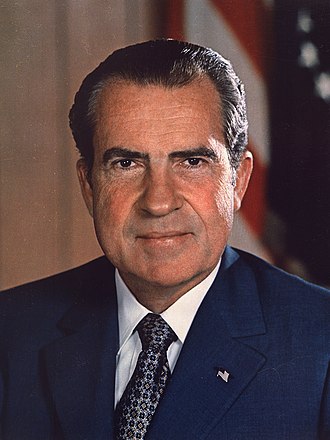
Richard M. Nixon served as the 37th President of the United States from January 1969 until his resignation in August 1974. In February 1971, he ordered the installation of a secret voice-activated taping system in the White House to preserve a historical record of his administration. Until the system's existence was revealed and dismantled in July 1973, the tapes captured Nixon directing major foreign policy initiatives, such as the opening to China, as well as his central role in the Watergate cover-up.
What Nixon talks about on the tapes
White House operations 4,718Presidential scheduling 2,225Public relations 1,784Presidential schedule 1,782Vietnam War 1,693Logistics 1,650Manolo Sanchez 1,626White House communications 1,400White House administration 1,399Presidential communication 1,243Henry Kissinger 1,191Foreign Policy 1,183
Conversations (21,010)
— Page 3 of 211President Nixon met with his key economic advisors—John Connally, Arthur Burns, George Shultz, and Paul McCracken—to discuss urgent financial matters and the administration's public messaging strategy. The conversation covered the potential failure of the Lockheed-Rolls-Royce deal, the stability of the DuPont brokerage firm, and rising pressure to increase milk price supports for political leverage. Throughout the meeting, Nixon emphasized the need for internal discipline, a unified public stance on economic policy, and the projection of confidence to stabilize the markets and improve public perception.
President Nixon met with his aides and personal physician, General Walter Tkach, to coordinate his daily schedule and manage administrative logistics. The discussion centered on the President's upcoming appointments and the orchestration of an Irish-themed social event at the White House. Nixon considered briefly greeting Jack Mulcahy, who was on-site for meetings regarding the event's planning and media analysis.
President Nixon met with several advisors and staff to discuss a range of topics, including public relations, economic policy, and military strategy. John Connally provided updates on his efforts to stabilize the economy and manage relationships with key figures in the business and political sectors. Additionally, the President consulted with William H. Carruthers regarding the technical logistics and staging of future televised press conferences to improve his communication with the public.
President Nixon met with his personal valet, Manolo Sanchez, to coordinate his immediate schedule and personal logistics. The discussion served as a brief administrative interaction to facilitate the President's departure from the Oval Office. No significant policy matters or substantive political decisions were recorded during this brief encounter.
President Nixon and Robert Finch discussed the political fallout from Nixon's March 4 press conference, focusing on public reception of his Vietnam withdrawal policies and his ability to handle contentious Q&A sessions. Nixon expressed confidence in his mastery over the press and suggested that his administration should highlight the contrast between his record and the escalation of the Vietnam War under the Kennedy and Johnson administrations. They also briefly touched upon the political risks of Governor Ronald Reagan's Medicaid policies, the importance of maintaining a controlled frequency of televised press events, and the need for a robust strategy to win over youth voters.
President Nixon held a brief, two-second meeting in the Oval Office with an unidentified individual. Given the extremely short duration of the encounter and the withdrawal of materials classified as personal and returnable, the interaction appears to have been limited to a brief exchange or document hand-off. No substantive discussion or policy decisions were recorded during this engagement.
President Nixon instructed the White House operator to place an outgoing call to Charles W. Colson. This brief communication served as a logistical bridge to facilitate a direct discussion between the President and his Special Counsel. No policy matters or further substantive actions were recorded during this brief administrative exchange.
President Nixon met with his senior advisors, including H. R. Haldeman and Henry Kissinger, to review administrative priorities following his March 4, 1971, press conference. The discussion focused on managing public and media reactions to the Vietnam War and Laos operations, as well as addressing ongoing Middle East diplomatic developments. Additionally, Kissinger updated the President on his efforts to challenge anti-administration sentiment among the academic and policy "establishment" during a recent appearance at the Brookings Institution.
President Nixon met with his National Security Council and key cabinet officials to receive a high-level briefing on developments in Soviet strategic capabilities, particularly concerning new ICBM silo construction and ballistic missile test programs. The participants evaluated the implications of these technological advancements for U.S. defense posture, including the necessity of maintaining a robust anti-ballistic missile (ABM) system. Discussions emphasized the need for a coordinated approach to strategic negotiations and the potential impact of Soviet military growth on current arms limitation efforts.
President Nixon met with H. R. Haldeman, Frederic Malek, Daniel Kingsley, and Bill Horton to evaluate the performance and potential of various White House staff members. The discussion focused on identifying high-performing personnel, such as John Dean and William Timmons, and determining how to better utilize their specific political and administrative talents. The group emphasized the need to optimize staffing levels and strategically deploy key advisors to strengthen the administration's political capabilities.
President Nixon met with his personnel and recruitment team, including Frederic Malek and H.R. Haldeman, to discuss strategies for improving the quality, loyalty, and management of administration staff. The President emphasized a need for aggressive recruitment of competent, goal-oriented individuals across government departments while downplaying the importance of rigid partisan affiliation, specifically noting his preference for capable conservative Democrats over liberal Republicans. The group identified several departments and agencies, such as Transportation and the Office of Intergovernmental Relations, where performance and personnel changes were deemed critical to the administration's effectiveness.
President Nixon and Alexander P. Butterfield met to coordinate the President's upcoming schedule and administrative engagements. The discussion focused on securing time for meetings with Admiral Thomas H. Moorer and National Security Advisor Henry A. Kissinger. This brief exchange served to finalize the logistical arrangements for these high-level national security consultations.
President Nixon met with his aide, Stephen B. Bull, to briefly discuss matters pertaining to Donald H. Rumsfeld. The short exchange centered on Rumsfeld's current administrative arrangements and his activities within his office. No major policy decisions were recorded during this brief encounter.
President Nixon initiates a brief request for the White House operator to place a telephone call to Alexander P. Butterfield. The President specifically requests that the operator connect him to an individual referred to as Mario. This exchange serves as a routine administrative coordination to facilitate a direct communication between the President and his deputy assistant.
President Nixon and Alexander P. Butterfield met to coordinate the delivery of two drafted speeches prepared by William Safire. Nixon requested that both documents be sent to his office for immediate review. The pair specifically discussed the status of a speech scheduled for an upcoming engagement in Newport to ensure its completion and availability.
President Nixon met with Donald Rumsfeld to discuss Rumsfeld's future role within the administration, emphasizing the need for him to gain experience in foreign policy through a high-profile position such as Special Trade Representative or a diplomatic posting in Japan. Nixon stressed that Rumsfeld should prioritize positions that offer significant responsibilities and international travel to prepare him for potential future political roles, such as a Senate run in Illinois. The conversation also touched upon the political necessity of projecting strong leadership and effective communication, particularly in light of the Vice President's struggles to connect with younger voters and the public's perception of the administration's economic management.
President Nixon and Alexander P. Butterfield met to briefly review the President’s daily schedule and upcoming obligations. The discussion focused on coordinating meetings with Republican Congressional leadership, cabinet members George P. Shultz and Peter G. Peterson, and potential outreach to Daniel H. Kuykendall. The primary action items involved clarifying the timing and logistical arrangements for these various administrative appointments and communications.
President Nixon met with Representative Daniel H. Kuykendall to express gratitude for his legislative support and his efforts regarding international assistance programs. The brief discussion highlighted the President's appreciation for Kuykendall's work, including his ongoing contributions to administration goals. The meeting served as a brief gesture of goodwill and encouragement for the congressman’s continued cooperation.
President Nixon and H. R. Haldeman met to coordinate the President's upcoming schedule, focusing on press coverage and a scheduled meeting with Republican Congressional leadership. The discussion shifted to the performance of Peter M. Flanigan, with Nixon defending Flanigan against criticism regarding his handling of complex negotiations involving Japanese textiles, oil, and airlines. Nixon emphasized the need for disciplined, ruthless internal coordination to support Flanigan’s ongoing efforts.
President Nixon met with Republican congressional leaders and cabinet members to discuss rural development initiatives and solicit support for the administration's policy agenda. Secretary of Agriculture Clifford Hardin and staff provided an extensive briefing on the status of rural America, highlighting demographic shifts and explaining the mechanics of proposed federal revenue-sharing programs designed to foster economic growth. Participants also reviewed legislative priorities, including the upcoming vote on the supersonic transport (SST) appropriation and other pending congressional business.
President Nixon and H.R. Haldeman discussed administrative scheduling, including upcoming meetings with Congressional leaders like Mike Mansfield, and reviewed recent polling data regarding the Vietnam War and the Laos operation. They analyzed the effectiveness of the administration's public relations efforts, with Nixon emphasizing the need for Cabinet members and Congressional allies to take a more proactive role in defending administration policies. Additionally, they evaluated potential staffing and media strategies, noting the importance of maintaining credibility and focus amid ongoing criticism of the military incursion.
Stephen B. Bull met with President Nixon to discuss adjustments to the President’s daily schedule. The primary focus of the brief conversation was the logistical coordination of a photo opportunity with the press. Bull sought the President's approval for this media arrangement to influence public perception.
President Nixon met with several astronauts and staff members to review their recent visits to college campuses across the country. The participants discussed student attitudes toward the space program, the Vietnam War, and the current political climate, noting a divide between the idealism of the student body and the perceived negative influence of the "Establishment" and faculty. Nixon and the astronauts debated strategies for engaging youth, emphasizing the importance of space exploration as a vital expression of national spirit and greatness.
President Nixon met with H. R. Haldeman and Alexander Butterfield to discuss administration strategy, specifically focusing on how to effectively communicate the President’s leadership to the public. The discussion emphasized that domestic policy initiatives and specific issues like the Vietnam War carry less political weight than the perception of Nixon’s personal character and leadership qualities. Consequently, Nixon and Haldeman determined that they must adopt a more aggressive, strategic approach to dismantle the credibility of political opponents and improve the administration’s public relations efforts.
President Nixon met with his key advisors to strategize on complex textile trade negotiations with Japan, focusing heavily on the complicating influence of Representative Wilbur Mills. The participants evaluated the viability of voluntary Japanese import controls versus potential restrictive domestic legislation. Nixon and his team sought to coordinate their administrative position to balance industry pressure, congressional involvement, and diplomatic relations with the Japanese government.
President Nixon met with representatives from the American Association of Retired Persons (AARP) to discuss the administration's commitment to the elderly and the outcomes of the White House Conference on Aging. The conversation centered on the challenges of retirement, medical care, and welfare reform, while drawing parallels between the needs of the aged and the younger generation. Nixon emphasized the importance of improving the quality of life for senior citizens and expressed his support for legislative follow-up on conference recommendations.
President Nixon met with his aide Stephen B. Bull to review and refine his daily schedule, specifically coordinating meetings with key advisors Henry Kissinger, John Ehrlichman, and George Shultz. They also discussed logistical arrangements for professional photography during these sessions, specifically mentioning White House photographer Ollie Atkins. This brief coordination served to organize the President's upcoming appointments and manage the visual documentation of high-level meetings.
President Nixon and H.R. Haldeman met with various staff members to analyze recent public opinion polls and strategize on ways to bolster the President’s credibility regarding his Vietnam War policy and foreign relations. The participants evaluated the public impact of events like the Laos operation and the President's recent press conferences, while also discussing the development of a more robust public relations effort involving key cabinet members and advisors. Additionally, the conversation addressed ongoing textile trade negotiations with Japan and administrative staffing concerns, including potential roles for Peter G. Peterson and Donald H. Rumsfeld.
President Nixon met with his aide Stephen B. Bull to review and refine his daily schedule for upcoming meetings. The discussion centered on coordinating sessions with key advisors, including Harry Dent, Peter Flanigan, Henry Kissinger, John Ehrlichman, and George Shultz. A primary focus of the planned deliberations with Ehrlichman and Shultz was the ongoing development of welfare reform policy.
President Nixon met with his aide Stephen B. Bull to coordinate upcoming appointments on his daily schedule. The discussion focused on arranging meetings with key administration figures, specifically Harry S. Dent and Peter M. Flanigan. This exchange served as a routine administrative session to manage the President's priorities and workflow for the day.
President Nixon, Harry Dent, and Peter Flanigan discussed the status of delicate textile trade negotiations with Japan and the administration's strategy regarding potential legislative action. The group evaluated the influence of Representative Wilbur Mills and other key industry stakeholders, aiming to align domestic political support with the administration’s trade goals. Nixon finalized plans for a forthcoming public statement to address voluntary restraints, ensuring the administration's stance on trade and monitoring remained distinct from congressional maneuverings.
President Nixon met with his aide Stephen B. Bull in the Oval Office for a brief three-minute consultation. While a detailed transcript is unavailable, the interaction served as a logistical check-in during the workday. No specific policy developments or major executive decisions were recorded during this short interval.
President Nixon and Henry Kissinger met to discuss persistent tensions between the White House and the State Department, specifically addressing Kissinger’s frustrations with Secretary of State William Rogers and his own potential resignation. The conversation encompassed broader foreign policy concerns, including the military situation in Laos, trade negotiations, and strategic arms limitations. Nixon reaffirmed his support for Kissinger’s role, prioritizing the need to manage bureaucratic leaks and unfavorable media coverage while coordinating future diplomatic strategies for Vietnam and the Middle East.
President Richard Nixon met with his personal aide, Stephen B. Bull, for a brief administrative consultation in the Oval Office. The discussion focused on coordinating the President's personal schedule and logistical arrangements for upcoming commitments. No further details regarding specific decisions were recorded due to the brief nature of the encounter.
President Nixon met with Senator Robert A. Taft, Jr., Richard Dusterberg, and Mrs. Dusterberg for a brief ceremonial encounter in the Oval Office. The primary purpose of the visit was a gift exchange, during which the Dusterbergs presented the President with inaugural medals related to a collaborative publication project involving the Library of Congress and the National Archives. Nixon reciprocated with presidential gifts before the group concluded their visit.
President Nixon met with Representative Silvio O. Conte and a delegation from Whately, Massachusetts, to accept a commemorative gift celebrating the town's bicentennial. The brief meeting included informal introductions, photograph arrangements, and the signing of autographs. The participants also briefly touched upon Congressional relations, specifically mentioning Representative Daniel H. Kuykendall and Treasury Secretary John B. Connally.
President Nixon met with his aide Stephen B. Bull to coordinate the scheduling of an upcoming appointment with Congressman Manuel Lujan, Jr. The discussion focused on managing the President's calendar and logistical arrangements for this specific meeting. Following the brief administrative consultation, Bull exited the Oval Office.
President Nixon met with Representative Manuel Lujan, Jr. and John E. Nidecker in the Oval Office for a brief, informal photo opportunity. The discussion centered on the exchange of gifts, specifically highlighting Lujan’s presentation of a ticket to a Little League baseball game to the President. This meeting served as a routine ceremonial engagement and concluded with the President reciprocating by presenting gifts to his guests.
President Nixon met with his aide Stephen B. Bull to coordinate upcoming logistical requirements for his schedule. The discussion centered on organizing a meeting with John D. Ehrlichman and Wilbur D. Mills. Additionally, the pair addressed the arrangement of official photographs to document these interactions.
President Nixon met with top network executives, including William S. Paley and Frank Stanton, to discuss the administration's tense relationship with the media, the format of presidential television appearances, and upcoming campaign spending legislation. The conversation focused heavily on regulatory concerns, specifically the application of the Fairness Doctrine, FCC licensing policies, and the potential impact of campaign finance restrictions on broadcast media. Nixon sought to influence network coverage and industry standards, assigning follow-up tasks to Charles Colson and White House telecommunications advisors to manage these regulatory and media relations issues.
President Nixon met with George Shultz, John Ehrlichman, H.R. Haldeman, and other advisors to navigate complex legislative and diplomatic challenges, including dairy price supports, Social Security reform, and welfare legislation. The discussion focused on managing relations with House Ways and Means Chairman Wilbur Mills and coordinating the administration's position on sensitive issues like Japanese textile trade negotiations. Additionally, the President assessed the professional friction between National Security Advisor Henry Kissinger and Secretary of State William P. Rogers, considering the implications for foreign policy decision-making.
President Nixon met with Alexander P. Butterfield in the Oval Office to coordinate the President's daily agenda. The primary focus of the discussion was the scheduling of a meeting with speechwriter William L. Safire. No further substantive policy matters were recorded during this brief administrative briefing.
President Nixon met with William Safire to refine a draft of an upcoming speech on law enforcement, focusing on themes of judicial reform, respect for the law, and the appropriate tone for addressing national concerns. The discussion included adjustments to language regarding radicalism and the legal system, as well as the President’s stance on legal services for the poor. Following this, Alexander Butterfield joined to finalize the logistics and procedure for a scheduled signing ceremony regarding revenue sharing for rural community development.
President Nixon met with Mark I. Goode to coordinate logistics for an upcoming signing ceremony with farm leaders in the Roosevelt Room. The discussion focused on administrative details, including the participation of Alexander P. Butterfield, the strategic placement of cameras, and the protocol for pen distribution. These arrangements were finalized to ensure the smooth execution of the event.
President Nixon met with a large delegation of agricultural and rural development representatives to discuss his administration's focus on rural community development and revenue sharing. The discussion centered on the strategic importance of rural policy, the challenges of passing related legislation through Congress, and the need to address concerns from skeptical Democratic governors and minority groups. The meeting concluded with plans for the attendees to receive a special briefing and a tour of the White House following the President's scheduled press announcement.
President Nixon met with his personal aide, Stephen B. Bull, in the Oval Office to coordinate administrative matters and review the President's daily schedule. This brief meeting served to facilitate executive time management and ensure the alignment of Nixon's upcoming appointments. No further actions or policy decisions were documented during this exchange.
President Nixon and Stephen B. Bull meet to discuss administrative concerns regarding the President’s daily schedule. The conversation centers on a scheduling conflict involving Peter M. Flanigan, with the participants expressing frustration over a perceived lack of good faith in the arrangements. No definitive resolution is reached, but the exchange highlights tensions regarding the management of the President's upcoming appointments.
President Nixon and Peter Flanigan discussed strategies for handling recalcitrant textile trade negotiations with Japan and addressing perceived overreach by Congressman Wilbur Mills. The President rejected a soft approach, insisting on a forceful public stance and the preparation of tough, direct legislation to pressure both the Japanese and Congress. Additionally, Nixon directed staff to clarify his firm support for the Anti-Ballistic Missile (ABM) system, specifically ordering a public refutation of reports suggesting he or nominee James C. Fletcher harbored doubts on the matter. Finally, they reviewed the progress of William J. Casey’s Senate confirmation process, noting successful efforts to neutralize opposition.
President Nixon and Stephen B. Bull discuss a positive recent interaction between the administration and Arthur Ochs Sulzberger, the publisher of The New York Times. Bull conveys a message from Roger [Ailes] regarding the successful nature of the meeting and advises the President against returning a pending phone call. The discussion serves to manage communication channels between the administration and the press.
President Nixon met with his senior staff, including H. R. Haldeman, Henry Kissinger, and Ronald Ziegler, to manage the administration's public relations, press strategy, and foreign policy narrative. The discussion focused heavily on minimizing negative press coverage regarding the Vietnam War, the Laos operation, and a false report involving NASA nominee James C. Fletcher and the ABM program. Nixon directed his staff to aggressively refute inaccuracies in the press while preparing for upcoming media appearances, emphasizing a need to maintain an authoritative tone and avoid defensive posturing.
President Nixon met with his aide, Stephen B. Bull, to conduct a review of the President's upcoming official schedule. The discussion focused on coordinating the logistics and management of his public and private appearances. No specific policy decisions were recorded during this brief administrative session.
President Nixon met with an unknown individual in the Oval Office to discuss scheduling matters. Press Secretary Ronald L. Ziegler was also involved in the deliberations regarding the President's upcoming agenda. The discussion concluded without any recorded decisions, as the participant departed shortly thereafter.
President Nixon and Press Secretary Ronald Ziegler discussed a strategy to address a news report by Daniel Schorr concerning James C. Fletcher’s views on the Anti-ballistic Missile (ABM) system. Nixon instructed Ziegler to ensure Fletcher publicly clarified that the President’s Science Advisory Committee never opposed the ABM, that Fletcher had not discussed the matter with the President, and that Fletcher fully supported the administration's policy. The President emphasized a firm stance in managing these public communications to protect his defense initiatives.
President Nixon consulted with his aide, Stephen B. Bull, to clarify the identity of the Central Treaty Organization (CENTO) Secretary General. The President required this specific information to properly address a piece of correspondence he was drafting. This brief administrative interaction concluded after Bull provided the necessary identification to assist with the official letter.
President Nixon met with his aide Stephen B. Bull in the Oval Office to facilitate a brief administrative delivery. The interaction focused on the transfer of specific materials, though the precise nature of the items remains unrecorded due to the lack of a transcript. Bull departed shortly after the delivery was completed.
President Nixon met with his aide, Stephen B. Bull, in the Oval Office to address administrative matters regarding presidential correspondence. The discussion focused on the management and processing of incoming mail and official communications. The meeting concluded with the two men departing the office together, marking the end of the brief session.
President Nixon met briefly with Marjorie P. Acker to discuss administrative details regarding Rose Mary Woods' schedule. Their conversation touched upon personal logistical matters and potential scheduling preferences for Woods. The meeting concluded quickly without any major policy or political developments.
President Nixon met with various staff members and advisors to refine the administration's political and legislative strategy, specifically regarding the textile quota issue and relations with key Congressional leaders like Wilbur Mills and John Byrnes. The President finalized plans to issue a statement on textile legislation while balancing pressure from the industry against the strategic risks of legislative entanglement. Additionally, the President discussed methods for managing Republican Congressional relations through targeted meetings and evaluated strategies to counter negative media coverage through the use of news tapes.
President Nixon and Secretary of the Treasury John Connally met to discuss pressing economic and administrative issues, primarily the potential government loan guarantees required to prevent the financial collapse of the Lockheed Corporation. They also addressed the ongoing DuPont brokerage case and the need for internal reforms, including the potential for salary reductions among affected stakeholders. Nixon instructed Connally to coordinate with David Packard and others to develop a strategy for seeking Congressional authorization to provide the necessary financial stability for Lockheed.
President Nixon met with John Byrnes and senior White House staff to coordinate a unified Administration strategy against House Ways and Means Chairman Wilbur Mills regarding ongoing Japanese textile negotiations. Concerned that Mills was bypassing the White House to conduct his own foreign policy, Nixon directed Byrnes to publicly support the President’s official position and reject the implication that congressional leaders held a veto over executive authority. The group finalized a plan for the President to issue a formal statement that afternoon, followed immediately by Byrnes endorsing the policy to the press to solidify Republican unity.
President Richard M. Nixon met with his valet, Manolo Sanchez, in the Oval Office to address brief personal matters. The conversation was limited in duration and did not involve substantive policy discussions or administrative action items. Following the exchange, the President departed the office shortly thereafter.
President Nixon met with Gerard C. Smith and General Alexander M. Haig, Jr. to facilitate a photo opportunity during the signing of a private letter containing instructions for the U.S. ambassador. The discussion touched upon the administration's public diplomatic position and the prospects for the Strategic Arms Limitation Talks (SALT). Nixon expressed skepticism regarding immediate progress, suggesting that negotiations would likely remain stalled until the conclusion of the Soviet Party Congress.
President Nixon met with Alexander P. Butterfield to coordinate the logistics of his upcoming schedule, specifically regarding appointments with George P. Shultz and John B. Connally. The brief discussion focused on administrative management of these high-level meetings. No major policy decisions were reached during this short interaction.
President Nixon met with John Connally and George Shultz to discuss economic strategy, focusing on budget management and investment incentives for utilities. The participants weighed the budgetary implications of providing tax relief against the necessity of maintaining fiscal discipline amidst rising Congressional pressure for increased Social Security spending. Nixon emphasized the importance of maintaining public confidence in the economy and tasked Connally and Shultz with navigating these conflicting fiscal demands and international monetary pressures.
President Nixon met with Alexander P. Butterfield and unidentified individuals for a brief discussion regarding the management of administrative interruptions. The participants touched upon the identification of unknown objects before the President signaled his intent to implement specific protocols for managing disruptions. This interaction served to coordinate the flow of office activities under the President's direction.
President Nixon met with H. R. Haldeman and Henry Kissinger to discuss the progress of the Laotian military operation (Lam Son 719), the status of textile trade negotiations with Japan, and strategic communications regarding Vietnam troop withdrawals. They assessed the military situation in Laos, specifically reviewing enemy casualty and supply figures to evaluate the campaign's effectiveness. Additionally, the President reviewed his recent public appearance in Williamsburg and strategized with staff on how to better manage public opinion and press relations ahead of his April 1971 troop withdrawal announcement.
President Nixon and Press Secretary Ronald Ziegler met with technicians to coordinate the logistics for an upcoming interview with women journalists. The participants established strict ground rules for the session, limiting discussion topics to Pat Nixon’s birthday, the role of First Ladies, and women in politics. They also determined the technical setup for the interview and planned for the distribution of the transcript to journalists who were not in attendance.
President Nixon and Alexander P. Butterfield met in the Oval Office to review administrative matters, specifically focusing on the President's upcoming schedule and the selection of official photographs. The discussion centered on technical details regarding the composition of these photographs, including facial expressions, camera angles, and focus. No significant policy decisions were made during this brief administrative session.
President Nixon and Press Secretary Ronald Ziegler discuss the dissemination of a recent informal presidential interview. Nixon decides against releasing a verbatim transcript, fearing that the conversational tone will be misinterpreted in written form. Instead, they determine that reporters will be allowed to listen to the recording and take their own notes, effectively shifting the burden of transcription to the press while maintaining the White House's refusal to provide an official written record.
President Nixon met with Alexander Butterfield and Rose Mary Woods to finalize logistical arrangements for the upcoming visit of Irish Prime Minister Jack Lynch and his wife. The participants coordinated the protocol for arrival ceremonies, receiving lines, and social events in the Yellow Oval Room. Additionally, Nixon discussed the agenda for an upcoming Cabinet meeting focused on foreign trip reports and revenue sharing, and reviewed scheduling details for a dinner hosted by Vice President Agnew.
President Nixon and personal secretary Rose Mary Woods conferred briefly to review and refine the wording of an unspecified document or correspondence. Their discussion focused on clarifying financial or payment-related terminology to ensure the language was suitable for approval. The interaction concluded with the President signaling his agreement with the suggested revisions.
President Nixon directs the White House operator to place a telephone call to an individual identified as Mr. Jackson. The interaction serves as a brief administrative request to facilitate a direct line of communication. No further substantive discussion or policy developments occur during this brief exchange.
President Nixon speaks briefly with a White House operator to facilitate a personal call to his daughter, Tricia Nixon. The interaction serves as a routine administrative request to connect the President to his family member. No significant policy discussions or major decisions occur during this brief exchange.
President Richard Nixon and his daughter, Tricia Nixon Cox, met briefly in the Oval Office for a personal conversation. The recording consists almost entirely of a withdrawn segment categorized as personal and returnable material, indicating no substantive policy or administrative business was conducted. As a result, there are no recorded developments or action items.
President Nixon met with Chief Justice Warren E. Burger to discuss the upcoming National Conference on the Judiciary. Their conversation focused on the President's potential involvement, including remarks on legal reforms and the promotion of city and county-level judicial action. The dialogue also touched upon the historical legacy of John Marshall and Virginia's influence on the presidency, ultimately confirming Burger's support for the administration's judicial initiatives.
President Nixon requests that the White House operator place a call to Secretary of the Treasury John B. Connally. The brief exchange serves as a logistical coordination to initiate a conversation between the two officials. No substantive policy discussions or decisions occurred during this brief request.
President Nixon held discussions with H.R. Haldeman and John B. Connally regarding the management of the Lockheed corporation crisis and upcoming legislative strategies. The conversation focused on delegating authority for the Lockheed loan negotiations between Connally, Peter Flanigan, and the Defense Department, while also touching upon trade negotiations with Japan. Additionally, Nixon and his aides evaluated the effectiveness of presidential communication methods, specifically questioning the impact of frequent minor speeches versus targeted, high-profile televised appearances.
President Nixon initiates a phone call through the White House operator to reach Admiral Thomas H. Moorer, Chairman of the Joint Chiefs of Staff. This brief interaction serves as the administrative bridge to facilitate a direct communication between the President and his top military advisor. No further substantive discussion occurs during this operator-assisted exchange.
President Nixon met with his aide Stephen B. Bull to review and manage the schedule of Press Secretary Ronald L. Ziegler. The brief discussion focused on coordinating upcoming engagements and administrative logistics for the press office. Following these scheduling arrangements, Bull departed the Oval Office.
President Nixon consulted with the White House operator to facilitate secure telephone communications with high-ranking military officials. After attempting to reach Admiral Thomas H. Moorer and General John W. Vogt, Jr., the President directed the operator to connect him instead with General Boda. The brief exchange focused exclusively on establishing these specific military lines of communication.
President Nixon directed Press Secretary Ronald L. Ziegler to strictly control the broadcast usage of his recent interview on the 'Today' show. Nixon issued explicit orders that the footage was to be aired only in its entirety during the morning program and prohibited the media from using any excerpts for promotional spots, news segments, or Q&A clips. Ziegler was tasked with immediately communicating these non-negotiable requirements to the network to ensure compliance.
President Nixon consulted with General John W. Vogt, Jr. regarding the status of the Lam Son 719 operation in Laos and the broader military situation in Southeast Asia. The discussion focused on evaluating the performance of the Army of the Republic of Vietnam (ARVN), the impact of adverse weather conditions on planned air strikes, and concerns regarding North Vietnamese troop concentrations. Nixon emphasized his desire to be personally informed of any operational limitations and explicitly ordered that air strikes should proceed immediately when weather permits, asserting that budgetary or political considerations should not hinder the military effort.
President Nixon met with Alexander P. Butterfield in the Oval Office to review and process administrative documents requiring presidential authorization. The brief interaction served as a routine procedural session for signing official paperwork. The meeting concluded immediately upon the completion of these administrative duties.
President Nixon and his personal secretary, Rose Mary Woods, discuss the delivery and review process for materials designated for the President's reading. Nixon instructs Woods to arrange for the documents to be sent via courier to his location rather than bringing them to the Oval Office. This brief exchange establishes the logistical plan for the President to review these materials while traveling on an airplane.
President Nixon initiates a request for the White House operator to place a telephone call to Press Secretary Ronald L. Ziegler. The brief interaction serves primarily as a logistical step to facilitate direct communication with his communications chief. No substantive policy discussions or major decisions occur during this brief exchange.
President Nixon consulted with his aide Stephen B. Bull to facilitate a telephonic communication with Press Secretary Ronald L. Ziegler. The brief interaction served as a logistical bridge to initiate contact with Ziegler, likely to coordinate messaging or address immediate press-related matters. No further substantive policy or administrative discussions were captured during this exchange.
President Nixon and Press Secretary Ronald Ziegler discussed media management strategies concerning upcoming interviews and relations with the White House press corps. Nixon expressed hostility toward female journalists, specifically the National Women's Press Corps, while emphasizing strict control over how his interviews—including a high-profile segment with Barbara Walters—were edited and broadcast. To prevent journalists from taking statements out of context, Nixon mandated that the Walters interview be aired in its entirety on NBC's 'Today' show rather than as fragmented promotional excerpts.
President Nixon and Henry Kissinger met to discuss the status of Strategic Arms Limitation Talks (SALT) with the Soviet Union, specifically navigating Soviet proposals regarding the sequencing of defensive versus offensive missile negotiations. The discussion also covered the military situation in Vietnam, with Nixon emphasizing the need to communicate the success of operations along the Ho Chi Minh Trail to the press to counter rising domestic isolationism. Alexander P. Butterfield briefly joined the meeting to address administrative items, including the President’s schedule and documents requiring his signature.
President Nixon held a brief, four-minute meeting in the Oval Office with an unidentified individual. While no transcript or record of the discussion exists, the interaction was classified primarily as a scheduling session. No substantive policy decisions or specific action items were documented as a result of this brief encounter.
President Nixon consulted with the White House operator to facilitate a telephonic connection with Admiral Thomas H. Moorer, Chairman of the Joint Chiefs of Staff. The interaction was brief and served solely as an administrative coordination to reach the military leader. No substantive policy matters or further developments were captured in this exchange.
President Nixon and Admiral Thomas H. Moorer discussed the status of Operation Lam Son 719, focusing on the tactical challenges posed by poor weather conditions affecting U.S. air support for the Army of the Republic of Vietnam (ARVN). Moorer provided updates on North Vietnamese truck traffic in the mountain passes and characterized the ARVN's morale as strong despite recent enemy activity near Khe Sanh. The President emphasized the strategic importance of monitoring the weather to clear the way for continued airstrikes against enemy supply routes.
President Nixon met with his aide Stephen B. Bull to review logistical details regarding his daily schedule. The primary focus of the discussion was a potential telephone call involving Treasury Secretary John B. Connally. Bull received instructions to facilitate communication with Connally following an apparent lack of prior contact or comment from the Secretary.
President Nixon and Henry Kissinger met to discuss strategies for managing negative press coverage and political opposition regarding the ongoing Laotian operation and broader Vietnam War policy. They emphasized the need to frame the military situation in Laos as a strategic success despite critical media reports, while planning potential diplomatic initiatives, such as a possible Soviet summit or progress in SALT negotiations, to distract critics and stabilize public support. The two also discussed forthcoming policy announcements, including a planned April 7 address regarding combat roles and troop drafts, to regain control of the political narrative.
President Nixon and his personal secretary, Rose Mary Woods, met to discuss logistical arrangements for upcoming events, including a party planned for that evening and gift-giving matters. The conversation touched upon a tie sent by David J. Mahoney, Jr. and the presentation of a photograph to First Lady Pat Nixon. Additionally, the President inquired about Woods’s personal health during the brief administrative meeting.
President Nixon and H. R. Haldeman met to discuss scheduling priorities and strategies to enhance the President's public image. The conversation centered on managing access to the President for key advisors like John Mitchell and John Connally, as well as coordinating media efforts and staffing changes involving the Office of Economic Opportunity. Nixon expressed a preference for maintaining a calculated political posture, noting that while the administration was currently facing "erosion" rather than direct attack, they would reserve aggressive tactics for later in the year to improve their standing.
President Nixon met with Irish Prime Minister Jack Lynch to discuss a wide range of international and domestic issues, including the situation in Northern Ireland, British-Irish relations, global economic concerns like inflation, and the ongoing Vietnam War. The two leaders also discussed rural development policies, the status of the International Labor Organization, and the challenges of political leadership in democracies. The meeting concluded with planning for a social event at the White House where the President intended to announce the engagement of his daughter, Tricia Nixon.
President Nixon met with representatives of the Friendly Sons of Saint Patrick to discuss the organization's upcoming 200th anniversary and coordinate plans for his participation in their festivities. The discussion included preparations for the President’s St. Patrick's Day appearance, the distribution of commemorative presidential gifts, and brief logistical planning regarding his schedule. The participants also shared personal anecdotes and remembrances of notable figures, including the late Whitney M. Young, Jr.
President Nixon met with broadcaster Jack McCarthy and Henry C. Cashen, II, for an informal social visit in the Oval Office. The discussion focused on McCarthy’s career in sports broadcasting, his family, and his experiences covering St. Patrick's Day parades. The President concluded the meeting by presenting various commemorative gifts to McCarthy to pass along to his family members.
President Nixon and H. R. Haldeman met to coordinate the President’s upcoming schedule, focusing on managing public appearances, press relations, and the political optics of his communications. They discussed the strategic advantages of live press conferences versus radio-only formats, analyzing how media coverage impacted the public perception of the presidency compared to the administration of Lyndon B. Johnson. Additionally, they reviewed logistics for a Republican fundraiser and other official events, prioritizing the need to maintain presidential control over public messaging while minimizing negative press scrutiny.
President Richard Nixon met with his personal valet, Manolo Sanchez, in the Oval Office for a brief discussion. The conversation remains restricted due to the presence of personal and returnable material, and the transcript is largely undefined. No substantive policy decisions or administrative actions were recorded during this brief interaction.