Butterfield, Alexander P.
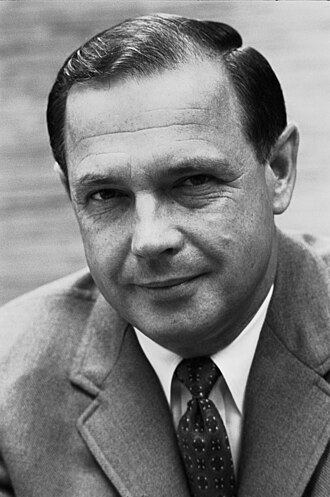
Alexander P. Butterfield served as Deputy Assistant to President Nixon from January 1969 to March 1973, a role in which he oversaw the installation and operation of the secret White House taping system. In March 1973, he transitioned out of the White House to become the Administrator of the Federal Aviation Administration (FAA). While serving as FAA Administrator in July 1973, Butterfield famously testified before the Senate Watergate Committee and publicly revealed the existence of the taping system he had previously managed.
What Butterfield talks about on the tapes
Presidential scheduling 225White House administration 163Presidential schedule 158White House operations 153Public relations 133Vietnam War 113Logistics 83White House logistics 82Foreign Policy 75Henry Kissinger 66Economic policy 62Scheduling 59
Conversations (1,038)
— Page 9 of 11President Nixon met with Rose Mary Woods to handle administrative tasks, including signing documents and discussing weather conditions at Camp David. Alexander P. Butterfield briefly joined the session to consult on the President's upcoming schedule, specifically regarding Barry M. Goldwater. The conversation also touched upon political messaging regarding nuclear defense capabilities and congressional resistance to military building programs.
President Nixon and Charles W. Colson met to conduct an extensive strategic analysis of the 1972 presidential campaign, focusing on the Democratic primary contests and the political standing of George S. McGovern. They evaluated the media's influence on voter perception, discussed potential fractures within the Democratic Party involving Hubert Humphrey and Edmund Muskie, and assessed the voting patterns of various constituencies, including Jewish and labor groups. Throughout the discussion, the President emphasized the importance of maintaining a focus on his foreign policy accomplishments and long-term peace initiatives to bolster his reelection prospects.
Alexander P. Butterfield meets with unidentified individuals in the Oval Office to facilitate an upcoming administrative interaction. The dialogue serves as a brief coordination point for transition or movement within the office space. No substantive policy matters or major historical developments are recorded during this exchange.
President Nixon and Alexander P. Butterfield held a brief, informal coordination meeting in the Oval Office to discuss logistics regarding a subsequent engagement. The participants arranged to reconvene at another location, identified as the AOE, after confirming their respective schedules. The discussion focused primarily on managing the President's immediate movements and ensuring the appropriate staff presence for the upcoming meeting.
President Nixon met with Alexander P. Butterfield to inquire about the health status of Speaker of the House Carl Albert. Butterfield confirmed his awareness of Albert's recent hospitalization and initiated efforts to obtain further updates on the Speaker's condition. The discussion was limited strictly to gathering information regarding Albert’s medical situation.
President Nixon met briefly with Alexander P. Butterfield to discuss the health of Speaker of the House Carl Albert. The conversation served to provide the President with a status update regarding the Speaker's medical condition. No major policy decisions were recorded during this brief exchange.
President Nixon met with Alexander P. Butterfield in the Oval Office to review administrative matters regarding the President’s daily schedule. The primary focus of the discussion centered on coordination with the President's secretary and the management of official appointments. No major policy decisions were recorded during this brief administrative briefing.
President Nixon and Alexander Butterfield met to coordinate the logistics and protocol for upcoming cabinet swearing-in ceremonies, specifically focusing on the transitions involving the Treasury and the Justice Department. The discussion covered the scheduling of events, the sequence of oaths for officials such as Richard G. Kleindienst, and the administrative details regarding ceremonial gifts like pens. The President also reviewed the professional history of past Attorneys General and Treasury Secretaries to ensure proper commemorative arrangements.
President Nixon met with John Mitchell, H. R. Haldeman, and Henry Kissinger in the Oval Office to address critical administrative and foreign policy matters. The discussion prioritized strategic coordination among top advisors regarding ongoing domestic issues and international diplomatic initiatives. This meeting served to align the President's key inner circle on sensitive executive priorities during a period of intense political and global pressure.
President Nixon met with Alexander P. Butterfield to discuss the internal ranking and status of various high-level administration officials. The conversation focused on assessing individuals such as Caspar Weinberger, George Shultz, and Donald Rumsfeld, as well as the organizational structure of the Office of Management and Budget. They also briefly touched upon matters related to the Strategic Arms Limitation Treaty (SALT).
President Nixon met with Alexander P. Butterfield to review his upcoming schedule and logistical arrangements. Their discussion centered on coordinating the President's public remarks regarding the Strategic Arms Limitation Treaty (SALT). No major policy shifts occurred during the briefing, which functioned primarily as a routine administrative planning session.
President Nixon met with H. R. Haldeman, Alexander Butterfield, and Stephen Bull to coordinate administrative priorities, including the scheduling of upcoming Cabinet meetings and legislative strategies for revenue sharing and welfare reform. The discussion focused on managing congressional relations, particularly concerning Vietnam troop withdrawal amendments and the Foreign Affairs Committee, while also addressing concerns over potential political opposition from government interns and various staff salary structures. Nixon further reviewed his busy schedule, which included preparations for the state visit of Mexican President Luis Echeverria Alvarez and debriefings regarding recent diplomatic trips to the Soviet Union.
President Nixon met with Alexander P. Butterfield, Rose Mary Woods, and Ronald L. Ziegler to coordinate administrative and diplomatic logistics. The primary focus involved planning a state dinner for Mexican President Luis Echeverría Álvarez, including guest list management, entertainment, and the participation of astronauts. Additionally, Nixon and Ziegler reviewed press briefing strategies regarding foreign policy, specifically covering Henry Kissinger’s upcoming trip to China, Soviet diplomatic activity, and the SALT negotiations.
President Nixon met with NASA astronauts Thomas K. Mattingly, III, John W. Young, and Charles M. Duke, along with NASA Administrator James C. Fletcher, to discuss the ongoing U.S. space program and its potential for international cooperation. The discussion focused on the strategic importance of the upcoming joint space mission with the Soviet Union, the role of space exploration in maintaining American national spirit, and the potential for sharing space shuttle technology with other nations. Nixon encouraged the astronauts to utilize Camp David for recreation and provided instructions regarding their recognition during a forthcoming state dinner for Mexican President Luis Echeverría.
President Nixon and Alexander Butterfield discuss logistics for an upcoming Cabinet meeting and associated photo opportunity. They finalize plans for the President to deliver remarks regarding his recent trip to the Soviet Union following the session. Nixon provides specific instructions on the arrangement of the group and dictates that official photographs be taken without the attendees present.
President Richard M. Nixon met briefly with Alexander P. Butterfield in the Oval Office to facilitate the processing of administrative documents. The primary purpose of the meeting was for the President to review and sign various items requiring his formal authorization. Butterfield departed immediately after the President completed the necessary paperwork.
Alexander P. Butterfield and Stephen B. Bull convened in the Oval Office to coordinate logistics regarding the President's schedule and location. The discussion focused on the President's upcoming public remarks and ensuring his movements were appropriately managed. No definitive policy decisions were recorded during this brief administrative exchange.
President Nixon met with his senior advisors and Cabinet members, including Elliot Richardson and Caspar Weinberger, to evaluate the legislative strategy for H.R. 1, the administration's welfare reform bill. The participants debated whether to maintain a firm stance on the original proposal or pursue a compromise with Senator Ribicoff to improve the chances of Senate passage before the Democratic National Convention. Nixon expressed concern that moving toward a compromise might blur the administration's policy distinctions from Democratic nominee George McGovern, while his advisors argued that failing to act could lead to the collapse of the legislation. Ultimately, the President deferred a final decision, requesting further analysis on the political and budgetary implications of the potential concessions.
President Nixon and his advisors discussed the management of White House social events, specifically reviewing complaints about guest logistics and the President's personal exhaustion regarding formal dinners. The conversation also shifted to political strategy, including the President's public stance on school busing, the necessity of maintaining a clear administrative position, and upcoming strategies regarding the Democratic National Convention. Nixon and his staff further evaluated the potential of Elliot Richardson for high-level appointments while expressing concerns about the ideological unpredictability of the opposition.
President Nixon met with Alexander P. Butterfield to address administrative matters, specifically reviewing documents requiring the President's signature. The discussion focused on the President's upcoming schedule, notably the signing ceremony for the Higher Education Bill. They also evaluated potential veto options regarding the legislation, involving consultations with John D. Ehrlichman and Caspar W. Weinberger.
President Nixon and H. R. Haldeman met to discuss various administrative priorities, including economic indicators, the upcoming Senate debt ceiling vote, and the political fallout from the Watergate break-in. Regarding Watergate, they evaluated legal strategies to contain the investigation, specifically considering whether to have G. Gordon Liddy take responsibility to avoid broader inquiries and depositions that could implicate the White House. They also discussed concerns over negative media coverage and potential links between former consultant E. Howard Hunt and sensitive operations, weighing how to minimize political damage as the story gained national traction.
President Nixon met briefly with Alexander P. Butterfield and Stephen B. Bull to coordinate administrative logistics. The discussion focused on scheduling a photo opportunity in the Oval Office. No major policy matters were addressed during this short administrative engagement.
President Nixon met with Alexander P. Butterfield to review the President's upcoming schedule, specifically focusing on a meeting with Nelson A. Rockefeller. Following this consultation, Nixon placed a brief call through the White House operator. The conversation concluded with the President directing the cancellation of a scheduled telephone call.
President Nixon met with New York political and business leaders, including Nelson Rockefeller and John Volpe, to discuss federal mass transit grants and funding for new subway cars in New York City. The conversation expanded into a wide-ranging policy discussion covering international relations, the defense budget, and the procurement of military hardware like the F-14 fighter jet. In the final portion of the meeting, Nixon and John Ehrlichman reviewed legislative priorities, specifically focusing on welfare reform, the higher education bill, and political strategy regarding the 1972 presidential campaign against George McGovern.
President Nixon met briefly with Alexander P. Butterfield to coordinate a return phone call to Tricia Nixon Cox. Butterfield facilitated the logistics of this communication before immediately departing the Oval Office. No other substantive policy or political matters were recorded during this brief encounter.
President Nixon met with H.R. Haldeman and various staff members to discuss media relations, scheduling, and public policy issues, including television appearances by the Nixon family. The participants reviewed strategies for upcoming press conferences and addressed concerns regarding beef price controls and meat quotas. Additionally, the President engaged in outreach, including a phone call with Richard J. Daley to discuss Vietnam, while staff members facilitated administrative tasks regarding personnel and correspondence.
President Nixon met with Alexander Butterfield, H.R. Haldeman, and Ronald Ziegler to coordinate the President’s upcoming schedule and manage key domestic policy communications. The discussion focused on preparations for a Domestic Council meeting, a scheduled session with Caspar Weinberger, and a prospective television address regarding school busing. The participants evaluated the tone and content of the busing statement, incorporating input from Patrick Buchanan to refine the administration's messaging strategy.
President Nixon met with key staff members, including H. R. Haldeman, Henry Kissinger, and Ronald Ziegler, to manage his public schedule and coordinate campaign strategy for the 1972 election. The participants discussed legislative priorities, public relations efforts regarding the economy and Vietnam, and political outreach to counter George McGovern's candidacy. Additionally, the President devoted time to finalizing an article on baseball greats, coordinating with staff to ensure the accuracy of historical statistics and names.
President Nixon met with H.R. Haldeman and Henry Kissinger to strategize for an upcoming press conference, focusing on Vietnam policy, troop withdrawals, and the handling of persistent Watergate-related questions. The conversation included significant discussion regarding John Mitchell’s resignation as campaign manager and the volatile public behavior of his wife, Martha Mitchell, following the break-in. Additionally, the participants reviewed the President's schedule, pending social security legislation, and internal administrative staffing matters within the White House.
President Nixon and H.R. Haldeman conducted an extensive post-mortem review of the President's recent press conference, analyzing his performance, the style of his responses, and the media's reaction. They discussed a broad range of policy issues addressed during the session, including the Supreme Court's stance on the death penalty, Vietnam troop withdrawals, and concerns regarding food prices and the economy. Additionally, the President issued specific directives regarding a potential veto of the public broadcasting appropriation bill and discussed political strategies for managing press relations.
President Nixon met with Charles Colson, Stephen Bull, and Alexander Butterfield to discuss press relations, pending legislation, and the political fallout of the Watergate break-in. They reviewed strategies for managing the media's coverage of the administration and the Vice President, while also discussing the tactical benefits of leaking information about the RNC files to shape public perception. Additionally, the President reviewed his legislative agenda, ultimately deciding to sign the Social Security bill while considering vetoes on various veterans' bills to manage the federal budget.
President Nixon met briefly with Beverly J. Kaye to discuss her California lodging arrangements before consulting with Alexander P. Butterfield on official administrative matters. The discussion covered a status report on the Vietnam War and logistical planning for providing presidential transportation to Governor George C. Wallace for his travel to the Democratic National Convention. Nixon explicitly prioritized coordinating these travel arrangements through H. R. Haldeman while factoring in Wallace’s current health status.
President Nixon met with Alexander P. Butterfield to address administrative matters, including the securing of the President's signature on pending documents. The discussion covered arrangements regarding the death and funeral of William T. Pecora, as well as the appointment of Thomas Bradford Curtis to the Corporation for Public Broadcasting. These brief interactions underscored the routine management of executive personnel and institutional oversight during the Nixon administration.
Stephen B. Bull and Alexander P. Butterfield met in the Oval Office to coordinate and verify the President’s upcoming schedule. The discussion focused on administrative logistics, with Bull confirming his intention to review the President's itinerary. The meeting concluded without further documented developments due to the recording being cut off.
President Nixon and Alexander P. Butterfield met to coordinate the agenda for upcoming strategic meetings with Republican Congressional leaders and Cabinet members regarding the 1972 election. They discussed the structure of breakfast briefings, emphasizing the need for clear communication with key participants like Clark MacGregor and John D. Ehrlichman. The President also reviewed budget planning recommendations from Caspar Weinberger and directed Butterfield to ensure tighter control over public relations and press interactions concerning agency heads.
President Nixon met with Alexander P. Butterfield to review the logistics of upcoming official engagements, specifically focusing on the President's schedule. The discussion centered on H.R. Haldeman’s recommendation regarding the inclusion of agency heads in planned breakfast and Cabinet meetings. The President expressed concerns about the optics of these appearances, ultimately weighing whether to proceed with or cancel the planned involvement of agency leadership.
President Nixon met with businessman Armand Hammer to discuss ongoing trade negotiations with the Soviet Union, the status of Hammer's Occidental Petroleum company, and the possibility of recruiting Marvin Watson to assist the Nixon reelection campaign. Hammer provided detailed accounts of his long-standing history with Soviet leadership, including Lenin and Khrushchev, and updated the President on his efforts to improve U.S.-Soviet relations through art and business ventures. Following Hammer's departure, Nixon and H.R. Haldeman shifted focus to the Watergate scandal, specifically debating the legal strategies regarding immunity for campaign staff members Jeb Stuart Magruder and Hugh Sloan, Jr. to contain further investigations.
President Nixon met with Alexander Butterfield and H. R. Haldeman to coordinate the President’s administrative schedule and discuss political developments. The discussion addressed the transition of John Mitchell following his departure from the Committee to Re-elect the President, specifically touching on his personal difficulties regarding his wife, Martha Mitchell. Additionally, the participants reviewed ongoing 1972 campaign polling data and recent interactions with administration officials.
President Nixon met with his Cabinet and senior staff to discuss strategies for achieving a balanced federal budget by 1975, emphasizing the necessity of immediate spending cuts and potential vetoes of congressional legislation to curb inflation. Budget Director George Shultz outlined the administration’s plan to issue "ceiling letters" to agency heads to enforce strict fiscal guidelines and reduce government deficits. The participants also reviewed recent positive economic indicators, including growth in the Gross National Product and declining unemployment, while noting that the public generally views government spending as a primary driver of inflation.
Alexander P. Butterfield met with an individual identified as Mike to coordinate the President's upcoming schedule. The primary focus of the discussion concerned the logistical arrangements for a scheduled lunch. The participants concluded their brief meeting and departed the Oval Office shortly thereafter.
President Nixon met briefly with Alexander P. Butterfield in the Oval Office to conduct routine administrative duties. During this short session, the President signed various documents and reviewed his upcoming schedule, specifically focusing on the program for a wedding ceremony taking place on July 22, 1972. The interaction served as a logistical briefing to ensure the President was prepared for his personal and professional engagements.
President Nixon met with Alexander P. Butterfield to coordinate logistical arrangements for upcoming executive functions. The discussion focused on the specific seating requirements for a meeting at the Executive Office Building and finalized the departure timing for the President’s visit to Camp David. These operational details were essential for managing the President's immediate scheduling commitments.
President Nixon and Henry Kissinger discussed legislative and political strategies regarding the Vietnam War, specifically focusing on the potential passage of the Mansfield Amendment and its impact on ongoing peace negotiations. Kissinger provided a report on his recent interactions with Senator Mike Mansfield and Eugene McCarthy, noting their willingness to assist the administration. The conversation also covered upcoming diplomatic trips to Moscow and Japan, concerns over negative media coverage of bombing raids, and a review of recent polling data concerning the 1972 election and Senator George McGovern's platform.
President Richard M. Nixon met with Alexander P. Butterfield in the Oval Office for a brief three-minute discussion. Due to the lack of available transcripts and the unintelligible nature of the audio recording, the specific subjects addressed during this encounter remain historically undocumented. Consequently, no substantive policy decisions or administrative actions can be confirmed from this exchange.
President Nixon met briefly with Alexander P. Butterfield to handle administrative business. The primary purpose of the meeting was for the President to review and sign various official documents. The interaction concluded immediately after the signing process was completed.
President Nixon met with his senior advisors to discuss political strategy for the 1972 campaign, specifically focusing on the emerging controversy regarding Democratic vice-presidential nominee Thomas F. Eagleton. Nixon directed his staff to maintain a public stance of non-interference, aiming to exploit the contrast between his own steady governance and the perceived instability within the McGovern campaign. The group also evaluated administrative management, press relations, and the scheduling of various diplomatic and political engagements.
This recorded session includes a substantive meeting between President Nixon, H.R. Haldeman, Ronald Ziegler, and others regarding the 1972 presidential campaign and potential political messaging. Key discussions focused on the health of Democratic vice-presidential nominee Thomas Eagleton, the Republican response strategy, and assessments of Cabinet members like George Shultz. Following this, the President held a ceremonial meeting that included photographs, the display of White House state gifts, and casual conversation with visitors.
President Nixon consulted with H. R. Haldeman regarding Clark MacGregor’s performance and the fallout from a recent press conference involving Nelson Rockefeller. The discussion focused on managing political messaging, including the potential for future briefings directed at Cabinet members and the spouses of administration officials. They further addressed Rockefeller’s assessment of MacGregor as they strategized on internal political coordination.
President Nixon met with Alexander P. Butterfield to coordinate scheduling logistics for an upcoming appointment. The discussion primarily addressed the President's meeting with Henry A. Kissinger regarding the pending foreign aid bill. The brief interaction served to facilitate the immediate management of the President's calendar.
President Nixon held a series of brief, disconnected meetings and calls with Alexander P. Butterfield, Charles W. Colson, and Henry A. Kissinger. The discussions centered on internal scheduling logistics, including a request for a meeting between the President and Senator Hugh Scott. The participants coordinated administrative items related to the President's upcoming agenda.
President Nixon met with Alexander P. Butterfield and Stephen B. Bull to coordinate personal scheduling and logistics, including an urgent follow-up call requested by Tricia Nixon Cox. The discussion centered on Tricia's concerns regarding ongoing administration crises and the associated media pressure on the family. Consequently, the participants addressed the need for the Nixon family to maintain a low profile during this period while managing the President’s upcoming meetings with Otto E. Passman and John D. Ehrlichman.
President Nixon met with Alexander Butterfield, H.R. Haldeman, Stephen Bull, Henry Kissinger, and James Eastland to address several administrative and political matters. The President instructed Butterfield to modify Secret Service protocols for Tricia Nixon Cox, emphasizing a desire for less intrusive protection during unannounced personal activities. Nixon also reviewed political developments regarding Thomas Eagleton’s status on the Democratic ticket and consulted with Kissinger on ongoing US-Soviet diplomatic relations and SALT negotiations. Additionally, Nixon coordinated travel arrangements with Senator Eastland to attend the funeral of Senator Allen Ellender.
President Richard M. Nixon met with Alexander P. Butterfield to coordinate the President's daily agenda and administrative requirements. The brief session focused on the review and execution of official documents scheduled for the morning. No substantive policy shifts occurred, as the meeting was primarily limited to managing presidential paperwork.
President Nixon met with Alexander P. Butterfield to address administrative matters, specifically reviewing documents requiring a signature and discussing the President's upcoming daily schedule. Following Butterfield’s departure, Stephen B. Bull joined the President to continue coordinating the schedule, which included a specific request for Charles W. Colson’s presence. These brief meetings served primarily to manage the logistical flow of the Oval Office and presidential priorities.
President Nixon met with Stephen B. Bull and Alexander P. Butterfield to review his upcoming schedule and the activities of H.R. Haldeman. The discussion included planning for a reception honoring the Secret Service Presidential Protective Division and touched upon the schedule of Charles W. Colson. Additionally, the group addressed a telephone call from Edward J. Kiernan before concluding the brief meeting.
President Nixon and Alexander P. Butterfield met briefly to discuss the scheduling of a forthcoming telephone call to John McCarroll. The discussion focused on coordinating the availability of both parties to facilitate the communication. The meeting concluded after the exchange of necessary logistical information for the President's files.
President Nixon and H.R. Haldeman discussed the content and purpose of films being produced for the Republican National Convention. They reviewed various segments, including footage of the President's trip to the Soviet Union, his family, and his interactions with foreign leaders, debating the effectiveness and potential use of specific scenes, such as the Tanya Savicheva story. The conversation also touched upon campaign budget controls, the General Accounting Office investigation, and the Watergate affair, with Mitchell expressing concerns about Martha Mitchell's behavior and potential treatment options.
President Nixon and Alexander Butterfield briefly conferred in the Oval Office. The discussion touched upon H.R. Haldeman's schedule, specifically a meeting with John Ehrlichman, and the President's own upcoming telephone call. The conversation was very short, with Butterfield departing shortly after the meeting began.
In this meeting, President Nixon consulted with Alexander Butterfield and Henry Kissinger regarding logistics for his upcoming trip to Hawaii, which included plans for Admiral John S. McCain Jr.'s retirement ceremony and potential events with Clare Boothe Luce. The President and Kissinger also discussed domestic administration policy concerning the debt ceiling and frustrations regarding Secretary of Defense Melvin Laird’s public messaging. Finally, they reviewed sensitive foreign policy strategy, specifically coordinating with the People’s Republic of China regarding the Soviet Union and negotiating a potential path forward in Vietnam.
President Nixon met with his senior advisors, including H. R. Haldeman and John Ehrlichman, to discuss administrative strategy, personnel changes, and political damage control ahead of the 1972 election. A significant portion of the discussion focused on managing rising food prices and the potential political fallout, with the President exploring aggressive options like a temporary price freeze on meat. Additionally, they reviewed plans to leverage the IRS to investigate political opponents, such as Lawrence O'Brien, and finalized shifts in cabinet and sub-cabinet personnel to ensure greater control in a potential second term.
President Nixon and Alexander Butterfield briefly discussed the President's upcoming schedule, including meetings with Henry Kissinger, the Council on Environmental Quality, and Virginia legislators. The conversation touched on the timing and press coverage of these events, as well as the content of a briefing by Ronald Ziegler and the length of a meeting with General Goodpaster. The primary purpose was to confirm and coordinate the President's appointments for the day.
President Nixon met with Senator Russell Long, Governor Edwin Edwards and his family, and other staff members in the Oval Office. The meeting included a formal photograph session and discussions about upcoming Senate votes, particularly on national defense and foreign policy, with an emphasis on Southern Democratic support. They also discussed presidential gifts, including cuff links and ashtrays, and a potential road construction project in Louisiana.
President Nixon and Alexander P. Butterfield met to coordinate the agenda and guest list for an upcoming meeting with Republican Congressional leadership. They focused specifically on the selection of attendees—including Wallace F. Bennett, Frank T. Bow, John W. Byrnes, and Barry M. Goldwater—and the inclusion of William E. Timmons to discuss the national economy. During the brief session, the President also attended to the administrative task of signing various official documents.
President Nixon and Alexander Butterfield met to curate the attendee list for an upcoming dinner at Camp David, emphasizing a desire to keep the group small and focused by excluding staff who had already heard recent presentations. The President expressed a preference for maintaining exclusive, hard-working meetings rather than large social gatherings that might dilute the impact of discussions. They also reviewed logistics for a forthcoming meeting with Virginia legislators, including plans for individual photographs, a White House tour, and the selection of appropriate, cost-effective gifts for the guests.
President Nixon met with Alexander P. Butterfield to streamline the attendee lists for an upcoming official meeting and dinner. The President expressed a desire to reduce the number of participants, specifically aiming to separate his policy advisors from purely political activities and to ensure staff focused on substantive work rather than social obligations. They reviewed various senior staff members—including Henry Kissinger, John Ehrlichman, and Peter Flanigan—to determine who was essential for briefings versus those whose presence was unnecessary.
President Nixon met with Charles W. Colson to review materials and discuss John B. Connally’s recent schedule and activities. The conversation touched upon political optics and the momentum of ongoing initiatives. Alexander P. Butterfield briefly joined the meeting toward its conclusion before the participants departed.
President Richard M. Nixon and Alexander P. Butterfield held a brief telephone conversation to coordinate the President's upcoming schedule. The discussion served as a logistical check-in regarding official calendar management. No significant policy decisions were recorded during this short exchange.
President Nixon met with Alexander P. Butterfield and John D. Ehrlichman to restructure the White House scheduling process, specifically aiming to reduce H.R. Haldeman’s involvement in minor administrative tasks and daily logistics. The group discussed preparations for an upcoming meeting at Camp David, which would include a briefing by George W. Romney, and addressed potential veto strategies for pending legislation such as the Office of Economic Opportunity bill and the water quality bill. Additionally, the President emphasized the need for more aggressive political messaging and the development of catchy, effective slogans to counter Democratic tax reform proposals.
President Nixon and Alexander P. Butterfield met to coordinate the logistics and scheduling for several upcoming presidential engagements. The discussion focused primarily on the timing and duration of a meeting with Soviet Minister of Health Boris V. Petrovsky and the structure of an official event at Camp David. The two finalized the meeting schedule, including allotted time for briefings, question-and-answer sessions, and breaks.
President Nixon consulted with Charles W. Colson and other staff regarding the coordination of an upcoming external announcement. The discussion focused on scheduling logistical arrangements and determining the necessity of the President's personal attendance at a meeting. Ultimately, the President directed staff to facilitate a call to Clark Hill to clarify these requirements and adjust his availability accordingly.
President Nixon and Alexander P. Butterfield held a brief telephone conversation to coordinate the President's upcoming schedule. The discussion remained focused on logistical arrangements for official duties. No significant policy decisions were recorded during this brief exchange.
President Richard M. Nixon and Alexander P. Butterfield conducted a brief telephonic exchange primarily concerned with logistics and the President's upcoming schedule. The conversation focused on coordination regarding the schedule of an unnamed third party. No major policy decisions were reached during this short interaction.
Alexander P. Butterfield met with unidentified individuals in the Oval Office to discuss organizational or political leadership qualities. The exchange was brief and focused on the characterization of a specific figure as a leader. No substantive policy decisions or administrative actions were recorded during this segment of the tape.
President Nixon met with Alexander P. Butterfield in the Oval Office to review and sign official administrative documents. The brief encounter focused exclusively on the completion of pending paperwork requiring the President's signature. The meeting concluded immediately after the task was finalized.
President Nixon met with Alexander P. Butterfield and an unidentified staff member in the Oval Office to conduct routine administrative business. The participants primarily focused on processing official documents requiring the President’s signature and reviewing Patrick J. Buchanan's daily schedule. The brief meeting concluded after these logistical matters were addressed.
President Nixon held a brief, one-minute meeting with Alexander P. Butterfield in the Oval Office. The primary focus of the discussion was a review of the daily news summary. No significant policy developments or long-term decisions were recorded during this abbreviated exchange.
President Nixon met with Alexander P. Butterfield and Stephen B. Bull to coordinate his upcoming schedule and streamline his commitments. The discussion focused on prioritizing meetings with key political figures, including Henry Kissinger, Daniel P. Moynihan, and the duo of Clark MacGregor and John N. Mitchell, while clearing unnecessary appointments from the calendar. Nixon emphasized his desire for an open schedule, ultimately deciding to cancel several briefings and committee meetings to accommodate travel and convention-related priorities.
President Nixon met with Alexander P. Butterfield and personal aide Manolo Sanchez in the Oval Office to facilitate the administrative handling of a Dictabelt recording. The primary purpose of the brief interaction was the transfer of the recording for delivery to Marjorie P. Acker. No further policy or substantive discussions were recorded during this session.
President Nixon met with Alexander P. Butterfield to address administrative logistics regarding upcoming speech preparations for the Republican National Convention. The discussion focused on the provision of yellow legal pads and the potential involvement of an unnamed woman in the drafting process. This brief exchange served to finalize clerical arrangements necessary for the President's convention appearances.
President Nixon met with Alexander P. Butterfield to review and finalize the President’s daily schedule, which included a series of meetings with visitors such as Bailey K. Howard, Samuel D. Winer, and Louella Dirksen. They discussed specific logistical details, including the need to reschedule certain appointments and manage the presentation of a book by Mrs. Dirksen. The conversation concluded with instructions to arrange the timing of upcoming sessions with guests like John B. Connally and Clark MacGregor.
President Nixon held an Oval Office meeting with key staff members and guests, including First Lady Pat Nixon, H.R. Haldeman, John Ehrlichman, and John Dean. While the majority of the discussion is classified as a withdrawn item, the session focused on administrative scheduling matters involving John Ehrlichman. The meeting concluded after approximately 23 minutes with the departure of Alexander P. Butterfield and his associates.
President Nixon and H.R. Haldeman met to coordinate political strategy, focusing on discrediting Sargent Shriver's claims regarding Vietnam peace negotiations by questioning his honesty and knowledge of the process. They also discussed administrative business, including the signing of a federal firefighters' bill and the planning of the President’s upcoming acceptance speech. Finally, the group reviewed the timing of impending Watergate-related indictments in relation to the Republican National Convention to minimize political fallout.
President Nixon met with Henry Kissinger, William Rogers, Alexander Haig, and other advisors to coordinate the administration’s response to the terrorist murder of Israeli athletes at the Munich Olympics. The discussion focused on balancing a display of international concern and U.S. empathy with the need to avoid politicizing the games or creating a precedent for national mourning that could be exploited. Nixon decided against a formal national day of mourning but agreed to monitor the situation closely, coordinate with Israeli officials, and seek potential international action against states that harbor terrorist organizations through the UN Security Council.
President Nixon met with Alexander P. Butterfield to coordinate logistical details regarding a forthcoming meeting with John B. Connally. The discussion focused on scheduling the session for the Oval Office and ensuring H.R. Haldeman’s attendance. This brief exchange served to align the President's calendar with his key advisors.
President Nixon met with H.R. Haldeman and John Connally to discuss political strategy, campaign media coverage, and administrative matters. They reviewed a sensitive political intelligence report regarding a potential issue in Fort Wayne, with Nixon emphasizing the need for discretion and strict containment of the information. Additionally, the President discussed his desire for a concise daily political news summary and agreed with Connally’s assessment that the administration should avoid outlining specific second-term programs to prevent providing political opponents with targets to attack.
Alexander P. Butterfield and John D. Ehrlichman held a brief meeting in the Oval Office to coordinate the President's upcoming daily schedule. The exchange was strictly logistical, focusing on the arrangement of official appointments and time management for the President's agenda. No further policy discussions or significant political developments were recorded during this session.
President Nixon met with George Shultz, Arthur Burns, and John Ehrlichman to discuss economic strategy, focusing on tax reform and property tax relief. The group evaluated the political risks of pursuing tax changes before the election, debating how to frame their proposals without being perceived as increasing taxes. Additionally, the President and H. R. Haldeman discussed administrative logistics, including the potential for a cruise on the Sequoia to discuss strategy and the implementation of Secret Service protection for Senator Edward Kennedy.
President Nixon met with Alexander P. Butterfield to discuss adjustments to the President's upcoming schedule. The conversation focused on coordinating logistics and commitments for the two-week period following the meeting. No major policy decisions were reached, as the discussion remained centered on administrative oversight of the President’s calendar.
President Nixon met with Alexander P. Butterfield to review administrative and scheduling matters. The discussion focused on coordinating the President's upcoming call to Chris Schenkel and finalizing details for H.R. Haldeman’s political meeting. These logistics were managed to ensure the smooth operation of the President's daily agenda.
President Nixon met with Russell E. Train and Alexander P. Butterfield to discuss Train’s upcoming diplomatic mission to the Soviet Union focused on environmental cooperation. The conversation centered on strategies for engaging Soviet officials on issues like Arctic pipeline technology and urban air quality, while emphasizing the importance of building personal rapport with foreign counterparts. Nixon encouraged Train to leverage his delegation, which included prominent conservationists, to gain deeper insights into Soviet political figures and environmental management practices.
President Nixon and Alexander Butterfield met to finalize logistical arrangements for an upcoming breakfast meeting with campaign staff and committee members. They discussed the guest list, including the exclusion of certain staff to keep the group size manageable, and evaluated the physical seating configuration of the room to ensure an effective presentation. The President specifically requested adjustments to the service style to maintain a streamlined environment for the discussion.
President Nixon met with H.R. Haldeman, Charles Colson, and other staff members to discuss political campaign strategy, personnel changes within the State Department and the administration, and the ongoing fallout from the Watergate break-in. The group explored potential responses to Democratic criticisms and lawsuits, specifically weighing the merits of appointing an independent, bipartisan commission led by former Supreme Court Justices to review the federal investigation. This strategy was intended to neutralize charges of a 'whitewash' and demonstrate that the administration was conducting an exhaustive, unbiased inquiry into the scandal.
President Nixon and Alexander P. Butterfield met to coordinate the President's upcoming schedule, specifically focusing on a proposed meeting with musician Ray Charles. The discussion centered on managing the publicity surrounding this appearance and coordinating the event through H.R. Haldeman, including a potential visit to the National Children's Center. Nixon emphasized his specific preferences regarding the management of these public appearances.
President Nixon and Alexander P. Butterfield discussed the logistical and political merits of potentially hosting musician Ray Charles at the White House. The conversation addressed concerns raised by staff members Dwight Chapin and Charles Colson regarding the optics of the invitation. Nixon ultimately decided to proceed with a brief meeting while explicitly mandating that no official photographs be taken during the event.
President Nixon met with Alexander P. Butterfield, Julie Nixon Eisenhower, and Ronald L. Ziegler to coordinate the administration's upcoming public schedule. Primary attention focused on planning a signing ceremony for the National Heart, Blood Vessel, Lung, and Blood Act, specifically addressing the political implications of inviting Senator Edward M. Kennedy to the event. The group also discussed potential press opportunities involving Ray Charles to promote sickle cell anemia research and briefly touched upon status updates regarding Vietnam War negotiations.
President Nixon held a brief one-minute meeting with Alexander P. Butterfield to coordinate a telephone call from John B. Connally. This interaction served primarily as a logistical bridge to facilitate direct communication between the President and the former Treasury Secretary. No further policy discussions or significant substantive developments occurred during this brief encounter.
President Nixon and Robert Finch discussed campaign strategy for the 1972 election, focusing on undermining George McGovern by highlighting his perceived lack of foreign policy experience and his similarity to the ineffective 1964 Barry Goldwater campaign. They analyzed electoral demographics, including labor and ethnic support, and reviewed media coverage and the influence of campaign surrogates like Frank Rizzo and John Connally. Additionally, the participants touched upon the Watergate investigation, expressing frustration over upcoming FBI indictments and the press's role in keeping the scandal in the headlines.
President Nixon and his advisors met to coordinate upcoming foreign policy announcements, specifically focusing on the timing of SALT II, maritime agreements, and trade deals with the Soviet Union to maximize domestic political impact. The President instructed H.R. Haldeman to identify and fire any staff members responsible for leaking CIA documents, while also assessing potential personnel changes for his second term. Additionally, Henry Kissinger briefed the President on ongoing secret peace negotiations with North Vietnam, discussing the scheduling of talks to avoid undermining the President's public appearances.
Alexander P. Butterfield met with an unidentified individual in the Oval Office to coordinate administrative logistics regarding the President's upcoming schedule. The discussion focused primarily on the travel plans and commitments of National Security Advisor Henry A. Kissinger. No definitive policy decisions were reached, as the conversation served as a brief briefing on official calendar management.
President Nixon met with Alexander P. Butterfield in the Oval Office to review and finalize the President’s upcoming daily schedule. The discussion focused on logistical planning and the management of Nixon's appointments. No further details regarding specific developments were recorded, as the meeting concluded shortly thereafter.