Butterfield, Alexander P.
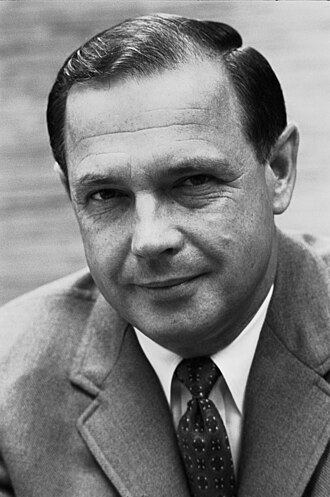
Alexander P. Butterfield served as Deputy Assistant to President Nixon from January 1969 to March 1973, a role in which he oversaw the installation and operation of the secret White House taping system. In March 1973, he transitioned out of the White House to become the Administrator of the Federal Aviation Administration (FAA). While serving as FAA Administrator in July 1973, Butterfield famously testified before the Senate Watergate Committee and publicly revealed the existence of the taping system he had previously managed.
What Butterfield talks about on the tapes
Presidential scheduling 225White House administration 163Presidential schedule 158White House operations 153Public relations 133Vietnam War 113Logistics 83White House logistics 82Foreign Policy 75Henry Kissinger 66Economic policy 62Scheduling 59
Conversations (1,038)
— Page 8 of 11President Nixon and Alexander P. Butterfield discussed the status of the fifth draft of the President's upcoming speech in Canada. Nixon inquired about the timeline for completion, expressing impatience regarding the delay. Butterfield agreed to follow up with the drafting staff to expedite the process and ensure the document reaches the President promptly.
President Nixon met briefly with Deputy Assistant Alexander P. Butterfield in the Old Executive Office Building. The conversation served as a short administrative check-in between the President and his aide regarding the daily operational flow of the White House. No substantive policy decisions or critical developments were recorded during this brief interaction.
President Nixon and Alexander P. Butterfield held a brief telephone coordination to finalize the timing for a speech draft. Butterfield confirmed that the document would be ready for the President's review by 4:00 pm. This exchange ensured the immediate administrative workflow regarding the President's upcoming remarks.
President Nixon held a brief, one-minute meeting in the Old Executive Office Building with Alexander P. Butterfield and an unidentified individual. Given the extremely limited duration and lack of surviving documentation, the specific nature of the discussion remains undocumented. This interaction serves as a placeholder for routine administrative or logistical coordination within the White House operational staff.
President Nixon and H. R. Haldeman met to coordinate the administration's political strategy, scheduling, and public relations response to the North Vietnamese Easter Offensive. Nixon emphasized the necessity of a decisive, risk-heavy military posture to protect U.S. foreign policy credibility, explicitly instructing staff to maintain message discipline and avoid focus on domestic polling or political dissent. The discussion also covered managing the 1972 reelection campaign, the role of John Connally, and the importance of shielding the President from unnecessary domestic distractions during this critical foreign policy window.
President Nixon and H.R. Haldeman met to discuss administration strategy regarding the Vietnam War, press relations, and upcoming domestic initiatives. Nixon expressed frustration with the State Department's perceived lack of long-term vision, contrasting their cautious, tactical approach with his own administration’s bold foreign policy maneuvers such as the opening to China. The conversation also touched upon the inefficiencies of Great Society social programs and transitioned into a wide-ranging, personal discussion regarding the political influence and historical shift of the Jewish American electorate.
President Nixon met with Alexander P. Butterfield and Stephen B. Bull to process routine administrative tasks, including reviewing the President’s speech copy and finalizing a list of letters for his signature. The discussion focused on coordinating the review process with Charles W. Colson concerning correspondence for a list of 500 individuals. Additionally, the participants touched upon the logistical details regarding the President’s upcoming departure for a trip to Philadelphia.
President Nixon met with Alexander P. Butterfield and Stephen B. Bull in his Old Executive Office Building suite to review and coordinate the President's upcoming daily schedule. The brief three-minute discussion focused exclusively on logistics and administrative planning regarding the President's appointments. No policy decisions were recorded, as the meeting served strictly as an organizational briefing for the White House staff.
President Nixon and Alexander Butterfield coordinated the agenda for an upcoming congressional leadership meeting, specifically narrowing the focus to a defense and China policy briefing led by Henry Kissinger. Nixon explicitly excluded Secretary of State William Rogers and Secretary of Defense Melvin Laird from the presentation to ensure Kissinger could lead the session without bureaucratic interference. Additionally, the President requested the inclusion of select committee chairmen while directing that political liaisons be excluded to foster a more candid atmosphere regarding China policy discussions.
President Nixon and Alexander Butterfield discuss the tactical orchestration of an upcoming meeting regarding China policy. Nixon explicitly decides to exclude Secretary of Defense Melvin Laird to avoid the necessary inclusion of Secretary of State William Rogers, tasking Henry Kissinger with leading the briefing instead. The President emphasizes that China-related matters should remain distinct from standard congressional relations to ensure the initiative is perceived as a significant diplomatic event rather than partisan politics.
President Nixon met with Alexander Butterfield and John Ehrlichman to coordinate an upcoming briefing for prominent, hawkish Democrats including John Stennis, George Mahon, and F. Edward Hebert. Nixon emphasized that the session, led by Henry Kissinger, should avoid a strictly partisan tone to ensure effective engagement with these key legislators. The participants also briefly addressed scheduling concerns and administrative memoranda before concluding the meeting.
President Nixon met with Alexander P. Butterfield to review administrative scheduling and finalize official documentation. The discussion centered on prioritizing specific executive actions, specifically focusing on the selection of candidates for nominations. Nixon provided direct instructions regarding his preferences for these appointments, directing Butterfield to proceed with the chosen candidate.
President Nixon and Alexander P. Butterfield met to coordinate logistics and gift-giving protocols for the President's upcoming diplomatic trip to Canada. They discussed the appropriate presentation of gifts for Governor General D. Roland Michener and Prime Minister Pierre E. Trudeau, including questions regarding the Governor General's family. Nixon directed Butterfield on how to distinguish the gift distribution between the two Canadian officials.
President Nixon met with H.R. Haldeman, John Connally, John Ehrlichman, Henry Kissinger, and other staff to coordinate administration strategy on several fronts. Key discussions included efforts to quash a Department of Justice fishing rights lawsuit against Texas, the management of congressional briefings on Vietnam and domestic issues, and tactical adjustments for the upcoming election campaign. Nixon emphasized the need for more persuasive, memorable speechwriting and directed his team to adopt a more aggressive, "hard-hitting" political posture against Democrats on issues like busing and food prices.
President Nixon met with Alexander P. Butterfield to coordinate the final drafting and review process for an upcoming speech concerning Canadian relations. The discussion focused on incorporating feedback from Henry A. Kissinger and Alexander M. Haig, Jr. while finalizing the President's personal revisions. The meeting functioned as an administrative check-in to ensure the speech was ready for delivery.
President Nixon and Henry Kissinger discussed the potential for a secret trip to the Soviet Union to negotiate an end to the Vietnam War, weighing the implications of such a visit on U.S. relations with Hanoi and the People's Republic of China. Kissinger emphasized his belief that Soviet leadership was feeling increased pressure and might be willing to act as a intermediary. Following the strategic discussion, Alexander Butterfield and Lee Huebner joined the meeting to finalize and refine the tone of an upcoming presidential speech intended for delivery in Canada.
President Nixon and Alexander P. Butterfield coordinate the logistics for the President's upcoming trip to Camp David, specifically scheduling a meeting with Alexander M. Haig, Jr. to occur during the transit. The President sets an approximate departure time of 4:30 pm, contingent on his meeting with John N. Mitchell. Additionally, Nixon provides instructions regarding travel arrangements for staff, including Rose Mary Woods and others, ensuring they have the option to stay behind if preferred.
President Nixon met with his Deputy Assistant Alexander P. Butterfield for a brief, one-minute administrative consultation in the Old Executive Office Building. While no transcript is available to detail the specific content, this meeting highlights the routine internal communication between the President and the aide responsible for managing the White House taping system. The exchange likely served to address logistical matters regarding presidential scheduling or security operations.
President Nixon met with Lt. Gen. Vernon A. Walters to receive coaching and practice the pronunciation of French phrases for an upcoming address to the Canadian Parliament. The session involved detailed linguistic drills, with Rose Mary Woods assisting in the logistics of the speech drafts and Alexander P. Butterfield briefly joining to deliver documents. The discussion also touched upon ongoing military concerns in Vietnam, including North Vietnamese movements and the status of diplomatic efforts.
President Nixon met with Alexander P. Butterfield to coordinate administrative logistics and manage the arrivals of unidentified individuals, including Henry Kissinger. The discussion primarily focused on scheduling details and the sequence of meetings in the Oval Office. Butterfield confirmed the arrangement of these appointments before departing the office.
President Nixon and Alexander P. Butterfield held a brief administrative meeting in the Oval Office to coordinate logistics. The discussion focused on the current location and availability of Secretary of State William P. Rogers. No specific policy decisions were finalized, as the meeting functioned primarily to facilitate executive scheduling and internal communications.
President Nixon, Henry Kissinger, and Secretary of Defense Melvin Laird met to evaluate the ongoing military situation in Vietnam and coordinate strategy ahead of Kissinger's upcoming summit preparations in Moscow. The participants expressed frustration over unauthorized press reports suggesting internal administration discord regarding air strikes, emphasizing the need for a unified front to project strength and pressure North Vietnam. Nixon sought to maintain leverage for his potential Moscow visit, specifically discussing the tactical efficacy of air campaigns, the strategic value of a potential naval blockade, and the importance of maintaining a firm stance against North Vietnamese aggression to ensure favorable negotiation outcomes.
President Nixon and H. R. Haldeman met to review the President’s upcoming schedule, specifically focusing on preparations for a meeting with the People's Republic of China table tennis team. Nixon requested that briefing materials for the event be condensed to a single page due to his limited time, while emphasizing a non-political approach. The discussion also addressed Agriculture Secretary Earl Butz’s upcoming trip to the USSR and the need to manage his press announcements in light of Henry Kissinger’s concurrent diplomatic efforts in Moscow.
President Nixon met with Alexander P. Butterfield for a brief discussion regarding the configuration and management of the President's daily schedule. This consultation focused on administrative logistics and upcoming appointments within the Oval Office. No major policy decisions were recorded during this brief administrative briefing.
President Nixon met with Manolo Sanchez and Alexander P. Butterfield in the Oval Office to discuss administrative logistics and presidential scheduling. The brief interaction included a discussion regarding John B. Connally and the location of H.R. Haldeman. The session concluded with the President signing an official document related to a housing issue.
President Nixon coordinated with staff members Stephen Bull, Clark MacGregor, and Alexander Butterfield to arrange a private trip aboard the presidential yacht, the Sequoia. The participants finalized the logistics for a late afternoon departure and dinner, while also briefly discussing the timing of an urgent telephone call to be placed by the President. These arrangements were intended to facilitate an informal meeting away from the office.
President Nixon met with Alexander P. Butterfield to coordinate administrative logistics regarding his upcoming schedule and staff communications. The discussion touched upon briefings for Press Secretary Ronald Ziegler and the President's review of war powers legislation. The meeting concluded with preparations for Nixon’s departure to Camp David later that afternoon.
President Nixon met with Alexander Butterfield and Stephen Bull to discuss administrative arrangements for White House gifts and the President's upcoming schedule. The participants coordinated the distribution of customized putters intended for political contributors and reviewed logistical details for an upcoming meeting with Bob Hope. The discussion also included a brief review of photographs involving astronauts and preparations for the President’s scheduled appearances.
President Nixon met with Henry Kissinger, Alexander Haig, and other staff members to finalize the strategy for an upcoming televised address regarding the worsening military situation in Vietnam. The President emphasized his desire for a simple, direct speech that would frame the North Vietnamese invasion as a clear act of aggression while preparing the public for potential military losses. A significant portion of the conversation focused on the necessity of matching tough rhetoric with decisive air and naval strikes, as well as the importance of maintaining diplomatic credibility ahead of the upcoming Soviet summit. Nixon also instructed his team to improve their public relations efforts, expressing deep frustration with the lack of aggressive messaging from the State Department and the Pentagon regarding the conflict.
President Nixon met with Alexander P. Butterfield to coordinate logistics for an upcoming dinner with congressmen. The discussion focused on finalizing the guest list, specifically addressing invitations for Secretary of Defense Melvin Laird, Donald Rumsfeld, and former representative Clark MacGregor. The participants also reviewed drafting edits for a speech regarding Vietnam policy, emphasizing the administration's stance against communist aggression and the necessity of preventing future conflicts.
President Nixon and H. R. Haldeman met to discuss strategic communication regarding the Vietnam War, focusing on the potential release of documents involving Averell Harriman to expose North Vietnamese duplicity. They also evaluated press and public reactions to Henry Kissinger's recent diplomatic missions to Moscow and China, dismissing media skepticism while reaffirming their intent to control the public narrative. Additionally, the President addressed scheduling logistics for an upcoming dinner with congressional leaders and provided feedback on recent speechwriting contributions.
President Nixon met briefly with Alexander P. Butterfield in the Old Executive Office Building to facilitate the receipt of an unspecified item. The interaction was limited to this brief exchange of materials, concluding immediately after the transfer. No further substantive policy matters or strategic discussions were recorded during this brief encounter.
President Nixon and Henry Kissinger met to refine the President’s upcoming Vietnam speech and discuss the ongoing military and diplomatic situation. Nixon expressed frustration over bureaucratic delays in executing his military orders and emphasized his determination to bypass Secretary of Defense Melvin Laird. The two also analyzed the political impact of the North Vietnamese offensive, the potential effects of Nixon's upcoming summit in Moscow, and the administration's need to maintain a projection of strength against domestic critics.
President Nixon met with H.R. Haldeman to coordinate strategy regarding his upcoming public address on the Vietnam War, focusing on the need for the President to project a personal, authoritative image of the office. They discussed the administration's frustration with media coverage, the necessity of effectively managing public support, and the political implications of the ongoing Democratic primary contests. Nixon directed Haldeman to ensure robust follow-up on the speech and to continue monitoring the activities of Democratic candidates, particularly George McGovern and Edmund Muskie.
President Nixon met with South Korean officials Kim Yong-sik and Dong Jo Kim, along with Alexander Haig, to reaffirm U.S. security commitments to the Republic of Korea (ROK) amidst the ongoing North Vietnamese invasion. The discussion centered on maintaining a strong defense posture, the modernization of ROK forces, and coordinating strategy ahead of Nixon's upcoming summit in Moscow. Nixon assured the delegation of continued U.S. support despite domestic congressional opposition and emphasized the strategic importance of resisting communist aggression in both Vietnam and Korea.
President Nixon and H.R. Haldeman met to discuss the press strategy and distribution of materials regarding an upcoming televised speech on Vietnam. They decided against releasing the full text of the speech in advance to avoid critical early reporting, opting instead to provide journalists with a summary of key decisions to shape the media narrative. The discussion also touched on the role of Henry Kissinger, the influence of columnist James Reston, and the administration's policy toward dealing with anti-war demonstrators and campus unrest.
President Nixon met with Alexander Butterfield and Henry Kissinger to manage his immediate schedule and finalize administrative tasks, including the signing of official documents. The participants coordinated logistics for upcoming appointments, such as a meeting with George Shultz and Herbert Stein, and discussed preparations for a congratulatory call to the Apollo XVI astronauts. This brief session served to organize the President’s agenda and facilitate communication with key staff and external officials.
President Nixon met with Henry Kissinger, William Rogers, and several senior staff members to coordinate U.S. strategy regarding the upcoming Soviet Summit, the Strategic Arms Limitation Talks (SALT), and the ongoing North Vietnamese offensive. The discussions focused on ensuring a firm stance against Soviet-backed North Vietnamese aggression while maintaining diplomatic progress toward a SALT agreement. Nixon directed staff to prepare specific messaging for Ambassador Gerard Smith to ensure that U.S. negotiating positions were clearly defined as presidential directives, and he emphasized the need for a decisive military response—including a significant B-52 strike—should the North Vietnamese fail to halt their offensive operations.
President Nixon, H. R. Haldeman, and Henry Kissinger met to discuss critical updates regarding the North Vietnamese offensive and upcoming diplomatic negotiations, including the status of the Soviet summit. They analyzed recent military reports from General Creighton Abrams regarding the Army of the Republic of Vietnam's (ARVN) wavering performance and morale, while debating the necessity of intensified U.S. bombing in North Vietnam. The participants also reviewed strategic disagreements within the administration—specifically regarding Secretary of State William P. Rogers—concerning the Strategic Arms Limitation Talks (SALT) and the handling of Soviet submarine limits.
President Nixon met with Alexander P. Butterfield to finalize administrative details regarding the President's upcoming schedule. The discussion centered on securing the President’s approval for a specific agenda item, specifically addressing a scheduled appearance by Henry Kissinger. The brief interaction concluded with the confirmation of these logistical arrangements.
President Nixon met with his senior aides and Alexander Haig to address the immediate logistical arrangements following the death of J. Edgar Hoover and to deliberate on the critical military and diplomatic situation in Vietnam. The group finalized plans for Hoover’s burial at Arlington National Cemetery and discussed the failure of recent negotiations with North Vietnam. Consequently, Nixon directed the intensification of U.S. military strikes, including B-52 operations, while planning to issue a statement to South Vietnamese President Thieu to reaffirm American support and dismiss rumors regarding a potential coalition government.
President Nixon met briefly with aides Alexander P. Butterfield and Stephen B. Bull to address logistical matters following the death of FBI Director J. Edgar Hoover. The discussion touched upon the ceremonial handling of the White House flag and the arrangement of materials to be provided to Clyde Tolson. The participants also briefly coordinated upcoming scheduling requirements for Henry Kissinger.
President Nixon met briefly with Alexander P. Butterfield to discuss a specific book. The conversation was extremely short, lasting only one minute, and lacked substantive policy deliberations. Butterfield departed immediately after the brief exchange regarding the volume.
President Nixon met with Alexander P. Butterfield to coordinate the scheduling of J. Edgar Hoover’s funeral services. They specifically discussed the timing of the funeral in relation to the President’s other standing speaking commitments. The brief discussion focused on ensuring the funeral arrangements could be accommodated within the President's existing calendar.
President Nixon met with aides Stephen B. Bull and Alexander P. Butterfield to coordinate scheduling, including an appointment with his barber and potential phone calls recommended by Charles Colson. The participants also discussed administrative details regarding office temperature and the compilation of materials for a project honoring astronauts in Hawaii. The President reviewed these materials to determine their purpose and ultimately granted approval for the initiative.
President Nixon followed up with Alexander P. Butterfield regarding the status of the draft eulogy for the late FBI Director J. Edgar Hoover. Nixon instructed Butterfield to have the document delivered and left for him to review privately, specifying that he wanted to study it before any further discussion. Butterfield confirmed he would expedite the delivery of the draft via Zosimo T. Monzon by the 1 o'clock deadline.
President Nixon met with Alexander P. Butterfield to coordinate the delivery of unspecified materials to the Old Executive Office Building. Nixon instructed that these items be left outside the office to avoid direct interaction with the couriers. The exchange reflects the President's desire to maintain confidentiality regarding sensitive operational or personal details during the delivery process.
President Nixon and Alexander P. Butterfield coordinate the logistics for a private meeting with Attorney General Richard Kleindienst. They agree to relocate the session from the White House to the Executive Office Building to improve the President’s time management. Butterfield confirms that the encounter will remain unpublicized and excludes a photograph opportunity.
President Nixon and Alexander Butterfield met to coordinate public relations strategy following a separate meeting. The President instructed Butterfield on the necessity of addressing the press immediately after the conclusion of that session. This brief exchange served to ensure unified messaging and timely media engagement regarding the administration's ongoing activities.
President Nixon met with Alexander P. Butterfield to coordinate logistical arrangements for his upcoming appointment with Attorney General Richard G. Kleindienst. The discussion focused on scheduling a subsequent photo opportunity and press availability following their meeting. Nixon instructed Butterfield to summon John Andrews to the Executive Office Building to facilitate these administrative tasks.
President Nixon met with Alexander P. Butterfield to coordinate administrative logistics and scheduling regarding key staff members. The discussion focused on the movement and availability of H. R. Haldeman, specifically concerning his meeting with John D. Ehrlichman. No further policy developments were recorded during this brief encounter before Butterfield’s departure.
President Nixon, H. R. Haldeman, and Alexander Butterfield discuss the administration's strategic response to the Vietnam War, focusing on public support for a naval blockade and the conditions for a potential ceasefire. The participants deliberate on the political optics of nominating L. Patrick Gray III as FBI director, weighing the risks of appointing a political associate versus an independent candidate. Additionally, they address logistical preparations for J. Edgar Hoover’s upcoming funeral, specifically concerns regarding lighting for television coverage.
Stephen B. Bull and Alexander P. Butterfield met in the Oval Office to coordinate administrative logistics or manage the distribution of internal documents. Although a specific transcript is unavailable, the discussion centered on the handling of formal White House materials, possibly involving a figure identified as Larry Robinson. The meeting concluded with both men departing the office, marking the finalization of their procedural review.
President Nixon met with Alexander P. Butterfield to discuss the administrative handling of upcoming meetings with labor officials, including Frank E. Fitzsimmons. The discussion emphasized the President's desire to keep the FBI strictly out of political matters and addressed the coordination of paperwork involving Charles W. Colson. Nixon instructed Butterfield to ensure that certain executive board actions were finalized promptly once the necessary documentation was received.
President Nixon met with Rose Mary Woods and others to debrief on the funeral services for J. Edgar Hoover, discussing the reception of his own eulogy and the appropriateness of the Rev. Edward L.R. Elson's actions. The President expressed relief that Hoover passed away when he did, sparing him from potentially damaging political fallout during the upcoming election cycle and the persistent attacks from critics like Jack Anderson. The conversation concluded with administrative logistics, including scheduling, staff concerns, and the work habits of White House support personnel.
President Nixon met with Alexander P. Butterfield to coordinate logistics for an upcoming meeting with the International Brotherhood of Teamsters. The discussion focused on the distribution of official gifts, specifically money clips and ashtrays, to the attendees. Additionally, the pair reviewed Charles W. Colson's schedule to ensure the event remained on track.
President Nixon and Alexander P. Butterfield held a brief, informal meeting in the Oval Office to coordinate the President's upcoming schedule and administrative logistics. The discussion touched upon the scheduling of meetings with H.R. Haldeman and Ronald Ziegler, as well as the timing of an announcement regarding L. Patrick Gray III. The participants also briefly exchanged remarks concerning public perception and the management of office materials.
President Nixon consulted with H. R. Haldeman regarding strategic advice from John Connally concerning the escalating Vietnam War and the upcoming Soviet summit. Connally strongly urged the President to prioritize winning the war through intensified bombing and a potential blockade, while advising that the United States should not unilaterally cancel the summit, instead forcing the Soviet Union to take that responsibility. The participants discussed the political necessity of projecting strength and the minimal impact of public backlash, while also briefly reviewing the logistics and positive reception of President Nixon’s recent eulogy for J. Edgar Hoover.
President Nixon met with musician Ray Conniff and Alexander Butterfield, with Stephen Bull briefly joining to assist with an official gift, to discuss personal matters and express mutual appreciation. The conversation centered on the challenges Conniff and his wife were facing regarding adoption laws in California while attempting to adopt a child. Nixon offered his well wishes regarding the situation and provided an ashtray as a presidential gift to Mrs. Conniff.
In this meeting, President Nixon confers with Henry Kissinger, H. R. Haldeman, John Connally, and Admiral Thomas Moorer to finalize plans for a military escalation in Vietnam. Frustrated by previous constraints, Nixon decides to implement a naval blockade of North Vietnam and launch intensive air strikes against key strategic targets, including rail yards, power plants, and oil supplies. Nixon emphasizes the necessity of this decisive action to prevent a U.S. defeat, secure the release of prisoners of war, and force a ceasefire, while explicitly directing Moorer to maintain the chain of command directly to him and bypass Secretary of Defense Melvin Laird. The group also discusses the potential cancellation of the upcoming Soviet summit as a consequence of these actions and addresses the possible replacement of General Creighton Abrams in theater.
Alexander P. Butterfield facilitated a telephone connection between Henry Kissinger and President Nixon, who was consulting with John B. Connally. The group discussed the logistics of handling an incoming call from Deputy Secretary of State Kenneth Rush. The President ultimately decided to defer speaking with Rush until a later time.
President Nixon and Alexander P. Butterfield discussed the status of a potential meeting with Secretary of Commerce Peter G. Peterson. Nixon determined that he lacked sufficient time for a formal session, opting to forgo a scheduled meeting in favor of addressing domestic matters separately. Consequently, Butterfield received direction to inform the Secretary that the request was declined.
President Nixon met with Alexander P. Butterfield in the Oval Office to conduct routine administrative business. The interaction focused on the review and signing of official documents brought forward by Butterfield. The brief exchange concluded after the necessary paperwork was finalized.
President Nixon and Alexander P. Butterfield met to finalize logistical details for an upcoming Duke Law School dinner to be hosted at the White House. The discussion focused on event flow, including seating arrangements, venue selection for the pre-dinner cocktail hour, and the designation of the East Room for refreshments. Nixon also established a strict speaking order and duration for guest speakers, specifically limiting remarks by Dean Joseph T. Sneed and Kenneth Rush to three minutes each.
President Nixon and Alexander Butterfield review logistical details and attendance figures regarding an upcoming Duke Law School reunion. They specifically discuss the inclusion of key administration figures such as John Dean, Egil Krogh, and Charles Colson, as well as William Brown of the EEOC. The exchange focuses on finalizing the guest list and calculating the total number of confirmed attendees.
President Nixon and Henry Kissinger met to discuss the implementation of a naval blockade of North Vietnam in anticipation of an upcoming presidential address. They reviewed the internal bureaucratic resistance to the plan, specifically noting opposition from intelligence officials and concerns regarding the military's logistical capabilities. The discussion emphasized that the blockade was necessary to bolster South Vietnamese morale, stress North Vietnamese command systems, and secure a stronger bargaining position regarding U.S. prisoners of war.
President Nixon met with Vice President Agnew, Cabinet members, and senior staff to discuss the administration's recent escalation in Vietnam, specifically the blockade of North Vietnamese ports. The President articulated his rationale for the decision and sought unified support from his team to manage potential congressional and public opposition. He emphasized the necessity of leadership during difficult times and urged his Cabinet to present a cohesive front in defending the policy to the public.
President Nixon contacted Alexander P. Butterfield to inquire about the availability of the White House barber. Upon learning that the barber was not currently on-site, Nixon directed Butterfield to arrange for the barber to report to the White House at 5:30 p.m. Butterfield acknowledged the request and committed to scheduling the appointment as instructed.
President Nixon met with Alexander P. Butterfield to inquire about the presence and availability of the White House barber. Upon confirming that the barber was on-site, the President instructed Butterfield to have him report to his office. This brief interaction served solely to facilitate a personal grooming appointment for the President.
President Nixon met with Alexander P. Butterfield to coordinate logistical arrangements following his impending public address regarding the war in Vietnam. The discussion focused on scheduling a briefing with Congressional leaders and finalizing necessary revisions to the speech in consultation with Henry Kissinger. Nixon also reviewed internal administrative preparations, including potential outreach to the Cabinet to ensure a unified response to the updated policy.
Alexander Butterfield contacted H. R. Haldeman to facilitate a phone call from Secretary of Defense Melvin Laird to President Nixon. Haldeman consulted with the President, who initially declined to speak with Laird before reversing his decision and requesting that the call be patched through. The exchange functioned as a brief coordination effort to connect the Secretary of Defense with the President regarding his recent absence from the Pentagon.
President Nixon and his senior staff, including H.R. Haldeman, met to evaluate the public and political reaction to the President's recent televised speech regarding the mining of North Vietnamese harbors. The discussion focused on maintaining a firm, "hawkish" stance to emphasize the administration's resolve and ensuring that supporters mobilize to counteract potential criticism from Congress and the media. Nixon directed his team to maximize public displays of support and address logistical issues, such as jammed Western Union lines, to ensure his message of "iron determination" remained the dominant narrative.
President Nixon and Alexander Butterfield met to finalize logistical arrangements for an upcoming dinner honoring Duke Law School alumni. They reviewed the guest list, including attendance by various administration officials, and discussed the appropriate protocol for distributing guest gifts. Ultimately, the President decided to have the gifts mailed to attendees rather than displayed on the dinner tables.
President Nixon and John N. Mitchell discuss the positive public reception to the President’s recent televised address regarding Vietnam, specifically focusing on the new blockade strategy and peace offers. Nixon reaffirms his resolve to maintain the pressure despite potential diplomatic fallout with the Soviet Union, emphasizing the psychological impact on North Vietnam. Additionally, the two men coordinate efforts to pressure Republican candidate John M. Ashbrook to withdraw from the 1972 presidential nomination race, with Nixon approving a European trip for Ronald Reagan to ensure his cooperation.
President Nixon consulted with John Mitchell and Patrick Buchanan regarding domestic political reactions to the recent naval blockade of North Vietnam. The discussion focused on securing public support from influential figures, including Supreme Court Justice Lewis F. Powell Jr., Secretary of State William P. Rogers, and Kenneth Rush. Nixon also coordinated logistics for an upcoming Duke Law School reunion dinner, emphasizing a controlled press photo opportunity to maintain an appropriate public image during the military escalation.
President Nixon, H. R. Haldeman, and Alexander Butterfield discussed the positive internal reception to the administration's recent Vietnam blockade policy, highlighting support from cabinet members and departmental staff. The group pivoted to managing public perception, specifically strategizing the release of internal and external polling data to demonstrate broad support for the President's war policy. They also addressed the political implications of the Case-Church amendment and coordinated efforts to publicize favorable sentiment from influential figures.
President Nixon met with Alexander P. Butterfield to review a list of individuals for his upcoming speech at the Duke Law School dinner. The conversation also briefly touched upon potential nominations for the position of Attorney General. No major policy shifts resulted from this brief administrative planning session.
President Nixon met with Alexander P. Butterfield to facilitate a brief administrative exchange, likely concerning the scheduling of a morning report from Henry Kissinger. The interaction was limited in scope, involving general pleasantries and logistical coordination regarding the President's immediate agenda. No major policy decisions were reached during this short meeting.
President Nixon met with Alexander P. Butterfield to coordinate the secure handling and delivery of sensitive materials. The conversation focused on the physical transfer of a Dictabelt tape to personal secretary Rose Mary Woods. This interaction underscores the administration's emphasis on strictly controlling the chain of custody for confidential administrative recordings.
President Nixon met with Alexander P. Butterfield to coordinate administrative tasks, specifically focusing on the handling of correspondence and incoming telephone calls. They also discussed White House staff contributions toward the upcoming Duke Law School dinner. The President concluded the meeting with a brief, personal check-in regarding the health of his valet, Manolo Sanchez.
President Nixon met with Alexander P. Butterfield to debrief on a recent meeting, specifically inquiring whether any significant issues were addressed. Butterfield characterized the interaction as a routine business courtesy call rather than a high-stakes negotiation. Despite the informal nature of the exchange, he confirmed that they discussed substantive matters involving trade relations, including agricultural and industrial products.
President Nixon met with Alexander P. Butterfield to coordinate logistics for an upcoming trip to Camp David. The discussion centered on arranging secretarial services and establishing standby procedures for the visit. Butterfield confirmed that the necessary personnel would be prepared for the trip.
President Nixon met with William Rogers, Henry Kissinger, and H. R. Haldeman to discuss the administration's strategic posture regarding the Vietnam War, the upcoming Soviet Summit, and managing congressional relations. Amidst concerns over potential leaks and the risk of the Soviets canceling the summit, the President emphasized the importance of maintaining a firm, low-key public stance to maximize pressure on North Vietnam. The group also evaluated the political risks associated with congressional attempts to limit presidential war powers and reviewed the ongoing naval and military operations, including B-52 strikes.
President Nixon met with Stephen B. Bull and Alexander P. Butterfield to finalize logistics for several upcoming events, including a meeting with John Cardinal Krol and a large reception in the Blue Room. Discussions focused on scheduling the Cardinal’s visit aboard the Sequoia and coordinating protocol for the reception, specifically the introductions of guests and the flow of the receiving line. Nixon emphasized the need for efficient crowd management and clear identification of attendees to streamline the social proceedings.
President Nixon met with Alexander P. Butterfield to receive an urgent update regarding the assassination attempt on Governor George Wallace, including details about the assailant, the victims, and the severity of Wallace’s injuries. Following this, the President consulted with H. R. Haldeman and First Lady Pat Nixon to assess how to handle a scheduled Blue Room reception in light of the national tragedy. They ultimately decided to restrict press access to the event to avoid optics that would appear inappropriate given the gravity of the shooting.
Following the assassination attempt on Governor George Wallace, President Nixon and John Connally discussed the political fallout and the immediate need to provide enhanced Secret Service protection to other presidential candidates, specifically Senator Edward M. Kennedy and Representative Shirley Chisholm. The participants deliberated on how to frame these security measures publicly while bypassing legal obstacles that previously barred the Secret Service from covering non-candidates. During the discussion, Connally recounted his personal experience surviving the John F. Kennedy assassination, providing a grim context for the ongoing concern over the safety of political figures.
President Nixon met with Alexander P. Butterfield, Stephen B. Bull, and H. R. Haldeman to review administrative materials and schedule updates. The discussion focused on routine paperwork, logistics regarding the upcoming presidential trip to Moscow, and the scheduling of meetings for key staff members including Alexander Haig and Charles Colson. The participants also addressed staff correspondence and procedural matters related to the President's daily agenda.
President Nixon consulted with Alexander P. Butterfield and Stephen B. Bull regarding administrative arrangements before speaking directly with H. R. Haldeman. The brief discussion primarily focused on the scheduling of Secretary of State William P. Rogers. No substantive policy decisions were reached during this short coordination call.
President Nixon consulted with Alexander P. Butterfield to finalize arrangements for a forthcoming meeting with a Mexican delegation. Nixon emphasized his preference for a brief, informal encounter focused on handshakes and personal greetings rather than formal remarks. He specifically requested that the scheduling include time for the First Lady, Pat Nixon, to participate in the reception.
President Nixon met with his Cabinet and key staff to discuss the upcoming departure of Secretary of the Treasury John B. Connally and to address broader administration matters. The discussion covered the timing of administrative changes, the transition of economic policy responsibilities to George Shultz, and the status of ongoing federal investigations following the recent shooting of George C. Wallace. Connally reflected on his tenure as Treasury Secretary and his future plans, while the President reaffirmed his commitment to his current economic program and leadership agenda.
President Richard M. Nixon met with Alexander P. Butterfield in the Old Executive Office Building to review the President’s daily schedule. This brief one-minute meeting served as a routine administrative coordination between the President and his deputy assistant. No major policy developments were recorded during this session.
President Nixon met with Alexander P. Butterfield to review and finalize the logistical details for an upcoming reception honoring a United States Senate group and a visiting Mexican delegation. The discussion focused specifically on confirming the list of attendees to ensure appropriate representation at the event. This brief administrative consultation served to organize the President’s official schedule for the reception.
President Nixon met with Alexander Butterfield at Camp David to coordinate his immediate schedule and review administrative documentation. The discussion addressed the logistics of incoming briefing materials, including Kissinger’s reports and news wires, while also covering the strategic delay of the black lung bill involving John Mitchell. The two finalized the President’s upcoming departure arrangements and handled a confidential tape recording.
President Nixon and Alexander P. Butterfield met briefly to finalize details regarding the President's upcoming schedule. The primary focus of the discussion was a planned press reception, specifically addressing the participation and potential remarks of First Lady Pat Nixon. Ultimately, the President decided against receiving a specific group of attendees at the event.
President Nixon met with Alexander Butterfield, Ronald Ziegler, and Rose Mary Woods to manage administrative tasks and scheduling priorities. The participants focused on reviewing items requiring the President's signature and coordinating necessary deliveries. Key actions included facilitating a call between Henry Kissinger and Senator John C. Stennis as well as coordinating with Dr. William M. Lukash.
Alexander P. Butterfield met with U.S. Secret Service agents in the Oval Office to discuss logistics regarding the President’s location and movements. Due to the lack of an available transcript and the presence of withdrawn material, the specific tactical details remain restricted. The discussion served as an administrative coordination effort between the White House staff and the security detail.
President Nixon and Alexander Butterfield coordinate the delivery of briefing materials prepared by Henry Kissinger. Butterfield confirms the logistical arrangements for getting these essential documents to the President. This brief exchange ensures Nixon has the necessary background information for his upcoming agenda.
President Nixon met with key staff members and Henry Kissinger to coordinate domestic political strategy and foreign policy initiatives. The participants discussed managing the Congressional reaction to the recently negotiated SALT agreement, securing support for defense spending, and balancing the Administration's position on welfare reform legislation. Additionally, the President and Kissinger reviewed the recent Moscow summit, focusing on the sophisticated nature of Communist leadership and strategies for countering international criticism of U.S. actions in Vietnam.
President Nixon met with Alexander P. Butterfield in the Old Executive Office Building to review the President's upcoming schedule. The discussion focused on the management and coordination of Nixon's official appointments and daily obligations. No specific policy decisions were finalized, as the meeting served primarily for logistical administrative planning.
President Nixon met with Alexander P. Butterfield to coordinate the President's immediate administrative schedule. The brief discussion centered on the logistical necessity of signing outstanding official documents. The meeting concluded quickly after logistical confirmation between the two parties.