Haldeman, H. R. ("Bob")
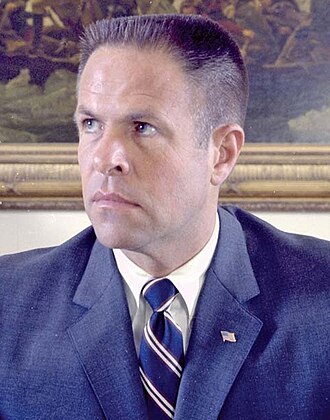
H. R. ("Bob") Haldeman served as President Richard Nixon's White House Chief of Staff from January 1969 until his resignation in April 1973. Acting as Nixon's primary gatekeeper and closest aide, Haldeman was a central figure during the White House taping period and is featured prominently in hundreds of recorded conversations. His tenure ended abruptly when he was forced to resign due to his deep involvement in the Watergate cover-up, most notably captured directing the obstruction of justice on the infamous "Smoking Gun" tape.
What Haldeman talks about on the tapes
Public relations 579Vietnam War 411Political strategy 286Foreign Policy 234Presidential scheduling 209Economic policy 202Henry Kissinger 195Congressional relations 176Press relations 161Watergate 159White House operations 151White House administration 145
Conversations (2,364)
— Page 19 of 24President Nixon met with H. R. Haldeman and Alexander Haig to discuss the critical state of Vietnam peace negotiations, emphasizing that any potential bombing halt or move to Hanoi by Henry Kissinger must be strictly contingent upon a finalized, successful agreement. The participants expressed deep frustration with South Vietnamese leader Nguyen Van Thieu's resistance to settlement terms and discussed the necessity of maintaining leverage without allowing electoral politics to dictate foreign policy. Nixon also instructed that proposed settlement documents be tightly controlled within the White House to prevent unauthorized leaks or critiques from State Department officials. Beyond the Vietnam situation, the group addressed the timing of potential military aircraft deals with Israel, the political implications of upcoming congressional vetoes, and strategic messaging to ensure positive public reception of the President's actions through the final stretch of the election cycle.
President Nixon met with H.R. Haldeman and other aides to manage the political fallout of the Watergate scandal and coordinate the public messaging regarding Vietnam peace negotiations. Nixon emphasized adopting a low-key, defensive posture toward Watergate allegations while directing staff to manage public perception of Henry Kissinger's upcoming trip to Saigon. Additionally, the President stressed the importance of maintaining a stern public image for Kissinger during his diplomatic travels, specifically warning against any optics that might suggest friendliness toward the North Vietnamese.
President Nixon met with his senior advisors and staff to coordinate public relations messaging and diplomatic strategy. The discussion focused on refining the narrative surrounding the administration's recent outreach to labor leaders and establishing talking points for Ron Ziegler regarding Henry Kissinger's upcoming trip to Saigon. Nixon emphasized the importance of framing Kissinger's travel as a routine, pre-planned mission to avoid public speculation about a diplomatic "breakthrough" or a shift in policy toward South Vietnamese President Nguyen Van Thieu.
President Nixon, H.R. Haldeman, and John Connally met to strategize on campaign fundraising and address the growing political fallout from the Watergate scandal. The participants discussed methods for securing large donations from high-profile contributors and analyzed the potential impact of Connally’s forthcoming foreign policy broadcast. Additionally, Nixon sought to distance the White House from the Segretti-led sabotage operations and Watergate, while framing the upcoming election as a critical opportunity to repudiate the values of the "Eastern Establishment" and liberal media.
President Nixon met with H.R. Haldeman, John Connally, and other advisors to discuss campaign messaging, the effectiveness of recent political television broadcasts, and the President's upcoming schedule. The group evaluated the impact of Nixon’s defense and foreign policy messaging, deciding to forgo the release of a new tax plan to avoid unnecessary controversy. Nixon and his team also strategized on the handling of upcoming legislative vetoes, particularly a water bill, while weighing the benefits of presidential travel versus remaining in Washington to maintain a 'presidential' public image.
President Nixon and H. R. Haldeman engaged in a brief exchange regarding the logistics of Haldeman's schedule and a pending request for a meeting with the President. The dialogue served to coordinate the President's availability and manage administrative priorities. No substantive policy decisions were reached during this short interaction.
President Nixon consulted with H. R. Haldeman and Alexander Haig regarding critical foreign and domestic policy matters, most notably the status of Vietnam peace negotiations. Nixon instructed Haig to ensure Henry Kissinger avoided traveling to Hanoi unless a final agreement was secured, while expressing concerns about North Vietnamese military maneuvers near Saigon. Additionally, the President and his staff discussed managing the optics of his 1972 re-election campaign, specifically defending the strategy of remaining in the White House to focus on official duties rather than traditional public campaigning.
President Nixon and H. R. Haldeman met to discuss the President's schedule, specifically addressing the political management of charges related to the Vietnam War. The conversation focused on determining a strategic response to these allegations to maintain a firm, unified public position. Ultimately, Nixon rejected the idea of appearing indecisive, instructing Haldeman to ensure that the administration remains resolute rather than reactive.
President Nixon and H.R. Haldeman evaluated the strategic effectiveness of using radio broadcasts over television for the President's public messaging. The discussion focused on the perceived quality of Nixon’s radio voice and its potential to connect with audiences more effectively than visual media. They further deliberated on specific policy messaging, specifically regarding aid to parochial schools and education policy, ultimately deciding to coordinate these issues with upcoming campaign appearances in Wisconsin.
President Nixon and H.R. Haldeman discussed potential additions to the President's upcoming travel schedule to ensure broader visibility during the campaign. Nixon specifically suggested a trip through New England, targeting Vermont, New Hampshire, Maine, and Massachusetts to demonstrate national attention. Haldeman agreed to evaluate the feasibility of this itinerary as a viable option for the administration.
President Nixon and H.R. Haldeman met briefly to review promotional materials and specific flyer designs. The discussion centered on identifying individuals associated with the 'Polar Bear Flyers' and organizing these documents for future use. No major policy or political decisions were recorded during this brief exchange.
President Nixon and H. R. Haldeman coordinated their morning schedules to ensure sufficient time for high-level planning. Nixon instructed Haldeman to prepare a specific map of New England that prioritizes city locations while omitting road details for easier visualization. The two agreed to convene at 8:15 a.m. following Haldeman's brief attendance at an 8:00 a.m. staff meeting.
President Nixon and H. R. Haldeman met briefly to coordinate their upcoming schedule and finalize pending staff work. They specifically discussed the need to review and edit materials regarding city council representation, with Nixon requesting a visual map to better understand the territorial breakdown. The pair agreed to reconvene shortly thereafter to settle these administrative priorities.
President Richard Nixon met with Chief of Staff H.R. Haldeman in the Old Executive Office Building to discuss internal administrative or personal matters. The majority of the interaction, however, consists of a withdrawn segment classified as personal and returnable. No substantive policy decisions or political discussions are available for review due to the absence of a transcript and the restricted nature of the recording.
President Nixon met with H. R. Haldeman, Alexander Haig, and Stephen Bull to discuss the status of ongoing Vietnam peace negotiations, specifically the unresolved issues regarding prisoners of war and military equipment for South Vietnam. Beyond foreign policy, the group coordinated the President's administrative response to a recently vetoed water bill, strategizing to frame a potential clean water tax as a fiscal necessity. Finally, the President established protocols for upcoming public events, including a U.S.-Soviet trade pact signing and a SALT II announcement, opting to limit his direct involvement in formal photo opportunities to maintain presidential distance.
President Nixon met with H.R. Haldeman and Alexander Butterfield to debate campaign strategy and the President's public schedule for the final weeks of the 1972 election. They discussed the political risks of intensive campaign travel versus staying in the White House, ultimately weighing the benefits of presidential-style events—such as bill signings and meetings on defense or budget issues—against the potential for appearing to be "smoked out" into a competitive race. Nixon expressed a strong preference for limited, controlled appearances to maintain a presidential image, rejecting proposals for excessive rallies or unscripted press interactions while considering a targeted trip to Kentucky to bolster support.
President Nixon met with H. R. Haldeman and Ronald Ziegler to coordinate the administration's upcoming schedule, including meetings with Congressional leaders and campaign travel logistics for Kentucky and Michigan. The discussion shifted toward significant foreign policy concerns, specifically reviewing US-Soviet trade, maritime, and Lend-Lease agreements, as well as the status of ongoing Vietnam peace negotiations. The participants evaluated political messaging and organizational strategies, emphasizing the need for disciplined scheduling and timely execution of executive briefings.
President Nixon met with H. R. Haldeman and other staff members to finalize his pre-election campaign schedule, including plans for radio addresses, a Veterans Day event, and a trip to Appalachia. The discussion focused on projecting a presidential image while avoiding political pitfalls like unscripted press conferences, where the President feared questions would be dominated by the Watergate controversy. The participants also evaluated potential Senate leadership changes and debated media strategy, with the President directing his staff to shun hostile press members and prioritize more favorable outlets.
President Nixon and H. R. Haldeman coordinated an immediate in-person meeting at the Old Executive Office Building. The brief exchange served as a logistical arrangement for the two to convene for private deliberations. No specific policy matters were discussed during this initial contact, as the primary objective was ensuring Haldeman's prompt arrival.
President Nixon met with H.R. Haldeman and Charles Colson to discuss a broad range of post-election administrative reorganization, including plans to require resignations from all Cabinet members and political appointees to consolidate control. The conversation also covered the ongoing Watergate scandal, focusing on leaks from the FBI and concerns regarding public perception of the administration. Additionally, the participants strategized on campaign messaging for the final weeks before the 1972 election, prioritizing issues like Vietnam and welfare while downplaying domestic policy distractions.
President Nixon, H. R. Haldeman, Charles Colson, and John Ehrlichman coordinated logistics for upcoming administrative meetings. The participants finalized the scheduling of a briefing at the White House followed by a retreat at Camp David. The discussion concluded with the President authorizing Haldeman to proceed with the arrangements for these high-level sessions.
President Nixon and H.R. Haldeman met briefly to review the President’s pending schedule prior to his departure by helicopter. The two discussed finalizing arrangements and priorities for the upcoming travel itinerary. No significant policy decisions were recorded during this short administrative coordination.
In this meeting, President Nixon and H.R. Haldeman discuss the ongoing Watergate investigation, specifically focusing on potential leaks from FBI official Mark Felt and the motivations behind media coverage of the scandal. The conversation includes a review of security and public relations logistics for an upcoming White House Halloween event and the scheduling of a revenue sharing ceremony in Philadelphia. Nixon and Haldeman strategize on how to manage the political fallout and investigate the origins of the FBI leaks.
President Nixon and H. R. Haldeman discuss the deteriorating state of Vietnam peace negotiations following South Vietnamese President Nguyen Van Thieu's resistance to a proposed settlement. Nixon expresses a firm intent to finalize a deal with North Vietnam regardless of Thieu’s objections, fearing that continued delays or a failed diplomatic mission by Henry Kissinger to Hanoi would be politically damaging before the upcoming election. They agree that Kissinger must be restrained from traveling to Hanoi, opting instead to manage the situation through private pressure on the Soviet Union to prevent a public propaganda crisis.
President Nixon and H. R. Haldeman met at Camp David to coordinate their departure schedules and discuss concerns regarding an unnamed individual’s overly optimistic perception of current events. Nixon expressed skepticism toward this individual's outlook, noting a tendency to ignore harsh realities. The two agreed on the necessity of collaborating to manage the narrative surrounding an unspecified "hell of a story" involving potential intruders.
President Nixon and H. R. Haldeman discussed adjustments to the President's upcoming schedule to ensure his availability for critical international matters. Nixon instructed that his planned meeting with George Shultz proceed without his attendance to avoid unnecessary distractions. Furthermore, the President coordinated the timing of Henry Kissinger’s return, specifically directing Alexander Haig to delay Kissinger’s arrival until Nixon had returned from New York.
President Nixon and H.R. Haldeman met to discuss the status of Vietnam peace negotiations and the strategic timing of a potential settlement in relation to the 1972 presidential election. The discussion covered the roles of Henry Kissinger and Alexander Haig, the challenges posed by South Vietnamese President Nguyen Van Thieu, and concerns regarding a potential coalition government. Additionally, they coordinated public relations efforts and campaign messaging to address Democratic challenger George McGovern's critiques.
President Nixon met with H.R. Haldeman and other staff members to discuss security concerns and public relations strategies regarding his upcoming travel schedule and motorcades. The participants evaluated the risks associated with motorcades versus rallies, specifically addressing threats posed by protestors and the need for improved crowd control measures. Additionally, they touched upon political strategy regarding the ongoing Watergate investigation and coordinated the handling of press inquiries concerning upcoming Vietnam peace negotiations.
President Nixon and H.R. Haldeman reviewed internal polling data regarding public sentiment toward Vietnam, specifically focusing on the implications of a ceasefire, prisoner of war releases, and the potential for a communist takeover. They shifted their focus to strategic campaign planning, prioritizing security for Nixon's remaining public appearances by favoring controlled environments like military bases over high-risk motorcades. Finally, the pair discussed their public messaging strategy for the Watergate controversy, aiming to counter perceived smear campaigns by distributing a formal 'White Paper' to editors and campaign surrogates.
President Nixon, H.R. Haldeman, and Manolo Sanchez met briefly in the Oval Office to finalize logistical arrangements for an upcoming bill-signing ceremony honoring veterans. The participants discussed the scheduling of the event and their presence at the Executive Office Building for the following week. The conversation focused on ensuring the successful execution of these commitments as the administration neared the end of the legislative session.
President Richard Nixon met with Chief of Staff H. R. Haldeman in the Executive Office Building to discuss administrative matters. The recording contains a withdrawn segment of personal material, indicating the conversation included sensitive or private subject matter. No further details regarding policy or political decisions are accessible due to the lack of an available transcript.
President Nixon and H.R. Haldeman convened in the Old Executive Office Building to conduct official administrative business. While the initial portion of their meeting was withdrawn for personal privacy, the session primarily served to facilitate high-level internal coordination between the President and his Chief of Staff. No further details regarding specific policy outcomes or actionable directives are available due to the lack of a transcript.
President Nixon, H. R. Haldeman, and John Connally met to assess the political fallout from a forthcoming Washington Post story concerning secret campaign funds and Watergate-related disbursements. The discussion centered on allegations that Haldeman authorized payments from these funds to individuals such as G. Gordon Liddy and E. Howard Hunt, based on grand jury testimony from Hugh Sloan. The participants evaluated the potential impact of this press coverage and the threat posed by leaks from the grand jury and federal investigations.
President Nixon met with H. R. Haldeman, Ronald Ziegler, and Henry Kissinger to strategize against mounting political pressure, specifically regarding a damaging Washington Post report on campaign espionage and the ongoing Watergate investigations. The President and his staff discussed methods to counter these allegations, maintain administrative loyalty, and formulate an effective public response to Senator George McGovern's campaign rhetoric. Additionally, Kissinger provided an update on the status of Vietnam peace negotiations, focusing on the tactical challenges of reaching a settlement and coordinating the administration's messaging on the war.
President Nixon and H.R. Haldeman met to coordinate the messaging strategy for the final weeks of the 1972 presidential campaign. They discussed the scheduling and content of upcoming radio addresses on foreign policy, defense, and urban affairs, while also strategizing a media offensive regarding George McGovern's position on amnesty. Additionally, the pair assessed the administration's aggressive response to recent Washington Post reporting on campaign espionage, framing the coverage as "yellow journalism" to discredit the newspaper.
President Nixon and H. R. Haldeman met to coordinate the messaging strategy for upcoming major speeches. Nixon directed Haldeman to focus his immediate national defense address on the themes of nuclear retaliation previously outlined in his San Francisco and American Legion speeches, noting his frustration that past political content had overshadowed those points. Additionally, Nixon instructed that preparations begin for a separate foreign policy speech to be delivered the following week.
President Nixon and H. R. Haldeman met briefly in the Old Executive Office Building to coordinate the President's immediate schedule. The conversation functioned primarily as a logistical check-in to confirm that the President was available to proceed with his next appointment. No substantive policy matters were addressed beyond this scheduling update.
H. R. Haldeman utilized the White House operator to initiate a telephone call to Dwight L. Chapin. Upon reaching Chapin's office, Haldeman was informed that Chapin was currently located in Charles W. Colson’s office. This brief exchange served primarily to facilitate communication between key White House staff members.
H. R. Haldeman coordinates with the White House operator to locate Dwight L. Chapin. Haldeman requests that the operator track Chapin down at Charles W. Colson’s office and connect him to the White House. This administrative call serves as a logistical effort to facilitate direct communication between Haldeman and a key staff member.
H. R. Haldeman contacts the White House operator to secure a phone connection with Dwight L. Chapin. The operator informs Haldeman that they are currently attempting to locate Chapin, who had been expected to be in his office. The discussion concludes with the operator confirming ongoing efforts to track down his whereabouts.
H. R. Haldeman and Dwight L. Chapin engaged in a brief telephone conversation regarding administrative or scheduling matters. Due to the withdrawal of the primary segment of the recording for personal privacy, the specific substance of their discussion is not available for historical review. The exchange serves as a record of communication between the two senior staff members during the lead-up to the 1972 presidential election.
H. R. Haldeman initiated a telephone call to Dwight L. Chapin via the White House operator to facilitate a direct conversation. Due to the withdrawal of the recorded audio for personal reasons, no specific policy or political topics are available for analysis. The primary action item was the successful establishment of a line of communication between the two senior staff members.
H. R. Haldeman coordinates with Dwight L. Chapin to manage the President's upcoming campaign itinerary, specifically focusing on an appearance in West Virginia. The discussion outlines logistical arrangements, including outreach to Governor Arch Moore and potential events in Huntington and Ashland, Kentucky. They aim to finalize these details following a note sent by Clark MacGregor to the Governor.
H. R. Haldeman and Dwight Chapin engaged in a brief telephone conversation to facilitate a direct communication line with President Nixon. The discussion served as a logistical bridge to connect the President, though the specific substance of the exchange was recorded as a personal returnable item and subsequently withdrawn from the public record. No definitive policy decisions were documented in the available segments of this call.
H. R. Haldeman and Dwight Chapin engage in a brief, informal exchange following a segment of the call that remains restricted for personal reasons. The conversation reflects a sense of mutual frustration or disappointment regarding an unspecified situation described as a "shame." No specific policy decisions or administrative actions are recorded in the available transcript.
President Nixon and H. R. Haldeman met to coordinate administration strategy regarding the Vietnam peace negotiations and the final stages of the 1972 presidential campaign. They discussed the political implications of a potential peace settlement before the election, emphasizing the need to maintain an image of progress while avoiding the appearance of being rushed or coerced into a flawed agreement. Additionally, they reviewed campaign tactics, including the President’s travel schedule and strategies to counter Democratic accusations regarding campaign practices and corruption.
President Nixon and H.R. Haldeman discussed the administration's communication strategy following Henry Kissinger’s recent press briefing regarding Vietnam peace negotiations and the assertion that "peace is at hand." The participants evaluated public and press reactions to the potential settlement, emphasizing the need to maintain a unified message while countering criticisms from political opponents like George McGovern. They agreed on the necessity of preparing talking papers for administration surrogates to frame the agreement as a "peace with honor" rather than a surrender, while monitoring the concerns of South Vietnamese leader Nguyen Van Thieu.
President Nixon and H. R. Haldeman met to coordinate public relations strategy regarding ongoing Vietnam peace negotiations as the 1972 presidential election approached. They discussed the administration's messaging, specifically how to leverage the cease-fire talks to their political advantage while managing press expectations through Henry Kissinger. The President decided to pursue an informal, low-profile Q&A session with a select press pool during an upcoming trip to California to control the narrative without formalizing his comments on the record.
President Nixon met with Charles Colson, H.R. Haldeman, and Henry Kissinger to strategize for the final weeks of the 1972 presidential campaign. The discussion centered on monitoring polling data, countering George McGovern’s platform—particularly regarding Vietnam—and maintaining a strong public image of "peace with honor." Nixon emphasized the importance of aggressive political messaging, including the use of surrogates and media tactics to neutralize negative press and emphasize the administration's foreign policy achievements.
President Nixon and H.R. Haldeman discuss the political landscape regarding public opposition, specifically focusing on the intensity of anti-war sentiment among student demonstrators. The conversation centers on the controversy surrounding amnesty, with the President concluding that the general public strongly opposes the concept despite the advocacy of activist groups. They also touch upon broader cultural and political tensions, noting the hostile slogans and diverse grievances—ranging from environmental concerns to abortion—expressed by protesters at institutions like Harvard.
President Nixon met with various staff and visitors, including H.R. Haldeman and John Ehrlichman, to coordinate end-of-campaign activities and legislative priorities. Key decisions included the veto of the Older Americans bill and the strategic timing of further bill signings to maintain positive press coverage. The group also discussed campaign surrogates, including Senator Robert Dole, and planned polling efforts to gauge public sentiment on the Vietnam War and presidential approval ratings.
President Richard Nixon met with H.R. Haldeman in the Old Executive Office Building to review the President's upcoming daily schedule and agenda. The discussion focused on coordinating upcoming engagements and managing time commitments during the final weeks of the 1972 campaign season. No specific policy decisions were finalized during this logistical review session.
President Nixon and H. R. Haldeman met to discuss the scheduling of upcoming national defense radio speeches and to review insights from Haldeman’s recent conversation with Billy Graham. The discussion focused on the political climate, including the impact of the Vietnam peace initiative, concerns regarding North Vietnam's potential interference with the 1972 election, and campaign strategy. Toward the end of the meeting, Stephen Bull joined the President to coordinate a reception for ethnic press and Heritage group leaders, emphasizing the need for efficiency in the President's schedule.
President Nixon met with key advisors, including H.R. Haldeman, Henry Kissinger, and Charles Colson, to coordinate political messaging and media strategy in the final stretch of the 1972 presidential campaign. The discussion centered on countering recent CBS news reports regarding Watergate, managing public expectations for a Vietnam peace settlement, and finalizing the President’s radio speech schedule. Nixon emphasized the importance of aggressive, disciplined political messaging, instructing his team to ensure that surrogates and administration officials remained unified in their efforts to contrast his administration's position with George McGovern's campaign platforms.
H. R. Haldeman and Ronald Ziegler coordinated a last-minute schedule change regarding President Nixon’s upcoming addresses, swapping the planned “Defense” speech with the “One America” speech. Haldeman directed Ziegler to announce that the Defense speech was being postponed by one day to allow for further editing and to maximize its strategic impact. Ziegler agreed to relay these instructions to Gerald Warren to ensure the public announcement reflected the revised schedule.
President Nixon met with H.R. Haldeman and Charles Colson to coordinate campaign strategy and counter negative press regarding corruption allegations ahead of the 1972 election. The participants discussed the distribution of a "white paper" to editors and broadcasters to defend the administration's record and address criticisms concerning the U.S.-Soviet wheat deal and other controversies. Additionally, Nixon emphasized his hardline stance against amnesty for draft evaders and reiterated the importance of maintaining an accurate public record of his campaign's activities.
H. R. Haldeman briefs President Nixon on a proposed settlement strategy regarding the Common Cause campaign finance litigation, which would involve disclosing five million dollars in pre-March 1972 contributions to mitigate the negative publicity of Hugh Sloan's imminent testimony. Ehrlichman, along with Maurice Stans and John Dean, argues that settling now and postponing further litigation until after the election is the best way to cut losses. Nixon expresses concern over the public relations impact but ultimately authorizes the team to proceed if they believe it is the most viable option. Additionally, Haldeman and Nixon briefly discuss the distribution of a White House white paper to the press, with the President requesting to limit the release to Vice President Agnew's statements.
President Nixon and H.R. Haldeman met at Camp David to coordinate the administration's political response to impending Vietnam peace negotiations and potential North Vietnamese actions. They discussed using Secretary of State William Rogers to publicly criticize George McGovern's position on renegotiating peace terms to clarify the administration's stance before the upcoming election. Additionally, the pair reviewed media coverage regarding Watergate-related allegations, adjusted the President's upcoming speech schedule, and finalized the decision to sign H.R. 1 while vetoing other legislation concerning aging and urban issues.
President Nixon and H. R. Haldeman discussed managing the messaging surrounding pending Vietnam peace negotiations while awaiting a crucial communication from North Vietnam. They decided to prevent Secretary of State William P. Rogers from making public statements until the message was received to avoid premature speculation. Conversely, they authorized Vice President Spiro Agnew to aggressively attack Senator George McGovern's position on aid to South Vietnam to maintain political pressure. Ultimately, the President emphasized the need for poise and restraint to project stability despite domestic distractions like the Watergate scandal.
President Nixon and H.R. Haldeman discuss the timing and messaging strategy surrounding pending foreign policy communications from Henry Kissinger. Fearing premature speculation or emotional reactions, Nixon mandates that Secretary of State William Rogers withhold public comment until the message is received. Haldeman is instructed to coordinate with Charles Colson to ensure the administration maintains a composed, disciplined narrative regarding the potential agreement.
President Nixon met with H.R. Haldeman at Camp David to discuss the tactical cancellation of a scheduled Chicago trip following a deadly train accident, prioritizing optics and security over campaign appearances. The two reviewed status updates on Vietnam peace negotiations, strategizing how to manage public perception should talks with North Vietnam falter, including plans for a potential presidential television address. Additionally, the President and his staff coordinated on various administrative and legal matters, including the handling of a Common Cause lawsuit regarding campaign donor disclosures.
President Nixon met with his senior staff, including H.R. Haldeman and Ronald Ziegler, to discuss the ongoing negotiations for a Vietnam peace settlement, emphasizing the necessity of a durable agreement that avoids the pitfalls of previous accords. The discussion also covered campaign strategy, including the management of candidate endorsements and media relations, as well as the political fallout from the Watergate scandal. Additionally, the President reviewed his upcoming schedule, which included meetings with Nelson Rockefeller and security concerns regarding a planned trip to Chicago.
President Nixon met with H.R. Haldeman and Henry Kissinger to navigate the delicate political and diplomatic challenges surrounding the Vietnam peace negotiations just days before the 1972 election. The discussion focused on analyzing Hanoi’s recent public statements, the diplomatic fallout involving South Vietnamese President Nguyen Van Thieu, and the risks of a potential 'build-up and let-down' effect among American voters. The participants assessed the impact of the peace talks on the campaign, specifically weighing the optics of a settlement against George McGovern's electoral strategy and current polling data.
President Nixon and H. R. Haldeman met in the Old Executive Office Building to discuss internal administrative matters and strategy during the final week of the 1972 presidential campaign. The majority of the conversation consists of a personal, non-recordable segment that was subsequently withdrawn from the public archive. No transcript is available to verify the specific subjects addressed during the remainder of the interaction.
President Nixon and H.R. Haldeman reviewed logistics for upcoming presidential travel, focusing on campaign appearances at O'Hare International Airport and potential trips to Oklahoma and North Carolina. They weighed the strategic benefits of specific crowd locations and decided to finalize and announce the Illinois schedule immediately while keeping other travel plans tentative. The discussion also included a brief interlude involving Stephen B. Bull regarding a signing ceremony for the 1973 Appropriations Act.
President Nixon and H.R. Haldeman discussed the consolidation of various media materials, including radio tapes, television footage, and correspondence, for archival purposes. The President explicitly instructed Haldeman to ensure that his personal radio tapes were included in this collection. This exchange reflects the administration's focus on managing and documenting the President's public record.
President Nixon, H.R. Haldeman, and Ronald Ziegler met to discuss campaign strategy and public perception regarding the Vietnam peace negotiations, recent polling data, and political corruption allegations. The President expressed frustration with the opposition's focus on controversial social issues and emphasized a commitment to achieving a "peace without surrender" rather than rushing an agreement before the election. They also coordinated details for the President’s upcoming travel schedule and refined their media messaging approach, specifically advising staff to avoid being overly defensive or "objectively" honest when countering political attacks.
President Nixon and H.R. Haldeman met to coordinate final logistical and strategic planning for the closing stages of the 1972 presidential campaign. The discussion focused on scheduling upcoming travel and campaign appearances in states like North Carolina and New Mexico, while also addressing technical preparations and staging requirements for a televised address. The two also assessed media coverage and public opinion polls to refine their messaging in the final days before the election.
President Nixon met with his senior advisors to strategize for the final days of the 1972 presidential campaign, focusing on polling analysis, press engagement, and the handling of hecklers at campaign events. Much of the session was dedicated to reviewing and revising the text of the President's upcoming "Look to the Future" speech, specifically addressing the sensitive Vietnam War section and the ongoing peace negotiations. Nixon emphasized the importance of delivering the speech at a deliberate, measured pace to effectively convey his vision for the future, domestic achievements, and his foreign policy legacy.
President Nixon, H.R. Haldeman, Henry Kissinger, and other staff members met to finalize the President's upcoming "Look to the Future" campaign speech and coordinate media strategy for the final days of the 1972 election. The discussion focused on television airtime purchases, speech pacing and editing, and managing campaign appearances in the context of ongoing Vietnam peace negotiations. The President also addressed organizational plans for the Republican National Committee and broader GOP candidate support efforts.
President Nixon and H.R. Haldeman met to coordinate the President's upcoming schedule and communications strategy. The discussion focused on managing logistics for an upcoming telephone call with Senator John G. Tower, as well as travel plans involving Chicago and Rhode Island. The pair concluded by confirming the finalized arrangements for these presidential engagements.
President Nixon and H.R. Haldeman met briefly to finalize outstanding administrative matters following the President's daily schedule. The two reviewed remaining tasks, referred to as "odds and ends," to ensure the completion of their immediate agenda. No specific policy decisions were recorded during this short transitionary discussion.
H. R. Haldeman attempted to contact Kenneth Cole, Jr. via the White House switchboard to discuss urgent administrative business. After learning that Cole was traveling in Georgia, Haldeman consulted with an assistant in Cole's office to obtain contact information and facilitate a potential call to John D. Ehrlichman. Ultimately, Haldeman decided to postpone the outreach after determining the connection could not be immediately established.
President Nixon and H.R. Haldeman met to coordinate final logistics for the 1972 presidential campaign, focusing on radio addresses, polling strategies, and scheduling for upcoming candidate support calls. The discussion covered concerns regarding campaign disruptions, such as heckling at events, and the ongoing fallout from the Watergate investigation, including the roles of John Mitchell and Donald Segretti. Additionally, the President and his staff discussed the rollout of national health insurance policy and their desire to maintain a distance from certain political candidates while managing public perceptions through television and media engagement.
President Nixon consulted with John Ehrlichman to express strong opposition to language regarding health maintenance organizations (HMOs) in an upcoming health care speech. Nixon directed that references to HMOs be removed and mandated that the term "national health insurance" be replaced with "comprehensive health insurance" to distance his proposal from socialist-leaning government programs. The conversation concluded with Nixon emphasizing his skepticism toward the existing legislative program and calling for a rigorous internal review of the administration's health care policy.
President Nixon and H. R. Haldeman discussed the logistics of candidate-related telephone calls and the distribution of the President’s campaign speeches. Nixon requested that specific recipients be prioritized for direct outreach while delegating others to a general list for supplementary contact. Additionally, the pair briefly reviewed Haldeman’s daily schedule and upcoming meetings.
President Nixon and H. R. Haldeman met to discuss various administrative tasks, including the President recording gratitude messages for campaign supporters like Thomas B. McCabe and addressing health policy. The conversation also touched upon the President's upcoming phone calls, including one to Margaret Chase Smith. These interactions focused on the President's outreach efforts and the preparation of materials for his official agenda.
President Nixon met with Charles Colson and H.R. Haldeman to coordinate final campaign strategies, discuss media relations, and finalize his upcoming 'Look to the Future' speech. The conversation also touched upon concerns regarding the Watergate controversy, the status of Vietnam peace negotiations, and the need to mobilize support among blue-collar voters. Additionally, Nixon placed brief follow-up calls to Jack Miller and William Scott to encourage their campaign efforts and emphasize the importance of high voter turnout in their respective regions.
President Nixon and H.R. Haldeman discuss a Washington Star article concerning the 1968 bugging of Nixon's campaign, strategizing on how to address the allegations. They weigh the necessity of official denials and conclude that the burden of clarification lies with former President Lyndon B. Johnson rather than the White House. The conversation reflects a tactical decision to avoid direct involvement in the controversy while pressuring the Johnson camp to address the story.
President Nixon met with members of the Council on Environmental Quality (CEQ), including Russell E. Train and Beatrice Willard, for a formal photograph session and a discussion regarding environmental policy. The President requested that the Council provide material for his upcoming State of the Union address by December 1, 1972. During the exchange, Nixon also emphasized his commitment to conservation measures, such as energy-saving practices and paper recycling, while briefly touching upon his California background and campaign interests.
President Nixon and H. R. Haldeman discuss reports regarding a 1968 bugging incident and potential FBI involvement during the transition period. Haldeman relays information from George Christian regarding Lyndon B. Johnson’s desire to avoid public confrontation over allegations of Nixon campaign interference in peace talks. The two also address concerns about internal FBI leaks and touch upon Johnson’s health and his public stance regarding the 1972 election.
President Nixon initiated a phone call to request an immediate meeting with his Chief of Staff, H.R. Haldeman. The brief exchange focused primarily on scheduling this consultation to address current administrative matters. The conversation served as a logistical precursor to further private deliberations between the two men.
President Nixon and H. R. Haldeman met to coordinate final 1972 campaign strategies and manage the administration's response to a recent speech by George McGovern. They evaluated the effectiveness of McGovern’s public presentation and discussed the involvement of key aides, including Charles Colson, in shaping the campaign's messaging. Additionally, the pair reviewed upcoming scheduling requirements, specifically regarding calls involving New Jersey political figures like William T. Cahill and Clifford P. Case.
H. R. Haldeman contacts the White House operator to facilitate a telephonic connection with speechwriter Raymond K. Price, Jr. This administrative exchange serves solely as a logistical request to initiate a conversation with Price. No substantive policy matters or strategic discussions occur during this brief operator-assisted call.
President Nixon and H.R. Haldeman participated in a brief, fragmented telephone exchange involving unknown participants shortly before the 1972 election. The dialogue lacks substantial policy discussion, consisting primarily of greetings and administrative coordination, including a reference to placing a call to Raymond Price. No significant decisions or substantive developments were recorded during these brief segments.
H. R. Haldeman instructs the White House operator to cancel a scheduled telephone call to presidential speechwriter Raymond K. Price, Jr. Haldeman specifies that he intends to reach out to Price from a different line instead. The brief exchange concludes with the immediate cancellation of the initial connection attempt.
President Nixon and his senior staff, H. R. Haldeman and John Ehrlichman, coordinated campaign messaging in the final days before the 1972 election. Much of the discussion focused on refuting George McGovern’s criticisms regarding Vietnam, specifically emphasizing the administration's stance that they had achieved a breakthrough toward "peace with honor" while clarifying that remaining "central points" were merely details requiring resolution. To reinforce these themes, Nixon made a series of telephone calls to various Republican candidates across the country to offer his endorsement, boost morale, and provide talking points for their final campaign appearances.
President Nixon, H.R. Haldeman, and Charles Colson met to discuss the final stages of the 1972 presidential campaign, focusing on delegating media responses and organizing future public appearances. They evaluated the effectiveness of Vice President Spiro Agnew in challenging George McGovern's stance on Vietnam negotiations, specifically emphasizing the contrast between "peace with honor" and McGovern’s perceived "irresponsibility." Additionally, the participants discussed personnel matters, including a potential transition for Clark MacGregor into a new role following the election.
President Nixon met with key advisors, including H. R. Haldeman, Charles Colson, and Henry Kissinger, to strategize for the final days of the 1972 presidential campaign. The discussion focused on countering George McGovern's recent criticisms regarding Vietnam and the Watergate scandal, while analyzing polling data and state-by-state electoral projections. Nixon and his team also evaluated the status of Vietnam peace negotiations and determined how to leverage their progress toward a settlement to bolster the President's standing before Election Day.
President Nixon and H. R. Haldeman discuss early returns and network projections during the 1972 presidential election. The two analyze the validity of competing media projections for key states like Illinois, Ohio, and Tennessee, while acknowledging the defeat of specific Republican candidates such as Louie Nunn and S. Fletcher Thompson. Nixon expresses frustration with the networks' premature and inconsistent reporting, opting to maintain a close watch on the incoming results as the landslide victory takes shape.
President Nixon and H.R. Haldeman reviewed early election returns and television network projections on the night of the 1972 presidential election. The discussion focused on the President's strong performance across various states, the status of key Senate races, and concerns regarding voter turnout. Nixon instructed his staff to gather further intelligence on outstanding contests in states like Wisconsin and New Hampshire, as well as specific Senate results, to better gauge the night's final outcome.
President Nixon met with H.R. Haldeman and Manolo Sanchez in the Old Executive Office Building shortly after the 1972 election. The discussion centered on early election returns and the personal voting experiences of Sanchez and his wife, Fina. During the brief interaction, the President also utilized White House operators to facilitate multiple telephone communications.
President Nixon, H.R. Haldeman, Charles Colson, and others gathered in the early morning hours following the 1972 presidential election to review preliminary results and network projections. The conversation focused heavily on the President's landslide victory, the status of key Senate races, and the performance of various Republican candidates. Nixon expressed frustration over the defeat of certain incumbents and analyzed the broader implications of voter turnout and media coverage, ultimately focusing on his planned victory speech and communication strategy.
President Nixon and H. R. Haldeman coordinated the preparation of a wire to be drafted by Patrick J. Buchanan. The conversation centered on the logistical execution of this document, with Nixon confirming his role in finalizing the content. The pair moved quickly to ensure the draft would be ready for upcoming strategic use.
Charles W. Colson coordinates with his office staff to urgently secure data regarding the results of the 1972 congressional elections. Colson requests an immediate phone call to Lyndon “Mort” Allin to obtain the net gain or loss of Republican seats. These figures are to be relayed quickly to Manolo Sanchez, presumably for President Nixon's review in the wake of the election.
President Nixon met with H. R. Haldeman, Ron Ziegler, and Rose Mary Woods to plan the second-term administration transition, including the upcoming Cabinet and staff meetings. They discussed the requirement for all political appointees to submit their resignations to facilitate a comprehensive reorganization and structural reform of the executive branch. Additionally, the President and his staff reviewed the positive 1972 election results, addressed concerns regarding the lack of support for Republican congressional candidates, and prepared for the President's upcoming trip to Florida.
President Richard M. Nixon and H.R. Haldeman met briefly in the Oval Office to coordinate logistics and movements during a transitional period in the morning schedule. The participants navigated through the Roosevelt Room while preparing for subsequent official engagements. No substantive policy discussions were recorded during this brief encounter as the President transitioned to meet with an unidentified individual.
President Nixon and H. R. Haldeman discussed the logistics of administrative restructuring following the 1972 election, focusing on the upcoming submission of resignations by Cabinet members. Nixon instructed that all Cabinet officials submit their resignations to facilitate a comprehensive transition, with individual follow-up meetings planned within the next two weeks. The conversation also touched on the schedules of John A. Volpe and general preparations for the President's second-term reorganization.
President Nixon and H.R. Haldeman met at Camp David to discuss the staffing and strategic organization for the second presidential term. They reviewed potential roles for Charles Colson and Patrick Buchanan, emphasizing the use of investigative pressure on tax-exempt foundations like the Ford Foundation and Common Cause. Additionally, they planned the logistics for the 1973 Inauguration, focusing on creating inclusive events that appealed to a broader "New Majority" rather than the traditional Washington elite.
President Nixon and H.R. Haldeman coordinated the logistics of their upcoming meeting at Camp David. The two discussed the presence of Charles Colson and agreed that Haldeman would join the President once other guests had departed. This brief exchange served to clear the President’s schedule for a private debriefing session.