Hodgson, James D.
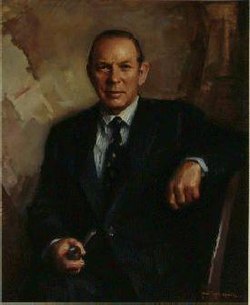
James D. Hodgson served as Under Secretary of Labor from February 1969 to July 1970, when he was elevated to Secretary of Labor following George Shultz's departure. During the primary White House taping period, he served as Secretary of Labor (July 1970 to February 1973), playing a key role in the creation of the Occupational Safety and Health Administration (OSHA) and managing labor relations. Following Nixon's reelection, Hodgson left the cabinet to become Senior Vice President at Lockheed Aircraft Corporation from February 1973 to June 1974, before returning to the administration as U.S. Ambassador to Japan from July 1974 to February 1977.
President Nixon and his Cabinet met to discuss the ongoing military operations in Indochina and the development of the administration's national health reform agenda. Regarding the war, officials reviewed the progress of South Vietnamese incursions into Laos and Cambodia, noting that the strategy was successfully disrupting enemy supply lines while shifting the burden of ground operations away from American forces. The conversation then transitioned to a detailed proposal from Secretary of Health, Education, and Welfare Elliot Richardson regarding healthcare reform, with the group debating the costs, tax implications, and administrative feasibility of implementing Health Maintenance Organizations (HMOs) and national health insurance standards.
President Nixon met with his advisors, including Secretary of Labor James Hodgson and George Shultz, to debate strategies for curbing inflation and rising construction costs, specifically focusing on the potential suspension of the Davis-Bacon Act. The participants weighed the political risks of appearing anti-union against the need to exert pressure on construction labor leaders to accept voluntary wage stabilization. Nixon ultimately favored a targeted approach to the construction industry over broad wage-price controls to avoid broader economic disruptions and political backlash. The group decided to finalize an announcement strategy for the suspension, potentially leveraging the upcoming Governors' Conference to bolster the administration's position.
President Nixon met with his Cabinet and key staff to discuss the status of the administration's revenue sharing legislative agenda and receive briefings on various international developments. Administration officials reported on their outreach efforts to build public and Congressional support for revenue sharing while addressing opposition from labor and minority groups. Additionally, Cabinet members provided updates on their recent foreign travels, emphasizing the geopolitical successes of the Nixon Doctrine in Southeast Asia and the strengthening of international cooperation on transportation and environmental safety.
President Nixon met with Louie B. Nunn, Whitney M. Young, Sr., and administration officials to discuss vocational training initiatives and the legacy of Whitney M. Young, Jr. The discussion emphasized the critical role of skill-based training and education in creating economic opportunities for minority communities. Participants shared personal anecdotes regarding the transformative impact of vocational programs, ultimately reinforcing the administration's support for expanding these efforts.
President Nixon met with George Shultz, John Ehrlichman, and James Hodgson to finalize a plan for stabilizing rampant wage inflation in the construction industry through an Executive Order. The proposed strategy involves creating industry-specific wage stabilization boards overseen by a tripartite 'super board' to moderate strikes and wage hikes, backed by the threat of suspending the Davis-Bacon Act for non-compliant areas. Nixon directed his team to present this plan to the Cabinet and key stakeholders as a collaborative effort to ensure broader buy-in while maintaining the administration’s leverage over labor unions.
President Nixon and his Cabinet met to discuss the ongoing challenge of inflation and rising construction costs, focusing on the administration's strategic options for economic stabilization. Dr. Paul McCracken reviewed current inflationary trends and labor market data, outlining a spectrum of potential responses ranging from maintaining current fiscal policies and targeted interventions to implementing more aggressive measures like wage and price controls. The meeting served as a forum to evaluate the efficacy of various regulatory mechanisms, such as the National Commission on Productivity and the suspension of the Davis-Bacon Act, while weighing the political and practical risks of further government intervention in the economy.
President Nixon and the Council on International Economic Policy (CIEP) met to review global economic trends, specifically focusing on the United States' competitive position regarding trade, technological exports, and shifting GNP shares among developed and developing nations. The participants discussed the challenges posed by Japanese industrial policies, the role of multinational corporations, and potential antitrust law reforms to better align with international business realities. The meeting served to define the CIEP’s procedural structure and establish priorities for future foreign economic initiatives, including trade legislation and adjustment assistance programs.
President Nixon met with Franco Mario Malfatti, President of the European Commission, and various U.S. officials to address rising protectionist tensions between the United States and the European Economic Community (EEC). The discussion focused on the necessity of reciprocal trade concessions, specifically identifying how minor, mutually beneficial adjustments—such as those regarding citrus and textiles—could alleviate domestic political pressures and prevent broader trade conflicts. Nixon emphasized the importance of finding practical solutions to avoid protectionism, while Malfatti discussed the EEC’s ongoing efforts toward economic integration and the logistical challenges posed by the community's potential expansion. To facilitate progress, the parties agreed to coordinate follow-up efforts, including an upcoming diplomatic mission by Ambassador David Kennedy to Europe and Asia.
President Nixon and a wide-ranging group of Cabinet members, advisors, and Congressional representatives met to discuss the growing national energy crisis and the necessity of transitioning to nuclear power. AEC Chairman Glenn Seaborg and other experts detailed the technological, environmental, and economic advantages of the liquid metal fast breeder reactor, emphasizing its ability to maximize fuel efficiency and provide long-term, pollution-free energy. The participants concluded that a strong national commitment, including significant federal funding and industry collaboration, is essential to accelerate the development of demonstration reactors and ensure future energy independence.
President Nixon met with H. R. Haldeman, Henry Kissinger, and other staff members to discuss political messaging, media relations, and administrative strategy. A primary focus was neutralizing the political threat posed by Congressman Paul McCloskey, whose public dissent regarding U.S. operations in Southeast Asia and accusations of misconduct in Vietnam were causing friction. The group agreed to handle such dissent by having Congressional allies—rather than the White House—directly refute these claims to avoid elevating the critic's profile. Additionally, the President reviewed his public schedule, emphasizing the need to maintain a composed, energetic appearance to manage perceptions of his stamina and leadership.
President Nixon and H.R. Haldeman discuss the necessity of adopting a more aggressive, partisan political strategy to defend against opposition, while critiquing staff members who favor compromise over confrontation. Nixon expresses a desire to remove disloyal administration officials and suggests using Vice President Agnew to publicly attack Senate critics. The meeting also covers logistical planning for upcoming events, including an appearance before the Daughters of the American Revolution and a meeting with AFL-CIO leadership.
President Nixon met with the executive council of the AFL-CIO Building and Construction Trades Department to discuss the state of the construction industry, economic growth, and the administration's recent suspension of the Davis-Bacon Act. The discussion addressed concerns regarding job stability, the rising costs of land and construction, and the need for continued labor-management cooperation under the administration's new wage stabilization policies. Nixon emphasized his support for the trades and sought their partnership in fostering economic stability, while also pivoting to broader topics of national security, international defense commitments, and the strategic importance of U.S. economic and military strength in the global landscape.
President Nixon met with Senator Russell Long, administration officials, and congressional representatives to strategize on the advancement of the President’s welfare and health care legislation. The discussion focused on overcoming opposition to the administration's health bill, particularly the competing proposal from Senator Edward Kennedy, while emphasizing the need for congressional education and potential compromises to secure passage. Additionally, the President and Senator Long discussed refining welfare reform, specifically focusing on work incentives, child support enforcement, and addressing public concerns regarding welfare dependency.
President Nixon met with his Cabinet and key staff to coordinate legislative strategies and manage domestic policy agendas. The discussion focused on securing passage for welfare reform and other administration priorities by engaging directly with congressional leadership and balancing competing interests within the labor market. Participants assessed the challenges of mobilizing support among both Democrats and Republicans and emphasized the necessity of persistent lobbying and effective communication with legislative committees.
President Nixon and his Cabinet met to receive a briefing on international affairs and domestic policy, with a focus on Secretary of State William P. Rogers' recent diplomatic travels to the Middle East and the feasibility of desalinization technology. Rogers reported on his efforts to stabilize the Middle East through ceasefire maintenance and discussed the geopolitical concerns of various regional leaders. Dr. Edward E. David Jr. and other experts presented a detailed plan to advance domestic water desalinization and nuclear power capabilities, with the President calling for a major, accelerated federal effort to ensure American technological leadership. The meeting concluded with a brief status report from Treasury Secretary David M. Kennedy regarding the current international monetary situation and the fluctuations of the dollar.
President Richard M. Nixon met with representatives from several prominent senior citizens' organizations to discuss federal policy and the specific needs of the elderly population. The participants, including administration officials such as George Shultz and Dr. Arthur S. Flemming, addressed critical issues including Social Security cost-of-living adjustments, Medicare and health care accessibility, housing, and transportation. The President emphasized his commitment to addressing these challenges through government programs and invited the organizations to continue providing input to his staff to assist in developing effective legislative solutions.
President Nixon met with the Executive Board of the National Association of Home Builders (NAHB), along with Secretary of HUD George Romney and other administration officials, to discuss the economic health of the housing industry. The primary focus of the discussion was the impact of rising interest rates, inflation, and federal regulations on housing production and middle-class affordability. The participants addressed potential legislative reforms to labor relations and the construction industry, while the President emphasized the administration's commitment to stabilizing the economy and monitoring wage and price trends to support industry growth.
President Nixon, Vice President Agnew, and a large group of Cabinet members and senior staff met to establish a strategic framework for domestic policy, budget planning for the 1973 fiscal year, and the development of the 1972 Republican legislative and election platform. Participants reviewed polling data regarding national, community, and family concerns, noting that the economy, inflation, and unemployment are primary public priorities while other issues like pollution and consumerism are often driven by media visibility. The President and attendees emphasized the need for better communication to receive credit for administration accomplishments, focusing on a limited number of 'gut issues' rather than overextending on too many programs. Ultimately, the group discussed the necessity of coordinating policy initiatives and messaging to ensure visible progress on key economic and social concerns ahead of the 1972 election.
President Nixon met with various railway union leaders, accompanied by Secretary of Transportation John A. Volpe and Secretary of Labor James D. Hodgson, to discuss the economic challenges facing the railroad industry. The discussion focused on the necessity of industry modernization, the impact of outdated government regulations, and the need for tax reforms to incentivize the reinvestment of profits into infrastructure and equipment. Both the administration and union representatives emphasized the importance of labor-management stability and the potential for a unified approach to ensure the future prosperity of the industry.
President Nixon met with staff members Stephen Bull, Alexander Butterfield, and Secretary of Labor James Hodgson to discuss the television coverage of a recent wedding. The participants reviewed the broadcast, with the President expressing particular satisfaction regarding the production quality and timing of the footage. Nixon concluded the brief meeting by requesting that the segment be replayed for an additional thirty minutes.
President Nixon and his senior advisors and business leaders convened to formalize a national strategy for increasing veteran employment, emphasizing the need for businesses to provide veterans with a hiring advantage. The discussion included strategies for managing the fallout from the recently leaked Pentagon Papers, with Nixon directing his team to resist congressional hearings on war conduct while ensuring the documents were securely channeled to responsible leadership. Nixon also expressed a desire to keep the focus of the controversy on the previous administrations and away from current operations, tasking officials with maintaining a unified, firm stance against political opportunists.
President Nixon met with the Cabinet Committee on Economic Policy to address ongoing issues regarding internal leaks of economic strategy and the lack of a unified administration voice. He stressed the necessity of presenting a cohesive front to the public, designating Secretary of the Treasury John B. Connally as the primary spokesperson for economic policy. The President mandated that all advisors cease unauthorized contacts with the press and align their public statements with the official administration line to restore public trust and policy stability.
President Nixon met with Jerome Rosow, James Hodgson, John Ehrlichman, and George Shultz to discuss Rosow's departure and future professional plans. The meeting included the presentation of gifts to Rosow and a brief photograph session with the White House photographer. The participants also touched upon broader administration goals regarding the environment and increasing employment figures.
President Nixon met with his Cabinet to address the persistent problem of unauthorized leaks within the federal bureaucracy and to establish clear expectations for departmental discipline. He emphasized that decision-making must remain internal and closed to prevent political sabotage, specifically citing the negative impact of leaks on economic policy and administrative unity. Nixon announced that H.R. "Bob" Haldeman would oversee efforts to tighten internal controls, while Secretary John Connally was designated to handle the official announcement of upcoming economic policy decisions.
President Nixon met with the National Commission on Productivity to discuss the evolving state of the global economy and the United States' competitive position in the post-World War II era. The conversation focused on the rapid industrial growth of Japan and Western Europe, the emergence of China, and the necessity for the U.S. to enhance its productivity to maintain economic leadership. Nixon emphasized that while diplomatic and political tensions with the Soviet Union might fluctuate, long-term economic stability and international influence would depend on domestic production and effective global economic engagement.
President Nixon met with members of the National Commission on Productivity, including union leaders, corporate executives, and government officials, to discuss strategies for enhancing American economic productivity and competitiveness. The conversation focused on the role of government-industry cooperation, the importance of basic versus applied research in fostering technological innovation, and the challenges posed by foreign trade competition and environmental regulations. Participants emphasized the need to align private sector investment with national economic goals to ensure long-term stability and job growth in an increasingly global market.
President Nixon met with James D. Hodgson and George P. Shultz to discuss the National Commission on Productivity, focusing on leveraging the commission to foster support for administration economic and research initiatives. The participants deliberated on strategies to bypass environmental hurdles for major projects, the potential for private-sector research investment, and the appointment of Peter G. Nash as NLRB General Counsel. Nixon emphasized his administration's philosophy regarding the appropriate balance between government intervention and private enterprise, tasking his aides with identifying government functions that could be effectively privatized to improve efficiency and symbolic impact.
President Nixon met with Sammy Davis, Jr. to discuss the effectiveness of utilizing high-profile celebrities to combat drug abuse among youth by appealing to their aspirations rather than moralizing. Following this, the President met with administration officials, including Elliot Richardson, James Hodgson, and George Shultz, to navigate a political impasse regarding welfare reform waivers requested by California Governor Ronald Reagan. The group debated the legal risks of granting waivers for work-relief programs, deciding to pursue a strategy of providing federal public service job funding to California while avoiding an outright endorsement of Reagan's controversial welfare proposals. Additionally, the President reviewed labor statistics and planned an activist approach for a forthcoming steel industry meeting aimed at preventing a national strike.
President Nixon met with Charles Colson, George Shultz, and James Hodgson to discuss concerns over recent unemployment statistics released by the Bureau of Labor Statistics (BLS). Nixon expressed frustration with the BLS leadership, specifically targeting Assistant Commissioner Harold Goldstein and Commissioner Geoffrey Moore for their perceived lack of loyalty to the administration and their mishandling of reports. The group discussed plans to force a reorganization of the BLS to gain greater control over the reporting process, as well as the eventual replacement of Moore with a more reliable figure.
President Nixon met with leaders from the steel industry and union representatives to discuss upcoming contract negotiations and the broader economic challenges facing the U.S. steel sector. Nixon emphasized the industry's critical role in the national economy, highlighting the need for productivity improvements and warning against inflationary wage-price spirals that could undermine global competitiveness. He encouraged labor and management to act with a sense of national responsibility while navigating their specific bargaining objectives, citing his own experience in past negotiations to underscore the stakes for the nation's future.
President Nixon met with United Transportation Union leaders and railroad management representatives to address the economic crisis caused by an ongoing railroad strike. Nixon emphasized his administration's preference for private-sector collective bargaining over government intervention, warning that continued labor stoppages could provoke negative public and Congressional reactions that would ultimately damage the industry. The discussion centered on the need for both parties to reach an equitable settlement quickly to protect the economy, with the President urging management to streamline their decision-making process to facilitate a resolution.
President Nixon and Secretary of Labor James D. Hodgson discussed strategies to force immediate settlements in ongoing steel and railroad labor negotiations. Concerned by the inflationary impact and the public's exhaustion with labor disputes, Nixon authorized Hodgson to convey a stern ultimatum to both industries, signaling that the administration was prepared to take aggressive action if negotiations failed. Nixon further expressed his willingness to personally intervene in the steel talks if a breakthrough appeared imminent, emphasizing the necessity of resolving productivity and work rule issues.
President Nixon met with Secretary of Labor James D. Hodgson to commend him and his team for their successful mediation of the recent steel industry labor negotiations. The President expressed his satisfaction with the settlement and the handling of subsequent price increases, acknowledging the dedicated efforts of Hodgson, Willie J. Usery, Jr., and J. Curtis Counts. Nixon instructed Hodgson to ensure that all involved parties received formal recognition for their contributions before Hodgson took personal leave.
President Nixon met with Vice President Agnew and his Cabinet to discuss the administration's foreign policy objectives and the state of the national economy. Agnew briefed the attendees on his recent international tour, highlighting the global reception of the Nixon Doctrine and the challenges posed by the Arab-Israeli conflict, East Pakistan, and the increasing Soviet and Chinese presence in various regions. Nixon and his advisers subsequently addressed the economic outlook, emphasizing the need for an aggressive, unified defense of administration policies regarding inflation and unemployment, while dismissing the viability of permanent wage and price controls. Finally, the President mandated a strict reduction in government personnel and grade-level escalation to improve budget management across executive departments.
President Nixon met with the Cabinet Committee on Opportunities for the Spanish Speaking (CCOSS), led by Dr. Henry M. Ramirez, to discuss increasing Hispanic representation and employment within the federal government. Emphasizing that the administration must proactively identify and promote talent rather than waiting for external political pressure, the President linked the development of human resources to the broader necessity of maintaining American economic competitiveness against global rivals like Japan and Western Europe. Nixon formally charged cabinet members to improve departmental hiring practices and mandated regular progress reports to ensure accountability in expanding opportunities for Hispanic Americans.
President Nixon and Secretary of Labor James D. Hodgson discussed the positive reception and strategic necessity of the recently announced wage-price freeze. They reviewed the administration's decision to maintain secrecy regarding the policy to prevent economic instability, specifically citing concerns about runs on the dollar and preemptive price hikes. Nixon emphasized the importance of maintaining a firm stance with labor leaders like Lane Kirkland and corporations like General Motors while preparing to coordinate the administration's messaging during an upcoming cabinet meeting.
President Nixon convened a large meeting with Vice President Agnew and his Cabinet to discuss the national economy and the "New Economic Policy" he had announced the previous day. Key topics included the wage-price freeze, import surcharges, tax relief, budget cuts, and the convertibility of the dollar. The administration sought Cabinet support for these initiatives and discussed their potential impact on international trade and domestic employment.
President Nixon met with the Council on International Economic Policy (CIEP) and key economic advisors to discuss the administration's post-August 15 New Economic Policy (NEP) and future international trade strategy. Peter G. Peterson led a presentation analyzing the shortcomings of global liberal trading systems and the challenges posed by foreign competitors like Japan, while other officials addressed the domestic economic impact, labor relations, and the status of ongoing monetary negotiations. The President emphasized the need for a firm but diplomatic approach toward Japan and directed his team to maintain the offensive on domestic economic policy while keeping options flexible regarding international monetary reform.
President Nixon met with key labor leaders and administration officials to solicit input on the development of 'Phase II' of his economic program, following the conclusion of the initial 90-day wage and price freeze. The discussion centered on transitioning to a more permanent, yet flexible, mechanism for controlling inflation while maintaining the principles of collective bargaining and a free-market system. The participants debated the merits of tripartite boards—modeled after the War Labor Board—versus government-imposed mandates, with labor leaders emphasizing the need for voluntary compliance and equitable standards. Nixon concluded by establishing an October 1 deadline for the group to submit their formal views, underscoring the necessity of labor-management cooperation for the program's success.
President Nixon met with the Cost of Living Council to assess the implementation and public reception of the 90-day wage-price freeze initiated on August 15, 1971. The council members, including John Connally, George Shultz, and Arthur Burns, reported on the effectiveness of enforcement efforts, current compliance levels, and the complexities of handling exemption requests. The discussion shifted toward strategic planning for Phase II, emphasizing the need for sustainable economic policies, public leadership, and the critical role of securing support from business and labor leaders before the freeze's conclusion.
President Nixon, Pat Nixon, and the Cabinet met with their spouses to discuss the implementation and public perception of the administration’s New Economic Policy. Secretary of the Treasury John Connally led a comprehensive briefing on the wage-price freeze, tax reforms, and international monetary adjustments aimed at curbing inflation. The discussion emphasized the necessity of these economic measures for restoring national growth, managing federal expenditures, and building public and congressional support for the administration's program.
President Nixon met with his Cabinet and key staff members to review the administration’s domestic and foreign policy priorities, primarily focusing on the economic transition to 'Phase II' and the announcement of a 1972 Soviet summit. Officials discussed the successful implementation of the wage-price freeze and the strategy for securing organized labor's cooperation on the newly formed Pay Board and Price Commission to curb inflation. Additionally, the President addressed the importance of linking economic policy to job growth through his pending tax proposals, while Secretary of State Rogers and the President emphasized that international diplomatic overtures toward the Soviet Union and China were part of a cohesive, long-term strategy for global peace.
President Nixon met with his Cabinet Committee on Executive Reorganization to coordinate strategy for the administration's departmental restructuring proposals. The discussion focused on overcoming bureaucratic resistance, navigating complex Congressional committee jurisdictions, and addressing concerns regarding constituency-based programs like the Rural Electrification Administration. To advance these reforms, Nixon directed his Cabinet members to personally engage with key Congressional leaders and exert stricter control over their respective bureaucracies to ensure support for the legislative agenda.
President Nixon and the Cost of Living Council convened to discuss the efficacy of the administration's economic stabilization program, specifically the transition from Phase I to Phase II. Participants evaluated the success of existing price and wage controls and addressed the future of the Pay Board and Price Commission ahead of the 1972 calendar year. The meeting concluded with a formal vote to adopt an amendment to 'Option 2' regarding economic policy adjustments.
President Nixon met with his Cabinet officers to discuss a variety of domestic and international issues, including transportation leadership, government funding through a continuing resolution, and the cultivation of opium poppies in Turkey. The conversation also touched upon administrative transitions, such as the departure of Secretary of Agriculture Clifford Hardin, and strategies for managing the national economy and price controls. Nixon emphasized the importance of maintaining clear leadership and coordination across departments to ensure the success of his domestic policy initiatives.
President Nixon and Secretary of Labor James D. Hodgson exchanged Christmas greetings while discussing recent labor developments during the holiday season. The conversation focused on the resolution of a dock strike, ensuring it would not disrupt the President's upcoming meeting with Japanese Prime Minister Eisaku Sato, and the positive reception of the recent release of Jimmy Hoffa from prison. Nixon noted the strategic importance of Leonard Woodcock’s public support for the Hoffa decision, affirming that the administration would monitor Hoffa’s compliance to avoid future incarceration.
President Nixon met with his Vice President and Cabinet to discuss the state of the U.S. economy, the administration's fiscal policy, and the upcoming 1973 budget. Key areas of focus included interpreting unemployment data—specifically the impact of new entrants to the workforce—and managing inflation through Phase II price and wage controls. Nixon urged his department heads to aggressively implement approved spending programs to stimulate the economy, while simultaneously directing them to more effectively communicate and promote the administration's economic achievements and social policy investments to the public.
President Nixon met with the Construction Industry Collective Bargaining Commission to review the progress of labor-management relations and wage stabilization efforts in the construction sector. The discussion focused on the success of the Commission's voluntary approach to curbing inflation, the role of craft boards in fostering industry cooperation, and the broader integration of productivity goals. Nixon commended the participants for their responsible leadership and collaborative efforts, emphasizing the importance of keeping the industry's management in the hands of construction professionals while continuing to modernize labor practices.
President Nixon met with California Governor Ronald Reagan and various administration officials to discuss domestic policy challenges, specifically addressing stalled welfare reform legislation and the ongoing West Coast dock strike. The group explored the economic implications of federal spending and potential strategies to bypass congressional inaction regarding labor disputes, with Reagan sharing his past experience managing strike negotiations. Additionally, the participants discussed the political and ethical complexities surrounding abortion access through Medicaid and the legal status of the unborn.
President Nixon met with his Cabinet and senior staff to debrief them on the results and implications of his recent diplomatic trip to the People's Republic of China. The President emphasized that the primary success of the visit was the establishment of a new communication channel between the two nations, which he argued was essential for managing long-term stability and reducing the potential for future conflict. Nixon shared his impressions of Chinese leadership, particularly his discussions with Chou En-lai, noting the stark ideological differences while highlighting common strategic interests, such as peace in the Pacific and balancing influence against the Soviet Union. The discussion concluded with a focus on how this opening could be leveraged to reshape international relations and manage regional tensions across Asia.
President Nixon held an Oval Office meeting with Peter G. Peterson, his family, and members of the Cabinet to commemorate Peterson's recent Senate confirmation. The event served primarily as a formal ceremony for the administration of the oath of office and a subsequent photograph session with White House photographer Ollie Atkins. The interaction concluded with informal social conversation regarding Camp David and scheduling logistics.
President Nixon met with members of the Cost of Living Council and other key economic advisors to assess the efficacy of Phase II wage and price controls. The discussion focused on controlling inflation, managing food prices, and navigating political pressures from organized labor and Congress. Participants evaluated the impact of economic policies on the public interest and discussed strategies for future price stability across various sectors.
President Nixon met with Vice President Agnew, Cabinet members, and senior staff to discuss the administration's recent escalation in Vietnam, specifically the blockade of North Vietnamese ports. The President articulated his rationale for the decision and sought unified support from his team to manage potential congressional and public opposition. He emphasized the necessity of leadership during difficult times and urged his Cabinet to present a cohesive front in defending the policy to the public.
President Nixon met with his Cabinet and key staff to discuss the upcoming departure of Secretary of the Treasury John B. Connally and to address broader administration matters. The discussion covered the timing of administrative changes, the transition of economic policy responsibilities to George Shultz, and the status of ongoing federal investigations following the recent shooting of George C. Wallace. Connally reflected on his tenure as Treasury Secretary and his future plans, while the President reaffirmed his commitment to his current economic program and leadership agenda.
President Nixon met with his senior advisors and Cabinet members, including Elliot Richardson and Caspar Weinberger, to evaluate the legislative strategy for H.R. 1, the administration's welfare reform bill. The participants debated whether to maintain a firm stance on the original proposal or pursue a compromise with Senator Ribicoff to improve the chances of Senate passage before the Democratic National Convention. Nixon expressed concern that moving toward a compromise might blur the administration's policy distinctions from Democratic nominee George McGovern, while his advisors argued that failing to act could lead to the collapse of the legislation. Ultimately, the President deferred a final decision, requesting further analysis on the political and budgetary implications of the potential concessions.
President Nixon met with the Cost of Living Council to address surging food and meat prices, emphasizing the need to combat inflation without imposing direct price controls. The discussion focused on managing supply-side pressures, including reduced military food stockpiles and potential adjustments to meat import policies, while coordinating a "jawboning" strategy to encourage price restraint among industry leaders and labor unions. Nixon urged the council to publicly highlight the administration's commitment to fighting inflation while cautioning against speculating on a price freeze, which he warned would destabilize the market.
President Nixon met with his Cabinet and senior staff to discuss strategies for achieving a balanced federal budget by 1975, emphasizing the necessity of immediate spending cuts and potential vetoes of congressional legislation to curb inflation. Budget Director George Shultz outlined the administration’s plan to issue "ceiling letters" to agency heads to enforce strict fiscal guidelines and reduce government deficits. The participants also reviewed recent positive economic indicators, including growth in the Gross National Product and declining unemployment, while noting that the public generally views government spending as a primary driver of inflation.
President Nixon met with his administration officials, including Elliot Richardson and John Ehrlichman, to discuss the political feasibility of passing welfare reform (H.R. 1) before the 1972 election. Given the lack of time and the potential for a hostile or obstructionist legislative environment, the participants concluded that passing a comprehensive welfare bill was unlikely and that aggressive pressure on Congress would be counterproductive. Nixon decided that the administration should maintain its formal support for H.R. 1 while simultaneously pivoting to a strategy of aiming for a decisive election mandate, intending to reintroduce the reform package in the next Congress under more favorable conditions.
President Nixon met with United Paper Makers International Union leader Joseph P. Tonelli and members of his administration, including Secretary of Labor James D. Hodgson, to discuss labor relations and union support for the administration's policies. Tonelli expressed strong approval of Nixon's foreign policy and his approach to economic stabilization, while the group discussed specific legislative concerns regarding pulp and paper industry trade. They also addressed the importance of establishing the National Commission for Industrial Peace to improve labor dispute resolution as an alternative to economic strikes.
President Nixon met with leaders of various building trades unions to discuss their ongoing collaboration with his administration and their formal endorsement of his re-election. The participants addressed labor-management relations, the future of wage and price controls, and the administration’s commitment to providing union representation in high-level government positions. Nixon praised the group for their support of his foreign policy and national security objectives, while the labor leaders reaffirmed their commitment to the President despite the neutrality stance held by the broader AFL-CIO.
President Nixon met with the Cost of Living Council to review the administration’s economic performance and coordinate strategy regarding inflation, labor relations, and food prices ahead of the 1972 election. Council members, including George Shultz and Donald Rumsfeld, discussed measures to protect Social Security recipients from illegal rent increases and highlighted the relative success of U.S. wage and price controls compared to foreign nations. The President directed his team to maintain an affirmative, disciplined public messaging campaign, emphasizing that the U.S. was achieving growth and reduced inflation without the reliance on wartime spending seen in the 1960s.
President Nixon met with his senior staff and campaign advisors to assess his 1972 reelection strategy, focusing on framing the debate against George McGovern around key issues like Vietnam, welfare, busing, and national defense. The group discussed the necessity of moving from a defensive posture to an aggressive offense by highlighting the radical nature of McGovern's positions to the general public. Additionally, the President met with James Hodgson and other officials to review progress on veterans' benefits and education programs, confirming plans to maintain support among Vietnam-era veterans as part of the broader campaign effort.