Nixon, Richard M. (President)
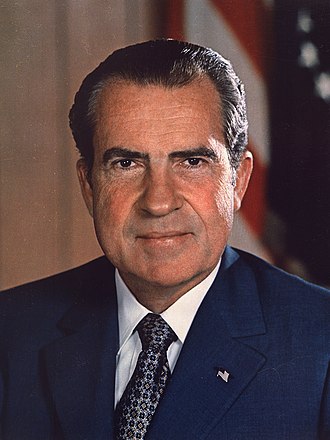
Richard M. Nixon served as the 37th President of the United States from January 1969 until his resignation in August 1974. In February 1971, he ordered the installation of a secret voice-activated taping system in the White House to preserve a historical record of his administration. Until the system's existence was revealed and dismantled in July 1973, the tapes captured Nixon directing major foreign policy initiatives, such as the opening to China, as well as his central role in the Watergate cover-up.
What Nixon talks about on the tapes
White House operations 4,718Presidential scheduling 2,225Public relations 1,784Presidential schedule 1,782Vietnam War 1,693Logistics 1,650Manolo Sanchez 1,626White House communications 1,400White House administration 1,399Presidential communication 1,243Henry Kissinger 1,191Foreign Policy 1,183
Conversations (21,010)
— Page 65 of 211President Nixon met with George P. Shultz and other administration officials to conduct a wide-ranging review of economic and political issues, including the international monetary situation, welfare reform, and the ongoing labor negotiations with the AFL-CIO. The participants discussed strategies for managing the national economy, the administration's pending legislative agenda, and internal personnel matters regarding appointments. The meeting concluded with a shift in focus toward sensitive foreign policy and military concerns, specifically regarding Vietnam and the implications of potential U.S. bombing decisions on relations with the Soviet Union and the People's Republic of China.
President Nixon and Peter Flanigan discuss potential candidates for ambassadorial appointments to Japan and NATO, specifically evaluating figures like Fredrick M. Eaton, Nat Samuels, and David M. Kennedy. The President emphasizes his preference for Kennedy for the NATO post while tasking Flanigan with vetting other options, including Eaton, with Henry Kissinger. Additionally, Nixon directs Flanigan to mobilize influential contacts to pressure Federal Reserve Chairman Arthur F. Burns regarding his management of the money supply.
President Nixon initiates a brief telephone communication through the White House operator to request a conversation with Charles W. Colson. This administrative exchange serves to facilitate direct contact between the President and his special counsel. The primary action item is the immediate placement of the call to Colson to address undisclosed matters.
President Nixon and Charles Colson discuss the successful recruitment of John B. Connally for an upcoming administration project, for which Colson will provide a briefing book prior to Connally's meetings with the President, George Shultz, and Henry Kissinger. They also review legislative frustrations regarding the Senate tax bill, with Connally suggesting he can neutralize the controversial campaign check-off provision through administrative adjustments. Finally, they coordinate a strategy to publicly promote Connally's economic stance, with Nixon considering a follow-up call to personally commend Connally's recent work.
President Nixon instructed the White House operator to place an urgent call to Treasury Secretary John B. Connally. The brief exchange served as a directive to initiate immediate contact with Connally to discuss pending administrative or economic matters. No further policy developments occurred during this brief request for connectivity.
President Nixon and John B. Connally discussed the President's upcoming speech to the AFL-CIO in Florida and the importance of communicating his economic policy to a broader audience. Connally also confidentially reported hearing that lawyers from Nixon's former New York law firm were in Texas investigating his background in connection to a legal dispute involving the Moody Foundation. Nixon expressed disbelief that his former firm would be involved in such activities and promised to look into the matter through John Mitchell to resolve the situation.
President Nixon met with John N. Mitchell and Donald H. Rumsfeld to deliberate on pending legislation, specifically focusing on the potential veto of a tax check-off provision for political campaigns. The participants discussed legislative strategies involving Clark MacGregor and Senator Charles McC. Mathias, Jr., as well as coordination efforts with John B. Connally. Additionally, the group briefly reviewed polling data from Illinois and discussed updates to the President's upcoming schedule.
President Nixon consulted with unidentified individuals regarding the logistical arrangements for his upcoming departure to Florida. The discussion centered on managing the press presence and ensuring appropriate coverage during the trip. No specific policy decisions were finalized, as the exchange focused primarily on scheduling and public relations coordination.
President Nixon met with Joel Broyhill, William Timmons, and Egil Krogh to discuss legislative strategy regarding Washington, D.C. subway appropriations and the potential for a presidential statement to resolve ongoing conflicts with Representative William Natcher. Following this, John Mitchell joined the meeting to address the status of a pending tax bill and its potential for a veto, as well as the political ramifications of tax check-off provisions for national political parties. The discussion concluded with a review of sensitive financial and legal matters involving Mitchell, potential IRS investigations, and scheduling for an upcoming AFL-CIO convention speech.
President Nixon contacted the White House operator to facilitate a telephone call to First Lady Pat Nixon. The brief interaction served as a administrative request to connect the President with the First Lady. No further policy or political discussions were recorded during this communication.
President Nixon coordinates with the White House operator to manage his personal communications regarding his wife, Pat Nixon, and daughter, Julie Nixon Eisenhower. The President provides instructions to be notified once a specific ongoing call is completed to facilitate a follow-up conversation. This exchange serves as a brief administrative interaction to organize the President's private schedule.
President Nixon consulted with the White House operator to facilitate a brief phone call with First Lady Pat Nixon. The discussion centered on logistical coordination regarding the President’s schedule, specifically addressing his upcoming travel to Florida and plans for dinner. The brief exchange served to synchronize their personal arrangements for the evening.
President Nixon initiates a brief telephone communication through the White House operator to contact Alexander P. Butterfield. The primary purpose of the call is to establish a connection with the Deputy Assistant to the President. No further policy or administrative matters are addressed during this short exchange.
President Nixon contacted the White House operator to initiate a telephone call with his Chief of Staff, H.R. Haldeman. This brief administrative interaction served as the mechanism to facilitate a high-level communication between the President and his senior aide. No further policy or substantive matters were discussed during this brief connection.
President Nixon and Alexander P. Butterfield coordinate the signing of administrative documents that Butterfield had been holding. Due to the President's immediate need to depart, they finalize a plan for Nixon to review and sign the materials in the Oval Office shortly thereafter. Butterfield agrees to facilitate the process by meeting the President while he is en route.
President Nixon met with Alexander P. Butterfield to coordinate the presidential schedule and review pending legislative matters. The discussion centered on a memorandum from Clark MacGregor regarding key senators—James O. Eastland, John C. Stennis, and Russell B. Long—and evaluated the potential for a presidential veto. Additionally, the President addressed strategic communications involving Charles W. Colson and John B. Connally.
President Nixon initiates a request for the White House operator to place a telephone call to Charles W. Colson. The brief interaction serves solely to facilitate communication between the President and his special counsel. No further substantive policy matters or executive decisions are discussed during this exchange.
President Nixon and Charles Colson discussed political strategy regarding pending tax legislation, with the President deciding against intervening in a Congressional vote on the dollar check-off provision. The pair also reviewed John Connally’s positive outlook on the economy, current retail sales data, and the need for a firm presidential response to recent ultimatum-like rhetoric from George Meany at the AFL-CIO convention. They agreed that the administration must maintain its course on economic policy regardless of organized labor's participation.
President Nixon and H. R. Haldeman discuss frustrations regarding press coverage of Nixon's recent trip to Florida and his perceived abrupt departure from the AFL-CIO convention. Nixon expresses annoyance that the press operated under the assumption he would stay through the weekend, leading to speculative reporting about his motivations. He instructs Haldeman to ensure that future travel schedules are never explicitly confirmed to the press, aiming to maintain maximum flexibility for his movements and prevent reporters from making personal arrangements based on his presence.
President Nixon initiates a brief telephonic request for the White House operator to connect him with special counsel Charles W. Colson. The exchange serves as a procedural step to facilitate a direct line of communication between the President and his aide. No further policy discussion or substantive action occurs during this brief administrative interaction.
President Nixon and Charles Colson discuss media coverage of Nixon's recent address to the AFL-CIO convention, focusing on the public perception of his confrontation with labor leader George Meany. Colson advises the President to capitalize on the imagery of his "courageous" appearance against a hostile audience, while emphasizing the contrast between Nixon’s statesmanship and Meany’s perceived partisan rudeness. They also coordinate a response to media rumors regarding Nixon’s travel schedule and plan to isolate Meany by distancing the administration from his leadership while engaging with more favorable labor representatives.
President Nixon received a brief status update from the White House operator regarding Henry Kissinger’s travel itinerary. Upon learning that Kissinger was en route to Lunkin Airport in Cincinnati, Nixon decided against attempting to contact him immediately. The President chose to postpone communication until Kissinger reached his destination.
President Nixon initiates a brief telephone exchange with the White House operator to request a connection to Charles W. Colson. The call serves as a logistical bridge to facilitate a direct conversation between the President and his special counsel. No further substantive policy matters are addressed in this short administrative interaction.
President Nixon and Charles Colson coordinate a strategic media initiative, discussing the timing of a planned announcement or presentation to coincide with the conclusion of evening news broadcasts. Nixon expresses strong approval of Colson's proposed tactical approach, confirming that the White House has an established system in place to execute the plan. The brief call serves to finalize the operational logistics for this specific public relations effort.
President Nixon initiates a brief telephone exchange with the White House operator to request a connection to Charles W. Colson. This communication serves as an administrative bridge to facilitate a direct discussion between the President and his special counsel. No substantive policy matters or further decisions were recorded during this brief request.
President Richard Nixon met with his valet, Manolo Sanchez, in the Oval Office for a brief morning discussion. While the specific substance of their exchange is largely captured as a withdrawn personal item or remains unidentified in the audio record, the meeting reflects the routine administrative and personal interactions between the President and his long-time staff member. No policy decisions or significant executive developments were recorded during this brief encounter.
President Nixon utilized this session to record a formal memorandum for the record. The meeting served as a dictation period for the President to consolidate his thoughts or directives on specific administrative matters. No other participants were present, and the resulting dictated document remains the sole outcome of this brief Oval Office engagement.
President Nixon met with Charles W. Colson to dictate a memorandum regarding a potential speech to be delivered by Secretary of Labor James D. Hodgson to the AFL-CIO. The discussion focused on crafting the appropriate tone and content of the speech, specifically reflecting on the President's past experiences with union leadership, including George Meany. Nixon aimed to refine the administration's strategic approach to labor relations through carefully selected phraseology in Hodgson’s remarks.
President Nixon consulted with the White House operator to facilitate an outgoing call. This interaction served a purely administrative function to connect the President with an external party. No substantive policy discussions or significant political developments occurred during this brief exchange.
President Nixon met with his aide Stephen B. Bull to finalize logistical arrangements regarding his upcoming departure for Camp David. The discussion covered coordination of H.R. Haldeman’s schedule, the management of a private White House tour, and the handling of press photography. The brief consultation ensured that security and scheduling protocols for the presidential transition to the retreat were firmly established.
President Nixon and Stephen B. Bull coordinate the logistics for Charles Colson’s arrival at the White House. The participants briefly deliberate on media presence and photographic opportunities during this encounter. The brief exchange concludes with confirmation that Colson is currently en route to meet with the President.
President Nixon met with his aide Stephen B. Bull to dictate a memorandum directed to Charles W. Colson concerning Rose Mary Woods and Marjorie P. Acker. Additionally, the pair reviewed the President's upcoming schedule and discussed the appointments of H.R. Haldeman. This brief administrative meeting served to coordinate staff communications and manage executive time management.
President Nixon held a brief meeting in the Oval Office with an unidentified individual. The entirety of the recorded duration consists of a withdrawn segment classified as personal and returnable. Consequently, no substantive policy discussions, political developments, or action items are documented in the available record.
President Nixon initiates a brief administrative interaction with the White House operator to facilitate an outgoing call. This routine communication exchange serves as a logistical precursor to further executive outreach. No substantive policy matters or major decisions are recorded during this brief technical coordination.
President Nixon and George Shultz discuss tactics for managing the Pay Board and responding to the increasingly adversarial behavior of AFL-CIO leader George Meany. They agree on the necessity of isolating Meany to prevent him from destabilizing Phase Two economic controls while preparing contingency plans for a potential board collapse. Shultz also receives instructions to gauge Frank Fitzsimmons' views on Meany and the possibility of clemency for Jimmy Hoffa during an upcoming golf outing.
President Nixon met with key advisors, including H.R. Haldeman, Henry Kissinger, Charles Colson, and John Connally, to strategize on public relations, international diplomacy, and his upcoming travel schedule. The discussion centered on managing the press fallout from Nixon's recent speech to the AFL-CIO, coordinating announcements regarding foreign trips to countries like the PRC, and addressing international monetary and military issues, particularly regarding Vietnam and the Middle East. Nixon emphasized the importance of controlling the public narrative and timing announcements to maximize political advantage while balancing his cabinet members' roles.
President Nixon initiated a request to the White House operator to place an urgent call to Director of Central Intelligence Richard M. Helms. This brief exchange served solely as a logistical coordination to establish direct communication with the head of the CIA. No further substantive policy discussions occurred during this administrative connection.
President Nixon contacted the White House operator to facilitate an urgent communication with Secretary of the Treasury John B. Connally. This brief exchange served as a logistical request to initiate a phone call with the Secretary. No further policy discussions or substantive developments occurred during this brief administrative interaction.
President Nixon and Secretary of the Treasury John Connally discussed the positive public perception of the President's recent television appearance and his attendance at a Classical Khmer Ballet performance. Connally praised Nixon's composed reaction to a hostile reception from George Meany at the AFL-CIO convention, encouraging the President to capitalize on the moment. The two also strategized on confronting Meany regarding recent pay increases for union leadership, with Nixon agreeing to make the issue a focal point and considering a potential 90-day wage freeze should labor representatives withdraw from the Pay Board.
President Nixon consulted with the White House operator regarding how to relay a message to CIA Director Richard Helms, who was currently traveling. After learning that Helms was unreachable until later in the afternoon, the President decided against utilizing General Robert E. Cushman, Jr. as an intermediary. Instead, Nixon instructed the operator to inform Helms’s office that National Security Advisor Henry Kissinger would personally deliver the communication.
President Nixon initiated a brief telephone request for the White House operator to place a call to Senator Ted Stevens of Alaska. No further discussion occurred during this recording, as its sole purpose was to facilitate communication with the Senator. This request highlights the President's direct involvement in managing his legislative outreach and scheduling.
President Nixon instructed the White House operator to place outgoing calls to Congressman Seymour Halpern and Senator Alan Bible. The conversation served as a brief administrative directive to facilitate these legislative communications. No further policy discussions or significant deliberations occurred during this brief exchange.
President Nixon initiates a call to his daughter, Julie Nixon Eisenhower, through the White House operator. During the exchange, the operator inquires about a previously requested call to Senator Ted Stevens, who is currently located in Alaska. Nixon ultimately decides to cancel the request to reach the Senator.
President Nixon consulted with the White House operator to determine the time difference between Washington, D.C., and Alaska in order to schedule a call with Senator Ted Stevens. After verifying that it was too early in Alaska to reach the Senator, the President decided to postpone the conversation. No further action was taken regarding the call at that time.
President Nixon consulted with a White House operator to facilitate and schedule a specific communication or call. The brief exchange focused on coordinating timing and logistical arrangements to ensure the connection occurred as planned. No major policy decisions were made, as the dialogue was limited to operational telecommunications support.
President Nixon met with his aide Stephen B. Bull to review administrative and scheduling matters. The discussion focused primarily on the scheduling of Donald H. Rumsfeld, with H. R. Haldeman referenced as a point of contact. Additionally, the pair addressed concerns regarding the press coverage surrounding the President's children.
President Nixon consulted with the White House operator to facilitate an outgoing call. This brief interaction served as a technical bridge for the President to initiate contact with an external party. No significant policy discussions occurred during this connection.
President Nixon and Stephen B. Bull met to coordinate scheduling logistics and press management for upcoming appearances. The President directed Bull to arrange for a microphone setup to facilitate a brief five-minute address to a group, specifically requesting the inclusion of press coverage. Additionally, Nixon identified Congressman Seymour Halpern and Senator Alan Bible as individuals he intended to meet.
President Nixon consulted with the White House operator to facilitate an outgoing call. This routine interaction served as a technical bridge for the President to communicate with an undisclosed party. No substantive policy matters or administrative decisions were documented during this brief exchange.
President Nixon consulted with the White House operator to facilitate an outgoing call. The interaction served a purely administrative purpose to manage presidential communications. No substantive policy discussions or significant political decisions were recorded during this brief exchange.
President Richard Nixon met with Alexander P. Butterfield in the Oval Office to conduct administrative business, specifically the signing of documents. During the brief encounter, the two discussed the health status of an unidentified individual. Additionally, the conversation touched upon the schedule of Stephen B. Bull and the coordination of a telephone call originating from the President.
President Nixon and his daughter, Julie Nixon Eisenhower, coordinate a brief meeting to discuss business involving David N. Parker. The President proposes the session to ensure they have time to consult with Parker, noting his availability in the Oval Office. They agree to convene within five minutes to address the matter.
President Nixon held a brief, informal meeting with his daughter, Julie Nixon Eisenhower, in the Oval Office. The discussion served as a personal interaction between the President and his daughter, reflecting their ongoing communication during his term. No formal policy decisions or official White House actions were recorded during this brief exchange.
President Nixon telephoned Congressman Seymour Halpern to offer birthday greetings and discuss the Congressman's recovery from an automobile accident in Spain. During the conversation, the two men touched upon the health of Herb Stein and discussed Nixon's recent reception at the AFL-CIO convention, where the President dismissed George Meany's hostility as politically motivated. Nixon also reassured Halpern that he understood the political necessity of representing his local district, while securing the Congressman's pledge of support for critical legislative votes.
President Nixon and Representative Seymour Halpern met briefly to discuss internal administration matters and personnel issues. The conversation touched upon the workload and health of economic advisor Herbert Stein. The meeting served as a short check-in between the President and the Congressman regarding current executive staff dynamics.
President Nixon consulted with his daughters, Tricia Nixon Cox and Julie Nixon Eisenhower, regarding the public and media reception of his recent speech at the AFL-CIO convention. Tricia provided her perspective on the television network coverage, specifically critiquing the commentary from NBC and ABC, and offered her assessment of George Meany’s partisan reaction to the President's labor policies. The call also touched upon logistical arrangements for the family’s upcoming weekend trip to Camp David.
President Nixon met with family members Tricia Nixon Cox and Julie Nixon Eisenhower, along with aides Stephen B. Bull and Rose Mary Woods, and Senator Alan Bible. The discussion focused on television coverage of the President's recent address to the AFL-CIO convention and the handling of various personal telegrams, including correspondence from Mrs. Lou Gehrig. The participants also touched upon administrative tasks, such as the processing of documents and the management of office communications.
President Nixon initiated this phone call to Senator Alan Bible to offer birthday greetings, noting the connection to First Lady Pat Nixon's roots in Nevada. The conversation transitioned into a discussion of the President's upcoming plans at Camp David and his recent appearance before the AFL-CIO convention. Bible commended Nixon for his composure during the event, prompting the President to share a supportive telegram he received from Eleanor Gehrig regarding his interaction with George Meany.
President Nixon met with his daughter, Julie Nixon Eisenhower, and his personal secretary, Rose Mary Woods, to coordinate scheduling and public outreach efforts. The participants discussed Julie's potential speaking engagements on the President's behalf, as well as logistical arrangements involving David N. Parker, Woods, and upcoming events at Camp David. The conversation also touched upon administrative tasks, including follow-up documentation related to the President's recent address to the AFL-CIO convention.
President Nixon met with his aide Stephen B. Bull to address various public relations matters and administrative coordination. The discussion involved key personnel, including David N. Parker, Julie Nixon Eisenhower, Rose Mary Woods, Donald Rumsfeld, and H.R. Haldeman. A primary action item resulting from the meeting was the planning of a forthcoming telephone call between the President and Rumsfeld.
President Nixon met with H. R. Haldeman and later Julie Nixon Eisenhower to discuss public relations strategy following a contentious speech at the AFL-CIO convention and ongoing economic policy debates. The conversation centered on managing the administration's image, particularly regarding George Meany and the Pay Board, while planning future outreach efforts for the First Family. The President and his advisors emphasized leveraging family members for volunteer and community engagement events, specifically targeting key demographic groups and regions, to bolster support for his policies.
President Nixon contacted the White House operator to initiate an urgent telephone call to George P. Shultz. The conversation was limited to the President’s directive to connect with Shultz immediately to discuss administrative or policy matters. No further substantive dialogue was recorded during this brief exchange.
President Nixon initiates a request to the White House operator to place a telephone call to evangelist Billy Graham. This brief administrative interaction serves as a logistical step to facilitate direct communication between the President and his advisor. No further substantive discussion occurs during this short recording.
President Nixon and Billy Graham discuss upcoming travel itineraries, international relations, and the political climate in the United States. Nixon shares his views on handling unpopular decisions and his reliance on Treasury Secretary John Connally to manage economic messaging. The President also expresses optimism regarding the conclusion of the Vietnam War and expects improved economic indicators for the coming year.
President Nixon initiates a request to the White House operator to place a telephone call to Treasury Secretary John B. Connally. The brief exchange serves as a logistical bridge to facilitate direct communication between the President and his cabinet official. No further policy discussions or substantive developments occur during this specific interaction.
President Nixon and Secretary of the Treasury John Connally discussed preparations for Connally's upcoming press conference, focusing heavily on strategy regarding labor relations and economic policy. They strategized on how to publicly criticize AFL-CIO leader George Meany’s recent defiance of the Pay Board without creating a political martyr, framing the situation as a test of national unity versus special interests. Furthermore, they reviewed opposition to the 'campaign check-off' provision in pending tax legislation, with the President considering the possibility of vetoing the bill should it emerge as an irresponsible 'Christmas tree' package.
President Nixon contacted the White House operator to facilitate an urgent communication with his National Security Advisor, Henry A. Kissinger. The brief interaction served as a logistical step to initiate the connection. No substantive policy discussions or decisions were recorded during this request.
President Nixon consulted with the White House operator to coordinate a secure connection with Henry Kissinger, who was currently located in New York. The President sought to establish contact with his National Security Advisor, prompting the operator to initiate the call using available reach-back numbers. This brief exchange served solely as an administrative coordination effort to facilitate a high-level policy discussion.
President Nixon contacted the White House operator to facilitate an outgoing call to George P. Shultz. The brief exchange served as a logistical step to connect the President with the Director of the Office of Management and Budget. No substantive policy discussions were recorded during this brief administrative request.
President Nixon and George Shultz discuss the administration's strategic posture toward organized labor, specifically addressing tensions with AFL-CIO leader George Meany and ongoing coal and dock worker strikes. Nixon emphasizes the political necessity of appearing firm against labor unions to avoid the perception of capitulation, while acknowledging the practical economic need to resolve critical strikes. They agree to rely on congressional action regarding wage retroactivity to mitigate political backlash and discuss the public relations benefits of Meany's increasingly unpopular image.
President Nixon instructed the White House operator to connect him with George Allen, the head coach of the Washington Redskins. This brief administrative request facilitated a direct line of communication between the President and the prominent NFL coach. No further substantive policy matters were discussed during this brief exchange.
President Nixon consulted with an unidentified individual regarding the scheduling of Secretary of State William P. Rogers. The brief exchange focused exclusively on coordinating the Secretary's upcoming itinerary. No further substantive policy matters were recorded during this session.
President Nixon met with an unknown woman to discuss various personal and social topics, including her family, her son’s academic pursuits, and her experiences related to Kent State University. The conversation touched upon the President’s schedule, the importance of youth opportunities, and perspectives on military service. The dialogue also briefly referenced a photograph of the President with high school students in Cincinnati and potential future travel.
President Nixon initiated a brief communication through the White House operator to facilitate an external telephone connection. This interaction functioned as an administrative request to reach another party, serving as a precursor to a subsequent, substantive discussion. No further details regarding the nature of the call are available due to the lack of an existing transcript.
President Richard Nixon met with his personal valet, Manolo Sanchez, in the Oval Office to discuss unspecified personal matters. The majority of the brief exchange consists of withdrawn material classified as personal and returnable. No substantive policy decisions or administrative actions were recorded during this session.
President Nixon held an informal discussion with George E. Allen to analyze recent performances and strategic prospects for the Washington Redskins. The conversation focused on a detailed evaluation of quarterbacks Billy Kilmer and Sonny Jurgensen, as well as team injury reports and upcoming game schedules. Nixon shared his personal insights on the team's standing and coaching decisions, reflecting his deep interest in the Redskins' competitive trajectory.
President Richard M. Nixon met with George E. Allen for an informal discussion primarily centered on professional football. The conversation focused on the performance and prospects of the Washington Redskins, specifically analyzing their recent game results and upcoming schedule. The two exchanged observations regarding team strategy, player health, and the team's outlook for the remainder of the season.
President Nixon utilized this brief session to dictate a memorandum for the official record. The recording captures a short administrative act, although the specific content of the dictation remains largely obscured or unavailable in the provided transcript. The interaction serves as a brief instance of the President managing internal documentation and administrative tasks.
President Nixon and Henry Kissinger met to coordinate the logistics and public announcement timing for the President’s upcoming trip to the People's Republic of China, involving key foreign leaders and domestic advisors. The discussion also addressed the status of the Vietnam War, focusing on military operations in Cambodia, casualty reporting, and the administration's political strategy regarding withdrawal and ongoing peace negotiations. The participants further deliberated on managing public perception and responding to press coverage from outlets like the New York Times concerning these foreign policy and military initiatives.
President Nixon and Henry Kissinger discussed ongoing diplomatic strategy and the management of international negotiations, specifically addressing the political environment and potential resolutions. The conversation touched upon the complexities of navigating foreign policy reforms and the necessity of maintaining control over communication regarding these sensitive agreements. The participants also briefly assessed the status of the situation in Cambodia and broader geopolitical maneuvering.
President Nixon met to review administrative memoranda and discuss diplomatic strategies regarding international relations in Cambodia and China. The discussion touched upon the scheduling of upcoming meetings and coordination with government stakeholders. The participants evaluated the progress of ongoing policies while addressing logistical concerns related to state operations.
President Nixon held a brief, private meeting with an unidentified individual in the Oval Office. The majority of the interaction was classified as a personal returnable item, resulting in no preserved substantive dialogue. Consequently, the meeting's specific purpose, primary topics, and any potential decisions remain obscured from the historical record.
President Nixon summoned his aide Stephen B. Bull to the Oval Office to facilitate an urgent meeting. The primary purpose of this brief encounter was to request that Charles W. Colson be brought in to join the President immediately. No further substantive policy matters were recorded before Bull departed the office.
President Nixon met with his senior advisors and Senator Barry Goldwater to discuss political strategy following a recent speech to the AFL-CIO convention. The participants reviewed the mixed public reaction to the address, analyzed the influence of media coverage, and coordinated efforts to neutralize political opponents such as George Meany and various Democratic rivals. They also touched upon legislative concerns, including campaign finance and pending appointments, while exploring ways to maintain the support of conservative allies and strengthen the administration's public relations efforts.
President Nixon met with H.R. Haldeman, Clark MacGregor, and John Connally to coordinate legislative strategy and manage the President's public schedule. Key discussions focused on securing the confirmation of Earl Butz, advancing economic and tax legislation, and navigating partisan challenges regarding campaign finance reform. The participants also strategized on potential presidential vetoes and discussed public relations efforts to bolster the administration's standing with labor and Congress.
President Nixon initiates a call to the White House operator to be connected with Clark MacGregor. The brief exchange serves as a logistical coordination for the President to reach his Congressional relations liaison. No further substantive policy matters are addressed during this short administrative interaction.
President Nixon consulted with Clark MacGregor regarding a strategy to publicly criticize Congress for its legislative inaction and delays surrounding the Thanksgiving recess. Nixon directed MacGregor and William Timmons to prepare a presidential statement highlighting congressional failure to progress on key issues, specifically foreign assistance legislation. MacGregor provided an update on the status of the House conference committee, noting the specific role of Thomas E. Morgan in stalling committee meetings, and was subsequently invited to the Oval Office to further discuss the administration’s response.
President Nixon initiated a brief administrative request for the White House operator to connect him with Secretary of the Treasury John B. Connally. The call served as a logistical step to facilitate direct communication between the President and his Treasury Secretary. No further policy discussions occurred during this brief interaction.
President Nixon calls Treasury Secretary John Connally ahead of a press conference to provide tactical guidance on campaign finance legislation. Nixon directs Connally to leverage a veto threat against Congress, proposing that if the bill is blocked, he will force a special session during the holiday season to compel the passage of his tax agenda. Citing the political precedent of Harry Truman, Nixon empowers Connally to publicly express the administration's firm stance and readiness to force legislative action.
President Nixon instructed the White House operator to place an outgoing call to Secretary of the Treasury John B. Connally. The brief exchange served solely as a logistical request to establish communication with the Secretary. No further policy discussions or substantive developments occurred during this interaction.
President Nixon, Clark MacGregor, and Charles Colson confer with Secretary of the Treasury John Connally to praise his recent press conference performance regarding the national economy. The participants evaluate Connally's messaging strategy, specifically debating the effectiveness of his remarks concerning George Meany and organized labor. The conversation also briefly addresses external complications, including a news bulletin regarding India's attack on East Pakistan that threatened to overshadow the administration's economic narrative.
President Nixon contacted the White House operator to facilitate a telephone call to Clark MacGregor, who served as his congressional liaison. This brief interaction was strictly administrative, intended to connect the President with a key administration official. No further substantive policy matters were discussed during this specific exchange.
President Nixon and Henry Kissinger discuss the escalating crisis between India and Pakistan in anticipation of a Washington Special Action Group (WSAG) meeting. Nixon directs Kissinger to adopt a firm stance toward the international community, mandating a complete suspension of all U.S. aid to both combatants. The President emphasizes that this cessation of assistance is a strategic tool to influence the conflict, instructing Kissinger to ensure this hard-line policy is clearly communicated.
President Nixon and Clark MacGregor coordinated final lobbying efforts regarding an upcoming legislative vote on campaign financing. They discussed the tactical use of a potential presidential veto threat and the distribution of John Connally's recent press conference transcripts to sway Southern Democratic senators. The conversation concluded with a review of vote-pairing strategies, specifically targeting Senator John Stennis to ensure his opposition or a neutral pair, while emphasizing the need to retain Senator Jack Miller’s support.
President Nixon contacted the White House operator to request a telephone connection with his personal aide, Stephen B. Bull. This brief administrative exchange served as a routine communication task to facilitate a direct conversation between the President and a member of his staff. No further policy or substantive matters were discussed during this specific interaction.
President Nixon requested that his aide, Stephen B. Bull, obtain specific details regarding the Washington Redskins' practice schedule for the following day. Bull acknowledged the request and agreed to gather the necessary information about the time and location of the session. This brief communication served solely to facilitate the President's personal interest in the team's training activities.
President Nixon initiates a call to the White House operator to be connected with Clark MacGregor. The brief interaction serves as a routine administrative request to facilitate communication between the President and his congressional liaison. No further substantive discussion occurs during this segment of the tape.
President Nixon and Clark MacGregor discussed the strategic potential of threatening a special congressional session to influence legislative voting behavior. MacGregor confirmed he broached the topic with Senate Minority Leader Hugh Scott as a way to pressure the Senate to avoid passing an unacceptable bill before their December 15th adjournment. Nixon approved of MacGregor's approach to planting the idea without directly linking it to the President.
President Nixon instructed the White House operator to place an outgoing call to Hobart D. "Hobe" Lewis. This brief administrative interaction served as a logistical request to initiate communication with the Reader's Digest executive. No further substantive policy discussions occurred during this exchange.
President Nixon consulted with the White House operator to coordinate a return call to Hobart D. Lewis. The operator informed the President that Lewis was expected at a New York number around 4:00 p.m. Nixon decided to leave a message for Lewis at that location to facilitate their communication.