Butterfield, Alexander P.
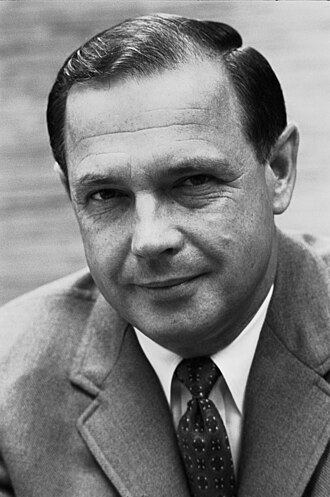
Alexander P. Butterfield served as Deputy Assistant to President Nixon from January 1969 to March 1973, a role in which he oversaw the installation and operation of the secret White House taping system. In March 1973, he transitioned out of the White House to become the Administrator of the Federal Aviation Administration (FAA). While serving as FAA Administrator in July 1973, Butterfield famously testified before the Senate Watergate Committee and publicly revealed the existence of the taping system he had previously managed.
What Butterfield talks about on the tapes
Presidential scheduling 225White House administration 163Presidential schedule 158White House operations 153Public relations 133Vietnam War 113Logistics 83White House logistics 82Foreign Policy 75Henry Kissinger 66Economic policy 62Scheduling 59
Conversations (1,038)
— Page 7 of 11President Nixon met with H. R. Haldeman and Charles Colson to discuss administration political strategy, specifically focusing on labor relations, social issues like busing, and the President's upcoming campaign schedule. They explored potential outreach to AFL-CIO leader George Meany, debated how to best leverage public sentiment regarding the Vietnam War, and reviewed polling insights from Richard Scammon. The participants also finalized decisions regarding personnel shifts, including the replacement of military aides and the potential appointment of Richard V. Allen to a foreign policy or political advisory role.
President Richard M. Nixon met with Deputy Assistant to the President Alexander P. Butterfield in the Oval Office to conduct administrative or operational business. While the specific content of the discussion remains unintelligible due to a lack of transcript records, the meeting involved the routine coordination of White House activities. No definitive decisions or policy outcomes can be determined from the available documentation.
President Nixon met with aides Alexander P. Butterfield and Stephen B. Bull to finalize logistical arrangements, including helicopter transport for a trip to Camp David and upcoming photography opportunities. Following these internal briefings, the President conducted a brief follow-up telephone call with AFL-CIO President George Meany. The discussion primarily focused on administrative scheduling and coordinating personal travel plans prior to the President's upcoming engagements.
President Nixon and Henry Kissinger discussed the political fallout from Nixon's recent peace proposal speech regarding Vietnam, emphasizing the need to portray Democratic critics as advocating for surrender. They analyzed the effectiveness of Kissinger's media briefings in countering skepticism and noted that the President's personal involvement in negotiations required a more aggressive, unified public relations strategy. Additionally, the pair reflected on the administration's foreign policy achievements, including upcoming trips to the Soviet Union and the People's Republic of China, while expressing disdain for intellectuals and media figures who they felt consistently maligned the President's leadership.
President Nixon met with Alexander P. Butterfield to address administrative matters regarding White House communications. The discussion centered on handling specific letters and providing instructions related to National Security Advisor Henry A. Kissinger. No further details were recorded, and Butterfield departed shortly after the meeting commenced.
President Nixon and H. R. Haldeman met to discuss various political and administrative issues, including managing a potential media scandal involving Jack Anderson, coordinating a rest period for John Connally at Camp David, and assessing the 1972 campaign strategy. They addressed the public relations fallout from a recent protest at a Reader's Digest dinner and analyzed demographic shifts in voter support. Additionally, the President and his staff coordinated the messaging for an upcoming North Vietnamese press conference and reviewed the ongoing secret peace negotiations handled by Henry Kissinger.
President Nixon met with Dr. James R. Schlesinger and Alexander M. Haig, Jr. to discuss the management and strategic direction of the Atomic Energy Commission (AEC). The conversation focused on staff appointments, the political and environmental challenges surrounding nuclear projects like the 'Plowshare' natural gas program, and the importance of maintaining U.S. technological supremacy in nuclear applications and laser defense. Nixon urged Schlesinger to navigate political and environmental opposition strategically, particularly by timing controversial activities to avoid disrupting the 1972 election cycle.
President Nixon met with Alexander Butterfield and Ronald Ziegler to manage administrative logistics, including planning a formal reception for state governors and arranging for General Robert Cushman, Jr. to represent the White House at the funeral of two slain New York police officers. The discussion transitioned to media strategy, specifically the debate over including William F. Buckley, Jr. in the press contingent for the upcoming trip to the People's Republic of China. Additionally, Nixon directed staff to publicize his recent phone call to Senator Abraham Ribicoff regarding the administration's ongoing legislative strategy for welfare reform.
President Nixon met with Rose Mary Woods, H. R. Haldeman, and Alexander Butterfield to manage his schedule and handle administrative tasks, including a document signature request from John Dean. The group discussed preparations for an upcoming prayer breakfast, specifically expressing frustration over the excessive length of speeches and the need for the President to keep his own remarks brief. Additionally, they reviewed presidential gifts, including sculptures of Winston Churchill and John Foster Dulles, and briefly reflected on the deaths of prominent aging statesmen.
President Nixon met with Alexander P. Butterfield to review the presidential schedule, specifically regarding an upcoming meeting with Washington Governor Daniel J. Evans. The discussion also touched upon an undisclosed resignation letter and a brief administrative matter involving a telephone call between Rose Mary Woods and First Lady Pat Nixon, facilitated by Stephen B. Bull. The session concluded with brief logistical updates and coordination between the President and his staff.
Alexander P. Butterfield met with Secret Service agents in the Oval Office to discuss administrative or logistical details regarding presidential scheduling. The recorded segment consists primarily of room noise and unintelligible background conversation, providing no substantive record of dialogue or specific decision-making. Consequently, the interaction remains historically opaque, yielding no discernible developments or action items.
President Nixon and Alexander P. Butterfield met briefly in the Oval Office to address the unexplained absence of a plaque from a screen in the room. The President expressed frustration regarding the missing item, prompting a brief inquiry into its location. The exchange concluded without a definitive resolution regarding the plaque's whereabouts.
President Nixon and Alexander Butterfield met to coordinate logistical arrangements for upcoming appointments and administrative tasks. The President directed Butterfield to secure a replacement plaque for the University of Nebraska football team to honor their top-ranking status. Additionally, they reviewed the scheduling sequence for meetings involving Billy Graham and H.R. Haldeman to ensure the President’s workflow remained efficient.
President Nixon met with Alexander P. Butterfield to coordinate the President's immediate daily schedule. The discussion centered on logistics for upcoming meetings with Billy Graham and H. R. Haldeman. The session concluded with Butterfield managing the President's appointments to ensure his agenda proceeded as planned.
President Nixon met with aides Stephen B. Bull and Alexander P. Butterfield to coordinate logistical details regarding his daily schedule and upcoming ceremonial signings. The discussion focused on the arrangements for a meeting with former Speaker of the House John W. McCormack, specifically addressing the appropriate location for the event. The brief session concluded with the participants confirming administrative preparations for the President's immediate agenda.
President Nixon consulted with H. R. Haldeman regarding his upcoming schedule, focusing on balancing trips to Florida and Camp David with preparations for his historic journey to the People's Republic of China. The discussion also addressed public relations strategy, specifically evaluating the necessity of personal appearances at events like the National Prayer Breakfast to maximize political impact. Alexander P. Butterfield joined briefly to receive administrative instructions, while the President ultimately weighed the value of various appearances against the fatigue of his pre-trip workload.
President Nixon and Alexander P. Butterfield met to finalize the scheduling and agendas for an upcoming Cabinet meeting and a session with Congressional leaders. The discussion focused on coordinating topics for the Cabinet, including the ongoing dock strike, welfare reform, and the proposed value-added tax. They also addressed protocol for the final meeting of Secretary of Commerce Maurice Stans.
President Nixon and Alexander P. Butterfield coordinate the seating arrangements and attendee list for an upcoming Cabinet meeting involving congressional leaders and White House staff. The President emphasizes prioritizing key leadership positions while expressing a desire to limit the overall number of staff attendees to maintain focus. The discussion also touches upon the status of a foreign assistance bill statement.
President Nixon, H. R. Haldeman, and various staff members met to discuss administrative scheduling, the quality and strategy of presidential speechwriting, and broader media relations. The conversation focused on the President's upcoming schedule, including interactions with congressional leaders and diplomatic representatives, while expressing significant frustration over the lack of emotional impact in current speech drafts. The participants further analyzed political messaging regarding the Vietnam War, strategizing on how to maintain public support by framing Nixon’s actions as fulfilling his executive responsibilities against political undercutting by critics.
President Nixon met with Alexander P. Butterfield in the Old Executive Office Building to review and coordinate the President's upcoming daily schedule. The brief two-minute session served as a routine administrative briefing regarding logistical arrangements. No specific policy decisions were recorded during this brief scheduling update.
President Nixon met with Alexander P. Butterfield and Manolo Sanchez in the Old Executive Office Building to discuss the President's upcoming schedule and location logistics. The dialogue remains largely unintelligible due to the poor quality of the recording, though it centers on administrative coordination between the President and his staff. No substantive policy decisions or historical milestones are discernable from the brief, fragmentary interaction.
President Nixon met with Alexander P. Butterfield to coordinate the logistics and scheduling for an upcoming memorial service. The discussion focused on the necessary timing for the event and the expected role or participation of Secretary of State William P. Rogers. This meeting served to finalize administrative arrangements to ensure the proper execution of the memorial proceedings.
President Nixon and H.R. Haldeman met to finalize the President's upcoming radio speech concerning his foreign policy report. They discussed the political strategy of criticizing presidential candidates who were undermining Vietnam peace negotiations, framing these candidates as irresponsible for potentially prolonging the war for electoral gain. Additionally, the President reviewed his public relations approach, deciding to minimize direct press interactions to avoid further controversy while emphasizing his role as the sole negotiator for an honorable peace.
President Nixon met with Henry Kissinger, H. R. Haldeman, and other staff members to discuss media strategy, public messaging, and foreign policy, specifically regarding Vietnam and China. The participants deliberated on the effectiveness of Nixon's recent public statements, focusing on how to maintain a strong, authoritative image while navigating complex geopolitical tensions. They also addressed the importance of controlling the narrative through concise, impactful communication and the potential political implications of upcoming scheduled appearances and policy announcements.
President Nixon and Alexander Butterfield met to coordinate logistics regarding the President’s schedule and upcoming official engagements. The discussion focused on arrangements for a dinner and a photo opportunity featuring French author André Malraux, with photographer Oliver F. Atkins tasked to document the event. They also briefly addressed the technical status of a photograph intended for display.
President Nixon met with Alexander P. Butterfield to discuss staffing arrangements for an upcoming meeting involving André Malraux and Henry Kissinger. Nixon explicitly expressed his opposition to utilizing female interpreters, directing Butterfield to ensure a male interpreter is selected for the assignment instead. This exchange reflects the President’s rigid preferences regarding professional protocol and the composition of his diplomatic staff.
President Nixon met with Andre Malraux and Henry Kissinger to discuss the geopolitical implications of the upcoming U.S. opening to the People's Republic of China (PRC) and the necessity of maintaining a U.S. global presence. They evaluated the stability of a 'balance of power' framework in light of regional concerns, specifically Japan's future nuclear and military trajectory, the risks of U.S. isolationism, and the containment of Soviet influence in Europe. Kissinger provided strategic updates on secret negotiations with North Vietnam and coordinated the drafting of a joint communiqué to be finalized during the President's visit to Beijing.
President Nixon and H.R. Haldeman discuss logistical arrangements for the upcoming trip to the People's Republic of China, emphasizing the need for strict control over media coverage to prevent unauthorized exclusives. They decide against granting early commitments to networks like ABC, opting instead to utilize a White House-contracted film unit to manage output. Additionally, the President deliberates on his post-trip schedule, specifically debating whether to stop in Anchorage to allow for a prime-time arrival in Washington, D.C., and expresses his personal disdain for hosting social dinners as a political outreach tool.
President Nixon and Alexander P. Butterfield consult on administrative scheduling and personnel matters, specifically addressing potential judicial appointments and the political optics of the Supreme Court. Nixon expresses deep concern regarding the predictability of his own appointees and contemplates the necessity of a constitutional amendment to override potential judicial opposition. The discussion underscores the President's anxieties about maintaining control over the judiciary's direction and his desire to avoid the political liability of a partisan-branded court.
President Nixon, H. R. Haldeman, and various staff members met to finalize the logistics and scheduling for the upcoming presidential trip to the People's Republic of China. The discussion focused on managing the President's daily schedule, including meeting times with Chou En-lai and Mao Tse-tung, while ensuring adequate downtime and physical recovery. Additionally, the participants reviewed domestic political concerns, including public reaction to the President's recent Vietnam peace proposal and potential strategies for handling press coverage and political opponents like Edmund Muskie.
In this meeting, President Nixon confers with Henry Kissinger regarding the upcoming China trip, focusing on the handling of sensitive issues like Taiwan and the importance of maintaining a firm stance on security commitments. Following this, Nixon meets with Richard Kleindienst and George Shultz to discuss Kleindienst’s transition into the Attorney General role, emphasizing the necessity of political pragmatism, staff discipline, and maintaining a unified front with John Connally on economic matters. The President also directs his team to manage volatile domestic issues—specifically busing and integrated housing—by prioritizing political strategy and controlled communication to avoid alienating key voter bases during the re-election campaign.
President Nixon met with Alexander Butterfield and Stephen Bull to discuss administrative logistics and upcoming diplomatic preparations. The participants reviewed the content of an upcoming toast for Chinese Premier Chou En-lai, prepared in consultation with Henry Kissinger and the National Security Council, and addressed routine matters involving John Connally and the signing of documents with Rose Mary Woods. The brief session focused on coordinating White House workflows and final adjustments to presidential communications.
President Nixon met with Alexander P. Butterfield to finalize the agenda for an upcoming session with congressional leadership. The discussion focused on a resolution introduced by Representative Leslie C. Arends, which the President formally reviewed and approved for the meeting. The brief exchange ensured that the administration’s legislative strategy remained aligned with key congressional allies.
President Nixon met with his Cabinet and senior staff to debrief them on the results and implications of his recent diplomatic trip to the People's Republic of China. The President emphasized that the primary success of the visit was the establishment of a new communication channel between the two nations, which he argued was essential for managing long-term stability and reducing the potential for future conflict. Nixon shared his impressions of Chinese leadership, particularly his discussions with Chou En-lai, noting the stark ideological differences while highlighting common strategic interests, such as peace in the Pacific and balancing influence against the Soviet Union. The discussion concluded with a focus on how this opening could be leveraged to reshape international relations and manage regional tensions across Asia.
President Nixon met briefly with Alexander P. Butterfield to discuss the scheduling of H. R. Haldeman. The President indicated that he needed to consult with Haldeman regarding an unspecified, non-critical matter. The brief exchange concluded with the necessary coordination regarding the Chief of Staff's availability.
President Nixon consulted with Alexander P. Butterfield to coordinate a potential last-minute visit to a flood-stricken area in West Virginia while en route to Florida. The President emphasized the need to gather logistical details from staff—including Darrell M. Trent, General George A. Lincoln, and Senator Robert C. Byrd—without prematurely raising public expectations. Butterfield was tasked with confirming the feasibility and specific location of the stop to ensure a smooth, low-profile excursion.
President Richard M. Nixon met with Alexander P. Butterfield in the Oval Office to discuss administrative logistics and the ongoing operations of the White House. While the specific details of their discussion remain unrecorded in the available transcript, the brief exchange reflects the routine coordination between the President and his Deputy Assistant. No significant policy decisions or actionable directives are preserved in this recording.
President Nixon and John Connally met to assess the national economic outlook and discuss the 1972 presidential campaign. Connally emphasized that despite some public anxiety regarding inflation and meat prices, the administration should remain steady rather than reactive, noting that key indicators like stock market performance and machine tool orders signaled improvement. They also analyzed the Democratic field, concluding that Edmund Muskie's campaign was effectively over, while anticipating that Edward Kennedy might emerge as the eventual challenger despite the political risks surrounding Chappaquiddick. The conversation underscored a strategic preference for maintaining a calm, confident administrative posture heading into the election year.
President Nixon and Alexander P. Butterfield discussed the logistical feasibility and political implications of a potential presidential trip to assess flood damage in West Virginia. Butterfield provided a detailed breakdown of flight times and the limited activity in the disaster zone, noting the presence of refugees and reconstruction crews. Ultimately, Nixon decided against the visit due to the lack of substantive purpose and the political sensitivity surrounding the cause of the dam failure. The conversation concluded with a brief mention of upcoming travel plans to Key Biscayne.
President Nixon and H.R. Haldeman discussed logistics for an upcoming staff trip to Florida, including potential visits to Disney World and the management of staff accommodations. They reviewed political strategy regarding the 1972 campaign, specifically polling data against Republican challengers Paul McCloskey and John Ashbrook, and evaluated the impact of the President's recent trip to the People's Republic of China. The conversation also touched on the administration's stance on Taiwan, the President's upcoming travel to the Soviet Union, and arrangements for sending gifts to family and staff members following the China visit.
President Nixon met with his Deputy Assistant Alexander P. Butterfield in the Oval Office to conduct a brief review of the President’s upcoming daily schedule. The discussion focused on logistical coordination and the planning of presidential engagements. No major policy developments were recorded during this short administrative session.
President Nixon met with his senior advisors, including George Shultz and Henry Kissinger, to review the domestic and political fallout following his historic trip to China. The conversation focused on managing the narrative surrounding the visit, specifically highlighting the favorable contrast between the President's statesmanlike conduct and the perceived desperation of Democratic presidential candidates. Beyond the China trip, the group discussed legislative priorities such as the foreign aid bill, the status of Radio Free Europe funding, and upcoming labor negotiations. Nixon expressed a desire to maintain stability in the economy and carefully navigate potential confrontations with organized labor leaders like George Meany.
President Nixon met with H.R. Haldeman, John Ehrlichman, and other staff members to discuss political strategy, staffing concerns, and crisis management related to the ITT anti-trust controversy. The group focused on controlling the public relations fallout from the ITT affair, determining the President's upcoming travel and meeting schedule, and assessing the political impact of the China trip and current primary elections. Nixon expressed a desire to distance the White House from the ITT scandal, emphasizing that any necessary clarifications should come from the Justice Department rather than the President or his staff.
President Nixon met with H.R. Haldeman and John Ehrlichman to discuss political strategy, including his administration's position on a busing moratorium and the status of his forthcoming meeting with the Cabinet Committee on Education. The group addressed internal staff tensions, specifically regarding Pat Buchanan's potential resignation over disagreements with the Shanghai Communiqué and his frustration with the administration's perceived failure to satisfy conservative interests. Additionally, the President and his advisors reviewed the escalating ITT antitrust controversy, evaluating the political risks associated with the Justice Department's settlement and allegations involving Dita Beard and Jack Anderson.
President Nixon met with Alexander P. Butterfield to coordinate administrative tasks and manage the President's schedule. The discussion centered on the handling of specific correspondence, with the President instructing Butterfield to prioritize a formal letter over other pending paperwork. This interaction served to streamline workflow efficiency regarding office documentation and outgoing communication.
President Nixon and Alexander P. Butterfield met to coordinate the scheduling and logistics of upcoming personal reunions. The conversation focused on organizing gatherings for the President's World War II service associates and his Duke Law School classmates. Nixon decided to prioritize the law school class reunion for June at the request of an associate, effectively pushing back other planned events.
President Nixon met with Alexander P. Butterfield to finalize logistics for an upcoming meeting with Secretary of Agriculture Earl L. Butz and Richard E. Lyng. The primary focus of the discussion was the timing and structure of the presentation regarding the National Advisory Committee on Child Nutrition report. They specifically coordinated the duration of the meeting and the scheduling of a subsequent press briefing.
President Nixon met with members of the National Advisory Committee on Child Nutrition to receive a formal report on the committee's two-year progress in managing national school lunch programs. The discussion highlighted the administration’s commitment to improving child nutrition and the logistical successes of the program in serving millions of students. Nixon expressed appreciation for the committee's efforts, distributed commemorative gifts, and briefly discussed the importance of government support for rural populations.
President Nixon met with Alexander P. Butterfield to coordinate administrative logistics regarding his upcoming schedule and legislative priorities. They specifically discussed arrangements for a briefing with George P. Shultz and reviewed a busing proposal submitted by William E. Timmons. This brief interaction focused on streamlining the President's engagement with key policy issues and staff scheduling.
President Nixon and Alexander P. Butterfield met briefly to discuss the scheduling of Henry Kissinger. The conversation focused on managing Kissinger’s availability and ensuring he could be reached or intercepted upon his return. Nixon emphasized the urgency of the matter, leading to a plan for coordinating Kissinger's immediate engagement once he became free.
President Nixon met with Alexander P. Butterfield in the Oval Office to review the President's daily agenda. The brief session focused on administrative tasks, specifically the review and signing of pending official documents. No other substantive policy matters were recorded during this meeting.
President Nixon met with his Deputy Assistant Alexander P. Butterfield to briefly coordinate administrative matters and manage the President’s daily schedule. The discussion focused on finalizing the logistics for upcoming staff meetings and the formal execution of presidential documents. The meeting concluded with the pair organizing their immediate workflow before Butterfield departed the Oval Office.
President Nixon met with H.R. Haldeman and John Ehrlichman to strategize on political damage control regarding the ITT anti-trust case and the Dita Beard memorandum. They discussed mobilizing allies in Congress—specifically naming Senators Cook, Gurney, and Goldwater—to counter the investigation and redirect public attention toward the political motivations of Senator Edward Kennedy and columnist Jack Anderson. The President also finalized plans for upcoming briefings and a potential televised press conference, while reviewing legislative tactics related to school busing and Social Security.
President Nixon, H. R. Haldeman, and Henry Kissinger met to discuss managing the political fallout from Kissinger's secret diplomacy, his potential appearance before congressional committees, and the administration's stance on campaign finance reporting. The group expressed concern over leaks regarding the administration's foreign policy and the ongoing media attention surrounding potential cabinet resignations and the ITT investigation. Nixon and his advisors also strategized on how to frame campaign contribution disclosures to minimize political attacks from Democrats and the press.
Stephen B. Bull and Alexander P. Butterfield met briefly in the Oval Office to coordinate administrative logistics regarding the President’s schedule and press relations. The participants reflected on the recurring nature of daily crises within the White House, noting the difficulty of managing competing perspectives among staff members. The discussion concluded without specific policy action, serving primarily as a brief exchange on the pressures of managing the President's operational environment.
President Nixon and Alexander P. Butterfield discussed the selection of an officiant for an upcoming White House church service. The conversation focused on the potential inclusion of Fred B. Rhodes, Jr., president of the Southern Baptist Convention, with input from staff members including Harry S. Dent and Charles W. Colson. The meeting underscored the administration's strategic use of these religious ceremonies as diplomatic gestures.
President Nixon dictates a series of directives to H.R. Haldeman concerning administrative scheduling, press strategy, and political messaging. The President outlines plans for an upcoming White House church service featuring the Army Chorus and suggests using Henry Kissinger's meetings with political groups to manage his schedule. Furthermore, Nixon orders research into the growth of ITT during the Kennedy and Johnson administrations to bolster the administration’s defense against antitrust criticism and requests historical precedents of media bias regarding the House Un-American Activities Committee to support his public relations efforts.
President Nixon and Alexander P. Butterfield coordinate the distribution of photographs from a recent event, specifically requesting that copies be sent to former President Lyndon B. Johnson. The brief interaction serves to ensure that participants and relevant former officials are properly provided with visual documentation. Nixon emphasizes the importance of direct delivery to prevent these records from being misplaced or lost.
Alexander P. Butterfield met with United States Secret Service agents in the Oval Office to coordinate logistics regarding presidential movement and security. The discussion primarily focused on the President’s location and movements between the White House and the Executive Office Building. While the specific transcript is unavailable, the interaction reflects routine operational briefings between White House staff and protective details.
President Nixon and Alexander P. Butterfield consulted on logistics regarding the use of Camp David by Secretary of State William P. Rogers. They discussed whether Rogers should occupy the facility alone or invite additional staff members and family. The discussion concluded with instructions for Butterfield to coordinate these details directly with H.R. Haldeman.
President Nixon and Henry Kissinger discuss strategic concerns regarding arms control negotiations, specifically focusing on the dangers of including submarines in potential freeze agreements with the Soviets. They express skepticism about Soviet reliability in maintaining agreement discipline and worry that such a deal could inadvertently permit continued Russian naval modernization. Additionally, the President confers with H. R. Haldeman and Alexander Butterfield regarding personnel management, the need for administrative discipline, and the handling of internal communications and upcoming briefings.
President Nixon met with Alexander P. Butterfield and Stephen B. Bull to handle administrative tasks, including the signing of documents and scheduling matters. The discussion covered arrangements for an upcoming dinner involving an interpreter and the placement of books on the French Revolution in the Oval Office following a consultation with Ronald S. Berman. The President also coordinated logistics for personal services, specifically inquiring about his barber in Chevy Chase, and finalized plans for a meeting with John D. Ehrlichman.
President Nixon met with aides Alexander P. Butterfield and Stephen B. Bull to address logistical matters regarding the functionality of the White House taping system. The discussion focused on the technical operation and control of the recording equipment installed in the Oval Office. This meeting served as an internal administrative review concerning the maintenance and oversight of the President’s secret recording apparatus.
President Nixon and Alexander P. Butterfield met in the Oval Office to briefly discuss the scheduling arrangements for Alexander M. Haig, Jr. The dialogue centered on logistical coordination regarding Haig's professional calendar. No major policy decisions were recorded during this short administrative briefing.
President Nixon and Henry Kissinger discussed sensitive foreign policy and electoral strategy ahead of the upcoming Soviet summit. They deliberated on the complex technical aspects of the Strategic Arms Limitation Talks (SALT), particularly regarding radar and missile site configurations, while seeking to prevent the bureaucracy and negotiator Gerard C. Smith from securing unfavorable terms. The pair also coordinated plans to have Secretary of State William P. Rogers conduct European diplomatic outreach to bolster the administration's position, while simultaneously managing the political risks associated with potential agreements in the Middle East and Vietnam during an election year.
President Nixon met with Alexander P. Butterfield to discuss the administration's official stance on the Equal Rights Amendment. The President focused on finalizing a letter to Senator Hugh Scott to formally reaffirm executive support for the legislation. Nixon coordinated the messaging efforts with Clark MacGregor to ensure the administration's position was clearly communicated.
President Nixon met briefly with Alexander P. Butterfield to arrange for the immediate delivery of a specific memorandum. The interaction served solely as a functional exchange to ensure the document reached its intended recipient. No other policy matters or substantive discussions occurred during this one-minute encounter.
President Nixon and Alexander P. Butterfield discussed the upcoming White House church service and the candidacy of Fred B. Rhodes for the presidency of the Southern Baptist Convention. The participants reviewed Rhodes' professional background as a Veterans Administration official and confirmed his status as a preacher. The brief exchange served to finalize arrangements for the involvement of Rhodes and VA Administrator Donald E. Johnson in the scheduled religious activities.
President Nixon spent this session in the Old Executive Office Building dictating a series of personal memoranda and reflecting on contemporary political affairs. Accompanied briefly by aides Stephen Bull, Alexander Butterfield, and Manolo Sanchez, Nixon reviewed briefing materials regarding international figures such as Turkish Prime Minister Nihat Erim and discussed his broader 1972 election prospects. The President utilized the time to document his thoughts on global leadership, comparisons to past administrations, and his personal views on national political challenges.
President Nixon and Alexander P. Butterfield coordinate the secure exchange of briefing materials, including a current briefing book and a previous version containing Nixon's handwritten notes. Butterfield confirms he will have Manolo Sanchez deliver these documents to the President immediately. The brief exchange concludes with Butterfield arranging for the materials to be routed through an assistant.
President Nixon, H.R. Haldeman, and Alexander Haig met to discuss political strategy, media management, and the planning of the President's upcoming international travel. A significant portion of the conversation focused on analyzing recent polling data, specifically regarding the public's reaction to the administration's stance on busing and various foreign policy initiatives. Nixon and his advisors agreed to prioritize television appearances over radio to maintain tighter control over the presentation of his message and minimize negative media framing, while also deciding to approach future diplomatic trips with a more cynical focus on domestic political benefits for the upcoming election cycle.
President Nixon met with Alexander P. Butterfield to address modifications and additions to a briefing book. The discussion focused on specific revisions being prepared by speechwriters William L. Safire and Patrick J. Buchanan. The President reviewed the inclusion of new pages to finalize the contents of the document.
President Nixon met with Alexander P. Butterfield in the Old Executive Office Building to discuss administrative matters concerning the White House taping system. The brief interaction included a segment of withdrawn personal information, after which Butterfield departed. No specific policy decisions were recorded during this restricted portion of their engagement.
President Nixon met with H.R. Haldeman and John Ehrlichman to coordinate administration strategy on several high-stakes domestic and foreign policy issues. The discussion centered on legislative maneuvering to curb school busing, the management of economic messaging regarding the Pay Board's recent labor disputes, and the handling of the ITT controversy. They also deliberated on potential presidential travel, the projection of moral leadership, and the public relations strategy for the President’s recent trip to China.
President Nixon met with Alexander P. Butterfield to refine his upcoming schedule, specifically focusing on a meeting with Republican leadership. The discussion addressed the agenda for that session, with a particular emphasis on the status of the Pay Board and the involvement of George P. Shultz. Additionally, the President briefly discussed correspondence intended for Luci Johnson Nugent and noted a requirement to allocate time for a matter involving Hayward.
President Nixon met briefly with Alexander P. Butterfield in the Oval Office to facilitate the delivery of a specific item. The discussion was extremely short and lacked substantive political discourse, concluding immediately upon the item's handover. This brief interaction served administrative or logistical purposes rather than policy formulation.
President Nixon met with his senior staff, including H. R. Haldeman, Ronald Ziegler, and Charles Colson, to review the performance and content of his recent press conference. They discussed the effectiveness of his responses to various topics, specifically his firm stance on marijuana legalization, his handling of the ITT antitrust controversy, and his efforts to blame previous Democratic administrations for current economic and regulatory problems. The President and his advisors expressed satisfaction with the 'glass houses' rhetoric used to deflect criticism and finalized strategies to continue blaming the middleman for rising food prices.
President Nixon met with his senior aides, including Charles Colson and H.R. Haldeman, to discuss the ongoing political damage and legislative obstacles created by the ITT confirmation hearings for Richard Kleindienst. The group debated strategies for responding to Democratic inquiries, particularly the aggressive questioning from Senator Edward Kennedy, and considered forcing a decisive floor vote or having Kleindienst threaten to resign if not confirmed by a specific date. Throughout the conversation, Nixon emphasized the need to distance the White House from ITT's business activities, such as their convention hotel arrangements, to maintain the administration's integrity.
President Nixon and Alexander P. Butterfield met to coordinate the President's upcoming schedule, specifically regarding meetings involving Elliot Richardson and George Shultz. They discussed whether Richardson should participate in a scheduled Republican Congressional leadership gathering, with Nixon deciding to proceed despite expected objections. The pair also briefly reviewed the timing and logistics of a subsequent nine-minute agenda item.
President Nixon met with Alexander P. Butterfield to coordinate logistical details for an upcoming meeting with Republican Congressional leadership. They discussed the agenda, which included pending legislation on welfare reform, revenue sharing, and busing, as well as the tone of Herbert Stein’s forthcoming economic presentation to the Pay Board. The discussion focused on managing the meeting's duration and ensuring the President was briefed on key policy objectives.
President Nixon met with Clark MacGregor and Alexander Butterfield to coordinate a messaging strategy for Republican members of Congress regarding the economy and the administration's price stabilization program ahead of their recess. The discussion also addressed the stalled confirmation of Richard G. Kleindienst and the ongoing ITT controversy, with Nixon pushing for a swift committee vote to resolve the matter. Finally, Nixon and Alexander Haig discussed the geopolitical risks and potential benefits of including a stop in Poland during the President's upcoming trip to the Soviet Union.
President Nixon met with his Deputy Assistant Alexander P. Butterfield in the Oval Office to discuss administrative logistics and staff management. While the specific transcript is unavailable, the meeting served as a standard briefing session to facilitate the President's daily operational workflow. No substantive policy decisions or developments were documented as a result of this brief exchange.
President Nixon met with Henry Kissinger and senior staff to discuss foreign policy developments, specifically focusing on Vietnam, Middle East peace strategies, and the logistics of upcoming summit travels to Russia, Poland, and Iran. The group deliberated on how to handle the political fallout from the ITT scandal and the associated legislative impacts, emphasizing the need for a more disciplined communication strategy. Nixon and his advisors also reviewed political maneuvering regarding the upcoming election, including the importance of tax rhetoric and the necessity of maintaining control over internal messaging.
In this extensive Oval Office meeting, President Nixon and his close advisors, including H.R. Haldeman and Henry Kissinger, managed a dense agenda ranging from current legislative crises to upcoming high-stakes international diplomacy. The participants coordinated their strategy regarding the ongoing ITT hearings and confirmation battles, while simultaneously planning the logistics and public relations for the President's scheduled trips to the Soviet Union, Poland, and Canada. A significant portion of the discussion focused on managing the President's public image, refining his travel itinerary to maximize political impact, and carefully controlling the messaging surrounding his foreign policy initiatives, particularly regarding Vietnam and China.
President Nixon and Alexander P. Butterfield met to coordinate the arrangements for an upcoming Organization of American States (OAS) dinner. The discussion centered on finalizing the schedule for the event and planning the presentation of the Presidential Medal of Freedom to Jose A. Mora. Nixon approved a proposal to honor Mora during the ceremony and established the specific guest list and logistical sequence for the award presentation.
President Nixon and Alexander Butterfield review political strategy regarding the timing of upcoming electoral challenges and the potential fallout within Congress. They assess the risks of specific political narratives and discuss the status of an individual named Mr. Allen, including his recent hospitalization and the lack of a medical diagnosis. The discussion concludes with a focus on preparing for an upcoming meeting with a Mr. Lewis.
President Nixon met with Phillip Sanchez, George Shultz, and Alexander Butterfield to discuss the administration's outreach efforts to the Spanish-speaking community and the operational challenges facing the Office of Economic Opportunity (OEO). Nixon emphasized that the administration must prioritize honesty, fiscal responsibility, and tangible results over the empty promises of the previous Great Society programs. Sanchez received confirmation of his standing within the administration, with Nixon encouraging him to continue his direct communication with both the President and Shultz to advocate for his initiatives.
President Nixon and Alexander P. Butterfield met to coordinate the President's schedule and the signing of an executive order. The conversation quickly shifted to a casual inquiry regarding the status of the crab apple blossoms at the White House. Nixon requested that Butterfield investigate whether weather conditions or environmental factors had affected the blooming cycle of these trees.
Stephen B. Bull and Alexander P. Butterfield met with two unidentified individuals in the Oval Office to coordinate the installation of new equipment. The brief discussion focused on technical details regarding the implementation of a foot button and an associated number sequence. George, whose surname remains unrecorded, was identified as the individual responsible for the installation project.
President Nixon met with Alexander Butterfield, Rose Mary Woods, and Stephen Bull to coordinate administrative tasks and White House scheduling. Key discussions involved entertainment arrangements for an upcoming state dinner honoring Mexican President Luis Echeverria Alvarez, including deliberations on presenting a Medal of Freedom to Fred Waring. The President also dictated personal notes to Dinah Shore and Susan Alsop regarding a recent television appearance and a literary reference to Edmund Burke.
President Nixon and H. R. Haldeman meet with John Ehrlichman and others to discuss a broad range of administrative priorities, including the development of a presidential speech on the drug crisis and the use of Myles Ambrose as a public face for the administration's anti-drug efforts. They review political strategies for handling the controversial busing issue, with Ehrlichman highlighting the importance of the administration's stance on local school control, and touch upon various personnel and policy matters, including the declassification of documents and potential leadership changes at the U.S. Postal Service. Additionally, the group addresses public relations challenges involving ITT, the Population Commission, and the administration's ongoing concerns regarding media coverage and leaked government information.
President Nixon met with H. R. Haldeman, Henry Kissinger, and Admiral Thomas Moorer to coordinate the U.S. military and public relations response to the massive North Vietnamese invasion. Nixon expressed intense frustration with military reporting and the lack of aggressive action, ordering naval forces to prepare for a selective blockade and authorizing expanded air strikes and naval gunfire against the invasion force. The participants discussed strategies for managing the optics of the conflict, the potential for an orderly South Vietnamese retreat to better defensive positions, and the necessity of winning the engagement to maintain U.S. global credibility.
President Nixon met with publishing executives, including Oscar Dystel and Samuel Schulman, to discuss the production and marketing of books documenting his historic trips to China and the Soviet Union. The President emphasized the geopolitical importance of these summits, comparing their potential impact to World War II, and explored strategies for distributing the China book through the Committee to Re-elect the President. Additionally, the group discussed logistical management of the press corps for future trips, while Nixon briefly addressed personal scheduling conflicts regarding his absence from the Gridiron Dinner.
President Nixon and Alexander P. Butterfield engaged in a broad ideological discussion regarding the state of American higher education and the radicalization of the student body. The conversation explored how the depersonalization of large university campuses and the influence of young, inexperienced instructors have fostered an anti-establishment, emotional, and non-rational culture among students. Nixon contrasted this perceived instability with the perceived patriotism and moral decency of the American labor movement, questioning the long-term survival of the nation in light of these societal shifts.
President Nixon and Alexander P. Butterfield engaged in a wide-ranging philosophical discussion regarding the perceived decline of the American "leader class" and the erosion of traditional values. They expressed mutual concern over the negative influence of television on family life and child development, while criticizing the lack of moral courage among contemporary elites, businessmen, and politicians. The conversation concluded with reflections on the need for a national return to fundamental roots, the complexities of environmental policy, and the challenges of governing in a perceived age of decadence.
President Nixon met with his inner circle and advisors, including Henry Kissinger, John Mitchell, and H.R. Haldeman, to discuss the intensifying North Vietnamese offensive and the resulting requirements for U.S. military response, specifically air strikes. The conversation covered the necessity of maintaining national resolve and foreign policy credibility amidst political pressure and the upcoming 1972 election. They also addressed the ITT political controversy, with Mitchell advising the President to handle it with caution, and briefly touched upon diplomatic staffing changes and the upcoming Soviet summit.
President Nixon met with conservative intellectual Russell A. Kirk and his wife, Annette, to discuss Kirk’s work, *A Program for Conservatives*, and broader societal trends. Their conversation explored conservative critiques of the American education system, including concerns over vocational training, campus unrest, and the influence of television on children. The participants further evaluated the perceived decline of the American 'leader class,' comparing U.S. cultural and moral standing to other nations while emphasizing the importance of patriotism and the traditional family structure.
President Nixon met with H. R. Haldeman, Henry Kissinger, and Alexander Butterfield to manage the administration's public relations, messaging, and political strategy. Key discussions included the ITT case and the selection of the Republican National Convention site, criticism of speechwriting staff, and the administration's aggressive approach to domestic issues such as busing, crime, and morality. Nixon emphasized the need to prioritize major issues and ordered a shake-up of his speechwriting team to ensure messaging aligned with his conservative agenda.
President Nixon met with Alexander P. Butterfield to review and finalize a formal statement regarding the death of former Supreme Court Justice and Secretary of State James F. Byrnes. The discussion focused on the President's personal oversight of the document's language prior to its official release to the press. The meeting concluded once the statement was prepared for dissemination.
President Nixon met with Alexander P. Butterfield and Stephen B. Bull to coordinate a brief, ceremonial meeting with the directors of the American Historical and Cultural Society, Inc. The discussion focused on logistical arrangements for the event, specifically the distribution of individual photographs and gifts to attendees, including J. Willard Marriott, Jr. and Katherine Swim. Nixon emphasized the importance of the photography session as a gesture of goodwill and oversaw final preparations for the group's visit.