Nixon, Richard M. (President)
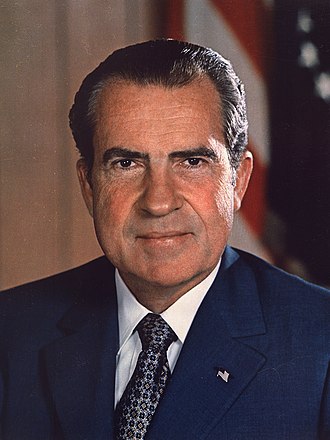
Richard M. Nixon served as the 37th President of the United States from January 1969 until his resignation in August 1974. In February 1971, he ordered the installation of a secret voice-activated taping system in the White House to preserve a historical record of his administration. Until the system's existence was revealed and dismantled in July 1973, the tapes captured Nixon directing major foreign policy initiatives, such as the opening to China, as well as his central role in the Watergate cover-up.
What Nixon talks about on the tapes
White House operations 4,718Presidential scheduling 2,225Public relations 1,784Presidential schedule 1,782Vietnam War 1,693Logistics 1,650Manolo Sanchez 1,626White House communications 1,400White House administration 1,399Presidential communication 1,243Henry Kissinger 1,191Foreign Policy 1,183
Conversations (21,010)
— Page 46 of 211President Nixon met with Soviet Foreign Minister Andrei Gromyko and other officials to discuss the state of U.S.-Soviet bilateral relations, focusing on arms control, trade, and regional conflicts. The conversation addressed the status of the Berlin Agreement, progress on Strategic Arms Limitation Talks (SALT), and the need for diplomatic coordination regarding the Middle East and South Asia. Both sides emphasized the importance of maintaining direct, private channels of communication to manage tensions and facilitate future progress toward a potential summit meeting.
President Nixon met with Secretary of State William P. Rogers and National Security Advisor Henry Kissinger to discuss U.S.-Soviet relations following Nixon's earlier meeting with Soviet Foreign Minister Andrei Gromyko. The participants reviewed the status of communication with Leonid Brezhnev and the strategic importance of balancing upcoming summits with both the USSR and the People's Republic of China. The discussion focused on coordinating the timing and announcement of the President's visit to the Soviet Union and managing potential diplomatic sensitivities regarding the two major powers.
President Nixon and H.R. Haldeman discuss adjustments to the President's upcoming schedule, specifically prioritizing a meeting with Secretary of State William P. Rogers while canceling peripheral events like a podium setup. The conversation touches on economic strategy regarding the IMF and the administration's stance on international lending. Nixon and Haldeman also express frustration over Rogers' concerns regarding Henry Kissinger’s upcoming trip to the People's Republic of China, dismissing Rogers' apprehension about the potential publicity and its impact on United Nations voting.
President Nixon contacted the White House operator to initiate a call to Charles W. Colson. This brief communication served as a functional request to connect the President with his special counsel. No further policy discussions or substantive developments occurred during this brief administrative exchange.
President Nixon and Charles Colson discuss strategies to attack Senator Edward Kennedy’s recent remarks on Vietnam, comparing them to past controversial statements by John F. Kennedy. They prioritize generating political opposition to Kennedy's stance and coordinating a firm administration response, particularly from Secretary of State William P. Rogers. Additionally, the conversation covers managing economic policy, specifically framing legislative opposition to a federal pay increase as a sabotage of the President's efforts to control the cost of living.
President Nixon met with H.R. Haldeman and later Henry Kissinger to review a wide array of administrative, political, and scheduling matters. They discussed the President’s recent domestic trips, potential public statements on federal pay raises, and strategies to address political attacks from critics like Senator Ted Kennedy. Additionally, the group reviewed sensitive intelligence reports, discussed the status of Supreme Court nominations, and consulted on the strategic timing of international diplomatic engagements, including Kissinger’s upcoming trip to China and the President’s meeting with Andrei Gromyko.
President Nixon, Henry Kissinger, George H. W. Bush, and John Ehrlichman met to discuss the administration's critical foreign policy challenges, specifically the upcoming UN vote on Taiwan's status and the strategic implications of upcoming high-level summits. Bush was instructed to maintain a firm, public stance in New York regarding the UN resolution, while Kissinger and the President coordinated the timing of U.S. outreach to the Soviet Union and China to avoid domestic and diplomatic conflicts. The meeting also addressed domestic administrative issues, including housing litigation strategy, welfare reform messaging to Congress, and tax policy coordination with Treasury Secretary John Connally.
President Nixon and Stephen B. Bull met briefly in the Oval Office to coordinate logistics for a forthcoming meeting. Their discussion centered on the scheduled absence of Arnold R. Weber. No major policy decisions were reached during this short administrative check-in.
President Nixon and John Mitchell discussed strategies for securing the confirmation of Richard H. Poff to the Supreme Court, acknowledging the political challenge of his Southern background and limited legal practice. The President expressed a strong preference for nominating a conservative jurist and, despite his personal reservations, considered the political necessity of appointing a woman, specifically Judge Mildred L. Lillie, to appeal to changing national sentiments. Additionally, Nixon directed Robert Finch to undertake a diplomatic mission to Latin America to bolster U.S. relations, positioning the trip as a strategic initiative for his 1972 campaign.
President Nixon met with leaders from various national education organizations to hear their concerns regarding the state of public education, specifically focusing on the financial crisis facing schools. Representatives emphasized the need for federal assistance, the reliance on inequitable property taxes for school funding, and the challenges of integrating diverse student populations. Nixon reaffirmed his support for education and his administration's commitment to exploring tax reform and alternative funding methods, such as revenue sharing, to alleviate the pressure on local school districts.
President Nixon held a brief telephone conversation with his daughter, Julie Nixon Eisenhower. The exchange was primarily personal in nature, serving as a check-in between family members. No substantive policy matters or administrative decisions were recorded during the short duration of the call.
President Nixon consulted with his aide, Stephen B. Bull, regarding scheduling adjustments for upcoming meetings with Secretary of State William P. Rogers and National Security Advisor Henry Kissinger. Seeking to manage his time effectively, the President prioritized his current tasks while evaluating which other appointments could be postponed. Nixon ultimately decided to maintain his immediate focus, declining Bull's offer to interrupt the ongoing session.
President Nixon, Secretary of State William Rogers, and National Security Advisor Henry Kissinger met to discuss the sensitive timing of Kissinger's upcoming trip to the People's Republic of China (PRC). Rogers expressed strong concern that the trip's timing—coinciding with the critical United Nations vote on the status of Taiwan—would create a political backlash and make it appear that the U.S. was undermining its own efforts at the UN. Ultimately, the group discussed potential strategies to delay the trip or alter its public framing to avoid the appearance of being manipulated by the Chinese or signaling disinterest in the UN vote.
President Nixon met with Consumer Affairs Advisor Virginia Knauer and representatives from the credit union movement to discuss the status and growth of credit unions. The participants reviewed efforts to increase enrollment and debated the operational effectiveness of these organizations despite current statistical limitations. The meeting concluded with a symbolic gesture as the President was presented with presidential cufflinks.
President Nixon met with Stephen B. Bull to review his upcoming schedule, specifically focusing on an engagement with newspaper carriers. The discussion clarified a potential misunderstanding regarding a scheduled national newspaper boycott. Following the brief exchange, Nixon directed Bull to finalize the arrangements for the event.
President Nixon met with L. Scott Olson and a group of newspaper carriers participating in 'Project Amnesty' to host them at the White House. During the brief, informal visit, the President engaged in lighthearted conversation, inquired about the participants' work, and discussed the profession of newspaper delivery. The meeting concluded with Nixon presenting the carriers with official gifts as a gesture of appreciation.
President Nixon met with his aide, Stephen B. Bull, to coordinate his upcoming schedule and daily appointments. The discussion centered on logistics for a forthcoming meeting with George P. Shultz and Herbert Stein regarding economic policy. This brief exchange served to finalize the President's immediate agenda before Bull exited the Oval Office.
President Nixon met with George Shultz, Herbert Stein, and Henry Kissinger to strategize the administration's economic policy for the post-freeze 'Phase II' period. The discussion centered on the necessity of establishing a tripartite board to manage wage and price controls, balancing the need for inflation control with the political requirement of securing labor cooperation. Nixon decided to keep his personal involvement in the technical details minimal, tasking Secretary John Connally with leading the public-facing aspects of the transition while aiming to avoid a crisis-heavy presentation to the public.
President Nixon instructed the White House operator to place a telephone call to his close friend and confidant, Charles G. “Bebe” Rebozo. The brief exchange served strictly as an administrative request to facilitate private communication between the two men. No substantive policy matters or further instructions were discussed during this brief interaction.
President Nixon instructed the White House operator to facilitate a previously interrupted telephone call with his close friend and confidant, Charles G. “Bebe” Rebozo. The operator confirmed that Rebozo was available, and the President directed that the connection be made immediately. The brief exchange served solely as an administrative coordination to resume communication with Rebozo.
President Richard Nixon spoke with his close confidant Bebe Rebozo regarding personal matters. The conversation lasted less than three minutes and consisted entirely of withdrawn content. No substantive policy discussions or administrative decisions were recorded in this exchange.
President Nixon met with Alexander P. Butterfield to coordinate logistics regarding a forthcoming congressional vote. The discussion centered on scheduling and administrative support involving an unidentified secretary. The meeting concluded with preparations for the President’s imminent departure to a boat.
President Nixon and H. R. Haldeman met to discuss the preparation and framing of a forthcoming economic policy statement. Nixon emphasized the need for a concise, punchy document that clarifies the administration's stance on price increases and clearly defines responsibility for current economic conditions. He instructed Haldeman to oversee the drafting process, coordinating with staff such as Raymond Price and Patrick Buchanan to ensure the message is delivered effectively.
President Nixon and Henry Kissinger met to deliberate the timing of Kissinger’s upcoming trip to the People's Republic of China in relation to the looming United Nations vote on the status of Taiwan. They weighed the political risks of announcing the visit, fearing that a public announcement near the UN vote or traveling to China immediately after a potential Taiwanese expulsion would trigger intense backlash from American conservatives. Ultimately, they discussed the logistical constraints of negotiating travel dates with the Chinese while maintaining a credible US strategy to prevent Taiwan's loss of their UN seat.
President Nixon held a brief, informal meeting in the Oval Office with an unidentified woman, facilitated by staffer Stephen B. Bull. The dialogue remains largely inaudible or missing from the record, providing no substantive evidence of policy discussions or administrative decisions. Consequently, the encounter stands as an unrecoverable interaction within the presidential schedule.
President Nixon and Stephen B. Bull reviewed the presidential schedule to coordinate upcoming meetings with Souvanna Phouma, Sir Alec Douglas-Home, and Southern Democrat Congressmen. Nixon directed Bull to restrict press access and photography, specifically ordering that he not be photographed with these guests. Instead, he instructed that photographer Oliver Atkins take individual photos for distribution to minimize time constraints and eliminate unnecessary press contact.
President Nixon met with a group of influential Southern Democratic congressmen and key administration officials to discuss domestic and foreign policy priorities. The dialogue focused primarily on the administration's ongoing efforts regarding the Vietnam War, seeking to gauge and solidify support among conservative Democrats for the President's legislative and military agendas. The meeting served as a strategic outreach effort to maintain congressional backing for the administration's broader policy goals.
President Nixon met with Prime Minister Souvanna Phouma of Laos, along with Prince Khammao, Alex Toumayan, and Alexander Haig, to discuss the geopolitical implications of the President's upcoming trip to the People's Republic of China. Phouma expressed strong support for the opening of relations with Beijing, while noting Hanoi's apprehension regarding potential shifts in Chinese policy toward North Vietnam's regional ambitions. Nixon emphasized his intention to maintain U.S. foreign aid for countries threatened by communist aggression even after the conclusion of hostilities in Southeast Asia, despite facing increasing domestic pressure from Congress regarding such assistance.
President Nixon, Alexander Haig, and Stephen Bull met in the Oval Office to coordinate logistics for the President's upcoming schedule and administrative tasks. The discussion focused on finalizing arrangements for a trip to Florida, handling courier reports, and organizing a meeting with British Foreign Secretary Sir Alec Douglas-Home. Key action items included coordinating with Henry Kissinger and arranging for White House photographer Ollie Atkins to manage press access for photo opportunities during the diplomatic visit.
President Nixon met with Sir Alexander F. Douglas-Home, the Earl of Cromer, and Henry Kissinger to discuss the geopolitical landscape, specifically focusing on Vietnam, arms control negotiations with the USSR, and the situation in South Asia. The participants addressed the status of the Vietnam War, the impact of U.S. troop withdrawals, and the necessity of managing domestic political pressure and potential isolationism. Nixon also sought British cooperation regarding upcoming United Nations votes and provided updates on European security conferences and Middle East diplomatic efforts.
President Nixon and Secretary of State William P. Rogers discussed the strategic importance of improving relations with Latin American nations to balance the administration’s focus on upcoming diplomatic initiatives in China, the Soviet Union, and elsewhere. Nixon emphasized a personal desire to engage with Latin American leaders, noting that the region had been neglected compared to other international priorities. Rogers was tasked with investigating potential opportunities for a presidential visit, specifically suggesting a trip to Paraguay to meet with Alfredo Stroessner.
President Nixon and Secretary of State William P. Rogers discuss the need to improve diplomatic engagement with Latin American nations to demonstrate that the region remains a priority for the administration. Nixon expresses a personal affinity for Latin American countries and suggests that Rogers conduct a diplomatic visit to a stable city in the region to bolster relations. The discussion emphasizes balancing this regional focus against the President's ongoing high-level diplomatic efforts with China, Russia, and Japan.
President Nixon contacted the White House operator to facilitate an urgent communication with Attorney General John N. Mitchell. The brief exchange served as a logistical request to initiate a phone call between the two officials. No substantive policy matters were discussed during this specific interaction.
President Nixon held a brief ten-minute meeting in the Oval Office with an unidentified individual. The entirety of the recorded segment consists of a brief, withdrawn personal exchange. Due to the lack of a transcript and the restricted nature of the audio, no substantive policy discussions or actionable decisions were documented during this encounter.
President Nixon met with his senior staff and economic advisers to finalize the rollout strategy for Phase II of his economic program. The discussion focused on establishing an effective, low-key announcement strategy for the upcoming wage and price controls, balancing the need for public cooperation with the desire to avoid the appearance of a crisis. Key decisions included keeping the address concise, maintaining a tone of confidence, and utilizing prime-time news slots to maximize reach while minimizing disruption to entertainment programming.
President Nixon met with his personal secretary, Rose Mary Woods, in the Oval Office to coordinate his daily schedule. The discussion focused on establishing an upcoming meeting, reflecting the routine administrative management required for the President's calendar. No substantive policy matters were recorded, as the brief exchange was primarily procedural in nature.
President Nixon met with his personal secretary Rose Mary Woods and aide Stephen B. Bull to address various administrative and personal tasks. The discussion covered drafting correspondence to medical staff, organizing a guest list for church services, and reviewing potential official photographs for distribution to friends. Additionally, the President discussed his personal wardrobe preferences and emphasized the importance of maintaining his health and schedule to manage the demands of the presidency.
President Nixon met with his personal valet, Manolo Sanchez, in the Oval Office for a brief, informal encounter. The dialogue contains minimal substantive content, characterized by routine interactions and a short segment marked as a personal returnable. No significant policy decisions or official White House actions resulted from this brief exchange.
President Nixon met briefly with an unidentified woman to coordinate his immediate schedule and manage upcoming appointments. During the discussion, they addressed the potential participation of Charles W. Colson and Henry A. Kissinger in subsequent briefings. The President ultimately instructed his staff to adjust the call list, specifically cancelling an outreach attempt to an individual referred to as 'Cosa' to ensure his confidence in the meeting process.
President Nixon and Henry Kissinger met to review the administration’s progress on major foreign policy initiatives, specifically the opening of relations with the People's Republic of China and preparations for a Soviet Union summit. They analyzed the favorable domestic and geopolitical reception of these efforts, contrasting their successful strategy of linkage against potential opposition from the Senate and the bureaucracy. The discussion also addressed ongoing Vietnam War negotiations and the tactical timing of future military actions, such as bombing strikes to secure the release of prisoners of war.
President Nixon met with Dudley Swim, Peter M. Flanigan, and Jon M. Huntsman to discuss a range of topics, including airline merger plans, Supreme Court appointments, and the future of American education. Swim presented his critique of the current education system, advocating for the introduction of private enterprise, voucher-style financing, and a shift away from what he described as socialized, tax-supported institutions. The group also touched upon the need for a national cultural revival, exploring ideas such as commemorative stamp series to foster a renewed sense of American spirit and national identity.
President Nixon held a brief, one-minute meeting in the Oval Office with an unidentified individual. Given the lack of a transcript or record of the discussion, the specific context and subject matter of this engagement remain unknown to researchers. No actionable outcomes or policy decisions can be attributed to this interaction based on available documentation.
President Nixon met with aide Stephen B. Bull in the Oval Office to briefly coordinate the President's daily schedule. The discussion served as a routine administrative check-in regarding upcoming appointments and logistical arrangements for the day. No substantive policy matters were addressed during this short interaction.
President Nixon met with representatives from the Veterans of Foreign Wars (VFW), including Joseph L. Vicites and Cooper T. Holt, to discuss the organization's steadfast support for his policies in Southeast Asia and his handling of the prisoner of war (POW) situation. The discussion covered the VFW's efforts in veteran assistance programs, such as drug addiction support, and the President's upcoming diplomatic initiatives, specifically his approach toward communist nations including China. The participants also touched upon the 1972 presidential campaign, with the VFW leadership affirming their organization's alignment with the President over his Democratic critics.
President Nixon met with Alexander P. Butterfield and Stephen B. Bull to coordinate the distribution of presidential gifts, including silver dollar coins, money clips, and Camp David jackets. The participants discussed inventory management and the logistics of providing these items to congressmen and attendees at upcoming campaign events. Nixon directed his staff to ensure efficient distribution of the gifts and touched upon his scheduling needs regarding upcoming meetings.
President Nixon initiates a brief interaction with the White House operator to facilitate an outgoing call. The President directs the operator to clear the line and connect him to another party. This exchange reflects the administrative routine of coordinating presidential communications via the switchboard.
President Nixon and Attorney General John Mitchell discuss the ongoing search for Supreme Court nominees, specifically evaluating potential candidates such as David Dyer, Mildred L. Lillie, and Hershel H. Friday. They review the political viability of these candidates, including the necessity of securing support from key Senate figures like James O. Eastland and John L. McClellan. The conversation concludes with Nixon urging Mitchell to finalize the list of nominees, with Mitchell pledging to deliver a formal package of candidates before the end of the week.
President Nixon consulted with aides John Mitchell, Charles Colson, H. R. Haldeman, Henry Kissinger, and John Connally regarding strategic messaging for the upcoming Phase II economic policy and the political fallout of his planned trip to the People's Republic of China. The participants coordinated a media roll-out for the economic plan, specifically scheduling Connally to hold a follow-up press conference to anchor the administration's position after the President’s speech. Additionally, the group discussed the positive impact of the China announcement on foreign policy optics, successfully shifting media focus away from the recent South Vietnamese election.
President Nixon instructed the White House operator to place an outgoing telephone call to Secretary of the Treasury John B. Connally. The brief exchange served as a logistical bridge to facilitate direct communication between the President and his Treasury Secretary. No further policy discussions or substantive developments occurred during this administrative interaction.
President Nixon and Treasury Secretary John B. Connally discussed the communications strategy for an upcoming policy announcement to ensure maximum media control and public impact. Nixon directed Connally to skip the initial technical briefing in favor of a high-profile, live press conference scheduled for the following day to preempt criticism from political opponents. This tactical approach was designed to secure prime-time news dominance and position Connally as the authoritative voice on the administration's economic agenda.
President Nixon initiated a brief telephone communication through the White House operator to contact Secretary of the Treasury John B. Connally. The interaction served solely as a procedural request to establish a connection with the Secretary. No substantive policy discussions or decisions occurred during this brief administrative exchange.
President Nixon met with Malaysian Prime Minister Tun Abdul Razak to discuss American policy in Southeast Asia and the upcoming diplomatic opening with the People's Republic of China (PRC). Nixon emphasized the necessity of a continued U.S. presence in the region to maintain stability and countered concerns about the PRC's influence by framing his upcoming diplomatic outreach as a necessary, pragmatic dialogue. The leaders also reviewed regional security issues, including the conflict in Vietnam, the situation in Cambodia, and the importance of self-reliance for Southeast Asian nations.
President Nixon and Alexander M. Haig, Jr. briefly discussed the activities and awareness of the White House press corps. Haig confirmed to the President that the press was actively tracking his ongoing actions. The brief exchange served to acknowledge current media scrutiny and maintain situational awareness regarding public perception.
President Nixon held a brief, four-minute meeting in the Oval Office with an unidentified individual. Given the lack of a transcript or supplemental documentation, the specific subject matter and any resulting directives remain undocumented. The recording serves as a brief archival record of presidential activity during this period.
President Nixon initiates a brief administrative interaction with the White House operator to facilitate an outgoing communication. This exchange serves as a standard logistical bridge for the President to connect with another party. No substantive policy discussions or significant political developments occurred during this brief request for telephone assistance.
President Nixon met with Alexander P. Butterfield to review and coordinate the President's upcoming official schedule. The brief discussion focused on logistical oversight and ensuring the President's time remained under his own control. Butterfield's departure concluded the session, which served as a routine administrative check-in regarding the executive calendar.
President Nixon and Treasury Secretary John B. Connally share a brief, informal exchange regarding a piece of novelty currency presented to Connally by the Veterans of Foreign Wars. The two discuss the visual design and cleverness of the item, which appears to be a split or modified dollar bill designed to look like a much larger denomination. No policy decisions were made during this social call.
President Nixon and Secretary of the Treasury John B. Connally held a brief one-minute meeting in the Oval Office. Although no transcript exists for this encounter, it occurred during a period of intense economic policy discussions regarding the Nixon shock and subsequent domestic fiscal measures. The brevity of the meeting suggests it served as a logistical check-in or a quick consultation on administrative priorities.
President Nixon and H.R. Haldeman evaluated the strategic scheduling of a televised address, ultimately selecting 7:30 p.m. to maximize audience reach without disrupting prime-time entertainment. The discussion also addressed the nomination of Richard H. Poff, with Nixon reviewing efforts to bolster Poff's public image by highlighting his conservative credentials. Additionally, Nixon touched upon diplomatic concerns regarding the United Nations and the potential impact of forthcoming debates on the status of the People's Republic of China and Taiwan.
President Nixon and Secretary of the Treasury John B. Connally exchanged brief pleasantries regarding novelty currency received from the Veterans of Foreign Wars (VFW). Connally initiated the call to express personal gratitude to the President for facilitating the gift. The exchange served as a social gesture between the two officials rather than a substantive policy discussion.
President Nixon initiates a request through the White House operator to place a telephone call to Congressman Richard H. Poff. This brief administrative exchange serves to facilitate direct communication between the President and the Congressman. No substantive policy discussions occur during this brief operator-assisted connection.
President Nixon speaks with Representative Richard H. Poff to discuss Poff’s decision to decline a nomination to the Supreme Court. Nixon expresses support for Poff’s withdrawal, acknowledging that a difficult confirmation process could have hindered his legislative initiatives, including foreign policy with China and his economic agenda. The President reaffirms his intent to appoint conservative justices in the mold of Warren Burger and Harry Blackmun to the Court.
President Nixon instructed the White House operator to manage an incoming communication from Charles W. Colson. He requested that the operator have Colson return the call in approximately five minutes. The interaction served as a brief administrative coordination regarding the President's immediate scheduling priorities.
President Nixon initiates a brief request for the White House operator to connect him with special counsel Charles W. Colson. The call serves as a logistical directive to facilitate direct communication between the President and a key advisor. No further substantive discussion occurs during this exchange.
President Nixon and Charles W. Colson discussed the political landscape in the Senate, specifically concerning upcoming votes on a federal pay raise and the administration's ability to block or compromise on legislation. The two analyzed the motivations of Democratic rivals, including Hubert Humphrey, Edmund Muskie, and Edward Kennedy, while evaluating the potential impact of their public comments and media perception on Nixon's administration. They also reviewed recent polling data from Louis Harris and George Gallup, and discussed the economic outlook, particularly the upcoming unemployment and wholesale price figures and their influence on labor relations.
President Nixon contacted the White House operator to place an outgoing call to George E. Allen. The brief exchange served solely as a request for the operator to facilitate this connection. No further policy discussions or significant developments were recorded during the interaction.
President Richard Nixon engaged in a brief, personal telephone conversation with George E. Allen. Due to the withdrawal of the majority of the recording for personal reasons, no substantive policy or political matters are documented. The brief duration and restricted nature of the transcript indicate a private interaction rather than an official presidential briefing.
President Nixon and H. R. Haldeman briefly coordinate their morning schedules and communication logistics. The discussion centers on the timing of meetings with Henry Kissinger and the status of legislative priorities, specifically the Byrd amendment. Nixon decides to bypass an immediate face-to-face meeting in favor of following up with Kissinger by phone.
President Nixon instructed the White House operator to place an outgoing call to Congressman Gerald R. Ford. This brief exchange served as a logistical step to facilitate direct communication between the President and the House Minority Leader. No further substantive discussion occurred during this connection.
President Nixon initiated a brief contact with the White House operator to facilitate a telephonic connection. This administrative interaction served as a logistical precursor to an impending conversation. No substantive policy discussions or major decisions were recorded during this exchange.
President Nixon initiated a brief telephone communication with the White House operator to place an outgoing call to Harry S. Dent. This brief interaction served as a logistical request to facilitate direct contact with a key political advisor. No substantive policy matters were discussed during this connection attempt.
President Nixon coordinated with the White House operator to facilitate communication with Gerald R. Ford regarding his morning schedule at the Capitol. The discussion centered on determining Ford's availability at his office by 9:45 a.m. to schedule a potential meeting or breakfast engagement. The operator was instructed to secure the connection once Ford returned to his office.
President Nixon coordinated with the White House operator to facilitate communication with Harry S. Dent. The operator confirmed that Dent was en route to his office and that a message had been left for him to address upon his arrival. This brief exchange served as a logistical check-in regarding Dent’s availability for contact.
President Nixon instructed the White House operator to place an outgoing call to Senator Barry M. Goldwater. This brief administrative exchange served as the precursor to a subsequent substantive policy discussion between the two men. No further conversation occurred during this specific recording segment.
President Nixon engaged in a brief, administrative exchange with the White House operator to facilitate a communication connection. The interaction serves as a routine procedural contact within the Executive Office Building to initiate further telephonic correspondence. No substantive policy matters or strategic decisions were finalized during this short logistical communication.
President Nixon consulted with the White House operator regarding the scheduling of a specific individual for a breakfast meeting. The brief exchange focused on coordinating the logistics for this appointment. The President reached a decision to proceed with arranging the contact during an upcoming breakfast session.
President Nixon initiates a brief communication with the White House operator to facilitate a connection for an outgoing telephone call. No substantive policy matters or political discussions are recorded during this brief administrative interaction. The exchange serves solely as a functional step in managing the President's telephonic accessibility.
President Nixon instructed the White House operator to facilitate a conference call by dialing out to multiple recipients. This brief exchange served as a routine administrative request to establish communication for an upcoming discussion. No substantive policy matters were addressed during this interaction.
President Nixon and Harry S. Dent discuss ongoing negotiations regarding textile trade agreements with Japan and Taiwan, specifically addressing the need to prevent the State Department from undermining the October 15th deadline. Additionally, the pair consults on a potential campaign contribution from John Rollins. Nixon explicitly directs Dent to ensure that all financial discussions are handled by John Mitchell or H. R. Haldeman to maintain the President's personal distance from the solicitation.
President Nixon met with Harry S. Dent to discuss political strategy and potential prospects for upcoming Senate campaigns. Nixon expressed dissatisfaction with the current recruitment and candidate support efforts, specifically criticizing the performance of David K. Wilson in past campaigns. He instructed Dent to conduct a comprehensive assessment of competitive states and proposed reassigning Wilson to a subcommittee to focus exclusively on candidate recruitment.
President Nixon and Congressman Gerald Ford discuss a recent legislative victory and the political fallout surrounding the withdrawal of Richard H. Poff from consideration. Ford praises the effectiveness of the White House staff, specifically Charles Colson, in pressuring the Chamber of Commerce regarding federal pay raise legislation. The conversation concludes with Nixon agreeing to call Senator Hugh Scott to ensure firm support for the administration's position in the Senate.
President Nixon met briefly with his personal valet, Manolo Sanchez, in the Old Executive Office Building. The conversation, which lasted only four seconds, focused on the delivery of refreshments. No significant policy decisions or political matters were addressed during this exchange.
President Nixon and Representative Gerald Ford discussed the political pressures surrounding the judicial nomination of Richard H. Poff, expressing sympathy for the personal toll the process took on him and his family. The President acknowledged Charles Colson’s aggressive lobbying efforts, specifically the use of Chamber of Commerce letters to garner support. Nixon concluded the call by committing to personally contact Poff to bolster his morale during the difficult confirmation process.
Senator Barry Goldwater called President Nixon to express support for the President’s recent political rhetoric, specifically targeting Senator Edward Kennedy’s comments on Communism. The two discussed the potential 1972 presidential ambitions of Hubert Humphrey and the political damage done to Kennedy. Nixon also affirmed his commitment to appointing two conservative justices to the Supreme Court, highlighting William Rehnquist as a potential candidate despite potential pushback from the American Bar Association.
President Nixon initiated this call to express his appreciation for Senator Barry Goldwater’s recent public criticism of Senator Edward Kennedy. The discussion transitioned to the administration’s strategy for upcoming judicial appointments, with Nixon assuring Goldwater that he remained committed to nominating conservative candidates to the Supreme Court. They briefly evaluated potential nominees and discussed the challenges posed by the legal establishment and the ideological leanings of current justices.
President Nixon initiates a call to the White House operator to be connected with Congressman David N. Henderson of North Carolina. This brief administrative interaction serves as the preliminary step for the President to communicate directly with the Congressman. No further substantive policy matters are addressed in this particular exchange.
President Nixon initiates a call to Congressman David Henderson of North Carolina through the White House operator. This brief interaction serves as a routine administrative request to facilitate communication between the President and the Congressman. The exchange concludes immediately once the operator connects the two parties.
President Nixon spoke with Representative David N. Henderson to express appreciation for his legislative support and to discuss strategy for upcoming votes in the Senate. The President vowed to pressure Senate Minority Leader Hugh Scott to prevent opposition to the administration's tax bill and noted his intent to announce Phase II economic plans soon. Additionally, the two discussed hurricane damage in North Carolina and made a lighthearted agreement to attend a college football game between Duke and the University of North Carolina.
President Nixon and Henry Kissinger met to coordinate administrative strategy regarding sensitive foreign policy and domestic legislative issues. The discussion centered on silencing speculation about Kissinger's upcoming trip to the People's Republic of China, managing State Department leaks, and addressing the ongoing textile negotiations with Taiwan and Japan. Additionally, Nixon directed Kissinger to clarify the administration's stance on the Byrd Amendment regarding Rhodesian chrome and advised Senator Hugh Scott on navigating upcoming Senate votes to ensure the success of his Phase 2 economic announcement.
President Nixon instructed the White House operator to place a telephone call to Senator Hugh Scott. This brief communication served as a logistical request to initiate direct contact with the Senate Minority Leader. No further substantive policy matters were discussed during this specific exchange.
President Nixon and Henry Kissinger discuss the scheduling and arrival of Senate Minority Leader Hugh Scott at the White House. The conversation focuses on coordinating this meeting as the President instructs Kissinger to maintain ongoing efforts regarding the logistics of Scott's visit. This brief exchange serves to manage the President's immediate morning agenda and ensures the senator's arrival is handled appropriately.
President Nixon consulted with Senate Republican Leader Hugh Scott to ensure a pending federal pay bill would not pass the Senate ahead of the President’s scheduled Phase II economic announcement. Nixon emphasized that a legislative defeat would undermine his policy rollout and negatively impact labor union relations. Scott assured the President that he would conduct an accurate vote count and initiate a filibuster if necessary to block the measure.
President Nixon met with his aide Stephen B. Bull to request a specific list of names for his review. This administrative exchange was intended to assist the President in organizing his upcoming schedule and prioritizing his workload. Following the request, the two men discussed the logistical process of delivering the documentation to the Oval Office.
President Nixon and H. R. Haldeman met in the Old Executive Office Building to coordinate the President's upcoming schedule. The discussion focused on logistical planning and the management of Nixon's appointments. No further substantive policy decisions were recorded during this brief administrative exchange.
President Nixon met with his aide Stephen B. Bull in the Old Executive Office Building to review and finalize a specific list for the President's immediate attention. The discussion focused on administrative oversight and the management of upcoming priorities. The meeting concluded shortly thereafter, marking the completion of the requested task.
President Nixon, H.R. Haldeman, and Stephen B. Bull met to discuss political strategy, campaign logistics, and the management of White House public relations. The President instructed his staff to maintain a professional distance from congressional campaign funding and to avoid over-involvement in regional political races while emphasizing the importance of securing the Republican National Committee's financial stability. Additionally, they reviewed scheduling for upcoming foreign policy initiatives, including the President's planned trip to the People's Republic of China, and strategies for managing the media's coverage of administration foreign policy.
President Nixon instructed the White House operator to place a telephone call to speechwriter Raymond K. Price, Jr. This brief administrative interaction served as the initiation of a direct communication line between the President and a key member of his writing staff. No further discussion or substantive policy matters were recorded during this brief exchange.
President Nixon consulted with a White House operator to facilitate an outgoing telephone connection. This brief interaction served the administrative purpose of establishing communication for the President's scheduled business. No substantive policy discussions or significant decisions were recorded during this brief exchange.
President Nixon instructed Raymond K. Price, Jr. to compile letters from citizens who are experiencing financial hardship due to the wage and price freeze but remain supportive of the policy. The President intended to use these anecdotes in an upcoming speech to illustrate the public's willingness to prioritize national interest over personal gain. Price was tasked with identifying several representative excerpts from working-class individuals, such as labor workers, to serve as impactful examples for the audience.
President Nixon directs Raymond K. Price, Jr. to identify a pool of qualified legal talent in Texas for a specific, yet-to-be-defined purpose. The President emphasizes his interest in individuals with backgrounds in hard labor or government service for this potential assignment. This informal consultation initiates a search for professional candidates to be considered for an unspecified future role.