Haldeman, H. R. ("Bob")
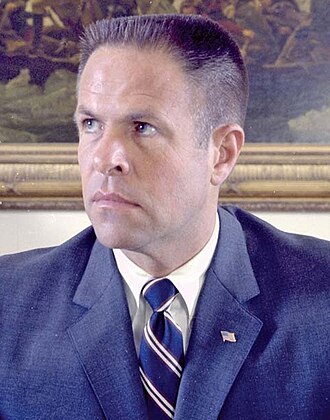
H. R. ("Bob") Haldeman served as President Richard Nixon's White House Chief of Staff from January 1969 until his resignation in April 1973. Acting as Nixon's primary gatekeeper and closest aide, Haldeman was a central figure during the White House taping period and is featured prominently in hundreds of recorded conversations. His tenure ended abruptly when he was forced to resign due to his deep involvement in the Watergate cover-up, most notably captured directing the obstruction of justice on the infamous "Smoking Gun" tape.
What Haldeman talks about on the tapes
Public relations 579Vietnam War 411Political strategy 286Foreign Policy 234Presidential scheduling 209Economic policy 202Henry Kissinger 195Congressional relations 176Press relations 161Watergate 159White House operations 151White House administration 145
Conversations (2,364)
— Page 20 of 24President Nixon instructed H. R. Haldeman to meet with him at the Aspen Lodge study immediately following the departure of Charles Colson and other attendees from a prior gathering. The brief exchange served as a coordination effort to ensure a private follow-up session between the President and his Chief of Staff. No substantive policy matters were addressed during this transitionary communication.
John D. Ehrlichman coordinates with the Camp David operator to facilitate a telephonic connection with Ronald L. Ziegler while President Nixon and H. R. Haldeman are present. The discussion focuses on managing Henry A. Kissinger’s travel schedule, specifically regarding the timing of public announcements concerning his upcoming trip to Paris. The participants deliberate on how to synchronize these communications with Ziegler and potential plans for Kissinger to visit Camp David.
President Nixon met with H.R. Haldeman and John Ehrlichman at Camp David to strategize the comprehensive reorganization of his second-term administration. The participants focused on restructuring cabinet-level departments, delegating authority to a new tier of 'super secretaries,' and planning high-profile personnel changes across federal agencies, including the State and Defense Departments. Additionally, they evaluated potential cabinet replacements and discussed the public relations strategy for announcing these shifts to ensure executive efficiency and maintain political momentum.
President Nixon and H. R. Haldeman coordinate the scheduling of meetings at Camp David, specifically planning a session for Patrick J. Buchanan to discuss future work assignments. The two agree to move Buchanan's visit to the following day to better align with the President's schedule, which includes a morning meeting with Vice President Spiro Agnew. Additionally, Nixon requests that Haldeman locate and forward draft form letters intended for post-election campaign acknowledgments.
President Nixon and H. R. Haldeman coordinate the scheduling of an upcoming afternoon meeting and discuss the logistics of a visitor's travel to Camp David. They also address a clerical matter regarding missing form letters that the President requires for his current work. The conversation concludes with a directive to locate these documents within the office to facilitate the President's review.
President Nixon and H. R. Haldeman met to streamline the administrative process for sending post-election gratitude to supporters, staff, and campaign personnel. The President expressed frustration with the burden of personal correspondence and directed Haldeman to prioritize sending letters while delaying or eliminating the distribution of gifts and mementos to various groups. They reached a decision to exclude paid vendors and service providers from receiving presidential recognition, emphasizing that such honors should be reserved for those who performed significant campaign service rather than mere professional duties.
President Nixon and H. R. Haldeman coordinated the logistics for a meeting with Secretary of State William P. Rogers to discuss second-term administrative reorganization. The two also arranged for an immediate working session with John Ehrlichman to review the latest iteration of the presidential appointments list. These discussions served to prepare the administration's staffing strategy following the recent election.
President Nixon and H. R. Haldeman briefly confer to coordinate schedules and assess the status of an ongoing personnel appointment. The discussion touches upon the potential participation of an individual named Roger and clarifies whether Haldeman and John Ehrlichman should consult further on the matter. The exchange serves primarily as a logistical check-in regarding the timeline and decision-making process for these administrative arrangements.
President Nixon, H.R. Haldeman, and John Ehrlichman met at Camp David to strategize the personnel changes and structural reorganization for the President’s second term. The participants discussed replacing Secretary of State William P. Rogers with Kenneth Rush and deliberated over various Cabinet-level and departmental appointments, emphasizing the need for 'tough' management and political responsiveness. They also addressed the transition of White House staff, the handling of the energy crisis, and the importance of ensuring ethnic and regional representation, specifically seeking Catholic and Southern appointees for key roles.
President Nixon and H.R. Haldeman discussed strategies for reorganizing the executive branch and managing personnel changes for the second term. They focused on balancing the retention of key figures like Secretary of State William P. Rogers and Henry Kissinger with the necessity of political transitions following the Vietnam settlement. The conversation emphasized a cautious, individualized approach to informing Cabinet members about their future roles to maintain stability while planning for potential departures and restructuring within the State Department.
President Nixon and H.R. Haldeman discuss the pending departure of Secretary of State William P. Rogers and the subsequent reorganization of the State Department for the second administration term. Haldeman reports on concerns raised by Henry Kissinger regarding the transition and the hiring of new personnel. Nixon asserts that he will personally oversee all senior appointments to ensure staff loyalty and insists that the terms of Rogers's departure be finalized, emphasizing the critical need for confidentiality to prevent premature leaks.
President Nixon and H. R. Haldeman met to coordinate administrative staffing changes and the public messaging surrounding a planned reorganization. Nixon expressed dissatisfaction with Ron Ziegler’s handling of recent personnel announcements and asserted his intent to personally oversee the hiring process for key staff. They concluded by agreeing to establish a definitive cutoff for appointment announcements as part of a broader shift in the administration's structure.
President Nixon and H.R. Haldeman discuss the potential restructuring of executive appointments and diplomatic portfolios for the second term. The conversation centers on the feasibility of Peter G. Peterson’s new role, specifically regarding the impracticality of combining East-West trade duties with European Economic Council responsibilities. Consequently, Nixon instructs Haldeman to have George Shultz propose merging the EEC and NATO ambassadorships into a single, unified position.
President Nixon and H. R. Haldeman engaged in a brief, directive-oriented discussion concerning ongoing negotiations. The President instructed Haldeman to direct George—presumably a high-level negotiator or official—to present an alternative proposal. This exchange highlights the President's hands-on management of diplomatic or administrative strategy through his Chief of Staff.
President Nixon and H. R. Haldeman discussed the administrative restructuring of the upcoming second term, specifically focusing on the roles of George Shultz and Peter G. Peterson. Nixon directed Haldeman to coordinate with Shultz to assign Peterson special responsibilities related to East-West trade and European affairs. This arrangement was intended to maximize Peterson’s utility by leveraging his expertise across these overlapping policy domains.
President Nixon and H.R. Haldeman discussed managing the professional portfolio of George Shultz regarding East-West trade initiatives. Nixon directed Haldeman to strategically position Shultz to incorporate scientific expertise from Peter Flanigan to bolster European trade relations. The objective was to subtly frame these responsibilities to provide Shultz with broader authority while facilitating future collaborative work.
President Nixon and H. R. Haldeman coordinated a brief, private meeting at the Dogwood cabin to discuss an upcoming afternoon appointment with Secretary of Defense Melvin R. Laird. The President sought to consult with Haldeman regarding the substance of the Laird meeting before it took place. Haldeman agreed to the request and prepared to head to the cabin immediately following his lunch.
President Nixon and H. R. Haldeman briefly conferred at the Aspen Lodge to coordinate their schedules for the afternoon. The discussion focused on setting a meeting time for a later private engagement referred to as a "sacrament." The exchange concluded with the President requesting that Haldeman join him for a brief follow-up meeting.
President Nixon and H. R. Haldeman coordinated the administration's second-term reorganization, specifically focusing on managing the departures and status of Cabinet members and White House staff, including William P. Rogers and Charles Colson. Nixon instructed Haldeman to pressure Rogers to accept new terms for his continued tenure as Secretary of State and to push for Colson’s exit while maintaining a facade of presidential loyalty. Additionally, Nixon directed Haldeman to reprimand Henry Kissinger regarding potential leaks of classified SALT negotiation materials found in a manuscript by a Brookings Institute associate.
President Nixon and H. R. Haldeman discuss the management of staff transitions and the need to exert firm control over key personnel, specifically regarding Secretary of State William Rogers. Nixon instructs Haldeman to handle upcoming meetings with a 'cold turkey' approach, ensuring that staff changes are executed decisively without allowing personnel to believe they are acting on behalf of their colleagues. Furthermore, Nixon directs Haldeman to reprimand Henry Kissinger regarding a subordinate's actions, emphasizing the necessity of maintaining strict administration oversight during these administrative shifts.
President Nixon directed H.R. Haldeman to initiate a direct, firm conversation with Secretary of State William P. Rogers regarding the administration's second-term reorganization. Nixon provided a specific briefing on the status of various cabinet members, including the departures of George Romney, John Volpe, and James Hodgson, as well as the retention of George Shultz and Richard Kleindienst. Furthermore, the two discussed concerns raised by the First Lady and family regarding potential negative press coverage of the transition, ultimately concluding that the public reaction to the President's recent interview with Jack Horner had been positive.
President Nixon and H.R. Haldeman discuss personnel management and the perception of the administration's internal culture. Nixon directs Haldeman to address sensitive staffing matters with Larry and expresses concern over reports from family members, including Julie and Tricia, that his administration is perceived as being overly cold and hard-hearted. The President seeks to evaluate the administration's public standing and communications strategies in response to these criticisms.
President Nixon and H.R. Haldeman discuss the reorganization of the administration for the second term, focusing on key personnel transitions and policy alignments. They confirm Secretary of State William P. Rogers' departure, address the need for greater internal loyalty within the Foreign Service, and strategize the replacement of various agency leaders, including discussions on moving Elliot Richardson to the Defense Department. Additionally, they review the status of Vietnam peace negotiations and contemplate the future roles of staff members such as Charles Colson and Peter Flanigan.
President Nixon and H.R. Haldeman discuss the scheduling of Cabinet meetings and the logistics for finalizing administrative appointments for the second term. The President emphasizes the need for a tightly controlled, coordinated public relations strategy to manage the announcement of these appointments and to curb unauthorized leaks, specifically expressing concern over a recent article in the Washington Star. Additionally, they discuss the necessity of maintaining a aggressive political counterattack capability after the 1972 election and examine H.R. Kissinger’s recent interview, which Nixon views as potentially damaging to the administration's internal dynamics.
President Nixon and H.R. Haldeman discuss the reorganization of the administration for the upcoming second term, focusing on staffing key Cabinet and department positions. They deliberate on potential appointments, including Peter Brennan for Labor, Howard Callaway and George H.W. Bush for Commerce or other roles, and the consideration of Anne Armstrong for a Cabinet post to improve the administration's political image. Additionally, Nixon expresses his intent to prioritize strong leadership at the Department of Defense under Elliot Richardson and addresses personnel transitions involving Charles Colson, Robert Finch, and Donald Rumsfeld.
President Nixon and H.R. Haldeman met at Camp David to discuss staffing decisions and potential cabinet appointments for the second term. They evaluated various candidates for high-level positions, emphasizing the need for political loyalty and effective public relations, including the potential appointment of a woman to a major cabinet role like Commerce or Interior. The President instructed Haldeman to coordinate with George Shultz to ensure specific political appointments were offered and finalized.
President Nixon and H. R. Haldeman discuss strategies for removing key Republican officials, specifically RNC Chairman Bob Dole and political figures Peter Dominick and Bob Wilson, without the White House appearing responsible for the personnel changes. Nixon directs Haldeman to orchestrate external pressure by having party allies and state leaders publicly call for a full-time professional chairman, thereby creating a consensus that forces these individuals out gracefully. Additionally, the two touch upon a recent Life magazine cover featuring the President, which Nixon dismisses as a deliberate act of media sabotage, and they discuss organizing a public protest against the publication.
President Nixon and H. R. Haldeman discuss a strategy to force the resignation of Republican National Committee Chairman Bob Dole by orchestrating external pressure from party officials and regional leaders. By generating public calls for a full-time professional chairman, the President intends to distance the White House from the move and avoid the political heat associated with Dole's removal. Nixon instructs Haldeman to coordinate with John Mitchell to mobilize this grassroots-style campaign before the President personally meets with Dole.
In this meeting at Camp David, President Nixon and H. R. Haldeman discuss the personnel and strategic reorganization of the administration's second term, including the management of press relations and the handling of key cabinet members and staffers. Nixon emphasizes the need for loyal, dedicated personnel and discusses his desire to establish a more personal, warmer public image by utilizing surrogates and better controlling media access. They also address the tactical handling of critical news outlets, specifically Life and Time magazines, and deliberate on the best approach for announcing upcoming cabinet changes and the President’s post-landslide agenda.
President Nixon consulted with H. R. Haldeman and John Ehrlichman to finalize logistical arrangements for an upcoming family trip to New York and to coordinate the scheduling of political meetings at Camp David. The participants discussed hotel accommodations, the timing of a secretive meeting with Henry Kissinger to avoid premature press attention, and the importance of balancing Republican leadership presence at Camp David by inviting Barry Goldwater to meet alongside Nelson Rockefeller. Additionally, they reviewed progress on RNC personnel matters, including directives for John Mitchell to mobilize key committee staff.
President Nixon and H. R. Haldeman coordinate logistical preparations for an upcoming trip, focusing on managing public perception and scheduling meetings with key political figures. They discuss the importance of delaying official announcements to avoid premature speculation and finalize the guest list, which includes Nelson Rockefeller and Barry Goldwater. The conversation concludes with the President instructing Haldeman to hold off on contacting John Mitchell for the time being.
President Nixon and H. R. Haldeman discussed the political complications surrounding the potential Senate confirmation of Peter M. Flanigan for a position within the administration. The conversation centered on concerns that a confirmation hearing would invite unwanted scrutiny into past controversies, specifically involving ITT and the influence of Charles Colson. They reviewed the structure of the Council on International Economic Policy (CIEP) and reached a consensus that Flanigan’s future tenure should be managed to avoid damaging the administration’s public standing.
President Nixon and H. R. Haldeman met at the Aspen Lodge at Camp David to discuss the administrative restructuring required for the upcoming second term. The brief consultation focused specifically on potential changes and personnel appointments within the Department of Defense. This meeting served as part of the broader effort to finalize key cabinet and agency leadership shifts following Nixon's reelection.
President Nixon and H.R. Haldeman met at Camp David to coordinate the comprehensive reorganization of the executive branch and White House staff for the second term. They discussed specific personnel changes, including the removal of Bob Dole from the Republican National Committee in favor of George H.W. Bush, the restructuring of Cabinet positions, and strategies for managing high-level officials like John Mitchell, Henry Kissinger, and William Rogers. Additionally, the President issued firm directives regarding inaugural pavilion designs, press relations, and the necessity of maintaining control over departmental transitions, while preparing for sensitive discussions with staff members slated for departure or reassignment.
H. R. Haldeman coordinates with Lawrence M. Higby to schedule a same-day meeting between President Nixon and Bob Hope at Camp David. Haldeman provides specific logistical instructions, directing that Hope be transported via a 3:15 p.m. helicopter and provided with private car service. The directive emphasizes the need for efficiency, explicitly instructing staff to ensure Hope does not have to wait for other visitors.
President Nixon coordinated plans with Rose Mary Woods for a surprise visit to the Mudge, Rose, Guthrie and Alexander law firm in New York during the upcoming Thanksgiving holiday. Nixon decided to have John Mitchell arrange the visit to ensure he could briefly greet the staff and senior partners without disrupting firm operations. Additionally, the President requested that Woods schedule a 9:00 a.m. appointment with his barber.
President Nixon, H.R. Haldeman, and John Ehrlichman met to strategize the second-term administration reorganization, focusing on personnel changes and reining in the influence of key advisors. They discussed the forced departure of Herbert G. Klein, the management of Henry Kissinger’s growing public celebrity and professional friction with Secretary of State William Rogers, and the need to exert tighter presidential control over ambassadorship selections. The group further coordinated tactical appointments within the State Department, specifically intending to use Kenneth Rush and William J. Casey to assert greater administrative oversight.
President Nixon met with H.R. Haldeman, Rose Mary Woods, and Stephen B. Bull to discuss administrative transitions, personnel changes, and political strategy following the 1972 election. A significant portion of the discussion focused on the necessity of a formal, categorical statement regarding the Watergate investigation to protect the integrity of the presidency. Additionally, the participants deliberated on the logistics of announcing cabinet shifts and strategies for managing key political figures, including Bob Dole and Dwight Chapin.
President Nixon and H. R. Haldeman discussed personnel planning for the second-term administration reorganization, specifically focusing on diplomatic appointments and the retirement of senior officials. Haldeman reported on his recent phone consultations with Secretary of State William P. Rogers regarding potential changes and the anticipated resistance from individuals like U. Alexis Johnson. To expedite these staffing decisions, Nixon requested that Haldeman and John Ehrlichman meet with him immediately at Camp David before his scheduled meeting with Richard Kleindienst.
President Nixon and H. R. Haldeman engage in a brief, informal exchange that touches on personal updates and administrative coordination. The President requests that Haldeman facilitate a connection with John Popover prior to a scheduled meeting, noting a need to consult with a freshman representative. The dialogue reflects routine staffing management and scheduling adjustments within the White House inner circle.
President Nixon and H.R. Haldeman spoke to coordinate their schedules and align on priorities before the conclusion of the afternoon’s agenda at Camp David. The discussion served as a brief administrative bridge to ensure both men were prepared to address outstanding business items. No specific policy decisions were finalized during this exchange, as it primarily functioned to facilitate upcoming deliberations.
President Nixon and H. R. Haldeman met at the Aspen Lodge to coordinate administrative affairs and discuss pending items on the President's agenda. The conversation focused on a briefing regarding specific issues requiring attention, with Haldeman tasked with reviewing these matters further. No major policy shifts were recorded, as the dialogue served primarily as an organizational exchange between the President and his Chief of Staff.
President Nixon attempted to initiate a telephone call through the Camp David operator with H. R. Haldeman present in the background. The call was ultimately aborted before any substantive discussion or official business could be conducted. Consequently, no specific policy decisions or significant developments resulted from this brief technical interaction.
H. R. Haldeman coordinated with the Camp David operator regarding a scheduled phone call with Robert H. Finch. Upon learning that Finch was unavailable due to a lunch engagement, Haldeman decided to cancel the immediate call attempt. He concluded the brief exchange by stating he would reach out to Finch at a later time.
President Nixon and H. R. Haldeman met to coordinate the administrative reorganization for the President’s second term, focusing on key cabinet appointments, ambassadorships, and the removal of certain personnel. They discussed strategies for managing political loyalists, including the potential reassignment of H. R. Haldeman and other staff, while addressing the optics of these shifts. Furthermore, they deliberated on managing the Watergate fallout, specifically regarding the handling of sensitive staff departures and the strategic messaging required to insulate the White House from ongoing investigations.
H. R. Haldeman and John D. Ehrlichman coordinated the President’s administrative schedule at Camp David following a meeting with Robert Dole. The participants discussed the transition to a meeting with Gerald Ford, where Ehrlichman was requested to be present, and arranged for a subsequent meeting between the President and Richard Kleindienst. They also touched upon the potential appointment of Joseph T. Sneed, ultimately deciding to bypass him due to the speculative nature of his candidacy.
H. R. Haldeman and John D. Ehrlichman confer regarding the management of an individual’s schedule and the handling of sensitive findings. The discussion centers on the unpredictable behavior of the subject, who has reportedly engaged in erratic actions that complicate administrative control. Ultimately, they decide to withhold information until the subject completes his current tasks to ensure better oversight of the final report.
President Nixon and H. R. Haldeman coordinate the retrieval of missing briefing materials intended for the President’s upcoming meeting with South Vietnamese official Nguyen Phu Duc. Following the President's frustration regarding the missing documents, Haldeman facilitates a call to Lawrence M. Higby to locate and deliver the necessary paperwork. This brief exchange highlights the administrative oversight required to ensure the President was adequately prepared for sensitive diplomatic discussions.
President Nixon and H. R. Haldeman met at Camp David to strategize the reorganization of the White House for the second term, specifically focusing on personnel changes, cabinet appointments, and the establishment of an outside "New Majority" operation. They discussed the replacement of H. R. Haldeman’s office, the transition of roles for staff like Charles Colson and various cabinet members, and the strategic importance of managing public relations and congressional outreach. Additionally, the President provided directives regarding his schedule, the need for increased professionalism in public appearances, and the imperative to settle pending administrative decisions before his second term began.
President Nixon and H. R. Haldeman coordinated the transition of George H. W. Bush from his role as UN Ambassador to Chairman of the Republican National Committee. The discussion focused on managing Robert Dole’s potential resistance to the leadership shift, with Nixon directing Haldeman to use a firm approach to ensure a seamless succession by the 20th of December. They also strategized the timeline for public announcements and transition periods to avoid conflicts with ongoing Middle East negotiations.
President Nixon and H. R. Haldeman coordinate adjustments to the President’s daily schedule to ensure sufficient time for upcoming diplomatic and political meetings. Nixon explicitly mandates extending the duration of a meeting with South Vietnamese representatives and postpones a session with black administration officials to 5:00 p.m. for strategic optics. The call concludes with the confirmation of a brief subsequent meeting with Dr. W. Kenneth Riland.
President Nixon and H. R. Haldeman coordinate the transition of George H.W. Bush from his role at the United Nations to a new position as National Chairman of the Republican National Committee. The discussion focuses on the strategic timing of this announcement to ensure a seamless transition that avoids any operational gap in party leadership. Nixon instructs Haldeman to manage the process carefully, ensuring that the official appointment coincides with the committee's actions while managing public perception.
President Richard Nixon and H. R. Haldeman met at the Aspen Lodge at Camp David to discuss administrative matters and ongoing White House operations. As the transcript for this conversation remains undefined, the specific substantive details and directive outcomes are unavailable for historical analysis. The exchange serves as a record of high-level coordination between the President and his Chief of Staff during a period of transition in the second Nixon administration.
President Nixon and H. R. Haldeman coordinated scheduling logistics for the President's upcoming trip to Florida and Pat Nixon's attendance at the Rose Parade, while discussing various personnel and administrative matters. They reviewed potential candidates for FBI leadership, specifically debating the merits of Richard B. Ogilvie over Evelle J. Younger, and strategized on managing Robert Dole and George H.W. Bush regarding political appointments. Additionally, the pair assessed the positive public reception of Peter J. Brennan's appointment as Labor Secretary and discussed concerns raised by Alexander M. Haig Jr. regarding Henry Kissinger's psychological state and need for a vacation following the conclusion of Vietnam peace negotiations.
President Nixon and H. R. Haldeman discussed coordinating First Lady Pat Nixon’s solo attendance at the Rose Parade. The President directed Haldeman to ensure the invitation from Herbert G. Klein was properly extended to facilitate her travel from Florida for the event. Haldeman committed to managing the necessary logistics to finalize the appearance.
President Nixon met with Ronald Ziegler, H. R. Haldeman, Henry Kissinger, and Stephen Bull to coordinate the second-term reorganization of the State Department and other federal agencies. The group discussed managing press leaks, the implementation of a 'youth movement' to bring fresh talent into government, and the strategic replacement of several senior officials, including the transition of leadership at the Republican National Committee from Robert Dole to George H. W. Bush. Additionally, the President reviewed the status of Vietnam peace negotiations with Kissinger, emphasizing the need for strict confidentiality and preparing contingency plans for responding to potential North Vietnamese treaty violations.
President Nixon met with Henry Kissinger, Alexander Haig, and South Vietnamese representatives Nguyen Phu Duc and Tran Kim Phuong to finalize the U.S. position on Vietnam peace negotiations. Nixon emphasized that the U.S. would not continue military or economic aid if the South Vietnamese government rejected the current settlement framework, stressing that congressional opposition made further support unsustainable. The President proposed a meeting with President Nguyen Van Thieu at Midway to provide personal assurances of U.S. retaliation against potential North Vietnamese ceasefire violations, while instructing his team to continue pressuring Saigon to accept the agreement terms.
President Nixon and H. R. Haldeman discussed the stalling Vietnam peace negotiations and the potential for a diplomatic breakdown. They evaluated Henry Kissinger’s suggestion that the President deliver a televised address to rally public support for intensified military action, with both men ultimately agreeing that a television appearance was inadvisable and unlikely to be effective. Instead, Nixon decided to maintain a hard-line stance in negotiations and opted to simply escalate bombing operations if necessary, without formally announcing the shift to the public.
President Nixon met with his staff and advisors, primarily Colonel Richard T. Kennedy and H.R. Haldeman, to assess the status of Vietnam peace negotiations following an impasse in Paris. The discussion focused on the breakdown in talks regarding North Vietnamese troop withdrawals and the potential for a resumed bombing campaign against North Vietnam. Nixon emphasized the need for a firm military and psychological response to North Vietnamese intransigence while also coordinating PR strategies to manage domestic credibility and Congressional relations. Additionally, the President issued directives for reorganizing staff and maintaining political loyalty heading into his second term.
President Nixon met with H. R. Haldeman and staff members to coordinate the details of the White House holiday schedule, including press tours, receptions, and religious services. The discussion then shifted to a strategic review of a proposal from Henry Kissinger regarding a potential televised address following the breakdown of Vietnam peace negotiations. Nixon expressed skepticism toward Kissinger’s suggested approach, fearing it would be perceived as a failure and ultimately decided to have Charles Colson and John Connally review the materials before finalizing his public response.
President Nixon met with Charles Colson, H.R. Haldeman, and later John Connally to discuss the breakdown of Vietnam peace negotiations and the potential for a presidential television address. Nixon expressed skepticism toward Henry Kissinger’s recommendation to use a TV appearance to shift blame for the impasse onto North Vietnam and to rally public support for continued military action. The participants also consulted on administrative personnel changes for the second term, including the departures of Peter Peterson and Donald Rumsfeld, and Connally explored strategies for building a political coalition beyond the traditional Republican base.
President Nixon, H.R. Haldeman, and Charles Colson met to discuss strategies for managing press relations and addressing the current breakdown in Vietnam peace negotiations. Nixon expressed skepticism toward Henry Kissinger’s recommendation that the President make a televised address to explain the impasse, fearing it would project weakness and imply that the administration's policies were failing. Instead, the President favored maintaining a firm stance, signaling a commitment to ongoing military action, including continued bombing, to ensure an honorable peace rather than appearing to negotiate from a position of desperation.
President Nixon met with H. R. Haldeman to discuss the breakdown of Vietnam peace negotiations and the potential for a televised address to explain the situation to the public. They evaluated recommendations from Henry Kissinger and other advisors regarding military strategy, public relations, and the political implications of a potential impasse. The discussion also addressed second-term administrative reorganizations, including ambassadorships, and coordinated the President's upcoming schedule, which involved various meetings and social obligations.
President Nixon and H. R. Haldeman met to deliberate on the status of Vietnam peace negotiations and the potential resignation of Henry Kissinger. The discussion focused on evaluating internal and external perceptions regarding a possible departure by Kissinger. No final actions were finalized, but the participants weighed the strategic implications of such a resignation on the ongoing diplomatic efforts.
In this meeting at Camp David, President Nixon consulted with H. R. Haldeman and Ronald Ziegler regarding a wide-ranging agenda for his second term, including the status of Vietnam peace negotiations, the reorganization of executive branch personnel, and the planning for the 1973 Inauguration. Nixon emphasized the necessity of ensuring loyalty within federal agencies and directed the creation of a '1,000 days' schedule to maintain urgency throughout his second term. The group discussed public relations strategies, specifically regarding the handling of potential setbacks in the ongoing Paris peace talks, and finalized logistical details for inaugural events like the 'Spirit of '76' theme.
President Nixon and H.R. Haldeman discuss the scheduling and coordination of events for the 1973 inauguration, specifically focusing on functions for family members. The President directs Haldeman to ensure that Stephen Bull or the relevant staff clearly communicate the planned itinerary to First Lady Pat Nixon, including the proposed Sunday afternoon reception. The objective is to confirm the schedule for Mrs. Nixon so she remains informed of the events while minimizing her personal involvement in the planning logistics.
President Nixon and H. R. Haldeman discuss the management of First Lady Pat Nixon's schedule and her communication with personal secretary Rose Mary Woods regarding upcoming public appearances and rallies. Nixon expresses concern that his wife lacks sufficient information about scheduled events, specifically a planned Sunday church service, and requests that staff ensure she is better informed. The conversation concludes with the President dismissing the technical quality of the recording equipment as the two coordinate these logistical administrative details.
President Nixon and H. R. Haldeman met to review a cable from Henry Kissinger regarding a discussion between Colonel Richard T. Kennedy and Soviet Ambassador Anatoliy F. Dobrynin. The two men critically evaluated the emotional tone and content of recent interviews given by Kissinger, specifically criticizing his remarks to Oriana Fallaci. This exchange served as a debriefing session on diplomatic communications and the potential political fallout from Kissinger's public commentary.
President Nixon and H. R. Haldeman met to discuss the deteriorating status of Vietnam peace negotiations and Henry Kissinger’s recent communications regarding potential strategies. They evaluated the risks of two primary options: either forcing a breakdown in talks to resume bombing, or accepting a less favorable settlement to secure the return of American POWs. Concerned that Kissinger was becoming overly discouraged and impulsive, the President decided to maintain the negotiating channel while tasking Haldeman and John Ehrlichman with developing a more cohesive strategy to avoid a premature collapse of the talks.
President Nixon coordinated an upcoming meeting at Camp David with H. R. Haldeman and John D. Ehrlichman. The primary purpose was to organize a sequence of consultations, first meeting privately with his staff and subsequently conferring with Col. Richard T. Kennedy. Haldeman confirmed the arrangement, ensuring the President's schedule and the briefing order were firmly established.
President Nixon and H.R. Haldeman briefly coordinate a follow-up meeting to take place at the Aspen Lodge. Nixon specifically requests that Haldeman bring John Ehrlichman to the session to facilitate further discussion. This short interaction serves as an administrative bridge to organize a more substantive policy or strategy consultation.
President Richard Nixon and H.R. Haldeman met at the Aspen Lodge in Camp David to discuss the President's upcoming schedule. The brief consultation focused on logistical arrangements for presidential meetings. No further substantive details regarding policy or personnel were recorded during this session.
President Nixon and H. R. Haldeman discussed logistics regarding Alexander Haig’s upcoming arrival and the President’s return to Washington. They reviewed the uncertain status of Democratic National Committee leadership following John Connally's assessment of potential internal voting shifts. Additionally, the pair strategized on integrating Julie Nixon Eisenhower into the administration's second-term public relations operations by creating a formal role that avoids direct press responsibilities.
President Nixon and H. R. Haldeman meet at Camp David to discuss staffing, public relations strategies, and the integration of Julie Nixon into official social roles to bolster the administration's image. The pair also engages in casual conversation regarding political appointments and professional football, highlighting the President's desire to leverage family members for political optics. No definitive personnel decisions are finalized, but they agree on the potential positive impact of Julie’s increased public presence.
President Nixon and H. R. Haldeman met to discuss personnel changes for the second term, administrative reorganization, and strategies for managing the press and Congress. They reviewed the status of Vietnam peace negotiations, specifically focusing on the President's firm stance against North Vietnamese compromises regarding the Demilitarized Zone. The conversation also touched on the ongoing Watergate fallout and the need to maintain a strong, confident public posture while finalizing key staff appointments.
President Nixon met with H. R. Haldeman, Robert Dole, and various staff members to discuss political appointments, including the selection of George H. W. Bush as the new Republican National Committee Chairman and the departure of Robert Dole. The group also evaluated strategies for a second-term administration reorganization, emphasizing the need for loyal, creative personnel and improved administrative control over the bureaucracy. A significant portion of the discussion focused on managing the public relations fallout of the Watergate scandal and Segretti's campaign sabotage operations, with the President weighing whether to issue a statement to distance the White House from these controversies.
President Nixon, H.R. Haldeman, and George H.W. Bush discussed the strategic plan for transitioning Bush from his position as UN Ambassador to Chairman of the Republican National Committee (RNC). The group coordinated a public narrative intended to frame the appointment as a necessary move to broaden the party's base and improve coordination between national and congressional committees, while emphasizing Bush's initial reluctance to leave his diplomatic post. They finalized a plan for an announcement to be issued from the White House, clarifying that Bush would remain at the UN until the current session concluded on December 19th and confirming the President's full support for his new role.
H. R. Haldeman contacts the White House operator to request a telephone connection to John Connally. The conversation serves solely as a logistical request to facilitate communication between Haldeman and Connally. No substantive political or policy discussions occur during this brief interaction.
H. R. Haldeman briefed John B. Connally on the selection of George H. W. Bush as the new Republican National Committee chairman to replace Robert Dole. Connally expressed frustration with DNC chair Robert Strauss over criticisms regarding his support for Nixon, further discussing the potential for Southern Democrats to realign politically. Finally, they coordinated the logistics of Connally's upcoming diplomatic trip to Saudi Arabia, with Haldeman agreeing to notify King Faisal of the visit.
President Nixon met with Charles Colson, H.R. Haldeman, Alexander Haig, and Julie Nixon Eisenhower to discuss political strategy and administrative appointments for the second term. The participants analyzed the perception of the Republican Party, debated the potential for a political coalition involving John Connally, and reviewed candidate selections for key positions, specifically within the Department of Labor. Nixon emphasized the importance of ensuring high-level appointees were strategically aligned with the administration’s policy goals and internal machinery.
President Nixon and H. R. Haldeman met to discuss the potential role of Julie Nixon Eisenhower within the White House during the second-term reorganization. Nixon expressed a strong desire to utilize his daughter in a capacity where she could manage public relations planning and help coordinate his and the First Lady’s schedules more effectively. The two also addressed operational concerns regarding the President’s scheduling process, specifically criticizing staff failures to handle significant symbolic events and high-level visits appropriately.
President Nixon met with H. R. Haldeman and Stephen B. Bull to discuss operational planning for the 1973 Inauguration, including venue logistics and the President's public appearances. The participants also reviewed second-term staff reorganization, focusing on potential roles for Julie Nixon Eisenhower and the need for stronger executive support for congressional liaison William Timmons. Additionally, they addressed the sensitive transition of Richard Helms from the CIA to an ambassadorship and expressed frustration over Henry Kissinger’s recent press interactions.
President Nixon and H. R. Haldeman met to discuss White House staff reorganization, upcoming inauguration ceremonies, and public relations strategy. They reviewed the logistics of the inaugural worship service—specifically balancing religious representation—and debated how to manage personnel departures, including Dwight Chapin and Alexander Butterfield, to avoid political damage. Additionally, the President expressed reluctance to issue formal statements regarding the Watergate and Segretti controversies before trial proceedings concluded, opting instead to maintain a low profile to protect his credibility.
President Nixon and H. R. Haldeman discuss the management and social protocols surrounding invitations for upcoming White House Cabinet and staff dinners. Nixon expresses frustration with the perception that staff members must attend every social event to maintain their professional standing, specifically questioning the necessity of including certain advisors like Peter Flanigan. He instructs Haldeman to shift these customs to avoid the implication that attendance is mandatory for job security or status.
President Nixon met with H. R. Haldeman and Gordon C. Strachan to discuss personnel strategy and the challenges of implementing a second-term reorganization within the federal bureaucracy, specifically the United States Information Agency (USIA). Nixon emphasized the difficulty of finding staff who possess both professional competence and political loyalty, lamenting that many conservative talents remain in the private sector while liberals dominate government service. The participants evaluated the performance of Frank Shakespeare at the USIA, debating the effectiveness of reassigning versus removing career bureaucrats who were viewed as unaligned with the administration's goals.
President Nixon met with H.R. Haldeman and Gordon Strachan to discuss personnel strategies for his second term, emphasizing the need to purge disloyal bureaucrats and replace them with loyal, courageous appointees. The conversation then shifted to a meeting with Frank Shakespeare and James Keogh, where they evaluated the loyalty of State Department and USIA officials, discussed potential appointments, and lamented the perceived cultural elitism within the media and government bureaucracy. Later, Alexander Haig joined the President to review the status of Vietnam peace negotiations, with Nixon firmly insisting that options for resuming intensive bombing must remain open despite ongoing diplomatic consultations.
H. R. Haldeman met with unidentified individuals to coordinate logistical arrangements for an upcoming reception honoring 1972 election supporters. The discussion focused on necessary event preparations and the integration of these activities into the President’s schedule, including coordination with a scheduled Cabinet meeting. No major policy decisions were made during this brief administrative briefing.
President Nixon met with H. R. Haldeman, Alexander Haig, and Ronald Ziegler to discuss the status of Vietnam peace negotiations, the reorganization of the White House staff for the second term, and various public relations strategies. A significant portion of the discussion focused on Henry Kissinger’s conduct and emotional state regarding the negotiations, with the President expressing frustration over Kissinger’s perceived lack of objectivity and his tendency to act outside of established policy. Additionally, they coordinated the roles of First Lady Pat Nixon's staff, including Julie Nixon Eisenhower, and reviewed plans for upcoming executive appointments and holiday receptions.
President Nixon and H. R. Haldeman met to coordinate extensive second-term personnel changes, including appointments within the State Department and the IRS, while managing political friction with the tax bar. They also discussed the President’s public relations strategy, his upcoming diplomatic schedule, and potential roles for Julie Nixon Eisenhower in the East Wing. The conversation concluded with a brief check-in with Julie Nixon Eisenhower regarding personnel transitions and family matters.
H. R. Haldeman contacts the White House operator to issue a brief administrative directive. He requests that Press Secretary Ronald L. Ziegler report to his office in the Executive Office Building immediately. No further discussion occurs during this short exchange beyond this scheduling instruction.
President Nixon, Anne Armstrong, and H.R. Haldeman met to discuss staffing for the administration's second term, specifically focusing on a new, high-level role for Armstrong within the White House. The participants considered placing Armstrong in a senior advisory position—rather than the Chief of Protocol—to better leverage her political skills, manage the Bicentennial Commission, and address criticism regarding the representation of women. Nixon emphasized the need for a specific, authoritative title and an office within the White House complex to ensure Armstrong had the necessary proximity and influence to manage key policy and political initiatives.
President Nixon met with H.R. Haldeman and John Ehrlichman to discuss personnel and organizational strategy for his second term. The participants focused on the importance of appointing a high-profile woman to the White House staff to handle political and PR tasks, with Anne Armstrong identified as a prime candidate due to her toughness and political savvy. They also addressed concerns regarding cabinet performance, the management of congressional relations, and the necessity of re-instituting regular staff meetings to prevent unauthorized end-runs by officials like George Shultz.
President Nixon met with his key advisors, including Henry Kissinger, Alexander Haig, and H.R. Haldeman, to discuss the deteriorating state of Vietnam peace negotiations following North Vietnamese intransigence and bad faith. Kissinger detailed the tactics used by the North Vietnamese, including reneging on previously agreed-upon points and introducing new, unacceptable demands, which led to an impasse. The group resolved to maintain a firm posture, agreeing to intensify military pressure through bombing campaigns while carefully managing public relations to ensure the responsibility for the stalled peace process remained with the North Vietnamese. Nixon decided against a televised address at that moment, opting for a low-key briefing to frame the situation as a failure of communist cooperation rather than a total breakdown of talks.
President Nixon met with H.R. Haldeman and other staff to review administrative reorganizations, personnel appointments for his second term, and preparations for his upcoming meeting with Senator John Stennis. The discussion focused on shifting away from internal promotions, with specific deliberations on staffing the CIA, identifying potential female candidates for government roles, and reevaluating the use of military aides in social settings. Nixon emphasized a desire for a more "hard-nosed" approach to congressional relations and requested that his team focus on political strategy rather than traditional gift-giving or ceremonial scheduling.
President Nixon and H. R. Haldeman met to coordinate the administrative reorganization for the second term, which included staff reductions and reassigning personnel to cabinet departments to improve efficiency. They discussed managing the East Wing and the role of Julie Nixon Eisenhower in assisting with transitions, as well as preparations for the 1973 Inauguration, including speechwriting and inaugural events. Additionally, the President reviewed his strategy for Vietnam negotiations, focusing on a proposal to link the cessation of bombing and troop withdrawal to the return of American prisoners of war.
President Nixon and H. R. Haldeman met briefly to coordinate administrative logistics and executive appointments. The discussion centered on the timing of the announcement regarding John A. Scali’s nomination as Ambassador to the United Nations. Additionally, the participants reviewed the President’s schedule, including a planned telephone call to Arthur Krock.
In this wide-ranging discussion, President Nixon met with top aides and political associates to strategize for his second term, with a primary focus on navigating the difficult final stages of the Vietnam peace negotiations. Nixon emphasized his resolve to continue bombing campaigns until a satisfactory agreement was reached while managing public perception and Congressional relations. The conversation also covered extensive planning for second-term personnel appointments—including naming John Scali as UN Ambassador—and organizational restructuring to ensure a loyal, efficient administration. Throughout, Nixon stressed the need for his appointees to avoid being captured by existing bureaucracies and to cultivate new political constituencies rather than deferring to the traditional East Coast establishment.
H. R. Haldeman contacts the White House operator to initiate a telephone call to Secretary of the Treasury George P. Shultz. The conversation is strictly logistical, serving as a brief request to connect with the Secretary. No further policy discussions or substantive developments occur during this brief administrative exchange.
H. R. Haldeman and George Shultz discuss potential personnel reassignments within the administration, specifically considering moving Dr. Edward E. David, Jr. from his role to head NASA while potentially appointing Dixy Lee Ray to the Atomic Energy Commission. The pair also touches on the organizational structure of federal science advising and research, including the possible relocation of functions out of the White House. Additionally, Shultz provides an update on an IRS matter, which Haldeman plans to address further with John Mitchell.
In this extensive Oval Office meeting, President Nixon, H.R. Haldeman, Henry Kissinger, and other key advisors discussed the administration's second-term reorganization, personnel appointments (including John Scali as UN Ambassador), and public relations strategies. A significant portion of the conversation focused on the status of Vietnam peace negotiations, with Nixon emphasizing a hardline approach, including the escalation of bombing and mining operations to pressure North Vietnam. The President also provided specific directives for handling the press and managing the White House social schedule, including the exclusion of certain media outlets and the coordination of internal White House renovations.