Haldeman, H. R. ("Bob")
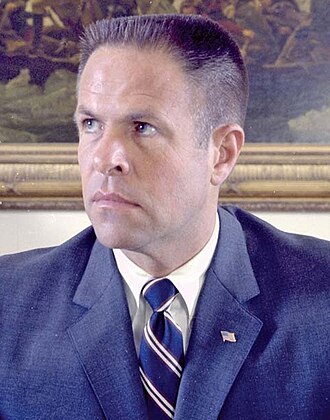
H. R. ("Bob") Haldeman served as President Richard Nixon's White House Chief of Staff from January 1969 until his resignation in April 1973. Acting as Nixon's primary gatekeeper and closest aide, Haldeman was a central figure during the White House taping period and is featured prominently in hundreds of recorded conversations. His tenure ended abruptly when he was forced to resign due to his deep involvement in the Watergate cover-up, most notably captured directing the obstruction of justice on the infamous "Smoking Gun" tape.
What Haldeman talks about on the tapes
Public relations 579Vietnam War 411Political strategy 286Foreign Policy 234Presidential scheduling 209Economic policy 202Henry Kissinger 195Congressional relations 176Press relations 161Watergate 159White House operations 151White House administration 145
Conversations (2,364)
— Page 24 of 24President Nixon met with his top aides, John Ehrlichman and H. R. Haldeman, to coordinate his immediate schedule and manage the administrative flow of the Oval Office. The brief discussion focused on reviewing upcoming meeting requests and prioritizing the President's availability amidst the mounting pressures of the administration. No major policy decisions were recorded during this brief administrative check-in.
In this meeting, President Nixon, H.R. Haldeman, and John Ehrlichman discuss the intensifying Watergate investigation and the shifting legal strategies of John Dean, who had recently changed attorneys. The participants focus on insulating the White House from culpability, with Haldeman and Ehrlichman detailing their lack of direct involvement and asserting that Dean had acted as an impediment to their previous efforts to produce a full report on the scandal. Additionally, they discuss the growing political risks regarding administrative oversight and the danger of accepting broad responsibility for campaign actions.
President Nixon summoned H. R. Haldeman and John Ehrlichman to his office following the departure of his legal counsel. The brief meeting served to coordinate staff presence in the wake of ongoing legal developments. No further substantive details were recorded before the conversation was terminated.
H. R. Haldeman, President Nixon, and John Ehrlichman coordinate a call to Stephen B. Bull regarding the tracking of public concerns. The conversation focuses on systematically categorizing incoming inquiries from viewers to better analyze the most prominent domestic policy issues. This initiative reflects the administration's effort to monitor and quantify public sentiment on major national topics during a period of significant political pressure.
H. R. Haldeman, with President Nixon and John Ehrlichman present, directed Stephen Bull to urgently secure and transport recordings from the March 10–23, 1973 period. Haldeman instructed Bull to gather all relevant material and ensure it was placed in a secure container for delivery. Additionally, Bull was tasked with procuring a simple, functional playback device capable of handling the tapes, emphasizing the need for immediate action.
H. R. Haldeman coordinates with President Nixon, John Ehrlichman, and Stephen Bull regarding the logistical handling and delivery of sensitive materials. The discussion centers on the administrative preparation and movement of tapes, highlighting the internal anxiety surrounding their arrival and custody. Haldeman provides specific instructions to Bull to ensure the materials are secured once they are received.
In this extensive meeting, President Nixon, H. R. Haldeman, and John Ehrlichman deliberate over the escalating Watergate crisis and the potential political and legal fallout for their administration. The participants assess the risks associated with various strategies, including whether to resign, take leaves of absence, or maintain a defensive posture while awaiting the findings of the prosecutor. They express significant concern over the cooperation of John Dean, the threat of potential blackmail, and the urgent need to manage press perceptions to protect the presidency from irreparable damage.
President Nixon and H. R. Haldeman discuss the status of a review process regarding existing White House tape recordings. The primary focus of the brief exchange is to determine if the review has commenced and to press for the delivery of available materials or information derived from those tapes. This dialogue highlights the administration's ongoing internal efforts to manage and assess the sensitive audio documentation as scrutiny over the White House tapes intensified.
President Nixon and H. R. Haldeman briefly coordinate a meeting to discuss an incoming call from Mr. Holloman. The two confirm their availability and agree to convene at the White House immediately following the call. This interaction serves as a logistical arrangement to facilitate further private communication regarding ongoing matters.
H. R. Haldeman and President Nixon coordinate a brief, in-person meeting in the President's office. The exchange serves primarily as a logistical check-in to confirm the President's availability. No substantive policy matters or specific action items were discussed during this short administrative call.
President Nixon and H. R. Haldeman review a transcript of a March 21, 1973, meeting with John Dean to analyze their potential legal exposure regarding the Watergate scandal. The participants discuss the ongoing pressure from E. Howard Hunt for hush money, the potential for obstruction of justice charges, and the risks associated with various cover-up strategies. They deliberate over the feasibility of raising cash for legal fees while attempting to distance the President from the illicit activities and illegal payments described by Dean.
President Nixon and H.R. Haldeman discuss legal strategies regarding the Watergate and Ellsberg investigations, focusing on the potential threat posed by John Dean's testimony. They coordinate their plan to have Haldeman and John Ehrlichman testify before the grand jury as a preemptive, positive step to demonstrate cooperation with judicial institutions. Nixon emphasizes the need for his aides to stand firm, expressing skepticism about the likelihood of impeachment based solely on Dean’s allegations while dismissing the immediate need for high-level staff resignations.
President Richard Nixon and H.R. Haldeman met in the Old Executive Office Building for a brief administrative exchange. The recording reflects highly fragmented and incoherent dialogue that lacks substantive policy discussion or identifiable decision-making. The interaction serves as an example of the often disjointed nature of the recorded White House tapes during this period.
President Nixon and H.R. Haldeman discuss the potential threat posed by John Dean, specifically speculating on whether Dean may have surreptitiously recorded past conversations with the President. The participants assess Dean’s credibility as a witness and strategize how to manage the political and legal fallout of his allegations. Ultimately, they decide to maintain a firm stance, focusing on the difficulty Dean will face in proving his claims while questioning his motivations.
President Richard Nixon and H. R. Haldeman discuss the handling and disposal of personal materials and correspondence. Their dialogue centers on the potential legal or public relations implications of these items being contested, specifically concerning the President’s word against others. The exchange concludes with a focus on organizing or destroying these records to ensure they do not become a liability.
President Nixon met with H. R. Haldeman to discuss scheduling and the coordination of the Chief of Staff's time. The brief exchange focused on administrative arrangements for Haldeman's upcoming meetings within the White House. No major policy decisions were reached during this short interaction.
President Nixon and H. R. Haldeman met to coordinate legal strategy and public messaging in the wake of the expanding Watergate scandal. They discussed the difficulties of managing John Dean, the risks of granting him immunity, and the necessity of insulating the President from potential charges of obstruction of justice. The participants emphasized the need to maintain a record of the President's lack of involvement and considered initiatives to project stability within the White House staff.
President Nixon met with H. R. Haldeman to coordinate scheduling and ensure the efficient use of Haldeman’s time. The two discussed finalizing an appointment for later that afternoon. This brief exchange served primarily as a logistical check-in regarding the President's upcoming agenda.
H. R. Haldeman and President Nixon spoke briefly to coordinate a logistics-related meeting. The discussion focused on scheduling an appointment, with the President inviting Haldeman to his office. The conversation concluded with an agreement for Haldeman to visit the President immediately.
President Nixon and H.R. Haldeman briefly coordinate an upcoming meeting to discuss sensitive matters. The conversation serves primarily as a logistical check-in, with Haldeman requesting authorization to join the President in person. This short exchange sets the stage for a subsequent, more substantive discussion regarding the escalating pressures facing the administration.
In this extensive series of meetings and phone calls, President Nixon consults with H. R. Haldeman, John Ehrlichman, Richard Kleindienst, and Henry Petersen to manage the worsening political and legal fallout of the Watergate scandal. The participants deliberate on how to handle the impending revelations concerning the destruction of sensitive documents by FBI Director L. Patrick Gray, which had been previously held in the White House. Faced with intense media scrutiny and the potential for staff resignations, Nixon weighs the risks of maintaining his current team against the necessity of distancing his administration from criminal liability, ultimately deciding to project a posture of responsibility while preparing to weather further disclosures.
President Nixon and H. R. Haldeman briefly discuss the President's personal health before shifting focus to the political crisis surrounding the Watergate scandal. The two assess the counsel of William P. Rogers and John B. Connally, with Nixon noting Rogers’s inability to make decisive recommendations. Consequently, Nixon instructs Haldeman to consult with Connally regarding the political strategy of a proposed leave of absence, seeking his candid input on the decision.
President Nixon and H. R. Haldeman discuss potential high-level personnel changes to navigate the escalating political pressures of the Watergate scandal and the Daniel Ellsberg case. They explore the possibility of appointing William D. Ruckelshaus as permanent FBI Director and weigh the viability of John Connally as a replacement for Attorney General. Haldeman is tasked with gauging Connally's interest in the position and assessing the likelihood of his Senate confirmation.
President Nixon and H. R. Haldeman met to discuss the evolving Watergate scandal, specifically focusing on damaging media reports regarding L. Patrick Gray and John W. Dean. They addressed allegations concerning the destruction of sensitive documents and scrutinized Dean's motives, particularly the possibility that he recorded his conversations with the President. The two also discussed personnel matters, including potential candidates to replace Gray at the FBI.
President Nixon and H. R. Haldeman discussed the escalating Watergate crisis and the necessity of managing the potential departures of key staff members, specifically John Dean, H. R. Haldeman, and John Ehrlichman. Nixon pushed for the resignation or leave of absence of his aides to stabilize his administration and neutralize political threats, while emphasizing the need to maintain control over the narrative regarding their past conversations. They also evaluated internal staff loyalty and debated the content of a potential presidential speech to address the ongoing scandal.
President Nixon and H. R. Haldeman discuss the strategic handling of Haldeman’s and John Ehrlichman’s potential departures from the White House staff in the wake of the Watergate scandal. Haldeman conveys concerns from his legal counsel that resigning or taking a leave of absence could remove the protective 'mantle' of the White House and potentially influence grand jury decisions regarding future indictments. They weigh the optics of various options, ultimately considering a temporary leave of absence for the month of May to provide distance from the investigation while maintaining their positions.
President Nixon and H. R. Haldeman convened in the Oval Office to discuss the President's public right to provide an explanation regarding the escalating Watergate crisis. The conversation centered on strategies for managing executive communication and public perception as the administration faced mounting legal and political pressure. This discussion highlights the ongoing efforts by the President and his chief of staff to formulate a defense against the unfolding scandal.
President Nixon and H. R. Haldeman met to coordinate their strategy for handling the ongoing Watergate crisis, specifically focusing on the management of John Dean and the timing of their own potential leaves of absence. They discussed the necessity of distancing themselves from Dean, whom they viewed as a liability and a potential source of unpredictable attacks against the presidency. Nixon decided to finalize his own public statement for the following Monday, while instructing that Haldeman and Ehrlichman should take voluntary leaves of absence beforehand to project an image of institutional integrity. They ultimately agreed that Nixon should dismiss Dean from his position rather than allow him to resign or negotiate, aiming to maintain presidential control over the narrative and minimize further damage.
President Nixon and H. R. Haldeman discuss the escalating Watergate crisis, specifically focusing on the timing of their impending resignation leaves and the President’s forthcoming national address. Nixon seeks to maintain distance from legal negotiations involving John Dean and considers proposing that Attorney General William P. Rogers take charge of a special investigation to restore public confidence. They also review the handling of sensitive White House documents and the importance of appearing resilient and in control amid mounting political pressure.
President Nixon and H.R. Haldeman discuss the public reception of the President's televised address regarding the Watergate scandal, which resulted in the departures of Haldeman and John Ehrlichman. Nixon expresses frustration over the perceived lack of loyalty from his Cabinet, noting that only Caspar Weinberger reached out to offer support, while simultaneously reaffirming his deep personal affection for Haldeman. The two men agree to cease further public discussion of the scandal, and Nixon instructs the switchboard to begin accepting incoming calls from staff and officials.
President Nixon and H.R. Haldeman discuss the immediate public and political reception to Nixon's televised address regarding the Watergate scandal. They review feedback from congressional members, Democratic governors, the press, and Henry Kissinger, noting that while media criticism persists, the speech was well-received by lawmakers and potentially the general public. The conversation concludes with a brief reflection on Nixon's impromptu visit to the press room, which was viewed as a positive move by CBS.
President Nixon met with Ronald Ziegler and H.R. Haldeman to address the public relations fallout and procedural concerns regarding FBI guards placed in the offices of Haldeman and John Ehrlichman. Ziegler briefed the President on his consultations with Leonard Garment, Elliot Richardson, and William Ruckelshaus, asserting that these actions would bolster the President's image by projecting strength and a commitment to a transparent investigation. The participants also touched upon press arrangements for an upcoming foreign policy briefing and discussed the political courage required for John B. Connally’s impending announcement regarding his party affiliation.
President Nixon and H. R. Haldeman coordinated a meeting for later that afternoon to discuss pending administrative matters. During the call, they celebrated the news that John Connally had officially announced his decision to switch his party affiliation to the Republican Party. Both men characterized this political realignment as a significant and mutually beneficial development for both Connally and the Nixon administration.
President Nixon and H.R. Haldeman met to discuss the mounting pressures of the Watergate investigation, focusing specifically on protecting the President’s files from potential FBI seizure and the legal strategy regarding executive privilege for upcoming grand jury testimony. They also evaluated potential candidates for White House staff reorganization, with Nixon considering the appointment of Alexander Haig as a temporary Chief of Staff to provide stability. Despite the political turmoil and personal stress, the two affirmed their determination to continue in office and weather the ongoing investigations.
In this discussion, President Nixon and H. R. Haldeman deliberate on the appointment of Alexander M. Haig, Jr. as an interim White House Chief of Staff to provide firm leadership amidst the unfolding Watergate crisis. The President stresses the need for a strong figure capable of controlling White House staff members like Leonard Garment and George Shultz, while also managing Henry Kissinger. They agree that Haig should be brought in immediately on a temporary basis to command operations, with the potential for a permanent arrangement to be decided later.
President Nixon and H.R. Haldeman spoke to prepare for Haldeman's upcoming Grand Jury appearance related to the Watergate scandal. The two discussed strategies for navigating testimony, emphasizing that their focus had been on managing the political fallout rather than participating in illegal activities or a cover-up. Nixon reaffirmed his ownership of all presidential papers, including Haldeman's personal notes and logs, as a means to shield sensitive internal documentation from investigators.
Alexander M. Haig, Jr. and H. R. Haldeman discuss concerns regarding Haldeman’s upcoming grand jury testimony and the potential subpoena of his personal notes. Haig expresses alarm over reports that Haldeman’s lawyers might have provided copies of these notes to the White House counsel, which could compromise claims of executive privilege. Haldeman clarifies that he possesses no copies outside the White House and confirms that he will return any existing extracts to his secure files to mitigate legal vulnerabilities.
President Nixon met with Alexander Haig, H. R. Haldeman, J. Fred Buzhardt, and others to strategize on the growing Watergate crisis, specifically focusing on the legal and political risks posed by Haldeman's personal notes. The group discussed the potential for these documents to be subpoenaed and the tension surrounding the use of executive privilege to protect them from grand jury scrutiny. Nixon emphasized his desire to gain control over these papers to avoid damaging misinterpretations and directed Buzhardt to serve as the primary legal counsel tasked with assessing the documents and managing the White House's defense strategy.
Alexander Haig and H. R. Haldeman coordinate to manage internal conflicts between their respective legal teams regarding the handling of sensitive Watergate-related documents. They discuss a potentially damaging document involving a March 26, 1973, phone call from John Dean, which Haldeman asserts is protected by executive privilege and unrelated to his private conversations with the President. To resolve the friction, they decide to remove Leonard Garment from the process and establish direct communication between J. Fred Buzhardt, Jr., and Haldeman’s legal counsel to ensure a unified strategy.
President Nixon and H. R. Haldeman met to discuss strategic planning regarding the ongoing Watergate scandal, focusing heavily on legal defense preparations and the upcoming Senate hearings. They evaluated the status of John Dean’s potential testimony, the management of legal fees for White House staff through the Committee to Re-Elect the President, and the importance of maintaining a consistent public stance regarding White House involvement. Additionally, the two discussed post-administration employment prospects for Haldeman and John Ehrlichman, emphasizing the necessity of securing continued security clearances and access to files for historical documentation.
President Nixon and H. R. Haldeman discuss the recent New York grand jury indictments of John Mitchell and Maurice Stans in the Robert Vesco case. The conversation turns to legal strategy and internal frustrations regarding the accuracy of reports being relayed to Alexander Haig about meetings with Haldeman's legal counsel. Haldeman specifically corrects the record concerning the attendance of J. Fred Buzhardt, Leonard Garment, and Horace Chapman Rose at a recent meeting, highlighting ongoing friction within the administration’s legal coordination.
H. R. Haldeman and President Nixon engage in a brief, disjointed exchange that appears to involve personal matters and logistics regarding guest invitations or social arrangements. The participants touch upon a recent meeting involving individuals referred to as Jackie and another unnamed party, though the discussion remains vague. No formal policy decisions or substantive administrative actions are reached during this brief interaction.
President Nixon and H.R. Haldeman discuss the legal implications of recent Watergate-related indictments, specifically those targeting John Mitchell and Maurice Stans. The conversation focuses on coordinating their defense regarding past interactions with John Dean, particularly an effort to have the IRS investigate Lawrence O'Brien. Nixon and Haldeman emphasize the propriety of their past actions and discuss strategies to counter potential damaging testimony from Dean.
President Nixon met with H. R. Haldeman and Alexander Haig to strategize their defense regarding the Watergate investigation and the potential release of sensitive documents. The discussion centered on managing the implications of memoranda created by CIA Deputy Director Vernon Walters, which documented past interactions involving the President, Haldeman, John Ehrlichman, and John Dean. The group focused on shielding the administration from allegations of a cover-up by emphasizing national security concerns and framing the CIA’s involvement as a peripheral issue, while also ensuring that Haldeman and Ehrlichman’s forthcoming testimony remained consistent with their narrative.
President Nixon directs H. R. Haldeman to proceed with the establishment of the Nixon Foundation, emphasizing the project's critical role in securing the President's legacy and managing his archives. They discuss utilizing the foundation to facilitate the writing of the administration's history, potentially by Henry Kissinger, while providing the President access to his records, including the White House tapes, without direct personal involvement. The conversation concludes with Nixon instructing Haldeman to continue his scheduled engagement with the FBI.
President Nixon and H. R. Haldeman briefly discuss the establishment of a foundation intended to preserve the administration's legacy. Nixon expresses enthusiasm for the project and indicates his personal intention to author a history of his first term. The two agree that the comprehensive collection of White House tape recordings will serve as the primary resource for this historical account.
President Nixon and H. R. Haldeman consulted on the administration's strategy for responding to the intensifying Watergate investigation and the looming Senate hearings. They discussed the complexities of invoking executive privilege to protect presidential papers and testimony, specifically concerning meetings involving John Ehrlichman, H. R. Haldeman, and CIA Director Richard Helms. Nixon urged Haldeman to maintain a defiant stance, emphasizing the need to frame their past actions as a legitimate attempt to protect the CIA from being unfairly implicated in the scandal.
President Nixon and H.R. Haldeman discuss the escalating Watergate crisis and the necessity of formulating a proactive White House defense to avoid impeachment. The pair reviews the potential release of information regarding the "plumbers" unit, the Huston Plan, and CIA involvement in the investigation, specifically focusing on the need for full disclosure to mitigate negative public perception. Nixon and Haldeman also deliberate on the strategic merits of producing specific notes and affidavits to address allegations of obstruction of justice, weighing the risks of resignation against the possibility of fighting a formal impeachment process.
President Nixon and H. R. Haldeman met to coordinate their strategy for responding to the Watergate scandal, specifically focusing on the President's upcoming speech and the issuance of a 'White Paper' to address public disclosures. They discussed the legal risks surrounding John Dean, John Mitchell, and their own involvement, while emphasizing the necessity of maintaining a firm, confident public image to combat political enemies. The President and Haldeman reiterated their commitment to remain in office, rejecting the notion of resignation while preparing for intense scrutiny from the Ervin Committee.
President Nixon and H. R. Haldeman coordinated the development of a White House 'White Paper' intended to publicly clarify the administration's role in the Watergate scandal. The discussion focused on establishing a firm, unified defense by emphasizing that the 'Plumbers' unit and related activities were strictly motivated by legitimate national security concerns regarding government leaks, rather than a criminal cover-up. Nixon directed Haldeman to verify specific recollections with John Ehrlichman, particularly regarding the timing of knowledge surrounding the Daniel Ellsberg break-in and discussions of executive clemency. The President underscored his resolve to remain on the offensive, citing recent positive public support and insisting that the administration's actions regarding the CIA and FBI were necessary security measures.
President Nixon and H. R. Haldeman discussed the administration's strategy for managing the growing Watergate scandal and upcoming congressional hearings. They focused on maintaining a firm stance regarding executive privilege over White House staff notes and coordinating a unified defense centered on national security concerns. The two also assessed the perceived lack of momentum in the Ervin Committee hearings and reviewed the status of key administration figures, including John Ehrlichman and Henry Kissinger, in relation to ongoing investigations.
H.R. Haldeman briefs President Nixon on his recent discussions with John Ehrlichman regarding the Watergate scandal, specifically focusing on the Ellsberg break-in and the administration's legal defense strategies. They coordinate a narrative emphasizing that the "Plumbers" operation and associated activities were motivated by national security concerns, rather than criminal intent. Nixon also discusses his April 18th conversation with Henry Petersen to ensure his own conduct appears consistent with proper executive oversight, ultimately deciding to draft a "White Paper" to solidify their national security justification.
President Nixon contacted H. R. Haldeman, who was at his legal counsel's office, to arrange a meeting prior to the President's upcoming three-day trip to Iceland. Nixon requested that Haldeman travel to the Executive Office Building to discuss various outstanding matters. The two agreed that Haldeman would arrive at the EOB within approximately thirty minutes to begin their consultation.
President Nixon and H. R. Haldeman engage in a brief, disjointed discussion regarding the logistics and timing of their communication. The dialogue centers on the inconvenience of late-night contact and the President's preference for Haldeman to handle certain matters independently. No major policy decisions are reached during this momentary exchange.
President Nixon, H.R. Haldeman, and Ronald Ziegler met to coordinate their strategy regarding ongoing investigations into the Watergate scandal and press relations. The participants discussed the potential risks of grand jury appearances, the challenges posed by the Special Prosecutor, and the necessity of maintaining a firm, combative stance against public accusations. Additionally, they reviewed concerns regarding the security and eventual disposition of the White House taping system and legal defense strategies for key staff members.
President Nixon and H. R. Haldeman discuss the political fallout and public perception of recent televised testimony regarding the Watergate scandal. Haldeman reviews his own recent testimony and that of John Ehrlichman, emphasizing their use of categorical denials and strategic framing of national security concerns to distance the President from the cover-up. They assess the tactics of the Ervin Committee, potential immunity for witnesses like John Dean, and the ongoing efforts by special prosecutor Archibald Cox to manage the investigation.
President Nixon and H. R. Haldeman briefly coordinate a potential outreach or follow-up with Hobart “Hobe” Lewis. Haldeman notes that Lewis is unavailable until the following evening, leading the President to suggest that Lewis contact him directly by telephone once he returns. No further immediate actions were required beyond this scheduling arrangement.
President Nixon and H.R. Haldeman discuss the escalating Watergate-related leaks and allegations stemming from John Dean and his legal team, which they characterize as a public campaign to build immunity. The two focus on establishing a factual chronology of their past meetings with Dean to counter media narratives, specifically addressing allegations involving hush money and clemency. Nixon and Haldeman agree to prioritize a consistent, truthful defense while avoiding reactive public denials, with Haldeman tasked to document a formal timeline of events to prepare for future public scrutiny.
President Nixon and H.R. Haldeman coordinated a meeting to discuss the reconstruction of a Watergate event chronology. After briefly discussing weather conditions and a hand injury sustained by Haldeman, the two agreed to meet at 4:15 p.m. to review these sensitive materials. They ultimately decided to convene in the Lincoln Room to ensure the conversation regarding the timeline remained secure.
President Nixon and H.R. Haldeman discuss their exhaustive review of White House tapes and documents in an effort to discredit John Dean's testimony regarding the Watergate cover-up. Haldeman reports that a search of Dean's files revealed no corroborating memoranda or records, supporting their belief that Dean is bluffing about the scope of White House involvement. The two men agree on a strategy to allow Dean to continue making public claims, anticipating that his lack of evidence will eventually expose the falsehood of his allegations.
President Nixon and H. R. Haldeman discuss the strategic need to preempt an upcoming event or disclosure scheduled for the 21st. The participants express mutual interest in controlling the narrative to gain a tactical advantage, with Haldeman noting he has developed potential plans that he intends to refine further. Their brief exchange emphasizes a desire to neutralize a perceived political threat.
President Nixon and H.R. Haldeman coordinate an upcoming meeting to discuss scheduling matters, specifically referencing the President's travel to Florida for a commencement speech. The two agree to meet in the Lincoln Sitting Room later that evening. The brief exchange concludes with the President instructing Haldeman to take his time arriving at the White House.
President Nixon and H. R. Haldeman discuss the management of the President's personal records and the potential publication of his first-term history, emphasizing their desire to exclude Watergate-related materials. They review the ongoing Ervin Committee hearings, focusing specifically on Jeb Stuart Magruder's testimony, his allegations against John Mitchell and John Dean, and the political implications for the White House. Additionally, the President assesses the favorable reception of his recent economic address and plans his upcoming schedule, including meetings with Leonid Brezhnev and Hobart Lewis.
President Nixon and H.R. Haldeman discuss the management of presidential records and materials, specifically focusing on the documentation of the administration's first four years. The two men also evaluate potential publishers for these materials and touch upon ongoing investigations, including the testimony of John Dean and others involved in the Watergate scandal. Nixon expresses concern regarding the motivations of those testifying and emphasizes the need for a strategic approach to documenting his presidency.