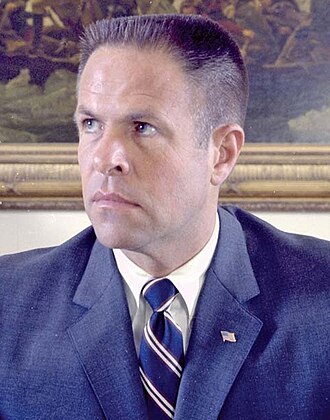
Haldeman, H. R. ("Bob")
H. R. ("Bob") Haldeman served as President Richard Nixon's White House Chief of Staff from January 1969 until his resignation in April 1973. Acting as Nixon's primary gatekeeper and closest aide, Haldeman was a central figure during the White House taping period and is featured prominently in hundreds of recorded conversations. His tenure ended abruptly when he was forced to resign due to his deep involvement in the Watergate cover-up, most notably captured directing the obstruction of justice on the infamous "Smoking Gun" tape.
What Haldeman talks about on the tapes
Public relations 579Vietnam War 411Political strategy 286Foreign Policy 234Presidential scheduling 209Economic policy 202Henry Kissinger 195Congressional relations 176Press relations 161Watergate 159White House operations 151White House administration 145
Conversations (2,364)
— Page 23 of 24President Nixon and H. R. Haldeman briefly coordinate a meeting involving John Ehrlichman. The discussion focuses on logistical arrangements for an upcoming appointment with specific attendees. No substantive policy matters or major developments are addressed in this short exchange.
President Nixon met with H.R. Haldeman and John Ehrlichman to coordinate administration strategy regarding ongoing Watergate investigations and to manage the President’s public messaging. The participants discussed the necessity of maintaining a firm stance on executive privilege while emphasizing full cooperation through sworn written statements to congressional committees. Additionally, they reviewed plans for upcoming speeches, personnel appointments, and strategies to address inflation and spending concerns by framing the administration’s agenda as a divestiture of power from the executive branch back to Congress.
President Nixon and H. R. Haldeman met to coordinate the White House's public relations strategy, focusing on managing upcoming veteran-related events, Prisoners of War (POW) ceremonies, and appearances by the President. They discussed the logistics of balancing high-profile social events with press access, specifically aiming to mitigate negative press while maintaining a controlled public image. Additionally, the pair evaluated the effectiveness of recent presidential communication strategies, debating the merits of televised press conferences versus speeches to Congress to regain control over domestic policy narratives.
President Nixon and H. R. Haldeman engaged in an expansive review of White House personnel, public relations strategies, and the President's upcoming schedule. The discussion heavily featured the domestic political impact of returning prisoners of war (POWs) and the President's firm stance against granting amnesty to draft evaders. Additionally, they reviewed international diplomatic priorities, finalized staffing decisions for the Law Enforcement Assistance Administration, and strategized on how to manage media relations and social events to maximize political support.
President Nixon met with his senior advisors and staff to evaluate recent press relations and coordinate messaging regarding his administration's foreign and domestic agendas. Discussions focused on the successful announcement of the China liaison office, the ongoing Watergate controversy, and a planned response to North Vietnamese infiltration. The participants also debated the strategic implications of detente with the Soviet Union, including the drafting of a nuclear war prevention agreement, and reviewed potential ambassadorial appointments to navigate international diplomatic tensions.
President Nixon and H. R. Haldeman briefly consulted regarding an administrative matter involving the handling of a formal letter. They determined that the most effective course of action was to send the correspondence to an individual identified as 'Bob.' This brief exchange served to coordinate a direct follow-up meeting at the President's desk.
President Nixon and H. R. Haldeman met to coordinate White House operations, focusing on congressional relations, personnel management, and the ongoing political fallout from the Watergate investigation. They discussed the performance of congressional liaisons, the potential recruitment of new staff, and the administrative roles of cabinet members like George Shultz and Roy Ash. The conversation shifted toward managing the administration's legal risks, specifically debating the merits of releasing a 'White Paper' on Watergate and assessing the potential legal exposure of key figures like G. Gordon Liddy, Jeb Magruder, and John Dean.
President Nixon and H. R. Haldeman engaged in a brief, distress-filled interaction in the Oval Office. The participants expressed immediate alarm, as evidenced by an exclamation regarding a significant, though unidentified, development. This brief exchange reflects the high-pressure environment of the administration during this period of intensifying crisis.
President Nixon and H. R. Haldeman met to coordinate White House scheduling, public relations, and political strategy. They discussed establishing a regular bi-weekly schedule for meetings with Congressional leaders and cabinet members to maximize efficiency and political impact. Additionally, they reviewed historical polling data to analyze the correlation between televised events, foreign trips, and public support, ultimately deciding to rely on strategic, high-impact televised appearances rather than frequent, low-value activities.
In this meeting, President Nixon, H. R. Haldeman, and John Dean discussed strategies for managing the unfolding Watergate scandal and associated congressional investigations. They focused on ways to contain the political fallout, including potentially limiting the scope of Senator Sam Ervin's hearings and establishing a favorable narrative regarding the White House's lack of prior knowledge. Additionally, the participants reviewed legislative priorities with Wilbur Mills regarding tax and trade policy and considered the political utility of providing access to presidential records for sympathetic journalists.
President Nixon met with H.R. Haldeman and Ronald Ziegler to manage his upcoming schedule, discuss public relations strategies, and coordinate the administration's response to the Watergate investigations. The President expressed concerns about maintaining his public image through controlled events and church services while weighing the optics of addressing Congress versus holding a press conference. They also analyzed internal tensions involving Henry Kissinger's role, the handling of the Vietnam War legacy, and the necessity of maintaining a unified front regarding administration cooperation with congressional oversight.
President Nixon, H. R. Haldeman, and Rose Mary Woods met to conduct an extensive review of White House social planning, focusing on guest list management for state dinners, church services, and stag dinners. The President provided specific guidance on balancing invitations between political supporters, Cabinet officials, and Congressional members, while stressing the importance of maintaining an appropriate atmosphere and limiting guest list size. Significant developments included decisions regarding upcoming events for South Vietnamese President Nguyen Van Thieu, the handling of sensitive guest selections for judicial and diplomatic receptions, and directives to improve the technical execution of entertainment at White House functions.
President Nixon met with H. R. Haldeman and John Ehrlichman to reorganize White House communications and enhance the administration's public relations strategy, specifically regarding congressional relations and Watergate. The President expressed frustration with his staff's failure to effectively communicate key themes, emphasizing the need for more aggressive counter-attacks against critics and the media. He mandated a shift in focus to ensure that cabinet members and surrogates, rather than just the President, were effectively pushing the administration's agenda to avoid political fallout.
President Nixon met with H.R. Haldeman, John Dean, and Richard Moore to discuss administration messaging, the importance of maintaining a unified strategy against political opponents, and the ongoing Watergate investigations. The President expressed frustration with the lack of leadership and backbone among his staff and the Republican political class, emphasizing that he and his team must seize the initiative through a more vigorous public relations counterattack. They specifically focused on coordinating a response to the Senate's Ervin Committee by preparing written interrogatories and shifting public focus toward potential Democratic abuses, such as past improper uses of the FBI.
President Nixon, H. R. Haldeman, and Stephen Bull discussed a variety of administrative and political concerns, including scheduling presidential meetings and managing the public fallout from the Watergate scandal. The participants deliberated on whether to have White House staff testify before investigative committees and the risks associated with potential disclosures and perjury. Nixon expressed frustration with the ongoing inquiries, emphasizing the need for a cohesive containment strategy to protect the administration while balancing the requirement for public explanations.
In this Oval Office meeting, President Nixon, John Dean, and H.R. Haldeman discuss the escalating legal and political dangers of the Watergate scandal, which Dean characterizes as a 'cancer' growing within the administration. Dean warns that ongoing blackmail demands from the Watergate burglars and the potential for perjury among key staff members threaten to unravel the administration's containment strategy. The participants deliberate on how to manage these liabilities, weighing the high risks of continued silence against the potential fallout of a public disclosure or a new, controlled grand jury investigation.
President Nixon and H. R. Haldeman coordinate a follow-up meeting to continue their ongoing private discussions. The exchange serves as a brief logistical check-in to ensure they can review additional matters before the President concludes his workday. This interaction reflects the frequent and immediate nature of their consultations during this period.
President Nixon and H. R. Haldeman convened briefly in the Old Executive Office Building to coordinate a schedule for reviewing additional matters. The participants focused on organizing follow-up discussions regarding ongoing administration business. This short exchange served as a preparatory step for further deliberations between the two men.
President Nixon and H. R. Haldeman met to discuss administrative scheduling and the escalating political and legal crises surrounding the Watergate scandal. The two examined strategies for managing grand jury proceedings, including the potential use of executive privilege and the risks posed by ongoing investigations into the payment of legal fees for defendants. Throughout the discussion, they sought to frame controversial intelligence activities—such as tracking Democratic campaign schedules—as legitimate political efforts while evaluating how to contain the liability of staff members like Charles Colson.
President Nixon met with key advisors, including John Dean, H.R. Haldeman, and John Ehrlichman, to develop a strategic defense against the escalating Watergate scandal and the formation of the Senate's Ervin Committee. The participants debated whether to issue a formal presidential statement or commission an internal investigation to preempt Senate hearings and maintain control over the narrative. The conversation focused heavily on the need to distance the White House from the scandal, manage public perception, and potentially utilize a grand jury or a targeted disclosure to limit the scope of external investigations.
President Nixon and H.R. Haldeman coordinate the timing of an upcoming meeting to ensure a discussion occurs prior to a scheduled 10:00 a.m. appointment. The conversation serves primarily to expedite Haldeman's arrival at the Oval Office. No substantive policy matters were discussed during this brief administrative exchange.
President Nixon and H. R. Haldeman met briefly to coordinate their schedules before an upcoming 10:00 a.m. meeting. Nixon requested Haldeman's presence specifically to discuss preparation for this later engagement. The brief exchange served primarily as an administrative check-in to ensure alignment prior to the day's scheduled business.
President Nixon and H.R. Haldeman met to discuss public relations strategies and the administration's response to the growing Watergate scandal. They debated the merits of potential public addresses, such as a speech to Congress or a press conference, while assessing how to maintain control over the narrative and protect the White House from entanglement in the investigation. The conversation focused on the need for a containment strategy, the handling of sensitive campaign funds, and managing potential leaks or witness testimony, ultimately weighing the political risks of various disclosure scenarios.
President Nixon met with John Dean, John Ehrlichman, H.R. Haldeman, and John Mitchell to strategize on managing the escalating Watergate investigation. The group discussed how to assert executive privilege regarding FBI files and staff testimony to limit the scope of congressional inquiries. They reached a decision to have legal counsel open a dialogue with Senators Ervin and Baker to establish a controlled format for cooperation that avoids public confrontations while protecting presidential authority.
President Nixon and H.R. Haldeman discuss the President's upcoming schedule and the political fallout from the Watergate scandal. They evaluate the necessity of a dramatic, high-level commission to investigate the scandal as a means to regain control over the narrative and counter the growing credibility crisis facing the White House, FBI, and Department of Justice. Amidst reports that key figures like Jeb Magruder and E. Howard Hunt may soon implicate senior staff, Nixon instructs Haldeman to gather facts and consult with others to manage the potential damage to his administration.
President Nixon met with John Ehrlichman, H.R. Haldeman, and others to discuss management strategies for the ongoing Wounded Knee incident and the unfolding Watergate scandal. The participants deliberated on whether to involve White House staff directly in PR for Wounded Knee, weighing the benefits of projecting control against long-term political risks. Regarding Watergate, they explored the possibility of the President appointing a special commission or cooperating with a grand jury to regain the initiative, while also addressing concerns about potential testimony from staff members like John Dean and Jeb Magruder.
H. R. Haldeman initiates a telephone call to John N. Mitchell through the White House operator. The primary purpose of this contact is to establish a direct line of communication with the former Attorney General. No further substance or policy discussions are captured in this brief administrative exchange.
H. R. Haldeman and John Mitchell coordinated a meeting in Washington to discuss legal strategies regarding the Watergate investigation, specifically proposing a "blue-ribbon" commission as an alternative to existing proceedings. The two men expressed frustration with Attorney General Richard Kleindienst’s lack of initiative in establishing a necessary liaison with the Ervin Committee and gathering information from the grand jury. Additionally, Mitchell sought Haldeman’s intervention to resolve employment obstacles for Herbert "Bart" Porter at the Department of Housing and Urban Development.
H. R. Haldeman coordinates with the White House operator to place a telephone call to Secretary of State William P. Rogers. The brief exchange includes background presence from President Nixon and John Ehrlichman, suggesting high-level coordination regarding pending administrative business. The call likely relates to ongoing matters involving Attorney General Richard Kleindienst, Senator Lowell Weicker, and issues surrounding testimony, though the specific substance remains minimal in this recording.
H. R. Haldeman and Secretary of State William P. Rogers coordinated a meeting to facilitate a briefing for the President. Haldeman instructed Rogers to meet with him first to provide necessary background information before Rogers proceeded to a scheduled appointment with the President. They strategically finalized the timing of these meetings and discussed the formal recording of Rogers's visit to the White House to ensure an accurate official record.
President Nixon and H. R. Haldeman met briefly to coordinate an upcoming meeting between the President and Secretary of State William P. Rogers. The discussion focused on scheduling and the potential necessity of a telephone call to facilitate communication regarding this engagement. No further substantive actions or policy decisions were recorded during this short interaction.
H. R. Haldeman requested that the White House operator place a telephone call to John W. Dean, III, who was stationed at Camp David. The interaction served as a logistical bridge to facilitate direct communication between the two high-level officials. No substantive policy matters were discussed during this brief administrative exchange.
H. R. Haldeman and John Dean discussed the White House's urgent need for intelligence regarding ongoing grand jury proceedings and the testimony of E. Howard Hunt. Due to Dean’s increased public profile, they coordinated for Richard Moore and Fred Fielding to act as intermediaries with Henry Petersen to secure updates. The conversation also addressed concerns regarding potential political sabotage, specifically noting that attorney Bernard Fensterwald had reportedly expressed interest in targeting President Nixon while representing James McCord.
President Nixon met with his senior advisors—including H.R. Haldeman, John Dean, and Charles Colson—to strategize on how the White House should respond to the mounting pressure of the Watergate investigation, specifically focusing on the legal jeopardy of White House staff and the potential for staff members to testify. The group debated whether it would appear as an overreaction to engage directly with Judge Sirica to offer total cooperation and the potential appointment of a special prosecutor. Ultimately, the discussion centered on controlling the narrative, managing potential testimony from staff, and navigating the risks posed by James McCord's ongoing cooperation with investigators.
H. R. Haldeman initiated a brief telephone request through the White House operator to be connected with Charles Colson. The primary purpose of this interaction was to facilitate direct communication between the two senior aides. No substantive policy matters or tactical decisions were discussed during this short exchange beyond the logistical request for the call.
H. R. Haldeman and Charles Colson discuss a strategic proposal to deflect public perception of a Watergate cover-up by having Attorney General Richard Kleindienst consult Judge John Sirica. Haldeman suggests offering a special prosecutor, a new grand jury, and voluntary staff testimony to avoid a hostile appearance before the Ervin Committee. Colson expresses strong skepticism, arguing that such an initiative would appear as an act of panic and warning that the appointment of a special prosecutor would be a catastrophic mistake.
President Nixon and H. R. Haldeman discussed strategies for navigating the escalating Watergate scandal, specifically addressing the legal dangers of perjury and potential sentencing outcomes for the defendants under Judge John Sirica. They evaluated the political viability of invoking executive privilege against the Senate and weighed the risks of establishing an independent investigative panel modeled after the Warren Commission. Manolo Sanchez joined the meeting briefly toward the end to coordinate administrative logistics regarding Haldeman’s upcoming schedule.
President Nixon met with his senior aides H. R. Haldeman and John D. Ehrlichman for a brief, informal check-in at the Executive Office Building. While the specific details remain obscured by the transcript's lack of substantive dialogue, the participants signaled mutual agreement on preparing for an unspecified political or legal "fight." The exchange concludes with a general confirmation of strategy, highlighting the pressurized atmosphere within the White House inner circle during this period.
President Nixon and H.R. Haldeman met to discuss crisis management strategies regarding the Watergate scandal, specifically focusing on the mounting legal threats from the grand jury and potential criminal charges against White House staff. They evaluated the merits of appointing a special counsel and the necessity of retaining an experienced criminal defense lawyer to navigate the vulnerability of White House aides. The conversation centered on the potential danger of a 'runaway' grand jury and emphasized maintaining executive privilege while managing the perceived risk of a 'cover-up' versus the impact of full public disclosure.
President Nixon and H. R. Haldeman met to coordinate White House strategy regarding the escalating Watergate investigations and the pressure for increased congressional cooperation. They discussed the political necessity of deflecting accusations of a cover-up, specifically exploring the possibility of offering informal, non-recorded testimony to committee members as a means of stalling or mitigating formal demands. Additionally, the President directed a focus on declassifying sensitive historical documents, such as those related to the Bay of Pigs, to influence public narrative and contrast current controversies with past administration actions.
H. R. Haldeman coordinates a telephone connection through the White House operator to reach personnel at Camp David. The interaction is purely administrative, serving as a logistical bridge to facilitate communication with the presidential retreat. No substantive policy discussions or decisions are recorded in this brief exchange.
H. R. Haldeman coordinates with the Camp David operator to facilitate communication while he is meeting with President Nixon. The conversation serves to arrange a subsequent meeting with John W. Dean, III, regarding his schedule and availability. Haldeman provides instructions for Dean to wait at his office until he arrives from his session with the President.
President Nixon, H.R. Haldeman, and John Dean met to discuss the growing legal and political risks surrounding the Watergate scandal, specifically focusing on the emerging testimony of Jeb Magruder and the potential for perjury charges. The participants examined the inconsistencies in Magruder's story regarding prior knowledge, the intelligence budget, and the involvement of high-ranking White House staff, including Charles Colson. The discussion centered on developing a legal strategy to protect the President and his staff, focusing on the use of executive privilege and the management of future appearances before the Ervin Committee to prevent further damaging disclosures.
President Nixon and H.R. Haldeman discussed legal strategy and damage control regarding the Watergate scandal, specifically focusing on potential testimony from aides like John Dean and Jeb Magruder. They explored the use of executive privilege to limit testimony, the possibility of presidential pardons for various individuals involved, and the challenge of managing public perception regarding White House involvement. The conversation underscored the administration's efforts to contain the investigation and suppress further damaging disclosures.
President Nixon and H. R. Haldeman discuss the political fallout of the Watergate scandal following Haldeman’s recent meeting with Republican congressmen, focusing on the importance of maintaining a unified, affirmative message to the public. They review plans for the President’s upcoming televised speech on Vietnam and economic policy, with Nixon opting for a direct, prepared format over a memorized address to ensure a confident, presidential appearance. The two also coordinate internal communications regarding the Watergate investigation, specifically involving Charles Colson and John Dean, while briefly considering the President's upcoming travel and public schedule.
President Nixon and H.R. Haldeman discuss the escalating legal fallout of the Watergate scandal, specifically focusing on the recent grand jury immunity granted to E. Howard Hunt and Judge John Sirica's decision to subpoena James W. McCord, Jr. They explore strategies for managing John Dean’s legal exposure and potential testimony, including the advisability of Dean hiring his own criminal defense counsel. Additionally, they discuss the need to establish a secure liaison with Senator Howard Baker while expressing concerns regarding Martha Mitchell's erratic public statements and their potential impact on John Mitchell's legal defense.
President Richard M. Nixon and H. R. Haldeman met to discuss the circumstances surrounding an individual’s recent government-sanctioned travel. The exchange focuses on the subject's good fortune in being assigned to this official mission and the urgency of the timing involved. No major policy decisions were reached during this brief, largely informal administrative check-in.
President Nixon and H. R. Haldeman met to coordinate the President's upcoming schedule and prioritize the drafting of a specific speech. The discussion centered on organizing executive duties and ensuring the timely preparation of written materials. No further policy decisions were recorded during this brief administrative session.
President Nixon met with H. R. Haldeman and John Ehrlichman to strategize their response to escalating political damage from the Watergate scandal, specifically focusing on the Ervin Committee's upcoming investigations. The group discussed the risks of executive privilege and the political necessity of having White House staff, particularly John Dean, testify before a grand jury rather than the Senate committee. They also addressed reports of potential leaks from the Judiciary Committee and the urgency of managing internal morale and external public relations, as evidenced by concerns raised by George H. W. Bush regarding the administration's vulnerability.
President Nixon and H. R. Haldeman briefly conferred regarding the scheduling and logistical coordination of upcoming meetings. The discussion focused on sequencing the President's appointments with John Ehrlichman, Haldeman, and George H. W. Bush. Stephen B. Bull was identified as the point of contact to manage the timing of these engagements.
President Nixon met with his senior aides, including John Ehrlichman and H.R. Haldeman, to coordinate a legal and public relations strategy regarding the escalating Watergate scandal. The primary focus was drafting a statement for John Dean that would permit him to testify before the grand jury while waiving executive privilege to limit political fallout. The participants also discussed ongoing negotiations with the Ervin Committee and strategies to manage potential testimony from former staff, all while attempting to preserve the administration's position ahead of a scheduled presidential address.
H. R. Haldeman and the White House operator facilitate a meeting between the President and Press Secretary Ronald Ziegler to coordinate a formal administration response to the Watergate scandal. The participants decide to channel the White House’s defense through the judicial and grand jury system rather than via press briefings. Ziegler is summoned to the Executive Office Building to receive instructions on releasing this official statement.
H. R. Haldeman, John Ehrlichman, and John Dean coordinate a presidential statement regarding allegations that Dean was involved in the Watergate burglary. The participants deliberate on the specific legal language required to waive executive privilege, aiming to strike a balance that allows Dean to testify before a grand jury while strategically overstating the charges to provoke clarification. The group also discusses potential reactions from John Mitchell and ensures that relevant staff members, including Jeb Stuart Magruder, are informed of these developments.
H. R. Haldeman coordinates with White House staff and William E. Timmons to discuss administrative logistics and legislative outreach efforts. The discussion touches upon recent communications with Lowell P. Weicker, Jr. and concerns regarding the reliability and performance of internal staff. No major policy decisions are finalized, as the call serves primarily to exchange updates on scheduling and personnel availability.
President Nixon and H. R. Haldeman met to coordinate the White House’s political strategy regarding the escalating Watergate scandal, specifically focusing on the public perception of executive privilege. Haldeman briefed the President on discussions with George H.W. Bush and Howard Baker concerning legislative negotiations and the need for a shift in policy regarding witness appearances. They also reviewed the content of the President’s forthcoming address, which was intended to address public concerns while balancing policy issues like the defense budget and price controls.
President Nixon and H.R. Haldeman discuss the successful reception of the President's March 29, 1973, television address, specifically praising its structure and the effective integration of foreign policy and domestic budget issues. Nixon emphasizes his personal role in writing the speech and his frustration with the perceived lack of support from Congress and certain administration officials regarding the defense budget. The two decide to mobilize the White House outreach operations—specifically the Baroody and Timmons groups—to pressure the defense lobby and generate public mail to Congress in order to build political momentum and shift focus away from the ongoing Watergate controversy.
H. R. Haldeman briefs President Nixon on the coordinated public relations and mobilization campaign launched following the President's March 28 speech. The discussion covers efforts to leverage defense support organizations, POW testimonials, and letter-writing campaigns to bolster the President's positions on the defense budget, economic policy, and meat price controls. Haldeman highlights positive feedback from various political and interest groups, confirming that the White House's systematic machinery is effectively pressuring Congress to align with the administration's agenda.
President Nixon, H. R. Haldeman, and Ronald Ziegler met to coordinate the administration’s strategy for responding to escalating Watergate inquiries and press scrutiny. They discussed the President’s recent televised speech, the necessity of maintaining a unified front among Republican allies, and the risks posed by potential testimony from figures like John Dean and James McCord. Nixon emphasized the importance of publicizing a statement to clarify that the White House was cooperating with investigations while attempting to distance the President from the operational details of the campaign.
President Nixon and H.R. Haldeman meet to discuss the escalating Watergate scandal, focusing on the legal and political vulnerabilities posed by pending Senate hearings and damaging press reports. The President expresses deep unease regarding the White House taping system and issues explicit instructions to Haldeman to dismantle the system and destroy the recordings to prevent them from being used against the administration. They also deliberate on how to frame the public narrative, debating whether Mitchell or other staffers should accept responsibility to insulate the White House from direct culpability.
President Nixon met with H.R. Haldeman, John Ehrlichman, and Leonard Garment to discuss administrative strategies regarding the Watergate investigation and the management of economic policy. The group focused heavily on establishing a "hard-line" stance on executive privilege to navigate upcoming Senate hearings and protect the President's position amidst the unfolding scandal. Additionally, they reviewed economic concerns, including inflation and the challenges of transitioning away from government price controls.
President Nixon met with H.R. Haldeman and William Timmons to discuss several high-level administration issues, including the Watergate scandal and various political maneuvers. The participants coordinated a potential strategy for responding to the Ervin Committee hearings, evaluated public relations and counterattack efforts against political opponents, and reviewed the handling of financial issues involving John Mitchell. Additionally, they addressed personnel and legislative matters, such as the placement of David Eisenhower in a congressional office, the management of base closures in Philadelphia and New Hampshire, and preparations for the President’s upcoming energy message.
President Nixon and H. R. Haldeman discussed strategies to bolster Congressional relations by hosting more frequent, high-attendance meetings at the White House to demonstrate presidential engagement with legislative priorities. They evaluated the logistical and political benefits of packing these sessions with Congress members rather than staff to encourage better leadership performance from the attendees. Additionally, they reviewed personal matters concerning David Eisenhower, including his potential involvement with George Goodling and the political optics surrounding Eisenhower’s recent housing situation.
President Nixon, John Ehrlichman, and H.R. Haldeman met to coordinate White House strategy regarding the escalating Watergate investigations, focusing particularly on managing forthcoming testimony from John Dean and former Attorney General John Mitchell. The participants discussed the legal risks surrounding hush money payments, the need to unify the narratives of various aides to avoid perjury, and the potential for a counteroffensive to discredit the Ervin Committee. They weighed the benefits of having Haldeman release his opening statement to the press ahead of his committee appearance and considered appointing an independent investigator to provide a favorable report on the White House's conduct.
President Richard Nixon met with H. R. Haldeman in the Executive Office Building to coordinate administrative matters. The brief exchange served as an invitation for Haldeman to join the President in his office. No substantive policy or political discussions were recorded during this specific segment.
President Nixon and H.R. Haldeman met to discuss personal personnel matters regarding David Eisenhower’s future career path and potential relocation. The conversation shifted to address the ongoing Watergate scandal, specifically managing public perception regarding Haldeman's alleged involvement in campaign intelligence operations. They strategized on potential White House counterattacks and communication tactics for upcoming Congressional testimony and investigations.
President Nixon met with John Ehrlichman, H.R. Haldeman, and Ronald Ziegler to strategize the White House response to the escalating Watergate investigation and the upcoming Ervin Committee hearings. The participants discussed the political risks of potential testimony from White House staffers and John Dean, the management of executive privilege, and the need to protect the presidency while appearing forthcoming. They specifically addressed allegations regarding Haldeman's role in the hiring of Donald Segretti and the handling of a $350,000 contingency fund, ultimately deciding to coordinate forthcoming statements and testimony to mitigate political fallout.
President Nixon and H. R. Haldeman discuss strategies to improve the President's public image and manage political perceptions in the face of ongoing challenges. They review analytical memoranda regarding the President's industriousness, his relationship with the business community, and the effectiveness of his public appearance strategy. Additionally, they discuss developments related to the Watergate investigation, specifically focusing on the Grand Jury testimony of Gordon C. Strachan and the potential implications of the Segretti operation for the White House staff.
President Nixon and H.R. Haldeman discussed how to handle public inquiries regarding the President's continued medical treatment by Dr. W. Kenneth Riland following the doctor's legal issues. Haldeman expressed concern that maintaining the relationship while Riland faced tax-related indictments could create political vulnerability for the President, particularly regarding his role as the nation's chief law enforcement officer. Ultimately, the two strategized on how to discreetly manage Riland's access and public messaging to avoid unnecessary controversy.
President Nixon and H. R. Haldeman discussed strategies for managing public perception, specifically addressing press coverage of the administration and the unfolding Watergate scandal. They reviewed potential public relations maneuvers, including a possible statement from Vice President Spiro Agnew to counter media narratives, while also weighing administrative appointments for the Federal Reserve and the Department of Labor. The conversation emphasized maintaining a unified front against hostile press inquiries and coordinating staff testimonies for upcoming grand jury appearances.
President Nixon and H. R. Haldeman briefly discuss scheduling a follow-up meeting later that day. Nixon initiates the conversation to request that Haldeman come to his office to confer in person. The exchange serves primarily as a logistical arrangement for an immediate, private consultation.
President Nixon, H.R. Haldeman, and John Ehrlichman met to strategize on managing the Watergate fallout, focusing specifically on the damaging potential of testimony from Jeb Stuart Magruder and John W. Dean. The participants discussed the risk of indictments targeting former Attorney General John Mitchell and the necessity of keeping the White House insulated from criminal implications. They weighed the merits of asserting executive privilege versus allowing witnesses to testify, while expressing concern over the U.S. Attorney’s investigation and the strategic need to contain potential revelations before the Ervin Committee hearings commenced.
President Nixon and H. R. Haldeman discuss the escalating Watergate crisis, focusing on the potential implications of Jeb Stuart Magruder’s expected testimony and the legal exposure of former Attorney General John Mitchell. Nixon expresses frustration over the uncertainty surrounding the involvement of his staff and stresses the necessity of facing the truth, comparing the situation to the political fallout surrounding Sherman Adams during the Eisenhower administration. Additionally, the two evaluate public opinion strategies and the importance of presidential travel to mitigate the damage caused by negative press coverage regarding the economy and the administration's legal troubles.
President Nixon, H. R. Haldeman, and John Ehrlichman discuss the internal legal maneuvering and shifting loyalties within the administration regarding the Watergate scandal. The participants analyze the credibility of Chuck Colson and the potential for various aides to cooperate with authorities to protect their own interests. They specifically deliberate on the reliability of transcripts and whether key figures like Colson and Jeb Stuart Magruder are prepared to testify truthfully or implicate others.
President Nixon met with his senior advisors and staff to manage the escalating Watergate crisis and coordinate a response to the looming threat of grand jury indictments. The participants debated potential strategies for compelling John Mitchell to testify, considered whether key White House staff should resign or remain in their positions, and assessed the risks of congressional investigations. Nixon emphasized the necessity of seizing the initiative and establishing a narrative of presidential transparency and cooperation to protect the integrity of his administration.
President Nixon met with an unidentified individual, H. R. Haldeman, and John Ehrlichman to coordinate the logistics and press coverage for First Lady Pat Nixon’s upcoming Rose Garden tour. The participants discussed the President's itinerary and his role in following the First Lady to ensure appropriate photography opportunities. The conversation focused on managing the public appearance and scheduling the President's movements to accommodate media presence.
President Nixon, H.R. Haldeman, John Ehrlichman, and others met to strategize regarding the escalating legal and political fallout of the Watergate scandal. The discussion centered on the decision of Jeb Stuart Magruder to cooperate with prosecutors and the potential for his testimony to implicate other high-level officials, including John Mitchell. The participants debated how to manage the public narrative, protect the President's standing, and navigate the implications of Senate hearings and grand jury proceedings while considering legal strategies for those facing impending indictments.
President Nixon met with H.R. Haldeman and John Ehrlichman to discuss the escalating legal and political fallout surrounding the Watergate scandal. The participants weighed the risks of ongoing investigations, particularly focusing on potential obstruction of justice charges against key figures like John Mitchell and the strategy of preempting further disclosures by "beating them to the punch." Nixon expressed urgency regarding the need to conclude the scandal quickly to prevent it from dominating his administration, contemplating potential resignations and the necessity of managing the public narrative.
President Nixon and H. R. Haldeman discuss the aftermath of the White House correspondents' dinner and the escalating legal and political challenges posed by the Watergate investigation. Nixon expresses concern regarding testimony from Jeb Magruder and seeks advice on how to manage potential public testimony from his staff, specifically whether to concede to public, televised hearings. Ultimately, Nixon directs Haldeman to consult with William Rogers and John Connally to gauge their opinions on how the administration should handle these appearances and navigate the growing legal pressure.
President Nixon and H. R. Haldeman discuss the administration’s strategy for handling the mounting Watergate scandal, specifically debating whether to cooperate with congressional investigations or rely on the judicial process. They weigh the potential impact of high-level indictments and deliberate on the appointment of a special prosecutor to ensure the investigation remains thorough and credible. Nixon ultimately concludes that maintaining confidence in the American judicial system, rather than engaging in a high-profile public defense, is the best path to restore public trust.
Lawrence Higby contacts H.R. Haldeman to relay a message from John Dean, who had requested to communicate with President Nixon regarding the Watergate investigation. Dean expressed his continued loyalty to the President while urging Nixon to seek counsel from Assistant Attorney General Henry Petersen rather than John Ehrlichman. Additionally, Dean indicated a desire to meet directly with the President to discuss these matters despite declining a meeting with Ehrlichman.
H. R. Haldeman coordinated an urgent meeting between President Nixon and John W. Dean III at the Executive Office Building for 9:00 p.m. This directive required the White House operator to contact Dean at his residence to facilitate the late-night session. The conversation reflects an effort to secure direct communication with Dean amidst the escalating pressures of the Watergate investigation.
President Nixon met with H.R. Haldeman and John Ehrlichman to strategize their response to the escalating Watergate investigation and the upcoming deposition of John Dean. The group discussed managing public perception through a potential White House-led announcement, while specifically addressing legal vulnerabilities regarding “plumbing” operations, unauthorized wiretaps, and the extent of the President's knowledge. They focused on establishing a consistent narrative that would distance the President from illegal activities, particularly by framing past surveillance as national security matters and attributing unauthorized actions to subordinates like John Mitchell.
President Nixon, H. R. Haldeman, and John Ehrlichman met to coordinate a narrative regarding their management of the Watergate investigation. They reviewed the timeline of recent events, specifically emphasizing the President's actions to uncover facts after becoming dissatisfied with the John Dean report. The participants strategized on how to frame these developments to legal authorities and the public, focusing on the decision to involve the Attorney General and the handling of potential witnesses like Mitchell and Magruder.
President Nixon and H. R. Haldeman meet to strategize their public and legal response to the escalating Watergate scandal. They evaluate proposals from advisors, including Len Garment and John Ehrlichman, regarding whether the President should make a dramatic public admission or resign to protect the office of the presidency. Ultimately, they decide to solicit further written recommendations from Garment before meeting with William Rogers, maintaining a cautious approach to avoid impulsive actions that could jeopardize their legal standing.
President Nixon and H. R. Haldeman met to discuss the urgent need for a strategic public relations move regarding the escalating Watergate scandal. They reviewed the growing pressure from the U.S. Attorney’s office and problematic accounts provided by John Dean, specifically regarding the destruction of evidence and the alleged involvement of Charles Colson and L. Patrick Gray. Nixon and Haldeman concluded that the administration needed to proactively disclose information by 3:00 p.m. to regain control of the narrative before further leaks or accusations from prosecutors occurred.
President Nixon met with H. R. Haldeman and John Ehrlichman to strategize their response to the escalating Watergate investigation and the increasingly uncooperative behavior of White House Counsel John Dean. The participants discussed the dangers of granting immunity to Dean, the potential political fallout from his continued presence in the White House, and the need to manage public perception while protecting the presidency. Consequently, Nixon decided to direct Dean to stay away from the office, while simultaneously planning a public statement regarding the administration's policy on cooperating with the grand jury and handling staff involved in the investigation.
President Nixon, H. R. Haldeman, and John Ehrlichman coordinated with William Timmons to communicate the administration's forthcoming Watergate-related statement to Senator Sam Ervin and Senator Howard Baker. Ehrlichman directed Timmons to read specific portions of the document to both senators rather than soliciting their feedback. This action reflects the White House’s attempt to manage congressional expectations and control the narrative surrounding the President’s impending public announcement.
President Nixon met with H. R. Haldeman and John Ehrlichman to draft a public statement addressing the growing Watergate scandal and the ongoing Justice Department investigation. The participants discussed how to frame the President's involvement, specifically referencing his initiation of a new inquiry on March 21, while debating the political risks of suspending staff members versus waiting for potential indictments. Ultimately, the group sought to project a narrative of progress in uncovering the truth without compromising their legal standing or appearing to cover up misconduct.
President Nixon met with H. R. Haldeman, John Ehrlichman, and Ronald Ziegler to formulate strategies for handling impending legal challenges and potential grand jury testimony related to the Watergate scandal. The discussion focused on managing John Dean's shifting narrative, coordinating with legal counsel, and determining whether to assert executive privilege regarding White House communications. Participants deliberated on the political implications of requesting leaves of absence and the anticipated public pressure from impending congressional hearings.
President Nixon met with William P. Rogers, H.R. Haldeman, and John Ehrlichman to discuss the deepening Watergate scandal and potential legal strategies for the administration. The conversation focused on managing the fallout from emerging testimony, the necessity of forcing the resignation of compromised staff members, and the strategic importance of legal representation and public image. The President expressed significant concern regarding the loyalty of his staff and the risk of being implicated in obstruction of justice, ultimately leaning toward a policy of full disclosure and cooperation with investigators to mitigate further political damage.
President Nixon and H.R. Haldeman discuss the escalating legal risks surrounding the Watergate investigation, specifically focusing on the potential testimony of John Dean and the vulnerability of White House staff. They strategize on how to manage the fallout regarding payments made to defendants, the necessity of mapping out personal and professional liabilities, and the potential pressure on John Mitchell to accept responsibility. The conversation emphasizes a need for the President and his team to prepare for future revelations while attempting to protect the institution of the presidency from further damage.
President Nixon and H. R. Haldeman convened in the Oval Office to coordinate the President's daily schedule. The primary focus of the discussion was the upcoming meeting with John D. Ehrlichman. No significant policy decisions were recorded during this brief administrative exchange.
President Nixon, H. R. Haldeman, and Ronald Ziegler met to discuss the escalating legal and political fallout from the Watergate investigation, specifically focusing on John Dean's role, his demand for immunity, and his threats to implicate the White House. The participants strategized on how to manage media narratives, maintain the President's credibility, and address the potential for damaging testimony from Dean regarding cover-up activities and blackmail demands from E. Howard Hunt. Nixon also directed Haldeman to handle his collection of White House tapes, suggesting that most should be destroyed while preserving only material deemed worth keeping for the library.
President Nixon, H.R. Haldeman, and Press Secretary Ronald Ziegler met to discuss public relations strategy regarding the ongoing Watergate scandal, specifically addressing John Dean's recent communications. They debated whether the President should meet with Dean and finalized a plan for how Ziegler should respond to press inquiries about his own prior knowledge of the matter. Ultimately, they decided that Ziegler would adopt a firm stance, refusing to answer detailed questions in order to protect the rights of potential defendants and maintain a neutral posture.
President Nixon met with H. R. Haldeman and John Ehrlichman to discuss White House staff appointments, the ongoing Watergate investigation, and the public relations strategy for addressing the scandal. The participants debated whether to maintain the President's public detachment from the investigation or to proactively frame the administration as victims of subordinates who misled them. Nixon emphasized his desire to insulate the presidency from the unfolding legal crises, while Haldeman and Ehrlichman urged him to project confidence and consider taking a short break from the office to regain his perspective.
President Nixon and H. R. Haldeman discuss the deteriorating legal and political situation surrounding the Watergate investigation, specifically focusing on John Dean's recent behavior and potential to implicate senior White House staff. They address reports of undisclosed evidence—specifically cartons of material removed from E. Howard Hunt's safe—and analyze the risks of public statements by the White House. To manage the crisis, Nixon decides to address his Cabinet the following day by emphasizing a commitment to a transparent investigation without offering specific endorsements of individual aides, while opting to retreat to Camp David to avoid media scrutiny during the Easter weekend.
President Nixon and H.R. Haldeman discuss the management of developing Watergate-related narratives and the handling of sensitive materials allegedly removed from the White House. The conversation focuses on legal strategy and the risks associated with public stories, ultimately advising that they allow the narrative to play out without direct intervention. The exchange highlights the administration's efforts to contain damaging information while navigating uncertainty regarding the actions of their legal team and associates.
President Nixon and H. R. Haldeman met to coordinate their strategy for navigating the escalating Watergate scandal and the mounting pressure from ongoing investigations. They discussed the complexities of potential hush money payments, attempting to frame them as legitimate legal defense aid while distancing themselves from the unauthorized activities of subordinates like John Dean and Jeb Magruder. The President expressed a desire to develop a public narrative to address the controversy, emphasizing that he had been misled by false reports from his own staff.
President Nixon met with his Cabinet and key staff to coordinate messaging and strategy on pressing administration priorities, specifically energy policy, economic inflation, and the ongoing Watergate investigations. Nixon urged his officials to actively support the administration's legislative agenda, particularly in the face of rising economic concerns and energy supply challenges. He emphasized the necessity of a unified, firm stance against political pressure, framing the current crises as manageable problems rather than catastrophic failures. Additionally, Nixon underscored his commitment to a thorough investigation into Watergate, stressing the need to maintain public order and confidence while the legal process unfolded.
President Nixon and H.R. Haldeman discuss the deteriorating political situation surrounding the Watergate scandal and the mounting pressure on the White House to provide accountability. They assess the reliability of various witnesses and the potential for John Dean and Jeb Magruder to shift blame toward higher-level officials, including Haldeman. The two men also evaluate potential legal and public relations strategies, specifically focusing on how to maintain a credible posture regarding national security while managing the risk of further disclosures.