Atkins, Oliver F. ("Ollie")
Oliver F. ("Ollie") Atkins served as the personal photographer to President Richard Nixon and the Chief Official White House Photographer from the beginning of the administration until Nixon's resignation. During the White House taping period (February 1971 – July 1973), Atkins extensively documented the presidency, capturing thousands of images of Nixon's daily activities, Oval Office meetings, and historic 1972 trips to China and the Soviet Union. As head of the White House Photo Office, he was responsible for creating the primary visual record of the administration and frequently interacted with the President and his senior staff.
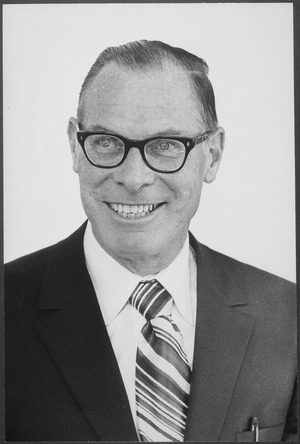
President Nixon met with journalist Henry Brandon to discuss the complexities of the modern presidency and the evolution of American foreign policy. The conversation covered the transition from the post-war era's clear geopolitical boundaries to the current need for pragmatic, sophisticated, and mature leadership in a world defined by nuclear parity and internal domestic challenges. Nixon reflected on his decision-making processes regarding Vietnam, Cambodia, and Laos, emphasizing his approach of maintaining perspective while navigating the constraints of a "new isolationism" and intense public scrutiny.
President Nixon met with a delegation from Alabama, including Representative John H. Buchanan, Jr. and others, to discuss a formal invitation for the President to visit Birmingham for the city's centennial and a gathering of Congressional Medal of Honor recipients. The delegation expressed strong support for the President’s national defense and Vietnam policies, while Nixon acknowledged their bipartisan cooperation on critical legislative issues. Nixon expressed interest in the visit and promised to attempt to accommodate the request within his busy schedule.
President Nixon met with Senator John G. Tower and associates to discuss federal assistance for the severe drought affecting Texas, Oklahoma, and New Mexico. The participants strategized on legislative relief measures, including loan forgiveness and expanded Small Business Administration support, to address the political risks the drought posed to the administration. Additionally, Nixon agreed to record a 30-40 second video message for Tower's upcoming decade-of-service dinner in Dallas and discussed the broader political optics of his administration's response to the crisis.
President Nixon met with Rose Mary Woods and others to coordinate his upcoming travel schedule and discuss the performance of his cabinet members. He praised John Connally for his strong, decisive leadership while criticizing Secretary of State William P. Rogers for his perceived lack of assertiveness and political fortitude. Later, the President met with political cartoonist Bob Murphy to discuss campaign memorabilia and the role of political expression in America versus restricted regimes.
President Nixon met with John McCowan, Alexander P. Butterfield, and White House photographer Oliver Atkins to facilitate a brief, cordial exchange of gifts and correspondence. During the meeting, the President presented McCowan with official pens and cufflinks while also arranging for the autographing of items for the visitor. The session concluded with the scheduling of a follow-up photograph and informal well-wishes regarding McCowan's travel plans.
President Nixon met with M. Jean Robb, Jon M. Huntsman, and photographer Oliver F. Atkins to formally acknowledge Robb’s service. During this brief engagement, the President presented her with a commemorative gift as a gesture of appreciation. The participants also utilized the time to coordinate a photograph to memorialize the occasion before discussing Robb’s upcoming relocation to Florida.
President Nixon met with Landrum Bolling and D. Elton Trueblood to discuss their recent travels to the Middle East and the USSR, as well as their personal connections to Quakerism. During the discussion, Nixon emphasized his refusal to allow domestic political pressure from the American Jewish community to dictate his Middle East foreign policy or drag the U.S. into a conflict. The meeting concluded with the exchange of gifts, including correspondence regarding Abraham Lincoln, and plans for a future meeting with Quakers in October.
President Nixon met with John Ehrlichman and George Shultz to discuss the political collapse of the Supersonic Transport (SST) program and strategy regarding a pending railroad strike. The participants reviewed the administration's economic agenda, including the need for a long-term fiscal strategy and a potential tax revision to address property taxes and broaden the political constituency. Additionally, they coordinated preparations for an off-the-record briefing with business magazine editors and discussed international economic concerns and civil unrest.
President Nixon met with entertainer Art Linkletter, DeVan L. Shumway, and John D. Ehrlichman to discuss Linkletter’s ongoing anti-drug campaign and his educational outreach in schools. The conversation focused on the classification of drug users, the societal dangers of marijuana compared to alcohol, and the negative impact of narcotics on youth motivation and discipline. The President expressed strong disapproval of a recent statement by a National Institute of Mental Health official regarding marijuana penalties and reaffirmed his commitment to firm law enforcement against drug use and radical demonstrators.
President Nixon met with key advisors and economist Milton Friedman to discuss administrative scheduling, the current economic climate, and potential policy adjustments ahead of the 1972 election. A primary focus was the ongoing struggle to balance inflation and unemployment, with Friedman cautioning against reactive policy shifts and emphasizing the need for stability in the money supply. Nixon expressed concern over the volatility of Federal Reserve Chairman Arthur Burns and sought advice on managing economic expectations while avoiding the political pitfalls of wage and price controls.
President Nixon met with staff and diplomats in two distinct sessions to coordinate logistics for Tricia Nixon’s upcoming wedding and to discuss foreign policy strategy regarding the Soviet Union and China. During the first segment, Nixon and his aides finalized guest lists, entertainment plans, and security arrangements for wedding-related social events, specifically managing the inclusion of personal friends and family members. In the second portion, the President pivoted to a strategic review of trade and foreign policy with Jacob Beam and Helmut Sonnenfeldt, focusing on the potential for utilizing trade incentives, such as grain deals and commercial credits, to improve U.S. relations with Communist powers and expand American diplomatic leverage. Nixon emphasized a desire for a more assertive, hard-line administrative image while exploring the practical utility of trade restrictions as a tool for Cold War maneuvering.
President Nixon met with Baron Guido Zerilli-Marimo to discuss the political and diplomatic situation in Italy, focusing on the need for effective U.S. representation in Rome. Zerilli-Marimo argued that the current U.S. ambassador lacked the necessary energy and networking capabilities to navigate Italy's complex political landscape and growing Communist influence. The conversation also touched upon broader geopolitical themes, including the necessity of a strong, unified Europe and a robust Japan to serve as counterbalances to Soviet influence and reduce the burden on the United States as the sole global policeman.
President Nixon met with White House photographer Oliver F. Atkins and personal valet Manolo Sanchez to review and discuss personal photographs from the recent wedding of his daughter, Tricia Nixon. The participants examined various candid and official images, sharing positive feedback on the visual documentation and the favorable media coverage surrounding the ceremony. Nixon directed that specific photographs be delivered to his daughter, reflecting the informal and personal nature of the gathering.
President Nixon met with H. R. Haldeman and various officials to discuss urgent administration challenges, specifically the unauthorized publication of the Pentagon Papers and strategies to combat press leaks and political criticism. The conversation transitioned into a broader policy meeting with representatives from the National Association of Real Estate Boards regarding the President's revenue sharing initiatives, housing market stabilization, and rising construction costs. Nixon emphasized the importance of aligning administration rhetoric on taxes and housing to bolster support among key stakeholders.
President Nixon met with Herbert G. Klein, Stanley S. Scott, and Oliver Atkins to welcome Scott to the White House staff and discuss the administration's minority appointment strategy. Nixon emphasized his desire to integrate qualified African Americans and women into high-level positions across various sectors, such as the judiciary and federal commissions, rather than limiting them to civil rights-focused roles. The President expressed his commitment to a 'color-blind' hiring approach and encouraged Scott to remain resilient in his new, challenging position.
President Nixon met with the newly appointed National Urban League Executive Director Vernon E. Jordan, Jr., and administration officials to discuss establishing a productive working relationship. The conversation focused on the administration's support for Urban League initiatives, specifically exploring the feasibility of incorporating the organization into federal drug abuse education and rehabilitation programs. Nixon also emphasized the urgency of passing his welfare reform and revenue-sharing proposals, urging Jordan to support these efforts to aid the poor and improve social conditions.
President Nixon met with Secretary of State William Rogers and Turkish Ambassador Melih Esembel to discuss the strengthening of U.S.-Turkish relations and ongoing cooperation regarding drug production suppression. Following a brief photo session with the press, Nixon and Rogers shifted their focus to the tragic deaths of the Soviet Soyuz 11 cosmonauts. The discussion concluded with plans to draft an official telegram of condolence to the Soviet Union regarding the mystery of the crew's demise.
President Nixon met with a group of Greek-American supporters, accompanied by White House staffer Thomas Korologos, to discuss their history of political support and current advocacy. The conversation touched upon Julie Nixon Eisenhower’s recent visit to Athens and the diplomatic efforts of U.S. Ambassador Henry J. Tasca. During the brief, cordial session, the participants presented the President with commemorative gifts, including cuff links and golf balls, while Nixon acknowledged their loyalty and shared anecdotes about his political career.
Edward R. F. Cox and White House photographer Oliver F. Atkins discussed requests for wedding photographs following the ceremony of Tricia Nixon Cox and Edward Cox. The conversation focused on procuring different image formats for the personal collection of First Lady Pat Nixon. No significant policy decisions were made, as the dialogue was limited to the coordination of these personal photographic mementos.
President Nixon hosted photographer Oliver F. Atkins along with the Peterson family for a brief social meeting in the Oval Office. The participants engaged in informal conversation regarding the logistics of a group photograph and the presentation of presidential gifts. During the session, the President presented the family with cufflinks featuring the presidential seal and an Apollo viewer to commemorate the era's space exploration.
President Nixon met with NSC staffer Robert G. Houdek, his wife, Alexander Haig, and Ronald Ziegler to facilitate a brief farewell and photo opportunity. During the meeting, the President discussed Houdek’s transition to Princeton University for his undergraduate studies. The encounter concluded with the President presenting a gift featuring the presidential seal to Houdek's wife.
President Nixon met with Lane and Elizabeth Dwinell to express his personal appreciation for Lane Dwinell's service to the administration. The brief encounter included a discussion regarding a scheduled luncheon for Mrs. Juan Velasco, to which the Dwinells were invited as part of broader diplomatic engagement. The meeting concluded with the exchange of presidential gifts and a photograph, marking the formal end of Dwinell's tenure.
President Nixon held a series of brief, informal meetings in the Oval Office with various members of Congress and constituent groups. The sessions were largely ceremonial, involving a bill-signing for veterans' loans, the presentation of a Gideons International Bible, and the reception of commemorative gifts including artwork and presidential keepsakes. These interactions served as photo opportunities and constituent relations, allowing the President to engage with representatives and their guests on topics ranging from local history to personal anecdotes.
This recording captures informal, pre-meeting exchanges in the Cabinet Room between White House staff, including Oliver Atkins, and members of a visiting Cambodian delegation led by Sisowath Sirik Matak. The discussion primarily centers on logistical arrangements for the delegation's upcoming schedule, the management of press access, and general pleasantries regarding White House protocol and history. No substantive policy negotiations between President Nixon and the delegation occurred during this specific segment of the recording.
President Nixon met with Cambodian Prime Minister Sisowath Sirik Matak to discuss the military and political situation in Cambodia amidst the ongoing Vietnam War. The discussion focused on Cambodia's defense strategy, the resilience of the Cambodian people against North Vietnamese aggression, and concerns regarding the regional impact of U.S. troop withdrawals from South Vietnam. Nixon reaffirmed the U.S. commitment to Asian independence and maintaining a military presence in the Pacific to prevent communist domination, while emphasizing that regional nations must ultimately bear the primary responsibility for their own defense.
President Nixon and his advisors, including H. R. Haldeman and Henry Kissinger, held this meeting to strategize on public relations, congressional management, and the administration's aggressive posture toward political opponents. The discussion focused on framing the President's economic policies, neutralizing criticism regarding the military draft and Vietnam, and managing press relations to better promote the administration's leadership. Key outcomes included a decision to escalate military pressure in the DMZ and a plan to utilize media allies and station owners to counter perceived bias in news coverage.
President Nixon met with the incoming class of White House Fellows to welcome them and discuss the value of public service. He emphasized the importance of anonymous, grueling work within the executive departments and encouraged the fellows to find fulfillment in their assignments despite the potential for early-career disillusionment. The meeting also included informal remarks on recent political events, such as the search for a Supreme Court nominee to replace Hugo Black, before concluding with the distribution of ceremonial presidential gifts.
President Nixon hosted a social visit in the Oval Office for Miss America titleholders Phyllis George and Laurie Lee Schaefer, alongside their family members and White House staff. The conversation touched upon the participants' professional aspirations in television and film, as well as the President's personal views on current trends in the entertainment industry. Nixon also engaged in lighthearted discussions regarding sports, specifically football and the potential relocation of the Washington Senators baseball team, before concluding the meeting by presenting presidential gifts to his guests.
President Nixon met with H.R. Haldeman and later joined by Milton Friedman and George Shultz to discuss public relations, press strategy, and economic policy. The conversation focused on the President's upcoming appearances, particularly a speech at the Detroit Economic Club, and how to manage media coverage of his administration and international initiatives. Substantive economic discussions with Friedman and Shultz centered on the complexities of implementing Phase II wage and price controls, managing the gold standard and import surcharges, and the political necessity of avoiding a recession before the 1972 election.
President Nixon met with Alexander Butterfield, Oliver Atkins, and Marjorie Acker to coordinate a photo opportunity intended for a Newsweek feature story. Nixon directed Atkins to capture candid images of him working on a speech to serve as the lead photograph for the upcoming press coverage. The brief meeting concluded once the necessary arrangements for the portrait session were finalized.
President Nixon met with Australian Prime Minister William McMahon to reassure him regarding U.S. foreign policy and the recent, confidential initiative to normalize relations with the People's Republic of China (PRC). Nixon emphasized that these diplomatic overtures were driven by pragmatic geopolitical balancing against the Soviet Union rather than a shift in ideology, and he affirmed that U.S. commitments to key allies, including Japan and Australia, remained steadfast. The two leaders established a secure, private channel for future communication to bypass standard diplomatic channels, and Nixon provided private updates regarding his administration's upcoming strategy for Vietnam troop withdrawals and ongoing POW negotiations.
President Nixon met with his Cabinet and staff to discuss high-stakes domestic and foreign policy issues, including the administration's stance on school desegregation and busing, and potential vetoes regarding child development and welfare legislation. The President also briefed Secretary of Commerce Maurice Stans on his upcoming trip to the Soviet Union, emphasizing that trade should be treated as a strategic tool rather than an over-eager pursuit. Nixon instructed Stans to maintain a shrewd bargaining position and to subtly convey the administration's political strength to Soviet leadership to influence diplomatic negotiations.
President Nixon met with Joel Broyhill, William Timmons, and Egil Krogh to discuss legislative strategy regarding Washington, D.C. subway appropriations and the potential for a presidential statement to resolve ongoing conflicts with Representative William Natcher. Following this, John Mitchell joined the meeting to address the status of a pending tax bill and its potential for a veto, as well as the political ramifications of tax check-off provisions for national political parties. The discussion concluded with a review of sensitive financial and legal matters involving Mitchell, potential IRS investigations, and scheduling for an upcoming AFL-CIO convention speech.
White House photographer Ollie Atkins, Alexander Butterfield, and Manolo Sanchez met in the Oval Office to coordinate logistics for a forthcoming photography session. The group focused on adjusting camera positioning and framing, specifically assessing the height of equipment and optimal angles for shots within the West Wing and the Yellow Room. This session served as a technical preparation to ensure the President's preferred aesthetic and style were captured during upcoming appearances.
President Richard M. Nixon met with White House photographer Oliver F. Atkins and others to conduct a formal portrait session in the Oval Office. The participants focused on technical aspects of the shoot, including lighting, film speed, and posing techniques designed to project a relaxed and positive presidential image. The discussion centered on coaching Nixon to provide specific expressions, such as a "campaign look" and a wide-open grin, for the photography team.
President Nixon met with CBS staff, including Dan Rather, to prepare for and record a televised interview in the Oval Office. The conversation encompassed technical production logistics, such as lighting and makeup, followed by a formal interview addressing key administration priorities including the upcoming trip to the People's Republic of China, the Vietnam War, and potential re-election plans. Nixon utilized the session to articulate his foreign policy objectives and domestic stance on issues such as economic controls, amnesty, and the role of women in politics.
President Nixon hosted a swearing-in ceremony in the Oval Office for John E. Sheehan as a member of the Board of Governors of the Federal Reserve System. The event was attended by Sheehan’s family, Federal Reserve Chairman Arthur F. Burns, various governors, and several U.S. Senators, including John Sherman Cooper. Following the formal oath and a photographic session, the President engaged in a private discussion with Senator Cooper regarding the political landscape, including U.S. foreign policy toward the Vietnam War, upcoming trips to China and the Soviet Union, and international conflicts.
President Nixon met with John Connally and key economic advisors Arthur Burns, George Shultz, and Herbert Stein to conduct an extensive review of the U.S. economy, including unemployment data, retail sales, and the federal budget. The participants discussed strategies to accelerate federal spending to stimulate growth, concerns regarding the lack of confidence among international financial institutions, and the delicate nature of ongoing trade negotiations with Europe, Japan, and Canada. Nixon directed his team to prioritize the rapid deployment of authorized funds and ordered a follow-up analysis on identifying the specific demographics of the unemployed.
President Nixon and Henry Kissinger met with photographer Ollie Atkins to pose for promotional images before transitioning to a strategic review of foreign policy and public relations. Kissinger updated the President on recent discussions with Soviet Ambassador Anatoliy Dobrynin regarding the upcoming Moscow summit, arms control, and potential Vietnam peace proposals. The pair also analyzed the domestic political response to Nixon's recent peace plan, expressing frustration with press criticism while noting broad public support despite media preoccupation with Kissinger's role as a secret emissary.
President Nixon held an Oval Office meeting with Peter G. Peterson, his family, and members of the Cabinet to commemorate Peterson's recent Senate confirmation. The event served primarily as a formal ceremony for the administration of the oath of office and a subsequent photograph session with White House photographer Ollie Atkins. The interaction concluded with informal social conversation regarding Camp David and scheduling logistics.
President Nixon met with his staff and Teamsters President Frank E. Fitzsimmons to discuss labor policy, the status of the Pay Board following George Meany's resignation, and negotiations regarding the West Coast dock strike. Nixon emphasized his desire to maintain open communication with labor leaders to avoid being perceived as anti-labor and sought Fitzsimmons's advice on navigating these disputes. Additionally, the President received an update from Henry Kissinger regarding delicate Vietnam peace negotiations and upcoming Soviet summit preparations, while later discussing internal Teamsters matters, including the status of Jimmy Hoffa.
President Nixon met with William J. Porter and Henry Kissinger to discuss the administration's strategy regarding the ongoing Vietnam War and the Paris peace negotiations. The President emphasized the need for a tough, firm public stance following the North Vietnamese offensive, specifically instructing Porter to expose the enemy's cynicism in breaking off talks while escalating military aggression. The group also reviewed current military intelligence, noting the poor performance of North Vietnamese forces and the significant increase in U.S. air and naval strikes intended to force a settlement. Additionally, the President expressed frustration with diplomatic formalities, reflecting on his recent signing of the Biological Warfare Treaty while criticizing Soviet support for North Vietnamese aggression.
President Nixon met with entertainer Bob Hope, Press Secretary Ronald Ziegler, and photographer Ollie Atkins to discuss logistics for an upcoming photo session in the Rose Garden. The group coordinated the use of flags and specific lighting for the shots, while also briefly reflecting on Hope’s golf game and past encounters. Additionally, they touched upon potential comedic material regarding the President’s attendance at an American Society of Newspaper Editors reception, specifically mentioning pandas and columnist Jack Anderson.
President Nixon met with John Connally to discuss the favorable public reaction to the President's recent decision to implement a naval blockade and intensified bombing in North Vietnam. The two men criticized the lack of support from within the administration, specifically targeting William P. Rogers and Melvin R. Laird, while emphasizing the necessity of bold leadership to maintain national strength and electoral viability. They also discussed plans to systematically replace disloyal bureaucrats across federal agencies and the judiciary, viewing the upcoming election as a crucial opportunity to run against a fragmented and radicalized Democratic Party.
President Nixon met with administration officials, including Myles J. Ambrose and Egil Krogh, Jr., primarily to discuss the administration's progress in federal narcotics enforcement and to arrange a photo opportunity. The participants reviewed charts detailing drug seizures and arrests, using a football analogy to characterize the government’s offensive position in the ongoing drug war. Following reports of federal agents being wounded in Texas, the President committed to writing letters of support to the injured personnel and emphasized the need for more effective public relations messaging regarding the federal government's efforts.
Senator Peter H. Dominick and Thomas C. Korologos met with President Nixon to present a commemorative gift from Nancy Dominick and discuss political strategy. The conversation emphasized the importance of leveraging the Senator’s extensive campaign experience to benefit the administration’s electoral goals. The session concluded with a brief photograph opportunity facilitated by Oliver F. Atkins.
President Nixon met with Senators John Tower and Howard Baker, William Timmons, and photographer Ollie Atkins to discuss 1972 campaign strategies and a photograph session. The participants analyzed the political landscape in Tennessee, focusing on local congressional candidates and polling data regarding George McGovern. Nixon emphasized that the Vietnam War remained a potent campaign issue that would work to his advantage if framed effectively against Democratic opponents.
President Nixon met with Theodore H. White, William Brock, and Kenneth Rietz to discuss the administration's political image, domestic policy achievements, and strategy for a potential second term. The participants analyzed how to effectively convey the President's record on issues like China, foreign policy, and drug control to the public. Additionally, Nixon and H.R. Haldeman strategized a major post-election Cabinet reorganization, emphasizing the need to replace existing secretaries with loyal agents who would strictly implement White House policy and control their respective departments.
President Nixon met with Senate Majority Leader Mike Mansfield to discuss upcoming bipartisan Congressional leadership meetings, administrative reorganization, and the status of Vietnam peace negotiations. Nixon emphasized the need for strict confidentiality regarding the sensitive peace talks while requesting Mansfield’s assistance in managing Congressional pressure. The two leaders also coordinated on procedural matters, including the handling of Cabinet confirmations and the structure of future legislative communication.
President Nixon held a brief, social meeting in the Oval Office with Senator J. Bennett Johnston, Jr., his family, and guests. The primary purpose of the gathering was to facilitate a formal photograph session with the family, coordinated by White House photographer Oliver F. Atkins. During the visit, the President provided informal conversation regarding the history of the Oval Office, his family's philanthropic projects, and pleasantries regarding the Senator's recent election.
President Nixon met with David M. Abshire and William E. Timmons to discuss Abshire’s departure from the State Department to lead the Georgetown Center for Strategic and International Studies. The participants explored ways to leverage the Center to counter the influence of liberal-leaning institutions like the Brookings Institution and the Ford Foundation in foreign policy discourse. Nixon emphasized the need to improve the foreign policy knowledge and effectiveness of Republican legislators through specialized travel and structured briefings to ensure stronger support for his administration's agenda.
President Nixon met with Curtis C. Stapp, the 1973 'Driver of the Year,' his family, and Donald F. Rodgers to celebrate the professional accomplishments of the trucking industry. The discussion touched upon the importance of driver health screenings, road courtesy, and the general state of the Teamsters Union. Nixon also engaged in casual conversation regarding sports and golf, acknowledging the political support he received from Teamsters President Frank E. Fitzsimmons.
President Nixon met with Pittsburgh Pirates players Dave Giusti and Stephen Blass, alongside team executive Daniel M. Galbreath and aide Richard A. Moore, to discuss the creation of a memorial fund for Roberto Clemente, who recently died in a tragic plane crash while delivering aid to earthquake victims in Nicaragua. The President expressed strong support for the initiative, suggesting that the fund should be used to build schools or baseball facilities to honor Clemente’s humanitarian legacy and commitment to children. Nixon advised the group on organizational strategies, including incorporating the fund for tax-deductibility and soliciting contributions from the public and professional sports figures to ensure broad participation.
President Nixon hosted a ceremony in the Oval Office to honor General Alexander M. Haig, Jr. with the Defense Distinguished Service Medal. The event, attended by Haig’s family and high-ranking administration officials, served as a formal recognition of Haig’s significant contributions to national security and his diplomatic efforts, including his work supporting Henry Kissinger. The gathering concluded with photo opportunities and brief discussions regarding Haig's transition out of his White House role.
President Nixon and Henry Kissinger met with Gerard C. Smith to discuss Smith's transition out of government and his future plans involving international research councils. The conversation covered the development of a collaborative executive committee focused on US, European, and Japanese relations, with a particular emphasis on the critical role of energy security and the necessity of constructively integrating Japan into Middle Eastern diplomacy. Nixon expressed his support for Smith's new endeavors and promised to lend presidential backing to the formation of the research council, while also discussing the historical context of global governance and the League of Nations.
President Nixon met with Israeli President S. Zalman Shazar and Ambassador Yitzhak Rabin to reaffirm the strength of U.S.-Israel relations and discuss regional stability. The conversation covered shared concerns regarding terrorism, the pursuit of peace with neighboring Arab states, and the importance of a united Jerusalem. The participants also touched upon U.S. efforts regarding Soviet emigration and preparations for an upcoming February 1973 meeting with Prime Minister Golda Meir.
President Nixon met with South Korean Prime Minister Kim Chong-pil and other officials to reaffirm the U.S.-ROK alliance and discuss ongoing regional security challenges. The conversation focused on South Korea’s dialogue with North Korea, the modernization of ROK forces, and South Korea’s role in the Vietnam War negotiations. Nixon emphasized the importance of achieving an honorable end to the conflict in Vietnam to maintain congressional support for foreign aid, while expressing interest in South Korea's internal constitutional amendments and the restoration of their National Assembly.
President Nixon met with Irish Prime Minister Jack Lynch to discuss the ongoing sectarian violence in Northern Ireland, the potential for a peaceful settlement, and Irish-American trade relations. The discussion covered the political complexities involving the British government, the status of the UDA and IRA, and specific civil aviation disputes regarding landing rights and North Atlantic tariffs. Nixon directed Peter Flanigan to review the aviation and investment concerns, and the two leaders agreed to frame their public statements as a constructive, ongoing diplomatic review of these sensitive bilateral issues.
President Nixon met with Philippine diplomat Carlos P. Romulo and Colonel Richard T. Kennedy to discuss the geopolitical landscape in Asia and the ongoing negotiations to end the Vietnam War. Nixon expressed his support for President Ferdinand Marcos's recent implementation of martial law as a necessary tool to maintain order in a developing nation. The discussion also covered the importance of maintaining an American presence in Asia to balance Soviet and Chinese influence, as well as upcoming administrative changes regarding U.S. ambassadors and educational loan agreements.
President Nixon met with Yen Chia-Kan and other Republic of China representatives to discuss the economic progress, political development, and regional security concerns of Taiwan. The conversation covered Taiwan's agricultural and industrial growth, as well as the necessity of continued U.S. military support and diplomatic coordination. Additionally, Nixon updated the delegation on the difficult status of Vietnam peace negotiations, emphasizing his intent to secure a favorable settlement that maintains American credibility in Asia.
President Nixon met with press members Helen Thomas and Frances Lewine, along with press secretary Ronald Ziegler and others, for an informal discussion that touched upon the President's personal reflections and observations on public service. The conversation covered a wide array of topics, including age requirements for political office and the judiciary, the physical and emotional burdens of the presidency, and the importance of maintaining interaction with younger generations. The participants also shared personal anecdotes and birthday greetings, concluding with a brief interaction regarding family photographs in the office.
President Nixon met with staff and officials, including Maurice J. Williams and Col. Richard T. Kennedy, to discuss relief efforts in Nicaragua and the status of Vietnam peace negotiations. During the meeting, Nixon received a birthday gift from his staff and praised Williams for his coordination of disaster relief, advising him on how to characterize these efforts to the press. Following these discussions, Nixon shifted the focus to the Vietnam peace talks, expressing skepticism about the North Vietnamese negotiators' sincerity and reiterating his preference for a negotiated agreement over a unilateral military withdrawal.
In this meeting, President Nixon and his staff, particularly Frederic Malek and Roy Ash, focused on the management reorganization of the federal government for his second term. Nixon emphasized the critical need for absolute loyalty among appointees to ensure that government agencies act in accordance with presidential directives, specifically noting the importance of controlling the IRS and staffing departments with loyalists. Additionally, the President reviewed economic messaging strategies for the upcoming budget, instructed his team to minimize unnecessary paperwork, and discussed sensitive developments regarding potential Vietnam peace negotiations, tasking Henry Kissinger and Alexander Haig with maintaining absolute secrecy.
President Nixon met with members of the Council on Environmental Quality and key administration advisors to discuss the content and delivery of his upcoming State of the Union messages. Nixon emphasized a desire for a positive, forward-looking tone regarding the environment and population growth, while shifting from a single speech to a series of ten installments to maintain sustained media interest. The conversation also touched upon the restructuring of intelligence and resource management, as well as complex diplomatic maneuvers involving Vietnam negotiations and potential Middle East initiatives.
President Nixon met with Press Secretary Ronald Ziegler and White House photographer Oliver Atkins to facilitate a brief photo opportunity. The discussion focused on coordinating the logistics for these official portraits within the President’s office. The interaction concluded quickly after the necessary arrangements for the session were finalized.
President Nixon met with bipartisan Congressional leadership, Vice President Agnew, and Henry Kissinger to discuss the imminent Vietnam peace settlement and the subsequent withdrawal of U.S. forces. The participants reviewed key provisions of the agreement, including cease-fire terms, the release of prisoners of war, and the complexities surrounding continuing conflicts in Laos and Cambodia. Nixon coordinated with the congressional delegation regarding the distribution of briefings to broader legislative members and finalized plans for his public address announcing the agreement.
President Nixon met with veteran journalist Willard Edwards and his wife to congratulate them on their 50th wedding anniversary and present them with gifts. Following a brief photo session with White House photographer Ollie Atkins, the conversation turned toward the political climate surrounding the recent Vietnam peace settlement. Nixon expressed satisfaction with the terms of the agreement, noting that critics who previously demanded peace were now frustrated by the administration's successful conclusion of the conflict.
President Nixon met with outgoing Israeli Ambassador Yitzhak Rabin to discuss the state of U.S.-Israel relations and Middle East regional stability. Following Rabin's departure, Nixon and Henry Kissinger transitioned to a tactical review of the recent Vietnam peace settlement, emphasizing the necessity of maintaining a firm stance with Congress and the media. The conversation also touched upon the political implications of Lyndon B. Johnson’s death and the President's upcoming diplomatic strategy regarding the war's conclusion.
President Nixon, Henry Kissinger, and Indonesian Foreign Minister Adam Malik met to discuss the positive international reaction to the recently signed Vietnam peace agreement. The participants reviewed favorable responses from various global powers and the perceived strengthening of Nixon's political position. Additionally, the group touched upon the strategic importance of Indonesia and Southeast Asia, with Nixon emphasizing a commitment to continued economic and geopolitical cooperation.
President Nixon met with his senior advisors and South Vietnamese officials, Tran Kim Phuong and Tran Van Lam, to discuss the recent Vietnam ceasefire and the importance of continued U.S. military and economic support for South Vietnam. Nixon emphasized the necessity of a strong, unified front against North Vietnamese aggression while expressing frustration with domestic media coverage and political opposition regarding the war. During the meeting, the participants coordinated plans for future high-level visits and strategies to maintain the stability of the South Vietnamese government under President Thieu.
President Nixon met with David R. Young, Jr., George H. W. Bush, William E. Timmons, Thomas C. Korologos, Stephen B. Bull, and Senator Ted Stevens to discuss the upcoming Alaskan congressional election and potential candidacy options. The group reviewed campaign strategies, including the use of aviation for outreach and the political landscape regarding taxes, prices, and the Office of Economic Opportunity. The session also served as an opportunity for official photography and brief coordination on legislative matters involving Senator Stevens.
President Nixon hosted Senator Pete V. Domenici and his family in the Oval Office for a cordial social visit. The discussion focused primarily on the Domenici children, their schooling, and the family's transition to living in Rockville, Maryland. During the meeting, Nixon shared anecdotes about his own family's political background and provided the group with a tour of the office's notable decorations, including artifacts from China and pieces crafted by his daughter, Julie. The visit concluded with arrangements for a group photograph and well-wishes for the Senator's upcoming work in Congress.
President Nixon met with Senators Howard Baker and William Brock, along with a delegation of Tennessee officials and constituents, to participate in a ceremonial event. The group discussed the centennial of Martin, Tennessee, and finalized plans for the President’s potential attendance at the town's July 4th commemoration. During the session, the President accepted various gifts, including letters from schoolchildren regarding the Vietnam cease-fire, and engaged in informal photo opportunities with the visitors.
President Nixon met with Representative Samuel L. Devine and members of his staff to receive the Captain Eddie Rickenbacker Award, an honor celebrating the perpetuation of American constitutional principles. The participants engaged in brief pleasantries regarding William Mnich’s Ohio radio and television efforts, while the President reciprocated by presenting official gifts, including photographs and cuff links. The discussion also touched upon Captain Rickenbacker’s health recovery following a stroke and the presentation of a gift to Mnich's son.
President Nixon met with Senator Jesse Helms and a delegation of North Carolina officials to host a brief ceremonial visit in the Oval Office. The participants engaged in informal introductions, presented the President with cuff links as a token of appreciation, and discussed the President's ongoing policy initiatives regarding the Supreme Court, China, and the Strategic Arms Limitation Talks (SALT). The meeting concluded with the President reciprocating by presenting the group with official mementos.
President Richard Nixon met with Clarence M. Kelley to finalize his appointment as the new Director of the FBI and to outline the administration's expectations for his leadership. Nixon emphasized the need for Kelley to restore order, improve cooperation with other federal and local law enforcement agencies, and act as a fearless administrator to overcome the internal power struggles following J. Edgar Hoover’s tenure. The conversation also covered strategies for Kelley's upcoming confirmation hearings, particularly regarding Watergate, the handling of raw FBI files, and the administration's frustration with judicial restrictions on national security wiretapping.