Woods, Rose Mary
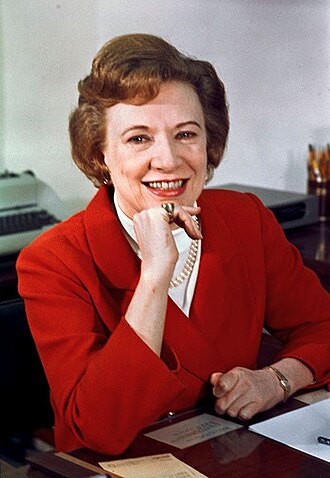
Rose Mary Woods served as President Richard Nixon's fiercely loyal Personal Secretary from January 1969 to May 1973, acting as a crucial gatekeeper to the Oval Office. During the White House taping period (February 1971 – July 1973), she maintained strict control over access to Nixon and was one of the few staff members whose daily interactions with the President were frequently recorded. Following the Watergate-related resignations of top aides H.R. Haldeman and John Ehrlichman, her responsibilities expanded and she was promoted to Executive Assistant and Personal Secretary to the President in June 1973, serving until August 1974. She later became infamous for the "Rose Mary stretch," claiming she accidentally erased 18.5 minutes of a subpoenaed June 1972 tape while transcribing it.
What Woods talks about on the tapes
Public relations 110White House administration 100Vietnam War 90Presidential scheduling 72Presidential schedule 61Speechwriting 59Scheduling 57White House operations 54Foreign Policy 49Watergate 41Political strategy 38Henry Kissinger 37
Conversations (745)
— Page 5 of 8President Nixon met with his staff to manage the growing political fallout from the ITT antitrust case, specifically focusing on coordinating a formal statement for John N. Mitchell and managing the public narrative surrounding Dita Beard. Following these internal deliberations, the President met with James C. H. Shen, the Republic of China's ambassador, to address concerns regarding the administration's recent diplomatic outreach to the People's Republic of China. Nixon sought to reassure the Taiwanese government of the U.S. commitment to their security while emphasizing the need for patience and peaceful resolution in the region.
President Nixon and H. R. Haldeman met to discuss various political and administrative issues, focusing on the ITT investigation, the status of the 1972 campaign, and news media coverage. They explored strategies to manage the ITT controversy, including the potential to quiet hearings, and analyzed the President's standing following the New Hampshire primary. Later, Henry Kissinger joined the meeting to address the upcoming Moscow summit, foreign policy objectives, and the importance of maintaining White House control over foreign policy communications and negotiations.
President Nixon met with Rose Mary Woods to discuss personal and administrative matters, including his desire for more privacy and rest at Camp David away from burdensome social obligations with acquaintances like the Drowns. The conversation addressed the President’s upcoming travel, specifically the logistics for his trip to the Soviet Union and the need to separate his schedule from those of other administration officials and their spouses to avoid excessive group oversight. Additionally, they reviewed potential diplomatic appointments for Emil Mosbacher, Jr. and Wiley Buchanan, ultimately deciding on Portugal as a suitable post for Buchanan.
President Nixon and his personal secretary, Rose Mary Woods, review administrative correspondence regarding a letter from a school class and discuss the guest list and scheduling for an upcoming White House dinner. The President specifies his desired attendees, including prominent political and social figures such as Nelson Rockefeller and John Connally, while finalizing the event's timing. Nixon emphasizes the importance of confirming the availability of key guests to ensure the dinner proceeds as planned.
President Nixon met with Rose Mary Woods and Stephen B. Bull to coordinate upcoming White House social events, specifically reviewing guest lists for a dinner and discussing the logistics of hosting a larger, more inclusive gathering. They also reviewed administrative matters, including the status of a sculpture project and potential business interests in Turkey involving Pepsi-Cola executive Donald Kendall. The conversation concluded with a discussion of security concerns and the perceived decline of New York City, referenced through anecdotes shared by George H.W. Bush.
President Nixon and his personal secretary, Rose Mary Woods, reviewed the guest list and logistical arrangements for an upcoming state dinner honoring Turkish Prime Minister Nihat Erim. The discussion focused on confirming attendance for various prominent figures, including Max M. Fisher and Del E. Webb, while addressing potential issues regarding missing invitations. The pair specifically noted the delivery status of an invitation intended for O.J. Simpson and evaluated the influence of various contributors on the guest selection process.
President Nixon and his personal secretary Rose Mary Woods briefly discuss the status of a specific, unnamed individual, noting her positive condition. This exchange serves as a check-in regarding the welfare of an associate. No formal policy decisions or administrative actions were recorded during this brief encounter.
President Nixon and his personal secretary Rose Mary Woods briefly discuss the arrangements for an upcoming dinner. The conversation is limited to coordinating plans for the event and confirming follow-up communication. No major policy or strategic decisions are addressed during this brief logistical exchange.
President Nixon and his personal secretary, Rose Mary Woods, discuss logistical arrangements regarding the President’s upcoming schedule and a planned visit by Charles “Bebe” Rebozo to Camp David on March 24, 1972. During the brief exchange, they deliberate on the secure handling or drafting of sensitive correspondence. No definitive policy decisions were reached, as the conversation focused primarily on administrative coordination.
President Nixon met with H.R. Haldeman and John Ehrlichman to coordinate administration strategy on several high-stakes domestic and foreign policy issues. The discussion centered on legislative maneuvering to curb school busing, the management of economic messaging regarding the Pay Board's recent labor disputes, and the handling of the ITT controversy. They also deliberated on potential presidential travel, the projection of moral leadership, and the public relations strategy for the President’s recent trip to China.
President Nixon met with his personal secretary, Rose Mary Woods, to coordinate the preparation of administrative documents. The discussion centered on the retyping of a Pay Board statement onto speech cards to ensure proper formatting for upcoming remarks. Woods was tasked with completing the task by a specific deadline, necessitating a brief exchange regarding typewriter use and project timeline.
President Nixon met with his personal aide Manolo Sanchez and secretary Rose Mary Woods to discuss plans for an evening social gathering. The participants coordinated their schedules, specifically addressing time constraints regarding Woods's departure and dinner plans. The meeting served as a brief administrative arrangement for their personal logistics before the group concluded the discussion.
President Nixon met briefly with Rose Mary Woods and an unidentified male visitor in the Oval Office to engage in informal, general conversation. The discussion was limited in scope, focusing on routine matters before the group departed together after approximately one minute. No substantive policy decisions or political developments were recorded during this brief interaction.
President Nixon and his personal secretary, Rose Mary Woods, met to review planning for upcoming state dinners, specifically focusing on guest lists and the selection of high-quality entertainment. They discussed the President's desire to invite guests who are not typical government or press figures to ensure a more enthusiastic atmosphere at these events. Additionally, they coordinated a confidential plan to award a Medal of Freedom during an upcoming dinner and discussed arrangements for hosting visitors like Julia Meade.
President Nixon met with Press Secretary Ronald L. Ziegler and personal secretary Rose Mary Woods to coordinate upcoming press logistics and limit the duration of presidential photo opportunities. Nixon expressed frustration over previous media encounters, specifically citing meetings with the American Cancer Society and King Hussein of Jordan, and directed Ziegler to keep upcoming sessions brief to avoid unproductive small talk. The group ultimately decided to restrict press coverage to wire services to ensure minimal disruption to the President’s schedule.
President Nixon and his personal secretary, Rose Mary Woods, briefly discussed the successful admission of Caroline and Alice Rudd to the Chapin School in New York. Woods highlighted her role in facilitating this outcome through personal correspondence. The exchange underscored the positive reception and gratitude expressed by the family regarding the President's influence in the matter.
President Nixon held a brief, informal social meeting in the Oval Office with Oliver W. Rudd, Jr., his wife (known as Julia Meade), their children, and Rose Mary Woods. The primary purpose was a courtesy visit that included a formal photograph session and discussion of the family's children and their schooling in New York. Before the group departed for tours of the White House and the Capitol, the President shared pleasantries and offered lighthearted advice regarding their upcoming visit with William “Fishbait” Miller.
President Nixon met with Phillip Sanchez, George Shultz, and Alexander Butterfield to discuss the administration's outreach efforts to the Spanish-speaking community and the operational challenges facing the Office of Economic Opportunity (OEO). Nixon emphasized that the administration must prioritize honesty, fiscal responsibility, and tangible results over the empty promises of the previous Great Society programs. Sanchez received confirmation of his standing within the administration, with Nixon encouraging him to continue his direct communication with both the President and Shultz to advocate for his initiatives.
President Nixon and H.R. Haldeman, later joined by Charles Colson, met to coordinate the President's upcoming schedule, focusing on the timing of a speech to the National Catholic Educational Association to maximize political impact before the Wisconsin primary. They discussed labor relations, particularly the President's relationship with Teamsters leader Frank Fitzsimmons and the maneuvering of AFL-CIO President George Meany regarding the 1972 election. Additionally, the participants reviewed international travel logistics, current economic policy, and the administration's strategy for managing the burgeoning ITT controversy.
President Nixon met with Henry Kissinger to discuss critical foreign policy and domestic political strategies, including the ongoing North Vietnamese offensive and potential U.S. military responses. The two reviewed preparations for the upcoming U.S.-Soviet summit, the status of diplomatic relations with various heads of state, and Nixon’s desire to delay military actions until after the Wisconsin primary to avoid negative press. Additionally, they critiqued the intellectual community's hostility toward the administration and discussed strategies for managing the 1972 campaign against Democratic opponents.
President Nixon met with his personal secretary, Rose Mary Woods, to coordinate his immediate schedule and manage upcoming appointments. The brief interaction focused on the status of specific administrative preparations and ensuring that Woods was ready to enter the Oval Office with necessary materials. This exchange highlights the routine logistical planning conducted by Nixon and his close staff to maintain the daily flow of executive operations.
President Nixon met with his personal secretary, Rose Mary Woods, and assistant Stephen B. Bull to address various administrative tasks and personal matters. The discussion covered the disposition of presidential gifts, the handling of sensitive campaign finance inquiries involving C. Arnholt Smith, and the scheduling of upcoming events, including a meeting with the National Commission on Fire Prevention and Control. Additionally, the group reviewed family photographs and handled correspondence, with the President providing guidance on how his staff should respond to unsolicited mail and inquiries.
President Nixon met with H.R. Haldeman, Ronald Ziegler, and others to strategize on public relations, specifically regarding the media appearances of Henry Kissinger and the Nixon family. They decided to postpone Kissinger's prime-time television appearances until after the upcoming Moscow summit to maximize impact and avoid premature foreign policy debates. The group also discussed the logistics of a potential television special featuring Pat Nixon's China trip, the strategy for handling press conferences, and ways to shift the narrative regarding the administration's performance.
President Nixon met with Alexander Butterfield, Rose Mary Woods, and Stephen Bull to coordinate administrative tasks and White House scheduling. Key discussions involved entertainment arrangements for an upcoming state dinner honoring Mexican President Luis Echeverria Alvarez, including deliberations on presenting a Medal of Freedom to Fred Waring. The President also dictated personal notes to Dinah Shore and Susan Alsop regarding a recent television appearance and a literary reference to Edmund Burke.
President Nixon met with Ronald Ziegler and Rose Mary Woods to formulate a media strategy regarding the ongoing military offensive in South Vietnam. Nixon instructed Ziegler to maintain a posture of studied ambiguity, directing him to decline day-to-day commentary on the battle and instead defer military-specific evaluations to General Abrams in Saigon. The President emphasized a narrative that the South Vietnamese line was bending but not breaking, drawing historical parallels to maintain public resolve and avoid speculation about future US ground troop involvement or bombing campaigns.
President Nixon met with John Mitchell and H.R. Haldeman to discuss the deepening political crisis surrounding the International Telephone and Telegraph (ITT) case and the confirmation hearings for Richard Kleindienst. The group evaluated the strategic necessity of withdrawing Kleindienst’s nomination as Attorney General to mitigate further damage to the administration, while simultaneously vetting Caspar Weinberger as a potential replacement. They also reviewed broader political strategies, including how to handle Democratic criticism regarding the Vietnam War and how to manage the transition if Kleindienst were to resign.
President Nixon met with H. R. Haldeman and Henry Kissinger to coordinate the administration's response to the intensifying Vietnam War, focusing on military strategy and domestic political management. The President directed that military operations be intensified, specifically tasking naval and air commanders to take greater risks to break the stalemate, while simultaneously managing congressional and public opinion regarding the conflict. Kissinger briefed the President on secret diplomatic communications with Moscow aimed at securing a settlement, with Nixon emphasizing that the upcoming trip to the Soviet Union remained contingent upon meaningful progress regarding the war.
President Nixon, Rose Mary Woods, and Henry Kissinger met to finalize the President's upcoming speech for his trip to Canada and coordinate congressional relations. Following Woods's departure, Kissinger briefed the President on securing public and congressional support for the war in Vietnam, specifically regarding the efforts of Representatives F. Edward Hebert, George H. Mahon, and John C. Stennis. The discussion focused heavily on the strategic necessity of upcoming air strikes against petroleum, oil, and lubricant (POL) dumps in Haiphong, with Kissinger detailing operational plans and the perceived effectiveness of previous military actions in Laos and Cambodia.
President Nixon met with Lt. Gen. Vernon A. Walters to receive coaching and practice the pronunciation of French phrases for an upcoming address to the Canadian Parliament. The session involved detailed linguistic drills, with Rose Mary Woods assisting in the logistics of the speech drafts and Alexander P. Butterfield briefly joining to deliver documents. The discussion also touched upon ongoing military concerns in Vietnam, including North Vietnamese movements and the status of diplomatic efforts.
President Nixon and Rose Mary Woods coordinate logistics for upcoming social arrangements involving family members. The discussion focuses on scheduling dinners with Oscar and Olive Marshburn, as well as Edward Nixon, while ensuring the President’s Sunday and Monday calendars remain organized. Nixon directs Woods to manage these invitations and establish a reliable system for him to receive urgent calls via the White House operator.
President Nixon and his personal secretary, Rose Mary Woods, discuss the cancellation of a planned trip to Camp David due to inclement weather and coordinate Woods's availability for the remainder of the day. During the call, Woods relays supportive sentiments from Arthur Burns regarding the President’s recent decision to escalate Vietnam air strikes despite potential political fallout. Nixon emphasizes his resolve to avoid losing the war, citing the significant deployment of naval and air assets as evidence of his commitment.
President Nixon met with Rose Mary Woods to discuss the planning and logistical execution of upcoming White House social functions, including events for retired members of Congress and Navy comrades. The President provided specific instructions regarding the integration of musical entertainment to ensure a more dynamic experience for guests, while expressing personal disapproval of modern dance performances. Additionally, the pair addressed staffing concerns, including tensions involving Constance Stuart, and the need for better public relations regarding the quality of cultural programming hosted by the administration.
President Nixon and his personal secretary, Rose Mary Woods, discussed administrative arrangements regarding the First Lady’s return travel from New Bern, North Carolina, and the coordination of a telephone call to Tricia Nixon Cox. The brief meeting centered on logistical scheduling, including confirming the timing of Pat Nixon’s arrival and integrating additional itinerary items. The President directed Woods to facilitate further communication with the family to finalize these travel and scheduling details.
President Nixon met with H.R. Haldeman to discuss high-level administration strategy, including preparations for Henry Kissinger’s upcoming trip to Moscow and the management of sensitive Vietnam negotiations. The President expressed frustration with Kissinger’s tendency to engage in philosophical digressions during diplomatic talks and instructed that specific, direct messages be relayed regarding the necessity of prioritizing a Vietnam settlement over broader summit discussions. Additionally, they reviewed domestic political issues, including the ITT case, upcoming press strategy, and staff transitions, while Nixon emphasized his desire to reduce his own preoccupation with negative media coverage.
President Nixon met with his personal secretary, Rose Mary Woods, to coordinate logistics for an upcoming social dinner and review his immediate schedule. The discussion focused on managing the guest list, including the attendance of Charles "Bebe" Rebozo, and planning a potential trip to Camp David with Tricia Nixon Cox and the First Lady. Nixon emphasized the need for careful communication with staff and associates regarding these arrangements to avoid administrative complications.
Rose Mary Woods hosted unidentified guests in the Oval Office to facilitate a tour of the White House grounds and facilities. The discussion primarily focused on logistical planning for the visitors' schedule, including coordination for an evening dinner with Tricia Nixon. The participants also briefly touched upon the arrival and departure logistics of other individuals involved in the day's events.
President Nixon and Alexander M. Haig, Jr. met to discuss the status of the ongoing North Vietnamese offensive and coordinate communication with Henry Kissinger, who was currently in Moscow. The conversation focused on the tactical efficacy of B-52 bombing strikes, the performance of South Vietnamese forces in areas like An Loc, and the psychological impact of these actions on North Vietnamese morale. Nixon and Haig also strategized on how to frame these military efforts to the American press and Congress, aiming to counter domestic opposition while maintaining pressure on the North through sustained air operations.
Rose Mary Woods contacted Tricia Nixon Cox via a White House operator to coordinate the First Family's upcoming schedule. The discussion focused on logistics for an impending trip to Camp David, specifically regarding helicopter travel and dining arrangements. The conversation also weighed the relative benefits of hosting a dinner at the White House versus Camp David for the President.
President Nixon met with Rose Mary Woods and Stephen B. Bull to coordinate administrative logistics and personal scheduling matters. The discussion centered on the arrangements for Bob Hope’s upcoming meeting, including the necessity of capturing photographs before expected inclement weather. Additionally, the group reviewed the President’s travel itinerary to Camp David and confirmed plans regarding Bebe Rebozo’s arrival.
President Nixon met with Henry Kissinger, Alexander Haig, and other staff members to finalize the strategy for an upcoming televised address regarding the worsening military situation in Vietnam. The President emphasized his desire for a simple, direct speech that would frame the North Vietnamese invasion as a clear act of aggression while preparing the public for potential military losses. A significant portion of the conversation focused on the necessity of matching tough rhetoric with decisive air and naval strikes, as well as the importance of maintaining diplomatic credibility ahead of the upcoming Soviet summit. Nixon also instructed his team to improve their public relations efforts, expressing deep frustration with the lack of aggressive messaging from the State Department and the Pentagon regarding the conflict.
President Nixon and his personal secretary Rose Mary Woods coordinate the logistics of delivering a speech. The brief discussion focuses specifically on the handling of recording tapes and arrangements for Manolo Sanchez to facilitate the delivery. No broader policy issues are addressed, as the conversation remains strictly confined to administrative tasks.
President Nixon and his personal secretary, Rose Mary Woods, review and refine the draft of an upcoming presidential speech. They discuss specific editorial revisions, including the removal of certain sections concerning South Vietnam to improve the clarity and length of the address. The conversation concludes with a plan for Woods to finalize the edits and submit the draft to the President for a final review.
President Nixon instructed his personal secretary, Rose Mary Woods, to produce copies of a final speech draft for review. He requested that one copy be sent to Henry Kissinger while another was provided to him for last-minute revisions. This process was intended to finalize the text before Woods prepared the ultimate version of the speech.
President Nixon and his personal secretary, Rose Mary Woods, discuss the staffing requirements for an upcoming presidential trip. The President expresses a preference for recruiting a specific individual, Nellie L. Yates, to join the travel party. He instructs Woods to approach her on the basis of operational necessity, while also authorizing her to seek an alternative candidate should Yates be unavailable.
President Nixon and Henry Kissinger met to review and finalize the text of a forthcoming nationally televised address regarding the Vietnam War. They discussed strategic revisions to the speech, emphasizing the prevention of a potential communist bloodbath and the necessity of maintaining U.S. credibility. Kissinger also coordinated with Senator Robert C. Byrd to delay a scheduled Democratic caucus vote on Vietnam policy, aiming to avoid public dissent that could undermine sensitive, ongoing diplomatic efforts in Paris and Moscow.
President Nixon directs his personal secretary, Rose Mary Woods, to prioritize the immediate completion and delivery of his personal copy of an upcoming speech regarding Vietnam. The brief exchange highlights the administrative urgency surrounding the distribution of the text. Beyond the personal copy, the discussion touches on the logistical handling of materials intended for the press.
President Nixon met with his personal secretary, Rose Mary Woods, to finalize the revisions and word count of a brief but significant speech regarding Vietnam. The discussion touched upon the delicate diplomatic landscape, specifically referencing covert private negotiations in Paris that the administration aimed to obscure from public discourse. Nixon emphasized the speech's strategic ambiguity, noting that while it addressed the implications of ongoing bombing campaigns and Soviet involvement, key diplomatic maneuvers remained intentionally omitted.
President Nixon met with Ronald Ziegler, Stephen Bull, and Rose Mary Woods to coordinate logistical and administrative matters regarding his daily schedule. The discussion involved planning for a meeting with White House secretaries and the preparation of photographs. The participants also touched upon internal staffing details, specifically mentioning Richard Helms and Alexander Butterfield.
President Nixon consulted with his personal secretary, Rose Mary Woods, regarding the immediate need to notify former President Lyndon B. Johnson of J. Edgar Hoover’s passing prior to the official public announcement. Nixon instructed Woods to handle the incoming return call from Johnson if he remained unavailable, ensuring the former president learned the news directly from the administration. This coordination served to maintain protocol and personal courtesy regarding the death of the longtime FBI director.
President Nixon hosted a ceremony in the Oval Office for Vernon A. Walters to mark his promotion and official swearing-in as Deputy Director of the Central Intelligence Agency. Joined by Walters's family, Judge Edward Tamm, and CIA Director Richard Helms, the President administered the oath of office and acknowledged Walters's 31 years of military service. The meeting concluded with a photography session and the distribution of presidential gifts to the attendees.
President Nixon met with his personal aide Manolo Sanchez and secretary Rose Mary Woods to discuss Sanchez’s upcoming knee surgery and recovery timeline. The President and Woods also reviewed various administrative tasks, including correspondence regarding gifts from John Connally, letters from schoolchildren, and condolence messages for the families of J. Edgar Hoover and others. Additionally, they coordinated the preparation of the President’s eulogy for Hoover and addressed general White House scheduling and office logistics.
President Nixon met with his personal secretary, Rose Mary Woods, to dictate a eulogy honoring the late FBI Director J. Edgar Hoover. The President reflected on Hoover's non-partisan career and noted that both Dwight D. Eisenhower and Lyndon B. Johnson had advised him to retain Hoover as director. The brief meeting also included a peripheral discussion regarding the medical expenses for a knee operation for staff member Manolo Sanchez.
President Nixon met with Rose Mary Woods and others to debrief on the funeral services for J. Edgar Hoover, discussing the reception of his own eulogy and the appropriateness of the Rev. Edward L.R. Elson's actions. The President expressed relief that Hoover passed away when he did, sparing him from potentially damaging political fallout during the upcoming election cycle and the persistent attacks from critics like Jack Anderson. The conversation concluded with administrative logistics, including scheduling, staff concerns, and the work habits of White House support personnel.
President Nixon met with his senior advisors and military officials to coordinate an aggressive military response to the North Vietnamese offensive. The discussion centered on implementing a naval blockade of North Vietnam and intensifying air strikes, with Nixon emphasizing the necessity of a decisive victory to protect American prestige and prevent a communist takeover in Southeast Asia. The President also consulted with his staff on the strategic messaging for a forthcoming public announcement, weighing the psychological impact of a blockade against traditional bombing campaigns.
President Nixon consulted with his personal secretary, Rose Mary Woods, regarding a recent television interview given by his daughter, Tricia Nixon Cox, with Barbara Walters. The discussion focused on Woods's impressions of the interview's quality, length, and the technical aspects of its production. The brief exchange served as a post-broadcast evaluation of how the interview reflected on the administration.
President Nixon met with Henry Kissinger and H.R. Haldeman to finalize the decision to initiate a naval blockade and intensified bombing campaign against North Vietnam, a move Nixon viewed as essential to prevent a defeat in the war and preserve American credibility. The discussion focused on coordinating the strategy to ensure secrecy, managing potential friction with Secretary of Defense Melvin Laird and Secretary of State William Rogers, and addressing the geopolitical implications of a confrontation with the Soviet Union. Nixon directed his team to maintain a facade of normalcy to mask the impending escalation while simultaneously emphasizing the necessity of absolute loyalty and silence from his staff to prevent leaks.
President Nixon met with Rose Mary Woods and Manolo Sanchez to coordinate his upcoming weekend schedule at Camp David and discuss Tricia Nixon Cox’s recent television appearance. The President focused on the logistical preparations for his highly sensitive, impending announcement regarding a naval blockade of Haiphong, Vietnam. He emphasized the necessity of the blockade despite the risk of canceling the upcoming Soviet Summit and maintained strict secrecy regarding the plan.
President Nixon directs his personal secretary, Rose Mary Woods, to finalize transportation arrangements for his upcoming helicopter trip to Camp David. The two briefly coordinate the logistical scheduling for the departure and touch upon plans for an upcoming reunion event involving approximately 70 guests. The interaction concludes with the President dismissing a request to review materials related to Ontario.
President Nixon and Henry Kissinger met to discuss urgent changes to the U.S. military command structure in Vietnam, emphasizing the need for a more effective, unified allied command. Nixon expressed a firm desire to replace General Creighton Abrams and proposed installing General Bruce Palmer as the new leader to improve operational coordination. The President directed Kissinger to coordinate these plans with Secretary of Defense Melvin Laird and Secretary of State William Rogers, stressing that the administration must commit fully to these adjustments as part of its broader strategy.
President Nixon and his personal secretary, Rose Mary Woods, reviewed draft revisions for an upcoming presidential address regarding the Vietnam War. They focused specifically on the precise wording of the speech, resulting in strategic deletions to refine the message. This consultation reflects the administration's careful management of public rhetoric during a critical period of the conflict.
President Nixon consulted with his personal secretary, Rose Mary Woods, to refine the specific phrasing for his upcoming televised address regarding the naval blockade of North Vietnam. The discussion focused on the strategic messaging and rhetorical tone the President intended to employ when announcing this escalation to the American public. This meeting served as a final review session to ensure the clarity and impact of the speech's key declarations.
President Nixon and his personal secretary, Rose Mary Woods, met to finalize preparations for his upcoming televised address announcing the mining of North Vietnamese ports. The discussion centered on reviewing and refining the wording of the speech, specifically regarding the handling of the final draft. Nixon provided Woods with a 'cautionary version' of the document, directing her to hold the final copy as they continued to adjust the rhetoric.
President Nixon met with his personal secretary, Rose Mary Woods, to finalize edits for his upcoming televised address regarding the Vietnam War. The discussion focused on last-minute proofreading and specific terminology adjustments, including ensuring the correct formal title for South Vietnam. Nixon reviewed these changes to ensure the speech text accurately reflected current diplomatic language before its final production.
President Nixon consulted with his personal secretary, Rose Mary Woods, to refine the rhetoric for his upcoming televised address regarding the blockade of North Vietnam. The discussion focused on carefully adjusting specific phrasing concerning American military restraint and the strategic necessity of interdicting war supplies. The President finalized these editorial changes to ensure the message effectively conveyed his policy shift regarding the conflict.
President Nixon and his personal secretary, Rose Mary Woods, discuss the framing of U.S. restraint in the Vietnam War, specifically debating how to articulate the nation's policy of gradual escalation. The conversation shifts toward internal administrative or logistical concerns, with the President questioning the necessity of specific documentation or statements. The brief interaction concludes with the President inquiring about diplomatic coordination regarding Germany.
President Nixon met with his personal secretary, Rose Mary Woods, to discuss her administrative work concerning an upcoming presidential address regarding the Vietnam War. The conversation focused on the preparation and logistical support required for the speech as the administration navigated the ongoing conflict. No further specific action items were recorded beyond this coordination of efforts.
President Nixon and Henry Kissinger met to discuss the tactical implementation of the U.S. blockade and mining of North Vietnamese ports following the President’s May 8 speech. The discussion focused on executing massive air strikes against strategic targets like rail bridges and POL (petroleum, oil, and lubricant) storage, while emphasizing a calculated approach to avoid direct confrontation with Soviet vessels. Nixon underscored the need for presidential resolve and noted with satisfaction that public and media reactions remained surprisingly restrained, tasking Kissinger with further preparation regarding diplomatic communications and potential Soviet responses.
President Nixon met with Rose Mary Woods and H.R. Haldeman to discuss the positive public reception and political fallout regarding his recent Vietnam blockade speech. The group reviewed feedback from various supporters and strategized on how to leverage the President's perceived courage and leadership in the face of partisan opposition. Additionally, the President addressed administrative items, including a letter to Wilt Chamberlain, diplomatic recommendations for ambassadorships, and scheduling concerns related to upcoming events.
President Nixon met briefly with his personal secretary, Rose Mary Woods, in the Old Executive Office Building. The discussion was informal and limited to a brief exchange regarding the weather. No significant administrative decisions, policy developments, or substantive official business were recorded during this brief encounter.
President Nixon met with Rose Mary Woods to discuss the positive public reception following his recent televised speech announcing the blockade of North Vietnam. The two reflected on messages of support from prominent figures and the public, while also assessing the ongoing risks regarding a potential cancellation of the upcoming Soviet summit. Additionally, they touched upon political alliances, specifically praising Nelson Rockefeller’s steadfast loyalty compared to Ronald Reagan, and coordinated upcoming social functions at the White House.
President Nixon met with his personal secretary, Rose Mary Woods, in the Old Executive Office Building to facilitate administrative tasks. The discussion focused on the delivery of official dictation and the coordination of the President's upcoming meeting schedule. This interaction reflects the routine logistical management required to maintain the President’s workflow and time management during a busy period in the White House.
President Nixon and Rose Mary Woods discussed administrative logistics, including the distribution of commemorative gifts from recent events, and reflected on his recent Duke Law School reunion. The conversation transitioned into a review of domestic and international reaction to Nixon's speech regarding the blockade and mining of North Vietnam, noting high public approval ratings. The two also exchanged views on the erosion of American social institutions, the mistreatment of Vietnam veterans, and the perceived influence of left-wing ideology in American schools.
President Nixon met with Rose Mary Woods and Stephen B. Bull to discuss administrative arrangements for his upcoming schedule and receive updates on staff matters, including the recovery of Manolo Sanchez. The discussion included a review of positive public and personal feedback regarding the President's recent television address concerning the Vietnam blockade. Additionally, the President addressed potential implications for the Soviet Summit and coordinated logistics for an upcoming meeting with Secretary of State William P. Rogers.
President Nixon and his personal secretary, Rose Mary Woods, discuss scheduling matters regarding a trip to Camp David and Woods's personal commitments following a recent death in her family. The conversation shifts to the security implications of the assassination attempt on George C. Wallace, with the participants evaluating the mental state of the assailant, Arthur Bremer. They conclude by debating the necessity of heightened Secret Service protection for other political figures, including Edward M. Kennedy and John B. Connally.
President Nixon and his personal secretary, Rose Mary Woods, discuss the ongoing intensification of the air war in Vietnam, specifically referencing a target count of 1,100. The conversation also involves logistical planning for a meeting at Camp David, where the President intends to host an unidentified individual for breakfast. These discussions reflect the President's strategic focus on military operations and the management of sensitive, high-level scheduling.
President Nixon and Rose Mary Woods discuss logistical preparations for the upcoming U.S.-Soviet Union summit, including clothing requirements for the trip and weather expectations in Moscow. Woods raises a request from Herbert Klein regarding the inclusion of journalist Earl Mazo on the passenger list, despite previous concerns over financing. Nixon directs Woods to coordinate with H.R. Haldeman to verify if Mazo’s travel expenses are fully covered by the Woodrow Wilson International Center for Scholars before finalizing his addition to the trip.
President Nixon and his personal secretary, Rose Mary Woods, discuss logistical preparations and travel concerns ahead of an upcoming trip to Moscow. The conversation shifts to the difficulties of funding support staff and personnel for official travel, specifically noting that government funds cannot cover these expenses for certain individuals. Nixon directs Woods to coordinate with other staff to finalize these arrangements, emphasizing the need for external financing.
President Nixon met with Alexander Butterfield, Ronald Ziegler, and Rose Mary Woods to manage administrative tasks and scheduling priorities. The participants focused on reviewing items requiring the President's signature and coordinating necessary deliveries. Key actions included facilitating a call between Henry Kissinger and Senator John C. Stennis as well as coordinating with Dr. William M. Lukash.
President Nixon met with his personal secretary, Rose Mary Woods, to discuss logistical arrangements and his upcoming travel schedule. The brief conversation focused on his plans to visit Camp David, where he intended to meet with Henry Kissinger, as well as comments regarding poor weather conditions in Florida. The discussion remained administrative in nature, focusing on the President's immediate movements and personal itinerary.
President Nixon met with his personal secretary, Rose Mary Woods, and briefly with Chief of Staff H.R. Haldeman to review his daily schedule, administrative dictation, and upcoming travel arrangements. The discussion covered routine matters such as weather reports for Camp David, feedback regarding the President's recent speech to Congress, and planning for a state dinner. Additionally, Nixon and Woods engaged in a discussion expressing strong disapproval of the recent acquittal of Angela Davis and the conduct of her jury, which led to a broader conversation about political opponents and current public figures.
President Nixon met with Rose Mary Woods to handle administrative tasks, including signing documents and discussing weather conditions at Camp David. Alexander P. Butterfield briefly joined the session to consult on the President's upcoming schedule, specifically regarding Barry M. Goldwater. The conversation also touched upon political messaging regarding nuclear defense capabilities and congressional resistance to military building programs.
President Nixon met with Alexander P. Butterfield, Rose Mary Woods, and Ronald L. Ziegler to coordinate administrative and diplomatic logistics. The primary focus involved planning a state dinner for Mexican President Luis Echeverría Álvarez, including guest list management, entertainment, and the participation of astronauts. Additionally, Nixon and Ziegler reviewed press briefing strategies regarding foreign policy, specifically covering Henry Kissinger’s upcoming trip to China, Soviet diplomatic activity, and the SALT negotiations.
President Nixon and his personal secretary, Rose Mary Woods, met to discuss administrative and logistical arrangements, including the placement and quality of items for the President's desk. The discussion also covered scheduling details for both the President and First Lady Pat Nixon, with specific references to travel plans involving associates such as John Mitchell, Bebe Rebozo, and Robert Abplanalp. Much of the conversation regarding specific itineraries and personnel assignments remains restricted due to personal privacy concerns.
President Nixon met briefly with his personal secretary, Rose Mary Woods, in the Oval Office to discuss his ongoing schedule. The meeting lasted only one minute, serving primarily as a logistical check-in regarding his appointments. No substantive policy matters or major decisions were recorded during this brief administrative interaction.
President Nixon and his advisors, including H. R. Haldeman and Henry Kissinger, discussed public relations strategies, specifically focusing on the effective use of documentary-style media and the positive reception of astronauts on tour. The group evaluated the political benefits of their recent international initiatives, including the high-profile China announcement and strategic congressional briefings. Additionally, they reviewed recent diplomatic interactions with Mexican officials and analyzed the military situation in Vietnam, noting the resilience of South Vietnamese forces in defensive operations.
President Nixon and his advisors discussed the management of White House social events, specifically reviewing complaints about guest logistics and the President's personal exhaustion regarding formal dinners. The conversation also shifted to political strategy, including the President's public stance on school busing, the necessity of maintaining a clear administrative position, and upcoming strategies regarding the Democratic National Convention. Nixon and his staff further evaluated the potential of Elliot Richardson for high-level appointments while expressing concerns about the ideological unpredictability of the opposition.
President Nixon and H. R. Haldeman met to discuss the administration's response to escalating political scandals, including the Watergate break-in, ITT allegations, and criticism from the liberal press. They addressed the erratic behavior of Martha Mitchell and reviewed internal management strategies, such as drafting responses to critical media stories and coordinating staff appointments. Additionally, the conversation covered upcoming legislative priorities, specifically the debt limit and budget planning, alongside public relations efforts regarding presidential statements on meat prices and sports-related press releases.
President Nixon met with key staff members, including H. R. Haldeman, Henry Kissinger, and Ronald Ziegler, to manage his public schedule and coordinate campaign strategy for the 1972 election. The participants discussed legislative priorities, public relations efforts regarding the economy and Vietnam, and political outreach to counter George McGovern's candidacy. Additionally, the President devoted time to finalizing an article on baseball greats, coordinating with staff to ensure the accuracy of historical statistics and names.
President Nixon met with his personal secretary, Rose Mary Woods, and personal aide, Manolo Sanchez, for a mid-afternoon administrative session in the Oval Office. The discussion focused on managing the President's personal scheduling, logistical requirements, and routine office operations. No major policy developments or political decisions were recorded during this brief personnel coordination meeting.
President Nixon and his personal secretary, Rose Mary Woods, met to address administrative matters regarding official correspondence. The primary focus of their discussion concerned the correct spelling of Chinese Premier Chou En-lai's name within a letter. This consultation ensured the accuracy of executive communications involving Henry Kissinger and international diplomatic relations.
President Nixon consulted with his personal secretary, Rose Mary Woods, regarding the official spelling of Chinese Premier Chou En-lai's name. The discussion focused on ensuring the accuracy of administrative correspondence or formal documentation involving high-level diplomatic figures. No other policy matters were addressed during this brief administrative interaction.
President Nixon met with his personal secretary, Rose Mary Woods, to attend to administrative matters regarding sensitive correspondence. The primary focus of the discussion concerned the proper sealing of a letter addressed to Chinese Premier Chou En-lai. No further substantive policy developments were recorded beyond this clerical task.
President Nixon met with Rose Mary Woods, Anthony T. Rossi, and Acheille Mongelli to facilitate a brief exchange involving the presentation of gifts. The discussion also touched upon the President's recent diplomatic trip to the Soviet Union and his interview with journalist Clifford Evans. Woods expressed the President's appreciation to the guests before the group concluded their meeting.
President Nixon and his personal secretary, Rose Mary Woods, discussed logistical arrangements regarding travel plans for Bebe Rebozo and Robert Abplanalp. Nixon instructed Woods to determine their location and discourage them from traveling to the White House due to ongoing complications, suggesting they remain in Florida or coordinate alternative meeting arrangements. The conversation focused on managing the President’s private schedule and minimizing potential disruptions caused by his close associates.
President Nixon, H.R. Haldeman, and Clark MacGregor held an extensive meeting to discuss legislative business, specifically the Social Security bill, alongside a major focus on the emerging Watergate scandal. The participants coordinated efforts to manage the political fallout and investigation regarding the Committee to Re-elect the President, including the involvement of G. Gordon Liddy, E. Howard Hunt, and John Mitchell. They deliberated on creating a strategic 'scenario' to handle the cover-up, addressed campaign finance irregularities, and managed the optics of John Mitchell's potential resignation.
President Nixon met with his personal secretary, Rose Mary Woods, to coordinate the communication of John N. Mitchell’s resignation. During a brief telephone exchange, Nixon arranged to call Ronald Reagan to discuss the resignation, as well as the strategic value of Reagan's previous trips to Asia and Europe. The discussion prioritized the management of political messaging regarding Mitchell's departure and outreach to key figures like Reagan.
President Nixon and personal secretary Rose Mary Woods discussed their favorable impression of the film *Skyjacked* after viewing it in the White House theater. The President requested that a telegram be sent to actor Charlton Heston expressing their praise for the performance. The conversation concluded with the President voicing his hope that the film would receive an Academy Award.
President Nixon held a brief, informal check-in with his personal aide, Manolo Sanchez, and his personal secretary, Rose Mary Woods, at his Old Executive Office Building office. The discussion focused on coordinating administrative matters and determining if there were any pending issues requiring the President's attention. The exchange functioned as a routine logistical update regarding the President's availability for staff consultations.
President Nixon met with Rose Mary Woods and H. R. Haldeman to discuss various administrative and political matters, including the military service records of the sons of political rivals such as Robert F. Kennedy and George McGovern. The group evaluated the performance and loyalty of several administration officials and cabinet members, drawing historical comparisons to the Eisenhower administration. Additionally, they reviewed reports on naval forces and discussed the procurement of American-made music boxes intended as gifts for foreign dignitaries.
President Nixon and his personal secretary, Rose Mary Woods, reviewed administrative tasks, including a draft eulogy and various pieces of incoming correspondence. The discussion touched upon political developments, specifically the selection of Thomas Eagleton as the Democratic vice-presidential candidate and concerns regarding his health. Additionally, they coordinated logistics for the President’s upcoming departure to Camp David and managed personal social and schedule-related matters.