Butterfield, Alexander P.
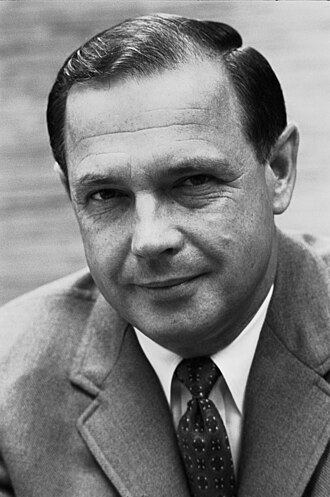
Alexander P. Butterfield served as Deputy Assistant to President Nixon from January 1969 to March 1973, a role in which he oversaw the installation and operation of the secret White House taping system. In March 1973, he transitioned out of the White House to become the Administrator of the Federal Aviation Administration (FAA). While serving as FAA Administrator in July 1973, Butterfield famously testified before the Senate Watergate Committee and publicly revealed the existence of the taping system he had previously managed.
President Nixon and Alexander P. Butterfield met to discuss the technical operation and maintenance of the White House taping system. The discussion focused on the practical challenges of monitoring recordings in the Oval Office and the Cabinet Room, as well as the limited group of personnel privy to the system's existence, including H.R. Haldeman and the Secret Service. The dialogue confirmed the operational status of the equipment and established expectations for the ongoing management of the recording process.
President Nixon and his Cabinet met to discuss the ongoing military operations in Indochina and the development of the administration's national health reform agenda. Regarding the war, officials reviewed the progress of South Vietnamese incursions into Laos and Cambodia, noting that the strategy was successfully disrupting enemy supply lines while shifting the burden of ground operations away from American forces. The conversation then transitioned to a detailed proposal from Secretary of Health, Education, and Welfare Elliot Richardson regarding healthcare reform, with the group debating the costs, tax implications, and administrative feasibility of implementing Health Maintenance Organizations (HMOs) and national health insurance standards.
President Nixon met with H. R. Haldeman and other staff to review administrative procedures, including the structure of Cabinet meetings and the reduction of attendees to improve efficiency. The discussion covered logistical planning for upcoming events, such as an overseas trip involving high-level officials and their spouses, as well as adjustments to the President's daily and weekly scheduling. Additionally, the group addressed the management of press-related responsibilities and the distribution of news summaries to the President.
President Nixon met with John Ehrlichman and Alexander Butterfield to address internal disagreements regarding economic forecasts provided by the Commerce Department. The discussion centered on aligning departmental output with administration messaging and ensuring cooperation from the American business community. Nixon emphasized the need to combat unfavorable media narratives and maintain strict control over the administration’s economic platform.
President Nixon and H. R. Haldeman met to discuss administration messaging strategies, specifically focusing on the President’s press conferences and public relations efforts regarding the Vietnam War and foreign policy. The conversation included a review of media coverage and the performance of key cabinet members like John Connally and Henry Kissinger. Alexander P. Butterfield briefly joined the meeting to coordinate logistics for the upcoming visit of Italian Prime Minister Emilio Colombo and a White House event for Irish Prime Minister Jack Lynch, during which the President reasserted his authority over guest list approvals.
President Richard M. Nixon met with Deputy Assistant to the President Alexander P. Butterfield in the Oval Office to discuss administrative logistics. The brief meeting centered on a specific request initiated by the President, although details of the subject matter remain undocumented due to the lack of a transcript. The interaction concluded with Butterfield departing the office shortly thereafter.
President Nixon and Alexander P. Butterfield met to coordinate the President's upcoming schedule. The primary focus of the brief discussion was the preparation and planning for the dedication speech for the Woodrow Wilson International Center for Scholars. No major policy developments occurred, as the conversation remained strictly administrative regarding presidential appearances.
President Nixon met with H. R. Haldeman, Alexander Butterfield, and Ron Ziegler to strategize on public relations, specifically focusing on the delivery and impact of the President's upcoming speeches, including an address at the Woodrow Wilson International Center for Scholars. The participants discussed the efficacy of shorter, anecdote-driven speeches over traditional policy-heavy addresses to better appeal to television audiences and improve press coverage. Nixon and his advisors also debated the best tactics for handling press conferences and managing the President's public image to ensure his messaging remained distinct from partisan political bickering.
President Nixon met with Alexander P. Butterfield to review and finalize the President's upcoming daily schedule. The discussion centered on coordinating specific appointments with key administration officials, including George P. Shultz, Paul W. McCracken, and Peter G. Peterson. No major policy decisions were recorded during this brief administrative briefing.
President Nixon met with Alexander P. Butterfield to coordinate the President's schedule during the upcoming Open Door Hour. The discussion centered on managing appointments and logistics for scheduled photography sessions with Oliver F. “Ollie” Atkins. No major policy decisions were reached, as the meeting served primarily for administrative briefing and routine calendar oversight.
President Nixon met with John R. Brown, III, and his wife to express appreciation for Brown’s service on the White House staff. The conversation touched upon Brown’s transition to a new position at the Koppers Company and the President’s personal recollections of a wartime contract involving the firm. The meeting concluded with the capture of a commemorative photograph by the White House photographer.
President Nixon consulted with various staff members regarding administrative matters and staffing inquiries. The primary focus of the discussion involved evaluating the professional background and political reliability of Joseph E. Parker, a Washington insider with extensive experience in Congress and agricultural policy. Nixon sought to assess Parker's suitability for a potential role, specifically noting his Democratic affiliation and his reputation for being savvy on Capitol Hill.
President Nixon met with H.R. Haldeman and various staff members, including Peter Flanigan, Henry Kissinger, and John Ehrlichman, to deliberate on high-level personnel appointments, government reorganization, and legislative strategy. A primary focus was identifying a strong, business-oriented candidate for an ambassadorial role to navigate international economic negotiations and counter State Department bureaucracy. The group also discussed managing the President’s public image regarding economic policy, the Alaska pipeline, and Vietnam, while addressing the need to discipline administration officials who publicly diverged from official policy. The President emphasized a preference for direct, high-level policy control and instructed his staff to bolster communication efforts and strengthen the administration’s political messaging.
President Nixon met with H.R. Haldeman and Alexander Butterfield to discuss White House public relations strategies, including the coordination of scheduling for the President and First Lady Pat Nixon. The discussion emphasized the need to avoid overlapping events and focused on improving media coverage for administration initiatives, such as outreach to Black communities and upcoming policy messages on education and revenue sharing. Additionally, they reviewed recent press reactions to the situation in Laos and discussed potential future media appearances, including a possible educational television program on narcotics.
President Nixon met with Alexander P. Butterfield to review and coordinate the logistical arrangements for upcoming presidential meetings. The discussion focused on operational security and the specific physical setup of the meeting space to ensure it met the President’s requirements. The brief exchange served to confirm that necessary preparations were being handled according to Nixon's directives.
President Nixon and Alexander P. Butterfield met to coordinate the details of the President’s upcoming daily schedule, specifically focusing on appointments with businessmen and James Udall. The discussion included logistical adjustments to the Oval Office seating arrangements to improve audio recording quality for the taping system. Butterfield also provided a brief update regarding a reminder for the President to address matters concerning the Disabled American Veterans.
President Nixon and Alexander P. Butterfield coordinate logistics for an upcoming formal dinner and an associated medal ceremony for the Apollo 14 astronauts. They deliberate on event details, including the seating arrangements, the omission of special entertainment, and the use of round tables to facilitate the presentations. Nixon approves incorporating the astronaut medal ceremony into the dinner program to enhance the evening's proceedings.
President Nixon and Alexander P. Butterfield discussed the handling of marked-up news summaries, specifically regarding the President's personal annotations and feedback. The conversation focused on integrating these presidential comments into forthcoming economic briefings involving John B. Connally, Paul W. McCracken, and George P. Shultz. Nixon emphasized the importance of ensuring these insights were conveyed during relevant meetings, including an afternoon session concerning the trucking industry.
President Nixon and Alexander P. Butterfield discussed the scheduling of upcoming meetings during the President's designated "open hour." Nixon reviewed a list of potential visitors, including John R. Williams, Jr. and John B. Waters, Jr., and instructed Butterfield to vet the appointments to ensure they added value. The President ultimately decided to limit the number of attendees to keep the meetings productive and focused.
President Nixon and H. R. Haldeman convened with senior advisors and staff to coordinate administrative messaging on foreign trade and economic policy, with a focus on enforcing stricter discipline among cabinet officers. The President also consulted Henry Kissinger on national security matters, specifically seeking to navigate the ongoing friction between Kissinger and Secretary of State William P. Rogers while managing the sensitive public relations aspects of the Vietnam War and the Laotian operation. Additionally, the President issued directives regarding internal staff management and requested an investigation into a recent security leak concerning the Strategic Arms Limitation Talks (SALT).
President Nixon and Alexander P. Butterfield discussed the logistical arrangements for upcoming White House entertainment featuring the group Up With People and comedian Bob Hope. The President outlined his preferences for the program flow, specifically regarding the timing of his own stage appearances and the formal introductions of the performers. The conversation served to clarify the President's public engagement expectations to ensure the event proceeded according to his desired schedule.
President Nixon met with Alexander P. Butterfield and Stephen B. Bull in the Oval Office to coordinate administrative logistics regarding presidential scheduling and document handling. The discussion focused on managing the President's immediate workflow and the disposal of specific materials. The participants reached an informal consensus on these logistical arrangements before concluding the brief meeting.
President Nixon met with Alexander P. Butterfield to confirm the logistics for an evening engagement. The pair briefly coordinated the scheduling for a briefing, identified as a 'CD,' set for 6:00 p.m. The meeting concluded once the timeline for this appointment was established.
President Nixon met with Alexander P. Butterfield to discuss the management of the President's daily schedule. The conversation focused on logistics and arrangements for upcoming appointments and administrative affairs. No specific policy decisions were finalized during this brief exchange regarding White House operations.
President Nixon and H.R. Haldeman met with several aides and officials, including Harry Dent and Robert Finch, to strategize on public relations, political outreach, and the upcoming 1972 campaign. The discussion covered the President's scheduled travel and appearances, the necessity of carefully managing his time and public messaging, and the ongoing administrative handling of internal personnel issues, specifically the dissenting foreign service officers. They also touched upon foreign policy communications, the importance of maintaining control over official messaging, and the logistical organization of White House workspaces and executive meetings.
President Nixon met with his senior staff to address several pressing administrative and political matters, primarily focusing on the South Vietnamese military operation in Laos and strategies for managing press criticism of the war. Nixon and his advisors discussed the need to report progress on the operation without overpromising, while also weighing whether to send General Alexander Haig to Vietnam to provide an independent assessment of the ground situation. Additionally, the President reviewed his recent engagement with Republican governors and considered whether to make a brief appearance at a White House meeting with Black leaders to maintain goodwill without becoming entangled in policy debates.
President Nixon, H. R. Haldeman, and Alexander Butterfield coordinate logistics regarding an exhibit of Black art from Tuskegee currently on display at the White House. The participants discuss potential tours for school children and the presentation of specific presidential gifts, such as bowls and cup lids, to visitors. Nixon directs the staff to ensure the presentation is handled effectively during his brief appearance with the group.
President Nixon and Alexander Butterfield met to coordinate the logistics for an upcoming series of photo opportunities with visitors, including Thomas and Glenda Kleppe and Judge George Renercomb. The President provided specific instructions on the positioning of guests within the Oval Office to ensure the process remained efficient and brief. Nixon emphasized the need for a rapid turnover to minimize the duration of the sessions.
President Nixon met with Alexander P. Butterfield to finalize arrangements for an upcoming meeting with Representative Joe D. Waggonner, Jr. and J. M. Menefee. The President instructed Butterfield to proceed with the scheduling of these individuals. This brief discussion focused exclusively on coordinating the logistics of the President’s official calendar.
President Nixon and H. R. Haldeman discuss strategies for managing the President's public image, presidential schedule, and press relations. Key topics include handling potential conflicts regarding Vice President Agnew's attendance at the Gridiron Club, coordinating future public events like an agricultural fair at the White House, and streamlining the President's public speaking engagements to improve impact. Nixon emphasizes the importance of repeating key rhetorical themes, such as his 'generation of peace' messaging, and expresses a preference for utilizing radio addresses to reach the public efficiently without the logistical burdens of televised appearances.
President Nixon held a brief, one-minute meeting with his Deputy Assistant, Alexander P. Butterfield, in the Oval Office. While the recording does not contain substantive dialogue or actionable directives, it documents a routine administrative interaction between the President and his aide. The meeting concluded immediately, leaving no significant policy decisions or developments on the record.
President Nixon, H.R. Haldeman, and several staff members met to discuss administrative scheduling, public relations strategies, and domestic political polling. The President emphasized a preference for radio over television for addressing the public, citing its effectiveness for targeted messaging and avoiding excessive media scrutiny. Additionally, they reviewed recent polling data regarding Congress and discussed personnel arrangements, including the roles of Bryce Harlow and Donald Rumsfeld in managing intergovernmental relations.
President Nixon met with his senior national security and military advisors, including Henry Kissinger, Melvin Laird, and Admiral Thomas Moorer, to receive an update on the ongoing Lam Son 719 operation in Laos. The discussion focused on the military situation on the ground, the effectiveness of South Vietnamese forces, and strategies to manage press coverage regarding the conflict. Nixon emphasized the importance of maintaining a unified administration message and advised his team to treat the press as an adversarial force rather than providing direct, vulnerable answers to speculative inquiries.
President Nixon met with his senior staff and advisors to discuss communication strategies for the administration's policy achievements and historical outreach. The group explored ways to better leverage the President's personal historical expertise, such as his recent presentation on John Quincy Adams, to improve public perception through televised forums rather than relying on the mainstream press. Nixon emphasized the need to bypass the press corps by speaking directly to key demographics, including the elderly and youth, while instructing his staff to maintain stricter control over who is permitted to discuss substantive policy on television.
President Nixon and Alexander P. Butterfield held a brief administrative meeting to coordinate the President's upcoming schedule and review recent events. They touched upon Secretary of State William P. Rogers' previous phone call regarding a March 1 dinner and discussed Attorney General John N. Mitchell’s recent press conference. Press Secretary Ronald L. Ziegler was also noted in the context of managing these logistical and media-related items.
President Nixon and Alexander P. Butterfield met to coordinate the President's upcoming schedule and administrative preparations. The discussion focused on logistical arrangements regarding meetings with astronauts, a visit to the National Aquarium, and the preparation of briefing materials for a presidential press conference. Butterfield also updated the President on coordination efforts with Ronald Ziegler and Patrick Buchanan regarding press deadlines.
President Nixon met with Henry Kissinger, Alexander Haig, William Rogers, Melvin Laird, Admiral Thomas Moorer, and Richard Helms to coordinate strategy following the President's March 4, 1971, press conference. The discussion focused on maintaining public and political momentum for the ongoing Vietnamization effort and the military operations in Laos (Lam Son), specifically addressing potential responses to North Vietnamese missile fire and troop movements. Nixon emphasized the necessity of success in Southeast Asia to maintain American global credibility, while the participants reviewed intelligence on enemy capabilities and planned upcoming Congressional testimony and media appearances to manage the narrative surrounding the war.
President Nixon met with Alexander P. Butterfield and later spoke by phone with Senator John C. Stennis to discuss the public and political reception of the President's March 4, 1971, press conference. The participants focused on the effectiveness of the President's performance in defending the military operation in Laos and managing negative media coverage. They agreed on the importance of maintaining a firm stance regarding the Vietnam War despite unfavorable public opinion polls. Additionally, the President arranged for the dissemination of a private letter to British Prime Minister Edward Heath and discussed scheduling a family portrait session.
President Nixon met with his key economic advisors—John Connally, Arthur Burns, George Shultz, and Paul McCracken—to discuss urgent financial matters and the administration's public messaging strategy. The conversation covered the potential failure of the Lockheed-Rolls-Royce deal, the stability of the DuPont brokerage firm, and rising pressure to increase milk price supports for political leverage. Throughout the meeting, Nixon emphasized the need for internal discipline, a unified public stance on economic policy, and the projection of confidence to stabilize the markets and improve public perception.
President Nixon met with his senior advisors, including H. R. Haldeman and Henry Kissinger, to review administrative priorities following his March 4, 1971, press conference. The discussion focused on managing public and media reactions to the Vietnam War and Laos operations, as well as addressing ongoing Middle East diplomatic developments. Additionally, Kissinger updated the President on his efforts to challenge anti-administration sentiment among the academic and policy "establishment" during a recent appearance at the Brookings Institution.
President Nixon and Alexander P. Butterfield met to coordinate the President's upcoming schedule and administrative engagements. The discussion focused on securing time for meetings with Admiral Thomas H. Moorer and National Security Advisor Henry A. Kissinger. This brief exchange served to finalize the logistical arrangements for these high-level national security consultations.
President Nixon and Alexander P. Butterfield met to coordinate the delivery of two drafted speeches prepared by William Safire. Nixon requested that both documents be sent to his office for immediate review. The pair specifically discussed the status of a speech scheduled for an upcoming engagement in Newport to ensure its completion and availability.
President Nixon and Alexander P. Butterfield met to briefly review the President’s daily schedule and upcoming obligations. The discussion focused on coordinating meetings with Republican Congressional leadership, cabinet members George P. Shultz and Peter G. Peterson, and potential outreach to Daniel H. Kuykendall. The primary action items involved clarifying the timing and logistical arrangements for these various administrative appointments and communications.
President Nixon met with H. R. Haldeman and Alexander Butterfield to discuss administration strategy, specifically focusing on how to effectively communicate the President’s leadership to the public. The discussion emphasized that domestic policy initiatives and specific issues like the Vietnam War carry less political weight than the perception of Nixon’s personal character and leadership qualities. Consequently, Nixon and Haldeman determined that they must adopt a more aggressive, strategic approach to dismantle the credibility of political opponents and improve the administration’s public relations efforts.
President Nixon met with Alexander P. Butterfield in the Oval Office to coordinate the President's daily agenda. The primary focus of the discussion was the scheduling of a meeting with speechwriter William L. Safire. No further substantive policy matters were recorded during this brief administrative briefing.
President Nixon met with William Safire to refine a draft of an upcoming speech on law enforcement, focusing on themes of judicial reform, respect for the law, and the appropriate tone for addressing national concerns. The discussion included adjustments to language regarding radicalism and the legal system, as well as the President’s stance on legal services for the poor. Following this, Alexander Butterfield joined to finalize the logistics and procedure for a scheduled signing ceremony regarding revenue sharing for rural community development.
President Nixon met with his senior staff, including H. R. Haldeman, Henry Kissinger, and Ronald Ziegler, to manage the administration's public relations, press strategy, and foreign policy narrative. The discussion focused heavily on minimizing negative press coverage regarding the Vietnam War, the Laos operation, and a false report involving NASA nominee James C. Fletcher and the ABM program. Nixon directed his staff to aggressively refute inaccuracies in the press while preparing for upcoming media appearances, emphasizing a need to maintain an authoritative tone and avoid defensive posturing.
President Nixon met with various staff members and advisors to refine the administration's political and legislative strategy, specifically regarding the textile quota issue and relations with key Congressional leaders like Wilbur Mills and John Byrnes. The President finalized plans to issue a statement on textile legislation while balancing pressure from the industry against the strategic risks of legislative entanglement. Additionally, the President discussed methods for managing Republican Congressional relations through targeted meetings and evaluated strategies to counter negative media coverage through the use of news tapes.
President Nixon and Secretary of the Treasury John Connally met to discuss pressing economic and administrative issues, primarily the potential government loan guarantees required to prevent the financial collapse of the Lockheed Corporation. They also addressed the ongoing DuPont brokerage case and the need for internal reforms, including the potential for salary reductions among affected stakeholders. Nixon instructed Connally to coordinate with David Packard and others to develop a strategy for seeking Congressional authorization to provide the necessary financial stability for Lockheed.
President Nixon met with Alexander P. Butterfield to coordinate the logistics of his upcoming schedule, specifically regarding appointments with George P. Shultz and John B. Connally. The brief discussion focused on administrative management of these high-level meetings. No major policy decisions were reached during this short interaction.
President Nixon met with Alexander P. Butterfield and unidentified individuals for a brief discussion regarding the management of administrative interruptions. The participants touched upon the identification of unknown objects before the President signaled his intent to implement specific protocols for managing disruptions. This interaction served to coordinate the flow of office activities under the President's direction.
President Nixon and Alexander P. Butterfield met in the Oval Office to review administrative matters, specifically focusing on the President's upcoming schedule and the selection of official photographs. The discussion centered on technical details regarding the composition of these photographs, including facial expressions, camera angles, and focus. No significant policy decisions were made during this brief administrative session.
President Nixon met with Alexander Butterfield and Rose Mary Woods to finalize logistical arrangements for the upcoming visit of Irish Prime Minister Jack Lynch and his wife. The participants coordinated the protocol for arrival ceremonies, receiving lines, and social events in the Yellow Oval Room. Additionally, Nixon discussed the agenda for an upcoming Cabinet meeting focused on foreign trip reports and revenue sharing, and reviewed scheduling details for a dinner hosted by Vice President Agnew.
President Nixon met with Alexander P. Butterfield in the Oval Office to review and process administrative documents requiring presidential authorization. The brief interaction served as a routine procedural session for signing official paperwork. The meeting concluded immediately upon the completion of these administrative duties.
President Nixon and Henry Kissinger met to discuss the status of Strategic Arms Limitation Talks (SALT) with the Soviet Union, specifically navigating Soviet proposals regarding the sequencing of defensive versus offensive missile negotiations. The discussion also covered the military situation in Vietnam, with Nixon emphasizing the need to communicate the success of operations along the Ho Chi Minh Trail to the press to counter rising domestic isolationism. Alexander P. Butterfield briefly joined the meeting to address administrative items, including the President’s schedule and documents requiring his signature.
President Nixon and H. R. Haldeman met to discuss scheduling priorities and strategies to enhance the President's public image. The conversation centered on managing access to the President for key advisors like John Mitchell and John Connally, as well as coordinating media efforts and staffing changes involving the Office of Economic Opportunity. Nixon expressed a preference for maintaining a calculated political posture, noting that while the administration was currently facing "erosion" rather than direct attack, they would reserve aggressive tactics for later in the year to improve their standing.
President Nixon and Treasury Secretary John Connally discussed administrative strategies for managing the economy, specifically regarding the financial stability of Lockheed and the political implications of Department of Justice actions against banks for political contributions. They deliberated on how to handle Federal Reserve Chairman Arthur Burns, whose public testimony on wage, price, and fiscal policies had become a source of friction for the administration. Connally agreed to speak with Burns to establish boundaries for his testimony and to reassert the administration’s position on monetary supply and interest rates.
President Nixon met with his Cabinet and key staff to discuss the status of the administration's revenue sharing legislative agenda and receive briefings on various international developments. Administration officials reported on their outreach efforts to build public and Congressional support for revenue sharing while addressing opposition from labor and minority groups. Additionally, Cabinet members provided updates on their recent foreign travels, emphasizing the geopolitical successes of the Nixon Doctrine in Southeast Asia and the strengthening of international cooperation on transportation and environmental safety.
President Nixon met with John Ehrlichman and George Shultz to manage his public image regarding municipal relations and to coordinate domestic policy strategies. The participants discussed strategies for addressing criticisms from mayors concerning funding, plans to promote special revenue sharing, and the political challenges associated with Social Security legislation and the federal budget. They also evaluated potential administrative action items, including a planned visit to a California health facility to highlight health maintenance initiatives and preparations for an upcoming press conference.
President Nixon met with Alexander P. Butterfield in the Oval Office to review administrative matters, specifically focusing on the President's daily schedule and the signing of official documents. The discussion centered on the completion and timing of a pending statement, with the President expressing urgency in finalizing these logistical items. No major policy decisions were reached, as the brief exchange was primarily dedicated to managing immediate presidential paperwork.
President Nixon met with H.R. Haldeman and other staff to coordinate his upcoming public schedule, specifically addressing his attendance at Thomas E. Dewey's funeral and a planned meeting with mayors. They discussed the strategic necessity of balancing public appearances to bolster support among key constituencies, including the business community, while managing the logistical challenges of potential protests and scheduling pressures. Nixon decided to attend the Dewey funeral on a Saturday to avoid complications and emphasized the need for a disciplined, symbolic approach to his interactions with local government leaders and loyalist groups.
President Nixon and Alexander P. Butterfield met to discuss logistical preparations for an upcoming press briefing. The primary agenda item involved reviewing a draft of the President’s eulogy for civil rights leader Whitney M. Young, Jr. They evaluated the potential release of this document to the media as part of the briefing materials.
President Nixon and Alexander P. Butterfield held a brief morning meeting in the Oval Office to coordinate the President's daily schedule. The primary focus of the discussion concerned the inclusion of an unknown woman in the President's upcoming agenda. Following the brief logistical review, the meeting concluded immediately.
President Nixon and H. R. Haldeman met to discuss scheduling logistics, including upcoming funeral services for Thomas E. Dewey and Whitney M. Young, Jr., and the coordination of the President's public appearances. They reviewed negative press coverage surrounding the engagement of Tricia Nixon and analyzed staff communication, specifically expressing frustration over unauthorized leaks to journalists such as Hugh Sidey. Additionally, Nixon directed Haldeman to enforce stricter discipline among White House staff to prevent future leaks and maintain a controlled public image.
President Nixon met with Alexander P. Butterfield to coordinate logistical details regarding his travel to attend the funeral of Whitney M. Young, Jr. in Lexington, Kentucky. They specifically reviewed the flight schedule and addressed necessary adjustments to the travel itinerary to account for flight duration and time changes. This discussion ensured the President's arrival was properly synchronized with the funeral service schedule.
President Nixon met with H. R. Haldeman and Alexander Butterfield to coordinate the logistics for his attendance at Thomas E. Dewey's funeral and to prepare correspondence for female members of the press. The discussion also turned to the administration’s public relations strategy, with the President evaluating the effectiveness of staff members like Leonard Garment in managing media narratives. Nixon emphasized the need for a more persuasive, "bullshitting" approach to public relations to better compete in the political landscape.
President Nixon met with Alexander P. Butterfield in the Oval Office to address routine administrative tasks. The primary purpose of the meeting was for the President to review and sign various official documents prepared by staff. No major policy discussions occurred during this brief interaction, which concluded with Butterfield departing shortly thereafter.
President Nixon met with Alexander P. Butterfield to review his upcoming official schedule, including logistics for the National Alliance of Businessmen reception, a stag dinner for Maurice Stans, and an event for Reverend Akaka of Hawaii. They discussed whether to utilize receiving lines based on the President's familiarity with the guests and finalized dress codes for upcoming diplomatic dinners. Additionally, the President consulted briefly with John Ehrlichman regarding potential political strategies for the Supersonic Transport (SST) and considered potential short-term travel plans for First Lady Pat Nixon ahead of their daughter Tricia's wedding.
President Nixon met with his senior advisors, including H.R. Haldeman and John Ehrlichman, to discuss domestic economic policy and management of cabinet officials. The discussion focused on addressing maneuvering by cabinet members, such as Arthur Burns and Maurice Stans, who were attempting to bypass the established Domestic Council system regarding economic issues. Nixon decided that these matters should be handled exclusively through the formal Domestic Council process rather than through uncoordinated committee meetings, effectively asserting control over his economic advisors and cabinet structure.
President Nixon and Alexander P. Butterfield met to briefly review administrative logistics regarding the President’s schedule. The discussion focused on the current status of the presidential helicopter and logistics for an upcoming meeting with Arthur F. Burns. No major policy decisions were made during this short briefing.
President Nixon met with H.R. Haldeman and John Ehrlichman to discuss personnel and administrative strategy, specifically regarding the contentious appointment of an Under Secretary of the Interior. They evaluated the political risks of defying Senator Gordon Allott's preferences while navigating the administration’s broader economic objectives and cabinet management. To reduce social friction and administrative inefficiency, the President decided to reduce the frequency of cabinet meetings to a structured hour every two weeks and to shift toward engaging sub-cabinet members in social functions.
President Nixon and Alexander P. Butterfield held a brief, informal meeting in the Oval Office to discuss the handling of an unspecified item. The exchange focused on the logistics of securing the object within a bag before Butterfield’s departure. No further policy or administrative developments were recorded during this brief interaction.
President Nixon met with Federal Reserve Chairman Arthur F. Burns to discuss the state of the national economy and manage public perception of their working relationship. Nixon emphasized the importance of maintaining a united front to avoid fueling media speculation regarding potential policy disagreements, while Burns outlined his concerns over a looming international monetary crisis and interest rate strategies. The two agreed to maintain close, private coordination on economic policy while keeping their options open regarding further fiscal stimulus until April economic data became available.
President Nixon, H. R. Haldeman, and Alexander Butterfield met to discuss the investigation into recent U.S. Capitol bombings and broader concerns regarding the President's public approval ratings. Haldeman reported that Attorney General John Mitchell advised against immediate arrests of suspects to allow for continued surveillance and the gathering of better evidence, despite pressure from J. Edgar Hoover to proceed. The group also evaluated the impact of the Vietnam War and recent military operations on the President’s political credibility, as well as the effectiveness of the President's recent media appearances.
President Nixon and Alexander P. Butterfield held a brief, one-minute meeting in the Oval Office to address a single, unidentified item. The discussion was unintelligible and concluded abruptly before any recorded action items could be established. Due to the limited duration and lack of audible content, the specific purpose of the consultation remains documented only as a brief administrative interaction.
President Nixon and H. R. Haldeman met to coordinate White House strategy on several pressing political issues, including securing campaign contributions from the dairy industry and lobbying senators for the upcoming vote on the Supersonic Transport (SST). They also discussed arrangements for an upcoming meeting with black leadership regarding social policy and reviewed the fallout from the President's recent interview with Howard K. Smith. Throughout the discussion, the pair balanced legislative priorities with public relations concerns while maintaining their daily executive schedule.
President Nixon, H. R. Haldeman, and Henry Kissinger met to evaluate the military outcomes and public relations strategy surrounding Operation Lam Son 719 in Laos. The discussion focused on framing the operation as a net tactical success while addressing concerns regarding military leadership, specifically General Creighton Abrams’ performance and command decisions. Nixon and Kissinger also coordinated plans for an upcoming April 7th presidential speech, which was intended to bolster public support and leverage the momentum from Nixon's recent television appearance.
President Nixon met with his Deputy Assistant Alexander P. Butterfield in the Oval Office to address administrative matters. The brief session focused on the review and signing of official documents submitted by John D. Ehrlichman. The meeting concluded shortly thereafter with the completion of these routine executive tasks.
President Nixon, Henry Kissinger, and H. R. Haldeman met to evaluate the public reception of the President's recent television interview and to coordinate a unified public relations strategy. The group discussed utilizing Cabinet members and supportive Senators to amplify the administration's Vietnam policy, particularly in response to critics and the Harvard faculty petition. Additionally, they reviewed internal polling data regarding the interview's impact and planned future messaging efforts, including potential rebroadcasts and coordinated speeches.
President Nixon met with Alexander P. Butterfield to review the President’s upcoming schedule and administrative priorities. The discussion focused on coordinating a meeting with John A. Scali and arranging the logistics for a forthcoming signing ceremony. The brief interaction concluded with the finalization of these immediate ceremonial and professional engagements.
President Nixon met with representatives of the International Military Sports Council, led by Admiral Aldo Massarini, to accept a commemorative medal and discuss the organization's contributions to international relations. The meeting featured a brief photo opportunity with the press to highlight the role of military personnel in fostering global peace through athletic competition. Following the delegation's departure, Nixon consulted with Alexander Butterfield regarding the upcoming signing of a proclamation for USO Day.
President Nixon met with Alexander P. Butterfield to coordinate logistical details regarding a scheduled performance by the Creston High School Choir. The discussion focused on confirming the status of the group and finalizing the protocol for their appearance at the White House. The two briefly reviewed the agenda, which included a performance of two songs by the choir.
President Nixon met with Alexander P. Butterfield to coordinate a brief visit from the Creston High School Choir. The discussion focused on the logistics of the choir's tour of the Oval Office and the inclusion of their musical performance in the President’s schedule. Nixon provided final approval for the group to enter the office for their viewing and presentation.
President Nixon met with Gerald R. Ford and Alexander P. Butterfield in the Oval Office for a brief, informal encounter. The discussion was limited to pleasantries and casual observations regarding the weather. No substantive policy matters or official administrative decisions were recorded during this four-minute interaction.
President Nixon met with Alexander P. Butterfield to coordinate logistical details regarding upcoming White House meetings and events. They discussed scheduling for Charles W. Colson and John A. Scali, specifically addressing the appropriate location for their discussion. Additionally, the brief session touched upon arrangements for the Creston High School Choir’s tour and the handling of associated gifts.
President Nixon and Alexander P. Butterfield met in the Oval Office to review the President’s upcoming daily schedule. The conversation focused on logistical planning and the coordination of executive commitments. No specific policy decisions or significant developments were recorded during this brief encounter before the two departed.
President Nixon and his Cabinet met to discuss the ongoing challenge of inflation and rising construction costs, focusing on the administration's strategic options for economic stabilization. Dr. Paul McCracken reviewed current inflationary trends and labor market data, outlining a spectrum of potential responses ranging from maintaining current fiscal policies and targeted interventions to implementing more aggressive measures like wage and price controls. The meeting served as a forum to evaluate the efficacy of various regulatory mechanisms, such as the National Commission on Productivity and the suspension of the Davis-Bacon Act, while weighing the political and practical risks of further government intervention in the economy.
President Nixon met with Stephen Bull and Alexander Butterfield to review and critique the logistical arrangements for an upcoming White House Conference on Drugs involving religious leaders. Expressing frustration with the proposed schedule, Nixon questioned the feasibility of moving attendees between the White House theater and the Oval Office within the allotted time frame. Ultimately, the President rejected the rigid planning and opted for a more spontaneous approach to his interaction with the guests.
President Nixon, assisted by John D. Ehrlichman and Alexander P. Butterfield, initiated a telephone call to Secretary of Agriculture Clifford M. Hardin. The primary purpose of the contact was to facilitate direct communication with the Secretary. No further substantive policy discussions were captured in this brief exchange.
President Nixon and Alexander P. Butterfield reviewed final preparations for an upcoming formal white-tie dinner. They coordinated the protocol for the evening, specifically confirming that the Dean of the Diplomatic Corps would be first in the receiving line and would offer brief remarks in response to the President. The event, supported by the State Department and William B. Macomber, Jr., was structured to follow the precedent set by a previous dinner for African diplomats.
President Nixon and Alexander P. Butterfield coordinate the logistics for an upcoming evening social event. The discussion focuses on the President's desire to maintain a sober, low-key appearance while ensuring a specific guest receives an opportunity to respond to previous comments. They finalize plans for a brief public appearance involving music and a crowd to conclude the engagement.
President Nixon, John Ehrlichman, and Arthur Burns held this discussion to coordinate economic strategy and review the administration's political management of upcoming challenges. They focused on strengthening the partnership between Burns and John Connally, particularly regarding balance-of-payments policies, interest rates, and the political handling of potential steel industry inflation. Nixon also sought Burns’ perspective on international concerns, including the Berlin negotiations and German political stability, before Burns departed for a diplomatic trip to Europe.
President Nixon and Alexander P. Butterfield met briefly to discuss routine administrative matters, including upcoming scheduling for meetings with Robert D. Murphy and Henry A. Kissinger. They reviewed travel updates regarding Butterfield’s recent trip and addressed the processing of pending materials awaiting the President's signature. The discussion concluded with the handling of various documents and a brief confirmation of an Air Force promotion.
President Nixon hosted Alexander P. Butterfield, Jon M. Huntsman, and David Haight along with their spouses for a brief, informal social meeting in the Oval Office. The participants engaged in light conversation regarding weather, local dining, and Stanford University before transitioning into a ceremonial photo session with White House photographer Ollie Atkins. During the exchange, the President presented the guests with official cufflinks as commemorative gifts before concluding the visit.
President Nixon met with Alexander P. Butterfield to coordinate administrative logistics regarding an upcoming meeting with newspaper editors. The discussion focused on the role of Director of Communications Herbert G. Klein in managing these press relations. The participants evaluated the necessity of formal procedures for the event, ultimately determining that no further action was required at that time.
President Nixon and H. R. Haldeman debriefed the President's appearance before the American Society of Newspaper Editors, focusing on the effectiveness of his responses regarding Vietnam, J. Edgar Hoover, and foreign relations with the People's Republic of China. The discussion also addressed the technical presentation of the event, including the use of a rostrum and the impact of the President's speaking style. Additionally, the participants coordinated preparations for an upcoming meeting involving Henry Kissinger and John A. Scali to further discuss diplomatic outreach to China.
President Nixon met with H. R. Haldeman, Henry Kissinger, and other staff members to discuss political messaging, media relations, and administrative strategy. A primary focus was neutralizing the political threat posed by Congressman Paul McCloskey, whose public dissent regarding U.S. operations in Southeast Asia and accusations of misconduct in Vietnam were causing friction. The group agreed to handle such dissent by having Congressional allies—rather than the White House—directly refute these claims to avoid elevating the critic's profile. Additionally, the President reviewed his public schedule, emphasizing the need to maintain a composed, energetic appearance to manage perceptions of his stamina and leadership.
President Richard Nixon met with Alexander P. Butterfield in the Oval Office for a brief four-minute session. The primary purpose of the meeting was for the President to complete the signing of various administrative documents. No major policy discussions or significant political developments were recorded during this brief administrative encounter.
President Nixon met with Stephen B. Bull and Alexander P. Butterfield to coordinate scheduling logistics and administrative briefings. The discussion centered on upcoming meetings with Republican senators, specifically regarding a planned session in the Executive Office Building the following day. Additionally, the group reviewed the status of Henry Kissinger’s schedule and relevant briefings involving John L. McClellan.
Alexander P. Butterfield met with a Secret Service agent in the Oval Office to coordinate logistics regarding the President’s location and daily schedule. The discussion centered on the President's movements and the duration of his absence from the Cabinet Room. The brief exchange functioned primarily as a routine administrative coordination between White House staff and security personnel.