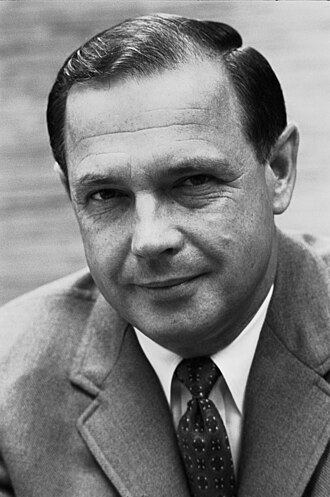
Butterfield, Alexander P.
Alexander P. Butterfield served as Deputy Assistant to President Nixon from January 1969 to March 1973, a role in which he oversaw the installation and operation of the secret White House taping system. In March 1973, he transitioned out of the White House to become the Administrator of the Federal Aviation Administration (FAA). While serving as FAA Administrator in July 1973, Butterfield famously testified before the Senate Watergate Committee and publicly revealed the existence of the taping system he had previously managed.
What Butterfield talks about on the tapes
Presidential scheduling 225White House administration 163Presidential schedule 158White House operations 153Public relations 133Vietnam War 113Logistics 83White House logistics 82Foreign Policy 75Henry Kissinger 66Economic policy 62Scheduling 59
Conversations (1,038)
— Page 5 of 11President Nixon met with Alexander P. Butterfield to coordinate preparations for the President's upcoming question-and-answer session at the Detroit Economic Club. The discussion specifically focused on the involvement of Treasury Secretary John B. Connally in the event. No major policy shifts were recorded, as the brief exchange was limited to logistical planning for the following day's engagement.
President Nixon met with Alexander P. Butterfield to coordinate adjustments to his official schedule and travel logistics. The discussion focused specifically on the timing and operational requirements for accessing the helicopter pad. This brief interaction served to finalize travel arrangements necessitated by changes to the President's upcoming itinerary.
President Nixon and Henry Kissinger met to finalize the strategic communications plan regarding the upcoming announcement of Kissinger’s trip to the People's Republic of China. The discussion focused on coordinating the announcement timing to maximize geopolitical advantage, particularly in managing the Soviet Union's reaction, while determining which technical details should be withheld for the President's subsequent press conference. They successfully aligned the schedule to build momentum and ensure that staff remained tight-lipped, allowing the administration to control the narrative surrounding the normalization of relations with China.
President Nixon and Alexander Butterfield coordinate the agenda for an upcoming Cabinet meeting scheduled for September 24, 1971. They specifically discuss Secretary of the Treasury John Connally’s role, agreeing that Connally should provide a brief statement regarding the U.S. economic position. The President decides to personally contact Connally to ensure the presentation remains concise, limiting the discussion to ten minutes.
President Nixon, Vice President Agnew, and members of his Cabinet met to coordinate a unified administration strategy ahead of critical International Monetary Fund (IMF) meetings and ongoing global trade negotiations. The discussion emphasized the necessity of maintaining the recently imposed 10% import surcharge and a firm bargaining stance to address the nation's economic balance of payments and reshape the international monetary system. Nixon and his advisors agreed that while foreign partners would likely criticize U.S. policy, maintaining domestic political support and correcting long-standing trade imbalances remained the administration's primary objective.
President Nixon met with Alexander Butterfield in the Oval Office to conduct a brief review of the President's upcoming daily schedule. The discussion focused on logistical coordination and the management of administrative appointments. No major policy decisions were reached during this short interaction.
President Nixon and Alexander P. Butterfield meet briefly to discuss a scheduling matter involving John Ehrlichman. The discussion centers on a specific communication or piece of correspondence, referred to as a "letter," and potential upcoming appointments. The participants conclude by exchanging brief thoughts on how to proceed with these administrative arrangements.
President Nixon consulted with H. R. Haldeman, Stephen Bull, and Alexander Butterfield regarding the logistics and messaging for his upcoming attendance at the National League of Families convention. The group discussed the political optics of the President's public schedule, specifically balancing his concern for POWs with his potential attendance at Justice Hugo Black's funeral. Additionally, Nixon reviewed a draft statement concerning the draft extension bill and expressed his personal disdain for the ideological leanings of some judicial philosophies.
President Richard M. Nixon met briefly with Deputy Assistant to the President Alexander P. Butterfield in the Oval Office. The primary purpose of this meeting was for the President to review and sign official administrative documents. No other substantive policy discussions were recorded during this brief encounter.
President Nixon and Henry Kissinger met to discuss diplomatic strategy, focusing on upcoming meetings with Soviet Foreign Minister Andrei Gromyko and the announcement of a planned presidential summit in the USSR. The conversation covered logistical arrangements for hosting Gromyko, including the use of the Roosevelt Map Room, and the framing of policy positions regarding a European Security Conference. Alexander P. Butterfield briefly joined the meeting to coordinate administrative details and document delivery for the scheduled diplomatic sessions.
President Nixon met with Alexander P. Butterfield in the Oval Office to review and sign official administrative documents. The brief encounter focused primarily on the processing of these pending items requiring the President's immediate attention. No further substantive policy discussions were recorded during this brief meeting.
Alexander P. Butterfield utilized the White House operator to place a call to Toni Sidley. The brief exchange primarily concerned the administrative task of arranging for Sidley to retrieve a specific item from Butterfield's office. The conversation successfully concluded with Sidley agreeing to collect the item.
President Nixon met with Alexander P. Butterfield to coordinate logistics regarding a forthcoming congressional vote. The discussion centered on scheduling and administrative support involving an unidentified secretary. The meeting concluded with preparations for the President’s imminent departure to a boat.
President Nixon met with Sir Alexander F. Douglas-Home, the Earl of Cromer, and Henry Kissinger to discuss the geopolitical landscape, specifically focusing on Vietnam, arms control negotiations with the USSR, and the situation in South Asia. The participants addressed the status of the Vietnam War, the impact of U.S. troop withdrawals, and the necessity of managing domestic political pressure and potential isolationism. Nixon also sought British cooperation regarding upcoming United Nations votes and provided updates on European security conferences and Middle East diplomatic efforts.
President Nixon met with his senior staff and economic advisers to finalize the rollout strategy for Phase II of his economic program. The discussion focused on establishing an effective, low-key announcement strategy for the upcoming wage and price controls, balancing the need for public cooperation with the desire to avoid the appearance of a crisis. Key decisions included keeping the address concise, maintaining a tone of confidence, and utilizing prime-time news slots to maximize reach while minimizing disruption to entertainment programming.
President Nixon met with Alexander P. Butterfield and Stephen B. Bull to coordinate the distribution of presidential gifts, including silver dollar coins, money clips, and Camp David jackets. The participants discussed inventory management and the logistics of providing these items to congressmen and attendees at upcoming campaign events. Nixon directed his staff to ensure efficient distribution of the gifts and touched upon his scheduling needs regarding upcoming meetings.
President Nixon met with Alexander P. Butterfield to review and coordinate the President's upcoming official schedule. The brief discussion focused on logistical oversight and ensuring the President's time remained under his own control. Butterfield's departure concluded the session, which served as a routine administrative check-in regarding the executive calendar.
President Nixon and H.R. Haldeman evaluated the strategic scheduling of a televised address, ultimately selecting 7:30 p.m. to maximize audience reach without disrupting prime-time entertainment. The discussion also addressed the nomination of Richard H. Poff, with Nixon reviewing efforts to bolster Poff's public image by highlighting his conservative credentials. Additionally, Nixon touched upon diplomatic concerns regarding the United Nations and the potential impact of forthcoming debates on the status of the People's Republic of China and Taiwan.
President Nixon instructed Alexander P. Butterfield to reschedule a planned Cabinet meeting from Friday to 4:30 p.m. on the following Tuesday. This adjustment was made specifically to accommodate the schedule of Treasury Secretary John Connally. Butterfield confirmed that he had already coordinated the change with Chief of Staff H.R. Haldeman.
President Nixon and Alexander P. Butterfield briefly discussed the rescheduling of an upcoming Cabinet meeting. The primary focus was confirming the shift of the session from Friday to Tuesday, the 30th. This conversation served as a logistical follow-up to a previous phone discussion regarding adjustments to the President's official calendar.
President Nixon met with Alexander Butterfield, Oliver Atkins, and Marjorie Acker to coordinate a photo opportunity intended for a Newsweek feature story. Nixon directed Atkins to capture candid images of him working on a speech to serve as the lead photograph for the upcoming press coverage. The brief meeting concluded once the necessary arrangements for the portrait session were finalized.
President Nixon and H. R. Haldeman met to review the public and media reception of the President's recent economic speech, concluding that the coverage across major television networks was unexpectedly positive. They discussed the administration's ongoing negotiations with labor leader George Meany regarding the structure of the Wage Board and the Cost of Living Council, with Nixon expressing frustration over Meany's opposition and considering whether to proceed without labor union cooperation. The conversation also touched upon logistical preparations for upcoming travel to West Virginia and the scheduling of events at Camp David for visitors.
President Nixon met with Alexander Butterfield to discuss the logistics of an upcoming engagement involving CIA Director Richard M. Helms. The brief exchange focused on coordinating the Director's return and ensuring the administration's readiness for a significant, unspecified event. The conversation emphasizes the President's reliance on Butterfield to manage the sensitivities and execution of this task.
President Nixon met with Stephen B. Bull and Alexander P. Butterfield to coordinate logistics for a scheduled appearance with college presidents. Butterfield provided a briefing regarding an event involving Dr. Jerome H. Jaffe and the students assembled at the South Portico. The participants finalized the sequence of movements to ensure the President was positioned to observe the group before his formal arrival.
President Nixon met with Italian Foreign Minister Aldo Moro and his delegation to discuss European foreign policy, the international role of the United States, and the upcoming United Nations vote concerning the representation of Taiwan and the People's Republic of China. Nixon emphasized the necessity of close cooperation among the world's major powers to ensure global stability, while acknowledging Italy's difficult domestic and international balancing act. The conversation also touched on Nixon's ongoing efforts regarding the Middle East and the importance of maintaining a unified, responsible front among Western allies.
President Nixon and Alexander P. Butterfield held a brief meeting in the Old Executive Office Building to conduct administrative business. Although the transcript is unavailable, the conversation was recorded as part of the White House taping system. The two men concluded their discussion and exited the office together after approximately two minutes.
President Nixon met with his Cabinet and key staff members to review the administration’s domestic and foreign policy priorities, primarily focusing on the economic transition to 'Phase II' and the announcement of a 1972 Soviet summit. Officials discussed the successful implementation of the wage-price freeze and the strategy for securing organized labor's cooperation on the newly formed Pay Board and Price Commission to curb inflation. Additionally, the President addressed the importance of linking economic policy to job growth through his pending tax proposals, while Secretary of State Rogers and the President emphasized that international diplomatic overtures toward the Soviet Union and China were part of a cohesive, long-term strategy for global peace.
President Nixon met with H.R. Haldeman and other staff members to coordinate various administrative tasks, including the logistics for his upcoming trip to the People's Republic of China, press management, and the vetting of Supreme Court nominees. A significant portion of the discussion focused on limiting the size of the accompanying press corps to ensure efficiency and control the narrative. Additionally, Nixon reviewed his upcoming schedule, debated the political strategy for managing the Republican Party's image, and discussed the appropriate protocol for social events and visitor interactions at the White House.
President Nixon and Alexander P. Butterfield held a brief meeting in the Oval Office to coordinate the President's upcoming daily agenda. The discussion focused on managing the President's schedule and the logistics of his appearances before specific groups. No significant policy decisions were recorded during this short administrative interaction.
President Nixon and Alexander P. Butterfield coordinate the logistics for the upcoming presentation of diplomatic credentials. They discuss refining the procedure to minimize the President's time commitment by transitioning from private meetings to simple, efficient handshakes. Nixon emphasizes that this adjustment should be handled discreetly to avoid the perception that he is deviating from established protocol or diminishing the importance of the guests.
President Nixon met with Alexander P. Butterfield to review and finalize an executive order. The brief discussion focused on administrative logistics regarding the President's schedule and official documentation. The meeting concluded with the President confirming the status of the order.
President Nixon and Alexander P. Butterfield discuss the personal acquisition of premium wines, focusing on specific vintages and bottle sizes to be purchased using the President's personal funds. Nixon requests a detailed price comparison and source information for these vintages, emphasizing his desire for fiscal oversight of the transaction. Additionally, the pair briefly reviews scheduling arrangements for upcoming meetings with James D. Hughes and Mayor Walter E. Washington.
President Nixon met with H. R. Haldeman and Charles Colson to discuss media relations, public opinion, and political strategy heading into the 1972 election cycle. The conversation focused on efforts to promote favorable literature, manage network coverage of the administration's foreign policy initiatives, and monitor the activities of political rivals like Edward M. Kennedy. The participants also evaluated the performance of Republican spokesmen and considered adjustments to the President's schedule to bolster public support for his economic and diplomatic agendas.
President Nixon met with Alexander P. Butterfield to review his upcoming official schedule and process various administrative documents requiring his signature. A significant portion of the discussion focused on the operational mechanics and implementation of the Autopen machine for executing presidential signatures. The meeting concluded after these routine logistical matters were addressed.
President Nixon and Alexander Butterfield discuss the necessity of requesting that an unnamed individual return an item to John N. Mitchell. The conversation centers on navigating the logistics and implications of this return. Ultimately, the President mandates that the individual be pressured to comply with this request.
President Nixon met with John B. Connally, Henry Kissinger, and Robert S. McNamara to discuss various administrative and foreign policy issues, including logistics for upcoming presidential travel and the management of press coverage. The conversation covered concerns regarding the size of the presidential entourage, particularly the number of military personnel, and criticized the press for sensationalist reporting regarding administration officials. The group also addressed economic matters, specifically the complexities of global expropriation of U.S. business interests and strategies for dealing with international financial institutions.
President Nixon met with his staff and Henry Kissinger to coordinate logistics and public relations strategies for his upcoming diplomatic trips to the People's Republic of China and the USSR. The discussion focused on managing international itineraries, advance team assignments, telecommunications infrastructure, and the extensive press corps requirements for these state visits. Additionally, the group addressed domestic personnel matters, including Supreme Court appointment contingencies and media coverage regarding the President's personal finances.
President Nixon met with Alexander P. Butterfield in the Oval Office to review and organize the President’s upcoming daily schedule. The discussion focused on logistical planning and the prioritization of official engagements. No major policy decisions were recorded during this administrative briefing.
President Nixon and Alexander P. Butterfield met to review the President’s upcoming schedule and administrative priorities. Key discussion points included the leadership agenda regarding Secretary of State William P. Rogers and logistical preparations for a state visit by Yugoslavian officials. The participants specifically focused on the planning of a state dinner, involving a directive to Rex W. Scouten regarding wine procurement and budgetary considerations.
President Nixon met with his personal secretary Rose Mary Woods and aide Alexander P. Butterfield to discuss administrative matters, including the handling of presidential correspondence to children. The group also addressed sensitive campaign financing issues, specifically involving a $200,000 contribution from Dwayne O. Andreas and the storage of those funds by Bebe Rebozo. Additionally, the President reviewed his schedule and touched upon the purchase of wine for the White House.
President Nixon and Alexander P. Butterfield discussed the strategic nuances of potential upcoming summitry and international diplomatic relations. Nixon emphasized his desire to visit the Soviet Union, citing the positive reception of his China policy by Russian media as a catalyst for potential progress. The conversation centered on leveraging this momentum to address key global issues, specifically European security, SALT negotiations, and force reduction in the Middle East.
President Nixon met with Rose Mary Woods to coordinate his scheduling and manage the logistics of upcoming White House social functions. The discussion focused on streamlining guest lists for formal dinners, specifically those involving foreign dignitaries like Josip Broz Tito, to minimize the President's personal burden of shaking hands with numerous attendees. Additionally, they reviewed potential ambassadorial appointments and campaign finance considerations regarding donor Cornelius V. Whitney.
President Nixon held a brief meeting with Alexander P. Butterfield regarding scheduling matters before speaking with Congressman Chet Holifield via telephone. During the call, Nixon expressed his personal gratitude to Holifield for his assistance in passing consumer protection legislation. The conversation concluded with a brief discussion concerning the recruitment of a suitable candidate for an unspecified vacancy.
President Nixon met with Alexander P. Butterfield in the Old Executive Office Building for a brief four-minute administrative consultation. While the specific substance of the discussion remains undocumented due to the lack of a transcript, the meeting served as a direct exchange between the President and his Deputy Assistant regarding ongoing White House operational matters. This interaction underscores the frequent, short-duration communication required to manage executive office logistics during this period.
President Nixon consulted with H. R. Haldeman, Frederic Malek, and Alexander Butterfield to discuss the selection process for upcoming Supreme Court nominations. The group deliberated on potential candidates, specifically focusing on the inclusion of qualified women for the vacancies. Nixon directed his staff to vet additional candidates from existing lists before coordinating further with Attorney General John Mitchell.
President Nixon met with Alexander Butterfield and H.R. Haldeman to handle administrative tasks, including the signing of a photograph for John R. Brown, III. The group primarily focused on planning a forthcoming White House dinner for Nobusuke Kishi, specifically debating guest list capacity in the family dining room. Nixon ultimately directed that the guest list be reduced to ensure a more intimate setting and instructed his staff to finalize the invitees for the Japanese delegation.
President Nixon met with Richard Moore, John Mitchell, and Alexander Butterfield to discuss the selection process for upcoming Supreme Court vacancies. Nixon expressed frustration with the American Bar Association's influence and affirmed his intention to bypass them to avoid leaks and public criticism of his nominees' ideologies. The group evaluated several candidates, including Lewis Powell, Howard Baker, William Rehnquist, and William French Smith, ultimately favoring a strategy to nominate highly qualified conservatives to preempt opposition. Additionally, the President discussed concerns regarding negative press coverage of his personal finances involving Charles Rebozo and strategized on managing political messaging regarding the Vietnam War and POW issues.
President Nixon met with Ruth Voss and representatives Edwin Etherington, James McLane, and Stanley Scott to discuss her volunteer initiatives in Cincinnati, particularly programs supporting local youth and community development. The conversation centered on the logistical and financial challenges of securing federal support through government agencies like ACTION. Nixon expressed interest in these volunteer efforts and provided directives to his staff to coordinate with administrative officials to address the project's funding needs.
President Nixon met with Alexander P. Butterfield to finalize logistical arrangements for upcoming White House state dinners. The discussion focused on coordinating event details for visiting dignitaries, including Nobusuke Kishi and Josip Broz Tito, as well as planning associated entertainment. The President specifically requested that the White House Communications Agency record the dinner honoring Kishi.
President Nixon met with Alexander P. Butterfield in the Old Executive Office Building to discuss a specific item requiring the President's attention. The brief three-minute encounter focused on the presentation of this administrative or policy-related matter. No further developments were recorded following the delivery of the item before Butterfield departed.
President Nixon met with various aides and technicians to prepare for and broadcast a televised national address, followed by a meeting with a group of Senators and staff to discuss his recent Supreme Court nominations. During the session, the President focused on the qualifications of his nominees, Lewis F. Powell and William H. Rehnquist, emphasizing the importance of the Supreme Court's role in the government. The conversation concluded with the President greeting and presenting gifts to the television, lighting, and sound crews who assisted with his broadcast.
President Nixon and Secretary of State William P. Rogers coordinate with U.S. Ambassador to Argentina John D. Lodge to secure a critical vote regarding the status of Taiwan at the United Nations. Nixon emphasizes the personal nature of the request, urging Lodge to meet immediately with Argentine President Alejandro Augustin Lanusse to pressure the country to support the U.S. position on the "important question" resolution. Both Nixon and Rogers stress that an Argentine vote in favor of this procedural motion is essential to prevent Taiwan's expulsion from the UN, dismissing counterarguments regarding the UN charter as irrelevant to the strategic priority.
President Nixon met with Alexander P. Butterfield to coordinate the President's upcoming daily schedule and manage interactions with high-profile visitors. The discussion focused on the logistics of meetings involving Imelda Marcos and Alexander M. Haig, Jr. Nixon specifically instructed Butterfield to involve the State Department, specifically Emil Mosbacher, regarding matters involving Marcos while expressing his desire to avoid direct personal involvement in certain sensitive logistical details.
President Nixon met with Alexander P. Butterfield to coordinate social planning for an upcoming White House event. The brief discussion focused on dinner arrangements involving Emil “Bus” Mosbacher, Jr. No major policy decisions were made during this logistical exchange.
Alexander P. Butterfield coordinates with the White House operator to facilitate a telephone call from Governor Linwood Holton to President Nixon. Butterfield instructs the operator to bypass the President's Oval Office line to ensure the call is routed to a different location where the President can pick it up. This intervention aims to override previous handling instructions provided by Dwight Chapin’s office.
Alexander P. Butterfield coordinates with White House operators and Manolo Sanchez to facilitate a timely telephone call between President Nixon and Virginia Governor Linwood Holton. The participants focus on tracking Holton’s current location to reach him before he attends a scheduled press conference. Butterfield establishes a protocol to receive the call in his own office, intending to then escort the President there to ensure privacy for the conversation.
President Nixon called Virginia Governor Linwood Holton to discuss the impending announcement of his Supreme Court nominations of William H. Rehnquist and Lewis F. Powell, Jr. Nixon urged Holton to publicly endorse the selections during his press conference, emphasizing the high quality of the candidates and the bipartisan nature of the appointments. The conversation also touched on international affairs, including tensions in Pakistan and the Middle East, before concluding with plans for Holton to meet with White House staff regarding Virginia's school policies.
President Nixon and Richard A. Moore discussed the recent backlash and media speculation surrounding his Supreme Court nominations, specifically addressing leaks and the public reaction to his decision-making process. The President also held a telephone conversation with Mexican President Luis Echeverria Alvarez to lobby for Mexico's support during a critical upcoming United Nations vote regarding the status of Taiwan. Throughout the meeting, the participants emphasized the importance of maintaining confidentiality in high-level executive decisions and strategized on how to manage negative press coverage.
President Nixon met with Stephen Bull and Alexander Butterfield to coordinate logistics for an upcoming meeting with Vice President Spiro Agnew, specifically focusing on scheduling and arrival details. Following this, Charles Colson joined the President to discuss press reaction to recent Supreme Court nominations, including critical commentary from CBS newsman Dan Rather. The conversation concluded with a discussion on managing media relations and the administration's ongoing efforts to pressure news organizations regarding their reporting.
President Nixon met with Alexander P. Butterfield to coordinate adjustments to his daily schedule involving upcoming meetings with John D. Ehrlichman and Secretary of State William P. Rogers. The discussion focused on logistical rearrangements, specifically addressing a request from the minister of security to move a scheduled appointment to an earlier time. Butterfield was tasked with facilitating these updates to ensure the President's calendar remained synchronized with his senior staff's needs.
President Nixon, Alexander Haig, and Alexander Butterfield met briefly to discuss personnel logistics and the administration's strategic response to an unidentified adversary. The participants addressed the handling of a specific individual who sought to confront the President and evaluated the potential fallout from a public relations strategy. Nixon emphasized the need for a decisive approach despite claims that the White House was not involved in the underlying dispute.
President Nixon and John Ehrlichman met to coordinate domestic policy initiatives and staffing strategies, specifically focusing on the potential replacement of FBI Director J. Edgar Hoover and a proposed new tax structure. They discussed the political risks of introducing a Value Added Tax, exploring how it might support education funding and property tax relief without alienating middle-income voters. Furthermore, they reviewed internal management concerns regarding international economic policy and the need for greater cohesion among administration officials like George Shultz, Peter G. Peterson, and John Connally.
President Nixon met with George Shultz and John Ehrlichman to strategize on international economic policy, specifically addressing the U.S. surcharge, currency convertibility, and the role of the Federal Reserve. A central goal of the discussion was managing the complex relationships between the Treasury Department, international allies like Japan and European nations, and domestic economic advisors. Nixon emphasized the need for a unified strategy that maintains U.S. independence, while Shultz was tasked with brokering better cooperation among staff to ensure policy decisions are implemented effectively and without bureaucratic interference.
President Nixon consulted with Alexander P. Butterfield to review and modify his upcoming schedule for October 26, 1971. The discussion centered on managing meetings with Vice President Spiro Agnew, Senator Wallace F. Bennett, Vietnam veterans, and a National Security Council budget session involving George P. Shultz and John B. Connally. Seeking to accommodate more time with Connally before his departure, the President evaluated potential adjustments to the timing of his morning and afternoon appointments.
President Nixon met with Vice President Spiro Agnew, H. R. Haldeman, and various staff members to coordinate strategy for upcoming foreign and domestic challenges. Key discussions focused on preparations for the President’s trip to the People’s Republic of China, managing media coverage, and ongoing frustrations regarding the recent United Nations vote on Taiwan. The participants also reviewed the administration's judicial appointments, the economic outlook, and strategies for handling dissent within Congress and the press.
President Nixon met with Senator Wallace Bennett and senior advisors to discuss legislative strategy for the upcoming Senate session, specifically focusing on a pending tax bill and the potential for a restrictive Senate vote to prevent extraneous amendments like H.R. 1. The participants analyzed the political landscape of the Senate Finance Committee, the influence of Chairman Russell Long, and the administration's cautious approach to welfare and social security reform. Additionally, the President briefly touched upon the United Nations vote regarding Taiwan and his frustration with international reactions toward U.S. policy.
President Nixon and Alexander Butterfield met briefly to finalize logistical arrangements for an upcoming ten-person appointment. The discussion focused on confirming the format of the meeting, specifically establishing that it would be a brief, ten-minute 'stand-up' engagement. They also clarified the identities and personal relationships of the expected attendees to ensure the President was properly briefed.
President Nixon met with a group of Vietnam veterans and their guests to discuss their experiences, the status of the war, and the ongoing American effort in South Vietnam. The participants shared their perspectives on the conflict, including their involvement in local community projects and the challenges of accurately portraying the war effort to the American public. Nixon emphasized his commitment to the survival of South Vietnam and criticized media coverage and congressional efforts that he argued undermined the war's objectives and the morale of the armed forces.
President Nixon met with H. R. Haldeman, Charles Colson, and other staff members to discuss political strategies following the United Nations vote to expel Taiwan. The participants focused on channeling public frustration away from the administration and toward the United Nations itself, considering symbolic actions such as reduced funding or critical public statements. Additionally, the group reviewed the 1972 political landscape, potential Democratic presidential tickets, and the progress of upcoming Supreme Court confirmation hearings for Rehnquist and Powell.
President Nixon met with his senior advisors, including Henry Kissinger, H.R. Haldeman, and Ronald Ziegler, to discuss the political fallout of the United Nations' vote to expel Taiwan and seat the People's Republic of China. Nixon expressed frustration with the State Department and perceived efforts by Secretary of State William Rogers to undermine his China policy and independent diplomatic efforts. The group focused on controlling the narrative regarding the UN vote, specifically by emphasizing the 'shocking' and 'disrespectful' conduct of delegates who celebrated the U.S. defeat, rather than dwelling on the vote itself, to channel public and Congressional anger away from the administration. Consequently, they decided to adopt a low-key approach regarding future announcements of Nixon’s China trip and to avoid a public, high-level meeting with Ambassador George H.W. Bush to minimize media speculation.
President Nixon and his senior advisors, including H. R. Haldeman, Henry Kissinger, and John Connally, met to discuss defense budget strategies, the political fallout from Taiwan's expulsion from the United Nations, and preparations for upcoming foreign diplomacy. Nixon emphasized the need for a leaner, more effective military posture that focuses on strategic procurement rather than broad manpower, while also debating the risks of domestic political opposition and the impact of the defense budget on the economy. The group analyzed the necessity of maintaining a strong defense to bolster negotiating positions with the Soviet Union and China, while also coordinating the administration’s measured public response to the UN vote.
President Nixon met with Alexander P. Butterfield in the Oval Office to discuss scheduling matters. The brief encounter focused on administrative arrangements for the President's calendar. No substantive policy decisions were recorded during this exchange.
President Nixon and Alexander P. Butterfield discuss the logistical arrangements and entertainment choices for an upcoming State dinner. The conversation focuses on the technical aspects of film presentation and the duration of performance segments, with the President providing specific feedback on the proposed format. Nixon also critiques the quality of a specific entertainer, ultimately deciding against the inclusion of certain background sound options for the films.
President Nixon met briefly with Alexander P. Butterfield to coordinate the President's evening schedule. The primary focus of the discussion was confirming logistical arrangements for a scheduled photograph opportunity with White House social aides. This brief exchange served to finalize the President's immediate commitments before the conclusion of his workday.
President Richard M. Nixon met with Alexander P. Butterfield for a brief one-minute session in the Oval Office. The majority of the recorded duration consists of a withdrawn segment classified as personal and returnable. No substantive policy discussions or administrative actions were captured or documented during this interaction.
President Nixon met with Postmaster General Winton M. "Red" Blount to discuss the confirmation of Post Office Board of Governors appointments and potential political strategies for Blount's planned Senate run in Alabama. The President offered instructions for Bryce Harlow to negotiate with Senator Hiram Fong to expedite the stalled confirmation process, while also evaluating the political viability of Alabama Senators John Sparkman and James B. Allen. They concluded by discussing the logistics of Blount’s impending resignation announcement and his electoral prospects, punctuated by informal remarks on Alabama college football.
President Nixon and Alexander Butterfield met briefly to discuss an individual’s letter of resignation. The discussion centered on a document referred to as a "blood letter." Butterfield departed immediately following this exchange.
President Nixon met with Alexander P. Butterfield in the Old Executive Office Building to discuss the scheduling of Manolo Sanchez. The brief exchange focused on administrative logistics regarding the President's personal aide. No significant policy decisions were recorded during this brief encounter.
President Nixon met with Alexander Butterfield, H.R. Haldeman, Charles Colson, and Henry Kissinger to discuss a range of domestic and foreign policy issues, with a significant focus on the public and political fallout from the United Nations vote to expel Taiwan. The participants evaluated the effectiveness of recent administration outreach and media appearances, specifically addressing criticisms from the John Birch Society and the reactions of various UN delegates captured on film. Additionally, they reviewed economic concerns, including interest rates and housing, and coordinated communications strategies to manage the 1972 political landscape.
President Nixon met with his Deputy Assistant Alexander P. Butterfield to discuss routine administrative matters and staff operations within the Oval Office. Although specific details of the dialogue remain undocumented due to the lack of a transcript, such meetings typically focused on the management of presidential correspondence and internal White House procedures. Butterfield’s departure shortly after the meeting began suggests a brief exchange regarding executive scheduling or operational oversight.
President Nixon met with his senior staff, including H. R. Haldeman, Henry Kissinger, and John Ehrlichman, to coordinate a strategy for countering Congressional opposition to the foreign aid program and to manage the administration's public relations. The participants discussed the necessity of adopting an aggressive offensive stance against partisan critics who threatened national security initiatives, while also planning for a future Cabinet meeting focused on the 1972 campaign. Furthermore, they reviewed internal personnel shifts, including potential changes within the Justice Department and the FBI, and aligned on the timing and messaging for upcoming Vietnam troop withdrawal announcements to maximize political impact.
Alexander P. Butterfield met with an unidentified woman in the Oval Office to discuss providing professional assistance or administrative support. The brief exchange focused on coordinating efforts regarding her specific needs or a pending request. No major policy decisions were reached, as the dialogue served primarily to facilitate logistical aid.
President Nixon and Alexander P. Butterfield met to finalize administrative details for upcoming White House events, including a state dinner for Indira Gandhi. They discussed the guest list for the dinner and reviewed potential speakers for a religious service scheduled for November 14, 1971. The President evaluated recommendations from Charles Colson and Robert Finch regarding the service, ultimately addressing the logistical difficulties of securing guests for the event.
President Nixon and Alexander P. Butterfield met to discuss the administration's policy regarding the use of the White House taping system. Nixon expressed a clear intent to restrict the recording of meetings, stating he would only authorize tapings for exceptionally urgent matters. This exchange reflects the President's growing concerns regarding the scrutiny and potential fallout associated with the secret recording apparatus.
President Nixon met with Alexander P. Butterfield to facilitate a meeting with key members of his administration. Nixon explicitly directed Butterfield to summon George P. Shultz and Charles W. Colson to the Oval Office. This brief interaction served as a logistical coordination effort to convene the President's advisors for immediate consultation.
President Nixon met with his senior staff and economic advisors to manage the ongoing national economic stabilization program, focusing specifically on the Pay Board's negotiations and the administration's messaging strategy. Amidst concerns regarding the money supply and Federal Reserve policy, Nixon dictated a firm memorandum to Arthur Burns, stressing the electoral importance of economic expansion and the dangers of restrictive monetary policy. The President also discussed diplomatic and personnel matters, including upcoming meetings with world leaders, media relations, and potential staffing changes within public broadcasting and the executive branch.
President Nixon, First Lady Pat Nixon, and Alexander Butterfield engaged in a brief, informal discussion regarding upcoming travel and communication preparations. The conversation touched upon language training programs and the potential use of instructional techniques to facilitate the President's ability to speak foreign languages. The participants concluded the meeting after confirming logistics for these preparatory efforts.
President Richard M. Nixon met with Alexander P. Butterfield in the Oval Office to discuss the President's upcoming schedule. The brief conversation focused on logistical planning and coordination, specifically involving H.R. Haldeman. No major policy decisions were recorded during this short administrative check-in.
President Nixon met with several Republican House members to discuss critical legislative and political concerns, including the administration's judicial nominees, busing policies, and pending Office of Economic Opportunity (OEO) legislation. The participants reviewed the President's upcoming foreign policy agenda, specifically focusing on the Taiwan UN vote and his forthcoming trips to the People's Republic of China and the Soviet Union. The conversation also touched upon domestic economic issues, notably the dock strike and potential grain sales to the Soviet Union, as Nixon sought to align his legislative strategy with key congressional allies.
President Nixon met with Alexander P. Butterfield to coordinate the handling of administrative paperwork and presidential documents ahead of an upcoming trip to Chicago. They discussed the logistics of document signing and the specific management of a briefcase to ensure efficiency during the President's travel. Nixon decided to delay signing the materials until his return to avoid complications or delays in his schedule.
President Nixon met with Alexander P. Butterfield in the Old Executive Office Building to discuss the physical placement of unspecified materials. The brief two-minute conversation focused on logistical arrangements regarding these items. No further details were recorded regarding the nature of the materials or any subsequent administrative actions.
President Nixon met with Alexander P. Butterfield in the Old Executive Office Building to discuss the schedule of Secretary of Defense Melvin R. Laird. The brief exchange focused on administrative logistics regarding Laird's availability. No major policy decisions were recorded during the short interaction.
President Nixon and Alexander P. Butterfield met briefly to discuss administrative matters regarding upcoming birthday observances for Senator Hugh Scott. The President reviewed a note from William E. Timmons concerning the Senator's birthday folder and addressed minor logistics regarding office arrangements. No major policy decisions were made during this brief procedural exchange.
President Nixon met with Alexander P. Butterfield to coordinate logistical adjustments to the President’s daily schedule. The brief discussion primarily focused on the involvement of Stephen B. Bull in managing these upcoming arrangements. The interaction concluded with the President instructing Butterfield to bring Bull in to finalize the scheduling details.
President Nixon and Alexander P. Butterfield discussed logistical arrangements for a visit to Washington, D.C., by former President Lyndon B. Johnson. The conversation focused on the former President's stay at Blair House and planned engagements, including a briefing with Henry Kissinger. Nixon authorized the meeting with Kissinger to ensure the former administration remained informed on key policy issues.
President Nixon met with Alexander P. Butterfield to discuss administrative matters and the approval of a foreword for a book associated with Richard Wilson. The President reviewed the document, which had been prepared by John K. Andrews, Jr. and Raymond K. Price, Jr., and provided authorization for it to proceed to the publisher. The brief discussion also touched upon the delivery of materials involving Rose Mary Woods and the review of statistical data from Charles W. Colson.
President Nixon and Henry Kissinger met to strategize the upcoming announcement regarding U.S. troop withdrawals from Vietnam and the management of associated press inquiries. They discussed the risks of potential leaks by White House staff and the necessity of coordinating the messaging with key congressional leaders like Gerald Ford and Hugh Scott. Furthermore, the conversation touched upon the ongoing India-Pakistan conflict, the status of diplomatic appointments, and the development of contingency plans for increased air power in Vietnam should peace negotiations with North Vietnam collapse.
President Nixon consults with Alexander P. Butterfield regarding a pending piece of legislation involving child welfare and family policy. Nixon expresses a firm philosophical objection to government-run child-rearing and explicitly states his refusal to sign the bill. He further discusses Secretary Elliot Richardson’s position on the matter, ultimately resolving to find a pretext to veto the legislation while maintaining his public stance.
President Nixon met with Deputy Assistant to the President Alexander P. Butterfield in the Oval Office to conduct a brief administrative review of the presidential schedule. The discussion focused on upcoming appointments and commitments requiring the President's attention. No major policy developments occurred during this short meeting, which served primarily to organize the executive calendar.
President Nixon met with Henry Kissinger to discuss urgent administrative and foreign policy matters, including the passage of a continuing budget resolution and the management of ongoing congressional harassment regarding war powers amendments. The pair reviewed the status of international monetary policy negotiations involving John Connally and the positive diplomatic reception of the Chinese delegation at the United Nations. Additionally, Kissinger provided a briefing on the strategic mindset of Zhou Enlai ahead of the President’s upcoming visit to the People's Republic of China.