Nixon, Richard M. (President)
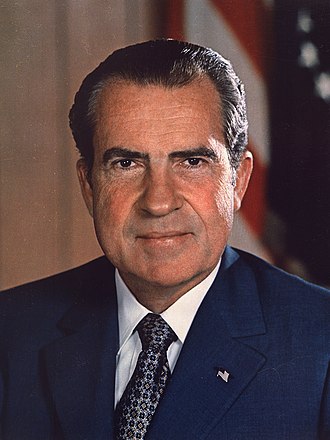
Richard M. Nixon served as the 37th President of the United States from January 1969 until his resignation in August 1974. In February 1971, he ordered the installation of a secret voice-activated taping system in the White House to preserve a historical record of his administration. Until the system's existence was revealed and dismantled in July 1973, the tapes captured Nixon directing major foreign policy initiatives, such as the opening to China, as well as his central role in the Watergate cover-up.
What Nixon talks about on the tapes
White House operations 4,718Presidential scheduling 2,225Public relations 1,784Presidential schedule 1,782Vietnam War 1,693Logistics 1,650Manolo Sanchez 1,626White House communications 1,400White House administration 1,399Presidential communication 1,243Henry Kissinger 1,191Foreign Policy 1,183
Conversations (21,010)
— Page 82 of 211President Nixon met with Alexander Butterfield and Ronald Ziegler to manage administrative logistics, including planning a formal reception for state governors and arranging for General Robert Cushman, Jr. to represent the White House at the funeral of two slain New York police officers. The discussion transitioned to media strategy, specifically the debate over including William F. Buckley, Jr. in the press contingent for the upcoming trip to the People's Republic of China. Additionally, Nixon directed staff to publicize his recent phone call to Senator Abraham Ribicoff regarding the administration's ongoing legislative strategy for welfare reform.
President Nixon contacted the White House operator to initiate an outgoing call to Congressman Robert McClory of Illinois. The primary purpose of this brief exchange was to facilitate communication with the Representative. No substantive political discussions occurred as the President merely provided the operator with the necessary contact information.
President Nixon initiated this brief telephone call to extend birthday greetings to Representative Robert McClory. The two briefly discussed McClory's upcoming birthday celebration and the Congressman's ongoing efforts to support the President's 1972 re-election campaign. The conversation concluded with a lighthearted exchange regarding the President's piano playing.
President Nixon contacted the White House operator to request a telephone connection to Leslye A. Arsht. He provided the operator with the specific contact name and telephone number to facilitate the call. The brief exchange served as an administrative request to initiate communication with Ms. Arsht.
President Nixon requested that the White House operator place an outgoing call to Leslie Arch. He provided the operator with the specific contact name and telephone number to facilitate the connection. No further discussion or substantive policy matters were recorded during this brief administrative exchange.
President Nixon met with Stephen B. Bull to review the President's schedule and address a priority request from John D. Ehrlichman. The discussion focused on coordinating a meeting to deliberate the proposed renovation of the National Mall. No further actions were recorded before the brief meeting concluded.
President Nixon called Leslye A. Arsht to express his personal gratitude for her dedicated service and long hours working on the White House news summary. He specifically praised the high quality of the summary, noting that it surpassed those available to previous presidents, and commended the contributions of Arsht and Lyndon K. “Mort” Allin. The conversation also served as an opportunity for the President to apologize for missing her recent party and acknowledge her commitment to his re-election campaign.
President Nixon met with Leslye A. Arsht to express his personal gratitude for the extensive work she and her team performed on a new presidential summary document. He lauded the quality of the summary, describing it as a superior achievement compared to those provided to previous presidents. The President concluded the meeting by encouraging Arsht to continue contributing her talents to his administration.
President Nixon instructed the White House operator to place a telephone call to Congressman Stewart B. McKinney. This brief exchange served solely as a logistical request to initiate contact with the representative. No further policy discussions or substantive developments occurred during this brief interaction.
President Nixon initiates a brief administrative request to the White House operator to place a telephone call. The interaction centers on facilitating communication with Congressman McKenzie. No further policy discussion or significant developments occurred during this brief exchange.
President Nixon summoned his aide, Stephen B. Bull, to request a meeting with White House Press Secretary Ronald L. Ziegler. The discussion was centered on preparing for an impending administrative announcement. Bull was tasked with facilitating this coordination with Ziegler before departing the Oval Office.
President Nixon telephoned Representative Stewart B. McKinney to offer birthday greetings and discuss the political reception of his recent Vietnam policy speech. Nixon emphasized the strength of his administration’s peace proposal, urging McKinney to maintain support despite expected North Vietnamese resistance or renewed military posturing. In response, McKinney confirmed his backing of the President's position and noted that a group of House members had signed a letter expressing their support for the administration's negotiation efforts.
President Nixon, Stewart McKinney, John Ehrlichman, and Ronald Ziegler met to discuss a wide-ranging domestic and political agenda, including welfare reform strategies, a proposed Mall renovation project, and environmental public relations. The President directed his staff to pursue a bipartisan approach to welfare reform through negotiations with Senators Ribicoff, Long, and Bennett, while also tasking them with developing high-profile environmental initiatives for the upcoming legislative session. The group further analyzed the 1972 Democratic presidential primary landscape and reviewed the administration's ongoing efforts to streamline Congressional relations and promote their policy goals through targeted briefings and literature.
President Nixon met with his aide Stephen B. Bull to coordinate and manage Henry Kissinger’s upcoming travel schedule. The brief discussion focused on the logistics of Kissinger’s recent activities and travel requirements. Nixon provided instructions regarding communication protocols and the handling of the National Security Advisor's itinerary.
President Nixon met with H.R. Haldeman and Henry Kissinger to discuss environmental planning, upcoming administrative scheduling, and the strategic management of public perception regarding Vietnam peace negotiations. Kissinger updated the President on recent North Vietnamese diplomatic maneuvers and the administration's efforts to rebut critics in the press, specifically focusing on the "nine-point" peace plan. Nixon directed his staff to maintain pressure on State Department officials to produce policy papers for the upcoming China trip while opting to meet with André Malraux to gain insights into Chinese leadership.
President Nixon met with Rose Mary Woods, H. R. Haldeman, and Alexander Butterfield to manage his schedule and handle administrative tasks, including a document signature request from John Dean. The group discussed preparations for an upcoming prayer breakfast, specifically expressing frustration over the excessive length of speeches and the need for the President to keep his own remarks brief. Additionally, they reviewed presidential gifts, including sculptures of Winston Churchill and John Foster Dulles, and briefly reflected on the deaths of prominent aging statesmen.
President Nixon met with Alexander P. Butterfield to review the presidential schedule, specifically regarding an upcoming meeting with Washington Governor Daniel J. Evans. The discussion also touched upon an undisclosed resignation letter and a brief administrative matter involving a telephone call between Rose Mary Woods and First Lady Pat Nixon, facilitated by Stephen B. Bull. The session concluded with brief logistical updates and coordination between the President and his staff.
President Nixon and Henry Kissinger strategized on countering North Vietnamese propaganda efforts during ongoing Vietnam negotiations. They discussed the necessity of aggressively rebutting inaccuracies in the press to ensure public perception remains favorable to the administration. As part of this effort, they agreed to coordinate outreach to figures such as Max Frankel and Senator Mike Mansfield, while Rose Mary Woods briefly consulted on the President's schedule.
President Nixon contacted the White House operator to facilitate an urgent communication with his Chief of Staff, H.R. Haldeman. This brief administrative interaction served as a logistical step to initiate a direct line of contact between the President and his top aide. No substantive policy discussions occurred during this operator-assisted connection.
President Nixon and H. R. Haldeman coordinate the scheduling of upcoming meetings to accommodate the busy calendars of key visitors. They finalize plans for John B. Connally’s visit, ensuring it aligns with his congressional testimony requirements, and arrange for Billy Graham and the Apollo astronauts to visit the following day. The brief exchange confirms that these adjustments were already underway to ensure maximum convenience for all parties involved.
President Nixon contacted the White House operator to facilitate a telephone connection with his personal secretary, Rose Mary Woods. This brief communication served strictly as an administrative request to reach a key staff member. No further substantive policy matters or tactical discussions occurred during the exchange.
President Nixon directs his personal secretary, Rose Mary Woods, to secure a spot for Rita Rajnich De Fantis on the upcoming presidential trip to the People’s Republic of China. Emphasizing that it is essential for First Lady Pat Nixon to have proper assistance on the trip, the President instructs Woods to coordinate with H. R. Haldeman to either add an extra position or reallocate an existing one. Woods agrees to discuss the logistical arrangements with Haldeman the following morning.
President Nixon contacted the White House operator to facilitate an urgent communication with special counsel Charles W. Colson. The brief exchange served exclusively to initiate this administrative request for a phone connection. No further policy discussions or significant decisions were recorded during this brief interaction.
President Nixon and Alexander P. Butterfield met briefly in the Oval Office to address the unexplained absence of a plaque from a screen in the room. The President expressed frustration regarding the missing item, prompting a brief inquiry into its location. The exchange concluded without a definitive resolution regarding the plaque's whereabouts.
President Nixon and Alexander Butterfield met to coordinate logistical arrangements for upcoming appointments and administrative tasks. The President directed Butterfield to secure a replacement plaque for the University of Nebraska football team to honor their top-ranking status. Additionally, they reviewed the scheduling sequence for meetings involving Billy Graham and H.R. Haldeman to ensure the President’s workflow remained efficient.
President Nixon met with Alexander P. Butterfield to coordinate the President's immediate daily schedule. The discussion centered on logistics for upcoming meetings with Billy Graham and H. R. Haldeman. The session concluded with Butterfield managing the President's appointments to ensure his agenda proceeded as planned.
President Nixon met with Billy Graham and H. R. Haldeman to discuss political strategy, the President's upcoming travel, and media relations heading into the 1972 election year. Graham provided advice on maintaining presidential dignity, focusing on controlled, televised appearances rather than frantic campaigning, and offered to help shore up support in key states like Pennsylvania and Texas. The participants also engaged in a lengthy, conspiratorial discussion regarding perceived media bias, specifically alleging that Jewish journalists and editors exerted undue influence on American cultural and political discourse.
Henry Kissinger briefed President Nixon on a recent private meeting he held at the home of journalist James "Scotty" Reston, which was attended by Senator J. William Fulbright and John W. Gardner. Kissinger described the encounter as a sign of weakness and confusion within the political establishment, noting that the participants expressed a desire to moderate their public criticism of the President in light of the upcoming trip to the People's Republic of China. Nixon encouraged Kissinger to continue keeping these figures "loose" while expressing frustration over the establishment's skepticism regarding his preparations for the China summit. The discussion concluded with administrative updates from Stephen Bull regarding the President's schedule and the delivery of gifts to Apollo XV astronauts.
President Nixon met with Apollo 15 astronauts David Scott, James Irwin, and Alfred Worden, along with their spouses and staff, to discuss the astronauts' recent goodwill mission to Poland and Yugoslavia. The group exchanged impressions regarding the reception they received in Eastern Europe and discussed the diplomatic benefits of their travel. Additionally, the President touched upon the progress of the space shuttle program and finalized the meeting by presenting gifts to the astronauts and their families.
President Nixon and Stephen B. Bull met to coordinate upcoming schedule items, including photo opportunities and ceremonies for the University of Nebraska football team, the Boy Scouts, and administrative certificates. The discussion focused on logistics and timing for these engagements to ensure efficient management of the President's time. Bull advised on managing delays and organizing the waiting room to streamline the President's interactions with visitors.
President Nixon met with representatives from the Boy Scouts of America (BSA) to receive the organization's annual report and an honorary membership card. During the meeting, BSA leaders briefed the President on key initiatives, including the Save Our American Resources (SOAR) environmental program and the anti-drug initiative, Operation Reach. The participants presented the President with commemorative medals designed by Norman Rockwell and held a brief photograph session to acknowledge the group's leadership and youth outreach achievements.
President Nixon and Stephen B. Bull met to coordinate a photograph session with the University of Nebraska football team. They specifically discussed the team's quarterback, Jerry Tagge, noting his recent selection by the Green Bay Packers. The brief meeting served to confirm scheduling logistics and relevant biographical details for the upcoming event.
President Nixon met with University of Nebraska officials, coaching staff, and members of their football team, along with several Nebraska political representatives, to honor the team's athletic achievements. During the visit, the President presented various gifts and discussed the broader value of athletics in fostering a competitive spirit, building character, and providing positive inspiration for the nation's youth. The conversation also touched upon the team's past performances, the professional future of individual players, and the President's personal interest in football.
President Nixon and H. R. Haldeman discussed personnel matters, including vacation arrangements for John Connally and the management of White House staff. They evaluated the President's upcoming involvement with the Productivity Commission, weighing the political risks and potential impact of his participation. Additionally, the pair addressed public relations strategies, specifically focusing on the President's frustration with media coverage and the perceived hostility of the press establishment, particularly figures like James Reston and John Gardner.
President Nixon and Stephen B. Bull met in the Oval Office to discuss the logistics and inventory of presidential fleet vehicles. The conversation focused on establishing an accurate count of the total number of vehicles available for the President's use. Nixon confirmed the figures provided by Bull as they reviewed the operational status of the fleet.
President Nixon met with his personal secretary, Rose Mary Woods, in the Oval Office to discuss administrative or personal matters. The recorded audio is largely unintelligible, consisting primarily of a brief exchange regarding Woods's current tasks. No significant policy decisions or substantive developments were captured during this brief interaction.
President Nixon and H. R. Haldeman met to coordinate a strategy for challenging the perceived bias of major television networks, focusing specifically on the distribution and promotion of Edith Efron's book, *How CBS Tried to Kill a Book*. The discussion involved plans to utilize Patrick Buchanan and various conservative organizations to monitor media coverage and distribute Efron’s forthcoming testimony to key influencers. During the meeting, Stephen B. Bull joined to briefly discuss the President's schedule, including a potential appointment related to the Atomic Energy Commission.
President Nixon met with California Governor Ronald Reagan and various administration officials to discuss domestic policy challenges, specifically addressing stalled welfare reform legislation and the ongoing West Coast dock strike. The group explored the economic implications of federal spending and potential strategies to bypass congressional inaction regarding labor disputes, with Reagan sharing his past experience managing strike negotiations. Additionally, the participants discussed the political and ethical complexities surrounding abortion access through Medicaid and the legal status of the unborn.
President Nixon met with H. R. Haldeman and John Connally to strategize on domestic political messaging, potential 1972 election tactics, and managing the economy. The discussion covered the political necessity of targeting Democratic economic messaging regarding the 'rich versus the poor,' and the importance of using Republican surrogates to counter criticisms. Additionally, the President and Connally discussed the potential for organizing private, high-level outreach to congressional members and key staff, while planning for future presidential retreats to facilitate private planning away from media scrutiny.
President Nixon met with his aide Stephen B. Bull in the Oval Office to coordinate logistics for a forthcoming meeting with Press Secretary Ronald L. Ziegler. The discussion focused primarily on determining the appropriate location for the subsequent briefing. The encounter concluded shortly thereafter with Bull departing to facilitate the requested arrangements.
President Nixon met with Press Secretary Ronald L. Ziegler to coordinate messaging regarding welfare reform and the administration's stance on state-level experimentation. They discussed recent interactions with Ronald Reagan and Washington Governor Daniel J. Evans, focusing on maintaining administrative control over welfare funding and federal waivers. The discussion aimed to ensure consistent public remarks during upcoming press conferences and Senate Finance Committee engagements.
President Nixon and H. R. Haldeman met to coordinate upcoming administrative events, including a governors' dinner and potential cabinet-level meetings. The discussion focused on managing staff and cabinet morale, planning gifts and logistics for the President's upcoming trip to the People's Republic of China, and evaluating the political landscape regarding Democratic Party candidates. Nixon expressed concerns over staff efficiency and loyalty, emphasizing the need for a cohesive team as he prepared for his re-election campaign.
President Nixon and Charles Colson discussed the political landscape ahead of the 1972 election, focusing heavily on the Democratic field, particularly the campaigns of Edmund Muskie and Edward Kennedy. The conversation covered domestic policy issues, including concerns over pending unemployment figures and the political implications of busing and recent court decisions. They also reviewed media coverage, recent polling data, and the status of ongoing labor negotiations regarding a dock strike.
President Nixon contacted the White House operator to place a telephone call to Congressman Charles S. Gubser of California. The operator confirmed the request to connect the President with the representative. This brief administrative interaction served as the initiation for the President's subsequent legislative outreach.
President Nixon discusses political strategy and the anticipated public reaction to his upcoming diplomatic visit to China with a White House operator. He expresses confidence that the trip will be viewed favorably, emphasizing that the mission serves as a diplomatic opening rather than a final conclusion. The conversation also touches upon domestic political challenges, specifically mentioning internal frustrations regarding Senator Kenneth Keating.
President Nixon received a brief congratulatory telephone call from Congressman Charles S. Gubser regarding the President's recent birthday. The conversation served primarily as a social pleasantry, during which Nixon acknowledged Gubser's legislative support. The President concluded the call by commending Gubser's ongoing loyalty and advocacy for the administration's agenda.
President Nixon and Congressman Charles S. Gubser discuss the political optics and strategic challenges surrounding the upcoming diplomatic mission to China. Gubser expresses concern regarding the difficulty of reaching a consensus on the Taiwan issue that would satisfy domestic critics. Nixon maintains that while total agreement on Taiwan is impossible, the administration has successfully secured the Chinese government’s consent to disagree on other sensitive matters, such as the Japan defense treaty.
President Nixon initiates a request for the White House operator to place a telephone call to Representative Thomas N. Downing of Virginia. This brief administrative interaction serves as a precursor to a direct consultation between the President and the Congressman. The call highlights the President's ongoing communication with members of Congress regarding legislative or political matters.
President Nixon and the White House operator discuss the sensitive diplomatic nuances surrounding U.S. policy toward Taiwan ahead of future negotiations. Nixon expresses firm resistance to abrogating existing treaty commitments while weighing the challenges of securing mutual pledges for a peaceful resolution. The exchange highlights the strategic difficulty of managing conflicting positions between Taiwan and the People's Republic of China regarding the status of the island.
President Nixon and Stephen B. Bull discussed the tactical handling of Secretary of State William Rogers regarding his involvement in the funeral arrangements for fallen New York City police officers Gregory P. Foster and Rocco Laurie. Nixon sought to manage Rogers’ public position to prevent negative press coverage and potential internal dissent from within the State Department. The President concluded that while Rogers' attendance would be strategically beneficial, he preferred not to force the issue if Rogers remained reluctant.
President Nixon and Representative Thomas N. Downing engaged in a brief, informal exchange to exchange birthday greetings. During the call, they discussed shared birthdays among acquaintances, including Congressman Charles Gubser, and compared their physical appearances to that of Billy Graham. The conversation served primarily as a social pleasantry to foster rapport between the President and the Congressman.
President Nixon and Representative Thomas N. Downing discussed the loyalty of the Foreign Service and its implications for Secretary of State William Rogers's position. The conversation touched upon political maneuvering regarding Senator Edmund Muskie’s potential vulnerability on a specific, undisclosed issue. Nixon used the moment to frame the situation as a critical test of his administration's ability to withstand political pressure.
President Nixon met with H. R. Haldeman, Henry Kissinger, and Ronald Ziegler to manage press relations, personnel issues, and foreign policy strategy. The participants discussed the upcoming China trip, handled internal friction regarding Secretary of State William Rogers’s management style, and addressed potential conflicts between John Connally and David Kennedy over economic policy. Furthermore, they coordinated the administration's position on the India-Pakistan conflict and the sensitive issue of diplomatic recognition for Bangladesh, emphasizing the need for consistency ahead of the President's scheduled travel.
President Nixon convened this meeting of the National Security Council to assess the potential for a major North Vietnamese military offensive and to coordinate U.S. support for South Vietnam. The participants, including Henry Kissinger, Melvin Laird, and Admiral Thomas Moorer, discussed enemy troop movements, the effectiveness of Vietnamization, and the need for enhanced military authorities for field commanders. Nixon directed the council to provide robust support while ensuring that South Vietnamese forces receive the primary public credit, emphasizing that the U.S. must remain committed to a successful outcome despite domestic political pressures.
President Nixon contacted the White House operator to facilitate a personal phone call to his daughter, Tricia Nixon Cox, who was residing in Cambridge. The brief communication served exclusively as a formal request for the operator to connect the President to his daughter. No further policy or administrative matters were discussed during this brief exchange.
President Nixon met with his personal aide, Stephen B. Bull, to review the President’s daily schedule, including appointments with John D. Ehrlichman, former Speaker John W. McCormack, and entertainer Pearl M. Bailey regarding her Heart of the Year Award. During the discussion, Nixon pivoted to a brief foreign policy critique concerning recent geopolitical tensions involving India, Russia, and the stability of the West Pacific. He requested a formal briefing document summarizing past diplomatic overtures, foreign responses, and the regional anxieties stemming from these international interactions.
President Nixon met with John Ehrlichman and various staff members to address upcoming legislative strategies and high-level diplomatic positioning. The primary focus involved preparing for Congressional testimony regarding U.S. policy toward India and Pakistan, with the President emphasizing the need to project a firm, principled stance on the recent conflict while maintaining an "arms-length" relationship. The President provided guidance on how to counter political criticism from Congressional opponents, asserting that the administration acted in the interest of global peace and U.S. policy requirements.
President Nixon and H. R. Haldeman met to coordinate an upcoming meeting with Treasury Secretary John B. Connally. The discussion focused on finalizing the President’s schedule and determining the timing for the session. Additionally, they reviewed potential talking points and suggested remarks to guide the President's interaction with Connally.
President Nixon met with Representative Richard W. Mallary and White House aide Richard K. Cook to discuss strategic congressional committee assignments for Mallary. The President offered political advice regarding potential placements on the Appropriations, Ways and Means, and Agriculture committees, while considering the influence of figures such as George D. Aiken and Gerald R. Ford. Beyond legislative matters, the participants exchanged gifts and discussed the personal logistics of the Mallary family's transition to Washington.
President Nixon met with aides Stephen B. Bull and Alexander P. Butterfield to coordinate logistical details regarding his daily schedule and upcoming ceremonial signings. The discussion focused on the arrangements for a meeting with former Speaker of the House John W. McCormack, specifically addressing the appropriate location for the event. The brief session concluded with the participants confirming administrative preparations for the President's immediate agenda.
President Nixon and Stephen B. Bull discussed the personal health history and recent activities of an unnamed individual, specifically regarding a past heart attack suffered while hunting. The conversation touches upon the physical limitations resulting from this medical event and implications for future scheduling. The exchange serves as a brief check-in regarding the logistics of an upcoming engagement involving the President’s spouse.
President Nixon met with former Speaker of the House John W. McCormack to discuss foreign policy, national defense, and the President's upcoming diplomatic trips to the PRC and the USSR. They reviewed the status of the Vietnam War, including potential peace proposals and ceasefire negotiations, while also evaluating the necessity of a robust U.S. defense budget. Additionally, the pair touched upon broader geopolitical themes, including U.S. relations with India and the role of women in politics.
President Nixon met with his personal valet, Manolo Sanchez, to discuss the President's upcoming schedule at the Executive Office Building. The brief exchange focused on administrative logistics regarding Nixon's movements for the day. No significant policy decisions were reached during this short logistical update.
President Nixon met with H.R. Haldeman, Ronald Ziegler, and Stephen Bull to coordinate administration responses to current political and national security issues. Key topics included developing a strategic rebuttal to Senator Edmund Muskie’s Vietnam peace plan, managing the fallout from a Justice Department antitrust suit against Associated Milk Producers, Inc., and refining the President’s approach to public appearances and advisory commissions. Nixon emphasized the need for a disciplined, pragmatic messaging strategy ahead of upcoming political challenges and instructed staff on handling these high-pressure administrative concerns.
President Nixon initiates a brief telephone request with the White House operator to be connected with Peter M. Flanigan. The exchange serves solely to facilitate administrative communication between the President and his Assistant to the President for International Economic Affairs. No further substantive discussion occurs during this short segment.
President Nixon met with his personal valet, Manolo Sanchez, to discuss the President's daily schedule. The primary focus of the brief interaction was the arrangement of a nap for the President. No other significant policy or political matters were addressed during this short exchange.
President Nixon interacted with a White House operator to facilitate a routine communication task, likely involving the processing of a long-distance or billed telephone call. The exchange centers on the administrative formalities of placing an operator-assisted call and addressing the associated toll charges. No significant policy discussions or strategic developments occurred during this brief procedural interaction.
President Nixon met with his personal valet, Manolo Sanchez, in the Old Executive Office Building for a brief, informal interaction. The dialogue focuses on the location of a pipe, likely a personal item of the President’s. No policy matters or substantive political decisions were addressed during this short exchange.
President Nixon communicated with the White House operator to inquire about the availability of advisor Peter M. Flanigan. Upon learning that Flanigan was currently in New York delivering a speech, the President decided to postpone the contact. Nixon instructed the operator to hold the call until Flanigan returned to the office later that afternoon.
President Nixon consulted with the White House operator regarding an incoming telephone communication. He requested to speak directly with the caller, signaling his intent to handle the matter personally. The brief exchange served as a coordination effort to facilitate a specific, immediate connection for the President.
President Nixon requested that the White House operator place a telephone call to his daughter, Julie Nixon Eisenhower. The exchange served strictly as a procedural request to initiate personal communication. No policy matters or substantive political topics were discussed during this brief interaction.
President Nixon initiates a request for the White House operator to place a personal call to his daughter, Julie Nixon Eisenhower. This interaction facilitates a private communication channel between the President and his family. No policy matters or substantive governmental affairs were addressed during this brief exchange.
President Nixon consulted with H. R. Haldeman regarding his upcoming schedule, focusing on balancing trips to Florida and Camp David with preparations for his historic journey to the People's Republic of China. The discussion also addressed public relations strategy, specifically evaluating the necessity of personal appearances at events like the National Prayer Breakfast to maximize political impact. Alexander P. Butterfield joined briefly to receive administrative instructions, while the President ultimately weighed the value of various appearances against the fatigue of his pre-trip workload.
President Nixon and his daughter Julie Nixon Eisenhower discuss the success of her recent trip to Pittsburgh and a positive press report regarding First Lady Pat Nixon. The conversation transitions into an update on the President’s recent schedule, specifically his attendance at the National Prayer Breakfast and a meeting with Republican governors. The two also touch upon political strategy, including the potential national prominence of Governor Reubin Askew as a future Democratic keynote speaker or vice-presidential candidate.
President Nixon met with his daughter, Julie Nixon Eisenhower, for a brief personal check-in. The conversation covered domestic updates, including a recent trip to Pittsburgh and a discussion regarding Republican governors, specifically mentioning Dan Evans. The two also touched upon potential travel plans for the upcoming weekend, weighing the benefits of a quiet stay at Camp David.
President Nixon initiates a brief telephone call through the White House operator to connect with his Press Secretary, Ronald L. Ziegler. The primary objective of this exchange is to facilitate direct communication with a key member of his staff. No substantive policy matters are discussed during this administrative connection request.
President Nixon consulted with the White House operator to facilitate a communication with Charles W. Colson. The discussion primarily addressed scheduling logistics and the President's request for Colson to return his call. The brief exchange served as a procedural step to initiate direct contact with his Special Counsel.
President Nixon directed the White House operator to connect him with an individual named Rob to facilitate a specific telephone communication. The brief exchange served as an administrative request to patch through an outside party. No further policy discussions or substantive developments occurred during this brief interaction.
President Nixon and Press Secretary Ronald L. Ziegler discussed the media reception of the President’s recent remarks at the National Prayer Breakfast, noting positive coverage on television and radio despite limited attention from the Washington Post and NBC. The conversation transitioned to the administration’s welfare reform strategy, specifically regarding an upcoming press conference by Elliot Richardson. Nixon emphasized framing the current legislative progress as a victory that reflects long-term administration efforts and fiscal constraints rather than a defeat.
President Nixon and Press Secretary Ronald Ziegler discuss media coverage and the administration's public relations strategy. Nixon emphasizes the importance of maintaining a strong political stance and not allowing external pressures to dictate their agenda. The brief exchange focuses on celebrating recent administrative progress and ensuring the staff remains focused on long-term policy goals despite congressional challenges.
President Nixon consulted with the White House operator to initiate a telephone call. The exchange served as a brief administrative connection process to reach specific individuals, identified as Patricia and Andrew. No substantive policy matters were discussed during this brief logistical coordination.
President Nixon and his daughter, Tricia Nixon Cox, discuss personal and political matters, including a biased New York Times article regarding Vice President Spiro Agnew and the media coverage of the President's recent public engagements. The conversation also covers scheduling logistics for upcoming trips to Florida and Camp David, alongside reflections on the President's upcoming trip to the People's Republic of China. Additionally, they exchange positive feedback regarding a memorandum from Charles Colson concerning the public perception of First Lady Pat Nixon.
President Nixon held a meeting with an unidentified individual in his Old Executive Office Building suite to discuss administrative or political matters. Due to the lack of an available transcript, the specific agenda, policy decisions, and outcomes of the discussion remain undocumented in the historical record. This recording serves as part of the archival documentation of the President’s daily scheduling and private consultations.
President Nixon and his daughter, Tricia Nixon Cox, engage in an informal check-in regarding family plans and recent personal activities. They discuss upcoming travel logistics, including potential trips to Florida and the President's impending visit to China, while also noting current weather conditions in Washington, D.C. The conversation concludes with a brief mention of political or social analysis regarding a trip taken by Monty.
President Nixon instructed the White House operator to place a telephone call to Harry S. Dent. The brief exchange served as a logistical request to initiate direct communication with Dent. No further substantive policy discussions occurred during this brief administrative interaction.
President Nixon requested that the White House operator connect him with Harry Denny. This brief interaction served as a logistical bridge to initiate a telephone communication with Denny. No further policy discussions or significant political developments occurred during this brief exchange.
President Nixon and Harry S. Dent discuss the positive reception among Republican governors following a recent briefing and their impressions of key party figures, including Nelson Rockefeller and Ronald Reagan. The two review political outreach strategies, specifically focusing on the administration’s efforts to engage black voters and the potential for Vice President Spiro Agnew to attend a California Republican Assembly meeting. They also exchange observations regarding the 1972 campaign landscape, including potential primary challengers such as George Wallace and Hubert Humphrey.
President Nixon and Harry Dent discuss the political reception of various governors and party figures following recent meetings, specifically focusing on the administration’s strategy for the upcoming election cycle. They evaluate the performance of political allies like Peterson, Kane, and Rockefeller while emphasizing the importance of a 50-state campaign strategy to maintain influence across diverse regions. The conversation also touches on sensitive outreach efforts to minority groups in the South and the potential political threat posed by candidates like John Lindsay.
President Nixon and Henry Kissinger met to discuss military contingency plans for Vietnam, specifically addressing a potential North Vietnamese offensive and the timing of increased air strikes. They criticized Democratic presidential candidate Edmund Muskie for his public statements on the war, arguing that his rhetoric undermined ongoing peace negotiations and displayed a lack of responsibility. Additionally, the President directed Kissinger to push for the appointment of Vernon A. Walters as Deputy Director of the CIA, dismissing concerns from Richard Helms and Melvin Laird regarding the nomination.
President Nixon directed H. R. Haldeman to coordinate with Patrick Buchanan on a strategy to attack Edmund Muskie’s criticisms of the administration’s Vietnam peace proposal. Nixon sought to deflect political pressure by highlighting Muskie’s past support for Lyndon B. Johnson’s war policies, which he argued led to increased casualties and stagnant negotiations. The President tasked Buchanan with drafting talking points that shift blame for the prolonged conflict onto the Democratic Party’s previous leadership.
President Nixon and H. R. Haldeman discuss political strategy regarding a response to a recent speech by Senator Edmund Muskie. The pair debate whether to ignore the comments or launch a counter-attack to exploit Muskie's vulnerabilities on the Vietnam War. Nixon decides to draft a memorandum for Patrick Buchanan outlining specific talking points, while they consider potential surrogates, such as Hugh Scott or Secretary of State William Rogers, to deliver the rebuttal.
President Nixon and H.R. Haldeman discuss the timing and strategy for responding to a current political or public relations challenge. Nixon insists on a cautious, patient approach, opting to wait for the situation to evolve before taking action. The President ultimately affirms that he has already dictated his chosen course of action and maintains that his plan is sufficient.
President Nixon contacted the White House operator to facilitate a telephone connection with John D. Ehrlichman. The primary purpose of the communication was to locate Ehrlichman, who was situated at Camp David at the time of the request. The operator acknowledged the instruction to initiate the call.
President Nixon held a brief, informal meeting in the Old Executive Office Building with an unidentified individual. The recording consists almost entirely of ambient noise and muffled background dialogue, precluding any substantive discussion of policy or administration business. No clear decisions, actions, or significant developments were captured during this short interaction.
President Nixon dictates a memorandum to H. R. Haldeman regarding the administration's political response to Senator Edmund Muskie’s criticisms of the U.S. peace plan for Vietnam. The President argues that Muskie’s opposition to the withdrawal and POW proposals is rooted in partisanship and effectively serves as aid to the enemy by mirroring North Vietnamese rejection of the peace terms. Nixon tasks Haldeman and aide Pat Buchanan with drafting points to highlight the contrast between his negotiation efforts and Muskie’s political opportunism.
President Nixon met with his personal valet, Manolo Sanchez, in the Old Executive Office Building. The brief interaction, recorded by the White House system, focused on routine personal or administrative tasks. No significant policy decisions or historical developments were recorded during this exchange.
President Nixon met with his personal secretary, Rose Mary Woods, to discuss political strategy and administrative tasks regarding upcoming campaign materials. The conversation focused on a memorandum intended for H.R. Haldeman concerning public statements by Democratic rivals Edmund Muskie, John Lindsay, and George McGovern. Specifically, they addressed the implications of recent primary and caucus results in Iowa and Arizona to shape the administration's political narrative.
President Nixon consulted with the White House operator to discuss an unidentified individual's inability to resolve a specific issue, reportedly citing John Ehrlichman's assessment that the matter could not be saved. The brief exchange reflects Nixon's attempt to facilitate communication or address a pending problem regarding this individual. No definitive action was taken beyond the President inquiring about the status of a potential phone connection.
President Nixon met with Hobart D. Lewis to dictate a letter regarding a recent Republican Governors dinner held on January 28, 1972. The discussion centered on Nixon’s interaction with New Jersey Governor William T. Cahill and a previously published article in Reader's Digest. This meeting served to facilitate correspondence regarding the political landscape and media coverage surrounding the Republican leadership.
President Nixon and John Ehrlichman discussed legislative strategies, including the potential veto of a legal services bill and negotiations regarding the Family Assistance Plan (HR 1). They reviewed the success of recent briefings with governors, leading to an action item for Ehrlichman to coordinate with Nelson Rockefeller regarding his upcoming testimony. The conversation also touched on the Justice Department’s suit against milk producers and personnel management within the Office of Economic Opportunity.