Scowcroft, Brent G. (Gen.)
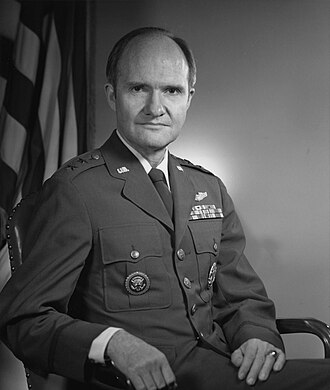
Brent Scowcroft was a career U.S. Air Force officer who served as a key national security aide during the Nixon administration, frequently interacting with the President and Henry Kissinger during the White House taping period. He joined the White House staff as Military Assistant to the President in February 1972, notably advancing Nixon's historic trip to China. After Alexander Haig's departure, Scowcroft transitioned to Deputy Assistant to the President for National Security Affairs, officially assuming the role in April 1973 and managing the National Security Council staff until Nixon's resignation in August 1974.
President Nixon met with James D. ("Don") Hughes and General Brent G. Scowcroft to discuss administrative transitions, specifically Hughes's forthcoming military assignment at Bergstrom Air Force Base and his departure from the White House staff. The conversation touched upon the management of military aides, including the recent addition of a Coast Guard representative, and the importance of maintaining staff relations with key personnel like H.R. Haldeman. Additionally, the group briefly addressed preparations for the President's upcoming trip to the People's Republic of China, confirming the inclusion of personnel to ensure continuity.
President Nixon met with H. R. Haldeman, John Ehrlichman, Henry Kissinger, and others to manage the fallout and public relations surrounding the recent trip to the People's Republic of China, specifically addressing Secretary of State William P. Rogers' perceived alienation from the process. The participants discussed strategies to neutralize negative press coverage and mitigate perceived leaks from the State Department, while also deliberating on the upcoming US-Soviet summit. Additionally, the conversation touched on various domestic political matters, including the ITT case, busing policy, 1972 campaign financing, and the political maneuvers of Democratic candidates.
President Nixon met with Senator William Brock and a group of visitors, including relatives of prisoners of war, for a ceremonial photograph and gift presentation session. The primary purpose of the gathering was the formal signing of a proclamation and Senate Joint Resolution 189 regarding American POWs. During the session, the President emphasized his administration’s commitment to securing the return of all captives and acknowledged the courage of the families involved.
President Nixon met with representatives of the American Bar Association (ABA) to discuss their program providing legal assistance to the families of Prisoners of War (POWs) and those Missing in Action (MIAs). The ABA group sought a presidential endorsement and a White House liaison to facilitate state-level legislative efforts aimed at resolving civil and property title issues for these families. Nixon expressed his support for their legal mission while reiterating his administration's commitment to maintaining U.S. bargaining power and continued military pressure as the primary means of securing the eventual release of POWs.
President Nixon met with Vice President Agnew, Cabinet members, and senior staff to discuss the administration's recent escalation in Vietnam, specifically the blockade of North Vietnamese ports. The President articulated his rationale for the decision and sought unified support from his team to manage potential congressional and public opposition. He emphasized the necessity of leadership during difficult times and urged his Cabinet to present a cohesive front in defending the policy to the public.
President Nixon met with staff and General Brent Scowcroft to finalize arrangements for a medal presentation ceremony honoring the late John Paul Vann. The discussion centered on managing potential press coverage and coordinating the participation of the Vann family members. Nixon explicitly directed staff to prevent a anticipated political gesture involving the presentation of a draft card by Vann’s son to ensure the event remained dignified and free of media-staged incidents.
President Nixon hosted the family of John Paul Vann, a distinguished military and civilian advisor in Vietnam, to formally present the Presidential Medal of Freedom. During the meeting, which included key administration officials and journalist Joseph Alsop, the President lauded Vann’s dedication and selfless service, comparing his contributions to those of the Marquis de Lafayette. The event served to honor Vann's legacy following his recent death and to highlight his critical role in the efforts to secure South Vietnamese sovereignty.
President Nixon hosted a ceremony in the Oval Office to honor General Alexander M. Haig, Jr. with the Defense Distinguished Service Medal. The event, attended by Haig’s family and high-ranking administration officials, served as a formal recognition of Haig’s significant contributions to national security and his diplomatic efforts, including his work supporting Henry Kissinger. The gathering concluded with photo opportunities and brief discussions regarding Haig's transition out of his White House role.
President Nixon met with former Japanese Prime Minister Eisaku Sato and his delegation to reflect on the strength of the U.S.-Japan alliance and the geopolitical significance of the recently negotiated Vietnam peace settlement. The participants emphasized the necessity of military and diplomatic strength to deter potential aggression and discussed the importance of maintaining international commitments to ensure global stability. Nixon underscored the personal nature of his relationship with Sato and highlighted the vital role that mutual trust and strong, unified alliances play in navigating relations with other global powers.
Henry Kissinger consulted with his staff to review recent messages and professional feedback following his well-received television appearance on the CBS program with Marvin Kalb. He subsequently coordinated with General Brent Scowcroft to confirm the successful transmission of a communiqué regarding the implementation of the Paris Peace Accords with the Soviet Union. The conversation concluded with Kissinger arranging for an assistant to explain his scheduling constraints to Catherine Hoffman due to ongoing meetings with President Nixon and Prime Minister Edward Heath.
President Nixon met with Cmdr. Alexander R. Larzelere and his family in the Oval Office, accompanied by Gen. Brent G. Scowcroft and Stephen B. Bull, to conduct a brief social visit and photo session. During the meeting, the President expressed his appreciation for the Commander's professional performance and discussed his transition into a new role within the Congressional affairs office. The conversation also touched upon the Coast Guard’s participation in the recent Inaugural Parade and the distribution of small gifts to the Larzelere children.
The meeting began as a farewell session for John L. Campbell, who was departing his administrative role, followed by a transition to a policy briefing. President Nixon then met with Charles J. DiBona, George P. Shultz, John D. Ehrlichman, and Brent G. Scowcroft to discuss DiBona's new role as a special consultant on energy. The group analyzed complex domestic and foreign policy issues regarding energy security, including Middle Eastern oil dependence, the political influence of environmental advocacy groups, and the need for a coordinated interagency strategy.
President Nixon met with incoming UN Ambassador John A. Scali and General Brent Scowcroft to discuss strategies for representing U.S. interests within the United Nations. Nixon emphasized that Scali should adopt a pragmatic approach, defend U.S. foreign policy, and actively challenge the 'double standard' often applied to the United States by smaller nations. The discussion also covered logistical improvements for the UN mission staff, the status of Vietnam POWs, and the administration's firm stance against international subversion, particularly regarding Cuba.
President Nixon met with General Brent Scowcroft and Stephen B. Bull to review the status of Henry Kissinger’s ongoing negotiations with North Vietnam and discuss the political implications of a proposed anti-hijacking agreement with Cuba. The President expressed concerns regarding how the timing of the Cuban agreement might affect U.S. relations with the People's Republic of China, leading him to request a meeting with Secretary of State William P. Rogers to coordinate the public rollout. Additionally, Nixon addressed the sensitive issue of returning prisoners of war, directing that no information regarding potential collaborators be released to avoid jeopardizing the positive public narrative surrounding their return.
President Nixon met with outgoing CIA Director Richard Helms to discuss Helms's upcoming ambassadorial appointment to Iran and to provide strategic guidance on global foreign policy. Nixon emphasized the importance of Helms applying his intelligence background to the critical issue of energy and oil production while maintaining a balanced, pragmatic approach to international relations. The two also addressed the challenges of managing global criticism of the U.S., regional security dynamics in the Persian Gulf, and the complex geopolitical task of negotiating a Middle East settlement between Israel and the Arab states.
President Nixon met with Ronald Ziegler and General Brent Scowcroft to coordinate an upcoming visit to the Pentagon for lunch with Secretary Elliot Richardson and the Joint Chiefs of Staff. The primary objective of the visit was to receive a status report on returning prisoners of war (POWs) and to determine how to formally recognize their service. Additionally, the President intended to use the meeting as a strategic opportunity to bolster military morale and acknowledge the contributions of the service secretaries and the military leadership.
President Nixon met with his staff to discuss public relations strategies, specifically focusing on the recent release of Prisoners of War (POWs), the need to manage expectations for upcoming press conferences, and the delicate political challenge of securing aid for North Vietnam. The President emphasized his desire to avoid "grandstanding" during his planned Pentagon visit while highlighting the need to address the emotional and physical well-being of returning veterans. Additionally, Nixon reviewed administrative staffing issues and social planning for upcoming events, directing his staff to organize White House functions that include a broad cross-section of Congress while managing internal personnel disputes involving the Secret Service and White House aides.
General Brent G. Scowcroft contacted Admiral Thomas H. Moorer on behalf of President Nixon to coordinate the guest list for an upcoming luncheon. The primary purpose was to confirm whether Admiral Moorer approved of General Andrew J. Goodpaster’s attendance. Moorer granted his approval, and Scowcroft proceeded to finalize the arrangements.
President Nixon met with Generals Brent Scowcroft and Andrew Goodpaster to discuss the strategic implications of the Vietnam settlement, the return of American POWs, and future NATO relations. Nixon emphasized that the recent peace agreement and the successful December 1972 bombing campaign significantly bolstered American credibility with allies and boosted domestic morale. The group also analyzed the importance of maintaining a firm stance with NATO partners during ongoing security negotiations and the potential for long-term military force restructuring in Europe.
President Nixon consulted with General Brent Scowcroft regarding the status of ongoing ceasefire negotiations in Laos and Cambodia to prepare for upcoming meetings with Senate leaders, including Mike Mansfield. Scowcroft reported that the Laos negotiations were in the final stages despite lingering disagreements over minor points. The President requested brief summaries on the status of these negotiations, as well as on potential economic aid to North Vietnam, to ensure he could adequately brief Congress and secure legislative support.
President Nixon met with Vice President Agnew, Cabinet members, and key staff to discuss recent foreign policy developments and economic strategy. Vice President Agnew briefed the group on his recent tour of Southeast Asian nations, while Treasury officials and Cabinet members deliberated on international monetary policy, trade barriers, and the need for a more competitive U.S. industrial posture. The President emphasized the importance of maintaining international engagement, securing legislative tools for trade negotiations, and justifying reconstruction aid for Vietnam as a strategic security necessity rather than purely humanitarian relief.
President Nixon and General Brent Scowcroft discussed the positive reception to Scowcroft’s outreach calls to recently released prisoners of war (POWs) and their families. They addressed concerns regarding allegations that POW statements were government-programmed, with Scowcroft citing Defense Department official Roger Shields to refute these claims as unfounded. The two concluded that the public remained supportive of the administration's policy and that negative reports regarding the POWs were failing to gain traction.
President Nixon met with Egyptian officials Hafez Ismail and M. Hafez Ghanem, along with Henry Kissinger and Brent Scowcroft, to discuss the Middle East conflict and the potential for peace. Ismail conveyed a message from Sadat and emphasized Egypt's desire for normalized relations with the US and a balanced approach to regional stability. Key topics included the origins of the Arab-Israeli conflict, the Palestinian question, security concerns for Israel, and the US role as a peace guarantor, with a focus on establishing a clear process for future negotiations.
President Nixon met with Israeli Prime Minister Golda Meir, Ambassador Simcha Dinitz, Yitzhak Rabin, and National Security Advisor Henry Kissinger to discuss the geopolitical situation in the Middle East and ongoing US-Israel relations. The participants focused on negotiating strategies for peace with Egypt, the potential role of the Soviet Union, and the continuation of US military and economic support for Israel. Nixon emphasized a 'two-track' approach, utilizing both public diplomatic channels and private, high-level discussions led by Kissinger to maintain Israeli security while exploring opportunities for a regional settlement.
President Nixon met with several returned prisoners of war (POWs) and their spouses, followed by a separate meeting with a Sudanese delegation led by Ambassador Abdel Aziz al-Nasri Hamza. During the POW meeting, the group discussed their experiences in North Vietnamese captivity, their support for the administration's Vietnam policies, and preparations for a future White House reception. Subsequently, the President engaged with the Sudanese representatives regarding the recent killing of U.S. diplomats in Khartoum, focusing on strengthening bilateral security cooperation and affirming a firm U.S. stance against international terrorism.
President Nixon met with members of the National Security Council and other senior officials to discuss the strategic balance of power between the U.S. and the USSR, specifically in anticipation of the SALT II negotiations. The discussion focused on the impact of qualitative and quantitative disparities in throw-weight, bombers, and MIRV technology on U.S. and Soviet first- and second-strike capabilities. Nixon emphasized the importance of maintaining an appearance of strategic equivalence to preserve the confidence of U.S. allies and domestic support, directing his team to refine their negotiating strategy without rushing into a premature moratorium on weapons testing.
President Nixon met with departing U.S. Ambassador to France John N. Irwin II and General Brent Scowcroft to discuss Irwin's mission and the strategic importance of U.S.-French relations. Nixon emphasized his desire for close personal and political cooperation with French President Georges Pompidou, particularly regarding East-West relations, global economic stability, and the inclusion of Japan in international consultations. The President underscored his commitment to strengthening alliances following breakthroughs with the USSR and China, tasking Irwin with conveying high-level American respect for French leadership and intellect.
President Nixon met with his Cabinet and key administration officials to address the national crisis of rising food prices and related supply chain bottlenecks. The discussion focused on agricultural production, the impact of labor costs on retail food prices, and the implementation of strategic stockpiling policies to stabilize the market. The President instructed his team to prioritize the transportation of farm produce, explore measures to increase production, and maintain clear accountability through regular reporting to manage public concern and inflation.
President Nixon met with General Brent Scowcroft for a brief consultation regarding ongoing national security matters. While the transcript remains undefined, the meeting served as a continuation of discussions concerning administrative oversight and military briefing coordination. No specific policy shifts were recorded during this short two-minute session.
Following an initial social segment with Pat Nixon and guests regarding White House events and gifts, the President met with Press Secretary Ronald Ziegler to discuss administration strategy. They analyzed the political landscape surrounding rising food prices, focusing on shifting the narrative to emphasize farmer cooperation in increasing production. The conversation also shifted to Watergate, where Nixon and Ziegler assessed the impact of recent press conferences on cooling Senate investigations and discussed Henry Kissinger’s problematic press relations as highlighted in a recent book by Henry Brandon.
President Nixon met with Soviet officials, led by Vadim A. Trapeznikov, and U.S. representatives to discuss the expansion of scientific and technological cooperation between the United States and the USSR. The participants emphasized moving beyond symbolic gestures to focus on substantive, practical research that would benefit both nations, specifically highlighting joint efforts in medicine and environmental protection. Nixon affirmed his commitment to these exchanges as a foundational element for future peace and stability, while Trapeznikov provided details on his ongoing tour of American industrial and agricultural sites.
President Nixon and General Brent Scowcroft discussed the potential for U.S. airstrikes against North Vietnam in response to ongoing infiltration, weighing the strategic military value against the political risks of such action. They evaluated the timing of these strikes in relation to the final scheduled release of American prisoners of war and the formation of a new government in Laos. Ultimately, they examined whether a show of force would successfully deter future North Vietnamese aggression or if it would merely incite domestic Congressional opposition without achieving a meaningful military objective.
President Nixon and General Brent Scowcroft discussed the logistical challenges of the U.S. military withdrawal from Vietnam and the potential risks associated with North Vietnam’s proposal to exchange prisoners of war by the 25th. The pair evaluated the timing of planned air strikes in light of ongoing uncertainty regarding the formation of a new Laotian government and North Vietnamese troop movements. Nixon ultimately decided to maintain flexibility regarding the withdrawal deadline, instructing Scowcroft to inform the North Vietnamese that U.S. forces would be out before the 28th without committing to the accelerated 25th deadline.
President Nixon and General Brent Scowcroft discussed the logistical logistics and timing for the final release of American prisoners of war from Hanoi and the subsequent withdrawal of U.S. troops. They analyzed transportation capabilities, confirming that the remaining five to six thousand personnel could be evacuated within three days. The conversation also addressed concerns regarding delays in the release of prisoners held in Laos, which the two men attributed to North Vietnamese stalling tactics.
President Nixon hosted members of the Soviet national gymnastics team, including Olympic star Olga Korbut, and their coaching staff in the Oval Office for a diplomatic meet-and-greet. Accompanied by General Brent Scowcroft, the President congratulated the athletes on their performance at the Munich Olympics and used the visit to emphasize the importance of youth in the future of U.S.-Soviet relations. The session concluded with a formal photo opportunity, the exchange of presidential gifts, and an offer for the team to receive a tour of the White House.
President Nixon consulted with General Brent Scowcroft regarding the status of an expected communication from Henry Kissinger. The President instructed Scowcroft to personally deliver the document for review immediately upon its arrival and transcription. This brief exchange highlights the President's urgent need to coordinate and act upon diplomatic or policy updates provided by Kissinger.
President Nixon met briefly with General Brent G. Scowcroft to issue a direct instruction regarding the handling of sensitive materials. The President emphasized his desire to personally maintain custody and oversight of specific information. No further policy developments or broader strategic discussions were recorded during this brief interaction.
President Nixon and General Brent Scowcroft discussed potential military responses to North Vietnamese infiltration and supply efforts in violation of existing agreements. The conversation focused on the strategic timing for resuming bombing campaigns, weighing the value of current military action against the ongoing status of American prisoners of war. Nixon and Scowcroft evaluated whether a limited, signal-based bombing campaign would effectively establish a foundation for future military escalation should North Vietnamese provocations continue.
President Nixon spoke with General Brent Scowcroft to expedite the delivery of a misplaced administrative document. The President directed Scowcroft to have the message retyped and handed to Manolo Sanchez for personal delivery to the residence. This brief coordination ensured the efficient physical transfer of official materials between the Executive Office Building and the President.
President Nixon and General Brent Scowcroft engaged in a brief telephone exchange to coordinate the handling of a specific document brought over by the General. The President confirmed that a previously contemplated action would not proceed and sought verification that the relevant orders had been successfully rescinded. Scowcroft acknowledged the directive, confirming that the instruction had been carried out.
President Nixon and General Brent Scowcroft met to coordinate the public messaging regarding the return of U.S. prisoners of war and the administration’s strategy for handling North Vietnamese violations of the peace agreement. They discussed the necessity of maintaining the durability of the settlement, weighing the potential psychological effects and political risks of resuming U.S. military action or bombing campaigns. Additionally, the President provided instructions on managing public relations, specifically regarding statements on POWs and the scheduling of a related event for military leadership.
President Nixon and General Brent Scowcroft discussed the strategic deployment of an aircraft carrier to the Philippines and the potential psychological impact of this move following the Vietnam settlement. They analyzed reports of North Vietnamese foot-dragging, specifically regarding Pathet Lao activity in Southern Laos, and deliberated on the effectiveness of existing communication channels. Nixon instructed Scowcroft to coordinate with Henry Kissinger to address these developments and evaluate the Defense Department's notification requirements.
President Nixon met with Gen. Brent Scowcroft to discuss the ongoing status of the Vietnam settlement, specifically focusing on the cease-fire in Laos, the handling of North Vietnamese provocations, and the critical importance of securing the return of American POWs. Following this, Press Secretary Ronald Ziegler joined the discussion to coordinate the administration's public messaging regarding these foreign policy challenges and to address domestic concerns, including rising food prices and media coverage of the White House. The participants emphasized the necessity of a unified communication strategy to maintain public support while finalizing troop withdrawals and managing sensitive negotiations.
President Nixon met with Admiral James B. Stockdale and General Brent Scowcroft to discuss Stockdale's experiences as a prisoner of war in North Vietnam and broader geopolitical themes regarding American leadership. The conversation centered on the resilience of POWs, the strategic necessity of the December 1972 B-52 bombing campaign in securing negotiations, and the ongoing challenges of maintaining public and congressional support for post-war commitments. Nixon and Stockdale emphasized the importance of a strong, responsible 'leader class' in American society to prevent isolationism and ensure the nation continues to project influence and maintain global stability against communist adversaries.
President Nixon and General Brent Scowcroft met to discuss the disposition of a sensitive file concerning General John B. Flynn. The primary focus of the brief exchange involved the secure handling and internal administrative routing of this documentation. The discussion resulted in the retrieval of the file for storage within the President's personal safe.
President Nixon met with General Brent Scowcroft in the Oval Office to discuss ongoing national security and foreign policy matters. Given the lack of a transcript or detailed record, the specific substance of their exchange remains classified or unrecorded. The discussion concluded without documented shifts in policy or formal action items, leaving the exact nature of their consultation unavailable to researchers.
President Nixon met with Gen. John B. Flynn and Gen. Brent G. Scowcroft to discuss the experiences of American Prisoners of War (POWs) in Vietnam, the morale of the American public regarding the war, and broader Cold War foreign policy. Flynn, a former POW leader, shared his perspective on the North Vietnamese strategy and the psychological impact of U.S. military actions, such as the December 1972 bombing campaigns. The group also examined the effectiveness of Communist propaganda, particularly in Latin America, and identified the need for the U.S. to maintain global leadership and strength to deter Communist expansion. Consequently, the President decided to engage James Keogh of the USIA to evaluate and improve the quality of American counter-propaganda materials.
President Nixon met with Roger E. Shields and Gen. Brent G. Scowcroft to review the successful repatriation of American Prisoners of War (POWs) from North Vietnam. The discussion focused on the readjustment and future career integration of these veterans into the military, emphasizing the President's desire to treat them as vital institutional assets rather than mere media figures. Furthermore, Nixon tasked Shields with maintaining a firm commitment to resolving the status of those still Missing in Action (MIA) by continuing research and communicating clearly with their families.
President Nixon and members of the National Security Council met to discuss the strategic importance of Mutual Balanced Force Reductions (MBFR) amidst growing congressional pressure for unilateral U.S. troop cuts. The discussion focused on maintaining a credible conventional defense posture in Europe to avoid a reliance on "tripwire" nuclear escalation, which Nixon and his advisors agreed would be untenable given the current parity in nuclear capabilities between the U.S. and the Soviet Union. Participants ultimately reached a consensus to pursue negotiations that link force improvements with potential reductions while resisting domestic isolationist trends and preserving NATO's operational cohesion.
President Nixon met with a delegation of Japanese governors and officials to discuss the strengthening of U.S.-Japan relations through localized diplomatic exchanges. The participants highlighted the importance of fostering ties beyond the national government level, specifically between state and local leaders, to better connect with the general public in both countries. Discussion touched upon the shift toward friendly economic competition and the long-term historical importance of bilateral cooperation. The meeting concluded with a photo opportunity in the Rose Garden to celebrate the spirit of international friendship.
In this meeting, President Nixon addressed his Cabinet and senior staff regarding the recent departures of top aides H.R. Haldeman and John Ehrlichman, framing the transition as a necessary move to restore stability amidst the escalating Watergate investigation. Nixon emphasized the importance of maintaining public trust, directed the staff to cooperate fully with investigators, and insisted that the White House avoid any appearance of a cover-up. Cabinet members and staff discussed the administration’s focus on governance, foreign policy, and economic management, reaffirming their collective commitment to the President's agenda despite the political crisis.
President Nixon met with Donald Kendall and the soccer star Pelé to promote a youth sports initiative and capture press photography. Following the public portion of the meeting, Nixon and Kendall held a private discussion regarding the worsening Watergate scandal, focusing on the need to restore public confidence through an independent investigation. Kendall advised the President to use a strategic leak to columnist Jack Anderson to communicate his frustration with his former aides, H.R. Haldeman and John Ehrlichman, while also warning Nixon about the aggressive business tactics of Armand Hammer regarding Soviet trade deals.
President Nixon met with members of the Senate Commerce Committee, including Senators Griffin, Hartke, Baker, Beall, Cannon, and Moss, to discuss their recent visit to the Soviet Union and its implications for U.S.-Soviet relations. The conversation centered on the potential impact of the Jackson-Vanik amendment on trade negotiations, specifically regarding the emigration of Soviet Jews and the risk of damaging the President's diplomatic progress with Leonid Brezhnev. Nixon emphasized the need for a bipartisan approach and suggested developing modified language for the legislation to provide an "escape valve" that would avoid a confrontational ultimatum while maintaining progress on key strategic interests like SALT II.
President Nixon met with Emperor Haile Selassie of Ethiopia, accompanied by Minassie Haile and General Brent Scowcroft, to discuss the deteriorating security situation in the Horn of Africa and the Red Sea region. Selassie expressed grave concern over the rapid military buildup in Somalia, fueled by Soviet arms and advisors, and urged the United States to provide emergency military assistance to maintain regional stability. Nixon acknowledged these concerns, affirming the vital importance of Ethiopia's integrity to U.S. interests, and tasked General Scowcroft with reviewing the Emperor's specific requests for hardware and economic aid to navigate the challenges of Congressional funding constraints.
President Nixon met with Bangladeshi representatives Mustafizur Rahman Siddiqui and Hossain Ali to discuss U.S.-Bangladesh relations and ongoing regional tensions following the 1971 conflict. The conversation focused on the repatriation of prisoners of war and civilians between Bangladesh and Pakistan, as well as the potential for war crimes trials. Nixon expressed a desire for a peaceful resolution in South Asia and directed the delegation to coordinate further with General Brent Scowcroft and the State Department's South Asia experts.
President Nixon met with Mrs. Cleo Noel and Mrs. G. Curtis Moore, the widows of two American diplomats killed by terrorists in Sudan, to offer his condolences and government support. The discussion covered the administration's efforts to combat international terrorism through United Nations sanctions and the challenges of navigating complex Middle Eastern geopolitical tensions. The President also expressed his personal commitment to pursuing a more peaceful world, framed as the objective for which their husbands gave their lives, and provided gifts for their families.
President Nixon met with his Vice President, Cabinet members, and senior staff to receive departmental updates and reinforce the administration's policy goals. The discussion spanned a wide array of topics, including minority recruitment, the status of the Watergate special prosecutor search, energy policy, and the administration's foreign policy record. Nixon emphasized the importance of maintaining a strong national defense and a unified front against political challenges while encouraging his team to continue their work with confidence.
President Nixon and Vice President Agnew met with the Cabinet and senior staff to discuss major foreign and domestic policy priorities and internal administration management. The discussion centered on upcoming diplomatic summits with Leonid Brezhnev and Georges Pompidou, negotiations with North Vietnam regarding the ceasefire, and economic challenges including inflation and energy policy. Additionally, General Alexander Haig briefed the Cabinet on the administration's efforts to stabilize internal governance, improve relations with Congress, and manage the ongoing political fallout from the Watergate scandal.
President Nixon met with South Vietnamese Ambassador Tran Kim Phuong, Alexander Haig, and Brent Scowcroft to discuss the critical need for continued U.S. aid to South Vietnam amidst growing Congressional opposition. Nixon emphasized that he remains committed to supporting President Nguyen Van Thieu but warned that legislative resistance makes securing future appropriations increasingly difficult. The discussion centered on the importance of survival for the South Vietnamese government and the necessity of managing expectations regarding American military and economic assistance.
President Nixon met with his Cabinet and key legislative leaders to discuss the restructuring of domestic policy operations, the appointment of Clarence M. Kelley as FBI Director, and strategies for improving congressional cooperation. Nixon emphasized a team-based approach to policy formulation, delegating significant oversight to Mel Laird, and urged Cabinet members to actively engage with Congress to pass the administration's legislative agenda. The discussion also addressed the administration's response to inflation, the importance of maintaining public morale amidst the Watergate crisis, and the necessity of presenting a unified, forward-looking policy front to the American people.
President Nixon met with Secretary of State William P. Rogers and the Board of Trustees of the Council of the Americas to discuss the status of United States relations with Latin America following Rogers's recent diplomatic tour of the region. The conversation addressed challenges such as political anti-Americanism, foreign expropriation of assets, and the need for a coherent long-term strategy for the Western Hemisphere. To foster closer cooperation, the participants agreed to form a study group tasked with developing an integrated economic and political program for the next decade, with Nixon emphasizing the necessity of maintaining strong national defense to support these foreign policy goals.
President Nixon and General Brent Scowcroft met to discuss the status of stalled Vietnam peace negotiations, specifically focusing on Henry Kissinger’s ongoing efforts in Paris to finalize a communiqué. The conversation centered on South Vietnam’s refusal to accept proposed language regarding elections and territorial zones of control, which the President viewed as minor procedural hurdles. Nixon and Scowcroft expressed deep concern that a failure to reach an agreement would alienate Congress and accelerate U.S. isolationism, potentially jeopardizing the long-term survival of the South Vietnamese government.
President Nixon met with Raymond K. Price, Jr. to plan an upcoming televised address to the nation regarding new economic measures to combat inflation. Nixon outlined his strategy to implement a temporary price freeze while maintaining a positive tone about the broader economy and emphasizing the necessity of congressional cooperation. The discussion also touched upon the political challenges surrounding the ongoing Watergate investigations, specifically regarding the potential impact of testimony from former aides on the administration.
General Brent Scowcroft updated President Nixon on ongoing Vietnam negotiations following a lengthy meeting reported by Henry Kissinger. To pressure Saigon during this critical window, Nixon directed Scowcroft to expedite a cable emphasizing that South Vietnamese intransigence risks jeopardizing crucial U.S. congressional support and aid. Nixon instructed Scowcroft to explicitly promise public support for Saigon's position if they agree to move forward, aiming to prevent Congress from using the stalemate as a justification to cut off assistance.
President Nixon instructed General Brent Scowcroft to relay a personal message to South Vietnamese President Nguyen Van Thieu regarding ongoing Vietnam negotiations. Nixon promised to issue a unilateral public statement—separate from the Joint Communiqué—reaffirming specific commitments on elections to address Thieu’s concerns. Scowcroft was directed to ensure Thieu understands this commitment will be personally delivered by Nixon and emphasized during an upcoming meeting with congressional leaders.
President Nixon instructed General Brent Scowcroft to deliver a personal message to an unnamed contact, affirming the President's commitment to specific concerns from a Christian perspective. Nixon emphasized his desire to issue a unilateral statement that he would personally clear to ensure the recipient's satisfaction. The President also directed that this matter be routed through the Congressional Review process.
President Nixon directed General Brent Scowcroft to inform Henry Kissinger about a successful arrangement with Soviet Ambassador Anatoliy Dobrynin regarding the upcoming summit with Leonid Brezhnev at San Clemente, which would be limited to a small group of key principals. The two also discussed sensitive Vietnam negotiations, specifically the pressure being placed on South Vietnam to finalize a communique. Nixon emphasized that he had provided personal assurances to the South Vietnamese and warned that failure to comply would risk the loss of Congressional funding.
President Nixon met with Raymond K. Price, Jr. and Alexander M. Haig, Jr. to refine a forthcoming televised speech addressing the American economy and ongoing national policy challenges. The discussion focused on establishing an upbeat, confident tone regarding U.S. economic strength, specifically outlining the implementation of a 60-day price freeze and new controls to curb inflation. Nixon also deliberated on the political messaging surrounding the Vietnam peace process, energy shortages, and upcoming legislative strategies, emphasizing a need for decisive executive leadership in the face of domestic criticism.
President Nixon met with his Vice President, Cabinet members, and senior staff to announce the implementation of a 60-day price freeze as part of a strategy to combat inflation. He explained that this measure, aimed at stabilizing food and gasoline prices, was a necessary pragmatic step to preempt more extreme, mandatory controls favored by Congress. Nixon emphasized his commitment to maintaining a free-market economy and tasked his Cabinet with actively promoting this policy to the public and opinion makers. He also highlighted the administration's broader accomplishments in foreign policy, including the end of the draft and the upcoming U.S.-Soviet summit.
President Nixon and his advisors met to finalize the logistics and agenda for Soviet General Secretary Leonid Brezhnev’s upcoming state visit. The discussion focused on balancing formal state proceedings with informal, spontaneous-looking events in San Clemente and at Camp David to foster positive imagery. Key decisions included finalizing the guest list for a reception—prioritizing a mix of political, business, and Hollywood figures—and arranging for a scenic coastal drive to provide Brezhnev with a more authentic view of America.