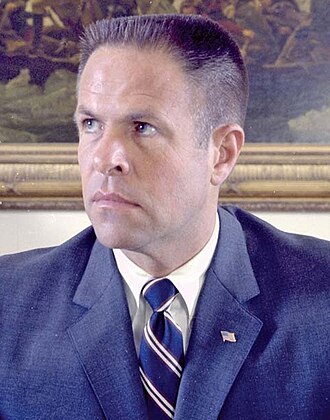
Haldeman, H. R. ("Bob")
H. R. ("Bob") Haldeman served as President Richard Nixon's White House Chief of Staff from January 1969 until his resignation in April 1973. Acting as Nixon's primary gatekeeper and closest aide, Haldeman was a central figure during the White House taping period and is featured prominently in hundreds of recorded conversations. His tenure ended abruptly when he was forced to resign due to his deep involvement in the Watergate cover-up, most notably captured directing the obstruction of justice on the infamous "Smoking Gun" tape.
What Haldeman talks about on the tapes
Public relations 579Vietnam War 411Political strategy 286Foreign Policy 234Presidential scheduling 209Economic policy 202Henry Kissinger 195Congressional relations 176Press relations 161Watergate 159White House operations 151White House administration 145
Conversations (2,364)
— Page 8 of 24President Nixon and H. R. Haldeman reviewed the positive initial public and political reception of the President's latest economic speech. They discussed the effectiveness of using personal letters to humanize the administration's economic policies, with the President specifically directing Haldeman to incorporate more such testimonials into future communications. The conversation also touched upon the strategic political handling of wage and price controls, upcoming legislative efforts, and the President's public presentation, including his choice of wardrobe for the televised address.
President Nixon and H. R. Haldeman debriefed on the President’s recent attendance at the Kennedy Center, focusing specifically on the protocol for his theatrical arrivals. They discussed the effectiveness of coordinating his entrance to coincide with the National Anthem or musical intervals to maximize impact. Additionally, they briefly touched upon the President’s recent company in the presidential box, acknowledging the political value of hosting figures like Alexander Haig.
President Nixon and H. R. Haldeman met to review the public and media reception of the President's recent economic speech, concluding that the coverage across major television networks was unexpectedly positive. They discussed the administration's ongoing negotiations with labor leader George Meany regarding the structure of the Wage Board and the Cost of Living Council, with Nixon expressing frustration over Meany's opposition and considering whether to proceed without labor union cooperation. The conversation also touched upon logistical preparations for upcoming travel to West Virginia and the scheduling of events at Camp David for visitors.
President Nixon met with Stephen B. Bull and H. R. Haldeman to coordinate the President's upcoming schedule and manage press relations regarding Wayne Hays. The discussion also included administrative logistics involving Charles E. Lucet and a scheduled lunch briefing with F. Edward Hebert. The meeting focused primarily on operational scheduling and the handling of key political figures.
President Nixon and H. R. Haldeman met to discuss media reactions to his economic policies, the political landscape surrounding potential congressional critics, and the internal handling of upcoming policy announcements. Nixon provided specific instructions for preparing for an imminent, highly confidential summit announcement, emphasizing a need for secrecy comparable to his approach toward China. Additionally, the President directed his staff to streamline the development of economic talking points by coordinating Herbert Stein, William Safire, and George Shultz while minimizing John Connally's involvement in the preliminary drafting phase.
President Nixon and Henry Kissinger met to finalize the logistics and strategy for the upcoming presidential trip to the People's Republic of China, with a primary focus on maintaining extreme operational security and minimizing the size of the accompanying delegation. Nixon mandated that the traveling party remain as small as possible—eschewing excessive communications infrastructure, large staff support, and luxury services—to ensure the trip remained a focused, high-level diplomatic mission rather than a media spectacle. Furthermore, they coordinated on the messaging for the concurrent US-Soviet Union summit, prioritizing the need for the President to personally manage the briefing while maintaining a carefully controlled sense of mystery regarding the geopolitical agenda.
President Nixon met with Italian Foreign Minister Aldo Moro and his delegation to discuss European foreign policy, the international role of the United States, and the upcoming United Nations vote concerning the representation of Taiwan and the People's Republic of China. Nixon emphasized the necessity of close cooperation among the world's major powers to ensure global stability, while acknowledging Italy's difficult domestic and international balancing act. The conversation also touched on Nixon's ongoing efforts regarding the Middle East and the importance of maintaining a unified, responsible front among Western allies.
President Nixon and H.R. Haldeman discussed scheduling for a meeting with George Shultz to address pressing labor issues and potential strategy regarding AFL-CIO leader George Meany. The President concurred with advisors that he should avoid a direct meeting with Meany to prevent political complications. Furthermore, Nixon decided to maintain a neutral, non-committal stance toward the press regarding Meany's anticipated public statements.
President Nixon and H. R. Haldeman briefly discuss the strategic timing of releasing poll results to maximize their impact in morning newspapers. Nixon emphasizes the urgency of the release, instructing Haldeman to coordinate the effort with George Bush. The exchange highlights the administration’s focus on controlling the public narrative through media placement.
President Nixon and H.R. Haldeman met to coordinate logistics for upcoming high-level meetings involving George P. Shultz and AFL-CIO leader George Meany. The discussion focused on managing the President's schedule and determining the appropriate level of executive involvement in these negotiations. Nixon ultimately decided to minimize his direct participation, directing Haldeman to facilitate the meetings to maintain strategic distance.
President Nixon and H. R. Haldeman met to review the President's upcoming schedule and coordinate logistics for the administration's historic trip to the People's Republic of China. The discussion focused on managing media coverage and ensuring effective communication regarding the delegation's secret service and support staff requirements. Nixon emphasized the necessity of prioritizing the China summit, tasking Haldeman with ensuring that preparations—particularly regarding press strategy—were executed precisely to maximize favorable visibility.
President Nixon and H. R. Haldeman met to coordinate upcoming scheduling and staffing logistics, specifically addressing travel plans for Henry Kissinger and meetings involving Senator Charles Percy in Chicago. The discussion focused on managing the President's calendar and delegating responsibilities to aides like Clark MacGregor to ensure operational efficiency. The pair evaluated the political implications of these engagements and determined the necessary preparatory steps for the following day.
President Nixon and H.R. Haldeman briefly conferred regarding the specific time difference between Washington and Moscow to facilitate scheduling or communications planning. Haldeman committed to verifying the exact offset and providing the information to the President upon his arrival at the White House. This short exchange highlights the logistical coordination required for Nixon's ongoing international diplomatic engagements.
President Nixon and H. R. Haldeman briefly conferred to clarify the current time in Moscow. The primary purpose of the exchange was to establish a precise temporal reference for international coordination or scheduling. No further policy decisions were recorded during this brief administrative check.
President Nixon, H. R. Haldeman, Henry Kissinger, and George Shultz met to discuss recent developments regarding upcoming summits with the Soviet Union and the status of domestic labor relations. Kissinger provided a status update on the diplomatic conditioning for the Soviet visit and emphasized the strategic importance of the ongoing negotiations with the USSR and the PRC. Concurrently, Shultz and the President coordinated a public response to organized labor’s agreement to serve on the Pay Board, deciding to frame the cooperation as a victory for the country’s economic program rather than a political win for either side.
President Nixon and H. R. Haldeman met in the Oval Office to coordinate administrative scheduling and personnel matters. The discussion focused on organizing an upcoming meeting for the President. This interaction highlights the routine management of the President's daily agenda and staffing priorities during this period.
President Nixon and H. R. Haldeman discussed communications strategy, specifically focusing on the necessity of keeping public addresses and recorded messages concise and impactful. They reviewed the President's upcoming film commitments and considered how to effectively frame the administration's achievements, particularly regarding the balance between foreign policy milestones like the forthcoming China trip and domestic economic progress. Nixon directed Haldeman to ensure that White House staff consistently integrate these key accomplishments into their own speeches to maximize public awareness and support.
President Nixon met with his Cabinet and key staff members to review the administration’s domestic and foreign policy priorities, primarily focusing on the economic transition to 'Phase II' and the announcement of a 1972 Soviet summit. Officials discussed the successful implementation of the wage-price freeze and the strategy for securing organized labor's cooperation on the newly formed Pay Board and Price Commission to curb inflation. Additionally, the President addressed the importance of linking economic policy to job growth through his pending tax proposals, while Secretary of State Rogers and the President emphasized that international diplomatic overtures toward the Soviet Union and China were part of a cohesive, long-term strategy for global peace.
President Nixon met with H.R. Haldeman and other staff members to coordinate various administrative tasks, including the logistics for his upcoming trip to the People's Republic of China, press management, and the vetting of Supreme Court nominees. A significant portion of the discussion focused on limiting the size of the accompanying press corps to ensure efficiency and control the narrative. Additionally, Nixon reviewed his upcoming schedule, debated the political strategy for managing the Republican Party's image, and discussed the appropriate protocol for social events and visitor interactions at the White House.
President Nixon consulted with H. R. Haldeman regarding diplomatic strategy to retain Taiwan's seat in the United Nations, emphasizing the need for discreet pressure on smaller nations rather than public overtures. They also discussed plans for the President's upcoming trip to the People's Republic of China, with Nixon expressing a desire to limit the visit to four days to avoid unnecessary substantive downtime. Additionally, Nixon placed personal calls to inquire about the health of injured football player Kenneth Dyer and to offer administrative support and military funeral assistance to Mrs. Dean G. Acheson following the death of her husband.
President Nixon and H. R. Haldeman met in the Oval Office to coordinate administrative logistics regarding the President's upcoming schedule. The discussion focused on practical arrangements, specifically the use of a car for Mrs. Acheson and potential adjustments to the memorial service for Dean Acheson. No major policy decisions were reached beyond these logistical updates.
President Nixon and H. R. Haldeman discuss the scheduling of the memorial service for former Secretary of State Dean Acheson to determine if the President can attend. Nixon expresses a desire to participate in the event but faces conflicts with his existing daily itinerary. Haldeman investigates the feasibility of shifting the service to an earlier time to accommodate the President's schedule.
President Nixon and H. R. Haldeman discussed logistics for the upcoming presidential visit to the People's Republic of China, specifically focusing on itinerary length and the potential removal of extra city stops to streamline Secret Service and communications requirements. The two also addressed strategy regarding the United Nations vote on Taiwan, aiming to manage congressional pressure while maintaining the administration's foreign policy objectives. Additionally, they touched upon minor administrative matters, including the President's potential attendance at Dean Acheson’s funeral and communication strategies for ambassadors.
President Nixon met with Rose Mary Woods, H. R. Haldeman, and others to manage his upcoming schedule, including decisions on ambassadorial credentials and potential appearances in Florida. The group discussed administrative personnel issues, specifically the President's frustration with cabinet members failing to promote his agenda, as well as the logistics of White House social events and guest list management. Nixon expressed a desire to reduce time spent on ceremonial tasks like hand-shaking, citing them as an inefficient use of his time.
President Nixon, H. R. Haldeman, and Stephen Bull meet to discuss administrative details regarding White House guest lists, event protocols, and the logistical management of the President's schedule. They address specific concerns over social invitations, staff morale, and the necessity of managing high-level visitor interactions to maximize the President's efficiency. The conversation emphasizes the importance of streamlining procedures for official events and balancing personal diplomatic requirements with political obligations.
President Nixon met with H.R. Haldeman and pollster Louis Harris to discuss administrative logistics, public opinion, and political strategy regarding his economic policies and international relations. They evaluated the effectiveness of recent diplomatic initiatives, including upcoming summits with the Soviet Union and China, and explored strategies for managing public expectations regarding inflation and wage-price controls. The conversation concluded with an analysis of current polling trends on sensitive social issues, such as busing and racial politics, and a review of the President's public standing.
H. R. Haldeman coordinated a meeting between President Nixon and Secretary of the Treasury John B. Connally. Through discussions with White House staff and Connally's secretary, Rose, Haldeman confirmed the President's availability. The participants established that Connally should proceed to the Executive Office Building to meet with the President once his current engagement concluded.
President Nixon met with H.R. Haldeman and John Ehrlichman to coordinate administration strategy regarding agricultural policy, specifically addressing corn prices and the potential replacement of Secretary of Agriculture Clifford Hardin. The participants also discussed the difficulty of managing Republican legislators and the need for a more centralized, proactive approach to securing legislative support. Additionally, they reviewed potential Supreme Court nominees and debated the administration's response to media inquiries regarding the President's personal finances and business dealings involving Charles G. Rebozo.
President Nixon met with H. R. Haldeman and Charles Colson to discuss media relations, public opinion, and political strategy heading into the 1972 election cycle. The conversation focused on efforts to promote favorable literature, manage network coverage of the administration's foreign policy initiatives, and monitor the activities of political rivals like Edward M. Kennedy. The participants also evaluated the performance of Republican spokesmen and considered adjustments to the President's schedule to bolster public support for his economic and diplomatic agendas.
President Nixon and H. R. Haldeman met to coordinate administrative logistics, including locating a misplaced Central Intelligence Agency briefing book possibly held by Henry Kissinger. The pair also reviewed upcoming scheduling matters regarding Donald Kendall and clarified communication protocols involving John Ehrlichman. These discussions served to ensure that key internal intelligence documents and scheduling arrangements were properly organized for the President’s agenda.
President Nixon and H. R. Haldeman coordinate the scheduling of an upcoming meeting with an unnamed individual, weighing the merits of a 5:00 p.m. appointment against a morning session. The discussion reflects the President's desire to manage his workload, specifically mentioning that the agenda includes Vietnam-related matters. They ultimately prioritize the late afternoon time slot to better accommodate the President's schedule.
President Nixon met with Stephen B. Bull and H. R. Haldeman to coordinate the scheduling of high-level meetings and adjust the timing of an upcoming appointment. The discussion focused on managing the President's schedule regarding the Attorney General, potential Supreme Court nominees, and John B. Connally. Nixon directed staff to finalize these logistical arrangements to ensure specific individuals were available at the designated times.
President Nixon and H. R. Haldeman briefly coordinate the President's schedule regarding upcoming meetings with Henry Kissinger and Alexander Haig. Nixon expresses a desire to clear his afternoon schedule and requests that Haldeman vet a visitor to determine if the meeting is worthwhile. The discussion concludes with the President instructing Haldeman to assess the necessity of these engagements before proceeding.
President Nixon and H.R. Haldeman discuss modifications to the President’s upcoming schedule, specifically emphasizing the need to avoid a formal conference with Robert McNamara. Nixon expresses frustration regarding McNamara's potential visit and insists on limiting the interaction. Additionally, the President directs that Henry Kissinger avoid press engagements regarding upcoming briefings on the Soviet Union to maintain control over the administration's messaging.
President Nixon, Henry Kissinger, and John Connally meet to discuss diplomatic strategy regarding upcoming high-level international travel and sensitive foreign policy issues. A primary focus is planning a trip to Asia for Connally to reassure allies—specifically Indonesia, Japan, and Vietnam—about U.S. commitment in the region amid concerns regarding the President’s pending diplomatic initiatives with China. The group also addresses tactical considerations for the China summit, the importance of maintaining a strong public image, and the selection of a new U.S. representative to the United Nations.
President Nixon and H. R. Haldeman engaged in an extensive discussion regarding the logistical and symbolic challenges of managing the President's upcoming state visits to China and Russia. The conversation focused on balancing the desire for positive public optics—such as large crowds—with the diplomatic necessity of not appearing as a captive of foreign governments. Nixon emphasized the importance of maintaining control over his itinerary and messaging, particularly regarding the potential inclusion of First Lady Pat Nixon, to ensure these high-stakes diplomatic missions aligned with American foreign policy interests.
President Nixon met with his staff and Henry Kissinger to coordinate logistics and public relations strategies for his upcoming diplomatic trips to the People's Republic of China and the USSR. The discussion focused on managing international itineraries, advance team assignments, telecommunications infrastructure, and the extensive press corps requirements for these state visits. Additionally, the group addressed domestic personnel matters, including Supreme Court appointment contingencies and media coverage regarding the President's personal finances.
President Nixon and H.R. Haldeman reviewed various administrative concerns, including staff scheduling, public relations, and the political fallout from Supreme Court nominations. The discussion addressed the perceived media bias surrounding Henry Kissinger's China initiative and the President’s desire to maintain control over the narrative regarding foreign policy summits. Additionally, they evaluated campaign finance matters and the management of White House photography to improve the President's public image.
President Nixon met with H. R. Haldeman to evaluate potential Supreme Court nominees, weighing the political implications and qualifications of figures such as Howard Baker, Caspar Weinberger, Hershel Friday, and Mildred Lillie. The discussion focused on selecting candidates who could secure Senate confirmation while adhering to the administration's philosophical goals and navigating regional and gender-based political concerns. Additionally, the President and his staff touched upon U.S. foreign economic policy, specifically assessing the performance of Peter G. Peterson regarding textile negotiations.
President Nixon and H. R. Haldeman coordinate upcoming scheduling commitments and internal White House messaging. Nixon orders a total media blackout regarding Supreme Court appointments to conceal a private strategy being developed with John Mitchell. The two also discuss polling methodologies concerning youth demographics and resolve logistical disagreements regarding travel arrangements for John Connally and Robert Finch.
President Nixon and H. R. Haldeman discussed strategies regarding upcoming judicial appointments, emphasizing the need for a total media blackout among staff to avoid premature speculation. The conversation also touched upon logistical coordination for travel, specifically prioritizing Conway for backup plane access due to the duration of his upcoming mission. Additionally, the pair briefly coordinated on foreign policy concerns involving Moscow, noting an ego-related dispute that required resolution.
President Nixon, John Mitchell, and H.R. Haldeman met in the Oval Office to strategize on impending Supreme Court nominations and the administration's relationship with the American Bar Association (ABA). The discussion centered on vetting candidates—specifically Lewis F. Powell, Jr., Howard H. Baker, Jr., and various women—while navigating potential political fallout and media criticism regarding judicial qualifications. The President decided to prioritize Powell and expressed a willingness to move forward with nominees like Baker even if they did not receive full ABA approval, aiming to limit the influence of the organized bar and avoid public controversies similar to past nomination failures.
Following a discussion with H. R. Haldeman regarding domestic political appointments and strategies to manage public broadcasting, President Nixon hosted Prime Minister Sirimavo Bandaranaike of Ceylon in the Oval Office. The two leaders primarily discussed the security challenges in Ceylon, the implications of Nixon's upcoming diplomatic trips to the PRC and the USSR, and the importance of global agricultural development. Nixon emphasized that his foreign policy initiatives aimed to establish a dialogue with major powers to prevent conflict while maintaining U.S. support for regional allies.
President Nixon met with H.R. Haldeman and Charles Colson to discuss a broad range of domestic political strategies, including countering media and congressional opposition to potential Supreme Court nominees. The group examined methods to undermine the influence of the "Common Cause" organization and evaluated the political utility of the Kennedy Center, including its management and potential renaming. Additionally, they reviewed strategies for leveraging Lyndon B. Johnson’s memoir to discredit political opponents and analyzed positive economic trends in housing starts despite ongoing stock market volatility.
President Nixon and H.R. Haldeman discuss the potential judicial appointment of an individual referred to as 'Buster.' The dialogue centers on the strategic handling of Chief Justice Warren Burger regarding the candidate's professional qualifications and his standing with the American Bar Association. The participants evaluate whether Burger would approve the nomination if confronted directly about the candidate's credentials.
President Nixon and H.R. Haldeman met to coordinate scheduling and discuss logistical arrangements for an upcoming budget meeting. Their conversation addressed administrative priorities and included a brief exchange regarding Secretary of State William P. Rogers. The President concluded the meeting by requesting to speak with the Attorney General.
President Nixon and H. R. Haldeman analyze recent presidential approval polling data from Louis Harris, George Gallup, and Albert Sindlinger to assess the political climate. They focus on the timing of survey methodologies, specifically noting that current Gallup figures were collected prior to the announcement of the upcoming Soviet Union summit. The discussion reflects a desire to understand the lag in public opinion trends and the influence of media coverage on presidential support ratings.
President Nixon and H. R. Haldeman met to discuss scheduling concerns involving Treasury Secretary John Connally, specifically regarding his health and a potential visit to Camp Hoover. The conversation also touched on historical reflections regarding international summits and the Bay of Pigs operation. Additionally, Nixon considered strategies to manipulate media coverage by planting information with the New York Times or other outlets to gauge public and press reactions.
President Nixon consulted with H. R. Haldeman, Frederic Malek, and Alexander Butterfield to discuss the selection process for upcoming Supreme Court nominations. The group deliberated on potential candidates, specifically focusing on the inclusion of qualified women for the vacancies. Nixon directed his staff to vet additional candidates from existing lists before coordinating further with Attorney General John Mitchell.
President Nixon and H.R. Haldeman discuss the vetting of personnel and potential political appointees within the administration. The conversation focuses on identifying specific individuals involved in recent internal conflicts, specifically mentioning legal professionals and figures like James Mann. They aim to assess the loyalty and backgrounds of these individuals to manage ongoing administrative challenges.
President Nixon met with H. R. Haldeman and Frederic V. Malek to discuss the recruitment and appointment of women to high-level legal and judicial positions. Following this, Nixon consulted with Attorney General John N. Mitchell regarding specific candidate vetting, the political necessity of increasing female representation in the federal judiciary, and strategies for managing potential appointments. The participants aimed to identify qualified female prospects to address public pressure and project a commitment to gender diversity in government.
President Nixon met with H.R. Haldeman and other staff members to review a wide range of political, administrative, and foreign policy matters. The conversation covered the potential appointment of a new Secretary of Agriculture, upcoming Supreme Court nomination strategies, and the President's schedule, including his desire to minimize press interviews and public appearances. Additionally, the participants discussed U.S. foreign policy toward the Soviet Union, Latin America, and NATO, with Nixon emphasizing his intent to exert greater control over these diplomatic initiatives while managing the roles of Secretary of State William Rogers and Henry Kissinger.
President Nixon and H.R. Haldeman reviewed logistical arrangements for upcoming White House events, including a dinner for a Japanese delegation featuring Henry Kearns and Nobusuke Kishi. The discussion touched upon the scheduling of an October 25 meeting and broader concerns regarding press relations, specifically the administration’s strategy for dealing with the Los Angeles Times. The conversation also briefly veered into personal observations regarding the temperament and perceived attitudes of various individuals and groups within the administration's political sphere.
President Nixon met with Alexander Haig to discuss a wide range of administrative and foreign policy issues, including strategic planning for upcoming diplomatic summits with the Soviet Union and China, and the need for the President to engage in direct, private discussions with world leaders. They reviewed the status of the war in Vietnam, noting positive casualty trends and the importance of publicizing successes in Cambodia to maintain domestic and congressional support. Additionally, the President and his staff coordinated the logistics and messaging for First Lady Pat Nixon’s upcoming foreign travel, while also addressing trade negotiations with Japan and potential economic outreach initiatives for Latin American allies.
President Nixon and H. R. Haldeman coordinate the administration's legislative calendar, focusing on how congressional adjournment timelines affect the scheduling of the upcoming State of the Union address. The discussion weighs potential return dates for Congress in early 1972 to ensure the address does not conflict with First Lady Pat Nixon's travel publicity. They conclude that the State of the Union can be deferred until January 10th or later to accommodate these scheduling uncertainties.
President Nixon and H. R. Haldeman met to coordinate upcoming scheduling logistics for the President’s agenda. The discussion focused on finalizing the timeline for meetings on October 21, specifically addressing the arrangement of a session involving Nobusuke Kishi and Henry Kearns. The pair prioritized determining the preferred location and duration for these appointments to ensure the President's calendar was efficiently organized.
President Nixon met with Alexander Butterfield and H.R. Haldeman to handle administrative tasks, including the signing of a photograph for John R. Brown, III. The group primarily focused on planning a forthcoming White House dinner for Nobusuke Kishi, specifically debating guest list capacity in the family dining room. Nixon ultimately directed that the guest list be reduced to ensure a more intimate setting and instructed his staff to finalize the invitees for the Japanese delegation.
President Nixon and H. R. Haldeman coordinate the final logistics for announcing two pending Supreme Court nominations. The President decides to bypass a full prime-time television address, opting instead for a 7:00 p.m. announcement the following evening. This decision finalized the timing for a sensitive political maneuver intended to manage the public reveal of his judicial selections.
President Nixon directed H. R. Haldeman to reschedule a meeting with George H. W. Bush to accommodate preparation time for an upcoming public announcement. The President needed to finalize remarks regarding a pending Supreme Court nomination. Haldeman agreed to move the appointment to Friday to ensure the President had sufficient time for his statement.
President Nixon and H. R. Haldeman held a brief meeting to address a specific logistical or personal matter involving the landscaping of White House grounds. The discussion centered on instructions to replace a bush, reflecting the President's personal attention to the exterior aesthetics of the Executive Office Building. No broader policy or administrative developments were recorded during this exchange.
President Nixon and H. R. Haldeman met briefly to adjust the President's upcoming schedule, specifically focusing on rescheduling a meeting with George H. W. Bush. The pair also coordinated logistical arrangements for a forthcoming White House dinner. The brief discussion concluded with an agreement on the necessity for Bush to fulfill other professional obligations before meeting with the President.
President Nixon and H. R. Haldeman discussed the strategic communication and drafting process for the upcoming announcement of Supreme Court nominees. Nixon emphasized the necessity of employing a skilled writer, specifically mentioning William L. Safire, to ensure the speech is effectively crafted for public delivery. The conversation focused on the importance of selecting the right tone and reporter-like precision to articulate the appointments clearly.
President Nixon and H. R. Haldeman coordinated the logistics and communications strategy for the President's upcoming public announcement regarding his Supreme Court nominees. They discussed the involvement of various staff members, including Richard A. Moore and John Mitchell, and weighed concerns regarding public perception, the American Bar Association, and the impact of the announcement on the stock market. Additionally, the pair touched upon social matters involving the Kennedy family and potential press coverage of White House events, as well as the President’s upcoming schedule.
President Nixon and H. R. Haldeman discussed strategy regarding upcoming Supreme Court nominations, specifically focusing on managing the vetting process and the influence of the American Bar Association (ABA). The President emphasized the need for strict confidentiality, instructing staff to avoid leaks and to withhold information from the press, including directives for Ronald Ziegler to remain noncommittal regarding potential nominees. They also addressed the necessity of compiling detailed biographical data on candidates while asserting the administration's intention to proceed with appointments regardless of ABA approval.
President Nixon and H. R. Haldeman met to coordinate White House administrative matters and media strategy. The discussion touched upon the scheduling of the President, interactions with the Attorney General, and potential outreach involving the American Bar Association. The two assessed the status of ongoing preparations to ensure that current executive initiatives remained on track.
President Nixon met with H. R. Haldeman and Ronald Ziegler to coordinate the public relations strategy and press messaging regarding his forthcoming Supreme Court nominations. The discussion focused on managing the American Bar Association’s (ABA) role and its reported leaks regarding potential candidates like Mildred L. Lillie and Herschel H. Friday. Nixon explicitly instructed Ziegler to maintain a position of ignorance regarding the specific nominees during press briefings and emphasized that Richard A. Moore should handle the primary communication strategy for the announcement.
President Nixon and H. R. Haldeman met to coordinate specific research data for an upcoming presidential address. The discussion centered on compiling statistics regarding the years of active law practice for various Supreme Court Justices. Haldeman received instructions to formalize this data to support the content of the President’s speech.
President Nixon met with H.R. Haldeman, John B. Connally, and Ronald L. Ziegler to coordinate administrative messaging and manage political strategy. The discussion focused on the selection process for Pay Board appointments, the public relations strategy regarding Supreme Court nominations, and the management of media coverage and polling data. The President emphasized his desire to control the narrative regarding his administration's accomplishments and addressed internal concerns regarding the performance of his cabinet members and staff.
President Nixon and H. R. Haldeman discussed the efficiency and logistics of scheduling diplomatic credential presentations. Nixon expressed frustration regarding the excessive time currently allocated to these meetings, which included extended conversations with the diplomats. He instructed Haldeman to streamline future sessions by limiting them strictly to photo opportunities to conserve his official schedule.
President Nixon, H. R. Haldeman, and Richard A. Moore met to prepare for a public address regarding the President’s nominations of William H. Rehnquist and Lewis F. Powell, Jr. to the Supreme Court. The discussion focused on refining the speech text, emphasizing the nominees' judicial philosophies, and gathering background data on their professional qualifications and legal backgrounds. The participants also considered how to frame these appointments to the press and the public to ensure a favorable reception of the nominees' credentials and legal experience.
President Nixon and H. R. Haldeman met to coordinate the logistics and timing of a forthcoming presidential speech. The discussion focused on establishing the necessary lead time for the address, with specific reference to notifying Senator Jacob K. Javits. The brief exchange served to finalize the scheduling parameters for the President's public communications strategy.
President Nixon met with Rose Mary Woods and H. R. Haldeman to discuss ongoing judicial vacancies and the broader implications of his Supreme Court selections. The group reviewed candidate credentials—specifically those of Herschel H. Friday and William H. Rehnquist—while evaluating the judicial philosophies of current and prospective Justices. Additionally, Nixon provided Woods with instructions regarding specific revisions for upcoming speech materials.
President Nixon and H. R. Haldeman met to coordinate the internal management and public messaging regarding upcoming judicial and administrative appointments. The discussion centered on finalizing the selection processes involving key figures such as John Mitchell, Lawrence Walsh, and Warren Burger, while also addressing concerns regarding sensitive leaks. They further reviewed statistical data intended to support the President’s scheduled speech concerning his recent appointments.
President Nixon, Rose Mary Woods, and Marjorie P. Acker collaborated on the final editing and structural revisions of a speech concerning upcoming Supreme Court nominations. The President consulted with H. R. Haldeman throughout the process to refine specific content, including references to Chief Justice John Marshall. The session concluded with final instructions regarding the document's pagination and formatting to ensure the speech was prepared for delivery.
President Nixon and H. R. Haldeman briefly conferred to verify biographical details regarding the early career of former Chief Justice John Marshall. The President specifically sought confirmation that Marshall served in the Virginia legislature prior to his judicial tenure. The inquiry was successfully resolved with Haldeman confirming Nixon's recollection.
President Nixon and H. R. Haldeman met to discuss the timing of impending Supreme Court vacancies. The primary focus of the brief consultation was to manage the political strategy surrounding potential judicial appointments. No final decisions were recorded, but the discussion highlights the administration's active planning regarding the composition of the high court.
President Nixon met with Rose Mary Woods and H. R. Haldeman to evaluate his pending Supreme Court nominations, specifically focusing on the qualifications and backgrounds of William H. Rehnquist and Lewis F. Powell, Jr. The discussion included a review of the candidates' legal school rankings and ages, as well as coordination regarding the President's upcoming speech on the appointments. Additionally, the participants addressed the President's schedule and the status of various administrative tasks handled by his speechwriting team.
President Nixon and H.R. Haldeman spoke briefly to clarify the specific resignation dates of Supreme Court Justices Hugo L. Black and John M. Harlan. The President sought confirmation of the exact dates, establishing that Black resigned on September 17 and Harlan on September 23. This exchange served to finalize the timeline of the vacancies for administrative or political record-keeping.
President Nixon and H. R. Haldeman met to coordinate preparations for an upcoming presidential address. The discussion centered on lighting requirements and logistical arrangements necessary to optimize the broadcast quality of the event. No major policy decisions were reached, as the conversation focused exclusively on technical stagecraft for the speech.
President Nixon met with various aides and technicians to prepare for and broadcast a televised national address, followed by a meeting with a group of Senators and staff to discuss his recent Supreme Court nominations. During the session, the President focused on the qualifications of his nominees, Lewis F. Powell and William H. Rehnquist, emphasizing the importance of the Supreme Court's role in the government. The conversation concluded with the President greeting and presenting gifts to the television, lighting, and sound crews who assisted with his broadcast.
President Nixon and H. R. Haldeman discussed the overwhelmingly positive public and editorial reaction to the President's recent Supreme Court nominations of Lewis F. Powell, Jr. and William H. Rehnquist. The pair noted that the surprise announcement effectively silenced critics and left political opponents, such as Senators Bayh and Kennedy, caught off guard. While Powell enjoyed broad recognition, the two agreed on the necessity of conducting an outreach campaign to build support for Rehnquist, whose credentials were less well-known to the broader public and legal establishment.
President Nixon and H. R. Haldeman met to review the President’s upcoming public schedule, including strategy for a potential radio address and administrative coordination for meetings with Imelda Marcos and the Price Commission. The pair discussed current Gallup polling trends, noting a recent increase in presidential approval ratings, and reviewed the economic landscape, specifically focusing on the Consumer Price Index and Arthur Burns's handling of the money supply. Additionally, they touched upon the confirmation preparation for Supreme Court nominees William Rehnquist and Lewis Powell, with Nixon emphasizing the need for thorough vetting to avoid potential Senate confirmation pitfalls.
President Nixon, H.R. Haldeman, and Ronald Ziegler discussed the positive public and political reception of Supreme Court nominees Lewis F. Powell, Jr. and William H. Rehnquist, focusing on the importance of their conservative credentials and intellectual capability. Nixon analyzed the ideological balance of the Court and strategized on managing media narratives regarding the nominees' ages and backgrounds. Additionally, the participants reviewed the administration's public relations approach to the Pay Board and the potential labor boycott, deciding to downplay the absence of labor members during upcoming announcements.
President Nixon met with his senior advisors, including H. R. Haldeman, Secretary of State William Rogers, and UN Ambassador George H. W. Bush, to coordinate a final, high-pressure diplomatic push regarding the United Nations vote on Chinese representation. The participants strategized on how to secure decisive votes from key nations, including Italy, Mexico, Argentina, and Malta, while weighing the political risks of direct presidential intervention and the potential impact of Henry Kissinger's upcoming return from China. They concluded by establishing a list of targeted countries and specific action items, such as arranging presidential phone calls and leveraging foreign aid dependencies, to bolster support for the U.S.-backed position.
President Nixon and H. R. Haldeman met to review scheduling matters, including preparations for the President’s upcoming trip to the People's Republic of China and a meeting with John Connally. The discussion focused on the logistics of the China delegation, specifically regarding staff appointments, press representation, and the President's personal approval of all personnel traveling with the First Lady. Nixon emphasized his desire to keep the entourage minimal, avoid unnecessary backgrounders with the press, and maintain a disciplined schedule during the visit.
President Nixon met with Vice President Spiro Agnew, H. R. Haldeman, and various staff members to coordinate strategy for upcoming foreign and domestic challenges. Key discussions focused on preparations for the President’s trip to the People’s Republic of China, managing media coverage, and ongoing frustrations regarding the recent United Nations vote on Taiwan. The participants also reviewed the administration's judicial appointments, the economic outlook, and strategies for handling dissent within Congress and the press.
President Nixon met with H. R. Haldeman, Charles Colson, and other staff members to discuss political strategies following the United Nations vote to expel Taiwan. The participants focused on channeling public frustration away from the administration and toward the United Nations itself, considering symbolic actions such as reduced funding or critical public statements. Additionally, the group reviewed the 1972 political landscape, potential Democratic presidential tickets, and the progress of upcoming Supreme Court confirmation hearings for Rehnquist and Powell.
President Nixon, John Connally, and George Shultz met to discuss a multi-faceted strategy for handling international economic and foreign policy challenges, specifically in response to the United Nations vote on Taiwan's expulsion. They agreed that the United States must move toward a more assertive, bilateral approach to foreign relations, prioritizing national interests over traditional multilateral institutions and the demands of European allies. Nixon decided to move forward with a new international economic offensive, tasking Connally with navigating trade negotiations during his upcoming trip to Japan while keeping the strategy tightly controlled to prevent bureaucratic leaks. The President also emphasized the need to bypass the State Department's traditional channels to ensure that U.S. interests, particularly regarding trade and monetary policy, were handled with greater efficiency and independence.
President Nixon and H.R. Haldeman discuss the political fallout following the United Nations vote to expel Taiwan and readmit the People's Republic of China. The conversation focuses on managing domestic criticism from conservatives like Ronald Reagan and John Ashbrook, as well as coordinating the administration's messaging through Secretary of State William Rogers and UN Ambassador George H.W. Bush. Nixon decides to meet with Henry Kissinger at the residence to further deliberate on the administration's response to the diplomatic outcome.
President Nixon and H.R. Haldeman discuss the political fallout of the United Nations vote on Taiwan and the administration's strategy to manage domestic reaction. The conversation centers on coordinating efforts to prevent influential figures like Ronald Reagan and William F. Buckley, Jr. from public dissent, with Henry Kissinger facilitating communications to keep them aligned. Nixon evaluates the performance of Secretary of State William P. Rogers during the crisis and confirms his reliance on John Mitchell to help manage key political stakeholders.
President Nixon directed H. R. Haldeman to arrange a breakfast meeting with Secretary of State William P. Rogers and Henry Kissinger to debrief on Kissinger’s recent travels. Haldeman subsequently coordinated the logistics with Rogers while also addressing the urgent need to finalize a nomination for the U.S. representative to NATO. The discussion highlighted the administration’s internal debate between selecting Walter J. Stoessel, Jr. or Charles D. Thornton for the vacancy ahead of an upcoming summit.
President Nixon met with his senior advisors, including Henry Kissinger, H.R. Haldeman, and Ronald Ziegler, to discuss the political fallout of the United Nations' vote to expel Taiwan and seat the People's Republic of China. Nixon expressed frustration with the State Department and perceived efforts by Secretary of State William Rogers to undermine his China policy and independent diplomatic efforts. The group focused on controlling the narrative regarding the UN vote, specifically by emphasizing the 'shocking' and 'disrespectful' conduct of delegates who celebrated the U.S. defeat, rather than dwelling on the vote itself, to channel public and Congressional anger away from the administration. Consequently, they decided to adopt a low-key approach regarding future announcements of Nixon’s China trip and to avoid a public, high-level meeting with Ambassador George H.W. Bush to minimize media speculation.
President Nixon and his senior advisors, including H. R. Haldeman, Henry Kissinger, and John Connally, met to discuss defense budget strategies, the political fallout from Taiwan's expulsion from the United Nations, and preparations for upcoming foreign diplomacy. Nixon emphasized the need for a leaner, more effective military posture that focuses on strategic procurement rather than broad manpower, while also debating the risks of domestic political opposition and the impact of the defense budget on the economy. The group analyzed the necessity of maintaining a strong defense to bolster negotiating positions with the Soviet Union and China, while also coordinating the administration’s measured public response to the UN vote.
President Nixon met with his budget and domestic policy advisors, including John Ehrlichman and John Mitchell, to evaluate the political and economic feasibility of a proposed Value Added Tax (VAT) as a mechanism to fund public and private education. The primary objectives of the plan were to provide federal relief for local property taxes, address the California Supreme Court’s school funding ruling, and extend aid to parochial schools to appeal to blue-collar Catholic voters. The participants debated the political risks of proposing a new federal tax in an election year versus the potential benefits of offering tangible relief to homeowners and securing support from key constituencies.
President Nixon met with H.R. Haldeman and Charles Colson to refine political strategies, focusing on the potential for federal tax relief to appeal to key demographics, specifically Catholics and homeowners, through a proposed property tax relief act. The discussion also addressed foreign policy, with Nixon expressing intense frustration over the UN's expulsion of Taiwan and authorizing a strategy of rewarding allies and punishing those who voted against U.S. interests. Finally, Henry Kissinger joined to brief the President on his recent press engagement, where he managed expectations regarding Nixon's upcoming trips to China and the Soviet Union while defending the administration's stance on the UN vote.
President Nixon met with H.R. Haldeman and Henry Kissinger to discuss scheduling logistics for upcoming diplomatic engagements, specifically regarding the visit of Yugoslav President Josip Broz Tito. The participants addressed the handling of White House visitor lists, the potential inclusion of additional officials in diplomatic meetings, and the management of domestic political fallout regarding the United Nations vote on China. Nixon also reviewed his recent efforts to secure support from members of Congress for the foreign aid bill and debated the optimal timing for a public announcement regarding U.S. troop levels in Vietnam.
President Nixon and H.R. Haldeman review administrative and scheduling matters, including the search for a new Secretary of Agriculture and the management of upcoming political travel. The discussion shifts to foreign policy, where they assess the strategic impact of the UN vote to expel Taiwan and the potential for deflecting political backlash. They also coordinate on legislative strategy regarding the Cooper-Church amendment and evaluate the effectiveness of recent communications regarding the Vietnam War.
President Nixon, Henry Kissinger, and H.R. Haldeman met to discuss strategies for managing international relations, specifically navigating the complex diplomatic process surrounding the President's upcoming trip to the People's Republic of China (PRC). A primary focus was neutralizing Secretary of State William Rogers's potential interference and tendency to critique the administration's independent diplomatic initiatives. Nixon instructed Kissinger to engage with Rogers regarding the proposed communique while maintaining tight control over the process to prevent leaks and ensure the President's personal oversight remained paramount.
President Nixon met with H. R. Haldeman and Henry Kissinger to navigate complex foreign and domestic policy challenges, including the recent UN vote to expel Taiwan and the administration's strategic approach to the People's Republic of China. The participants analyzed the political fallout of the UN vote, debated the professional conduct of Secretary of State William Rogers, and discussed strategies for the upcoming presidential trips to China and the Soviet Union. Nixon emphasized the necessity of maintaining control over sensitive diplomatic negotiations while managing public relations and domestic conservative opinion, ultimately directing his staff to streamline communication and prioritize the administration's primary foreign policy objectives.
President Nixon and H. R. Haldeman discussed a variety of administrative and personnel matters, including the potential appointment of a new Secretary of Agriculture and the administration's preference for utilizing younger staff members for operational roles. The pair also assessed foreign policy challenges, specifically touching upon the United Nations vote regarding Taiwan and concerns over Secretary of State William P. Rogers's handling of Middle Eastern affairs. The conversation concluded with discussions regarding upcoming social engagements and the President's need for a brief respite.