Haldeman, H. R. ("Bob")
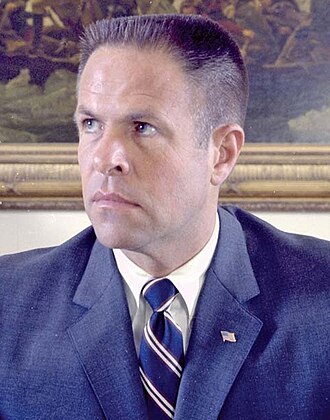
H. R. ("Bob") Haldeman served as President Richard Nixon's White House Chief of Staff from January 1969 until his resignation in April 1973. Acting as Nixon's primary gatekeeper and closest aide, Haldeman was a central figure during the White House taping period and is featured prominently in hundreds of recorded conversations. His tenure ended abruptly when he was forced to resign due to his deep involvement in the Watergate cover-up, most notably captured directing the obstruction of justice on the infamous "Smoking Gun" tape.
What Haldeman talks about on the tapes
Public relations 579Vietnam War 411Political strategy 286Foreign Policy 234Presidential scheduling 209Economic policy 202Henry Kissinger 195Congressional relations 176Press relations 161Watergate 159White House operations 151White House administration 145
Conversations (2,364)
— Page 7 of 24President Nixon met with Donald Rumsfeld and H.R. Haldeman to discuss domestic political strategy, upcoming speaking engagements, and the administration’s approach to college campuses and youth outreach. The group evaluated Republican standing in key states like Illinois, emphasizing the importance of managing public perceptions of incumbent governors and party unity. Furthermore, they coordinated the logistical planning for the President's upcoming trip to the People's Republic of China, specifically addressing press access, media coverage, and the size of the official delegation.
President Nixon and H. R. Haldeman engaged in a wide-ranging management discussion regarding administrative social events, upcoming travel, and personnel appointments. They specifically focused on diversifying invitations to State Dinners and the strategic use of Presidential boxes at the Kennedy Center to bolster prestige and foster political relationships. Additionally, the President and Haldeman reviewed potential sites for an upcoming Montana trip, evaluated strategies for the administration's economic policy messaging, and discussed potential staff changes for the Office of Emergency Preparedness and military aide positions.
President Nixon met with H.R. Haldeman, Stephen Bull, and Charles Rebozo to refine his public schedule and manage ongoing policy initiatives. Key discussions included limiting press access for the upcoming trip to the People's Republic of China, strategies to resolve the ongoing dock strike, and legislative maneuvering regarding the military draft extension. Nixon emphasized the need to prioritize substantive leadership activities over 'cosmetic' public relations events while preparing for Phase II of his economic program.
President Nixon and H.R. Haldeman discuss a wide range of political and administrative strategies, including the use of the IRS to target political enemies and the management of media relations. They review the success of the President's recent economic address and television appearance, noting that such broadcasts serve as effective propaganda against the "liberal establishment" media. Additionally, they discuss personnel appointments, the handling of the Attica prison riot, and the necessity of keeping the President's schedule focused on presidential duties rather than excessive political campaigning.
President Nixon and H. R. Haldeman discuss administrative and logistical adjustments within the White House, including potential staff changes for the President's military aides and the delegation of signing responsibilities to alleviate the burden on Rose Mary Woods. They also review the effectiveness of recent White House church services, with Nixon considering transitioning to a Vesper hour to better manage the President's schedule and avoid excessive handshaking obligations. Additionally, the pair discusses current political friction surrounding busing policies in Boston and the positive reception of the administration’s recent economic initiatives.
President Nixon and H. R. Haldeman engaged in a wide-ranging discussion regarding personnel evaluations and the management of various White House staff and associates. The conversation touched upon the personal challenges and professional effectiveness of specific individuals, including concerns about alcohol-related issues and leadership styles. The two assessed the suitability of potential appointees and staff members for sensitive roles, debating whether certain individuals could successfully navigate administrative burdens and represent the administration effectively.
President Nixon and H. R. Haldeman engaged in a brief telephone conversation to coordinate administrative matters or internal White House business. The majority of the exchange was classified as personal and subsequently withdrawn from public release. No substantive policy decisions or political developments were recorded in the available portion of the transcript.
President Nixon, Pat Nixon, and the Cabinet met with their spouses to discuss the implementation and public perception of the administration’s New Economic Policy. Secretary of the Treasury John Connally led a comprehensive briefing on the wage-price freeze, tax reforms, and international monetary adjustments aimed at curbing inflation. The discussion emphasized the necessity of these economic measures for restoring national growth, managing federal expenditures, and building public and congressional support for the administration's program.
President Nixon met with H. R. Haldeman and Alexander P. Butterfield to finalize logistical arrangements for an upcoming Cabinet meeting. The discussion focused on managing the attendance of officials, including Paul McCracken and George Shultz, and preparing the necessary domestic policy briefings. Nixon directed adjustments to the meeting's order of proceedings to ensure a more efficient presentation of the agenda.
President Nixon and H. R. Haldeman met to review the current legislative climate, specifically focusing on the administration's economic program and the need to mobilize support in Congress against Democratic opposition. They also discussed foreign policy developments, including the perceived success of the President's overtures toward the People's Republic of China and their impact on Soviet relations. The meeting concluded with a brief interlude involving First Lady Pat Nixon regarding her recent television broadcast and production work, alongside administrative scheduling updates for future meetings with John Mitchell.
President Nixon met with Robert Dole, Alexander Haig, and H. R. Haldeman to discuss political strategy, the administration's wage and price freeze, and foreign affairs. A significant portion of the conversation centered on the Attica state prison riots, where Nixon expressed support for Governor Nelson Rockefeller's refusal to grant amnesty to the rioters. Additionally, the participants reviewed Dole's recent trip to the Far East and evaluated potential Democratic opponents and general campaign messaging for the 1972 election.
President Nixon, H. R. Haldeman, and John Ehrlichman discussed the public and media reaction to the Attica Prison uprising, expressing frustration that coverage from networks like NBC focused on supporting the prisoners while failing to credit Governor Nelson Rockefeller. The participants speculated that the racial dynamics of the riot and the involvement of radical figures like the Black Panthers would ultimately turn public opinion against the prisoners. Additionally, Ehrlichman confirmed that the administration had placed federal prisons on standby following threats from outside activists, though the President suggested the outcome at Attica might serve as a deterrent rather than a catalyst for further unrest.
President Nixon, H. R. Haldeman, and John D. Ehrlichman discussed the public perception and press coverage surrounding the recent uprising at Attica State Prison. The participants characterized the situation as a racially charged conflict, specifically noting the division between black inmates and white guards. The conversation focused on interpreting the political implications of the event within the broader context of American racial tensions.
President Nixon and H. R. Haldeman discussed how the administration should respond to a partisan attack by labor leader George Meany. While Nixon expressed concern about jeopardizing future cooperation with Meany and George Shultz, he concluded that the administration needed to mount a strong public rebuttal. Haldeman agreed that any pushback against Meany must be significant rather than minor.
President Nixon and H.R. Haldeman briefly conferred regarding the review of evidence provided by Charles Colson. The discussion centered on a shared reluctance to engage with Colson’s analysis of the materials at hand. No further action items were established during this brief exchange.
President Nixon met with his senior staff and other officials to coordinate legislative strategy, manage public relations, and oversee administrative appointments. Key discussions included the use of polling data to pressure members of Congress on pending tax and pay legislation, the need for Cabinet members to adopt more aggressive public stances against political opponents like Edmund Muskie, and the management of White House press relations. The President also reviewed personnel matters within the military aide office and logistical arrangements for upcoming events and appearances.
President Nixon met with H. R. Haldeman, Ronald Ziegler, and Patrick Buchanan to discuss strategies for managing press relations, refining speech delivery, and addressing public perception of administration policies. The group debated the frequency and format of presidential press conferences, weighing the benefits of television appearances versus more controlled communication methods. They also reviewed political developments regarding potential Democratic challengers and discussed personnel issues, specifically the political standing and future tenure of J. Edgar Hoover.
President Nixon met with H. R. Haldeman, Henry Kissinger, and others to discuss television strategy, public relations for his upcoming foreign summits, and administrative crises. The President emphasized his desire to use live television broadcasts from China to maximize public impact and discussed managing domestic perceptions through news-time appearances. The participants also addressed the Attica Prison riots, coordinating presidential support for Governor Nelson Rockefeller, and discussed policy options regarding Chile and Vietnam, including planning for an upcoming National Security Council meeting.
President Nixon and H. R. Haldeman met with Gerald Ford and staff to review the President's upcoming schedule and discuss the political fallout of the recent Attica State Prison riot. Nixon and Haldeman defended New York Governor Nelson Rockefeller's handling of the situation, specifically praising the use of force and rejecting the necessity of amnesty for the inmates. Additionally, the group briefly critiqued a local Washington, D.C. environmental initiative involving bike lanes on Rock Creek Parkway, dismissing the project as a costly inconvenience to commuters.
President Nixon and H.R. Haldeman discuss the importance of strictly enforcing a total ban on administration communication with The New York Times, specifically regarding a request for an interview from journalist James Reston. Nixon expresses frustration that Henry Kissinger met with Reston and suggested the idea, reinforcing that no White House staff should engage with The New York Times or other specific print publications. The President determines that such outlets are inherently hostile and mandates that all interview requests from these organizations be declined without negotiation to maintain a firm, unified stance.
President Nixon and H. R. Haldeman met in the Executive Office Building to discuss administrative matters and the President's upcoming schedule. The conversation focused primarily on the coordination of a meeting request. No further significant policy developments or decisions were recorded during this brief exchange.
President Nixon and H. R. Haldeman met to coordinate media strategy, specifically focusing on enforcing a restrictive approach toward press interviews to maintain leverage over major news outlets. They discussed ongoing efforts to limit unauthorized access to sensitive documents, particularly those held by Henry Kissinger's staff, and finalized plans to tighten the President's schedule to allow for greater flexibility. Furthermore, the two reviewed the administration's stance on critical press coverage, including the recent book by Evans and Novak, while debating the political effectiveness of various public engagement tactics like small-group meetings and presidential travel.
President Nixon and H.R. Haldeman spoke to coordinate upcoming scheduling and finalize social plans for key administration officials. They briefly touched on the status of the stock market and shared mutual criticism regarding the utility of Governors' Conferences. Additionally, they decided to host a dinner at Camp David for the Quadriad and other key economic principals in early October to celebrate the completion of Phase II economic policy preparations.
President Nixon and H. R. Haldeman met to discuss the implementation of an economic program, emphasizing the need for mandatory measures rather than voluntary cooperation. The discussion focused on establishing a firm stance regarding upcoming policy adjustments and ensuring the administration's program remains on track. They concluded the brief exchange by confirming the status of the current strategy, which was expected to remain unchanged for the following months.
President Nixon met with H.R. Haldeman and Clark MacGregor in the Executive Office Building to facilitate the delivery of an unspecified item. The brief exchange, which also involved an unidentified participant, focused on the transfer of these materials. No broader policy discussions or strategic decisions were recorded during this brief administrative encounter.
President Nixon and H. R. Haldeman met to coordinate strategy regarding the pending draft extension bill and upcoming diplomatic events. The discussion focused on securing legislative support from congressional leaders like F. Edward Hébert and managing the political narrative around the volunteer army and forthcoming summit announcements. Nixon also instructed Haldeman to coordinate with Clark MacGregor to ensure a friendly question regarding foreign policy is planted at the President’s next press conference.
President Nixon and H. R. Haldeman discuss the political optics surrounding the Attica prison uprising, specifically weighing how Governor Nelson Rockefeller should handle the situation in light of forthcoming public opinion polls. The President also touches upon a potential meeting with former Miss America Phyllis George to build public rapport. The dialogue emphasizes the need to proactively refine messaging strategies before unfavorable poll data is released.
President Nixon and H.R. Haldeman discuss the management of White House staff interactions with the press and the logistical preparations for an upcoming meeting with state and local officials. Nixon expresses frustration over staff members spending excessive time with journalists and mandates a more disciplined communications strategy, specifically regarding speculation on sensitive policy issues. They further review the roles of key advisors, including Henry Kissinger and Clark MacGregor, emphasizing the need for a unified, cautious stance on administration initiatives.
President Nixon and H. R. Haldeman discussed strategies to implement an aggressive public relations campaign aimed at labeling Senate Democrats as obstructionists, particularly regarding the Vietnam War and national defense issues. Nixon directed Haldeman to coordinate with Charles Colson to develop a media plan utilizing columnists like Victor Lasky to counter Democratic opposition. While Nixon emphasized the need to maintain a level of separation from the direct political attacks, he pushed for the White House communications team to aggressively challenge Democratic legislative maneuvers.
H. R. Haldeman coordinates with Clark MacGregor to ensure that Senator Gordon L. Allott is informed that President Nixon will personally intervene with Representatives F. Edward Hébert and Leslie C. Arends regarding an unspecified draft issue. Haldeman emphasizes that the President's involvement must remain strictly confidential to secure the necessary cooperation from the congressmen. MacGregor acknowledges the directive and agrees to convey these instructions to Allott while cautioning against any public disclosure.
President Nixon and H. R. Haldeman met to discuss congressional legislative maneuvering regarding the draft extension bill, specifically focusing on the efforts of Senators Cranston and Allott and coordination with House leaders Hébert and Arends. The conversation also covered administrative details concerning the President's schedule, including logistics for an upcoming Apollo 15 dinner and public relations strategy for a trip to Detroit. Additionally, they reviewed political communications, briefly touching on the role of Vice President Agnew and reactions to recent statements by Edmund Muskie.
President Nixon and H. R. Haldeman discuss the legislative strategy surrounding a critical vote on the Military Procurement Act. After Senate leaders failed to force a vote on a tabling amendment that day, the administration shifted its focus to securing support for the following morning. Nixon directed George P. Shultz to coordinate with congressional leaders F. Edward Hébert, Leslie C. Arends, Margaret Chase Smith, and John C. Stennis to ensure the amendment is defeated without the President needing to personally intervene.
President Nixon and H.R. Haldeman discuss political maneuvering regarding the draft extension bill and concerns over a lack of support from Senator George L. Allott. The two assess motives behind congressional resistance and evaluate whether to leverage economic data provided by George P. Shultz to influence legislative outcomes. The conversation concludes with Nixon considering direct intervention to pressure stakeholders and secure his administration's objectives.
President Nixon and H. R. Haldeman met to coordinate legislative strategy regarding the draft extension bill, specifically focusing on managing key congressional figures like Gordon L. Allott and Clark MacGregor. The discussion addressed the need for securing stronger leadership support for the President's agenda within Congress. They further considered the role of Attorney General John N. Mitchell in facilitating meetings with Republican legislators to align their efforts with White House objectives.
President Nixon and H. R. Haldeman discussed the political strategy surrounding the upcoming draft extension bill in Congress. They focused on securing necessary Republican votes and managing the legislative maneuverings of Senator Richard S. Schweiker. Haldeman was tasked with coordinating with George P. Shultz to follow up with key committee leaders, including F. Edward Hébert, Margaret Chase Smith, and John C. Stennis, to ensure the bill's success.
President Nixon met with his staff and members of the press to review his recent, highly effective performance during a press conference. They discussed the tactical success of his responses regarding key administration initiatives, including the military draft extension, Phase II of his economic policy, and his upcoming summit in the People's Republic of China. The conversation underscored the administration's determination to maintain the draft to safeguard U.S. peace initiatives and focused on framing the South Vietnamese elections within a realistic, historical context of global democratic development. Finally, the group considered future media strategies and the need for supporting data regarding U.S. foreign aid distribution to bolster the President's public narrative.
President Nixon and H. R. Haldeman discussed the political potential of the Apollo 15 astronauts, specifically Colonel David R. Scott, before moving into a broad review of administrative challenges and scheduling. The conversation addressed the frustrations of managing press relations—notably regarding books by Walter Hickel and columnists Evans and Novak—and compared the executive demands of the presidency with those of governors and mayors. The pair concluded by coordinating upcoming meetings, including sessions with Black military officers and the American Legion commander.
President Nixon and H. R. Haldeman discuss legislative strategy regarding upcoming congressional votes, specifically focusing on the need to maintain party discipline on Vietnam policy. They analyze how to pressure members of Congress and Vice President Spiro Agnew to align with the administration’s position, framing dissent as a threat to global peace negotiations. The discussion concludes with a push to break a potential filibuster to ensure the administration’s stance prevails.
President Nixon and his advisors, including H. R. Haldeman and Henry Kissinger, held this meeting to strategize on public relations, congressional management, and the administration's aggressive posture toward political opponents. The discussion focused on framing the President's economic policies, neutralizing criticism regarding the military draft and Vietnam, and managing press relations to better promote the administration's leadership. Key outcomes included a decision to escalate military pressure in the DMZ and a plan to utilize media allies and station owners to counter perceived bias in news coverage.
President Nixon met with Lorenzo and David Hoopes, along with H. R. Haldeman and a White House photographer, to facilitate a brief photo opportunity and exchange presidential cufflinks. The discussion touched upon Lorenzo Hoopes’s professional background at Safeway, his reactions to the President's economic policies, and regional matters regarding California education appointments. The encounter served primarily as a social engagement and a platform for establishing interpersonal connections with the business-affiliated guests.
President Nixon met with H. R. Haldeman, Stephen Bull, Ronald Ziegler, and Charles Colson to discuss administration strategy regarding press relations, Supreme Court vacancies, and pending legislation. The group analyzed the political impact of recent press interactions—specifically focusing on the benefits of in-office press conferences—and debated the utility of hosting various interest groups at the White House. Additionally, the President and his staff discussed reactions to the military draft extension bill, notably countering Democratic rhetoric regarding 'Nixon's war,' and finalized plans for managing upcoming media exposure to maintain effective political control.
President Nixon met with H.R. Haldeman and other staff members to review a wide range of administrative, political, and foreign policy matters, notably including the impending vacancy on the Supreme Court following Justice Hugo Black's resignation. The discussion addressed the political strategy for potential court nominees, the administration's stance on the Office of Economic Opportunity extension bill, and military maneuvers in Vietnam. Additionally, the President reviewed his upcoming travel schedule and press relations, and he met briefly with reporter Eugene Risher to bid him farewell before his departure for a fellowship.
President Nixon and H. R. Haldeman met to discuss a wide range of political strategies, including the 1972 election, potential Supreme Court nominees, and campaign publicity. They addressed the necessity of countering negative press coverage regarding the President's security arrangements at public events and considered methods for managing the candidacies of political rivals like George Wallace and Edmund Muskie. Additionally, the two discussed using the IRS and FBI to investigate and harass political adversaries and media critics, while also vetting potential judicial appointments based on their ideological stances on issues like busing.
President Nixon and Treasury Secretary John Connally met to strategize on the administration's upcoming economic initiatives, specifically regarding Phase II policies, the import surcharge, and the U.S. stance ahead of an International Monetary Fund (IMF) meeting. They discussed the necessity of maintaining a firm, unilateral negotiating position to counter foreign criticism and protect American economic interests, while also coordinating the timing of public announcements to maximize political control. Additionally, Nixon consulted with his staff on personnel matters, including the future of Robert McNamara at the World Bank, a campaign contribution from Armand Hammer, and the appointment of Romana A. Banuelos as Treasurer of the United States.
President Nixon consulted with H. R. Haldeman, John Mitchell, and Ron Ziegler regarding the timing of the announcement of Justice John M. Harlan's resignation from the Supreme Court. The group discussed creating a 'double play' strategy by announcing two judicial appointments simultaneously to maximize political leverage. Additionally, Nixon reviewed his upcoming schedule—including potential trips to Florida and Disney World—and discussed public comments regarding the possible departure of the Washington Senators baseball team from the nation's capital.
President Nixon met with H.R. Haldeman and Henry Kissinger to navigate a complex array of domestic and foreign policy priorities, including Supreme Court nominations, upcoming economic press conferences, and the management of Vice President Agnew's public relations. The discussion heavily emphasized foreign strategy, particularly regarding Vietnam negotiations, the logistics of Nixon’s forthcoming summit in the People’s Republic of China, and international economic tensions involving currency flotation and Japanese textile quotas. The participants sought to coordinate a unified administration position on economic policy and military air strikes while ensuring that bureaucratic infighting did not undermine their primary diplomatic objectives.
President Nixon and H.R. Haldeman met to coordinate media strategy and assess the political fallout from the President's recent trip to Detroit, where he faced significant labor-led demonstrations. They discussed managing upcoming television appearances and public relations regarding the administration's economic policies, specifically Phase II initiatives and a pending announcement by John B. Connally. Additionally, they reviewed the health condition of Supreme Court Justice Hugo Black and the potential implications of a personal visit from the President.
President Nixon, H.R. Haldeman, and Ron Ziegler met to strategize the management of the President's public image and upcoming media appearances, specifically focusing on press coverage of a scheduled trip to Detroit. The conversation included a review of recent Gallup and White House polling data, debates over the efficacy of live versus filmed media formats, and the potential impact of economic policy announcements. Additionally, they discussed upcoming Supreme Court appointments and the political benefits of nominating a conservative candidate to pressure the Senate.
President Nixon, H.R. Haldeman, and John Ehrlichman discussed the administration's strategy for releasing an expurgated version of the Pentagon Papers despite concerns raised by Henry Kissinger. The participants aimed to use the documents to turn the political narrative against the Democrats, ultimately deciding to proceed with the release while tasking Ehrlichman to coordinate with Richard Helms to declassify further sensitive intelligence records. Additionally, the group reviewed the staffing structure for the Council on International Economic Policy and finalized plans for the President's upcoming economic speech in Detroit.
President Nixon met with H.R. Haldeman and other staff to review administrative and political matters, including the handling of the Pentagon Papers and the reorganization of the Council on International Economic Policy (CIEP). The President emphasized the need to move beyond current staffing limitations by centering economic policy work around George Shultz and John Connally, rather than Peter Peterson. Additionally, the group discussed potential candidates for Secretary of Agriculture, the legislative strategy for a Supreme Court appointment, and the necessity of managing Vice President Agnew's role leading into the upcoming campaign.
President Nixon and H. R. Haldeman coordinated travel logistics and messaging strategies for upcoming presidential trips to Anchorage, Montana, and Oregon. They discussed the involvement of Secretary of State William P. Rogers, specifically debating whether he should join the President to deliver foreign policy briefings to regional editors. The discussion also addressed the assignment of domestic policy representatives, including John D. Ehrlichman and George P. Shultz, to balance the administration's public outreach agenda.
President Nixon, H. R. Haldeman, and Henry Kissinger met to coordinate the President's upcoming schedule, focusing on balancing his public appearances at various receptions with the need to protect his time. They discussed logistics for the President's Alaska trip, including interactions with newspaper publishers and potential appearances alongside Bill Rogers. Kissinger subsequently joined the meeting to brief the President on mounting evidence of domestic instability within the People's Republic of China, specifically citing the unexplained cancellation of civil aviation flights and the potential death or removal of Mao Zedong, which threatened the status of upcoming diplomatic initiatives.
President Nixon and H. R. Haldeman met in the Old Executive Office Building to review and coordinate the President's upcoming schedule. The discussion centered on evaluating various meeting requests submitted to the White House. The two men assessed the strategic importance of these appointments to ensure the President's time was allocated according to current administrative priorities.
President Nixon and H. R. Haldeman met to coordinate logistics for an upcoming appearance at the Detroit Economic Club and to review a wide range of political and personnel matters. They discussed the administration's public relations strategy, the potential political future of Robert Finch, and campaign planning for the 1972 election, including concerns regarding the California delegation and Ronald Reagan's supporters. Additionally, the President reviewed cabinet-level staffing, including the transition of Maurice Stans and the appointment of Romana Acosta Banuelos, while evaluating the political impact of recent Vietnam bombing reactions and upcoming diplomatic initiatives involving China and the USSR.
President Nixon and H. R. Haldeman consulted on preparations for an upcoming appearance at the Detroit Economic Club. The discussion centered on ensuring that Paul W. McCracken would be in attendance to bolster the economic messaging of the event. The President emphasized the importance of this specific guest's presence as part of his strategy for the trip.
President Nixon and H. R. Haldeman consulted on the President's upcoming address to the Detroit Economic Club scheduled for the following day. They discussed the logistics of the trip and deliberated on the inclusion of specific staff members, particularly regarding the roles of George Grassmuck and Robert Finch. The exchange focused on finalizing the details and personnel involved in this significant economic policy engagement.
President Nixon and H. R. Haldeman coordinated the logistics for an upcoming trip to Detroit, Michigan, specifically addressing passenger accommodations for various political figures and their spouses. Nixon explicitly requested that he remain separated from these guests during the flight, suggesting they be hosted by First Lady Pat Nixon instead. The two also discussed the scheduling of a Cabinet meeting and ultimately decided against setting up cameras for a potential question-and-answer session in Portland, Oregon, to preserve the President's flexibility and account for unfavorable broadcast timing.
President Nixon and H.R. Haldeman discuss strategy for managing public appearances and media coverage, specifically addressing concerns about the President's fatigue. They decide to prohibit the use of cameras during a upcoming event while opting for a Q&A format to maintain control over the presentation. Additionally, the President expresses firm directives regarding administrative access, declining to see certain parties and suggesting a strategic focus on church-related entities to avoid scrutiny of sensitive records.
President Nixon and H. R. Haldeman discussed logistics for an upcoming trip to Michigan, specifically focusing on the staging of a joint arrival with First Lady Pat Nixon. Nixon expressed concerns regarding the advance man's planning for his appearance at the Economic Club and the accompanying television coverage. Haldeman assured the President that the scheduling would be adjusted to better accommodate his requirements and confirmed the cooperation of the Economic Club.
President Nixon and H. R. Haldeman discuss the logistical arrangements and public appearance protocols for a female guest's visit. Nixon expresses concern regarding the planning of her arrival, specifically emphasizing the importance of her being accompanied rather than walking alone. He critiques the performance of the advance man and instructs Haldeman to revise the setup to ensure a more controlled and professional presentation.
President Nixon and H. R. Haldeman coordinate the President’s upcoming public schedule, specifically discussing the timing of meetings and the necessity of television coverage. They explore strategic messaging regarding US-Japan textile negotiations, including plans to leak information about George Ball and Edwin Reischauer to columnists. Additionally, the pair discusses managing the press narrative surrounding the relocation of the Washington Senators baseball team.
President Nixon and H. R. Haldeman discussed the exclusion of Arthur Burns from an invitation list for a Japanese dinner event. To avoid personal friction with Burns, Nixon instructed Haldeman to shift the responsibility to the State Department, claiming the agency exclusively curated the guest list. The two agreed on this strategy to manage Burns's expectations and protect the White House from appearing at fault.
President Nixon and H. R. Haldeman discuss logistical adjustments for the President's upcoming travel schedule, specifically deciding to cancel a proposed visit to a River Rouge plant. The conversation transitions into a critique of the length and clarity of White House press materials, with Nixon directing that all future statements and information papers be condensed to under 200 words. They agree that Patrick J. Buchanan should oversee this editing process to ensure brevity and focus in public messaging.
President Nixon and H.R. Haldeman discuss the strategic implementation of a media or public relations campaign, focusing on the brevity and impact of political messaging. They debate the utility of purchasing advertising space and the necessity of refining the President's public statements for media consumption. The conversation concludes with a consensus on the importance of distilling complex policy points into concise, effective soundbites for public delivery.
President Nixon, Vice President Agnew, and members of his Cabinet met to coordinate a unified administration strategy ahead of critical International Monetary Fund (IMF) meetings and ongoing global trade negotiations. The discussion emphasized the necessity of maintaining the recently imposed 10% import surcharge and a firm bargaining stance to address the nation's economic balance of payments and reshape the international monetary system. Nixon and his advisors agreed that while foreign partners would likely criticize U.S. policy, maintaining domestic political support and correcting long-standing trade imbalances remained the administration's primary objective.
President Nixon and H. R. Haldeman debrief the President's recent appearance at the Detroit Economic Club, evaluating the effectiveness of the television coverage and the overall effort required for the event. They analyze the impact of press interactions, the management of audience questions, and the logistical challenges of balancing domestic and foreign policy topics. Ultimately, Nixon concludes that evening events are rarely worth the intensive preparation effort unless they secure significant prime-time television exposure, and he decides to shift his strategy toward repeating key message points rather than constantly seeking new material.
President Nixon met with John B. Connally and Arthur F. Burns to establish a unified administration strategy for upcoming international economic negotiations. The President decided to avoid a formal speech to the International Monetary Fund, tasking Connally with presenting the administration's position while he focused on informal outreach to foreign delegates. They discussed the tactical use of the U.S. import surcharge, the potential for a transitional currency float, and the need to de-emphasize gold prices to maintain a firm negotiating stance against European and Japanese interests.
President Nixon met with H.R. Haldeman and later joined by Milton Friedman and George Shultz to discuss public relations, press strategy, and economic policy. The conversation focused on the President's upcoming appearances, particularly a speech at the Detroit Economic Club, and how to manage media coverage of his administration and international initiatives. Substantive economic discussions with Friedman and Shultz centered on the complexities of implementing Phase II wage and price controls, managing the gold standard and import surcharges, and the political necessity of avoiding a recession before the 1972 election.
President Nixon and H.R. Haldeman review the positive public and political reception of the President's recent appearance at the Detroit Economic Club, noting the favorable impact on his economic policies. The conversation shifts to logistical planning for upcoming presidential travel to Montana and Alaska, as well as discussions regarding the strategic utility of disparaging remarks made by a media commentator. Haldeman and the President weigh the benefits of exposing the commentator's bias to CBS affiliates to diminish his influence.
President Nixon and H.R. Haldeman reviewed the President's upcoming schedule, focusing on balancing official duties with political optics. They discussed the President’s attendance at Justice Hugo Black's funeral, a potential unannounced visit to a POW wives' dinner, and logistics for recent and future travel, including concerns over the management of motorcades and press coverage. Nixon ultimately decided to maintain control over his public appearances, rejecting unnecessary speaking engagements and delegating travel details while prioritizing his focus on upcoming Phase II economic policy meetings.
President Nixon met with his senior advisors and Henry Kissinger to discuss pressing political, economic, and foreign policy matters, including the handling of Justice Hugo Black's funeral, the legislative challenge of the Mansfield amendment, and the upcoming strategy for Vietnam. Nixon expressed a desire to avoid the public exploitation of funerals and the visible presence of Secret Service agents on running boards, while also directing a low-key approach to his attendance at Justice Black's service. The conversation further addressed managing the economy to ensure a stable political environment and finalized scheduling for diplomatic meetings with the International Monetary Fund and Soviet official Andrei Gromyko.
President Nixon met with H. R. Haldeman and Stephen B. Bull to vent his frustration regarding his recent attendance at the funeral of Supreme Court Justice Hugo L. Black. Nixon characterized the decision to attend as a significant political error, arguing that it provided no genuine benefit to his administration's relationship with the public or the judiciary while fueling liberal expectations for future judicial appointments. He explicitly instructed his staff to stop pressuring him into similar ceremonial appearances, labeling the advice to attend as poorly conceived.
President Nixon consulted with H. R. Haldeman, Stephen Bull, and Alexander Butterfield regarding the logistics and messaging for his upcoming attendance at the National League of Families convention. The group discussed the political optics of the President's public schedule, specifically balancing his concern for POWs with his potential attendance at Justice Hugo Black's funeral. Additionally, Nixon reviewed a draft statement concerning the draft extension bill and expressed his personal disdain for the ideological leanings of some judicial philosophies.
President Nixon, H. R. Haldeman, Henry Kissinger, and Charles Colson met to coordinate administration strategy regarding the upcoming Mansfield Amendment vote in the House, Kissinger’s secret trip to the People’s Republic of China, and the President’s scheduled address to the National League of Families. The participants discussed managing potential legislative defeats, minimizing the political fallout of the China announcement on the upcoming UN Taiwan vote, and addressing criticism from Senator Edward Kennedy regarding POWs. Nixon ultimately decided to maintain a low-profile approach for his visit to the POW families and affirmed his intent to control the China trip logistics without State Department interference.
President Nixon met with H. R. Haldeman, Stephen B. Bull, and an unidentified individual to coordinate the administration's scheduling, economic strategy, and public relations. Discussions focused on preparations for Phase II economic policies, including upcoming meetings with key economic advisors, and the management of the President's public appearances and travel schedule. The group also reviewed the reception of the President's recent appearance at the National League of Families convention and discussed the political impact of his entry methods and press coverage.
President Nixon, H. R. Haldeman, and Henry Kissinger met to discuss domestic and foreign policy priorities, including the administration's upcoming economic 'Phase II' announcements, potential personnel changes, and the President's diplomatic strategy. The conversation focused on balancing the President's public image and economic messaging with the complexities of managing international relations, particularly regarding the Soviet Union and China. Nixon and Kissinger also evaluated the political implications of recent events, such as the funeral of Justice Hugo Black and the handling of the prisoner of war issue, while coordinating the President's schedule and approach for high-level meetings with foreign officials.
President Nixon and H. R. Haldeman met to coordinate the President's upcoming schedule and address logistics regarding a specific meeting request. The discussion focused on the necessity and timing of a gathering held at the Executive Office Building. No formal decisions were recorded, but the exchange functioned as a brief administrative review of the President's daily agenda.
President Nixon and H. R. Haldeman met to discuss logistical preparations and publicity strategies for upcoming international trips, specifically focusing on Henry Kissinger’s mission to the People’s Republic of China and the President’s own travel to the USSR. The conversation addressed the selection of accompanying personnel, the management of press coverage, and the development of briefing materials to ensure effective decision-making during summit meetings. Additionally, the two discussed administrative protocols for an upcoming International Monetary Fund (IMF) reception, including the ranking of attendees like Arthur F. Burns and John B. Connally.
President Nixon and Henry Kissinger met to coordinate strategy for an upcoming diplomatic engagement with Soviet Foreign Minister Andrei Gromyko. Their discussion focused on critical agenda items including Soviet missile production and the ratification of the Berlin Agreement. Following this, the President and H. R. Haldeman briefly addressed logistical arrangements for Nixon's schedule, specifically regarding the logistics of the meeting with Gromyko and an upcoming International Monetary Fund reception involving John B. Connally.
President Nixon and H.R. Haldeman discuss adjustments to the President's upcoming schedule, specifically prioritizing a meeting with Secretary of State William P. Rogers while canceling peripheral events like a podium setup. The conversation touches on economic strategy regarding the IMF and the administration's stance on international lending. Nixon and Haldeman also express frustration over Rogers' concerns regarding Henry Kissinger’s upcoming trip to the People's Republic of China, dismissing Rogers' apprehension about the potential publicity and its impact on United Nations voting.
President Nixon met with H.R. Haldeman and later Henry Kissinger to review a wide array of administrative, political, and scheduling matters. They discussed the President’s recent domestic trips, potential public statements on federal pay raises, and strategies to address political attacks from critics like Senator Ted Kennedy. Additionally, the group reviewed sensitive intelligence reports, discussed the status of Supreme Court nominations, and consulted on the strategic timing of international diplomatic engagements, including Kissinger’s upcoming trip to China and the President’s meeting with Andrei Gromyko.
President Nixon and H. R. Haldeman met to discuss the preparation and framing of a forthcoming economic policy statement. Nixon emphasized the need for a concise, punchy document that clarifies the administration's stance on price increases and clearly defines responsibility for current economic conditions. He instructed Haldeman to oversee the drafting process, coordinating with staff such as Raymond Price and Patrick Buchanan to ensure the message is delivered effectively.
President Nixon met with his senior staff and economic advisers to finalize the rollout strategy for Phase II of his economic program. The discussion focused on establishing an effective, low-key announcement strategy for the upcoming wage and price controls, balancing the need for public cooperation with the desire to avoid the appearance of a crisis. Key decisions included keeping the address concise, maintaining a tone of confidence, and utilizing prime-time news slots to maximize reach while minimizing disruption to entertainment programming.
President Nixon consulted with aides John Mitchell, Charles Colson, H. R. Haldeman, Henry Kissinger, and John Connally regarding strategic messaging for the upcoming Phase II economic policy and the political fallout of his planned trip to the People's Republic of China. The participants coordinated a media roll-out for the economic plan, specifically scheduling Connally to hold a follow-up press conference to anchor the administration's position after the President’s speech. Additionally, the group discussed the positive impact of the China announcement on foreign policy optics, successfully shifting media focus away from the recent South Vietnamese election.
President Nixon and H.R. Haldeman evaluated the strategic scheduling of a televised address, ultimately selecting 7:30 p.m. to maximize audience reach without disrupting prime-time entertainment. The discussion also addressed the nomination of Richard H. Poff, with Nixon reviewing efforts to bolster Poff's public image by highlighting his conservative credentials. Additionally, Nixon touched upon diplomatic concerns regarding the United Nations and the potential impact of forthcoming debates on the status of the People's Republic of China and Taiwan.
President Nixon and H. R. Haldeman briefly coordinate their morning schedules and communication logistics. The discussion centers on the timing of meetings with Henry Kissinger and the status of legislative priorities, specifically the Byrd amendment. Nixon decides to bypass an immediate face-to-face meeting in favor of following up with Kissinger by phone.
President Nixon and H. R. Haldeman met in the Old Executive Office Building to coordinate the President's upcoming schedule. The discussion focused on logistical planning and the management of Nixon's appointments. No further substantive policy decisions were recorded during this brief administrative exchange.
President Nixon, H.R. Haldeman, and Stephen B. Bull met to discuss political strategy, campaign logistics, and the management of White House public relations. The President instructed his staff to maintain a professional distance from congressional campaign funding and to avoid over-involvement in regional political races while emphasizing the importance of securing the Republican National Committee's financial stability. Additionally, they reviewed scheduling for upcoming foreign policy initiatives, including the President's planned trip to the People's Republic of China, and strategies for managing the media's coverage of administration foreign policy.
President Nixon and H.R. Haldeman reviewed the draft of an upcoming speech regarding Phase II of the Economic Stabilization Program, focusing on articulating economic and foreign policy goals for the administration. They also discussed potential appointments for the Price Board and evaluated the merits of prospective candidates. Additionally, the pair coordinated the President’s logistical arrangements for travel to Camp David and upcoming appearances in Virginia.
President Nixon and H. R. Haldeman briefly conferred to coordinate an upcoming meeting regarding media relations and the schedule of Henry Kissinger. Nixon instructed Haldeman to approach the task with confidence and ease, promising to provide further specific instructions shortly. This exchange functioned as a preparatory coordination for high-level staff interactions.
President Nixon met with H. R. Haldeman, Henry Kissinger, and other staff to coordinate communications and legislative strategy, specifically focusing on the announcement of a planned Soviet summit and the importance of timing to manage press and congressional reactions. They discussed the effectiveness of congressional lobbying efforts, including recent successes in the House, and debated the strategic timing and format of a proposed "Western Summit" involving key allies. The President prioritized controlling the narrative through deliberate, sudden announcements and emphasized the need for direct communication with heads of state via personal letters to maintain diplomatic influence without compromising the administration's strategic agenda.
President Nixon and H.R. Haldeman reviewed and adjusted the President’s upcoming schedule to better accommodate Secretary John Connally's preparations for a press conference and to optimize the format of Cabinet and legislative leader meetings. They decided to cancel an unproductive Friday session, opting instead to consolidate updates on the Cost of Living Council’s Phase Two policies and foreign policy summit preparations into a Tuesday afternoon block. Additionally, they coordinated a meeting with Senator Russell Long to discuss pending legislative business.
President Nixon and H. R. Haldeman discuss rescheduling a planned Friday meeting to avoid unnecessary disruptions and potential conflicts regarding Treasury Secretary John Connally’s participation. They decide to shift the engagement to a later time to better facilitate reports on the administration’s Stage II economic policies and the upcoming summit. The participants emphasize the need to avoid repetitive patterns in scheduling and maintaining control over the narrative presented to congressional leaders.
President Nixon and H. R. Haldeman met briefly in the Old Executive Office Building to coordinate their schedules. The discussion focused on managing the President's upcoming commitments and logistical planning. An unidentified individual briefly joined the pair before the meeting concluded.
President Nixon and H. R. Haldeman met to coordinate strategy for an upcoming speech and to review economic indicators, particularly wholesale price trends. They discussed the necessity of blocking Senate legislative maneuvers through a filibuster and evaluated the status of various public opinion polls regarding the President's reelection prospects. Additionally, they touched upon internal personnel concerns and media management strategies, including plans to address negative coverage and book reviews.
President Nixon met with H. R. Haldeman, William Safire, and other advisors to finalize the messaging and structure of a critical televised speech regarding Phase II of his economic program. The discussion focused on carefully balancing the rhetoric surrounding inflation, corporate profits, and wage controls to avoid appearing anti-business while ensuring the public understood the administration's commitment to prosperity. Nixon explicitly decided to defer the announcement of the Price Commission chairman to John Connally for the following day to maximize the media impact of the overall economic plan.
President Nixon directs H. R. Haldeman to initiate a telephone call immediately. The brief exchange centers on managing the President's schedule and prioritizing a specific outreach effort. No further substantive policy matters are addressed in the recording.
In a wide-ranging series of discussions, President Nixon consults with H. R. Haldeman, Daniel P. Moynihan, John N. Mitchell, and Arthur F. Burns on domestic political strategy and the management of sensitive public narratives. Key topics include the limits of social policy, the political implications of intelligence testing, and defensive tactics against hostile press coverage involving Charles Rebozo and Ramona Banuelos. The President explicitly directs Mitchell to use Immigration and Naturalization Service (INS) enforcement powers against political adversaries, specifically targeting the Los Angeles Times and various Democratic-aligned interests to neutralize criticism.
President Nixon and H. R. Haldeman met to coordinate the President's upcoming schedule, including appointments with F. Edward Hebert and Cabinet members. The discussion shifted toward political strategy, specifically addressing polling, public reaction to Phase II wage and price controls, and the need to overhaul the bureaucracy. Nixon also directed Haldeman to instruct John Dean to aggressively use the IRS to investigate the Los Angeles Times, citing his desire to retaliate against the publication's perceived bias.
President Nixon met with H. R. Haldeman and Charles Colson to coordinate the announcement of Donald Rumsfeld's new role as director of operations for the Cost of Living Council. The group also collaborated with William Safire on speech drafts and messaging regarding favorable economic indicators, specifically focusing on declining industrial and wholesale prices. Throughout the discussion, the President emphasized the importance of framing these economic developments positively to build public confidence in his administration's policies.