Connally, John B.
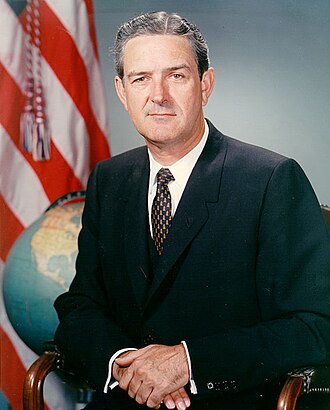
John B. Connally was a conservative Democratic politician and former Governor of Texas who became a close confidant of President Richard Nixon. During the taping period, he served as Secretary of the Treasury from February 1971 to June 1972, where he spearheaded the 'Nixon shock' economic policies before stepping down to lead the 'Democrats for Nixon' reelection effort. He also served two stints on the President's Foreign Intelligence Advisory Board and briefly returned to the White House as a Special Advisor to the President from May to July 1973 to assist during the growing Watergate crisis.
President Nixon and Secretary of the Treasury John Connally discussed the implementation schedule for a major economic policy plan, confirming the intent to proceed with their original timeline rather than accelerating it. The participants touched upon administrative logistics and the necessity of coordinating with the Joint Chiefs regarding budget preparations. They concluded the brief exchange by finalizing travel plans and affirming their commitment to the established strategic agenda.
President Nixon met with his senior staff, including H. R. Haldeman, Henry Kissinger, and John Ehrlichman, to discuss a range of domestic and foreign policy priorities. Key deliberations focused on the national economy—specifically addressing textile import issues and preparations for a significant upcoming economic announcement involving potential wage-price freezes—alongside strategies for managing national security declassifications and press relations. The President also reviewed his schedule, including upcoming diplomatic trips to China and the USSR and various domestic scheduling concerns, while emphasizing the need for a cohesive administration stance on legislative and public communication strategies.
President Nixon and Secretary of the Treasury John Connally discuss the urgent need to address the destabilizing gold market and the potential for a major economic policy shift. The two evaluate various tactical options, including the possibility of a wage-price freeze implemented via executive authority to bypass congressional delay. They also debate the timing and sequence of announcing international monetary reforms, such as closing the gold window, versus domestic economic measures to mitigate market panic and strengthen their negotiating position.
President Nixon met with John B. Connally, George P. Shultz, and other key advisors to finalize the details and strategy for his upcoming economic program, which centered on addressing inflation, international monetary instability, and the potential closure of the gold window. The participants debated the timing and logistics of announcing major policies, including a potential wage and price freeze, import taxes, and budget adjustments to stabilize the U.S. dollar. The discussion also addressed the need for rigorous preparation for a forthcoming meeting at Camp David to ensure a unified, decisive presentation of the economic package that would preempt negative market speculation and build public support.
President Richard M. Nixon and Treasury Secretary John B. Connally met to finalize preparations for the administration's forthcoming economic program. They discussed the implementation of an import tax and the political implications regarding textile negotiations with Japan. The pair also coordinated a strategy for consulting key congressional leaders, including Wilbur D. Mills, John W. Byrnes, and Russell B. Long, prior to the public announcement.
President Nixon and Treasury Secretary John B. Connally discuss the positive public and media reception following Nixon’s televised address announcing a wage-price freeze and international economic policy changes. Connally confirms that the domestic focus on wages and prices successfully overshadowed complex international monetary issues, which the President intentionally downplayed to maintain public appeal. The two finalize plans for Connally to hold a live, televised press conference the following morning to maintain momentum and reach a broad audience, including the financial markets.
President Nixon convened a large meeting with Vice President Agnew and his Cabinet to discuss the national economy and the "New Economic Policy" he had announced the previous day. Key topics included the wage-price freeze, import surcharges, tax relief, budget cuts, and the convertibility of the dollar. The administration sought Cabinet support for these initiatives and discussed their potential impact on international trade and domestic employment.
President Nixon met with H. R. Haldeman and other aides to manage the political and economic response to his recently announced New Economic Policy. The discussions focused on coordinating with bipartisan congressional leadership to ensure support for the administration's program, highlighting the effectiveness of Treasury Secretary John Connally's public outreach, and monitoring the positive stock market reaction. A key objective was to frame the policy as a proactive leadership move that preempted more damaging legislative actions, while also preparing future speeches and briefings to maintain momentum and public confidence.
President Nixon and Treasury Secretary John B. Connally discuss strategic preparations for Connally's upcoming press conference regarding the administration's new economic proposals. They coordinate a plan to announce a bipartisan leadership meeting at the White House, specifically highlighting the support of House Ways and Means Chairman Wilbur Mills to ensure legislative cooperation. The discussion emphasizes the need to give public credit to Mills while organizing a comprehensive group of congressional committee chairs and leadership to bolster the administration's agenda.
President Nixon met with H. R. Haldeman, John Connally, Charles Colson, and other advisors to assess the public and economic response to his recently announced domestic economic program. The participants discussed the reaction of the stock market, business community, and media to the wage and price freeze, while strategizing on managing political credibility and legislative support. The discussion also addressed necessary administrative adjustments to welfare reform and federal budget cuts, as well as preparations for upcoming briefings with Congressional leaders.
President Nixon, Charles Colson, and Ron Ziegler contacted Secretary John Connally to commend his performance during a recent televised press conference. The participants praised Connally's effective confrontation with the press and his ability to clarify and augment the President's economic initiatives announced the previous evening. Colson specifically highlighted the enthusiastic praise received from CBS President Frank Stanton regarding the broadcast's impact.
President Nixon met with his senior advisors, including John B. Connally and H.R. Haldeman, to formulate a strategy for promoting his newly announced "New Economic Policy" and to address political fallout. The participants discussed the necessity of maintaining a unified, aggressive message, specifically targeting Democratic critics like Hubert Humphrey and labor leaders who might oppose the administration's wage and price freeze. Connally was tasked with representing the administration's economic message to the media and Congressional leaders, while the group emphasized the importance of framing these economic measures as essential for bipartisan national interest and international monetary stability.
President Nixon convened a meeting with Vice President Agnew and a bipartisan group of Congressional leaders to discuss the national economy and his administration's "New Economic Policy." Key topics included the wage-price freeze, investment tax credits, the international monetary situation, and an import surcharge. The discussion focused on the necessity of Congressional cooperation for implementing these measures and their potential impact on inflation, trade, and specific industries like automobiles.
President Nixon met with the Council on International Economic Policy (CIEP) and key economic advisors to discuss the administration's post-August 15 New Economic Policy (NEP) and future international trade strategy. Peter G. Peterson led a presentation analyzing the shortcomings of global liberal trading systems and the challenges posed by foreign competitors like Japan, while other officials addressed the domestic economic impact, labor relations, and the status of ongoing monetary negotiations. The President emphasized the need for a firm but diplomatic approach toward Japan and directed his team to maintain the offensive on domestic economic policy while keeping options flexible regarding international monetary reform.
President Nixon and Treasury Secretary John Connally discuss plans for an upcoming September 9, 1971, address to Congress regarding the administration's "Stage II" economic stabilization program. While they consider the prospect of the President appearing before Congress to participate in a televised question-and-answer session, they ultimately reject the idea due to concerns about establishing a precedent that could undermine executive privilege. Additionally, the President outlines a new public outreach strategy involving a briefing for Cabinet members' wives to build symbolic support for his economic policies among women.
President Nixon and Secretary of the Treasury John Connally discussed strategy for an upcoming speech to Congress regarding the administration's ongoing economic program and tax policy. The two agreed to maintain a hardline approach on fiscal restraint, specifically linking tax cuts to spending reductions, while dismissing opposition proposals like those from Edmund Muskie as desperate. They also coordinated on international monetary policy, agreeing to avoid premature intervention in negotiations with European nations and Japan to maintain U.S. leverage.
President Nixon and Secretary of the Treasury John Connally discussed economic policy and messaging ahead of upcoming public appearances. Connally emphasized the administration's strong negotiating position regarding Japan, while Nixon focused on refining his rhetoric concerning unemployment and welfare. The pair concluded with an agreement on the necessity of fiscal restraint, specifically linking potential tax cuts to corresponding spending reductions in future speeches.
President Nixon met with H.R. Haldeman and John Connally to strategize the administration's economic messaging following the initial 90-day wage and price freeze. The participants discussed the need to maintain political momentum and proactively manage public expectations regarding the forthcoming "Phase II" economic program, emphasizing that Nixon should frame the transition as a controlled, deliberate process. They agreed that Connally, acting as chair of the Cost of Living Council, would lead public consultations and prepare for a formal announcement of the follow-up plan by October 7, 1971, to prevent political opponents from seizing the initiative.
President Nixon met with key labor leaders and administration officials to solicit input on the development of 'Phase II' of his economic program, following the conclusion of the initial 90-day wage and price freeze. The discussion centered on transitioning to a more permanent, yet flexible, mechanism for controlling inflation while maintaining the principles of collective bargaining and a free-market system. The participants debated the merits of tripartite boards—modeled after the War Labor Board—versus government-imposed mandates, with labor leaders emphasizing the need for voluntary compliance and equitable standards. Nixon concluded by establishing an October 1 deadline for the group to submit their formal views, underscoring the necessity of labor-management cooperation for the program's success.
President Nixon and Secretary of the Treasury John Connally met to coordinate the transition from the Phase I wage and price freeze to the forthcoming Phase II economic program. They discussed the political necessity of setting a firm announcement date to counter public perceptions of administrative inactivity. The two agreed that establishing a specific deadline would demonstrate control and resolve regarding the administration's long-range economic strategy.
President Nixon met with the Cost of Living Council to assess the implementation and public reception of the 90-day wage-price freeze initiated on August 15, 1971. The council members, including John Connally, George Shultz, and Arthur Burns, reported on the effectiveness of enforcement efforts, current compliance levels, and the complexities of handling exemption requests. The discussion shifted toward strategic planning for Phase II, emphasizing the need for sustainable economic policies, public leadership, and the critical role of securing support from business and labor leaders before the freeze's conclusion.
President Nixon met with John Connally and Arthur Burns to strategize on U.S. economic policy and international negotiations regarding the global monetary system and trade. The President emphasized that while he would rely on the technical expertise of his advisors, his primary goal was to project strength and prioritize American national interests ahead of the 1972 election. Nixon instructed Connally and Burns to resist the influence of the established bureaucracy and to maintain a firm, unified front when bargaining with foreign leaders over currency revaluation and import surcharges.
President Nixon, Pat Nixon, and the Cabinet met with their spouses to discuss the implementation and public perception of the administration’s New Economic Policy. Secretary of the Treasury John Connally led a comprehensive briefing on the wage-price freeze, tax reforms, and international monetary adjustments aimed at curbing inflation. The discussion emphasized the necessity of these economic measures for restoring national growth, managing federal expenditures, and building public and congressional support for the administration's program.
President Nixon met with Robert Dole, Alexander Haig, and H. R. Haldeman to discuss political strategy, the administration's wage and price freeze, and foreign affairs. A significant portion of the conversation centered on the Attica state prison riots, where Nixon expressed support for Governor Nelson Rockefeller's refusal to grant amnesty to the rioters. Additionally, the participants reviewed Dole's recent trip to the Far East and evaluated potential Democratic opponents and general campaign messaging for the 1972 election.
President Nixon expressed his appreciation to Treasury Secretary John B. Connally for his effective presentation to a business group regarding the administration's economic policies. The two discussed the necessity of managing expectations among business leaders, emphasizing that wage and price controls initiated following the President's September 9 address to Congress were not intended to be permanent. Connally underscored the importance of securing political and business support while framing the temporary nature of these economic interventions.
President Nixon met with the members of the Commission on International Trade and Investment Policy, led by Chairman Albert L. Williams, to discuss the committee's recently completed report on global economic competition. The conversation focused on the necessity of re-evaluating U.S. trade, monetary, and labor policies in light of increased challenges from a revitalized Europe and a highly organized Japanese industrial sector. Nixon and the commission members explored strategies for restoring U.S. global competitiveness, including the role of investment tax credits, the impact of antitrust laws on industrial mergers, and the long-term implications of the August 1971 economic initiatives.
President Nixon and Vice President Agnew met with a bipartisan group of state and local officials, including governors and mayors, to discuss the implementation of 'Phase II' of the administration’s economic stabilization program. The discussion centered on balancing the need for continued wage-price restraints with the financial pressures facing local governments, specifically regarding public employee salaries, teacher contracts, and revenue-sharing legislation. Nixon addressed concerns regarding corporate profit limitations, emphasizing the need for productivity and investment in new equipment to ensure international competitiveness, while agreeing to establish a formal mechanism for ongoing dialogue between local officials and the administration.
President Nixon met with a bipartisan group of Congressional leaders to discuss the progress of the 90-day wage-price freeze and to seek input on the development of Phase II economic policies. Treasury Secretary George Shultz provided an overview of the administration's administrative efforts, including the roles of the Cost of Living Council and the IRS in enforcing the freeze. The discussion centered on the need for continued cooperation across sectors—including labor, business, and agriculture—and the development of a framework for economic stabilization once the initial freeze expired.
President Nixon and Treasury Secretary John Connally met to strategize on the administration's upcoming economic initiatives, specifically regarding Phase II policies, the import surcharge, and the U.S. stance ahead of an International Monetary Fund (IMF) meeting. They discussed the necessity of maintaining a firm, unilateral negotiating position to counter foreign criticism and protect American economic interests, while also coordinating the timing of public announcements to maximize political control. Additionally, Nixon consulted with his staff on personnel matters, including the future of Robert McNamara at the World Bank, a campaign contribution from Armand Hammer, and the appointment of Romana A. Banuelos as Treasurer of the United States.
John B. Connally initiates a request to the White House operator to facilitate a telephone call to John R. Petty. This administrative communication serves to connect the Treasury Secretary with his assistant to coordinate official financial or diplomatic business. No further substantive policy matters were discussed during this brief exchange.
Secretary of the Treasury John B. Connally initiated a call through the White House operator to facilitate a connection to his office at the Department of the Treasury. The primary purpose of the communication was to reach his staff member, Rose M. Cicala. No further substantive policy discussions occurred during this brief administrative exchange.
Treasury Secretary John Connally and John R. Petty discuss logistical planning for an upcoming reception for International Monetary Fund (IMF) delegates. Connally seeks guidance on the best timing for a potential presidential event, weighing the impact of preempting the traditional U.S.-hosted reception at the Smithsonian. They also review the size and composition of the guest list, specifically concerning finance ministers, central bank governors, and their spouses, to determine how to scale the event.
Treasury Secretary John B. Connally initiates a brief administrative call to locate a staff member, identified as Ms. Sakala. Upon learning she is unavailable, Connally abruptly cancels his request and shifts the conversation to addressing a matter involving an individual named Mr. Petty. The exchange concludes without further substantive policy discussion or follow-up action.
President Nixon met with the National Security Council and senior advisors to conduct an extensive assessment of the deteriorating political and military situation in South Vietnam, focusing on the stability of the Nguyen Van Thieu administration and the threat posed by opposition factions and communist forces. The discussion covered strategic military planning for the upcoming dry season in Cambodia and Laos, the progress of Vietnamization, and the implications of U.S. troop withdrawal timelines on both the battlefield and domestic public opinion. Participants also evaluated the potential impact of diplomatic initiatives, including the President's announcement regarding Henry Kissinger’s trip to Peking, on North Vietnam's strategic calculations and internal morale.
President Nixon, Vice President Agnew, and members of his Cabinet met to coordinate a unified administration strategy ahead of critical International Monetary Fund (IMF) meetings and ongoing global trade negotiations. The discussion emphasized the necessity of maintaining the recently imposed 10% import surcharge and a firm bargaining stance to address the nation's economic balance of payments and reshape the international monetary system. Nixon and his advisors agreed that while foreign partners would likely criticize U.S. policy, maintaining domestic political support and correcting long-standing trade imbalances remained the administration's primary objective.
President Nixon met with John B. Connally and Arthur F. Burns to establish a unified administration strategy for upcoming international economic negotiations. The President decided to avoid a formal speech to the International Monetary Fund, tasking Connally with presenting the administration's position while he focused on informal outreach to foreign delegates. They discussed the tactical use of the U.S. import surcharge, the potential for a transitional currency float, and the need to de-emphasize gold prices to maintain a firm negotiating stance against European and Japanese interests.
President Nixon and Treasury Secretary John Connally discussed administrative updates and the orchestration of economic and judicial policy. They coordinated a meeting with Federal Reserve Chairman Arthur Burns to ensure his alignment with the administration's economic program while managing his influence on public perception. Additionally, Nixon consulted Connally regarding his strategy for upcoming international trade negotiations and his decision to appoint two conservative judges to the Supreme Court to solidify a long-term ideological shift in the judiciary.
President Nixon met with Treasury Secretary John Connally, Federal Reserve Chairman Arthur Burns, and IMF Managing Director Pierre-Paul Schweitzer to discuss the evolving international economic landscape and the U.S. role within it. The discussion centered on balancing U.S. domestic economic policies, such as the 'Phase II' measures and import surcharges, with the need to maintain global leadership and monetary stability. The participants addressed the political and economic challenges of transitioning from the post-World War II order to a new system that accounts for the rising influence of nations like Japan and West Germany, while emphasizing the importance of cooperation and burden-sharing in international monetary affairs.
President Nixon met with his senior staff and economic advisers to finalize the rollout strategy for Phase II of his economic program. The discussion focused on establishing an effective, low-key announcement strategy for the upcoming wage and price controls, balancing the need for public cooperation with the desire to avoid the appearance of a crisis. Key decisions included keeping the address concise, maintaining a tone of confidence, and utilizing prime-time news slots to maximize reach while minimizing disruption to entertainment programming.
President Nixon consulted with aides John Mitchell, Charles Colson, H. R. Haldeman, Henry Kissinger, and John Connally regarding strategic messaging for the upcoming Phase II economic policy and the political fallout of his planned trip to the People's Republic of China. The participants coordinated a media roll-out for the economic plan, specifically scheduling Connally to hold a follow-up press conference to anchor the administration's position after the President’s speech. Additionally, the group discussed the positive impact of the China announcement on foreign policy optics, successfully shifting media focus away from the recent South Vietnamese election.
President Nixon and Treasury Secretary John B. Connally discussed the communications strategy for an upcoming policy announcement to ensure maximum media control and public impact. Nixon directed Connally to skip the initial technical briefing in favor of a high-profile, live press conference scheduled for the following day to preempt criticism from political opponents. This tactical approach was designed to secure prime-time news dominance and position Connally as the authoritative voice on the administration's economic agenda.
President Nixon and Treasury Secretary John B. Connally share a brief, informal exchange regarding a piece of novelty currency presented to Connally by the Veterans of Foreign Wars. The two discuss the visual design and cleverness of the item, which appears to be a split or modified dollar bill designed to look like a much larger denomination. No policy decisions were made during this social call.
President Nixon and Secretary of the Treasury John B. Connally held a brief one-minute meeting in the Oval Office. Although no transcript exists for this encounter, it occurred during a period of intense economic policy discussions regarding the Nixon shock and subsequent domestic fiscal measures. The brevity of the meeting suggests it served as a logistical check-in or a quick consultation on administrative priorities.
President Nixon and H.R. Haldeman evaluated the strategic scheduling of a televised address, ultimately selecting 7:30 p.m. to maximize audience reach without disrupting prime-time entertainment. The discussion also addressed the nomination of Richard H. Poff, with Nixon reviewing efforts to bolster Poff's public image by highlighting his conservative credentials. Additionally, Nixon touched upon diplomatic concerns regarding the United Nations and the potential impact of forthcoming debates on the status of the People's Republic of China and Taiwan.
President Nixon and Secretary of the Treasury John B. Connally exchanged brief pleasantries regarding novelty currency received from the Veterans of Foreign Wars (VFW). Connally initiated the call to express personal gratitude to the President for facilitating the gift. The exchange served as a social gesture between the two officials rather than a substantive policy discussion.
President Nixon met with speechwriter William Safire to finalize a draft for an upcoming address regarding Phase II economic policies, including wage and price controls. The discussion focused on refining the speech's tone and messaging, specifically emphasizing the connection between economic prosperity and peace, while integrating positive feedback from the public. Nixon directed that the finalized text be reviewed by key economic advisors, including John Connally and George Shultz, to ensure broad consensus without excessive outside input.
President Nixon and John Connally coordinate the final review process for an upcoming economic speech draft prepared by William Safire. Nixon outlines a restricted vetting procedure involving only Connally, George Shultz, Herbert Stein, and a limited contribution from Arthur Burns regarding interest rates. The President emphasizes keeping the review circle small to ensure efficiency, tasking Connally with reviewing the document after Safire delivers it.
William Safire consulted Secretary of the Treasury John Connally regarding revisions to a presidential speech draft concerning windfall profits and the Price Commission's regulatory approach. The participants agreed to remove a contentious line regarding unfair profits, replacing it with a policy mandate requiring businesses to pass cost savings directly to consumers. Connally confirmed his approval of the new language, noting that the revised messaging would likely avoid public controversy.
President Nixon met with H. R. Haldeman, William Safire, and other advisors to finalize the messaging and structure of a critical televised speech regarding Phase II of his economic program. The discussion focused on carefully balancing the rhetoric surrounding inflation, corporate profits, and wage controls to avoid appearing anti-business while ensuring the public understood the administration's commitment to prosperity. Nixon explicitly decided to defer the announcement of the Price Commission chairman to John Connally for the following day to maximize the media impact of the overall economic plan.
President Nixon met with bipartisan Congressional leadership to outline his post-freeze economic program and announce plans for an upcoming summit in Moscow. He detailed the formation of a tripartite Pay Board, a Price Commission, and a committee on interest and dividends to maintain economic stability through a mix of voluntary cooperation and necessary sanctions. Additionally, the President briefed the leaders on the status of international monetary negotiations and his strategic approach to the May 1972 summit with Soviet leadership regarding arms control and trade.
President Nixon, Henry Kissinger, and John Connally meet to discuss diplomatic strategy regarding upcoming high-level international travel and sensitive foreign policy issues. A primary focus is planning a trip to Asia for Connally to reassure allies—specifically Indonesia, Japan, and Vietnam—about U.S. commitment in the region amid concerns regarding the President’s pending diplomatic initiatives with China. The group also addresses tactical considerations for the China summit, the importance of maintaining a strong public image, and the selection of a new U.S. representative to the United Nations.
President Nixon met with John B. Connally, Henry Kissinger, and Robert S. McNamara to discuss various administrative and foreign policy issues, including logistics for upcoming presidential travel and the management of press coverage. The conversation covered concerns regarding the size of the presidential entourage, particularly the number of military personnel, and criticized the press for sensationalist reporting regarding administration officials. The group also addressed economic matters, specifically the complexities of global expropriation of U.S. business interests and strategies for dealing with international financial institutions.
President Nixon met with H.R. Haldeman, John B. Connally, and Ronald L. Ziegler to coordinate administrative messaging and manage political strategy. The discussion focused on the selection process for Pay Board appointments, the public relations strategy regarding Supreme Court nominations, and the management of media coverage and polling data. The President emphasized his desire to control the narrative regarding his administration's accomplishments and addressed internal concerns regarding the performance of his cabinet members and staff.
President Nixon and Secretary of the Treasury John Connally discussed ongoing economic developments, including the stock market and upcoming testimony before Congress. They coordinated their strategy for dealing with Japanese officials regarding trade policy and surcharges, with Nixon designating Connally as his primary representative for these discussions. Finally, they expressed frustration with the American Bar Association’s rejection of judicial nominees, with Nixon planning to challenge the ABA's influence and proceed with his own appointments.
President Nixon, John Connally, and George Shultz met to discuss a multi-faceted strategy for handling international economic and foreign policy challenges, specifically in response to the United Nations vote on Taiwan's expulsion. They agreed that the United States must move toward a more assertive, bilateral approach to foreign relations, prioritizing national interests over traditional multilateral institutions and the demands of European allies. Nixon decided to move forward with a new international economic offensive, tasking Connally with navigating trade negotiations during his upcoming trip to Japan while keeping the strategy tightly controlled to prevent bureaucratic leaks. The President also emphasized the need to bypass the State Department's traditional channels to ensure that U.S. interests, particularly regarding trade and monetary policy, were handled with greater efficiency and independence.
President Nixon and his senior advisors, including H. R. Haldeman, Henry Kissinger, and John Connally, met to discuss defense budget strategies, the political fallout from Taiwan's expulsion from the United Nations, and preparations for upcoming foreign diplomacy. Nixon emphasized the need for a leaner, more effective military posture that focuses on strategic procurement rather than broad manpower, while also debating the risks of domestic political opposition and the impact of the defense budget on the economy. The group analyzed the necessity of maintaining a strong defense to bolster negotiating positions with the Soviet Union and China, while also coordinating the administration’s measured public response to the UN vote.
President Nixon met with his budget and domestic policy advisors, including John Ehrlichman and John Mitchell, to evaluate the political and economic feasibility of a proposed Value Added Tax (VAT) as a mechanism to fund public and private education. The primary objectives of the plan were to provide federal relief for local property taxes, address the California Supreme Court’s school funding ruling, and extend aid to parochial schools to appeal to blue-collar Catholic voters. The participants debated the political risks of proposing a new federal tax in an election year versus the potential benefits of offering tangible relief to homeowners and securing support from key constituencies.
President Nixon met with his economic advisors (the "Quadriad") and Henry Kissinger to discuss international monetary policy, trade negotiations, and the upcoming Asian trip for John B. Connally. The group addressed the urgency of trade concessions, the complexities of gold convertibility, and the need to manage currency realignments while maintaining a firm U.S. negotiating position. Nixon provided specific instructions for Connally’s itinerary, emphasizing the need to reassure allies in Japan, Thailand, and Indonesia of U.S. commitment while avoiding being sidelined by State Department staff during sensitive private discussions.
President Nixon and Treasury Secretary John Connally confer on domestic economic policy, specifically the implementation and market reception of Phase Two of the administration's stabilization program. The discussion touches on the political necessity of adopting a firmer stance in public negotiations and the complexities of handling wage-price retroactivity. The two also coordinate upcoming meetings and communication channels with Henry Kissinger regarding international monetary and foreign policy issues.
President Nixon and Secretary John B. Connally coordinated their schedules to meet at the Executive Office Building at 5:00 p.m., followed by a social engagement at 6:30 p.m. This dinner meeting included their spouses, Nellie Connally and Pat Nixon, along with an invitation for Julie Nixon Eisenhower to host a movie screening. Additionally, Nixon acknowledged and approved of Connally’s recent contact with former President Lyndon B. Johnson.
President Richard Nixon and John B. Connally coordinated their schedules to facilitate a series of meetings and social engagements. The discussion focused on establishing specific times for briefings or consultations throughout the evening, while also incorporating plans for dinner and a movie. The exchange served primarily as a logistical update to ensure their professional and personal calendars aligned for the remainder of the day.
President Nixon and Secretary of the Treasury John B. Connally reviewed the results of Connally's recent diplomatic tour through several Asian nations, including South Vietnam, Thailand, Indonesia, the Philippines, and Japan. The discussion focused on bolstering foreign allies' confidence following the United States' recent economic policy shifts and the impending presidential visit to the People's Republic of China. The two leaders also addressed domestic economic concerns, specifically the administration's Phase II stabilization program and the ongoing struggle to secure foreign aid legislation against isolationist opposition in the Senate.
President Nixon and the Cost of Living Council convened to discuss the efficacy of the administration's economic stabilization program, specifically the transition from Phase I to Phase II. Participants evaluated the success of existing price and wage controls and addressed the future of the Pay Board and Price Commission ahead of the 1972 calendar year. The meeting concluded with a formal vote to adopt an amendment to 'Option 2' regarding economic policy adjustments.
President Nixon met with his senior advisors and officials, including H. R. Haldeman, Henry Kissinger, and John Connally, to deliberate on key personnel appointments, administrative strategy, and foreign policy maneuvers. The discussion focused on filling Federal Reserve Board and ambassadorial vacancies, managing the political fallout from budget disputes with Senate Democrats, and curbing the excessive overseas travel of Cabinet members. Nixon and his team also weighed the potential risks and benefits of the President attending the AFL-CIO convention and evaluated strategies for the upcoming 1972 campaign, including fundraising and managing leakers within the administration.
President Nixon calls Treasury Secretary John B. Connally to coordinate logistics for a meeting with Henry Kissinger and to adjust the agenda for an upcoming Cabinet session. Nixon advises Connally to refrain from making extensive remarks regarding major policy issues during the Cabinet meeting to avoid overshadowing Secretary John A. Volpe’s report and potential friction with Secretary of State William P. Rogers. Consequently, they decide that Connally will limit his Cabinet contribution to a discussion on Phase II economic policy.
President Nixon met with his Cabinet officers to discuss a variety of domestic and international issues, including transportation leadership, government funding through a continuing resolution, and the cultivation of opium poppies in Turkey. The conversation also touched upon administrative transitions, such as the departure of Secretary of Agriculture Clifford Hardin, and strategies for managing the national economy and price controls. Nixon emphasized the importance of maintaining clear leadership and coordination across departments to ensure the success of his domestic policy initiatives.
President Nixon and Treasury Secretary John Connally discussed the administration's aggressive legislative strategy with congressional leaders and the political opposition they faced. They reviewed the status of Phase II economic policies, including wage retroactivity and market perceptions, while expressing mutual confidence in their economic direction. The conversation also touched upon Connally's potential political vulnerability following his trip to Vietnam and concluded with arrangements for an upcoming Quadriad meeting.
President Nixon, John Connally, Donald Rumsfeld, and a delegation of Republican Congressional leaders met to coordinate legislative strategy regarding the administration's domestic economic program and various foreign policy concerns. The discussion focused on the implementation of wage and price controls, pending tax legislation, and the management of international trade negotiations, particularly regarding Japan and the import surcharge. Participants also addressed the confirmation of Supreme Court nominees Lewis F. Powell and William Rehnquist, as well as ongoing legislative battles concerning the Vietnam War and Defense Department appropriations.
President Nixon and John B. Connally met to coordinate strategy for an upcoming speech in New York, focusing on defending the Administration's economic program and international monetary policy. They discussed the importance of presenting the U.S. as a strong, outward-looking leader in the global economy while managing domestic concerns regarding inflation and stock market performance. Additionally, they touched upon political vulnerabilities, including internal Cabinet weaknesses, the necessity of firm leadership regarding Vietnam, and the ongoing strategy for securing the release of prisoners of war.
President Nixon and John Connally discuss the positive reception to Connally's recent economic speech in New York City and the strategic importance of appearing firm against labor interests at the upcoming AFL-CIO convention. They shift focus to international economic policy, agreeing to minimize the involvement of Arthur Burns and Peter Peterson to maintain control over upcoming diplomatic negotiations. Nixon outlines a plan to meet individually with leaders from France, Germany, and Britain to discuss monetary and geopolitical strategy rather than engaging in large, multi-party forums.
President Nixon and John B. Connally met to discuss upcoming diplomatic strategies, specifically the President's plan to engage with key allies in France, Germany, and Great Britain prior to his scheduled trips to China and the Soviet Union. Nixon proposed a series of individual meetings with foreign leaders rather than a large multilateral summit to avoid being outnumbered, while also coordinating a separate diplomatic effort involving Latin American nations for January. Additionally, the pair discussed the need for better internal coordination between Connally, George Shultz, and Henry Kissinger to align their political and economic objectives.
President Nixon and John B. Connally discussed the President's upcoming speech to the AFL-CIO in Florida and the importance of communicating his economic policy to a broader audience. Connally also confidentially reported hearing that lawyers from Nixon's former New York law firm were in Texas investigating his background in connection to a legal dispute involving the Moody Foundation. Nixon expressed disbelief that his former firm would be involved in such activities and promised to look into the matter through John Mitchell to resolve the situation.
President Nixon met with key advisors, including H.R. Haldeman, Henry Kissinger, Charles Colson, and John Connally, to strategize on public relations, international diplomacy, and his upcoming travel schedule. The discussion centered on managing the press fallout from Nixon's recent speech to the AFL-CIO, coordinating announcements regarding foreign trips to countries like the PRC, and addressing international monetary and military issues, particularly regarding Vietnam and the Middle East. Nixon emphasized the importance of controlling the public narrative and timing announcements to maximize political advantage while balancing his cabinet members' roles.
President Nixon and Secretary of the Treasury John Connally discussed the positive public perception of the President's recent television appearance and his attendance at a Classical Khmer Ballet performance. Connally praised Nixon's composed reaction to a hostile reception from George Meany at the AFL-CIO convention, encouraging the President to capitalize on the moment. The two also strategized on confronting Meany regarding recent pay increases for union leadership, with Nixon agreeing to make the issue a focal point and considering a potential 90-day wage freeze should labor representatives withdraw from the Pay Board.
President Nixon and Secretary of the Treasury John Connally discussed preparations for Connally's upcoming press conference, focusing heavily on strategy regarding labor relations and economic policy. They strategized on how to publicly criticize AFL-CIO leader George Meany’s recent defiance of the Pay Board without creating a political martyr, framing the situation as a test of national unity versus special interests. Furthermore, they reviewed opposition to the 'campaign check-off' provision in pending tax legislation, with the President considering the possibility of vetoing the bill should it emerge as an irresponsible 'Christmas tree' package.
President Nixon met with H.R. Haldeman, Clark MacGregor, and John Connally to coordinate legislative strategy and manage the President's public schedule. Key discussions focused on securing the confirmation of Earl Butz, advancing economic and tax legislation, and navigating partisan challenges regarding campaign finance reform. The participants also strategized on potential presidential vetoes and discussed public relations efforts to bolster the administration's standing with labor and Congress.
President Nixon calls Treasury Secretary John Connally ahead of a press conference to provide tactical guidance on campaign finance legislation. Nixon directs Connally to leverage a veto threat against Congress, proposing that if the bill is blocked, he will force a special session during the holiday season to compel the passage of his tax agenda. Citing the political precedent of Harry Truman, Nixon empowers Connally to publicly express the administration's firm stance and readiness to force legislative action.
President Nixon, Clark MacGregor, and Charles Colson confer with Secretary of the Treasury John Connally to praise his recent press conference performance regarding the national economy. The participants evaluate Connally's messaging strategy, specifically debating the effectiveness of his remarks concerning George Meany and organized labor. The conversation also briefly addresses external complications, including a news bulletin regarding India's attack on East Pakistan that threatened to overshadow the administration's economic narrative.
President Nixon met with John Connally and other key advisors to coordinate White House strategy regarding pending tax legislation, the administration's public relations response to criticism from labor leaders like George Meany, and complex international monetary negotiations. The President directed that the tax bill be handled firmly, expressing a willingness to veto unfavorable versions and potentially call a special session of Congress to force a resolution. Additionally, the participants discussed U.S. foreign policy toward the India-Pakistan conflict, agreeing to maintain a hard line while monitoring the situation through the United Nations, and established protocols for executive oversight of high-level economic missions to Europe.
President Nixon met with Henry Kissinger, H. R. Haldeman, George Shultz, and others to manage pressing foreign and domestic policy matters. Key discussions centered on the India-Pakistan conflict and U.S. strategy regarding the United Nations, as well as coordinating upcoming meetings with John Connally and Arthur Burns to address economic policy and budget planning. Additionally, the President reviewed his schedule, including travel arrangements and a potential appointment for the Council of Economic Advisers, while also discussing media relations and his desire to curb unnecessary foreign travel by staff and Cabinet members.
President Nixon consulted Secretary of the Treasury John Connally regarding the appointment of a new Council of Economic Advisers (CEA) chair to succeed Paul W. McCracken. Nixon expressed his preference for Herbert Stein, emphasizing his intelligence, loyalty, and suitability for an election year. Connally validated the choice, prompting Nixon to finalize the decision and prepare for an announcement the following day.
President Nixon met with John Connally, John Ehrlichman, and George Shultz to conduct a wide-ranging review of the Fiscal Year 1973 budget and political strategy ahead of the 1972 election. The group evaluated various initiatives, including revenue sharing, public housing, narcotics enforcement, and a proposed Value Added Tax (VAT), while weighing potential congressional opposition and the electoral impact of these policies. Key decisions included maintaining a firm stance on space program funding to support jobs in California and Texas, addressing federal pay increases, and finalizing a strategy for a high-profile narcotics task force.
President Nixon met with John Connally and Arthur Burns to coordinate administration strategy regarding upcoming international monetary negotiations and the President's scheduled diplomatic visits. The group discussed tactics for currency realignment and the potential for a managed devaluation of the dollar, balancing these global economic concerns with domestic political considerations. Additionally, the President and his advisors addressed the Federal Reserve's independence and communication failures regarding stock market policy, seeking to align messaging while maintaining public confidence in the administration's economic management.
President Nixon met with Treasury Secretary John B. Connally and Federal Reserve Chairman Arthur F. Burns to discuss economic policy and the administrative schedules of key advisors. Henry Kissinger and George P. Shultz also joined the consultation to address matters of national policy. The discussion focused on coordinating economic objectives and personnel management during a period of transition.
President Nixon met with John Ehrlichman, John Connally, and George Shultz to discuss potential tax policy initiatives, specifically the implementation of a Value Added Tax (VAT) linked to the repeal of residential real estate taxes for education. The group evaluated the political feasibility of introducing such a plan, weighing the risks of congressional interference from Wilbur Mills against the potential for an effective 1972 campaign centerpiece. Ultimately, they reached a consensus to avoid immediate legislative action, opting instead to wait for the McElroy Commission report and delay a formal proposal until later in the spring to build public support and maintain a sense of stability.
President Nixon met with his senior advisors to coordinate on several pressing domestic and foreign policy issues. The discussion covered defense budget allocations and force levels, strategic handling of the ongoing India-Pakistan crisis, and potential legislative vetoes regarding the tax bill and campaign financing provisions. The President directed his staff to maintain a firm stance against certain spending measures, tasking Ehrlichman and Shultz with managing congressional outreach and coordinating with lobbyists to solidify opposition to unfavorable tax legislation.
President Nixon initiates a call through the White House operator to reach Romana A. Banuelos, the Treasurer of the United States. The exchange focuses on administrative coordination to establish communication with Banuelos. No substantive policy matters are addressed in this brief logistical recording.
President Nixon met with John B. Connally and Henry A. Kissinger to coordinate strategy regarding the Group of Ten international monetary negotiations and the escalating India-Pakistan crisis. Connally briefed the President on the difficulty of securing trade and currency realignment concessions from foreign nations, specifically noting Canada's resistance to multilateral solutions. Simultaneously, Nixon and his advisors discussed cutting off U.S. aid to India in response to its aggression toward Pakistan, ultimately deciding to formalize this shift in foreign policy.
President Nixon and Treasury Secretary John B. Connally spoke to coordinate their schedules for upcoming meetings, including a session with the French and a pre-meeting consultation between Connally and Henry Kissinger. Nixon informed Connally of his decision to veto the Office of Economic Opportunity legislation, citing ideological opposition to the bill's expansive child care provisions. The two also discussed the recent state visit of Brazilian President Emilio Garrastazu Medici, praising his leadership style and the economic stability of his administration compared to other Latin American nations.
President Nixon and John B. Connally discuss the philosophical opposition to broad federal child care legislation, specifically concerns regarding the impact on maternal roles and welfare reform. The conversation also shifts to an assessment of political and economic conditions in Brazil, with Connally praising the leadership style of its government. The two men agree to defer further discussion on these policy matters until their next meeting to better align their positions.
President Nixon and Secretary of the Treasury John Connally met to strategize on impending international monetary negotiations and domestic tax legislation. Connally advised the President on the necessity of securing trade concessions and achieving currency realignment before agreeing to remove the import surcharge or modifying the gold standard. They specifically discussed the political strategy for upcoming bilateral meetings with foreign leaders, including French President Georges Pompidou, aiming to leverage US economic standing to reach a favorable multilateral agreement.
President Nixon and John B. Connally reviewed a busy schedule of administrative and geopolitical affairs, including the recent signing of the Revenue Act of 1971 and ongoing international monetary negotiations. The two men discussed strategy for upcoming diplomatic engagements, specifically focusing on how to pressure the French and Japanese for trade concessions while maintaining a diplomatic posture. Additionally, they addressed the escalating India-Pakistan crisis, with the President emphasizing the need to prevent the collapse of West Pakistan and questioning the commitment of the Soviet Union to regional stability.
President Nixon and Treasury Secretary John Connally speak with Ambassador Walter Annenberg to discuss upcoming diplomatic meetings and the status of international monetary negotiations. Annenberg shares his observations on European perceptions of the U.S. economic position, while Connally emphasizes the American effort to secure a fair deal regarding trade and balance of payments. The participants express mutual admiration and exchange holiday greetings as they prepare for the President's scheduled meeting with Prime Minister Edward Heath in Bermuda.
President Nixon initiates a call to Secretary of the Treasury John B. Connally to facilitate a conversation with Federal Reserve Chairman Arthur F. Burns. The primary purpose of the call is to secure an immediate consultation with Burns regarding ongoing economic policy matters. Nixon directs the coordination of this contact to ensure direct communication with the Fed leadership.
In this meeting, President Nixon and his senior advisors, including H. R. Haldeman and John B. Connally, finalized their strategy regarding the recently negotiated international monetary agreement, often referred to as the "Azores Doctrine." The participants focused on managing public perception of the deal, emphasizing that it represented a successful and fair realignment of currencies rather than a unilateral devaluation of the dollar. Furthermore, they discussed the necessity of coordinating a unified message to the press through the Treasury Department and prepared for a briefing with Congressional leadership to solidify legislative support for their economic initiatives. The conversation also touched upon sensitive foreign policy matters, specifically the India-Pakistan conflict and the need to maintain delicate diplomatic relations with the Soviet Union and France.
President Nixon met with a bipartisan group of Congressional leaders to brief them on his recent diplomatic discussions with French President Georges Pompidou and the status of U.S. international economic policy. The conversation focused on efforts to address the global monetary crisis, the necessity of realigning exchange rates to restore the competitive position of American goods, and the importance of burden-sharing among trade partners. Nixon highlighted the recent breakthrough in negotiations with France as a critical step toward stabilizing the international monetary system and advancing domestic economic goals like job creation and inflation control.
President Nixon and Treasury Secretary John B. Connally discussed the status of delicate international monetary negotiations occurring at a Group of Ten meeting at the Smithsonian Institution. Connally briefed the President on the difficulty of reaching a multilateral agreement regarding currency revaluations, specifically noting holdouts from Canada, Italy, and tensions between French and German positions. They agreed that if a final settlement could not be reached within hours, Connally should issue a positive public statement emphasizing progress and scheduling a follow-up meeting for January, while also establishing that trade negotiations must be finalized before the President’s January 20 deadline with Congress.
Treasury Secretary John B. Connally briefed President Nixon on the ongoing international negotiations to address the global monetary crisis and the devaluation of the dollar. Connally reported significant progress in securing a 16.9% devaluation agreement with the Japanese while detailing the status of negotiations with European partners, Canada, and Sweden. The two discussed the difficulty of finalizing a formal memorandum of agreement, with Connally stressing that the interconnected nature of these currency adjustments required a delicate, high-pressure approach to ensure a successful resolution.
President Nixon and John B. Connally held a brief administrative coordination meeting to align their respective schedules for the remainder of the evening. The conversation functioned primarily as a logistical check-in to confirm their immediate availability and planned locations. No substantive policy matters were addressed during this short exchange.
President Nixon and John B. Connally coordinated the President’s arrival at the Group of Ten meeting to mark the successful negotiation of complex international currency realignments. Connally advised the President to congratulate the delegates and escort them to the press to highlight the historic significance of their agreement. The two agreed that the President would deliver brief remarks emphasizing the unprecedented nature and difficulty of the achievement.