Connally, John B.
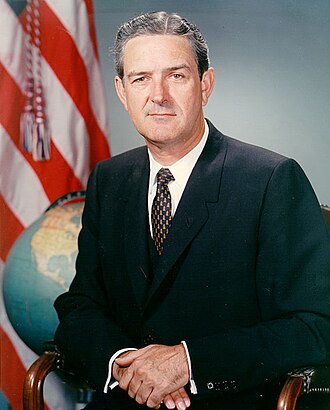
John B. Connally was a conservative Democratic politician and former Governor of Texas who became a close confidant of President Richard Nixon. During the taping period, he served as Secretary of the Treasury from February 1971 to June 1972, where he spearheaded the 'Nixon shock' economic policies before stepping down to lead the 'Democrats for Nixon' reelection effort. He also served two stints on the President's Foreign Intelligence Advisory Board and briefly returned to the White House as a Special Advisor to the President from May to July 1973 to assist during the growing Watergate crisis.
President Nixon and his Cabinet met to discuss the ongoing military operations in Indochina and the development of the administration's national health reform agenda. Regarding the war, officials reviewed the progress of South Vietnamese incursions into Laos and Cambodia, noting that the strategy was successfully disrupting enemy supply lines while shifting the burden of ground operations away from American forces. The conversation then transitioned to a detailed proposal from Secretary of Health, Education, and Welfare Elliot Richardson regarding healthcare reform, with the group debating the costs, tax implications, and administrative feasibility of implementing Health Maintenance Organizations (HMOs) and national health insurance standards.
President Nixon met with members of his economic team—the "Quadriad" of George Shultz, Paul McCracken, Arthur Burns, and John Connally—to refine the administration's strategy for managing the national economy. The discussion focused on persistent inflation, unemployment in the aerospace and technical sectors, and the potential use of federal authority to curb wage and price increases, particularly within the construction industry via the Davis-Bacon Act. The President emphasized the need for a unified approach to instill public confidence and ensure long-term economic stability, cautioning his team that the political viability of a conservative economic agenda depended on their collective success.
President Nixon met with his key economic advisors—John Connally, Arthur Burns, George Shultz, and Paul McCracken—to discuss urgent financial matters and the administration's public messaging strategy. The conversation covered the potential failure of the Lockheed-Rolls-Royce deal, the stability of the DuPont brokerage firm, and rising pressure to increase milk price supports for political leverage. Throughout the meeting, Nixon emphasized the need for internal discipline, a unified public stance on economic policy, and the projection of confidence to stabilize the markets and improve public perception.
President Nixon met with several advisors and staff to discuss a range of topics, including public relations, economic policy, and military strategy. John Connally provided updates on his efforts to stabilize the economy and manage relationships with key figures in the business and political sectors. Additionally, the President consulted with William H. Carruthers regarding the technical logistics and staging of future televised press conferences to improve his communication with the public.
President Nixon met with his National Security Council and key cabinet officials to receive a high-level briefing on developments in Soviet strategic capabilities, particularly concerning new ICBM silo construction and ballistic missile test programs. The participants evaluated the implications of these technological advancements for U.S. defense posture, including the necessity of maintaining a robust anti-ballistic missile (ABM) system. Discussions emphasized the need for a coordinated approach to strategic negotiations and the potential impact of Soviet military growth on current arms limitation efforts.
President Nixon and Secretary of the Treasury John Connally met to discuss pressing economic and administrative issues, primarily the potential government loan guarantees required to prevent the financial collapse of the Lockheed Corporation. They also addressed the ongoing DuPont brokerage case and the need for internal reforms, including the potential for salary reductions among affected stakeholders. Nixon instructed Connally to coordinate with David Packard and others to develop a strategy for seeking Congressional authorization to provide the necessary financial stability for Lockheed.
President Nixon met with John Connally and George Shultz to discuss economic strategy, focusing on budget management and investment incentives for utilities. The participants weighed the budgetary implications of providing tax relief against the necessity of maintaining fiscal discipline amidst rising Congressional pressure for increased Social Security spending. Nixon emphasized the importance of maintaining public confidence in the economy and tasked Connally and Shultz with navigating these conflicting fiscal demands and international monetary pressures.
President Nixon held discussions with H.R. Haldeman and John B. Connally regarding the management of the Lockheed corporation crisis and upcoming legislative strategies. The conversation focused on delegating authority for the Lockheed loan negotiations between Connally, Peter Flanigan, and the Defense Department, while also touching upon trade negotiations with Japan. Additionally, Nixon and his aides evaluated the effectiveness of presidential communication methods, specifically questioning the impact of frequent minor speeches versus targeted, high-profile televised appearances.
President Nixon and Treasury Secretary John Connally discussed administrative strategies for managing the economy, specifically regarding the financial stability of Lockheed and the political implications of Department of Justice actions against banks for political contributions. They deliberated on how to handle Federal Reserve Chairman Arthur Burns, whose public testimony on wage, price, and fiscal policies had become a source of friction for the administration. Connally agreed to speak with Burns to establish boundaries for his testimony and to reassert the administration’s position on monetary supply and interest rates.
President Nixon met with his Cabinet and key staff to discuss the status of the administration's revenue sharing legislative agenda and receive briefings on various international developments. Administration officials reported on their outreach efforts to build public and Congressional support for revenue sharing while addressing opposition from labor and minority groups. Additionally, Cabinet members provided updates on their recent foreign travels, emphasizing the geopolitical successes of the Nixon Doctrine in Southeast Asia and the strengthening of international cooperation on transportation and environmental safety.
President Nixon and Treasury Secretary John Connally discussed economic policy and the need for better coordination with Federal Reserve Chairman Arthur Burns. Connally reported on a private meeting with Burns, during which he advised the Chairman to maintain closer cooperation with the administration and avoid public statements that undermined the President's economic program. They agreed to hold the administration's current economic course until April 15, while exploring ways to manage public perception and push back against international criticism of U.S. monetary and balance-of-payments policies.
President Nixon met with Vice President Agnew and Republican Congressional leaders to secure support for two of his primary initiatives: the Supersonic Transport (SST) program and a major government reorganization plan. Secretary of Transportation John Volpe advocated for the SST by addressing environmental, economic, and technological concerns, arguing that the project was essential for U.S. aviation preeminence and long-term economic growth. Subsequently, John Connally detailed the work of the Ash Council, urging the legislators to embrace a fundamental restructuring of the executive branch to improve government efficiency, accountability, and public trust. Nixon emphasized that these measures were critical for ensuring that his administration could effectively manage federal programs and maintain the nation's competitive edge.
President Nixon met with Treasury Secretary John B. Connally to discuss Connally’s recent performance in a public or congressional setting, which Nixon praised as a strong and effective defense of the administration’s position. The two men reflected on the perceived decline of American leadership and global influence, likening it to the historical collapses of past empires. They concluded by briefly coordinating their strategy for an upcoming meeting with the German Chancellor.
President Nixon met with his economic and agricultural advisors to discuss political strategies regarding the dairy industry and legislative support. The group, including George Shultz, John Connally, and Clifford Hardin, addressed the necessity of securing political backing from powerful dairy organizations while balancing the economic implications of milk price supports. Nixon emphasized the importance of securing credit for any concessions made to these groups and coordinating closely with Congressional leaders, such as Speaker Carl Albert and Wilbur Mills, to manage these interests effectively.
President Nixon and the National Security Council met to evaluate U.S. policy options regarding the People's Republic of China's potential admission to the United Nations and the status of Taiwan. Attendees debated the risks of a potential diplomatic defeat, weighing the benefits of "dual representation" versus maintaining the current, increasingly untenable policy of excluding the PRC. The President emphasized the need to manage domestic American public opinion carefully while assessing tactical shifts, ultimately seeking a strategy that minimizes political fallout while addressing the evolving geopolitical reality of China's status.
John B. Connally met with an unidentified individual in the Cabinet Room to discuss matters that remain undocumented due to the lack of a transcript. Given the brevity of the meeting and the absence of recorded dialogue, the specific nature of the discussion cannot be determined. No identifiable decisions, actions, or policy developments can be attributed to this brief exchange.
President Nixon met with Treasury Secretary John Connally and a large group of executive staff members to commend their intensive efforts regarding his legislative agenda for revenue sharing and government reorganization. The discussion focused on the complexities of coordinating with state and local officials, the progress of special revenue sharing task forces, and the significant administrative work required to advance these policies. The President expressed personal appreciation for the staff's dedication and prepared for a forthcoming press briefing on the reorganization strategy.
President Nixon and John B. Connally met to coordinate messaging for an upcoming press briefing, focusing on complex domestic and foreign policy issues. They discussed strategies for managing political optics regarding farm prices, welfare reform, and public skepticism toward military and space-related expenditures. The two also evaluated the geopolitical implications of U.S.-China relations and the necessity of maintaining a firm public stance despite potential domestic resistance.
President Nixon and his Cabinet met to discuss the ongoing challenge of inflation and rising construction costs, focusing on the administration's strategic options for economic stabilization. Dr. Paul McCracken reviewed current inflationary trends and labor market data, outlining a spectrum of potential responses ranging from maintaining current fiscal policies and targeted interventions to implementing more aggressive measures like wage and price controls. The meeting served as a forum to evaluate the efficacy of various regulatory mechanisms, such as the National Commission on Productivity and the suspension of the Davis-Bacon Act, while weighing the political and practical risks of further government intervention in the economy.
President Nixon met with his national security team and Secretary of the Treasury John Connally to discuss the ongoing Vietnamization strategy, the military situation in Laos, and the administration's efforts to manage Congressional and media opposition. Nixon emphasized the importance of maintaining his planned withdrawal schedule to ensure the stability of South Vietnam and warned that setting an arbitrary Congressional deadline would lead to a strategic failure. The group also addressed the inaccuracies in press coverage regarding South Vietnamese troop casualties and coordinated their messaging for upcoming legislative briefings.
President Nixon and the Council on International Economic Policy (CIEP) met to review global economic trends, specifically focusing on the United States' competitive position regarding trade, technological exports, and shifting GNP shares among developed and developing nations. The participants discussed the challenges posed by Japanese industrial policies, the role of multinational corporations, and potential antitrust law reforms to better align with international business realities. The meeting served to define the CIEP’s procedural structure and establish priorities for future foreign economic initiatives, including trade legislation and adjustment assistance programs.
President Nixon met with Franco Mario Malfatti, President of the European Commission, and various U.S. officials to address rising protectionist tensions between the United States and the European Economic Community (EEC). The discussion focused on the necessity of reciprocal trade concessions, specifically identifying how minor, mutually beneficial adjustments—such as those regarding citrus and textiles—could alleviate domestic political pressures and prevent broader trade conflicts. Nixon emphasized the importance of finding practical solutions to avoid protectionism, while Malfatti discussed the EEC’s ongoing efforts toward economic integration and the logistical challenges posed by the community's potential expansion. To facilitate progress, the parties agreed to coordinate follow-up efforts, including an upcoming diplomatic mission by Ambassador David Kennedy to Europe and Asia.
President Nixon held a broad-ranging meeting with H. R. Haldeman, John Ehrlichman, George Shultz, Henry Kissinger, and John Connally to discuss domestic and foreign policy priorities, including economic strategy, upcoming personnel changes, and bureaucratic management. The participants reviewed positive retail sales and GNP growth, evaluated the political viability of energy and environmental proposals, and strategized on handling potential civil service and diplomatic appointments. A significant portion of the discussion focused on managing the administration's political image, navigating legislative obstacles in Congress, and addressing the status of long-serving officials like J. Edgar Hoover.
President Nixon and Secretary of the Treasury John B. Connally coordinated a forthcoming telephone call to General George A. Lincoln. The discussion focused on establishing clear instructions for Lincoln regarding an unspecified matter, with the President ensuring Connally understood the necessary briefing points. The primary objective was to align their positions before initiating the conversation with the General.
President Nixon facilitates a discussion between Treasury Secretary John B. Connally and General George A. Lincoln regarding urgent federal assistance for a severe drought affecting Texas. Connally emphasizes the dire conditions and advocates for a government-subsidized hay transportation program, citing its past success and political necessity to prevent ranchers from having to liquidate their herds. While Lincoln acknowledges concerns about potential waste and administrative corruption associated with past hay programs, the parties discuss the need for swift, decisive action to support the agricultural sector and ensure the administration receives credit for timely intervention.
President Nixon met with H. R. Haldeman to discuss political strategy for the Anti-Ballistic Missile (ABM) vote, emphasizing the need to avoid early deals and keep the administration's position firm until the final vote. Following the swearing-in of William J. Casey as SEC Chairman, Nixon conferred with his staff and Arthur F. Burns on domestic economic management, public relations, and the importance of projecting a more passionate and committed image to the public. Finally, Nixon met with Dr. Rainer Barzel of the German Christian Democratic Union to discuss the status of Berlin negotiations and the political implications of Willy Brandt's Ostpolitik, during which Nixon reaffirmed the United States' commitment to maintaining a federal presence in Berlin.
President Nixon and Treasury Secretary John B. Connally discuss the positive impact of the President’s April 7th Vietnam speech on global perception and market confidence. They reflect on how the speech’s firm tone signaled a long-term commitment to the conflict, effectively dissuading adversaries who feared a premature American withdrawal. The brief dialogue serves to reinforce the administration's belief that a resolute stance on foreign policy was essential to maintaining international leverage.
President Nixon met with a delegation of Wall Street leaders, including Bernard Lasker, Albert Gordon, and Donald Regan, to discuss the state of the economy and the recent upswing in the stock market. The group presented the President with a bull statue as a gesture of their confidence in his economic policies and the administration's performance. Nixon and his guests analyzed positive economic indicators, such as growth in GNP, retail sales, and automobile manufacturing, while also touching upon the geopolitical implications of his foreign policy initiatives toward the People's Republic of China and the Soviet Union.
President Nixon met with his economic advisors and Henry Kissinger to strategize on managing mounting domestic and international pressures regarding textile, steel, and shoe import quotas. The discussion focused on leveraging diplomatic and economic inducements, such as trade initiatives and aid, to secure favorable voluntary restraint agreements with Japan, Taiwan, Hong Kong, and Korea. The participants concluded that a coordinated strategy involving high-level diplomatic outreach followed by technical negotiations was necessary to address industry concerns and prevent restrictive legislative action.
President Nixon met with Secretary of Agriculture Clifford Hardin, General George A. Lincoln, and Peter Flanigan to coordinate a strategic response to a severe drought in Texas and Oklahoma. The President emphasized that the administration must appear highly responsive and concerned to mitigate political fallout, even if a full disaster declaration was not yet legally or fiscally advisable. Nixon directed the team to facilitate a high-profile visit to the region, including securing appropriate aircraft and media presence, to reassure farmers and political allies like John Connally and John Tower that the administration was proactively exhausting all available relief channels.
President Nixon and Treasury Secretary John Connally coordinated a briefing for a delegation including Secretary of Agriculture Clifford Hardin, General George Lincoln, and Peter Flanigan regarding a scheduled federal response to the Texas drought. The President directed Connally to meet with these officials to review their itinerary and logistical maps before their departure. Furthermore, Nixon advised Connally to remain in Washington rather than join the trip to avoid unfavorable political optics.
President Nixon met with Gerald Ford, John Byrnes, Elliot Richardson, and other key administration officials to develop a strategy for the administration's health insurance bill. The discussion focused on the political and economic risks of placing the financial burden of the plan on small business owners and marginal employers. To address these concerns and counter potential Democratic opposition led by Edward Kennedy and Wilbur Mills, the group decided to introduce a bill that signals the administration's awareness of the economic impact on small businesses while keeping options open for committee modifications.
President Nixon and Treasury Secretary John Connally discussed economic stability, the potential federal bailout of Lockheed, and various Cabinet personnel changes. They examined strategies to restore public confidence in the economy and assessed the leadership vacuum within Congress. Additionally, the President and Connally evaluated potential candidates for Cabinet and agency roles, emphasizing the need for effective 'salesmanship' and public relations skills in promoting the Administration's agenda.
Treasury Secretary John B. Connally updated President Nixon on his immediate public criticism of Chase National Bank for raising its prime rate from 5.25% to 5.5%. Connally informed the President that he tasked Charles E. Walker with pressuring Western banks to resist following this rate hike. President Nixon expressed full support for Connally’s strategy to discourage further increases by major financial institutions.
President Nixon met with his Cabinet and key staff to coordinate legislative strategies and manage domestic policy agendas. The discussion focused on securing passage for welfare reform and other administration priorities by engaging directly with congressional leadership and balancing competing interests within the labor market. Participants assessed the challenges of mobilizing support among both Democrats and Republicans and emphasized the necessity of persistent lobbying and effective communication with legislative committees.
President Nixon and John B. Connally discussed Connally’s recent public speaking engagements and shared perspectives on managing criticism, including reaction from political cartoonist Herblock. The conversation transitioned to the administration’s Vietnam strategy, where Nixon emphasized his commitment to ending the war while simultaneously asserting his resolve to utilize air power against North Vietnam if negotiations fail to secure the release of prisoners of war. Additionally, the President encouraged Connally to attend the upcoming opening of the Lyndon B. Johnson Library to maintain a bipartisan appearance regarding the history of the war.
President Nixon met with Vice President Agnew, Treasury Secretary John Connally, and Republican Congressional leaders to address critical economic and legislative challenges. The primary focus was the potential bankruptcy of the Lockheed Corporation and the necessary legislative strategy to secure government loan guarantees to prevent a ripple effect of industrial failures and job losses. Additionally, the group reviewed the administration's legislative priorities, including welfare reform, general and special revenue sharing, and the status of various appropriations bills.
President Nixon convened an extensive afternoon meeting in the Oval Office with his key economic advisors, including George Shultz, John Connally, Arthur Burns, and Paul Volcker, to deliberate on pressing fiscal and monetary policy issues. The discussion focused on addressing the nation's ongoing economic instability, involving high-level strategy sessions with administration officials and cabinet members. These deliberations were critical in shaping the Nixon administration's approach to inflation and international monetary concerns, ultimately informing the direction of domestic economic policy.
President Nixon and Secretary of the Treasury John Connally coordinated the release of an official U.S. statement regarding international monetary policy in response to speculative currency movement in West Germany. The discussion focused on maintaining existing exchange parities and reasserting U.S. commitment to international economic stability and balance of payments objectives. Connally confirmed that the statement would be issued regardless of ongoing efforts to reach German officials.
President Nixon hosted a Federal Civilian Service Awards ceremony in the Oval Office to honor distinguished public servants, including Samuel M. Cohn, U. Alexis Johnson, Edward F. Knipling, Fred Leonard, and George H. Willis. During the event, the President presented medals and recognized the recipients for their significant contributions to fiscal policy, diplomacy, entomology, medical research, and international monetary systems. Following the formal presentations and a group photograph, the President engaged in general conversation with the attendees regarding the Oval Office décor, his daily schedule, and his auxiliary office in the Executive Office Building.
President Nixon met with John B. Connally and George P. Shultz to discuss the international monetary crisis and the political strategy for securing Congressional approval for the Supersonic Transport (SST) and Lockheed funding. Nixon emphasized his refusal to sacrifice the domestic economy to stabilize the dollar, asserting that the administration should maintain a firm stance while allowing European nations to manage their own monetary issues. Furthermore, the participants strategized on building a coalition of Republicans and Southern Democrats to advance the administration's legislative agenda, specifically focusing on the upcoming appropriations votes.
President Nixon, Treasury Secretary John Connally, and Press Secretary Ronald Ziegler met to coordinate the administration's public messaging regarding ongoing economic challenges and international monetary policy. They discussed the necessity of maintaining a firm, positive stance on the stability of the U.S. dollar amid global speculation and emphasized the urgency of improving U.S. industrial competitiveness, particularly in the steel sector. Connally also outlined his planned public statements addressing labor and management responsibility to ensure the long-term health of the American economy.
President Nixon met with John Mitchell, John Connally, and Alexander Butterfield to discuss the political landscape ahead of the 1972 election, including campaign organization, potential fundraising strategies, and the roles of key figures like Spiro Agnew, Wilbur Mills, and Maurice Stans. The participants reviewed recent civil unrest and the positive public response to the administration's firm handling of demonstrators in Washington, D.C. Additionally, they evaluated various foreign policy challenges, specifically the Middle East peace negotiations led by William Rogers and strategies for winding down the war in Vietnam, while expressing significant frustration regarding the loyalty and effectiveness of the State Department.
President Nixon and Treasury Secretary John Connally discussed the administration’s economic strategy, specifically addressing international reactions to U.S. dollar policy and domestic inflation concerns. The conversation covered Connally's recent consultations with foreign ambassadors and domestic business leaders, as well as legislative preparations for revenue sharing and the status of the Supersonic Transport (SST) project. The two coordinated their upcoming schedules to ensure alignment on fiscal policy and further communication with key congressional figures like Wilbur D. Mills.
President Richard M. Nixon and Treasury Secretary John B. Connally discussed critical economic strategy, focusing on the potential devaluation of the dollar and the United States' monetary position relative to European bankers and foreign leaders. The conversation also touched upon broader economic indicators, including stock market performance and unemployment, as well as the administration's public relations management. The two explored potential diplomatic actions, including coordination with Arthur F. Burns and Henry A. Kissinger, to address ongoing international economic tensions.
President Nixon and his Cabinet met to receive a briefing on international affairs and domestic policy, with a focus on Secretary of State William P. Rogers' recent diplomatic travels to the Middle East and the feasibility of desalinization technology. Rogers reported on his efforts to stabilize the Middle East through ceasefire maintenance and discussed the geopolitical concerns of various regional leaders. Dr. Edward E. David Jr. and other experts presented a detailed plan to advance domestic water desalinization and nuclear power capabilities, with the President calling for a major, accelerated federal effort to ensure American technological leadership. The meeting concluded with a brief status report from Treasury Secretary David M. Kennedy regarding the current international monetary situation and the fluctuations of the dollar.
President Nixon held a series of wide-ranging meetings with senior administration officials to discuss legislative priorities, economic policy, and institutional management. Key topics included advancing revenue sharing and welfare reform through strategic cooperation with Representative Wilbur Mills, managing federal aid to higher education, and reorganizing desalinization research. Additionally, the President and his advisors examined anti-trust policy, the financial struggles of the railroad industry, and the positive implications of a revised upward tick in first-quarter Gross National Product (GNP) figures.
President Nixon, John Connally, and George Shultz discussed newly revised Gross National Product (GNP) figures for the first quarter of 1971. The data indicated a stronger-than-expected 7.1% real increase, surpassing the $30 billion growth mark. The participants expressed satisfaction with these economic indicators, noting that the strong start to the year would favorably impact annual projections ahead of the official public announcement scheduled for Friday.
President Nixon and Secretary of the Treasury John B. Connally arranged an urgent, in-person meeting to discuss a sensitive parole decision. Connally initiated the contact, noting the complexity of the matter and his preference for a direct, private briefing. The two agreed to meet shortly at the White House to deliberate on the specific case.
President Nixon consulted with various staff and political allies, including H.R. Haldeman, Leslie Arends, and Frank Bow, to coordinate strategy regarding House legislative votes and foreign policy objectives. A primary focus was managing opposition to the Mansfield Amendment, which proposed significant reductions to NATO troop levels, and leveraging John Scali to organize effective public and legislative pushback. Additionally, Nixon reflected on his upcoming foreign policy address, contrasting his broader vision for the nation with the mechanical nature of domestic initiatives like revenue sharing.
President Nixon met with John B. Connally and other advisors to discuss legislative strategy, particularly regarding the House of Representatives' progress on H.R. 1 and efforts to influence the Senate. Connally was identified as a key political strategist, with the President praising his ability to lobby lawmakers on issues such as Lockheed funding and to secure support from diverse coalitions. The conversation also touched upon the necessity of shaping public image and the strategic use of media appearances to strengthen the administration's political standing.
President Nixon and John B. Connally discuss strategy for securing a Senate victory for the Supersonic Transport (SST) project following a successful vote in the House. They identify key senators to target for persuasion, including those influenced by public works funding and the aerospace industry. Nixon and Connally commit to personally lobbying specific legislators to secure the three additional votes needed to pass the measure.
President Nixon met with H.R. Haldeman, John Ehrlichman, John Connally, and others to discuss strategies for securing Senate support for the supersonic transport (SST) project and to coordinate political appointments. The group analyzed the legislative landscape, focusing on shifting the framing of the SST from a purely environmental issue to a matter of jobs and economic impact. Furthermore, Nixon emphasized the need for a loyal, aggressive leader within the IRS to ensure the administration could effectively utilize the agency to monitor political enemies and friends alike.
President Richard M. Nixon and Treasury Secretary John B. Connally held a brief telephone conversation regarding official matters. Due to the withdrawal of the primary content of this recording, the specific substantive details of their discussion remain restricted. No definitive policy decisions or action items are available for analysis from this segment.
President Nixon met with his Cabinet and key advisors to announce a major breakthrough in Strategic Arms Limitation Talks (SALT) with the Soviet Union, culminating in a joint statement to be released simultaneously in both nations. The agreement establishes a framework to prioritize limiting anti-ballistic missile (ABM) systems while pursuing parallel measures for offensive weapons. Nixon emphasized that the breakthrough was achieved by maintaining a strong U.S. defense posture, and he urged his administration to avoid public speculation or detailed commentary that could complicate sensitive ongoing negotiations.
President Nixon met with Herbert Stein, George Shultz, John Connally, and Arthur Burns to discuss the state of the U.S. economy, specifically focusing on inflation, sluggish recovery, and steel industry negotiations. The group debated the potential risks of government intervention, including wage-price freezes, while also planning a strategy to better communicate budget deficits and fiscal policy to the American public. Additionally, Nixon emphasized the need for a unified administration voice on economic policy ahead of upcoming international monetary conferences, urging his team to maintain a confident and assertive posture regarding U.S. domestic economic strength.
President Nixon and Treasury Secretary John B. Connally reviewed the President’s recent press conference, agreeing that the press corps’ aggressive questioning highlighted media bias to the American public. They expressed frustration that the media ignored key domestic issues such as the economy and revenue sharing, despite Nixon being fully prepared to address them. The conversation concluded with Nixon providing strategic advice to Connally regarding his upcoming appearance before Representative Wilbur D. Mills to advocate for revenue sharing legislation.
President Nixon met with John Connally and other staff members to discuss administration strategy regarding the drug crisis, the national economy, and political messaging. They addressed the success of recent heroin seizures and evaluated potential international and domestic economic policies, including the possibility of a wage-price freeze and strategies to combat inflation. Additionally, Nixon emphasized the need to project strength and confidence in press conferences while coordinating his cabinet to effectively articulate administration goals ahead of the 1972 election.
President Nixon, Vice President Agnew, and a large group of Cabinet members and senior staff met to establish a strategic framework for domestic policy, budget planning for the 1973 fiscal year, and the development of the 1972 Republican legislative and election platform. Participants reviewed polling data regarding national, community, and family concerns, noting that the economy, inflation, and unemployment are primary public priorities while other issues like pollution and consumerism are often driven by media visibility. The President and attendees emphasized the need for better communication to receive credit for administration accomplishments, focusing on a limited number of 'gut issues' rather than overextending on too many programs. Ultimately, the group discussed the necessity of coordinating policy initiatives and messaging to ensure visible progress on key economic and social concerns ahead of the 1972 election.
President Nixon met with Henry Kissinger and John Connally to coordinate a firm, unified U.S. foreign policy toward Latin American nations that have expropriated American assets. The discussion focused on leveraging international lending agencies, such as the World Bank and the Inter-American Development Bank, to apply economic pressure or withhold loans from countries like Chile and Bolivia that pursue anti-American policies. The participants agreed to bypass bureaucratic hesitation from the State Department to ensure a more cohesive and hard-nosed strategy, including a potential policy shift regarding relations with the Chilean military.
President Nixon met with his cabinet, diplomatic staff, and intelligence officials to declare drug abuse 'public enemy number one' and to coordinate a comprehensive strategy for eradicating the international supply of narcotics. The participants evaluated the effectiveness of current interdiction programs in Southeast Asia, the Middle East, and Europe, ultimately concluding that despite increased law enforcement efforts, the drug problem was expanding. The President directed his team to prioritize the escalation of foreign pressure, including potential subsidies for poppy crop eradication in Turkey, and announced the centralization of domestic drug policy under a new White House office.
President Nixon met with his key economic advisors—John Connally, George Shultz, Paul McCracken, and Arthur Burns—to assess the sluggish state of the economy and deliberate on potential government interventions. The discussion centered on rising inflation, the psychological impact of economic news, high interest rates, and the growing public frustration regarding wage costs. The group debated the timing and feasibility of implementing wage and price controls, ultimately reaching a consensus to maintain a defensive posture while preparing to apply pressure on the steel industry and other key sectors to curb inflationary expectations.
President Nixon met with his National Security Council to discuss strategy for Mutual and Balanced Force Reduction (MBFR) negotiations with the Soviet Union, emphasizing the importance of verification and maintaining allied unity. The President and his advisors examined how to use these potential force reductions to counter domestic congressional pressure for unilateral troop withdrawals. Additionally, the group addressed the ongoing crisis surrounding the publication of the Pentagon Papers, with Nixon expressing a need to strengthen penalties for leaking classified information and to defend the executive branch's ability to maintain secure communications.
President Nixon met with the Cabinet Committee on Economic Policy to address ongoing issues regarding internal leaks of economic strategy and the lack of a unified administration voice. He stressed the necessity of presenting a cohesive front to the public, designating Secretary of the Treasury John B. Connally as the primary spokesperson for economic policy. The President mandated that all advisors cease unauthorized contacts with the press and align their public statements with the official administration line to restore public trust and policy stability.
President Nixon and his advisors, including H. R. Haldeman and Henry Kissinger, discussed a recent New York Times leak suggesting Nixon was seeking a diplomatic opening to China. The President expressed frustration with the unauthorized disclosure and its potential impact on his delicate diplomatic strategy, deciding to postpone ambassadorial appointments as a disciplinary measure against leaks. Additionally, the group addressed the necessity of tighter control over presidential travel, the management of personal guests at the President's California home, and the political insights provided by John Connally regarding the President’s public image and the 1972 election strategy.
H. R. Haldeman consulted with Treasury Secretary John B. Connally regarding the President's strategy for an upcoming Cabinet meeting. Both men agreed that Nixon should replicate the effective, explicit conduct he displayed during an earlier morning meeting rather than following a standard agenda. This approach was intended to set a clear precedent for subsequent economic policy discussions involving Cabinet members Melvin Laird and William Rogers.
President Nixon met with Treasury Secretary John Connally and Federal Reserve Chairman Arthur Burns to address growing public confusion and political friction caused by conflicting economic signals from the administration. The President emphasized the need for a unified public stance on economic policy, specifically urging Burns to avoid statements that undermine official administration decisions, despite Burns' insistence on his duty to provide independent, candid testimony as an economist. The meeting resulted in a tentative agreement for Burns to clarify in future congressional testimony that his views represent his own, rather than the administration's, while Connally committed to better coordinating the administration's economic messaging.
President Nixon met with his Cabinet to address the persistent problem of unauthorized leaks within the federal bureaucracy and to establish clear expectations for departmental discipline. He emphasized that decision-making must remain internal and closed to prevent political sabotage, specifically citing the negative impact of leaks on economic policy and administrative unity. Nixon announced that H.R. "Bob" Haldeman would oversee efforts to tighten internal controls, while Secretary John Connally was designated to handle the official announcement of upcoming economic policy decisions.
President Nixon held a series of meetings with top advisors, including H.R. Haldeman, John Connally, and George Shultz, to discuss political messaging, economic strategy, and staff management. Key developments included a directive to stop administration officials from providing background briefings to the press and a decision to maintain a firm, non-conciliatory stance regarding the prosecution of Daniel Ellsberg. Additionally, the President and Connally strategized on the public communication of economic policy, with the President emphasizing the need for a strong, unified message that highlights economic growth while rejecting wage and price controls.
President Nixon met with the National Commission on Productivity to discuss the evolving state of the global economy and the United States' competitive position in the post-World War II era. The conversation focused on the rapid industrial growth of Japan and Western Europe, the emergence of China, and the necessity for the U.S. to enhance its productivity to maintain economic leadership. Nixon emphasized that while diplomatic and political tensions with the Soviet Union might fluctuate, long-term economic stability and international influence would depend on domestic production and effective global economic engagement.
President Nixon met with leaders from the steel industry and union representatives to discuss upcoming contract negotiations and the broader economic challenges facing the U.S. steel sector. Nixon emphasized the industry's critical role in the national economy, highlighting the need for productivity improvements and warning against inflationary wage-price spirals that could undermine global competitiveness. He encouraged labor and management to act with a sense of national responsibility while navigating their specific bargaining objectives, citing his own experience in past negotiations to underscore the stakes for the nation's future.
President Nixon met with John B. Connally and Henry Kissinger to discuss the sensitive diplomatic implications of the recent announcement regarding U.S. relations with the People's Republic of China, emphasizing the need for absolute secrecy and tight control over foreign policy information. Beyond foreign policy, the participants addressed internal administrative challenges, specifically regarding personnel appointments in the Treasury Department and the importance of professional discipline and loyalty among White House staff. The conversation concluded with an extensive political analysis concerning the upcoming 1972 election, potential Democratic challengers, and the strategic future of John B. Connally within the administration.
Secretary of the Treasury John B. Connally briefed President Nixon on a routine $5 billion national debt refinancing plan that included the first-time issuance of 10-year bonds at a 7% interest rate. Connally acknowledged that the move would likely trigger political criticism from Representative Wright Patman and others due to the interest rates, but argued it was necessary to extend the debt's maturity profile. President Nixon expressed his support for the strategy, affirming that the Treasury should proceed as planned to manage the debt effectively.
President Richard Nixon and Treasury Secretary John Connally held a brief coordination meeting to discuss ongoing economic policy strategies. The participants touched upon the necessity of securing funding and evaluated the potential impact of pending economic developments. The conversation served as a preliminary check-in to ensure alignment on forthcoming financial maneuvers.
In this meeting, President Nixon and his advisors, including John Connally and George Shultz, strategized on economic messaging and labor relations ahead of the 1972 election. They discussed the political risks of wage and price controls, analyzed the shifting attitudes of the American working class compared to the intellectual elite, and explored ways to appeal directly to the labor rank-and-file. The President emphasized the need to frame his economic and foreign policy initiatives in terms of national strength and job security to consolidate his base against political opponents.
President Nixon met with Council of Economic Advisers Chairman Paul W. McCracken to discuss the administration's economic policy, including the challenges of high unemployment and inflation. The President expressed frustration with the sluggish economy and explored the potential for dramatic fiscal interventions, such as shifting tax structures or modifying the international value of the dollar to improve competitiveness. Following this, Nixon consulted with John B. Connally to coordinate a strategic response, emphasizing the need for decisive action and unity between the Council of Economic Advisers and the Treasury Department.
President Nixon directs Treasury Secretary John B. Connally to hold a private meeting with Paul McCracken to discuss sensitive international monetary issues and strategies for improving U.S. economic competitiveness. The President emphasizes the need to bypass other staff members, such as Paul Volcker and Arthur Burns, to obtain an objective assessment of potential revaluation options. Connally agrees to consult with McCracken independently and provide a candid evaluation of the explosive proposals.
President Nixon met with his economic and national security advisors to address urgent concerns regarding the federal budget, economic growth, and the size of the government. Seeking to shift toward a balanced budget, Nixon directed his team to pursue aggressive spending cuts, including an across-the-board 10% reduction in federal personnel and significant decreases in defense and intelligence agency staffing. He emphasized that these efforts were essential for restoring confidence in the private sector and demanded a strategic overhaul of mission requirements, particularly within the Department of Defense and the CIA, to eliminate waste and redundant programs.
President Nixon met with his senior staff and economic advisors to review a comprehensive set of domestic policy issues and political strategies ahead of the 1972 election. The participants analyzed regional economic and unemployment data, explored ways to address high inflation and juvenile delinquency, and developed messaging strategies regarding veterans, environmental concerns, and the role of the "liberal establishment." The President emphasized the need for a focused, repetitive, and regionalized public relations approach to regain public confidence and successfully manage the transition from wartime to a peacetime economy.
President Nixon met with his economic advisors, including John Connally and George Shultz, to evaluate a broad range of tax reform initiatives, including a potential Value Added Tax (VAT), property tax relief, and tax simplification. The discussion focused on finding a "bold" and politically viable strategy to replace or augment the existing tax system while addressing revenue needs and economic stimulation. Nixon expressed significant skepticism toward piecemeal social programs like child care deductions, favoring instead a comprehensive structural shift that could appeal to voters and simplify the tax code.
President Nixon and Treasury Secretary John Connally discussed strategies to project confidence in the American economy while addressing public perceptions of a recession. They explored ways to frame the administration’s economic policy as bold and forward-thinking, drawing parallels between upcoming economic initiatives and the President’s recent foreign policy breakthroughs with the People's Republic of China. The conversation emphasized the need to improve U.S. global competitiveness against rising pressure from Europe, Japan, and the Soviet Union, ultimately settling on the message, "Make America competitive again."
President Nixon met with Mamie Eisenhower, Treasury Secretary John Connally, and Mint Director Mary Brooks to discuss the production and distribution of commemorative Dwight D. Eisenhower silver dollars. The group explored logistics for presenting these coins as official White House gifts to foreign dignitaries and members of Congress. Additionally, the participants coordinated on the selection and inventory of various other presidential gift items intended for official use.
President Nixon met with John Connally and Peter Peterson to strategize a bold, coordinated plan to address U.S. economic instability, specifically the trade deficit and the defense of the dollar. The participants discussed potential measures such as the cessation of gold convertibility, the floating of exchange rates, and the implementation of wage and price controls. They emphasized the need for strict confidentiality, the importance of maintaining Arthur Burns’ cooperation, and the political necessity of framing these actions as a display of strong, decisive leadership.
President Nixon and his advisors discussed the scheduling of various domestic and international political meetings, including an upcoming engagement with Ronald Reagan. Much of the conversation focused on managing the public relations challenges surrounding Vice President Spiro Agnew’s recent foreign travel, with the participants expressing frustration over his negative relationship with the press and his preference for recreational activities over substantive engagement. The group also touched upon economic strategy, the upcoming federal budget, and ongoing labor concerns in the steel and shipping industries.
President Nixon and Secretary of the Treasury John Connally discussed a strategy to exert political pressure on Federal Reserve Chairman Arthur Burns regarding monetary policy. Connally reported that their coordinated 'tactic' of feigning ignorance had successfully gotten Burns' attention and prompted a shift in his outlook. They agreed to maintain pressure while maintaining a posture of plausible deniability, with Connally planning to press Burns for more positive public statements during a future meeting.
President Nixon and George Shultz met with John Connally to discuss the resolution of the steel and rail strikes, emphasizing the need for an administration-led push for Congressional action on labor legislation. The participants explored a sweeping economic program that could include an import tax, investment tax credit, federal spending cuts, and a temporary wage-price freeze to combat inflation and balance-of-payments issues. They also coordinated strategy regarding an upcoming Senate vote on the Lockheed loan guarantee bill and discussed public relations for the administration's economic and social initiatives.
H. R. Haldeman and Treasury Secretary John Connally coordinated lobbying efforts to secure support for the Lockheed loan guarantee legislation. They reviewed the status of various senators, noting disappointing results from President Nixon's outreach to Barry Goldwater and George Aiken. The pair strategized on further persuasion tactics, specifically requesting presidential contact with J. Caleb Boggs while agreeing to abandon efforts to influence William V. Roth, Jr. due to perceived conflicts of interest.
H. R. Haldeman and Treasury Secretary John B. Connally coordinated a schedule change for an upcoming meeting with President Nixon. They agreed to move the appointment from Friday morning to 2:00 p.m. that afternoon to better accommodate the President's needs. The conversation concluded with the meeting successfully rescheduled.
President Nixon met with H.R. Haldeman and John Mitchell to discuss a wide-ranging agenda encompassing the 1972 campaign strategy, potential Cabinet-level personnel shifts, and upcoming major economic policy decisions. The group evaluated the political ramifications of the President's recent overtures to China, the ongoing busing controversy, and the necessity of managing conservative Republican factions. A significant portion of the discussion focused on a proposed package of economic interventions, including a possible wage and price freeze, to address domestic inflation and international monetary concerns. These deliberations underscored a transition toward more direct administrative control over economic policy as the 1972 election cycle approached.
President Nixon met with George Shultz and John Connally to strategize on impending domestic and international economic policy, specifically debating the necessity and political timing of a wage and price freeze. The participants weighed the risks of global monetary instability and potential devaluation of the dollar against the need to restore domestic confidence and curb inflation. Nixon and his advisors explored various options, including closing the gold window and implementing tax adjustments, while emphasizing the importance of secrecy and keeping tight control over the rollout of any major economic reforms.
President Nixon met with his senior advisors and John Connally to address two primary issues: the implementation of a firm administration stance against school busing and the development of a comprehensive new economic policy. Nixon explicitly ordered the discipline of HEW regional staff for their role in busing mandates and directed his team to prepare a strategy for a wage-price freeze and potential tax reforms. The President decided to delay these major economic announcements until September to ensure thorough preparation, avoid Congressional interference during the summer recess, and build a cohesive narrative of national renewal for his upcoming State of the Union address.
President Nixon and Treasury Secretary John Connally discussed the strategic timing for rolling out upcoming economic policy initiatives while the President prepared for a vacation in San Clemente. The pair deliberated on how to manage external expectations and coordinate administrative messaging involving key advisors like Peter Peterson and George Shultz. They also briefly touched upon Connally's coordination with Federal Reserve Chairman Arthur Burns regarding the administration's fiscal goals.
President Nixon, H.R. Haldeman, Henry Kissinger, and John Connally met in the Oval Office to analyze the success of the President's recent press conference and strategize on forthcoming communication regarding the economy and foreign policy. The group discussed the importance of managing public perception of the administration's economic initiatives and the strategic sequencing of potential summit meetings with the Soviet Union versus the upcoming visit to the People's Republic of China. Additionally, the President and his staff coordinated his travel schedule, focusing on balancing public engagements at the Illinois State Fair and the Grand Teton National Park with necessary time for speech preparation and internal meetings.
President Nixon, John Connally, and George Shultz met to formulate a comprehensive economic response to a worsening national "psychological recession" and negative media coverage. The participants discussed implementing a dramatic package of fiscal measures, including an investment tax credit and import taxes, alongside the necessity of a wage and price freeze to counter inflation. Nixon and his advisors decided to hold these plans in strict confidence until Congress returned in September, at which point they intended to launch the initiative as a decisive, coordinated effort to turn the tide of public and business sentiment.
President Nixon met with Vice President Agnew and his Cabinet to discuss the administration's foreign policy objectives and the state of the national economy. Agnew briefed the attendees on his recent international tour, highlighting the global reception of the Nixon Doctrine and the challenges posed by the Arab-Israeli conflict, East Pakistan, and the increasing Soviet and Chinese presence in various regions. Nixon and his advisers subsequently addressed the economic outlook, emphasizing the need for an aggressive, unified defense of administration policies regarding inflation and unemployment, while dismissing the viability of permanent wage and price controls. Finally, the President mandated a strict reduction in government personnel and grade-level escalation to improve budget management across executive departments.
President Nixon met with the Cabinet Committee on Opportunities for the Spanish Speaking (CCOSS), led by Dr. Henry M. Ramirez, to discuss increasing Hispanic representation and employment within the federal government. Emphasizing that the administration must proactively identify and promote talent rather than waiting for external political pressure, the President linked the development of human resources to the broader necessity of maintaining American economic competitiveness against global rivals like Japan and Western Europe. Nixon formally charged cabinet members to improve departmental hiring practices and mandated regular progress reports to ensure accountability in expanding opportunities for Hispanic Americans.
President Nixon met with his economic advisors and cabinet members to weigh the political and economic implications of raising FHA interest rate ceilings. The participants debated whether to maintain the current 7% rate with increased subsidies or raise it to 7.75% to reflect market realities, ultimately deciding to hold the current rate for 60 days while utilizing the 'tandem plan' and other legislative avenues to support housing starts. Additionally, the President instructed his team to aggressively manage their public narrative regarding the economy, specifically directing them to challenge the press and administration critics by focusing on positive economic indicators and the President's personal involvement in fiscal policy.
President Nixon met with his senior advisors, including John Connally and H. R. Haldeman, to formulate a strategy for addressing the U.S. economic crisis, specifically focusing on potential wage and price controls, import taxes, and fiscal policy. The group discussed the importance of timing their economic announcements to maximize psychological impact and manage congressional and international reactions. Later in the meeting, Nixon met with George H. W. Bush and Rudolph A. Peterson to discuss Peterson’s appointment to the UN Development Program and the need for better coordination of U.S. international economic and foreign aid policies.
President Nixon met with John Connally and H.R. Haldeman to finalize a comprehensive economic program intended to stabilize the dollar and address international monetary instability. The discussion focused on the risks of premature leaks, specifically regarding media reports that could trigger global financial panic, and the strategic timing of announcing major policy shifts such as a potential wage-price freeze and changes to gold conversion. Connally and the President emphasized the need for absolute confidentiality among staff and Treasury officials to ensure the administration could implement its economic reforms as a single, cohesive package.
President Nixon and Treasury Secretary John Connally discussed the status of ongoing economic pressures and Connally's travel plans. Nixon emphasized the importance of consulting with the Joint Chiefs of Staff regarding military budget allocations before finalizing the administration's fiscal planning. Both parties agreed that Connally should proceed with his scheduled trip, as he remained easily reachable by telephone to manage economic developments.