Ziegler, Ronald L.
Ronald L. Ziegler served as White House Press Secretary from January 1969 to August 1974, acting as President Nixon's primary spokesperson throughout the taping period of February 1971 to July 1973. As the Watergate scandal escalated, Ziegler famously managed the administration's shifting public narratives and faced intense scrutiny from the press corps. In June 1973, his duties expanded when he was additionally named Assistant to the President following the resignation of Herbert Klein, holding both titles concurrently until the end of the administration in August 1974.
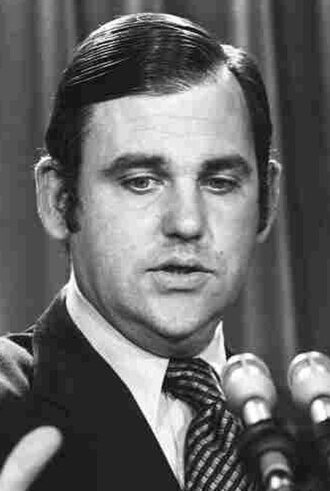
What Ziegler talks about on the tapes
Public relations 321Press relations 256Vietnam War 203Watergate 202Foreign Policy 129Congressional relations 105Media relations 97Henry Kissinger 95Economic policy 94Watergate scandal 80Media strategy 71Executive privilege 70
Conversations (1,199)
— Page 7 of 12President Nixon and Press Secretary Ronald L. Ziegler discuss strategies for avoiding a presidential debate with the Democratic opposition. Nixon emphasizes the need to frame the refusal by highlighting the stark policy differences between candidates and arguing that sensitive, ongoing international negotiations make a public debate contrary to the national interest. They agree on a communication plan to present these arguments to the press, aimed at denying the opponent prime-time exposure.
President Nixon met with a large delegation of mayors and local government officials to strategize on securing the passage of federal revenue sharing legislation in the Senate. Nixon emphasized the necessity of a bipartisan, non-restrictive bill and cautioned the attendees against allowing extraneous amendments—such as welfare reform—to jeopardize the legislation's chances before the upcoming Republican convention. The participants expressed their gratitude for the administration's leadership and pledged to lobby key senators to ensure the bill remained clean and reached the President's desk without delay.
President Nixon met with H.R. Haldeman, Ronald Ziegler, and other staff members to strategize for the 1972 presidential campaign, specifically focusing on fundraising, speech preparation for the Republican National Convention, and managing press relations. They discussed the political fallout surrounding the Thomas Eagleton health controversy, the management of the Committee to Re-elect the President, and the ongoing investigation into the Watergate break-in. Nixon emphasized the importance of maintaining a presidential posture during press conferences while utilizing staff to counterattack the opposition on issues of incompetence and foreign policy.
President Nixon met with various staff members and officials to discuss a wide array of administrative, foreign policy, and political matters. The President reviewed his upcoming schedule and foreign affairs, including a review of the House Foreign Affairs Committee's narrow vote to mandate a U.S. military withdrawal from Vietnam. Additionally, H. R. Haldeman coordinated with the President and Vice President Agnew to enforce a strict no-comment policy regarding the personal affairs of Thomas Eagleton, while discussions also touched on campaign strategy and potential coordination with George Wallace's associates.
This recorded session includes a substantive meeting between President Nixon, H.R. Haldeman, Ronald Ziegler, and others regarding the 1972 presidential campaign and potential political messaging. Key discussions focused on the health of Democratic vice-presidential nominee Thomas Eagleton, the Republican response strategy, and assessments of Cabinet members like George Shultz. Following this, the President held a ceremonial meeting that included photographs, the display of White House state gifts, and casual conversation with visitors.
President Nixon met with H.R. Haldeman, Charles Colson, and Ronald Ziegler to coordinate the administration's political strategy regarding the 1972 presidential campaign. The discussion focused on distancing the President from campaign chair Clark MacGregor’s unauthorized public comments concerning Senator Thomas Eagleton's medical history. Additionally, the group strategized on leveraging Senator George McGovern’s controversial stances on foreign aid to Greece and national defense as political wedges to secure support from key voting blocs.
President Nixon and Press Secretary Ronald L. Ziegler met to finalize strategy and logistics for an upcoming presidential press conference. They specifically discussed how to address the emerging controversy surrounding Thomas F. Eagleton and coordinated the format of the event, including the risks associated with press photography. The brief consultation served to align the administration's messaging and public image management ahead of the scheduled media interaction.
President Nixon met with his staff and advisors to review his recent press conference, assessing its effectiveness in countering criticism of his Vietnam policy and the perceived "double standard" of his critics. Nixon and his team discussed strategies to further neutralize opposition, including coordinating public relations efforts against negative media coverage and managing congressional resistance to his war policy. The President also reviewed his upcoming schedule, including golf outings and social engagements, while coordinating sensitive communication channels with key political allies like John Connally.
President Nixon met with his senior aides and advisors to manage his political schedule and address several pressing crises, including the 1972 presidential campaign, the Watergate investigation, and military policy in Vietnam. The group strategized on how to deflect negative press coverage, particularly concerning Senator Thomas Eagleton's status on the Democratic ticket, and sought to minimize the political fallout from the impending Watergate grand jury indictments by favoring legal delays until after the election. Additionally, they coordinated a messaging strategy to have the State Department, rather than the Defense Department, provide briefings on North Vietnamese dike bombings to maintain greater public credibility.
President Nixon met with H.R. Haldeman and other staff to review the status of the Watergate investigation, focusing on maintaining the secrecy of White House involvement and managing the legal exposure of committee officials. The participants discussed grand jury strategies, the handling of potential indictments for figures like Jeb Stuart Magruder, and efforts to discredit political opponents by tying them to Howard Hughes. They concluded that while the scandal was a "powder keg," they had successfully minimized the immediate damage and expected to avoid trial-related repercussions until after the upcoming election.
President Nixon and Press Secretary Ronald L. Ziegler discuss the management of media communications regarding the Watergate scandal. The conversation focuses on coordinating official statements and briefings, specifically those delivered by Deputy Press Secretary Gerald L. Warren. This exchange serves to reinforce the White House strategy of directing all relevant spokespersons to adhere to a unified messaging approach.
President Nixon and Press Secretary Ronald Ziegler briefly coordinate a unified public relations strategy regarding ongoing investigations. They emphasize the necessity of directing White House staff to cooperate with inquiries while managing the discomfort caused by emerging negative publicity. The discussion serves to align the administration's messaging to ensure consistency as the team navigates political pressure.
President Nixon and H. R. Haldeman met to discuss political strategy and administration initiatives, including the transition to a post-Vietnam economy and foreign policy successes. Much of the conversation focused on managing the political fallout from the Watergate scandal, specifically addressing the legal and public relations implications of the Dwayne Andreas campaign contribution and potential testimony from Jeb Stuart Magruder. Nixon and Haldeman also reviewed the President's upcoming schedule, including the Republican National Convention and strategies for handling media questions regarding Vietnam and campaign finances.
President Nixon met with the Cost of Living Council to review the performance of his administration's economic stabilization program, including successes in lowering inflation and fostering rapid economic growth. The discussion emphasized the necessity of maintaining fiscal discipline through a proposed $250 billion federal spending ceiling to prevent future inflationary pressure. Participants also addressed specific challenges, particularly rising food prices and the potential impact of government spending on tax rates, while strategizing on how to communicate these economic gains to the public ahead of the election.
President Nixon met with key staff members, including H. R. Haldeman, John Ehrlichman, and Henry Kissinger, to coordinate administration messaging and political strategy ahead of the Republican National Convention. The discussion focused on managing media relations, attacking political opponent George McGovern—specifically regarding his potential appointment of Ramsey Clark as FBI director—and handling the resignation of Sargent Shriver. The President also reviewed progress on revenue sharing legislation, the administration's stance on busing, and ongoing diplomatic efforts concerning Vietnam and U.S.-Soviet relations.
President Nixon met with Veterans Affairs Administrator Donald E. Johnson and other aides to discuss the administration's legislative strategy regarding veterans' benefits and a messaging campaign for the 1972 election. Nixon emphasized the need to contrast his support for Vietnam veterans with the Democratic opposition's stance on amnesty and national security, specifically targeting comments made by Sargent Shriver and Ramsey Clark. The session also included administrative updates, such as the upcoming resignation of George Romney and a social visit with Donald McI. Kendall and his family, during which they exchanged gifts and discussed presidential items.
President Richard Nixon met with Bailey K. Howard, accompanied by Ronald L. Ziegler, to discuss Howard's upcoming retirement from business. The conversation centered on Howard's personal history, including his family connections in California and his long-standing ties to the San Diego and La Jolla areas. The meeting concluded with Nixon presenting Howard with a gift of a Chinese scroll to commemorate his transition.
President Nixon and H.R. Haldeman met to coordinate political strategy, focusing on discrediting Sargent Shriver's claims regarding Vietnam peace negotiations by questioning his honesty and knowledge of the process. They also discussed administrative business, including the signing of a federal firefighters' bill and the planning of the President’s upcoming acceptance speech. Finally, the group reviewed the timing of impending Watergate-related indictments in relation to the Republican National Convention to minimize political fallout.
President Nixon and Ronald Ziegler discussed media strategy regarding a CBS interview with Pat Nixon and the political fallout from George McGovern's campaign representatives visiting Paris. Nixon expressed satisfaction with how the administration was using the McGovern team's actions to place the opposition on the defensive while maintaining a posture of statesmanlike restraint. They also agreed to tighten control over future media access for the First Lady and to prioritize high-profile interview opportunities with outlets like ABC.
President Nixon and Press Secretary Ronald Ziegler discuss media management and political strategy regarding the administration's public image. They exchange views on the inherent bias of the press corps and evaluate the tactical advantages of allowing certain political opponents to be perceived as confused or ineffective. The conversation concludes with Nixon affirming Ziegler’s recent performance and strategic approach to managing current political narratives.
President Nixon met with Henry Kissinger, William Rogers, Alexander Haig, and other advisors to coordinate the administration’s response to the terrorist murder of Israeli athletes at the Munich Olympics. The discussion focused on balancing a display of international concern and U.S. empathy with the need to avoid politicizing the games or creating a precedent for national mourning that could be exploited. Nixon decided against a formal national day of mourning but agreed to monitor the situation closely, coordinate with Israeli officials, and seek potential international action against states that harbor terrorist organizations through the UN Security Council.
President Nixon met with H.R. Haldeman, John Connally, and other staff members to discuss political messaging and administrative strategy ahead of the 1972 election. The group coordinated the President's upcoming speech to the International Monetary Fund and formulated a specific rebuttal to George McGovern's tax proposals by emphasizing the administration's own record of tax relief. Additionally, the President discussed potentially recruiting Eugene McCarthy for a federal role and reviewed the political benefits of ongoing Soviet and Japanese grain and trade deals.
President Nixon met with Vice President Agnew and Republican Congressional leaders to coordinate legislative strategy ahead of the upcoming election, specifically focusing on the status of pending bills and the management of the Congressional schedule. Key priorities included securing a federal spending ceiling, advancing revenue sharing, and emphasizing anti-busing legislation as a must-pass measure to counter Democratic-led policies. The President urged the leadership to maintain a unified front on fiscal restraint, framing opposition to Republican economic proposals as reckless and warning that Democrats should bear the political cost for failing to curb government spending.
President Nixon met with H. R. Haldeman and later Ronald L. Ziegler to discuss campaign strategy, press relations, and upcoming economic messaging. The President expressed frustration with the administration's communication failures regarding tax policy, specifically the Value-Added Tax (VAT), and directed his staff to clarify that there would be no tax increases in his second term. Additionally, they reviewed recent polling data on the Vietnam War—which showed strengthening support for Nixon’s policies over George McGovern’s—and discussed how to frame upcoming press conferences to pivot toward attacking McGovern’s economic proposals.
President Nixon met with George Shultz, Arthur Burns, and John Ehrlichman to discuss economic strategy, focusing on tax reform and property tax relief. The group evaluated the political risks of pursuing tax changes before the election, debating how to frame their proposals without being perceived as increasing taxes. Additionally, the President and H. R. Haldeman discussed administrative logistics, including the potential for a cruise on the Sequoia to discuss strategy and the implementation of Secret Service protection for Senator Edward Kennedy.
President Nixon met with the Council on International Economic Policy and senior advisors to discuss U.S. trade relations with an expanding European Community. The group debated four strategic options ranging from maintaining the status quo to aggressive confrontation, with the President ultimately directing that the administration maintain a firm, "tough" stance while avoiding specific, provocative threats until after the upcoming election. Nixon emphasized that trade policy should not be viewed in isolation but as a component of a broader strategy concerning global power balances and U.S. national security commitments in Europe.
President Nixon met with H.R. Haldeman, Charles Colson, and later Ronald Ziegler to discuss campaign strategy, press relations, and the political fallout of the Watergate scandal. The group evaluated the President’s recent public appearances in Pennsylvania, analyzed negative media coverage, and strategized on how to influence networks—specifically targeting CBS—to provide more favorable coverage. Additionally, they reviewed potential indictments related to Watergate and discussed the necessity of coordinating financial disclosure statements for the President and Vice President Agnew to contrast with their political opponents.
President Nixon met with H.R. Haldeman, Ronald Ziegler, and Zosimo Monzon to coordinate administration strategy, including preparations for a major foreign policy speech and the handling of the upcoming 1972 election campaign. The participants discussed media relations, the management of White House personnel and correspondence, and the security features of the presidential limousine. Additionally, the President reviewed his schedule regarding various events, including a potential meeting with Olympic swimmer Mark Spitz and observances for National Heritage Day.
President Nixon met with his economic advisors and staff to plan the logistics of an upcoming revenue-sharing bill signing ceremony and to discuss future tax policy and budget strategies. The President emphasized the need for political carefulness regarding tax reform, expressing a strong desire to avoid any perception of a tax increase while seeking ways to provide property tax relief for senior citizens. The participants debated the merits of various tax proposals, including minimum tax adjustments and simplification measures, ultimately focusing on balancing fiscal responsibility with the administration's political objectives leading up to the 1972 election.
President Nixon met with Alexander P. Butterfield, Julie Nixon Eisenhower, and Ronald L. Ziegler to coordinate the administration's upcoming public schedule. Primary attention focused on planning a signing ceremony for the National Heart, Blood Vessel, Lung, and Blood Act, specifically addressing the political implications of inviting Senator Edward M. Kennedy to the event. The group also discussed potential press opportunities involving Ray Charles to promote sickle cell anemia research and briefly touched upon status updates regarding Vietnam War negotiations.
In this meeting, President Nixon and H.R. Haldeman, later joined by Peter Dailey and Ronald Ziegler, discussed campaign strategy for the 1972 election, focusing heavily on media advertising and the effectiveness of surrogates like John Connally and Spiro Agnew. The participants assessed the political impact of the Watergate scandal, with Nixon instructing staff to maintain a public stance of non-involvement while letting the Justice Department handle inquiries. Additionally, they reviewed scheduling for upcoming campaign appearances and evaluated the President's responses to domestic controversies, including the U.S. Olympic team's performance and various public relations opportunities.
President Nixon, H.R. Haldeman, and Ronald Ziegler met to coordinate logistics and media strategy surrounding Henry Kissinger’s recent diplomatic mission to the Soviet Union. The participants specifically discussed the staging and aesthetics for upcoming photography sessions, including lighting and outdoor locations to capture Kissinger’s meetings with the President and Secretary of State William Rogers. Nixon emphasized a desire for natural interaction, moving away from formal, static poses to highlight the significance of the diplomatic briefings.
President Nixon and his advisors met to coordinate upcoming foreign policy announcements, specifically focusing on the timing of SALT II, maritime agreements, and trade deals with the Soviet Union to maximize domestic political impact. The President instructed H.R. Haldeman to identify and fire any staff members responsible for leaking CIA documents, while also assessing potential personnel changes for his second term. Additionally, Henry Kissinger briefed the President on ongoing secret peace negotiations with North Vietnam, discussing the scheduling of talks to avoid undermining the President's public appearances.
Press Secretary Ronald L. Ziegler met with an unidentified woman in the Oval Office to retrieve personal items, including notebooks, from Henry A. Kissinger’s desk. The brief interaction focused on the logistical collection of materials from the office. Following the retrieval of these items, Ziegler and his guest promptly departed the premises.
President Nixon met with H.R. Haldeman, Henry Kissinger, and other staff to discuss the messaging for upcoming speeches, particularly regarding international narcotics control and the administration's broader foreign policy achievements. The participants reviewed the status of Vietnam peace negotiations, the implications of Watergate-related news coverage, and the political necessity of contrasting Nixon's record against George McGovern's platform. Furthermore, Nixon and Kissinger strategized on diplomatic maneuvers concerning the Middle East, specifically addressing Israeli military actions in Lebanon and the need to maintain strong U.S. influence in international affairs.
President Nixon and Press Secretary Ronald L. Ziegler held a brief meeting to coordinate the President's upcoming address to the International Narcotics Control Conference. The discussion focused on logistical details regarding the involvement of Rose Mary Woods and the official release of the speech. No further substantive policy actions were recorded during this brief administrative exchange.
President Nixon met with Ronald Ziegler and Stephen B. Bull to coordinate a Rose Garden event involving Miss America winners Terry Ann Meeuwson and Laurie Lee Schaefer. The discussion focused on the logistics of the contestants' tour, the management of their appearance, and the involvement of their chaperones. The meeting served to finalize details for the President’s scheduled interaction with the titleholders.
President Nixon met with Miss America 1973 Terry Ann Meeuwsen, pageant officials, and White House staff for a courtesy visit and formal photograph session in the Oval Office. During the meeting, the President discussed various White House memorabilia, including presidential seals, gifts from foreign heads of state, and needlepoint work by Julie Nixon Eisenhower. The conversation also touched upon the activities of Tricia Nixon Cox and concluded with a brief exchange regarding the administration's position on prisoners of war.
President Nixon and Press Secretary Ronald Ziegler discussed the strategic messaging for the President's recent address at the Conference on International Narcotics Control. They focused on characterizing the influx of foreign narcotics as a national security threat equivalent to an armed invasion. The President emphasized the importance of utilizing this analogy to justify tying foreign aid to international drug control cooperation.
President Nixon met with Ronald Ziegler and Stephen Bull to finalize administrative details regarding his upcoming schedule and a personal letter to Mrs. Theodore Bennahum. The President emphasized strict ground rules for a forthcoming interview with author Theodore H. White, stipulating that the discussion was to be used exclusively for White's book and prohibited from appearing in media outlets like Time or Life before the election. Additionally, the group coordinated timing adjustments for a subsequent meeting with a senator to ensure the President's schedule remained fluid and uninterrupted.
President Nixon met with Marion Scully to discuss her background, her work in occupational therapy, and her family's connection to Ireland. The meeting included a brief photo opportunity on the Oval Office patio involving Henry Kissinger, the President’s Irish setter, King Timahoe, and handler Manolo Sanchez. The session concluded with the President presenting commemorative gifts, including Presidential seal pins and cufflinks, to Scully and her family members.
President Nixon met with Ronald Ziegler and Henry Kissinger to coordinate public messaging, campaign strategy, and foreign policy initiatives. They finalized plans for a Cabinet-level anti-terrorism committee to bolster the administration's image ahead of the President's meeting with Jewish leaders. Additionally, they strategized on how to address the 1972 election, emphasizing a disciplined response to George McGovern's comments on POWs and reinforcing the President’s commitment to supporting Israel through arms policy rather than public rhetoric.
President Nixon met with H.R. Haldeman and other aides to coordinate logistics for his upcoming trip to New York, specifically focusing on a sensitive meeting with Jewish leaders and potential risks regarding news leaks. The group discussed political campaign strategies, including the management of Vice President Agnew's schedule and the importance of monitoring congressional hearings related to Watergate and ITT. Additionally, Nixon expressed frustration with the lack of loyalty from political pundits and business executives who received administration support, deciding to restrict future personal favors to journalists and business figures.
President Nixon met with Republican Congressional leaders to discuss the critical need for a $250 billion federal spending ceiling to combat inflation and prevent the necessity of tax increases. The participants strategized on how to manage the upcoming House vote on HR 16810, expressing concern that Democratic leadership was pushing irresponsible, expansive spending bills—including massive social welfare and Social Security packages—that threatened the administration's fiscal goals. The President emphasized that passing the spending cap was a vital political and economic tool to hold Congress accountable and establish a framework for the 1974 budget, while also providing leverage for future presidential vetoes.
President Nixon met with Ronald Ziegler and H.R. Haldeman to discuss strategies for managing negative press coverage regarding his campaign activities and perceived lack of public visibility. The participants analyzed how to address media inquiries about the President's schedule and his refusal to directly confront opponent George McGovern. To neutralize media pressure, Nixon decided to hold an in-office press conference to address a range of domestic and foreign policy topics while maintaining control over the narrative.
President Nixon consults with Ronald Ziegler and H.R. Haldeman regarding a recent, ostensibly personal telephone call from journalist Walter Cronkite. Nixon clarifies his willingness to speak with Cronkite only if the matter is non-journalistic in nature. The brief discussion also touches upon logistical updates regarding operations at Camp David and the status of staff members.
President Nixon met with Press Secretary Ronald L. Ziegler to coordinate media strategy and messaging ahead of a forthcoming press conference. They discussed rebuttals to allegations regarding Watergate and administration corruption, while also reviewing talking points on Vietnam, Soviet-American trade, and the treatment of prisoners of war. Additionally, the pair addressed public scrutiny concerning expenditures at the President’s private residences and evaluated strategies for managing press interviews and the 1972 election campaign.
President Nixon met with Press Secretary Ronald L. Ziegler to coordinate media strategy ahead of a forthcoming press conference. They discussed the handling of potential questions regarding the President's California property and finalized the timing for Ziegler’s subsequent press briefing. The brief interaction focused on ensuring message discipline and preparing the administration's public posture.
President Nixon met with a large group of reporters and staff in the Oval Office to conduct a press conference, followed by a private debriefing with his senior aides, including H.R. Haldeman, John Ehrlichman, and Charles Colson. During the public session, Nixon addressed current events such as the 1972 campaign, the status of the Vietnam peace negotiations, allegations regarding the U.S.-Soviet grain deal, and his stance against a 1973 tax increase. Following the departure of the press, the President and his advisors discussed the effectiveness of his performance, particularly the benefit of using his responses as recorded campaign material, and strategized on future scheduling and media messaging.
President Nixon and Press Secretary Ronald Ziegler review the media reception of the President's recent press conference, expressing frustration with the television networks' tendency to frame the event within the broader 1972 campaign context. Nixon dismisses the utility of further press conferences or speeches, suggesting that the administration should pivot toward a more aggressive, confrontational approach with network anchors. Consequently, Ziegler is directed to apply pressure on NBC executives and prepare for a tough, firm conversation with Walter Cronkite regarding campaign coverage and equal time requirements.
President Nixon met with his senior advisors, including H. R. Haldeman and Charles Colson, to evaluate the media coverage and political impact of his recent press conference. They discussed the generally hostile tone of the press, analyzed the effectiveness of various messaging strategies regarding the 1972 campaign, and debated the strategic merits of holding in-office versus East Room press conferences. The group also coordinated a response to George McGovern’s recent foreign policy speech, planning for Secretary of State William P. Rogers to deliver a rebuttal.
President Nixon met with Irish official Patrick Hillery and members of his delegation to discuss bilateral issues, primarily aviation landing rights at Shannon Airport and the political situation in Northern Ireland. The President emphasized his personal attention to the airline negotiations and reiterated the U.S. commitment to avoiding unnecessary intervention in the Northern Irish conflict while expressing sympathy for the ongoing violence. The conversation concluded with a broader philosophical discussion on leadership, the importance of personal reflection and vacation, and the President's reflections on historical figures like Disraeli and Gladstone.
President Nixon met with Ronald L. Ziegler and Alexander P. Butterfield to coordinate the President's upcoming schedule and discuss specific announcements regarding the Committee to Re-elect the President (CRP). The participants focused on managing the logistics of the President's public engagements and the strategic messaging surrounding his re-election campaign. This session served to align staff on the timing and content of official communications before the group adjourned.
President Nixon and Press Secretary Ronald Ziegler discuss media strategy for the 1972 campaign, focusing on the handling of upcoming radio speeches and a proposed one-on-one interview request from Walter Cronkite. The two analyze the political efficacy of George McGovern’s recent attacks and conclude that his confrontational rhetoric and delivery style are proving counterproductive with the public. They also weigh the risks and benefits of granting exclusive television access, ultimately deciding to proceed cautiously to maintain favorable media positioning while avoiding premature exposure of tax reform policies.
President Nixon and Press Secretary Ronald Ziegler met to discuss media strategy and public messaging tactics ahead of the 1972 election. They reviewed administrative concerns regarding tax policy, specifically aiming to avoid public perception that a tax reform plan was imminent. Additionally, the two discussed scheduling appearances with news networks, prioritizing a late-campaign timeline to accommodate the President's schedule while managing media inquiries regarding potential debates.
In this meeting with H.R. Haldeman, Stephen Bull, and later Ronald Ziegler, President Nixon discussed a broad range of political and communications strategies for the 1972 re-election campaign. Key topics included coordinating messaging on Vietnam negotiations ahead of a press conference, countering negative media coverage regarding federal spending, and refining the President's public image through improved photographic and radio outreach. Additionally, the participants addressed personnel management for campaign economic rhetoric and logistical planning for upcoming speeches.
President Nixon, Ronald Ziegler, and H.R. Haldeman met to coordinate media strategy regarding Nixon's selective support for Republican candidates and specific congressional Democrats. Ziegler briefed the President on his efforts to navigate press inquiries about the administration's stance on various Senate and House races, emphasizing a policy of neutrality rather than blanket endorsements. The participants discussed managing the President's public involvement in campaigns and maintaining a balanced approach toward incumbent allies and former cabinet members.
President Nixon met with H.R. Haldeman, Charles Colson, and other staff members to discuss campaign strategy, press relations, and the management of sensitive domestic and foreign policy issues. The President emphasized a need to focus on core ideological issues such as patriotism, morality, and the work ethic, while criticizing his staff's reliance on overly objective or "liberal" analyses that missed the underlying concerns of key voting blocs like Catholic and blue-collar ethnics. The group also addressed the ongoing Vietnam negotiations, with Nixon warning against public displays of anxiety and instructing staff to maintain a firm, disciplined stance regarding media coverage and political messaging.
President Nixon met with H.R. Haldeman and key staff to streamline his schedule and refine his political messaging ahead of the 1972 election. They discussed cancelling several ceremonial events and meetings with ethnic leaders and senators to prioritize presidential time, while clarifying his firm opposition to busing legislation. Additionally, the group coordinated administration responses to ongoing Vietnam negotiations and planned a series of upcoming radio addresses focused on domestic issues and broad political philosophy.
President Nixon met with his staff, including Ronald Ziegler and H.R. Haldeman, to coordinate the logistics for an upcoming meeting and photograph session with Senate leaders regarding busing legislation. The participants focused on timing the session to ensure optimal media coverage and press accessibility. Additionally, the President managed routine administrative matters, including his personal schedule, correspondence with Congressmen, and a barber appointment.
President Nixon met with several Republican senators to strategize on gaining legislative action against school busing during the remaining session of the 92nd Congress. Nixon encouraged the senators to support the current busing legislation as the most viable vehicle for immediate progress, emphasizing that the Senate should at least proceed to a vote on the merits rather than allowing the bill to stall. The President also discussed the broader political landscape, including his judicial philosophy regarding Supreme Court appointments and his intent to emphasize these themes in upcoming campaign appearances.
President Nixon met with his economic advisors and Republican Senate leadership to coordinate a strategy for securing congressional support for a federal spending ceiling. The discussion focused on the necessity of controlling runaway federal expenditures and the potential use of the presidential veto to enforce a $250 billion spending limit. Nixon and his team evaluated the legislative outlook for the debt limit bill, including strategies for handling amendments and managing potential political fallout regarding domestic programs.
President Nixon and H.R. Haldeman discussed strategies for the 1972 reelection campaign, specifically focusing on how to manage campaign expenses and counter negative media coverage. They debated whether to launch an aggressive counterattack against the Democratic party and the press regarding perceived bias and alleged double standards in reporting, while acknowledging the need to maintain public order. Additionally, the President reviewed updates on Vietnam negotiations with Henry Kissinger and coordinated the upcoming schedule for Kissinger's return and subsequent meetings with Secretary of State William Rogers.
President Nixon, John Ehrlichman, and Ronald Ziegler met to discuss legislative strategy regarding a controversial water bill and H.R. 1, weighing the political risks of a pocket veto against the necessity of limiting federal spending. The group examined concerns about congressional session timelines and the potential for a spending ceiling, ultimately agreeing to delay a final decision while maintaining a low-key public posture. Beyond legislative mechanics, the President and Ehrlichman analyzed the 1972 campaign landscape, noting that their focus on fiscal conservatism, social values, and national defense was resonating with voters disillusioned by the perceived permissiveness of the opposition.
President Nixon met with Ronald Ziegler and Charles Colson to discuss press relations, the 1972 campaign, and strategies for neutralizing political attacks regarding the Watergate scandal. The participants expressed frustration with perceived media double standards and reviewed plans to prepare a 'white paper' documenting Democratic campaign improprieties to mirror those alleged against the Republicans. Additionally, they analyzed George McGovern's recent political comments on troop commitments and discussed the effectiveness of internal polling data in mitigating the impact of Watergate coverage.
President Nixon met with H.R. Haldeman and Ronald Ziegler to discuss administrative matters, including Oval Office furnishings, and casual commentary on the 1972 World Series. The conversation shifted to critical foreign policy updates regarding Henry Kissinger's ongoing Vietnam peace negotiations and the strategic timing of a potential ceasefire announcement before the 1972 election. Additionally, the group touched upon political campaign activities, specifically addressing allegations of "dirty tricks" linked to Charles Colson and the Committee to Re-elect the President regarding rival candidates Edmund Muskie and Henry Jackson.
President Nixon and Press Secretary Ronald Ziegler met to coordinate a strategy for handling ongoing media inquiries and allegations concerning the Watergate break-in and other campaign practices. The two agreed that the White House should refuse to dignify what they characterized as hearsay, innuendo, and partisan smears, while pivoting the narrative toward the opposition's own use of aggressive tactics and a hypocritical double standard regarding media coverage. Nixon instructed Ziegler to maintain a composed demeanor and pivot all questions toward policy issues, such as Vietnam and the economy, rather than engaging with speculative or unproven claims of White House involvement.
President Nixon met with Press Secretary Ronald Ziegler to coordinate the administration’s strategy for the final weeks of the 1972 campaign. The discussion centered on efforts to discredit the media’s coverage of the administration and emphasized the importance of contrasting the perceived patriotism of the President's supporters—such as labor, farmers, and military families—against that of the liberal establishment and academics. The two also reviewed logistical planning for upcoming public appearances, potential radio addresses regarding tax reform, and updates on Henry Kissinger’s diplomatic activities.
President Nixon met with H.R. Haldeman and other aides to manage the political fallout of the Watergate scandal and coordinate the public messaging regarding Vietnam peace negotiations. Nixon emphasized adopting a low-key, defensive posture toward Watergate allegations while directing staff to manage public perception of Henry Kissinger's upcoming trip to Saigon. Additionally, the President stressed the importance of maintaining a stern public image for Kissinger during his diplomatic travels, specifically warning against any optics that might suggest friendliness toward the North Vietnamese.
President Nixon met with his senior advisors and staff to coordinate public relations messaging and diplomatic strategy. The discussion focused on refining the narrative surrounding the administration's recent outreach to labor leaders and establishing talking points for Ron Ziegler regarding Henry Kissinger's upcoming trip to Saigon. Nixon emphasized the importance of framing Kissinger's travel as a routine, pre-planned mission to avoid public speculation about a diplomatic "breakthrough" or a shift in policy toward South Vietnamese President Nguyen Van Thieu.
President Nixon consulted with H. R. Haldeman and Alexander Haig regarding critical foreign and domestic policy matters, most notably the status of Vietnam peace negotiations. Nixon instructed Haig to ensure Henry Kissinger avoided traveling to Hanoi unless a final agreement was secured, while expressing concerns about North Vietnamese military maneuvers near Saigon. Additionally, the President and his staff discussed managing the optics of his 1972 re-election campaign, specifically defending the strategy of remaining in the White House to focus on official duties rather than traditional public campaigning.
President Nixon met with William E. Timmons and John D. Ehrlichman to discuss legislative strategy regarding the federal debt limit, impending congressional adjournment, and the political fallout from his recent veto of a water bill. The President emphasized his desire to use these vetoes to frame a narrative of fiscal responsibility, specifically positioning the water bill as a choice between higher taxes and fiscal restraint. Nixon also directed his staff to continue pursuing substantial cuts to federal personnel and spending while carefully timing additional vetoes to maximize political advantage before the 1972 election.
President Nixon and Press Secretary Ronald Ziegler briefly discussed the potential scheduling of a meeting with Congressional leaders following a telephone call regarding the upcoming Congressional adjournment. Additionally, they touched upon the press briefing strategy for an impending U.S.-Soviet Union trade agreement. The conversation concluded quickly as the two coordinated their immediate schedules.
President Nixon met with H. R. Haldeman and Ronald Ziegler to coordinate the administration's upcoming schedule, including meetings with Congressional leaders and campaign travel logistics for Kentucky and Michigan. The discussion shifted toward significant foreign policy concerns, specifically reviewing US-Soviet trade, maritime, and Lend-Lease agreements, as well as the status of ongoing Vietnam peace negotiations. The participants evaluated political messaging and organizational strategies, emphasizing the need for disciplined scheduling and timely execution of executive briefings.
President Nixon and Press Secretary Ronald Ziegler consulted regarding potential media inquiries following a recent phone call between the President and congressional leaders Mike Mansfield and Margaret Chase Smith. They clarified the nature of the conversation to ensure that laughter overheard by the press would not be misinterpreted or attributed to political leaks regarding China. Additionally, Ziegler provided a brief update on the positive reception of Secretary of State William P. Rogers' recent trade agreement statement and current television news coverage.
President Nixon and Press Secretary Ronald Ziegler coordinated the administration's public messaging regarding upcoming meetings with foreign leadership and post-election expectations. Nixon instructed Ziegler on how to characterize recent diplomatic interactions and emphasized maintaining a positive outlook toward congressional relations. The discussion concluded with a brief review of media coverage and broadcasting activities.
President Nixon and Press Secretary Ronald Ziegler coordinate the administration's messaging for an upcoming press briefing, focusing on the legislative performance of the current Congress. Nixon instructs Ziegler to characterize Congress's record as a "mixed bag" while highlighting a poor "batting average" on major domestic programs like welfare reform, excluding the success of revenue sharing. They also briefly discuss strategy regarding a potential debate between the President and George McGovern and the need to emphasize the non-partisan nature of the administration's legislative goals.
President Nixon and Press Secretary Ronald Ziegler reviewed recent administration messaging, specifically focusing on the announcement of the second phase of the Strategic Arms Limitation Treaty (SALT) and budget briefings conducted by John Ehrlichman. They coordinated logistical arrangements for an upcoming presidential trip to Camp David, including the scheduling of a photo opportunity with a working group and the planning of press pool coverage for the President's transit. Throughout the conversation, they emphasized the positive impact of the administration's recent policy initiatives and media engagement strategy.
President Nixon and Press Secretary Ronald L. Ziegler held a brief meeting in the Executive Office Building to discuss the dynamics of a preceding event. The conversation focused on the notable lack of interaction between attendees during a recent gathering. No major policy decisions were made, as the exchange primarily served as a debrief regarding interpersonal observations.
President Nixon met with H.R. Haldeman and other staff members to discuss security concerns and public relations strategies regarding his upcoming travel schedule and motorcades. The participants evaluated the risks associated with motorcades versus rallies, specifically addressing threats posed by protestors and the need for improved crowd control measures. Additionally, they touched upon political strategy regarding the ongoing Watergate investigation and coordinated the handling of press inquiries concerning upcoming Vietnam peace negotiations.
President Nixon met with Henry Kissinger, William Rogers, and Ronald Ziegler to discuss the status of stalled Vietnam peace negotiations following a volatile meeting between Kissinger and South Vietnamese President Nguyen Van Thieu. Kissinger reported that Thieu, reacting with intense emotional outbursts, perceived the proposed peace terms as a betrayal and a threat to his government. Nixon and his advisors weighed the risks of proceeding with a settlement against the possibility of domestic political fallout if they pushed too hard before the upcoming election, ultimately deciding to maintain a posture of cautious progress while managing the erratic behavior of both North and South Vietnamese leadership.
President Nixon and Press Secretary Ronald Ziegler met briefly to finalize administrative details regarding the President’s public schedule and official statements. They specifically discussed the approval of a formal statement concerning the death of Jackie Robinson and coordinated the logistics for upcoming White House photography sessions. The discussion included preferences for managing the duration and atmosphere of these photo opportunities involving figures such as Henry Kissinger and representatives of the police force.
President Nixon directed Ronald Ziegler to emphasize his prior public praise of Jackie Robinson's athletic versatility, specifically requesting that Ziegler highlight these comments to the press. The two also coordinated a rebuttal to negative news coverage regarding H.R. Haldeman and the Watergate investigation, aiming to challenge the accuracy of reports concerning FBI questioning. Finally, Nixon instructed Ziegler to launch a "vicious" public attack against George McGovern, accusing the candidate of sabotaging ongoing Vietnam peace negotiations.
President Nixon and Press Secretary Ronald L. Ziegler briefly discuss the public promotion of Jack McLaughlin’s athletic accomplishments. Nixon instructs Ziegler to emphasize McLaughlin's reputation as a talented all-around athlete in upcoming statements or press materials. The brief interaction concludes with the President confirming his desire to move forward with highlighting these biographical details.
President Nixon and Press Secretary Ronald Ziegler coordinate messaging for upcoming press briefings, focusing on legislation, the schedule for farm and urban affairs speeches, and the administration's stance on Vietnam peace negotiations. Nixon directs Ziegler to explicitly deny rumors of a coalition government in South Vietnam and to prepare a response to George McGovern's criticisms regarding the peace process. Ultimately, they decide to frame McGovern’s comments as irresponsible and contrast the President's commitment to 'peace with honor' against the risks posed to ongoing negotiations.
President Nixon and Press Secretary Ronald Ziegler coordinate media messaging strategy regarding the Vietnam War. Nixon instructs Ziegler to emphasize a contrast between his pursuit of "peace with honor" and the "surrender" advocated by his political opponents. The discussion focuses on crafting a sharp, binary narrative to shape public perception of the administration’s foreign policy.
President Nixon met with H. R. Haldeman, Ronald Ziegler, and Henry Kissinger to strategize against mounting political pressure, specifically regarding a damaging Washington Post report on campaign espionage and the ongoing Watergate investigations. The President and his staff discussed methods to counter these allegations, maintain administrative loyalty, and formulate an effective public response to Senator George McGovern's campaign rhetoric. Additionally, Kissinger provided an update on the status of Vietnam peace negotiations, focusing on the tactical challenges of reaching a settlement and coordinating the administration's messaging on the war.
President Nixon and Press Secretary Ronald L. Ziegler discuss the necessity of utilizing memorable catchphrases to influence public perception of the 1972 presidential campaign. Nixon emphasizes the importance of framing the media's coverage as "yellow journalism" to discredit critical reporting, particularly from the Washington Post. The President explicitly tasks Ziegler with delegating the execution of this strategy to others rather than handling it personally.
President Nixon and Henry Kissinger met to coordinate a public briefing regarding the North Vietnamese unilateral release of secret Vietnam peace settlement terms. Kissinger outlined a three-part strategy to explain the procedural status of negotiations, the substantive elements of the agreement, and the necessity of further refinements to ensure long-term enforceability. They agreed to frame the delay not as a failure, but as a commitment to a "right agreement" rather than a hurried one, while preparing to counter potential political criticism from George McGovern.
President Nixon and Press Secretary Ronald L. Ziegler consulted on media strategy regarding the ongoing Vietnam peace negotiations and Henry Kissinger’s recent public claim that “peace is at hand.” They discussed how to frame the potential settlement in light of the upcoming 1972 election, contrasting Nixon's goal of “peace with honor” against the alternatives proposed by George McGovern. The discussion also addressed the administration's concerns regarding the role of a coalition government, the specific concessions made by North Vietnam on October 8, and managing press inquiries about bombing campaigns and South Vietnamese President Nguyen Van Thieu.
President Nixon and Press Secretary Ronald L. Ziegler held a brief meeting to coordinate logistics regarding the President's radio address scheduled for that day. They discussed media coverage, specifically focusing on the wire service reports and a forthcoming photographic session with the press. The conversation functioned primarily as a final scheduling update to ensure synchronized press engagement following the broadcast.
President Nixon and Press Secretary Ronald Ziegler coordinated logistics for a requested film segment for the television adaptation of Theodore H. White's 'The Making of the President.' Nixon approved a five-minute silent filming session aboard Air Force One with Al Wasserman, while strictly prohibiting any interviews. Furthermore, the two discussed managing the press pool during upcoming trips to Ohio and California, with Nixon opting to personally engage with specific journalists during transit.
President Nixon met with key advisors, including H.R. Haldeman, Henry Kissinger, and Charles Colson, to coordinate political messaging and media strategy in the final stretch of the 1972 presidential campaign. The discussion centered on countering recent CBS news reports regarding Watergate, managing public expectations for a Vietnam peace settlement, and finalizing the President’s radio speech schedule. Nixon emphasized the importance of aggressive, disciplined political messaging, instructing his team to ensure that surrogates and administration officials remained unified in their efforts to contrast his administration's position with George McGovern's campaign platforms.
H. R. Haldeman and Ronald Ziegler coordinated a last-minute schedule change regarding President Nixon’s upcoming addresses, swapping the planned “Defense” speech with the “One America” speech. Haldeman directed Ziegler to announce that the Defense speech was being postponed by one day to allow for further editing and to maximize its strategic impact. Ziegler agreed to relay these instructions to Gerald Warren to ensure the public announcement reflected the revised schedule.
President Nixon met with his senior staff, including H.R. Haldeman and Ronald Ziegler, to discuss the ongoing negotiations for a Vietnam peace settlement, emphasizing the necessity of a durable agreement that avoids the pitfalls of previous accords. The discussion also covered campaign strategy, including the management of candidate endorsements and media relations, as well as the political fallout from the Watergate scandal. Additionally, the President reviewed his upcoming schedule, which included meetings with Nelson Rockefeller and security concerns regarding a planned trip to Chicago.
President Nixon and Ronald Ziegler discussed the messaging strategy regarding ongoing Vietnam peace negotiations, specifically addressing premature media reports of an imminent agreement. Nixon emphasized that the administration would not be pressured by deadlines or the upcoming election to finalize a deal, prioritizing the attainment of a durable peace that guarantees South Vietnam's right to self-determination. They coordinated on how to publicly dismiss unauthorized reports while maintaining that negotiations with Henry Kissinger would conclude only when the terms were satisfactory.
President Nixon, H.R. Haldeman, and Ronald Ziegler met to discuss campaign strategy and public perception regarding the Vietnam peace negotiations, recent polling data, and political corruption allegations. The President expressed frustration with the opposition's focus on controversial social issues and emphasized a commitment to achieving a "peace without surrender" rather than rushing an agreement before the election. They also coordinated details for the President’s upcoming travel schedule and refined their media messaging approach, specifically advising staff to avoid being overly defensive or "objectively" honest when countering political attacks.
President Nixon and Press Secretary Ronald Ziegler discuss media coverage of the administration's stance on Vietnam peace negotiations, specifically emphasizing the President's commitment to avoiding being stampeded into a premature agreement. They note that the news networks have downplayed Hanoi’s recent statements regarding deadlines, while also expressing disappointment that Nelson Rockefeller’s recent efforts have not received significant television coverage. The discussion centers on shaping the administration's public narrative and monitoring the effectiveness of their messaging across major broadcast networks.
President Nixon met with his senior advisors to strategize for the final days of the 1972 presidential campaign, focusing on polling analysis, press engagement, and the handling of hecklers at campaign events. Much of the session was dedicated to reviewing and revising the text of the President's upcoming "Look to the Future" speech, specifically addressing the sensitive Vietnam War section and the ongoing peace negotiations. Nixon emphasized the importance of delivering the speech at a deliberate, measured pace to effectively convey his vision for the future, domestic achievements, and his foreign policy legacy.
President Nixon met briefly with Manolo Sanchez before convening with Press Secretary Ronald L. Ziegler to coordinate final arrangements for the President's upcoming “Look to the Future” speech. The discussion focused on media strategy, including the management of press relations and the inclusion of a photograph opportunity featuring White House photographer Oliver Atkins. The participants specifically addressed the logistical planning for the speech's taping and its dissemination to the press, including the Washington Post.