Ziegler, Ronald L.
Ronald L. Ziegler served as White House Press Secretary from January 1969 to August 1974, acting as President Nixon's primary spokesperson throughout the taping period of February 1971 to July 1973. As the Watergate scandal escalated, Ziegler famously managed the administration's shifting public narratives and faced intense scrutiny from the press corps. In June 1973, his duties expanded when he was additionally named Assistant to the President following the resignation of Herbert Klein, holding both titles concurrently until the end of the administration in August 1974.
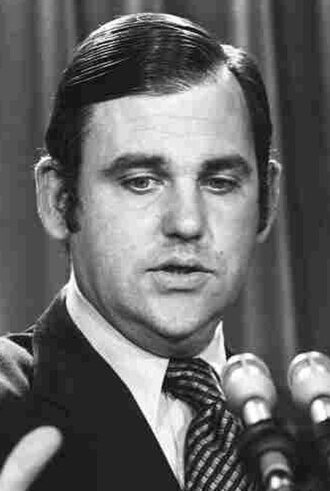
What Ziegler talks about on the tapes
Public relations 321Press relations 256Vietnam War 203Watergate 202Foreign Policy 129Congressional relations 105Media relations 97Henry Kissinger 95Economic policy 94Watergate scandal 80Media strategy 71Executive privilege 70
Conversations (1,199)
— Page 8 of 12President Nixon and Press Secretary Ronald Ziegler discuss the administration's public relations strategy regarding Vietnam peace negotiations and George McGovern's accusations of deception. Nixon emphasizes the need for Secretary of State William Rogers and Secretary of Defense Melvin Laird to aggressively rebut McGovern's claims, while maintaining a firm posture against being rushed into an unsound agreement. They also evaluate the efficacy of the President's recent media coverage, concluding that television remains a more effective medium for their messaging than the press.
President Nixon and Press Secretary Ronald Ziegler discuss media coverage and the framing of recent political developments shortly before the 1972 election. The conversation focuses on managing public perception regarding diplomatic negotiations and potential unrest, with Nixon emphasizing the need for precise messaging. They also touch upon the professional status and challenges of specific unidentified individuals within the administration.
President Nixon and Press Secretary Ronald Ziegler coordinate a meeting at the White House to discuss unspecified matters. After confirming that Ziegler is not scheduled for a press briefing that day, the President directs him to come over immediately. This brief interaction serves as a routine scheduling check-in to facilitate a private consultation between the two officials.
President Nixon and Press Secretary Ronald Ziegler held a brief, informal check-in to coordinate schedules regarding a pending briefing. Nixon inquired about the status of Ziegler's preparation and directed him to meet at the office to finalize details. This brief interaction served as a logistical touchpoint to ensure alignment between the President and his press office.
President Nixon, H.R. Haldeman, and Charles Colson met to discuss the final stages of the 1972 presidential campaign, focusing on delegating media responses and organizing future public appearances. They evaluated the effectiveness of Vice President Spiro Agnew in challenging George McGovern's stance on Vietnam negotiations, specifically emphasizing the contrast between "peace with honor" and McGovern’s perceived "irresponsibility." Additionally, the participants discussed personnel matters, including a potential transition for Clark MacGregor into a new role following the election.
President Nixon met with key advisors, including H. R. Haldeman, Charles Colson, and Henry Kissinger, to strategize for the final days of the 1972 presidential campaign. The discussion focused on countering George McGovern's recent criticisms regarding Vietnam and the Watergate scandal, while analyzing polling data and state-by-state electoral projections. Nixon and his team also evaluated the status of Vietnam peace negotiations and determined how to leverage their progress toward a settlement to bolster the President's standing before Election Day.
President Nixon met with Charles Colson and later Ronald Ziegler to coordinate campaign strategy in the final days before the 1972 election. They discussed the administration's favorable polling, the necessity of countering negative press coverage, and strategies for managing the Vietnam negotiations and the Watergate scandal's political fallout. The participants focused on maintaining momentum, addressing Democratic candidate George McGovern's campaign, and ensuring that administration officials and surrogates maintained a unified, disciplined public message.
President Nixon met with H. R. Haldeman, Ron Ziegler, and Rose Mary Woods to plan the second-term administration transition, including the upcoming Cabinet and staff meetings. They discussed the requirement for all political appointees to submit their resignations to facilitate a comprehensive reorganization and structural reform of the executive branch. Additionally, the President and his staff reviewed the positive 1972 election results, addressed concerns regarding the lack of support for Republican congressional candidates, and prepared for the President's upcoming trip to Florida.
President Nixon met with Charles Colson, Ronald Ziegler, and Lawrence Higby to review the final electoral results following his 1972 re-election victory. The participants discussed the significance of the landslide, analyzed specific congressional race outcomes, and explored the emerging political coalition that characterized Nixon's "new majority." The conversation concluded with Nixon requesting updated, accurate vote tallies and election data to be prepared for his review.
John D. Ehrlichman directs Press Secretary Ronald L. Ziegler to adopt a strict policy of providing "no comment" regarding all future statements made by George McGovern, Sargent Shriver, and other Democratic leaders following the 1972 election. Ehrlichman emphasizes that the White House should treat these political figures as if they do not exist to avoid engaging in post-election recriminations. The conversation establishes this blanket refusal to comment as the official strategy for dealing with inquiries about the defeated opposition.
President Nixon met with H.R. Haldeman and John Ehrlichman at Camp David to strategize the comprehensive reorganization of his second-term administration. The participants focused on restructuring cabinet-level departments, delegating authority to a new tier of 'super secretaries,' and planning high-profile personnel changes across federal agencies, including the State and Defense Departments. Additionally, they evaluated potential cabinet replacements and discussed the public relations strategy for announcing these shifts to ensure executive efficiency and maintain political momentum.
President Nixon and Ronald Ziegler discussed media strategy regarding the administration's upcoming second-term reorganization and the President's personal involvement in critical policy negotiations. Nixon clarified that his brief return to Washington was for personal matters and to work on sensitive documents in the Lincoln Sitting Room, rather than to hold formal meetings. They coordinated on messaging to portray the reorganization as an orderly, thoughtful process meant to reenergize the government, while actively countering negative press perceptions of the administration as "heartless." Furthermore, Nixon provided instructions on how to frame his upcoming work on Vietnam and SALT II negotiations to emphasize his personal oversight of technical details.
President Nixon and Press Secretary Ronald L. Ziegler discuss public relations strategy regarding the President's upcoming schedule and the administration's ongoing cabinet and staff reorganization. Nixon directs Ziegler to emphasize that he is actively working on critical negotiating positions for SALT and Vietnam, while clarifying that his travel between Washington and Camp David is a matter of administrative necessity rather than scheduled meetings. Furthermore, they coordinate the messaging for the staff transition to ensure it is perceived as an orderly, renewal-focused process rather than a dismissive or 'heartless' purge.
President Nixon and Ronald Ziegler discussed the unauthorized leak of information regarding the administration's second-term reorganization plans, which had appeared in the press. Nixon ordered Ziegler to investigate the source of the leak and expressed his intent to maintain strict control over future communications on the matter. Additionally, the President voiced strong frustration regarding a recent press interview given by Henry Kissinger, characterizing Kissinger's public remarks about his diplomatic role as embarrassing and harmful.
President Nixon and Press Secretary Ronald Ziegler discussed a Washington Star report regarding the administration's second-term reorganization plans, which the President suspected was a compilation of previous legislative data rather than a deliberate leak. To mitigate further unauthorized disclosures, Nixon directed Ziegler to instruct John Ehrlichman and Caspar Weinberger to threaten the firing of any Office of Management and Budget (OMB) or Ehrlichman staff members responsible for future leaks. The President concluded by reinforcing a policy of strict silence, directing his subordinates to refrain from unauthorized commentary on administration planning.
In this meeting at Camp David, President Nixon and H. R. Haldeman discuss the personnel and strategic reorganization of the administration's second term, including the management of press relations and the handling of key cabinet members and staffers. Nixon emphasizes the need for loyal, dedicated personnel and discusses his desire to establish a more personal, warmer public image by utilizing surrogates and better controlling media access. They also address the tactical handling of critical news outlets, specifically Life and Time magazines, and deliberate on the best approach for announcing upcoming cabinet changes and the President’s post-landslide agenda.
President Nixon met with Press Secretary Ronald Ziegler to coordinate the public messaging and logistics for an upcoming trip to New York and the subsequent presidential retreat at Camp David. The two discussed how to frame the New York visit to minimize unwanted press intrusion while framing the break as a necessary respite following the intensity of post-election reorganization. Furthermore, they strategized on using Camp David as a functional extension of the White House for announcing second-term administrative appointments to project a sense of stability and active governance.
President Nixon and Press Secretary Ronald L. Ziegler met to coordinate logistics for the President’s upcoming announcement regarding the administration's second-term reorganization. They discussed the technical requirements for the hangar venue, including lighting and sound arrangements, and the appropriate framing of the President’s remarks to the press. Nixon clarified that the event would feature a brief address rather than a formal question-and-answer session.
President Nixon met with Ronald Ziegler, H. R. Haldeman, Henry Kissinger, and Stephen Bull to coordinate the second-term reorganization of the State Department and other federal agencies. The group discussed managing press leaks, the implementation of a 'youth movement' to bring fresh talent into government, and the strategic replacement of several senior officials, including the transition of leadership at the Republican National Committee from Robert Dole to George H. W. Bush. Additionally, the President reviewed the status of Vietnam peace negotiations with Kissinger, emphasizing the need for strict confidentiality and preparing contingency plans for responding to potential North Vietnamese treaty violations.
President Nixon, Henry Kissinger, and key staff members met to discuss communication strategy and the status of ongoing peace negotiations. The discussion focused on managing public perception regarding diplomatic briefings and the potential implications of Congressional opposition to current foreign policy goals. Kissinger affirmed that the administration had achieved more success than initially projected, while the group considered the risks and tactical necessity of continuing high-level diplomatic meetings.
President Nixon met with Charles Colson, H.R. Haldeman, and later John Connally to discuss the breakdown of Vietnam peace negotiations and the potential for a presidential television address. Nixon expressed skepticism toward Henry Kissinger’s recommendation to use a TV appearance to shift blame for the impasse onto North Vietnam and to rally public support for continued military action. The participants also consulted on administrative personnel changes for the second term, including the departures of Peter Peterson and Donald Rumsfeld, and Connally explored strategies for building a political coalition beyond the traditional Republican base.
In this meeting at Camp David, President Nixon consulted with H. R. Haldeman and Ronald Ziegler regarding a wide-ranging agenda for his second term, including the status of Vietnam peace negotiations, the reorganization of executive branch personnel, and the planning for the 1973 Inauguration. Nixon emphasized the necessity of ensuring loyalty within federal agencies and directed the creation of a '1,000 days' schedule to maintain urgency throughout his second term. The group discussed public relations strategies, specifically regarding the handling of potential setbacks in the ongoing Paris peace talks, and finalized logistical details for inaugural events like the 'Spirit of '76' theme.
President Nixon met with H. R. Haldeman, Robert Dole, and various staff members to discuss political appointments, including the selection of George H. W. Bush as the new Republican National Committee Chairman and the departure of Robert Dole. The group also evaluated strategies for a second-term administration reorganization, emphasizing the need for loyal, creative personnel and improved administrative control over the bureaucracy. A significant portion of the discussion focused on managing the public relations fallout of the Watergate scandal and Segretti's campaign sabotage operations, with the President weighing whether to issue a statement to distance the White House from these controversies.
President Nixon and Press Secretary Ronald Ziegler reviewed daily press coverage of key administration announcements, including economic initiatives led by George Shultz and the appointments of George H.W. Bush and Robert Dole to the Republican National Committee. The discussion also covered the status of ongoing Vietnam peace negotiations in Paris following the President’s meeting with Alexander Haig, as well as upcoming staff changes at the Department of Agriculture. Finally, the President addressed personal scheduling matters and issued a firm directive to ban the Washington Post from attending any events at his private residences.
President Nixon and Press Secretary Ronald L. Ziegler held a brief meeting to discuss the handling of sensitive, undisclosed information referred to as the "Michelle thing." Nixon explicitly instructed Ziegler to maintain confidentiality and ensure the matter remained unpublicized until the outcome was certain. Additionally, Nixon emphasized the need for strict security regarding the documentation of these proceedings, insisting that the records be preserved and kept out of the reach of the press.
President Nixon expressed intense frustration to Press Secretary Ronald L. Ziegler regarding the presence of Washington Post reporters at the White House Christmas tree display. Reasserting a previous ban on the newspaper's staff, the President ordered Ziegler to contact Connie Stuart to demand an explanation for the breach and to threaten her with immediate termination should such an unauthorized access occur again. Ziegler was instructed to verify the situation and report back to the President promptly.
President Nixon directs Press Secretary Ronald Ziegler to implement a total ban on Washington Post reporters and photographers within the White House, excluding only formal press conferences. Nixon insists that the restriction apply to all events, including church services and activities involving First Lady Pat Nixon, and emphasizes that the order is absolute under threat of termination. The discussion follows a report from Connie Stuart regarding the absence of a Post reporter at a recent ceremony, prompting Nixon to enforce the directive immediately.
President Nixon and Alexander Haig evaluated the status of Vietnam peace negotiations following a critical speech by South Vietnamese President Nguyen Van Thieu, which rejected key provisions of the proposed settlement. The President expressed frustration with North Vietnamese intransigence and emphasized that the U.S. must remain firm in its resolve to secure an agreement, even if it requires pressuring Thieu to accept terms. The pair discussed potential tactical responses to a stalemate, including a possible recess in talks, the potential for a diplomatic mission by Vice President Agnew, and the eventual resumption of intensified military pressure, such as mining and bombing, should the North Vietnamese continue to withhold cooperation.
President Nixon and Press Secretary Ronald Ziegler met to coordinate public messaging regarding the administration's second-term reorganization and ongoing press relations. The discussion covered the upcoming announcement of personnel changes in the Department of Agriculture, strategies for shaping public perception of staff cuts, and the management of Christmas-related events at the White House. Additionally, they reviewed recent media coverage, specifically critiquing inaccuracies in news magazine reports concerning administrative departures and the performance of George P. Shultz in communicating economic policy.
President Nixon met with H. R. Haldeman, Alexander Haig, and Ronald Ziegler to discuss the status of Vietnam peace negotiations, the reorganization of the White House staff for the second term, and various public relations strategies. A significant portion of the discussion focused on Henry Kissinger’s conduct and emotional state regarding the negotiations, with the President expressing frustration over Kissinger’s perceived lack of objectivity and his tendency to act outside of established policy. Additionally, they coordinated the roles of First Lady Pat Nixon's staff, including Julie Nixon Eisenhower, and reviewed plans for upcoming executive appointments and holiday receptions.
President Nixon consulted with Press Secretary Ronald Ziegler regarding a strategy to secure increased television coverage for the White House Christmas decorations. Nixon directed Ziegler to arrange a tour of the festive displays, led by either First Lady Pat Nixon or Julie Nixon Eisenhower, specifically requesting that the broadcast feature the decor rather than include a presidential interview. Ziegler agreed to coordinate with NBC and Barbara Walters to facilitate the filming, aiming for a segment that would capture the aesthetic of the decorations while excluding the President from any on-camera dialogue.
President Nixon met with his key advisors, including Henry Kissinger, Alexander Haig, and H.R. Haldeman, to discuss the deteriorating state of Vietnam peace negotiations following North Vietnamese intransigence and bad faith. Kissinger detailed the tactics used by the North Vietnamese, including reneging on previously agreed-upon points and introducing new, unacceptable demands, which led to an impasse. The group resolved to maintain a firm posture, agreeing to intensify military pressure through bombing campaigns while carefully managing public relations to ensure the responsibility for the stalled peace process remained with the North Vietnamese. Nixon decided against a televised address at that moment, opting for a low-key briefing to frame the situation as a failure of communist cooperation rather than a total breakdown of talks.
In this extensive Oval Office meeting, President Nixon, H.R. Haldeman, Henry Kissinger, and other key advisors discussed the administration's second-term reorganization, personnel appointments (including John Scali as UN Ambassador), and public relations strategies. A significant portion of the conversation focused on the status of Vietnam peace negotiations, with Nixon emphasizing a hardline approach, including the escalation of bombing and mining operations to pressure North Vietnam. The President also provided specific directives for handling the press and managing the White House social schedule, including the exclusion of certain media outlets and the coordination of internal White House renovations.
President Nixon met with John Ehrlichman to discuss the second-term administration reorganization, emphasizing the need to assert control over the federal government and prioritize loyalists for key appointments. The two men also strategized on managing Congressional relations, specifically favoring bipartisan cooperation with Democrats like Mike Mansfield to bypass obstructionist Republicans. Additionally, they reviewed domestic policy messaging, with Nixon stressing the importance of brevity in inaugural speeches and direct, disciplined communications to frame his administration’s accomplishments.
President Nixon met with Alexander P. Butterfield and later Ronald L. Ziegler to coordinate media strategy regarding the administration's second-term reorganization. Nixon expressed concern that the press failed to adequately highlight the scale of personnel changes in his cabinet and sub-cabinet compared to previous administrations, particularly regarding religious and regional diversity. He directed Ziegler to emphasize that this restructuring was necessary to assert control over the executive branch bureaucracy, drawing a lesson from the mistakes of the Lyndon B. Johnson administration.
President Nixon met with Henry Kissinger, Alexander Haig, and Ronald Ziegler to evaluate the stalemated Vietnam peace negotiations and consider military options to break the impasse. The participants discussed the frustrations of dealing with North Vietnamese duplicity and the political challenges posed by South Vietnamese President Nguyen Van Thieu's resistance to a potential settlement. Nixon emphasized the need for a decisive military response, including sustained bombing, to force a breakthrough, while also strategizing how to manage domestic public opinion and pressure from Congressional critics.
President Nixon consults Press Secretary Ronald Ziegler regarding Henry Kissinger’s public demeanor during a recent television briefing on Vietnam negotiations. The two discuss the importance of managing public expectations for a lasting peace and assess the likely domestic response to renewed U.S. bombing in North Vietnam. Nixon and Ziegler agree to maintain their course of action, dismissing concerns that Hanoi’s predictable outcry or negative media coverage from figures like David Brinkley will significantly alter public support for the administration's endgame.
President Nixon and Press Secretary Ronald L. Ziegler held a brief, informal meeting that focused primarily on casual conversation rather than official government business. The dialogue centered on personal commentary regarding professional football and hockey broadcasts occurring that day. No policy decisions or administrative actions were initiated during this exchange.
H. R. Haldeman and Ronald Ziegler coordinate the strategic release of information regarding the appointment of Anne L. Armstrong as Counselor to the President. Rather than utilizing the Washington Star, they decide to leak the announcement to friendly newspapers in Texas to maximize the impact of the news. Haldeman tasks Ziegler with finalizing the details and identifying the appropriate media outlets before they meet in person to formalize the plan.
President Nixon met with H.R. Haldeman and other staff to discuss the reorganization of his second-term administration, with a primary focus on appointing Anne L. Armstrong as a Counselor to the President with Cabinet rank. The discussion covered defining Armstrong's responsibilities—including outreach to women, the Bicentennial, and POW/MIA issues—and managing potential media leaks regarding her appointment. Additionally, the participants reviewed the disposition of 1972 campaign surplus funds and addressed various scheduling logistics for upcoming White House events, including a Cabinet dinner.
President Nixon and Press Secretary Ronald Ziegler discuss press coverage of Henry Kissinger’s recent briefing regarding the stalled Vietnam peace negotiations. They evaluate how the media, particularly the Washington Post, received Kissinger’s portrayal of North Vietnamese intransigence and his explanation of the stalled talks. Nixon emphasizes the importance of framing the negotiations as a deliberate, controlled effort directed by the White House, rather than a process dictated by Kissinger’s personal emotional state or past rhetoric.
President Nixon and Press Secretary Ronald Ziegler discussed messaging strategies regarding the Vietnam War, specifically the ongoing U.S. bombing and mining of North Vietnam as a response to enemy buildup and the breakdown in peace negotiations. The two also addressed the administration's contentious relationship with the Washington Post, with Nixon instructing Ziegler to remain firm in his policy of denying the newspaper special access to White House social events. Nixon encouraged Ziegler to continue distributing press opportunities more broadly to other outlets to diminish the Post's traditional influence in Washington.
President Nixon and Press Secretary Ronald L. Ziegler discuss Ziegler’s post-briefing status to coordinate a brief, informal meeting. Nixon invites Ziegler to meet with him at the Executive Office Building following the completion of Ziegler's duties. This brief exchange serves to organize the President’s afternoon schedule and facilitate a direct consultation.
President Nixon and Press Secretary Ronald L. Ziegler met briefly in the Old Executive Office Building to coordinate their midday schedule. The primary focus of the discussion was confirming arrangements for lunch. No significant policy or political matters were addressed during this brief interaction.
President Nixon met with Ronald Ziegler and David C. Hoopes to coordinate White House press strategy regarding the administration's second-term reorganization, staff reductions, and ongoing Vietnam War negotiations. Nixon instructed Ziegler to maintain a calm, objective demeanor when handling aggressive media, particularly in light of critical coverage from the Washington Post. They decided to adopt a policy of distributing press access and attention more broadly across national outlets to diminish the influence of the Washington-based press corps, which Nixon viewed as unfairly hostile.
President Nixon met with his daughter, Julie Nixon Eisenhower, and key staff members to discuss communications strategies for his second term, with a focus on prioritizing television over traditional print media. The participants reviewed efforts to manage press relations, specifically by limiting the special access afforded to outlets like The Washington Post while promoting regional news coverage. Additionally, the President emphasized the importance of utilizing his office to perform acts of personal outreach, such as phone calls to citizens, and finalized logistical plans for upcoming holiday travel and scheduling.
President Nixon met with his senior staff, including H.R. Haldeman and Charles Colson, to coordinate personnel changes for his second term, discuss strategies for managing press relations, and finalize plans for the upcoming inauguration. A major focus was the administration’s aggressive approach toward media outlets like The Washington Post and the television networks, with Nixon encouraging the use of regulatory pressure and cable television technology to bypass traditional information gatekeepers. Additionally, the President reviewed the status of Vietnam peace negotiations, emphasizing the necessity of firm military action to prevent an enemy buildup while maintaining his public posture of seeking peace.
President Nixon met with H. R. Haldeman, Ronald Ziegler, and Zosimo Monzon to discuss adjustments to his upcoming travel itinerary. The participants focused on coordinating a delay in the President's scheduled trip to Florida. The discussion specifically addressed the logistical impact of this scheduling change on First Lady Pat Nixon.
President Nixon, H. R. Haldeman, and Ronald Ziegler discuss managing press relations and public perception during the ongoing stalemate in Vietnam negotiations. A key focus is correcting the narrative regarding Henry Kissinger's role, specifically addressing the concern that Kissinger is attempting to distance himself from the administration or claim personal credit for peace efforts. Nixon also decides to cancel a scheduled meeting with the Productivity Commission, citing personal fatigue and health concerns, as he balances administrative duties with the pressures of the war and upcoming inaugural preparations.
President Nixon and Press Secretary Ronald Ziegler met to coordinate arrangements for an upcoming interview with journalist Saul Pett, focusing on ensuring Rose Mary Woods participated to provide necessary background context. The discussion transitioned to managing press coverage, specifically approving candid photography by Henry Burroughs to humanize the President's public image. Finally, they reviewed public relations strategies regarding increased U.S. bombing in Vietnam, emphasizing that these actions represented a continuation of existing policy rather than a new escalation or a military defeat.
President Nixon met with H.R. Haldeman and Ronald Ziegler to manage White House operations and staff relations heading into the new year. The discussion centered on limiting unnecessary scheduling demands, specifically the burden of ceremonial photo opportunities, and addressing personnel issues involving Rose Mary Woods and staff dynamics. They also reviewed cabinet appointments, the status of the Watergate investigation, and preparations for the 1973 inaugural address.
President Nixon met with journalist Saul Pett for a reflective interview regarding his health, management style, and the nature of the presidency following his 1972 reelection. Nixon emphasized the importance of physical, mental, and emotional discipline in maintaining the objectivity required to handle intense national crises, such as the Vietnam War. He asserted that being reelected allowed him to govern with greater focus on long-term national interests rather than short-term political gains, while also highlighting his preference for delegation and his detachment from reactive news media.
President Nixon met with key staff and George Shultz to discuss administrative priorities, including the upcoming second-term reorganization, press relations, and economic strategy. Discussions centered on the continuation of wage and price controls, the development of new trade negotiation authority, and managing congressional relations for upcoming legislative initiatives. Additionally, the President reviewed proposals for a scholarly book project by Patrick Buchanan and provided guidance on navigating personnel decisions, specifically regarding energy policy and Federal Reserve appointments.
President Nixon met with Ronald Ziegler and Henry Kissinger to coordinate the administration's public and congressional messaging regarding ongoing Vietnam peace negotiations and recent military actions. They discussed refuting media narratives of presidential indecisiveness by emphasizing the consistency of the "May 8th policy" and the necessity of pressure tactics to achieve a "peace with honor." Nixon also expressed his deep resentment toward critical members of the press, academia, and Congress, instructing staff to exclude hostile media outlets from White House social functions while preparing to consolidate negotiating authority ahead of further Paris talks.
President Nixon met with H. R. Haldeman, Stephen Bull, and Ronald Ziegler to discuss a strategic shift in the administration's public relations and political outreach for the second term. They emphasized moving away from trying to appease critics and the liberal press, focusing instead on projecting executive strength and conducting events on the President's own terms. Key organizational decisions included streamlining White House social events to reduce administrative costs and demands, refining the process for handling Congressional and donor relations, and implementing a new protocol for press interactions and gift-giving.
President Nixon and H. R. Haldeman met to review the President's public schedule and discuss long-term political strategy, specifically the goal of institutionalizing a 'Nixon coalition' to replace the existing Roosevelt-era political establishment. They evaluated potential personnel changes, including various ambassadorial and agency appointments, while emphasizing the need to keep the President visible and active in the public eye through controlled, high-impact events. Additionally, they critiqued the current press conference format, opting for a move toward more direct engagement with the American public outside of Washington, D.C., rather than relying on the traditional White House press corps.
President Nixon met with his senior advisors, including H. R. Haldeman and Henry Kissinger, to coordinate White House press strategy, manage staff morale, and discuss the status of Vietnam peace negotiations. Nixon emphasized his desire for a disciplined administration that would avoid unauthorized media contacts and prioritize loyalist staffing appointments, particularly in the Defense Department and research sectors. A significant focus was placed on the sensitivity of the Paris peace talks, with Nixon maintaining a firm stance on the necessity of an honorable settlement and expressing frustration with the defense establishment's overlapping intelligence and tactical structures.
President Nixon and Press Secretary Ronald Ziegler reviewed Gerald Warren’s recent press briefing and assessed public reaction to the December 1972 bombing campaign in North Vietnam. Nixon dismissed critical congressional and media sentiment, arguing that Washington’s hostility toward his war policies was detached from the sentiments of the broader American public. The two men concluded the meeting by shifting their focus to upcoming staffing and reorganization plans for the second term.
President Nixon, H. R. Haldeman, Henry Kissinger, and Ronald Ziegler met to discuss the administration's Vietnam strategy, focusing on congressional management and public relations in the lead-up to critical peace negotiations. Nixon and Kissinger evaluated the political fallout from recent bombing campaigns and their impact on Senate support, with the President emphasizing the need for congressional allies to defend his policy while avoiding public disclosures that might jeopardize potential diplomatic breakthroughs. They also addressed personnel matters and the ongoing frustration with the legislative branch's efforts to influence war policy, ultimately deciding to maintain a disciplined public stance while coordinating more effectively with loyalists in Congress.
President Nixon and Press Secretary Ronald Ziegler met briefly to coordinate administrative matters and discuss the President's upcoming schedule. The discussion touched upon the logistics of a bipartisan congressional reception and the potential political implications of managing executive spending authorities. The pair sought to align their messaging regarding the administration's current legislative and social obligations.
President Nixon and Press Secretary Ronald Ziegler held a brief meeting to coordinate the timing and logistics of press photography opportunities. They specifically discussed arrangements involving Israeli television and the participation of John D. Ehrlichman and John Lynch. The session served to align the administration's public image management regarding upcoming media coverage.
President Nixon and Press Secretary Ronald Ziegler discussed the strategic messaging regarding upcoming cuts to the White House staff and the broader administrative reorganization. They focused on framing these staff reductions—specifically targeting presidential appointees—as part of a move toward government efficiency by shifting activities from the White House to individual departments. Nixon emphasized the 'one window' concept, intended to simplify communication for Congress and the public by consolidating oversight for complex policy areas into centralized councils.
President Nixon and Ronald L. Ziegler met to discuss a comprehensive strategy for managing press relations during the second term, focusing on marginalizing the influence of the Washington-based media establishment. They analyzed tactics for handling social events, church services, and formal press conferences to minimize adversarial coverage and break the perceived intimidation of the press corps. Nixon emphasized a desire to shift toward more subtle, controlled interactions and directed Ziegler to prioritize the cultivation of alternative media relationships while keeping the administration's strategic goals insulated from hostile outlets.
President Nixon and Ronald Ziegler coordinate strategy for a press interview regarding the President's upcoming 60th birthday. They decide to limit the scope of the discussion to personal birthday reflections and age-related perspectives, specifically avoiding a broader retrospective on his first term or political philosophy. To project an image of a working President, they arrange for the interview to take place in the Executive Office Building rather than the Oval Office, while directing photographer Ollie Atkins to handle the official documentation of the event.
President Nixon and Press Secretary Ronald Ziegler briefly consult regarding the public release of a photograph and the necessity of coordinating staff logistics between the Executive Office Building and the White House. The pair confirms their intent to proceed with disseminating information regarding a specific pedestal, while dismissing rumors or inaccurate reports as untrue. The discussion concludes with the President emphasizing the need for Executive Office of the President staff to relocate their workspace to the immediate vicinity for better operational efficiency.
President Nixon and Press Secretary Ronald L. Ziegler met briefly to coordinate logistics for an upcoming interaction with the press. The discussion focused primarily on the arrangement of the room, specifically determining the seating configuration for the reporters in attendance. This meeting served as a final preparation step to ensure the professional management of the media engagement.
President Nixon met with press members Helen Thomas and Frances Lewine, along with press secretary Ronald Ziegler and others, for an informal discussion that touched upon the President's personal reflections and observations on public service. The conversation covered a wide array of topics, including age requirements for political office and the judiciary, the physical and emotional burdens of the presidency, and the importance of maintaining interaction with younger generations. The participants also shared personal anecdotes and birthday greetings, concluding with a brief interaction regarding family photographs in the office.
President Nixon met with Charles Colson, Ronald Ziegler, and Col. Richard T. Kennedy to review administrative strategy, political optics, and upcoming agenda items for his second term. The discussion touched on the President's press relations, the management of the wholesale price index, and staff responsibilities, while also addressing ongoing concerns regarding the Vietnam peace negotiations and the political fallout of the 1972 election. Nixon and his advisors emphasized the need to consolidate political support and effectively counter criticism from Democrats and the press as they transitioned into the second administration.
President Nixon met with Rose Mary Woods and Press Secretary Ronald L. Ziegler to discuss personal administrative tasks, the management of press relations, and upcoming media strategies. The President addressed recent inaccurate press coverage, specifically criticizing reporting regarding his administration's staffing decisions and internal power dynamics. The participants also evaluated the benefits of low-key media engagements versus formal interviews and finalized plans for how the administration would handle press inquiries regarding the Vietnam settlement and wage-price controls during the transition period.
President Nixon and Press Secretary Ronald Ziegler met to discuss the potential acquisition of the Washington Star by Francis L. Dale and the strategic importance of media relations for the administration. They evaluated the newspaper's market position relative to the Washington Post and explored the implications of television deregulation and press policy. The conversation reflected the President’s desire to influence media coverage and his focus on managing the administration's broader public image.
President Nixon and Press Secretary Ronald Ziegler met to coordinate the administration's messaging strategy for an upcoming press briefing. The discussion focused on managing media inquiries regarding the Watergate scandal, Vietnam negotiations, and various campaign finance allegations. Nixon directed Ziegler to frame sensitive topics as non-stories while encouraging a strategy of providing exclusive interviews to maintain favorable press coverage.
President Nixon directs Press Secretary Ronald L. Ziegler to join him for an immediate meeting at the Executive Office Building. This brief exchange serves primarily as a logistical coordination for the President to confer with his press secretary in person. No substantive policy matters were discussed during this short transition to an off-site location.
President Nixon and Press Secretary Ronald L. Ziegler held a brief, cryptically phrased exchange regarding the logistics of an upcoming meeting. The conversation appears to be a check on Ziegler’s availability to convene in person. No substantive policy matters were resolved during this short procedural coordination.
President Nixon met with Ronald Ziegler and H. R. Haldeman to coordinate the administration's public relations strategy regarding the upcoming Vietnam peace settlement. The participants discussed the need for message discipline among staff, the timing of public announcements, and the handling of congressional briefings to ensure the negotiations' success while maintaining confidentiality. Additionally, they reviewed potential legislative priorities and the impact of ongoing congressional investigations, including the Watergate trial, on the administration's agenda.
President Nixon and H. R. Haldeman met with various staff members and Cabinet officials to discuss preparations for the 1973 Inauguration, administrative reorganization, and legislative strategy. They reviewed logistical details for inaugural events, evaluated the performance of congressional Republicans, and strategized on how to manage media and public perception regarding the administration's second-term agenda. Nixon emphasized the importance of maintaining a low-profile, disciplined approach to 1974 midterm campaign activities to avoid perceptions of political deception while advancing his policy goals in areas such as crime, the federal budget, and education.
President Nixon met with Ronald Ziegler and H.R. Haldeman to coordinate the public messaging and timing regarding the ongoing Vietnam peace negotiations and Henry Kissinger's diplomatic schedule. The participants discussed managing press relations and maintaining staff secrecy as the administration navigated the conclusion of the war and preparations for the upcoming 1973 inauguration. Nixon also engaged in a brief, separate discussion with Rose Mary Woods concerning a symbolic gift calendar designed to reflect the duration of his second presidential term.
President Nixon met with H.R. Haldeman, Ronald Ziegler, Rose Mary Woods, and Marjorie P. Acker to discuss various administrative, political, and personal matters. The conversation touched upon federal budget allocations, the media's portrayal of a recent sniper incident, and Nixon's views on educational policies regarding racial integration. The group also spent significant time troubleshooting and learning the technical operation of a portable dictation recording device.
President Nixon met with advisors Raymond K. Price, Jr. and Ronald L. Ziegler to finalize logistical preparations for his upcoming 1973 second inauguration. The discussion focused primarily on the strategic timing, distribution, and media management of the President's inaugural address, including vetting which journalists and commentators should receive advance copies. The participants also touched on peripheral topics ranging from professional football coaching records to historical comparisons regarding former President Eisenhower.
President Nixon and Press Secretary Ronald L. Ziegler met briefly to coordinate the President's upcoming schedule. The discussion focused on logistical arrangements, specifically centering on a planned photograph session. The meeting concluded quickly with no major policy decisions recorded.
President Nixon met with Press Secretary Ronald Ziegler and White House photographer Oliver Atkins to facilitate a brief photo opportunity. The discussion focused on coordinating the logistics for these official portraits within the President’s office. The interaction concluded quickly after the necessary arrangements for the session were finalized.
President Nixon, Henry Kissinger, and Ronald Ziegler met to discuss the final preparations for the 1973 Inaugural address and the critical timing surrounding the Vietnam peace settlement. They reviewed revisions to the speech, specifically focusing on the characterization of U.S. alliances and diplomatic references to Beijing and Moscow. Additionally, the participants coordinated media strategies for the Vietnam announcement, emphasizing the importance of controlling information flow to the press and ensuring that key political figures were properly briefed.
President Nixon and Press Secretary Ronald Ziegler discussed the coordination of public messaging regarding Nixon's upcoming meetings with Alexander Haig and Henry Kissinger. They also reviewed the drafting process of the 1973 inaugural address, specifically clarifying the timeline of Nixon's final revisions to the concluding paragraph. Furthermore, they addressed a clerical error that omitted a significant line about treaty commitments and foreign policy interests from the official press copies.
President Nixon met with Raymond K. Price, Jr. to provide detailed guidance for a televised speech announcing the imminent Vietnam settlement. Nixon emphasized the importance of framing the agreement as a achievement of "peace with honor" while explaining why his administration had refrained from publicizing the complexities and frustrations of the secret negotiations. He instructed Price to draft a concise, non-defensive address that would resonate with the American public without alienating international partners or undermining the fragile diplomatic process.
President Nixon directs Press Secretary Ronald Ziegler to secure airtime for an upcoming presidential address regarding a special announcement. The discussion centers on the protocol for scheduling the broadcast, which concerns the impending cease-fire announcement. Nixon emphasizes the importance of following his instructions to request the necessary time slots for the following day.
President Nixon met with H. R. Haldeman, Ronald L. Ziegler, and Julie Nixon Eisenhower to manage the administration's public image and political strategy during the transition into his second term. The discussions focused on coordinating press responses to negative stories, planning follow-ups for the 1973 Inauguration events, and navigating the sensitive politics surrounding the Vietnam settlement. Nixon emphasized the importance of maintaining control over his public narrative and discussed upcoming meetings with bipartisan Congressional leaders and international figures like Eisaku Sato.
President Nixon met with Charles Colson to evaluate the political fallout and public reaction following his 1973 Inauguration, focusing specifically on the effectiveness of his inaugural address and the bias of press coverage. The two discussed strategic approaches to handling the President's political opponents, including the use of lawsuits against critical media outlets like Time magazine. Additionally, they reviewed security concerns and legal responses regarding protestors who disrupted the inaugural parade.
President Nixon instructed Press Secretary Ronald L. Ziegler to implement an immediate ban on all communication between White House staff and Time magazine. This directive was prompted by a negative story regarding Charles W. Colson and John N. Mitchell. Nixon ordered that any staff member, including National Security Council personnel, found violating this policy—specifically mentioning Jerold L. Schecter—must have their resignation submitted within one minute.
President Nixon directs Press Secretary Ronald Ziegler to enforce a strict information blackout regarding a sensitive timing issue, specifically tasking Ziegler with instructing Alexander Haig to police the Pentagon's compliance. Nixon expresses frustration over perceived malicious leaks from the State Department and demands that Ziegler silence members of the Domestic Council, including staff under George Shultz. The conversation serves as a directive to centralize control over communications and neutralize internal dissent across key executive departments.
President Nixon and Press Secretary Ronald Ziegler discussed the difficulty of controlling the narrative regarding the Vietnam peace settlement due to extensive media coverage and public comments from South Vietnamese Foreign Minister Tran Van Lam. Ziegler explained that press plants with The Washington Post and CBS were complicated by the Foreign Minister’s optimistic but unauthorized interviews. The two concluded the call with arrangements for Ziegler to deliver a prepared statement regarding the death of former President Lyndon B. Johnson to the Lincoln Room.
President Nixon and Press Secretary Ronald Ziegler discuss the drafting of a formal statement regarding the death of former President Lyndon B. Johnson. They deliberate on the specific phrasing of the tribute, ultimately deciding to remove a sentence about achieving peace to avoid potential controversy or distraction during upcoming media coverage. Nixon directs Ziegler to finalize the statement, noting that its release should be timed strategically alongside public announcements.
President Nixon met with H. R. Haldeman, Alexander Haig, Ronald Ziegler, and others to strategize for the upcoming announcement of the Vietnam peace settlement and the state funeral for former President Lyndon B. Johnson. The discussion focused on coordinating the public relations strategy, balancing the tone of the announcement with a period of national mourning, and managing Congressional relations. Nixon emphasized his desire for a succinct, impactful speech regarding the peace agreement and expressed frustration with internal staff leaks and the potential for political fallout from his domestic opponents.
President Nixon met with his senior advisors, including Alexander Haig, H. R. Haldeman, and Raymond Price, to finalize the wording and delivery strategy for his upcoming speech announcing the Vietnam peace settlement. The President emphasized his desire to highlight his personal role in the negotiations while coordinating support from bipartisan Congressional leaders to ensure the agreement's success. Additionally, the group discussed scheduling concerns related to the upcoming funeral ceremonies for Lyndon B. Johnson and the President's personal exhaustion, with Nixon expressing the need for a brief recuperative trip to California or Florida following the announcement.
President Nixon and Press Secretary Ronald Ziegler coordinated media and public relations strategy regarding the upcoming announcement of the Vietnam peace settlement. Nixon instructed Ziegler to restrict media access to a photographic pool, explicitly barring reporters to avoid unauthorized questioning. The President also rejected a joint session of Congress as a backdrop for the address, opting instead for a simpler presentation to minimize the platform provided to political opponents.
President Nixon and Press Secretary Ronald Ziegler discuss the handling of visual documentation and photographic records regarding an unspecified project or event. The President explicitly instructs that only photographic material be emphasized, while expressing skepticism regarding the feasibility of funding for a particular initiative. They also briefly consider the strategic optics of involving bipartisan congressional leadership in public-facing appearances.
President Nixon contacted Press Secretary Ronald Ziegler to enforce a strict directive barring White House staff from communicating with Time magazine journalists Jerrold L. Schecter and Hugh S. Sidey. Nixon demanded that his orders to freeze all cooperation with the publication be fully understood and upheld for the remainder of his term. He confirmed that he would also coordinate with H. R. Haldeman to ensure the policy was consistently implemented across the administration.
President Nixon and Press Secretary Ronald L. Ziegler held a brief meeting to coordinate messaging and ensure mutual understanding regarding sensitive information. The conversation centered on the management of specific inquiries and the necessity of keeping communications restricted to a limited circle of individuals. Nixon emphasized the importance of total discretion as they aligned their strategy for handling forthcoming public or internal inquiries.
President Nixon met with Charles Colson and Henry Kissinger to discuss public relations strategies regarding the impending Vietnam peace settlement and the anticipated political fallout from domestic critics. The participants reviewed plans to coordinate with congressional leaders and labor figures to build support, while also addressing a recent Supreme Court ruling on abortion and Colson's ongoing legal dispute with Time magazine. Nixon and Kissinger finalized preparations and messaging for an upcoming televised speech intended to address the war's conclusion and defend the administration's past policies.
President Nixon, Henry Kissinger, and Press Secretary Ronald Ziegler coordinated the final revisions and distribution protocol for the President's upcoming speech regarding the Vietnam peace settlement. The participants emphasized strict security for the announcement text, mandating that no media access or 'sneak previews' occur until after the President’s delivery. Nixon and Kissinger finalized specific phrasing edits to ensure the speech's tone and message were accurate before its release.
In this meeting, President Nixon met with his Vice President, Cabinet, and senior staff to provide a briefing on the impending Vietnam cease-fire agreement, scheduled for signing on January 27, 1973. National Security Advisor Henry Kissinger detailed the arduous negotiation process, emphasizing that the agreement achieved key U.S. objectives including the return of POWs, the withdrawal of American forces, and the right of South Vietnamese self-determination. Following the Vietnam discussion, the President transitioned to a briefing on the fiscal year 1974 budget, where Director Caspar Weinberger presented plans for spending cuts and program terminations designed to maintain a full-employment balance and avoid tax increases.
President Nixon met with bipartisan Congressional leadership, Vice President Agnew, and Henry Kissinger to discuss the imminent Vietnam peace settlement and the subsequent withdrawal of U.S. forces. The participants reviewed key provisions of the agreement, including cease-fire terms, the release of prisoners of war, and the complexities surrounding continuing conflicts in Laos and Cambodia. Nixon coordinated with the congressional delegation regarding the distribution of briefings to broader legislative members and finalized plans for his public address announcing the agreement.