Ziegler, Ronald L.
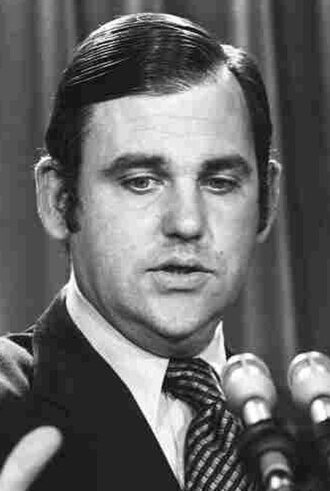
Ronald L. Ziegler served as White House Press Secretary from January 1969 to August 1974, acting as President Nixon's primary spokesperson throughout the taping period of February 1971 to July 1973. As the Watergate scandal escalated, Ziegler famously managed the administration's shifting public narratives and faced intense scrutiny from the press corps. In June 1973, his duties expanded when he was additionally named Assistant to the President following the resignation of Herbert Klein, holding both titles concurrently until the end of the administration in August 1974.
What Ziegler talks about on the tapes
Public relations 321Press relations 256Vietnam War 203Watergate 202Foreign Policy 129Congressional relations 105Media relations 97Henry Kissinger 95Economic policy 94Watergate scandal 80Media strategy 71Executive privilege 70
Conversations (1,199)
— Page 6 of 12President Nixon met with Ronald Ziegler and Henry Kissinger to coordinate the administration's public posture regarding military actions in Indochina, specifically the recent bombing of Haiphong and the presence of Soviet ships. Kissinger briefed the President on his communications with Soviet Ambassador Anatoliy Dobrynin and journalist Stewart Alsop, emphasizing the administration's determination to maintain a firm stance despite concerns over the upcoming Moscow summit. The group finalized plans for the President to meet with Secretary of Defense Melvin Laird and Admiral Thomas Moorer to ensure consistent testimony before the Senate Foreign Relations Committee.
President Nixon met with H. R. Haldeman and Ronald Ziegler to coordinate the administration's public relations strategy regarding the Vietnam War and the ongoing North Vietnamese invasion. The discussion focused on framing the conflict by challenging anti-war Democrats and emphasizing the necessity of U.S. military actions against North Vietnamese targets. Additionally, they evaluated potential congressional resolutions to condemn North Vietnamese aggression and briefly touched upon the potential resignation of Secretary of the Treasury John Connally in relation to the upcoming Soviet summit.
President Nixon met with H. R. Haldeman to discuss the impending resignation of Treasury Secretary John Connally, focusing on the political timing and the need to frame his departure as a supportive transition rather than a sign of administration instability. They strategized on potential replacements, specifically identifying George Shultz as the ideal successor due to his expertise and free-market philosophy. Additionally, the President and his staff coordinated a cover story for Henry Kissinger’s secret diplomatic mission to Moscow, deciding to utilize a fake 'periodic staff planning session' at Camp David to distract the press.
President Nixon directs Press Secretary Ronald Ziegler to conduct a survey of the White House press corps regarding whether their children attend Washington, D.C. public schools. Nixon aims to use the resulting data—whether presented as raw numbers or percentages—to challenge reporters who are critical of the local school system. He instructs Ziegler to assign staff to personally call members of the press to gather this information, establishing a deadline for the report by the following Wednesday.
President Nixon and Press Secretary Ronald Ziegler consulted on how the administration should respond to an upcoming statement from Ivy League university presidents condemning the U.S. bombing of North Vietnam. Nixon decided to maintain a low-key approach, opting for a "no comment" strategy to avoid granting unnecessary relevance to the protesters. They also discussed coordinating with Vice President Agnew and staffer Charles Colson for potential counter-messaging, while agreeing that maintaining a posture of confidence was the administration's best strategy.
President Nixon and Press Secretary Ronald Ziegler strategize on managing public perception regarding the North Vietnamese invasion of South Vietnam. Nixon emphasizes the need to project strength, instructing Ziegler to avoid giving the impression that the administration is retreating from the conflict. Additionally, they discuss dismissing critical voices in the press, with Nixon directing Ziegler to portray these critics as irrelevant and out of touch with the reality of the situation.
President Nixon and Press Secretary Ronald Ziegler strategize on how to counter criticism from Ivy League university presidents regarding the recent U.S. bombing campaign in Vietnam. Nixon suggests a biting public retort emphasizing that university leadership should condemn the enemy rather than the United States. They ultimately decide against a direct White House statement, opting instead to have a political ally like Senator Barry Goldwater deliver the line to deflect attention and maintain a strategic distance.
President Nixon and Press Secretary Ronald Ziegler discuss strategies to address media coverage of anti-war protests on university campuses. Nixon proposes a rhetorical counter-attack that highlights the perceived hypocrisy of demonstrators for criticizing the United States rather than the enemy. The pair decides to have a political surrogate, such as Barry Goldwater, deliver this critique to the public to effectively challenge the protestors' stance.
President Nixon met with Ronald Ziegler and Alexander Haig to coordinate the administration's messaging on the Vietnam War, specifically directing staff to label North Vietnamese forces as "the enemy" rather than the "other side." The group discussed the political implications of a recent House Democratic resolution regarding Vietnam and planned the President's upcoming press conference. Additionally, Nixon instructed Ziegler on how to handle press inquiries regarding Henry Kissinger's whereabouts over the weekend and confirmed his decision to stop attending various press association dinners.
President Nixon and Press Secretary Ronald Ziegler coordinate logistics for an upcoming meeting with Bob Hope, ensuring photographer Ollie Atkins captures images in both the Oval Office and the Rose Garden for a commemorative album. They also review the political fallout from a recent Democratic caucus vote on Vietnam, with Nixon emphasizing the importance of highlighting low attendance and partisan dynamics. To counter the narrative, they discuss leveraging Republican allies and staffer Charles Colson to amplify support for the position from loyal Democrats.
President Nixon and Press Secretary Ronald L. Ziegler discuss plans for an upcoming photo opportunity, specifically requesting that photographer Polly Peterson capture images from multiple vantage points for a personal album. They also touch upon political matters, including the status of local party membership and the reaction of Republicans to local Democratic activities. The conversation concludes with a brief status update on these administrative and political concerns.
President Nixon met with entertainer Bob Hope, Press Secretary Ronald Ziegler, and photographer Ollie Atkins to discuss logistics for an upcoming photo session in the Rose Garden. The group coordinated the use of flags and specific lighting for the shots, while also briefly reflecting on Hope’s golf game and past encounters. Additionally, they touched upon potential comedic material regarding the President’s attendance at an American Society of Newspaper Editors reception, specifically mentioning pandas and columnist Jack Anderson.
President Nixon met with Bob Hope, Ronald Ziegler, and others to discuss the current military situation in Vietnam, specifically the North Vietnamese offensive and the American response. Nixon emphasized that the U.S. was committed to using overwhelming air and sea power to prevent a South Vietnamese collapse and to maintain international credibility, framing the conflict as a high-stakes geopolitical poker game with implications for the Middle East. The President expressed deep frustration with the American press, accusing journalists of defeatism and actively undermining the war effort by inciting troops and supporting the enemy.
President Nixon met with H.R. Haldeman, Ronald Ziegler, and Henry Kissinger to strategize for an upcoming televised address regarding the Vietnam War and secret diplomatic breakthroughs. They discussed the administration's plan to maintain a hard-line stance on the continued bombing of North Vietnam while emphasizing a commitment to peace through secret channels with the Soviet Union. A primary goal of the meeting was to coordinate the messaging to keep administration supporters mobilized, confuse political opponents, and discredit media critics who were skeptical of the administration's foreign policy maneuvers.
President Nixon, H. R. Haldeman, and Press Secretary Ronald Ziegler discuss the aftermath of a press briefing conducted by Ziegler and Henry Kissinger regarding the President's recent activities. Nixon probes the media's reaction and specific questioning concerning his recent stay at Camp David and his overall credibility. To debrief on the session's tone and effectiveness, the President instructs Ziegler to bring Kissinger to the Oval Office for a meeting.
President Nixon and Press Secretary Ronald Ziegler consulted on media coverage regarding Vietnam, confirming that wire stories and press reports were trending favorably. They discussed the impact of Nixon’s recent public statements on the White House press corps, noting that the administration had successfully unsettled critics. Ziegler confirmed that the President’s upcoming speech would be prominently featured in the 3:00 p.m. news cycle.
President Nixon and Press Secretary Ronald Ziegler discuss the drafting of a brief statement regarding the progress of a long-standing political or military struggle. Nixon instructs Ziegler to emphasize that the administration is nearing the conclusion of this effort and should remain committed to seeing it through to success. This brief coordination session serves to ensure that public messaging reflects the President's perspective on the administration's momentum.
President Nixon met with Henry Kissinger, Ronald Ziegler, and other staff to finalize a major televised speech regarding troop levels and the ongoing conflict in Vietnam. The discussion focused on refining the speech's tone to appeal to hawkish supporters while managing political fallout from critics and maintaining strict secrecy surrounding Kissinger’s recent diplomatic mission to Moscow. Nixon also provided instructions on how to handle Secretary of State William Rogers and SALT negotiations, emphasizing the need to consolidate executive control over diplomatic messaging and strategy.
President Nixon and H. R. Haldeman met to discuss strategic communication regarding the Vietnam War, focusing on the potential release of documents involving Averell Harriman to expose North Vietnamese duplicity. They also evaluated press and public reactions to Henry Kissinger's recent diplomatic missions to Moscow and China, dismissing media skepticism while reaffirming their intent to control the public narrative. Additionally, the President addressed scheduling logistics for an upcoming dinner with congressional leaders and provided feedback on recent speechwriting contributions.
President Nixon and Press Secretary Ronald L. Ziegler discuss the administration's strategy for managing press inquiries regarding Henry Kissinger's secret mission to Moscow and upcoming decisions on Vietnam troop levels. Ziegler reports on his efforts to deflect media criticism by emphasizing the importance of diplomatic secrecy and clarifies that the President's troop level decisions were made independently of Kissinger's trip. The two finalize plans for Ziegler to conduct further press briefings once he receives additional materials from the National Security Council.
President Nixon met with Ronald Ziegler, Stephen Bull, and Rose Mary Woods to coordinate logistical and administrative matters regarding his daily schedule. The discussion involved planning for a meeting with White House secretaries and the preparation of photographs. The participants also touched upon internal staffing details, specifically mentioning Richard Helms and Alexander Butterfield.
President Nixon met with his national security team, including Henry Kissinger, Admiral Thomas Moorer, and Secretary of Defense Melvin Laird, to receive a comprehensive military briefing on the ongoing North Vietnamese Easter Offensive. Admiral Moorer provided a detailed regional analysis of the conflict, noting that while South Vietnamese forces were facing intense pressure and heavy casualties, they were holding key positions with the crucial assistance of U.S. air power and naval support. The President emphasized that the conflict would remain difficult but reaffirmed his commitment to maintaining air support and striking military targets in North Vietnam until the offensive subsided.
President Nixon met with Henry Kissinger, William Rogers, and several senior staff members to coordinate U.S. strategy regarding the upcoming Soviet Summit, the Strategic Arms Limitation Talks (SALT), and the ongoing North Vietnamese offensive. The discussions focused on ensuring a firm stance against Soviet-backed North Vietnamese aggression while maintaining diplomatic progress toward a SALT agreement. Nixon directed staff to prepare specific messaging for Ambassador Gerard Smith to ensure that U.S. negotiating positions were clearly defined as presidential directives, and he emphasized the need for a decisive military response—including a significant B-52 strike—should the North Vietnamese fail to halt their offensive operations.
President Nixon consulted with Press Secretary Ronald Ziegler to evaluate the reception of a recent administration announcement regarding high-level diplomatic channels. Ziegler confirmed that the networks successfully grasped the significance of confidential exchanges between Nixon and Leonid Brezhnev, as well as Henry Kissinger's facilitating role. Nixon expressed frustration with negative press coverage, specifically targeting Howard K. Smith, before directing Ziegler to summon Kissinger for a follow-up meeting.
President Nixon and Press Secretary Ronald L. Ziegler held a brief, unscheduled meeting to coordinate the release of an official statement. Although the recording captures only a fragment of the discussion, the exchange centers on the administrative handling and public issuance of this document. The conversation concluded after one minute, marking a routine effort to manage the President's public communications.
President Nixon and Press Secretary Ronald L. Ziegler held a brief meeting to coordinate the official public response following the death of FBI Director J. Edgar Hoover. The two reviewed the administration's messaging and finalized the President's planned public statement regarding Hoover's passing. This discussion ensured that the White House's public stance was prepared immediately following the news of the Director's death.
President Nixon met with his senior aides and Alexander Haig to address the immediate logistical arrangements following the death of J. Edgar Hoover and to deliberate on the critical military and diplomatic situation in Vietnam. The group finalized plans for Hoover’s burial at Arlington National Cemetery and discussed the failure of recent negotiations with North Vietnam. Consequently, Nixon directed the intensification of U.S. military strikes, including B-52 operations, while planning to issue a statement to South Vietnamese President Thieu to reaffirm American support and dismiss rumors regarding a potential coalition government.
President Nixon met with H. R. Haldeman, John Ehrlichman, and others to manage the political fallout and transition following the death of FBI Director J. Edgar Hoover. The group discussed the necessity of appointing an interim director to avoid a controversial Senate confirmation process during an election year. Additionally, they coordinated a strategy for the President's upcoming trip to Annapolis, emphasizing planned interactions with young people and potential public appearances to bolster his public image.
President Nixon, through John D. Ehrlichman, directs Press Secretary Ronald L. Ziegler to brief the press regarding the upcoming appointment of an acting FBI director. The primary goal is to manage media speculation by confirming the pending announcement while avoiding premature commitments regarding a permanent nominee. Ultimately, the administration decides against pre-emptively closing off the option of a full-time appointment, opting instead to limit public messaging to the announcement of an acting director.
President Nixon met with Republican congressional leadership to coordinate strategy on key domestic and foreign policy issues during an election year. The discussion focused on distributing fact sheets regarding economic improvements, crime reduction, and unemployment to bolster support, while also strategizing to defeat restrictive anti-war amendments in Congress. Additionally, the President announced his decision to appoint an acting FBI director to ensure institutional stability following the death of J. Edgar Hoover, aiming to shield the bureau from partisan political controversy.
President Nixon met with Ronald Ziegler and John Ehrlichman to coordinate the public announcement of L. Patrick Gray III’s appointment as FBI Director. The discussion focused on managing the political optics and potential criticisms regarding the vacancy of the position and Gray’s interim status. Additionally, the President reviewed media coverage and the reception of his recent public remarks, including his commentary on the legacy of the late J. Edgar Hoover.
John D. Ehrlichman coordinates with Press Secretary Ronald L. Ziegler regarding the upcoming press conference to announce the appointment of L. Patrick Gray III as acting FBI Director. Ehrlichman outlines the procedural flow of the announcement, instructs Ziegler on how to field press inquiries, and clarifies the technical employment status of Gray for salary purposes. The two agree to meet in person to finalize the specific language Ziegler should use when announcing that a permanent nomination for the position will be deferred until after the election.
President Nixon met with his senior advisors, including H. R. Haldeman and Henry Kissinger, to navigate the intensifying North Vietnamese offensive and its implications for the upcoming Soviet Summit. The group deliberated on military strategies—including the possibility of a naval blockade—and analyzed the political risks of cancelling the summit versus the need to maintain a firm negotiating stance. A key action item involved coordinating with John Connally to assess the administration's response to these crises, while also addressing concerns regarding domestic political fallout, press coverage, and security preparations for the upcoming national political conventions.
President Nixon consulted with H. R. Haldeman regarding strategic advice from John Connally concerning the escalating Vietnam War and the upcoming Soviet summit. Connally strongly urged the President to prioritize winning the war through intensified bombing and a potential blockade, while advising that the United States should not unilaterally cancel the summit, instead forcing the Soviet Union to take that responsibility. The participants discussed the political necessity of projecting strength and the minimal impact of public backlash, while also briefly reviewing the logistics and positive reception of President Nixon’s recent eulogy for J. Edgar Hoover.
Press Secretary Ronald L. Ziegler conducted an informal tour of the White House Cabinet Room for a group of visitors, including children. During the visit, Ziegler explained the seating arrangements and significance of the room while engaging the group in lighthearted mock decision-making exercises regarding the economy. The tour concluded with participants examining the room's new carpeting and souvenir materials associated with the various Cabinet positions.
President Nixon met with Press Secretary Ronald L. Ziegler to coordinate administrative messaging and press strategy regarding upcoming national security matters. They discussed Ziegler's inclusion in a National Security Council meeting and the timing for an imminent presidential speech. The brief exchange served to align the White House communications team on the disclosure of sensitive policy details.
President Nixon met with Vice President Agnew, Cabinet members, and senior staff to discuss the administration's recent escalation in Vietnam, specifically the blockade of North Vietnamese ports. The President articulated his rationale for the decision and sought unified support from his team to manage potential congressional and public opposition. He emphasized the necessity of leadership during difficult times and urged his Cabinet to present a cohesive front in defending the policy to the public.
President Nixon and Press Secretary Ronald Ziegler met briefly to coordinate public messaging regarding the upcoming blockade of North Vietnam. The discussion focused on the timing and strategic delivery of the President's public announcement on the decision. They specifically addressed how the administration would handle press inquiries concerning whether the policy had been previously questioned.
President Nixon and his senior staff, including H.R. Haldeman, met to evaluate the public and political reaction to the President's recent televised speech regarding the mining of North Vietnamese harbors. The discussion focused on maintaining a firm, "hawkish" stance to emphasize the administration's resolve and ensuring that supporters mobilize to counteract potential criticism from Congress and the media. Nixon directed his team to maximize public displays of support and address logistical issues, such as jammed Western Union lines, to ensure his message of "iron determination" remained the dominant narrative.
President Nixon and Press Secretary Ronald Ziegler discuss the effectiveness of Henry Kissinger’s recent press briefing regarding the administration’s strategy in Vietnam. Ziegler praises Kissinger’s performance as firm and realistic, particularly concerning the Soviet assessment and diplomatic negotiation efforts. The two also touch upon the political reception of the recent blockade policy, specifically noting Senator Frank Church’s surprising support for the administration's stance.
President Richard M. Nixon and Press Secretary Ronald L. Ziegler meet to review the status and outcome of a specific project or series of engagements. They discuss the timeline of the work, specifically referencing start dates in October and November. The exchange confirms that the individual tasked with the assignment performed well, concluding with general expressions of satisfaction.
President Nixon met with John Connally to discuss the favorable public reaction to the President's recent decision to implement a naval blockade and intensified bombing in North Vietnam. The two men criticized the lack of support from within the administration, specifically targeting William P. Rogers and Melvin R. Laird, while emphasizing the necessity of bold leadership to maintain national strength and electoral viability. They also discussed plans to systematically replace disloyal bureaucrats across federal agencies and the judiciary, viewing the upcoming election as a crucial opportunity to run against a fragmented and radicalized Democratic Party.
President Nixon and Press Secretary Ronald L. Ziegler met briefly to coordinate logistics regarding an upcoming meeting with a Soviet trade delegation. The discussion focused on managing the public perception of the event, specifically addressing the size of the delegation and the arrangements for official press photography. The brief exchange served to finalize Ziegler's role and presence during the delegation's visit to the White House.
President Nixon, Henry Kissinger, and Ronald Ziegler met to discuss the political fallout and public messaging strategy following Nixon's decision to mine North Vietnamese harbors. The group analyzed the unexpectedly mild reactions from the Soviet Union and China, concluding that a Soviet summit remains highly likely despite the escalating conflict. Nixon and Kissinger also reviewed military operations in South Vietnam, with the President proposing the strategic use of tank deployments based on his study of World War I tactics.
Following the assassination attempt on Governor George Wallace, President Nixon and John Connally discussed the political fallout and the immediate need to provide enhanced Secret Service protection to other presidential candidates, specifically Senator Edward M. Kennedy and Representative Shirley Chisholm. The participants deliberated on how to frame these security measures publicly while bypassing legal obstacles that previously barred the Secret Service from covering non-candidates. During the discussion, Connally recounted his personal experience surviving the John F. Kennedy assassination, providing a grim context for the ongoing concern over the safety of political figures.
President Nixon met with H. R. Haldeman and Ronald Ziegler to discuss press management ahead of his upcoming Soviet summit, including the selection of journalists and the briefing of key press figures. The President also addressed his public appearance strategy in the wake of the assassination attempt on Governor George Wallace, deciding to take a brief walk to the Treasury Department to maintain a calm, presidential image without appearing reckless. Finally, the group reviewed the redecoration of the White House and discussed the roles of Peter Peterson and Peter Flanigan in managing economic negotiations for the Soviet trip.
President Nixon met with his Cabinet and key staff to discuss the upcoming departure of Secretary of the Treasury John B. Connally and to address broader administration matters. The discussion covered the timing of administrative changes, the transition of economic policy responsibilities to George Shultz, and the status of ongoing federal investigations following the recent shooting of George C. Wallace. Connally reflected on his tenure as Treasury Secretary and his future plans, while the President reaffirmed his commitment to his current economic program and leadership agenda.
President Nixon met with H. R. Haldeman, John Connally, George Shultz, Caspar Weinberger, and Ronald Ziegler to coordinate the logistics and press strategy surrounding Connally's resignation as Secretary of the Treasury. The participants discussed handling media inquiries regarding Connally's potential political future, including questions about the Vice Presidency and the Democratic National Convention. Following the discussion, the group planned a walk to the Treasury Department to introduce Shultz to the staff and address the transition publicly.
John D. Ehrlichman and Ronald L. Ziegler met to coordinate messaging strategy regarding the President's upcoming travel and public perception. They discussed managing speculation surrounding the President's motivations, particularly concerning political optics in Texas and the administration's strategic objectives. The discussion concluded with a focus on controlling the timing and effectiveness of public disclosures to maintain narrative consistency.
President Nixon and Press Secretary Ronald Ziegler coordinate media strategy regarding recent press coverage of the President's public activities. They discuss the framing of statements concerning the upcoming Soviet Union summit and a recent meeting with John B. Connally. The dialogue specifically addresses the messaging surrounding the shooting of George C. Wallace and the subsequent briefing responsibilities for reporters Jim Gannon and Gaylord Shaw.
President Nixon and Press Secretary Ronald Ziegler discuss the positive public reception following a recent, undisclosed event involving children. Nixon expresses satisfaction with the optics of the situation, particularly noting the encouraging atmosphere and public engagement. The brief exchange confirms that the administration’s strategy successfully garnered favorable coverage.
President Nixon met with H. R. Haldeman, Vice President Spiro Agnew, Henry Kissinger, and Admiral Thomas Moorer to coordinate administration responses to the Vietnam War and manage the public narrative surrounding the conflict. The discussion focused on the effectiveness of recent bombing campaigns and the blockade of North Vietnam, as well as the need to address internal military resistance regarding bombing targets. Nixon also received a briefing from Agnew on his recent diplomatic trip to Japan, Thailand, and South Vietnam, and coordinated plans for the Vice President to visit the recently wounded George Wallace.
President Nixon and Vice President Spiro Agnew met to coordinate logistics for an upcoming public event, specifically focusing on an escort to the press room. Stephen B. Bull and Ronald Ziegler participated in the discussion, which involved arrangements concerning Tricia Nixon Cox. The meeting served as a continuation of prior deliberations regarding administrative preparations for these individuals.
President Nixon met with his senior staff, including H.R. Haldeman, Henry Kissinger, and John Ehrlichman, to coordinate messaging and strategy ahead of his upcoming Soviet Summit. The group discussed controlling the flow of information to the press—specifically managing William Rogers's public statements to ensure they did not conflict with the President's own summit briefings—and addressed Vietnam military policy, including the President's frustration with air strike performance. Additionally, the President and his staff reviewed domestic legislative priorities, such as the black lung bill veto, busing policy, and welfare reform, while also discussing the investigation into Arthur Bremer following the assassination attempt on George Wallace.
President Nixon and Press Secretary Ronald Ziegler coordinate the logistics and talking points for an upcoming press reception regarding the President’s imminent trip to the Soviet Union. Nixon emphasizes that his remarks at the event must be on the record and decides to extend invitations to Secretary of State William P. Rogers, Henry Kissinger, and their staff as a professional courtesy. The two also review specific briefing schedules and travel accommodations, ultimately agreeing that Nixon will announce his planned televised address to the Russian people while maintaining flexibility regarding daily briefing commitments.
President Nixon and Press Secretary Ronald Ziegler discuss the logistics and media protocols for an upcoming debate. Nixon decides that the event must be on the record for the press and directs Ziegler to offer the attendees a transcript instead of allowing live media coverage. The President also reviews the guest list, ultimately opting to include Secretary of State William Rogers and Congressman Pete McCloskey to ensure a broader presence.
President Nixon met with Alexander Butterfield, Ronald Ziegler, and Rose Mary Woods to manage administrative tasks and scheduling priorities. The participants focused on reviewing items requiring the President's signature and coordinating necessary deliveries. Key actions included facilitating a call between Henry Kissinger and Senator John C. Stennis as well as coordinating with Dr. William M. Lukash.
President Nixon met with key staff members and Henry Kissinger to coordinate domestic political strategy and foreign policy initiatives. The participants discussed managing the Congressional reaction to the recently negotiated SALT agreement, securing support for defense spending, and balancing the Administration's position on welfare reform legislation. Additionally, the President and Kissinger reviewed the recent Moscow summit, focusing on the sophisticated nature of Communist leadership and strategies for countering international criticism of U.S. actions in Vietnam.
H. R. Haldeman and Ronald Ziegler discuss an upcoming article in U.S. News & World Report regarding the President's recent press conference. They evaluate the content and potential impact of the publication's coverage on the administration's public image. The discussion centers on coordinating the White House response and managing media narratives following the President's public remarks.
President Nixon and H.R. Haldeman conducted an extensive review of political strategy for the 1972 presidential campaign, focusing on the vulnerability of Democratic candidate George McGovern. They discussed the administration's public relations efforts, including the effective use of television to reach voters and the development of strategies to undermine McGovern's appeal among Middle American voters. Furthermore, they coordinated schedules for official events, reviewed foreign policy milestones like the Moscow summit, and managed administrative staffing to ensure maximum responsiveness to political objectives.
President Nixon met with Vice President Agnew and key Republican Congressional leaders to coordinate legislative strategy on critical administration priorities, specifically revenue sharing, the defense procurement bill, and Vietnam-related war powers resolutions. The discussion focused on overcoming Democratic resistance to the President’s revenue-sharing program and maintaining a firm legislative stance on maintaining military strength. Nixon emphasized that American foreign policy, including negotiations with the Soviet Union, remains contingent upon the credibility of U.S. defenses and a unified national commitment.
President Nixon met with Vice President Agnew and Republican Congressional leaders to analyze the current political landscape and formulate electoral strategies heading into the 1972 campaign. A significant portion of the discussion focused on the perceived bias of the media in their treatment of Democratic candidate George McGovern compared to historical GOP figures like Barry Goldwater. Nixon encouraged leadership to coordinate closely on legislative and campaign messaging, noting that the Republican party must remain disciplined to capitalize on the internal divisions within the Democratic party.
President Nixon met with Republican congressional leaders and key aides to strategize on gaining legislative support for the Strategic Arms Limitation Treaty (SALT) and to discuss the timing of its implementation alongside Soviet relations. The participants also reviewed foreign policy priorities, specifically addressing the political dangers of a rapid withdrawal from Vietnam and the importance of maintaining U.S. defense commitments, including security assistance to Israel. Furthermore, the group coordinated on domestic legislative priorities, including Revenue Sharing and House Resolution 1.
President Nixon met with Henry Kissinger, Senator John Stennis, and White House staff to coordinate legislative strategy regarding defense policy and the Vietnam War. The discussion focused on securing support for the military procurement bill and countering congressional efforts, such as the Mansfield amendment, that sought to limit the administration's leverage in Vietnam negotiations. Nixon and Kissinger also updated Stennis on recent diplomatic communications with the Soviet Union and China to ensure a unified front in upcoming SALT II and defense authorization hearings.
President Nixon met with Alexander P. Butterfield, Rose Mary Woods, and Ronald L. Ziegler to coordinate administrative and diplomatic logistics. The primary focus involved planning a state dinner for Mexican President Luis Echeverría Álvarez, including guest list management, entertainment, and the participation of astronauts. Additionally, Nixon and Ziegler reviewed press briefing strategies regarding foreign policy, specifically covering Henry Kissinger’s upcoming trip to China, Soviet diplomatic activity, and the SALT negotiations.
President Nixon met with NASA astronauts Thomas K. Mattingly, III, John W. Young, and Charles M. Duke, along with NASA Administrator James C. Fletcher, to discuss the ongoing U.S. space program and its potential for international cooperation. The discussion focused on the strategic importance of the upcoming joint space mission with the Soviet Union, the role of space exploration in maintaining American national spirit, and the potential for sharing space shuttle technology with other nations. Nixon encouraged the astronauts to utilize Camp David for recreation and provided instructions regarding their recognition during a forthcoming state dinner for Mexican President Luis Echeverría.
President Nixon and his advisors, including H. R. Haldeman and Henry Kissinger, discussed public relations strategies, specifically focusing on the effective use of documentary-style media and the positive reception of astronauts on tour. The group evaluated the political benefits of their recent international initiatives, including the high-profile China announcement and strategic congressional briefings. Additionally, they reviewed recent diplomatic interactions with Mexican officials and analyzed the military situation in Vietnam, noting the resilience of South Vietnamese forces in defensive operations.
President Nixon hosted the family of John Paul Vann, a distinguished military and civilian advisor in Vietnam, to formally present the Presidential Medal of Freedom. During the meeting, which included key administration officials and journalist Joseph Alsop, the President lauded Vann’s dedication and selfless service, comparing his contributions to those of the Marquis de Lafayette. The event served to honor Vann's legacy following his recent death and to highlight his critical role in the efforts to secure South Vietnamese sovereignty.
President Nixon met with H.R. Haldeman, Ronald Ziegler, and other staff members to discuss political strategy for the 1972 election and administrative responses to ongoing controversies. The participants analyzed the candidacy of George McGovern, reviewed public relations tactics regarding the Watergate break-in, and evaluated the administration's contentious relationship with the news media. Nixon also addressed logistical planning for his upcoming schedule, potential campaign staffing, and the framing of his policies for future press conferences.
President Nixon and H. R. Haldeman met to discuss various political strategies, focusing heavily on managing the public response to the Watergate break-in and minimizing perceived White House involvement. They coordinated efforts to frame the incident as a "comic" amateur operation while deflecting scrutiny toward Jack Anderson and the Democrats. Additionally, the President reviewed his schedule, addressed policy initiatives regarding school aid and Social Security, and evaluated the performance of key staff members like Ronald Ziegler.
President Nixon and Press Secretary Ronald Ziegler consulted regarding the administration's messaging strategy for an upcoming press conference. They discussed the specific timing and wording of the President's remarks, while also briefly touching upon the involvement of Charles W. Colson. The pair focused on refining public communication tactics to manage the anticipated media cycle.
President Nixon and Press Secretary Ronald Ziegler consulted to coordinate strategy for an upcoming press conference. They focused on refining the administration's responses to anticipated questions regarding General John Lavelle, foreign policy, and the anti-ballistic missile (ABM) system. Additionally, they reviewed coordination with Defense Secretary Melvin Laird concerning arms control negotiations and the impact of the pending defense budget vote.
President Nixon and Press Secretary Ronald Ziegler discuss media messaging strategies regarding controversial administration issues, specifically the General John D. Lavelle case and defense policy. Nixon instructs Ziegler to distance the White House from the details of the Lavelle court-martial by deferring to the Department of Defense's position. Furthermore, the President outlines a rhetorical strategy for arms control, emphasizing that ongoing U.S. defense programs were essential to securing agreements with the Soviet Union and should be framed as a necessary precursor to future disarmament progress.
President Nixon and Ronald Ziegler met to strategize on how to address questions regarding the Strategic Arms Limitation Treaty (SALT) and the necessity of upgrading U.S. offensive weapons during an upcoming press conference. They discussed the importance of framing the push for offensive systems as a national security requirement rather than linking them explicitly to the SALT negotiations. Nixon instructed Ziegler to maintain this distinction, emphasizing that the administration should advocate for defense upgrades based on national need while remaining confident in congressional support for national security initiatives.
President Nixon met with H.R. Haldeman and Ronald Ziegler to evaluate the performance and news coverage of his recent press conference. The discussion focused on the administration's responses to sensitive topics including the Watergate break-in, campaign contributions, and the SALT negotiations. The participants also reviewed upcoming scheduling matters, including meetings with congressional leaders and Cardinal Krol, while assessing the public impact of various policy positions on issues like busing and tax reform.
President Nixon met with H.R. Haldeman and various staff members to discuss media relations, scheduling, and public policy issues, including television appearances by the Nixon family. The participants reviewed strategies for upcoming press conferences and addressed concerns regarding beef price controls and meat quotas. Additionally, the President engaged in outreach, including a phone call with Richard J. Daley to discuss Vietnam, while staff members facilitated administrative tasks regarding personnel and correspondence.
President Nixon met with a large group of broadcast industry executives and administration officials to discuss regulatory and legislative challenges facing the industry. Key topics included the burden of proof in license renewal processes, the impact of Federal Communications Commission (FCC) and Federal Trade Commission (FTC) regulations on operations, and concerns regarding network news bias. The discussion focused on seeking potential legislative solutions to protect broadcasters from costly legal challenges and to stabilize the regulatory environment for private enterprise.
President Nixon met with Alexander Butterfield, H.R. Haldeman, and Ronald Ziegler to coordinate the President’s upcoming schedule and manage key domestic policy communications. The discussion focused on preparations for a Domestic Council meeting, a scheduled session with Caspar Weinberger, and a prospective television address regarding school busing. The participants evaluated the tone and content of the busing statement, incorporating input from Patrick Buchanan to refine the administration's messaging strategy.
President Nixon met with his economic advisors, including George Shultz, Caspar Weinberger, and Herbert Stein, to address public and political concerns regarding rising food and beef prices. The group analyzed potential government interventions, such as suspending import quotas, utilizing government food stockpiles, and the political implications of implementing price controls. Following this, the President consulted with Kermit Gordon regarding the administration's economic policies and engaged in a broader discussion concerning the political orientation of intellectuals and the Brookings Institution.
President Nixon met with H.R. Haldeman and Charles Colson to discuss the ongoing fallout from the Watergate break-in, specifically the FBI's investigation and the risks of it uncovering CIA connections or sensitive political associations. The participants analyzed the political landscape and current polling data to strategize for the upcoming election against George McGovern. They ultimately decided to prioritize aggressive negative campaigning against McGovern, concluding that focusing on the opponent's weaknesses was more effective for swaying undecided voters than emphasizing the administration's own policy achievements.
President Nixon met with H.R. Haldeman, Ronald Ziegler, and Stephen Bull to coordinate administrative details, including the retirement ceremony for General William C. Westmoreland. The discussion shifted to the roles and functions of the President’s military and civilian aides during presidential travel, specifically comparing them to advance men. Additionally, the group briefly addressed potential media concerns regarding the Westmoreland event and current developments involving John and Martha Mitchell.
President Nixon met with his senior staff, including Ronald Ziegler, H. R. Haldeman, and John Ehrlichman, to coordinate press strategy and finalize his upcoming schedule. The discussion covered various administrative topics such as television audio issues, revenue sharing, and the management of high-profile political figures like Martha Mitchell. Furthermore, the group evaluated the political landscape, including campaign personnel shifts and pending legislative priorities like the debt ceiling and welfare reform.
President Nixon met with Republican members of the Senate Finance Committee to discuss the legislative impasse surrounding welfare reform (H.R. 1) and upcoming fiscal challenges. The participants evaluated the political feasibility of passing administration-backed legislation, expressing concerns over the influence of liberal amendments, rising costs, and the lack of support from Chairman Russell Long. Ultimately, the group discussed strategies for managing the impending debt ceiling extension and the threat of an unpopular Social Security increase, with the President firming his stance on vetoing non-budgetary spending items.
President Nixon met with key staff members, including H. R. Haldeman, Henry Kissinger, and Ronald Ziegler, to manage his public schedule and coordinate campaign strategy for the 1972 election. The participants discussed legislative priorities, public relations efforts regarding the economy and Vietnam, and political outreach to counter George McGovern's candidacy. Additionally, the President devoted time to finalizing an article on baseball greats, coordinating with staff to ensure the accuracy of historical statistics and names.
H. R. Haldeman and Press Secretary Ronald Ziegler coordinate to gather specific biographical and statistical data for President Nixon regarding his list of all-time baseball greats. The conversation focuses on verifying the careers and performance records of pre-war relief pitchers, specifically Hugh Casey, Mace Brown, and Doc Crandall. Haldeman also tasks Ziegler with identifying the first name of a prominent Pittsburgh relief pitcher named Face to finalize the President's personal list.
President Nixon consulted Press Secretary Ronald Ziegler to verify the spelling of former Philadelphia Phillies pitcher Jim Konstanty's name. This inquiry was part of the President’s ongoing effort to compile a personal list of baseball greats. Ziegler was tasked with double-checking the spelling to ensure accuracy for the President's records.
President Nixon and Press Secretary Ronald Ziegler consulted regarding an upcoming press statement. The discussion centered on the messaging strategy for a story concerning baseball greats and the anticipated public reaction to the announcement. The two agreed on the necessity of maintaining a firm and truthful tone in the release.
President Nixon and Press Secretary Ronald Ziegler met to discuss the logistics and strategic timing of a forthcoming televised press conference to be held in the East Room. The discussion focused on balancing the reach of the viewing audience against potential interruptions to prime-time network programming. Nixon tasked Ziegler with finalizing the scheduling details while considering the impact of different time slots on West Coast and Midwest viewership.
President Nixon, H.R. Haldeman, and Charles Colson met to discuss various political strategies, focusing heavily on managing press relations and public perception regarding the administration. The conversation addressed the potential resignation of John Mitchell due to his wife Martha's instability and the fallout from the Watergate break-in, with the participants strategizing how to frame Mitchell's departure as a personal decision to support his family. Additionally, Nixon directed his staff to research historical precedents for amnesty to counter political opponents, discussed the upcoming press conference schedule, and reviewed administrative control over public broadcasting appropriations.
President Nixon and Press Secretary Ronald L. Ziegler held a brief meeting to discuss political support for the administration. The conversation focused on the public stance of journalist Clifford Evans regarding his backing of the President. No further policy decisions were recorded during this one-minute exchange.
President Nixon met briefly with Stephen B. Bull and Ronald L. Ziegler to coordinate administrative arrangements regarding his daily schedule. The discussion focused specifically on the logistics for an upcoming interview. The meeting concluded quickly without any record of major policy shifts or broader strategic decisions.
President Nixon met with Clifford Evans and Press Secretary Ronald Ziegler to discuss the President’s recent writing on baseball history and legends. The conversation centered on Nixon’s personal admiration for iconic players like Lou Gehrig, Red Schoendienst, and Sandy Koufax, as well as his perspective on the 'team concept' in sports. Additionally, the group shared historical anecdotes regarding figures such as Floyd Patterson, Wilt Chamberlain, and the Rev. Martin Luther King, Jr. funeral.
President Nixon and Press Secretary Ronald Ziegler met to coordinate the administration's public response regarding the burgeoning Watergate scandal. They specifically discussed managing inquiries about E. Howard Hunt’s involvement, including a potential map of the Democratic National Committee headquarters found on his desk, and formulated a strategy for Ziegler’s upcoming press briefing. Additionally, the pair touched upon the implications of the recent Supreme Court decision on the death penalty and upcoming veto considerations.
President Nixon, H.R. Haldeman, and Clark MacGregor held an extensive meeting to discuss legislative business, specifically the Social Security bill, alongside a major focus on the emerging Watergate scandal. The participants coordinated efforts to manage the political fallout and investigation regarding the Committee to Re-elect the President, including the involvement of G. Gordon Liddy, E. Howard Hunt, and John Mitchell. They deliberated on creating a strategic 'scenario' to handle the cover-up, addressed campaign finance irregularities, and managed the optics of John Mitchell's potential resignation.
President Nixon met with Charles Colson, Ronald Ziegler, Caspar Weinberger, and others to strategize on administration policy, political messaging, and pending legislation. The conversation focused on managing the political optics of Social Security increases and federal budget cuts, as well as coordinating a firm stance on Vietnam peace negotiations and prisoners of war. Nixon directed his team to emphasize that any increased federal spending must be balanced by tax increases, and he instructed staff to challenge negative media coverage, particularly regarding Vietnam and administrative integrity.
President Nixon and H. R. Haldeman met with Julie Nixon Eisenhower and other staff to discuss the first family's public relations strategy, scheduling for upcoming events, and the political climate. A significant portion of the conversation focused on the resignation of John N. Mitchell, with the President coordinating how the administration would address media inquiries regarding the departure and the ongoing Watergate investigation. They also evaluated the effectiveness of recent speeches given by family members and discussed the political implications of upcoming travels and appearances.
President Nixon and H. R. Haldeman discussed potential vacation retreats, specifically evaluating Thomas B. McCabe’s Assateague Island property as a private alternative to Camp David. The conversation shifted to media strategy, with Nixon and Haldeman reviewing Ronald Ziegler's approach to press relations, the benefits of Oval Office press conferences, and upcoming political events. Finally, they planned a summit meeting with the Japanese Prime Minister in Hawaii, emphasizing the importance of managing local ethnic sensitivities and coordinating with Senator Hiram Fong.
President Nixon met with Charles Colson and other staff members to navigate the ongoing political fallout from the Watergate break-in, specifically focusing on the legal jeopardy of figures like Jeb Magruder and E. Howard Hunt. Beyond the scandal, the participants discussed scheduling entertainment for a visit by Italian Prime Minister Giulio Andreotti, strategic press relations, and potential labor support from the Teamsters. Nixon emphasized maintaining a posture of confidence while directing staff to manage media interactions carefully to avoid appearing defensive.
H. R. Haldeman and Press Secretary Ronald Ziegler coordinated the logistical arrangements for a significant upcoming administration announcement scheduled for the following morning. The two discussed potential briefing formats, weighing the pros and cons of a morning press conference versus a direct call-out to media. They agreed to finalize the execution strategy later, while emphasizing that the President would remain uninvolved and that any public disclosure should be delayed to avoid distracting from the day's current economic news coverage.
President Nixon and Press Secretary Ronald Ziegler discuss the positive media reception to Vice President Spiro Agnew’s recent 50-state campaign announcement and his aggressive stance against Democratic nominee George McGovern. They also coordinate a strategic response to McGovern's call for televised debates, deciding that Clark MacGregor should issue a rebuttal highlighting McGovern's past voting inconsistencies and asserting that an incumbent president should not debate an opponent. Nixon emphasizes that a debate would inappropriately elevate McGovern's stature and that current international negotiations make such a forum contrary to the national interest.