Haldeman, H. R. ("Bob")
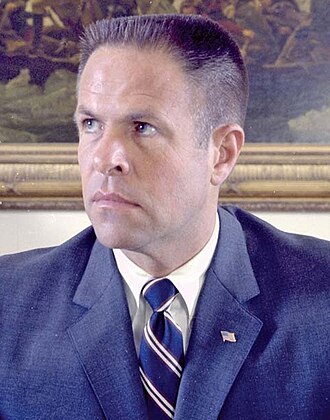
H. R. ("Bob") Haldeman served as President Richard Nixon's White House Chief of Staff from January 1969 until his resignation in April 1973. Acting as Nixon's primary gatekeeper and closest aide, Haldeman was a central figure during the White House taping period and is featured prominently in hundreds of recorded conversations. His tenure ended abruptly when he was forced to resign due to his deep involvement in the Watergate cover-up, most notably captured directing the obstruction of justice on the infamous "Smoking Gun" tape.
What Haldeman talks about on the tapes
Public relations 579Vietnam War 411Political strategy 286Foreign Policy 234Presidential scheduling 209Economic policy 202Henry Kissinger 195Congressional relations 176Press relations 161Watergate 159White House operations 151White House administration 145
Conversations (2,364)
— Page 15 of 24President Nixon met with H. R. Haldeman and Henry Kissinger at Camp David to dictate memoranda regarding administrative management and foreign policy strategy. The discussion focused on establishing editorial accountability during absences, coordinating leaks through Richard Helms to counter negative reporting on North Vietnam, and planning a high-profile diplomatic trip for John B. Connally to Latin America and the Pacific. Nixon directed his staff to finalize recommendations for the Connally mission and strategic communication efforts by the end of the week.
President Nixon directed H. R. Haldeman to assign a research staffer to compile a comprehensive dossier documenting the various 'smear' campaigns launched against the administration. This memorandum was intended to catalog vicious attacks found in books, films, pamphlets, and political statements by members of Congress. Nixon envisioned this research as a strategic resource to be utilized by administration surrogates if political criticism intensified later in the year.
President Nixon met with H. R. Haldeman, Vice President Spiro Agnew, Henry Kissinger, and Admiral Thomas Moorer to coordinate administration responses to the Vietnam War and manage the public narrative surrounding the conflict. The discussion focused on the effectiveness of recent bombing campaigns and the blockade of North Vietnam, as well as the need to address internal military resistance regarding bombing targets. Nixon also received a briefing from Agnew on his recent diplomatic trip to Japan, Thailand, and South Vietnam, and coordinated plans for the Vice President to visit the recently wounded George Wallace.
Stephen B. Bull and H. R. Haldeman engaged in a brief telephone exchange facilitated by the White House operator. The conversation was terminated almost immediately after the connection was established. No substantive policy matters or administrative decisions were addressed during this aborted interaction.
President Nixon met with his senior staff, including H.R. Haldeman, Henry Kissinger, and John Ehrlichman, to coordinate messaging and strategy ahead of his upcoming Soviet Summit. The group discussed controlling the flow of information to the press—specifically managing William Rogers's public statements to ensure they did not conflict with the President's own summit briefings—and addressed Vietnam military policy, including the President's frustration with air strike performance. Additionally, the President and his staff reviewed domestic legislative priorities, such as the black lung bill veto, busing policy, and welfare reform, while also discussing the investigation into Arthur Bremer following the assassination attempt on George Wallace.
President Nixon and H. R. Haldeman discuss the scheduling of upcoming meetings, including sessions with Henry Kissinger and Senator Jacob Javits. The conversation primarily focuses on managing the administration's public messaging regarding the upcoming Soviet summit, specifically addressing a press conference held by William P. Rogers. Nixon and Haldeman analyze a news report by Marvin Kalb, suspecting that information provided at a private dinner party involving the Kalb brothers and Kissinger served as the underlying source.
President Nixon met with H. R. Haldeman and Henry Kissinger to refine talking points and press strategy for the upcoming Soviet summit, including plans for post-summit reports to the American public and the Senate. The discussion also addressed frustrations with bureaucratic resistance to the President's directives, specifically regarding psychological warfare and the procurement of equipment for South Vietnam. Nixon and Kissinger further evaluated military operations in Vietnam, expressing dissatisfaction with the military's target limitations and their perceived efforts to avoid responsibility for the ongoing conflict.
President Nixon met with H.R. Haldeman and John B. Connally to coordinate strategy for the upcoming U.S.-Soviet summit and to organize a diplomatic trip for Connally to South America and potentially other regions. The participants discussed managing the President's public image, strategies to discredit the press, and the logistics of personnel attending the Moscow trip. Additionally, Nixon directed Connally to begin planning his international travel, emphasizing the strategic importance of his mission following the President's return from the Soviet Union.
President Nixon and H. R. Haldeman discussed the political reception of the President's recent address to Congress following his historic trip to the Soviet Union. While both men expressed private reservations regarding the quality of the speechwriting, they reviewed positive feedback from various congressional members, newspaper editors, and public segments. The conversation concluded with discussions regarding the upcoming ratification process for the Strategic Arms Limitation Treaty (SALT) and the President's need for rest in Florida.
President Nixon, H.R. Haldeman, and Henry Kissinger met to refine the President’s strategy for an upcoming briefing with bipartisan Congressional leaders regarding the recent summit in the Soviet Union. The participants strategized on how to frame the success of the summit and the Strategic Arms Limitation Treaty (SALT) while minimizing the political impact of congressional critics like Henry “Scoop” Jackson. Additionally, they reviewed positive public and media reactions to the President’s recent address and discussed the ongoing conflict in Vietnam.
President Nixon met with key staff members and Henry Kissinger to coordinate domestic political strategy and foreign policy initiatives. The participants discussed managing the Congressional reaction to the recently negotiated SALT agreement, securing support for defense spending, and balancing the Administration's position on welfare reform legislation. Additionally, the President and Kissinger reviewed the recent Moscow summit, focusing on the sophisticated nature of Communist leadership and strategies for countering international criticism of U.S. actions in Vietnam.
President Nixon and H. R. Haldeman met to discuss personnel availability and logistical coordination. The discussion focused on establishing the immediate schedule and accessibility of staff members within the Executive Office Building. No further substantive policy issues were recorded due to the fragmentary nature of the audio.
H. R. Haldeman coordinated with the White House operator to establish a connection with John D. Ehrlichman to address several pressing administrative matters. The discussion focused on scheduling adjustments for Elliot L. Richardson and the legislative strategy surrounding the Higher Education Conference Report, specifically the administration's stance on school busing. Additionally, the participants reviewed the timing for Melvin R. Laird’s upcoming testimony regarding supplemental appropriations.
H. R. Haldeman and John Ehrlichman coordinated administrative strategy regarding Elliot Richardson's push for the Higher Education Conference Report, specifically concerning the administration's stance on controversial busing amendments. The pair agreed that Richardson must be instructed to abandon his position in favor of the White House’s priorities, with Haldeman tasked to direct Kenneth R. Cole, Jr. to deliver this instruction. Additionally, they reached a consensus to delay testimony on supplemental appropriations by Melvin R. Laird until at least November, following consultation with John C. Whitaker.
President Nixon met with H. R. Haldeman, John Ehrlichman, and Henry Kissinger to strategize his public relations posture ahead of the upcoming Democratic National Convention. The participants reached a consensus that the President should maintain a low-visibility, high-stature profile, focusing primarily on foreign policy successes—such as the recent trips to the Soviet Union and China—rather than engaging in domestic political spectacles. Additionally, they reviewed administrative appointments, including the confirmation of George Shultz and Richard Kleindienst, and discussed the President's upcoming travel and speaking schedule.
President Nixon met with his personal secretary, Rose Mary Woods, and briefly with Chief of Staff H.R. Haldeman to review his daily schedule, administrative dictation, and upcoming travel arrangements. The discussion covered routine matters such as weather reports for Camp David, feedback regarding the President's recent speech to Congress, and planning for a state dinner. Additionally, Nixon and Woods engaged in a discussion expressing strong disapproval of the recent acquittal of Angela Davis and the conduct of her jury, which led to a broader conversation about political opponents and current public figures.
President Nixon, H.R. Haldeman, and Henry Kissinger met to coordinate the President's upcoming schedule, finalize foreign policy messaging regarding the recent Soviet Union summit, and discuss strategy for the Strategic Arms Limitation Treaty (SALT). The participants emphasized the need to control public relations and domestic messaging while avoiding overexposure of Kissinger to congressional testimony. Additionally, Nixon directed Kissinger to undertake personnel reforms within the CIA to ensure bureaucratic loyalty, while also evaluating potential diplomatic openings to resolve the Vietnam conflict before the upcoming Democratic National Convention.
President Nixon and H. R. Haldeman met at Camp David to discuss public relations strategies, domestic policy priorities, and the administration's political messaging ahead of the 1972 election. They reviewed the outreach efforts toward supporters following the President’s international trips, as well as the management of domestic issues like busing legislation and the upcoming debt limit negotiations. Additionally, the President issued instructions regarding the reassignment of U.S. Ambassador to Sweden Jerome Holland and evaluated the political viability of various domestic policy stances.
President Nixon instructed H.R. Haldeman to coordinate with Henry Kissinger regarding a draft statement prepared by Raymond K. Price, Jr. Nixon expressed concern that the document’s tone was excessively euphoric and requested that Kissinger review the text for necessary revisions before his departure. Haldeman agreed to facilitate the review and report back to the President.
President Richard Nixon met with Chief of Staff H. R. Haldeman at Camp David to coordinate administrative activities. This brief encounter served to align the President and his advisor on internal White House operations. No further details regarding specific policy outcomes or strategic shifts were recorded during this session.
President Nixon and H. R. Haldeman discuss Henry Kissinger’s critical assessment of a pending presidential speech, which Kissinger characterizes as overly euphoric and reminiscent of George McGovern’s tone. Haldeman relays Kissinger’s advice to avoid foreign policy rhetoric to maintain a position of supremacy, a sentiment with which Nixon concurs. The conversation concludes with a brief mention of Charles Colson’s concerns regarding an upcoming appearance at a Rotary event in Houston and an agreement to meet in person to finalize their approach.
President Nixon and H. R. Haldeman convened a brief meeting at the Aspen Lodge study at Camp David. Given the lack of a transcript or record of the discussion, the specific subject matter and substantive outcomes of this exchange remain unidentified. This recording serves primarily to document the high-level communications between the President and his Chief of Staff during this period.
President Nixon and H. R. Haldeman met at Camp David to discuss the President’s upcoming schedule and the political advisability of delivering a speech to the Rotary Club. Both men, in agreement with the assessments provided by Henry Kissinger and Charles Colson, concluded that the speech lacked substantive news value and risked diminishing the President's current high standing following his recent foreign policy successes. Ultimately, Nixon decided to decline the invitation, opting to maintain his public image of stature and avoid unnecessary appearances that might prove difficult to manage or offer little political gain.
President Nixon and H. R. Haldeman briefly discussed personnel concerns regarding the Department of Justice, specifically John Mitchell's opposition to appointing William Ruckelshaus as Deputy Attorney General. Mitchell prefers a professional with convention experience for the role, while Nixon expresses skepticism about the necessity of that qualification. The conversation concludes with a dismissal of Robert Mardian as a candidate and a focus on utilizing John Dean for related departmental tasks.
President Nixon and H. R. Haldeman discuss the management of upcoming political conventions and the necessity of maintaining control over institutional processes. They touch upon budgetary constraints and emphasize the importance of having professional oversight to handle convention logistics. Nixon explicitly instructs Haldeman to remain detached from specific external pressures and to simply 'let it go' and finish the current political maneuvers.
President Nixon and H. R. Haldeman coordinated the logistics for the President's departure from Camp David to the White House. They discussed helicopter standby procedures and established an 8:00 p.m. departure time for the President. Nixon explicitly clarified that he would be traveling alone, noting that other guests remaining at Camp David did not need to accompany him.
President Nixon and H. R. Haldeman held a brief, one-minute meeting at the Aspen Lodge study to address an unspecified administrative or political matter. Given the absence of a transcript and the notation that one item has been withdrawn from the record, the discussion remains classified or restricted. No specific decisions or outcomes are publicly verifiable from this interaction.
H. R. Haldeman initiates a telephone call through the White House operator to connect with special counsel Charles W. Colson. The brief exchange serves as a procedural request to facilitate communication between the two staffers. No substantive policy matters or decisions were recorded during this short connection.
H. R. Haldeman contacts the White House operator to issue an administrative request. The brief exchange consists of logistical coordination regarding telephone communications. No substantive policy matters or strategic decisions are discussed during this brief interaction.
H. R. Haldeman contacted the White House operator to facilitate a telephonic connection with John N. Mitchell. The primary purpose of this brief interaction was to initiate communication with the former Attorney General. No substantive policy matters or further details were recorded during this connection phase.
H. R. Haldeman attempted to contact John N. Mitchell via the White House operator to discuss matters that remain undocumented due to poor audio quality. The recording consists primarily of background noise and failed attempts to locate Mitchell, yielding no substantive policy discussions or actionable outcomes. This exchange serves as a record of administrative logistics regarding White House communications during the period.
H. R. Haldeman and John Mitchell consulted on campaign strategies, specifically discussing Patrick Buchanan's recent book detailing attack methodologies and step-by-step political planning. The conversation also served as a preparatory briefing for Mitchell’s upcoming television appearance on June 11. Additionally, the pair coordinated logistics regarding a scheduled visit to Camp David to focus on administrative catch-up work.
H. R. Haldeman coordinates a brief communication through the White House operator to facilitate an administrative connection. The interaction serves as a logistical bridge to initiate a separate, substantive conversation between parties. No specific policy or political developments are addressed during this brief exchange.
H. R. Haldeman and Ronald Ziegler discuss an upcoming article in U.S. News & World Report regarding the President's recent press conference. They evaluate the content and potential impact of the publication's coverage on the administration's public image. The discussion centers on coordinating the White House response and managing media narratives following the President's public remarks.
President Nixon and H.R. Haldeman conducted an extensive review of political strategy for the 1972 presidential campaign, focusing on the vulnerability of Democratic candidate George McGovern. They discussed the administration's public relations efforts, including the effective use of television to reach voters and the development of strategies to undermine McGovern's appeal among Middle American voters. Furthermore, they coordinated schedules for official events, reviewed foreign policy milestones like the Moscow summit, and managed administrative staffing to ensure maximum responsiveness to political objectives.
President Nixon met with H. R. Haldeman to dictate a memorandum summarizing his recent telephone conversation with John Cardinal Krol. The discussion focused on Krol’s vocal support for the President, particularly regarding the diplomatic implications of Nixon’s recent travels to the Soviet Union and Poland, as well as the positive reception from the Polish public. The participants also planned a potential future visit for the Cardinal to Washington, D.C., to facilitate meetings with both the President and Charles Colson.
President Nixon and H.R. Haldeman discussed the administration’s strategy for securing legislative support for the SALT and ABM treaties, including plans for a presidential television address. The conversation also covered domestic legislative priorities, such as congressional spending ceilings and addressing black lung disease benefits. Additionally, the participants coordinated public relations efforts regarding disaster relief in South Dakota to counter political opposition, and finalized logistics for upcoming swearing-in ceremonies for key cabinet appointments.
President Nixon and H.R. Haldeman met to discuss a diverse range of administrative, political, and cultural issues, including the medical condition of George Wallace and U.S. economic policy. The conversation included consultations with Dr. William M. Lukash regarding health reports and discussions with staff regarding the political philosophy of Irving Kristol and the ideological leanings of the White House staff. Additionally, they reviewed social concerns such as perceived moral permissiveness in media and analyzed the documentation of the President’s recent foreign policy meetings.
President Nixon and H. R. Haldeman met to coordinate upcoming administrative events, including cabinet meetings, press conferences, and the President's travel schedule. They extensively reviewed public relations strategies, specifically focusing on managing press coverage of the Vietnam War, Senate ratification of the Strategic Arms Limitation Treaty (SALT), and the administration's image regarding domestic and foreign policy. Additionally, the participants discussed logistical planning for the Nixon family's upcoming travels, including potential trips to the People's Republic of China and Latin America.
President Nixon and H. R. Haldeman discussed the strategic logistical requirements and preparation time needed for a potential presidential address to the Senate. Nixon evaluated the relative ease of preparing for a formal address compared to other public appearances, such as a press conference. The discussion centered on balancing the President's personal scheduling preferences with the professional demands of high-level public communication.
President Nixon and H. R. Haldeman discuss the strategic considerations of a potential address to the Senate, specifically regarding the optics and impact of such a high-profile appearance. Nixon evaluates the logistics of a proposed two-hour session, emphasizing the need to project strength and secure a decisive legislative vote. They conclude that Alexander M. Haig, Jr. should be consulted to further develop the plan and coordinate the presentation.
President Nixon met with John Mitchell, H. R. Haldeman, and Henry Kissinger in the Oval Office to address critical administrative and foreign policy matters. The discussion prioritized strategic coordination among top advisors regarding ongoing domestic issues and international diplomatic initiatives. This meeting served to align the President's key inner circle on sensitive executive priorities during a period of intense political and global pressure.
President Nixon met with Henry Kissinger, Senator John Stennis, and White House staff to coordinate legislative strategy regarding defense policy and the Vietnam War. The discussion focused on securing support for the military procurement bill and countering congressional efforts, such as the Mansfield amendment, that sought to limit the administration's leverage in Vietnam negotiations. Nixon and Kissinger also updated Stennis on recent diplomatic communications with the Soviet Union and China to ensure a unified front in upcoming SALT II and defense authorization hearings.
President Nixon, H.R. Haldeman, and Henry Kissinger met to coordinate the administration's public relations strategy regarding the upcoming Strategic Arms Limitation Treaty (SALT) and Nixon's foreign policy initiatives. A primary focus was determining the best format for Kissinger to brief Congress on SALT, weighing the pros and cons of televised sessions versus private testimony to maximize public support and Senate ratification. Additionally, they discussed the timing and messaging for a potential presidential press conference to address domestic issues and updates on Vietnam, carefully synchronizing these announcements with Kissinger's upcoming trip to the People's Republic of China.
H. R. Haldeman, Charles Colson, and W. Richard Howard coordinated efforts to monitor the 1972 presidential campaign of George McGovern. The participants discussed strategies for tracking McGovern's statements and activities, specifically focusing on the acquisition of transcripts and video footage from CBS. The primary objective of the discussion was to establish a system for collecting and archiving campaign materials for use by the Nixon administration.
H. R. Haldeman initiated a telephone call to Fredrick C. LaRue through a White House operator to coordinate communication between the two parties. Although the recording is heavily impacted by significant gaps, tape noise, and unintelligible segments, the interaction reflects ongoing contact between the White House staff and LaRue. Due to the lack of clear audio, no specific policy decisions or substantive action items were captured during this exchange.
President Nixon met with his senior advisors, including H. R. Haldeman and Henry Kissinger, to coordinate political strategy for the 1972 election and prepare for an upcoming presidential press conference. The discussion focused on monitoring Democratic candidates, particularly the potential for shifting alliances and ticket configurations involving George McGovern, Ted Kennedy, and George Wallace. Additionally, the President and Kissinger refined the administration's messaging on foreign policy and Vietnam negotiations, focusing on maintaining U.S. credibility while managing domestic political pressure.
President Nixon and H. R. Haldeman engaged in a brief telephone consultation regarding scheduling matters. The exchange focused on the President providing specific instructions or guidance concerning his upcoming calendar. No further details were preserved due to the limited duration and audio quality of the recording.
President Nixon met with Charles Colson and H.R. Haldeman to discuss political strategy for the 1972 campaign, focusing specifically on undermining the candidacy of George McGovern. They evaluated methods to frame McGovern as an extremist on issues like defense, amnesty, and welfare, and considered how to leverage voter concerns regarding the Democratic platform to the President's advantage. Nixon also instructed his aides to ensure consistent messaging on key policies, such as the Vietnam War and legislative spending, while emphasizing the need for more aggressive and coordinated political operations.
President Nixon and H. R. Haldeman discussed strategies for managing congressional reactions to White House initiatives. The conversation centered on the potential use of cameras and the drafting of a formal presidential statement to influence legislative perception. This deliberation served to coordinate the administration’s public communication strategy regarding specific congressional relations.
President Nixon met with H. R. Haldeman, Alexander Butterfield, and Stephen Bull to coordinate administrative priorities, including the scheduling of upcoming Cabinet meetings and legislative strategies for revenue sharing and welfare reform. The discussion focused on managing congressional relations, particularly concerning Vietnam troop withdrawal amendments and the Foreign Affairs Committee, while also addressing concerns over potential political opposition from government interns and various staff salary structures. Nixon further reviewed his busy schedule, which included preparations for the state visit of Mexican President Luis Echeverria Alvarez and debriefings regarding recent diplomatic trips to the Soviet Union.
President Nixon and H. R. Haldeman met to discuss the controversial case of General John D. Lavelle. The conversation focused on the implications of the unauthorized air strikes conducted by Lavelle in North Vietnam and the resulting political fallout. They assessed how to manage the administration's response to the investigation and potential public perception surrounding the General's actions.
President Nixon and H.R. Haldeman reviewed administrative press strategy, specifically focusing on John Ehrlichman's recent television appearance and the quality of media scrutiny. The pair coordinated upcoming public relations efforts, including briefing procedures for Henry Kissinger’s trip to the People’s Republic of China and the rollout of the Strategic Arms Limitation Treaty (SALT). Additionally, they consulted with Press Secretary Ronald Ziegler regarding the timing and content of potential future press conferences to address domestic policy and Vietnam.
President Nixon met with Clark MacGregor, Henry Kissinger, and H.R. Haldeman to finalize the strategy and logistics for a forthcoming Congressional briefing on the Strategic Arms Limitation Treaty (SALT). The group discussed the coordination of testimony between the State Department and the Department of Defense, the specific roles of Kissinger and Cabinet members, and the format for managing inquiries from key legislators such as J. William Fulbright. Additionally, the conversation addressed broader administration concerns, including political strategy regarding a black lung bill and the President's firm position on amnesty for Vietnam-era draft resisters.
President Nixon met with H.R. Haldeman, Clark MacGregor, Henry Kissinger, and others to discuss a wide-ranging agenda involving domestic policy, legislative strategy, and the President's public image. Key topics included the potential for presidential vetoes on various bills, the administration's stance on military amnesty, preparations for a press conference, and the logistics for an upcoming Congressional briefing on the Strategic Arms Limitation Treaty (SALT). The group also reviewed intellectual commentary on higher education and debated campaign finance matters, ultimately coordinating the administration's messaging and travel schedule.
President Nixon met with H. R. Haldeman, Stephen Bull, and Henry Kissinger to discuss a variety of domestic and administrative matters, including the President's upcoming schedule, staff performance, and campaign media strategies. They reviewed the administration's stance on busing policies, concerns regarding the environmental regulation of DDT, and the professional management of personnel. Additionally, the participants coordinated details for the posthumous presentation of the Medal of Freedom to the family of John Paul Vann and finalized logistics for a potential presidential trip to Walker's Cay.
President Nixon and his advisors, including H. R. Haldeman and Henry Kissinger, discussed public relations strategies, specifically focusing on the effective use of documentary-style media and the positive reception of astronauts on tour. The group evaluated the political benefits of their recent international initiatives, including the high-profile China announcement and strategic congressional briefings. Additionally, they reviewed recent diplomatic interactions with Mexican officials and analyzed the military situation in Vietnam, noting the resilience of South Vietnamese forces in defensive operations.
President Nixon and H. R. Haldeman met in the Oval Office to finalize logistical and ceremonial details for an upcoming State Dinner honoring Mexican President Luis Echeverría Álvarez. The discussion focused on complex seating arrangements, the management of invitation lists for various staff and guests, and the specific tone and structure of official toasts. Stephen B. Bull joined the session briefly as the President coordinated additional scheduling matters, including a meeting with John D. Ehrlichman.
President Nixon met with his senior staff, including John Ehrlichman and H.R. Haldeman, to discuss a wide-ranging agenda involving domestic policy, foreign affairs, and personnel management. Key domestic discussions focused on contentious issues such as federal busing orders in Detroit, education policy, and welfare reform, alongside strategies for revenue sharing. The participants also evaluated the quality and selection procedures for U.S. translators and ambassadorial appointments, while reflecting on historical foreign policy precedents and upcoming international diplomatic requirements.
President Nixon met with his senior advisors and Cabinet members, including Elliot Richardson and Caspar Weinberger, to evaluate the legislative strategy for H.R. 1, the administration's welfare reform bill. The participants debated whether to maintain a firm stance on the original proposal or pursue a compromise with Senator Ribicoff to improve the chances of Senate passage before the Democratic National Convention. Nixon expressed concern that moving toward a compromise might blur the administration's policy distinctions from Democratic nominee George McGovern, while his advisors argued that failing to act could lead to the collapse of the legislation. Ultimately, the President deferred a final decision, requesting further analysis on the political and budgetary implications of the potential concessions.
President Nixon and his advisors discussed the management of White House social events, specifically reviewing complaints about guest logistics and the President's personal exhaustion regarding formal dinners. The conversation also shifted to political strategy, including the President's public stance on school busing, the necessity of maintaining a clear administrative position, and upcoming strategies regarding the Democratic National Convention. Nixon and his staff further evaluated the potential of Elliot Richardson for high-level appointments while expressing concerns about the ideological unpredictability of the opposition.
President Nixon and H. R. Haldeman convened to discuss an upcoming meeting with John D. Ehrlichman regarding the higher education bill. The discussion focused on coordinating the administration's position and legislative strategy concerning the proposed education legislation. This interaction highlights the internal deliberation process leading up to high-level policy briefings during the 1972 term.
President Nixon and H. R. Haldeman met to review political strategy, upcoming schedule logistics, and public relations efforts for the 1972 reelection campaign. They discussed managing outreach to various demographics, including veterans and Polish-American leaders, as well as handling legislative issues such as the Vietnam resolution and the Higher Education Bill. Additionally, the pair addressed organizational concerns regarding campaign staffing, the necessity of maintaining a strong public image to project authority, and brief concerns regarding potential surveillance or political sabotage.
President Nixon and H. R. Haldeman met briefly to coordinate their schedules and manage the President's availability. The discussion focused on directing staff to wait in an adjacent area until the President was prepared to receive them. The exchange primarily served to facilitate administrative logistics and movement within the Old Executive Office Building.
President Nixon and H. R. Haldeman met to assess the unfolding political fallout of the Watergate break-in and strategize on damage control. They discussed the involvement of figures such as E. Howard Hunt, James McCord, and John Mitchell, focusing on potential links to the White House and the Committee to Re-elect the President while debating how to handle upcoming legal and media challenges. The conversation also touched upon the timing of troop withdrawal announcements for Vietnam, the scheduling of a presidential press conference, and concerns regarding security protocols for upcoming public appearances.
President Nixon and H. R. Haldeman engaged in a brief telephone conversation primarily characterized by technical audio issues. Despite the presence of significant background noise and unintelligible segments, the discussion involved logistical coordination regarding a separate call between the President and John N. Mitchell. No substantive policy decisions or actionable directives could be discerned from the recorded transcript.
President Nixon and H.R. Haldeman discuss the aftermath of the Watergate break-in, specifically focusing on John Mitchell's distress and the need to manage the administration's involvement in the election. The participants deliberate on how to navigate the unfolding scandal while expressing concern over the risks associated with providing too much information or overreacting too quickly. Their exchange highlights the early efforts to contain the political fallout and coordinate a strategy regarding the ongoing investigation.
President Nixon and H. R. Haldeman engaged in a brief telephone conversation, though the recording consists almost entirely of tape noise and muffled background audio. Due to the lack of clear content, the specific nature of the discussion remains unintelligible to researchers. Consequently, no substantive policy decisions, strategic planning, or actionable items can be derived from this recording.
President Richard Nixon met with Chief of Staff H. R. Haldeman shortly after the initial discovery of the Watergate break-in. The discussion focused on managing the political fallout and potential implications of the incident for the administration. The meeting served to coordinate early strategic responses and information control regarding the unfolding investigation.
President Nixon and H. R. Haldeman met to discuss various administrative priorities, including economic indicators, the upcoming Senate debt ceiling vote, and the political fallout from the Watergate break-in. Regarding Watergate, they evaluated legal strategies to contain the investigation, specifically considering whether to have G. Gordon Liddy take responsibility to avoid broader inquiries and depositions that could implicate the White House. They also discussed concerns over negative media coverage and potential links between former consultant E. Howard Hunt and sensitive operations, weighing how to minimize political damage as the story gained national traction.
President Nixon consulted with H.R. Haldeman and Charles Colson regarding the Democratic presidential nomination before initiating a call to Congressman John J. Rooney. The participants coordinated the outreach to Rooney as part of an effort to monitor or influence political developments. The conversation served primarily as a logistical step to facilitate direct communication with the Congressman.
President Nixon met with H.R. Haldeman, Ronald Ziegler, and other staff members to discuss political strategy for the 1972 election and administrative responses to ongoing controversies. The participants analyzed the candidacy of George McGovern, reviewed public relations tactics regarding the Watergate break-in, and evaluated the administration's contentious relationship with the news media. Nixon also addressed logistical planning for his upcoming schedule, potential campaign staffing, and the framing of his policies for future press conferences.
President Nixon and H. R. Haldeman met to coordinate messaging and legislative strategy regarding the administration's stance on a pending pesticide bill. The President sought clarification on the bill's provisions and the administration's support level to ensure it would effectively resolve ongoing regulatory issues. The discussion centered on aligning White House communications to present a unified position on the environmental legislation.
President Nixon and H. R. Haldeman met to coordinate their upcoming schedule and priorities. The discussion centered on managing the President's immediate agenda, specifically regarding which matters or entities required their primary attention. The conversation served as a brief administrative touchpoint to organize the workflow for the day.
President Nixon and H. R. Haldeman met to discuss various political strategies, focusing heavily on managing the public response to the Watergate break-in and minimizing perceived White House involvement. They coordinated efforts to frame the incident as a "comic" amateur operation while deflecting scrutiny toward Jack Anderson and the Democrats. Additionally, the President reviewed his schedule, addressed policy initiatives regarding school aid and Social Security, and evaluated the performance of key staff members like Ronald Ziegler.
H. R. Haldeman and Charles Colson consulted regarding the delivery of a letter from Caspar Weinberger. They also coordinated strategy concerning the President's upcoming press conference, specifically focusing on the administration's policy toward low and moderate income housing. The discussion served to align talking points and briefing materials for the President's public appearance.
President Nixon met with H.R. Haldeman and Ronald Ziegler to evaluate the performance and news coverage of his recent press conference. The discussion focused on the administration's responses to sensitive topics including the Watergate break-in, campaign contributions, and the SALT negotiations. The participants also reviewed upcoming scheduling matters, including meetings with congressional leaders and Cardinal Krol, while assessing the public impact of various policy positions on issues like busing and tax reform.
President Nixon met with H.R. Haldeman and various staff members to discuss media relations, scheduling, and public policy issues, including television appearances by the Nixon family. The participants reviewed strategies for upcoming press conferences and addressed concerns regarding beef price controls and meat quotas. Additionally, the President engaged in outreach, including a phone call with Richard J. Daley to discuss Vietnam, while staff members facilitated administrative tasks regarding personnel and correspondence.
H. R. Haldeman coordinates a communication chain involving President Nixon and Charles Colson to discuss matters concerning the Democratic Party. The discussion serves to facilitate a briefing or strategic session between the President and Colson regarding political opposition. The primary objective is the scheduling and execution of a face-to-face meeting in the Oval Office.
President Nixon met with Alexander Butterfield, H.R. Haldeman, and Ronald Ziegler to coordinate the President’s upcoming schedule and manage key domestic policy communications. The discussion focused on preparations for a Domestic Council meeting, a scheduled session with Caspar Weinberger, and a prospective television address regarding school busing. The participants evaluated the tone and content of the busing statement, incorporating input from Patrick Buchanan to refine the administration's messaging strategy.
President Nixon and H. R. Haldeman met to coordinate logistics for a televised statement regarding school busing, including teleprompter arrangements. The discussion also touched upon international economic policy, specifically the British reaction to currency devaluation and a potential follow-up call involving George P. Shultz and John B. Connally. This meeting served as a brief administrative session to finalize public messaging and manage ongoing foreign economic relations.
President Richard Nixon met with H.R. Haldeman to coordinate the administration's response to the recent break-in at the Democratic National Committee headquarters at the Watergate complex. The discussion focused on leveraging the Central Intelligence Agency to impede the ongoing FBI investigation by claiming the inquiry threatened national security interests. This meeting resulted in a critical directive to obstruct justice, marking a pivotal moment in the administration's effort to conceal its involvement in the scandal.
President Nixon met with H.R. Haldeman and Charles Colson to discuss the ongoing fallout from the Watergate break-in, specifically the FBI's investigation and the risks of it uncovering CIA connections or sensitive political associations. The participants analyzed the political landscape and current polling data to strategize for the upcoming election against George McGovern. They ultimately decided to prioritize aggressive negative campaigning against McGovern, concluding that focusing on the opponent's weaknesses was more effective for swaying undecided voters than emphasizing the administration's own policy achievements.
President Nixon met with Donald Rumsfeld, H. R. Haldeman, Herbert Stein, and a production crew from the Wolper Organization to coordinate the filming of an upcoming documentary. The discussion focused on logistical instructions regarding the President's movements and camera placement within the White House. Additionally, the group touched upon the President’s past interactions with the Brookings Institution and his upcoming schedule at Camp David.
President Nixon held a wide-ranging series of meetings with advisors and staff to discuss economic policy, pending legislation, and emergency disaster responses. Key discussions included plans to reduce government stockpiles, the political implications of food prices and busing legislation, and the federal government's mobilization efforts following Hurricane Agnes and the Rapid City flooding. The session also incorporated administrative coordination for upcoming film projects involving the President and members of the Wolper Organization.
President Nixon and H. R. Haldeman coordinated their schedules for a meeting at Camp David following Haldeman's arrival. After acknowledging the delay in reaching Herbert Stein, the two agreed to discuss pending administrative business once Haldeman finished lunch. The brief exchange served primarily to establish the logistical framework for their upcoming consultation.
President Nixon and H. R. Haldeman coordinate a meeting at Camp David to discuss pending administrative business following their respective lunches. The brief exchange serves as a logistical prelude to a more substantive policy or strategy session. No specific decisions were finalized during this opening segment of the conversation.
President Nixon and H. R. Haldeman met at Camp David to strategize for an upcoming televised press conference, focusing on techniques to maintain control through shorter answers and a more controlled format. They also discussed logistics for the 1972 Republican National Convention, specifically regarding family schedules and hotel accommodations for the First Family, while evaluating the political implications of George McGovern's campaign. Additionally, the President issued instructions to Herbert Stein regarding Argentine beef imports and expressed relief regarding the status of the Watergate investigation.
President Nixon and H. R. Haldeman met to discuss the administration's response to escalating political scandals, including the Watergate break-in, ITT allegations, and criticism from the liberal press. They addressed the erratic behavior of Martha Mitchell and reviewed internal management strategies, such as drafting responses to critical media stories and coordinating staff appointments. Additionally, the conversation covered upcoming legislative priorities, specifically the debt limit and budget planning, alongside public relations efforts regarding presidential statements on meat prices and sports-related press releases.
President Nixon met with Peter Flanigan, Henry Kissinger, George Shultz, and H.R. Haldeman to discuss high-level diplomatic appointments and the restructuring of the Council on International Economic Policy (CIEP). The group deliberated on potential candidates for various ambassadorial posts, specifically evaluating qualifications for assignments in Spain, Pakistan, and other nations. Furthermore, the President provided directives regarding international economic strategy, including concerns over World Bank loans to Iraq and India and the formation of an executive committee to streamline CIEP operations.
President Nixon met with H.R. Haldeman, Ronald Ziegler, and Stephen Bull to coordinate administrative details, including the retirement ceremony for General William C. Westmoreland. The discussion shifted to the roles and functions of the President’s military and civilian aides during presidential travel, specifically comparing them to advance men. Additionally, the group briefly addressed potential media concerns regarding the Westmoreland event and current developments involving John and Martha Mitchell.
President Nixon hosted General William C. Westmoreland, his family, and various military officials in the Oval Office to formally recognize the General’s service. The primary purpose of the meeting was the presentation of the Distinguished Service Medal to Westmoreland. Nixon expressed his appreciation for the General's contributions before the group concluded the visit with a tour of the White House.
President Nixon and H. R. Haldeman convened in the Oval Office to discuss the handling of a landscape painting received as a gift from the Soviet Union. The primary objective was to determine the appropriate administrative procedure for cataloging or displaying the artwork. No further policy or political developments were recorded regarding this exchange.
President Nixon and H.R. Haldeman discuss the political fallout and press coverage surrounding the Watergate break-in, specifically focusing on the involvement of John Mitchell and his wife, Martha. Nixon expresses concerns about the potential damage to his campaign and the administrative challenges of managing the investigation, while firmly ruling out the idea of making Mitchell a scapegoat. The conversation also shifts to logistical planning for the President's upcoming travel schedule, including potential appearances related to the 18-year-old vote, vocational education centers, and Bicentennial-themed radio addresses.
President Nixon met with his senior staff, including Ronald Ziegler, H. R. Haldeman, and John Ehrlichman, to coordinate press strategy and finalize his upcoming schedule. The discussion covered various administrative topics such as television audio issues, revenue sharing, and the management of high-profile political figures like Martha Mitchell. Furthermore, the group evaluated the political landscape, including campaign personnel shifts and pending legislative priorities like the debt ceiling and welfare reform.
President Nixon met with key staff members, including H. R. Haldeman, Henry Kissinger, and Ronald Ziegler, to manage his public schedule and coordinate campaign strategy for the 1972 election. The participants discussed legislative priorities, public relations efforts regarding the economy and Vietnam, and political outreach to counter George McGovern's candidacy. Additionally, the President devoted time to finalizing an article on baseball greats, coordinating with staff to ensure the accuracy of historical statistics and names.
H. R. Haldeman and Press Secretary Ronald Ziegler coordinate to gather specific biographical and statistical data for President Nixon regarding his list of all-time baseball greats. The conversation focuses on verifying the careers and performance records of pre-war relief pitchers, specifically Hugh Casey, Mace Brown, and Doc Crandall. Haldeman also tasks Ziegler with identifying the first name of a prominent Pittsburgh relief pitcher named Face to finalize the President's personal list.
President Nixon and H. R. Haldeman convened in the Old Executive Office Building for a brief administrative consultation. The discussion centered on routine scheduling and the management of ongoing White House operations. No formal policy decisions or major strategic shifts were recorded during this short briefing.
President Nixon met with H. R. Haldeman and Charles Colson to review the guest list and logistical arrangements for an upcoming White House reception for broadcasters. The participants evaluated the political leanings of specific media figures, aiming to ensure that invitees were sympathetic or at least neutral toward the administration’s goals. Beyond the event planning, the group discussed the strategic advantages of incumbency for the reelection campaign, specifically through the use of federal resources like social security mailers and National Park materials to boost the President's image.
President Nixon and H.R. Haldeman convened in the Old Executive Office Building to review administrative and strategic matters. The brief meeting served as a check-in for the President to address several pending items requiring Haldeman's attention. No specific policy decisions were finalized during this opening exchange as they transitioned into their private agenda.