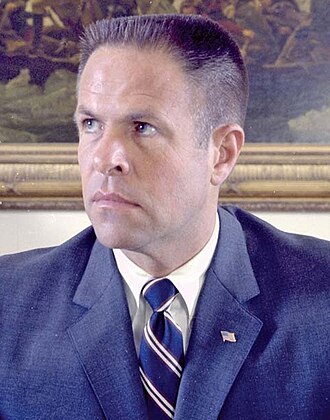
Haldeman, H. R. ("Bob")
H. R. ("Bob") Haldeman served as President Richard Nixon's White House Chief of Staff from January 1969 until his resignation in April 1973. Acting as Nixon's primary gatekeeper and closest aide, Haldeman was a central figure during the White House taping period and is featured prominently in hundreds of recorded conversations. His tenure ended abruptly when he was forced to resign due to his deep involvement in the Watergate cover-up, most notably captured directing the obstruction of justice on the infamous "Smoking Gun" tape.
President Nixon met with H.R. Haldeman, Leonard Garment, Robert Finch, and Nancy Hanks to discuss arts policy, including appointments to the Hirshhorn Museum Board of Trustees and the President's upcoming speech at an Associated Councils of the Arts conference. The participants also explored strategies to support the struggling American film industry through tax incentives and antitrust relief while emphasizing the need for higher-quality, story-driven domestic productions. Additionally, the President reviewed positive public opinion polling data following his recent speech on Southeast Asia and decided against a televised question-and-answer session with the American Society of Newspaper Editors to avoid overexposure and continued debate on the Vietnam War.
President Nixon, H.R. Haldeman, and Ronald Ziegler met to strategize regarding the President's Easter Sunday church attendance, specifically aiming to avoid potential anti-war demonstrations. They discussed managing press reports that inaccurately predicted the President would attend services at a Gettysburg church alongside Mrs. Eisenhower. To mitigate security risks and prevent protests, Nixon decided to keep his schedule vague and pivot to a different, less predictable church near Camp David at the last minute.
President Nixon, H. R. Haldeman, and Henry Kissinger met to coordinate administrative strategy, focusing on upcoming press engagements and public relations tactics. They discussed managing the political fallout of potential Vietnam protests, the future of FBI Director J. Edgar Hoover, and the necessity of aligning the State Department with the administration's Vietnam policy. Additionally, the participants reviewed economic indicators and planned for upcoming diplomatic initiatives involving China and Pakistan.
President Nixon and H. R. Haldeman met to discuss a wide-ranging agenda of administrative, political, and public relations matters. Key topics included coordinating Secretary of State William P. Rogers's public stance on Vietnam to bolster the administration's position, finalizing plans for presidential radio "fireside chats" to bypass traditional media, and reviewing polling data that suggested televised addresses significantly improved the President's approval ratings. Additionally, the two discussed personnel appointments and managing leaks from within the bureaucracy, ultimately deciding to maintain a disciplined communication strategy to mitigate public frustration regarding the Vietnam War.
President Nixon met with H. R. Haldeman, Peter G. Peterson, and George P. Shultz to coordinate administration strategy regarding upcoming press conferences, the handling of planned anti-war demonstrations, and the launch of new international economic and foreign policy initiatives. The discussion emphasized a pivot toward economic competition as a cornerstone of U.S. foreign policy, specifically addressing relations with China and the restructuring of trade policy. Nixon directed his team to prioritize quiet, low-key implementation of administrative and civil rights goals to avoid political backlash and unnecessary public controversy.
President Nixon met with H. R. Haldeman, Maurice Stans, and James Lynn to review a comprehensive report by the Commerce Department regarding the business community's dissatisfaction with the administration. The participants discussed strategies to improve government-business relations, including mitigating the influence of anti-business sentiment in federal agencies, addressing specific grievances concerning antitrust and environmental regulations, and improving the commercial services provided by the State Department. Nixon directed his staff to maintain a defensive posture for business against Congressional and public pressure while cautioning that the administration's capacity to favor business is limited by the prevailing anti-industry political climate.
President Nixon met with key staff and advisors, including H. R. Haldeman, Henry Kissinger, and Paul McCracken, to discuss administrative strategy, economic messaging, and foreign policy. The President emphasized the need for a more confident and assertive presentation of his administration's record, particularly concerning the economic recovery and Vietnam. They also addressed the strategic communication surrounding upcoming trade initiatives with China and the importance of Henry Cabot Lodge's potential visit to Vietnam to manage regional political stability. Throughout the meeting, Nixon underscored the necessity of maintaining a firm posture against political opposition while attempting to shape public perception regarding his initiatives.
President Nixon, H.R. Haldeman, Henry Kissinger, and John Scali met to integrate Scali into the White House team, specifically to manage press relations and provide strategic counsel on foreign policy. The President emphasized a cautious, long-term approach to publicizing his China initiative, prioritizing secret diplomatic channels over immediate publicity to avoid alarming the Soviet Union. They also discussed future personnel changes within the State Department and Defense Department, the strategy for a potential summit with the Soviets, and the ongoing handling of the Vietnam War.
President Nixon met with H.R. Haldeman and Ronald Ziegler to review administrative public relations strategies and manage the President’s press engagement schedule. The discussion centered on effectively communicating policy goals, coordinating upcoming press conferences, and leveraging symbolic events—such as welcoming home military units—to bolster the administration's image. Additionally, the group addressed various logistical appointments, including potential ambassadorial changes and upcoming meetings with industry and agricultural leaders to cultivate political support.
President Nixon held a broad-ranging meeting with H. R. Haldeman, John Ehrlichman, George Shultz, Henry Kissinger, and John Connally to discuss domestic and foreign policy priorities, including economic strategy, upcoming personnel changes, and bureaucratic management. The participants reviewed positive retail sales and GNP growth, evaluated the political viability of energy and environmental proposals, and strategized on handling potential civil service and diplomatic appointments. A significant portion of the discussion focused on managing the administration's political image, navigating legislative obstacles in Congress, and addressing the status of long-serving officials like J. Edgar Hoover.
President Nixon and H. R. Haldeman discussed strategies for managing political opposition, specifically focusing on the performance of Cabinet members. Nixon reflected on recent counsel from John B. Connally, who urged the administration to adopt a more aggressive, confrontational approach when dealing with Congress. The discussion emphasized the need for stronger executive leadership and decisive action to counter critics like Edmund Muskie.
President Nixon and H. R. Haldeman discuss the perceived lack of assertiveness and public impact of the Nixon administration's cabinet and staff. The President expresses frustration with the team's inability to effectively "attack" political opponents or command public attention, suggesting that significant personnel changes may be necessary to improve the administration's political image. They explore strategies for better projecting the President's personality and policy priorities, including evaluating potential Cabinet reshuffles and deliberating on the political optics of military-related public appearances.
President Nixon met with H. R. Haldeman to discuss political strategy for the Anti-Ballistic Missile (ABM) vote, emphasizing the need to avoid early deals and keep the administration's position firm until the final vote. Following the swearing-in of William J. Casey as SEC Chairman, Nixon conferred with his staff and Arthur F. Burns on domestic economic management, public relations, and the importance of projecting a more passionate and committed image to the public. Finally, Nixon met with Dr. Rainer Barzel of the German Christian Democratic Union to discuss the status of Berlin negotiations and the political implications of Willy Brandt's Ostpolitik, during which Nixon reaffirmed the United States' commitment to maintaining a federal presence in Berlin.
President Nixon met with H. R. Haldeman, Henry Kissinger, and Ronald Ziegler to review internal polling data regarding his popularity and the administration's handling of the Vietnam War following his April 7, 1971, address. The discussion highlighted the positive impact of the speech on public opinion, specifically noting a shift toward support despite ongoing challenges related to the My Lai massacre trials. Additionally, the President and his staff discussed diplomatic initiatives with the People's Republic of China, emphasizing that recent trade and travel relaxation announcements were deliberate, long-term strategic decisions rather than spontaneous gestures, and planned future public relations strategies involving upcoming events such as the wedding of Tricia Nixon.
President Nixon and H. R. Haldeman coordinate the media strategy and logistical planning for Tricia Nixon’s upcoming wedding. The discussion focuses on managing press coverage, including a potential feature in Look magazine, to ensure the event is captured and presented according to the President's vision. Nixon instructs Haldeman to assemble a specialized team to execute these plans and oversee details that fall outside the purview of the First Lady’s staff.
President Nixon and H. R. Haldeman met to coordinate upcoming administrative and public relations objectives, specifically focusing on the President's planned visit to the U.S. Marines at Camp Pendleton. The discussion included tasking Haldeman with providing specific instructions to staff members, including John Scali and Raymond K. Price, Jr. Additionally, the pair addressed personnel matters regarding Rose Mary Woods.
President Nixon and H. R. Haldeman consulted to review public opinion polling data regarding the ongoing Vietnam War effort. They specifically evaluated how current approval ratings might influence congressional legislative strategies and public perception. The discussion focused on synthesizing these poll results to determine the most effective political messaging for the administration's policy goals.
President Nixon, Senator Robert Dole, and H. R. Haldeman met to coordinate political messaging regarding the Vietnam War and the administration's withdrawal strategy. The participants discussed strategies to deflect criticism from Democrats by emphasizing that the previous administration was responsible for initiating the conflict and that Nixon's plan ensures a responsible exit without a communist takeover. They decided to highlight the administration's commitment to achieving a 'generation of peace' and to pivot toward publicizing positive economic indicators as a counter-narrative to war-related concerns.
President Nixon and H. R. Haldeman discussed economic recovery, specifically citing the performance of the stock market as a signal of public confidence that could bolster the administration's image. They focused on political strategy, emphasizing the need for Senator Robert Dole to champion the President's policies and effectively manage Republican criticism in the Senate regarding the China initiative. Finally, the President urged Haldeman to ensure active administration intervention in the Texas drought and grain shipment crisis to maintain a public perception of decisive, activist leadership.
President Nixon met with H.R. Haldeman and Henry Kissinger to strategize on public relations, presidential image, and the management of sensitive foreign and domestic policies. The discussion focused on projecting an image of "courage, boldness, and guts" in response to anti-war sentiment and the upcoming May Day demonstrations, while simultaneously planning for the administration's recent trade initiatives with the People's Republic of China. Nixon also expressed frustration with his Cabinet's lack of outspoken loyalty and instructed his staff to push a more coordinated, positive narrative regarding his leadership and the state of the economy.
President Nixon met with Moroccan Foreign Minister Moulay Ahmed Laraki and other officials to coordinate the timing and nature of King Hassan II's upcoming visit to the United States. The discussion focused on balancing the King's diplomatic role in the Middle East crisis and potential Arab summit meetings with the complexities of the President's domestic schedule. Ultimately, the participants decided to postpone and restructure the visit as a private event to maintain diplomatic flexibility, while Nixon and his staff also briefly reviewed broader foreign policy issues including the Vietnam War and diplomatic relations with the People's Republic of China.
President Nixon and his senior staff, including H.R. Haldeman and John Ehrlichman, review strategies for managing press relations and controlling the public narrative regarding federal budget figures. The discussion emphasizes the importance of carefully timing news cycles—specifically balancing press conferences with television appearances—to ensure maximum impact. The group also deliberates on how to frame economic data to counter potential negative interpretations by the media and political opponents.
H. R. Haldeman advises President Nixon on the importance of managing a scheduled meeting with editors by employing a strategic outreach program similar to political party outreach. Haldeman suggests that beyond Herbert Klein, staffers like Leonard Garment and Richard Moore should actively cultivate relationships with these editors to better advance the administration's interests. The President agrees to follow up with staff to ensure a more comprehensive, systematic engagement plan is implemented.
President Nixon and H. R. Haldeman briefly discuss the handling of personnel or administrative appointments, specifically expressing concern over the treatment of political allies. The two leaders consider the fairness of the current selection process and identify a potential conflict regarding how certain individuals are prioritized over others. The conversation ends with an informal assessment of whether a third party had previously addressed the issue.
President Nixon met with H.R. Haldeman to discuss public relations strategies, including the handling of press inquiries and the use of favorable polling data to counter political opposition. Following this, Nixon met with Robert D. Murphy and Henry Kissinger to provide instructions for Murphy's sensitive, unofficial mission to Taiwan. Nixon emphasized the need for absolute secrecy regarding his China initiative and tasked Murphy with managing Chiang Kai-shek's expectations while exploring flexible diplomatic approaches to the United Nations issue.
President Nixon and H. R. Haldeman met to discuss political strategy, the administration's public image, and potential personnel changes within the Cabinet. They analyzed the President's recent leadership on key policy decisions, such as the troop withdrawal from Vietnam, contrasting his approach with the political advice he received. Furthermore, Nixon evaluated the effectiveness of various staff members and Cabinet secretaries, expressing a desire for more enthusiastic and effective 'salesmen' to represent his administration's agenda.
H. R. Haldeman coordinates with an unknown woman to clarify the President’s current whereabouts and immediate schedule. They confirm that the President has departed for the residence and will return within thirty minutes. This brief exchange serves to track the President's movements and ensure logistical synchronization for his evening plans.
President Nixon and H.R. Haldeman discuss the historic performance of the stock market and the strategic value of meeting with key financial industry leaders to signal economic confidence. Nixon instructs Haldeman to expand a proposed meeting with Bernard Lasker into a larger gathering of influential Wall Street figures, such as Gustave Levy and Donald Regan, to maximize the political impact. The President emphasizes that a broader group of “real wheels” would better project national buoyancy than a solitary meeting with a single associate.
President Nixon and H. R. Haldeman reviewed the President's upcoming schedule, including a Rose Garden reception for the Rio Grande City High School Student Council and a meeting with business leaders Bernard Lasker, John Connally, and Gustave Levy. They discussed press management regarding a Commerce Department consumer buying study and recent controversies surrounding the Vietnam War, particularly involving George McGovern and William Saxbe. Nixon also instructed Haldeman to facilitate a meeting with an unidentified individual, likely Senator Saxbe, to address these ongoing political disputes.
President Nixon and H. R. Haldeman convened in the Old Executive Office Building to coordinate the President's immediate agenda. The brief discussion served primarily as a check-in to determine the President's availability for further administrative business. No specific policy decisions were recorded during this initial administrative exchange.
President Nixon and H. R. Haldeman met to discuss political strategy, staffing needs, and the administration's ongoing foreign and domestic initiatives. They focused on leveraging the recent "ping-pong diplomacy" with the People's Republic of China, evaluating the positive public response to the initiative, and coordinating future Cabinet changes to better align with the President's policy goals. Additionally, the pair strategized on managing political opposition, including handling potential protests on college campuses and addressing issues related to Prisoners of War.
President Nixon and H. R. Haldeman discussed the management of interaction with the wives of American Prisoners of War to prevent the issue from becoming politically unmanageable. The President provided instructions to Haldeman regarding the oversight of this group and specifically designated Secretary of State William P. Rogers to lead the administration's handling of the matter. Major General James D. Hughes was also identified as a key figure in coordinating these efforts.
President Nixon and H. R. Haldeman discussed the political implications and costs associated with recent bombings of federal buildings and university campuses, specifically referencing arson at the University of California, Santa Cruz. Nixon expressed frustration regarding the prevalence of radical leftist activities and sought to compile comprehensive statistics on such incidents through the FBI and GSA. The conversation also touched upon press reporting, the rising stock market, and scheduling matters for upcoming meetings with figures such as Mike Mansfield.
President Nixon and H. R. Haldeman discuss preparations for an upcoming editors' meeting, specifically focusing on technical logistics like the use of a rostrum and the presidential seal. The President emphasizes the need for a more relaxed attitude toward press relations, arguing that his ability to answer questions directly provides a significant political advantage. Additionally, the pair briefly touches upon the President's diplomatic policy regarding the USSR and the domestic political landscape involving "hawks" and Senator Mike Mansfield.
H. R. Haldeman briefed President Nixon on the latest housing start figures to ensure the President was accurately informed prior to any public remarks. They clarified that the figure of 1,918,000, while strong, did not constitute an all-time monthly record as it was surpassed in December and several months in 1950. With the data officially released, the President confirmed the specific statistics for his subsequent use.
President Nixon directs H. R. Haldeman to coordinate a meeting between Henry Kissinger, Ronald Ziegler, and journalist John Scali to manage Scali’s views on Vietnam and the administration's China initiative. Nixon expresses frustration with Scali’s perspectives and Kissinger’s handling of the situation, insisting that Haldeman facilitate the discussion to align their messaging. The President explicitly tasks Haldeman with managing these communications to shield himself from the direct conflict and ensure policy consistency.
H. R. Haldeman briefed President Nixon on employment statistics within the steel industry to support a specific administration narrative. They confirmed that while the total number of steelworkers union members had increased, the actual number of employees working in the steel industry had declined by approximately 5% since 1960. Nixon intended to use these figures to emphasize the contraction of the industry's workforce during public discourse.
President Nixon and H. R. Haldeman met briefly to discuss follow-up actions related to a previous conversation with Henry Kissinger and the administration's strategic response to media coverage. The discussion also touched upon preparations for an upcoming meeting with news editors. The dialogue remained informal, focusing on administrative coordination and media management tactics.
President Nixon and H. R. Haldeman debriefed the President's appearance before the American Society of Newspaper Editors, focusing on the effectiveness of his responses regarding Vietnam, J. Edgar Hoover, and foreign relations with the People's Republic of China. The discussion also addressed the technical presentation of the event, including the use of a rostrum and the impact of the President's speaking style. Additionally, the participants coordinated preparations for an upcoming meeting involving Henry Kissinger and John A. Scali to further discuss diplomatic outreach to China.
President Nixon met with H.R. Haldeman and Ronald Ziegler to review the success of his recent televised session with the American Society of Newspaper Editors (ASNE) and coordinate upcoming scheduling matters. They discussed the positive impact of his performance, specifically his handling of sensitive topics like J. Edgar Hoover and foreign policy, while also finalizing plans for visits from agricultural editors, the Jaycees, and various congressional loyalists. Additionally, the President decided to proceed with a meeting with the Building Trades Council executive committee, despite internal warnings regarding the group's opposition to his administration, as part of an effort to demonstrate leadership.
President Nixon consulted with H. R. Haldeman and White House physician Dr. William M. Lukash to address personal health concerns. The discussion focused on the President's physical well-being and necessary medical attention. Due to the sensitive nature of the information, the specific details of the medical assessment remain restricted as a personal returnable item.
President Nixon met with H. R. Haldeman, Henry Kissinger, and other staff members to discuss political messaging, media relations, and administrative strategy. A primary focus was neutralizing the political threat posed by Congressman Paul McCloskey, whose public dissent regarding U.S. operations in Southeast Asia and accusations of misconduct in Vietnam were causing friction. The group agreed to handle such dissent by having Congressional allies—rather than the White House—directly refute these claims to avoid elevating the critic's profile. Additionally, the President reviewed his public schedule, emphasizing the need to maintain a composed, energetic appearance to manage perceptions of his stamina and leadership.
President Nixon and H. R. Haldeman discussed the positive reception among Cabinet members to the gifts recently distributed by the White House. The pair also coordinated the President's upcoming schedule, specifically planning to clear minor administrative tasks by scheduling brief, half-hour meetings with various individuals throughout the week. Haldeman committed to managing these appointments to ensure the schedule proceeded efficiently.
President Nixon and H. R. Haldeman deliberate on how to effectively counter political criticism from Representative Pete McCloskey regarding administration policies. They reject the idea of using Gerald Ford, instead concluding that Secretary of State William Rogers should defend his ambassador and Secretary of Defense Melvin Laird should directly confront McCloskey. Haldeman is tasked with coordinating with Laird and ensuring Rogers takes a more aggressive public stance against the congressman.
President Nixon and H. R. Haldeman discuss political strategies for managing public perception regarding upcoming anti-war demonstrations and media coverage. They analyze the impact of recent polls and the potential political fallout for Congress members, with Nixon expressing a desire for protesters to target the Capitol. Additionally, they review the success of Nixon's recent radio-based outreach and finalize plans to utilize television media in future communications to avoid overexposure.
President Nixon and H.R. Haldeman discussed strategies to counter anti-war protests, specifically focusing on the involvement of Trotskyist groups within the movement and the perceived political opportunism of Representative Paul N. McCloskey, Jr. The President sought to leverage public support from traditional segments of the electorate, such as student groups and working-class supporters, while tasking staff with shaping media narratives to discredit the anti-war opposition. Additionally, they reviewed scheduling logistics for upcoming speeches and appearances designed to build enthusiasm among influential constituencies like the Chamber of Commerce and the Daughters of the American Revolution.
President Nixon and H.R. Haldeman met to coordinate logistics for upcoming political events, including the Republican Governors' Conference and the President's scheduled address to the U.S. Chamber of Commerce. They discussed administrative personnel changes, specifically the mandated firing of a poorly performing official, and reviewed strategies for managing press relations and controlling media narratives. Additionally, the pair coordinated guest list protocols for Tricia Nixon’s wedding to maintain political decorum and addressed the optics surrounding public demonstrations and welfare policy.
President Nixon, H. R. Haldeman, and Henry Kissinger met to discuss political strategy, the administration's public image, and the challenges posed by entrenched liberal opposition within the federal bureaucracy and the media. The participants analyzed recent military developments in Vietnam and Laos, affirming that success on the battlefield—such as in Firebase 6—remains the most effective tool for neutralizing critics who prioritize ideological opposition over national interest. Nixon emphasized the necessity of a future purge of the federal government to dismantle the long-standing Democratic influence, particularly within the State Department and other agencies.
President Nixon and H. R. Haldeman met to discuss strategies for exerting greater control over the federal bureaucracy and addressing perceived disloyalty within various agencies. The President emphasized his desire to "clean house" at the United Nations, specifically targeting associates of Charles W. Yost, and expressed frustration with Attorney General John Mitchell's reluctance to handle the ITT antitrust case and the resignation of Richard McLaren. Throughout the conversation, Nixon underscored the necessity of making public examples of officials to instill discipline across the administration, particularly as he prepared for the 1972 election cycle.
President Nixon and H.R. Haldeman discuss the necessity of adopting a more aggressive, partisan political strategy to defend against opposition, while critiquing staff members who favor compromise over confrontation. Nixon expresses a desire to remove disloyal administration officials and suggests using Vice President Agnew to publicly attack Senate critics. The meeting also covers logistical planning for upcoming events, including an appearance before the Daughters of the American Revolution and a meeting with AFL-CIO leadership.
President Nixon met with H.R. Haldeman, Charles Colson, and other staff members to discuss political messaging strategies and the management of congressional relations. The group focused on fostering a more optimistic, disciplined tone among Republican supporters while strategizing ways to critique opposition figures like Senator Edmund Muskie. Additionally, they deliberated on media presentation tactics, specifically regarding public appearances with members of Congress and how to effectively highlight the administration's policy successes.
President Nixon and H.R. Haldeman discuss preparations for an upcoming meeting with legislative leaders, specifically regarding the administration's economic messaging. Nixon instructs Haldeman to have George P. Shultz, rather than Paul McCracken, deliver a brief and intentionally optimistic presentation on the economy to instill confidence. The President notes recent positive trends in the stock market as evidence that the public is beginning to favor optimistic long-range economic projections.
President Nixon met with H.R. Haldeman to discuss strategies for tightening executive control, specifically ordering a mass resignation of all government holdovers—excluding J. Edgar Hoover and Richard Helms—prior to the next school year. Nixon directed the administration to increase its public visibility regarding disaster relief and mandated that Secretary of State William P. Rogers publicly defend administration policies on Vietnam and Laos during his upcoming press conference. Furthermore, the President expressed intense frustration with staff performance and internal dissent, ordering the immediate dismissal of specific personnel in the Bureau of Indian Affairs and urging a purge of disloyal staffers at the United Nations.
President Nixon met with H. R. Haldeman, Henry Kissinger, Stephen Bull, and Ronald Ziegler to manage various administrative priorities, focusing heavily on controlling the narrative surrounding Vice President Spiro Agnew’s recent unauthorized remarks regarding the administration's China policy. The group also discussed the logistics of upcoming public appearances, including a strategic approach to a recent Supreme Court ruling on school busing and the management of high-level personnel changes. Furthermore, they coordinated foreign policy messaging, specifically addressing Secretary of State William Rogers’s upcoming Middle East trip and the need to establish a discreet, direct communications channel with the People's Republic of China.
President Nixon met with H.R. Haldeman and Stephen Bull to discuss administrative personnel changes, media strategy, and his upcoming public schedule. The group focused on replacing a Small Business Administration official, navigating negative press coverage, and coordinating potential televised appearances and radio addresses to maximize public support. Additionally, they reviewed logistical plans for hosting the Jaycees at the White House and engaged in a broader discussion regarding the deteriorating quality of life in New York City.
President Nixon and H. R. Haldeman coordinated the President's upcoming address to the U.S. Jaycees, emphasizing the need for an optimistic tone to inspire the audience rather than focusing on technical policy details like revenue sharing. They discussed using the event as a strategic opportunity to subtly promote the Supersonic Transport (SST) program. The President stressed that the speech should aim for a "ripple effect" through media coverage rather than a direct, intense confrontation, prioritizing an uplifting message about the country.
President Nixon and H.R. Haldeman discuss administrative logistics, including the scheduling of upcoming appointments and a photo session with Attorney General John Mitchell. They deliberate on potential candidates for Cabinet positions and the necessity of utilizing the Office of Emergency Preparedness to promote the administration’s economic and foreign policy agendas. The conversation centers on staff coordination and strategic messaging to improve the public perception of the administration's goals.
President Nixon and H. R. Haldeman discussed the recent Vietnam veterans' anti-war demonstration, specifically addressing the lack of mention regarding the protests during a morning leadership meeting. Nixon expressed frustration that the media's focus on the demonstration had not been effectively countered or addressed by administration officials. The two participants sought to clarify whether the topic had been raised by anyone present at the meeting, concluding that it had been deliberately avoided.
President Nixon met with Rose Mary Woods, Ronald Ziegler, and others to discuss administrative matters, personal gifts, and the President's public image. The conversation touched upon the positive public reception of the President's recent remarks on welfare and foreign policy, as well as the need to monitor political rivals like Ted Kennedy through informal channels. Additionally, the group coordinated scheduling details and reviewed logistics regarding upcoming travel and correspondence.
President Nixon met with H.R. Haldeman, John Mitchell, and John Dean to discuss the administration's strategic response to a recent unanimous Supreme Court ruling on school busing. The group focused on distancing the White House from the controversial decision, emphasizing that enforcement should remain the responsibility of local school authorities and district courts rather than federal agencies like HEW. Nixon firmly instructed his staff to avoid taking credit for the ruling, express no personal endorsement of it, and ensure that HEW officials do not overstep their authority in implementing desegregation plans.
President Nixon met with Alexander P. Butterfield, John N. Mitchell, and H. R. Haldeman to briefly review matters following a photo session. The discussion focused on logistical details regarding a planned trip by Butterfield to Puerto Rico, specifically concerning the duration and base of operations for the visit. The brief exchange concluded before any further administrative or political business could be addressed.
President Nixon, Henry Kissinger, and H.R. Haldeman discuss strategies for managing political support and public opinion regarding the Vietnam War, particularly in light of recent legislative concerns. They emphasize the necessity of conveying a sense of progress to Congress to maintain support for the administration's broader policy agenda. The group also reviews the strategic distribution of favorable poll results to Republican lawmakers and touches upon ongoing surveillance regarding Congressman Hale Boggs.
President Nixon expressed frustration to H. R. Haldeman regarding a meeting with Republican Senators, specifically criticizing Clark MacGregor for allegedly prompting legislators like Howard Baker to push for an end to the Vietnam War. Nixon felt MacGregor mistakenly believed the President was uninformed on congressional sentiment and failed to effectively manage the discussion to better align with administration goals. Haldeman was tasked with holding a candid debriefing with MacGregor to address this tactical failure and was also instructed to expedite the release of relevant poll data.
President Nixon and H. R. Haldeman met to coordinate media strategy regarding the administration's China initiative, focusing on countering news reports that suggested a rift between Henry Kissinger and Secretary of State William Rogers or that the State Department deserved primary credit. They discussed using journalist John Scali to correct the narrative and emphasized that the China policy was fundamentally driven by the President. Additionally, the pair reviewed the President's upcoming schedule, including a meeting with the U.S. table tennis team, and considered potential administrative personnel reassignments for Clifford Hardin and Bryce Harlow.
President Nixon, Henry Kissinger, H.R. Haldeman, and John Dean discussed strategies for managing political fallout from the ongoing Vietnam War, particularly regarding public and congressional perception. The President expressed frustration with military leadership and the impact of war protests, deciding to prioritize a definitive end to U.S. ground combat and the draft to stabilize his political position. Additionally, the group reviewed internal polling data and economic messaging, agreeing to leverage improved consumer price index figures to bolster support among Republican legislators and conservative constituencies.
President Nixon met with H.R. Haldeman, John Mitchell, and other administration officials to coordinate political strategy regarding ongoing anti-war demonstrations and personnel appointments. The group discussed ensuring peaceful compliance with court orders concerning protestors, while Mitchell provided an update on staffing, including plans to recruit Ken Rush and Vernon Walters for key administration roles. Nixon also instructed Mitchell to delay antitrust litigation against television networks to avoid negative political fallout following the Pentagon Papers controversy, while maintaining his overall goal of aggressively challenging the media establishment.
President Nixon met with Henry Kissinger, H. R. Haldeman, and other staff members to discuss administration messaging regarding the China initiative and the ongoing anti-war protests in Washington, D.C. The President expressed frustration over not receiving proper credit for his foreign policy initiatives and directed his team to ensure the public understands these efforts are directed by him rather than the State Department. Regarding the protests, Nixon instructed his team to maintain a posture of 'cool respect,' avoid direct confrontation, and leverage public sentiment against the demonstrators to reinforce his broader philosophy of personal responsibility and national character.
President Nixon and Treasury Secretary John Connally discussed economic stability, the potential federal bailout of Lockheed, and various Cabinet personnel changes. They examined strategies to restore public confidence in the economy and assessed the leadership vacuum within Congress. Additionally, the President and Connally evaluated potential candidates for Cabinet and agency roles, emphasizing the need for effective 'salesmanship' and public relations skills in promoting the Administration's agenda.
President Nixon met with H. R. Haldeman, Ronald Ziegler, and other staff members to discuss political messaging, upcoming public appearances, and strategies for managing the administration's image. Key topics included the President's stance on welfare and a guaranteed annual income, the handling of Vietnam War protestors, and the ongoing antitrust case involving ITT. The President also emphasized his desire to aggressively challenge the media and the political opposition, while planning for an upcoming meeting with Secretary of State William P. Rogers.
President Nixon met with Secretary of State William Rogers and H. R. Haldeman to finalize the agenda and strategy for Rogers's upcoming diplomatic trip to the Middle East, which included stops in London, Paris, Ankara, Saudi Arabia, Egypt, and Israel. The participants discussed the need for the U.S. to maintain a balance of power while managing difficult negotiations between Israel and Egypt, particularly regarding the Suez Canal. Additionally, the President pressed Rogers to address the Turkish heroin trade during his visit and reviewed the political fallout concerning Vice President Agnew's recent remarks on China policy and the ongoing anti-war protests in Washington.
President Nixon and H.R. Haldeman discuss the political liability of White House-sponsored youth conferences, which they agree have been infiltrated by radical, anti-capitalist activists. The President expresses frustration with Stephen Hess's management of these events and concludes that future conferences, such as those for the elderly, should be held outside of Washington, D.C., to limit media exposure and ensure better administrative control. Additionally, they assess the progress of upcoming anti-war protests, aiming to highlight low attendance numbers to discredit the organizers and manage the optics of the demonstrations.
President Nixon met with H.R. Haldeman, Henry Kissinger, and Alexander Butterfield to discuss a variety of domestic and foreign policy concerns, including managing public messaging and controlling high-level political interactions. The President expressed frustration with the press's coverage of Vietnam Veterans Against the War and sought to limit the political visibility of figures like Senator Mike Mansfield regarding potential diplomatic outreach to China. Additionally, the group addressed the need for more reliable spokespeople for the administration's Vietnam policy and considered leadership changes within the military and NSC to better promote the President's agenda.
President Nixon met with H.R. Haldeman, William Safire, and Rose Mary Woods to address political strategy and administrative matters. They discussed potential public criticism regarding the President's use of military aircraft, the handling of political campaign funds, and the framing of his upcoming Chamber of Commerce speech concerning welfare reform and work ethics. Additionally, the President and his staff reviewed personnel decisions for government agencies, including the CIA and the Department of Justice, and Woods briefed the President on her media appearances and scheduling arrangements.
President Nixon and H.R. Haldeman discussed political strategies in response to recent public opinion polls and negative media coverage regarding the Vietnam War, demonstrations, and the administration's policy initiatives. They analyzed the electoral impact of the administration's China initiative, explored public relations tactics for the Cabinet, and considered the timing of a future presidential press conference to regain control of the political narrative. The conversation also touched on personnel matters, including a potential ambassadorship for John A. Volpe and the administrative reorganization of the United Nations staff.
President Nixon consulted with H.R. Haldeman regarding political strategy, specifically focusing on government reorganization and managing public perception through media engagement and the mobilization of pro-administration veterans. The discussion shifted to foreign affairs when Henry Kissinger joined to report on recent negotiations with Soviet Ambassador Anatoliy Dobrynin concerning the Strategic Arms Limitation Talks (SALT) and plans for a summit meeting. They finalized a plan to handle the SALT negotiations through private assurances rather than immediate public disclosure, while avoiding premature commitments regarding the status of Berlin.
President Nixon dictates a series of administrative tasks to H.R. Haldeman, focusing on infrastructure improvements to Washington, D.C. area buildings and potential renaming of the National Airport to honor Dwight D. Eisenhower. The President explores ways to rename the airport without requiring formal legislation, though he remains open to lobbying Congress if necessary. Additionally, Nixon discusses arrangements for future White House worship services, specifically requesting outreach to Billy Graham regarding the inclusion of diverse, conservative-leaning ministers.
President Nixon met with H.R. Haldeman and later Ronald Ziegler to discuss public relations strategies in response to recent anti-war demonstrations in Washington, D.C. They debated how the administration should publicly address the protests, balancing the need to remain firm against the demonstrators while acknowledging the overall peaceful nature of the events. Additionally, they coordinated talking points for Ziegler's upcoming press conference, focusing on foreign policy initiatives, including Secretary of State William P. Rogers' trip to the Middle East and potential future outreach to the People's Republic of China.
President Nixon met with H. R. Haldeman and Henry Kissinger to discuss public relations strategies, domestic protest management, and potential diplomatic maneuvers regarding the Vietnam War. Following recent anti-war demonstrations, Nixon and his advisors debated aggressive military responses and the need to present a new, 'novel' peace proposal through negotiator David K. E. Bruce to preempt Congressional pressure and maintain support among POW families. The conversation also touched upon the administration's stance on Strategic Arms Limitation Talks (SALT), with Nixon emphasizing a firm approach toward Soviet negotiations.
President Nixon met with H.R. Haldeman to coordinate the administration's public relations strategy, focusing on domestic outreach to farm organizations and refining the President's public speaking style. The discussion covered scheduling for upcoming presidential appearances, the logistics of a trip to the Lyndon B. Johnson Library, and the planning of future press conferences. Additionally, the President and Haldeman addressed personnel matters, including potential promotions for White House staff and the management of cabinet department publicity.
In this Oval Office meeting, President Nixon consulted with his advisors regarding the administration's ongoing strategies for Vietnam, domestic antitrust enforcement, and economic policy. The President discussed the status of peace negotiations with Henry Kissinger, emphasizing the need for public relations maneuvers concerning prisoners of war (POWs) and a time-certain troop withdrawal, while concurrently utilizing military pressure. Additionally, Nixon directed his staff to maintain political secrecy regarding antitrust cases involving ITT and the television networks, and he reviewed welfare reform and revenue sharing progress with George Shultz.
President Nixon, H.R. Haldeman, and Henry Kissinger discussed the political fallout and public optics of anti-war protests occurring at the U.S. Capitol, which were causing significant disturbances for members of Congress. Nixon expressed satisfaction with the Senate's reaction to the protesters, specifically citing supportive comments from Senator Russell Long, and analyzed how these demonstrations might alienate the public. The participants deliberated on strategies for managing upcoming protests in Washington, D.C., ultimately deciding to prioritize law enforcement arrests to maintain order while cautioning against overreaching for new federal legislation at that time.
President Nixon and H. R. Haldeman discuss the scheduling of the President's upcoming travel and the need to manage public expectations regarding his return to Washington to avoid the appearance of responding to political pressure from anti-war protests. They evaluate the ongoing demonstrations, expressing frustration with media coverage and emphasizing the necessity for government departments to maintain a hard line against protesters. Haldeman notes that intelligence gathering, assisted by informants within the activist groups, will provide a clearer picture of potential disruptions by early next week.
President Nixon and H. R. Haldeman discussed adjusting the President's public appearance schedule, specifically weighing potential engagements with the American Legion and the Veterans of Foreign Wars for the 1971 and 1972 calendar years. The President also outlined a strategic objective regarding international trade policy, directing that trade relations with the People's Republic of China be normalized to the same status as those held with the Soviet Union and other communist nations. These directives served as key instructions for the administration's upcoming domestic and foreign policy communications.
President Nixon, Vice President Agnew, and H. R. Haldeman discuss the recent disruptions by anti-war demonstrators in the Senate galleries and the media's biased coverage of the event. The group analyzes the tactical behavior of protesters, including their plans to target Selective Service offices and train for future demonstrations. Nixon expresses frustration with the news media's portrayal of Republican senators' roles in clearing the galleries while Agnew updates the President on protest activity near government facilities.
President Nixon met with H. R. Haldeman, Stephen B. Bull, and an unidentified individual to coordinate the logistics for an upcoming swearing-in ceremony. The discussion focused on scheduling the arrival of guests, including James C. Fletcher and James A. Belson, to ensure the event proceeded according to the President's itinerary. Following these administrative arrangements, the President and his staff departed the Oval Office.
President Nixon hosted a ceremonial event in the Oval Office for the swearing-in of James C. Fletcher as the new Administrator of NASA, attended by Fletcher's family, members of Congress, and administration officials. Following the photo session and official proceedings, the President discussed the importance of space exploration and future policy ideas with attendees. The meeting concluded with a private discussion regarding Representative James G. Fulton’s congressional career and potential future scheduling.
President Nixon and H. R. Haldeman convened to coordinate the executive schedule, focusing specifically on upcoming appointments. The discussion centered on arrangements for meetings with Attorney General John N. Mitchell and National Security Advisor Henry A. Kissinger. This brief administrative consultation served to organize the President’s priorities and manage key staffing interactions for the day.
President Nixon met with Henry Kissinger and subsequently with Henry Ford II and Lee Iacocca to discuss major policy and political concerns. The conversation with Kissinger focused on Vietnam strategy, including the management of public perception, the administration's frustration with the 'establishment' and anti-war activists, and the President's diplomatic initiatives regarding the People's Republic of China. Later, Ford and Iacocca briefed the President on the economic and logistical burdens placed on the auto industry by Department of Transportation and environmental regulations, specifically regarding safety, emissions, and bumper standards. Nixon acknowledged the industry's concerns, emphasizing the need to balance safety and environmental goals with the economic realities of maintaining a competitive U.S. automotive sector.
President Nixon met with senior staff and Cabinet members to address various domestic policy challenges, including automobile safety regulations, school desegregation strategies, and environmental initiatives. A significant portion of the discussion focused on managing the administration's economic message and the internal friction regarding withholding federal funds from Congress. The President also emphasized the need for a unified voice on economic policy and directed staff to improve the administration's political coordination on projects like the Alaska pipeline and public parks.
President Nixon met with H.R. Haldeman and John Ehrlichman to discuss a range of administrative and political appointments, including potential roles for Donald Rumsfeld and a successor for George A. Lincoln at the Office of Emergency Preparedness. The group evaluated current government reorganization proposals, economic policy messaging coordinated by John Connally, and the political implications of upcoming automobile safety regulations concerning air bags. They also touched on cabinet-level personnel strategies, specifically addressing the need to improve public relations and increase representation of specific demographic groups.
President Nixon met with H. R. Haldeman and Henry Kissinger to strategize on domestic political messaging, cabinet management, and sensitive foreign policy initiatives. The discussion focused on preparing for an upcoming press conference, the need for more aggressive public relations regarding the Administration's programs, and organizational changes within the Cabinet. Additionally, Kissinger provided a detailed briefing on the status of secret diplomatic communications with the People’s Republic of China mediated through Pakistan.
President Nixon, H.R. Haldeman, and Henry Kissinger met to coordinate administrative strategy regarding the President’s upcoming press conference and ongoing foreign policy initiatives, specifically China and the Strategic Arms Limitation Talks (SALT). Kissinger provided intelligence on Chinese communications regarding Taiwan and discussed the potential for a breakthrough in SALT negotiations with the Soviet Union. Nixon expressed a desire to project a firmer, more controlled image, vowing to confront his critics and political opponents more aggressively while maintaining strict secrecy around these diplomatic efforts.
President Nixon consulted with H. R. Haldeman and First Lady Pat Nixon regarding the viability of a scheduled congressional wives luncheon amidst planned anti-war protests expected to disrupt Washington traffic. The President resolved to proceed with the event to avoid appearing intimidated by demonstrators, emphasizing a policy of conducting business as usual. To ensure the luncheon occurred as planned, Nixon directed that White House staff coordinate with Rex Scouten to billet necessary service personnel overnight, ensuring they would be available despite potential road closures.
President Nixon met with H.R. Haldeman and Ronald Ziegler to discuss a wide range of administrative, public relations, and personnel matters, including media strategy for upcoming events. The group evaluated potential photographers for official portraits, planned the logistics for Tricia Nixon's televised tour, and discussed the President’s approach to an upcoming press conference. Additionally, Nixon addressed staffing changes, the handling of anti-war protests, and the political branding of government initiatives like the national cancer program.
President Nixon and H. R. Haldeman coordinate upcoming scheduling and policy preparations, including a discussion on whether to formulate an official administration position regarding a proposed $2 minimum wage. Nixon expresses clear opposition to the increase, suggesting he would prefer to avoid a definitive stance if possible. Additionally, the pair discusses recent confrontational testimony by Republican senators Hugh Scott and George Aiken against anti-war protest organizers, noting the favorable media coverage this generated.
President Nixon and H. R. Haldeman meet briefly to coordinate strategy regarding an upcoming report on crime. The discussion focuses on the administration's public stance, with Nixon expressing concern that the report’s recommendations may be inflationary. They briefly deliberate on whether the administration should distance itself from the document to avoid political repercussions.
President Nixon, Henry Kissinger, and H. R. Haldeman met to strategize the opening of diplomatic relations with the People's Republic of China (PRC), focusing on the logistics of a secret emissary mission to arrange a potential presidential summit. They debated the merits of using public versus private envoys, ultimately favoring a clandestine approach to maintain leverage and control over sensitive issues like Taiwan and the Vietnam War. The President emphasized his desire to manage these negotiations personally through Kissinger to ensure the initiative remained under strict White House control rather than through the State Department.
President Nixon and H.R. Haldeman discuss the management of diplomatic communications regarding the People's Republic of China and Vietnam, specifically emphasizing the need to avoid sensitive written cables to Secretary of State William Rogers. The President plans to address these foreign policy matters and potential diplomatic initiatives during an upcoming press conference rather than disclosing them prematurely to subordinates or the media. Additionally, the pair briefly reviews current domestic news, including developments in a Capitol bombing case and ongoing narcotics-related media reports.
President Nixon and H.R. Haldeman discussed potential personnel adjustments involving Robert F. Ellsworth and General George A. Lincoln. The President proposed a job exchange between the two men, seeking Haldeman's assessment of the viability of such a move. Haldeman was instructed to further evaluate the logistics and feasibility of this administrative reassignment.
President Nixon consulted with H. R. Haldeman regarding a potential cabinet-level job offer for Robert F. Ellsworth. The discussion confirmed that Ellsworth had been approached about the position and had expressed a willingness to accept it. This exchange served as a brief verification of Ellsworth's receptiveness to joining the administration in a high-level capacity.