Nixon, Richard M. (President)
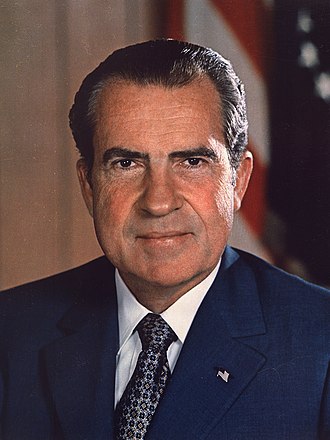
Richard M. Nixon served as the 37th President of the United States from January 1969 until his resignation in August 1974. In February 1971, he ordered the installation of a secret voice-activated taping system in the White House to preserve a historical record of his administration. Until the system's existence was revealed and dismantled in July 1973, the tapes captured Nixon directing major foreign policy initiatives, such as the opening to China, as well as his central role in the Watergate cover-up.
What Nixon talks about on the tapes
White House operations 4,718Presidential scheduling 2,225Public relations 1,784Presidential schedule 1,782Vietnam War 1,693Logistics 1,650Manolo Sanchez 1,626White House communications 1,400White House administration 1,399Presidential communication 1,243Henry Kissinger 1,191Foreign Policy 1,183
Conversations (21,010)
— Page 184 of 211President Nixon met with John B. Connally to discuss the administration's upcoming energy message, economic strategy, and the intensifying Watergate scandal. They assessed the political implications of the energy proposals, debated the effectiveness of selective price controls on inflation, and explored strategies for the White House staff to navigate the growing congressional investigations. A significant focus of the conversation involved potential legal and public relations responses to the scandal, including how key staff members like H.R. Haldeman should manage their testimony to mitigate political fallout.
President Nixon met with his personal aide, Manolo Sanchez, in the Oval Office to request assistance with his personal effects. The President specifically instructed Sanchez to handle a set of bolts intended for use on the President's back. This brief interaction focused on routine personal support rather than matters of state.
President Nixon met with Stephen B. Bull to coordinate various administrative tasks, including scheduling commitments involving Hugh Scott’s anniversary and upcoming meetings with Italian Prime Minister Giulio Andreotti and Paul W. Keyes. During the session, the President prioritized obtaining feedback from John B. Connally regarding the administration's energy message. Nixon instructed Bull to expedite the delivery of a preliminary draft to Connally to ensure his prompt review and commentary.
President Nixon held an brief, unrecorded meeting with an unidentified individual in the Oval Office. The transcript provides no substantive content beyond a recorded notification of the meeting's commencement. Consequently, no specific policy decisions or action items were documented during this exchange.
President Nixon initiates a request for the White House operator to place a telephone call to Charles W. Colson. This interaction serves as a brief procedural step to facilitate direct communication between the President and his former special counsel. No further substantive discussion occurs during this short exchange.
President Nixon and Charles Colson discuss the mounting political and media pressure surrounding the Watergate scandal and the need to restore confidence within the White House staff. Colson reports on recent positive public appearances and emphasizes that the administration must move past the scandal by focusing on its significant domestic and foreign policy achievements. The two agree on the necessity of a unified plan to address the crisis, and Nixon directs Colson to draft a paper outlining how to bring the Watergate matter to a definitive conclusion.
President Nixon and Stephen Bull met to coordinate the logistics and entertainment for upcoming White House events, including a State dinner for Willy Brandt and a major dinner honoring returning Prisoners of War (POWs). They discussed potential performers, scheduling challenges for large receptions, and the need for a formal press plan regarding the POW event. Additionally, Nixon directed that formal citations for the POWs be deferred due to pending legal and disciplinary reviews, while finalizing guest policies for the attendees.
President Nixon met with an unidentified individual to discuss the scheduling of William E. Timmons. The brief exchange focused on assessing the availability and potential recruitment of an unnamed third party for a specific role. The conversation concluded with the President seeking logistical adjustments regarding this individual’s status.
President Nixon and Stephen B. Bull reviewed administrative papers and discussed upcoming White House social programming. The conversation centered on achieving ethnic balance in these events and organizing a fundraising initiative for children of Missing in Action (MIA) servicemen. Nixon reviewed plans for a scholarship program involving celebrities like Sammy Davis, Jr. and Bob Hope to promote voluntary action and charitable efforts regarding Vietnam-era veterans.
President Nixon met with William E. Timmons to discuss the effectiveness of recent social gatherings for Congress members in fostering partisan support and building a stronger team atmosphere. The two reviewed attendance lists for White House receptions and religious services, strategizing on how to use "wildcard" invitations to include specific Republican and "responsible" Democratic lawmakers. Nixon also directed Timmons to refine the guest selection process for upcoming meetings on energy and trade issues, focusing on key committee leadership to ensure legislative priorities remained on track.
President Nixon held a brief morning meeting with an unidentified individual to address an unspecified emerging issue. The discussion focused on the President's schedule and involved John D. Ehrlichman. The session concluded quickly, providing no further details regarding the nature of the problem or resulting directives.
President Nixon initiates a brief communication through the White House operator to facilitate an outgoing call. The exchange serves as a logistical step to connect the President with another party for official business. No substantive policy or political discussions occur during this short administrative interaction.
President Nixon met with Stephen Bull to review logistics regarding a recent appearance by the Mike Curb Congregation, specifically focusing on the president's interactions with new members and the children in attendance. Following Bull's departure, Nixon consulted with William Timmons to coordinate an urgent meeting with Otto Passman. The President directed Timmons to contact Passman regarding an unspecified matter and requested that no definitive decisions be finalized until Passman’s return.
President Nixon and John D. Ehrlichman coordinate communication efforts regarding Gordon C. Strachan’s recent interaction with prosecutor Earl J. Silbert. The President expresses concern over John Mitchell’s hardening stance and seeks further intelligence on the nature of the adjustments Strachan intended to make to his testimony or records. Ehrlichman is tasked with investigating the matter and providing a written report to the President through Steve Bull.
President Nixon and John Ehrlichman met to coordinate the White House's legal and public relations strategy regarding the Watergate investigations, specifically addressing the Grand Jury's scrutiny of campaign funds and potential perjury by administration staff. Ehrlichman reported on his recent discussions with Attorney General Richard Kleindienst regarding immunity policies and the legal distinctions between illegal payoffs and legitimate campaign financial practices. They weighed options for managing White House testimony, including the potential for staff to issue sworn statements, the possible departure of John Dean, and the selection of new legal counsel to navigate the impending Ervin Committee hearings.
President Nixon held a brief meeting in the Oval Office with an unidentified individual. The discussion was limited to the topic of food. No other substantive political or administrative details were recorded during this segment.
President Nixon held a private meeting in the Oval Office with an unidentified individual, potentially former Attorney General John N. Mitchell, to discuss evolving matters concerning the Watergate investigation. While the audio remains largely undefined, the interaction occurred during a period of intense pressure regarding the administration's legal exposure. No specific policy actions or formal decisions were captured in the available documentation for this brief encounter.
President Nixon consulted with an aide to finalize the protocol and logistical arrangements for a courtesy call involving a group of Japanese governors. The discussion focused on scheduling a brief greeting in the Oval Office, followed by a walk in the Rose Garden to view the spring blooms and a subsequent tour led by Michael J. Farrell. Nixon explicitly directed that no press be present for the event, ensuring the engagement remained an informal visit.
President Nixon and H.R. Haldeman discussed how to handle public inquiries regarding the President's continued medical treatment by Dr. W. Kenneth Riland following the doctor's legal issues. Haldeman expressed concern that maintaining the relationship while Riland faced tax-related indictments could create political vulnerability for the President, particularly regarding his role as the nation's chief law enforcement officer. Ultimately, the two strategized on how to discreetly manage Riland's access and public messaging to avoid unnecessary controversy.
President Nixon met with a delegation of Japanese governors and officials to discuss the strengthening of U.S.-Japan relations through localized diplomatic exchanges. The participants highlighted the importance of fostering ties beyond the national government level, specifically between state and local leaders, to better connect with the general public in both countries. Discussion touched upon the shift toward friendly economic competition and the long-term historical importance of bilateral cooperation. The meeting concluded with a photo opportunity in the Rose Garden to celebrate the spirit of international friendship.
President Nixon and H. R. Haldeman discussed strategies for managing public perception, specifically addressing press coverage of the administration and the unfolding Watergate scandal. They reviewed potential public relations maneuvers, including a possible statement from Vice President Spiro Agnew to counter media narratives, while also weighing administrative appointments for the Federal Reserve and the Department of Labor. The conversation emphasized maintaining a unified front against hostile press inquiries and coordinating staff testimonies for upcoming grand jury appearances.
President Nixon met with an unidentified individual to briefly discuss the President's upcoming schedule and coordinate arrangements involving William E. Timmons. The discussion appears to focus on administrative planning and governmental personnel matters, though the brevity of the recording limits the detail regarding specific outcomes. No major policy decisions were reached during this short interaction.
President Nixon met with a delegation from the Frontiers of Science Foundation of Oklahoma, led by Edward King Gaylord and accompanied by Congressman John Jarman, to recognize the organization's contributions to scientific education and research. During the brief, ceremonial Oval Office session, Nixon commended the role of voluntary organizations in American life, arguing that private sector initiative often produces more value than government spending. The President presented the group with commemorative gifts and engaged in light conversation regarding his experiences with science education, his past visits to Oklahoma, and the logistical challenges of presidential communications via satellite.
President Nixon met with an unidentified individual in the Oval Office to briefly discuss upcoming scheduling matters. The conversation covered logistics regarding Herbert G. Klein and a scheduled meeting with Peter J. Brennan. No significant policy decisions were recorded during this brief administrative exchange.
President Nixon met with Herbert Klein and staff member Jeni Brown to formally acknowledge Brown’s departure from the White House staff. The brief session included a photograph to commemorate the occasion and a discussion regarding Brown’s future professional plans in California, specifically involving television and media work. Nixon offered encouragement for her career transition before presenting her with a parting gift.
President Nixon met with an unknown individual to coordinate his immediate schedule and administrative workflow. The discussion focused on facilitating a brief ten-minute briefing for Kenneth R. Cole, Jr., to address pending legislative matters following a separate meeting with Secretary Brennan. No major policy decisions were reached, as the primary objective was the logistical management of the President's appointments.
President Nixon met with Secretary of Labor Peter J. Brennan and Kenneth R. Cole, Jr. to discuss political strategy regarding organized labor, specifically the administration's ongoing tensions with AFL-CIO leader George Meany. They reviewed the administration's legislative agenda, including the minimum wage, unemployment insurance for strike victims, and the Alaska Pipeline, while emphasizing the need to maintain strong support from the Building Trades unions. The discussion concluded with a focus on managing the President's upcoming appearance before labor groups and balancing the competing economic interests of labor and the business community.
President Nixon and John Ehrlichman coordinate their schedules and discuss an ongoing meeting involving Charles Colson. The participants focus on the mounting political pressures surrounding the White House and investigate the substance and motivations behind Colson’s recent actions. The conversation serves as a preparatory session for later briefings regarding these unfolding external demands.
President Nixon and John Ehrlichman met to strategize on the worsening Watergate scandal, specifically focusing on damaging allegations against White House staff members including H.R. Haldeman, Charles Colson, and John Dean. The two discussed the threat posed by Jeb Stuart Magruder's potential cooperation with investigators and his claims regarding a tape that allegedly implicated the White House in electronic eavesdropping and obstruction of justice. They weighed options for managing these threats, including hiring an independent special counsel and potentially discrediting Magruder or other witnesses to prevent the scandal from reaching the Oval Office.
President Nixon held a brief meeting in the Oval Office with an unidentified individual. The conversation consists of undefined activity, offering no substantive insight into policy or administrative decisions. Due to the lack of intelligible dialogue, no specific topics were discussed or actions taken.
President Nixon contacted the White House operator to place an outgoing call to Chief of Staff H.R. Haldeman. This brief interaction served as the administrative mechanism for the President to initiate a private consultation with his top aide. No substantive policy matters were discussed during this request for a connection.
This recording captures fragmented, brief exchanges between unidentified individuals and potentially President Nixon within the Oval Office and the Executive Office Building. The dialogue consists of administrative-sounding logistical checks, including numerical references and confirmation of arrangements. Due to the lack of identifying information and the disjointed nature of the transcript, no substantive policy discussions or significant presidential decisions are discernable.
President Nixon and H. R. Haldeman briefly discuss scheduling a follow-up meeting later that day. Nixon initiates the conversation to request that Haldeman come to his office to confer in person. The exchange serves primarily as a logistical arrangement for an immediate, private consultation.
President Nixon instructed the White House operator to connect him with Stephen B. Bull for a telephone conversation. This brief exchange served as a routine administrative request to facilitate direct communication between the President and his aide. No substantive policy matters or decisions were discussed during this brief connection process.
President Nixon, H.R. Haldeman, and John Ehrlichman met to strategize on managing the Watergate fallout, focusing specifically on the damaging potential of testimony from Jeb Stuart Magruder and John W. Dean. The participants discussed the risk of indictments targeting former Attorney General John Mitchell and the necessity of keeping the White House insulated from criminal implications. They weighed the merits of asserting executive privilege versus allowing witnesses to testify, while expressing concern over the U.S. Attorney’s investigation and the strategic need to contain potential revelations before the Ervin Committee hearings commenced.
President Nixon coordinated his late afternoon schedule with Stephen B. Bull regarding upcoming meetings. The President instructed Bull to inform Joseph J. Sisco that he would be delayed for their scheduled appointment until approximately 4:20 pm. This brief exchange served to adjust the President's logistical arrangements for the remainder of the day.
In this meeting, President Nixon discussed the ongoing Watergate investigation with John Ehrlichman, focusing on strategies for dealing with the Ervin Committee and managing testimony. Following Ehrlichman's departure, Henry Kissinger joined the President to review foreign policy concerns, specifically regarding potential military responses to North Vietnamese violations in South Vietnam. The participants also evaluated the political stability of Soviet leader Leonid Brezhnev and discussed the progress of negotiations on a nuclear treaty ahead of a potential summit.
President Nixon, Henry Kissinger, and Joseph Sisco met to discuss a confidential diplomatic strategy for managing Middle East tensions through both formal channels and back-channel negotiations. The participants emphasized the necessity of maintaining secrecy and building psychological deterrence to manage Egyptian expectations and prevent military escalation, despite the intransigence of the Israeli government. Additionally, the President and Kissinger reviewed Sisco's potential future assignments, ultimately suggesting that his skills were best utilized in Washington to continue his active role in Middle East diplomacy rather than an ambassadorship in Moscow.
President Nixon directs the White House operator to place an outgoing telephone call to his Assistant for Domestic Affairs, John D. Ehrlichman. The brief exchange serves as a procedural step to facilitate a direct line of communication between the two men. No substantive policy discussions or decisions occur during this short administrative interaction.
President Nixon and John Ehrlichman held a brief telephone exchange to coordinate their schedules amidst ongoing White House activities. The primary purpose of the call was to arrange a follow-up conversation once Ehrlichman concluded his current tasks. No substantive policy matters were discussed, as the interaction served solely as a logistical coordination for a later communication.
President Nixon initiated a brief telephone call through the White House operator to contact his Chief of Staff, H.R. Haldeman. The exchange served as a routine administrative request to place a call to a specific staff member. No substantive political or policy discussions took place during this brief connection.
President Nixon and H. R. Haldeman discuss the escalating Watergate crisis, focusing on the potential implications of Jeb Stuart Magruder’s expected testimony and the legal exposure of former Attorney General John Mitchell. Nixon expresses frustration over the uncertainty surrounding the involvement of his staff and stresses the necessity of facing the truth, comparing the situation to the political fallout surrounding Sherman Adams during the Eisenhower administration. Additionally, the two evaluate public opinion strategies and the importance of presidential travel to mitigate the damage caused by negative press coverage regarding the economy and the administration's legal troubles.
President Nixon requested that the White House operator connect him with National Security Advisor Henry Kissinger for a telephone consultation. The call served as a brief administrative bridge to facilitate direct communication between the President and his advisor. No substantive policy discussions occurred during this specific interaction, as it was limited to the initiation of the connection.
President Nixon and Henry Kissinger discuss diplomatic appointments, administration strategy, and foreign policy matters during a telephone call. They review potential ambassadorial assignments for Moscow, Thailand, and Pakistan, while also coordinating the President's upcoming schedule and meetings. Furthermore, they deliberate on Vietnam strategy, including the necessity of a coordinated planning process, and assess ongoing negotiations with the Soviet Union regarding the upcoming summit.
President Nixon and John D. Ehrlichman discussed the impending grand jury testimony of E. Howard Hunt, who was reportedly planning to implicate former Attorney General John Mitchell and White House associates in the Watergate affair. Ehrlichman detailed information from meetings with Charles Colson and David Shapiro regarding Hunt’s loss of faith in promised pardons and his potential to reveal details about a break-in at Hank Greenspun’s safe. The President and Ehrlichman analyzed the threat of Mitchell and Jeb Stuart Magruder cooperating with prosecutors, ultimately deciding to monitor the situation while contemplating how to handle the political fallout and potential allegations against the White House.
President Nixon instructed the White House operator to connect him with H. R. Haldeman. This brief interaction served as a logistical step to initiate a direct line of communication between the President and his Chief of Staff. No substantive policy matters were discussed during this specific exchange.
President Nixon, H. R. Haldeman, and John Ehrlichman discuss the internal legal maneuvering and shifting loyalties within the administration regarding the Watergate scandal. The participants analyze the credibility of Chuck Colson and the potential for various aides to cooperate with authorities to protect their own interests. They specifically deliberate on the reliability of transcripts and whether key figures like Colson and Jeb Stuart Magruder are prepared to testify truthfully or implicate others.
John D. Ehrlichman and President Nixon consulted on strategies to manage the escalating Watergate scandal, specifically focusing on how to influence or delay upcoming grand jury testimony from E. Howard Hunt. They discussed potential maneuvers to deflect attention from Charles Colson and explored the possibility of persuading John N. Mitchell to take responsibility for the campaign's actions to shield the White House. The pair agreed to review a more comprehensive set of options regarding witness management and legal strategy during a follow-up meeting the next morning.
President Nixon requested that the White House operator place a telephone call to William E. Timmons, his Assistant for Legislative Affairs. The brief interaction served solely to facilitate this communication with a key member of the administration's congressional liaison staff. No further discussion or substantive policy decisions occurred during the exchange.
President Nixon consulted with Stephen B. Bull and William E. Timmons to discuss concerns raised by Representative Otto Passman regarding foreign aid policy. Passman, who advocates for loans over grants, was scheduled to travel abroad, prompting the President to manage the legislator's expectations. Nixon directed that Henry Kissinger contact Passman before his departure to assure him that the administration would defer final decisions on foreign aid until after his return.
President Nixon contacted the White House operator to facilitate a telephone connection with his aide, Stephen B. Bull. This brief administrative interaction served as a routing request to reach a member of the President's immediate staff. No substantive policy discussions or complex strategic decisions occurred during this brief exchange.
President Richard Nixon met with his longtime personal valet, Manolo Sanchez, in the Old Executive Office Building. While no transcript exists for this brief three-minute encounter, such meetings typically involved routine personal assistance and household management. No significant policy decisions or historical developments are recorded as outcomes of this exchange.
President Nixon coordinates his daily schedule with Stephen B. Bull, specifically setting times for meetings with Alexander M. Haig, Jr., Henry Kissinger, and Paul W. Keyes. Nixon also plans an appearance at Pat Nixon’s garden tour at 2:00 p.m. for photographic purposes. Finally, he requests that Bull locate H. R. Haldeman and John D. Ehrlichman to arrange a joint meeting with them later that morning.
President Nixon initiated a brief interaction with the White House operator to facilitate an outgoing call. No substantive policy discussions or administrative decisions were recorded during this exchange. The recording serves primarily as a procedural log of telephonic operations within the Executive Office Building.
President Nixon instructed his aide, Stephen B. Bull, to coordinate meetings with Henry Kissinger and Bob Haldeman. The President requested that a meeting with Hayes be scheduled around 11:00 a.m. and directed Bull to contact relevant staff to confirm the availability of others, including Art, for morning appointments.
President Nixon directed the White House operator to place a telephone call to Elliot L. Richardson. This brief administrative exchange served as the precursor to a direct consultation between the President and the Attorney General-designate. No further substantive discussion occurred during this connection.
President Nixon spoke with the White House operator to facilitate an outgoing call. The brief interaction focused on connecting the President to a specific party, serving as a standard administrative function of the White House switchboard. No substantive policy discussions or political developments were recorded during this brief logistical exchange.
President Nixon met with his senior advisors and staff to manage the escalating Watergate crisis and coordinate a response to the looming threat of grand jury indictments. The participants debated potential strategies for compelling John Mitchell to testify, considered whether key White House staff should resign or remain in their positions, and assessed the risks of congressional investigations. Nixon emphasized the necessity of seizing the initiative and establishing a narrative of presidential transparency and cooperation to protect the integrity of his administration.
President Nixon and Secretary of Defense Elliot L. Richardson discussed a public relations strategy to counter criticism regarding recent military base closures. Nixon advised Richardson to quantify the long-term budgetary savings, framing the closures as evidence of a lean defense budget to pressure liberal critics who simultaneously demand defense cuts and the retention of local bases. Richardson agreed to implement this messaging strategy to highlight the hypocrisy of those opposing the administration's fiscal austerity.
President Nixon utilized the White House operator to place an outgoing call to aide Stephen B. Bull. This brief exchange served solely as a logistical connection to facilitate communication between the President and a member of his staff. No substantive policy matters or strategic developments were discussed during the recorded segment.
President Nixon consulted with his aide, Stephen B. Bull, to coordinate adjustments to his daily schedule. The President instructed Bull to inform Alexander M. Haig, Jr., that he would be arriving fifty minutes late for their scheduled meeting at the Executive Office Building. This brief exchange served to manage the President's itinerary and ensure key staff members were updated on his delay.
John W. Dean III contacted John D. Ehrlichman to signal his availability for a private meeting to discuss emerging developments related to the Watergate investigation. Dean indicated he had additional information, described as 'more brooding,' that he wanted to relay to Ehrlichman for internal consideration. The two agreed to defer the substantive discussion until they could meet in person away from Dean's current visitors.
President Nixon consulted with the White House operator to facilitate a telephone call to his aide, Stephen B. Bull. Following the connection, the President engaged in a brief, confidential conferral with an unidentified individual regarding his personal knowledge of an unspecified matter. The exchange served primarily as a logistical bridge for administrative communication and a subsequent private discussion.
President Nixon instructed Stephen B. Bull to reschedule his lunch meeting with Paul W. Keyes due to unexpected demands regarding national security matters. Nixon initially suggested meeting after the White House correspondents' event, but ultimately pivoted to scheduling a brief chat following the 2:00 pm garden tour. The brief exchange highlights the President's efforts to balance social obligations with pressing executive responsibilities.
President Nixon contacted the White House operator to facilitate a telephone connection with his aide, Stephen B. Bull. This brief administrative interaction served as a logistical step to reach a member of the President's personal staff. No substantive policy discussions or decisions were recorded during this brief exchange.
President Nixon contacted his aide, Stephen B. Bull, to coordinate a meeting with H.R. Haldeman. He instructed Bull to ensure Haldeman came to see him as soon as he became available. This brief exchange served as an administrative directive to facilitate direct communication between the President and his Chief of Staff.
President Richard Nixon met with his aide, Stephen B. Bull, to discuss administrative logistics. The brief conversation served to coordinate internal staff movements or logistical preparations, as referenced by the cross-link to a concurrent taping session. No major policy developments occurred during this minute-long exchange.
President Nixon met with his personal valet, Manolo Sanchez, in the Old Executive Office Building to coordinate his personal schedule. The discussion focused primarily on logistical arrangements for the President’s afternoon, specifically confirming plans for his lunch and a nap. No significant political or policy decisions were reached during this brief administrative interaction.
President Nixon and Stephen B. Bull met to coordinate the President's upcoming schedule and address personal matters. The discussion centered on logistics for Pat Nixon’s garden tour and an update regarding a conversation between Bebe Rebozo and John Hutton, a Presbyterian minister. Bull provided these administrative details to ensure the President remained informed of both official engagements and private social communications.
President Nixon met with his personal valet, Manolo Sanchez, in the Old Executive Office Building for a brief administrative interaction. The primary purpose of the meeting involved the routine delivery and removal of a lunch tray. No policy discussions took place, as the exchange focused exclusively on these personal service duties.
President Nixon met with his personal valet, Manolo Sanchez, in the Old Executive Office Building. While the specific details of the discussion remain restricted under the deed of gift, the encounter centered on the President providing personal instructions to his aide. The meeting concluded with Sanchez departing the office following these directives.
President Nixon met with an unidentified individual in the Old Executive Office Building to review the President’s daily schedule. The discussion specifically focused on the activities and agenda items involving William E. Timmons. No further developments or substantive policy decisions were documented during this brief administrative briefing.
President Nixon held a private meeting in his Old Executive Office Building suite to review his daily schedule. Given the lack of a transcript or participant identification, the specific objectives and outcomes of the session remain undocumented. This discussion occurred during a period of intense pressure regarding the unfolding Watergate scandal, marking a moment of administrative activity amid heightened political scrutiny.
President Nixon consulted with an aide to coordinate his participation in a Rose Garden tour hosted by First Lady Pat Nixon for student contest winners. They discussed the logistics of the event, specifically mapping out the President’s route, his interaction with the press, and the placement of attendees. The discussion concluded with a plan for the President to exit his office and proceed through the hall to join the tour participants.
President Nixon and Stephen B. Bull met to coordinate the President's schedule and manage the availability of key advisors. The conversation focused on the logistics of upcoming meetings involving John Mitchell, H.R. Haldeman, and John Ehrlichman, particularly regarding discussions with Jeb Stuart Magruder. Nixon explicitly clarified his desire to avoid a meeting with Mitchell, directing Bull to adjust the schedule accordingly.
President Nixon met with his aide Stephen B. Bull to coordinate the logistics and scheduling of upcoming meetings with key administration officials. The discussion focused on facilitating appointments for John D. Ehrlichman and H.R. Haldeman, as well as addressing the status of Jeb Stuart Magruder. The participants moved to finalize these arrangements to ensure the necessary personnel were prepared and accessible for the President.
President Nixon met with an unidentified individual, H. R. Haldeman, and John Ehrlichman to coordinate the logistics and press coverage for First Lady Pat Nixon’s upcoming Rose Garden tour. The participants discussed the President's itinerary and his role in following the First Lady to ensure appropriate photography opportunities. The conversation focused on managing the public appearance and scheduling the President's movements to accommodate media presence.
President Nixon, H.R. Haldeman, John Ehrlichman, and others met to strategize regarding the escalating legal and political fallout of the Watergate scandal. The discussion centered on the decision of Jeb Stuart Magruder to cooperate with prosecutors and the potential for his testimony to implicate other high-level officials, including John Mitchell. The participants debated how to manage the public narrative, protect the President's standing, and navigate the implications of Senate hearings and grand jury proceedings while considering legal strategies for those facing impending indictments.
President Nixon initiates a request for the White House operator to connect him with First Lady Thelma C. ("Pat") Nixon. The brief interaction serves solely as a procedural step to facilitate a personal telephone call between the President and his wife.
President Nixon and First Lady Pat Nixon discussed their respective evening schedules and the success of the ongoing White House garden tour. Pat Nixon reported a high volume of positive attendee engagement, particularly noting the demeanor of the guests, while the President coordinated a meal plan due to his need to continue drafting remarks. They concluded by confirming logistics for David and Julie Eisenhower's attendance at the upcoming White House Correspondents’ dinner.
President Nixon and First Lady Pat Nixon briefly discussed the logistics and timing for an upcoming public appearance. They confirmed their departure schedule for the event, ensuring they would be ready to leave by 8:45. This brief interaction served to synchronize their plans for the evening's commitment.
President Nixon met with H.R. Haldeman and John Ehrlichman to discuss the escalating legal and political fallout surrounding the Watergate scandal. The participants weighed the risks of ongoing investigations, particularly focusing on potential obstruction of justice charges against key figures like John Mitchell and the strategy of preempting further disclosures by "beating them to the punch." Nixon expressed urgency regarding the need to conclude the scandal quickly to prevent it from dominating his administration, contemplating potential resignations and the necessity of managing the public narrative.
Julie Nixon Eisenhower and President Nixon coordinated logistics for their upcoming attendance at the White House correspondents’ dinner. They discussed the arrival time for the President and his guests, which included Bebe Rebozo and David Eisenhower. The participants agreed to skip the pre-dinner cocktail party and expressed skepticism regarding whether the event organizers would be prepared for the President's scheduled arrival at 8:45 p.m.
President Nixon met with his personal valet, Manolo Sanchez, in the Old Executive Office Building to review the President’s upcoming schedule. The discussion focused on logistical coordination and administrative planning for the President's personal and professional itinerary. No major policy decisions were recorded during this brief administrative encounter.
President Nixon held a private, undocumented meeting with an unidentified individual in his Old Executive Office Building suite. Given the absence of a transcript and the lack of specific details regarding the agenda, the nature of the topics discussed remains unknown to researchers. The primary significance of this interaction lies in its status as an unrecorded or off-the-record engagement during a period of intense scrutiny surrounding the Nixon administration.
President Nixon met with his personal valet, Manolo Sanchez, in the Old Executive Office Building for a brief administrative consultation. The discussion centered exclusively on personal matters regarding the President's clothing and specific tailoring requirements. No significant political or policy decisions resulted from this interaction.
President Richard Nixon met with his personal valet, Manolo Sanchez, in the Old Executive Office Building. The brief interaction focused on the discussion of food. No substantive policy or political decisions were recorded during this encounter.
President Nixon dictates a memorandum for his personal files to address the ongoing investigation into the Watergate scandal. He focuses on establishing a consistent narrative regarding the administration's involvement while emphasizing the inherently bizarre and unusual nature of the initial incident. This dictation serves as an effort to organize his perspective on the complex developments surrounding the unfolding crisis.
President Nixon dictated a memorandum for his official records while working from his office in the Old Executive Office Building. The recording covers administrative matters, including his upcoming schedule at Camp David and internal filing procedures. The discussion also includes a brief, ambiguous reference to a federal agent.
President Nixon met with his personal aide, Manolo Sanchez, to discuss administrative matters, including the filing of the President's private papers. The two also addressed the President's schedule and his assessment regarding his attendance at the upcoming White House Correspondents' Dinner. Nixon expressed doubt about the event's arrangements, ultimately indicating a change in his plans.
President Nixon contacted the White House operator to place an outgoing call to Chief of Staff H. R. Haldeman. This brief administrative interaction was initiated to facilitate a direct line of communication with one of the President's closest aides. The call was successfully placed to connect Nixon with Haldeman for a private discussion.
President Nixon and H. R. Haldeman discuss the aftermath of the White House correspondents' dinner and the escalating legal and political challenges posed by the Watergate investigation. Nixon expresses concern regarding testimony from Jeb Magruder and seeks advice on how to manage potential public testimony from his staff, specifically whether to concede to public, televised hearings. Ultimately, Nixon directs Haldeman to consult with William Rogers and John Connally to gauge their opinions on how the administration should handle these appearances and navigate the growing legal pressure.
President Nixon instructed the White House operator to place an urgent call to National Security Advisor Henry Kissinger. This brief exchange served as a logistical bridge to facilitate a direct communication channel between the President and his advisor during a time of high-level administrative activity. No substantive policy discussion occurred during this interaction, as it was strictly focused on establishing the connection.
President Nixon initiates a late-night telephone call to reach his domestic affairs advisor, John D. Ehrlichman. The brief exchange serves as a request to the White House operator to facilitate an immediate connection with Ehrlichman. This interaction reflects the ongoing, high-level administrative communication occurring during the height of the Watergate scandal.
President Nixon and John Ehrlichman discuss a strategy to manage the deepening Watergate scandal, focusing on the potential indictment of John Mitchell and the handling of White House staff implicated in the investigation. The President expresses a desire to move toward a more public, forthcoming stance, including potentially waiving executive privilege to allow staff to testify, in order to combat leaks and manage the narrative. They also plan to coordinate with Press Secretary Ron Ziegler and address the upcoming testimony of Jeb Magruder to protect the administration's interests while maintaining the appearance of a thorough internal inquiry.
President Nixon instructed the White House operator to connect him with Press Secretary Ronald L. Ziegler. The call served as a brief logistical exchange to facilitate direct communication between the President and his press secretary. No substantive policy matters were discussed during this initial operator-assisted connection.
President Nixon and Press Secretary Ronald Ziegler discussed the positive reception of the President's recent remarks at the White House correspondents' dinner, specifically noting the emotional impact on attendees regarding the POWs and the substance of the speech. While Ziegler reported that the event was largely free of Watergate-related tension, Nixon expressed anxiety that the upcoming indictment of John Mitchell would escalate the scandal. The conversation concluded with Nixon emphasizing the importance of maintaining his public stance against critics despite the impending legal pressures.
President Nixon and John Ehrlichman met to discuss the administration's public relations strategy amid the escalating Watergate scandal and concerns over the President's public approval ratings. They evaluated the political impact of recent press coverage, including articles by Jules Witcover and Haynes Johnson, and explored potential staffing changes, specifically regarding the employment of Nicholas Thimmesch. Furthermore, the two analyzed economic policy and communication, with Ehrlichman proposing the appointment of a dedicated Treasury spokesperson to better manage public perception of Phase III economic controls.
President Nixon and Attorney General Richard G. Kleindienst coordinated to place an urgent telephone call to Assistant Attorney General Henry E. Petersen. The primary purpose of this interaction was to facilitate direct communication between the Attorney General and Petersen regarding the ongoing Watergate investigation. Nixon provided Petersen's contact information to the White House operator to ensure the call could be completed immediately.
President Nixon instructed the White House operator to place a telephone call to his Chief of Staff, H.R. Haldeman. This brief exchange served as a logistical administrative step to facilitate direct communication between the President and his senior advisor. No substantive policy matters or further details were recorded during this connection request.