Ziegler, Ronald L.
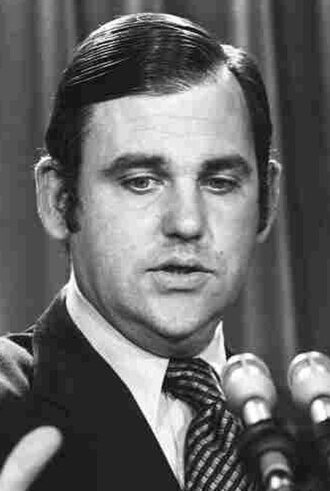
Ronald L. Ziegler served as White House Press Secretary from January 1969 to August 1974, acting as President Nixon's primary spokesperson throughout the taping period of February 1971 to July 1973. As the Watergate scandal escalated, Ziegler famously managed the administration's shifting public narratives and faced intense scrutiny from the press corps. In June 1973, his duties expanded when he was additionally named Assistant to the President following the resignation of Herbert Klein, holding both titles concurrently until the end of the administration in August 1974.
What Ziegler talks about on the tapes
Public relations 321Press relations 256Vietnam War 203Watergate 202Foreign Policy 129Congressional relations 105Media relations 97Henry Kissinger 95Economic policy 94Watergate scandal 80Media strategy 71Executive privilege 70
Conversations (1,199)
— Page 9 of 12President Richard Nixon met with Ronald Ziegler and production staff in the Oval Office to conduct a final technical rehearsal for his televised address regarding the Vietnam cease-fire. During the session, the team finalized camera cues, countdown procedures, and logistical coordination for the live broadcast. The President practiced his delivery to ensure a smooth announcement of the peace agreement, which officially concluded the war and initiated the withdrawal of American forces.
President Nixon, Henry Kissinger, and Ronald Ziegler met to discuss public relations strategies surrounding the recently announced Vietnam peace settlement. The participants focused on managing the press, specifically addressing how to handle potentially hostile questioning from journalists like Marvin Kalb and Helen Thomas regarding the agreement. Nixon emphasized the importance of controlling the narrative regarding the release of Prisoners of War (POWs) and directed Kissinger on how to present these details during his upcoming briefings.
President Nixon met with a bipartisan group of Congressional leaders to provide a detailed briefing on the recently finalized Vietnam Peace Agreement and its implementing protocols. Henry Kissinger explained the strategic nuances of the agreement, including the status of North and South Vietnam, the mechanisms for the International Control Commission, and the timeline for the withdrawal of U.S. forces and the release of prisoners of war. The President emphasized the necessity of bipartisan Congressional support to ensure the agreement's stability and signaled that the administration would work with Congress to frame a positive resolution regarding the end of the war.
President Nixon met with H. R. Haldeman and Ron Ziegler to discuss the successful conclusion of the Vietnam peace negotiations and the favorable press coverage following the President's recent televised address. The participants analyzed the positive public reception and the strategic effectiveness of Henry Kissinger's recent press briefings in neutralizing critical questioning. Additionally, the group reviewed logistics for upcoming events, including a memorial for Lyndon B. Johnson, and issued directives to limit administration participation in an energy symposium.
President Nixon met with his Vice President, Cabinet members, and senior staff to conduct a briefing on the upcoming federal budget. The discussion focused on the necessity of fiscal restraint, including the reduction and termination of certain government programs, to avoid tax increases and curb inflationary pressures while maintaining an expanding economy. Cabinet members analyzed projections for the 1974 and 1975 budgets, emphasizing the shift in spending priorities from defense toward human resources and the importance of presenting the budget to Congress and the public as a responsible alternative to higher taxation.
President Nixon and his Cabinet members strategized on how to promote the administration’s 1974 budget and defend proposed spending cuts against inevitable Congressional and lobbying opposition. The participants emphasized shifting from a constituency-based political strategy to a national message centered on fiscal responsibility, specifically using the themes of 'jobs' and 'taxes' to appeal to working-class voters. Nixon underscored the necessity of forcing Congress to accept accountability for spending, ultimately positioning the administration to blame Democrats if tax increases become required to fund legislative priorities.
President Nixon and Press Secretary Ronald Ziegler coordinate logistics for an upcoming meeting with columnist Willard Edwards and his wife. The President expresses his desire to see Edwards before an evening reception and arranges for the couple to be transported via White House car. The discussion focuses on ensuring Edwards receives appropriate attention, including scheduling adjustments for cabinet members to facilitate the interaction.
President Nixon met with veteran journalist Willard Edwards and his wife to congratulate them on their 50th wedding anniversary and present them with gifts. Following a brief photo session with White House photographer Ollie Atkins, the conversation turned toward the political climate surrounding the recent Vietnam peace settlement. Nixon expressed satisfaction with the terms of the agreement, noting that critics who previously demanded peace were now frustrated by the administration's successful conclusion of the conflict.
President Nixon met with Stephen B. Bull, Manolo Sanchez, and Ronald L. Ziegler to coordinate administrative tasks at the end of the workday. The primary focus involved the President's upcoming schedule and the secure transport of materials to the Executive Office Building. Nixon specifically directed the staff to ensure a speech located in his desk was placed into his briefcase for transport.
President Nixon and Ronald Ziegler discussed logistical arrangements for the upcoming 1974 budget presentation and addressed a pending Time Magazine inquiry regarding the commutation of Angelo De Carlo's prison sentence. Ziegler sought to clarify that the commutation was based on compassionate health grounds, denying any political influence from Vice President Agnew or Frank Sinatra. They also strategized on managing media relations, focusing on how Henry Kissinger should handle television interviews to ensure he properly credits the President's role in Vietnam negotiations.
President Nixon met with Republican congressional leadership to outline his fiscal strategy for the 1974 budget, emphasizing the necessity of expenditure control to avoid tax increases and curb inflation. Nixon and his advisors discussed the use of budget impoundments to maintain a spending ceiling of $269 billion, framing this approach as a critical move for economic prosperity despite the anticipated pushback from special interest groups. The meeting concluded with a call for Republican leaders to unify behind the administration's fiscal restraint and to clearly communicate that budget cuts are essential for maintaining national economic stability.
President Nixon met with his senior advisors and South Vietnamese officials, Tran Kim Phuong and Tran Van Lam, to discuss the recent Vietnam ceasefire and the importance of continued U.S. military and economic support for South Vietnam. Nixon emphasized the necessity of a strong, unified front against North Vietnamese aggression while expressing frustration with domestic media coverage and political opposition regarding the war. During the meeting, the participants coordinated plans for future high-level visits and strategies to maintain the stability of the South Vietnamese government under President Thieu.
President Nixon, H. R. Haldeman, and Ronald Ziegler met to discuss the administration's struggle to manage public perception and media relations regarding the Vietnam peace settlement. The President expressed frustration with Henry Kissinger’s tendency to court favor with the press, insisting that he must prioritize communicating the President's vision and accomplishments in foreign policy rather than focusing on himself. Nixon directed his staff to coordinate a more aggressive and unified effort to secure positive media coverage and public support, specifically noting that he needed to maintain firm control over the administration's messaging.
President Nixon consulted Press Secretary Ronald Ziegler about delaying the release of Herbert Stein’s economic report to avoid competition with other news cycles. Despite Ziegler's concerns regarding legal requirements and legislative constraints, Nixon insisted on shifting the briefing to an AM release schedule. The President directed Ziegler to prioritize this change, dismissing potential congressional backlash.
President Nixon directed Press Secretary Ronald L. Ziegler to release a sensitive announcement to the press by 3:00 p.m. for the next morning's news cycle. Despite potential political friction, Nixon explicitly instructed Ziegler to disregard congressional concerns regarding the timing. This directive was intended to prioritize the public release strategy as a critical component of a larger administration initiative.
President Nixon and Press Secretary Ronald Ziegler coordinate the administration's media strategy regarding the recently finalized Vietnam peace settlement. They discuss the timing and management of press releases for morning newspapers, the logistics of Henry Kissinger’s potential trip to Hanoi, and the necessary coordination with Congress for upcoming public announcements. The conversation focuses on ensuring the administration maintains control over the narrative surrounding the Vietnam agreement and the President's related remarks.
President Nixon met with Ronald Ziegler, Peter Brennan, and Henry Kissinger to prepare for an upcoming press conference. The discussion focused on crafting responses to inquiries regarding the Vietnam peace settlement, postwar diplomatic and economic relations, and the Watergate scandal. The participants evaluated how to address potential questions about Watergate investigations while maintaining a stance of cooperation with Congress and avoiding premature comments on ongoing legal proceedings.
President Nixon met with Press Secretary Ronald L. Ziegler to discuss the selection and management of personnel for upcoming administrative roles. The two conferred on the necessity of choosing individuals who could effectively handle significant responsibilities and carry a substantial workload. They concluded by considering the internal dynamics of these prospective appointees, weighing whether professional friction might actually serve as a constructive mechanism for mutual oversight.
President Nixon directs Press Secretary Ronald Ziegler to have John Ehrlichman and John Dean draft an obfuscatory executive privilege statement to deflect questioning from Clark Mollenhoff. The two also review the success of a recent press conference, with Ziegler noting positive public and media reception regarding the President’s stance on amnesty, North Vietnam, and the impoundment of congressional funds. Nixon expresses his satisfaction with the press conference location and reaffirms his decision to restrict future press access to the Oval Office.
President Nixon met with British Prime Minister Edward Heath, accompanied by Henry Kissinger and Sir Burke Trend, to discuss international diplomacy and foreign policy objectives. The discussion focused on the recent Vietnam settlement, including the status of Cambodia and Laos, the importance of US reliability as an ally, and the complexities of managing relations with the Soviet Union and China. The participants also touched upon Commonwealth affairs, Indian subcontinent tensions, and the domestic challenges surrounding the intake of Ugandan Asian refugees in Great Britain.
President Nixon met with Ronald Ziegler and Henry Kissinger to strategize on managing press relations and public perception following the recent Vietnam settlement. The discussion focused on reinforcing the President’s tough, decisive image, countering critics of his stance on amnesty, and maximizing the effectiveness of Kissinger’s upcoming television appearances. They finalized a scheduling adjustment for Kissinger to ensure he could fulfill his media obligations while remaining available for a critical upcoming meeting with British Prime Minister Edward Heath.
President Nixon and Press Secretary Ronald Ziegler reviewed the media reception of recent administration activities, including the positive television coverage of the National Prayer Breakfast and the arrival of British Prime Minister Edward Heath. They coordinated the messaging for Nixon’s meetings with Henry Kissinger and Heath regarding international trade and economic policy. Additionally, they discussed a legal matter involving executive privilege and assessed a recent interview given by Kissinger to Marvin Kalb, agreeing to encourage Kissinger to pursue further media appearances.
President Nixon and Press Secretary Ronald Ziegler met to review the success of recent high-level meetings and discuss ongoing administrative priorities. The two focused on managing press arrivals and addressing specific operational challenges from earlier in the day. Nixon emphasized the need for consistent messaging to ensure their political points were effectively communicated moving forward.
President Nixon met with Ronald Ziegler and Barbara Walters to discuss media strategy, specifically focusing on the administration’s handling of the press regarding Henry Kissinger's upcoming trip to Hanoi and the potential for press participation. Nixon emphasized his desire to remain firm against media demands for access, criticized the press's coverage of his recent conference, and expressed his intent to control future press relations by limiting access and maintaining a tough, authoritative posture. Additionally, Nixon directed Ziegler to grant Walters an exclusive interview following Kissinger's return to leverage positive coverage.
President Nixon and Ronald Ziegler call journalist Barbara Walters to provide exclusive advanced notice of Henry Kissinger's upcoming diplomatic trip to Hanoi and Peking. The President seeks to ensure Walters receives preference for her scheduled interview with Kissinger, aiming to coordinate the timing to maximize public impact and preempt potential leaks from congressional briefings. Nixon instructs Walters to coordinate with Ziegler to finalize a broadcast date that best serves both the administration's messaging and the production requirements of the Today show.
President Nixon consulted with Stephen B. Bull and Press Secretary Ronald L. Ziegler regarding the status and return of Henry Kissinger, who was meeting with Elliot Richardson. The participants coordinated the timing of Kissinger’s reappearance at the White House to facilitate a follow-up meeting with the President. Additionally, the group discussed upcoming communications strategy surrounding an official announcement regarding the People's Republic of China.
President Nixon met with his senior advisors, including Henry Kissinger and Ronald Ziegler, to manage public perception and diplomatic strategy following the announcement of Kissinger's upcoming trip to North Vietnam. The discussion focused on maintaining strict control over press coverage to ensure the secrecy and productivity of the negotiations, while simultaneously addressing the sensitive reintegration of returning POWs and the ongoing cease-fire efforts in Laos and Cambodia. Additionally, the President engaged in a wide-ranging geopolitical review, discussing potential appointments to the Arms Control and Disarmament Agency, strategies for dealing with European allies like Great Britain, and the administration’s mounting frustration with the United Nations.
President Nixon and Press Secretary Ronald Ziegler met to discuss administrative messaging, media strategy, and responses to recent congressional and public relations challenges. They reviewed the status of legislative impoundment, personnel moves involving Herbert G. Klein, and press coverage of Vice President Spiro Agnew’s travels and the Vietnam cease-fire. Nixon emphasized the need for a firm, coordinated stance against critics of his administration’s amnesty policy while instructing Ziegler on how to manage personal media inquiries and cultivate favorable press relationships.
President Nixon met with Republican congressional leaders to discuss his administration's legislative priorities, focusing primarily on securing support for a fiscally responsible budget. He emphasized the necessity of cutting spending and utilizing presidential vetoes to combat inflation and avoid tax increases, framing these actions as essential for the nation's economic stability. Additionally, the President and the leaders engaged in an extensive review of recent foreign policy, specifically highlighting the significance of the Vietnam cease-fire and the strategic importance of U.S. global leadership.
President Nixon met with Press Secretary Ronald L. Ziegler to provide specific tactical instructions regarding the administration's messaging on impoundment. Nixon emphasized the necessity of leading press conferences with a clear articulation of the administration's stance on withholding funds. This directive aimed to ensure Ziegler maintained a consistent and assertive public narrative during upcoming media engagements.
President Nixon met with Stephen B. Bull to coordinate his upcoming schedule with King Hussein of Jordan before consulting with Press Secretary Ronald L. Ziegler. The discussion focused on Ziegler’s recent press briefing regarding presidential impoundment of budget funds and the administration's frustration with media coverage. Nixon and Ziegler strategized on how to better communicate the administration's fiscal policy to the press by drawing direct comparisons to the practices of previous administrations.
President Nixon, King Hussein of Jordan, Henry Kissinger, and Zaid al-Rifai met to discuss the Middle East peace process and bilateral US-Jordanian relations, including military and economic aid requirements. The participants analyzed the regional security environment, specifically the influence of the Soviet Union, the threat posed by Iraq and Syria, and the potential for private, rather than public, negotiations between Jordan and Israel. Nixon committed to reviewing Jordan's urgent budgetary and military aid requests sympathetically, while Kissinger coordinated follow-up channels to maintain progress on peace negotiations.
President Nixon met with H. R. Haldeman and John Ehrlichman to discuss a wide-ranging agenda, primarily focusing on managing the political fallout from international monetary policy, specifically dollar devaluation, and navigating complex economic and tax legislation with Congressional leadership. The group addressed the President's upcoming schedule, including a potential trip to California, while strategizing on how to handle the escalating Watergate investigations and the role of executive privilege. Throughout the discussion, Nixon emphasized the need for a more proactive and coordinated public relations strategy to counter Congressional opposition and maintain leverage on domestic spending initiatives.
President Nixon and Press Secretary Ronald Ziegler reviewed news coverage, specifically discussing journalistic criticism directed toward the administration. The conversation pivoted to the logistics of ending the official mourning period for the late President Lyndon B. Johnson, incorporating feedback from Lady Bird Johnson regarding flag protocols. They ultimately decided to issue a formal public statement that would simultaneously serve as a tribute to the former president and acknowledge the return of prisoners of war.
President Nixon and Press Secretary Ronald Ziegler coordinated a public relations strategy surrounding the return of American prisoners of war (POWs). They discussed issuing a presidential proclamation to raise flags to full staff upon the arrival of the POWs on U.S. soil, a gesture intended to serve as a positive national event. Additionally, they consulted with Lady Bird Johnson regarding the announcement and reviewed talking points prepared by staff, including David Gergen, while noting concerns about potential controversies regarding the conduct of some POWs during their imprisonment.
President Nixon and Press Secretary Ronald Ziegler met to discuss media strategy, focusing on controlling the narrative regarding White House staffing changes and press relations. They specifically addressed public rumors concerning the departure of Secret Service official Robert Taylor, with Ziegler defending the administration's version of events against press inquiries from journalists like Helen Thomas and Dan Rather. Additionally, the pair discussed the repatriation of prisoners of war (POWs) and the importance of highlighting the POWs' reported support for the President to bolster public perception.
President Nixon and Press Secretary Ronald Ziegler coordinated the administration's messaging regarding potential hijacking negotiations with Cuba, emphasizing that Secretary of State William P. Rogers would address the topic at an upcoming press conference. The two also discussed the protocol for lowering the American flag to half-mast in light of recent inquiries, noting that senior staff members including Alexander Haig and H.R. Haldeman supported the move. Nixon instructed Ziegler to bring relevant documentation to his office at 2:45 p.m. for final review and approval.
President Nixon and Press Secretary Ronald Ziegler discussed the positive press reception regarding the flag-lowering protocol observed following the death of Lyndon B. Johnson. They also reviewed the successful media impact of recent photo opportunities featuring George Shultz, John Scali, and Donald Rumsfeld. The two agreed that these staged appearances helped generate favorable news coverage and justified the rapid scheduling of these meetings.
President Nixon met with Press Secretary Ronald Ziegler to discuss media strategy, public perception of his foreign policy, and the administration’s response to various press inquiries. The conversation centered on managing criticism regarding Vietnam, addressing negative news stories about Secret Service staffing, and countering perceived bias within wire services like UPI, specifically naming reporters such as Helen Thomas. Nixon emphasized the importance of maintaining control over the news cycle by promoting positive, symbolic actions—such as the recent return of POWs—and coordinating consistent messaging across government departments.
President Nixon met with outgoing CIA Director Richard Helms to discuss Helms's upcoming ambassadorial appointment to Iran and to provide strategic guidance on global foreign policy. Nixon emphasized the importance of Helms applying his intelligence background to the critical issue of energy and oil production while maintaining a balanced, pragmatic approach to international relations. The two also addressed the challenges of managing global criticism of the U.S., regional security dynamics in the Persian Gulf, and the complex geopolitical task of negotiating a Middle East settlement between Israel and the Arab states.
President Nixon met with H.R. Haldeman, John Ehrlichman, Ronald Ziegler, and Stephen Bull to strategize on public relations, press management, and the administration’s social calendar. The President emphasized the need for more impactful, quotable language in his speeches and instructed his team to refine his media appearances and social events to better court political allies and financial contributors. Key decisions included structuring upcoming “Evenings at the White House” to feature small, rotating dinner groups to maximize personal engagement with guests while streamlining the presidential schedule for upcoming weeks.
President Nixon met with Ronald Ziegler and General Brent Scowcroft to coordinate an upcoming visit to the Pentagon for lunch with Secretary Elliot Richardson and the Joint Chiefs of Staff. The primary objective of the visit was to receive a status report on returning prisoners of war (POWs) and to determine how to formally recognize their service. Additionally, the President intended to use the meeting as a strategic opportunity to bolster military morale and acknowledge the contributions of the service secretaries and the military leadership.
President Nixon met with his staff to discuss public relations strategies, specifically focusing on the recent release of Prisoners of War (POWs), the need to manage expectations for upcoming press conferences, and the delicate political challenge of securing aid for North Vietnam. The President emphasized his desire to avoid "grandstanding" during his planned Pentagon visit while highlighting the need to address the emotional and physical well-being of returning veterans. Additionally, Nixon reviewed administrative staffing issues and social planning for upcoming events, directing his staff to organize White House functions that include a broad cross-section of Congress while managing internal personnel disputes involving the Secret Service and White House aides.
President Nixon met with his senior environmental and interior officials to coordinate a public relations strategy for the administration's environmental and energy policies. The discussion focused on framing the upcoming energy message and budget as a positive, proactive agenda rather than a series of cutbacks, while emphasizing the restoration of the environment as a central legacy of the 1970s. The group specifically discussed the need to promote land-use planning and to advocate for the repurposing of the Highway Trust Fund to support mass transit as a solution to urban congestion and smog.
President Nixon met with Vice President Agnew, Cabinet members, and key staff to discuss recent foreign policy developments and economic strategy. Vice President Agnew briefed the group on his recent tour of Southeast Asian nations, while Treasury officials and Cabinet members deliberated on international monetary policy, trade barriers, and the need for a more competitive U.S. industrial posture. The President emphasized the importance of maintaining international engagement, securing legislative tools for trade negotiations, and justifying reconstruction aid for Vietnam as a strategic security necessity rather than purely humanitarian relief.
President Nixon and Press Secretary Ronald Ziegler discuss scheduling the President's upcoming press conference to avoid media oversaturation. They determine that Henry Kissinger’s planned Thursday briefing on China and the Vietnam settlement necessitates rescheduling the President's event to avoid competing with that news cycle. Ultimately, they decide to move the President's press conference to the following Tuesday to ensure better news coverage and momentum.
President Nixon and Press Secretary Ronald Ziegler discuss media strategy and the risk of over-saturating the press with information. Nixon expresses concern regarding the volume of material provided to journalists and seeks to refine how the administration manages the narrative. The brief exchange highlights the President’s focus on controlling the flow of information to avoid media exhaustion or negative competitive coverage.
President Nixon and Press Secretary Ronald Ziegler met to discuss the President's potential attendance at the upcoming Gridiron dinner and other press-related social functions. Ziegler advised against Nixon attending the Gridiron due to the contentious history with George McGovern, who was scheduled to speak. They ultimately decided to decline the Gridiron invitation while considering a "drop-by" strategy for other events, such as the White House Correspondents' dinner, to maintain professional relations with the press without being subjected to lengthy or uncomfortable programs.
President Nixon and Ronald Ziegler reviewed upcoming scheduling commitments for several prominent media events, including the Gridiron Dinner, the White House Correspondents Association dinner, and the Radio and Television Correspondents dinner. The discussion focused on coordinating these appearances with a potential visit from South Vietnamese President Nguyen Van Thieu and the desire to avoid public perception of boycotting specific press functions. Nixon evaluated his attendance at these events, weighing the political optics of his presence against scheduling conflicts and his personal distaste for the critical nature of the Gridiron dinner.
President Nixon consulted with the White House operator while Press Secretary Ronald L. Ziegler was present in the Oval Office. Although no transcript exists for this brief exchange, the interaction reflects the President's routine administrative coordination during a period of high-level activity. Ziegler departed the room immediately following this brief engagement, marking the conclusion of his brief appearance.
President Nixon met with Ronald Ziegler and Henry Kissinger to coordinate the administration's public schedule, specifically addressing the timing of President Nguyen Van Thieu's visit and the President's upcoming press conference regarding troop withdrawals. The group discussed logistical and political considerations for various correspondents' dinners, including whether the President should attend the Gridiron dinner given the hostile posture of Democratic leaders like George McGovern. Additionally, Nixon and Kissinger reviewed foreign policy developments involving the Soviet Union and the People's Republic of China, emphasizing the need for strict confidentiality regarding these sensitive diplomatic channels.
President Nixon and Press Secretary Ronald Ziegler discuss the President's decision to decline attendance at the upcoming Gridiron dinner. Nixon expresses concern that his presence would improperly elevate political opponents like George McGovern to his own stature, a view supported by Henry Kissinger. To manage the optics, Nixon decides that Vice President Spiro Agnew should attend the Gridiron dinner instead, while Nixon will exclusively attend the White House Correspondents' dinner.
President Nixon and Press Secretary Ronald Ziegler briefly consulted on a strategic decision regarding a previously discussed policy matter. The President expressed a firm stance on rejecting a proposal, citing concerns raised by Henry Kissinger about its potential negative impact on established metrics. The discussion concluded with a brief internal agreement to proceed with this rejection.
President Nixon and Ronald Ziegler briefly discussed upcoming social events, including the Gridiron and White House Correspondents Association dinners, and the President's planned nonattendance at the former. The conversation also touched upon Ziegler's press briefing strategy and Henry Kissinger's meetings. A significant portion of the discussion focused on the Watergate scandal, specifically the E. Howard Hunt, Jr. and G. Gordon Liddy stories, and how Ziegler and Gerald Warren should respond to news reports, particularly those linking Hunt to Dita Beard and Charles Colson, amidst ongoing Senate hearings.
President Nixon met with key advisors and staff, including H.R. Haldeman, John Ehrlichman, and Henry Kissinger, to manage several pressing domestic and foreign policy issues. The discussion covered the President's upcoming appearance at the Gridiron dinner, strategic coordination for the proposed energy message and potential deregulation of gas prices, and the finalization of a tax reform package. Additionally, the President and his team addressed personnel matters regarding ACTION, debated the best approach for congressional relations, and received a comprehensive briefing from Kissinger on international developments, specifically regarding Vietnam, the Middle East, and relations with the People's Republic of China.
President Nixon met with H. R. Haldeman, Stephen Bull, and Ronald Ziegler to manage administrative staffing, personnel appointments, and public relations strategies. Key discussions focused on Henry Kissinger’s upcoming press briefing regarding the Vietnam settlement, the logistics for the White House Correspondents' dinner, and resolving job placement issues for Patricia Hitt and other administration figures. The group also addressed concerns regarding the tendency of staff members to over-expand their own bureaucracies and the importance of message discipline when communicating budget and policy stances to Congress.
President Nixon and Press Secretary Ronald Ziegler met to review the public reception of Henry Kissinger’s recent press briefing regarding the release of U.S. prisoners in Vietnam and the establishment of liaison offices with the People's Republic of China. The pair also coordinated the President's upcoming attendance at the White House Correspondents Association dinner and his declination of an invitation to the Gridiron dinner. Finally, they discussed entertainment arrangements for White House events, specifically focusing on the involvement of Sammy Davis, Jr. and the potential participation of Sonny and Cher.
President Nixon and Press Secretary Ronald Ziegler met to coordinate responses for an upcoming press conference, specifically addressing economic policies, the status of the Fitzgerald case, and the administration's position on federal shield laws. Regarding the economy, they discussed clarifying the flexibility of wage-price guidelines and strategies to mitigate public concern over rising food prices. Nixon also directed Ziegler to investigate the Fitzgerald case while avoiding public escalation, and they finalized a cautious, technical stance on press shield laws to deflect criticism regarding press freedom.
President Nixon met with Henry Kissinger and Ronald Ziegler to manage the fallout from the Vietnam cease-fire agreement, focusing specifically on North Vietnam's delays in releasing prisoners of war (POWs) and potential violations of the treaty. The participants discussed strategies for public communications, including the timing of press conferences and statements regarding the administration's firm stance on North Vietnamese compliance. Additionally, they reviewed press relations, expressed frustration with negative media coverage, and touched upon ongoing concerns related to the Watergate investigation and the legal maneuvering of the Committee to Re-elect the President.
President Nixon and H. R. Haldeman met to discuss White House staff management, media relations, and administrative strategy, with Henry Kissinger and Ronald Ziegler briefly joining to address the ongoing Vietnam peace settlement. The participants reviewed the importance of the prisoner of war (POW) issue in upcoming international conferences and the necessity of maintaining tough public rhetoric. Nixon and Haldeman also evaluated the effectiveness of recent news summaries, the handling of budget cut messaging, and internal concerns regarding staff leaks and the Watergate investigation.
President Nixon and Press Secretary Ronald Ziegler reviewed Ziegler’s recent press briefing concerning the Vietnam ceasefire and the release of American Prisoners of War (POWs). They discussed the importance of emphasizing North Vietnamese violations of the Paris Agreement to counter media narratives that disproportionately blamed South Vietnam. Nixon and Ziegler decided to maintain scheduling flexibility for a potential future presidential press conference, potentially aligning it with the upcoming visit of Israeli Prime Minister Golda Meir.
President Nixon and Press Secretary Ronald Ziegler briefly discussed the ongoing implementation of the Vietnam ceasefire and related diplomatic challenges. The conversation touched upon the status of ceasefire violations and the management of personnel or industry-related logistics. The meeting served as a brief administrative touchpoint between the President and his press secretary regarding these sensitive foreign policy developments.
President Nixon, Stephen Bull, and Ron Ziegler discussed the President's schedule, including upcoming events like the Golda Meir dinner and a Governors' Conference, as well as arrangements for astronauts and Sammy Davis Jr. A significant portion of the conversation focused on the Vietnam War, specifically the status of POW lists, potential press briefings by Secretary of Defense Elliot Richardson, and the timing of a presidential press conference. Decisions were made to postpone any public statements regarding POWs or military actions until more definitive information was available, and to schedule the President's press conference for Monday, February 5th, after the Golda Meir visit.
President Nixon met with Press Secretary Ronald Ziegler in the Oval Office to discuss Henry Kissinger's activities. Ziegler briefed the President on Kissinger's meeting with Yitzhak Rabin and Kissinger's contacts with the press. The conversation touched upon how to manage press relations and potentially influence public perception.
President Nixon, Henry Kissinger, and Ronald Ziegler discussed the ongoing negotiations and press management related to the Vietnam War, including potential cease-fire violations and the status of POWs. They also touched upon US military aid to Israel, the upcoming press conference, and a critical review of John F. Kennedy's presidency. A key action item involved strategizing how Ziegler should handle press inquiries regarding troop withdrawal and mine removal.
President Nixon, Henry Kissinger, and Ronald Ziegler discussed the aftermath of Secretary Rogers' meeting with North Vietnamese Foreign Minister Nguyen Duy Trinh regarding the Paris Agreement. The primary focus was on North Vietnam's assurances about the full release of POWs within the 60-day period and their commitment to discuss the next phase of releases through the Joint Military Commission. Nixon expressed dissatisfaction with the perceived softness of the public statement and the lack of progress on key issues like mining, while also considering how to frame the developments for the press.
President Nixon and Ronald Ziegler discussed the upcoming International Conference on Vietnam, focusing on a Washington Star headline that appeared to stem from North Vietnamese comments about ceasefire violations. Ziegler briefed the President on the context, noting that the headline likely originated from statements made by Madame Nguyen Thi Binh and Nguyen Duy Trinh following a meeting with the four foreign ministers. The conversation also touched upon the release of Prisoners of War (POWs), with the understanding that North Vietnam had assured the US of their release according to the agreement.
President Nixon, Henry Kissinger, Ronald Ziegler, and John Dean discussed the upcoming signing of international agreements on Vietnam, including the release of POWs and the implementation of the ceasefire. They also reviewed President Kennedy's foreign policy decisions, particularly regarding Europe and the Skybolt missile crisis, contrasting them with Nixon's approach. Additionally, the conversation touched upon National Security Council meeting protocols, potential personnel changes within the Treasury Department, and the ongoing diplomatic efforts concerning Golda Meir's visit and Middle East arms sales.
President Nixon met with Israeli Prime Minister Golda Meir, Ambassador Simcha Dinitz, Yitzhak Rabin, and National Security Advisor Henry Kissinger to discuss the geopolitical situation in the Middle East and ongoing US-Israel relations. The participants focused on negotiating strategies for peace with Egypt, the potential role of the Soviet Union, and the continuation of US military and economic support for Israel. Nixon emphasized a 'two-track' approach, utilizing both public diplomatic channels and private, high-level discussions led by Kissinger to maintain Israeli security while exploring opportunities for a regional settlement.
President Nixon met with Ronald Ziegler and Henry Kissinger to coordinate the administration's public messaging regarding ongoing Middle East negotiations and the President's recent meetings with foreign leaders. They discussed managing expectations to avoid premature hopes for peace while maintaining a firm diplomatic stance that emphasizes eventual direct talks between the involved parties. Additionally, Nixon and Kissinger reviewed Soviet relations, the strategic arms balance, and their shared concern that domestic political pressure regarding the emigration of Soviet Jews could undermine U.S. foreign policy objectives.
President Nixon met with representatives from the Gridiron Club to discuss his attendance at their upcoming events and potential skits or performances for the dinner. The conversation covered the President's scheduling priorities among various press organizations, the ongoing return of prisoners of war from Vietnam, and the possibility of inviting foreign heads of state, such as Edward Heath, to future dinners. Nixon ultimately decided to skip the 1973 dinner due to political tensions involving figures like George McGovern, while signaling his intent to attend in future years.
President Nixon and Press Secretary Ronald Ziegler consulted on anticipated questions for an upcoming press conference. They discussed strategies for addressing concerns regarding potential concessions in the Vietnam settlement, the status of the cease-fire, and the role of U.S. influence. Additionally, they identified likely inquiries regarding the Middle East, rising food prices, and the ongoing Watergate investigations involving L. Patrick Gray III. Nixon instructed Ziegler to prepare a prioritized list of these topics for his final review.
President Nixon and Press Secretary Ronald Ziegler met briefly in the Old Executive Office Building to discuss an unspecified, time-sensitive matter. The dialogue suggests a request for Ziegler to prepare and submit written questions for the President's review. This exchange reflects the routine administrative coordination between the President and his press secretary regarding upcoming communications or briefings.
President Nixon met with H.R. Haldeman and other staff members to review a wide range of personnel appointments, administrative reorganizations, and ongoing crises. The discussion covered potential candidates for posts at the Departments of Commerce and the Treasury, the Veterans Administration, and the Arms Control and Disarmament Agency, while also addressing political concerns regarding the Wounded Knee occupation and press strategy for the Watergate investigation. Nixon and Haldeman also engaged in a detailed assessment of the U.S. Secret Service, expressing significant dissatisfaction with current leadership and the professional conduct of agents, ultimately planning a management shakeup to improve the agency's discipline and loyalty.
President Nixon, H. R. Haldeman, Kenneth Cole, and Ronald Ziegler discussed administrative reactions to the ongoing occupation at Wounded Knee and the handling of the Watergate investigation. Cole clarified that the White House was distancing itself from direct management of the Wounded Knee standoff, deferring tactical control to the Justice Department and John Whitaker while maintaining a hardline stance against amnesty for the protesters until hostages are released. Additionally, the participants reviewed the status of the FBI’s Watergate inquiry and the impact of L. Patrick Gray’s testimony. Cole was tasked with providing a follow-up status report on the Bureau of Indian Affairs by the following morning.
President Nixon and Henry Kissinger met to discuss the status of Vietnam cease-fire negotiations, the upcoming release of prisoners of war (POWs), and preparations for the President's press conference. They analyzed international geopolitical trends, including the impact of foreign elections and historical lessons from the Versailles Treaty on modern power dynamics. During the meeting, Ronald Ziegler joined to coordinate messaging for the press, while administrative discussions regarding ambassadorial appointments were also addressed.
President Nixon, along with Ronald Ziegler and Henry Kissinger, discussed strategy for an upcoming press conference, focusing on how to address questions regarding Watergate, specifically John Dean's role, Donald Segretti, and Maurice Stans, with a plan to refer inquiries about the Committee to Re-elect the President to that organization. They also touched upon the Khartoum hostage incident and the upcoming visit of President Thieu, as well as the release of POWs.
President Nixon and Press Secretary Ronald Ziegler briefly discussed the upcoming presidential press conference. Their conversation focused on potential questions, with a specific mention of Frank Cormier. The meeting was very short, with Ziegler departing after only a few minutes.
President Nixon, along with Ronald Ziegler and Rose Mary Woods, discussed strategies for an upcoming press conference, including potential questions and answers regarding Nguyen Van Thieu, economic devaluation, and aid to North Vietnam. They also deliberated on the distribution of "appreciation" gifts to political supporters and White House staff, detailing costs and recipients. Additionally, the conversation touched upon White House social events, specifically a dinner for Golda Meir and the performance of Van Cliburn, as well as press relations and public relations matters.
President Nixon consulted with Press Secretary Ronald L. Ziegler regarding an upcoming meeting with Timothy G. Elbourne. The discussion focused on Elbourne's recent activities, specifically his interactions concerning the People's Republic of China and his attendance at a social event featuring Sammy Davis, Jr. This exchange served as a preparatory briefing for the President to ensure he was fully informed about Elbourne's recent engagements.
President Nixon and Henry Kissinger met to discuss the tragic killing of U.S. diplomats in Khartoum, Sudan, and to reaffirm the administration’s firm policy against paying ransom or yielding to terrorist blackmail. The discussion touched upon the strategic challenges of protecting ambassadors in volatile regions and the necessity of maintaining pressure on Arab governments to control terrorist factions. Additionally, the President reviewed various diplomatic appointments and personnel matters, including potential candidates for ambassadorial posts in Pakistan, Thailand, and other nations.
President Nixon and H. R. Haldeman met to discuss a wide-ranging agenda including ambassadorial appointments, personnel management within the administration, and the administration's response to the recent murder of U.S. diplomats in Sudan. They reviewed the status of various staff members, discussed the political implications of John Connally's expected party switch, and evaluated the President's press strategy. During the meeting, Nixon decided to lower the White House flag to honor the slain diplomats and instructed staff to streamline ceremonial swearing-in events.
President Nixon met with his economic advisors—including George Shultz, Arthur Burns, and Paul Volcker—to discuss the state of the domestic economy, concerns regarding inflation, and the ongoing volatility in international monetary markets. The participants debated the merits of federal intervention in currency exchange rates versus allowing a transition to a more flexible floating regime. Nixon emphasized that any economic strategy must account for his broader foreign policy objectives and the need to maintain strong political relationships with European allies, ultimately tasking Henry Kissinger to join the group to further weigh these options.
President Nixon and Ronald Ziegler discussed press relations, specifically evaluating the effectiveness of recent media coverage and planning the timing of future press conferences. They reviewed positive New York Times editorial support regarding the administration's stance against paying ransom for hostages in Sudan. Furthermore, the two discussed strategies for addressing the ongoing Watergate investigations, with Nixon emphasizing a public commitment to cooperation while maintaining institutional separation of powers.
President Nixon met with his congressional leadership, including Hugh Scott and Gerald Ford, to discuss the administration's legislative strategy, specifically focusing on the management of upcoming vetoes and the difficulty of securing Senate support compared to the House. The group reviewed efforts to promote public awareness of administration programs, the political implications of specific budget cuts, and strategies to recruit Democratic candidates to the Republican Party for the 1974 election cycle. Additionally, Nixon emphasized the need to handle the trade bill with the Soviet Union delicately to accommodate both the administration's foreign policy goals and the concerns of the Jewish community regarding Soviet emigration.
President Nixon met with D.C. Police Chief Jerry V. Wilson and White House staff to discuss law enforcement policy, particularly the administration's hard-line stance on crime, drug pushers, and capital punishment. Nixon outlined his intention to advocate for mandatory sentencing for drug traffickers and emphasized the need for a national signal against permissiveness in the justice system. Additionally, the President and Chief Wilson discussed the potential for Wilson to remain in his post or transition to a federal advisory role regarding police training and urban crime management.
President Nixon met with his Cabinet and staff to discuss legislative strategy, specifically focusing on overcoming congressional opposition to his budget cuts and vetoes. The group evaluated the political risks of opposing rural and urban programs, concluding that the administration must move away from defensive justifications and instead leverage secondary advocacy from business groups and local organizations to pressure Congress. Nixon also emphasized the need to prioritize House support over the Senate, as he deemed the latter uncooperative and inefficient, and discussed long-term political planning for the 1974 midterm elections.
President Nixon and John Dean discussed strategies for the upcoming Senate hearings regarding L. Patrick Gray’s nomination to head the FBI, focusing on methods to expose past FBI abuses under previous administrations to deflect criticism. Following Dean’s departure, H. R. Haldeman joined to review presidential scheduling, including the management of state dinners and the necessity of engaging more effectively with Congress members. The conversation also covered foreign policy planning with Henry Kissinger, specifically regarding upcoming summits with Leonid Brezhnev and the careful navigation of international relations and domestic PR initiatives.
President Nixon met with H.R. Haldeman, Stephen Bull, and Ronald Ziegler to manage a wide array of administrative, political, and public relations tasks, including scheduling future events and evaluating recent White House hosting efforts. A significant portion of the discussion focused on coordinating upcoming private meetings between the President and POWs, specifically Captain Jeremiah Denton and Colonel Robinson Risner, to ensure these encounters remained low-profile yet impactful. Additionally, the group reviewed the political maneuvering surrounding John Connally’s impending party switch from Democrat to Republican, with Nixon advising caution to insulate Connally from ongoing Watergate-related controversies.
President Nixon and Press Secretary Ronald Ziegler met to coordinate logistics for an upcoming radio address and discuss the administration's public messaging strategy. They reviewed the presentation of economic policy, including the roles of Herbert Stein and John Ehrlichman, while evaluating the media impact of recent Watergate-related allegations against Donald Segretti. The participants concluded that television coverage of the Segretti controversy was less prominent than reports on food prices, prompting discussions on how to better manage press narratives.
President Nixon and his Cabinet met to launch a strategic public relations campaign, titled the Presidential Spokesmen program, aimed at pressuring Congress to support his budget priorities and oppose spending-heavy legislation. Nixon urged his officials to frame the budget debate not as a constitutional conflict, but as a direct choice between the economic interests of the 'New American Majority' and the fiscal irresponsibility of the opposition. The session included briefings on foreign policy, defense spending, and law enforcement, emphasizing the need for administration spokesmen to maintain a positive, disciplined narrative while avoiding defensive posturing on 'false issues.'
President Nixon met with Ronald Ziegler and Stephen Bull to coordinate administration messaging on several fronts, including Watergate, upcoming legislative priorities, and public relations strategies. They discussed maintaining a strategy of silence regarding Watergate while preparing a televised address to highlight domestic policy, specifically mandatory drug penalties and law enforcement support. Additionally, they planned the optics and scheduling for an upcoming meeting with Secretary of State William Rogers to project a focus on peace and international affairs.
President Nixon and his advisors discussed strategic communication, particularly the need for effective framing and "phrasemaking" for the administration’s legislative agenda, including a forthcoming crime speech. The participants reviewed the status of high-level ambassadorial appointments, aiming to balance career diplomats with political appointees and prioritizing the inclusion of minority representatives. Additionally, Nixon and Kissinger finalized plans regarding the release of prisoners from the People's Republic of China, emphasizing the need to manage the announcement to maximize political credit and handle sensitive diplomatic back-channel communications.
Henry Kissinger informs Press Secretary Ronald Ziegler that the People's Republic of China has agreed to release American prisoner John T. Downey on March 12, as well as prisoners Robert J. Flynn and Philip E. Smith on March 15. Kissinger instructs Ziegler to announce the news publicly, framing Downey's release as a result of a direct humanitarian appeal to Chou En-lai regarding the prisoner's mother's illness. The two discuss potential strategies for the President to comment on the development during an upcoming photo opportunity with William Rogers.
President Nixon met with his economic advisors to address rising inflation, specifically focusing on the political and economic instability caused by soaring food prices and labor's wage demands. He instructed his team to aggressively bypass bureaucratic resistance and increase the supply of commodities by selling off federal stockpiles and grain surpluses to stabilize the market. Nixon emphasized the need for a more visible and proactive administration stance, including the possibility of issuing a white paper on the food situation to reassure the public and unions.
President Nixon and Republican congressional leaders met to discuss the administration's legislative agenda, specifically focusing on the "New Federalism" approach to governance. The President emphasized shifting decision-making power from the federal bureaucracy to local and state authorities through programs like the Better Communities Act and the Responsive Government Act. Additionally, the conversation addressed a robust crime-fighting package, including proposed federal death penalty statutes and mandatory sentences for major drug traffickers, while positioning these initiatives as essential to restoring national law and order.
President Nixon and Press Secretary Ronald L. Ziegler held a brief, cryptic discussion regarding the management of public perception and the status of certain unspecified information. The exchange centered on controlling narratives and building momentum for the administration's messaging. While the transcript is fragmented, the President emphasized the necessity of maintaining internal secrecy while coordinating the timing of their public disclosures.
President Nixon directed Press Secretary Ronald L. Ziegler to place a telephone call to an unidentified woman. During the exchange, Nixon instructed Ziegler to frame the call as being made at the President’s suggestion to relay a specific message or inquiry. They also briefly discussed logistical arrangements, including the potential recording of the conversation and the provision of technical equipment.
President Nixon met with Alexander M. Haig, Jr. and briefly with Ronald L. Ziegler to discuss the post-Vietnam War landscape, focusing on the treatment of returning prisoners of war (POWs) and the efficacy of the recent bombing campaigns. Nixon expressed deep dissatisfaction with the quality of strategic advice from the State Department and Policy Planning Board, instructing Haig to cultivate a new, deeper cadre of creative military thinkers outside of the traditional bureaucratic structure. The conversation underscored Nixon's desire to maintain a strong, unconventional foreign policy stance while minimizing the influence of press and public criticism on his decision-making process.
President Nixon and H. R. Haldeman convened to address a broad range of administrative, political, and crisis-management issues, including cabinet-level personnel appointments at the Department of Labor and the pending selection of a new FBI Director. The participants evaluated strategies for managing the unfolding Watergate scandal, specifically debating the merits of executive privilege and potential legal exposure for figures like John Mitchell. Additionally, the President discussed the public relations management of the recently returned Vietnam POWs and finalized plans to award a Medal of Freedom to filmmaker John Ford.