Ziegler, Ronald L.
Ronald L. Ziegler served as White House Press Secretary from January 1969 to August 1974, acting as President Nixon's primary spokesperson throughout the taping period of February 1971 to July 1973. As the Watergate scandal escalated, Ziegler famously managed the administration's shifting public narratives and faced intense scrutiny from the press corps. In June 1973, his duties expanded when he was additionally named Assistant to the President following the resignation of Herbert Klein, holding both titles concurrently until the end of the administration in August 1974.
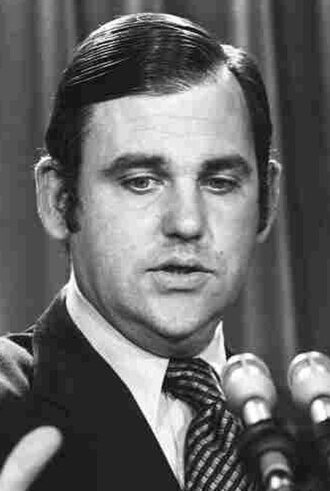
What Ziegler talks about on the tapes
Public relations 321Press relations 256Vietnam War 203Watergate 202Foreign Policy 129Congressional relations 105Media relations 97Henry Kissinger 95Economic policy 94Watergate scandal 80Media strategy 71Executive privilege 70
Conversations (1,199)
— Page 10 of 12President Nixon met with H.R. Haldeman and John Ehrlichman to coordinate administration strategy regarding ongoing Watergate investigations and to manage the President’s public messaging. The participants discussed the necessity of maintaining a firm stance on executive privilege while emphasizing full cooperation through sworn written statements to congressional committees. Additionally, they reviewed plans for upcoming speeches, personnel appointments, and strategies to address inflation and spending concerns by framing the administration’s agenda as a divestiture of power from the executive branch back to Congress.
President Nixon and Henry Kissinger met to evaluate ongoing cease-fire violations by North Vietnam and determine the appropriate U.S. response. They discussed potential retaliatory measures, including the threat of renewed bombing, while balancing domestic political concerns and the need to ensure the viability of the South Vietnamese government. Additionally, they reviewed reports from recently released POWs regarding their treatment and the psychological impact of U.S. bombing campaigns on their captors, ultimately reaffirming the need for a firm posture against North Vietnamese aggression.
President Nixon met with John Dean, Ronald Ziegler, and Richard Moore to strategize the administration's public response to intensifying Watergate inquiries and impending Senate hearings. The discussion centered on managing potential executive privilege claims, addressing congressional subpoenas, and formulating a consistent narrative regarding White House staff involvement and campaign tactics like those of Donald Segretti. Ultimately, the participants weighed the risks of transparency against the dangers of further exposing staff vulnerabilities, with Nixon emphasizing the need for legalistic, non-committal answers to deflect political pressure.
President Nixon and Press Secretary Ronald Ziegler coordinate a brief follow-up meeting to discuss pending administrative or press-related matters. The two agree to postpone their review until the following day, with Nixon emphasizing that he is under no immediate time pressure. This exchange serves as a logistical scheduling check to facilitate a more substantive policy or communications briefing.
President Nixon and Press Secretary Ronald Ziegler held a brief, informal check-in regarding scheduling matters. The discussion centered on clarifying a four-week timeline for upcoming administrative activities. No substantive policy decisions were reached during this short interaction.
President Nixon met with his staff and Henry Kissinger to strategize for an upcoming press conference, focusing heavily on managing the Watergate scandal and defending the administration against congressional investigations. The discussion centered on maintaining executive privilege, handling inquiries regarding political sabotage and the Segretti case, and establishing a consistent, firm posture to avoid being drawn into speculative or partisan questioning. Additionally, the President reviewed foreign policy messaging, specifically regarding Vietnam, U.S.-Soviet trade relations, and concerns over military aid, while refining his public stance on 'shield laws' and press relations.
President Nixon, John Dean, and Ron Ziegler discuss the administration's policy regarding Congressional access to raw FBI files amidst the Watergate investigation. Dean clarifies that while historical precedents exist for allowing committee members like Senators Eastland and McClellan to view sensitive files informally for investigative purposes, these materials were never officially surrendered or made public. The President decides to leverage J. Edgar Hoover’s legacy of strict security to justify denying formal access to current committees while maintaining pressure on executive agencies to improve their responsiveness.
President Nixon, Ronald Ziegler, and John Dean consult on how to manage anticipated press inquiries regarding a potential subpoena of Dean in a Common Cause civil suit. They weigh the legal implications of executive privilege, discussing whether Dean's testimony would pertain to his official duties as White House Counsel or extraneous matters. The group decides to adopt a strategy of denial, maintaining that Dean has not been served and emphasizing the lack of information regarding the basis for any potential legal action.
President Nixon met with Press Secretary Ronald Ziegler to strategize on managing the escalating Watergate scandal and the impending Ervin Committee hearings. They discussed how to respond to press inquiries regarding staff involvement, specifically focusing on the roles of John Dean, Dwight Chapin, and H.R. Haldeman. Nixon emphasized relying on the principle of separation of powers to justify limiting White House staff testimony, while Ziegler planned his public messaging to defend the administration's cooperation while maintaining confidence in staff members implicated in the investigation.
President Nixon and Press Secretary Ronald L. Ziegler met to finalize preparations for an upcoming presidential press conference. They discussed the logistics of the event, including the opening format and the specific briefing materials to be provided to the press. A key focus of the discussion was the planned announcement regarding the appointment of Dr. David K. Bruce to lead the U.S. liaison office in the People's Republic of China.
President Nixon met with Press Secretary Ronald L. Ziegler to coordinate strategy regarding an upcoming presidential press conference. The discussion focused primarily on the framing and delivery of Ziegler’s introductory remarks for the event. This briefing served to ensure message alignment between the President and his chief spokesperson before the public address.
President Nixon and Press Secretary Ronald Ziegler reviewed the President's recent press conference and discussed strategies for managing ongoing media inquiries regarding the Watergate scandal. The two examined how to frame the administration’s cooperation with Congress, specifically utilizing the historical Alger Hiss case as a parallel to justify executive privilege and refute allegations of non-cooperation. They also identified a perceived media double standard between the administration's treatment and that of previous presidencies, while briefly touching upon administrative updates regarding food prices and foreign policy.
President Nixon met with Henry Kissinger and Ronald Ziegler to review the President’s recent press conference performance regarding the Watergate scandal and ongoing geopolitical issues. They discussed the administration's defensive posture toward press inquiries, including the involvement of John Mitchell and the Committee to Re-elect the President, as well as the status of military aid to India and Pakistan. The group also touched upon future international travel plans and the announcement of a U.S. liaison office in the People's Republic of China.
President Nixon and Ronald Ziegler discussed strategies for managing press relations and defending the administration against criticism regarding the Watergate scandal and executive privilege. They compared current media scrutiny to the Alger Hiss case, criticizing the press corps for their perceived bias, hostility, and lack of interest in significant foreign policy developments like the China diplomatic mission. The conversation concluded with Nixon expressing contempt for the 'liberal establishment,' framing his administration’s tough stance as a necessary countermeasure to the perceived moral and political failures of his opponents.
President Nixon met with his senior advisors and staff to evaluate recent press relations and coordinate messaging regarding his administration's foreign and domestic agendas. Discussions focused on the successful announcement of the China liaison office, the ongoing Watergate controversy, and a planned response to North Vietnamese infiltration. The participants also debated the strategic implications of detente with the Soviet Union, including the drafting of a nuclear war prevention agreement, and reviewed potential ambassadorial appointments to navigate international diplomatic tensions.
President Nixon, John Dean, and Ronald Ziegler met to formulate a strategic communication policy regarding the administration's cooperation with the Senate Watergate investigation. The discussion focused on restricting congressional access to raw FBI files while projecting an image of transparency and cooperation through evaluated summaries. Nixon emphasized that the primary political threat was the perception of a cover-up, and the group finalized instructions for Attorney General Richard Kleindienst to convey these firm, controlled guidelines to Senators Sam Ervin and Howard Baker.
President Nixon met with his aides and consultant Herman Kahn to discuss public perception, press relations, and the administration's long-term strategy for communicating with the American public, particularly the "leader class." Nixon emphasized the need for better communication strategies, noting that the press and academia often misinterpreted his policies and favored a "joy-love" culture over the values of the silent majority. The conversation included a request for Kahn to prepare a formal research proposal for a study on the long-term prospects of mankind to provide intellectual weight for the upcoming U.S. Bicentennial, as well as an assessment of how the administration could more effectively challenge the narratives promoted by outlets like The New York Times.
Following an initial social segment with Pat Nixon and guests regarding White House events and gifts, the President met with Press Secretary Ronald Ziegler to discuss administration strategy. They analyzed the political landscape surrounding rising food prices, focusing on shifting the narrative to emphasize farmer cooperation in increasing production. The conversation also shifted to Watergate, where Nixon and Ziegler assessed the impact of recent press conferences on cooling Senate investigations and discussed Henry Kissinger’s problematic press relations as highlighted in a recent book by Henry Brandon.
President Nixon met with journalist Theodore H. White to discuss historical reflections on his presidency, leadership style, and various domestic and foreign policy challenges. The conversation spanned topics including the complexities of federalism and government reorganization, the management of energy policy, and the strategic rationale behind past decisions like school desegregation and the handling of the Vietnam War. Nixon emphasized his preference for direct, individual engagement over formal committee processes as a means to maintain control and effectiveness in decision-making.
President Nixon met with H.R. Haldeman and Ronald Ziegler to manage his upcoming schedule, discuss public relations strategies, and coordinate the administration's response to the Watergate investigations. The President expressed concerns about maintaining his public image through controlled events and church services while weighing the optics of addressing Congress versus holding a press conference. They also analyzed internal tensions involving Henry Kissinger's role, the handling of the Vietnam War legacy, and the necessity of maintaining a unified front regarding administration cooperation with congressional oversight.
President Nixon and Press Secretary Ronald Ziegler discuss the administration's ongoing public relations strategy to manage the Watergate investigation. They coordinate efforts to brief columnists, emphasizing the administration's cooperation while specifically distinguishing the current situation from the Sherman Adams scandal. Nixon stresses the importance of clearly communicating that, unlike the Adams case, White House staff members are not currently formal targets of misconduct charges.
President Nixon and Press Secretary Ronald L. Ziegler held a brief, fragmented discussion regarding legal developments and pending charges involving individuals connected to the ongoing Watergate investigations. The participants specifically referenced the involvement of White House Counsel John Dean and a judge’s unfavorable prior rulings in the Adams and Jordan cases. The exchange reflects the administration's concern over unfolding legal complications and the associated public relations challenges.
President Nixon met with Republican Congressional leaders and economic advisors to discuss strategies for addressing rising food prices, inflation, and the ongoing transition of the wage-price stabilization program. Key topics included the administration's efforts to increase food supplies and imports, the management of labor-management relations, and the necessity of maintaining party unity to sustain presidential vetoes on spending legislation. The meeting underscored the administration's focus on economic control and the importance of Congressional support in implementing fiscal policy.
President Nixon met with Congressional leaders Hugh Scott and Leslie Arends, along with staff members, to coordinate a strategy for responding to the Watergate investigation while emphasizing the administration's commitment to cooperation without compromising executive privilege. Nixon stressed the importance of framing their stance around the constitutional separation of powers and the legal precedent against compelling White House staff to testify before Congressional committees. Additionally, the participants discussed legislative priorities, specifically the need to build Republican support for the President's vetoes on budget appropriations to curb inflation and rising food costs.
President Nixon met with Mr. and Mrs. C. Edward Little, accompanied by Ronald Ziegler, to discuss the broadcast industry and Mr. Little's career with the Mutual Broadcasting System. The conversation covered the challenges of radio networks, the future of UHF television and cable, and Little's efforts to develop specialized programming for Spanish-language and Black radio audiences. Beyond business, the group exchanged anecdotes regarding sports, particularly college football and Duke University, as well as travel experiences in Japan.
President Nixon met with key advisors, including John Dean, H.R. Haldeman, and John Ehrlichman, to develop a strategic defense against the escalating Watergate scandal and the formation of the Senate's Ervin Committee. The participants debated whether to issue a formal presidential statement or commission an internal investigation to preempt Senate hearings and maintain control over the narrative. The conversation focused heavily on the need to distance the White House from the scandal, manage public perception, and potentially utilize a grand jury or a targeted disclosure to limit the scope of external investigations.
President Nixon met with Gen. Brent Scowcroft to discuss the ongoing status of the Vietnam settlement, specifically focusing on the cease-fire in Laos, the handling of North Vietnamese provocations, and the critical importance of securing the return of American POWs. Following this, Press Secretary Ronald Ziegler joined the discussion to coordinate the administration's public messaging regarding these foreign policy challenges and to address domestic concerns, including rising food prices and media coverage of the White House. The participants emphasized the necessity of a unified communication strategy to maintain public support while finalizing troop withdrawals and managing sensitive negotiations.
John W. Dean III and Press Secretary Ronald L. Ziegler coordinate the White House's public relations strategy regarding the ongoing Watergate investigation. Dean emphasizes the necessity of delaying official statements until the administration has fully verified the facts to avoid premature or inaccurate disclosures. They agree to meet in person to further align their messaging after their respective briefings conclude.
President Nixon met with John Ehrlichman, H.R. Haldeman, and others to discuss management strategies for the ongoing Wounded Knee incident and the unfolding Watergate scandal. The participants deliberated on whether to involve White House staff directly in PR for Wounded Knee, weighing the benefits of projecting control against long-term political risks. Regarding Watergate, they explored the possibility of the President appointing a special commission or cooperating with a grand jury to regain the initiative, while also addressing concerns about potential testimony from staff members like John Dean and Jeb Magruder.
President Nixon and Press Secretary Ronald Ziegler discussed public relations strategy regarding the intensifying Watergate scandal and questions about the bombing of Cambodia. They analyzed the pros and cons of having the President address the nation on Watergate, ultimately deciding against a high-profile televised speech to avoid appearing defensive or making the President a direct defendant. Instead, they agreed to issue an operative statement announcing that White House staff would voluntarily testify before the grand jury while continuing to assert executive privilege against the Ervin Committee to maintain control over the investigative narrative.
President Nixon and Press Secretary Ronald Ziegler meet to discuss a strategy for managing intensifying public and legal scrutiny surrounding White House staff and potential testimony. They weigh the merits of having officials voluntarily appear before committees versus limiting testimony to the grand jury to avoid further escalation of the controversy. Ultimately, they decide on a defensive communications line emphasizing that White House staff will cooperate with proper legal forums while avoiding premature or broad disclosures that might serve as a "cover" or ignite further media interest.
President Nixon and Press Secretary Ronald Ziegler coordinate their strategy for upcoming press briefings, agreeing to maintain a 'stonewall' stance on the Watergate scandal while James W. McCord, Jr. testifies before the grand jury. They plan to deflect media attention from Watergate by announcing an upcoming presidential speech focused on national security and domestic policy, specifically withholding details about impending price controls to avoid market anticipation. Additionally, Nixon instructs Ziegler to maintain a firm 'hardline' position regarding the enforcement of the Vietnam cease-fire agreement in Cambodia.
President Nixon and Press Secretary Ronald Ziegler coordinate the scheduling and strategy for an upcoming presidential address. Ziegler advises postponing the announcement until the following morning to avoid unnecessary press speculation regarding potential topics like the economy or the Watergate scandal. The two agree to request a 9:00 a.m. time slot for the briefing, with Ziegler tasked to manage the logistics.
President Nixon consulted with Press Secretary Ronald L. Ziegler regarding the day's challenging political environment and media optics. The two discussed a potential strategy for Ziegler to frame upcoming narratives, with the President soliciting Ziegler's advice on how to manage the current situation. The brief exchange focused on coordinating their public messaging approach in response to mounting pressures.
President Nixon and Henry Kissinger discussed the political fallout of the Watergate scandal, with Nixon expressing concern over the potential involvement of John Dean and questioning the appropriateness of White House Counsel having access to FBI reports. The conversation also covered foreign policy strategy, specifically the administration's ongoing efforts to navigate Congressional opposition regarding the bombing of Cambodia and the necessity of maintaining stability in Vietnam following the peace agreement. Kissinger and the President additionally reviewed upcoming international diplomatic schedules, including meetings with British and French officials and plans for future summits to address economic and defense policies.
President Nixon met with his senior aides, including John Ehrlichman and H.R. Haldeman, to coordinate a legal and public relations strategy regarding the escalating Watergate scandal. The primary focus was drafting a statement for John Dean that would permit him to testify before the grand jury while waiving executive privilege to limit political fallout. The participants also discussed ongoing negotiations with the Ervin Committee and strategies to manage potential testimony from former staff, all while attempting to preserve the administration's position ahead of a scheduled presidential address.
President Nixon and Press Secretary Ronald Ziegler discuss the positive public and media reception of the President's March 29 address regarding the end of U.S. involvement in Vietnam and new economic measures, including a meat price ceiling. The two agree that it was a strategic success to delay a planned statement concerning John W. Dean, III, as it would have distracted from the historic significance of the POW homecoming and the speech. Ziegler advises the President to let the speech dominate the news cycle and avoid generating additional headlines for the time being.
President Nixon and Press Secretary Ronald Ziegler briefly coordinated logistics regarding an upcoming meeting with Mr. and Mrs. Roland H. Shackford. The discussion focused on managing the presence of photographers during the encounter. They established a three-minute timeframe for the photo opportunity before proceeding with the scheduled appointment.
Following a brief meeting with journalist R.H. Shackford regarding his retirement and foreign policy, President Nixon met with John Ehrlichman and Ron Ziegler to strategize a public response to Watergate-related allegations. The group focused on drafting talking points intended to refute claims that the White House was attempting to "cover up" information. They ultimately decided to emphasize a stance of cooperation with grand jury investigations while maintaining the constitutional principle of separation of powers, aiming to dispel public misapprehensions without engaging in a public trial via the press.
President Nixon, H. R. Haldeman, and Ronald Ziegler met to coordinate the administration’s strategy for responding to escalating Watergate inquiries and press scrutiny. They discussed the President’s recent televised speech, the necessity of maintaining a unified front among Republican allies, and the risks posed by potential testimony from figures like John Dean and James McCord. Nixon emphasized the importance of publicizing a statement to clarify that the White House was cooperating with investigations while attempting to distance the President from the operational details of the campaign.
President Nixon met with Vice President Agnew and a bipartisan group of Congressional leaders to outline the administration's proposed foreign trade legislation. The discussion focused on securing presidential authority to negotiate trade agreements, implementing safeguards for domestic industries, and establishing pension and unemployment insurance reforms. Nixon emphasized the necessity of shifting away from a 'one-way street' trade policy to protect American workers and leverage better terms with international partners, while urging caution against attaching human rights conditions to Most Favored Nation (MFN) status for the Soviet Union to avoid jeopardizing broader diplomatic and arms control initiatives.
President Nixon met with John Ehrlichman, H.R. Haldeman, and Ronald Ziegler to strategize the White House response to the escalating Watergate investigation and the upcoming Ervin Committee hearings. The participants discussed the political risks of potential testimony from White House staffers and John Dean, the management of executive privilege, and the need to protect the presidency while appearing forthcoming. They specifically addressed allegations regarding Haldeman's role in the hiring of Donald Segretti and the handling of a $350,000 contingency fund, ultimately deciding to coordinate forthcoming statements and testimony to mitigate political fallout.
President Nixon and Press Secretary Ronald Ziegler briefly coordinated logistics for an upcoming meeting with artist Oscar Berger. They discussed the constraints of the event, specifically emphasizing the need for efficiency and limiting the photographic session to a single standard set-up. The conversation focused on managing the President's schedule to ensure the interaction remained brief.
President Nixon met with Ronald Ziegler and others to discuss the escalating legal and political risks posed by the Watergate scandal, specifically the potential consequences of White House staff members providing sworn affidavits. Ziegler warned that such statements could invite further, uncontrollable demands for testimony from the President and his senior aides, potentially ensnaring the administration in a wider investigation. The group debated various defensive strategies, including the possibility of issuing 'complete' preemptive statements to control the narrative, the potential resignation of John Dean, and the risks associated with the upcoming Senate committee hearings.
President Nixon and Press Secretary Ronald Ziegler discussed the logistics of recording the President's upcoming remarks to the press. They weighed the merits of taping the event versus keeping the process informal to allow for spontaneity. Ultimately, they decided to record the remarks discreetly and defer the decision on public release until after the delivery, ensuring the press remained unaware of the taping plan.
President Nixon and Press Secretary Ronald Ziegler discuss the logistics and unpredictability surrounding a potential press briefing or public statement involving Bob Haldeman. The two men weigh the risks of committing to a specific schedule given the fluid nature of the situation. Ultimately, they decide to maintain a flexible approach to avoid unnecessary pressure or formal constraints on the President’s messaging.
President Nixon, H.R. Haldeman, John Ehrlichman, and others met to strategize regarding the escalating legal and political fallout of the Watergate scandal. The discussion centered on the decision of Jeb Stuart Magruder to cooperate with prosecutors and the potential for his testimony to implicate other high-level officials, including John Mitchell. The participants debated how to manage the public narrative, protect the President's standing, and navigate the implications of Senate hearings and grand jury proceedings while considering legal strategies for those facing impending indictments.
President Nixon and Press Secretary Ronald Ziegler discussed the positive reception of the President's recent remarks at the White House correspondents' dinner, specifically noting the emotional impact on attendees regarding the POWs and the substance of the speech. While Ziegler reported that the event was largely free of Watergate-related tension, Nixon expressed anxiety that the upcoming indictment of John Mitchell would escalate the scandal. The conversation concluded with Nixon emphasizing the importance of maintaining his public stance against critics despite the impending legal pressures.
President Nixon and Ronald Ziegler discussed how to manage the escalating Watergate scandal and the mounting pressure from press coverage, specifically reports involving the Washington Post and the Ervin Committee. They debated whether to pursue a strategy of "minimum action"—relying on the Department of Justice and limiting personnel changes—or a "bold play" involving the public removal of key staff like H.R. Haldeman, John Ehrlichman, and John Dean. Ultimately, Nixon emphasized that he required full, candid information from his aides and considered relying on Assistant Attorney General Henry Petersen to handle the unfolding investigations while avoiding a premature or ineffective special prosecutor.
President Nixon met with Assistant Attorney General Henry Petersen to coordinate the ongoing Watergate investigation and manage the political fallout. The discussion focused on securing a plea deal for Jeb Stuart Magruder and navigating the potential resignations of John Dean, H.R. Haldeman, and John Ehrlichman. Nixon and Petersen strategized on how the President should publicly characterize his personal inquiry into the matter to ensure the investigation appeared to be under control without prematurely triggering resignations or jeopardizing future prosecutions.
President Nixon and Press Secretary Ronald L. Ziegler held a brief telephone conversation to inquire about the status of an undisclosed, pending matter. Ziegler informed the President that he was currently in transit and would arrive at his location within five minutes to provide a briefing. The exchange served primarily as a logistical check-in to coordinate a forthcoming update on an ongoing issue.
President Nixon and Press Secretary Ronald L. Ziegler held a brief, cryptic discussion concerning the status of an ongoing, unspecified project or inquiry. The President sought an update on the progress of “that thing,” suggesting an urgent but undisclosed internal matter requiring Ziegler’s attention. No specific resolution or definitive action items were articulated during the one-minute exchange.
President Nixon met with John Ehrlichman and Ronald Ziegler to navigate the growing legal and public relations pressures surrounding the Watergate investigation. The discussion focused on coordinating a response to grand jury subpoenas, managing potential testimony from White House staff, and negotiating ground rules for committee hearings. Nixon emphasized the need for a unified strategy while expressing concern over the implications of public testimony and potential leaks, ultimately deciding to delay any major public announcement to avoid jeopardizing ongoing legal proceedings.
President Nixon met with Secretary of State William P. Rogers and later consulted with John D. Ehrlichman to strategize on the mounting Watergate crisis. The discussions focused on the unfolding allegations involving John Dean, H.R. Haldeman, John Mitchell, and Jeb Magruder, specifically addressing the disbursement of hush money and the handling of sensitive materials from E. Howard Hunt’s safe. Nixon and his advisors sought to manage the legal and political fallout by coordinating with Assistant Attorney General Henry Petersen while distancing the White House from the increasingly damaging testimony regarding the cover-up.
President Nixon met with H. R. Haldeman and John Ehrlichman to strategize their response to the escalating Watergate investigation and the increasingly uncooperative behavior of White House Counsel John Dean. The participants discussed the dangers of granting immunity to Dean, the potential political fallout from his continued presence in the White House, and the need to manage public perception while protecting the presidency. Consequently, Nixon decided to direct Dean to stay away from the office, while simultaneously planning a public statement regarding the administration's policy on cooperating with the grand jury and handling staff involved in the investigation.
President Nixon and Press Secretary Ronald L. Ziegler held a brief meeting to address administrative concerns regarding Leonard Garment. The discussion centered on a specific request involving John D. Ehrlichman and the implementation of a plan proposed by Garment. No major policy shifts were recorded during this short interaction.
President Nixon met with H. R. Haldeman and John Ehrlichman to draft a public statement addressing the growing Watergate scandal and the ongoing Justice Department investigation. The participants discussed how to frame the President's involvement, specifically referencing his initiation of a new inquiry on March 21, while debating the political risks of suspending staff members versus waiting for potential indictments. Ultimately, the group sought to project a narrative of progress in uncovering the truth without compromising their legal standing or appearing to cover up misconduct.
President Nixon met with H. R. Haldeman, John Ehrlichman, and Ronald Ziegler to formulate strategies for handling impending legal challenges and potential grand jury testimony related to the Watergate scandal. The discussion focused on managing John Dean's shifting narrative, coordinating with legal counsel, and determining whether to assert executive privilege regarding White House communications. Participants deliberated on the political implications of requesting leaves of absence and the anticipated public pressure from impending congressional hearings.
President Nixon and Press Secretary Ronald Ziegler coordinate the administration's public messaging regarding the ongoing Watergate investigation. They discuss how to address press inquiries concerning John Dean's role and the validity of Nixon's previous August 29th statement about White House staff involvement. Nixon instructs Ziegler to emphasize that the President is managing the matter directly with Assistant Attorney General Henry Petersen and to avoid further commentary that could interfere with the judicial process.
President Nixon and Press Secretary Ronald Ziegler met to discuss the escalating Watergate scandal and the problematic roles of key staff members, specifically John Dean, H.R. Haldeman, and John Ehrlichman. They evaluated the political risks of potential legal developments, such as the naming of staff as unindicted co-conspirators, while rejecting the idea of a massive, premature purge of White House personnel. The conversation concluded with the President instructing Ziegler to contact Dean to manage the administration's public narrative and address concerns regarding leaks.
President Nixon met with William P. Rogers, H.R. Haldeman, and John Ehrlichman to discuss the deepening Watergate scandal and potential legal strategies for the administration. The conversation focused on managing the fallout from emerging testimony, the necessity of forcing the resignation of compromised staff members, and the strategic importance of legal representation and public image. The President expressed significant concern regarding the loyalty of his staff and the risk of being implicated in obstruction of justice, ultimately leaning toward a policy of full disclosure and cooperation with investigators to mitigate further political damage.
President Nixon and Press Secretary Ronald Ziegler discussed the strategy and messaging used during Ziegler's recent press briefing regarding the ongoing Watergate investigation. Ziegler confirmed he had contacted John Dean to outline the administration's new position and briefed the press on the President’s recent intensive investigation. They reviewed how Ziegler deflected difficult questions about the timing of the President’s inquiry and his previous, now-contradicted statements defending Dean. Nixon expressed satisfaction with Ziegler's refusal to disclose private discussions with individuals like John Mitchell or specific details of the White House staff investigation.
President Nixon met with Vice President Agnew and a bipartisan group of Congressional leaders to address the nation's growing energy needs and proposed legislative solutions. The discussion focused on mitigating potential future shortages by balancing environmental protections with domestic production efforts, including natural gas deregulation, expanded offshore oil leasing, and the completion of the Alaska pipeline. The President and his cabinet members emphasized the importance of developing a cohesive national energy strategy to maintain independence and discussed the foreign policy implications of relying on foreign oil exports. The administration sought Congressional cooperation for pending energy legislation and signaled an intent to increase research and development funding for alternative fuel sources like coal and nuclear power.
President Nixon and Press Secretary Ronald Ziegler strategized on the public narrative regarding the Watergate scandal, focusing on the President’s recent discovery of new facts and his subsequent collaboration with Assistant Attorney General Henry Petersen. They discussed drafting a formal statement to address the potential involvement of H.R. Haldeman and John Ehrlichman while emphasizing the need for full disclosure. The meeting also included logistical planning for upcoming consultations with staff members and legal counsel regarding the President's handling of the ongoing investigation.
President Nixon, H. R. Haldeman, and Ronald Ziegler met to discuss the escalating legal and political fallout from the Watergate investigation, specifically focusing on John Dean's role, his demand for immunity, and his threats to implicate the White House. The participants strategized on how to manage media narratives, maintain the President's credibility, and address the potential for damaging testimony from Dean regarding cover-up activities and blackmail demands from E. Howard Hunt. Nixon also directed Haldeman to handle his collection of White House tapes, suggesting that most should be destroyed while preserving only material deemed worth keeping for the library.
President Nixon, H.R. Haldeman, and Press Secretary Ronald Ziegler met to discuss public relations strategy regarding the ongoing Watergate scandal, specifically addressing John Dean's recent communications. They debated whether the President should meet with Dean and finalized a plan for how Ziegler should respond to press inquiries about his own prior knowledge of the matter. Ultimately, they decided that Ziegler would adopt a firm stance, refusing to answer detailed questions in order to protect the rights of potential defendants and maintain a neutral posture.
Ronald L. Ziegler requested that the White House operator connect him to John W. Dean, III, to facilitate a direct communication between the two men. President Nixon was present in the background during the initiation of this call. The primary action taken was the administrative coordination required to reach Dean via telephone.
Press Secretary Ronald Ziegler and White House Counsel John Dean coordinate their messaging regarding the unfolding Watergate scandal. Ziegler informs Dean of his intent to adhere to a consistent public posture, emphasizing that the administration's goal is to uncover the truth and cooperate with the grand jury rather than seeking a scapegoat. The pair discusses the necessity of maintaining this unified narrative during upcoming press briefings.
President Nixon and Press Secretary Ronald Ziegler met to coordinate the White House's public response to a defiant statement released by White House Counsel John Dean, who vowed not to serve as a scapegoat in the burgeoning Watergate scandal. The discussion focused on insulating the presidency from the unfolding investigation, with Nixon and Ziegler agreeing that the administration’s official stance should prioritize finding the truth rather than identifying scapegoats. Ziegler was instructed to avoid commenting on Dean’s individual credibility while emphasizing the administration's cooperation with the grand jury to maintain a posture of ignorance regarding prior wrongdoing.
President Nixon and Press Secretary Ronald Ziegler coordinate the administration's public response regarding the President’s ongoing meetings with Assistant Attorney General Henry Petersen. They specifically discuss how to address media inquiries concerning Watergate investigations and clarify that the President does not receive reports from the grand jury. Nixon instructs Ziegler to emphasize that while he receives updates on general investigative progress from Petersen, he is not privy to the contents or internal proceedings of the grand jury.
President Nixon and Press Secretary Ronald Ziegler coordinate the administration's public messaging regarding the Watergate investigation. Nixon instructs Ziegler to emphasize that the President does not receive reports from the Grand Jury to combat rumors of scapegoating and leaks. He directs Ziegler to contact Assistant Attorney General Henry Petersen to confirm this official stance.
President Nixon instructs Press Secretary Ronald Ziegler to publicly emphasize that he has explicitly directed Assistant Attorney General Henry Petersen to withhold all grand jury proceedings from him. Nixon expresses concern that leaks, particularly those involving columnist Jack Anderson, could taint the investigation and wants to distance himself from the inner workings of the grand jury. The President clarifies that while he continues to receive general investigatory reports, he is consciously avoiding specific grand jury information to maintain procedural integrity.
President Nixon and Press Secretary Ronald Ziegler discuss the need to maintain a clear firewall between the White House and ongoing Grand Jury proceedings to avoid potential legal contamination. Nixon emphasizes that he explicitly instructed officials not to disclose any Grand Jury findings to him to preserve the integrity of both the official investigation and his own internal review. The discussion underscores the administration's strategic effort to distance the President from sensitive information during the escalating Watergate investigation.
President Nixon and Press Secretary Ronald Ziegler discussed the potential publication of damaging press stories, specifically addressing a rumor involving Herbert Klein and Art Buchwald that was ultimately retracted. The conversation shifted to a Washington Star article concerning internal conflicts between John Ehrlichman and Clark MacGregor regarding the Committee to Re-elect the President's (CRP) investigation of itself. Nixon directed Ziegler to coordinate with Bryce Harlow to secure a briefing on the situation before the President's upcoming morning meeting.
President Nixon and Press Secretary Ronald Ziegler consulted on managing the media narrative regarding the Watergate scandal, specifically addressing the potential implications for H.R. Haldeman and John Ehrlichman. They discussed John Connally’s perspective on the situation and emphasized a strategy of denying presidential involvement in any cover-up. The pair coordinated talking points for an upcoming press briefing to clarify the President’s role in initiating an internal investigation and to distance his administration from the unfolding legal issues.
President Nixon and Press Secretary Ronald Ziegler discuss media strategy regarding the Watergate scandal, focusing on the importance of conveying that the President is actively seeking the truth and maintaining governmental operations. Ziegler reviews his efforts to counter press rumors about the timing of the President's knowledge of the scandal and explains his strategy to ease tensions with the press corps. Nixon directs that daily staff meetings be resumed to project stability and instructs Ziegler to emphasize that the administration is conducting its own investigation without a cover-up.
President Nixon and Ronald Ziegler discussed strategies for managing the administration's public response to the Watergate scandal, specifically focusing on distancing the President from the cover-up and maintaining staff stability. They deliberated on how to address concerns regarding the credibility and potential blackmail threats posed by John Dean, while emphasizing the President's commitment to acting only upon corroborated evidence. The conversation also touched upon the possibility of utilizing Melvin Laird in a Congressional relations capacity and navigating the political fallout from ongoing investigations.
In this extensive series of meetings and phone calls, President Nixon consults with H. R. Haldeman, John Ehrlichman, Richard Kleindienst, and Henry Petersen to manage the worsening political and legal fallout of the Watergate scandal. The participants deliberate on how to handle the impending revelations concerning the destruction of sensitive documents by FBI Director L. Patrick Gray, which had been previously held in the White House. Faced with intense media scrutiny and the potential for staff resignations, Nixon weighs the risks of maintaining his current team against the necessity of distancing his administration from criminal liability, ultimately deciding to project a posture of responsibility while preparing to weather further disclosures.
President Nixon instructed Press Secretary Ronald L. Ziegler to postpone his planned telephone call to John W. Dean, III. Nixon requested more time to consider the matter, noting that he would be unavailable when Dean returned his own earlier call. The President ultimately decided to delay the communication to evaluate his strategy regarding Dean during the unfolding Watergate scandal.
John D. Ehrlichman and Ronald L. Ziegler discuss the management of ongoing Watergate-related communications and public statements. Ziegler informs Ehrlichman that the President ordered him not to contact John Dean, and the two briefly touch upon the handling of a forthcoming written statement from Ehrlichman. Despite Ziegler expressing his disagreement with the content of that statement, Ehrlichman remains committed to discussing the matter further with the President.
President Nixon directs Press Secretary Ronald Ziegler to cancel a scheduled call to White House Counsel John Dean. Nixon instructs Ziegler to tell Dean that the matter in question has already been handled, effectively shutting down further communication on the topic. The President emphasizes maintaining a cool demeanor and remaining firm should Dean attempt to follow up on the inquiry.
President Nixon and Ronald Ziegler met to strategize the handling of the escalating Watergate scandal and the required departures of key staff members, H.R. Haldeman and John Ehrlichman. Ziegler briefed the President on John Dean's recent assertions, which implicated Haldeman and Ehrlichman in the cover-up while notably excluding the President from personal involvement. Nixon confirmed his intent to demand the resignations of his top aides to project a standard of accountability, though he sought to time these moves carefully to manage political fallout and minimize the impact on the administration's operations. The discussion also touched upon the selection of new leadership for the FBI and the Department of Justice, as well as the timing of a planned public address by the President to take responsibility for cleaning up the administration.
President Nixon met with William D. Ruckelshaus, John D. Ehrlichman, and Ronald L. Ziegler to finalize Ruckelshaus's appointment as Acting Director of the FBI following the resignation of L. Patrick Gray III. The President emphasized the need for a thorough, unbiased investigation into the Watergate scandal and directed Ruckelshaus to reorganize the Bureau and restore its integrity while a permanent director was sought. Ruckelshaus agreed to serve on an interim basis, with the participants coordinating the public announcement and strategy for fielding press inquiries regarding the transition.
President Nixon and H. R. Haldeman discussed the escalating Watergate crisis and the necessity of managing the potential departures of key staff members, specifically John Dean, H. R. Haldeman, and John Ehrlichman. Nixon pushed for the resignation or leave of absence of his aides to stabilize his administration and neutralize political threats, while emphasizing the need to maintain control over the narrative regarding their past conversations. They also evaluated internal staff loyalty and debated the content of a potential presidential speech to address the ongoing scandal.
President Nixon and Press Secretary Ronald Ziegler met to discuss alarming rumors circulating via journalists Seymour Hersh and Bob Woodward regarding the Watergate scandal. The reports suggested that John Dean might implicate the President and that Vice President Spiro Agnew was preparing to resign. Ziegler proposed a strategy to mitigate the media fallout by having aide David Gergen contact Woodward to dismiss the rumors as lacking substance and fact.
President Nixon met with Assistant Attorney General Henry Petersen to discuss the ongoing Watergate investigation, specifically focusing on managing the legal fallout regarding White House staffers John Dean, H.R. Haldeman, and John Ehrlichman. Nixon sought to coordinate the investigation's pace to minimize political damage while pressuring Petersen to ensure that prosecutors pursue the truth aggressively without unfairly implicating the presidency. The conversation centered on the potential for staff resignations or leaves of absence, the credibility of witnesses like Dean, and concerns regarding leaks and threats of blackmail involving White House involvement in the cover-up.
President Nixon and H. R. Haldeman met to coordinate their strategy for handling the ongoing Watergate crisis, specifically focusing on the management of John Dean and the timing of their own potential leaves of absence. They discussed the necessity of distancing themselves from Dean, whom they viewed as a liability and a potential source of unpredictable attacks against the presidency. Nixon decided to finalize his own public statement for the following Monday, while instructing that Haldeman and Ehrlichman should take voluntary leaves of absence beforehand to project an image of institutional integrity. They ultimately agreed that Nixon should dismiss Dean from his position rather than allow him to resign or negotiate, aiming to maintain presidential control over the narrative and minimize further damage.
President Nixon contacted Press Secretary Ronald Ziegler to request his immediate presence in the Oval Office. During the brief telephone exchange, the President noted that he was currently meeting with speechwriter Raymond K. Price, Jr. The primary purpose of the call was to facilitate a tripartite discussion involving Price and Ziegler regarding ongoing White House business.
President Nixon met with his staff to coordinate his response to the intensifying Watergate scandal, specifically focusing on the drafting of a forthcoming public address and the management of White House personnel. The President discussed the impending forced resignations of H.R. Haldeman and John Ehrlichman, the necessity of distancing his administration from John Dean, and the strategy of taking responsibility for staff conduct without engaging in public self-pity. Nixon emphasized the need for a firm tone to preserve the integrity of the presidency and decided to consult with his aides while planning a brief period of isolation to finalize his speech.
President Nixon met with Ronald Ziegler, Manolo Sanchez, and Stephen Bull to discuss the impending resignations of top aides H.R. Haldeman and John Ehrlichman amid the deepening Watergate scandal. The participants deliberated on the strategic timing of these departures to minimize political damage and addressed the President’s need to assert control through a forthcoming televised speech. Nixon emphasized his desire to accept responsibility for his administration while distancing himself from the criminal conduct of his staff, ultimately deciding to position himself as taking proactive, independent action to ensure a full investigation.
President Nixon and Ronald Ziegler discussed managing the intensifying Watergate scandal and the White House's public relations strategy while navigating impending Grand Jury indictments. The President emphasized his commitment to "rooting out" wrongdoing and directed Ziegler to maintain a strong, defiant posture, framing the situation as a necessary cleaning of the house rather than a cover-up. They also strategized on how to handle potential testimony from individuals like E. Howard Hunt, maintained a firm stance on granting immunity, and began preparing themes for an upcoming presidential address to reassure the public and preserve the prestige of the presidency.
President Nixon and Press Secretary Ronald Ziegler discussed a strategic plan to manage the mounting Watergate crisis ahead of a forthcoming presidential speech. Ziegler proposed that Nixon appoint William P. Rogers as Attorney General to lead the Justice Department, arguing this move would provide a "masterstroke" that separates the President from the ongoing investigation. The pair also coordinated the handling of H.R. Haldeman, John Ehrlichman, and John Dean, focusing on the implementation of forced leaves of absence to stabilize the administration while maintaining the President's personal defense against allegations.
President Nixon and Ronald Ziegler consulted on the impending resignations of top aides H.R. Haldeman, John Ehrlichman, and John Dean in the wake of the Watergate scandal. Nixon discussed implementing a new administrative strategy that emphasized his own direct leadership while managing the fallout from emerging reports regarding the 'Plumbers' activities, including the Pentagon Papers break-in and forged diplomatic cables. The President also evaluated a potential plan—proposed via Secretary of State William Rogers—to require Dean's resignation if he sought amnesty for his testimony, contrasting this with the voluntary cooperation of Haldeman and Ehrlichman.
Ronald L. Ziegler initiated a call to Gerald L. Warren to receive a briefing on an impending Washington Post story regarding the Watergate scandal. Warren reported that John Dean was prepared to testify under oath that H. R. Haldeman and John D. Ehrlichman directed a White House cover-up and possessed knowledge of illegal activities, including wiretapping. The conversation highlights the internal state of alarm and the chaotic efforts by senior officials to mount a counter-offensive against Dean's damaging allegations.
Press Secretary Ronald L. Ziegler directed the Camp David operator to locate former aide Charles W. Colson, who was visiting his son in Princeton, New Jersey. The effort to reach Colson proved difficult as he was not registered at his expected motel and had uncertain travel plans for the evening. Ziegler specifically instructed the operator to maintain a professional demeanor and ensure the request did not appear overly urgent.
President Nixon consulted Secretary of State William P. Rogers regarding the strategic management of the Watergate scandal, specifically focusing on the necessary resignations of H.R. Haldeman and John Ehrlichman. Nixon sought Rogers's advice on how to handle the duo's apparent reluctance to leave, ultimately concluding that their continued presence hindered government operations and that full resignations were unavoidable. Additionally, they discussed the upcoming public announcement regarding the appointment of a new FBI director and the oversight of the ongoing investigation.
President Nixon consulted with Secretary of State William P. Rogers regarding the impending resignations of H.R. Haldeman and John Ehrlichman amid the deepening Watergate scandal. Rogers advised Nixon against attending the meeting with his aides to maintain distance and credibility, recommending instead that the President present the resignations as a firm, unilateral decision rather than a matter for negotiation. The conversation concluded with an agreement that the two aides should resign voluntarily to maintain the 'high ground' while John W. Dean would be dismissed separately, allowing Nixon to distance himself from the scandal's fallout.
President Nixon and Press Secretary Ronald Ziegler strategize on the public framing of the resignations of H. R. Haldeman and John Ehrlichman. They aim to draft resignation letters that pivot away from a mere leave of absence to account for the prolonged uncertainty surrounding the upcoming Ervin Committee hearings. By emphasizing the aides' confidence in their eventual exoneration, Nixon seeks to manage the political optics of the departures.
Press Secretary Ronald Ziegler briefs President Nixon on his efforts to secure the resignations of H. R. Haldeman and John Ehrlichman. Ziegler confirms that while Haldeman has agreed to comply with the President's decision, he anticipates greater resistance from Ehrlichman and intends to coordinate the process during an upcoming helicopter ride. The two men also discuss the logistical challenge of ensuring the departing aides have sufficient financial support during their transition.
President Nixon and Press Secretary Ronald Ziegler coordinate the public announcement of the resignations of H. R. Haldeman, John Ehrlichman, John Dean, and Richard Kleindienst amid the escalating Watergate scandal. They discuss the importance of maintaining a calm, confident tone for the President’s upcoming televised address and finalize logistical details, including the appointment of Elliot Richardson and the status of Leonard Garment as interim counsel. Additionally, Nixon expresses his need to step away from the White House for a brief period to recover, despite concerns regarding how the press might perceive such an absence.