Ehrlichman, John D.
John D. Ehrlichman initially served as Counsel to the President from January 1969 to November 1969, where his duties quickly expanded from legal issues to broader policy development. This shift led to his transition in November 1969 to Assistant to the President for Domestic Affairs, a role he held until April 1973. Throughout the majority of the White House taping period (February 1971 – July 1973), he acted as Nixon's chief domestic advisor and helped direct the covert "Plumbers" unit before the escalating Watergate scandal forced his resignation in April 1973.
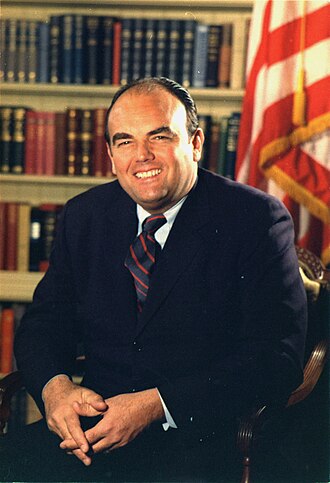
President Nixon and John Ehrlichman met to discuss the administration's aggressive new strategy for addressing drug abuse, including the formation of a centralized office led by Dr. Jerome H. Jaffe and the implementation of mandatory drug testing and rehabilitation for military personnel. They further explored political tactics for the President, debating whether he should adopt a more combative public persona to better challenge opponents and define his presidency. Finally, they touched upon federal personnel management and potential legislative strategies regarding economic issues, such as revenue sharing and public service employment.
President Nixon met with John Connally and other staff members to discuss administration strategy regarding the drug crisis, the national economy, and political messaging. They addressed the success of recent heroin seizures and evaluated potential international and domestic economic policies, including the possibility of a wage-price freeze and strategies to combat inflation. Additionally, Nixon emphasized the need to project strength and confidence in press conferences while coordinating his cabinet to effectively articulate administration goals ahead of the 1972 election.
President Nixon met with J. Edgar Hoover, John Mitchell, Egil Krogh, and John Ehrlichman to coordinate an upcoming meeting with law enforcement leaders. The participants discussed the administration's proposed legislation for providing financial compensation to the families of crime victims and strategies for presenting these initiatives to police officials. Nixon specifically instructed Hoover to emphasize the FBI's commitment to providing assistance to local police departments as part of the broader legislative agenda.
President Nixon and John Ehrlichman spoke briefly to coordinate before a scheduled meeting while Ehrlichman was at the office of Maurice Stans. The two men discussed the heavy law enforcement presence regarding recent May Day demonstrations, expressing satisfaction that the security measures had successfully frustrated the Washington press corps. No further policy decisions were made, as the conversation served primarily as a brief situational update.
President Nixon and John Ehrlichman briefly coordinate the timing of a meeting scheduled for later that afternoon. During the exchange, they discuss the visible presence of law enforcement around the White House grounds, which Nixon notes has successfully unsettled the press corps. No major policy decisions are reached, as the conversation serves primarily as a logistical check-in.
President Nixon and John D. Ehrlichman met in the Oval Office to coordinate administrative scheduling and personnel management. The discussion centered on managing Ehrlichman's upcoming commitments and internal White House operations. No formal policy decisions were recorded during this brief administrative briefing.
President Nixon and John Ehrlichman met to discuss a variety of domestic policy issues, including strategies for handling energy policy, narcotics enforcement, and the national economy. They reviewed recent polling data that identified crime and the economy as primary public concerns and discussed the potential political implications of an upcoming public service jobs bill. The President decided to pursue a more aggressive "hard-line" approach to drug enforcement and requested a strategic evaluation of the administration's economic messaging to bolster public confidence.
President Nixon and John Ehrlichman discuss economic strategy and legislative planning following Ehrlichman's meeting with John Connally and Peter Peterson. A key proposal involves extracting public service job provisions from H.R. 1 to create a separate, expedited bill that demonstrates proactive governance in response to potential vetoes. They also evaluate public relations strategies regarding unemployment statistics and express caution about a planned Congressional presentation by Peterson regarding import quotas, fearing it may commit the administration to unintended economic policies.
President Nixon met with Henry Kissinger to discuss the Vietnam War, particularly the military situation in the Mekong Delta and the political challenges posed by the McGovern-Hatfield amendment. They strategized on foreign policy, specifically the ongoing Berlin negotiations, the pursuit of a U.S.-Soviet summit, and potential future initiatives involving the People's Republic of China. Later, the President consulted with John Ehrlichman and Virginia Governor Linwood Holton regarding domestic school integration, emphasizing the importance of legal compliance in the South without public confrontation, and addressed various scheduling and administrative matters.
President Nixon met with the Executive Board of the National Association of Home Builders (NAHB), along with Secretary of HUD George Romney and other administration officials, to discuss the economic health of the housing industry. The primary focus of the discussion was the impact of rising interest rates, inflation, and federal regulations on housing production and middle-class affordability. The participants addressed potential legislative reforms to labor relations and the construction industry, while the President emphasized the administration's commitment to stabilizing the economy and monitoring wage and price trends to support industry growth.
President Nixon met with John Ehrlichman and George Shultz to manage various administrative and political priorities, including the appointment of Dr. Jerome Jaffe to lead a new government drug abuse program and strategies for labor-related political initiatives. The participants discussed the rollout of housing integration policies, the status of revenue-sharing legislation, and preparations for an upcoming Domestic Council meeting. Furthermore, the group reviewed economic performance, specifically consumer confidence and inflation, while debating the efficacy of potential wage and price controls.
President Nixon met with John Ehrlichman to critique a draft of a major housing policy statement, specifically directing that the document be shortened and purged of moralistic language and unclear legal interpretations regarding housing referendums. Nixon emphasized the need to project a stronger, more precise stance that resonates with voters who support neighborhood exclusivity. Following Ehrlichman's departure, Nixon consulted briefly with Henry Kissinger regarding administrative messaging, including the release of casualty figures to demonstrate the success of presidential policies.
President Nixon, Henry Kissinger, and John Ehrlichman discussed administrative coordination, including the editing of a housing statement and managing Amtrak-related scheduling concerns. Kissinger briefed the President on the administration's defensive strategy regarding Senator W. Stuart Symington’s presentation on Laos, focusing on efforts to counter negative press coverage. The conversation concluded with instructions to use record-low Vietnam casualty figures for public relations purposes and the decision to reschedule Secretary of Defense Melvin Laird’s upcoming Asia trip to avoid complicating sensitive diplomatic initiatives.
President Nixon, Vice President Agnew, and a large group of Cabinet members and senior staff met to establish a strategic framework for domestic policy, budget planning for the 1973 fiscal year, and the development of the 1972 Republican legislative and election platform. Participants reviewed polling data regarding national, community, and family concerns, noting that the economy, inflation, and unemployment are primary public priorities while other issues like pollution and consumerism are often driven by media visibility. The President and attendees emphasized the need for better communication to receive credit for administration accomplishments, focusing on a limited number of 'gut issues' rather than overextending on too many programs. Ultimately, the group discussed the necessity of coordinating policy initiatives and messaging to ensure visible progress on key economic and social concerns ahead of the 1972 election.
President Nixon met with his senior staff and Caspar Weinberger to develop a political and economic strategy centered on job creation and tax policy. The discussion focused on leveraging construction projects to stimulate the economy, addressing the regressive nature of property taxes, and crafting a messaging strategy that emphasizes the President's leadership and strength. Nixon directed his team to prioritize projects that provide immediate employment and instructed them to present these efforts as a decisive counter-argument to the spending agendas proposed by Congress.
President Nixon met with the Amtrak Board of Directors to discuss the corporation's early operational challenges, strategic planning, and its goal of reviving passenger rail service. The conversation focused on the necessity of improving service quality, boosting ridership, and competing with other travel modes by fostering a culture of professional service. The President emphasized the political importance of simplifying government messaging and prioritizing job creation, while the Board members highlighted their progress in labor negotiations and route rationalization.
President Nixon met with John D. Ehrlichman to coordinate a briefing regarding housing policy. The brief discussion focused on scheduling a meeting to address these concerns. No substantive policy developments were recorded during this brief exchange.
President Nixon and John Ehrlichman met to discuss the administration's legislative and political strategy, specifically focusing on the drafting of housing policy, budget reduction measures, and the public image of his domestic programs. They debated the most effective ways to communicate policies to the public, with Nixon emphasizing the need to create clear, compelling political narratives regarding law enforcement, drug control, and the economy. The conversation also touched on foreign policy, specifically Nixon's decision to avoid unnecessary foreign travel and his desire to shift the public's focus from fear to a sense of confidence in his leadership.
President Nixon met with William F. Graham, Henry Kissinger, Ronald Reagan, and John Ehrlichman to discuss political strategy, labor relations, and foreign policy. The group addressed public support for the administration, including the President's firm stance against demonstrators, and strategic moves involving maritime unions and grain exports to the People's Republic of China. Nixon and Kissinger further evaluated ongoing Vietnam negotiations and the importance of maintaining military strength to retain political leverage over domestic critics and international rivals.
President Nixon and John Ehrlichman discuss the scheduling of a high-level budget review and the development of job-creation initiatives. The President emphasizes that all future government spending projects must be evaluated based on their ability to generate employment, specifically citing his refusal to fund a mid-decade census proposal. Additionally, they discuss political strategy regarding the allocation of public funds, with the President directing Ehrlichman to ensure that projects are geographically targeted to maximize political benefits.
President Nixon met with his senior advisors and drug policy experts to address the escalating heroin crisis among servicemen returning from Vietnam. The discussion focused on establishing a comprehensive program to identify and treat addicted soldiers through urinalysis, detoxification, and expanded rehabilitation, while avoiding stigmatizing veterans in the civilian workforce. The group explored innovative bureaucratic and scientific strategies, including the potential for using biological agents or pests to eradicate opium crops at their source, and proposed holding law enforcement officials accountable for complicity in the drug trade.
President Nixon met with his staff to discuss a broad range of economic and administrative strategies aimed at stimulating the economy and creating jobs, particularly through federal spending and infrastructure projects. The discussion focused on leveraging the Highway Trust Fund for railroad improvements, expediting government spending, and pressuring the Justice Department to take a more lenient stance on corporate mergers and antitrust regulations. Nixon directed his team to prioritize practical results over bureaucratic obstacles, emphasizing the need to channel resources and construction projects into key states to bolster employment.
President Nixon met with John Ehrlichman and Elliot Richardson to navigate the political strategy surrounding revenue sharing and welfare reform initiatives. The discussion focused on securing legislative support by managing relationships with key figures like Wilbur Mills and leveraging administration victories to appeal to the President's constituency. Additionally, they evaluated personnel shifts, specifically considering the potential reassignment of Robert Finch and the effectiveness of various cabinet members in implementing the administration's policy agenda.
President Nixon met with his cabinet, diplomatic staff, and intelligence officials to declare drug abuse 'public enemy number one' and to coordinate a comprehensive strategy for eradicating the international supply of narcotics. The participants evaluated the effectiveness of current interdiction programs in Southeast Asia, the Middle East, and Europe, ultimately concluding that despite increased law enforcement efforts, the drug problem was expanding. The President directed his team to prioritize the escalation of foreign pressure, including potential subsidies for poppy crop eradication in Turkey, and announced the centralization of domestic drug policy under a new White House office.
President Nixon and John Ehrlichman held a brief, cryptic discussion regarding potential personnel changes involving CIA Director Richard M. Helms. The conversation centers on the administration's skepticism regarding Helms's ability to fulfill specific requirements or maintain a desired focus. No formal decision was finalized during this one-minute exchange.
President Nixon and John Ehrlichman discuss the administration's potential legal response to The New York Times' publication of the Pentagon Papers. Attorney General John Mitchell seeks authorization to serve notice to the newspaper to prevent the waiver of future prosecution rights, though Nixon expresses a stronger preference for identifying and prosecuting the source of the leak. Ultimately, the President agrees to speak directly with Mitchell to evaluate the political ramifications and determine the administration's legal strategy.
President Nixon and John Ehrlichman discuss the administration's aggressive response to the publication of the Pentagon Papers. Nixon expresses a strong preference for prosecuting the individuals who leaked the classified documents rather than the newspaper outlets themselves. The two strategize on managing the ongoing media fallout from the unauthorized disclosures.
President Nixon met with Republican Congressional leaders to discuss the administration’s new, multi-pronged national strategy for combating drug abuse, emphasizing a shift toward treatment, rehabilitation, and the creation of a centralized Special Action Office. During the discussion, Nixon and his team outlined plans for increased interdiction, expanded military detoxification programs, and a firm, non-permissive stance against the legalization of marijuana. Furthermore, the participants addressed the political climate surrounding the Vietnam War, with Nixon urging support against anti-war amendments and arguing that congressional deadlines for withdrawal would undermine sensitive ongoing negotiations.
President Nixon met with H. R. Haldeman and various officials to discuss urgent administration challenges, specifically the unauthorized publication of the Pentagon Papers and strategies to combat press leaks and political criticism. The conversation transitioned into a broader policy meeting with representatives from the National Association of Real Estate Boards regarding the President's revenue sharing initiatives, housing market stabilization, and rising construction costs. Nixon emphasized the importance of aligning administration rhetoric on taxes and housing to bolster support among key stakeholders.
President Nixon met with John Mitchell, John Ehrlichman, and Ronald Ziegler to discuss the administration's aggressive response to the New York Times' publication of the Pentagon Papers. Nixon characterized the leak as an attack on the presidency and a national security crisis, demanding that his staff sever all contact with the Times and pursue legal action against the newspaper and individuals like Daniel Ellsberg. The participants strategized on framing the documents as the "Kennedy-Johnson Papers" to shift blame to previous administrations while emphasizing the necessity of protecting classified information.
President Nixon met with H. R. Haldeman, John Ehrlichman, and others to strategize on managing various administration challenges, specifically the public relations fallout from the Pentagon Papers leak and the need to improve the effectiveness of White House social functions. The President directed staff to create a structured plan for Cabinet members and senior officials to engage more effectively with guests at White House dinners to maximize political and personal influence. Regarding the Pentagon Papers, the group discussed separating the legal issue of government secrecy from the political debate over the origins of the Vietnam War, and they considered shifting the public focus toward the perceived failures of previous Democratic administrations. Additionally, they reviewed domestic policy updates, including farm policy publicity and potential labor-related nominations.
In this meeting, President Nixon met with administration officials and businessman Charles Bluhdorn to discuss foreign policy concerns, specifically the implications of the Sugar Act and the treatment of U.S.-friendly nations in Latin America. Bluhdorn, representing Gulf and Western, lobbied the President to protect the Dominican Republic's sugar quotas, arguing that the administration should favor loyal allies over countries that engage in the expropriation of American assets. Nixon expressed strong support for rewarding friendly nations, criticizing the State Department's perceived leniency toward countries like Peru, Bolivia, and Chile, and directed his staff to pursue a more assertive policy in Congress regarding trade quotas and investment protections.
President Nixon and John Ehrlichman discuss the legal strategy regarding the New York Times' publication of the Pentagon Papers and the potential risks of initiating a grand jury investigation. They express concern over the possibility of an adverse court ruling during the temporary restraining order period and the optics of halting a grand jury process prematurely. Consequently, they decide to coordinate with Attorney General John Mitchell to assess the timing of the legal proceedings while allowing the FBI investigation into the source of the leak to continue vigorously.
President Nixon and John Ehrlichman discuss the status of a grand jury investigation and the implications of potential delays. Nixon seeks clarification on Attorney General John Mitchell's position regarding the scheduling of legal proceedings. The participants emphasize the need for coordinated oversight, with Nixon asserting his intent to maintain control and personally verify the status of the situation.
President Nixon met with a bipartisan group of Congressional leaders and administration officials to propose a centralized federal office for coordinating drug abuse prevention and treatment strategies. The discussion highlighted the urgency of addressing drug addiction, particularly among servicemen in Vietnam and youth in the United States, by shifting from a fragmented, multi-agency approach to a unified, performance-based model. Participants debated the integration of law enforcement, research, and treatment programs, with an emphasis on establishing flexible, community-based solutions and securing Congressional support for new enabling legislation.
President Nixon met with H.R. Haldeman, John Ehrlichman, and Henry Kissinger to coordinate an aggressive administration response to the New York Times' publication of the Pentagon Papers. Nixon emphasized the need to frame the issue as a defense of the integrity of the presidency and the necessity of maintaining national security, rather than merely litigating the court case. The group discussed strategies to pressure the press, leak information regarding Daniel Ellsberg, and discredit the previous administrations of Johnson and Kennedy regarding their Vietnam policy.
John Ehrlichman and Clark MacGregor coordinate the President’s urgent delivery of documents to Congress, acting on advice from Gerald Ford that a prompt response is of the highest importance. The participants discuss scheduling a breakfast meeting to facilitate this transfer and consider expanding the guest list to include key congressional leadership, such as Mike Mansfield and Carl Albert. They conclude by confirming the logistical arrangements to ensure the President’s actions are handled effectively without negative press or legislative friction.
President Nixon met with his senior advisors and Cabinet members to discuss managing the political and legal fallout of the Pentagon Papers release. The group strategized how to handle demands for document declassification and congressional access without appearing to capitulate to leakers or damaging the ongoing criminal prosecution of the New York Times. Nixon decided to distance himself from direct negotiations with congressional leaders, opting instead to have Secretaries Laird and Rogers manage the process through administrative channels, while firmly limiting the scope of declassification to prevent broader security compromises.
President Nixon and Vice President Agnew met with a group of Appalachian governors and key administration advisors to discuss the legislative strategy for extending the Appalachian Regional Commission (ARC) and managing regional political concerns. The discussion shifted toward the administration's aggressive response to the leaking of the Pentagon Papers, which Nixon characterized as a threat to national security and a move by political opponents to damage his administration. Nixon and Agnew coordinated on the narrative for Agnew's upcoming international trip, with the President tasking his team with countering domestic criticism and emphasizing the administration's commitment to ending the Vietnam War through established diplomatic channels.
President Nixon met with his senior advisors to strategize on managing the political fallout from the release of the Pentagon Papers and the Senate's recent passage of the non-binding Mansfield amendment regarding troop withdrawals. The President decided to counter the growing legislative pressure by emphasizing that the amendment was inconsistent with ongoing diplomatic efforts to secure a ceasefire and prisoner of war (POW) releases, while also directing his team to frame the document leak as a breach of national security perpetrated by the previous Democratic administrations. Additionally, the participants discussed the ongoing legal battle against the New York Times and the Washington Post, weighing the public relations benefits of pursuing the case through the Supreme Court versus allowing the matter to be resolved through congressional inquiry.
President Nixon met with H. R. Haldeman, John Ehrlichman, and Henry Kissinger to strategize their public and political response to the leak of the Pentagon Papers and the ongoing Vietnam peace negotiations. Nixon emphasized a desire to appear dignified while shifting the burden of declassification to Congress, simultaneously plotting to expose the perceived duplicity of previous Democratic administrations. The President signaled a tough stance against Senate interference, warning that if negotiations with North Vietnam were derailed, he would prioritize a military escalation over a fixed withdrawal date.
John Ehrlichman, speaking on behalf of President Nixon, contacted Speaker of the House Carl Albert to relay details from the President's recent breakfast meeting with Senator Mike Mansfield regarding the Vietnam War. The administration offered to provide Congress with 47 volumes of Vietnam reports and a 1965 Tonkin Gulf study, which remained classified while undergoing a declassification review by Secretary of Defense Melvin Laird. The participants discussed the logistical challenges of secure document storage and the necessity for joint congressional leadership to determine the appropriate distribution and oversight of these sensitive materials.
John Ehrlichman and Clark MacGregor coordinate the logistics of delivering sensitive documents from the President to Congressional leadership. The conversation addresses confusion regarding communication with Speaker Carl Albert and Vice President Spiro Agnew, as the administration prepares to bypass traditional procedures. Ehrlichman instructs MacGregor to exclude the Vice President from the distribution process, emphasizing that the delivery to Mike Mansfield and joint leadership is an extraordinary procedure.
President Nixon and his senior advisors and business leaders convened to formalize a national strategy for increasing veteran employment, emphasizing the need for businesses to provide veterans with a hiring advantage. The discussion included strategies for managing the fallout from the recently leaked Pentagon Papers, with Nixon directing his team to resist congressional hearings on war conduct while ensuring the documents were securely channeled to responsible leadership. Nixon also expressed a desire to keep the focus of the controversy on the previous administrations and away from current operations, tasking officials with maintaining a unified, firm stance against political opportunists.
President Nixon, First Lady Pat Nixon, and domestic policy advisor John Ehrlichman participated in a brief telephone exchange. The discussion was entirely withdrawn for personal privacy reasons, indicating the content did not pertain to substantive administrative or policy-related developments. Consequently, no specific official actions or decisions were recorded as part of this brief communication.
President Nixon and John D. Ehrlichman coordinated a brief transit to a theater engagement. The conversation served primarily as a logistical check for their upcoming departure from the White House. No substantive policy discussions or administrative decisions were recorded during this short interval.
President Nixon and John Ehrlichman discuss the budgetary implications of upcoming domestic policy initiatives, specifically focusing on the costs associated with social programs and aging. The President tasks Ehrlichman with developing a concrete financial strategy to ensure these programs remain manageable within the federal budget. This consultation serves as a follow-up to broader planning sessions previously held at Camp David regarding administration priorities for the fall.
President Nixon dictated a memorandum to John D. Ehrlichman regarding the strategic allocation of federal expenditures in preparation for the 1972 election cycle. The discussion focused on balancing domestic spending, such as environmental initiatives, with the potential economic and employment impacts of defense budget cuts. Nixon tasked the Domestic Council with analyzing these fiscal trade-offs to inform his final budgetary decisions during an upcoming summit in San Clemente.
President Nixon directs John Ehrlichman to cultivate influential local media figures, specifically television commentators and radio talk show hosts, to bypass the perceived hostility of the Washington national press. The President also outlines a strategy for upcoming meetings at Camp David and San Clemente, tasking staff with distilling his leadership image and key political issues into a concise, impactful narrative. This effort aimed to refine public relations and consolidate political support through direct engagement with media personalities who held significant grassroots influence.
President Nixon met with the Cabinet Committee on Economic Policy to address ongoing issues regarding internal leaks of economic strategy and the lack of a unified administration voice. He stressed the necessity of presenting a cohesive front to the public, designating Secretary of the Treasury John B. Connally as the primary spokesperson for economic policy. The President mandated that all advisors cease unauthorized contacts with the press and align their public statements with the official administration line to restore public trust and policy stability.
President Nixon met with the newly appointed National Urban League Executive Director Vernon E. Jordan, Jr., and administration officials to discuss establishing a productive working relationship. The conversation focused on the administration's support for Urban League initiatives, specifically exploring the feasibility of incorporating the organization into federal drug abuse education and rehabilitation programs. Nixon also emphasized the urgency of passing his welfare reform and revenue-sharing proposals, urging Jordan to support these efforts to aid the poor and improve social conditions.
President Nixon and his advisors, including H. R. Haldeman and Henry Kissinger, discussed a recent New York Times leak suggesting Nixon was seeking a diplomatic opening to China. The President expressed frustration with the unauthorized disclosure and its potential impact on his delicate diplomatic strategy, deciding to postpone ambassadorial appointments as a disciplinary measure against leaks. Additionally, the group addressed the necessity of tighter control over presidential travel, the management of personal guests at the President's California home, and the political insights provided by John Connally regarding the President’s public image and the 1972 election strategy.
President Nixon met with Jane Dart and John D. Ehrlichman, accompanied briefly by a White House photographer, for a social visit to arrange a photograph and exchange gifts. The conversation included brief discussions regarding Dart’s upcoming travel plans to New York and the health and activities of her husband, Justin W. Dart. The meeting concluded cordially after the participants finalized their photographic arrangements.
President Nixon met with Barbara Kilberg and John Ehrlichman to discuss Kilberg’s recent professional experiences and future career plans following her time at the White House. The conversation touched upon the challenges of navigating legal and professional sectors, including anecdotes regarding Supreme Court Justices Abe Fortas and Hugo Black. The meeting concluded with the President presenting a gift to Kilberg as she transitioned to her next professional role.
President Nixon met with Jerome Rosow, James Hodgson, John Ehrlichman, and George Shultz to discuss Rosow's departure and future professional plans. The meeting included the presentation of gifts to Rosow and a brief photograph session with the White House photographer. The participants also touched upon broader administration goals regarding the environment and increasing employment figures.
President Nixon and John Ehrlichman discuss the internal handling of the Daniel Ellsberg investigation and their concerns regarding J. Edgar Hoover’s management of the FBI. The President expresses anxiety that internal dissension within the Bureau, exacerbated by the Ellsberg case, could undermine the administration's political standing. Nixon ultimately decides to intervene by coordinating with Attorney General John Mitchell to regain control over the Bureau's direction and ensure the case is managed according to his preferences.
President Nixon and H.R. Haldeman discussed a wide range of administrative and political concerns, focusing heavily on strategies for addressing the leaking of the Pentagon Papers and tightening government security classification systems. The President emphasized his desire to drastically reduce the number of individuals with top-secret clearances and instructed staff to implement a more restrictive, "Presidential" level of classification. Additionally, they reviewed the President's upcoming schedule, including trips and public appearances, and deliberated on personnel matters such as the appointment of an NLRB counsel and potential roles for Marty Anderson.
President Nixon met with his senior aides, including H. R. Haldeman, Charles Colson, and John Ehrlichman, to discuss the political management of the Pentagon Papers case and the administration's public response. Nixon emphasized the need for a dedicated White House coordinator to spearhead an aggressive, clandestine effort to expose leaks and political adversaries, drawing on strategies he used during the Hiss case. The President directed staff to avoid appearing defensive while simultaneously undermining the credibility of the press and the political establishment, focusing on the potential for irreparable damage to national security.
President Nixon and John Ehrlichman discussed an upcoming meeting with Cabinet members James D. Hodgson and Elliot L. Richardson regarding federal welfare regulation waivers. Nixon expressed skepticism toward the liberal inclinations of these officials and directed Ehrlichman to ensure that the meeting did not lead to a loosening of existing regulations. The President emphasized the need for strict policy enforcement and requested that Ehrlichman attend the session to provide necessary oversight and administrative cover.
President Nixon met with Sammy Davis, Jr. to discuss the effectiveness of utilizing high-profile celebrities to combat drug abuse among youth by appealing to their aspirations rather than moralizing. Following this, the President met with administration officials, including Elliot Richardson, James Hodgson, and George Shultz, to navigate a political impasse regarding welfare reform waivers requested by California Governor Ronald Reagan. The group debated the legal risks of granting waivers for work-relief programs, deciding to pursue a strategy of providing federal public service job funding to California while avoiding an outright endorsement of Reagan's controversial welfare proposals. Additionally, the President reviewed labor statistics and planned an activist approach for a forthcoming steel industry meeting aimed at preventing a national strike.
President Nixon met with Henry Kissinger, H. R. Haldeman, John Ehrlichman, and others to discuss sensitive foreign policy matters, specifically the Vietnam War negotiations and the status of U.S.-China relations. The participants evaluated propaganda efforts regarding the peace process and reviewed internal concerns about potential leaks and the handling of classified materials, including the Daniel Ellsberg case. Additionally, the President provided directives to staff regarding administrative scheduling and his desire to minimize unauthorized communication between the White House and the press.
President Nixon, H. R. Haldeman, and John Ehrlichman coordinate the President's upcoming meeting with a group tasked with reviewing government classification systems. While Nixon expresses reluctance to dedicate significant time to the group due to his focus on critical matters involving Henry Kissinger, he ultimately agrees to a brief, ten-minute meeting. Ehrlichman is instructed to steer the group's agenda toward specific regional interests, such as Korea and Cuba, to maintain administrative control over their output.
President Nixon consulted with Pat Nixon and Tricia Nixon Cox regarding his schedule and the timing of upcoming speech drafts. The President indicated that he would be available around 9:00 p.m. once his staff completed the necessary work. The discussion also touched upon personal logistics, including Tricia's upcoming travel to New York City and a boat ride on the Sequoia.
President Nixon met with his senior advisors, John Ehrlichman and H. R. Haldeman, to discuss the ongoing political and legal fallout from the publication of the Pentagon Papers. The conversation focused on managing the administration's response, specifically coordinating congressional investigations into the leak and establishing an internal White House operation to manage security and document declassification. Beyond these legal strategies, the President reviewed administrative priorities including school desegregation funding, labor union relations, and preparations for his upcoming speech at the National Archives.
President Nixon met with John Mitchell, H. R. Haldeman, and John Ehrlichman primarily to discuss the ongoing investigation into the leak of the Pentagon Papers and the prosecution of Daniel Ellsberg. The participants strategized on how to expose the existence of a broader conspiracy, suggesting that the administration should leverage media leaks and congressional committees to sway public opinion. Nixon emphasized the need for strict control over the investigative process, instructing that no final indictments be issued without his direct approval while the team continued to build their case.
President Nixon and John Ehrlichman coordinated upcoming scheduling logistics, specifically arranging a meeting for the following day involving George Shultz. The discussion touched upon staffing matters and personnel appointments, including positive reflections on the capabilities of William P. Rogers and other administrative associates. They concluded by confirming that no immediate action was required at that moment regarding the discussed items.
President Nixon and his administration met with Republican Congressional leaders to discuss the 1971-1972 economic outlook, focusing on key indicators such as GNP, unemployment rates, and inflation. The discussion centered on evaluating recent economic growth, managing ongoing labor disputes in the steel and transportation sectors, and addressing political concerns regarding the administration's fiscal and wage-price policies. The President and his economic advisors emphasized their commitment to achieving peacetime economic stability and requested support from leadership to convey a positive but measured economic narrative to the public.
President Nixon met with John D. Ehrlichman and George P. Shultz to discuss a wide-ranging agenda of domestic and political issues, including the administration's strategy for school desegregation, welfare reform, and the handling of the Pentagon Papers. The President expressed deep frustration with the lack of vocal support from Republican Congressional leaders regarding his recent initiative to open relations with the People's Republic of China, and directed his staff to organize briefings to mobilize legislators around economic and peace issues. Additionally, the President and Ehrlichman reviewed the potentially problematic behavior of the President's brother, Donald Nixon, requesting CIA surveillance to manage the political risks associated with his foreign travel and business dealings.
President Nixon met with H.R. Haldeman and John Ehrlichman to discuss legislative strategy regarding Congressional appropriations and the distribution of discretionary funds, with a particular focus on prioritizing key states for political advantage. The group also evaluated the shifting foreign policy landscape, specifically addressing the public reaction to the upcoming China summit and the risks posed by potential congressional delegations visiting the PRC. A significant portion of the discussion centered on the political liability of Vice President Spiro Agnew, with the President and his staff contemplating the feasibility and timing of his potential resignation and replacement by John Connally to strengthen the 1972 ticket.
In this meeting, President Nixon and his advisors, including John Connally and George Shultz, strategized on economic messaging and labor relations ahead of the 1972 election. They discussed the political risks of wage and price controls, analyzed the shifting attitudes of the American working class compared to the intellectual elite, and explored ways to appeal directly to the labor rank-and-file. The President emphasized the need to frame his economic and foreign policy initiatives in terms of national strength and job security to consolidate his base against political opponents.
President Nixon met with his economic and national security advisors to address urgent concerns regarding the federal budget, economic growth, and the size of the government. Seeking to shift toward a balanced budget, Nixon directed his team to pursue aggressive spending cuts, including an across-the-board 10% reduction in federal personnel and significant decreases in defense and intelligence agency staffing. He emphasized that these efforts were essential for restoring confidence in the private sector and demanded a strategic overhaul of mission requirements, particularly within the Department of Defense and the CIA, to eliminate waste and redundant programs.
President Nixon met with his senior staff and economic advisors to review a comprehensive set of domestic policy issues and political strategies ahead of the 1972 election. The participants analyzed regional economic and unemployment data, explored ways to address high inflation and juvenile delinquency, and developed messaging strategies regarding veterans, environmental concerns, and the role of the "liberal establishment." The President emphasized the need for a focused, repetitive, and regionalized public relations approach to regain public confidence and successfully manage the transition from wartime to a peacetime economy.
President Nixon met with his economic advisors, including John Connally and George Shultz, to evaluate a broad range of tax reform initiatives, including a potential Value Added Tax (VAT), property tax relief, and tax simplification. The discussion focused on finding a "bold" and politically viable strategy to replace or augment the existing tax system while addressing revenue needs and economic stimulation. Nixon expressed significant skepticism toward piecemeal social programs like child care deductions, favoring instead a comprehensive structural shift that could appeal to voters and simplify the tax code.
President Nixon met with H.R. Haldeman, Henry Kissinger, John Ehrlichman, and Alexander Butterfield to coordinate the administration's response to ongoing leaks of classified national security information. The President directed that all staff with access to sensitive documents be subjected to polygraph tests to identify the sources, expressing deep frustration with the Department of State and the Department of Defense. Additionally, the participants reviewed the status of Vietnam peace negotiations and planning for the President's forthcoming diplomatic initiative with the People's Republic of China.
President Nixon met with H.R. Haldeman, John Ehrlichman, and Egil Krogh to discuss strategies for curbing unauthorized leaks of government information and managing economic policy. The President directed that high-level officials and staff with top-secret access undergo polygraph examinations to identify leakers, specifically targeting a suspected individual within the Department of Defense. Additionally, the participants discussed the administration's strained relationship with Federal Reserve Chairman Arthur Burns, ultimately deciding to adopt a 'cool treatment' strategy to pressure him, while also considering efforts to influence the Federal Reserve's composition and independence.
President Nixon met with H.R. Haldeman, Clark MacGregor, and John Ehrlichman to coordinate the administration's legislative strategy, focusing on the draft extension bill, busing, and the People's Republic of China initiative. The participants discussed managing the political fallout from school desegregation and housing issues, as well as the potential impact of Eugene McCarthy's 1972 candidacy on the political left. Additionally, the President and his advisors reviewed economic policy, the handling of government leaks like the Pentagon Papers, and the personal conduct of the President's brother, Donald Nixon.
President Nixon met with John Ehrlichman and William Magruder to discuss the deteriorating competitiveness of the U.S. aviation and high-technology industries. The participants examined why the U.S. lost its lead in the Supersonic Transport (SST) market and how international competitors, particularly in Europe and Japan, use state-backed subsidies and strategic planning to capture global market share. Nixon expressed deep frustration over the decline of American manufacturing and the potential for a long-term “brain drain,” eventually tasking Magruder and his staff to develop a comprehensive national strategy for technology, tax incentives, and export subsidies to reverse these trends.
President Nixon and John Ehrlichman met in the Oval Office to coordinate administration strategy across several fronts, including legal actions related to the Pentagon Papers and the Daniel Ellsberg case. They discussed personnel shifts to strengthen economic policy management, the implementation of a new children's park project on the National Mall, and intelligence-gathering efforts concerning political opponents and internal leaks. Nixon also provided directives on foreign economic policy, emphasizing a shift toward bilateral negotiations to prioritize domestic interests over foreign aid commitments.
President Nixon and his advisors discussed the scheduling of various domestic and international political meetings, including an upcoming engagement with Ronald Reagan. Much of the conversation focused on managing the public relations challenges surrounding Vice President Spiro Agnew’s recent foreign travel, with the participants expressing frustration over his negative relationship with the press and his preference for recreational activities over substantive engagement. The group also touched upon economic strategy, the upcoming federal budget, and ongoing labor concerns in the steel and shipping industries.
President Nixon met with John Ehrlichman and Martin Anderson to discuss staffing needs and the strategic direction of domestic policy, specifically emphasizing the need for conservative viewpoints to balance his administration's economic and social programs. The discussion focused on reforming or dismantling Great Society-era initiatives, such as the Office of Economic Opportunity (OEO) and various model city programs, while addressing challenges in housing integration and international trade. Nixon encouraged Anderson to rejoin the White House staff to provide essential input on the 1973 federal budget and to ensure that his administration's policy development reflects a more distinct ideological alternative to existing bureaucratic approaches.
President Nixon and George Shultz met with John Connally to discuss the resolution of the steel and rail strikes, emphasizing the need for an administration-led push for Congressional action on labor legislation. The participants explored a sweeping economic program that could include an import tax, investment tax credit, federal spending cuts, and a temporary wage-price freeze to combat inflation and balance-of-payments issues. They also coordinated strategy regarding an upcoming Senate vote on the Lockheed loan guarantee bill and discussed public relations for the administration's economic and social initiatives.
President Nixon and John Ehrlichman discussed political strategies regarding school busing, specifically focusing on how to manage Southern congressional chairmen. Ehrlichman planned to coordinate with Harry Dent to ensure these chairmen were briefed on the administration's intention to pursue a constitutional amendment to limit busing. The discussion aimed to leverage these legislative maneuvers for partisan advantage while maintaining control over the administration's public stance on the issue.
President Nixon and John Ehrlichman met to discuss the growing political pressure surrounding school busing, specifically concerns relayed by Harry Dent regarding the dissatisfaction of various state party chairmen. They debated potential legal and administrative strategies, weighing the partisan implications of the administration's stance. The President instructed Ehrlichman to contact Dent to address these concerns and coordinate a response to the ongoing controversy.
President Nixon and John Ehrlichman discuss methods to obstruct court-ordered school busing in Texas, specifically focusing on pursuing legal appeals and alternative compliance strategies. Frustrated by a regional Department of Health, Education, and Welfare (HEW) office that issued a non-compliant directive, Nixon orders Ehrlichman to instruct George Shultz to publicly reprimand the office and initiate disciplinary action. The conversation also briefly touches on managing Senator Lowell Weicker regarding his public criticism of the administration's economic policies.
President Nixon met with his senior advisors and John Connally to address two primary issues: the implementation of a firm administration stance against school busing and the development of a comprehensive new economic policy. Nixon explicitly ordered the discipline of HEW regional staff for their role in busing mandates and directed his team to prepare a strategy for a wage-price freeze and potential tax reforms. The President decided to delay these major economic announcements until September to ensure thorough preparation, avoid Congressional interference during the summer recess, and build a cohesive narrative of national renewal for his upcoming State of the Union address.
President Nixon met with several senior advisors and staff members, including H. R. Haldeman, John Ehrlichman, Henry Kissinger, and Clark MacGregor, to manage a range of domestic and foreign policy issues. The discussions focused on navigating the fallout of the steel industry settlement, celebrating the recent legislative victory regarding the Lockheed loan guarantee, and refining the administration's stance on busing in Texas schools. Furthermore, the participants coordinated the logistics and messaging for the President’s upcoming press conference, his travel schedule, and his approach to ongoing concerns such as the Vietnam War and the Pentagon Papers.
President Nixon and John Ehrlichman discuss the legislative status of an emergency employment appropriation bill. The conversation centers on the prospects for the bill's passage and the potential role of Representative George H. Mahon in the legislative process. Due to technical issues during the recording, the exchange remains fragmented regarding the specific tactical approach the administration should take.
President Nixon and John Ehrlichman discussed potential responses to anticipated press conference questions regarding prayer in public schools and the voting age for eighteen-year-olds. They assessed the political implications of these issues, identifying potential opposition from secular groups, Jewish organizations, and constitutional scholars. The discussion focused on formulating a strategic administration stance to navigate these sensitive topics effectively during upcoming public appearances.
President Nixon and John Ehrlichman discuss the political implications of upcoming judicial and administrative appointments, specifically regarding the influence of specific voting blocs and the constitutional process. They address the strategic positioning of the administration ahead of court challenges and weigh the political optics of policy stances concerning 18-year-old voters. The conversation focuses on navigating these sensitive issues to maintain electoral viability and manage public perception.
President Nixon and John D. Ehrlichman held a brief consultation regarding the coordination of budget information between Caspar Weinberger and Secretary of State William P. Rogers. They also briefly reviewed the public and political reaction to school busing initiatives within Ohio and Iowa. The discussion served as a strategic check-in on domestic policy communications and administrative oversight.
President Nixon met with his economic advisors and cabinet members to weigh the political and economic implications of raising FHA interest rate ceilings. The participants debated whether to maintain the current 7% rate with increased subsidies or raise it to 7.75% to reflect market realities, ultimately deciding to hold the current rate for 60 days while utilizing the 'tandem plan' and other legislative avenues to support housing starts. Additionally, the President instructed his team to aggressively manage their public narrative regarding the economy, specifically directing them to challenge the press and administration critics by focusing on positive economic indicators and the President's personal involvement in fiscal policy.
President Nixon, John Ehrlichman, and Ronald Ziegler met to coordinate administration strategy regarding news leaks, classification policies, and the public handling of the Pentagon Papers. The President emphasized his commitment to a new, stricter classification system while justifying past actions as necessary for protecting sensitive foreign negotiations, such as those with China and the Soviet Union. The group also discussed the management of busing policy, the possible retirement of J. Edgar Hoover, and upcoming domestic policy initiatives, including welfare reform and revenue sharing.
President Nixon met with his senior staff, including H. R. Haldeman, Henry Kissinger, and John Ehrlichman, to discuss a range of domestic and foreign policy priorities. Key deliberations focused on the national economy—specifically addressing textile import issues and preparations for a significant upcoming economic announcement involving potential wage-price freezes—alongside strategies for managing national security declassifications and press relations. The President also reviewed his schedule, including upcoming diplomatic trips to China and the USSR and various domestic scheduling concerns, while emphasizing the need for a cohesive administration stance on legislative and public communication strategies.
President Nixon met with his senior advisors to strategize the timing and presentation of a major, upcoming national economic policy package. Discussions focused on whether to prioritize domestic measures like wage and price freezes or to address international monetary instability by closing the "gold window." Nixon expressed concern about appearing panicky and weighed the political benefits of delivering a televised address versus a more understated written announcement. Additionally, the group reviewed the success of a recent press briefing by Ehrlichman, which successfully shifted the media narrative regarding the declassification of government documents and the administration's stance on the Pentagon Papers.
President Nixon and John Ehrlichman met to coordinate political messaging and strategy regarding high-profile administration issues. The discussion centered on managing conservative perceptions of Henry Kissinger's influence and handling sensitive news narratives concerning Vietnam. Additionally, the pair addressed policy challenges surrounding busing, with input from George Shultz to ensure administration objectives were effectively maintained.
President Nixon and John D. Ehrlichman met to discuss domestic policy concerns, focusing primarily on the political implications of court-ordered busing and the recent public statements made by Alabama Governor George C. Wallace. The pair also addressed the progress of revenue-sharing initiatives and discussed the distribution of Arthur A. Shenfield’s speech regarding American discontent. The meeting served to align the administration's stance on these contentious social and economic issues.
President Nixon and John Ehrlichman consult on strategies for responding to political criticism regarding the administration's stance on busing and civil rights enforcement. The discussion focuses on maintaining a firm public position that the law does not mandate busing while managing the optics of ongoing attacks from opponents. Nixon instructs Ehrlichman to coordinate the administration's messaging and Q&A preparation to ensure a unified front in upcoming public appearances.
President Nixon met with his staff and advisors to organize a crucial upcoming strategy session at Camp David regarding his forthcoming economic program. The discussion focused on finalizing the details of his August 16, 1971, address, specifically addressing the closing of the gold window, the implementation of import taxes, and the mechanics of a wage-price freeze. Nixon emphasized the need for decisive action and strict control over the bureaucratic process to ensure a coherent policy rollout, while also addressing ongoing concerns regarding school desegregation and busing litigation.
President Nixon and John Ehrlichman reviewed the positive initial public and market reactions to the President's August 15 economic address. They discussed the significant surge in stock market volume and emphasized the need to maintain public confidence following the announcement. Additionally, Nixon praised Treasury Secretary John Connally's effective and firm performance during recent press briefings regarding the new economic policies.
President Nixon and John Ehrlichman discuss the positive reception of a briefing led by Treasury Secretary John Connally regarding the administration's recent wage and price freeze. They review the successful Cabinet turnout and evaluate the effectiveness of Arthur Burns and the Vice President’s involvement in promoting the President's vision. Additionally, the pair touches upon antitrust concerns involving ITT and Richard McLaren, as well as the performance of Cabinet members like George Romney during recent proceedings.