Haig, Alexander M., Jr.
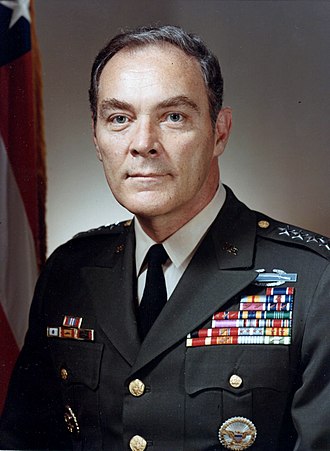
Alexander M. Haig, Jr. began his service in the Nixon administration as a military assistant to National Security Advisor Henry Kissinger from January 1969 to June 1970, before being promoted to Deputy Assistant to the President for National Security Affairs. He held this deputy role for the majority of the White House taping period, from June 1970 until January 1973, when he transitioned to the Pentagon to become Vice Chief of Staff of the U.S. Army. As the Watergate scandal forced the resignation of H.R. Haldeman, Nixon recalled Haig to serve as White House Chief of Staff from May 1973 until the president's resignation in August 1974.
What Haig talks about on the tapes
Vietnam War 179Watergate 172Foreign Policy 125Henry Kissinger 112Public relations 81Executive privilege 58Congressional relations 54National Security 53Military Strategy 50Nguyen Van Thieu 46Watergate scandal 39Peace negotiations 37
Conversations (700)
— Page 7 of 7President Nixon facilitates a connection between Alexander M. Haig, Jr. and J. Fred Buzhardt, Jr. through the White House operator. This brief administrative exchange serves to initiate a direct line of communication between the two officials. The conversation concludes immediately upon the successful coordination of this requested call.
Alexander M. Haig, Jr. and J. Fred Buzhardt, Jr. discuss the administration's response to press reports regarding a potential subpoena from Samuel Dash, chief counsel for the Senate Watergate Committee. Buzhardt confirms he communicated with Dash to dispute the reports, noting that Dash denied ever stating an intention to issue a subpoena. The participants coordinate efforts to have the record publicly corrected to mitigate the political fallout.
President Nixon met with Alexander Haig and J. Fred Buzhardt to strategize on managing ongoing Watergate disclosures and to discuss potential personnel changes within the White House staff. The conversation focused heavily on the administration's public relations response to subpoenas and media coverage, specifically regarding wiretap information and the handling of presidential papers. Additionally, the participants deliberated on potential economic policies, including a possible price freeze, and considered how to integrate John Connally into a special advisory role to strengthen leadership visibility.
President Nixon, Alexander Haig, and Melvin Laird met to coordinate the announcement of Laird's return to the administration as Counselor for Domestic Affairs. They discussed strategies for managing press inquiries, particularly regarding Watergate, and debated potential economic interventions like a wage-price freeze. The group also planned Laird's forthcoming schedule, which included meetings with key congressional figures and labor leader George Meany to ensure a smooth transition and maintain party unity.
President Nixon met with Melvin Laird and Alexander Haig to discuss personnel shifts and the restructuring of responsibilities within the White House staff. The conversation focused on reassigning George Shultz’s duties, specifically moving him out of his energy portfolio to prioritize trade policy. The participants also touched upon the organizational roles of Roy Ash and other administrative adjustments to long-term policy management.
President Nixon met with his legal team and senior advisors, including Charles Wright, Alexander Haig, and J. Fred Buzhardt, to formulate a legal and public relations strategy regarding the intensifying Watergate investigation. The discussion focused on countering potential testimony from John Dean, particularly regarding his meetings with the President, and managing the risks posed by the Ervin Committee's upcoming hearings. The participants strategized on how to undermine Dean's credibility through targeted cross-examination by Fred Thompson and agreed on the necessity of maintaining a firm stance on executive privilege while preparing for further investigative challenges.
President Nixon and Alexander Haig discuss urgent diplomatic developments regarding the Paris peace talks, specifically tensions between Henry Kissinger and the South Vietnamese government. Following advice from Kissinger, Nixon agrees to meet with Ambassador Tran Kim Phuong to address these critical issues. Consequently, the President adjusts his upcoming schedule, including postponing a bipartisan Congressional meeting and coordinating a private dinner with John Connally, Bryce Harlow, and Haig.
President Nixon and Alexander Haig briefly discuss the possibility of scheduling an evening meeting to review certain reading materials. The conversation remains ambiguous regarding the specific documents in question and ultimately concludes without a firm commitment or definitive action. The exchange serves as a preliminary coordination effort to assess the President's availability for a follow-up briefing.
President Nixon and Alexander Haig discuss ongoing political damage control regarding the Watergate scandal, specifically focusing on efforts to implicate previous Democratic administrations in illegal wiretapping. Nixon and Haig strategize on maintaining pressure on figures like Joseph Califano and McGeorge Bundy by highlighting hypocrisy regarding past surveillance practices. Additionally, the pair reviews economic policy, including potential wage and price controls on gas and food, and confirms the scheduling of upcoming meetings, including one with John Connally.
President Nixon and Alexander Haig meet to discuss sensitive administrative and political intelligence matters, including the handling of specific files and potential leaks. The conversation touches on concerns regarding information security, the management of personnel or associates described as "valuable," and the strategic release of information. The discussion reflects the administration's preoccupation with controlling the narrative surrounding internal documents and external perceptions of their operations.
President Nixon and Alexander Haig coordinate logistics for a dinner meeting on the Sequoia with Bryce Harlow and John B. Connally, while discussing administrative efficiencies regarding the Cost of Living Council. Nixon directs Haig to consult with John T. Dunlop on strengthening the economic speech, specifically by incorporating trade tariff removals and aggressive measures to address rising food prices. Key policy considerations include the potential implementation of a price freeze on basic agricultural commodities like soybeans to signal resolve to the public.
President Nixon and Alexander Haig coordinate travel logistics regarding a planned trip to Carlisle, Pennsylvania. They discuss the movement of personnel, specifically considering how to transport an individual named Conway. The conversation focuses on balancing these transport arrangements with other ongoing White House obligations.
President Nixon and Alexander Haig coordinate the logistics of a meeting with South Vietnamese Ambassador Tran Kim Phuong. Following a message from Henry Kissinger regarding the Ambassador’s status, the President instructs Haig to contact the Ambassador to ensure he remains in the country. They conclude the discussion by determining whether the President’s personal presence at the upcoming meeting is necessary.
President Nixon and Alexander Haig coordinate the public announcement of Clarence M. Kelley as the new FBI Director to ensure it receives optimal press coverage. They decide to schedule the announcement for 11:30 a.m. the following day, specifically timing it to follow a Cabinet meeting and fill a media gap created by ongoing Vietnam-related news. The pair also briefly discuss the delay in locating South Vietnamese Ambassador Tran Kim Phuong.
President Nixon and Alexander M. Haig, Jr. coordinated their schedules for a meeting occurring the following day. Due to the President's commitment to a cabinet meeting at 10:00 a.m., they agreed to shift their planned appointment to 11:30 a.m. This brief exchange served solely to finalize the logistics for their upcoming private session.
President Nixon met with South Vietnamese Ambassador Tran Kim Phuong, Alexander Haig, and Brent Scowcroft to discuss the critical need for continued U.S. aid to South Vietnam amidst growing Congressional opposition. Nixon emphasized that he remains committed to supporting President Nguyen Van Thieu but warned that legislative resistance makes securing future appropriations increasingly difficult. The discussion centered on the importance of survival for the South Vietnamese government and the necessity of managing expectations regarding American military and economic assistance.
President Nixon and Alexander Haig discussed the implementation of a potential new economic package, including a possible 60-day price freeze to address inflation and establish presidential leadership. They also reviewed the status of Vietnam peace negotiations, expressed frustration with South Vietnamese President Nguyen Van Thieu, and strategized on how to manage the ongoing Watergate investigations and the pressure regarding the release of White House documents. Nixon emphasized the need for a strong, decisive stance on both economic policy and the defense of presidential papers, while Haig provided updates on administrative personnel and efforts to control the narrative surrounding the administration's involvement in past activities.
President Nixon met with his Cabinet and key legislative leaders to discuss the restructuring of domestic policy operations, the appointment of Clarence M. Kelley as FBI Director, and strategies for improving congressional cooperation. Nixon emphasized a team-based approach to policy formulation, delegating significant oversight to Mel Laird, and urged Cabinet members to actively engage with Congress to pass the administration's legislative agenda. The discussion also addressed the administration's response to inflation, the importance of maintaining public morale amidst the Watergate crisis, and the necessity of presenting a unified, forward-looking policy front to the American people.
President Nixon and Alexander Haig met to discuss urgent economic and administrative challenges, specifically deliberating on whether to implement a price freeze and how to restructure White House economic and energy policy leadership. They considered roles for John Connally and the potential appointment of Lady Bird Johnson to the Bicentennial Commission. Additionally, Haig briefed the President on a sensitive, emerging legal issue concerning Charles G. "Bebe" Rebozo, involving an unreported Howard Hughes campaign contribution, and the two discussed strategies for securing appropriate legal counsel to mitigate potential political fallout.
President Nixon and Alexander Haig met to discuss several pressing administrative and political matters, including the selection of an energy czar and the development of a potential 60-day economic price freeze to leverage Congressional action. They also addressed the inclusion of John Connally in White House operations and reviewed efforts to maintain message discipline within the State Department regarding nuclear war agreements and Vietnam negotiations. Additionally, the pair touched upon ongoing Watergate concerns, specifically the activities of William J. Casey and the status of internal files.
President Nixon and Alexander M. Haig, Jr. met to discuss a range of pressing administrative issues, including strategies for handling Watergate-related legal matters, particularly regarding Bebe Rebozo's involvement with Howard Hughes' contributions. They also addressed personnel appointments, including potential roles for Peter G. Peterson and Ellsworth Bunker, and debated the implementation of a 60-day national economic freeze. The President directed Haig to ensure that his economic team, led by George Shultz, thoroughly prepared all policy options—including the freeze—while utilizing Camp David facilities to facilitate their work.
President Nixon and Alexander Haig discuss an impending economic freeze supported by John Connally and review the progress of Henry Kissinger’s negotiations regarding South Vietnam. They determine that if the South Vietnamese government continues to obstruct the peace process, the U.S. should issue an ultimatum regarding future foreign aid. Additionally, Nixon agrees to meet with John Volpe during a helicopter ride to discuss remarks made by Pope Paul VI.
President Nixon and Alexander Haig met to coordinate White House strategy regarding the national economy, ongoing Vietnam negotiations, and the intensifying Watergate scandal. They discussed the necessity of developing a definitive economic plan to address inflation and potential price controls while managing congressional and public expectations ahead of Leonid Brezhnev’s upcoming visit. Furthermore, they strategized on how to counter negative media and political pressure related to Watergate by mobilizing congressional allies and shifting the public debate toward the President’s policy achievements.
President Nixon, Ronald Ziegler, and Alexander Haig met to discuss communication strategies for managing the fallout from the Watergate scandal and countering negative press narratives. They analyzed recent media commentary, specifically columns by Joseph Alsop and Patrick Buchanan, to reinforce their resolve against John Dean and the Ervin Committee hearings. Nixon and his advisors decided to shift the White House's public focus toward positive domestic issues, such as the national economy and the forthcoming visit of Leonid Brezhnev, while adopting a more aggressive, "slam-bang" stance toward political opponents.
President Nixon met with Alexander Haig to discuss personnel and political strategy regarding Watergate, specifically focusing on the role of Attorney General Elliot Richardson. Following this, Nixon convened with John Connally, George Shultz, Herbert Stein, and John Dunlop to debate the administration's economic response to mounting Congressional pressure for a wage and price freeze. The group evaluated various options, ultimately deciding on a strategy that balanced political necessity with the risks of economic uncertainty, while preparing for a follow-up consultation with labor and management leaders.
President Nixon and Alexander Haig met to discuss strategies for managing the national economy, including potential wage and price controls, and to coordinate preparations for the upcoming visit of Soviet leader Leonid Brezhnev. The two also addressed personnel matters regarding Attorney General Elliot Richardson and assessed the political impact of the ongoing Watergate investigation. Nixon expressed frustration with the political nature of the Ervin Committee hearings and the handling of potential immunity for figures like John Dean.
President Nixon and Alexander Haig discussed the potential resignation of Attorney General Elliot Richardson regarding his professional loyalty and trust in the administration. The conversation centered on Richardson's concerns regarding the Watergate scandal and his involvement in the ITT investigation. Nixon expressed firm resistance toward Richardson’s potential departure, emphasizing that he would not force the issue before a jury or capitulate to demands based on internal distrust.
President Nixon and Alexander Haig met to discuss urgent economic policy, specifically the need for dramatic action on inflation and food prices, including the possibility of a 60-day price freeze. The two also addressed ongoing Watergate fallout, focusing on managing relations with Attorney General Elliot Richardson and mitigating the potential damage from John Dean's upcoming testimony. Additionally, they reviewed staffing changes involving Bryce Harlow and the importance of maintaining a strong presidential image despite political pressures.
President Nixon and Alexander Haig met to coordinate the President's schedule with congressional leaders, specifically addressing briefings on the upcoming Leonid Brezhnev summit and Vietnam negotiations. They decided to postpone a meeting with congressional leaders regarding economic controls to avoid presenting an appearance of unresolved conflict in Paris. The discussion also briefly touched upon the political implications of current Watergate-related news and Vice President Spiro Agnew's recent activities.
President Nixon consults with Bryce N. Harlow to finalize his return to the White House staff in a senior advisory role. Nixon clarifies that he expects Harlow to serve as a key political strategist and confidant alongside Alexander M. Haig, Jr. and Melvin R. Laird, rather than merely focusing on congressional relations. The conversation concludes with an agreement for Harlow to begin his tenure on July 2, 1973, with a formal announcement scheduled for the following Saturday.
President Nixon met with Bryce Harlow and Alexander Haig to manage the political fallout from the Watergate scandal, coordinate the administration's stance on economic policy, and prepare for the upcoming state visit of Leonid Brezhnev. The participants discussed strategies to deflect partisan criticism, including leveraging statements from sympathetic senators and countering media narratives regarding past wiretapping practices. Additionally, they coordinated a briefing schedule for Congressional leaders to maintain support for the administration's foreign policy and Vietnam negotiations amid ongoing domestic instability.
President Nixon met with Alexander M. Haig, Jr. to coordinate White House strategy regarding ongoing economic policy, administrative personnel appointments, and the unfolding Watergate investigation. The discussion focused on managing the upcoming testimony of John W. Dean, III before the Ervin Committee and preparing a public relations response that would emphasize presidential leadership and reinforce denials of culpability. Additionally, Nixon and Haig evaluated potential presidential vetoes of Congressional spending bills and discussed utilizing radio addresses to communicate directly with the public on economic concerns.
President Richard Nixon and Alexander M. Haig, Jr. met to coordinate administration strategy regarding Vietnam policy and upcoming domestic economic announcements. They discussed maintaining support for South Vietnamese President Thieu and reviewed preparations for a high-level economic meeting involving Arthur Burns and George Shultz. Additionally, the President provided guidance on the tone and content for an impending address concerning price control measures, specifically regarding food and gasoline costs.
President Nixon met with his senior economic advisors and staff to deliberate on a strategy for stabilizing the national economy, specifically focusing on a proposed 60-day price freeze on food and gasoline. The discussion covered the implementation of Phase IV economic controls, the necessity of securing congressional support for trade and spending measures, and the political challenges of potential vetoes on agricultural and minimum wage legislation. Nixon emphasized the importance of public education regarding his administration's economic goals and requested that his cabinet members and advisors actively advocate for these policies to build public and congressional confidence.
President Nixon and Alexander Haig met to coordinate administration responses to economic challenges, including potential price freeze legislation and export regulation policies. The two discussed personnel management and morale within the White House staff, addressing friction between Roy Ash and other key advisors while emphasizing Haig’s role as the primary operational authority. Additionally, they reviewed political strategies regarding Congressional relations and the ongoing Watergate investigations, specifically regarding anticipated testimony from John Dean.
President Nixon met with Alexander Haig and Rose Mary Woods to discuss routine administrative tasks, including the President's upcoming schedule and staff support for a potential book project. The conversation shifted significantly to Watergate, specifically focusing on the ongoing Ervin Committee hearings and the legal difficulties facing John Mitchell, Maurice Stans, and John Dean. They also touched upon concerns regarding Martha Mitchell's behavior and the involvement of Thomas Pappas in financial matters related to legal defense funds.
President Nixon met with Raymond K. Price, Jr. and Alexander M. Haig, Jr. to refine the rhetoric and strategic messaging for an upcoming national address regarding the implementation of new price controls. The discussion focused on balancing economic management, specifically the rising costs of food and fuel, with the political necessity of addressing public concern while avoiding recessionary risks. Additionally, the President consulted with his staff on potential candidates for an 'energy czar' position, weighing the merits of figures like William W. Scranton, and touched upon the upcoming summit with Soviet leader Leonid Brezhnev.
President Nixon and Alexander Haig discuss the potential appointment of former Pennsylvania Governor William W. Scranton to lead the administration's energy initiatives. Nixon characterizes Scranton as a capable administrator who could benefit the administration by bringing an outside perspective to the complex energy challenge, potentially supported by Charles DiBona. The conversation concludes with Nixon instructing Haig to contact Scranton the following morning to gauge his interest.
President Nixon and Alexander Haig discuss the recruitment of William W. Scranton to lead administration energy initiatives. They evaluate Scranton's administrative credentials, his strong ties to the oil and coal industries, and the positive press reception his appointment would generate despite his past political differences with the White House. Haig is instructed to contact Scranton to solicit his services, with the goal of finalizing the offer during a meeting in order to facilitate a formal announcement by Thursday.
Alexander M. Haig, Jr. informed President Nixon that Soviet leader Leonid Brezhnev had agreed to visit San Clemente, while simultaneously canceling a planned stop in Houston. Nixon expressed enthusiasm for the visit, emphasizing his desire to host Brezhnev as a personal guest in his own home to facilitate private, secure, and relaxed discussions. Haig was instructed to confirm these arrangements with Soviet Ambassador Anatoliy Dobrynin and ensure the security and lodging details were settled for the upcoming summit.
President Nixon and Alexander Haig discuss the final logistics for Leonid Brezhnev’s upcoming visit, emphasizing security arrangements at San Clemente and the preference for a controlled environment over a potential trip to Houston. Nixon notes that he has secured a commitment for private, high-level meetings between himself, Brezhnev, and Henry Kissinger. Additionally, they coordinate a recruitment strategy to bring William Scranton into the administration, with the President tasking Haig with offering Scranton a seat on the National Security Council to secure his acceptance.
President Nixon met with Ronald Ziegler, Alexander Haig, and William Timmons to coordinate White House strategy regarding the impending Ervin Committee testimony of John Dean and the administration’s broader press relations. The participants discussed the necessity of discrediting Dean and managing public perception amid the Watergate scandal, while balancing these concerns with the President's upcoming economic address and the diplomatic significance of the forthcoming Leonid Brezhnev summit. Nixon emphasized the importance of maintaining a unified front with congressional allies and directed his staff to ensure that supporters, including members of the Chowder and Marching Society, publicly prioritize national policy over the ongoing hearings.
President Nixon met with Raymond K. Price, Jr. and Alexander M. Haig, Jr. to refine a forthcoming televised speech addressing the American economy and ongoing national policy challenges. The discussion focused on establishing an upbeat, confident tone regarding U.S. economic strength, specifically outlining the implementation of a 60-day price freeze and new controls to curb inflation. Nixon also deliberated on the political messaging surrounding the Vietnam peace process, energy shortages, and upcoming legislative strategies, emphasizing a need for decisive executive leadership in the face of domestic criticism.
President Nixon and Alexander Haig coordinate the upcoming announcement of William W. Scranton’s appointment to an energy position and the timing of a related presidential economic speech. They discuss the strategic staging of news to ensure maximum media impact, specifically aiming to hold the Scranton announcement for the Sunday papers while keeping the energy message for Saturday. Additionally, the pair reviews the logistics for that day's scheduled Cabinet and Bipartisan Congressional Leadership meetings.
President Nixon and Alexander Haig reviewed ongoing staffing efforts, specifically focusing on William Scranton's upcoming appointment to handle energy policy and John Connally's continued, flexible role with the administration. The conversation also touched on administrative coordination, including scheduling for Bryce Harlow and logistics regarding guest lists for a dinner with Leonid Brezhnev. Regarding the Watergate investigation, Nixon instructed that the White House must aggressively challenge emerging allegations and emphasized using the threat of perjury to deter John Dean, noting that the administration possesses records of all meetings Dean attended.
President Nixon and Alexander Haig discuss strategic messaging and public relations efforts intended to shift the administration’s focus away from ongoing investigations and toward a more proactive, self-directed agenda. They coordinate plans for an upcoming announcement or speech to build positive momentum, while touching upon the need to manage potential legal challenges or judicial obstacles. The conversation reflects an effort to maintain political control and confidence despite external pressures.
President Nixon and Alexander Haig discuss the recruitment of William W. Scranton for an energy-related appointment, noting that minor legal issues regarding Scranton's corporate involvement should not impact his candidacy. Nixon decides to meet with Scranton the following day at the White House rather than in Florida to finalize the plans. They agree to delay the public announcement until Saturday to avoid competing with other ongoing news stories.
Alexander M. Haig, Jr. and President Nixon discuss the timing of a forthcoming public announcement, ultimately deciding to schedule it for Saturday. The brief exchange confirms coordination regarding the release strategy for an unspecified story or policy initiative. Haig expresses readiness to manage the logistics and communications surrounding the project as instructed by the President.
President Nixon met with his Vice President, Cabinet members, and senior staff to announce the implementation of a 60-day price freeze as part of a strategy to combat inflation. He explained that this measure, aimed at stabilizing food and gasoline prices, was a necessary pragmatic step to preempt more extreme, mandatory controls favored by Congress. Nixon emphasized his commitment to maintaining a free-market economy and tasked his Cabinet with actively promoting this policy to the public and opinion makers. He also highlighted the administration's broader accomplishments in foreign policy, including the end of the draft and the upcoming U.S.-Soviet summit.
President Nixon met with Vice President Agnew, cabinet members, and a bipartisan group of Congressional leaders to announce an upcoming economic policy address and discuss the administration's new strategy to combat inflation. The President detailed a 60-day price freeze—excluding wages and raw agricultural products—and sought legislative assistance regarding export controls on food and gasoline supply allocations. Additionally, the President arranged for key Congressional leaders to receive ongoing briefings from administration officials during the upcoming summit with Soviet leader Leonid Brezhnev to ensure better oversight of the resulting agreements.
Alexander Haig updates President Nixon on the highly positive public and political reception to the President’s recent televised speech on the economy. Haig emphasizes that the positive feedback reflects a widespread desire for presidential leadership and a clear shift of public attention away from the Watergate scandal. The two discuss the political importance of appearing in control, agreeing to disregard the ongoing testimony of John Dean while prioritizing aggressive communication on economic and foreign policy.
President Nixon and Alexander Haig discuss the positive public response to the President's recent economic speech and strategize on handling Vice President Spiro Agnew’s upcoming meeting. They address the ongoing Watergate investigations, with Nixon expressing his intent to eventually attack the Ervin Committee once he has sufficient political leverage. Additionally, Nixon instructs Haig to ensure Henry Kissinger remains focused on foreign policy briefings—specifically regarding Vietnam, the "Year of Europe," and Leonid Brezhnev’s visit—while explicitly avoiding any comments on Watergate or wiretapping.
President Nixon met with his senior advisors and Vice President Spiro Agnew to discuss foreign policy, the recent national price control address, and the growing political fallout from the Watergate and Baltimore County investigations. Nixon and his team strategized on how to manage the public perception of the Watergate hearings while considering ways to pivot toward an aggressive political defense. Additionally, they reviewed Vice President Agnew's role in the administration, including future travel and the need for him to maintain a visible and high-profile presence to support the President's agenda.
President Nixon and Alexander Haig held a brief, unscheduled meeting in the Oval Office to coordinate the President's upcoming daily itinerary. The discussion focused primarily on the logistics and management of the presidential schedule. No significant policy decisions or major developments were recorded during this two-minute interaction.
President Nixon, joined by Alexander Haig, met with William Scranton to recruit him for a high-level position as the administration's "energy czar." Nixon emphasized the need for a non-industry figure with political credibility to unify disparate agencies, manage complex foreign policy ties with oil-producing nations, and oversee long-term energy strategies. The discussion underscored the role's immense workload and political sensitivity, with Nixon urging Scranton to consider the offer after consulting with his wife. Throughout the meeting, the President also reflected on his broader foreign policy accomplishments, specifically regarding China, the Soviet Union, and the delicate diplomatic balance required in the Middle East.
President Nixon, Alexander Haig, and Anne Armstrong discuss the recruitment of William Scranton for a high-level position, emphasizing the importance of securing his agreement despite his wife's influence. They also finalize administrative announcements, including the appointment of Bryce Harlow and a change in title and salary for Rose Mary Woods. Haig confirms that Scranton is prepared to travel to Florida to finalize the arrangement, and the President requests a photograph with Harlow to coincide with the public announcement.
President Nixon met with Alexander Haig, Anne Armstrong, Bryce Harlow, and others to discuss public relations strategies following his June 13, 1973, address on economic price controls. The conversation focused heavily on managing the political influence and public roles of John Connally and George H. W. Bush within the administration and the Republican Party. Additionally, the group reviewed potential candidates for leadership roles, including positions within the Bicentennial Commission, while touching upon concerns regarding Watergate, upcoming elections, and personnel management.
President Nixon and Alexander Haig met to discuss ongoing personnel conflicts within the White House, specifically the tensions between Roy Ash and other senior staffers, and George Shultz’s role and potential future in the administration. They evaluated the political and economic implications of the President’s domestic programs, with a focus on managing energy policy, labor relations, and Congressional relations. Additionally, the President and Haig touched on the unfolding Watergate investigations, including the credibility of key witnesses like Jeb Magruder and the potential political fallout for the administration.
President Nixon consulted with Alexander M. Haig, Jr. regarding schedules before speaking with Reader’s Digest editor Hobart D. Lewis. Lewis requested a private meeting with the President to discuss an undisclosed matter of concern that he had previously touched upon with H. R. Haldeman. Due to the President’s travel schedule to Illinois and Florida, coupled with the upcoming summit with Leonid Brezhnev, the parties agreed to defer the meeting until after the conclusion of the Brezhnev visit.
President Nixon and his advisors met to finalize the logistics and agenda for Soviet General Secretary Leonid Brezhnev’s upcoming state visit. The discussion focused on balancing formal state proceedings with informal, spontaneous-looking events in San Clemente and at Camp David to foster positive imagery. Key decisions included finalizing the guest list for a reception—prioritizing a mix of political, business, and Hollywood figures—and arranging for a scenic coastal drive to provide Brezhnev with a more authentic view of America.
President Nixon met with Alexander Haig, Henry Kissinger, and other staff members to review preparations for his upcoming speech in Pekin, Illinois, and the anticipated visit of Soviet leader Leonid Brezhnev. The participants discussed strategies for managing foreign relations, specifically addressing requests regarding potential diplomatic travel for Vice President Spiro Agnew and navigating the delicate balance of U.S. relations with China and the Soviet Union. Additionally, the President and his team assessed the administration's political standing amid Watergate-related pressures, the national economy, and media coverage, emphasizing the need to project presidential strength and focus on the administration's policy achievements.
President Richard M. Nixon met with Alexander M. Haig, Jr. in the Oval Office to discuss unspecified administrative or strategic matters. While the transcript remains unavailable, the brief meeting resulted in an agreement between the two participants. The discussion concluded within seven minutes, marking a quick interaction between the President and his Chief of Staff.
President Nixon met with Alexander Haig, Henry Kissinger, and Ronald Ziegler to finalize the logistics for Soviet General Secretary Leonid Brezhnev’s visit and to coordinate the administration’s strategy regarding the unfolding Watergate scandal. The participants discussed the summit schedule—including private sessions, signing ceremonies, and travel arrangements—and expressed frustration over negative media coverage, specifically regarding the potential impact of John Dean’s testimony. Nixon and his advisors resolved to maintain a tough, authoritative public image during the summit to ensure the success of the negotiations and to prevent domestic political turbulence from undermining the administration's foreign policy goals.
President Nixon and Alexander Haig discussed the White House's strategic response to the impending Ervin Committee testimony of John Dean and related Watergate allegations. They evaluated potential legal and political risks, including reports of financial irregularities involving Charles Colson and concerns regarding IRS audits of Lawrence O'Brien. The meeting also briefly touched upon logistical scheduling for the upcoming visit of Soviet leader Leonid Brezhnev.
President Nixon met with Henry Kissinger, Alexander Haig, and Ronald Ziegler to coordinate the public messaging strategy regarding ongoing Soviet-American relations and bilateral summit agreements. Following the foreign policy segment, the group transitioned to a discussion of domestic political pressures, specifically focusing on the administration’s response to John Dean’s anticipated testimony before the Ervin Committee. Nixon emphasized the necessity of a disciplined, unified defense strategy to counter potential allegations of misconduct and manage the intense media scrutiny surrounding the Watergate investigation.
Alexander Haig briefed President Nixon on the postponement of the Ervin Committee hearings, attributing the delay to Senator Mike Mansfield and criticizing Senators Hugh Scott and Howard Baker for their political maneuvering. Additionally, Haig requested a meeting for Governor John A. Love, which the President tentatively scheduled for 5:30 p.m. to accommodate his ongoing work on a toast for Leonid Brezhnev. The President expressed significant frustration over Senator Baker’s recent public comments regarding their personal relationship.
President Nixon, assisted by Rose Mary Woods and Alexander M. Haig, Jr., worked to finalize the text of his upcoming toast for the visit of Soviet General Secretary Leonid Brezhnev. The participants focused on editing the speech for appropriate length and tone, specifically requesting the removal of extraneous references, such as a passage regarding John Adams. Nixon reviewed the revised wording to ensure the toast effectively conveyed a message of peace and mutual responsibility between the two global powers.
President Nixon and Alexander Haig discuss strategies to counter negative press and potential political maneuvering by the Ervin Committee regarding the ongoing Watergate investigation. Nixon expresses concern that the committee and the media are timing leaks of John Dean’s testimony to undermine his upcoming Soviet summit. He directs Haig to coordinate with White House staff to aggressively push back against the committee’s narrative and specifically orders an investigation into allegations that Leonard Garment may be leaking information to the Washington Post.
President Nixon and Alexander Haig discuss political maneuvering regarding Senate Majority Leader Mike Mansfield and potential press exploitation of ongoing controversies. Nixon expresses concern that opponents intend to build up negative coverage over the summer to damage the administration. He directs Haig to thoroughly vet these developments and considers retaliatory measures, such as imposing tariffs, to counter the perceived political threat.
President Nixon, joined by Alexander Haig and briefly by Henry Kissinger, met with John A. Love to formally recruit him to head a new, high-level White House office tasked with managing the nation's energy policy. The discussion addressed the intense bureaucratic rivalries regarding energy oversight and the critical need for an administrator with direct access to the President who could navigate complex environmental, foreign policy, and economic challenges. Nixon also briefly addressed concerns regarding the Watergate scandal, dismissing its relevance to Love's prospective role while emphasizing that the situation would need to run its course through the courts and the Ervin Committee.
President Nixon met with Alexander M. Haig, Jr. for a brief discussion regarding the White House's ongoing public relations strategy concerning the Watergate scandal. The two conferred on administrative messaging and the potential involvement of Ronald L. Ziegler in addressing queries from the Ervin Committee and television networks. The conversation resulted in a minor directive to refine a prepared statement by removing a concluding sentence.
President Nixon, Alexander Haig, and Ronald Ziegler met to discuss the White House's strategic response to the impending Ervin Committee testimony of John W. Dean III. The President and his aides analyzed how to manage the political fallout of the testimony during the upcoming summit with Leonid Brezhnev, weighing the pros and cons of potential delays. A significant focus of the discussion was the ongoing effort to discredit Dean by publicizing his alleged mishandling of campaign funds and payments to defendants.
President Nixon met with Alexander Haig, Ronald Ziegler, and J. Fred Buzhardt to discuss ongoing Watergate fallout and strategy, specifically focusing on the upcoming testimony of former White House counsel John Dean before the Ervin Committee. The participants expressed frustration with the lack of aggressive public defense by Republican allies and the perceived bias of special prosecutor Archibald Cox, prompting discussions on how to better leverage allies to challenge Dean's credibility and the scope of Cox's investigation. Additionally, the President reviewed his economic recovery program and the status of Leonid Brezhnev's state visit, stressing the importance of controlling the media narrative during these high-stakes events.
President Nixon met with Rose Mary Woods to discuss logistics for Leonid Brezhnev’s state visit, specifically focusing on managing guest lists and timing for receiving lines and entertainment. Following Woods' departure, Alexander Haig joined the President to discuss the ongoing Watergate investigation, including the erratic public behavior of Martha Mitchell and efforts to ensure objectivity regarding Special Prosecutor Archibald Cox. The participants expressed concern over the perceived partisanship of the Ervin Committee and emphasized the need for strategic handling of political allies and legal representatives.
President Nixon met with Ronald Ziegler, Alexander Haig, and Henry Kissinger to coordinate the upcoming state visit of Soviet leader Leonid Brezhnev and manage the ongoing Watergate crisis. The group planned the logistical details of the summit, including travel to Camp David, photograph opportunities, and public relations strategies for the Brezhnev visit. Simultaneously, they discussed political damage control, specifically preparing for John Dean's upcoming testimony before the Ervin Committee and determining the White House's public stance regarding the Watergate investigation and the role of special prosecutor Archibald Cox.
President Nixon met with Alexander Haig, J. Fred Buzhardt, and Melvin Laird to discuss ongoing challenges including the Watergate scandal and upcoming administrative transitions. They reviewed the status of John Dean's legal situation, focusing on his handling of campaign funds and the political advantage of exposing his alleged financial impropriety through press coverage. Furthermore, the group discussed personnel adjustments, including bringing Bryce Harlow onto the White House staff, and coordinated legislative strategies regarding a pending House vote on Cambodia funding and the implementation of the Phase IV economic program.
President Nixon, Henry Kissinger, and Alexander Haig met briefly to coordinate the logistics and diplomatic agenda for Soviet General Secretary Leonid Brezhnev's upcoming visit. They discussed scheduling meetings with Senators and planning specific talks regarding SALT and Mutual and Balanced Force Reductions (MBFR). Additionally, the group briefly addressed emerging press reports concerning John Dean’s handling of campaign funds, with Nixon emphasizing the need to manage the fallout from the Watergate-related allegations.
President Nixon and Alexander Haig reviewed several pressing political and administrative issues, including a potential SEC inquiry involving Melvin Laird and ongoing concerns regarding the Watergate investigation. The two discussed the nervous state of Vice President Spiro Agnew regarding a Maryland investigation and directed J. Fred Buzhardt to contact Attorney General Elliot Richardson regarding reports of witness intimidation. Additionally, they addressed damaging leaks from John Dean to the Ervin Committee and confirmed the strategic rationale behind past White House discussions regarding IRS investigations of political opponents.
President Nixon and Alexander Haig reviewed the results of a recent press conference held by John Connally, focusing on his remarks regarding the national economy and his future role on the White House staff. While Nixon expressed slight disappointment that Connally's comments on his staff involvement were not more assertive, they agreed his performance on economic messaging was effective. Additionally, Haig provided updates on his ongoing communications with George Shultz and Melvin Laird and briefed the President on upcoming administrative actions.
President Nixon and Alexander Haig discussed the White House's economic messaging strategy, specifically praising Melvin Laird’s recent success in bolstering support among Congressmen. The conversation shifted to monitoring Attorney General Elliot Richardson and the ongoing investigation into Vice President Spiro Agnew. Haig confirmed he had tasked J. Fred Buzhardt with pressing Richardson for information regarding the Agnew probe to ensure the administration was not blindsided by potential legal or political crises.
President Nixon and Alexander Haig discuss the positive television coverage of Soviet leader Leonid Brezhnev's visit, while also finalizing negotiations regarding SALT and MBFR. The pair reviews the political fallout of the Watergate scandal, specifically monitoring media reports regarding John Dean's upcoming testimony and Senator Hugh Scott's remarks. Additionally, they coordinate the timing of personnel announcements for the SEC and John A. Love to avoid negative headlines, and they clarify the future advisory role of John Connally to mitigate public misperception.
President Nixon and Alexander Haig discussed the historic significance of the dinner meeting with Leonid Brezhnev, expressing their shared conviction that the personal rapport established during the event represented an unprecedented breakthrough in U.S.-Soviet diplomacy. Emphasizing the importance of documenting these interactions, Nixon directed Haig to ensure that Helmut Sonnenfeldt and Ronald Ziegler draft comprehensive memoranda of their recollections of the evening. The discussion also touched upon the distracting impact of the Watergate scandal, which the President feared threatened to overshadow this major foreign policy achievement.
President Nixon, Alexander Haig, Ronald Ziegler, and Henry Kissinger met to coordinate the administration's defensive strategy regarding the unfolding Watergate scandal and the Ervin Committee's upcoming hearings. The participants discussed strategies for discrediting John Dean and mitigating damaging press coverage by leaking information regarding historical FBI surveillance abuses conducted under the Kennedy administration. Furthermore, the President emphasized the necessity of a firm legislative stance against Congress, specifically regarding spending vetoes and the handling of foreign policy agreements like the nuclear war prevention pact with the Soviet Union.
President Nixon and Alexander Haig discuss the significant foreign policy success of the recent nuclear non-aggression agreement with Soviet leader Leonid Brezhnev. The two assess the political impact of the summit, noting that despite potential negative coverage from a Watergate-obsessed press, the administration's achievements have garnered praise even from political opponents like Robert McNamara. To capitalize on this momentum, Haig outlines plans for streamlined White House staff operations and consistent congressional outreach overseen by Melvin Laird during the President’s absence.
President Nixon and Alexander Haig discuss the importance of maintaining international treaties and the role of leadership intentions in upholding diplomatic agreements. The conversation touches upon the reliability of international allies and the necessity of ensuring administrative continuity within the White House. Nixon emphasizes the need for Haig to maintain constant oversight of operations, specifically noting that no personnel should depart without a clear transfer of responsibility.
President Nixon met with J. Fred Buzhardt, Jr. and Alexander M. Haig, Jr. to coordinate the White House's defensive strategy regarding John Dean’s anticipated testimony before the Ervin Committee. The participants discussed strategies to undermine Dean’s credibility by focusing on his financial activities, his potential misuse of funds, and his failure to adhere to conflict-of-interest standards. They also reviewed concerns regarding leaked documents, the media’s handling of Watergate coverage, and the perceived lack of objectivity by certain journalists and senators, aiming to prepare a public response to mitigate political damage.
President Nixon met with Vice President Agnew, top economic advisors, and a large group of Republican Congressional leaders to discuss the administration's current 60-day economic freeze and the development of a subsequent "Phase IV" program. The primary challenge identified was managing inflation and supply shortages—particularly in food—while avoiding the long-term economic damage of permanent price and wage controls. The President and his advisors sought Congressional support for a balanced budget and specific legislative measures, such as the release of strategic stockpiles, while acknowledging the significant political difficulty of passing unpopular fiscal reforms. Participants emphasized the need for a careful balance between short-term political relief and long-term economic stability to avoid the pitfalls of past rationing and supply-side distortions.
President Nixon met with his economic advisors and Cabinet members to debate the design of 'Phase IV' of his economic program, focusing on the appropriate speed for removing wage and price controls. The discussion centered on balancing the political need to curb inflation with the economic necessity of incentivizing production, particularly in the agricultural sector, where export controls and price ceilings had created supply shortages. The President and his team also addressed the critical need for a balanced federal budget to bolster business confidence, ultimately agreeing on the necessity of a tough, credible policy to stabilize the economy.
President Nixon and Alexander Haig met to coordinate White House strategy regarding the Watergate scandal and the forthcoming economic Phase IV program. They discussed the necessity of adopting a more aggressive posture against Democratic political maneuvers and media leaks, specifically expressing frustration with the performance of staff members who maintained unauthorized contacts with reporters. Nixon also evaluated the current Justice Department leadership, particularly Attorney General Elliot Richardson, emphasizing the need for loyal, decisive action in managing legal challenges and personnel appointments.
President Nixon and Alexander Haig discussed the ongoing Watergate investigations, specifically focusing on the scope of Special Prosecutor Archibald Cox’s charter and their insistence that investigations be strictly limited to 1972 campaign-related activities. They also reviewed concerning reports regarding Vice President Spiro Agnew’s potential legal jeopardy in Maryland, comparing his situation to previous presidential campaigns. Finally, the two men reviewed the administration's legislative agenda, agreeing to delay a planned economic policy announcement and speech until after George Shultz’s upcoming trip to Japan.
President Nixon and Alexander Haig met to strategize the administration's upcoming "Phase IV" economic program, specifically discussing the timing and format for public and congressional announcements. They agreed to avoid a joint session of Congress to bypass "crisis" rhetoric, instead favoring a plan that uses briefings for congressional leaders and radio addresses to demonstrate decisive presidential leadership. Additionally, they reviewed recent Watergate-related developments, including John Mitchell's committee testimony, which they viewed as helpful to the President's position, and expressed continued frustration with the scope and personnel of the Archibald Cox special prosecution team.
President Nixon met with Vice President Agnew and his Cabinet to discuss the transition from the current wage and price freeze to a "Phase IV" economic policy. The President emphasized the need to balance controlling inflation with maintaining domestic production, while acknowledging the political difficulty of removing controls due to congressional and public pressure. Key developments included the administration's resolve to move toward a free-market economy as quickly as possible, coupled with a renewed commitment to fiscal austerity and a balanced federal budget to bolster economic confidence.
President Nixon and Alexander Haig discussed the development and presentation strategy for the administration's upcoming economic 'Phase IV' package. Nixon expressed skepticism toward a proposed balanced budget, fearing political backlash from Congress and the potential for damaging veto battles, while exploring alternative formats for announcing the economic plan to business and labor leaders. The conversation also touched on the ongoing Watergate investigations, specifically the upcoming Ervin Committee testimony, and the necessity of maintaining internal discipline and control amid these distractions.
President Nixon and Alexander Haig discussed administrative logistics regarding an upcoming retreat to Camp David, specifically weighing the social inclusion of staff counselors and their wives. Nixon expressed a preference for maintaining personal solitude during his downtime while ensuring he retains professional access to advisors like Mel Laird, Bryce Harlow, and Roy Ash if needed. Additionally, the President reviewed his legislative agenda, emphasizing the need to evaluate upcoming bills for potential vetoes to maintain a balanced budget heading into the election year.
President Nixon met with his doctors to discuss his ongoing health issues, specifically viral pneumonia, and the logistics of managing his public schedule and medical testing. Following these medical consultations, he met with Alexander Haig to review the administration's strategy regarding the Watergate investigation and the Ervin Committee hearings. Nixon expressed determination to maintain a firm stance against the committee's subpoenas, while the participants analyzed the testimony of key figures such as John Mitchell and John Dean. The meeting concluded with Nixon reaffirming his resolve to protect the presidency from perceived partisan attacks.
President Nixon and Alexander Haig met to strategize on resisting the Senate Watergate Committee's demands for access to White House files and to manage the fallout from Senator Sam Ervin's recent public statements. Nixon expressed profound frustration with the committee's partisan nature and insisted on maintaining a rigid, "hard-line" position, refusing to grant the committee or special prosecutor Archibald Cox access to sensitive materials. The President ultimately decided to hold a private meeting with Senator Ervin, while specifically excluding other committee members like Howard Baker and Samuel Dash from the White House, as part of a broader effort to contain the investigation and assert executive privilege.
President Nixon met with Alexander Haig, Ronald Ziegler, and Dr. Walter Tkach to discuss a two-fold crisis involving his deteriorating health and the escalating pressures from the Ervin Committee regarding Watergate. Nixon, suffering from a fever and fearing he may have viral pneumonia, debated the public relations implications of seeking hospital care, specifically how to avoid public perception of weakness while maintaining credibility. Simultaneously, the group strategized on resisting the Ervin Committee's demands for White House files, reaffirming their decision to reject any compromise and maintaining a hardline stance to avoid the appearance of a cover-up.
President Nixon and Alexander Haig discussed managing the optics of the President’s recent hospitalization and the scheduling of his upcoming public appearances, including the announcement of Phase IV economic policies. They also touched upon the political challenges posed by the Ervin Committee's Watergate investigations and requests for access to White House files. The two agreed on a strategy to maintain a dignified public image while controlling the narrative surrounding the President's health and staff activities.
President Nixon met with Henry Kissinger, Alexander Haig, and Ronald Ziegler to coordinate the public response to his health issues and the subsequent adjustments to his official schedule, including the potential cancellation of Zulfikar Ali Bhutto’s state visit. The participants discussed how to manage the optics of these changes to avoid political embarrassment while navigating the ongoing pressures of the Watergate investigation. Nixon and his advisors also weighed the implications of the Ervin Committee's proceedings and potential witness testimony on the administration's stability.
President Nixon met with Alexander M. Haig, Jr. to coordinate logistical arrangements for upcoming appearances. The discussion focused on the President's official schedule and the planning of a motorcade, potentially involving Ronald L. Ziegler. The meeting served to finalize details for immediate executive travel and public outreach operations.