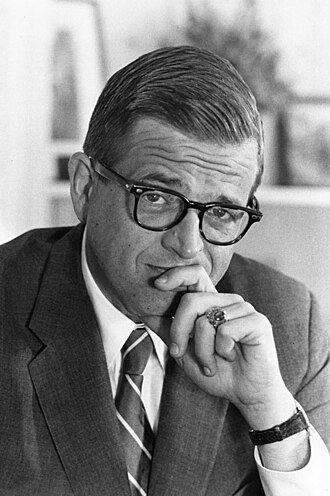
Colson, Charles W.
Charles W. Colson served as Special Counsel to the President from November 1969 to March 1973, and concurrently as the Director of the Office of Public Liaison from July 1970 to March 1973. During the White House taping period, Colson acted as Richard Nixon's ruthless political point man and "hatchet man," compiling the infamous "Enemies List" in 1971 and helping establish the White House Plumbers to discredit political opponents. He held both positions until his resignation in March 1973, when he transitioned out of the administration to return to private law practice just before the Watergate scandal fully erupted.
President Nixon met with Alexander Butterfield, H.R. Haldeman, Charles Colson, and Henry Kissinger to discuss a range of domestic and foreign policy issues, with a significant focus on the public and political fallout from the United Nations vote to expel Taiwan. The participants evaluated the effectiveness of recent administration outreach and media appearances, specifically addressing criticisms from the John Birch Society and the reactions of various UN delegates captured on film. Additionally, they reviewed economic concerns, including interest rates and housing, and coordinated communications strategies to manage the 1972 political landscape.
President Nixon met with H. R. Haldeman, Henry Kissinger, and Charles Colson to discuss the fallout from a surprise Senate defeat of the foreign aid bill, which the administration attributed to bipartisan disloyalty and the recent UN vote on Taiwan. The participants analyzed the political motivations of opponents, particularly Senator Edward Kennedy, whose recent criticism of the President’s China initiative and Taiwan policy was characterized by Nixon as opportunistic and inconsistent. The President directed his staff to counter these attacks by highlighting Kennedy's political maneuvers and leveraging press coverage to discredit his reliability, while simultaneously strategizing on how to resurrect foreign aid through parliamentary maneuvering.
President Nixon met with H.R. Haldeman, Charles Colson, and Ron Ziegler to coordinate political attacks against Senator Edward M. Kennedy and formulate strategies regarding controversial legislative issues. The group discussed utilizing negative publicity, such as an anti-busing cartoon and polling data, to damage Kennedy’s standing and national image. Additionally, they strategized on foreign policy matters, specifically coordinating a response to the recent United Nations vote on Taiwan and addressing potential foreign aid legislation through public messaging and Senate maneuvering.
President Nixon and Charles Colson discussed the administration's public relations strategy, specifically praising George H.W. Bush's recent aggressive media appearances against Senator Edward Kennedy and his effective defense of White House policies. The two analyzed the political benefits of framing current foreign policy controversies, such as the U.N. vote on Taiwan and the Senate's rejection of the foreign aid program, as evidence of Democratic partisan obstructionism rather than presidential failure. Looking forward, they coordinated plans to have Vice President Spiro Agnew deliver a speech highlighting this partisan shift, while also planning to influence press coverage at the Washington Star by engaging with columnist Smith Hempstone.
President Nixon met with Charles Colson and H.R. Haldeman to coordinate the administration's political strategy regarding recent foreign policy setbacks, specifically the U.N. vote to expel Taiwan and impending congressional action on foreign aid. The discussion focused on managing media narratives, securing support from key legislators like George Mahon and Gale McGee, and leveraging the President's upcoming international trips to bolster his leadership image. Colson and Nixon reviewed public relations tactics, including the potential for direct presidential communication to address legislative challenges and mitigate domestic political criticism.
President Nixon and Charles Colson discussed strategies for maintaining the administration's economic 'Phase II' program and managing labor relations with the AFL-CIO and Teamsters. They explored leveraging oil and wheat trade policies to secure support from labor leaders like Paul Hall and Frank Fitzsimmons against potential opposition from George Meany. Additionally, they considered the political implications and potential public reaction to granting clemency to Jimmy Hoffa, specifically regarding his eligibility for parole and the potential for leveraging his release to ensure labor cooperation.
President Nixon and Charles Colson met to discuss strategies for managing the Pay Board and negotiating wage contracts amid the administration's new economic policy. They evaluated the political risks of labor strikes and the potential for a confrontation with George Meany, emphasizing the necessity of maintaining the stability of the economic program. Additionally, they reviewed the timing and strategy for potential executive clemency for James R. Hoffa to bolster support among building trades unions and labor leaders like Frank Fitzsimmons.
President Nixon and Charles Colson discussed ongoing negotiations with labor leaders regarding the Pay Board and the economic freeze. Colson reported progress in securing a commitment from Frank Fitzsimmons to maintain labor participation on the board, provided the sanctity of contracts is recognized. Additionally, the pair reviewed recent election results—highlighting victories by Rizzo, Perk, and Heinz—and analyzed Louis Harris’s polling data concerning public sentiment on Vietnam, the United Nations, and the political opposition.
President Nixon contacted Charles Colson to discuss a meeting Colson was currently holding with maritime union representatives. Nixon instructed Colson to return to the negotiations and emphasize the President's personal interest and appreciation for their cooperation. The brief call served to coordinate the administration's messaging and maintain political momentum with the union leadership.
President Nixon calls Charles Colson to inquire about the status of a high-priority meeting Colson is currently attending. Nixon emphasizes that the meeting cannot be rushed and requires Colson to remain present to manage the participants personally. Colson agrees to the President's directive and confirms he will head to the Oval Office immediately following the conclusion of his current engagement.
President Nixon and Charles Colson held a brief, informal check-in to confirm the conclusion of an earlier meeting. During the short exchange, Nixon emphasized the need for Colson to provide personal support to an unnamed individual, suggesting he must "sit and hold her hand." The two agreed to review several outstanding matters following this interaction.
Charles W. Colson coordinated with staff and the President to monitor stock market performance throughout the trading day. He actively sought real-time updates regarding market trends, trading volume, and closing prices. The conversation culminated in Colson receiving confirmation that the market had closed with a significant gain of 14.6 points on a volume of 14 million shares.
Charles W. Colson attempted to reach Federal Reserve Chairman Arthur F. Burns to relay positive feedback regarding the market's response to Burns' recent policy announcement. Upon learning that Burns was attending a Cost of Living Council meeting, Colson left a message with Burns' office praising the Chairman's dividend decision. Colson noted that the market's 14-point rise was attributed to the statement, and he requested that this enthusiasm be conveyed to Burns as he prepared a supportive memorandum for President Nixon.
President Nixon and Charles Colson reviewed the economic landscape, focusing on Phase II stabilization policies, the positive stock market reaction to dividend announcements, and strategies for managing labor relations through the Pay Board. The pair discussed political maneuvers for the 1972 election, specifically targeting working-class constituencies by highlighting alignment with leaders like Philadelphia's Frank Rizzo. Additionally, they coordinated a messaging strategy for Vietnam, planning to couple a continued, gradual troop withdrawal with a firm commitment to the issue of prisoners of war (POWs) to maintain public support.
President Nixon met with his senior staff and economic advisors to manage the ongoing national economic stabilization program, focusing specifically on the Pay Board's negotiations and the administration's messaging strategy. Amidst concerns regarding the money supply and Federal Reserve policy, Nixon dictated a firm memorandum to Arthur Burns, stressing the electoral importance of economic expansion and the dangers of restrictive monetary policy. The President also discussed diplomatic and personnel matters, including upcoming meetings with world leaders, media relations, and potential staffing changes within public broadcasting and the executive branch.
President Nixon and Charles Colson discuss a breakthrough with maritime unions that allows for the shipment of grain to the Soviet Union, a feat they note previous administrations failed to accomplish. Colson reports that the deal is set for a public announcement, contingent on final coordination with the Soviet embassy. The President directs Colson to involve Henry Kissinger to ensure the process remains on schedule, noting the significant positive impact this development is expected to have on the American farm belt.
President Nixon and Charles Colson discuss preparations for a meeting with Indian Prime Minister Indira Gandhi and the potential economic impact of upcoming unemployment statistics on the stock market. Nixon directs Colson to coordinate with Henry Kissinger to ensure high-level diplomatic outreach regarding the Gandhi visit. Additionally, the pair discusses maintaining pressure on the Pay Board to advance the administration’s economic objectives.
President Nixon and Charles Colson discuss ongoing negotiations regarding the Pay Board and the status of a potential Soviet grain deal involving Henry Kissinger and Anatoliy Dobrynin. The two also review recent stock market performance, noting that despite late-day profit taking, the market showed signs of upward momentum. Nixon expresses concern regarding the negative impact of reporting by Daniel Schorr on market stability while anticipating upcoming unemployment data.
President Nixon and Charles Colson discuss a public relations strategy to maximize the political impact of a Soviet Union grain deal. Nixon directs Colson to have the relevant representatives announce the deal on Capitol Hill to generate favorable press coverage. They plan to frame the announcement as a weekend-long media narrative to highlight the President’s personal involvement in the negotiations.
President Nixon and Charles Colson reviewed the success of a recent cabinet meeting, specifically praising a presentation by John Scali. They discussed the public relations strategy for the Soviet Union grain deal, with Colson outlining efforts to ensure the President receives personal credit for the diplomatic and economic success. Additionally, they touched upon the status of current unemployment figures, the performance of the stock market, ongoing negotiations regarding the Pay Board, and the necessity of maintaining favorable relations with pollster Louis Harris.
President Nixon and Charles Colson met briefly to discuss the status of an ongoing, unspecified operation referred to as the 'captain.' The conversation remains largely cryptic due to the informal nature of the exchange and lack of specific context regarding the objective. The participants briefly touched upon the management of public or internal reactions before concluding the discussion.
President Nixon and Charles Colson discussed the Pay Board's recent, unexpected vote regarding wage contract regulations and the potential for labor unrest. While the Board approved a 5.5 percent wage increase guideline, the members' decision to reject certain retroactive pay provisions created complications that Nixon, Colson, and George Shultz aimed to address through regulatory maneuvering. Colson briefed the President on the political landscape, including favorable economic indicators and his recent discussions regarding Democratic Party demoralization heading into the 1972 election.
President Nixon and Charles Colson discuss ongoing efforts to stabilize the Pay Board and manage organized labor relations ahead of a critical meeting with George Meany. Colson reports that Frank Fitzsimmons has been instrumental in brokering cooperation for the administration's Phase II economic policies and suggests that Meany would not oppose potential clemency for Jimmy Hoffa. The conversation reinforces the administration's commitment to a 5.5 percent wage increase target to ensure economic stability.
President Nixon and Charles Colson briefly discuss economic strategy, specifically focusing on the administration’s 5.5 percent wage-price control guideline. Nixon expresses confidence in the effectiveness of this figure, suggesting it will be well-received by the business community despite temporary market adjustments. The pair also touches upon political logistics regarding a potential convention before Nixon interrupts the call to attend to administrative duties.
President Nixon and Charles Colson discussed positive public sentiment regarding the administration’s economic policies based on monitored telephone interviews conducted by Albert E. Sindlinger. They critiqued the complacency of big business leaders, contrasting their pessimistic outlook with the bullish optimism displayed by American consumers. Additionally, Nixon reflected on his recent nonpartisan speaking engagements and the importance of maintaining a leadership posture to effectively manage economic perceptions heading into the 1972 election cycle.
President Nixon and Charles Colson discuss strategies for managing frustration with the business community, particularly academic elites and corporate leaders who remain dissatisfied with the administration despite efforts to engage them. Nixon expresses exasperation regarding these groups and emphasizes the necessity of maintaining a non-partisan approach to political maneuvering. The conversation briefly touches upon economic indicators, such as retail sales, and the prospects for pending tax legislation.
President Nixon and Charles W. Colson discussed the national economy, focusing on the recent reduction of the discount rate by Arthur Burns and the ongoing volatility of the stock market. They reviewed the progress of Pay Board regulations, emphasizing the need to frame these policies to avoid the appearance of yielding to labor interests. Additionally, Colson reported on Frank Fitzsimmons' offer to provide intelligence gathered by labor investigators regarding Edward M. Kennedy, which the President encouraged him to pursue.
President Nixon and Charles Colson discuss strategies to manage business community anxieties and bolster confidence in the national economy following the implementation of Phase II wage and price controls. They characterize business leaders as unnecessarily timid despite favorable economic indicators, such as rising consumer demand and optimistic projections from economists. Nixon and Colson decide to utilize high-profile administration figures, including Secretary John B. Connally and Vice President Spiro Agnew, to urge business leaders to adopt a more aggressive investment stance. Additionally, the conversation touches upon the administration's ongoing efforts to influence Federal Reserve Chairman Arthur Burns regarding the money supply and notes recent successes in legislative maneuvers concerning military and economic aid.
President Nixon and Charles Colson discuss the state of the U.S. economy, specifically focusing on stock market fluctuations, consumer confidence, and the perceived inaction of business leaders. Nixon expresses frustration with the lack of bold leadership from the corporate sector, contrasting it with the resilience shown by average consumers on Main Street. The conversation serves as an informal policy review regarding economic sentiment and the administration's ongoing efforts to influence public and market perception.
President Nixon instructed Charles W. Colson to coordinate with speechwriter William Safire to draft a brief summary highlighting positive economic indicators. The President specifically requested that the document emphasize recent growth in retail sales to support potential upcoming public statements. Colson committed to delivering the prepared material to the President by the following morning.
President Nixon directs Charles Colson to coordinate with speechwriter William Safire to draft briefing materials regarding potential public relations risks associated with the U.J.L.C.O. The President requests that these documents include the most favorable available statistics to help mitigate negative optics during future public events. No immediate deadline is set for the project, reflecting a strategic effort to prepare for potential criticism.
President Nixon consulted Charles Colson regarding Federal Reserve Chairman Arthur F. Burns's recent public remarks on inflation in New York. Concerned primarily with how Burns's statements were perceived by his specific audience, Nixon directed Colson to move beyond wire service summaries and secure a firsthand account of the reception. Colson committed to contacting an attendee immediately to evaluate the impact of the comments on liquidity and investor sentiment, reporting his findings back to the President that evening.
President Nixon and Charles W. Colson held a brief, one-minute meeting in the Old Executive Office Building. Given the lack of a transcript and the extreme brevity of the interaction, the specific agenda remains undocumented. This encounter reflects the frequent, rapid consultations typical of the Nixon-Colson professional relationship regarding White House operations.
President Nixon and Charles Colson discuss the positive reception among Wall Street figures regarding Federal Reserve Chairman Arthur Burns' recent address to the New York Stock Exchange and his comments on money supply. Colson reports that despite some lingering concerns regarding international policy and a perceived 'profit squeeze,' key financial leaders remain optimistic about economic growth. Additionally, Colson updates the President on labor relations, confirming that AFL-CIO President George Meany intends to keep labor representatives involved in the Pay Board process despite recent disagreements.
President Nixon and Charles Colson discuss ongoing organizational tasks and the management of sensitive information reaching the press. The dialogue touches upon the public's uncertainty regarding the administration’s Phase 2 economic policies and the origins of a leaked story involving the White House. The President concludes by confirming that a specific administrative action or announcement is scheduled to take place the following evening.
President Nixon and Charles Colson discuss strategies for managing the national economy and combating internal administration leaks. Nixon expresses frustration with the business community's reaction to economic price controls and tasks Colson with preparing more effective, 'zingy' fact sheets to communicate economic successes to the public. Additionally, the two address a recent unauthorized leak regarding an investigation into CBS journalist Daniel Schorr, with Nixon mandating a search for the source and reiterating his distrust of the press.
President Nixon and Charles Colson discuss strategies to improve public perception of the administration's economic policies, specifically addressing corporate and labor resistance to current inflation and pricing measures. Nixon directs Colson to disseminate positive economic data—including trends in unemployment, interest rates, and retail pricing—to influential congressmen and stakeholders. The conversation emphasizes the need to counter negative media narratives and "left-wing" economic biases, urging a more aggressive and optimistic communication strategy to reassure the public.
President Nixon and Charles Colson discuss the administration's successful efforts to exert pressure on congressional leaders regarding foreign aid legislation, viewing the confrontation as a necessary exercise of presidential authority. They also review positive media coverage of the President's recent press conference and evaluate the state of the national economy. Colson reports on encouraging retail and housing data, suggesting that the recent stock market fluctuations reflect a healthy adjustment as investors react to the administration's anti-inflationary policies.
President Nixon and Charles Colson discuss the political risks and potential benefits of the President appearing at the upcoming AFL-CIO convention. While Colson suggests a speech focused on labor's patriotic support during the Vietnam War could be a successful political maneuver, Nixon expresses concern regarding potential hostile receptions from union leadership like George Meany and the danger of appearing to appease labor interests. The conversation also covers positive economic indicators, including rising consumer confidence, improved GNP projections, and ongoing White House lobbying efforts to secure the passage of the administration's tax bill.
President Nixon and Charles Colson discuss the political advisability of the President attending an upcoming labor event, with Nixon expressing skepticism about appearing alongside labor leaders like George Meany given the current contentious political climate. The conversation also shifts to economic performance, specifically analyzing third-quarter GNP growth figures as reported by Paul McCracken. Nixon concludes that the administration must focus its efforts on securing the passage of their desired tax bill.
President Nixon and Charles Colson discuss public relations strategies, specifically instructing staff to frame the Boland Amendment as the equivalent of the Mansfield Amendment to demonstrate the administration's increased legislative strength. The conversation also covers the manipulation of economic statistics, with Nixon expressing frustration over errors in Commerce Department and Bureau of Labor Statistics data and suggesting that political influence might be at play. Additionally, they review polling data from Gallup and Harris, agreeing to highlight more favorable figures to boost the President's image while coordinating efforts to engage AFL-CIO leader George Meany.
President Nixon and Charles Colson discuss efforts to locate AFL-CIO leader George Meany to secure an invitation for the President to attend the labor organization's upcoming convention. The pair coordinates with George Shultz and Willie Usery to facilitate the request. Additionally, they review the timing of a Louis Harris public opinion poll to determine if it reflected the public's response to a recent Vietnam troop withdrawal announcement.
President Nixon and Charles Colson coordinated their schedules to facilitate a follow-up discussion regarding an ongoing labor matter. Nixon instructed Colson to prioritize his staff meeting before reconvening to review the specifics of the labor situation. They agreed to reconnect via telephone around 10:00 am to address these internal business concerns.
President Nixon and Charles W. Colson briefly discuss the scheduling and coordination of an upcoming staff meeting. The conversation serves primarily as a logistical check-in to align their respective agendas prior to the session. Nixon expresses his desire to review specific items with Colson before the morning proceedings commence.
President Nixon initiates a brief telephone call to Special Counsel Charles W. Colson to confirm his immediate availability. After verifying that Colson is free, the President directs him to come to the Oval Office for a meeting. The brief exchange serves primarily as a logistical check to coordinate their schedules for an upcoming discussion.
President Nixon met briefly with Charles W. Colson to discuss scheduling or immediate availability for a follow-up conversation. The exchange appears to be a procedural check-in to determine if the President was occupied or ready to engage in further discussion. No substantive policy matters or specific directives were documented during this minute-long interaction.
President Nixon and Charles Colson met to discuss various administration concerns, including the President's upcoming address to the AFL-CIO convention and strategies for managing press coverage regarding the national economy and Supreme Court nominations. The conversation also covered coordination with other officials, such as John Connally and Henry Kissinger, regarding international monetary policy, sanctions on Rhodesia, and the timing of future press conferences. The two also analyzed historical polling data to gauge public perception and formulate communication tactics for the President's policy agenda.
President Nixon and Charles Colson discuss the successful recruitment of John B. Connally for an upcoming administration project, for which Colson will provide a briefing book prior to Connally's meetings with the President, George Shultz, and Henry Kissinger. They also review legislative frustrations regarding the Senate tax bill, with Connally suggesting he can neutralize the controversial campaign check-off provision through administrative adjustments. Finally, they coordinate a strategy to publicly promote Connally's economic stance, with Nixon considering a follow-up call to personally commend Connally's recent work.
President Nixon and Charles Colson discussed political strategy regarding pending tax legislation, with the President deciding against intervening in a Congressional vote on the dollar check-off provision. The pair also reviewed John Connally’s positive outlook on the economy, current retail sales data, and the need for a firm presidential response to recent ultimatum-like rhetoric from George Meany at the AFL-CIO convention. They agreed that the administration must maintain its course on economic policy regardless of organized labor's participation.
President Nixon and Charles Colson discuss media coverage of Nixon's recent address to the AFL-CIO convention, focusing on the public perception of his confrontation with labor leader George Meany. Colson advises the President to capitalize on the imagery of his "courageous" appearance against a hostile audience, while emphasizing the contrast between Nixon’s statesmanship and Meany’s perceived partisan rudeness. They also coordinate a response to media rumors regarding Nixon’s travel schedule and plan to isolate Meany by distancing the administration from his leadership while engaging with more favorable labor representatives.
President Nixon and Charles Colson coordinate a strategic media initiative, discussing the timing of a planned announcement or presentation to coincide with the conclusion of evening news broadcasts. Nixon expresses strong approval of Colson's proposed tactical approach, confirming that the White House has an established system in place to execute the plan. The brief call serves to finalize the operational logistics for this specific public relations effort.
President Nixon met with Charles W. Colson to dictate a memorandum regarding a potential speech to be delivered by Secretary of Labor James D. Hodgson to the AFL-CIO. The discussion focused on crafting the appropriate tone and content of the speech, specifically reflecting on the President's past experiences with union leadership, including George Meany. Nixon aimed to refine the administration's strategic approach to labor relations through carefully selected phraseology in Hodgson’s remarks.
President Nixon met with key advisors, including H.R. Haldeman, Henry Kissinger, Charles Colson, and John Connally, to strategize on public relations, international diplomacy, and his upcoming travel schedule. The discussion centered on managing the press fallout from Nixon's recent speech to the AFL-CIO, coordinating announcements regarding foreign trips to countries like the PRC, and addressing international monetary and military issues, particularly regarding Vietnam and the Middle East. Nixon emphasized the importance of controlling the public narrative and timing announcements to maximize political advantage while balancing his cabinet members' roles.
President Nixon met with his senior advisors and Senator Barry Goldwater to discuss political strategy following a recent speech to the AFL-CIO convention. The participants reviewed the mixed public reaction to the address, analyzed the influence of media coverage, and coordinated efforts to neutralize political opponents such as George Meany and various Democratic rivals. They also touched upon legislative concerns, including campaign finance and pending appointments, while exploring ways to maintain the support of conservative allies and strengthen the administration's public relations efforts.
President Nixon, Clark MacGregor, and Charles Colson confer with Secretary of the Treasury John Connally to praise his recent press conference performance regarding the national economy. The participants evaluate Connally's messaging strategy, specifically debating the effectiveness of his remarks concerning George Meany and organized labor. The conversation also briefly addresses external complications, including a news bulletin regarding India's attack on East Pakistan that threatened to overshadow the administration's economic narrative.
President Nixon, H.R. Haldeman, and Charles Colson met to discuss legislative strategy, press management, and the administration’s public image. The conversation centered on lobbying efforts for a pending tax bill, the political necessity of adopting a firm stance against busing, and the President's confrontational approach toward George Meany and organized labor. Nixon expressed ongoing frustration with White House staff leaking information to the press and ordered a strict policy requiring all media inquiries to be funneled through Ronald Ziegler.
President Nixon and Charles Colson discuss various political and administrative strategies, including public relations efforts, the status of pending tax legislation, and the impact of the President's recent labor policies. They specifically evaluate the political implications of a proposed tax bill concerning presidential campaign financing, with Nixon expressing a desire to veto it on the grounds that it threatens the integrity of the two-party system. Additionally, the participants touch upon the President’s public image, poll data regarding potential opponents like Edmund Muskie, and preparations for upcoming meetings with Henry Kissinger.
President Nixon and Charles Colson discuss plans to force the removal of a controversial 'check-off' provision from a pending tax bill by threatening a presidential veto. The President instructs Clark MacGregor to publicize this veto threat to shift responsibility onto Democrats and pressure them to adjust the legislation. The conversation also touches on the potential long-term political ramifications of the provision, the strength of the national economy, and strategies to influence legislative support.
President Nixon met with Charles Colson, Clark MacGregor, and Ronald Ziegler to coordinate the White House's public messaging regarding pending tax legislation and the financing of political campaigns. The participants discussed the potential impact of public campaign financing on presidential mandates and the necessity of passing tax relief before Congress adjourned. MacGregor was instructed to issue a strong statement framing the tax bill as a vital economic measure while pressuring Democrats to avoid partisan obstruction.
President Nixon consults with John C. Whitaker regarding a proposal from Treasury Secretary John B. Connally to establish a national cleanup week. The initiative aims to improve urban conditions by mobilizing citizens and companies to renovate and clean their own homes and workplaces rather than focusing solely on public parks. Nixon directs Whitaker to present the idea to Russell E. Train’s group to evaluate its feasibility and potential for national implementation.
President Nixon initiated a request to speak with White House Press Secretary Ronald L. Ziegler via the telephone operator. Charles W. Colson was present with the President during the preliminary arrangements for this call. The primary purpose of the contact was to facilitate direct communication with Ziegler regarding administrative or press-related matters.
President Nixon and Charles Colson discuss legislative strategy regarding the tax bill, specifically focusing on the campaign check-off provision. They coordinate efforts to pressure key Cabinet members and legislative liaisons to move the administration's agenda forward in Congress. Additionally, the conversation touches upon the optics of Pat Nixon and Julie Nixon Eisenhower attending a shopping event to influence public perception of prices.
President Nixon and Charles Colson strategize on how to manage legislative opposition regarding the tax checkoff provision, emphasizing the need for a coordinated public relations campaign. Nixon urges the administration to leverage cabinet members, specifically suggesting the involvement of George Romney and Elliot Richardson, to pressure political opponents. The discussion focuses on executing a robust 'fight back' strategy to influence the legislative trade-off through increased political mobilization.
President Nixon met with Charles Colson, Henry Kissinger, and H.R. Haldeman to discuss political strategy, economic reports, and foreign policy developments. The group reviewed Kissinger's recent press conference performance regarding upcoming summits, evaluated the political risks of the Indo-Pakistan conflict, and critiqued Secretary of State William P. Rogers's perceived lack of loyalty and effectiveness. Ultimately, the discussion focused on managing domestic political optics, including the manipulation of media narratives to discredit opponents and the careful coordination of foreign policy to protect the President’s initiatives.
President Nixon and Charles Colson reviewed current economic conditions, focusing on the volatile stock market and the administration's efforts to influence public and business sentiment regarding the New Economic Policy. They discussed legislative strategy for an upcoming tax bill, including potential veto options and the need to secure support from key congressional leaders and business figures. Additionally, they touched upon labor relations, specifically managing invitations to a State Dinner to maintain political leverage with labor unions.
President Nixon and Charles Colson discussed the administration's strategic response to rising unemployment statistics, specifically planning how to address potential political criticism from figures like Lawrence F. O'Brien. They reviewed current labor data, including coordination with Secretary of Labor James D. Hodgson, and evaluated the potential for personnel reassignments within the Bureau of Labor Statistics and the Council of Economic Advisers. The conversation also touched on various logistical matters, including scheduling and legislative issues such as the campaign check-off veto.
President Nixon and Charles Colson discuss legislative strategy regarding tax policy and potential Senate opposition. Nixon outlines a plan to maintain a firm public stance against unfavorable tax legislation, suggesting that if it passes, he will signal his disapproval and commit to seeking its repeal in the upcoming legislative session. The conversation reflects the administration's focus on managing political optics and controlling the economic agenda heading into the 1972 election year.
President Nixon and Charles Colson reviewed the administration's recent successes, including favorable press coverage for Vice President Agnew and progress on economic and legislative goals. They discussed strategy regarding the ongoing India-Pakistan War, the political vulnerability of Democrats, and optimistic economic indicators provided by Albert Sindlinger. Finally, they assessed upcoming challenges in Congress, specifically focusing on the confirmation of Supreme Court nominees and the battle to pass foreign aid legislation.
President Nixon and Charles Colson discuss the political and strategic implications of securing an early release for Teamsters leader James R. Hoffa. They weigh the necessity of satisfying Teamsters President Frank Fitzsimmons against potential negative public perceptions of the administration being "soft on labor," while also considering whether a pardon could neutralize conservative editor William Loeb and prevent a primary challenge in New Hampshire. Nixon decides to consult with Attorney General John Mitchell to determine if a formal parole board process remains viable before considering a Christmas season pardon.
President Nixon and Charles Colson confer regarding pressure from Attorney General John Mitchell to expedite a decision on a sensitive political appointment or matter involving a potential senator. Nixon expresses hesitation about the proposed course of action, indicating he intends to consult with Mitchell personally to resolve the impasse. The discussion underscores internal administration friction and the uncertainty surrounding personnel strategy and its broader political implications.
President Nixon and Charles Colson discuss strategies to consolidate support among conservatives, specifically focusing on the political advantages of vetoing the OEO child care bill. The conversation addresses potential 1972 presidential primary challenges from the right, the administration's favorable position regarding the India-Pakistan War, and the impact of the recent UN vote. They also briefly discuss media strategy, including the promotion of Edith Efron's book and efforts to manage press coverage of the conflict.
President Nixon and Charles Colson discuss the administration's political strategy regarding the Office of Economic Opportunity (OEO) child care legislation. They emphasize the need to align with conservative constituents to maintain ideological support, weighing potential risks against political gains. Additionally, the pair briefly touches upon recent UN voting patterns, expressing satisfaction that the administration’s position remained consistent with international allies despite opposition from India and Russia.
President Nixon directs Charles Colson to coordinate the release of Jimmy Hoffa through a commutation of sentence handled by Attorney General John Mitchell, rather than the parole board. Nixon instructs Colson to manage the expectations of labor leader Frank Fitzsimmons by channeling all future communications through Mitchell. Additionally, the pair discusses the health of George Meany and an attempt by Meany's associates to mend relations following recent public criticisms of the administration.
President Nixon and Charles Colson discuss the management of sensitive political assignments and the coordination of communications with Attorney General John Mitchell. They focus on ensuring that Petro acts as the primary point of contact for specific objectives while maintaining discretion regarding the President's personal involvement. Additionally, the conversation touches upon the health of an individual named Keene and the importance of professional handling of these administrative matters.
President Nixon and Charles Colson reviewed several domestic and political issues, including the successful progress of tax legislation and the positive reception of the administration's new pension plan. They discussed political strategy for the 1972 campaign, specifically focusing on leveraging internal Democratic divisions and using media messaging to target rivals like Edmund Muskie and Edward Kennedy. Additionally, they assessed the effectiveness of recent public relations efforts, such as Pat Nixon's retail visits and the administration's response to the India-Pakistan War, concluding that current public interest in the latter was minimal.
President Nixon and Charles Colson review a series of recent political and economic successes, including the Senate confirmation of William H. Rehnquist, positive stock market performance, and strong retail sales data. The conversation highlights the administration's strategic legislative victories, specifically regarding tax bills and the veto of the Day Care Bill. Nixon directs Colson to coordinate with Vice President Agnew to secure support from conservatives for the administration's robust defense budget, emphasizing that these allies should focus their political pressure on the liberal Senate rather than the White House.
President Nixon met with his senior advisors, including Charles Colson and John Ehrlichman, to discuss a broad range of political, administrative, and strategic matters. The participants reviewed ongoing public relations efforts regarding economic performance and unemployment data, coordinated their stance on potential legislation such as H.R. 1, and touched upon personnel concerns. The conversation also included informal commentary on recent Washington Redskins football games and general holiday planning, highlighting a mix of high-level political maneuvering and casual staff engagement.
President Nixon and Charles Colson reviewed the success of John Connally's recent international monetary negotiations and discussed strategies to effectively communicate these economic achievements to the public. They analyzed the current political landscape, including favorable shifts in media coverage and the limitations of critical press reports regarding the administration's economic and war policies. Additionally, the conversation touched upon the administration's ongoing efforts to influence Federal Reserve Chairman Arthur Burns to loosen the money supply to stimulate economic growth heading into the 1972 election cycle.
President Nixon and Charles Colson discussed the reception of an NBC program, "A Day in the Life of the President," focusing on its production quality, political impact, and how it portrayed Nixon's leadership image. They evaluated public reaction to the show, comparing Nixon's style to previous presidents and discussing the necessity of projecting a strong, steady, and active image. Additionally, they touched upon recent successful diplomatic meetings in Bermuda and the Azores, as well as the positive trajectory of the economy, concluding that these factors collectively supported the administration's goals for the 1972 campaign.
Following a formal ceremony in the Oval Office to recognize the commissions of new Supreme Court Justices Lewis F. Powell, Jr. and William H. Rehnquist, President Nixon transitioned into a private session with his staff. The discussion focused on national security concerns, specifically the ongoing investigation into intelligence leaks involving Navy Yeoman Charles E. Radford, the Joint Chiefs of Staff, and Henry Kissinger. Nixon and his advisors resolved to neutralize the threat posed by Radford by utilizing the legal pressure of potential criminal prosecution to ensure his silence, while simultaneously using the incident as a pretext to restructure security operations within the Joint Chiefs and the National Security Council.
President Nixon contacted Charles W. Colson to request a meeting at the Oval Office. Colson confirmed his availability and agreed to travel from his office in the Executive Office Building to join the President. This brief communication served solely as a logistical arrangement to coordinate their upcoming face-to-face discussion.
President Nixon and Charles Colson briefly coordinated plans for an upcoming meeting. The two agreed to reconvene in approximately ten minutes after Colson finished his lunch. No substantive policy matters were addressed during this short scheduling exchange.
Charles W. Colson contacted his office staff to request immediate retrieval and delivery of specific media coverage regarding Jane F. Muskie. He directed an aide to clip articles from the 'People' sections of current issues of Time and Newsweek that featured Mrs. Muskie in New Hampshire. The materials were to be hand-delivered to Colson by Manolo Sanchez.
President Nixon and Charles Colson reviewed administration strategy for the 1972 presidential campaign, focusing on political messaging, the role of Cabinet officials in media outreach, and improving the President’s public image. They discussed tactical initiatives, including a proposed direct-mail campaign to Democratic voters and strategies for leveraging radio and press coverage to bypass unfavorable headlines. Additionally, the pair touched upon economic indicators, expressing optimism regarding positive holiday sales trends and increasing consumer confidence.
President Nixon and Charles Colson spoke on Christmas Eve to discuss the political fallout and media reaction regarding recent news, specifically the release of Jimmy Hoffa. They reviewed public and media perceptions of the event, contrasted it with Democratic responses, and touched upon Secretary of State William P. Rogers' effective handling of Vietnam policy in the press. Additionally, they assessed the President's current approval ratings and leadership image, noting that recent actions had successfully strengthened his standing with the public.
President Richard M. Nixon and Charles W. Colson discussed the reception and emotional impact of the television program "Christmas at the White House," which was hosted by Julie Nixon Eisenhower. Colson praised the show’s relatable, family-oriented content and described how the program, featuring the President and his family, moved viewers deeply. Nixon expressed satisfaction with the positive feedback and requested an update on the show’s viewership ratings.
President Nixon and Charles Colson reviewed positive public and media reactions to Nixon’s January 2 interview with CBS correspondent Dan Rather. The conversation focused on the political benefits of the President's performance, particularly his firm stance on delaying amnesty until the return of prisoners of war. Nixon directed Colson to continue pressuring Rather and to coordinate with White House staff to amplify the favorable coverage.
President Nixon hosted Clarence C. Hoffman, his wife, and associates including Charles W. Colson and John P. McGill to honor Hoffman with the American Trucking Association's 'Driver of the Year' award. The meeting served as a ceremonial event featuring a photo session with the White House press corps and the exchange of presidential gifts, such as cufflinks and pins. Discussions also touched briefly on Hoffman’s distinguished driving record and general conversation regarding current events and weather conditions in Minnesota.
President Nixon met with Charles Colson and other staff members to review his recent television interview with Dan Rather, focusing on the public and political reception of his performance. Nixon discussed his strategy for handling hostile media, the necessity of maintaining dignity under pressure, and the benefits of appearing as a 'dignified statesman' compared to the 'sniping' nature of the interviewer. Additionally, the conversation touched upon the 1972 presidential campaign, the administration's stance on primaries, and concerns regarding office cleanliness and staff protocol.
President Nixon met with Henry Ford II, Edwin D. Etherington, and others to discuss the funding, leadership, and programming of the National Center for Volunteer Action (NCVA), emphasizing the importance of private sector involvement to maintain the organization's credibility. Following their departure, Nixon met with Peter G. Peterson to strategize on trade legislation, specifically regarding the timing of gold price negotiations and the risks of protectionist measures in Congress. Nixon instructed the team to handle sensitive trade issues by utilizing an educational approach rather than risking legislative failures, while leveraging key aides to manage congressional and business expectations.
President Nixon and Charles Colson discussed the state of the 1972 Democratic primary race, focusing on the vulnerabilities of candidates like Edmund Muskie, specifically regarding his criticism of the administration's space shuttle proposal. The two men reviewed political intelligence on candidate fundraising, polling data across key primary states, and rumors surrounding Edward Kennedy’s personal life. Additionally, they evaluated the political benefit of successfully opposing Democratic-backed campaign finance legislation, noting that denying the opposition access to tax-funded campaign subsidies would force them to struggle with financial shortages during the primary season.
President Nixon and Charles Colson discuss the political fallout and economic implications of supporting the Supersonic Transport (SST) program, particularly regarding its impact on the aerospace industry and regional voter sentiment. The two men weigh the strategic value of the project against public perception and the likelihood of its failure. Additionally, the conversation touches upon managing external political actors and the potential for leveraging industry-related issues to secure political advantages.
President Nixon and Charles W. Colson reviewed recent public opinion polling data, specifically focusing on the Louis Harris poll and its implications for the 1972 presidential election. They discussed the President’s standing against potential Democratic rivals like Edmund Muskie, noting how foreign policy events, such as the India-Pakistan War and the bombing of North Vietnam, affected approval ratings. The two concluded that the administration remained in a strong position, particularly as economic indicators showed signs of improvement and positive domestic events provided potential momentum for the campaign.
President Nixon and Charles W. Colson discussed the Administration’s political standing, current polling trends, and potential threats from Democratic candidates. They evaluated a memorandum from Douglas Hallett concerning internal weaknesses and the media’s favorable coverage of Senator Edmund Muskie. Nixon expressed interest in shifting focus toward the State of the Union address while Colson recovered from an illness.
President Nixon met with H. R. Haldeman and Charles Colson to coordinate his upcoming schedule and manage political optics ahead of his trip to the People's Republic of China. The participants emphasized the need to prioritize critical domestic appearances and foreign policy briefings while limiting time-consuming social obligations. They also discussed potential changes to the administration’s public relations strategy, specifically regarding unemployment messaging and the frequency of televised press conferences, to better counter Democratic opposition and improve the President’s standing.
President Nixon and Charles Colson discussed political strategy for the 1972 election, focusing heavily on undermining frontrunner Edmund Muskie. Nixon directed Colson to initiate a massive, coordinated campaign to associate Muskie with unpopular positions, specifically busing, the space shuttle, and opposition to J. Edgar Hoover. They also reviewed polling data and campaign logistics for upcoming primaries, emphasizing the need to keep Muskie’s support levels below 50% in states like New Hampshire.
President Nixon and Charles Colson discuss strategies for the 1972 election, focusing on leveraging the contrast between Nixon’s composed media appearances and Senator Edmund Muskie’s perceived evasiveness. They evaluate potential vulnerabilities in Muskie’s campaign, specifically regarding his campaign finances and his "trust" theme. Additionally, they discuss utilizing Vice President Spiro Agnew for media interviews and coordinating with labor leader Frank Fitzsimmons to bolster support in key industrial states.
President Nixon and Charles Colson discuss media strategy and the public perception of various political commentators and personalities. The two analyze the performance and communication styles of specific individuals, debating how to effectively leverage these figures for the administration's messaging efforts. The conversation concludes with a focus on managing the longevity and impact of these media surrogates to ensure they remain effective political assets.
President Nixon met with Charles Colson to strategize for the 1972 campaign, emphasizing the need for an aggressive, hard-hitting approach against Democratic opponents. The discussion focused on framing the Vietnam War as the responsibility of the Democratic Party and exploiting divisions among contenders like Edward Kennedy, Edmund Muskie, and Hubert Humphrey. Nixon and Colson also reviewed the political impact of busing, polling data trends, and the necessity of keeping Republican Congressional leadership actively engaged in the political counterattack.
President Nixon initiated a telephone call to his special counsel, Charles W. Colson, through the White House operator. Although the recording captures the request for the connection, the subsequent substance of the conversation remains unavailable due to a lack of transcript documentation. Consequently, no specific policy decisions or action items can be determined from this brief exchange.