Colson, Charles W.
Charles W. Colson served as Special Counsel to the President from November 1969 to March 1973, and concurrently as the Director of the Office of Public Liaison from July 1970 to March 1973. During the White House taping period, Colson acted as Richard Nixon's ruthless political point man and "hatchet man," compiling the infamous "Enemies List" in 1971 and helping establish the White House Plumbers to discredit political opponents. He held both positions until his resignation in March 1973, when he transitioned out of the administration to return to private law practice just before the Watergate scandal fully erupted.
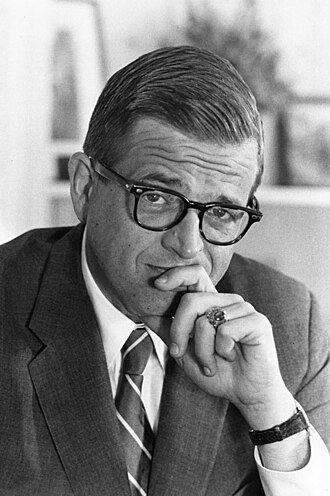
President Nixon and Charles Colson discussed political strategies to manage Democratic opposition, particularly regarding Senator Edward Kennedy's recent criticisms of the administration's Vietnam policy. They strategized on how to leverage the resulting friction between Kennedy and Senator Edmund Muskie, while also utilizing Congressional Republicans to attack the Democrats' past involvement in the war. Additionally, they reviewed positive economic indicators—including stock market gains and housing statistics—and finalized plans for the Administration to take a public stand against ongoing West Coast dock strikes to bolster their political standing.
President Nixon met with his senior advisors and staff to debrief on the reception and political impact of his January 1972 State of the Union address. The participants analyzed media commentary and the reactions of congressional Democrats, specifically noting the effectiveness of the President's shift toward a more statesmanlike, moderate tone. Nixon and his team developed a strategy to pressure Congress by highlighting legislative inaction through daily congressional floor reminders, aiming to frame Democrats as obstructionists ahead of the 1972 election. They also discussed future messaging, emphasizing the importance of focusing on tangible economic results over rhetoric.
President Nixon and Charles Colson briefly discussed rescheduling a meeting with political analyst Richard Scammon due to the President's upcoming television address regarding his Vietnam peace proposal. Nixon prioritized preparing for the broadcast and indicated a desire to review recent political literature, specifically referencing Scammon and Ben Wattenberg’s work, *The Real Majority*. Colson was tasked with coordinating the scheduling change to accommodate the President's agenda.
Henry Kissinger and Charles Colson discussed the positive public and institutional response to President Nixon's recent address regarding the Vietnam War. Kissinger, acting on the President's behalf, encouraged Colson to sustain this momentum among key constituencies, including veterans, business leaders, and organized labor. The two men also coordinated efforts to secure endorsements from left-leaning figures, citing the collaborative work of George Shultz and Robert Finch to bolster the administration's narrative.
President Nixon and Charles Colson discuss the overwhelmingly positive political reception of the President's recent televised speech regarding Vietnam. Colson reports that various political figures, media commentators, and interest groups view the address as a major triumph that significantly bolstered presidential credibility. The two men analyze the favorable reactions from both conservative allies and former critics, concluding that the speech effectively neutralized ongoing domestic opposition and shifted the national focus away from concerns regarding the federal budget.
President Nixon and Charles W. Colson met briefly to discuss scheduling matters involving H. R. Haldeman. The conversation focused on the necessity of increasing political involvement and urgency in their upcoming agenda. No specific policy decisions were finalized during this brief exchange.
President Nixon met with Charles Colson and H.R. Haldeman to discuss the unfavorable media coverage regarding his recent Vietnam peace proposal. Nixon expressed frustration with the press, specifically criticizing newspapers like the New York Times and Washington Post for their negative framing and lack of objective reporting. The President directed his staff to proactively challenge these narratives by mobilizing friendly journalists and political allies to attack the media's divisive tone and emphasize positive public support for the administration's policy.
President Nixon consulted with the White House operator to facilitate a telephone connection with his special counsel, Charles W. Colson. The brief exchange served as an administrative bridge to initiate direct communication between the President and Colson. No substantive policy matters were addressed during this initial operator-assisted call setup.
President Nixon and Charles Colson discuss strategies to sustain public support and national unity following the President’s recent televised speech on the Vietnam peace plan. Nixon directs Colson to coordinate with Alexander Haig to have Patrick Buchanan or William Safire draft a Q&A document highlighting the plan’s benefits regarding POWs to shape public messaging. They also discuss leveraging Vice President Agnew and other administration officials for further public outreach and mobilizing media support to neutralize critics.
President Nixon, H.R. Haldeman, Charles Colson, and other staff members discuss communication strategy following a televised speech, specifically focusing on the favorable public reaction and the need to capitalize on it. They coordinate the dissemination of a Q&A document to help the press and administration officials defend the President's peace plan. Additionally, the group brainstorms a publicity stunt involving a surprise live telephone call from the President to Henry Kissinger during a public dinner to highlight the administration's unity and focus.
President Nixon met with political analyst Richard Scammon and aide Charles Colson to discuss strategies for appealing to the American majority, particularly regarding social issues like school busing, crime, and housing. The participants explored how these issues influence electoral coalitions and analyzed the perceived disconnect between the values of the public and the views held by the intellectual elite. Nixon reflected on the importance of national leadership, the role of political courage, and the necessity of maintaining American influence and strength in a global context.
President Nixon met with H. R. Haldeman and Charles Colson to discuss administration political strategy, specifically focusing on labor relations, social issues like busing, and the President's upcoming campaign schedule. They explored potential outreach to AFL-CIO leader George Meany, debated how to best leverage public sentiment regarding the Vietnam War, and reviewed polling insights from Richard Scammon. The participants also finalized decisions regarding personnel shifts, including the replacement of military aides and the potential appointment of Richard V. Allen to a foreign policy or political advisory role.
President Nixon and Charles Colson discussed public relations and political strategy following the President's recent Vietnam peace initiatives. They reviewed positive polling data, media management tactics, and the effectiveness of surrogates like Hugh Scott in countering Democratic criticism. Additionally, the pair assessed the political benefits of ongoing labor relations and discussed recent economic indicators, including a decline in insured unemployment claims and labor surplus areas, to frame a positive narrative for the administration.
President Nixon held a wide-ranging meeting with H.R. Haldeman and several other key staff members to discuss political strategy, personnel matters, and public relations. Key topics included the appointment of Marina von Neumann Whitman to the Council of Economic Advisors, the political fallout and press handling of a protest at a recent White House dinner, and the administration’s strategy regarding potential 1972 Democratic presidential challengers. Additionally, Nixon and his staff reviewed polling data and preparations for his upcoming trip to the People’s Republic of China, emphasizing the positive reception of his recent Vietnam peace proposals.
President Nixon and Charles W. Colson discussed domestic political strategy, focusing on public reaction to Nixon’s recent Vietnam policy speech and the polling strength of Democratic presidential candidates. The two evaluated the impact of anti-war protests, specifically criticizing a recent demonstration by a member of the Ray Conniff Singers at a White House dinner as poorly timed and counterproductive. Additionally, they reviewed economic indicators and campaign logistics regarding potential primary challengers.
President Nixon and Charles Colson discussed the political landscape ahead of the 1972 election, focusing heavily on the Democratic field, particularly the campaigns of Edmund Muskie and Edward Kennedy. The conversation covered domestic policy issues, including concerns over pending unemployment figures and the political implications of busing and recent court decisions. They also reviewed media coverage, recent polling data, and the status of ongoing labor negotiations regarding a dock strike.
President Nixon, Charles Colson, and Ron Ziegler met to discuss domestic political strategy, focusing on exploiting the recent peace negotiation failures of Democratic candidate Edmund Muskie. Nixon directed his team to aggressively attack Muskie's public statements regarding the Vietnam War, arguing that they undermined the administration's ongoing diplomatic efforts. Additionally, the group reviewed positive economic indicators—specifically improvements in unemployment rates for married men—and strategized on how to promote these figures to the public to improve the President's image ahead of the 1972 campaign.
President Nixon and Charles Colson reviewed the political landscape ahead of the President’s upcoming trip to the People's Republic of China, focusing on recent polling data and public sentiment. They analyzed the impact of Gallup and Samuel Lubell survey results regarding the Vietnam War, the President's approval ratings, and criticisms leveled by Edmund Muskie. The pair also discussed the political momentum of the 1972 election, including Jimmy Hoffa’s recent endorsement and strategies for managing the media narrative.
President Nixon met with his Cabinet and senior staff to debrief them on the results and implications of his recent diplomatic trip to the People's Republic of China. The President emphasized that the primary success of the visit was the establishment of a new communication channel between the two nations, which he argued was essential for managing long-term stability and reducing the potential for future conflict. Nixon shared his impressions of Chinese leadership, particularly his discussions with Chou En-lai, noting the stark ideological differences while highlighting common strategic interests, such as peace in the Pacific and balancing influence against the Soviet Union. The discussion concluded with a focus on how this opening could be leveraged to reshape international relations and manage regional tensions across Asia.
Charles W. Colson calls President Nixon to offer congratulations and share positive domestic feedback following the President's recent trip to the People's Republic of China. Colson emphasizes that the President's demeanor and confidence during the visit successfully impressed the public and converted political skeptics. The brief conversation concludes with the President requesting that Colson call back in five minutes so he can address pending administrative paperwork.
President Nixon and Charles W. Colson engaged in a brief, informal check-in regarding the pressures of the administration. The exchange reflects a moment of frustration regarding internal communication and the constant state of political crisis. They agreed to reconnect in five minutes to address more substantive matters.
President Nixon and Charles Colson discussed the positive public reception of the President's recent trip to the People's Republic of China, emphasizing how Nixon's poise and confidence helped cultivate a stronger, more favorable personal image among the American public. Colson shared feedback from various media figures and pollsters, noting that observers were particularly impressed by the President's leadership during the trip, even amidst critical reporting regarding the Taiwan issue. The pair agreed that the successful projection of presidential strength and control was vital for political standing, and they coordinated efforts to push back against unfavorable media coverage, specifically targeting the reporting of Dan Rather.
President Nixon and Charles Colson discuss the political fallout and public perception following the President's recent trip to China. They analyze the impact of media coverage, specifically criticizing negative headlines, while assessing how the trip bolstered Nixon's personal image despite unfavorable reporting on his family. The conversation focuses on leveraging this positive momentum in public opinion to bolster the administration's standing for the upcoming election cycle.
President Nixon and Charles Colson discuss the political implications of recent economic trends, specifically focusing on the upcoming January unemployment figures and stock market performance. The conversation also analyzes the volatility of the 1972 Democratic primaries, particularly the decline of Edmund Muskie's campaign and the potential impact of the busing issue on Democratic candidates. Nixon expresses satisfaction with the defeat of the Griffin Amendment, noting that it preserves his administration's flexibility to define its own legislative stance on the busing issue.
President Nixon and Charles Colson discuss the shifting dynamics of the 1972 Democratic presidential primaries, specifically focusing on the performance of candidates and the influence of the press. They analyze the impact of voter turnout among liberals and conservatives, while speculating on the potential entry of Senator Ted Kennedy into the race. The conversation concludes with administrative coordination regarding upcoming staff communication while the President prepares for a brief period of absence.
President Nixon and Charles Colson discuss the political fallout of the ITT controversy, dismissing it as a media-driven distraction that will soon fade. They also review the positive public reception of Nixon’s recent trip to the People's Republic of China, citing favorable polling and high approval ratings as evidence of its success. Finally, they analyze indicators of a strengthening national economy, specifically noting a surge in public market participation and encouraging reports from economic advisor Herbert Stein.
President Nixon met with H.R. Haldeman and John Ehrlichman to strategize on political damage control regarding the ITT anti-trust case and the Dita Beard memorandum. They discussed mobilizing allies in Congress—specifically naming Senators Cook, Gurney, and Goldwater—to counter the investigation and redirect public attention toward the political motivations of Senator Edward Kennedy and columnist Jack Anderson. The President also finalized plans for upcoming briefings and a potential televised press conference, while reviewing legislative tactics related to school busing and Social Security.
President Nixon met with Charles Colson, Kenneth Clawson, and others to discuss public relations strategies regarding the burgeoning ITT controversy and the authenticity of the Dita Beard memorandum. The participants expressed concerns that the memo was a fabrication, likely manipulated by Jack Anderson or his staff, and strategized on ways to discredit the document while navigating negative media coverage orchestrated by political opponents, including Senator Ted Kennedy. The President emphasized his belief that the memo was logically inconsistent and forged, instructing his staff to aggressively investigate its origins and use the findings to protect the administration from scandal.
President Nixon met with his senior advisors, including H.R. Haldeman and Charles Colson, to coordinate a strategy for neutralizing the ongoing ITT controversy and the accompanying negative press coverage. The discussion focused on discrediting the 'Beard memorandum' through forensic typewriting analysis and managing the potential damage from Senate hearings regarding Attorney General Richard Kleindienst’s confirmation. Nixon emphasized a policy of aggressive pushback against smear campaigns, referencing his past experience with the Alger Hiss case, while also firming up his administration's position to avoid any personnel resignations under political pressure.
President Nixon and Charles Colson discuss strategies for managing negative press coverage regarding the International Telephone and Telegraph (ITT) scandal. They specifically address efforts to influence the Washington Star and journalist Smith Hempstone, as well as the investigation into Dita Beard and the involvement of White House staff. The conversation focuses on countering damaging narratives through media management and monitoring ongoing inquiries.
President Nixon and Charles Colson discuss strategies to discredit a recent media report, specifically targeting coverage by the Washington Star regarding the Grinnell divestiture case. The President expresses frustration with the article's framing and instructs Colson to pressure editorial staff and utilize subordinates like Ken Clawson to challenge the journalist's credibility. Additionally, the pair briefly touches upon the ongoing effort to use forensic typewriter analysis to undermine the document's authenticity.
President Nixon and Charles Colson discuss the ongoing political fallout surrounding the ITT antitrust investigation and the Dita Beard memo. They analyze various media reports, the potential testimony of Attorney General John Mitchell before Congress, and the strategic implications for the administration's public image. The conversation emphasizes managing congressional inquiries and media narratives, specifically comparing these investigative tactics to the historical Alger Hiss case.
President Nixon and Charles Colson discuss political strategies to deflect scrutiny surrounding the IT&T antitrust case and mitigate the influence of political adversaries in Congress. The President directs Colson to investigate the growth of IT&T during previous Kennedy and Johnson administrations to create a counter-narrative, while also discussing aggressive legal and interrogation tactics to discredit political opponents. Nixon emphasizes the need for his team to remain resilient and strategic under pressure, stressing the importance of gathering evidence to protect the administration.
President Nixon and Charles Colson discuss their strategy for responding to the ITT controversy, primarily focusing on discrediting the leaked memorandum and its source, Dita Beard. They prioritize painting the memorandum as a fraudulent effort orchestrated by Jack Anderson to damage the administration, while concurrently using typewriter analysis and other investigative techniques to challenge the document's authenticity. The conversation also touches on broader political maneuverings, including managing upcoming Senate hearings, countering the negative press, and reinforcing the administration's position on busing.
President Nixon and Charles Colson discussed the ongoing political damage control surrounding the ITT antitrust case and the contentious Dita Beard memorandum. They examined conflicting forensic reports regarding the authenticity of the document, specifically addressing discrepancies between FBI findings and independent expert analysis. The conversation centered on strategies to counter Democratic-led Senate hearings, including Republican Senator Hugh Scott's boycott and the push for Senate investigators to conduct interviews in Denver. The President emphasized the need to maintain a firm political stance against Democratic stalling tactics and to discredit the allegations surrounding the administration's involvement.
President Nixon met with his senior aides, including H.R. Haldeman, Charles Colson, and John Ehrlichman, to discuss a range of domestic political issues and scheduling conflicts. The participants addressed the ongoing ITT antitrust investigation and its potential for negative political fallout, as well as coordinating public relations strategies regarding Nixon’s upcoming press conference and his attendance at the Gridiron dinner. Nixon ultimately decided to prioritize his travel schedule and administration optics, weighing the pros and cons of official representation at the dinner versus managing the fallout from controversies involving campaign financing and the Justice Department.
President Nixon and Charles Colson discussed a variety of political and administrative issues, including the status of Democratic-led ITT hearings and the potential resignation of George Meany from the Pay Board. The President emphasized his intent to take a firm stance against labor leaders if they chose to leave the board, prioritizing national interest over special interests. Additionally, the pair reviewed the media reception of recent White House initiatives, specifically praising the President’s aggressive rhetoric regarding inter-agency competition in drug control efforts.
President Nixon and Charles Colson discussed the potential resignation of George Meany from the Pay Board, debating whether Meany's departure would offer an opportunity for the administration to establish stricter, government-controlled wage policies. They agreed that any effort to accommodate labor would project weakness and dismissed the necessity of maintaining a tripartite structure. Additionally, the pair strategized on how to counter negative press coverage and congressional investigations related to the ITT case, emphasizing the need to expose the media's bias and coordinate supportive commentary through journalists like Willard Edwards.
President Nixon and Charles Colson discuss campaign strategy, polling data, and the importance of monitoring media coverage leading up to the 1972 election. They evaluate political vulnerabilities and the potential for unfair bias from news organizations regarding the administration. Nixon emphasizes the necessity of closely tracking opposition activities and maintaining an effective, controlled campaign operation to mitigate perceived media hostility.
President Nixon and Charles Colson discussed the political fallout following George Meany's resignation from the Wage Board, agreeing on the need for a hardline public relations strategy to frame Meany as an obstructionist to the public interest. The two men explored strategies for restructuring the board—potentially moving toward a wholly public membership—while leveraging the conflict to align the administration with the public's concerns regarding rising food prices. Nixon instructed Colson to pressure George Shultz to finalize a new board proposal and develop a stronger stance on controlling food costs despite potential friction with the agricultural sector.
President Nixon and Charles W. Colson discussed a strategic media offensive intended to aggressively discredit political opponents regarding a perceived food crisis. The President instructed Colson to frame the administration's narrative using inflammatory language like "sabotage" to sway public opinion and deflect blame. The meeting focused on consolidating a unified, critical message to exploit the public's anxieties about market instability for political gain.
President Nixon met with his senior advisors and cabinet members to finalize strategy for an upcoming press conference and address recent developments regarding the Pay Board. The discussion focused on responding to the withdrawal of AFL-CIO leadership from the Pay Board, managing public perception of inflation and economic policy, and formulating official stances on contentious social issues including busing, abortion, marijuana legalization, and Social Security increases. The group debated the optimal timing and format for the President to announce the administration's economic adjustments to ensure maximum impact and clarity while minimizing political vulnerability.
President Nixon and his senior advisors, including John Ehrlichman, H.R. Haldeman, and John Connally, met to formulate an aggressive administrative response to the resignation of George Meany and other labor leaders from the Pay Board. The group discussed the timing and format of a public statement intended to demonstrate decisive presidential action and secure political leverage against Democratic opponents. They also debated potential replacements for the labor positions, reviewed strategies for handling the national economy, and coordinated the President's upcoming press conference to ensure it effectively overshadowed current controversies like the IT&T investigation.
President Nixon met with H. R. Haldeman, Charles Colson, and others to strategize on managing the political fallout from George Meany’s resignation from the Pay Board and the ongoing ITT controversy. The participants discussed crafting the President’s public response to minimize criticism of his labor policies, focusing on the "special interests" narrative to isolate Meany and neutralize Democratic attacks. Additionally, the President issued directives to accelerate government spending through federal agencies and instructed his staff to aggressively challenge congressional misconduct, including the potential release of derogatory information on political opponents.
President Nixon and Charles Colson discuss a strategic media push to frame the President’s recent Pay Board confrontation with AFL-CIO leader George Meany as a stand against special interests. The two also address the ongoing controversy surrounding the International Telephone and Telegraph (ITT) case, specifically expressing frustration over inconclusive FBI reports and potential leaks to Senator Edward Kennedy. Colson is tasked with notifying John Ehrlichman of concerns regarding Kennedy's prior knowledge of sensitive investigations, reflecting the administration's belief in systemic bureaucratic hostility.
President Nixon and Charles Colson discuss the political fallout of an FBI report regarding the ITT case, which appears to contradict claims of document forgery by Dita Beard. Concerned that the FBI’s findings support allegations against the administration, Nixon and Colson strategize on using expert testimony from McCrone and Tytell to create public confusion and neutralize the report's impact. They agree on the urgency of the situation, deciding to move quickly to challenge the narrative before it is fully solidified by the Senate Judiciary Committee.
President Nixon and Charles Colson discuss the status of an FBI report and potential political maneuvering involving ITT and other figures. The participants weigh the risks of challenging the FBI's position versus utilizing external events to their advantage. They emphasize the need for rapid action to influence public perception and media coverage.
President Nixon and Charles Colson discussed political strategy regarding the ITT antitrust controversy, the upcoming press conference, and their efforts to discredit George Meany and Democratic opposition. Colson provided updates on FBI document testing and advised that ITT should publicly release their own expert reports to create doubt, while Nixon emphasized the importance of aggressive media management and partisan messaging. The pair also explored legislative tactics, including a potential presidential veto of equal-time broadcast legislation, and discussed exploiting divisions within the AFL-CIO to damage the political standing of labor leadership.
President Nixon and Charles Colson discuss media management strategies to counter perceived negative coverage, focusing on ways to discredit critics and news organizations through orchestrated public campaigns. The two discuss mobilizing supporters to write letters to editors and network executives to protest perceived bias and unfair reporting. Nixon emphasizes the need for an aggressive, proactive communication strategy to control the narrative rather than waiting until the election cycle to respond.
President Nixon met with his senior staff, including H. R. Haldeman, Ronald Ziegler, and Charles Colson, to review the performance and content of his recent press conference. They discussed the effectiveness of his responses to various topics, specifically his firm stance on marijuana legalization, his handling of the ITT antitrust controversy, and his efforts to blame previous Democratic administrations for current economic and regulatory problems. The President and his advisors expressed satisfaction with the 'glass houses' rhetoric used to deflect criticism and finalized strategies to continue blaming the middleman for rising food prices.
President Nixon and Charles W. Colson discussed the sudden collapse and reported heart seizure of Dita D. Beard during her intense questioning by Senator Edward M. Kennedy regarding the ITT case. Colson provided the President with details on the medical incident and speculated on the potential political fallout and media narrative surrounding the event. The two men agreed that the dramatic nature of the situation would likely dominate news coverage in the coming days.
Ronald Ziegler and Charles Colson coordinate the White House's public response to the International Telephone and Telegraph (ITT) scandal. They agree to maintain a "no comment" position from the administration while tasking William R. Merriam with issuing a denial regarding allegations of inappropriate White House contacts. The pair seeks to confirm whether the improper communications originated from Edward J. Gerrity, Jr. or Merriam so that the appropriate individual can formally refute the claims.
President Nixon and Charles Colson discuss strategies to counter ongoing Congressional hearings regarding the International Telephone and Telegraph (ITT) case and the confirmation of Richard Kleindienst. They focus on pressuring Republican senators Hugh Scott and Roman Hruska to launch an offensive, including a press conference that frames Senator Edward Kennedy’s questioning as a "sickbed inquisition." Additionally, Colson outlines plans to issue an affidavit from William R. Merriam to debunk allegations of a specific White House phone call to Dita D. Beard.
President Nixon and Charles W. Colson attempted to conduct a brief, informal telephonic check-in regarding scheduling and ongoing communications. The conversation was significantly hampered by severe technical difficulties, rendering the audio mostly unintelligible and preventing any substantive discussion of policy or political strategy. Consequently, no concrete decisions were reached, and the participants ended the call due to the connectivity issues.
President Nixon met with his senior aides, including Charles Colson and H.R. Haldeman, to discuss the ongoing political damage and legislative obstacles created by the ITT confirmation hearings for Richard Kleindienst. The group debated strategies for responding to Democratic inquiries, particularly the aggressive questioning from Senator Edward Kennedy, and considered forcing a decisive floor vote or having Kleindienst threaten to resign if not confirmed by a specific date. Throughout the conversation, Nixon emphasized the need to distance the White House from ITT's business activities, such as their convention hotel arrangements, to maintain the administration's integrity.
President Nixon and Charles Colson discuss the ongoing political damage caused by the International Telephone and Telegraph (ITT) scandal and the resulting controversy surrounding Richard G. Kleindienst's Senate confirmation. They express frustration with the media's handling of the case and the unauthorized television appearances of White House staff, specifically Peter M. Flanigan. To mitigate political fallout during an election year, the President and Colson determine that they must force a resolution to the ITT matter and minimize the duration of the Senate hearings to prevent further damage to the administration.
H. R. Haldeman, Clark MacGregor, and Charles Colson coordinated strategies to successfully terminate the Senate hearings concerning the ITT case. MacGregor outlined efforts to secure necessary votes from Republican senators and Senator James Eastland, while discussing potential concessions and scheduling hurdles. The participants also considered whether Peter Flanigan should provide a statement to the committee, weighing the political benefits against the risks of breaching executive privilege.
President Nixon met with Clark MacGregor, H. R. Haldeman, and Charles Colson to strategize on ending the ongoing Senate Judiciary Committee hearings regarding the International Telephone and Telegraph (ITT) case and the nomination of Richard G. Kleindienst. The group expressed concern that the hearings were damaging the administration and discussed orchestrating a committee vote to terminate the proceedings, despite potential political blowback. They also deliberated on the best way for Kleindienst to manage his public image and address the nomination impasse, while acknowledging frustrations regarding poor communication and handling of the controversy by White House staff.
President Nixon met with H. R. Haldeman and Charles Colson to discuss a wide range of political strategies, focusing heavily on managing the ongoing International Telephone and Telegraph (ITT) investigation, avoiding an anti-labor legislative trap, and finalizing the President's stance on busing and aid to parochial schools. Nixon emphasized the need for his staff to remain focused on key political issues—the cost of living, busing, and the Vietnam War—while insulating the White House from the fallout of the ITT hearings. The participants strategized on how to handle Senate Judiciary Committee Chairman James Eastland to bring the ITT investigation to a close, balancing the desire to end the hearings with the need to avoid appearing as if they are orchestrating a cover-up.
President Nixon met with his staff and Teamsters President Frank E. Fitzsimmons to discuss labor policy, the status of the Pay Board following George Meany's resignation, and negotiations regarding the West Coast dock strike. Nixon emphasized his desire to maintain open communication with labor leaders to avoid being perceived as anti-labor and sought Fitzsimmons's advice on navigating these disputes. Additionally, the President received an update from Henry Kissinger regarding delicate Vietnam peace negotiations and upcoming Soviet summit preparations, while later discussing internal Teamsters matters, including the status of Jimmy Hoffa.
President Nixon and H.R. Haldeman, later joined by Charles Colson, met to coordinate the President's upcoming schedule, focusing on the timing of a speech to the National Catholic Educational Association to maximize political impact before the Wisconsin primary. They discussed labor relations, particularly the President's relationship with Teamsters leader Frank Fitzsimmons and the maneuvering of AFL-CIO President George Meany regarding the 1972 election. Additionally, the participants reviewed international travel logistics, current economic policy, and the administration's strategy for managing the burgeoning ITT controversy.
President Nixon and Charles Colson discussed the state of the economy, specifically analyzing positive trends in the stock market and retail sales despite negative press coverage. Nixon expressed frustration with media reporting, particularly Walter Cronkite’s interpretation of economic indicators, and directed Colson to arrange a meeting between the President and Cronkite to address the narrative. The two also touched upon 1972 campaign strategy in Illinois and Wisconsin and decided to transition toward a more aggressive, offensive political posture.
President Nixon and Charles Colson discuss administration strategy for countering negative press coverage, specifically regarding the ITT controversy and the 1972 Democratic primary. They review ongoing political efforts to mitigate concerns over food prices, busing, and the Vietnam War, while strategizing on how to maintain public support through symbolic administrative interventions. Additionally, the pair evaluates labor relations, highlighting the importance of securing the support of Teamsters and other key union leaders like James Rademacher to counter opposition from George Meany.
President Nixon and Charles W. Colson discuss political strategy regarding the 1972 primary elections and the management of media narratives surrounding political opponents. The conversation centers on undermining the credibility of critics by sowing doubt about their claims and analyzing the effectiveness of rival candidates' public exposure and media reach. Nixon expresses satisfaction with Colson’s efforts to neutralize negative charges and discusses the potential political impact of their coordinated messaging.
President Nixon and Charles Colson discuss the political strategy surrounding the ongoing International Telephone and Telegraph (ITT) hearings and the potential for a Democratic-led filibuster. They express concern over the possibility of a quorum-denying walkout by Senators Edward Kennedy and John Tunney and emphasize the importance of maintaining Republican unity to frame the inquiry as a purely partisan vendetta. Nixon stresses the need to keep Democratic committee members like James Eastland motivated to force a vote, while Colson notes that public and press interest in the hearings is beginning to wane.
President Nixon and Charles Colson discuss administrative decisions regarding the International Atomic Energy Agency (IAEA) and the status of ongoing organizational operations. The participants briefly coordinate upcoming scheduling logistics and assess the timing for future proceedings. The conversation highlights the administration's focus on maintaining control over specific policy agendas and agency activities.
President Nixon and Charles W. Colson coordinate a brief, in-person meeting at the Executive Office Building to facilitate progress on pending speech drafts. The call serves as a logistical bridge between the two men to maximize their availability during a gap in their respective schedules. No policy decisions were finalized, as the primary outcome was the immediate scheduling of their collaboration on administration messaging.
President Nixon and Charles Colson discuss campaign strategy regarding the potential inclusion of marijuana legalization as a political issue. Nixon seeks advice on whether to take a firm stance against legalization to appeal to parental concerns, rather than limiting anti-drug rhetoric to heroin. Colson argues that opposing legalization would resonate with a broad base, including younger individuals who do not support the drug's widespread use.
President Nixon and Charles W. Colson discussed the political strategy surrounding the President’s upcoming Philadelphia speech regarding federal aid for non-public schools. They evaluated potential opposition from the National Education Association and fundamentalist groups, while weighing the support of Catholic leadership, specifically Cardinal John Krol. Additionally, the participants reviewed campaign intelligence regarding the George McGovern organization and discussed the scheduling of upcoming Senate hearings concerning the ITT case.
President Nixon and Charles Colson discuss strategies for managing negative economic news, specifically an anticipated rise in the unemployment rate, by emphasizing positive job growth metrics and leveraging economic spokespeople like Herbert Stein and Marina Whitman. They also review the political handling of the ITT hearings, focusing on efforts to secure Senator James O. Eastland's cooperation to end the proceedings. Nixon directs Colson to ensure Republican leadership frame any continued hearings as a partisan "political inquisition" and filibuster to minimize political fallout.
President Nixon, H. R. Haldeman, Henry Kissinger, and Charles Colson met to discuss domestic and foreign policy strategies amidst escalating public protests over the Vietnam War. They focused on leveraging public support for the administration's aggressive stance against the North Vietnamese offensive, while coordinating counterattacks against Democratic critics and media outlets perceived as hostile. A key decision was to maintain a firm, hawkish rhetoric regarding the war and to pressure congressional allies, such as Barry Goldwater, to introduce resolutions condemning North Vietnam to force Democrats into an indefensible political position. Additionally, the group analyzed the shifting Democratic primary landscape, concluding that the party's internal divisions and the rise of George McGovern's campaign played to the President's electoral advantage.
President Nixon and Charles Colson discussed the administration's political strategy regarding the ongoing Senate hearings on the International Telephone and Telegraph (ITT) case and the Vietnam War. They celebrated a favorable 12-1 vote regarding Peter M. Flanigan’s testimony, viewing it as a tactical victory that effectively neutralized opposition and paved the way for an eventual acquittal of Richard G. Kleindienst. Furthermore, they coordinated efforts to pressure Democrats over their opposition to the U.S. war effort in Vietnam, utilizing surrogates like Vice President Agnew, John B. Connally, and labor leaders to maintain a tough, patriotic public stance.
President Nixon and Charles Colson discuss political strategy regarding Senate hearings on ITT and the broader Vietnam War discourse. Nixon expresses a desire to frame the opposition's stance on the war as supporting the enemy, aiming to pressure political rivals. They also review economic messaging, including the Consumer Price Index (CPI) and the effectiveness of the President's economic council.
President Nixon and Charles Colson discuss administration strategy regarding the ongoing ITT hearings and the political fallout of the North Vietnamese offensive. They focus on tactical maneuvers to delay or stall the ITT testimony to protect administration interests while coordinating a message of firm leadership against communist aggression. Nixon expresses satisfaction with bipartisan support and the public's perceived shift in favor of his administration's Vietnam policies.
President Nixon and Charles Colson discuss political strategy regarding ongoing congressional hearings and the public narrative surrounding the Vietnam War. They analyze the Democratic Party's internal divisions over an 'end to war' amendment, with Nixon emphasizing the need to frame his opponents as siding with communists. Ultimately, the President encourages an aggressive stance, framing the ongoing crisis as an opportunity to project strength and firm leadership to the public.
President Nixon and Henry Kissinger discussed the diplomatic risks and strategic conditions surrounding Kissinger’s upcoming trip to Moscow ahead of the Soviet summit. They reached a consensus that any public announcement regarding a return to plenary peace talks on Vietnam must be backed by ironclad Soviet guarantees to prevent the U.S. from being forced to halt bombing and blockade operations prematurely. Following this, Nixon consulted with Charles Colson regarding political pushback from university administrators over the administration’s Vietnam policies, emphasizing a need for a firm, adversarial response to critics.
President Nixon and Charles Colson discussed strategies to manage the ongoing ITT confirmation hearings, focusing on limiting hostile questioning of witness Jack Gleason and stalling Democratic probes. Nixon directed Colson to leverage information regarding past Democratic contributions from ITT to deflect political pressure and, if necessary, expose financial ties between the company and members of the Senate. The conversation also touched on the administration's aggressive communication strategy, specifically praising John Connally’s public defense of Vietnam policy and planning for Vice President Spiro Agnew to confront dissenting Ivy League university presidents.
President Nixon and Charles Colson discuss political strategy, focusing on upcoming testimony by Peter M. Flanigan regarding the ITT case and the administration's plan to frame Democratic candidates as being disloyal and supportive of the enemy regarding the Vietnam War. They review the morale-boosting effects of recent bombing campaigns in Vietnam and critique the effectiveness of various economic spokespeople. The conversation emphasizes the need for the administration to aggressively push these narratives to shift public opinion and gain support from labor groups.
President Nixon initiates a brief telephone call to summon Charles W. Colson to his office. The two discuss the logistics of their upcoming in-person meeting, confirming that Colson is nearby and available to head over immediately. The brief exchange serves primarily as a coordination step for a private consultation between the President and his advisor.
President Richard Nixon met with special counsel Charles W. Colson for a brief, one-minute discussion in the Old Executive Office Building. While no transcript exists for this encounter, the interaction reflects the ongoing advisory relationship between the President and Colson regarding White House administrative or political matters. The meeting served as a brief consultation within the broader context of their regular coordination on executive affairs.
President Nixon met with Charles Colson, William P. Rogers, and Caspar Weinberger to discuss strategies for managing the Vietnam War, congressional opposition, and the ITT investigation. A key focus was rallying public and congressional support for the President's military response to the North Vietnamese invasion by framing it as a necessary defense of U.S. troops and national integrity. The group also addressed the need to cut federal subsidies for higher education institutions as a budget austerity measure and considered tactics to discredit Democratic opponents who were viewed as defeatist. Additionally, the President received updates on economic figures and discussed the administration's defensive stance regarding ongoing congressional hearings.
President Nixon initiated this brief telephone call to determine Charles Colson's current location and availability. Upon confirming Colson’s proximity, the President requested that he come to the White House for a short meeting. The primary purpose of the contact was to facilitate this immediate, informal consultation between the two men.
President Richard M. Nixon and Charles W. Colson held a brief, one-minute meeting in the Old Executive Office Building to coordinate administrative or political objectives. While a transcript is not available for this specific exchange, the discussion served as a follow-up to a related conversation held earlier that day. No specific policy decisions were recorded during this brief interaction.
President Nixon and Charles Colson coordinated a communication plan involving Clark MacGregor. The participants arranged for MacGregor to return a call to the President immediately upon his arrival at the Capitol. This brief exchange served to facilitate direct contact between Nixon and MacGregor regarding pending political business.
President Nixon met with Charles Colson and other staff members to strategize regarding the public perception of his Vietnam policy and the administration's upcoming diplomatic efforts. They discussed the positive impact of increased bombing in North Vietnam, the success of recent press backgrounders in shaping the President's image as a courageous leader, and the importance of using supportive polling data to counter political opposition. Nixon emphasized his determination to maintain military pressure regardless of political risks to his reelection or the upcoming Soviet summit, while also coordinating the public handling of Henry Kissinger's secret trip to Moscow.
President Nixon and Charles Colson discuss strategies for exploiting the ongoing turmoil within the 1972 Democratic presidential primaries, specifically focusing on the vulnerabilities of candidates like George McGovern and Edmund Muskie. They also evaluate political messaging regarding the Vietnam War, emphasizing the necessity of secret negotiations and coordinating a robust public relations response to challenge Democratic critics. Nixon directs Colson to intensify political attacks, tasking administration surrogates and Republican candidates with forcing their opponents to answer for their positions on the war.
President Nixon met with Assistant Secretary of Transportation Herbert F. DeSimone and special counsel Charles W. Colson to express appreciation for DeSimone's service and conduct a brief photograph session. The discussion shifted toward political strategy, specifically leveraging DeSimone’s background to court ethnic voters and mobilize support for the Republican Party. Nixon encouraged DeSimone to campaign in states like New Jersey and New York to help secure electoral success and broaden the party's appeal among traditionally Democratic-leaning demographics.
President Nixon and Charles Colson discuss strategies for managing public perception of the administration's Vietnam policy, focusing on generating support from religious leaders like Cardinal Krol and discrediting political opponents. They emphasize a high-pressure public relations campaign, including coordinated efforts by the Vice President and Senate allies to frame critics as being aligned with communist interests. Additionally, Nixon instructs Colson to formalize a system for generating organized pressure on local television stations to counter critical network news coverage.
President Nixon and Charles Colson discuss campaign strategy regarding the 1972 Democratic presidential primary, focusing on the perceived threat posed by George McGovern and the political maneuvering of other candidates. Nixon instructs Colson to initiate a campaign to pressure major local television network stations in key cities, such as Los Angeles, Chicago, and Miami, to counter media narratives. The two agree on a strategic approach of characterizing political opponents as serious threats to avoid appearing dismissive while maximizing campaign leverage.
President Nixon and Charles Colson discuss the political landscape following the recent Ohio and Indiana primaries, focusing on the Democratic Party's internal divisions and the perceived public support for Nixon amidst the Vietnam War. They analyze how to leverage the death of FBI Director J. Edgar Hoover to reinforce Nixon’s reputation for loyalty and law-and-order leadership. Colson receives instructions to leak stories regarding Nixon’s past defense of Hoover against staff pressure to bolster the President’s image and undermine the credibility of critical media outlets.
President Nixon and Charles Colson discuss the political fallout and public perception of ongoing military engagements, specifically addressing the risk of potential battlefield losses impacting the President's scheduled trip to Moscow. Nixon emphasizes the necessity of maintaining resolve despite negative projections, drawing a parallel to his steadfast support for J. Edgar Hoover. The conversation highlights the administration's efforts to manage both foreign policy objectives and domestic law-and-order optics during a period of strategic uncertainty.
President Nixon and Charles Colson met to discuss the political fallout from the recent death of FBI Director J. Edgar Hoover and strategies for managing public perception regarding Vietnam and domestic crime policy. The conversation included disparaging remarks about Senator Edward M. Kennedy's personal life and health, as well as an assessment of media coverage surrounding Hoover's legacy. They further analyzed polling data and economic indicators, specifically focusing on how the ongoing Vietnam War and bombing campaigns were affecting public support and the stock market.
President Nixon and Charles Colson analyzed the emerging results of the 1972 Ohio primary election. They discussed the performance of Democratic contenders George McGovern and Hubert Humphrey, as well as the political implications of recent polling data shared by pollster Louis Harris. The conversation focused on interpreting voter enthusiasm and the broader electoral landscape heading into the general election.
President Nixon met with Teamsters leadership, including Frank E. Fitzsimmons and Charles W. Colson, to cultivate support for his administration's labor and foreign policies. The participants discussed the workability of Pay Board controls, the importance of maintaining an open line of communication between the White House and union leadership, and the necessity of resisting communist influence in both domestic labor movements and Vietnam. Additionally, the President defended his recent appointment of L. Patrick Gray to the FBI and shared anecdotes while presenting commemorative gifts to the attendees.
President Nixon met with Vice President Agnew, Cabinet members, and senior staff to discuss the administration's recent escalation in Vietnam, specifically the blockade of North Vietnamese ports. The President articulated his rationale for the decision and sought unified support from his team to manage potential congressional and public opposition. He emphasized the necessity of leadership during difficult times and urged his Cabinet to present a cohesive front in defending the policy to the public.
President Nixon and his senior staff, including H.R. Haldeman, met to evaluate the public and political reaction to the President's recent televised speech regarding the mining of North Vietnamese harbors. The discussion focused on maintaining a firm, "hawkish" stance to emphasize the administration's resolve and ensuring that supporters mobilize to counteract potential criticism from Congress and the media. Nixon directed his team to maximize public displays of support and address logistical issues, such as jammed Western Union lines, to ensure his message of "iron determination" remained the dominant narrative.
H. R. Haldeman and Charles Colson discuss the overwhelmingly positive public reception to President Nixon’s announcement of a naval blockade in Vietnam. They review the success of recent administration messaging and coordinate media appearances to ensure a firm, unified stance, while expressing concern over Secretary of State William P. Rogers's tendency to downplay the policy. Additionally, they decide to pressure Western Union regarding reports that citizens are unable to send telegrams of support to the White House due to service disruptions.
Charles W. Colson and H.R. Haldeman discuss the public and operational fallout following President Nixon's speech regarding the blockade of Vietnam. Colson reports that Western Union is experiencing systemic technical failures due to an overwhelming surge in public telegrams and plans to issue a public apology to address the backlog. Additionally, they review positive feedback from pollsters Albert Sindlinger and Louis Harris, who describe the President's actions as a strategic 'masterstroke' that effectively rallies public support and challenges the Soviet Union.
Charles W. Colson informs H. R. Haldeman that Jay Lovestone has issued a strong public statement supporting the President's recent decision to blockade Vietnam. The pair discusses the immediate distribution of this statement to wire services and its potential impact as a demonstration of labor support. This conversation highlights efforts by the administration to secure and publicize external endorsements following the President's Vietnam policy announcement.
President Nixon met with H.R. Haldeman, Henry Kissinger, Charles Colson, and Melvin Laird to strategize the administration's public relations response to the recent decision to blockade and mine North Vietnamese harbors. The group focused heavily on leveraging favorable internal poll data to counter media skepticism and demonstrate widespread public support for the President's Vietnam policy. Key action items included coordinating the dissemination of these polls through congressional allies like Scott and Griffin, managing surrogate public appearances to criticize Democratic opposition, and mobilizing grassroots support to project a mandate for the President's military actions.