Colson, Charles W.
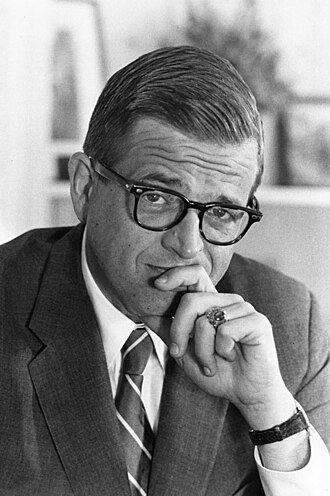
Charles W. Colson served as Special Counsel to the President from November 1969 to March 1973, and concurrently as the Director of the Office of Public Liaison from July 1970 to March 1973. During the White House taping period, Colson acted as Richard Nixon's ruthless political point man and "hatchet man," compiling the infamous "Enemies List" in 1971 and helping establish the White House Plumbers to discredit political opponents. He held both positions until his resignation in March 1973, when he transitioned out of the administration to return to private law practice just before the Watergate scandal fully erupted.
What Colson talks about on the tapes
Public relations 235Political strategy 233Vietnam War 191Economic policy 116George McGovern 97Media relations 901972 Presidential Campaign 82Public opinion 67Watergate 631972 election 60Congressional relations 59Press relations 58
Conversations (865)
— Page 9 of 9President Nixon and Charles Colson discussed strategies for managing congressional relations, particularly the need to maintain pressure on Republican leadership and resist yielding to legislative whining. The conversation centered on the importance of assertive political maneuvering, with both men agreeing that the President should personally encourage House Minority Leader Gerald Ford to replace Robert Wilson as Chairman of the Republican Congressional Campaign Committee to ensure timely recruitment for future elections. Additionally, they reviewed various public relations operations, including efforts to discredit critical media outlets like CBS and the Washington Post, and highlighted the importance of using political leverage against dissenting Republicans like William Saxbe.
President Nixon and Charles Colson discuss an upcoming meeting with prominent attorney Edward Bennett Williams, who had recently reached out to the White House following Nixon's public support of the Washington Redskins. Nixon instructs Colson to remain firm regarding the Washington Post’s coverage of the Watergate scandal, while using the meeting to signal that the administration expects Williams to distance himself from the paper's personal attacks on the President. The conversation highlights the administration's desire to leverage political pressure and potential investigations into Williams' tax returns to encourage his cooperation or neutrality.
President Nixon and Charles Colson discuss efforts to cultivate a relationship with attorney Edward Bennett Williams, emphasizing the necessity of discretion and indirect communication. Nixon expresses his desire to maintain a positive rapport with Williams despite potential political tensions and public scrutiny. The discussion centers on leveraging Williams's influence and connections while ensuring his involvement remains confidential.
President Nixon and Charles Colson discuss strategy for Colson's upcoming meeting with prominent trial lawyer Edward Bennett Williams. Nixon instructs Colson to flatter Williams by acknowledging his professional reputation before pivoting to confront him about his involvement in the Watergate case, specifically questioning his decision to represent the Democratic National Committee on a personal basis. The pair also coordinate efforts to gauge Williams' true intentions regarding the Watergate investigation and potential hidden motives behind his recent correspondence with the President.
President Nixon and Charles Colson discuss the nuances of legal or professional representation, specifically debating the ethics of representing an individual on a personal basis while engaging in aggressive rhetoric. The participants contemplate how to frame a client's public stance to avoid the appearance of personal grievances or specific demands. The conversation ends abruptly with instructions to move forward with their established approach.
President Nixon met with Charles Colson, Henry Kissinger, and other staff members to discuss political messaging, legislative relations with Congress, and the strategic direction of his administration. The participants addressed the difficulties of maintaining secrecy during delicate negotiations, particularly concerning military actions and public perception of the war effort. The conversation reflects the President's frustration with congressional opposition and his intent to navigate these political challenges through careful control of the administration's public narrative.
President Nixon and Charles Colson discuss strategies to manage public and congressional opinion regarding the ongoing Vietnam peace negotiations. Nixon expresses deep frustration with his senior staff, particularly H.R. Haldeman and John Ehrlichman, for failing to effectively rally Republican support and maintain discipline on Capitol Hill. To bolster his position, Nixon directs Colson to have Melvin Laird brief key loyalists—specifically John Rhodes—on the success of the President's recent bombing campaign in bringing North Vietnam back to the negotiating table.
Charles W. Colson contacted his office and Holly Holm to secure transcripts of the President's remarks and Ronald Ziegler's press briefing regarding a bipartisan leadership meeting. Additionally, he instructed Holm to relay authorization to John A. Scali concerning the handling of CIA reports. This directive emphasized that Scali had a "green light" to proceed with his proposal while maintaining strict discretion.
President Nixon met with Charles Colson to discuss administration strategies regarding the Vietnam peace negotiations, congressional relations, and the ongoing Watergate investigations. A primary focus was managing public and political fallout from the U.S. bombing campaigns in North Vietnam and coordinating with bipartisan leaders. The participants also explored legal developments surrounding the Watergate burglars, specifically E. Howard Hunt, including potential justifications for clemency and maintaining deniability for the White House.
In this meeting, President Nixon and Charles Colson discussed a wide range of administrative and political concerns, including congressional relations, press strategy, and economic indicators. The conversation touched upon the management of the Watergate scandal, the ongoing Vietnam peace negotiations, and the President's upcoming schedule. The participants coordinated efforts to maintain bipartisan support in Congress and managed public perception surrounding administration officials and staff.
President Nixon and Charles Colson coordinate with William E. Timmons regarding the strategy for an upcoming congressional meeting and reception. They instruct Timmons to personally attend the evening gathering of freshman congressmen and bipartisan leadership to manage the optics of the event. Additionally, they discuss the status of a meeting with Mike Mansfield, ultimately deciding to prioritize the evening reception over other scheduling concerns.
President Nixon and Charles Colson discussed the need to reinvigorate the White House's "attack apparatus" to counter partisan criticism from Congressional Democrats regarding Vietnam policy and press relations. Frustrated by the lack of aggressive public relations efforts following the 1972 campaign, Nixon instructed Colson to coordinate with H.R. Haldeman to reorganize staff duties and re-establish a team of "gut fighters" capable of managing the administration's messaging. Additionally, they reviewed intelligence on Henry Kissinger’s unauthorized contacts with journalists, with Nixon ordering continued monitoring of Kissinger’s telephone calls through the FBI.
President Nixon and Charles Colson discuss the need for a more aggressive, combat-oriented strategy to counter partisan Democratic attacks in Congress regarding the Vietnam War. Nixon expresses frustration with his administration's perceived weakness in public relations and congressional relations, specifically criticizing staff members for failing to effectively message his administration's foreign policy goals. Consequently, Nixon tasks Colson with assembling a more combative team to push back against the media and political opposition while investigating potential unauthorized leaks from within the administration, including those involving Henry Kissinger.
President Nixon met with Charles Colson, Ronald Ziegler, and Col. Richard T. Kennedy to review administrative strategy, political optics, and upcoming agenda items for his second term. The discussion touched on the President's press relations, the management of the wholesale price index, and staff responsibilities, while also addressing ongoing concerns regarding the Vietnam peace negotiations and the political fallout of the 1972 election. Nixon and his advisors emphasized the need to consolidate political support and effectively counter criticism from Democrats and the press as they transitioned into the second administration.
President Nixon met with H.R. Haldeman, Charles Colson, and other senior advisors to discuss staffing appointments, media relations, and legal developments concerning the Watergate scandal. The participants focused on identifying candidates for key government positions, including the IRS commissioner, and debated the management of the administration’s public image amid mounting investigative pressures. Additionally, they reviewed potential risks associated with the ongoing Watergate legal proceedings and the potential for congressional inquiries resulting from upcoming trials.
H. R. Haldeman coordinates with Stephen B. Bull to arrange an unannounced, low-profile excursion for President Nixon and Charles G. “Bebe” Rebozo on the White House South Grounds. Haldeman specifies strict security and aesthetic requirements for the vehicle, including the necessity of a seat divider and the removal of presidential flags. Additionally, he instructs that Press Secretary Ronald L. Ziegler be notified of the President's departure only after the thirty-minute drive is already underway.
President Nixon and Charles Colson spoke in the early hours of his second inauguration to discuss the success of inaugural events and coordinate the inclusion of political allies during the upcoming parade. Nixon sought to bolster his "New Majority" coalition by inviting key labor and veteran supporters, such as Peter J. Brennan and Frank Fitzsimmons, to stand with him in the reviewing stand. They also reviewed favorable polling data and political strategy, agreeing to maintain a firm stance against war critics while anticipating that the impending Vietnam peace settlement would silence opposition and vindicate the administration's bombing policies.
President Nixon met with Charles Colson to evaluate the political fallout and public reaction following his 1973 Inauguration, focusing specifically on the effectiveness of his inaugural address and the bias of press coverage. The two discussed strategic approaches to handling the President's political opponents, including the use of lawsuits against critical media outlets like Time magazine. Additionally, they reviewed security concerns and legal responses regarding protestors who disrupted the inaugural parade.
President Nixon and Charles Colson discuss Colson’s potential lawsuit against the media regarding recent reporting. While Attorney General Richard Kleindienst advised against legal action, Nixon encourages Colson to pursue the case to force a public retraction. The conversation also touches upon the death of Lyndon B. Johnson and its impact on the public perception of the Vietnam War settlement.
President Nixon and Charles Colson held a brief, informal discussion regarding unspecified political activities or personnel matters. Due to the fragmentary and poor quality of the recording, no substantive policy decisions or clear action items are discernable. The brief interaction serves primarily to document the ongoing communication between the President and his advisor during this period.
President Nixon and Charles Colson met to strategize the administration's public messaging following the impending Vietnam cease-fire agreement. Nixon emphasized the necessity of a vigorous, aggressive counteroffensive against political opponents and media critics to ensure his policy was perceived as a vindication of his Southeast Asia strategy. They discussed mobilizing labor leaders and veterans to bolster support, while simultaneously dismissing the importance of negative press coverage from outlets like the Washington Post and CBS.
President Nixon met with Charles Colson and Henry Kissinger to discuss public relations strategies regarding the impending Vietnam peace settlement and the anticipated political fallout from domestic critics. The participants reviewed plans to coordinate with congressional leaders and labor figures to build support, while also addressing a recent Supreme Court ruling on abortion and Colson's ongoing legal dispute with Time magazine. Nixon and Kissinger finalized preparations and messaging for an upcoming televised speech intended to address the war's conclusion and defend the administration's past policies.
President Nixon and Charles Colson discussed the positive public reception of the Vietnam peace settlement and formulated a strategy to leverage this momentum against political critics and the press. They coordinated efforts to mobilize allies, including labor leaders, veterans' groups, and supportive members of Congress, to issue statements that would vindicate the administration's policy and neutralize anti-war voices. Nixon explicitly directed Colson to ensure the White House staff maintained intense pressure throughout the night to control the media narrative and rally the 'silent majority.'
President Nixon and Charles Colson reviewed the positive public and political reception to the President’s announcement of a Vietnam ceasefire. They discussed strategies to maintain momentum and dominate the news cycle by coordinating favorable public statements from labor leaders, veterans, and administration allies while actively countering critical press coverage. Nixon and Colson also evaluated the possibility of delaying the President’s upcoming budget message to ensure that the Vietnam settlement remained the primary focus of public attention.
President Nixon met with Charles Colson to coordinate a public relations strategy following the announcement of the Vietnam peace settlement. The President directed Colson to aggressively shape media coverage, cultivate supportive commentary from scholars, and solicit positive reactions from key constituencies, including labor "hardhats." Nixon emphasized the necessity of framing the settlement as a major achievement while countering criticism from political opponents and the press.
President Nixon and Charles Colson met to discuss strategies for managing public and media perception regarding the impending Vietnam peace settlement. The conversation focused on coordinating talking points for upcoming Cabinet meetings and briefing television network commentators to ensure consistent messaging on the agreement's six key points. They specifically examined the role of Henry Kissinger in these media efforts and evaluated the effectiveness of recent public communication strategies.
President Nixon and Charles Colson discussed public relations strategies to capitalize on the positive reception of the Vietnam peace settlement following the President's televised address. The conversation focused on mobilizing political allies, including Henry Cabot Lodge, Melvin Laird, and George H.W. Bush, to champion the agreement and counter criticism from political opponents. They also evaluated media coverage and prioritized maintaining the momentum of the administration's foreign policy achievements over immediate domestic budget confrontations.
President Nixon, Charles Colson, and H.R. Haldeman met to coordinate public relations and legislative strategy surrounding the Vietnam peace settlement and the associated cease-fire announcement. The discussion focused heavily on managing press coverage, shaping the public image of Nixon’s leadership, and ensuring favorable congressional reactions to the administration’s actions. Participants also strategized on the handling of returning prisoners of war and the logistics of the President’s upcoming speeches and scheduling.
President Nixon and Charles Colson discussed strategies for managing public and press perception following the recent Vietnam peace settlement. They reviewed the administration's efforts to counter negative media coverage, mobilize sympathetic columnists, and highlight the support of allies such as John Connally and Barry Goldwater. The conversation also touched upon the desire to maintain political pressure on critical news organizations and "elitist" opponents who, in their view, were frustrated by the successful conclusion of the war.
President Richard M. Nixon and Charles W. Colson met to discuss the perceived opposition of the political establishment toward the administration. The conversation reflects a sense of frustration regarding external resistance and the perceived failure of traditional allies to support White House initiatives. The participants touch upon various vague internal grievances and strategic concerns, though the fragmented nature of the transcript makes it difficult to discern specific actionable outcomes.
President Nixon and Charles Colson discuss the recent shooting of Senator John C. Stennis, expressing concern over the political impact and the potential for a violent backlash in the South. Nixon mandates that the FBI take immediate jurisdiction over the investigation and instructs his staff to publicize his personal involvement to ensure a robust law enforcement response. The conversation also briefly touches on the political implications of gun control legislation regarding 'Saturday night specials' and the impact of busing policies.
President Nixon and Charles W. Colson engage in a brief, disjointed exchange that briefly touches upon investigations involving the FBI and the Secret Service. The conversation lacks a clear agenda, appearing to reference a shooting incident involving a U.S. Senator and expressing frustration over ongoing security or intelligence matters. No formal policy decisions or concrete action items are established during the brief interaction.
President Nixon met with Charles Colson and later John Ehrlichman to discuss media strategy, the administration's ongoing struggle with press relations, and managing the political fallout from the Watergate scandal. The participants reviewed the President's performance in recent press conferences and evaluated the benefits of more frequent televised appearances to bypass hostile media coverage and directly influence public opinion. They also addressed specific executive privilege concerns, including the A. Ernest Fitzgerald case, and explored strategies for handling upcoming interactions with figures like Edward Heath and John Connally.
President Nixon, H.R. Haldeman, and Charles Colson met to evaluate the administration's public relations strategy following the recent Vietnam cease-fire. The participants analyzed media coverage and public sentiment, specifically discussing how to maintain an aggressive stance against the press while highlighting the President's leadership and character. They also reviewed tactics for upcoming domestic policy battles and debated the political risks of awarding the Nobel Peace Prize to the President versus Henry Kissinger. Ultimately, the group reaffirmed the necessity of using controversy to project strength and maintain public engagement, despite continued hostility from network commentators.
President Nixon and Charles Colson met to strategize on managing press relations, the ongoing Watergate investigations, and the recent Vietnam settlement. The President emphasized a need for an "outside capability" to apply public pressure and instructed Colson to coordinate with John Dean regarding potential counter-investigations into Democratic senators implicated in scandals. They also discussed ways to influence Henry Kissinger's public messaging and debated how to best defend the administration against media hostility and Watergate-related inquiries.
President Nixon met with his senior advisors, including Henry Kissinger and Ronald Ziegler, to manage public perception and diplomatic strategy following the announcement of Kissinger's upcoming trip to North Vietnam. The discussion focused on maintaining strict control over press coverage to ensure the secrecy and productivity of the negotiations, while simultaneously addressing the sensitive reintegration of returning POWs and the ongoing cease-fire efforts in Laos and Cambodia. Additionally, the President engaged in a wide-ranging geopolitical review, discussing potential appointments to the Arms Control and Disarmament Agency, strategies for dealing with European allies like Great Britain, and the administration’s mounting frustration with the United Nations.
President Nixon instructed Charles Colson to brief Alexander Haig regarding recent developments and to coordinate with Rose Mary Woods concerning a telephone call to Senator John Stennis. Colson also informed the President that he had met with Henry Kissinger, noting that the National Security Advisor would likely appear unsettled during his upcoming meeting with Nixon. The President concluded by directing Colson to provide a follow-up report on these matters later in the day.
President Nixon met with Charles Colson and others to discuss administrative appointments, the management of Henry Kissinger, and the fallout from recent media relations. The group reviewed low television ratings for a recent Kissinger appearance and discussed the necessity of keeping Kissinger under tighter control, including having Colson oversee his foreign policy project appointments to ensure ideological alignment. The President also emphasized the importance of securing conservative-leaning personnel for future advisory committees and reiterated his strategy of maintaining personal oversight to counteract Kissinger’s perceived tendency to play both sides with the media.
President Nixon met with his aides and outside consultants to discuss the administration's telecommunications policy and a new strategic approach to public opinion. The discussions focused on centralizing control over broadcasting regulation, managing public perception regarding the press, and the need for internal unity among White House staff. Nixon and his advisors also reviewed polling data with Albert Sindlinger to better understand shifting voter sentiments, particularly among Democrats, regarding Vietnam, inflation, and law-and-order issues. The President emphasized that his administration must act decisively in these areas and maintain a unified public front to avoid being undermined by bureaucratic infighting or negative media coverage.
President Nixon met with Charles Colson to discuss Colson's upcoming trip to the USSR, focusing on the potential for strategic speech material, public relations, and trade negotiations. The conversation shifted to an extensive review of polling data provided by Albert E. Sindlinger, which Nixon and Colson used to analyze public sentiment on the Vietnam War settlement, economic issues, and shifting social values. Finally, the two discussed public relations strategies for managing the media, emphasizing the need for the administration and its supporters to more aggressively combat negative press coverage regarding Watergate and domestic policy.
President Nixon met with Charles W. Colson and later Henry Kissinger to discuss White House political strategy, administration appointments, and foreign policy objectives. The discussions focused on managing labor union relations, controlling the narrative through press and polling, and navigating congressional opposition to the administration's budget and reconstruction aid plans for North Vietnam. The President emphasized his desire to implement reorganization in his second term by replacing bureaucrats with political appointees and solidified plans for his upcoming diplomatic initiatives.
Charles W. Colson coordinates with his staff and W. Richard Howard to retrieve a specific newspaper column written by Richard Wilson for the Washington Star. The discussion centers on locating this piece, which highlights the conclusion of the Vietnam War and features commentary from Leslie C. Arends. Colson directs Howard to deliver the column to the President’s office immediately for review.
Charles W. Colson contacts the White House operator to request a connection to his staff. This brief administrative exchange serves as a routine coordination effort for Colson to communicate with his office. No substantive policy discussions or major decisions occur during this brief interaction.
Charles W. Colson directs W. Richard Howard to compile a chronological summary of Gallup presidential approval and disapproval ratings from January 1971 through early 1973. This data, focusing specifically on the president's job performance, is requested on a single sheet of paper to be delivered urgently to Stephen B. Bull. Howard is instructed to coordinate with Joanne L. Gordon to ensure the materials are prepared and delivered before Bull departs.
President Nixon met with Charles W. Colson to review Colson’s recent media appearances regarding the Watergate scandal and his defense of administration policy, particularly concerning the Vietnam War and draft amnesty. The two men also discussed administrative staffing challenges for the second term, specifically focusing on appointments within the Treasury and Labor Departments and the importance of maintaining loyalty and control over agency leadership. Additionally, the President touched upon the ongoing Senate Watergate investigation and considered political strategies regarding potential high-profile party shifts involving figures like John Connally.
President Nixon met with Charles W. Colson to discuss Colson’s upcoming diplomatic travel to the Soviet Union and Romania, as well as broader issues of administration strategy. The conversation covered political public relations, specifically the need to project strength regarding the recent return of Vietnam POWs and a firm stance against amnesty for draft dodgers and deserters. Additionally, they reviewed personnel appointments for the Department of Labor and Commerce, emphasizing the necessity of hiring staff with political loyalty over neutral systems analysts, while also strategizing on how to manage potential congressional investigations into the Watergate scandal.
President Nixon met with Charles Colson and staff to discuss strategies for managing the Watergate scandal, specifically debating the invocation of executive privilege to protect White House confidentiality. The conversation also covered broader public relations efforts, including leveraging the homecoming of Vietnam prisoners of war to bolster national pride and the President’s standing. Furthermore, the participants analyzed political challenges such as public resistance to amnesty for draft dodgers, economic concerns regarding dollar devaluation, and ongoing tensions with the press and the FBI.
President Nixon and Charles Colson discuss Colson's recent trip to Israel and Romania, where they reflect on Nixon's strong international stature and the importance of foreign travel for perspective. The conversation shifts to the ongoing Watergate investigation, with both men strategizing on how to handle the pressure from the Washington Post, the Senate Ervin hearings, and executive privilege claims. Additionally, they touch upon domestic issues, including the administration's hard-line stance on crime and law enforcement, and share ideas for future political maneuvers, such as a potential effort to take over the Washington Post.
President Nixon and Charles Colson discuss strategies for managing the political fallout of the Watergate scandal and countering congressional investigations. They analyze the impact of upcoming Senate hearings, expressing frustration with the lack of loyalty from Republican legislators like Howard Baker while praising the support of others like Barry Goldwater. Nixon instructs Colson to discreetly shore up support among key Senate allies and agrees to meet with Baker to reassure him of the White House's innocence, aiming to prevent the administration's political agenda from being derailed.
President Nixon and Charles Colson discuss strategies to counter the upcoming Senate Watergate hearings, focusing on framing the investigation as a partisan political fishing expedition led by Senator Sam Ervin. They strategize to delegitimize Ervin by highlighting his age, lack of attention to North Carolina constituent interests, and hypocrisy regarding executive privilege and congressional immunity. Additionally, the pair explores potential 1976 Republican candidates, including John Connally, while reaffirming the President's firm stance against allowing White House staff to testify before Congress.
President Nixon and Charles W. Colson discuss strategies for managing the unfolding Watergate scandal, focusing specifically on coordinating with Senator Howard Baker to ensure his loyalty while he manages the Senate committee investigation. Colson warns that White House staff involved in the cover-up, particularly John Dean, may face legal risks regarding potential charges of obstruction of justice. To mitigate these risks and provide a layer of separation from the White House, the two men evaluate the potential appointment of a respected special counsel to handle the administration's legal response.
President Nixon met with his senior advisors—including H.R. Haldeman, John Dean, and Charles Colson—to strategize on how the White House should respond to the mounting pressure of the Watergate investigation, specifically focusing on the legal jeopardy of White House staff and the potential for staff members to testify. The group debated whether it would appear as an overreaction to engage directly with Judge Sirica to offer total cooperation and the potential appointment of a special prosecutor. Ultimately, the discussion centered on controlling the narrative, managing potential testimony from staff, and navigating the risks posed by James McCord's ongoing cooperation with investigators.
H. R. Haldeman and Charles Colson discuss a strategic proposal to deflect public perception of a Watergate cover-up by having Attorney General Richard Kleindienst consult Judge John Sirica. Haldeman suggests offering a special prosecutor, a new grand jury, and voluntary staff testimony to avoid a hostile appearance before the Ervin Committee. Colson expresses strong skepticism, arguing that such an initiative would appear as an act of panic and warning that the appointment of a special prosecutor would be a catastrophic mistake.
President Nixon and Charles Colson discuss the mounting political and media pressure surrounding the Watergate scandal and the need to restore confidence within the White House staff. Colson reports on recent positive public appearances and emphasizes that the administration must move past the scandal by focusing on its significant domestic and foreign policy achievements. The two agree on the necessity of a unified plan to address the crisis, and Nixon directs Colson to draft a paper outlining how to bring the Watergate matter to a definitive conclusion.
President Nixon and Charles W. Colson discussed the public reception of the President's televised Watergate address, specifically focusing on the sincerity of his performance and positive feedback from supporters. Colson reported on favorable reactions from the public and the media, while the two men affirmed their commitment to defending the actions of the White House 'Plumbers' unit. They framed the unit's activities as justified national security operations and agreed on the necessity of maintaining that stance during ongoing investigations.
President Nixon and Charles Colson discussed their strategy for countering damaging allegations made by John Dean, who had recently claimed to the press and prosecutors that Nixon was aware of the Watergate cover-up as early as early 1973. Both men dismissed Dean's claims as an attempt to leverage a deal for immunity, citing his lack of evidence and the President's preoccupation with foreign policy matters like Vietnam during that period. Nixon decided to move forward with exclusive interviews with Howard K. Smith and The New York Times to personally address the accusations and challenge the media's framing of the story.
President Nixon consulted with Charles W. Colson regarding strategy for an upcoming televised interview with journalist Howard K. Smith. The two men aimed to frame the Watergate investigations as an unfair, partisan effort to unfairly target the President through unsubstantiated hearsay. Nixon emphasized his proactive role in seeking the truth and his cooperation with investigations, while Colson agreed to emphasize the President's innocence and discredit John Dean for seeking immunity.
President Nixon and Charles Colson discuss strategies to discredit former White House counsel John Dean amidst the Watergate investigations. The conversation focuses on portraying Dean as an unreliable witness who is seeking immunity to conceal his own involvement and further a political agenda against the President. Nixon emphasizes the importance of framing these attacks on the administration as harmful to the country and highlights the necessity of maintaining a unified front among White House staff.
President Nixon met with Stephen Bull to finalize scheduling arrangements for upcoming meetings with congressional and executive advisors, including Melvin Laird and John Connally. Following this, Nixon spoke with Charles Colson to discuss the public reception of Colson's recent television appearance with Howard K. Smith. Their conversation centered on the ongoing Watergate investigation, with Nixon expressing frustration over Colson’s claims regarding his knowledge of defense payments and potential testimony.
President Nixon and Charles Colson discuss strategies to combat negative press coverage and bolster public support amidst the unfolding Watergate scandal. Colson reports on the positive feedback from his recent television interview, suggesting that the administration should adopt a more aggressive, offensive posture to discredit John Dean and defend the President. Nixon agrees to coordinate with staff to disseminate these favorable public reactions to congressional allies, aiming to shift the narrative and stabilize the administration's position.
President Nixon and Charles Colson discuss strategies to combat negative press coverage and bolster public support following Colson's recent television appearance regarding Watergate. They focus heavily on discrediting John W. Dean, III, whom they view as a compromised witness attempting to secure immunity for his own testimony against the White House. The conversation reflects their shared determination to frame the ongoing investigations as a politically motivated attack on the presidency by the media and Democratic opponents, with Nixon emphasizing the importance of resisting efforts to turn over his presidential papers.
President Nixon and Charles Colson discuss strategies for countering the negative media narrative surrounding the Watergate scandal, particularly focusing on how to distance the President from the ongoing Ervin Committee investigations. Colson details his recent television interviews where he defended Nixon's integrity and challenged the testimony of John Dean. They express concern over political maneuvers by Senator Henry "Scoop" Jackson regarding the upcoming Brezhnev summit and agree that maintaining a focus on national issues like the economy and foreign policy is essential to shifting public opinion and neutralizing attacks from the press.
President Nixon and Charles Colson discussed political strategy, focusing on the positive reception of the President's recent economic speech and his leadership regarding inflation. They addressed the ongoing Watergate investigation, specifically dismissing the credibility of John W. Dean and discussing the political implications of upcoming Ervin Committee testimony. Nixon also expressed significant frustration with Attorney General Elliott Richardson's recent conduct and asserted the need for administration loyalty regarding the handling of Justice Department appointments and public messaging.
Charles W. Colson updates President Nixon on positive feedback from pollsters Albert E. Sindlinger and Louis P. Harris regarding the President’s recent speech on the economy. Nixon instructs Colson to gather additional details and report back after he finishes dinner. The brief exchange establishes a plan for Colson to provide a comprehensive briefing on these polling reports shortly thereafter.
Charles Colson updated President Nixon on positive national sentiment regarding the President’s economic policies and recent diplomatic efforts, while discussing strategies to counter negative press coverage of the Watergate scandal. The two men coordinated on administrative staffing, specifically agreeing to provide polling contracts to allies Louis Harris and Albert Sindlinger, while expressing frustration with Attorney General Elliott Richardson’s perceived lack of defense of the White House. Nixon reaffirmed his commitment to maintaining a confident, proactive tone in public appearances rather than engaging in defensive press conferences.