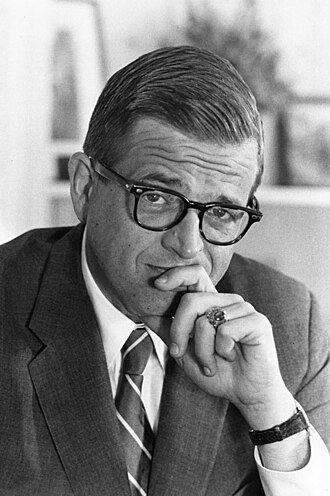
Colson, Charles W.
Charles W. Colson served as Special Counsel to the President from November 1969 to March 1973, and concurrently as the Director of the Office of Public Liaison from July 1970 to March 1973. During the White House taping period, Colson acted as Richard Nixon's ruthless political point man and "hatchet man," compiling the infamous "Enemies List" in 1971 and helping establish the White House Plumbers to discredit political opponents. He held both positions until his resignation in March 1973, when he transitioned out of the administration to return to private law practice just before the Watergate scandal fully erupted.
What Colson talks about on the tapes
Public relations 235Political strategy 233Vietnam War 191Economic policy 116George McGovern 97Media relations 901972 Presidential Campaign 82Public opinion 67Watergate 631972 election 60Congressional relations 59Press relations 58
Conversations (865)
— Page 8 of 9Charles W. Colson contacted the White House operator to facilitate a telephone connection with White House Counsel John W. Dean, III. The brief exchange focused exclusively on coordinating this communication and determining Dean's current location. Ultimately, Colson opted to handle the call himself after unsuccessfully attempting to have the operator connect him.
President Nixon met with H.R. Haldeman and Charles Colson to coordinate campaign strategy and counter negative press regarding corruption allegations ahead of the 1972 election. The participants discussed the distribution of a "white paper" to editors and broadcasters to defend the administration's record and address criticisms concerning the U.S.-Soviet wheat deal and other controversies. Additionally, Nixon emphasized his hardline stance against amnesty for draft evaders and reiterated the importance of maintaining an accurate public record of his campaign's activities.
President Nixon and Charles Colson coordinated the administration's media strategy for the final week of the 1972 election, focusing on Vice President Spiro Agnew’s upcoming appearances and rebuttals to George McGovern. They discussed criticizing McGovern’s position on renegotiating the Vietnam peace settlement and emphasized framing any potential North Vietnamese obstruction as an unacceptable attempt to interfere in American domestic politics. Additionally, they reviewed media coverage and planned further messaging through administration officials like William Rogers and Melvin Laird to maintain a firm, pro-negotiation stance.
President Nixon and Charles Colson met to discuss campaign strategy and domestic political issues just days before the 1972 election. They reviewed the status of Vietnam peace negotiations, agreeing that a settlement should not be announced prior to the election to avoid domestic political interference. Additionally, the pair strategized on post-election plans to challenge television media outlets through FCC regulatory actions and discussed their low opinion of the liberal media's election coverage.
President Nixon and Charles Colson met to discuss campaign strategy and public relations efforts leading up to the 1972 election, specifically focusing on the influence of Vietnam peace negotiations on voter sentiment. The two evaluated recent polling data, including insights from Albert Sindlinger and George Gallup, while coordinating messaging for the President's upcoming national address. Additionally, they reviewed antagonistic media coverage from the Washington Post and strategized how to handle persistent political attacks regarding the Watergate scandal and campaign corruption.
President Nixon and Charles W. Colson discussed final 1972 re-election campaign strategies, focusing on leveraging public support to strengthen the President's hand in upcoming international negotiations with Vietnam, the Soviet Union, and China. Nixon emphasized the necessity of framing the election as a crucial vote of confidence that would be closely monitored by global powers. Additionally, they evaluated recent media successes regarding legislation for senior citizens and coordinated plans for saturating radio broadcasts to maintain electoral momentum.
Charles W. Colson coordinated with a White House operator to place telephone calls to former Boston Mayor John F. Collins and U.S. Attorney Joseph L. Tauro. Colson expressed concern regarding Collins's mobility and ability to reach the phone, instructing the operator to contact Tauro at his Boston office if Collins could not be reached. The exchange served as a logistical arrangement to facilitate direct communication with these two figures.
Charles W. Colson contacted the White House operator to facilitate an urgent communication with Joseph L. Tauro, the U.S. Attorney in Boston. Colson requested that the operator immediately locate and connect him with Tauro. This directive served as an administrative task to establish contact for an unspecified official purpose.
Charles W. Colson coordinates a return phone call with John F. Collins, the former Mayor of Boston. Colson instructs the White House operator to transfer the call to his private office to facilitate the discussion. This exchange serves as a brief logistical arrangement for a high-level administrative communication.
President Nixon met with Henry Kissinger and Charles Colson to coordinate strategy for his 'Look to the Future' radio address and manage the final stretch of the 1972 presidential campaign. Discussions centered on Vietnam negotiations, with the President emphasizing the need to avoid a rushed settlement for political gain, and on countering George McGovern through aggressive messaging on social issues like busing and welfare. The group reviewed campaign tactics, including analyzing public sentiment in response to violent demonstrators in Boston and utilizing radio to maintain electoral pressure.
President Nixon and Charles Colson met to discuss campaign strategy and the political climate just days before the 1972 presidential election. The discussion focused on recent public demonstrations in Boston, the perceived shift in support among blue-collar voters, and the electoral outlook in Massachusetts. The pair assessed the influence of figures like Ted Kennedy and George McGovern while evaluating key campaign issues, including the economy and voter motivation, to ensure a decisive victory.
President Nixon met with his senior advisors to strategize for the final days of the 1972 presidential campaign, focusing on polling analysis, press engagement, and the handling of hecklers at campaign events. Much of the session was dedicated to reviewing and revising the text of the President's upcoming "Look to the Future" speech, specifically addressing the sensitive Vietnam War section and the ongoing peace negotiations. Nixon emphasized the importance of delivering the speech at a deliberate, measured pace to effectively convey his vision for the future, domestic achievements, and his foreign policy legacy.
President Nixon and Charles Colson discuss campaign strategy in the final days before the 1972 election, focusing on the political benefits of recent confrontations between campaign hecklers and supporters. They agree that these incidents, along with their narrative surrounding Vietnam peace negotiations, are damaging Senator George McGovern's momentum and public image. Additionally, they discuss utilizing favorable economic data regarding wholesale prices and framing the election as a vital vote of confidence for the President's diplomatic efforts with the Soviet Union and China.
President Nixon and Charles Colson met to discuss campaign strategy in the final days before the 1972 election, focusing on counter-attacking George McGovern's campaign. They reviewed media coverage of political demonstrations and agreed on the necessity of portraying the McGovern camp as being behind the chaotic protests and "dirty" campaign tactics. Nixon instructed his staff to aggressively utilize surrogates and negative advertisements to highlight issues like welfare and taxes while framing the opposition as desperate and failing. The discussion also included plans for the President's upcoming speeches and strategies for managing voter concerns regarding the Vietnam War.
President Nixon and Charles Colson confer via telephone to coordinate communications with W. Richard Howard. The discussion centers on logistics and the facilitation of outreach to Howard, involving White House operators and staff members to manage the call flow. The primary objective is the execution of these specific external contacts as part of the administration's ongoing agenda.
President Nixon and Charles Colson met to discuss campaign strategy and address the political fallout from recent heckling incidents targeting the First Family in Boston. The discussion encompassed media relations, public opinion regarding the First Lady, and an analysis of shifting voter demographics, particularly among Catholics, Jewish voters, and labor groups. They further assessed the political landscape for the upcoming election, weighing the influence of campaign surrogates and the effectiveness of current messaging.
President Nixon met with Charles Colson and H.R. Haldeman to coordinate final campaign strategies, discuss media relations, and finalize his upcoming 'Look to the Future' speech. The conversation also touched upon concerns regarding the Watergate controversy, the status of Vietnam peace negotiations, and the need to mobilize support among blue-collar voters. Additionally, Nixon placed brief follow-up calls to Jack Miller and William Scott to encourage their campaign efforts and emphasize the importance of high voter turnout in their respective regions.
President Nixon and Charles Colson discuss the final stages of the 1972 presidential campaign, focusing on the President's positive momentum, strong polling data, and the apparent disintegration of George McGovern's campaign. The two men review the political landscape in key states like Michigan and Massachusetts, evaluate recent campaign rhetoric regarding Vietnam, and finalize a decision to cancel Vice President Agnew's appearance on CBS to avoid crossing a picket line. They also note the significance of rising stock market figures as a reflection of public confidence in the President's reelection.
President Richard M. Nixon and Charles W. Colson held a brief meeting in the Old Executive Office Building to discuss the President's upcoming daily schedule. The interaction lasted for approximately one minute and focused on logistics regarding Nixon's appointments. No substantive policy decisions or critical developments were recorded during this brief exchange.
President Nixon, H.R. Haldeman, and Charles Colson met to discuss the final stages of the 1972 presidential campaign, focusing on delegating media responses and organizing future public appearances. They evaluated the effectiveness of Vice President Spiro Agnew in challenging George McGovern's stance on Vietnam negotiations, specifically emphasizing the contrast between "peace with honor" and McGovern’s perceived "irresponsibility." Additionally, the participants discussed personnel matters, including a potential transition for Clark MacGregor into a new role following the election.
President Nixon met with key advisors, including H. R. Haldeman, Charles Colson, and Henry Kissinger, to strategize for the final days of the 1972 presidential campaign. The discussion focused on countering George McGovern's recent criticisms regarding Vietnam and the Watergate scandal, while analyzing polling data and state-by-state electoral projections. Nixon and his team also evaluated the status of Vietnam peace negotiations and determined how to leverage their progress toward a settlement to bolster the President's standing before Election Day.
President Nixon coordinates a meeting with Charles Colson to finalize outstanding tasks before Colson’s departure. The primary priority for Colson is awaiting a call from Vice President Spiro Agnew’s office regarding a signed statement. Nixon instructs Colson to prioritize the receipt of the Vice President's communication before proceeding to the Oval Office.
President Richard Nixon met with Special Counsel Charles W. Colson for a brief, one-minute discussion in the Old Executive Office Building. While no transcript exists for this recording, the brevity of the exchange suggests a logistical check-in or a quick relay of time-sensitive information between the two men. This interaction occurred just days before the 1972 presidential election, highlighting the high-pressure environment surrounding the White House staff at the time.
President Nixon met with Charles Colson and later Ronald Ziegler to coordinate campaign strategy in the final days before the 1972 election. They discussed the administration's favorable polling, the necessity of countering negative press coverage, and strategies for managing the Vietnam negotiations and the Watergate scandal's political fallout. The participants focused on maintaining momentum, addressing Democratic candidate George McGovern's campaign, and ensuring that administration officials and surrogates maintained a unified, disciplined public message.
President Nixon and Charles W. Colson discussed real-time election returns on the night of Nixon's 1972 landslide victory. They reviewed projections for key Senate and House races, noting significant Republican gains in the South and border states while expressing disappointment over potential losses in other regions. Despite some concerns regarding ticket splitting and specific senatorial contests, they concluded the evening was shaping up to be an overwhelming electoral success for the administration.
President Nixon and Charles Colson discuss election returns on the evening of November 7, 1972, analyzing the President's significant lead in key states and the potential impact of his coattails on congressional races. They examine specific Senate and House contests, debating the phenomenon of ticket-splitting among 'brass-collar' Democrats who supported the President but voted for local candidates of their own party. The conversation also touches on voter turnout and the President's skepticism toward network news coverage, while Tricia Nixon Cox joins briefly to discuss the unfolding results.
President Nixon, H.R. Haldeman, Charles Colson, and others gathered in the early morning hours following the 1972 presidential election to review preliminary results and network projections. The conversation focused heavily on the President's landslide victory, the status of key Senate races, and the performance of various Republican candidates. Nixon expressed frustration over the defeat of certain incumbents and analyzed the broader implications of voter turnout and media coverage, ultimately focusing on his planned victory speech and communication strategy.
Charles W. Colson coordinates with his office staff to urgently secure data regarding the results of the 1972 congressional elections. Colson requests an immediate phone call to Lyndon “Mort” Allin to obtain the net gain or loss of Republican seats. These figures are to be relayed quickly to Manolo Sanchez, presumably for President Nixon's review in the wake of the election.
President Nixon met with Charles Colson, Ronald Ziegler, and Lawrence Higby to review the final electoral results following his 1972 re-election victory. The participants discussed the significance of the landslide, analyzed specific congressional race outcomes, and explored the emerging political coalition that characterized Nixon's "new majority." The conversation concluded with Nixon requesting updated, accurate vote tallies and election data to be prepared for his review.
In this meeting following his 1972 election victory, President Nixon met with Charles Colson, Robert Finch, and other staff to discuss the significance of his electoral mandate and analyze the political landscape. The participants reviewed the election results, including the collapse of the traditional Democratic coalition, and debated the strategic necessity of party reform and staffing changes for the second term. Nixon specifically engaged with Finch regarding his future political prospects in California, while also emphasizing the need for an organized approach to Cabinet resignations and administrative reorganization.
President Nixon and Charles Colson discussed the status of incoming 1972 election results ahead of the President's scheduled departure for Florida. They focused on obtaining the most recent presidential vote tallies, specifically highlighting the significance of late-reporting absentee ballots in key states. Colson committed to delivering an updated report of these figures to the President by 4:00 pm.
President Nixon and Charles Colson briefly discuss the acquisition of updated electoral figures and data sheets broken down by state following the recent election. The conversation focuses on securing precise, high-level analytical tools and updated reports to assess the final outcome. The exchange concludes with a brief mention of the logistical advancement of these reporting systems.
President Nixon and Charles Colson coordinate a brief, in-person follow-up meeting to discuss administrative or political matters. The President directs Colson to step into his office immediately to continue their dialogue. This interaction serves as a brief logistical bridge to a more substantive discussion between the two men.
President Nixon met briefly with Charles Colson to discuss the status of specific materials or documentation the President was expecting to review. The exchange reflects the President's personal interest in securing and examining these items himself. No definitive policy decisions were made during this brief interaction.
President Nixon met with Henry Kissinger and Alexander Haig to deliberate on the timing and public announcement of upcoming peace negotiations with North Vietnam. The discussion focused on managing the logistics of these talks while coordinating a strategic message to South Vietnamese President Nguyen Van Thieu, whom Nixon insisted must not test his authority. The participants emphasized that the administration remained in a position of strength following the 1972 election and resolved to utilize the available time to ensure the peace settlement met their terms.
President Nixon and Charles W. Colson discussed post-election strategies for cementing the 'New Majority' and solidifying support from labor leaders, Democrats, and ethnic voters who backed Nixon's reelection. They reviewed the final vote tallies and coordinated a campaign of personalized correspondence and outreach efforts, including leveraging invitations to White House events and Kennedy Center boxes. Additionally, they analyzed George McGovern's post-election behavior, viewing his continued involvement in Democratic party affairs as a strategic advantage that would alienate mainstream Democrats and labor leaders from the Democratic party.
President Nixon and Charles Colson discuss post-election outreach strategies, specifically planning to send personalized thank-you letters to labor leaders, Democrats for Nixon, and other political supporters. The conversation includes an evaluation of recent electoral turnout and tactics for managing administration-controlled resources, such as Kennedy Center boxes, to build future political goodwill. Additionally, Nixon sets administrative guidelines for upcoming inauguration-related church services, directing that attendance be limited to adults to improve logistics and capacity.
President Nixon and Charles Colson discussed potential appointments for the administration's second-term reorganization, specifically focusing on the Secretary of Commerce position. They weighed the merits of James Cleary versus former Boston mayor John Collins, with Nixon expressing a preference for Collins due to his business community ties and political utility in Massachusetts. Additionally, they reviewed strategies for navigating labor relations with George Meany and Frank Fitzsimmons, and agreed to monitor Democratic Party infighting rather than intervening in public criticisms of George McGovern.
President Nixon and Charles Colson discuss potential appointments for the second administration, specifically focusing on the strategic selection of a Catholic businessman for a congressional-liaison type role. Nixon emphasizes the importance of balancing his cabinet and appointments to reflect 'Middle America' while maneuvering around the influence of labor leaders. The conversation concludes with a brief reflection on recent campaign momentum and the objective of positioning loyal figures in key administrative posts.
President Nixon and Charles Colson discuss plans for the second-term reorganization of the White House staff and Cabinet, focusing on personnel changes and the retention of a strategic public relations and counterattack capacity. The conversation explores specific appointments, including selecting Peter J. Brennan for the Department of Labor, the possibility of John A. Scali for the United Nations, and identifying a replacement for Colson's role. Nixon and Colson also strategize on managing political optics, including the importance of keeping some party-symbolic figures like Rogers Morton while aggressively purging the bureaucracy and shifting toward more politically loyal appointees.
President Nixon and Charles Colson discuss administrative preparations for the second term, focusing on key appointments and the consolidation of political power. The two review potential candidates for federal positions, including the strategic placement of labor-aligned officials and the selection of George Webster for a high-level tax-related role. Furthermore, they address the 1972 election results and coordinate on a "counterattack" against political detractors while finalizing a major personnel reorganization involving the Departments of Defense, HEW, and the Office of Management and Budget.
President Nixon and Charles Colson discuss personnel appointments and political strategy following the 1972 election. They cover potential Cabinet and sub-Cabinet placements, including the roles of Peter Brennan, Elliot Richardson, Caspar Weinberger, and Roy Ash. The conversation also touches on legislative relationships and the internal assessment of Republican electoral performance.
President Nixon and Charles Colson discuss the final phase of staffing for the second presidential term and political strategy following the 1972 election. They review the successful appointment of Peter J. Brennan as Secretary of Labor and coordinate personnel planning for cabinet and subcabinet positions, specifically targeting Catholic, Democratic, and minority representation. Additionally, the President tasks Colson with working alongside H.R. Haldeman and John Ehrlichman to develop a strategic game plan for political operations and administration retention during an upcoming visit to Camp David.
President Nixon and Charles Colson met at Camp David to discuss staffing and administrative strategy following the 1972 election. They reviewed personnel decisions regarding various appointments, including the retention of Erwin Griswold and the strategic selection of individuals based on demographics such as religion, geography, and gender. Nixon directed Colson to coordinate with colleagues on building political capital in the House and establishing the framework for the administration's future organizational and foundation goals.
President Nixon and Charles Colson discuss the overwhelmingly positive reception to the appointment of Peter J. Brennan as Secretary of Labor, noting his effective television appearance and the strategic appeal of his "hardhat" background to the administration's constituency. The two strategize on organizational changes within the Department of Labor, specifically targeting the removal of Bureau of Labor Statistics personnel and the potential recruitment of George D. Webster for a position within the IRS. Additionally, Colson provides an update on the final 1972 election results, expressing confidence that the President's victory margin will remain at 61.1 percent.
President Nixon met with his staff and advisors, primarily Colonel Richard T. Kennedy and H.R. Haldeman, to assess the status of Vietnam peace negotiations following an impasse in Paris. The discussion focused on the breakdown in talks regarding North Vietnamese troop withdrawals and the potential for a resumed bombing campaign against North Vietnam. Nixon emphasized the need for a firm military and psychological response to North Vietnamese intransigence while also coordinating PR strategies to manage domestic credibility and Congressional relations. Additionally, the President issued directives for reorganizing staff and maintaining political loyalty heading into his second term.
President Nixon and Charles Colson discuss a recent Louis Harris poll regarding public sentiment toward Vietnam War settlement options. Nixon requests that Colson bring the specific polling data to his office for review. The conversation serves to facilitate immediate access to information concerning domestic reactions to ongoing peace negotiations.
President Nixon met with Charles Colson, H.R. Haldeman, and later John Connally to discuss the breakdown of Vietnam peace negotiations and the potential for a presidential television address. Nixon expressed skepticism toward Henry Kissinger’s recommendation to use a TV appearance to shift blame for the impasse onto North Vietnam and to rally public support for continued military action. The participants also consulted on administrative personnel changes for the second term, including the departures of Peter Peterson and Donald Rumsfeld, and Connally explored strategies for building a political coalition beyond the traditional Republican base.
President Nixon, H.R. Haldeman, and Charles Colson met to discuss strategies for managing press relations and addressing the current breakdown in Vietnam peace negotiations. Nixon expressed skepticism toward Henry Kissinger’s recommendation that the President make a televised address to explain the impasse, fearing it would project weakness and imply that the administration's policies were failing. Instead, the President favored maintaining a firm stance, signaling a commitment to ongoing military action, including continued bombing, to ensure an honorable peace rather than appearing to negotiate from a position of desperation.
President Nixon and Charles Colson discuss the political fallout and public relations strategy surrounding an impasse in the ongoing Vietnam peace negotiations. While Henry Kissinger advises the President to deliver a televised address to rally public support, both Nixon and Colson express concern that such a move would unnecessarily escalate the war as a domestic issue and potentially signal weakness to the North Vietnamese. Ultimately, they decide to maintain a firm stance and avoid a major public statement, concluding that the American public is generally satisfied and would prefer to avoid further drama regarding the conflict.
President Nixon and Charles Colson discuss the political implications of addressing the nation regarding the status of ongoing peace negotiations in Vietnam. Nixon expresses caution about the potential for a televised address to escalate domestic war protests and unnecessarily revive the influence of the anti-war opposition. Ultimately, the two weigh the merits of signaling strength through decisive action versus the risk of political fallout from prematurely rallying the public.
President Nixon and Charles Colson discussed administrative appointments, media relations, and political strategy at the end of 1972. They analyzed the favorable public reaction to the appointment of Labor Secretary Peter Brennan and planned to leverage that success to boost support among ethnic and working-class demographics. Additionally, the two reviewed the positive impact of 1972 campaign advertisements, discussed the tragic death of Dorothy Hunt, and strategized on ways to weaken the influence and credibility of the press, particularly CBS and the 'establishment' media.
President Nixon and Charles W. Colson discussed strategies for consolidating political power and marginalizing the traditional Washington establishment. Nixon emphasized the importance of building an alternative 'kitchen cabinet' of advisors to bypass established legal and media firms, specifically instructing Colson to coordinate with Charlie Walker. The conversation also touched on the administration's efforts to cultivate support among the working class through targeted appointments and the ongoing goal of undermining the credibility of major media outlets, particularly CBS.
President Nixon and Charles Colson discuss the political fallout of the 1972 election, focusing on the ongoing leadership instability within the Democratic National Committee. They analyze the impact of Nixon's campaign strategy and his cultivation of a centrist coalition, contrasting this success with the perceived political obsolescence of the McGovernites. The pair also touches on the status of Vietnam peace negotiations, public optimism regarding the national economy, and the diminished presence of radical campus protests.
President Nixon and Charles Colson met at Camp David to discuss political strategy and public relations regarding the Democratic Party and media figures. The conversation includes discussions on political messaging, the potential neutralization of political opponents, and general administrative staffing concerns. While the dialogue is frequently interrupted by background noise and commentary on a televised football game, the two focused on maintaining an aggressive posture toward their critics.
President Nixon and Charles Colson discuss the political fallout from Robert S. Strauss’s election as Democratic National Committee chairman. They analyze the impact on John B. Connally’s future, specifically noting concerns that the event might provide Connally an excuse to retreat from his political transition toward the administration. Nixon directs Colson to encourage Connally to commit to a decisive shift, while also emphasizing the importance of maintaining strong support from labor leaders like George Meany and Frank Fitzsimmons.
President Nixon and Charles Colson discuss political strategy regarding labor union leadership, specifically focusing on the influence of AFL-CIO President George Meany. Nixon directs Colson to contact a target individual to exert pressure and ensure they do not align with the Democratic left. The conversation highlights the administration's concern with managing labor figures to prevent political opposition from consolidating power.
President Nixon met with Charles Colson, H.R. Haldeman, Alexander Haig, and Julie Nixon Eisenhower to discuss political strategy and administrative appointments for the second term. The participants analyzed the perception of the Republican Party, debated the potential for a political coalition involving John Connally, and reviewed candidate selections for key positions, specifically within the Department of Labor. Nixon emphasized the importance of ensuring high-level appointees were strategically aligned with the administration’s policy goals and internal machinery.
President Nixon met with Henry Kissinger and Alexander Haig to discuss the current stalemate in Vietnam negotiations, specifically addressing North Vietnamese intransigence and bad-faith tactics regarding a potential cease-fire and the status of U.S. prisoners of war. Facing a breakdown in talks and an imminent congressional session that threatened to cut off war funding, Nixon decided to resume U.S. bombing and mining of North Vietnamese infrastructure. The President and his advisors concluded that this military pressure was necessary to force a settlement, maintain U.S. credibility, and ensure that South Vietnamese President Nguyen Van Thieu understood the necessity of a finalized agreement.
In this wide-ranging discussion, President Nixon met with top aides and political associates to strategize for his second term, with a primary focus on navigating the difficult final stages of the Vietnam peace negotiations. Nixon emphasized his resolve to continue bombing campaigns until a satisfactory agreement was reached while managing public perception and Congressional relations. The conversation also covered extensive planning for second-term personnel appointments—including naming John Scali as UN Ambassador—and organizational restructuring to ensure a loyal, efficient administration. Throughout, Nixon stressed the need for his appointees to avoid being captured by existing bureaucracies and to cultivate new political constituencies rather than deferring to the traditional East Coast establishment.
President Nixon and Charles Colson discuss strategy for upcoming administrative appointments, media relations, and the political fallout of potential military action in Vietnam. Nixon affirms his support for George D. Webster’s IRS nomination despite tax audit concerns and directs Colson to place David E. Bradshaw at the FCC to counter network influence. Furthermore, they discuss mobilizing administration supporters, including labor leaders, to defend the anticipated resumption of U.S. bombing in North Vietnam while maintaining public approval for the administration's 'new majority' strategy.
President Nixon met with Charles Colson to strategize the public relations and implementation of the administration's second-term reorganization. The discussion focused on highlighting a narrative of significant personnel changes, including the appointment of John A. Scali and the replacement of various sub-Cabinet officials, to project strength and managerial control. They also addressed the importance of improving press relations, utilizing political appointees over career bureaucrats, and reinforcing the President’s "New Majority" by reaching out to labor and ethnic constituencies. Finally, the President emphasized the need to maintain public pressure regarding Vietnam negotiations and to aggressively combat media bias.
President Nixon and Charles Colson discuss the success of White House events aimed at building a 'New Majority' by engaging supporters outside the traditional political elite, including labor and Democratic voters. The conversation also addresses the public and media reaction to the recent Vietnam peace negotiations and Henry Kissinger's briefings. Nixon expresses a strategic preference for immediate military escalation, specifically the use of B-52s, arguing that absorbing political heat now is preferable to delaying the conflict.
President Nixon met with his senior aides and advisors to discuss a wide range of personnel appointments, administrative reorganizations, and the ongoing situation in Vietnam. The group strategized on filling key government roles while simultaneously consolidating executive office functions to reduce staff and streamline bureaucracy. Additionally, they reviewed the military status of the Vietnam War, affirming their commitment to continue military pressure until a satisfactory peace agreement could be secured.
President Nixon met with his senior staff, including H.R. Haldeman and Charles Colson, to coordinate personnel changes for his second term, discuss strategies for managing press relations, and finalize plans for the upcoming inauguration. A major focus was the administration’s aggressive approach toward media outlets like The Washington Post and the television networks, with Nixon encouraging the use of regulatory pressure and cable television technology to bypass traditional information gatekeepers. Additionally, the President reviewed the status of Vietnam peace negotiations, emphasizing the necessity of firm military action to prevent an enemy buildup while maintaining his public posture of seeking peace.
President Nixon met with Charles W. Colson to discuss public perception of the ongoing Vietnam War, specifically the recent escalation of bombing campaigns north of the 20th Parallel. They analyzed the political strategies for managing the 'hawks' and 'doves' in Congress and the media, while emphasizing the administration's commitment to achieving an 'honorable peace' that secures the return of prisoners of war. Nixon expressed his desire to frame the current military actions as a necessary response to North Vietnam's failure to adhere to previously discussed settlement terms.
President Nixon and Charles Colson discuss communication strategy regarding the Vietnam War, emphasizing the need for administration officials to remain silent until concrete developments occur. Nixon stresses that public appearances, such as his attendance at President Truman's funeral, serve to project stability without necessitating political commentary. The two also evaluate the appointment of John A. Scali as UN Ambassador and address concerns regarding Henry Kissinger’s sensitivity to press leaks and his unauthorized meeting with Senator Charles Percy.
President Nixon and Charles Colson discussed political strategy, focusing on their desire to maintain a confrontational stance toward the media and political opponents. Nixon expressed frustration over Henry Kissinger’s recent meeting with Senator Charles Percy and directed Colson to coordinate efforts to challenge media bias, particularly through Accuracy in Media campaigns and Clay T. Whitehead’s initiatives. The conversation concluded with Nixon emphasizing the importance of staying firm in their PR efforts and shielding Kissinger from unauthorized political interactions during his upcoming break.
President Nixon instructed Charles Colson to contact H.R. Haldeman to express the President's intense displeasure regarding National Security Advisor Henry Kissinger’s recent meeting with Senator Charles Percy. Nixon demanded that Haldeman strictly warn Kissinger to cease all unauthorized media contacts and meetings while in Palm Springs to protect the administration's image and sensitive Vietnam policy negotiations. The President voiced concerns that Kissinger’s personal vanity and social interactions threatened to undermine his authority and leak classified information.
President Nixon and Charles Colson review the administration's public relations efforts following the President's attendance at Harry S. Truman's funeral and ongoing bombing campaigns in North Vietnam. They analyze public sentiment and congressional dynamics, concluding that there is minimal public backlash and strong support within their base. Additionally, they discuss personnel appointments, the potential use of cable television to challenge network media influence, and the positive reception of recent White House and Blair House outreach initiatives.
President Nixon and Charles Colson discussed public relations strategy following the resumption of US bombing in North Vietnam and the subsequent stalling of peace negotiations. They focused on countering negative media portrayals and criticism from "liberal" commentators by emphasizing the necessity of the bombing to force North Vietnamese compliance. Nixon directed Colson to coordinate with John Scali to leak the administration's perspective on a deep-background basis, aiming to control the narrative and reinforce the President's credibility with his "new majority" of supporters.
President Nixon and Charles Colson discuss strategies for managing public perception and media narratives regarding the ongoing Vietnam War bombing campaign. Nixon emphasizes the importance of avoiding official White House fingerprints on the messaging to prevent perceptions of political manipulation, preferring that supportive journalists and non-administration voices propagate the administration's perspective. The two discuss using Henry Kissinger to guide key political figures while ensuring that the official line remains consistent to counter anticipated criticism from political opponents.
President Nixon and Charles Colson discuss strategies for managing public and congressional opinion regarding the ongoing Vietnam War, specifically focusing on the recent US bombing campaigns against North Vietnam. They analyze the impact of media reporting and political opposition—including protests led by figures like George McGovern—while emphasizing the importance of maintaining U.S. credibility in the peace negotiations. The conversation also touches upon the need to coordinate with congressional leaders and frame the administration's actions to ensure public support for the war effort and the eventual peace settlement.
President Nixon and Charles Colson discuss the strategic messaging surrounding the ongoing bombing campaign in Vietnam, specifically focusing on how to justify the actions as necessary to compel North Vietnam to negotiate. They examine how the President's firm stance serves to reassure U.S. allies and enforce the credibility of international commitments. Additionally, the conversation touches on political strategy regarding Congressional relations and the need to improve messaging to Republican candidates about the importance of aligning with the President's platform.
President Nixon and Charles W. Colson coordinated the strategy for notifying Congressional leaders regarding the cessation of U.S. bombing north of the 20th parallel in Vietnam. The conversation focused on ensuring that outreach efforts by William Timmons and Henry Kissinger were synchronized to avoid duplicate calls to key figures like Hugh Scott. They also discussed managing political fallout, particularly addressing potential criticisms from congressional "mavericks" and handling media relations to maintain public support.
President Nixon and Charles Colson discuss communication strategies regarding the administration's recent decision to resume bombing campaigns in North Vietnam. The President emphasizes that the bombing pause was conditional upon serious negotiations and instructs Colson to coordinate with congressional leaders, particularly Hugh Scott, to ensure they are properly informed. They also briefly touch upon political opposition and media narratives, with Nixon expressing a desire to project strength and avoid any perception that the administration was coerced by domestic critics.
President Nixon, Charles Colson, and John Scali coordinate the administration's public relations strategy following the announcement of a halt to U.S. bombing north of the 20th parallel and the planned resumption of Vietnam peace negotiations. The participants emphasize a message of presidential decisiveness and seriousness, aiming to counter potential criticism from domestic "doves" and the media. Scali details his efforts to brief journalists and manage press coverage to ensure the administration's narrative regarding the bombing halt and negotiation efforts remains unified and controlled.
President Nixon met with Charles Colson and John Scali to coordinate administration messaging and congressional relations regarding the ongoing Vietnam War negotiations and recent bombings. The President expressed frustration with Henry Kissinger's sensitivity to press criticism and over-reliance on external perceptions of the administration's negotiation strategy. Nixon instructed his aides to maintain a firm, determined tone in public communications while avoiding premature projections of a settlement, and he specifically tasked them with managing political outreach to key congressional figures to bolster support.
President Nixon and Charles Colson discuss strategies to manage public and media perception regarding the administration's recent foreign policy decisions and the ongoing negotiations led by Henry Kissinger. The pair focuses on refuting claims that the administration is 'crowing' over developments, instead emphasizing the necessity of their actions to counter North Vietnamese stalling and military buildup. Colson is tasked with reaching out to supportive journalists, specifically Crosby Noyes and others, to help frame the administration's narrative of calm determination in the face of congressional criticism.
President Nixon and Charles Colson confer regarding public relations messaging surrounding the recent cessation of U.S. bombing north of the 20th Parallel in Vietnam. Colson reports feedback from Henry Kissinger, who advocates for a restrained public approach to avoid over-discussing the administration's strategic shifts. The discussion reinforces the need for the President to maintain control over the messaging narrative to ensure consistency in congressional and public communications.
President Nixon directs Charles Colson to contact Henry Kissinger to provide reassurance regarding ongoing administrative operations and personnel reactions. The conversation focuses on ensuring Kissinger feels supported by the President's directives as he prepares to receive additional data. Nixon emphasizes the need for a unified front to prevent internal friction, specifically noting the challenges of controlling the economy.
President Nixon and Charles W. Colson discussed the administration's strategic management of congressional and media relations during the Vietnam War, specifically regarding the cessation of bombing north of the 20th Parallel. They addressed political friction caused by public statements from figures such as Senator William B. Saxbe and coordinated efforts to engage influential opinion makers and legislators to secure support. The conversation emphasized the necessity of maintaining a firm, unified political stance against criticism while navigating the complex editorial landscape.
President Nixon and Charles Colson discuss a political strategy to discipline Senator William Saxbe for his public criticisms of the administration's bombing policies. Nixon directs Colson to pressure Ohio political figures, including Robert Taft and various congressmen, to force a public retraction or threaten the withdrawal of political support. The President emphasizes the need for a swift, aggressive response to marginalize dissenters and ensure party loyalty during sensitive diplomatic negotiations.
President Nixon and Charles Colson spoke to assess public and media support for the President’s recent decision to conduct the intensified bombing of North Vietnam. They reviewed feedback from political figures such as John Connally and Daniel Moynihan, noting that despite criticism from some media outlets, there was significant underlying public support for the administration's decisive actions. Colson updated the President on efforts to manage press relations and mitigate negative editorials, particularly those originating from the Washington Star, while reinforcing the necessity of maintaining a firm stance during this critical period leading up to the inauguration.
President Nixon and Charles Colson discuss strategies for managing public and press perception regarding ongoing military operations, specifically focusing on the necessity of generating vocal support in regions like Ohio. The conversation touches on favorable feedback received by broadcasters like Howard Smith and the administration's frustration with media coverage. Nixon emphasizes the importance of framing the political narrative to counter critical editorial stances and instructs Colson to actively challenge opposing viewpoints.
President Nixon and Charles Colson reviewed the events of 1972, focusing heavily on public and press reactions to the Vietnam War and recent U.S. bombing campaigns. They discussed the administration's frustration with media coverage, specifically criticizing James Reston’s analysis of Henry Kissinger and the alleged discord within the executive branch. The conversation served to coordinate political strategy and message control as the President prepared for his second term.
President Nixon and Charles Colson met to discuss press coverage and public perception regarding the administration's recent Vietnam policies and the resumption of negotiations. Nixon expressed significant frustration with Henry Kissinger's tendency to cultivate a 'peacemaker' image in the media, fearing it undermined their bargaining position and created a false dichotomy between his own toughness and Kissinger's perceived softness. To address this, Nixon directed Colson to contact Kissinger, critique specific media reports, and reinforce the necessity of presenting a unified, firm stance on the negotiations.
President Nixon and Charles Colson opened their conversation by discussing the Washington Redskins' recent victory and Nixon’s unsuccessful efforts to reach coach George Allen to offer congratulations. The discussion quickly shifted to a professional concern regarding Henry Kissinger, specifically suspecting him of leaking information to New York Times journalist James Reston. Nixon ordered Colson to investigate Kissinger’s communications, including his private telephone records and potential contacts with the press, to confirm the source of the unauthorized disclosures. They agreed on the necessity of monitoring Kissinger more closely to maintain control over national security messaging during delicate Vietnam peace negotiations.
President Nixon and Charles W. Colson coordinated a New Year's Day White House tour for Washington Redskins coach George Allen and his in-laws. They discussed extending invitations to specific players, including Jack Pardee, Billy Kilmer, and Larry Brown, to demonstrate appreciation for Allen's leadership and the team's public support for the administration. Nixon directed Colson to facilitate the visit and provide the coach with flexibility in selecting additional players to accompany his family.
President Nixon met with Charles Colson to discuss strategies for managing press relations, targeting political adversaries, and restructuring administration personnel for his second term. The conversation focused on sidelining hostile media outlets like the Washington Post, utilizing legal and regulatory challenges to neutralize critics, and ensuring loyalty within government appointments. Additionally, Nixon reviewed the success of recent Vietnam bombing campaigns, analyzed public reaction to the war, and strategized on how to maintain political momentum through upcoming congressional cycles.
Charles W. Colson contacted Gerald L. Warren to coordinate the administration's public narrative regarding President Nixon’s work ethic on New Year’s Day. Colson emphasized the need to highlight that the President arrived at the office by 7:30 a.m. to focus on inaugural preparations, congressional messages, and staff meetings. Additionally, they clarified that the President’s limited television viewing was specifically to observe First Lady Pat Nixon in the Rose Bowl parade, while also briefly noting that the status of Henry Kissinger’s return from Paris remained unconfirmed.
Charles W. Colson contacts the White House operator to request assistance in communicating his current location to his wife, Patricia Ann Colson. The brief exchange serves as a routine administrative request to facilitate personal communication while Colson is occupied at the White House. No policy matters or substantive political issues are discussed during this call.
President Nixon and Charles Colson held a wide-ranging discussion about White House public relations strategies, Congressional relations, and the political landscape following the 1972 election. They analyzed the effectiveness of the President's public image, focusing on the balance between maintaining professional "aloofness" and connecting with supporters, while debating the efficacy of social interactions with Congress compared to the previous Johnson administration. The conversation also touched on the strengths and weaknesses of potential future political candidates, including John Connally and Spiro Agnew, and reviewed the need to better manage press relations and internal staff communications.
Charles W. Colson coordinated with Press Secretary Gerald L. Warren to expedite the release of an official presidential statement regarding the death of baseball legend Roberto Clemente. The participants prioritized the immediate recording and distribution of the statement to radio outlets, prompting Warren to delay his scheduled press briefing to ensure the tape could be broadcast promptly. The conversation also briefly touched upon humanitarian efforts for Nicaragua earthquake victims and the health of Rose Mary Woods.
President Nixon met with Charles Colson and Stephen Bull to discuss press relations, specifically the coverage of Henry Kissinger and John Scali regarding Vietnam. A significant portion of the conversation focused on logistics and public relations strategy for the upcoming memorial service for Harry S. Truman, including confirming the attendance of various political figures and heads of state. Nixon also deliberated on his role in the Roberto Clemente Memorial Fund and his personal charitable contributions, aiming to refine his public image.
Charles W. Colson contacted Deputy Press Secretary Gerald L. Warren to manage press speculation regarding President Nixon's potential attendance and involvement in the memorial service for Harry S. Truman. The discussion addressed inquiries from reporter Frank Cormier, who erroneously speculated that the President might deliver a eulogy. Colson directed Warren to discourage these rumors and maintain a non-committal stance, as the event was primarily intended for congressional representatives.
Charles W. Colson and Gerald L. Warren met to discuss administrative matters and potential communications strategies within the White House. The participants engaged in brief, informal dialogue regarding organizational business and ongoing operations. No major policy decisions were reached during this short encounter, which served primarily as a routine professional exchange.
President Nixon and Charles Colson met to discuss managing the administration's public relations strategy, specifically regarding the upcoming funeral of Harry S. Truman and the President's image. The discussion touched upon navigating antiwar sentiment and media coverage of US bombing campaigns in Vietnam, with Colson providing input on how to frame these sensitive topics. They emphasized the public's desire for normalcy and the need to effectively communicate the administration's policy positions to counter domestic criticism.
President Nixon and Charles W. Colson discussed political strategy and personnel matters, focusing on public relations management regarding the Harry S. Truman memorial service and the President's Vietnam War policy. They weighed the political risks and benefits of the President's attendance at various public events, ultimately coordinating a low-key approach to avoid political exploitation. Additionally, they reviewed organizational staffing for the second term, including the reassignment of White House personnel and the importance of maintaining an enthusiastic and disciplined political apparatus to counter Democratic opposition.
President Nixon and Charles Colson discussed strategies for maintaining Henry Kissinger's morale ahead of his upcoming Paris trip, emphasizing the need to project confidence and solidarity within the administration. They evaluated the political landscape regarding Vietnam negotiations, noting that recent Congressional actions were less threatening than anticipated and potentially useful for public leverage. Additionally, they coordinated a messaging plan for the bipartisan leadership meetings, prioritizing an optimistic economic outlook while preparing to defend the administration against any congressional obstruction.