Ziegler, Ronald L.
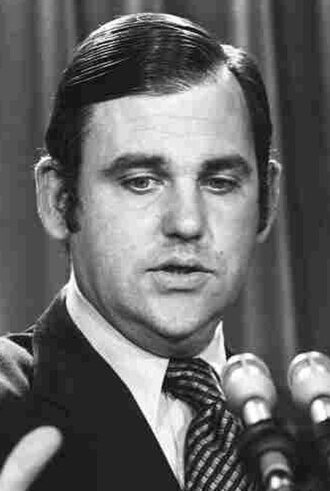
Ronald L. Ziegler served as White House Press Secretary from January 1969 to August 1974, acting as President Nixon's primary spokesperson throughout the taping period of February 1971 to July 1973. As the Watergate scandal escalated, Ziegler famously managed the administration's shifting public narratives and faced intense scrutiny from the press corps. In June 1973, his duties expanded when he was additionally named Assistant to the President following the resignation of Herbert Klein, holding both titles concurrently until the end of the administration in August 1974.
President Nixon and his Cabinet met to discuss the ongoing military operations in Indochina and the development of the administration's national health reform agenda. Regarding the war, officials reviewed the progress of South Vietnamese incursions into Laos and Cambodia, noting that the strategy was successfully disrupting enemy supply lines while shifting the burden of ground operations away from American forces. The conversation then transitioned to a detailed proposal from Secretary of Health, Education, and Welfare Elliot Richardson regarding healthcare reform, with the group debating the costs, tax implications, and administrative feasibility of implementing Health Maintenance Organizations (HMOs) and national health insurance standards.
President Nixon and Press Secretary Ronald Ziegler met in the Oval Office to coordinate strategy regarding the scheduling and timing of a forthcoming presidential press conference. The discussion focused on managing the logistics and public reception of this media engagement. No major policy decisions were recorded during this brief administrative consultation.
President Nixon met with Ronald L. Ziegler to briefly discuss public relations surrounding the President’s recent press conference, specifically regarding Laos, integration, and North Vietnam. Additionally, the two addressed a minor logistical matter concerning an escort for a guest attending an upcoming White House dinner. The brief exchange focused on managing the administration's messaging and event protocol.
President Nixon, H.R. Haldeman, and Ronald Ziegler met to discuss the logistics and optics of presidential media strategy, specifically comparing the effectiveness of controlled one-on-one sessions versus full-scale televised press conferences. The group evaluated a recent appearance, expressing satisfaction with the respectful tone and the anticipated news coverage, while weighing the heavy preparation required for broader press events. Additionally, they briefly touched upon administrative matters, including the selection of personal gifts for associates and the management of office inventory.
President Nixon met with Henry Kissinger, William Safire, and Ronald Ziegler to coordinate the President's upcoming speech at the Woodrow Wilson Foundation and address diplomatic and media concerns. A primary focus was the ongoing conflict regarding arms control negotiations, specifically criticizing the conduct of U.S. negotiators William P. Rogers and Gerard C. Smith in their pursuit of an ABM-only agreement. The participants also discussed the necessity of an improved public relations strategy to counter negative press coverage related to Vietnam and military operations in Laos.
President Nixon met with H. R. Haldeman, Alexander Butterfield, and Ron Ziegler to strategize on public relations, specifically focusing on the delivery and impact of the President's upcoming speeches, including an address at the Woodrow Wilson International Center for Scholars. The participants discussed the efficacy of shorter, anecdote-driven speeches over traditional policy-heavy addresses to better appeal to television audiences and improve press coverage. Nixon and his advisors also debated the best tactics for handling press conferences and managing the President's public image to ensure his messaging remained distinct from partisan political bickering.
President Nixon met with H. R. Haldeman, Ronald Ziegler, and Stephen Bull to discuss public relations strategies and the administration's media image. The group reviewed recent news coverage of the President's speech at the Woodrow Wilson International Center, state dinner planning, and the handling of the resignation of Interior Department official Fred J. Russell. Nixon directed staff to coordinate with Paul McCracken to effectively communicate positive economic data, specifically regarding the Consumer Price Index, to counter negative press narratives.
President Nixon consulted with various staff members regarding administrative matters and staffing inquiries. The primary focus of the discussion involved evaluating the professional background and political reliability of Joseph E. Parker, a Washington insider with extensive experience in Congress and agricultural policy. Nixon sought to assess Parker's suitability for a potential role, specifically noting his Democratic affiliation and his reputation for being savvy on Capitol Hill.
President Nixon met with members of his economic team—the "Quadriad" of George Shultz, Paul McCracken, Arthur Burns, and John Connally—to refine the administration's strategy for managing the national economy. The discussion focused on persistent inflation, unemployment in the aerospace and technical sectors, and the potential use of federal authority to curb wage and price increases, particularly within the construction industry via the Davis-Bacon Act. The President emphasized the need for a unified approach to instill public confidence and ensure long-term economic stability, cautioning his team that the political viability of a conservative economic agenda depended on their collective success.
President Nixon met with his advisors, including Secretary of Labor James Hodgson and George Shultz, to debate strategies for curbing inflation and rising construction costs, specifically focusing on the potential suspension of the Davis-Bacon Act. The participants weighed the political risks of appearing anti-union against the need to exert pressure on construction labor leaders to accept voluntary wage stabilization. Nixon ultimately favored a targeted approach to the construction industry over broad wage-price controls to avoid broader economic disruptions and political backlash. The group decided to finalize an announcement strategy for the suspension, potentially leveraging the upcoming Governors' Conference to bolster the administration's position.
President Nixon met with Press Secretary Ronald Ziegler to review the administration's public messaging regarding South Vietnamese military operations in Laos and Cambodia. Ziegler detailed how he managed press inquiries about heavy enemy resistance and disputed media reports claiming a surge in North Vietnamese supply traffic along the Ho Chi Minh Trail. The two agreed to maintain a low-key approach, emphasizing that the primary objective of interdicting enemy supplies remains on track despite daily combat fluctuations.
President Nixon and Press Secretary Ronald L. Ziegler discuss strategies for managing press coverage regarding the Vietnam War and recent media reporting. Nixon directs Ziegler to emphasize that South Vietnamese military operations are facilitating American troop withdrawals and ultimately saving U.S. lives. The two align on a messaging approach to counter critical Washington Post coverage by consistently referring reporters back to the administration’s established position on the war effort.
President Nixon and H. R. Haldeman convened with senior advisors and staff to coordinate administrative messaging on foreign trade and economic policy, with a focus on enforcing stricter discipline among cabinet officers. The President also consulted Henry Kissinger on national security matters, specifically seeking to navigate the ongoing friction between Kissinger and Secretary of State William P. Rogers while managing the sensitive public relations aspects of the Vietnam War and the Laotian operation. Additionally, the President issued directives regarding internal staff management and requested an investigation into a recent security leak concerning the Strategic Arms Limitation Talks (SALT).
President Nixon met with Arizona Governor Jack Williams to discuss the state's economic conditions and urgent concerns regarding water resource management and infrastructure funding. Following Williams' departure, Nixon consulted with John Ehrlichman and Ronald Ziegler regarding strategy for an upcoming meeting with state governors, specifically aiming to avoid hostile media coverage by favoring private discussions over open forums. The President ultimately decided to conduct his pitch to the governors in a closed setting to ensure candid communication without the interference of grandstanding attendees.
President Nixon hosted John B. Waters, Jr. and his family for a brief social visit and photo opportunity in the Oval Office, during which he presented them with gifts and discussed the office's surroundings. The meeting served primarily as a gesture of goodwill toward the Waters family, including informal conversation regarding Tennessee politics and previous speaking engagements. Outside of the family visit, the recording includes brief, fragmented discussion regarding strategy for a separate event, emphasizing the President's desire to control media access and minimize public exposure during specific political sessions.
President Nixon and Press Secretary Ronald Ziegler coordinate the media strategy for the President’s upcoming appearance at the Governors’ conference. They discuss the logistics of radio and television coverage, specifically deciding against requesting formal radio time in favor of providing clips. Nixon also touches upon potential messaging regarding the political implications of a conviction to ensure the administration's stance is clearly communicated.
President Nixon met with his senior staff to address several pressing administrative and political matters, primarily focusing on the South Vietnamese military operation in Laos and strategies for managing press criticism of the war. Nixon and his advisors discussed the need to report progress on the operation without overpromising, while also weighing whether to send General Alexander Haig to Vietnam to provide an independent assessment of the ground situation. Additionally, the President reviewed his recent engagement with Republican governors and considered whether to make a brief appearance at a White House meeting with Black leaders to maintain goodwill without becoming entangled in policy debates.
President Nixon met with Ronald Ziegler and Stephen Bull to discuss media management strategies and political messaging regarding federal welfare reform. The participants reviewed the network television coverage of the President's recent film clips, specifically analyzing how to better leverage media exposure to shape public perception. Additionally, they coordinated efforts to influence John Burns's public stance on federal control of welfare and managed the President’s upcoming meeting schedule.
President Nixon met with Press Secretary Ronald Ziegler and Stephen Bull to coordinate administration messaging and manage public perception. The discussion focused on Ziegler's handling of press inquiries regarding the National Security Council, welfare reform, and media coverage by columnists like Holmes Alexander. Additionally, they reviewed strategies for communicating foreign policy, specifically emphasizing the administration's non-negotiable stance on securing the release of prisoners of war (POWs) during U.S. force withdrawals.
President Nixon met with his senior staff and advisors to discuss communication strategies for the administration's policy achievements and historical outreach. The group explored ways to better leverage the President's personal historical expertise, such as his recent presentation on John Quincy Adams, to improve public perception through televised forums rather than relying on the mainstream press. Nixon emphasized the need to bypass the press corps by speaking directly to key demographics, including the elderly and youth, while instructing his staff to maintain stricter control over who is permitted to discuss substantive policy on television.
President Nixon, H.R. Haldeman, and Ronald Ziegler met to discuss the President's upcoming schedule, including a potential press conference and public relations strategies regarding recent media coverage of his trip to Des Moines. Later, John Mitchell joined the meeting to coordinate his own upcoming press conference, specifically focusing on Revenue Sharing and the Law Enforcement Assistance Administration (LEAA). The group prioritized proposing a reorganization of U.S. Capitol Police security, using the President’s successful implementation of the Executive Protective Service as a model, which Nixon subsequently discussed with Speaker Carl Albert.
President Nixon met in the Oval Office with the Heltemes family—the 1971 Easter Seal poster family—accompanied by Senator Robert Dole and other guests. The meeting served as a ceremonial event to honor the poster child and distribute presidential gifts, including Apollo-themed viewers and cufflinks. Following the departure of the Heltemes group, Nixon held a broader discussion with his remaining visitors regarding the state of the film industry, expressing his preference for family-oriented entertainment and criticizing the prevalence of explicit content in modern movies.
President Nixon met with Henry Kissinger, Alexander Haig, William Rogers, Melvin Laird, Admiral Thomas Moorer, and Richard Helms to coordinate strategy following the President's March 4, 1971, press conference. The discussion focused on maintaining public and political momentum for the ongoing Vietnamization effort and the military operations in Laos (Lam Son), specifically addressing potential responses to North Vietnamese missile fire and troop movements. Nixon emphasized the necessity of success in Southeast Asia to maintain American global credibility, while the participants reviewed intelligence on enemy capabilities and planned upcoming Congressional testimony and media appearances to manage the narrative surrounding the war.
President Nixon met with H.R. Haldeman and Ron Ziegler to coordinate political mobilization strategies following his March 4, 1971, press conference. The discussion focused on leveraging the President's recent media performance to promote his domestic agenda—specifically revenue sharing—while coordinating briefings with Nelson Rockefeller, George Romney, and John Connally. Additionally, they evaluated press reactions to the President's stance on the war in Laos and reviewed polling data regarding Democratic challengers.
President Nixon met with his key economic advisors—John Connally, Arthur Burns, George Shultz, and Paul McCracken—to discuss urgent financial matters and the administration's public messaging strategy. The conversation covered the potential failure of the Lockheed-Rolls-Royce deal, the stability of the DuPont brokerage firm, and rising pressure to increase milk price supports for political leverage. Throughout the meeting, Nixon emphasized the need for internal discipline, a unified public stance on economic policy, and the projection of confidence to stabilize the markets and improve public perception.
President Nixon met with Republican congressional leaders and cabinet members to discuss rural development initiatives and solicit support for the administration's policy agenda. Secretary of Agriculture Clifford Hardin and staff provided an extensive briefing on the status of rural America, highlighting demographic shifts and explaining the mechanics of proposed federal revenue-sharing programs designed to foster economic growth. Participants also reviewed legislative priorities, including the upcoming vote on the supersonic transport (SST) appropriation and other pending congressional business.
President Nixon and H.R. Haldeman met with various staff members to analyze recent public opinion polls and strategize on ways to bolster the President’s credibility regarding his Vietnam War policy and foreign relations. The participants evaluated the public impact of events like the Laos operation and the President's recent press conferences, while also discussing the development of a more robust public relations effort involving key cabinet members and advisors. Additionally, the conversation addressed ongoing textile trade negotiations with Japan and administrative staffing concerns, including potential roles for Peter G. Peterson and Donald H. Rumsfeld.
President Nixon met with top network executives, including William S. Paley and Frank Stanton, to discuss the administration's tense relationship with the media, the format of presidential television appearances, and upcoming campaign spending legislation. The conversation focused heavily on regulatory concerns, specifically the application of the Fairness Doctrine, FCC licensing policies, and the potential impact of campaign finance restrictions on broadcast media. Nixon sought to influence network coverage and industry standards, assigning follow-up tasks to Charles Colson and White House telecommunications advisors to manage these regulatory and media relations issues.
President Nixon met with his senior staff, including H. R. Haldeman, Henry Kissinger, and Ronald Ziegler, to manage the administration's public relations, press strategy, and foreign policy narrative. The discussion focused heavily on minimizing negative press coverage regarding the Vietnam War, the Laos operation, and a false report involving NASA nominee James C. Fletcher and the ABM program. Nixon directed his staff to aggressively refute inaccuracies in the press while preparing for upcoming media appearances, emphasizing a need to maintain an authoritative tone and avoid defensive posturing.
President Nixon and Press Secretary Ronald Ziegler discussed a strategy to address a news report by Daniel Schorr concerning James C. Fletcher’s views on the Anti-ballistic Missile (ABM) system. Nixon instructed Ziegler to ensure Fletcher publicly clarified that the President’s Science Advisory Committee never opposed the ABM, that Fletcher had not discussed the matter with the President, and that Fletcher fully supported the administration's policy. The President emphasized a firm stance in managing these public communications to protect his defense initiatives.
President Nixon met with John Byrnes and senior White House staff to coordinate a unified Administration strategy against House Ways and Means Chairman Wilbur Mills regarding ongoing Japanese textile negotiations. Concerned that Mills was bypassing the White House to conduct his own foreign policy, Nixon directed Byrnes to publicly support the President’s official position and reject the implication that congressional leaders held a veto over executive authority. The group finalized a plan for the President to issue a formal statement that afternoon, followed immediately by Byrnes endorsing the policy to the press to solidify Republican unity.
President Nixon met with H. R. Haldeman and Henry Kissinger to discuss the progress of the Laotian military operation (Lam Son 719), the status of textile trade negotiations with Japan, and strategic communications regarding Vietnam troop withdrawals. They assessed the military situation in Laos, specifically reviewing enemy casualty and supply figures to evaluate the campaign's effectiveness. Additionally, the President reviewed his recent public appearance in Williamsburg and strategized with staff on how to better manage public opinion and press relations ahead of his April 1971 troop withdrawal announcement.
President Nixon and Press Secretary Ronald Ziegler met with technicians to coordinate the logistics for an upcoming interview with women journalists. The participants established strict ground rules for the session, limiting discussion topics to Pat Nixon’s birthday, the role of First Ladies, and women in politics. They also determined the technical setup for the interview and planned for the distribution of the transcript to journalists who were not in attendance.
Stephen B. Bull and Ronald L. Ziegler met in the Oval Office to coordinate logistical details for a forthcoming presidential interview. The discussion focused on establishing attendance protocols and finalizing seating arrangements for the event. They also reviewed a photocopy of an unidentified document to ensure all administrative preparations were in order.
President Nixon met with a group of female journalists in the Oval Office to discuss the role of the First Lady, his personal philosophy on leadership, and his family life. The conversation covered a range of topics, including Pat Nixon’s character and public stamina, the influence of political wives on their husbands, and the President's own daily habits and management of time. During the discussion, Nixon emphasized the importance of maintaining privacy while fulfilling the public responsibilities of the presidency.
President Nixon and Press Secretary Ronald Ziegler discuss the dissemination of a recent informal presidential interview. Nixon decides against releasing a verbatim transcript, fearing that the conversational tone will be misinterpreted in written form. Instead, they determine that reporters will be allowed to listen to the recording and take their own notes, effectively shifting the burden of transcription to the press while maintaining the White House's refusal to provide an official written record.
President Nixon held discussions with H.R. Haldeman and John B. Connally regarding the management of the Lockheed corporation crisis and upcoming legislative strategies. The conversation focused on delegating authority for the Lockheed loan negotiations between Connally, Peter Flanigan, and the Defense Department, while also touching upon trade negotiations with Japan. Additionally, Nixon and his aides evaluated the effectiveness of presidential communication methods, specifically questioning the impact of frequent minor speeches versus targeted, high-profile televised appearances.
President Nixon directed Press Secretary Ronald L. Ziegler to strictly control the broadcast usage of his recent interview on the 'Today' show. Nixon issued explicit orders that the footage was to be aired only in its entirety during the morning program and prohibited the media from using any excerpts for promotional spots, news segments, or Q&A clips. Ziegler was tasked with immediately communicating these non-negotiable requirements to the network to ensure compliance.
President Nixon and Press Secretary Ronald Ziegler discussed media management strategies concerning upcoming interviews and relations with the White House press corps. Nixon expressed hostility toward female journalists, specifically the National Women's Press Corps, while emphasizing strict control over how his interviews—including a high-profile segment with Barbara Walters—were edited and broadcast. To prevent journalists from taking statements out of context, Nixon mandated that the Walters interview be aired in its entirety on NBC's 'Today' show rather than as fragmented promotional excerpts.
President Nixon and H. R. Haldeman met to discuss scheduling priorities and strategies to enhance the President's public image. The conversation centered on managing access to the President for key advisors like John Mitchell and John Connally, as well as coordinating media efforts and staffing changes involving the Office of Economic Opportunity. Nixon expressed a preference for maintaining a calculated political posture, noting that while the administration was currently facing "erosion" rather than direct attack, they would reserve aggressive tactics for later in the year to improve their standing.
President Nixon met with Irish Prime Minister Jack Lynch to discuss a wide range of international and domestic issues, including the situation in Northern Ireland, British-Irish relations, global economic concerns like inflation, and the ongoing Vietnam War. The two leaders also discussed rural development policies, the status of the International Labor Organization, and the challenges of political leadership in democracies. The meeting concluded with planning for a social event at the White House where the President intended to announce the engagement of his daughter, Tricia Nixon.
President Nixon met with H.R. Haldeman and other staff to coordinate his upcoming public schedule, specifically addressing his attendance at Thomas E. Dewey's funeral and a planned meeting with mayors. They discussed the strategic necessity of balancing public appearances to bolster support among key constituencies, including the business community, while managing the logistical challenges of potential protests and scheduling pressures. Nixon decided to attend the Dewey funeral on a Saturday to avoid complications and emphasized the need for a disciplined, symbolic approach to his interactions with local government leaders and loyalist groups.
President Nixon and H.R. Haldeman reviewed the President's recent public relations efforts, focusing specifically on the impact of his recent eulogy for Whitney M. Young, Jr. and the need to strategically manage the President's press interviews. They discussed concerns regarding the influence and tactics of speechwriter William Safire, as well as the importance of maintaining an image of accessibility through controlled media engagements rather than traditional press conferences. Additionally, the President provided specific instructions to his staff regarding future press outreach and the upcoming funeral arrangements for Thomas E. Dewey.
President Nixon, H.R. Haldeman, and Charles Colson met to strategize regarding the President's upcoming press communications, specifically weighing the merits of a televised press conference versus an in-office domestic briefing. They determined that focusing solely on domestic issues would allow the President to control the narrative and avoid complex, high-pressure inquiries about foreign policy, particularly the Middle East. The group also discussed the logistics of utilizing regional press outlets in California and the ongoing public relations strategy to maintain media control.
President Nixon met with Vice President Agnew and Republican Congressional leaders to secure support for two of his primary initiatives: the Supersonic Transport (SST) program and a major government reorganization plan. Secretary of Transportation John Volpe advocated for the SST by addressing environmental, economic, and technological concerns, arguing that the project was essential for U.S. aviation preeminence and long-term economic growth. Subsequently, John Connally detailed the work of the Ash Council, urging the legislators to embrace a fundamental restructuring of the executive branch to improve government efficiency, accountability, and public trust. Nixon emphasized that these measures were critical for ensuring that his administration could effectively manage federal programs and maintain the nation's competitive edge.
President Nixon met with Congressional leaders Hugh Scott and Gerald Ford, along with staff members, to strategize on critical legislative and foreign policy challenges. The participants focused on securing support for the Supersonic Transport (SST) program to prevent Soviet market dominance and discussed messaging strategies regarding the ongoing military operations in Laos and Vietnamization. Nixon emphasized the importance of executive leadership and bipartisan cooperation while addressing concerns over Congressional polling pressures and upcoming milk price support decisions.
President Nixon met with Senator James L. Buckley and White House staffer William E. Timmons to secure support for the upcoming Senate vote on the Supersonic Transport (SST) program. The President emphasized that the SST was critical for national prestige, technological leadership, and economic stability, while assuring the Senator that strict environmental safeguards and review procedures would be implemented. Following the discussion of strategy and whip counts, Nixon also briefly reminisced about attending the funeral of Thomas E. Dewey with Buckley.
President Nixon met with his staff, including Robert Finch and Clark MacGregor, to coordinate logistics for an upcoming meeting with the Congressional Black Caucus and to arrange a phone call to William M. Allen of Boeing. Nixon emphasized managing the media optics of the caucus meeting by avoiding excessive press coverage and limiting the event's stature to prevent it from being framed as a major political victory for the group. Following these preparations, the President successfully connected with Allen to express his personal disappointment over Congress's decision to defund the Supersonic Transport (SST) project, while reaffirming his commitment to maintaining Boeing's role as a leader in American aviation and technological progress.
President Nixon and his Cabinet met to discuss the ongoing challenge of inflation and rising construction costs, focusing on the administration's strategic options for economic stabilization. Dr. Paul McCracken reviewed current inflationary trends and labor market data, outlining a spectrum of potential responses ranging from maintaining current fiscal policies and targeted interventions to implementing more aggressive measures like wage and price controls. The meeting served as a forum to evaluate the efficacy of various regulatory mechanisms, such as the National Commission on Productivity and the suspension of the Davis-Bacon Act, while weighing the political and practical risks of further government intervention in the economy.
President Nixon met with key White House staff and advisors to coordinate the administration's public posture regarding the Calley court-martial, the strategy for an upcoming televised Vietnam speech, and pending domestic legislation. Nixon emphasized that his review of the Calley case was consistent with the judicial process and sought to distance the White House from the prosecution's specific tactics while maintaining a firm stance on military policy. The participants also discussed the President's legislative priorities, specifically managing the potential veto of an education bill, and reviewed economic indicators to bolster confidence in the administration's domestic program.
President Nixon met with his senior advisors, including Kissinger, Rogers, and Laird, to finalize the strategy and messaging for a televised address regarding the Vietnam War. They analyzed recent public opinion polling, which showed a significant, though potentially temporary, boost in the President's approval ratings following his intervention in the William Calley case. Nixon emphasized the need for simplified, slogan-based communication to gain public support for his administration's policies, specifically criticizing his own staff's tendency to over-complicate policy presentations. The President decided against allowing film coverage for an upcoming social event, expressing frustration with the constant focus on minor PR details.
President Nixon and Press Secretary Ronald Ziegler coordinated the messaging strategy regarding Lieutenant William L. Calley, Jr., specifically emphasizing the need to distance the administration from the prosecutor, Captain Aubrey M. Daniel, III. Nixon directed Ziegler to finalize technical preparations for his upcoming televised address, including strict instructions to edit the broadcast length to exactly 50 seconds. The President emphasized a concise media rollout, instructing Ziegler to prioritize visual impact and strictly manage the dissemination of the speech.
President Nixon and Press Secretary Ronald Ziegler discussed the political fallout surrounding Lieutenant William L. Calley Jr. and the prosecution led by Captain Aubrey M. Daniel, III. Nixon instructed Ziegler to conduct a background investigation into Daniel, specifically regarding his law school education and suspected book deals, to determine if he was politically motivated or connected to Senator Edmund Muskie. The President ultimately decided to maintain a neutral public stance to avoid appearing reactive, while directing his staff to quietly gather intelligence to manage the narrative surrounding the case.
President Nixon and Press Secretary Ronald Ziegler met to finalize preparations for a nationally televised address concerning the Vietnam War. The discussion focused on the logistics of the speech, including the strategic integration of charts to support the President's messaging and the timing of the broadcast. Nixon instructed Ziegler to coordinate with Mark I. Goode to ensure the technical aspects of the television presentation were ready for the scheduled evening delivery.
President Nixon met with Ronald Ziegler and Mark Goode to rehearse and block the visual presentation for his upcoming televised address on Vietnam troop withdrawals. The discussion focused on the precise timing of camera switches between the President and two specific charts, as well as staging details such as microphone placement and the use of pointers. Nixon finalized his preference to remain seated during the presentation, instructing the team to focus on gestures rather than physical movement to ensure a smooth broadcast.
President Nixon met with key Congressional leadership, including Hugh Scott, Robert Byrd, Robert Griffin, Gerald Ford, and Carl Albert, to brief them on his upcoming televised address regarding Vietnam policy. The discussion focused on the administration's plan for troop withdrawals, the handling of the Prisoner of War (POW) issue, and the strategic rationale behind ongoing U.S. air operations in Southeast Asia. Nixon emphasized the need for flexibility in negotiations and stressed that Congressional support was essential to maintaining a credible bargaining position against North Vietnam.
President Nixon, Ronald Ziegler, Pat Nixon, and Julie Nixon Eisenhower discuss the immediate press and public reaction to the President's televised address on Southeast Asia. Ziegler reports that the briefing conducted by Henry Kissinger was well-received, noting that the press appeared silenced and impressed by the President's consistency and the speech's emotional conclusion. Nixon emphasizes the importance of standing firm in his policy decisions and ensuring the defense of American servicemen remains a central theme.
President Nixon met with various groups and staff, including a delegation of students and H.R. Haldeman, to discuss the successful public reception of his recent Southeast Asia speech, his desire to avoid unstructured social engagements, and his upcoming schedule. He emphasized the effectiveness of his extemporaneous conclusion regarding the war, noting the positive impact of personal anecdotes and the importance of appearing resolute to maintain credibility. Additionally, Nixon directed his staff to streamline his engagements, specifically requesting to avoid extensive question-and-answer sessions at social events to prevent potential misquotes and over-exposure.
President Nixon, H.R. Haldeman, and Ronald Ziegler met to discuss the public and political fallout following the President's April 7, 1971, speech on Southeast Asia. A primary concern was the misleading interpretation by Senator Hugh Scott and others regarding the President's position on a fixed date for troop withdrawal, which Nixon insisted must remain flexible to avoid jeopardizing negotiations and the return of POWs. Additionally, the participants reviewed the administration's economic message, criticized the current "packaging" of their legislative programs, and discussed strategies for future media appearances and press briefings to ensure staff discipline and message consistency.
President Nixon met with Paul W. McCracken to urge him to remain as Chairman of the Council of Economic Advisers, dismissing press speculation about his resignation as a potential negative signal for the administration's economic policy. The two discussed future leadership, including potential candidates like James R. Schlesinger and Ezra Solomon to replace outgoing members, and emphasized the need for a unified approach to economic management. Nixon also established a task force—consisting of Peter M. Flanigan, John B. Connally, and Maurice H. Stans—to address business community frustrations regarding federal regulations and labor costs.
President Nixon instructed Press Secretary Ronald Ziegler to preemptively address a speculative Washington Post report suggesting that Paul McCracken, Chairman of the Council of Economic Advisers, was planning to resign. Nixon directed Ziegler to dismiss the story as entirely unfounded during the upcoming press briefing. By affirming the President's full confidence in McCracken’s leadership and policies, Nixon aimed to stabilize the administration's economic messaging.
President Nixon, H.R. Haldeman, and Ronald Ziegler met to strategize regarding the President's Easter Sunday church attendance, specifically aiming to avoid potential anti-war demonstrations. They discussed managing press reports that inaccurately predicted the President would attend services at a Gettysburg church alongside Mrs. Eisenhower. To mitigate security risks and prevent protests, Nixon decided to keep his schedule vague and pivot to a different, less predictable church near Camp David at the last minute.
President Nixon met with Secretary of State William Rogers and several staff members to discuss two primary agendas: the public relations strategy for Tricia Nixon’s upcoming wedding and the administration's foreign policy maneuvering regarding China and Vietnam. Nixon emphasized the need for a choreographed, graceful presentation of the wedding to the press while explicitly rejecting over-exposure on talk shows. Regarding international affairs, the participants discussed the necessity of capitalizing on the ongoing withdrawal from Vietnam to secure domestic credit for broader diplomatic achievements, including the recent opening to China and progress on arms control, while maintaining a firm stance on security and defense appropriations.
President Nixon instructed Press Secretary Ronald L. Ziegler to facilitate a telephone call to his daughter, Tricia Nixon. This brief communication served primarily as a request for administrative assistance in connecting the President with a family member. No policy matters or significant political developments were addressed during the exchange.
President Nixon and a wide-ranging group of Cabinet members, advisors, and Congressional representatives met to discuss the growing national energy crisis and the necessity of transitioning to nuclear power. AEC Chairman Glenn Seaborg and other experts detailed the technological, environmental, and economic advantages of the liquid metal fast breeder reactor, emphasizing its ability to maximize fuel efficiency and provide long-term, pollution-free energy. The participants concluded that a strong national commitment, including significant federal funding and industry collaboration, is essential to accelerate the development of demonstration reactors and ensure future energy independence.
President Nixon met with key staff and advisors, including H. R. Haldeman, Henry Kissinger, and Paul McCracken, to discuss administrative strategy, economic messaging, and foreign policy. The President emphasized the need for a more confident and assertive presentation of his administration's record, particularly concerning the economic recovery and Vietnam. They also addressed the strategic communication surrounding upcoming trade initiatives with China and the importance of Henry Cabot Lodge's potential visit to Vietnam to manage regional political stability. Throughout the meeting, Nixon underscored the necessity of maintaining a firm posture against political opposition while attempting to shape public perception regarding his initiatives.
President Nixon met with H.R. Haldeman and Ronald Ziegler to review administrative public relations strategies and manage the President’s press engagement schedule. The discussion centered on effectively communicating policy goals, coordinating upcoming press conferences, and leveraging symbolic events—such as welcoming home military units—to bolster the administration's image. Additionally, the group addressed various logistical appointments, including potential ambassadorial changes and upcoming meetings with industry and agricultural leaders to cultivate political support.
President Nixon met with H. R. Haldeman, Henry Kissinger, and Ronald Ziegler to review internal polling data regarding his popularity and the administration's handling of the Vietnam War following his April 7, 1971, address. The discussion highlighted the positive impact of the speech on public opinion, specifically noting a shift toward support despite ongoing challenges related to the My Lai massacre trials. Additionally, the President and his staff discussed diplomatic initiatives with the People's Republic of China, emphasizing that recent trade and travel relaxation announcements were deliberate, long-term strategic decisions rather than spontaneous gestures, and planned future public relations strategies involving upcoming events such as the wedding of Tricia Nixon.
President Nixon and Press Secretary Ronald Ziegler discuss the dissemination of a press release regarding the President's bowling activities. Ziegler confirms that the information was successfully distributed to wire services, noting that the media appeared receptive to the item. The conversation concludes with the President acknowledging the update, reflecting a minor effort to cultivate a relatable public image.
President Nixon and Press Secretary Ronald L. Ziegler held a brief meeting in the Old Executive Office Building. The recording contains no substantive discussion, consisting only of informal exchanges. No policy decisions, strategic planning, or significant action items were documented during this session.
President Nixon and Press Secretary Ronald Ziegler discuss the political fallout and public perception surrounding the Vietnam War policy and the recent trial of Lieutenant William L. Calley, Jr. The President expresses interest in analyzing polling data, particularly Gallup results, to gauge public approval of the war. They further deliberate on the logistics of releasing polling information and address potential administrative support regarding legal costs related to the Calley trial.
President Nixon, Henry Kissinger, and Ronald Ziegler met to discuss the administration's ongoing diplomatic overtures to the People's Republic of China, press relations, and the political implications of the Vietnam War ahead of the 1972 election. Kissinger reported on his recent meeting with journalist Eric Sevareid and analyzed how the administration could leverage foreign policy successes—specifically the China opening and potential Vietnam settlements—without appearing to be politically motivated. The discussion emphasized maintaining a firm negotiating stance to secure the release of American prisoners of war while ensuring that the transition of U.S. policy in Southeast Asia remained insulated from partisan interference.
President Nixon consults with Press Secretary Ronald Ziegler and aide Richard Moore to prepare a response to Senator Edmund Muskie’s accusations regarding FBI surveillance during Earth Day. Nixon directs Ziegler to frame these allegations as politically motivated, emphasizing that the administration employs surveillance more sparingly than its predecessors and exclusively for national security or criminal investigations. Furthermore, Nixon authorizes Ziegler to clarify that the President personally ordered the cessation of Army intelligence gathering related to domestic civil disturbances.
President Nixon and his senior staff, including H.R. Haldeman and John Ehrlichman, review strategies for managing press relations and controlling the public narrative regarding federal budget figures. The discussion emphasizes the importance of carefully timing news cycles—specifically balancing press conferences with television appearances—to ensure maximum impact. The group also deliberates on how to frame economic data to counter potential negative interpretations by the media and political opponents.
President Nixon met with Press Secretary Ronald L. Ziegler to coordinate strategy for an upcoming press briefing. The discussion focused on preparing for a specific, albeit vaguely referenced, topic set for the following day. Nixon sought to determine the optimal timing for finalizing these remarks, prioritizing effective communication of the administration's messaging.
President Nixon met with Press Secretary Ronald Ziegler to strategize for an upcoming meeting with news editors regarding media criticism of FBI surveillance practices. Nixon expressed frustration over what he deemed irresponsible reporting by the Washington Post and the New York Times, particularly allegations of domestic spying on innocent citizens. He instructed Ziegler to forcefully defend the administration's policy by contrasting it with historical wiretapping practices during the Robert Kennedy era and emphasizing the necessity of surveillance for national security and crime prevention.
President Nixon and Press Secretary Ronald L. Ziegler discussed the positive reception among newspaper editors regarding the President’s recent press conference performance. Ziegler relayed feedback from various attendees, including Robert M. White and Newbold Noyes, noting that the editors viewed the session as a masterful display despite their professional hesitation to applaud. The conversation served to gauge the press corps' reaction to the President's public messaging and to monitor the influence of his recent media appearance.
President Nixon met with H.R. Haldeman and Ronald Ziegler to review the success of his recent televised session with the American Society of Newspaper Editors (ASNE) and coordinate upcoming scheduling matters. They discussed the positive impact of his performance, specifically his handling of sensitive topics like J. Edgar Hoover and foreign policy, while also finalizing plans for visits from agricultural editors, the Jaycees, and various congressional loyalists. Additionally, the President decided to proceed with a meeting with the Building Trades Council executive committee, despite internal warnings regarding the group's opposition to his administration, as part of an effort to demonstrate leadership.
President Nixon met with Vice President Agnew and Republican Congressional leaders to discuss the administration's legislative and economic agenda. The participants analyzed current economic indicators, including inflation and productivity, and evaluated the implementation of the Task Force for International Development's recommendations regarding foreign and military aid. Additionally, the group addressed the future of the military draft, focusing on pay increases and the transition toward an all-volunteer force while assessing potential legislative hurdles in Congress.
President Nixon met with H. R. Haldeman, Henry Kissinger, Stephen Bull, and Ronald Ziegler to manage various administrative priorities, focusing heavily on controlling the narrative surrounding Vice President Spiro Agnew’s recent unauthorized remarks regarding the administration's China policy. The group also discussed the logistics of upcoming public appearances, including a strategic approach to a recent Supreme Court ruling on school busing and the management of high-level personnel changes. Furthermore, they coordinated foreign policy messaging, specifically addressing Secretary of State William Rogers’s upcoming Middle East trip and the need to establish a discreet, direct communications channel with the People's Republic of China.
President Nixon and Press Secretary Ronald Ziegler consulted to coordinate a consistent public response regarding whether the administration had discussed upcoming protest demonstrations during a recent meeting. Seeking to mitigate negative press coverage, the two men verified that the Vietnam War and related demonstrations were not on the formal agenda and had not been addressed by the President. Nixon prioritized identifying the source of unauthorized leaks or misinformation regarding these meetings to ensure the official narrative remained uniform.
President Nixon met with Rose Mary Woods, Ronald Ziegler, and others to discuss administrative matters, personal gifts, and the President's public image. The conversation touched upon the positive public reception of the President's recent remarks on welfare and foreign policy, as well as the need to monitor political rivals like Ted Kennedy through informal channels. Additionally, the group coordinated scheduling details and reviewed logistics regarding upcoming travel and correspondence.
President Nixon met with H.R. Haldeman, John Mitchell, and John Dean to discuss the administration's strategic response to a recent unanimous Supreme Court ruling on school busing. The group focused on distancing the White House from the controversial decision, emphasizing that enforcement should remain the responsibility of local school authorities and district courts rather than federal agencies like HEW. Nixon firmly instructed his staff to avoid taking credit for the ruling, express no personal endorsement of it, and ensure that HEW officials do not overstep their authority in implementing desegregation plans.
President Nixon and H. R. Haldeman met to coordinate media strategy regarding the administration's China initiative, focusing on countering news reports that suggested a rift between Henry Kissinger and Secretary of State William Rogers or that the State Department deserved primary credit. They discussed using journalist John Scali to correct the narrative and emphasized that the China policy was fundamentally driven by the President. Additionally, the pair reviewed the President's upcoming schedule, including a meeting with the U.S. table tennis team, and considered potential administrative personnel reassignments for Clifford Hardin and Bryce Harlow.
President Nixon met with Graham B. Steenhoven, leader of the U.S. table tennis team, along with Henry Kissinger, Ronald Ziegler, and John Scali to discuss the team's recent historic trip to the People's Republic of China (PRC). Steenhoven provided detailed accounts of his interactions with Chinese officials, including Chou En-lai, and the team's experiences navigating the culture and political atmosphere of China. The group discussed the logistical and diplomatic considerations for a reciprocal visit by a Chinese table tennis team to the United States, emphasizing the need for a well-planned, dignified exchange to avoid a media circus or political embarrassment.
President Nixon met with Richard A. Moore, Antonina Uccello, and Mary Lou Grier for a ceremonial visit involving gift exchanges and discussion of the President's public image. Following this, Nixon consulted with Press Secretary Ronald L. Ziegler regarding the administration’s strategy for handling press inquiries about the recent "ping-pong diplomacy" outreach to the People's Republic of China. The conversation concluded with Nixon and Moore reviewing the efficacy of recent speeches and the importance of maintaining an appropriate tone and frequency in television appearances to avoid perceived overexposure.
President Nixon met with H.R. Haldeman, John Mitchell, and other administration officials to coordinate political strategy regarding ongoing anti-war demonstrations and personnel appointments. The group discussed ensuring peaceful compliance with court orders concerning protestors, while Mitchell provided an update on staffing, including plans to recruit Ken Rush and Vernon Walters for key administration roles. Nixon also instructed Mitchell to delay antitrust litigation against television networks to avoid negative political fallout following the Pentagon Papers controversy, while maintaining his overall goal of aggressively challenging the media establishment.
President Nixon met with Gerald Ford, John Byrnes, Elliot Richardson, and other key administration officials to develop a strategy for the administration's health insurance bill. The discussion focused on the political and economic risks of placing the financial burden of the plan on small business owners and marginal employers. To address these concerns and counter potential Democratic opposition led by Edward Kennedy and Wilbur Mills, the group decided to introduce a bill that signals the administration's awareness of the economic impact on small businesses while keeping options open for committee modifications.
President Nixon met with H. R. Haldeman, Ronald Ziegler, and other staff members to discuss political messaging, upcoming public appearances, and strategies for managing the administration's image. Key topics included the President's stance on welfare and a guaranteed annual income, the handling of Vietnam War protestors, and the ongoing antitrust case involving ITT. The President also emphasized his desire to aggressively challenge the media and the political opposition, while planning for an upcoming meeting with Secretary of State William P. Rogers.
President Nixon and Henry Kissinger met to discuss personnel issues, including the reassignment of Ambassador Edward M. Korry, and to coordinate upcoming announcements regarding the Strategic Arms Limitation Talks (SALT) and a potential summit with the Soviet Union. The conversation shifted to a broad analysis of the Vietnam War, with both men expressing frustration toward the media and political critics who they believed were working to undermine the administration’s strategy of Vietnamization. Nixon and Kissinger also strategized on a forthcoming diplomatic initiative in Paris, agreeing that Kissinger should adopt a firm posture and hint at the potential use of severe measures if North Vietnam refused to negotiate in good faith.
President Nixon met with Secretary of Transportation John A. Volpe and others to discuss administrative strategies, including suburban housing integration, the status of the 'Operation Breakthrough' housing program, and federal reorganization efforts. Volpe expressed a desire for greater inclusion of Cabinet members in the decision-making process and offered suggestions for improving morale among federal civil servants through more frequent direct engagement with the President. The participants also touched on foreign policy concerns regarding Latin American politics and the potential for a visit by Volpe to Italy to gauge regional conditions.
President Nixon met with H.R. Haldeman and later Ronald Ziegler to discuss public relations strategies in response to recent anti-war demonstrations in Washington, D.C. They debated how the administration should publicly address the protests, balancing the need to remain firm against the demonstrators while acknowledging the overall peaceful nature of the events. Additionally, they coordinated talking points for Ziegler's upcoming press conference, focusing on foreign policy initiatives, including Secretary of State William P. Rogers' trip to the Middle East and potential future outreach to the People's Republic of China.
In this Oval Office meeting, President Nixon consulted with his advisors regarding the administration's ongoing strategies for Vietnam, domestic antitrust enforcement, and economic policy. The President discussed the status of peace negotiations with Henry Kissinger, emphasizing the need for public relations maneuvers concerning prisoners of war (POWs) and a time-certain troop withdrawal, while concurrently utilizing military pressure. Additionally, Nixon directed his staff to maintain political secrecy regarding antitrust cases involving ITT and the television networks, and he reviewed welfare reform and revenue sharing progress with George Shultz.
President Nixon met with his Cabinet and key staff to coordinate legislative strategies and manage domestic policy agendas. The discussion focused on securing passage for welfare reform and other administration priorities by engaging directly with congressional leadership and balancing competing interests within the labor market. Participants assessed the challenges of mobilizing support among both Democrats and Republicans and emphasized the necessity of persistent lobbying and effective communication with legislative committees.
President Nixon hosted a ceremonial event in the Oval Office for the swearing-in of James C. Fletcher as the new Administrator of NASA, attended by Fletcher's family, members of Congress, and administration officials. Following the photo session and official proceedings, the President discussed the importance of space exploration and future policy ideas with attendees. The meeting concluded with a private discussion regarding Representative James G. Fulton’s congressional career and potential future scheduling.
President Nixon met with Henry Kissinger and subsequently with Henry Ford II and Lee Iacocca to discuss major policy and political concerns. The conversation with Kissinger focused on Vietnam strategy, including the management of public perception, the administration's frustration with the 'establishment' and anti-war activists, and the President's diplomatic initiatives regarding the People's Republic of China. Later, Ford and Iacocca briefed the President on the economic and logistical burdens placed on the auto industry by Department of Transportation and environmental regulations, specifically regarding safety, emissions, and bumper standards. Nixon acknowledged the industry's concerns, emphasizing the need to balance safety and environmental goals with the economic realities of maintaining a competitive U.S. automotive sector.
President Nixon met with Melvin Laird, James Johnson, and other officials to discuss personnel appointments, specifically the nomination of James Johnson and the broader administration policy regarding minority representation in the military. The group reviewed the qualifications of black officers, including Admiral Samuel Gravely and General Daniel 'Chappie' James, while emphasizing that selection criteria were based on merit rather than race. The discussion also covered the President's recent speech on welfare reform and strategic scheduling for upcoming appearances by Navy officials.
President Nixon met with his daughter, Tricia Nixon Cox, press secretary Ronald Ziegler, and photographer Howell Conant to coordinate a photoshoot for an upcoming magazine feature. Much of the discussion focused on the technical logistics of the session, including lighting, poses, and the selection of office locations to ensure high-quality, controlled imagery. Amidst these arrangements, the group engaged in casual conversation regarding White House personnel, the President's schedule, and the appointment of James E. Johnson to a high-ranking position within the Navy.
President Nixon met with H.R. Haldeman and Ronald Ziegler to discuss a wide range of administrative, public relations, and personnel matters, including media strategy for upcoming events. The group evaluated potential photographers for official portraits, planned the logistics for Tricia Nixon's televised tour, and discussed the President’s approach to an upcoming press conference. Additionally, Nixon addressed staffing changes, the handling of anti-war protests, and the political branding of government initiatives like the national cancer program.
President Nixon met with a group of female appointees and staff members to discuss the role of women in government, the importance of equal opportunity, and the necessity of incorporating diverse viewpoints into his administration. During the discussion, Nixon emphasized his preference for professional, pragmatic female voices who maintain their distinct identity rather than emulating men. The latter portion of the meeting involved coordinating logistics for a *Look* magazine cover photo shoot featuring Tricia Nixon and adjusting the President's upcoming travel schedule to California.