Ziegler, Ronald L.
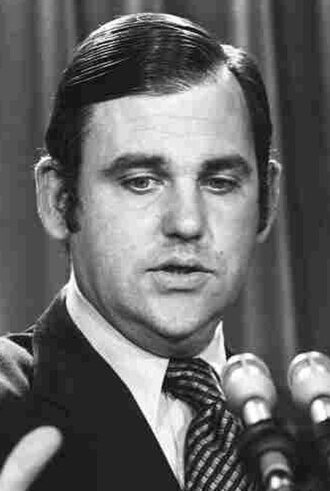
Ronald L. Ziegler served as White House Press Secretary from January 1969 to August 1974, acting as President Nixon's primary spokesperson throughout the taping period of February 1971 to July 1973. As the Watergate scandal escalated, Ziegler famously managed the administration's shifting public narratives and faced intense scrutiny from the press corps. In June 1973, his duties expanded when he was additionally named Assistant to the President following the resignation of Herbert Klein, holding both titles concurrently until the end of the administration in August 1974.
President Nixon met with Vice President Agnew, Treasury Secretary John Connally, and Republican Congressional leaders to address critical economic and legislative challenges. The primary focus was the potential bankruptcy of the Lockheed Corporation and the necessary legislative strategy to secure government loan guarantees to prevent a ripple effect of industrial failures and job losses. Additionally, the group reviewed the administration's legislative priorities, including welfare reform, general and special revenue sharing, and the status of various appropriations bills.
President Nixon met with Republican congressional leadership, including Hugh Scott and Gerald Ford, to coordinate the administration’s messaging on key domestic and economic issues. The discussion focused on framing the recent mass arrests of anti-war protesters as a necessary measure to maintain public order against vandalism. Additionally, the President urged the leaders to publicly support the Lockheed loan guarantee as a critical initiative for protecting peacetime jobs, aiming to preempt political opposition from Democratic rivals.
President Nixon met with his senior advisors, including Ronald Ziegler and H. R. Haldeman, to discuss managing public opinion regarding anti-war demonstrations, the potential release of North Vietnamese prisoners of war (POWs), and upcoming administration events. Nixon emphasized the need for a more aggressive public relations strategy, specifically suggesting the use of television coverage to highlight the voluntary return of 507 sick and wounded POWs across the demilitarized zone. The participants also explored strategies to frame the recent mass arrests of protesters as a necessary maintenance of law and order, while aiming to politically damage Democratic candidates who supported the demonstrations.
President Nixon convened an extensive afternoon meeting in the Oval Office with his key economic advisors, including George Shultz, John Connally, Arthur Burns, and Paul Volcker, to deliberate on pressing fiscal and monetary policy issues. The discussion focused on addressing the nation's ongoing economic instability, involving high-level strategy sessions with administration officials and cabinet members. These deliberations were critical in shaping the Nixon administration's approach to inflation and international monetary concerns, ultimately informing the direction of domestic economic policy.
President Nixon and Press Secretary Ronald Ziegler met to coordinate the White House's public response to the first anniversary of the Kent State and Jackson State shootings, specifically addressing how to handle critical CBS media coverage. Nixon directed Ziegler to maintain a firm, low-profile posture regarding these events while reiterating previous statements of sorrow to avoid inciting further media agitation. They also discussed debunking rumors of a meeting between the President and Judge Reid Kennedy regarding the William Calley case and reviewed the status of a potential invitation for the President to speak before the American Bar Association.
President Nixon met with John B. Connally and George P. Shultz to discuss the international monetary crisis and the political strategy for securing Congressional approval for the Supersonic Transport (SST) and Lockheed funding. Nixon emphasized his refusal to sacrifice the domestic economy to stabilize the dollar, asserting that the administration should maintain a firm stance while allowing European nations to manage their own monetary issues. Furthermore, the participants strategized on building a coalition of Republicans and Southern Democrats to advance the administration's legislative agenda, specifically focusing on the upcoming appropriations votes.
President Nixon met with H.R. Haldeman, John Ehrlichman, and Ronald Ziegler to coordinate the administration's response to the anti-war "May Day" protests in Washington, D.C., and to strategize on key legislative priorities. The participants discussed public relations efforts regarding the recent mass arrests, specifically aiming to project a unified, firm stance of support for local law enforcement. Additionally, Nixon directed efforts to secure sufficient support in Congress for the Supersonic Transport (SST) funding bill, linking its success to future technological defense initiatives like the B-1 bomber program.
President Nixon met with H. R. Haldeman and Ronald Ziegler to discuss administrative strategies for managing public perception regarding Vietnam War protests, upcoming economic data, and the Peace Corps. A primary focus was developing a firm communications strategy to commend law enforcement and law-abiding citizens while condemning the tactics of anti-war demonstrators in Washington, D.C. The President also touched upon legislative lobbying for the Supersonic Transport (SST) program and coordinated with staff regarding the timing and delivery of critical documents related to international negotiations.
President Nixon met with his legislative aides, including Thomas C. Korologos, Max L. Friedersdorf, and William E. Timmons, to acknowledge their work in the Senate and present them with gifts. The brief session included a photo opportunity with the White House photographer to commemorate the staff members' contributions. Following their departure, Ronald L. Ziegler joined the President to briefly discuss a photograph of Nixon's great-great-grandfather, Milhous.
President Nixon hosted actor and comedian Arte Johnson and his wife for a brief, informal meeting in the Oval Office, which included an initial photo session with a White House photographer. The conversation focused on lighthearted pleasantries, including discussions about Southern California geography, the San Diego Zoo, and the President’s home in San Clemente. Nixon also presented the Johnsons with official presidential gifts and engaged in casual banter regarding their respective backgrounds and professional work.
President Nixon, Treasury Secretary John Connally, and Press Secretary Ronald Ziegler met to coordinate the administration's public messaging regarding ongoing economic challenges and international monetary policy. They discussed the necessity of maintaining a firm, positive stance on the stability of the U.S. dollar amid global speculation and emphasized the urgency of improving U.S. industrial competitiveness, particularly in the steel sector. Connally also outlined his planned public statements addressing labor and management responsibility to ensure the long-term health of the American economy.
President Nixon met with Charles Colson, Ronald Ziegler, and Stephen Bull to discuss public perception of the administration's firm handling of recent anti-war protests in Washington, D.C. The participants reviewed strategies for countering criticism from political opponents and the media, specifically focusing on documenting evidence of communist support behind the demonstrations. Additionally, they coordinated plans to leverage political allies, such as labor leader Peter Brennan, to mobilize public support and ensure the administration’s narrative regarding the restoration of order remained dominant.
President Nixon and H.R. Haldeman review a wide-ranging agenda of administrative tasks, public relations strategies, and pending legislative goals. They discuss the potential for a presidential proclamation regarding a Prisoner of War event, the status of the Supersonic Transport (SST) funding, and managing the White House press and public opinion in the face of ongoing demonstrations. Additionally, Nixon expresses dissatisfaction with certain Cabinet members' performance and emphasizes the need for stronger, more loyal advocacy for his policies, specifically praising John Connally's aggressive support.
President Nixon and Press Secretary Ronald Ziegler briefly discussed the handling of a press release originating from the Secretary of Commerce. Ziegler sought the President's review of the document after consulting with H.R. Haldeman regarding potential modifications. The meeting concluded with a brief mention of a prospective conversation between the President and Treasury Secretary John Connally.
President Nixon met with D.C. Mayor Walter Washington, Chief of Police Jerry Wilson, and military/legal officials to commend their handling of the recent anti-war demonstrations in Washington, D.C. The discussion focused on the tactical success of the city’s response, the heavy costs and logistical challenges of policing mass arrests, and the administration’s firm stance against civil disobedience. Nixon affirmed his full support for their actions and emphasized that his administration would continue to prioritize law and order over the disruptions caused by protesters.
President Nixon met with H.R. Haldeman and other staff members to discuss public relations strategies, specifically focusing on how to capitalize on recent public approval of the administration's firm handling of anti-war protests in Washington, D.C. They reviewed internal polling data showing strong support for the police and authorized the administration to project a tough 'law and order' stance. Furthermore, they coordinated plans to move forward with revenue sharing legislation and addressed the need for better communication strategies regarding foreign policy and upcoming agricultural events.
President Nixon met with various administration officials and Secretary of State William P. Rogers to discuss legislative strategy, current foreign policy, and the political outlook of the Middle East. The President coordinated efforts with George Shultz and Clark MacGregor to build congressional support for revenue sharing and the Super Sonic Transport (SST) funding. Following these domestic agenda items, Secretary Rogers provided an extensive debriefing on his recent diplomatic tour of nine countries, focusing on the stability of Thailand, Turkey, Saudi Arabia, and Jordan, as well as his efforts to engage Anwar Sadat in Middle East peace negotiations.
President Nixon and his Cabinet met to receive a briefing on international affairs and domestic policy, with a focus on Secretary of State William P. Rogers' recent diplomatic travels to the Middle East and the feasibility of desalinization technology. Rogers reported on his efforts to stabilize the Middle East through ceasefire maintenance and discussed the geopolitical concerns of various regional leaders. Dr. Edward E. David Jr. and other experts presented a detailed plan to advance domestic water desalinization and nuclear power capabilities, with the President calling for a major, accelerated federal effort to ensure American technological leadership. The meeting concluded with a brief status report from Treasury Secretary David M. Kennedy regarding the current international monetary situation and the fluctuations of the dollar.
President Nixon met with his staff to discuss public relations strategies, specifically focusing on improving outreach to congressional wives and managing the public perception of the administration's accomplishments. The group reviewed the President's schedule and evaluated the effectiveness of recent social events, while also debating the political implications of shifting federal facilities and promoting key initiatives like cancer research and desalinization programs. Additionally, they touched upon legislative concerns, including the potential for a volunteer army and the reaction to Senator Mike Mansfield's resolution regarding the reduction of U.S. troops in Europe.
President Nixon met with Secretary of Health, Education, and Welfare Elliot Richardson, incoming official Dr. Merlin K. "Morty" DuVal, and senior staff to discuss the administration's health care reform strategy and the challenges of managing federal health bureaucracies. The President emphasized the need for DuVal to establish firm control over autonomous agencies like the NIH and NIMH while cautioning him against being co-opted by the entrenched bureaucracy. The group also strategized on how to secure political support from the medical profession for the administration's health plan, framing it as a pragmatic, centrist alternative to the more radical proposals championed by Senator Edward Kennedy.
President Nixon met with his Cabinet and Republican Congressional leaders to coordinate the administration's legislative agenda, specifically addressing the ongoing national railroad strike and the upcoming Congressional vote on the military draft. The discussion also focused on foreign policy, with Secretary of Defense Melvin Laird and Henry Kissinger providing briefings on the status of NATO, the credibility of U.S. military commitments in Europe, and the implications of recent Soviet statements regarding mutual force reductions. The President urged the Congressional leaders to maintain a firm stance against unilateral U.S. force withdrawals while emphasizing the need to handle these matters through stable, negotiated frameworks rather than disruptive legislative amendments.
President Nixon met with his staff and advisors to coordinate the strategic announcement of the Strategic Arms Limitation Talks (SALT) agreement with the Soviet Union. The group focused heavily on controlling the release of information to the press and Congressional leaders to prevent premature leaks and to ensure that the administration controlled the narrative regarding the agreement's historical significance. They devised a plan to conduct high-level briefings for wire services and network correspondents to shape media coverage, while also briefly discussing the termination of the Supersonic Transport (SST) project.
President Nixon, H. R. Haldeman, and Henry Kissinger met to coordinate the announcement of a breakthrough in the Strategic Arms Limitation Talks (SALT), emphasizing that the agreement was a presidential initiative. They strategized on how to manage key Cabinet members, particularly William Rogers and Melvin Laird, to ensure they felt included and supportive without revealing the sensitive details of the negotiation process. Additionally, the President discussed his plans to brief legislative leaders and handle potential leaks, while Kissinger briefed the group on secret diplomatic efforts involving China and North Vietnam.
President Nixon met with Henry Kissinger to finalize the announcement of a breakthrough in the Strategic Arms Limitation Talks (SALT), emphasizing the need for a brief and controlled public presentation. Following this, the President convened a broader group of officials to address domestic policy, specifically focusing on expanding agricultural drought relief for Texas and Oklahoma and managing national economic policy, including interest rates and housing market stability. The meeting concluded with a review of upcoming congressional votes, where administration staff expressed confidence in defeating the Mathias Amendment.
In this Oval Office meeting, President Nixon met with H.R. Haldeman, Henry Kissinger, and other key staff to coordinate the rollout of a major breakthrough in the Strategic Arms Limitation Talks (SALT) with the Soviet Union. The President emphasized the need to maintain secrecy regarding the specific channels used to achieve this diplomatic progress while ensuring that the public message highlighted his personal initiative and the transition to simultaneous negotiations on offensive and defensive weapons. Additionally, Donald Rumsfeld and Robert Finch reported on their recent foreign tour, discussing European perceptions of U.S. foreign policy, the status of U.S. ambassadors, and the challenge of managing drug usage among military personnel abroad.
President Nixon met with his Cabinet and key advisors to announce a major breakthrough in Strategic Arms Limitation Talks (SALT) with the Soviet Union, culminating in a joint statement to be released simultaneously in both nations. The agreement establishes a framework to prioritize limiting anti-ballistic missile (ABM) systems while pursuing parallel measures for offensive weapons. Nixon emphasized that the breakthrough was achieved by maintaining a strong U.S. defense posture, and he urged his administration to avoid public speculation or detailed commentary that could complicate sensitive ongoing negotiations.
In this meeting, President Nixon consulted with Secretary of State William P. Rogers regarding Middle East diplomacy, emphasizing his desire to push for a peace settlement before the upcoming election season and expressing frustration with the influence of Israeli interests. Following this, the President met with Henry Kissinger and Ronald Ziegler to coordinate the upcoming public announcement of a SALT agreement with the Soviet Union. Nixon and Kissinger strategically aligned on how to brief Congressional leaders while minimizing specific disclosures about negotiating history, MIRVs, and treaty structures to maintain control over the process.
President Nixon met with Vice President Agnew and a bipartisan group of Congressional leaders to announce a significant diplomatic breakthrough in the Strategic Arms Limitation Talks (SALT). Nixon informed the attendees of a forthcoming joint statement with the Soviet Union pledging to focus on limiting anti-ballistic missile (ABM) systems and certain offensive strategic weapons. While some lawmakers advocated for immediate unilateral U.S. defense cuts to demonstrate good faith, the President and his advisors successfully urged the leaders to maintain existing defense programs during the negotiations to avoid losing vital bargaining leverage.
President Nixon and his senior aides, including H. R. Haldeman and Henry Kissinger, reviewed the successful public reception of the President's televised announcement regarding the Strategic Arms Limitation Talks (SALT) agreement. They analyzed press coverage, specifically the favorable reactions from media figures like Dan Rather, and discussed the strategic value of the brief, dramatic presentation to the public. Additionally, the group addressed the tepid responses from certain congressional leaders and planned a follow-up briefing for the NSC and negotiating team to reinforce the narrative of a mutual, high-level diplomatic breakthrough.
President Nixon met with his senior advisors to coordinate the administration's messaging strategy following the announcement of the Strategic Arms Limitation Talks (SALT) agreement. The participants discussed managing the press, addressing potential discrepancies between U.S. and Soviet translations of the agreement, and ensuring the President received proper credit for the diplomatic breakthrough. Kissinger provided updates on his communication with Soviet Ambassador Anatoliy Dobrynin, while the group planned briefings to counter potential negative interpretations from the media and ensure a unified administration position.
President Nixon and Press Secretary Ronald Ziegler reviewed the overwhelmingly positive television network coverage of the administration's announcement regarding the Strategic Arms Limitation Talks (SALT). Ziegler detailed favorable commentary from ABC, NBC, and CBS, noting that anchors like Walter Cronkite characterized the negotiations as a potential breakthrough for global peace. To maintain this positive momentum, Nixon directed the team to expand their media outreach strategy by engaging with major news magazines through additional background briefings led by Henry Kissinger.
President Nixon met with his SALT delegation, including Henry Kissinger and Gerard C. Smith, to strategize for upcoming negotiations in Helsinki and manage public and bureaucratic expectations. The discussion focused on maintaining a firm stance on the 'Safeguard' ABM program while emphasizing the need to keep details confidential to prevent premature leaks and political opposition. Nixon stressed that the delegation should project strength and avoid defensiveness, ultimately aiming to finalize a comprehensive treaty that would serve American security interests.
President Nixon met with Ronald Ziegler and Alexander Butterfield to coordinate the President's upcoming schedule and social engagements. The discussion focused on logistics regarding a scheduled lunch and a planned meeting with Charles "Bebe" Rebozo. The participants concluded the brief session by clarifying the availability and whereabouts of the individuals involved in these meetings.
President Nixon and Press Secretary Ronald Ziegler reviewed the media coverage and public reception of the President's recent trip to Alabama, specifically praising the large, enthusiastic crowds and the effective messaging regarding national unity. They discussed the positive impact of the President's informal briefing for Southern regional journalists, noting that his comments on patriotism, religion, and military strength were well-received. Finally, the two consulted on the scheduling of an upcoming press conference, weighing the strategic advantages of holding it on a Friday versus a Tuesday in light of the week's existing news cycle.
President Nixon met with H.R. Haldeman and other staff members to review administrative operations and discuss public relations strategies. They evaluated the success of a recent trip to Alabama, debated the appropriate use of motorcades and podiums to maintain presidential dignity, and addressed upcoming personnel appointments, including a potential position for Albert Watson. Additionally, Nixon emphasized his preference for controlling his media appearances and artistic portraiture, insisting that staff streamline his briefing materials and limit his direct physical engagement with crowds.
President Nixon met with Raymond K. Price, Jr. and John K. Andrews, Jr. to edit and refine the themes of a forthcoming commencement speech. The President emphasized a message centered on American global responsibility, the necessity of maintaining strength, and the importance of service, while cautioning against neo-isolationism. The discussion also addressed recent violence against police officers, with Nixon directing staff to highlight his prior initiatives regarding law enforcement support and to consider a potential national scholarship fund for the children of slain officers.
President Nixon met with J. Edgar Hoover, John Mitchell, and senior staff to coordinate a stronger federal response to rising violence against police officers, including the potential implementation of federal insurance benefits for fallen officers' families. The group discussed strategies to foster public support for law enforcement, such as establishing an annual Police Recognition Day and organizing high-profile meetings between the President and police leadership to counter anti-authority sentiment. Additionally, the President issued a directive to create a centralized, independent agency to tackle the national drug crisis, moving responsibilities away from HEW to improve accountability and treatment programs for military personnel.
President Nixon met with King Faisal of Saudi Arabia to discuss bilateral relations and the escalating instability in the Middle East. The King expressed deep concern regarding the influence of Zionism and Communism in the region, arguing that they often act as destabilizing forces that threaten U.S.-Saudi interests. Nixon reiterated his commitment to an even-handed Middle East policy, emphasizing that his administration sought to normalize relations with all regional states and pursue a durable peace settlement rather than just interim measures like the proposed reopening of the Suez Canal.
President Nixon met with his senior staff and cabinet members to finalize a new, centralized strategy for combating the heroin epidemic among Vietnam veterans and the general public, including the establishment of a Special Action Office. The President directed that this new office would oversee federal drug rehabilitation, prevention, and enforcement efforts across all departments, emphasizing the urgent need for a cohesive, high-level response to prevent former servicemen from turning to crime. During the discussions, Nixon also pressed for stricter loyalty within the administration, authorized an investigation into intelligence leaks, and evaluated personnel appointments within the CIA and military leadership.
President Nixon met with H.R. Haldeman, Henry Kissinger, and other staff members to strategize on administration messaging, foreign policy initiatives, and political tactics. The conversation centered on managing the upcoming press conference, refining the administration's stance on drug policy by shifting focus toward youth rather than just veterans, and monitoring polling data regarding China and the United Nations. Nixon and his advisors also reviewed plans for an upcoming speech at West Point and discussed sensitive diplomatic maneuvering regarding potential summits and China-related negotiations.
President Nixon and Press Secretary Ronald Ziegler met to coordinate the briefing strategy for Governor Nelson A. Rockefeller. The discussion focused on managing the administration's messaging and political engagement regarding the Governor. The meeting served to ensure executive alignment prior to the Rockefeller briefing.
In this extensive meeting, President Nixon and H. R. Haldeman, later joined by Henry Kissinger and other staff, discussed a broad range of administrative, political, and foreign policy matters. The conversation focused heavily on the President's recent press conference, strategies for managing the press and domestic public opinion, and the imperative to achieve foreign policy breakthroughs in Vietnam, relations with the USSR, and potential overtures to the People's Republic of China. Significant developments included internal planning for clandestine diplomatic channels and a firm resolve to maintain a "law and order" stance against anti-war demonstrators and critics of the administration.
President Nixon met with H. R. Haldeman, Robert Finch, Ronald Ziegler, and Alexander Butterfield to coordinate 1972 re-election strategy, focusing specifically on California politics and the management of Republican primaries. The group discussed the potential for Caspar Weinberger to run for mayor of San Francisco to boost the President's standing in the state, while also strategizing on how to handle potential stand-in candidates and primary challenges. Nixon emphasized a desire to minimize his direct campaign travel during the primaries, delegating tactical operations to a small, loyal team including Haldeman, Finch, and Bryce Harlow, while expressing distrust toward Charles Colson’s political judgment.
President Nixon, H. R. Haldeman, and Ronald Ziegler met to coordinate logistics for upcoming presidential travel, review scheduling for meetings with political allies and foreign officials, and discuss the administration's media strategy regarding recent May Day protests. The group reviewed gift-giving protocols for members of Congress and evaluated the political risks associated with various appearances, including a rejected proposal for a concert in the Rose Garden. Nixon and his staff also discussed managing press relations, specifically reinforcing the President's policy of declining to answer partisan political questions during televised press conferences.
President Nixon met with H. R. Haldeman and briefly with Ronald Ziegler to refine his political outreach and public messaging strategy. The discussion focused on managing the President's schedule to maximize positive media impact, specifically regarding energy policy announcements, radio addresses, and strategic use of White House events for political supporters. Nixon also directed staff to initiate a national program for presidential commendations of law enforcement and student leaders to bolster support among core constituencies.
President Nixon and Press Secretary Ronald Ziegler met to coordinate the press strategy for the President’s upcoming energy message. Nixon emphasized the importance of framing the initiative as a bipartisan effort and instructed Ziegler to acknowledge the specific support of key congressional figures, including Chet Holifield, John O. Pastore, and Craig Hosmer. The discussion focused on maximizing favorable media coverage by highlighting this legislative cooperation.
President Nixon and Press Secretary Ronald Ziegler discuss the optics and scheduling of an upcoming meeting with New York Governor Nelson Rockefeller. They deliberate on whether to permit photographic coverage of the meeting to project an image of positive federal-state relations, ultimately aiming to influence New York political perceptions. The President confirms the meeting will take place in the Oval Office rather than the EEOB to focus the conversation on topics such as revenue-sharing.
President Nixon and Press Secretary Ronald Ziegler briefly coordinate a meeting with Governor Nelson Rockefeller to discuss federal-state relations. They specifically weigh the optics of allowing photography during the session to document the administration's engagement with state leadership. Ziegler agrees to consult Rockefeller on his preference for the photo opportunity before finalizing the logistics.
President Nixon met with New York Governor Nelson Rockefeller to discuss a variety of domestic policy issues, most notably the implementation of federal revenue sharing and strategies to address New York's fiscal challenges. They explored the potential for a Hoover-type commission to examine municipal corruption and inefficiency, and coordinated on the President's upcoming travel plans, including a trip to Rochester. Additionally, the conversation touched upon managing political optics regarding diplomatic visits by foreign leaders and the legislative hurdles for revenue-sharing bills in Congress.
President Nixon met with H.R. Haldeman and other staff to review administrative, political, and foreign policy matters, including the handling of foreign cables and the management of cabinet officers. The President emphasized his desire to delegate decision-making authority to cabinet secretaries to minimize his personal involvement in routine disputes and to streamline government operations. Additionally, they discussed strategies for dealing with the press, the importance of maintaining loyalty from political allies, and the specific goal of ending federal funding for the Corporation for Public Broadcasting.
President Nixon, Vice President Agnew, and a large group of Cabinet members and senior staff met to establish a strategic framework for domestic policy, budget planning for the 1973 fiscal year, and the development of the 1972 Republican legislative and election platform. Participants reviewed polling data regarding national, community, and family concerns, noting that the economy, inflation, and unemployment are primary public priorities while other issues like pollution and consumerism are often driven by media visibility. The President and attendees emphasized the need for better communication to receive credit for administration accomplishments, focusing on a limited number of 'gut issues' rather than overextending on too many programs. Ultimately, the group discussed the necessity of coordinating policy initiatives and messaging to ensure visible progress on key economic and social concerns ahead of the 1972 election.
President Nixon, H. R. Haldeman, and Rose Mary Woods met to discuss logistics for an upcoming event involving California guests, alongside personal staffing concerns and household management. The conversation transitioned into a strategic review of the administration's public image, with Nixon expressing frustration over his Cabinet’s lack of focus and the administration's failure to gain political credit for its foreign and domestic policy accomplishments. Nixon and Haldeman concluded by emphasizing the need to adopt a more aggressive leadership posture, particularly by identifying and confronting political adversaries, to better resonate with the public.
President Nixon met with executives from NBC and other network representatives to discuss the administration's concerns regarding the television industry, specifically focusing on cable television, regulatory oversight, and perceived media bias. The conversation covered the economic challenges posed by cable television, the implications of FCC "equal time" rules on political programming, and the role of advertising in shaping public perception. Nixon emphasized his belief in the importance of maintaining a competitive, private-sector broadcasting system while urging network leaders to ensure fairness and professionalism in their news coverage.
President Nixon and H. R. Haldeman engaged in an extensive series of consultations regarding the 1972 presidential campaign, administrative scheduling, and foreign policy strategy. The participants discussed political intelligence, potential staff appointments, and the necessity of managing press relations, particularly concerning leaks and the administration's public image. Additionally, they reviewed travel plans for international summits and assessed the timing of significant announcements in relation to the domestic political calendar.
President Nixon, Ronald Ziegler, and H. R. Haldeman discussed how to manage media reporting regarding Vietnam casualty figures after a premature report by Howard K. Smith. Nixon emphasized the importance of formally announcing the figures to highlight that casualties had reached their lowest level since 1965, thereby validating the administration's policy following the Laos incursion. Additionally, Ziegler reported that he had publicly criticized Clark Clifford for making politically motivated, unsubstantiated claims regarding prisoners of war.
President Nixon consulted with Ronald Ziegler and H.R. Haldeman to identify the source of news reports regarding upcoming Vietnam casualty figures. The participants determined that Secretary of Defense Melvin Laird was responsible for the information appearing in Howard K. Smith's report following a speech at the Air Force Academy. The discussion confirmed that an official announcement regarding the casualty statistics was scheduled for the following Thursday.
President Nixon met with his staff to finalize the intricate television production schedule and logistical planning for his daughter Tricia’s upcoming wedding at the White House. The participants reviewed the sequence for the ceremony, the receiving line, the first dance, and the cake-cutting, while also confirming policies to restrict specific journalists from the press pool. Additionally, the President briefly reviewed a statement regarding housing integration, expressing satisfaction that the language successfully balanced legal enforcement with assurances against forced suburban integration.
President Nixon met briefly with Alexander P. Butterfield and Ronald L. Ziegler to coordinate his daily schedule and review logistics for an upcoming event. The discussion centered on final preparations for a White House lawn ceremony, specifically addressing the weather forecast and the physical appearance of the site. The participants ensured that all arrangements were set to proceed as planned for the day's activities.
President Nixon coordinated with Press Secretary Ronald Ziegler to secure copies of AP and UPI news coverage for Julie Nixon Eisenhower. The discussion also touched upon a recently aired ABC-TV news special regarding Tricia Nixon Cox's wedding. Nixon expressed satisfaction with the television coverage, and Ziegler committed to facilitating the delivery of the requested press clippings.
President Nixon and Press Secretary Ronald Ziegler discuss media coverage of Tricia Nixon Cox's wedding, evaluating the performance of various television networks and newspapers. While expressing general satisfaction with television coverage, the President strongly criticizes a Washington Post article by Judith Martin for its negative tone. Consequently, Nixon orders a total ban on Washington Post reporters from attending future White House social and residential functions, instructing Ziegler to exclude them from coverage pools while maintaining a veneer of professional discretion.
President Nixon met with his cabinet, diplomatic staff, and intelligence officials to declare drug abuse 'public enemy number one' and to coordinate a comprehensive strategy for eradicating the international supply of narcotics. The participants evaluated the effectiveness of current interdiction programs in Southeast Asia, the Middle East, and Europe, ultimately concluding that despite increased law enforcement efforts, the drug problem was expanding. The President directed his team to prioritize the escalation of foreign pressure, including potential subsidies for poppy crop eradication in Turkey, and announced the centralization of domestic drug policy under a new White House office.
President Nixon met with H.R. Haldeman and other staff members to address the political fallout from the publication of the Pentagon Papers and to plan the administration's defensive response. The discussion centered on delegitimizing the leaks by implicating the Brookings Institution and framing the disclosure as a moral failure of the intellectual community and the previous administration. Additionally, the President and his staff managed logistical details regarding his upcoming summer schedule, including travel to California, Florida, and Camp David, while coordinating his public relations strategy for a television documentary on his drug initiatives.
President Nixon met with William P. Rogers, Alexander M. Haig, Jr., and Ronald L. Ziegler to coordinate an administration response to the publication of the Pentagon Papers. The participants discussed strategies to minimize the perceived impact of the leaks by emphasizing that the papers represented an internal Department of Defense study rather than a consensus view of the administration, while concurrently highlighting the President's commitment to a new, independent Vietnam policy. They also addressed broader diplomatic issues, including NATO relations, arms limitation negotiations with the Soviet Union, and personnel transitions involving key foreign service positions.
President Nixon met with Republican Congressional leaders to discuss the administration’s new, multi-pronged national strategy for combating drug abuse, emphasizing a shift toward treatment, rehabilitation, and the creation of a centralized Special Action Office. During the discussion, Nixon and his team outlined plans for increased interdiction, expanded military detoxification programs, and a firm, non-permissive stance against the legalization of marijuana. Furthermore, the participants addressed the political climate surrounding the Vietnam War, with Nixon urging support against anti-war amendments and arguing that congressional deadlines for withdrawal would undermine sensitive ongoing negotiations.
President Nixon, Henry Kissinger, and Ron Ziegler met to coordinate the administration's public relations and legal strategy regarding the leaking of the Pentagon Papers and pending Vietnam legislation. The President emphasized a firm stance against the New York Times' publication of classified documents, framing the administration's legal injunction as a necessary defense of government integrity rather than a partisan effort to shield previous administrations. They also discussed managing congressional support for Vietnam policy and the importance of maintaining strict secrecy around sensitive diplomatic negotiations, including ongoing back-channel communications with China and the Soviet Union.
President Nixon and Press Secretary Ronald Ziegler met to prepare for an upcoming press conference by reviewing potential inquiries regarding the President's meeting with West German Chancellor Willy Brandt. The discussion centered on foreign policy and economic issues, including Berlin negotiations, Mutual and Balanced Force Reduction (MBFR), NATO relations, and international monetary policy. Nixon commended Secretary of State William P. Rogers for his briefing work, and Ziegler concluded the session to prepare for his own press briefing.
President Nixon met with John Mitchell, John Ehrlichman, and Ronald Ziegler to discuss the administration's aggressive response to the New York Times' publication of the Pentagon Papers. Nixon characterized the leak as an attack on the presidency and a national security crisis, demanding that his staff sever all contact with the Times and pursue legal action against the newspaper and individuals like Daniel Ellsberg. The participants strategized on framing the documents as the "Kennedy-Johnson Papers" to shift blame to previous administrations while emphasizing the necessity of protecting classified information.
President Nixon met with H.R. Haldeman, Henry Kissinger, and other key advisors to formulate the administration's strategic response to the unauthorized publication of the Pentagon Papers. The President emphasized a firm, unified messaging approach that distinguishes between the protection of classified national security information and the political culpability of the previous administrations, while also directing staff to maintain strict discipline regarding press access. Furthermore, the meeting addressed pressing foreign and domestic policy matters, including the need for a bipartisan response to the drug crisis, the management of relations with West German Chancellor Willy Brandt, and the long-term support strategy for South Vietnam.
President Nixon met with Herbert G. Klein, Stanley S. Scott, and Oliver Atkins to welcome Scott to the White House staff and discuss the administration's minority appointment strategy. Nixon emphasized his desire to integrate qualified African Americans and women into high-level positions across various sectors, such as the judiciary and federal commissions, rather than limiting them to civil rights-focused roles. The President expressed his commitment to a 'color-blind' hiring approach and encouraged Scott to remain resilient in his new, challenging position.
President Nixon met with Herbert G. Klein, Ronald L. Ziegler, and a large delegation from the White House News Photographers Association (WHNPA) to commemorate the organization's anniversary. The group presented the President with ceremonial bookends crafted from historic U.S. Capitol bricks and discussed the vital role of photography in documenting history. During the exchange, Nixon expressed his personal preference for visual imagery over written text and briefly engaged with the photographers regarding the technical aspects of camera use.
President Nixon and Press Secretary Ronald Ziegler strategized on how to frame the White House's public response to the New York Times' publication of the Pentagon Papers. They agreed to shift the narrative from the suppression of information to the criminal nature of the leak and its potential threat to national security, particularly regarding sensitive diplomatic negotiations like SALT and MBFR. Nixon emphasized the necessity of prosecuting Daniel Ellsberg to establish a deterrent against future security breaches and directed Ziegler to portray the press as reckless and implicate the previous Democratic administrations in the origins of the Vietnam War.
President Nixon met with Indian Foreign Minister Swaran Singh, Ambassador Lakshmi Kant Jha, Ambassador Kenneth B. Keating, and Joseph J. Sisco to discuss the escalating refugee crisis in East Pakistan and the broader India-Pakistan conflict. While acknowledging the humanitarian urgency and pledging $70 million in U.S. financial aid, Nixon emphasized the necessity of "quiet diplomacy" over public pressure to influence Pakistani leadership toward a political solution. The discussion underscored Nixon's efforts to prevent an armed conflict and his frustration with other nations that offered rhetorical support without matching financial contributions.
President Nixon met with H. R. Haldeman and key staff members to discuss administration strategy regarding the unauthorized publication of the Pentagon Papers and the public messaging for a new drug policy. Regarding the Pentagon Papers, the participants analyzed the shifting public and press sentiment, with Nixon deciding to withhold a formal presidential statement for the moment while exploring potential leaks concerning the Kennedy administration. Simultaneously, they deliberated the format for a drug policy announcement, ultimately rejecting a request for prime-time television in favor of a concise, high-impact radio or press room statement to emphasize the administration's proactive stance. The President also evaluated political polling data and coordination efforts within the Domestic Council to ensure that upcoming legislative and public initiatives were effectively managed.
President Nixon and Press Secretary Ronald Ziegler reviewed public and media reaction to the ongoing publication of the Pentagon Papers, specifically focusing on the performance of New York Times publisher Arthur O. Sulzberger and commentary by Maxwell Taylor and Howard K. Smith. Ziegler briefed the President on potential administration strategies, including comparing the current leak to historical precedents regarding the declassification of intelligence, such as the World War II Japanese fleet movements. The two agreed to maintain their current course of action and wait for further assessments before determining additional responses.
President Nixon met with a bipartisan group of Congressional leaders and administration officials to propose a centralized federal office for coordinating drug abuse prevention and treatment strategies. The discussion highlighted the urgency of addressing drug addiction, particularly among servicemen in Vietnam and youth in the United States, by shifting from a fragmented, multi-agency approach to a unified, performance-based model. Participants debated the integration of law enforcement, research, and treatment programs, with an emphasis on establishing flexible, community-based solutions and securing Congressional support for new enabling legislation.
President Nixon and Ronald Ziegler coordinated the messaging for an upcoming public announcement regarding national drug policy. Nixon emphasized the need for aggressive rhetoric, specifically testing phrases like "Public Enemy Number One" and a "new total offensive" to frame the administration’s stance. They discussed avoiding military terminology associated with the Vietnam War while maintaining a "no-nonsense" approach that balances firmness toward drug traffickers with compassion for addicts.
President Nixon and Press Secretary Ronald L. Ziegler met in the Oval Office to coordinate the President's upcoming official schedule. This brief consultation served to align administrative priorities and logistical planning for presidential engagements. No major policy developments were recorded, as the discussion focused strictly on internal scheduling matters.
President Nixon met with his staff and businessman Donald McI. Kendall to coordinate administration messaging, discuss drug policy, and review foreign relations. The group focused on refining the President's public rhetoric regarding federal drug enforcement efforts, with Nixon expressing frustration with current speechwriting and emphasizing the need for a more decisive, impactful message. Kendall provided an extensive briefing on international affairs, specifically regarding Greece, Iran, Egypt, and Japan, advocating for a pragmatic trade policy that prioritizes American economic interests over traditional foreign aid paradigms.
President Nixon met with his staff to orchestrate a coordinated public relations and legal counter-offensive against the New York Times regarding the publication of the Pentagon Papers, framing the leak as the trafficking of stolen goods and an act of providing aid and comfort to the enemy. He subsequently consulted with Senator Barry Goldwater and Clark MacGregor to discuss congressional support for the administration's stance on the war and security, while exploring ways to leverage Goldwater’s influence to shift the narrative. The meeting concluded with a broader review of foreign policy strategies, including relations with China, the Soviet Union, and the status of the U.S. aircraft industry.
President Nixon met with H.R. Haldeman, John Ehrlichman, and Henry Kissinger to coordinate an aggressive administration response to the New York Times' publication of the Pentagon Papers. Nixon emphasized the need to frame the issue as a defense of the integrity of the presidency and the necessity of maintaining national security, rather than merely litigating the court case. The group discussed strategies to pressure the press, leak information regarding Daniel Ellsberg, and discredit the previous administrations of Johnson and Kennedy regarding their Vietnam policy.
President Nixon, Rose Mary Woods, Ronald Ziegler, and Charles Colson met to discuss press management, presidential scheduling, and the unfolding controversy surrounding the Pentagon Papers. A central focus was Nixon's insistence that former President Lyndon B. Johnson must publicly defend his administration's role in the Vietnam War, with Nixon stating he could no longer carry the political burden of defending Johnson if Johnson remained silent. Furthermore, Nixon directed his staff to exclude *The New York Times* from press access and briefings, citing his deep frustration with the publication.
President Nixon and Vice President Agnew met with a group of Appalachian governors and key administration advisors to discuss the legislative strategy for extending the Appalachian Regional Commission (ARC) and managing regional political concerns. The discussion shifted toward the administration's aggressive response to the leaking of the Pentagon Papers, which Nixon characterized as a threat to national security and a move by political opponents to damage his administration. Nixon and Agnew coordinated on the narrative for Agnew's upcoming international trip, with the President tasking his team with countering domestic criticism and emphasizing the administration's commitment to ending the Vietnam War through established diplomatic channels.
President Nixon met with his senior advisors to strategize on managing the political fallout from the release of the Pentagon Papers and the Senate's recent passage of the non-binding Mansfield amendment regarding troop withdrawals. The President decided to counter the growing legislative pressure by emphasizing that the amendment was inconsistent with ongoing diplomatic efforts to secure a ceasefire and prisoner of war (POW) releases, while also directing his team to frame the document leak as a breach of national security perpetrated by the previous Democratic administrations. Additionally, the participants discussed the ongoing legal battle against the New York Times and the Washington Post, weighing the public relations benefits of pursuing the case through the Supreme Court versus allowing the matter to be resolved through congressional inquiry.
President Nixon and Press Secretary Ronald Ziegler discuss media coverage strategies regarding Vietnam, the successful House passage of H.R. 1, and the ongoing legal battles over the Pentagon Papers. Nixon emphasizes the importance of framing the Pentagon Papers issue around the mishandling of top-secret documents to garner public support and protect national security. The two also coordinate efforts to generate press coverage for a story involving the British government through State Department spokesperson Robert J. McCloskey.
President Nixon and his senior advisors and business leaders convened to formalize a national strategy for increasing veteran employment, emphasizing the need for businesses to provide veterans with a hiring advantage. The discussion included strategies for managing the fallout from the recently leaked Pentagon Papers, with Nixon directing his team to resist congressional hearings on war conduct while ensuring the documents were securely channeled to responsible leadership. Nixon also expressed a desire to keep the focus of the controversy on the previous administrations and away from current operations, tasking officials with maintaining a unified, firm stance against political opportunists.
President Nixon and Press Secretary Ronald Ziegler coordinate the administration's public messaging regarding the release of the Pentagon Papers. They emphasize portraying the decision to release the documents as a proactive move made by the President at Key Biscayne rather than a defensive reaction to congressional or judicial pressures. Additionally, they briefly clarify that recent negative news coverage regarding the American Medical Association and health reform was unrelated to the President's recent activities.
President Nixon and Press Secretary Ronald L. Ziegler held a brief check-in to confirm the successful management of a recent media story. The exchange served as a short status update to ensure that a potentially sensitive narrative had been effectively contained. The participants concluded the discussion with mutual confirmation that the matter was handled satisfactorily.
President Nixon and H. R. Haldeman met to discuss the administration's response to the Pentagon Papers, focusing on delegating a team to manage the declassification process while emphasizing that the documents originated during the Kennedy and Johnson administrations. Nixon stressed the importance of framing the leaks as a national security risk, using the argument that a single compromised document could reveal codes or endanger lives to justify the administration's legal stance. Additionally, they reviewed scheduling for the President’s upcoming Midwest trip and discussed the necessity of curbing internal leaks and exerting tighter control over White House and Congressional staff regarding policy recommendations.
President Nixon met with H.R. Haldeman, Alexander Butterfield, and Ronald Ziegler to coordinate the administration's political and public relations response to the House vote on the Mansfield amendment. The group deliberated on the appropriate wording for presidential statements to effectively manage the amendment's impact on ongoing negotiations. Additionally, the participants briefly touched upon scheduling matters and personnel considerations, including a potential role for Alexander Haig.
President Nixon met with the Cabinet Committee on Economic Policy to address ongoing issues regarding internal leaks of economic strategy and the lack of a unified administration voice. He stressed the necessity of presenting a cohesive front to the public, designating Secretary of the Treasury John B. Connally as the primary spokesperson for economic policy. The President mandated that all advisors cease unauthorized contacts with the press and align their public statements with the official administration line to restore public trust and policy stability.
President Nixon met with H.R. Haldeman, Henry Kissinger, and other aides to devise political and legislative strategies to counter a looming Congressional effort to cut off funding for the Vietnam War. The discussion focused on stalling tactics, such as the potential for a Senate filibuster, to buy time for the administration's broader foreign policy initiatives, including upcoming breakthroughs regarding China and the Soviet Union. Nixon and his team aimed to use these diplomatic successes to shift public and Congressional focus away from the war, despite concerns that a legislative fund cutoff remained a significant threat by the autumn.
President Nixon met with Ronald Ziegler and Alexander Butterfield in the Oval Office to conduct a brief administrative session. The participants focused on reviewing the defense budget, utilizing the time for a quick executive briefing. The meeting concluded after approximately one minute without recorded follow-up actions.
President Nixon held a series of meetings with top advisors, including H.R. Haldeman, John Connally, and George Shultz, to discuss political messaging, economic strategy, and staff management. Key developments included a directive to stop administration officials from providing background briefings to the press and a decision to maintain a firm, non-conciliatory stance regarding the prosecution of Daniel Ellsberg. Additionally, the President and Connally strategized on the public communication of economic policy, with the President emphasizing the need for a strong, unified message that highlights economic growth while rejecting wage and price controls.
President Nixon and Press Secretary Ronald Ziegler reviewed the success of Treasury Secretary John Connally's recent performance as the administration's primary economic spokesperson. Ziegler confirmed that Connally effectively communicated the President's stance against wage and price controls and accelerated tax cuts while emphasizing economic recovery. The pair also discussed political strategy regarding public perception, the ongoing controversy surrounding the leaked Pentagon Papers, and the motivations of Daniel Ellsberg.
President Nixon met with Secretary of State William Rogers and Turkish Ambassador Melih Esembel to discuss the strengthening of U.S.-Turkish relations and ongoing cooperation regarding drug production suppression. Following a brief photo session with the press, Nixon and Rogers shifted their focus to the tragic deaths of the Soviet Soyuz 11 cosmonauts. The discussion concluded with plans to draft an official telegram of condolence to the Soviet Union regarding the mystery of the crew's demise.
President Nixon met with Ronald Ziegler to coordinate media strategy regarding a new U.S.-Turkey agreement aimed at curbing the international heroin trade. The conversation focused on utilizing radio and television coverage to emphasize the administration's success in cutting off the primary source of Turkish opium. Nixon directed staff to frame this development as a major breakthrough in his broader worldwide offensive against narcotics, while also discussing efforts to garner political support from congressional allies.
President Nixon met with H.R. Haldeman and Alexander Butterfield to discuss speechwriting strategy, emphasizing a "tough" message against permissiveness regarding crime and drugs. He later consulted with Paul McCracken, who offered his resignation as head of the Council of Economic Advisors to return to teaching. The President requested that McCracken delay his departure to avoid the appearance of economic failure and urged his staff to pursue more aggressive research and development initiatives to stimulate the economy.
President Nixon met with his senior advisors, including H.R. Haldeman, Henry Kissinger, John Mitchell, and Melvin Laird, to determine the administration's strategy following the Supreme Court's ruling allowing the publication of the Pentagon Papers. The President rejected the idea of broad declassification as a response to the court defeat, fearing it would appear like an admission that the government's classification system was worthless. Instead, he decided to maintain a hard line on the prosecution of Daniel Ellsberg, pursue investigations into potential leaks and conspiracies within the government, and direct his staff to target the Brookings Institution to recover classified materials.
President Nixon met with Press Secretary Ronald L. Ziegler to coordinate the administration's public messaging regarding the ongoing Paris Peace Talks, the Pentagon Papers, and the Mansfield Amendment. The discussion focused on managing press speculation and determining the appropriate government posture toward media inquiries and potential information suppression. Nixon expressed a desire to keep official statements brief and dismissive of the controversy surrounding the leaked documents.
President Nixon met with NSC staffer Robert G. Houdek, his wife, Alexander Haig, and Ronald Ziegler to facilitate a brief farewell and photo opportunity. During the meeting, the President discussed Houdek’s transition to Princeton University for his undergraduate studies. The encounter concluded with the President presenting a gift featuring the presidential seal to Houdek's wife.