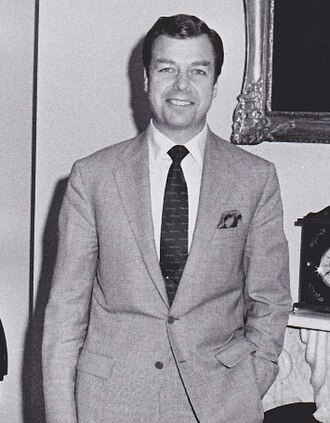
Flanigan, Peter M.
Peter M. Flanigan served as a key economic and commercial advisor during the Nixon administration, earning the nickname "Mr. Fixit" for his handling of powerful business interests. He initially joined the White House as a Consultant to the President in January 1969 before being elevated to Assistant to the President in April 1969, a role he held throughout the taping period (February 1971 – July 1973). As his portfolio expanded to focus on global trade, he concurrently became Assistant to the President for International Economic Affairs in January 1972 and Executive Director of the Council on International Economic Policy in February 1972, serving in these capacities until his resignation in June 1974.
President Nixon and his Cabinet met to discuss the ongoing military operations in Indochina and the development of the administration's national health reform agenda. Regarding the war, officials reviewed the progress of South Vietnamese incursions into Laos and Cambodia, noting that the strategy was successfully disrupting enemy supply lines while shifting the burden of ground operations away from American forces. The conversation then transitioned to a detailed proposal from Secretary of Health, Education, and Welfare Elliot Richardson regarding healthcare reform, with the group debating the costs, tax implications, and administrative feasibility of implementing Health Maintenance Organizations (HMOs) and national health insurance standards.
President Nixon met with H.R. Haldeman and various staff members, including Peter Flanigan, Henry Kissinger, and John Ehrlichman, to deliberate on high-level personnel appointments, government reorganization, and legislative strategy. A primary focus was identifying a strong, business-oriented candidate for an ambassadorial role to navigate international economic negotiations and counter State Department bureaucracy. The group also discussed managing the President’s public image regarding economic policy, the Alaska pipeline, and Vietnam, while addressing the need to discipline administration officials who publicly diverged from official policy. The President emphasized a preference for direct, high-level policy control and instructed his staff to bolster communication efforts and strengthen the administration’s political messaging.
President Nixon hosted a meeting with a group of prominent American business leaders to express his appreciation for their contributions and to discuss the current state of the national economy. During the brief interaction, the President underscored the vital role of "movers and shakers" in maintaining economic stability and expressed optimism regarding upward economic growth. The session concluded with the President presenting gifts to the attendees as a token of his gratitude.
President Nixon met with Dr. Edward E. David, Jr., Peter M. Flanigan, H. R. Haldeman, and John D. Ehrlichman to coordinate the upcoming Science Advisory Committee meeting and address the political challenge of unemployed scientists and engineers. Nixon emphasized the need to show administration concern for these displaced professionals without necessarily relying on federal bailouts for universities or costly retraining programs. The group further discussed shifting to international cooperation in space and science—including potential collaboration with the Soviet Union—and evaluated strategic applications for technology in areas like energy and agriculture.
President Nixon met with H. R. Haldeman, Bryce Harlow, and Peter Flanigan to discuss various ambassadorial appointments and administrative personnel strategies. The conversation focused on identifying suitable candidates for roles in Australia and the Court of St. James, while evaluating the political implications of rewarding donors and associates with high-level posts. Additionally, the group addressed the need to manage relations with agricultural officials and coordinate an upcoming White House event, the 'Salute to Agriculture,' to strengthen support in the farming sector.
President Nixon met with his key advisors to strategize on complex textile trade negotiations with Japan, focusing heavily on the complicating influence of Representative Wilbur Mills. The participants evaluated the viability of voluntary Japanese import controls versus potential restrictive domestic legislation. Nixon and his team sought to coordinate their administrative position to balance industry pressure, congressional involvement, and diplomatic relations with the Japanese government.
President Nixon, Harry Dent, and Peter Flanigan discussed the status of delicate textile trade negotiations with Japan and the administration's strategy regarding potential legislative action. The group evaluated the influence of Representative Wilbur Mills and other key industry stakeholders, aiming to align domestic political support with the administration’s trade goals. Nixon finalized plans for a forthcoming public statement to address voluntary restraints, ensuring the administration's stance on trade and monitoring remained distinct from congressional maneuverings.
President Nixon and Peter Flanigan discussed strategies for handling recalcitrant textile trade negotiations with Japan and addressing perceived overreach by Congressman Wilbur Mills. The President rejected a soft approach, insisting on a forceful public stance and the preparation of tough, direct legislation to pressure both the Japanese and Congress. Additionally, Nixon directed staff to clarify his firm support for the Anti-Ballistic Missile (ABM) system, specifically ordering a public refutation of reports suggesting he or nominee James C. Fletcher harbored doubts on the matter. Finally, they reviewed the progress of William J. Casey’s Senate confirmation process, noting successful efforts to neutralize opposition.
President Nixon met with various staff members and advisors to refine the administration's political and legislative strategy, specifically regarding the textile quota issue and relations with key Congressional leaders like Wilbur Mills and John Byrnes. The President finalized plans to issue a statement on textile legislation while balancing pressure from the industry against the strategic risks of legislative entanglement. Additionally, the President discussed methods for managing Republican Congressional relations through targeted meetings and evaluated strategies to counter negative media coverage through the use of news tapes.
President Nixon met with John Byrnes and senior White House staff to coordinate a unified Administration strategy against House Ways and Means Chairman Wilbur Mills regarding ongoing Japanese textile negotiations. Concerned that Mills was bypassing the White House to conduct his own foreign policy, Nixon directed Byrnes to publicly support the President’s official position and reject the implication that congressional leaders held a veto over executive authority. The group finalized a plan for the President to issue a formal statement that afternoon, followed immediately by Byrnes endorsing the policy to the press to solidify Republican unity.
President Nixon held discussions with H.R. Haldeman and John B. Connally regarding the management of the Lockheed corporation crisis and upcoming legislative strategies. The conversation focused on delegating authority for the Lockheed loan negotiations between Connally, Peter Flanigan, and the Defense Department, while also touching upon trade negotiations with Japan. Additionally, Nixon and his aides evaluated the effectiveness of presidential communication methods, specifically questioning the impact of frequent minor speeches versus targeted, high-profile televised appearances.
President Nixon and a wide-ranging group of Cabinet members, advisors, and Congressional representatives met to discuss the growing national energy crisis and the necessity of transitioning to nuclear power. AEC Chairman Glenn Seaborg and other experts detailed the technological, environmental, and economic advantages of the liquid metal fast breeder reactor, emphasizing its ability to maximize fuel efficiency and provide long-term, pollution-free energy. The participants concluded that a strong national commitment, including significant federal funding and industry collaboration, is essential to accelerate the development of demonstration reactors and ensure future energy independence.
President Nixon held a broad-ranging meeting with H. R. Haldeman, John Ehrlichman, George Shultz, Henry Kissinger, and John Connally to discuss domestic and foreign policy priorities, including economic strategy, upcoming personnel changes, and bureaucratic management. The participants reviewed positive retail sales and GNP growth, evaluated the political viability of energy and environmental proposals, and strategized on handling potential civil service and diplomatic appointments. A significant portion of the discussion focused on managing the administration's political image, navigating legislative obstacles in Congress, and addressing the status of long-serving officials like J. Edgar Hoover.
President Nixon met with key members of the Senate Armed Services Committee, including Senators John Stennis and Margaret Chase Smith, to coordinate legislative strategy on defense priorities. The discussion centered on securing a two-year draft extension, managing military manpower reductions, and timing the submission of the military procurement bill to avoid unfavorable Senate floor votes during a sensitive period of international negotiations. Nixon emphasized the importance of maintaining a firm military position amid changing Soviet leadership and discussed his recent intervention in the Lt. William L. Calley Jr. case to maintain military judicial process.
President Nixon and Peter M. Flanigan discuss the recent rise of the Dow Jones Industrial Average, noting that it has surpassed its January 1969 levels. Nixon expresses frustration that industry leaders like Donald Regan and Bernard Lasker are not publicly vocalizing optimism regarding this economic recovery. Consequently, Nixon tasks Flanigan with encouraging these figures to take a more positive public stance and potentially communicate their support to the White House.
President Nixon met with a delegation of Wall Street leaders, including Bernard Lasker, Albert Gordon, and Donald Regan, to discuss the state of the economy and the recent upswing in the stock market. The group presented the President with a bull statue as a gesture of their confidence in his economic policies and the administration's performance. Nixon and his guests analyzed positive economic indicators, such as growth in GNP, retail sales, and automobile manufacturing, while also touching upon the geopolitical implications of his foreign policy initiatives toward the People's Republic of China and the Soviet Union.
President Nixon met with his economic advisors and Henry Kissinger to strategize on managing mounting domestic and international pressures regarding textile, steel, and shoe import quotas. The discussion focused on leveraging diplomatic and economic inducements, such as trade initiatives and aid, to secure favorable voluntary restraint agreements with Japan, Taiwan, Hong Kong, and Korea. The participants concluded that a coordinated strategy involving high-level diplomatic outreach followed by technical negotiations was necessary to address industry concerns and prevent restrictive legislative action.
President Nixon met with Vice President Agnew and Republican Congressional leaders to discuss the administration's legislative and economic agenda. The participants analyzed current economic indicators, including inflation and productivity, and evaluated the implementation of the Task Force for International Development's recommendations regarding foreign and military aid. Additionally, the group addressed the future of the military draft, focusing on pay increases and the transition toward an all-volunteer force while assessing potential legislative hurdles in Congress.
President Nixon met with Secretary of Agriculture Clifford Hardin, General George A. Lincoln, and Peter Flanigan to coordinate a strategic response to a severe drought in Texas and Oklahoma. The President emphasized that the administration must appear highly responsive and concerned to mitigate political fallout, even if a full disaster declaration was not yet legally or fiscally advisable. Nixon directed the team to facilitate a high-profile visit to the region, including securing appropriate aircraft and media presence, to reassure farmers and political allies like John Connally and John Tower that the administration was proactively exhausting all available relief channels.
President Nixon met with his economic and policy advisors to refine his upcoming energy message to Congress, focusing specifically on promoting the breeder reactor program as a centerpiece to generate public excitement. The participants discussed the geopolitical implications of energy negotiations with Canada, the potential for deregulating natural gas pricing to address fuel shortages, and strategies for managing Congressional relations, particularly with Representative Chet Holifield regarding government reorganization. Nixon directed his team to prioritize the breeder reactor project while navigating political sensitivities surrounding government appointments and the scheduling of future administration initiatives.
President Nixon met with Peter G. Peterson and Peter M. Flanigan to discuss a more aggressive U.S. economic and trade strategy, specifically targeting Japan's trade barriers and undervalued yen. The participants explored long-term economic planning, including the potential for protective measures in key industries like automobiles, while addressing the ongoing international monetary crisis and the relative strength of the dollar. The group decided to position Treasury Secretary John B. Connally as the primary administration spokesperson for these economic issues, with an emphasis on signaling a tougher stance to both domestic audiences and foreign governments.
President Nixon instructed Peter M. Flanigan to coordinate a meeting with Caspar Weinberger to discuss the political implications of various federal projects. Nixon emphasized that Weinberger’s involvement was essential given his control over project funding. The two agreed to finalize the scheduling details for a follow-up meeting to review the program previously submitted to H.R. Haldeman.
President Nixon met with assistant Peter M. Flanigan in the Old Executive Office Building to discuss ongoing administrative priorities and personnel matters. While no transcript is available, the meeting focused on the implementation of economic policies and executive oversight handled by Flanigan's office. This discussion served to coordinate strategy regarding White House initiatives during a period of significant domestic policy development.
President Nixon met with key advisors and congressional leadership to strategize on economic stimulation and political coalition-building. The discussion prioritized directing federal funds and public works projects—particularly in California—to combat unemployment and secure electoral support. Concurrently, Nixon and his aides explored strategies to form a coalition of Republicans and conservative Southern Democrats in Congress to advance key administration goals, including the revival of the Supersonic Transport (SST) program and countering anti-war legislative efforts.
President Nixon met with the Commission on Financial Structure and Regulation to discuss the progress of their comprehensive study on the U.S. financial system. The conversation focused on the necessity of reform to ensure economic stability, with particular attention given to the modernization of banking, savings and loan institutions, and insurance companies. Nixon urged the commission to avoid maintaining the status quo, explicitly encouraging them to investigate controversial topics like the Federal Reserve’s structure and monetary policy. The meeting concluded with an emphasis on the commission's upcoming work schedule and a reaffirmation of the administration's support for their final recommendations.
President Nixon and his Cabinet met to receive a briefing on international affairs and domestic policy, with a focus on Secretary of State William P. Rogers' recent diplomatic travels to the Middle East and the feasibility of desalinization technology. Rogers reported on his efforts to stabilize the Middle East through ceasefire maintenance and discussed the geopolitical concerns of various regional leaders. Dr. Edward E. David Jr. and other experts presented a detailed plan to advance domestic water desalinization and nuclear power capabilities, with the President calling for a major, accelerated federal effort to ensure American technological leadership. The meeting concluded with a brief status report from Treasury Secretary David M. Kennedy regarding the current international monetary situation and the fluctuations of the dollar.
President Nixon held a series of wide-ranging meetings with senior administration officials to discuss legislative priorities, economic policy, and institutional management. Key topics included advancing revenue sharing and welfare reform through strategic cooperation with Representative Wilbur Mills, managing federal aid to higher education, and reorganizing desalinization research. Additionally, the President and his advisors examined anti-trust policy, the financial struggles of the railroad industry, and the positive implications of a revised upward tick in first-quarter Gross National Product (GNP) figures.
President Nixon met with John Ehrlichman and George Shultz to discuss the political collapse of the Supersonic Transport (SST) program and strategy regarding a pending railroad strike. The participants reviewed the administration's economic agenda, including the need for a long-term fiscal strategy and a potential tax revision to address property taxes and broaden the political constituency. Additionally, they coordinated preparations for an off-the-record briefing with business magazine editors and discussed international economic concerns and civil unrest.
President Nixon met with Henry Kissinger to finalize the announcement of a breakthrough in the Strategic Arms Limitation Talks (SALT), emphasizing the need for a brief and controlled public presentation. Following this, the President convened a broader group of officials to address domestic policy, specifically focusing on expanding agricultural drought relief for Texas and Oklahoma and managing national economic policy, including interest rates and housing market stability. The meeting concluded with a review of upcoming congressional votes, where administration staff expressed confidence in defeating the Mathias Amendment.
President Nixon met with his Cabinet and key advisors to announce a major breakthrough in Strategic Arms Limitation Talks (SALT) with the Soviet Union, culminating in a joint statement to be released simultaneously in both nations. The agreement establishes a framework to prioritize limiting anti-ballistic missile (ABM) systems while pursuing parallel measures for offensive weapons. Nixon emphasized that the breakthrough was achieved by maintaining a strong U.S. defense posture, and he urged his administration to avoid public speculation or detailed commentary that could complicate sensitive ongoing negotiations.
President Nixon, Vice President Agnew, and a large group of Cabinet members and senior staff met to establish a strategic framework for domestic policy, budget planning for the 1973 fiscal year, and the development of the 1972 Republican legislative and election platform. Participants reviewed polling data regarding national, community, and family concerns, noting that the economy, inflation, and unemployment are primary public priorities while other issues like pollution and consumerism are often driven by media visibility. The President and attendees emphasized the need for better communication to receive credit for administration accomplishments, focusing on a limited number of 'gut issues' rather than overextending on too many programs. Ultimately, the group discussed the necessity of coordinating policy initiatives and messaging to ensure visible progress on key economic and social concerns ahead of the 1972 election.
President Nixon met with Peter M. Flanigan to prepare for an upcoming meeting with a group of railroad executives. The discussion focused on strategies for addressing industry concerns regarding AMTRAK financing, labor costs, and union productivity constraints. Nixon and Flanigan also evaluated the competitive landscape of the travel industry, comparing the quality and service models of railroads and airlines. Flanigan advised the President to remain non-committal on specific legislative financing proposals to avoid complications with upcoming labor negotiations.
President Nixon met with a delegation of railroad executives, Secretary of Transportation John A. Volpe, and White House staff to discuss the industry's severe financial, regulatory, and labor challenges. The executives emphasized that the industry's viability depends on urgent legislative reform, specifically regarding rate-making procedures, tax relief for capital investment, and the resolution of labor productivity issues like work rules. Nixon acknowledged the systemic nature of these problems and urged the participants to help build public and Congressional support for the administration's forthcoming transportation policy proposals.
President Nixon met with Alexander P. Butterfield and Peter M. Flanigan to coordinate upcoming press engagements and labor union strategy. The President expressed frustration regarding the scheduling of an interview with newspaper leadership and sought clarification on promises made to them by staff. Additionally, Nixon directed that Charles W. Colson facilitate communications with Charlie Luna to ensure the United Transportation Union's cooperation with the administration.
H. R. Haldeman coordinates with Peter M. Flanigan to invite him to a dinner meeting aboard the presidential yacht, the Sequoia. Flanigan confirms his attendance for the evening gathering, which includes key administration figures John Connally, William P. Rogers, and John Ehrlichman. The primary purpose of the call is the logistical arrangement of this high-level policy discussion.
President Nixon met with his staff to discuss a broad range of economic and administrative strategies aimed at stimulating the economy and creating jobs, particularly through federal spending and infrastructure projects. The discussion focused on leveraging the Highway Trust Fund for railroad improvements, expediting government spending, and pressuring the Justice Department to take a more lenient stance on corporate mergers and antitrust regulations. Nixon directed his team to prioritize practical results over bureaucratic obstacles, emphasizing the need to channel resources and construction projects into key states to bolster employment.
President Nixon and H.R. Haldeman discuss the potential recruitment of a new writer who is described as a "zealot" with strong, articulate views that align with the President's perspective. The conversation touches upon the effectiveness of current political messaging, the need for sharper, more focused public communication, and the strategic impact of high-profile upcoming events, specifically referencing the potential for a trip to China. They also coordinate logistics for an upcoming social event, including the President's attire and guest arrangements.
President Nixon met with Peter G. Peterson, Harry S. Dent, and Peter M. Flanigan to formulate a strategy for ongoing international textile trade negotiations. The participants discussed securing favorable import terms with Taiwan and Japan while navigating the political interference of Representative Wilbur D. Mills, who was reportedly pushing for a quota bill to bolster his own political ambitions. The group decided to pursue a conditional agreement that secures the best possible terms for the industry, followed by a coordinated effort to pressure domestic industry leaders into public and legislative support to avoid a politically damaging confrontation with Congress.
President Nixon met with the Cabinet Committee on Economic Policy to address ongoing issues regarding internal leaks of economic strategy and the lack of a unified administration voice. He stressed the necessity of presenting a cohesive front to the public, designating Secretary of the Treasury John B. Connally as the primary spokesperson for economic policy. The President mandated that all advisors cease unauthorized contacts with the press and align their public statements with the official administration line to restore public trust and policy stability.
President Nixon and his advisors, including H. R. Haldeman and Henry Kissinger, discussed a recent New York Times leak suggesting Nixon was seeking a diplomatic opening to China. The President expressed frustration with the unauthorized disclosure and its potential impact on his delicate diplomatic strategy, deciding to postpone ambassadorial appointments as a disciplinary measure against leaks. Additionally, the group addressed the necessity of tighter control over presidential travel, the management of personal guests at the President's California home, and the political insights provided by John Connally regarding the President’s public image and the 1972 election strategy.
President Nixon, Peter Flanigan, and H. R. Haldeman discuss the retirement of John S.D. Eisenhower and address a misleading New York Times report regarding the appointment of his successor. The President expresses frustration over the lack of initiative from the State Department and Secretary William P. Rogers concerning diplomatic assignments. To address the leaks and administrative delays, Nixon directs Flanigan to have someone follow up with Rogers to clarify the situation regarding personnel appointments.
President Nixon met with H. R. Haldeman, Charles Colson, and Peter Flanigan to address several pressing administrative and political challenges. Key discussions focused on responding to the Pentagon Papers, including the need for a rigorous conspiracy investigation and managing the fallout from Daniel Ellsberg's actions. The President also evaluated economic messaging regarding unemployment statistics, strategized the management of political funds and polling, and reviewed potential ambassadorial appointments for Japan and other key posts, emphasizing the need for loyal, business-oriented candidates. Finally, the group discussed using antitrust actions as political leverage against broadcasting networks and implementing funding cutbacks for public broadcasting.
President Nixon met with his economic advisors, including John Connally and George Shultz, to evaluate a broad range of tax reform initiatives, including a potential Value Added Tax (VAT), property tax relief, and tax simplification. The discussion focused on finding a "bold" and politically viable strategy to replace or augment the existing tax system while addressing revenue needs and economic stimulation. Nixon expressed significant skepticism toward piecemeal social programs like child care deductions, favoring instead a comprehensive structural shift that could appeal to voters and simplify the tax code.
President Nixon met with his economic advisors and cabinet members to weigh the political and economic implications of raising FHA interest rate ceilings. The participants debated whether to maintain the current 7% rate with increased subsidies or raise it to 7.75% to reflect market realities, ultimately deciding to hold the current rate for 60 days while utilizing the 'tandem plan' and other legislative avenues to support housing starts. Additionally, the President instructed his team to aggressively manage their public narrative regarding the economy, specifically directing them to challenge the press and administration critics by focusing on positive economic indicators and the President's personal involvement in fiscal policy.
President Nixon met with Peter M. Flanigan to address pending policy decisions regarding petrochemicals and international textile trade. The discussion focused on evaluating options for oil import policies and the political implications of utilizing the national security clause to manage textile negotiations with Japan. Flanigan reported on consultations with various Cabinet members and congressional figures, emphasizing the need for timely decisions to navigate complex industry pressures and diplomatic relations.
President Nixon and Peter M. Flanigan discussed the administration's economic initiatives, with a primary focus on textile industry policy and the implementation of the President's broader economic program. The conversation centered on the strategic management of diplomatic and congressional actions, specifically addressing concerns regarding potential information leaks involving Peter G. Peterson. The two concluded the brief meeting by emphasizing the need for disciplined coordination regarding the administration's public messaging and legislative objectives.
President Nixon and H. R. Haldeman met to assess the overwhelmingly positive press coverage and market reaction following the administration’s recent economic policy announcements. The discussion focused on leveraging the current momentum, including potential political strategies for dealing with Democratic opponents and coordinating a strategic, unannounced visit to the New York Stock Exchange. Additionally, the President reviewed pending matters such as textile negotiations with Japan and decided against meeting with the Mayor of West Berlin to avoid political complications.
President Nixon and Peter Flanigan discussed the administration's strategy for upcoming textile negotiations with Japan, emphasizing the need for a cautious approach following the President's August 15 economic announcement. Nixon instructed Flanigan to avoid providing premature assurances to industry leaders like Roger Milliken, arguing that the recent policy shifts had fundamentally strengthened the U.S. bargaining position. The conversation also covered the positive market reaction to the new economic policies, noting strong indicators in the stock market and home building sectors.
President Nixon met with the Council on International Economic Policy (CIEP) and key economic advisors to discuss the administration's post-August 15 New Economic Policy (NEP) and future international trade strategy. Peter G. Peterson led a presentation analyzing the shortcomings of global liberal trading systems and the challenges posed by foreign competitors like Japan, while other officials addressed the domestic economic impact, labor relations, and the status of ongoing monetary negotiations. The President emphasized the need for a firm but diplomatic approach toward Japan and directed his team to maintain the offensive on domestic economic policy while keeping options flexible regarding international monetary reform.
President Nixon, Pat Nixon, and the Cabinet met with their spouses to discuss the implementation and public perception of the administration’s New Economic Policy. Secretary of the Treasury John Connally led a comprehensive briefing on the wage-price freeze, tax reforms, and international monetary adjustments aimed at curbing inflation. The discussion emphasized the necessity of these economic measures for restoring national growth, managing federal expenditures, and building public and congressional support for the administration's program.
President Nixon met with the members of the Commission on International Trade and Investment Policy, led by Chairman Albert L. Williams, to discuss the committee's recently completed report on global economic competition. The conversation focused on the necessity of re-evaluating U.S. trade, monetary, and labor policies in light of increased challenges from a revitalized Europe and a highly organized Japanese industrial sector. Nixon and the commission members explored strategies for restoring U.S. global competitiveness, including the role of investment tax credits, the impact of antitrust laws on industrial mergers, and the long-term implications of the August 1971 economic initiatives.
President Nixon, Vice President Agnew, and members of his Cabinet met to coordinate a unified administration strategy ahead of critical International Monetary Fund (IMF) meetings and ongoing global trade negotiations. The discussion emphasized the necessity of maintaining the recently imposed 10% import surcharge and a firm bargaining stance to address the nation's economic balance of payments and reshape the international monetary system. Nixon and his advisors agreed that while foreign partners would likely criticize U.S. policy, maintaining domestic political support and correcting long-standing trade imbalances remained the administration's primary objective.
President Nixon met with congressional leaders and administration officials, including John C. Stennis and Melvin R. Laird, to coordinate legislative strategy regarding HR 6531 and the broader Military Procurement Bill. The participants discussed the status of the bill in Congress, specifically focusing on managing the Mansfield amendment and navigating the conference committee process. The discussion emphasized building support for the administration's military objectives and preparing for legislative action items in the coming week.
President Nixon met with Senator John L. McClellan and staff members to discuss Supreme Court vacancies, current economic policy, and pending copyright legislation. The group considered potential judicial nominees and discussed the administration's need to demonstrate control over corporate profits to maintain public support for economic initiatives. Furthermore, they reviewed the status of cable television regulations and the broader copyright bill, with McClellan seeking assurances that the White House was not improperly interfering with FCC proceedings or current legislative efforts.
President Nixon met with Dudley Swim, Peter M. Flanigan, and Jon M. Huntsman to discuss a range of topics, including airline merger plans, Supreme Court appointments, and the future of American education. Swim presented his critique of the current education system, advocating for the introduction of private enterprise, voucher-style financing, and a shift away from what he described as socialized, tax-supported institutions. The group also touched upon the need for a national cultural revival, exploring ideas such as commemorative stamp series to foster a renewed sense of American spirit and national identity.
President Nixon met with his Cabinet and key staff members to review the administration’s domestic and foreign policy priorities, primarily focusing on the economic transition to 'Phase II' and the announcement of a 1972 Soviet summit. Officials discussed the successful implementation of the wage-price freeze and the strategy for securing organized labor's cooperation on the newly formed Pay Board and Price Commission to curb inflation. Additionally, the President addressed the importance of linking economic policy to job growth through his pending tax proposals, while Secretary of State Rogers and the President emphasized that international diplomatic overtures toward the Soviet Union and China were part of a cohesive, long-term strategy for global peace.
President Nixon met with Vice President Spiro Agnew, H. R. Haldeman, and various staff members to coordinate strategy for upcoming foreign and domestic challenges. Key discussions focused on preparations for the President’s trip to the People’s Republic of China, managing media coverage, and ongoing frustrations regarding the recent United Nations vote on Taiwan. The participants also reviewed the administration's judicial appointments, the economic outlook, and strategies for handling dissent within Congress and the press.
President Nixon directs Peter M. Flanigan to follow up on staffing changes following Vice President Spiro Agnew’s recent trip to Southeast Asia. Agnew communicated requests from foreign leaders regarding the replacement of U.S. ambassadors in Singapore and Kuwait, the latter due to concerns over the incumbent's personal issues. Secretary of State William P. Rogers has already committed to these personnel changes, and Flanigan is tasked with overseeing the execution of these appointments.
President Nixon met with his economic advisors (the "Quadriad") and Henry Kissinger to discuss international monetary policy, trade negotiations, and the upcoming Asian trip for John B. Connally. The group addressed the urgency of trade concessions, the complexities of gold convertibility, and the need to manage currency realignments while maintaining a firm U.S. negotiating position. Nixon provided specific instructions for Connally’s itinerary, emphasizing the need to reassure allies in Japan, Thailand, and Indonesia of U.S. commitment while avoiding being sidelined by State Department staff during sensitive private discussions.
President Nixon and the Cost of Living Council convened to discuss the efficacy of the administration's economic stabilization program, specifically the transition from Phase I to Phase II. Participants evaluated the success of existing price and wage controls and addressed the future of the Pay Board and Price Commission ahead of the 1972 calendar year. The meeting concluded with a formal vote to adopt an amendment to 'Option 2' regarding economic policy adjustments.
President Nixon met with his senior advisors and officials, including H. R. Haldeman, Henry Kissinger, and John Connally, to deliberate on key personnel appointments, administrative strategy, and foreign policy maneuvers. The discussion focused on filling Federal Reserve Board and ambassadorial vacancies, managing the political fallout from budget disputes with Senate Democrats, and curbing the excessive overseas travel of Cabinet members. Nixon and his team also weighed the potential risks and benefits of the President attending the AFL-CIO convention and evaluated strategies for the upcoming 1972 campaign, including fundraising and managing leakers within the administration.
In this extensive Oval Office meeting, President Nixon, Rose Mary Woods, H. R. Haldeman, Henry Kissinger, and others discussed a variety of administrative and policy matters, including the selection of guests for upcoming White House events, the management of Cabinet and sub-cabinet appointees, and the President's upcoming diplomatic trips to the USSR and the People's Republic of China. A significant portion of the conversation focused on congressional strategy regarding national security, specifically managing Democratic support for administration policies amidst ongoing debates over Vietnam and foreign aid. Additionally, the President and his advisers addressed the leakage of sensitive foreign policy information, the potential for an interim settlement in the Middle East involving Israel, and the political fallout of his Vietnam withdrawal strategy.
President Nixon consulted with Peter M. Flanigan regarding potential diplomatic appointments, specifically inquiring about progress on the NATO ambassadorship and a position concerning Japan. Flanigan indicated he was awaiting feedback from Henry Kissinger regarding John J. McCloy’s interest in the NATO post and confirmed an upcoming meeting with Hoyt Ammidon to discuss the Japanese assignment. Additionally, the two discussed personnel vetting, with Flanigan noting that William S. Stuckey, Jr. had been deemed unsuitable for a specific role following advice from Clark MacGregor.
President Nixon instructed Peter M. Flanigan to recruit Walter N. Thayer and Hoyt Ammidon for administration positions. Nixon emphasized that both he and Treasury Secretary John B. Connally personally favored these candidates, directing Flanigan to apply significant pressure to secure their acceptance. Specifically, Ammidon was targeted for a role involving Japan, with Flanigan tasked to execute the outreach immediately.
President Nixon and Peter M. Flanigan discuss potential candidates for an unspecified high-level appointment, weighing the merits of various banking and finance figures. They express a preference for Gabriel Hauge due to his prestige and alignment with the administration, while also considering William S. Renchard as a viable alternative. Flanigan is tasked with prioritizing an outreach attempt to Hauge to determine his interest in the position.
President Nixon and Peter Flanigan discuss potential candidates for ambassadorial appointments to Japan and NATO, specifically evaluating figures like Fredrick M. Eaton, Nat Samuels, and David M. Kennedy. The President emphasizes his preference for Kennedy for the NATO post while tasking Flanigan with vetting other options, including Eaton, with Henry Kissinger. Additionally, Nixon directs Flanigan to mobilize influential contacts to pressure Federal Reserve Chairman Arthur F. Burns regarding his management of the money supply.
President Nixon met with Pan American World Airways (Pan Am) CEO Najeeb E. Halaby and White House aide Peter M. Flanigan to discuss the airline's significant financial struggles, including competitive pressures from non-scheduled carriers and the impact of federal regulations. Halaby sought administration support for potential mergers, government subsidies, and international route access, particularly concerning the President's upcoming diplomatic trips to China and the Soviet Union. Nixon emphasized his desire to protect major U.S. carriers from insolvency while tasking Flanigan with evaluating the feasibility of the proposed financial relief measures.
President Nixon met with his staff and nominee Lewis F. Powell, Jr. to discuss the status of pending legislation, congressional relations, and the upcoming Senate confirmation vote for Powell's Supreme Court appointment. The participants also reviewed a proposal for pension reform, specifically deliberating between two tax deduction options for individuals without employer-sponsored retirement plans. Nixon ultimately expressed support for the $1,500 deduction limit, emphasizing the administration's goal of encouraging private retirement savings for workers not covered by government or corporate pension programs.
President Nixon met with members of the President's Commission on Financial Structure and Regulation to discuss the findings and implementation strategy of their report on domestic financial reform. The discussion focused on the challenges of navigating bureaucracy and congressional committees to enact an omnibus bill aimed at increasing the viability of depository institutions through free-market mechanisms. The President emphasized the need for a cohesive legislative strategy while the group touched upon international economic policy and the recent successful efforts of the Treasury Department in global currency realignments.
President Nixon met with Peter Flanigan and H.R. Haldeman to evaluate potential candidates for various ambassadorships, including Japan, Spain, and Argentina. The discussion focused on balancing political loyalty and competence while addressing specific diplomatic needs in countries undergoing potential leadership transitions. Nixon emphasized his desire to appoint reliable individuals who align with his administration's goals rather than relying on traditional career diplomats or individuals with conflicts of interest.
President Nixon met with Apostolic Delegate Luigi Raimondi and White House aide Peter M. Flanigan to receive a personal message of peace from Pope Paul VI. The brief session included a photo opportunity and a general exchange regarding global peace efforts and holiday well-wishes. Nixon acknowledged the Vatican's diplomatic mission, reflecting on the persistent challenges of achieving world peace.
President Nixon and Peter M. Flanigan discussed the recruitment of Frederick M. Eaton for a high-level diplomatic post, which the President emphasized was a personal priority rather than a recommendation from Henry Kissinger. Nixon instructed Flanigan to coordinate with Secretary of State William P. Rogers to ensure the administration viewed this appointment as a significant strategic coup. They finalized plans for Eaton to meet with the President at his Florida residence the following Monday at noon.
President Nixon met with his economic advisors and cabinet members to strategize the administration's approach to pending trade legislation and international monetary negotiations. A central focus was delaying the introduction of a trade bill until February to allow for ongoing negotiations with European and Japanese partners while avoiding negative links to the price of gold in Congressional hearings. The President emphasized the need for a long-term economic strategy and directed advisors to prepare a comprehensive plan for future trade expansion that would appease domestic protectionist concerns without committing to immediate, politically risky legislative action.
President Nixon met with David Kenneth Rush and Colonel Richard T. Kennedy to discuss appointing Rush as the new Deputy Secretary of Defense. The President emphasized the need for a strong, independent manager who could foster cooperation between Secretary of Defense Melvin Laird and National Security Advisor Henry Kissinger while effectively managing the Washington Special Actions Group (WSAG). Additionally, the participants reviewed international policy issues, including West German election prospects and the administration's strategic handling of the India-Pakistan crisis.
President Nixon and Peter M. Flanigan discussed the search for a successor to outgoing official Kenneth Rush. Nixon instructed Flanigan to meet with Rush to vet potential candidates, prioritizing William P. Clements, Jr. while acknowledging Robert S. Ingersoll's interest in Japan and the withdrawal of Robert W. Galvin. The President delegated the vetting process to Flanigan, aiming to finalize a recommendation without further direct involvement from the Oval Office.
President Nixon hosted a swearing-in ceremony in the Oval Office for John E. Sheehan as a member of the Board of Governors of the Federal Reserve System. The event was attended by Sheehan’s family, Federal Reserve Chairman Arthur F. Burns, various governors, and several U.S. Senators, including John Sherman Cooper. Following the formal oath and a photographic session, the President engaged in a private discussion with Senator Cooper regarding the political landscape, including U.S. foreign policy toward the Vietnam War, upcoming trips to China and the Soviet Union, and international conflicts.
President Nixon met with his Vice President and Cabinet to discuss the state of the U.S. economy, the administration's fiscal policy, and the upcoming 1973 budget. Key areas of focus included interpreting unemployment data—specifically the impact of new entrants to the workforce—and managing inflation through Phase II price and wage controls. Nixon urged his department heads to aggressively implement approved spending programs to stimulate the economy, while simultaneously directing them to more effectively communicate and promote the administration's economic achievements and social policy investments to the public.
President Nixon met with Cardinal Cooke, administration officials, and military leadership to discuss several pressing national and international issues. The conversation covered the morale of U.S. troops in Vietnam, the administration's efforts to provide government aid to private and parochial schools, and upcoming high-level diplomatic trips to China and the Soviet Union. Nixon also coordinated with General Westmoreland regarding the strategic importance of U.S. military security assistance programs, specifically for Indonesia and Latin America, as a means to maintain global influence.
President Nixon met with H.R. Haldeman and Peter Flanigan to reorganize the administration’s handling of international economic policy and finalize diplomatic and personnel appointments. The President formally tasked Flanigan with leading international economic matters as an "inside" broker to minimize conflicts between Henry Kissinger and John Connally. Additionally, the group discussed strategic ambassadorial appointments, the political necessity of appealing to Catholic voters, and personal efforts to secure spots at the Sidwell Friends School for the children of economist Marina von Neumann Whitman, whom Nixon intended to appoint to the Council of Economic Advisers.
President Nixon met with George Shultz, John Connally, and other advisors to assess the administration's economic policy and strategy regarding the Federal Reserve. The participants discussed the money supply (M-1 and M-2), the lack of currency convertibility as a strategic advantage, and the necessity of pressuring the banking community to increase lending. Additionally, they reviewed potential personnel appointments to the Council of Economic Advisers and the Federal Reserve Board, specifically focusing on the goal of ensuring more favorable policy alignment with the White House.
President Nixon and Peter Flanigan discussed the status of school enrollment efforts for the children of Marina von N. Whitman, a priority appointment for the administration. They confirmed that one child was accepted at Sidwell Friends while the other was pending at Landon, with backup plans in place for the National Cathedral School. The conversation highlighted the coordinated intervention of administration officials, including Secretary of State William P. Rogers, to secure these placements and ensure Whitman's successful recruitment.
President Nixon met with Maurice Stans to discuss the formal announcement of Stans’s resignation from his cabinet position and his subsequent transition to a new political role. The participants reviewed the status of the economy and business policy, specifically addressing the Federal Trade Commission's actions toward cereal companies and the administration's relationship with the business community. Toward the conclusion of the meeting, Peter G. Peterson and Peter M. Flanigan joined the President to finalize the protocol and media strategy for the forthcoming personnel announcements.
President Nixon met with Apollo 15 astronauts David Scott, James Irwin, and Alfred Worden, along with their spouses and staff, to discuss the astronauts' recent goodwill mission to Poland and Yugoslavia. The group exchanged impressions regarding the reception they received in Eastern Europe and discussed the diplomatic benefits of their travel. Additionally, the President touched upon the progress of the space shuttle program and finalized the meeting by presenting gifts to the astronauts and their families.
President Nixon, along with H.R. Haldeman, Ronald Ziegler, and Peter Flanigan, discussed strategies for responding to Senator Muskie's criticisms of the President's Vietnam peace proposal. They debated the best approach for public rebuttal, considering television appearances, press statements, and the potential impact of various responses on public perception and political maneuvering. The conversation also touched upon the upcoming press conference of Secretary Rogers and the President's recent Vietnam speech, including its television ratings and public reaction.
President Nixon and Peter M. Flanigan discuss the management of upcoming trade negotiations and the coordination of White House staff testimony. Nixon mandates that John B. Connally lead these presentations while strictly prohibiting White House aides like Peter G. Peterson and William D. Eberle from testifying. The two also address concerns regarding David M. Kennedy's role in textile negotiations, with Nixon agreeing to proceed with the CIEP subcommittee arrangement only after Flanigan confirms it will keep industry stakeholders satisfied.
President Nixon met with his Cabinet and senior staff to debrief them on the results and implications of his recent diplomatic trip to the People's Republic of China. The President emphasized that the primary success of the visit was the establishment of a new communication channel between the two nations, which he argued was essential for managing long-term stability and reducing the potential for future conflict. Nixon shared his impressions of Chinese leadership, particularly his discussions with Chou En-lai, noting the stark ideological differences while highlighting common strategic interests, such as peace in the Pacific and balancing influence against the Soviet Union. The discussion concluded with a focus on how this opening could be leveraged to reshape international relations and manage regional tensions across Asia.
President Nixon hosted a signing ceremony in the Cabinet Room with key congressional leaders, administration officials, and representatives from international financial institutions to formalize contributions to the Inter-American Development Bank, the Asian Development Bank, and the International Development Association. The brief gathering served as an official expression of gratitude to the legislative and international participants involved in securing these development funds. The session concluded shortly after the signing, affirming the administration’s commitment to multilateral economic assistance.
President Nixon met with his advisors to discuss the political and economic complexities of the proposed Trans-Alaska Pipeline, specifically the potential for an alternative pipeline route through Canada. While facing significant pressure from environmentalists and ongoing court battles, Nixon expressed a desire to maintain administrative control over the narrative and avoid being forced into a reactive position by the Canadian government. The participants decided to handle negotiations with Canadian energy officials through Secretary of the Interior Rogers Morton and other staff rather than directly involving the White House, while keeping options open to protect U.S. oil interests and investment.
President Nixon met with Donald L. Jackson, Peter M. Flanigan, and Stephen B. Bull to discuss Jackson's impending retirement from the Interstate Commerce Commission. The conversation touched upon logistics for an upcoming White House dinner for the President of Mexico and plans for future events honoring retiring Congressmen. The President extended an invitation to Jackson for the dinner and briefly discussed the status of various ambassadorships.
President Nixon met with a large group of cabinet members and advisors to discuss a wide-ranging agenda of domestic economic policy, including international trade strategies, energy infrastructure, and tax reform. The participants reviewed the implementation of commercial trade policies with the Soviet Union, analyzed the political and budget implications of environmental regulations, and addressed the status of the Productivity Commission. Nixon emphasized the need for his team to act as aggressive advocates for pro-business policies and job creation in the lead-up to the 1972 election. The meeting concluded with a review of potential Federal Reserve appointments and a discussion on managing public perception regarding inflation and food prices.
President Nixon met with Vice President Agnew, Cabinet members, and senior staff to discuss the administration's recent escalation in Vietnam, specifically the blockade of North Vietnamese ports. The President articulated his rationale for the decision and sought unified support from his team to manage potential congressional and public opposition. He emphasized the necessity of leadership during difficult times and urged his Cabinet to present a cohesive front in defending the policy to the public.
President Nixon met with Soviet Minister of Foreign Trade Nikolai Patolichev, Ambassador Anatoliy Dobrynin, and senior U.S. officials to discuss the expansion of U.S.-Soviet economic and trade relations ahead of the upcoming Moscow summit. Patolichev outlined Soviet interest in obtaining credit for large-scale projects and Most Favored Nation (MFN) status, while Nixon emphasized his desire to transcend specific technical hurdles to establish a historic, long-term economic partnership between the two superpowers. The meeting served to reaffirm high-level commitments to future cooperation, with Nixon signaling his willingness to use his executive authority to reach significant agreements with General Secretary Leonid Brezhnev.
President Nixon met with Donald Kendall and Peter Flanigan to coordinate strategy for upcoming trade negotiations with the Soviet Union, specifically regarding the Pepsi-Vodka agreement and Most Favored Nation (MFN) status. The participants emphasized the importance of maintaining high-level control over economic diplomacy to prevent lower-level bureaucratic gridlock and discussed leveraging credit offers to secure long-term grain commitments. Additionally, Nixon and Kendall exchanged frustrations regarding the lack of political support from the business establishment, contrasting it with the perceived necessity of building a new, more reliable coalition.
President Nixon met with his Cabinet and key staff to discuss the upcoming departure of Secretary of the Treasury John B. Connally and to address broader administration matters. The discussion covered the timing of administrative changes, the transition of economic policy responsibilities to George Shultz, and the status of ongoing federal investigations following the recent shooting of George C. Wallace. Connally reflected on his tenure as Treasury Secretary and his future plans, while the President reaffirmed his commitment to his current economic program and leadership agenda.
President Nixon met with bipartisan Congressional leaders to discuss the upcoming Soviet summit and the administration's strategic approach to international relations. The discussion focused on complex issues including trade, Most Favored Nation (MFN) status for the Soviet Union, and the potential for bilateral cooperation despite ideological differences. Nixon emphasized the importance of maintaining a unified stance to ensure the success of the negotiations while managing domestic political expectations.
President Nixon met with Vice President Agnew and key Republican Congressional leaders to coordinate legislative strategy on critical administration priorities, specifically revenue sharing, the defense procurement bill, and Vietnam-related war powers resolutions. The discussion focused on overcoming Democratic resistance to the President’s revenue-sharing program and maintaining a firm legislative stance on maintaining military strength. Nixon emphasized that American foreign policy, including negotiations with the Soviet Union, remains contingent upon the credibility of U.S. defenses and a unified national commitment.
President Nixon met with Vice President Agnew and Republican Congressional leaders to analyze the current political landscape and formulate electoral strategies heading into the 1972 campaign. A significant portion of the discussion focused on the perceived bias of the media in their treatment of Democratic candidate George McGovern compared to historical GOP figures like Barry Goldwater. Nixon encouraged leadership to coordinate closely on legislative and campaign messaging, noting that the Republican party must remain disciplined to capitalize on the internal divisions within the Democratic party.
President Nixon met with a large group of broadcast industry executives and administration officials to discuss regulatory and legislative challenges facing the industry. Key topics included the burden of proof in license renewal processes, the impact of Federal Communications Commission (FCC) and Federal Trade Commission (FTC) regulations on operations, and concerns regarding network news bias. The discussion focused on seeking potential legislative solutions to protect broadcasters from costly legal challenges and to stabilize the regulatory environment for private enterprise.
President Nixon met with Peter Flanigan, Henry Kissinger, George Shultz, and H.R. Haldeman to discuss high-level diplomatic appointments and the restructuring of the Council on International Economic Policy (CIEP). The group deliberated on potential candidates for various ambassadorial posts, specifically evaluating qualifications for assignments in Spain, Pakistan, and other nations. Furthermore, the President provided directives regarding international economic strategy, including concerns over World Bank loans to Iraq and India and the formation of an executive committee to streamline CIEP operations.
President Nixon met with Bradford Mills, Thomas S. Sedlar, and Peter M. Flanigan to discuss the operations of the Overseas Private Investment Corporation (OPIC) and its potential role in expanding U.S. business interests in Eastern Bloc countries. The participants explored the legal challenges of providing investment insurance in nations like the Soviet Union, Poland, and Hungary, emphasizing that such economic outreach must be treated as a strategic diplomatic tool. Nixon ultimately directed the group to coordinate with Henry Kissinger to integrate OPIC's capabilities into the broader framework of U.S.-Soviet trade negotiations.