Ziegler, Ronald L.
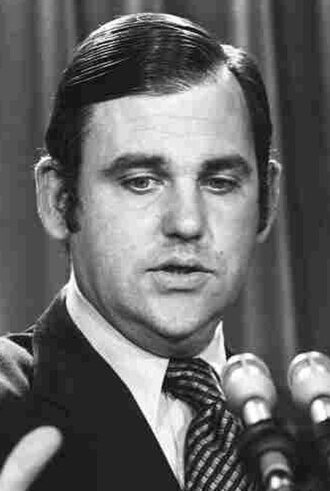
Ronald L. Ziegler served as White House Press Secretary from January 1969 to August 1974, acting as President Nixon's primary spokesperson throughout the taping period of February 1971 to July 1973. As the Watergate scandal escalated, Ziegler famously managed the administration's shifting public narratives and faced intense scrutiny from the press corps. In June 1973, his duties expanded when he was additionally named Assistant to the President following the resignation of Herbert Klein, holding both titles concurrently until the end of the administration in August 1974.
President Nixon met with his staff and advisors to coordinate logistical arrangements for his upcoming National Archives speech, focusing on timing, camera blocking, and the inclusion of the national anthem. The group also discussed planning a signing ceremony for the Twenty-sixth Amendment featuring a student group, and reviewed current media strategies regarding unemployment statistics and the ongoing Pentagon Papers controversy. Nixon emphasized maintaining a strong, authoritative public image while managing press narratives and reinforcing government discipline regarding classified information.
President Nixon and H.R. Haldeman review the successful certification ceremony for the 26th Amendment, focusing on how the use of young performers helped foster a positive image of the presidency. They pivot to a broader discussion on the Pentagon Papers, with the President directing his staff to secure a private report from J. Edgar Hoover and Melvin Laird regarding the New York Times' involvement. The conversation concludes with a strategic assessment of how to handle foreign policy disclosures, aiming to frame the administration’s secret negotiations as essential peace-making efforts while minimizing the public impact of the leaked documents.
President Nixon and Press Secretary Ronald Ziegler discuss the media's television coverage of the President's certification of the 26th Amendment. Nixon expresses frustration, alleging that major networks deliberately excluded the event's enthusiastic atmosphere and the youth participants' performance. The President instructs Ziegler to confront specific network correspondents, including Robert Pierpoint and Herbert Kaplow, to criticize their editorial choices and demand better representation of the event's spirit.
President Nixon met with bipartisan Congressional leaders and senior administration officials to discuss the sensitive diplomatic initiative concerning the normalization of relations between the United States and the People’s Republic of China. The President and Henry Kissinger briefed the group on the nature of these confidential negotiations, emphasizing the necessity of absolute discretion to ensure the process remained successful. Nixon and his team requested that participants avoid speculation and maintain a unified, non-partisan front when speaking publicly about the delicate geopolitical implications of this shift in U.S. foreign policy.
President Nixon met with his Cabinet members to discuss the delicate political landscape surrounding the administration's efforts to open communications with the People's Republic of China. The conversation centered on the necessity of maintaining strict discretion to avoid premature public speculation, which could jeopardize sensitive diplomatic negotiations and create political vulnerabilities. Nixon emphasized the importance of a unified front among Cabinet members to manage domestic and international expectations as the policy shift progressed.
President Nixon and Press Secretary Ronald L. Ziegler met to coordinate public messaging regarding the administration's recent initiative to open diplomatic relations with the People's Republic of China. Nixon directed Ziegler to remain non-committal on speculative questions concerning Vietnam, Taiwan, and the potential impact on other nations, while emphasizing that the President would continue to work with relevant leaders. They also discussed handling inquiries about Vice President Spiro Agnew's controversial remarks on African leadership and affirmed the President's stance on meeting with Soviet officials only when concrete results are achievable.
President Nixon and his administration met with Republican Congressional leaders to discuss the 1971-1972 economic outlook, focusing on key indicators such as GNP, unemployment rates, and inflation. The discussion centered on evaluating recent economic growth, managing ongoing labor disputes in the steel and transportation sectors, and addressing political concerns regarding the administration's fiscal and wage-price policies. The President and his economic advisors emphasized their commitment to achieving peacetime economic stability and requested support from leadership to convey a positive but measured economic narrative to the public.
President Nixon and Press Secretary Ronald L. Ziegler discuss the logistical arrangements and visual presentation for an upcoming budget meeting. They coordinate the use of charts and photography to effectively communicate administration economic policy to the public. The brief interaction concludes with the finalization of plans for these visual aids.
President Nixon met with his economic and national security advisors to address urgent concerns regarding the federal budget, economic growth, and the size of the government. Seeking to shift toward a balanced budget, Nixon directed his team to pursue aggressive spending cuts, including an across-the-board 10% reduction in federal personnel and significant decreases in defense and intelligence agency staffing. He emphasized that these efforts were essential for restoring confidence in the private sector and demanded a strategic overhaul of mission requirements, particularly within the Department of Defense and the CIA, to eliminate waste and redundant programs.
President Nixon and Press Secretary Ronald Ziegler discuss managing conservative opposition regarding the administration's burgeoning initiative with the People's Republic of China. Ziegler assesses the potential for backlash from right-wing figures and publications like the National Review, noting that while vocal critics exist, they represent a relatively small segment of the political spectrum. Nixon concludes that the administration should avoid proactively addressing these critics, opting instead to maintain a firm stance against the anticipated political fallout.
President Nixon, Vice President Agnew, and Secretary of State Rogers met to debrief on Agnew's recent diplomatic tour of Africa and the Middle East, while also discussing the administration's ongoing initiative to open relations with the People's Republic of China. The participants expressed frustration with press coverage—specifically in Newsweek—regarding the Vice President's trip and the China policy, and they strategized on how to manage the ensuing public and congressional reactions. Additionally, the President and his staff discussed personnel changes, including the potential replacement of Ambassador Joseph Farland in Pakistan, and reviewed the broader geopolitical implications of the unfolding China initiative.
President Nixon met with Murray Chotiner to discuss the growing instability and grievances of Vice President Spiro Agnew. Chotiner reported that Agnew felt marginalized by White House staff, particularly regarding his exclusion from domestic policy discussions and his desire to visit both Peking and Taiwan. Nixon and Chotiner acknowledged the need to manage Agnew’s volatile state of mind to prevent public embarrassment or a potential rift, with Nixon emphasizing the necessity of maintaining strict secrecy regarding his initiatives in China.
President Nixon met with United Transportation Union leaders and railroad management representatives to address the economic crisis caused by an ongoing railroad strike. Nixon emphasized his administration's preference for private-sector collective bargaining over government intervention, warning that continued labor stoppages could provoke negative public and Congressional reactions that would ultimately damage the industry. The discussion centered on the need for both parties to reach an equitable settlement quickly to protect the economy, with the President urging management to streamline their decision-making process to facilitate a resolution.
President Nixon met with H.R. Haldeman and Henry Kissinger to discuss his upcoming schedule, specifically deciding to cancel his planned visit to the Bohemian Grove due to concerns regarding press intrusion and the potential breach of the club's traditional off-the-record atmosphere. The participants also reviewed foreign policy developments, including the China initiative and ongoing Vietnam peace negotiations, while addressing the need to manage conservative discontent within the party. Finally, they evaluated the political implications of recent labor disputes and strategized on the handling of upcoming presidential trips and public relations.
President Nixon met with several senior advisors and staff members, including H. R. Haldeman, John Ehrlichman, Henry Kissinger, and Clark MacGregor, to manage a range of domestic and foreign policy issues. The discussions focused on navigating the fallout of the steel industry settlement, celebrating the recent legislative victory regarding the Lockheed loan guarantee, and refining the administration's stance on busing in Texas schools. Furthermore, the participants coordinated the logistics and messaging for the President’s upcoming press conference, his travel schedule, and his approach to ongoing concerns such as the Vietnam War and the Pentagon Papers.
President Nixon and Press Secretary Ronald L. Ziegler met to coordinate messaging for an upcoming press conference and a scheduled trip to New York. The discussion focused on managing press expectations, specifically regarding the exclusion of radio and television coverage for the briefing and potential responses to international monetary volatility. Nixon expressed concern over handling inquiries regarding French efforts to control 'hot money' and its impact on the U.S. dollar.
President Nixon met with Alexander Butterfield and Ronald Ziegler to review strategy for upcoming press engagements and manage media narratives regarding the economy and foreign policy. The discussion focused on addressing wage increases, the status of current job legislation, and the administration's stance on congressional recess. Nixon explicitly instructed Ziegler to emphasize that Congress must remain in session to pass pending jobs bills, while also providing guidance on how to respond to inquiries about wage and price controls.
President Nixon and Press Secretary Ronald L. Ziegler met to evaluate the effectiveness and strategic utility of holding informal press conferences in the Oval Office. They discussed the benefits of the setting, noting that it allows the President to maintain tighter control over questioning and avoid the public scrutiny of follow-up inquiries compared to televised events. Ultimately, Nixon decided to increase the frequency of these sessions to better manage public perception and communicate key administration messages on specific topics like economic policy.
President Nixon met with Vice President Agnew and his Cabinet to discuss the administration's foreign policy objectives and the state of the national economy. Agnew briefed the attendees on his recent international tour, highlighting the global reception of the Nixon Doctrine and the challenges posed by the Arab-Israeli conflict, East Pakistan, and the increasing Soviet and Chinese presence in various regions. Nixon and his advisers subsequently addressed the economic outlook, emphasizing the need for an aggressive, unified defense of administration policies regarding inflation and unemployment, while dismissing the viability of permanent wage and price controls. Finally, the President mandated a strict reduction in government personnel and grade-level escalation to improve budget management across executive departments.
President Nixon met with members of the Cabinet Committee on Opportunities for the Spanish Speaking (CCOSS) to discuss the administration's commitment to addressing the needs of the Hispanic community. Nixon expressed frustration that federal minority efforts had focused disproportionately on Black Americans, emphasizing that the Spanish-speaking community required better organization, advocacy, and representation in government. He tasked Dr. Henry M. Ramirez with aggressively pursuing progress in areas such as job creation, business opportunities, and discrimination, while encouraging the committee to integrate their efforts into the White House Domestic Council to ensure their influence within the mainstream political structure.
President Nixon and Press Secretary Ronald L. Ziegler met briefly in the Oval Office to coordinate strategy ahead of a forthcoming press briefing. Given the extremely short duration of the recorded segment, the discussion focused on preparing public messaging. No definitive policy decisions were captured before the recording ended.
President Nixon, H. R. Haldeman, and Henry Kissinger met to discuss foreign policy, specifically relations with the PRC, USSR, India, and Pakistan, while also coordinating their strategy regarding the Vietnam War. A central focus of the conversation was the hostile press coverage of the administration, which they analyzed using an Edith Efron media study to confirm network bias against the President. Nixon and his advisors decided to maintain a low profile on Vietnam while launching a more aggressive public relations effort to challenge the media's credibility and the liberal establishment's influence on government policy.
President Nixon met with his staff and political advisors to discuss his upcoming schedule, including preparations for a press conference and strategies regarding upcoming Republican National Committee meetings. The discussion focused heavily on political optics, specifically planning disruptive tactics to target Democratic rivals Edmund Muskie, Hubert Humphrey, and Edward Kennedy at an AFL-CIO convention in Dallas. Nixon and his team strategized using public protests, such as anti-busing demonstrations, to manipulate press coverage and create political friction for his opponents.
This recording captures informal, pre-meeting exchanges in the Cabinet Room between White House staff, including Oliver Atkins, and members of a visiting Cambodian delegation led by Sisowath Sirik Matak. The discussion primarily centers on logistical arrangements for the delegation's upcoming schedule, the management of press access, and general pleasantries regarding White House protocol and history. No substantive policy negotiations between President Nixon and the delegation occurred during this specific segment of the recording.
President Nixon met with H. R. Haldeman and Henry Kissinger to discuss sensitive foreign policy initiatives, including the upcoming secret negotiations with the Soviet Union and planning for his potential visits to China and Moscow. The President emphasized a strict information blackout regarding these trips, directing that the New York Times be excluded from access, and expressed his frustration with media coverage, specifically an interview involving James Reston and Zhou Enlai. Additionally, they reviewed domestic political concerns, including responding to urban issues and the President's stance on busing, while finalizing public relations strategies for his upcoming diplomatic agenda.
President Nixon, John Ehrlichman, and Ronald Ziegler met to coordinate administration strategy regarding news leaks, classification policies, and the public handling of the Pentagon Papers. The President emphasized his commitment to a new, stricter classification system while justifying past actions as necessary for protecting sensitive foreign negotiations, such as those with China and the Soviet Union. The group also discussed the management of busing policy, the possible retirement of J. Edgar Hoover, and upcoming domestic policy initiatives, including welfare reform and revenue sharing.
President Nixon met with staff members, including Ronald Ziegler, Charles Colson, and H.R. Haldeman, to discuss a range of domestic and political issues, including school desegregation policy and public relations strategies. The conversation focused on exploiting political divisions among Democrats regarding the Pentagon Papers and the Vietnam War, and preparing for future economic messaging during the autumn. Additionally, Nixon addressed concerns over a potential security breach involving lost personal notes from a trip to Indiana and coordinated upcoming administrative schedules and briefings.
President Nixon met with his senior staff, including H. R. Haldeman, Henry Kissinger, and John Ehrlichman, to discuss a range of domestic and foreign policy priorities. Key deliberations focused on the national economy—specifically addressing textile import issues and preparations for a significant upcoming economic announcement involving potential wage-price freezes—alongside strategies for managing national security declassifications and press relations. The President also reviewed his schedule, including upcoming diplomatic trips to China and the USSR and various domestic scheduling concerns, while emphasizing the need for a cohesive administration stance on legislative and public communication strategies.
President Nixon met with his senior advisors to strategize the timing and presentation of a major, upcoming national economic policy package. Discussions focused on whether to prioritize domestic measures like wage and price freezes or to address international monetary instability by closing the "gold window." Nixon expressed concern about appearing panicky and weighed the political benefits of delivering a televised address versus a more understated written announcement. Additionally, the group reviewed the success of a recent press briefing by Ehrlichman, which successfully shifted the media narrative regarding the declassification of government documents and the administration's stance on the Pentagon Papers.
President Nixon met with George Shultz, H. R. Haldeman, and Ronald Ziegler to finalize preparations for his forthcoming economic program, focusing on strategies to address dollar convertibility, inflation, and the balance of payments. The participants discussed the timing of potential measures, including an import surcharge and a prospective wage-price freeze, while coordinating the administration's messaging for an upcoming meeting with Arthur Burns and John Connally. Toward the end of the session, Ziegler consulted the President on the administration’s response to George Wallace's actions regarding school desegregation and busing.
President Nixon and Press Secretary Ronald Ziegler consulted regarding an upcoming press briefing, specifically addressing the administration's messaging on court-ordered busing. The discussion centered on coordinating the President's recent guidance from John D. Ehrlichman with the handling of inquiries from journalists Herbert Kaplow and Donald Oberdorfer. Nixon emphasized the necessity of clarifying the administration's legal stance on the issue to ensure a consistent public narrative.
President Nixon and Press Secretary Ronald L. Ziegler met to finalize scheduling and strategic messaging for an upcoming meeting at Camp David. The discussion centered on the 'Quadriad' economic summit and the broader coordination of budget and economic planning. They addressed concerns regarding public perception and potential economic leaks, with Nixon emphasizing the importance of managing the administration's narrative on these financial matters.
President Nixon convened a large meeting with Vice President Agnew and his Cabinet to discuss the national economy and the "New Economic Policy" he had announced the previous day. Key topics included the wage-price freeze, import surcharges, tax relief, budget cuts, and the convertibility of the dollar. The administration sought Cabinet support for these initiatives and discussed their potential impact on international trade and domestic employment.
President Nixon met with H. R. Haldeman and other aides to manage the political and economic response to his recently announced New Economic Policy. The discussions focused on coordinating with bipartisan congressional leadership to ensure support for the administration's program, highlighting the effectiveness of Treasury Secretary John Connally's public outreach, and monitoring the positive stock market reaction. A key objective was to frame the policy as a proactive leadership move that preempted more damaging legislative actions, while also preparing future speeches and briefings to maintain momentum and public confidence.
President Nixon met with H. R. Haldeman, John Connally, Charles Colson, and other advisors to assess the public and economic response to his recently announced domestic economic program. The participants discussed the reaction of the stock market, business community, and media to the wage and price freeze, while strategizing on managing political credibility and legislative support. The discussion also addressed necessary administrative adjustments to welfare reform and federal budget cuts, as well as preparations for upcoming briefings with Congressional leaders.
President Nixon, Charles Colson, and Ron Ziegler contacted Secretary John Connally to commend his performance during a recent televised press conference. The participants praised Connally's effective confrontation with the press and his ability to clarify and augment the President's economic initiatives announced the previous evening. Colson specifically highlighted the enthusiastic praise received from CBS President Frank Stanton regarding the broadcast's impact.
President Nixon and Press Secretary Ronald L. Ziegler held a brief meeting to coordinate messaging regarding the President’s recent leisure activities. The discussion focused on establishing the narrative for upcoming golf outings involving William P. Rogers at Burning Tree and Bob Hope in San Clemente. This interaction served to ensure consistent public communication regarding the administration's recreational schedule.
President Nixon convened a meeting with Vice President Agnew and a bipartisan group of Congressional leaders to discuss the national economy and his administration's "New Economic Policy." Key topics included the wage-price freeze, investment tax credits, the international monetary situation, and an import surcharge. The discussion focused on the necessity of Congressional cooperation for implementing these measures and their potential impact on inflation, trade, and specific industries like automobiles.
President Nixon met with key advisors and members of Congress to discuss the administration's new economic program and strategy for securing legislative support. The participants emphasized the need to maintain political momentum, project unity, and avoid excessive amendments from Democrats that could derail the administration's tax and economic goals. The conversation also covered the effective use of rhetoric to blame political opponents for partisanship, as well as the personnel requirements for managing the newly established wage and price controls under the Cost of Living Council.
President Nixon met with H.R. Haldeman, Charles Colson, and other staff members to finalize plans for upcoming economic policy presentations and public relations efforts. The discussion focused on coordinating a Cabinet meeting and a Congressional address, while strategizing a counterattack against Democratic critics like Edmund Muskie and George Meany. Key decisions included organizing a 'Committee for a New Prosperity' to promote economic initiatives, streamlining staff attendance at high-level meetings, and leveraging support from Republican allies to defend administration policies.
President Nixon and Press Secretary Ronald Ziegler consulted on pending communication strategies, specifically regarding public messaging on Vietnam casualty rates and reports involving H.R. Haldeman. They also reviewed final revisions for the President's upcoming address to Congress concerning economic stabilization. The discussion focused on coordinating the administration’s narrative for these high-priority domestic and foreign policy issues.
President Nixon met with key labor leaders and administration officials to solicit input on the development of 'Phase II' of his economic program, following the conclusion of the initial 90-day wage and price freeze. The discussion centered on transitioning to a more permanent, yet flexible, mechanism for controlling inflation while maintaining the principles of collective bargaining and a free-market system. The participants debated the merits of tripartite boards—modeled after the War Labor Board—versus government-imposed mandates, with labor leaders emphasizing the need for voluntary compliance and equitable standards. Nixon concluded by establishing an October 1 deadline for the group to submit their formal views, underscoring the necessity of labor-management cooperation for the program's success.
President Nixon, Pat Nixon, and the Cabinet met with their spouses to discuss the implementation and public perception of the administration’s New Economic Policy. Secretary of the Treasury John Connally led a comprehensive briefing on the wage-price freeze, tax reforms, and international monetary adjustments aimed at curbing inflation. The discussion emphasized the necessity of these economic measures for restoring national growth, managing federal expenditures, and building public and congressional support for the administration's program.
President Nixon met with H. R. Haldeman, Ronald Ziegler, and Patrick Buchanan to discuss strategies for managing press relations, refining speech delivery, and addressing public perception of administration policies. The group debated the frequency and format of presidential press conferences, weighing the benefits of television appearances versus more controlled communication methods. They also reviewed political developments regarding potential Democratic challengers and discussed personnel issues, specifically the political standing and future tenure of J. Edgar Hoover.
President Nixon and Press Secretary Ronald Ziegler strategized the administration's public relations response to the violent Attica prison riot and its aftermath. Nixon directed Ziegler to maintain a supportive stance toward Governor Nelson Rockefeller, emphasizing that Rockefeller faced a difficult decision under pressure from radical outside influences. Additionally, the pair discussed potential responses to upcoming press questions regarding George McGovern’s overseas travel and personal security concerns.
President Nixon met with his staff and members of the press to review his recent, highly effective performance during a press conference. They discussed the tactical success of his responses regarding key administration initiatives, including the military draft extension, Phase II of his economic policy, and his upcoming summit in the People's Republic of China. The conversation underscored the administration's determination to maintain the draft to safeguard U.S. peace initiatives and focused on framing the South Vietnamese elections within a realistic, historical context of global democratic development. Finally, the group considered future media strategies and the need for supporting data regarding U.S. foreign aid distribution to bolster the President's public narrative.
President Nixon and Vice President Agnew met with a bipartisan group of state and local officials, including governors and mayors, to discuss the implementation of 'Phase II' of the administration’s economic stabilization program. The discussion centered on balancing the need for continued wage-price restraints with the financial pressures facing local governments, specifically regarding public employee salaries, teacher contracts, and revenue-sharing legislation. Nixon addressed concerns regarding corporate profit limitations, emphasizing the need for productivity and investment in new equipment to ensure international competitiveness, while agreeing to establish a formal mechanism for ongoing dialogue between local officials and the administration.
President Nixon held two distinct discussions: first, he met with Maurice Stans, George Shultz, and Kenneth Cole to strategize on economic policy, specifically debating the budget and political messaging for the Minority Business Enterprise program and the potential for controlling bank profits. He then met with Romanian Ambassador Corneliu Bogdan and Henry Kissinger to discuss international relations, including the desire for strengthened U.S.-Romanian economic ties and Romania's autonomy within the Eastern Bloc. Throughout the meeting, the President emphasized his firm stance on maintaining U.S. credibility and pressure regarding the ongoing Vietnam War negotiations.
President Nixon met with Press Secretary Ronald Ziegler and aide Stephen Bull to coordinate responses to potential press inquiries following the President's recent news conference. The discussion focused on maintaining a firm stance against political speculation regarding a Black vice-presidential candidate and clarifying U.S. economic relations with Japan. Additionally, the group finalized arrangements for the President to pose for photographs at the White House bowling alley.
President Nixon met with H. R. Haldeman, Stephen Bull, Ronald Ziegler, and Charles Colson to discuss administration strategy regarding press relations, Supreme Court vacancies, and pending legislation. The group analyzed the political impact of recent press interactions—specifically focusing on the benefits of in-office press conferences—and debated the utility of hosting various interest groups at the White House. Additionally, the President and his staff discussed reactions to the military draft extension bill, notably countering Democratic rhetoric regarding 'Nixon's war,' and finalized plans for managing upcoming media exposure to maintain effective political control.
President Nixon consulted with staff and Chief Justice Warren E. Burger regarding the public announcement of Supreme Court Justice Hugo Black's sudden resignation. The participants coordinated a messaging strategy for press secretary Ronald Ziegler to handle media inquiries, specifically emphasizing that the President would seek the "best qualified" successor rather than committing to geographic or ideological litmus tests. The discussion also addressed the timeline of when the White House received Black's formal letter and the necessary coordination with Attorney General John Mitchell.
President Nixon met with H.R. Haldeman and other staff members to review a wide range of administrative, political, and foreign policy matters, notably including the impending vacancy on the Supreme Court following Justice Hugo Black's resignation. The discussion addressed the political strategy for potential court nominees, the administration's stance on the Office of Economic Opportunity extension bill, and military maneuvers in Vietnam. Additionally, the President reviewed his upcoming travel schedule and press relations, and he met briefly with reporter Eugene Risher to bid him farewell before his departure for a fellowship.
President Nixon met with his inner circle, including John Mitchell, Henry Kissinger, and John Ehrlichman, to discuss a range of urgent issues including Middle East tensions, the SALT negotiations, and Supreme Court vacancies. The President directed that the Middle East situation be kept low-profile to avoid political complications, emphasized the need for a conservative nominee to fill the Supreme Court vacancy, and ordered his staff to secure comprehensive files on the Bay of Pigs and the Pentagon Papers to better manage political messaging. Additionally, the participants reviewed economic indicators, discussed the President's public relations strategy regarding J. Edgar Hoover, and brainstormed ways to capitalize on the Democratic Party's internal divisions.
President Nixon and Treasury Secretary John Connally met to strategize on the administration's upcoming economic initiatives, specifically regarding Phase II policies, the import surcharge, and the U.S. stance ahead of an International Monetary Fund (IMF) meeting. They discussed the necessity of maintaining a firm, unilateral negotiating position to counter foreign criticism and protect American economic interests, while also coordinating the timing of public announcements to maximize political control. Additionally, Nixon consulted with his staff on personnel matters, including the future of Robert McNamara at the World Bank, a campaign contribution from Armand Hammer, and the appointment of Romana A. Banuelos as Treasurer of the United States.
President Nixon consulted with H. R. Haldeman, John Mitchell, and Ron Ziegler regarding the timing of the announcement of Justice John M. Harlan's resignation from the Supreme Court. The group discussed creating a 'double play' strategy by announcing two judicial appointments simultaneously to maximize political leverage. Additionally, Nixon reviewed his upcoming schedule—including potential trips to Florida and Disney World—and discussed public comments regarding the possible departure of the Washington Senators baseball team from the nation's capital.
President Nixon hosted a social visit in the Oval Office for Miss America titleholders Phyllis George and Laurie Lee Schaefer, alongside their family members and White House staff. The conversation touched upon the participants' professional aspirations in television and film, as well as the President's personal views on current trends in the entertainment industry. Nixon also engaged in lighthearted discussions regarding sports, specifically football and the potential relocation of the Washington Senators baseball team, before concluding the meeting by presenting presidential gifts to his guests.
President Nixon and Press Secretary Ronald Ziegler held a brief meeting to coordinate administrative scheduling and communications strategy. The discussion centered on aligning the President's upcoming availability with National Security Council meetings and legislative matters in the Senate. The participants concluded with an intent to finalize these logistical arrangements in the following week.
President Nixon, H.R. Haldeman, and Ron Ziegler met to strategize the management of the President's public image and upcoming media appearances, specifically focusing on press coverage of a scheduled trip to Detroit. The conversation included a review of recent Gallup and White House polling data, debates over the efficacy of live versus filmed media formats, and the potential impact of economic policy announcements. Additionally, they discussed upcoming Supreme Court appointments and the political benefits of nominating a conservative candidate to pressure the Senate.
President Nixon and Ronald Ziegler discussed media strategy regarding the upcoming Detroit Economic Club Q&A session. Ziegler advocated for allowing electronic media coverage, arguing that the cumulative impact of news segments—especially when preempting negative focus on picket lines—would be more effective than a live broadcast. Nixon considered the logistics of press positioning, ultimately agreeing that if television cameras were permitted, they must be kept in the back to minimize intrusion and maintain the focus on his interaction with the audience.
President Nixon and Press Secretary Ronald Ziegler met to coordinate logistics for an upcoming televised Q&A session at the Detroit Economic Club, emphasizing the need to minimize distracting camera equipment and balance audience seating. The two also discussed strategies for framing economic and legislative topics, including tax reform and the Consumer Price Index, while reviewing the current state of White House press corps relations. Additionally, they touched upon planning a retirement reception for longtime wire service reporter Douglas B. Cornell and addressed potential responses to military developments in Vietnam.
President Nixon and Press Secretary Ronald Ziegler discuss a public relations strategy to frame the President as a new fan of the California Angels baseball team. Following the departure of the Washington Senators, Nixon decides to establish Angel Stadium in Anaheim as his new home ballpark for ceremonial first pitches. Nixon directs Ziegler to coordinate with Robert Finch to contact team owners Gene Autry and Robert Reynolds to generate media coverage and build support for this narrative in California.
President Nixon and Press Secretary Ronald Ziegler discuss a public relations strategy to highlight the President's support for the California Angels baseball team. Nixon aims to replace the tradition of throwing out the ceremonial first pitch in Washington with a commitment to do so at Angel Stadium, viewing this as a significant political and symbolic gesture for California. Ziegler is tasked with coordinating with team owner Gene Autry and media figures to promote the story and cultivate the President's image as an avid supporter of the franchise.
President Nixon met with George Shultz and Ron Ziegler to discuss public perception and strategic messaging regarding a specific administrative program. The group assessed national support levels for the initiative, noting strong backing from states like Ohio and Georgia. Nixon emphasized the necessity of maintaining a unified position to effectively promote the program and addressed specific comparative data regarding recent fiscal or programmatic growth.
President Nixon met with Ronald Ziegler and Stephen Bull to coordinate the administration's public response to the resignation of Supreme Court Justice John M. Harlan. The participants discussed talking points for Ziegler's upcoming press briefing, specifically regarding the criteria for new judicial nominees, the timing of vacancy announcements, and how to deflect questions about geographical or political pressures. Additionally, the President provided guidance on managing inquiries regarding domestic conditions in the People's Republic of China, instructing staff to emphasize the limitations of U.S. intelligence on the matter.
President Nixon met with congressional leaders and administration officials, including John C. Stennis and Melvin R. Laird, to coordinate legislative strategy regarding HR 6531 and the broader Military Procurement Bill. The participants discussed the status of the bill in Congress, specifically focusing on managing the Mansfield amendment and navigating the conference committee process. The discussion emphasized building support for the administration's military objectives and preparing for legislative action items in the coming week.
Press Secretary Ronald Ziegler speaks with Julie Nixon Eisenhower to coordinate communication regarding her father, President Richard Nixon. Ziegler informs Julie that the President is currently engaged in a meeting and promises to facilitate a return call once he becomes available. This brief exchange serves primarily to manage the President’s immediate schedule and family correspondence.
President Nixon met with Republican congressional leadership, staff, and advisors to coordinate the administration’s legislative agenda for the final months of the 1971 session. The discussion focused on securing passage of the President's tax package, welfare reform, and revenue-sharing initiatives, while navigating difficult Senate opposition and House parliamentary hurdles. Nixon emphasized the urgent need for political pressure on Democrats regarding a federal wage deferral bill and outlined strategies for upcoming Supreme Court nominations to ensure successful confirmations.
President Nixon and Press Secretary Ronald Ziegler discuss scheduling protocols for upcoming photo opportunities with various foreign and domestic officials, including Soviet Foreign Minister Andrei Gromyko. The pair coordinate the administration's messaging strategy regarding the Accidental War Agreement and potential summit speculation involving the Soviet Union and China. Additionally, Nixon clarifies his preferences for media access, specifically requesting that press coverage at a forthcoming reception be limited to a pool of reporters without camera equipment.
President Nixon met with Soviet Foreign Minister Andrei Gromyko and other officials to discuss the state of U.S.-Soviet bilateral relations, focusing on arms control, trade, and regional conflicts. The conversation addressed the status of the Berlin Agreement, progress on Strategic Arms Limitation Talks (SALT), and the need for diplomatic coordination regarding the Middle East and South Asia. Both sides emphasized the importance of maintaining direct, private channels of communication to manage tensions and facilitate future progress toward a potential summit meeting.
President Nixon met with Sir Alexander F. Douglas-Home, the Earl of Cromer, and Henry Kissinger to discuss the geopolitical landscape, specifically focusing on Vietnam, arms control negotiations with the USSR, and the situation in South Asia. The participants addressed the status of the Vietnam War, the impact of U.S. troop withdrawals, and the necessity of managing domestic political pressure and potential isolationism. Nixon also sought British cooperation regarding upcoming United Nations votes and provided updates on European security conferences and Middle East diplomatic efforts.
President Nixon met with his senior staff and economic advisers to finalize the rollout strategy for Phase II of his economic program. The discussion focused on establishing an effective, low-key announcement strategy for the upcoming wage and price controls, balancing the need for public cooperation with the desire to avoid the appearance of a crisis. Key decisions included keeping the address concise, maintaining a tone of confidence, and utilizing prime-time news slots to maximize reach while minimizing disruption to entertainment programming.
President Nixon and Press Secretary Ronald Ziegler coordinate the rollout of upcoming announcements, specifically focusing on the timing of a presidential speech and the handling of the West Coast dock strike via a Taft-Hartley injunction. They discuss the strategic sequencing of media briefings regarding legislative leader meetings, a cabinet meeting, and a press conference for Treasury Secretary John B. Connally. Nixon instructs Ziegler to keep the duration of his upcoming address vague to maintain the perception of a major, high-stakes statement.
President Nixon and Press Secretary Ronald Ziegler coordinate the timing and messaging for an upcoming public speech and legislative announcement. The discussion focuses on managing media expectations and the strategic impact of the announcement on the viewing audience. Ultimately, the President expresses caution regarding the potential public reception and the timing of the release.
President Nixon met with Ronald Ziegler and television production staff in the Oval Office to coordinate technical preparations and staging for a nationally televised address. Following these adjustments, Nixon delivered a speech focused on his administration's economic policies, specifically outlining the transition to the next phase of wage and price controls. The conversation concluded with post-broadcast feedback and logistics involving the technical crew.
President Nixon met with John Ehrlichman and CIA Director Richard Helms to discuss the President's access to sensitive, classified intelligence documents, specifically concerning past operations like the Bay of Pigs and the assassination of Ngo Dinh Diem. Nixon emphasized his need for full information regarding historical foreign policy and intelligence "dirty tricks" to prepare for upcoming diplomatic negotiations and to manage political exposure. Following this, Nixon met with David Kennedy, Henry Kissinger, and Peter Peterson to strategize on high-stakes textile trade negotiations with Japan, where they aimed to secure an agreement by applying pressure while maintaining the credibility of the U.S. position.
President Nixon and Press Secretary Ronald L. Ziegler held a brief meeting in the Old Executive Office Building to discuss a specific briefing paper. While the transcript remains incomplete, the interaction focused on the coordination of official materials or media messaging. No further actions or significant policy decisions are documented in this short exchange.
Press Secretary Ronald L. Ziegler met with an unidentified individual to ascertain the current location of President Nixon. The discussion was brief and centered solely on establishing the President's whereabouts within the White House complex. No policy decisions or substantive political matters were addressed during this exchange.
President Nixon coordinates with Press Secretary Ronald Ziegler to manage the logistics and messaging for an upcoming press conference. Nixon directs Ziegler to ensure media outlets correct a recent Washington Post report by emphasizing that Senator Robert C. Byrd remains under active consideration for a Supreme Court vacancy. This strategy aims to force Democratic opponents, such as George McGovern, to take a public stance on the potential nomination.
President Richard Nixon met with Press Secretary Ronald Ziegler to discuss logistics regarding media access and filming operations within the White House. The conversation centered on ensuring staff compliance with administrative protocols and managing the narrative surrounding ongoing activities. The two evaluated current procedures to verify that internal communications remained consistent with the administration's public messaging strategy.
President Nixon met with Henry Kissinger, Ronald Ziegler, and Stephen Bull to discuss the strategy and media optics surrounding upcoming diplomatic announcements, including a forthcoming US-USSR summit. The group reviewed the effectiveness of the President's recent press conference performance and the administration’s messaging regarding foreign policy. Additionally, Nixon provided instructions to Ziegler regarding press management and coordination for upcoming inauguration-related communications.
President Nixon met with a bipartisan group of Congressional leaders and key administration officials to discuss his upcoming summit in Moscow and broader U.S. strategy regarding the Soviet Union and China. The President emphasized that his administration sought to maintain a delicate balance between the two powers without appearing to collude with one against the other. The discussion underscored the importance of bipartisan support for national defense funding and the need for diplomatic engagement to prevent escalation in volatile regions like the Middle East.
President Nixon and Press Secretary Ronald Ziegler discuss the logistics and public reception of recent televised press briefings, specifically noting the positive media reaction to filming in the press room. They also address the strategy for handling anticipated press inquiries regarding upcoming Supreme Court nominations. Nixon emphasizes his desire to avoid public speculation or controversy when discussing potential appointees, such as Senators Robert C. Byrd, George S. McGovern, and Edmund S. Muskie.
President Nixon met with Stephen B. Bull and Ronald L. Ziegler to coordinate his immediate professional schedule. The discussion focused on upcoming engagements, specifically prioritizing arrangements for meetings with Henry Kissinger and various labor leaders. The session concluded with the participants aligning the President's calendar for these key consultations.
President Nixon, H. R. Haldeman, Henry Kissinger, and George Shultz met to discuss recent developments regarding upcoming summits with the Soviet Union and the status of domestic labor relations. Kissinger provided a status update on the diplomatic conditioning for the Soviet visit and emphasized the strategic importance of the ongoing negotiations with the USSR and the PRC. Concurrently, Shultz and the President coordinated a public response to organized labor’s agreement to serve on the Pay Board, deciding to frame the cooperation as a victory for the country’s economic program rather than a political win for either side.
President Nixon and Press Secretary Ronald Ziegler coordinated the scheduling and logistical movement of press personnel for an upcoming photo opportunity. They discussed the arrangements for a meeting involving George P. Shultz and the efficient management of film crews in the Oval Office. The conversation concluded with Nixon expressing satisfaction regarding the frequency and presentation of the media access.
President Nixon, Henry Kissinger, Charles Colson, and Ronald Ziegler met to discuss the administration's foreign policy achievements, particularly regarding the Soviet Union and China. The participants emphasized the strategic necessity of maintaining a balance between these two powers while managing domestic and international skepticism. They also evaluated potential successors to the presidency, weighing the qualifications and political viability of figures such as John Connally, Spiro Agnew, and Nelson Rockefeller, while noting the unique pressures and emotional toll of the office.
President Nixon met with his Cabinet and key staff members to review the administration’s domestic and foreign policy priorities, primarily focusing on the economic transition to 'Phase II' and the announcement of a 1972 Soviet summit. Officials discussed the successful implementation of the wage-price freeze and the strategy for securing organized labor's cooperation on the newly formed Pay Board and Price Commission to curb inflation. Additionally, the President addressed the importance of linking economic policy to job growth through his pending tax proposals, while Secretary of State Rogers and the President emphasized that international diplomatic overtures toward the Soviet Union and China were part of a cohesive, long-term strategy for global peace.
President Nixon met with a bipartisan group of House members to receive a petition signed by 336 lawmakers advocating for the preservation of Taiwan's seat in the United Nations. The delegation expressed strong support for the administration's foreign policy approach, specifically the efforts of U.S. Ambassador George H.W. Bush, while discussing the potential leverage of cutting U.S. financial contributions to the UN. The President and his staff confirmed that the administration would use the weight of this overwhelming Congressional consensus to signal the significant political challenges regarding future UN funding if Taiwan were expelled.
President Nixon met with H.R. Haldeman and John Ehrlichman to coordinate administration strategy regarding agricultural policy, specifically addressing corn prices and the potential replacement of Secretary of Agriculture Clifford Hardin. The participants also discussed the difficulty of managing Republican legislators and the need for a more centralized, proactive approach to securing legislative support. Additionally, they reviewed potential Supreme Court nominees and debated the administration's response to media inquiries regarding the President's personal finances and business dealings involving Charles G. Rebozo.
President Nixon, Charles W. Colson, and Ronald L. Ziegler met to coordinate upcoming administrative communications and scheduling priorities. The discussion centered on managing the press rollout for John B. Connally’s diplomatic travel to Asia, handling public relations for First Lady Pat Nixon’s reception at the Kennedy Center, and finalizing preparations for upcoming legislative announcements regarding the Wage and Price Board. The group also reviewed the status of potential Supreme Court nominations while emphasizing a need for discretion regarding controversial public commentary.
President Nixon and Republican Congressional leaders met to coordinate strategy on key foreign and domestic policy initiatives, emphasizing the administration's progress in achieving global peace and economic stabilization. Secretary of State William Rogers provided an assessment of U.S. leadership, focusing on the upcoming United Nations vote regarding Taiwan, the ongoing India-Pakistan crisis, and preparations for Nixon's summits in Moscow and Beijing. The group also discussed legislative tactics for securing Republican priorities, specifically the Economic Stabilization Act and the ongoing challenge of the Mansfield Amendment to Vietnam policy. Nixon urged the leaders to maintain a firm, unified front to avoid projecting vulnerability to foreign adversaries and domestic political opponents.
President Nixon met with H.R. Haldeman and other staff members to review a wide range of political, administrative, and foreign policy matters. The conversation covered the potential appointment of a new Secretary of Agriculture, upcoming Supreme Court nomination strategies, and the President's schedule, including his desire to minimize press interviews and public appearances. Additionally, the participants discussed U.S. foreign policy toward the Soviet Union, Latin America, and NATO, with Nixon emphasizing his intent to exert greater control over these diplomatic initiatives while managing the roles of Secretary of State William Rogers and Henry Kissinger.
President Nixon and Press Secretary Ronald Ziegler strategized on how to manage media speculation regarding the upcoming nomination of two Supreme Court candidates, Herschel H. Friday and Mildred L. Lillie. Nixon instructed Ziegler to maintain a vague public posture to keep the press guessing about the timing of the announcement while protecting his own credibility. They agreed that Ziegler would deflect inquiries by stating that the President had not yet made a final decision, citing the pending American Bar Association report as the primary reason for the delay.
President Nixon initiated a series of telephone calls through the White House operator, primarily attempting to reach Attorney General John N. Mitchell. The brief sequence of exchanges also included administrative interactions with Ronald L. Ziegler and unidentified personnel. These communications reflect the President's ongoing coordination with high-level cabinet members and staff during this period.
President Nixon consulted with Press Secretary Ronald Ziegler and Attorney General John Mitchell to strategically manage the media coverage and timing of his upcoming Supreme Court nominations. Nixon decided to delay his public announcement until the following evening to create media confusion and effectively control the narrative. The participants also discussed the necessity of withholding information from the American Bar Association and coordinated messaging regarding the President's upcoming schedule, including a Veterans Day speech and price control initiatives.
President Nixon met with H. R. Haldeman and Ronald Ziegler to coordinate the public relations strategy and press messaging regarding his forthcoming Supreme Court nominations. The discussion focused on managing the American Bar Association’s (ABA) role and its reported leaks regarding potential candidates like Mildred L. Lillie and Herschel H. Friday. Nixon explicitly instructed Ziegler to maintain a position of ignorance regarding the specific nominees during press briefings and emphasized that Richard A. Moore should handle the primary communication strategy for the announcement.
President Nixon met with H.R. Haldeman, John B. Connally, and Ronald L. Ziegler to coordinate administrative messaging and manage political strategy. The discussion focused on the selection process for Pay Board appointments, the public relations strategy regarding Supreme Court nominations, and the management of media coverage and polling data. The President emphasized his desire to control the narrative regarding his administration's accomplishments and addressed internal concerns regarding the performance of his cabinet members and staff.
President Nixon and Ronald Ziegler met to strategize on the messaging for forthcoming Supreme Court nominations, specifically focusing on the selection of Lewis F. Powell, Jr. and the role of John N. Mitchell in the vetting process. They discussed the importance of managing public perception regarding the American Bar Association’s influence and the administration’s internal decision-making criteria. Additionally, the President provided specific instructions to Ziegler on how to frame the vetting process and the consideration of diverse candidates during upcoming media briefings.
President Nixon met with various aides and technicians to prepare for and broadcast a televised national address, followed by a meeting with a group of Senators and staff to discuss his recent Supreme Court nominations. During the session, the President focused on the qualifications of his nominees, Lewis F. Powell and William H. Rehnquist, emphasizing the importance of the Supreme Court's role in the government. The conversation concluded with the President greeting and presenting gifts to the television, lighting, and sound crews who assisted with his broadcast.
President Nixon, H.R. Haldeman, and Ronald Ziegler discussed the positive public and political reception of Supreme Court nominees Lewis F. Powell, Jr. and William H. Rehnquist, focusing on the importance of their conservative credentials and intellectual capability. Nixon analyzed the ideological balance of the Court and strategized on managing media narratives regarding the nominees' ages and backgrounds. Additionally, the participants reviewed the administration's public relations approach to the Pay Board and the potential labor boycott, deciding to downplay the absence of labor members during upcoming announcements.