Ziegler, Ronald L.
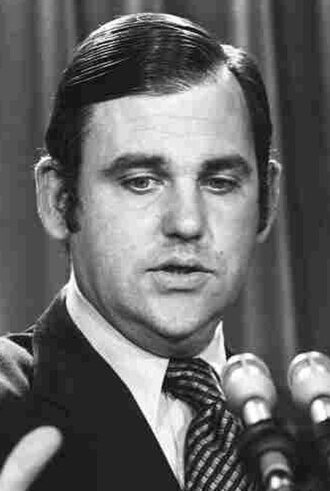
Ronald L. Ziegler served as White House Press Secretary from January 1969 to August 1974, acting as President Nixon's primary spokesperson throughout the taping period of February 1971 to July 1973. As the Watergate scandal escalated, Ziegler famously managed the administration's shifting public narratives and faced intense scrutiny from the press corps. In June 1973, his duties expanded when he was additionally named Assistant to the President following the resignation of Herbert Klein, holding both titles concurrently until the end of the administration in August 1974.
President Nixon met with his senior advisors, including H. R. Haldeman, Secretary of State William Rogers, and UN Ambassador George H. W. Bush, to coordinate a final, high-pressure diplomatic push regarding the United Nations vote on Chinese representation. The participants strategized on how to secure decisive votes from key nations, including Italy, Mexico, Argentina, and Malta, while weighing the political risks of direct presidential intervention and the potential impact of Henry Kissinger's upcoming return from China. They concluded by establishing a list of targeted countries and specific action items, such as arranging presidential phone calls and leveraging foreign aid dependencies, to bolster support for the U.S.-backed position.
President Nixon, Press Secretary Ronald Ziegler, and Alexander Haig coordinate the administration's public relations strategy regarding the upcoming United Nations vote on the status of Taiwan and the People's Republic of China. Nixon instructs Ziegler to defer all media inquiries to Secretary of State William Rogers to ensure a unified message and explicitly forbids the disclosure of his personal disappointment regarding the UN situation. Additionally, the President expresses frustration with the press and demands a strict policy to stop the use of background briefings, insisting that all future official statements be made on the record.
President Nixon met with his senior advisors, including Henry Kissinger, H.R. Haldeman, and Ronald Ziegler, to discuss the political fallout of the United Nations' vote to expel Taiwan and seat the People's Republic of China. Nixon expressed frustration with the State Department and perceived efforts by Secretary of State William Rogers to undermine his China policy and independent diplomatic efforts. The group focused on controlling the narrative regarding the UN vote, specifically by emphasizing the 'shocking' and 'disrespectful' conduct of delegates who celebrated the U.S. defeat, rather than dwelling on the vote itself, to channel public and Congressional anger away from the administration. Consequently, they decided to adopt a low-key approach regarding future announcements of Nixon’s China trip and to avoid a public, high-level meeting with Ambassador George H.W. Bush to minimize media speculation.
President Nixon and Press Secretary Ronald Ziegler met to discuss the administration's public response to the United Nations vote expelling Taiwan. Ziegler reviewed his recent press briefing, during which he condemned the "shocking" behavior of delegates who celebrated the outcome, effectively distancing the White House from the issue to prevent further damage. They agreed to move past the topic quickly and focus on upcoming developments, specifically Henry Kissinger’s briefing regarding the President’s pending visit to the People's Republic of China.
President Nixon met with Charles Colson and Ronald Ziegler to discuss the strategic framing of the recent United Nations vote to expel Taiwan. They focused on leveraging public outrage regarding the perceived hostility of the UN delegates to bolster support for the President’s leadership and his new economic policy. Nixon and his advisors decided to have George H.W. Bush speak to friendly columnists to emphasize the administration's active efforts to fight the expulsion, while maintaining the President's public stance of supporting the UN institution despite his frustration with its actions.
President Nixon met with Yugoslav President Josip Broz Tito to discuss international crises, specifically the escalating tensions between India and Pakistan and the ongoing conflict in the Middle East. The leaders examined the roles of the Soviet Union and China in these regional disputes, emphasizing the urgent need to prevent war and outlining the U.S. commitment to providing humanitarian aid to refugees. Additionally, they reviewed bilateral US-Yugoslav relations, including military cooperation and plans for further discussions on European security and strategic arms limitations.
President Nixon and Henry Kissinger met to discuss the administration's foreign policy challenges, particularly the United Nations vote to expel Taiwan and the potential for a new geopolitical dynamic involving the People's Republic of China and the USSR. They reviewed the political impact of the UN loss, dismissing it as an unavoidable setback while framing it as a catalyst for future organizational reform. Additionally, the participants touched upon regional tensions, specifically criticizing Indian demands regarding Pakistan, and coordinated the scheduling of an upcoming meeting with Yugoslav President Josip Broz Tito.
President Nixon met with his economic advisors (the "Quadriad") and Henry Kissinger to discuss international monetary policy, trade negotiations, and the upcoming Asian trip for John B. Connally. The group addressed the urgency of trade concessions, the complexities of gold convertibility, and the need to manage currency realignments while maintaining a firm U.S. negotiating position. Nixon provided specific instructions for Connally’s itinerary, emphasizing the need to reassure allies in Japan, Thailand, and Indonesia of U.S. commitment while avoiding being sidelined by State Department staff during sensitive private discussions.
President Nixon met with William Ruckelshaus, John Ehrlichman, John Whitaker, and later Clifford Hardin to discuss administrative personnel changes and pending agricultural policies. The group focused heavily on managing the timing of Secretary of Agriculture Hardin’s resignation and selecting a successor while avoiding political fallout from various farm interest groups. Additionally, Nixon directed his staff to resolve labor disputes and facilitate a grain sale to the Soviet Union, prioritizing the deal's completion despite resistance from unions.
President Nixon held two separate brief, informal meetings in the Oval Office to host visitors including Sherman P. Lloyd, Marjorie Sharp, and the family of journalist Carroll Kilpatrick. These sessions primarily served ceremonial purposes, involving the exchange of gifts, photography sessions, and light conversation about regional backgrounds and university experiences. The President also engaged in casual discussions regarding medical practice, specifically emphasizing the importance of bedside manner and the high prevalence of psychosomatic illnesses in patient care.
President Nixon and Press Secretary Ronald L. Ziegler discussed the political fallout from a recent Senate vote on the foreign aid program, specifically noting the roles of Hubert H. Humphrey and Edward M. Kennedy. The conversation also touched upon a speech delivered by Kennedy regarding Taiwan and the Republic of China in the context of Henry Kissinger's upcoming trip to the People’s Republic of China. The meeting served to coordinate the administration’s response to these legislative and diplomatic challenges.
President Nixon and Press Secretary Ronald L. Ziegler held a brief meeting to address the aftermath of a recent Senate vote concerning the foreign aid program. The discussion focused on the political implications of the legislative defeat, specifically noting the roles played by Senators Hubert H. Humphrey, Edward M. Kennedy, and Edmund S. Muskie. No further actions were recorded during this one-minute exchange.
President Nixon met with H.R. Haldeman, Charles Colson, and Ron Ziegler to coordinate political attacks against Senator Edward M. Kennedy and formulate strategies regarding controversial legislative issues. The group discussed utilizing negative publicity, such as an anti-busing cartoon and polling data, to damage Kennedy’s standing and national image. Additionally, they strategized on foreign policy matters, specifically coordinating a response to the recent United Nations vote on Taiwan and addressing potential foreign aid legislation through public messaging and Senate maneuvering.
President Nixon met with his senior staff, including H. R. Haldeman, Henry Kissinger, and John Ehrlichman, to coordinate a strategy for countering Congressional opposition to the foreign aid program and to manage the administration's public relations. The participants discussed the necessity of adopting an aggressive offensive stance against partisan critics who threatened national security initiatives, while also planning for a future Cabinet meeting focused on the 1972 campaign. Furthermore, they reviewed internal personnel shifts, including potential changes within the Justice Department and the FBI, and aligned on the timing and messaging for upcoming Vietnam troop withdrawal announcements to maximize political impact.
President Nixon and Press Secretary Ronald Ziegler coordinate media strategy regarding the administration's foreign aid program, specifically emphasizing its role as a pillar of the Nixon Doctrine. They plan to have Secretary of Defense Melvin Laird and Secretary of State William Rogers present the defense and policy justifications for foreign assistance to counter recent Senate opposition. Additionally, the President arranges a photo opportunity with Laird and Henry Kissinger to signal a unified executive front and confirms the timing for an upcoming announcement regarding the First Lady’s schedule.
President Nixon and Press Secretary Ronald Ziegler coordinated a media strategy regarding the public relations management of international affairs, specifically involving Mexico and Haiti. The discussion centered on staging photo opportunities and controlling the administration's messaging narrative to ensure foreign agents or observers are not perceived as dominating the situation. Nixon emphasized the importance of projecting success and directed Ziegler to manage press inquiries by emphasizing that specific international movements are not occurring.
President Nixon met with Henry Kissinger and Melvin Laird to discuss legislative strategies for securing foreign aid funding and maintaining support for the administration's defense and foreign policy agenda. They addressed the challenges of navigating congressional opposition while managing alliance relationships, particularly regarding German financial contributions to U.S. forces in Europe. The group also evaluated the timing of Vietnam troop withdrawals and personnel staffing needs within the Department of Defense.
Henry Kissinger and Ronald Ziegler coordinate logistics for an upcoming photo opportunity involving President Nixon and Secretary of Defense Melvin Laird. Kissinger confirms the President's departure time and provides specific positioning instructions for Ziegler to ensure he is properly placed on the President’s right side. This brief exchange serves to synchronize staff movement to facilitate official media coverage.
President Nixon and Press Secretary Ronald Ziegler coordinated the timing of a post-meeting press briefing for Secretary of State William P. Rogers, ensuring his availability following a morning session. The two also discussed the logistical preparations for First Lady Pat Nixon’s upcoming trip, which required final clearance from the National Security Council. Nixon directed Ziegler to coordinate with Connie Stuart and hold a joint announcement regarding the trip to ensure the presentation was handled effectively.
President Nixon met with Press Secretary Ronald L. Ziegler to verify the status of a recent communication involving the Soviet Union. The discussion centered on confirming that a specific individual had received a phone call as intended. The brief exchange served to finalize this logistical matter before the two departed the Oval Office.
President Nixon met with his legislative leaders and foreign policy advisor Henry Kissinger to discuss the precarious political situation in the House of Representatives regarding Vietnam troop withdrawal legislation and foreign aid. Facing pressure from the Mansfield Amendment and potential legislative deadlines, the President emphasized the need to maintain negotiating leverage—specifically to ensure the return of POWs—and urged his team to prevent the House from forcing an early withdrawal deadline. Nixon directed his allies to reward Democrats who supported his Vietnam policy while instructing them to leverage Justice Department intervention in the Grand Rapids school busing case to gain political favor.
President Nixon met with Ronald Ziegler and H.R. Haldeman to devise a strategic media relations plan that would bypass standard reporters in favor of targeting editorial boards and influential figures. The President emphasized that Henry Kissinger should shift his focus from routine press backgrounders to high-level meetings with network and major newspaper editorial leadership to better influence public opinion. The team specifically discussed plans for Kissinger to visit New York to engage with media executives following the legislative vote on foreign aid and the upcoming Vietnam announcement.
President Nixon met with Prime Minister Indira Gandhi to discuss escalating tensions in South Asia, particularly the refugee crisis in East Pakistan and the potential for military conflict between India and Pakistan. Nixon sought to reassure Gandhi of U.S. commitment to humanitarian aid while explaining his administration's strategic efforts to maintain diplomatic channels with Pakistan, including pressure on General Yahya Khan to moderate his approach. The two leaders explored potential de-escalation measures, such as a mutual military pullback and the release of Sheikh Mujibur Rahman, to stabilize the region and prevent wider instability involving China or the Soviet Union.
President Nixon and Press Secretary Ronald L. Ziegler coordinated the administration's public messaging following the President's meeting with Indian Prime Minister Indira Gandhi. The discussion focused on drafting a press statement that would emphasize American accountability regarding the refugee crisis and signal a commitment to avoiding military conflict. They also evaluated how to address geopolitical tensions involving Pakistani President Agha Muhammad Yahya Khan and potential public statements from Gandhi.
President Nixon met with outgoing Secretary of Agriculture Clifford Hardin and his designated successor, Earl Butz, to coordinate the transition and manage the associated media rollout. The participants discussed the timing of Hardin's resignation and the logistics for a forthcoming joint press conference to announce the change in leadership. Additionally, the group touched upon international matters, including U.S. relations with Turkey, and addressed administrative planning regarding the potential reorganization of the Department of Agriculture.
President Nixon and Press Secretary Ronald Ziegler reviewed recent press coverage, focusing on the resignation of Secretary of Agriculture Clifford Hardin and the appointment of his successor, Earl L. Butz. They discussed strategies to deflect media scrutiny regarding the administration's investigation of reporter Daniel Schorr, reaffirming their commitment to correcting inaccurate press reports. Finally, they prepared for an upcoming press conference, anticipating questions on foreign policy, Phase II economic plans, and China relations.
President Nixon and Press Secretary Ronald Ziegler discuss media management strategies, specifically addressing unfavorable news reports regarding administration staff departures and background checks. The conversation focuses on refuting allegations of staff firings and providing favorable talking points regarding government reorganization and agricultural policy. Nixon instructs Ziegler to emphasize the normalcy of security investigations and to steer media inquiries toward the administration's legislative successes in the Senate.
President Nixon and Press Secretary Ronald Ziegler reviewed the evening television news coverage of the President's Veterans Day ceremony, recent Department of Agriculture announcements, and Senate votes. They assessed how different networks reported on administration initiatives, with Nixon expressing a clear preference for ABC's news coverage over that of CBS and NBC. Additionally, they briefly discussed the minimal media attention given to an investigation regarding Daniel Schorr.
President Nixon met with key Congressional leaders and administration officials to address an impending budget crisis caused by the lack of a continuing resolution for several federal agencies, including the OEO, foreign aid, defense, and the District of Columbia. The participants debated the legality of continuing government operations without explicit authorization, with Nixon expressing a firm reluctance to engage in practices he deemed legally questionable. To resolve the standoff before the December 1st pay deadline, the group discussed legislative strategies to expedite authorization bills and tentatively set a target adjournment date of December 4th to allow Congress time to complete essential business.
President Nixon and Press Secretary Ronald L. Ziegler met to coordinate the public communication strategy for an impending troop withdrawal announcement. They discussed the logistics of Nixon’s televised address and the supporting materials, specifically photographs, to be released by the press office. The meeting served to finalize Ziegler’s role in managing the official announcement and ensuring that the media strategy aligned with the President’s planned delivery.
President Nixon and Press Secretary Ronald Ziegler consulted regarding the logistical details of an upcoming presidential announcement concerning troop withdrawals. The discussion focused on establishing the duration of the withdrawal process and setting a definitive cutoff date for the initiative. They also addressed how to manage media inquiries from journalists, specifically citing Frank Cormier, alongside brief mentions of Henry Kissinger's role in the planning.
President Nixon met with H. R. Haldeman, Henry Kissinger, and Clark MacGregor to review the effectiveness of his recent press conference and discuss the political messaging surrounding troop withdrawals from Vietnam. The participants assessed public and press reactions to the President's responses regarding amnesty, POWs, and the Vietnamization policy. Additionally, the group coordinated strategy for an upcoming National Security Council meeting focused on the Strategic Arms Limitation Talks (SALT) and pending negotiations with the Soviet Union.
President Nixon met with Pay Board Chairman George H. Boldt and Price Commission Chairman C. Jackson Grayson to discuss the ongoing challenges of Phase II of his economic stabilization program. The discussion focused on the political and economic friction surrounding the issue of retroactivity for labor contracts and the necessity of prioritizing public policy over individual contract enforcement to curb inflation. The participants also coordinated their strategy for an upcoming public meeting with the Cost of Living Council, emphasizing the need for brief, unified messaging to demonstrate the stability and progress of their efforts to the American public.
President Nixon met with his Cabinet officers to discuss a variety of domestic and international issues, including transportation leadership, government funding through a continuing resolution, and the cultivation of opium poppies in Turkey. The conversation also touched upon administrative transitions, such as the departure of Secretary of Agriculture Clifford Hardin, and strategies for managing the national economy and price controls. Nixon emphasized the importance of maintaining clear leadership and coordination across departments to ensure the success of his domestic policy initiatives.
President Nixon, John Connally, Donald Rumsfeld, and a delegation of Republican Congressional leaders met to coordinate legislative strategy regarding the administration's domestic economic program and various foreign policy concerns. The discussion focused on the implementation of wage and price controls, pending tax legislation, and the management of international trade negotiations, particularly regarding Japan and the import surcharge. Participants also addressed the confirmation of Supreme Court nominees Lewis F. Powell and William Rehnquist, as well as ongoing legislative battles concerning the Vietnam War and Defense Department appropriations.
This recording captures various administrative and logistical interactions in the Oval Office involving Secret Service personnel, Manolo Sanchez, and Ronald Ziegler. The primary objective of the meeting was to address routine facility maintenance, specifically reported lighting problems in both the Oval Office and the Old Executive Office Building. While the audio contains segments of fragmented or general conversation, the core development involved coordinating with an electrician to resolve these infrastructure concerns.
President Nixon met with H.R. Haldeman, Ronald Ziegler, and Stephen Bull to coordinate strategy regarding his potential speech to the AFL-CIO convention and to manage personnel matters. The discussion centered on timing the announcement of the President's attendance to maximize media impact while maintaining operational secrecy. Additionally, the President issued directives to limit the number of White House officials speaking on international economic issues, specifically instructing Peter Peterson to cease unauthorized communications.
President Nixon met with John Connally and other key advisors to coordinate White House strategy regarding pending tax legislation, the administration's public relations response to criticism from labor leaders like George Meany, and complex international monetary negotiations. The President directed that the tax bill be handled firmly, expressing a willingness to veto unfavorable versions and potentially call a special session of Congress to force a resolution. Additionally, the participants discussed U.S. foreign policy toward the India-Pakistan conflict, agreeing to maintain a hard line while monitoring the situation through the United Nations, and established protocols for executive oversight of high-level economic missions to Europe.
President Nixon met with Ronald L. Ziegler, Alexander P. Butterfield, and Stephen B. Bull to coordinate the administration's public messaging regarding the President's upcoming travel and potential attendance at a football game. The group discussed how to handle press inquiries amidst the uncertainty surrounding pending Senate action and other legislative matters on the President's desk. Ziegler received instructions to maintain a non-committal stance with the media, clarifying that no travel plans were finalized while keeping the possibility of a last-minute appearance open.
President Nixon met with Henry Kissinger, H. R. Haldeman, George Shultz, and others to manage pressing foreign and domestic policy matters. Key discussions centered on the India-Pakistan conflict and U.S. strategy regarding the United Nations, as well as coordinating upcoming meetings with John Connally and Arthur Burns to address economic policy and budget planning. Additionally, the President reviewed his schedule, including travel arrangements and a potential appointment for the Council of Economic Advisers, while also discussing media relations and his desire to curb unnecessary foreign travel by staff and Cabinet members.
President Nixon met with Press Secretary Ronald L. Ziegler to coordinate a forthcoming public statement regarding the status of the Strategic Arms Limitation Talks and ongoing Senate actions concerning the Vietnam War. The discussion also addressed administrative changes within the Council of Economic Advisors, specifically focusing on the resignation of Paul W. McCracken and the role of Herbert Stein. The brief consultation served to align the administration's messaging on these sensitive foreign policy and economic personnel matters.
President Nixon and his advisors, primarily Henry Kissinger, discussed U.S. foreign policy toward the India-Pakistan conflict and the People's Republic of China, with the President emphasizing the need for a firm stance against Indian aggression. Economic matters dominated the latter half of the meeting as Nixon finalized the transition of Herbert Stein into a new leadership role within the Council of Economic Advisers to serve as a strong, assertive voice on the national economy. Additionally, the President met with Peter B. Wilson to discuss political strategy and preparations for the upcoming Republican National Convention in San Diego, aiming to maximize favorable media coverage.
President Nixon and Henry Kissinger discussed foreign policy priorities and scheduling, specifically focusing on handling potential meetings with Italian leadership, the geopolitical implications of the India-Pakistan conflict, and managing diplomatic leaks. They agreed to defer any official visit from Italian officials until after their domestic elections to avoid political complications. Regarding the India-Pakistan situation, Kissinger advocated for a tougher stance against India, including cutting off military aid to gain leverage and discourage Indian reliance on the Soviet Union. The pair also addressed the fallout from a news leak attributed to Arthur Burns involving John Connally, reaffirming their support for Connally's role in the administration.
President Nixon and Charles Colson discuss plans to force the removal of a controversial 'check-off' provision from a pending tax bill by threatening a presidential veto. The President instructs Clark MacGregor to publicize this veto threat to shift responsibility onto Democrats and pressure them to adjust the legislation. The conversation also touches on the potential long-term political ramifications of the provision, the strength of the national economy, and strategies to influence legislative support.
President Nixon met with Charles Colson, Clark MacGregor, and Ronald Ziegler to coordinate the White House's public messaging regarding pending tax legislation and the financing of political campaigns. The participants discussed the potential impact of public campaign financing on presidential mandates and the necessity of passing tax relief before Congress adjourned. MacGregor was instructed to issue a strong statement framing the tax bill as a vital economic measure while pressuring Democrats to avoid partisan obstruction.
President Nixon, along with Haldeman, Bull, Ziegler, and MacGregor, discussed strategies for managing public perception and legislative efforts. Key topics included the effectiveness of media appearances, potential political risks and benefits of certain actions, and legislative priorities such as tax bills and childcare revisions. A significant development was the agreement to have Charlie Walker meet with Joe Wagner and Russell Long regarding Treasury's willingness to discuss matters of dispute, and the President's commitment to securing a suitable tax bill before Congress adjourns.
President Nixon and Press Secretary Ronald Ziegler discuss the positive media reception to the announcement of the upcoming presidential trip to the People's Republic of China and the accompanying news coverage. They review strategy for further public disclosures, coordinating with Henry Kissinger to provide background details on international relations while managing potential domestic distractions. Additionally, the pair touch upon congressional reaction to tax legislation and briefly note miscellaneous news stories regarding the President's recent California trip and the health of football player Sonny Jurgensen.
Press Secretary Ronald L. Ziegler met with President Nixon to prepare for upcoming press briefings regarding the administration's stance on pending legislation, including a potential veto of the federal pay raise. The discussion also addressed media relations, specifically addressing inaccurate reporting by CBS and managing the public narrative surrounding the President's upcoming trip to the People's Republic of China. Additionally, they reviewed internal concerns regarding Secretary of the Treasury John Connally's role within the administration and his portrayal in the press.
President Nixon, Henry Kissinger, and H. R. Haldeman met to coordinate upcoming foreign policy announcements and manage public relations regarding the Indo-Pakistani War, Middle East arms policy, and the President's planned trip to China. Kissinger proposed a strategy for restricting military export licenses to Pakistan to maintain diplomatic flexibility, while the group discussed framing the administration's stance on the conflict to emphasize multilateral aid and the principles of the UN Charter. Additionally, the President and his advisors reviewed the administration's communication strategy for upcoming summits, international monetary negotiations, and a television profile, aiming to ensure favorable media coverage and solidify the President's leadership image.
President Nixon met with Henry Kissinger and H. R. Haldeman to coordinate foreign and domestic policy priorities. Key discussions included managing Middle East negotiations ahead of the upcoming U.S.-USSR summit, finalizing the appointment of David M. Kennedy as Ambassador to NATO, and addressing administrative failures regarding trade licenses for India. Nixon also emphasized his desire to bypass the establishment in his diplomatic efforts, specifically regarding the opening of relations with the People's Republic of China, while coordinating appearances to maintain support for his economic policies.
President Nixon and Press Secretary Ronald Ziegler coordinated public relations strategies regarding upcoming administration events, including a Business Council meeting and an appearance by Assistant Secretary of Labor Arthur Fletcher. They finalized plans for press coverage and photo opportunities, weighing the necessity of multiple media appearances against the risk of overexposure. Nixon ultimately approved the proposed schedule, trusting that the distinct nature of each event would prevent negative overlap in media coverage.
President Nixon met with retail executives Gordon Metcalf and William Batten, along with George Shultz and other staff, to review economic performance, retail sales trends, and the potential impact of wage-price controls. The discussion shifted toward the American political system, specifically addressing the President’s staunch opposition to tax-funded political campaign check-offs. Nixon expressed his intent to leverage his veto power if necessary to prevent the inclusion of these campaign financing provisions in pending tax legislation.
President Nixon, Henry Kissinger, and various senior advisors met to discuss the escalating India-Pakistan conflict, focusing on the potential for a U.N. ceasefire, the status of American civilians, and the management of regional military actions. Concurrently, the President consulted with George H.W. Bush regarding U.N. strategy and coordinated with John Ehrlichman and Vice President Agnew on domestic legislative priorities, specifically tax bills and revenue sharing. The President also spoke with Wilbur Mills to foster a spirit of cooperation between the Administration and Congress regarding economic and tax legislation, emphasizing the need for a unified approach to ensure key bills advance.
President Richard Nixon met with Press Secretary Ronald L. Ziegler in the Oval Office for a brief, undocumented briefing. While the transcript remains unavailable, the discussion focused on political strategy regarding the Democratic Party. The meeting concluded abruptly after less than four minutes, with no specific administrative actions recorded.
President Nixon and Henry Kissinger met to strategize their response to the escalating India-Pakistan conflict and the potential collapse of West Pakistan. They discussed the necessity of maintaining a firm stance toward the Soviet Union and India, specifically considering a message to the People's Republic of China regarding military movements. Additionally, Nixon directed Kissinger to conduct background briefings with the press to deflect blame for the regional crisis and to manage public perception of the administration's foreign policy. The meeting also touched upon planning for Vietnam peace initiatives and the need for a tough diplomatic posture in upcoming international communications.
President Nixon and Press Secretary Ronald Ziegler discussed the administration's public messaging regarding the ongoing India-Pakistan conflict and the flow of refugees. They considered having Henry Kissinger provide a press briefing to explain the White House position and counter criticisms from figures like Senator Edward Kennedy. The goal was to establish a more effective diplomatic posture at the United Nations without directly engaging in a political confrontation with Kennedy.
Maurice Stans briefed President Nixon and Henry Kissinger on his recent 17-day trade exploration mission to the Soviet Union, Poland, and Sweden. Stans detailed positive, high-level discussions with Soviet Premier Alexei Kosygin regarding potential economic cooperation, including grain sales, industrial equipment credit, and the establishment of joint fact-finding groups. President Nixon directed Stans to maintain a low profile with the press to avoid prematurely committing to specific trade concessions while the administration maneuvers through ongoing geopolitical tensions in South Asia.
President Nixon met with H. R. Haldeman to coordinate the administration's response to the ongoing India-Pakistan conflict and review the performance of his cabinet, particularly Secretary of State William P. Rogers. They discussed managing congressional and media reactions to the war, specifically highlighting the favorable perspectives of some senators versus the criticism from others like Edward Kennedy. Additionally, the President and Haldeman reviewed upcoming polling strategies for the 1972 election and addressed concerns regarding the composition of entertainers invited to White House social events.
President Nixon met with H. R. Haldeman, Ronald Ziegler, and Alexander Butterfield to discuss a wide range of administrative, political, and public relations matters. The conversation covered the administration's messaging on the India-Pakistan conflict and the UN vote, strategies for upcoming presidential media appearances, and logistical planning for international travel to the Azores and Bermuda. Additionally, they reviewed scheduling for the holiday season, including plans for White House social events, press interactions, and potential staff restructuring.
President Nixon met with Press Secretary Ronald L. Ziegler to coordinate the upcoming presidential schedule and manage media engagement. The discussion focused primarily on the logistics of a planned backgrounder session and whether Ziegler should attend the event to represent the administration. No final decisions were recorded in the available transcript fragment, but the meeting served to align the President's public relations strategy.
President Nixon met with H.R. Haldeman, Ronald Ziegler, and Henry Kissinger to address administrative personnel matters, media relations, and pressing foreign policy crises. Ziegler and the President discussed managing network media expectations regarding interviews and the promotion of Christmas-themed specials featuring Julie Nixon Eisenhower. Concurrently, Kissinger briefed the President on the escalating India-Pakistan conflict, urging a hard-line stance against Indian aggression and recommending a diplomatic meeting with the Soviet Minister of Agriculture to signal U.S. dissatisfaction with Soviet conduct.
President Nixon met with Press Secretary Ronald Ziegler and Deputy Director of the CIA Vernon Walters to discuss sensitive intelligence matters. The conversation, which was almost entirely redacted for national security, focused on confidential briefing details and operational secrecy. Walters departed the Oval Office shortly after the discussion concluded.
President Nixon and Press Secretary Ronald Ziegler met to coordinate media strategy regarding upcoming television appearances, specifically focusing on an NBC documentary titled 'A Day in the Life of the President.' They discussed the program's historical significance and potential for future rebroadcasting, with Nixon instructing Ziegler to organize a campaign encouraging public feedback to NBC to cement its status as a historical document. The conversation also touched upon scheduling logistics for other media engagements, including an upcoming interview with Dan Rather and a Christmas special featuring Julie Nixon Eisenhower.
President Nixon met with journalist Nicholas P. Thimmesch and Press Secretary Ronald L. Ziegler to discuss the administration's naval defense strategy and to influence Thimmesch's journalistic focus. The President emphasized the necessity of modernizing the U.S. fleet to maintain global parity with the Soviet Union, framing naval strength as vital for international presence. Additionally, Nixon offered career advice to Thimmesch, encouraging him to transition from print journalism to more influential roles in television, specifically in public broadcasting.
President Nixon and Press Secretary Ronald L. Ziegler discuss journalist Jerrold L. Schecter’s highly positive reaction to a recent interview, ultimately deciding to cancel a proposed trip for the reporter to Camp David. Ziegler also proposes a strategy for managing press expectations regarding the President’s potential travel to Florida. Nixon approves the plan to keep his upcoming schedule vague to provide flexibility while he focuses on the budget and preparations for international meetings.
In this meeting, President Nixon and his senior advisors, including H. R. Haldeman and John B. Connally, finalized their strategy regarding the recently negotiated international monetary agreement, often referred to as the "Azores Doctrine." The participants focused on managing public perception of the deal, emphasizing that it represented a successful and fair realignment of currencies rather than a unilateral devaluation of the dollar. Furthermore, they discussed the necessity of coordinating a unified message to the press through the Treasury Department and prepared for a briefing with Congressional leadership to solidify legislative support for their economic initiatives. The conversation also touched upon sensitive foreign policy matters, specifically the India-Pakistan conflict and the need to maintain delicate diplomatic relations with the Soviet Union and France.
President Nixon and Press Secretary Ronald Ziegler discussed the protocol for an upcoming meeting with Pakistani leader Zulfikar Ali Bhutto. Nixon instructed Ziegler to maintain a low-key approach regarding media presence, specifically requesting that the press not be granted access for a formal photo opportunity. Instead, they decided that White House photographer Oliver Atkins would take the picture, which would be released to the press later to avoid elevating Bhutto's political standing in Pakistan.
President Nixon and Press Secretary Ronald Ziegler coordinated the public messaging for an upcoming courtesy call to ensure the event remained low-key. Nixon explicitly instructed Ziegler to manage media expectations by limiting press coverage and declining requests for official photographs to prevent a build-up of publicity. The two agreed on a strategy to control the narrative by providing specific talking points to the press.
President Nixon and Press Secretary Ronald Ziegler discuss the positive reception of a recent hour-and-a-half-long interview conducted with Time magazine representatives Jerrold Schecter, Hedley Donovan, and Henry Grunwald. The conversation highlights the magazine staff’s favorable impression of the President’s thoughtful and confident demeanor, particularly regarding his comments on maintaining a non-candidacy stance and his overview of the South Asia situation. Ziegler reports that the interviewers found the session productive, anticipating that the President's remarks will generate significant news coverage.
President Nixon consulted with Press Secretary Ronald Ziegler regarding his recent preparatory trip to the People's Republic of China, specifically addressing the logistical management of the press corps. Ziegler confirmed that the Chinese were cooperative and had accepted the proposed list of journalists, while also noting that Premier Chou En-lai extended an invitation for the Chinese table tennis team to visit the United States. Following this, the President briefly coordinated with Alexander M. Haig, Jr. to arrange a follow-up meeting at the White House.
President Nixon and his senior aides, including H.R. Haldeman and Alexander Haig, met to discuss the status of sensitive international negotiations and public relations strategy. The conversation focused on the Administration’s efforts to maintain credibility regarding the Vietnam War, particularly concerning withdrawal proposals and past peace offers. The participants also touched upon the complexities of U.S. relations with China and the Soviet Union, evaluating the potential for further diplomatic progress while managing domestic political perceptions.
President Nixon directed Press Secretary Ronald Ziegler to investigate and address a television interview featuring First Lady Pat Nixon, which the President viewed as a "vicious" and "cheap shot" by journalist Barbara Walters. Nixon instructed Ziegler to consult with aide Connie Stuart regarding the broadcast and to confront Walters directly about the negative tone of the interview. Furthermore, the President established a new policy requiring total White House clearance and editorial control for any future television specials involving the First Lady to prevent unauthorized media access and poor coverage.
President Nixon and Press Secretary Ronald L. Ziegler met to coordinate the public communication strategy regarding upcoming U.S. troop withdrawals from Vietnam. They established a procedure where Nixon would deliver a brief announcement following an introduction by Ziegler, after which Secretary of Defense Melvin R. Laird would handle subsequent press questions. Ziegler committed to providing the President with a status report prior to the official announcement.
President Nixon met with Melvin Laird, Alexander Haig, and later Ronald Ziegler to coordinate the public messaging strategy for an upcoming announcement regarding U.S. troop withdrawals from Vietnam. The participants focused on framing the reduction as a sign of confidence in the progress of Vietnamization and the South Vietnamese military's defensive capabilities, while minimizing concerns over North Vietnamese tactical maneuvers. They also prepared responses for anticipated press questions concerning prisoners of war, the end of the U.S. ground combat role, and the potential future use of American air and sea power.
President Nixon, H.R. Haldeman, and Ronald Ziegler discussed various administrative concerns and public relations strategies, including potential leaks involving the Anderson papers and investigations into a cabinet official. The group evaluated Secretary of Defense Melvin Laird's recent successful press briefing on Vietnamization and the positive media reception of Pat Nixon's African trip. Additionally, Nixon and Haldeman strategized on how to manage Henry Kissinger's desire for a high-profile press conference regarding his foreign policy initiatives, ultimately favoring a more controlled, low-key interview with journalist Max Frankel to avoid unwanted media speculation.
President Nixon hosted a group of students and their teacher in the Oval Office to celebrate his birthday and engage in an informal, educational visit. During the meeting, the attendees recited poems, presented gifts to the President, and participated in a photo session. Nixon discussed his upcoming trip to the People's Republic of China, emphasizing the importance of international relations for the younger generation, and concluded by distributing souvenir pens to the students.
President Nixon held an Oval Office meeting with Stephen B. Bull, Edwin M. Fauver, and several guests to honor Fauver upon his retirement. The group engaged in brief social pleasantries and a photo session while Nixon presented the guests with official White House gifts, including a money clip and cufflinks. The encounter served as a gesture of appreciation for Fauver’s service before he transitioned into retirement.
President Nixon met briefly with Alexander P. Butterfield, Stephen B. Bull, Ronald L. Ziegler, and Secret Service personnel to offer brief words of encouragement to the group. Following the departure of most participants, Nixon held a short, private discussion with Bull regarding the President's schedule and a request for a specific report. The interaction concluded shortly thereafter with Bull exiting the Oval Office.
President Nixon met with his senior staff, including H. R. Haldeman, to address ongoing frustrations regarding the mismanagement of his daily schedule, the handling of sensitive staff briefings, and the need for stricter control over administrative operations. He expressed irritation with staff who deliberately misrepresented the time requirements of meetings, specifically citing Henry Kissinger’s performance, and emphasized the necessity of maintaining personal and professional discipline ahead of critical upcoming events like the State of the Union and the China trip. Nixon also clarified his stance on public relations, notably his decision to refuse portrait sittings until after his presidency and his skepticism toward further press commentary regarding foreign policy leaks.
President Nixon and Press Secretary Ronald Ziegler discuss the media reception of the latest U.S. troop withdrawal announcement and accompanying favorable coverage regarding the President's birthday and his recent meeting with Alexandria schoolchildren. They evaluate how the press is handling the Vietnam withdrawal announcement alongside related supplemental stories and intelligence concerning Soviet activity in the region. Nixon explicitly directs Ziegler to ensure that photographs of the school children are prominently featured in local newspapers.
President Nixon met with H. R. Haldeman and various staff members, including Henry Kissinger and John Connally, to manage media relations, cabinet appointments, and urgent foreign policy challenges. A significant portion of the discussion addressed leaks regarding the Anderson Papers and the unauthorized disclosure of information by Yeoman Charles Radford, with the President expressing frustration over the administration's perceived passivity. Furthermore, Nixon and his aides evaluated the ongoing tensions between Secretary of State William Rogers and National Security Advisor Henry Kissinger, while finalizing the transition of Peter G. Peterson into the Commerce Department to bolster economic policy control. Throughout the meeting, the President emphasized the need to maintain strict operational control over sensitive negotiations and prepare for the upcoming state of the union address.
President Nixon met with Ronald Ziegler and Stephen Bull to coordinate the strategy for his upcoming State of the Union address and related public relations tasks. The discussion focused on separating the content of the address into an oral message primarily covering domestic policy, while reserving foreign policy for the upcoming 'State of the World' report. Additionally, Ziegler prepared for a trip to New York to meet with network executives regarding the President’s visit to the People's Republic of China, and the group briefly addressed the West Coast Dock strike and a loan controversy involving F. Donald Nixon and Howard Hughes.
President Nixon met with his staff, including Raymond K. Price, Jr. and Ronald L. Ziegler, to finalize the text and release strategy for his upcoming State of the Union Address. They discussed refining the speech's tone and content, particularly regarding foreign policy, agriculture, and the need for a non-partisan approach to contrast with Senator Edward Kennedy's recent criticisms. Additionally, the President and Ziegler addressed the political fallout from the Jack Anderson Papers, focusing on managing administration credibility and the role of Henry Kissinger in sensitive foreign policy matters.
President Nixon met with his Vice President and Cabinet to discuss the state of the U.S. economy, the administration's fiscal policy, and the upcoming 1973 budget. Key areas of focus included interpreting unemployment data—specifically the impact of new entrants to the workforce—and managing inflation through Phase II price and wage controls. Nixon urged his department heads to aggressively implement approved spending programs to stimulate the economy, while simultaneously directing them to more effectively communicate and promote the administration's economic achievements and social policy investments to the public.
President Nixon met with H. R. Haldeman and Ronald Ziegler to coordinate the White House's political strategy regarding the fallout from his recent State of the Union address and upcoming labor legislation. The group discussed attacking Democratic critics like Edmund Muskie for their perceived partisanship while managing media coverage and potential responses to a dock strike. Nixon specifically instructed staff to employ aggressive, memorable rhetoric to characterize labor strikers as selfish and irresponsible in order to pressure Congress into taking action.
President Nixon and Press Secretary Ronald Ziegler met to finalize briefing points regarding an upcoming meeting with United Nations Secretary-General Kurt Waldheim. The discussion focused on establishing a clear public stance on U.S. support for the UN, while also addressing concerns regarding the organization's budget and the need to manage public perceptions of government spending. Additionally, the pair coordinated logistics for the President's travel, specifically addressing media presence during plane arrivals and an upcoming trip to Florida involving dock strike issues.
President Nixon met with his senior advisors and staff to finalize the details of his upcoming January 25, 1972, televised address regarding a new Vietnam peace proposal. The discussion focused on coordinating network scheduling, managing media speculation, and refining the tone of the speech to ensure it effectively presented the administration's negotiating efforts. Additionally, the participants reviewed staffing requirements for upcoming presidential trips and strategic political considerations for the 1972 election cycle, including Robert Finch's future political trajectory.
President Nixon met with Mark I. Goode, William H. Carruthers, and Ronald L. Ziegler to coordinate the broadcast logistics and final presentation of his televised Vietnam peace proposal. The conversation focused on the technical nuances of the speech's delivery, including microphone placement and the handling of scripts, as well as the strategic scheduling of the address to maximize audience reach across television networks. Following these preparations, the President delivered the speech, which publicly detailed previously secret negotiations and offered a comprehensive plan for troop withdrawals, prisoner exchanges, and a ceasefire.
Henry Kissinger and Ronald Ziegler discussed public reaction to President Nixon's recent Vietnam speech, specifically focusing on a favorable account from an Indiana academic. Ziegler shared how the speech successfully shifted the perspective of a former skeptic, while Kissinger questioned the necessity of his upcoming press briefing in light of the positive momentum. Ultimately, Ziegler insisted that the briefing remain on the schedule to maintain the administration's communication strategy.
President Nixon met with Vice President Agnew and Republican congressional leaders to discuss strategy regarding his recent speech on Vietnam and the administration's upcoming FY 1973 budget. The President and Henry Kissinger briefed the attendees on the Vietnam peace negotiations, emphasizing that the U.S. had made comprehensive offers while denouncing North Vietnamese intransigence and political maneuvering. Economic advisors, including George Shultz and Herbert Stein, presented the administration's fiscal plans, highlighting the importance of balancing the budget while supporting a transition to a peacetime economy through controlled spending and wage-price stabilization. Participants agreed on the necessity of maintaining a firm stance on defense and economic policy to solidify public support and improve the administration's negotiating leverage.
President Nixon met with Henry Kissinger, Ronald Ziegler, and Rose Mary Woods to assess the domestic and political reception of his January 25 Vietnam peace proposal. Kissinger provided a detailed briefing on his efforts to explain the complexities of the proposal to congressional leaders and the press, specifically focusing on the administration’s strategy to maintain a unified front despite opposition. Nixon emphasized the importance of aggressive communication to counter critics and directed his staff to combat misinformation, reinforcing that the administration's current proposal represented the maximum extent of their concessions.
President Nixon met with John Connally and key economic advisors Arthur Burns, George Shultz, and Herbert Stein to conduct an extensive review of the U.S. economy, including unemployment data, retail sales, and the federal budget. The participants discussed strategies to accelerate federal spending to stimulate growth, concerns regarding the lack of confidence among international financial institutions, and the delicate nature of ongoing trade negotiations with Europe, Japan, and Canada. Nixon directed his team to prioritize the rapid deployment of authorized funds and ordered a follow-up analysis on identifying the specific demographics of the unemployed.
President Nixon met with Maurice Stans to discuss the formal announcement of Stans’s resignation from his cabinet position and his subsequent transition to a new political role. The participants reviewed the status of the economy and business policy, specifically addressing the Federal Trade Commission's actions toward cereal companies and the administration's relationship with the business community. Toward the conclusion of the meeting, Peter G. Peterson and Peter M. Flanigan joined the President to finalize the protocol and media strategy for the forthcoming personnel announcements.
President Nixon and H.R. Haldeman met to coordinate White House public relations strategies, focusing on the announcement of Marina von Neumann Whitman to the Council of Economic Advisers and potential attendance at a sickle cell anemia fundraiser. The discussion pivoted to a broader political strategy involving a 'vicious' counterattack against Vietnam critics, framing them as advocates of surrender and supporters of a communist government. Nixon stressed the importance of aggressive, unified messaging and expressed frustration with Henry Kissinger’s reluctance to utilize staff expertise—specifically that of John Scali—in refining public communication regarding peace initiatives.
President Nixon met with administration officials, including Myles J. Ambrose, John N. Mitchell, and Dr. Jerome H. Jaffe, to formalize the launch of a comprehensive federal drug enforcement initiative. The discussion focused on a three-pronged strategy involving international supply control, treatment and prevention programs, and intensified law enforcement efforts against drug traffickers. Nixon formally appointed Ambrose to lead these consolidated enforcement activities, emphasizing the administration's commitment to aggressively pursuing drug pushers as a top priority.
President Nixon and Press Secretary Ronald Ziegler met briefly to coordinate logistical details regarding the President’s schedule and an upcoming photography session with Oliver F. Atkins. The discussion focused on managing the timing of these commitments, with the President directing that the session occur following his meeting with the Attorney General. The participants reached a consensus on the scheduling adjustment before Ziegler concluded the meeting.
President Nixon and H. R. Haldeman met to discuss various political and administrative issues, including managing a potential media scandal involving Jack Anderson, coordinating a rest period for John Connally at Camp David, and assessing the 1972 campaign strategy. They addressed the public relations fallout from a recent protest at a Reader's Digest dinner and analyzed demographic shifts in voter support. Additionally, the President and his staff coordinated the messaging for an upcoming North Vietnamese press conference and reviewed the ongoing secret peace negotiations handled by Henry Kissinger.
President Nixon met with H.R. Haldeman and John Ehrlichman to coordinate the administration's stance on welfare reform, including strategies to manage Senator Abraham Ribicoff's involvement. The group discussed managing negative media inquiries regarding F. Donald Nixon, specifically focusing on his ties to the Howard Hughes loan scandal and press relations for the upcoming trip to the People's Republic of China. Additionally, Nixon reviewed his personal financial and property arrangements, including the potential sale of his papers to a foundation, and finalized preparations for gift-giving and press coverage for the China summit.
President Nixon met with Alexander Butterfield and Ronald Ziegler to manage administrative logistics, including planning a formal reception for state governors and arranging for General Robert Cushman, Jr. to represent the White House at the funeral of two slain New York police officers. The discussion transitioned to media strategy, specifically the debate over including William F. Buckley, Jr. in the press contingent for the upcoming trip to the People's Republic of China. Additionally, Nixon directed staff to publicize his recent phone call to Senator Abraham Ribicoff regarding the administration's ongoing legislative strategy for welfare reform.
President Nixon, Stewart McKinney, John Ehrlichman, and Ronald Ziegler met to discuss a wide-ranging domestic and political agenda, including welfare reform strategies, a proposed Mall renovation project, and environmental public relations. The President directed his staff to pursue a bipartisan approach to welfare reform through negotiations with Senators Ribicoff, Long, and Bennett, while also tasking them with developing high-profile environmental initiatives for the upcoming legislative session. The group further analyzed the 1972 Democratic presidential primary landscape and reviewed the administration's ongoing efforts to streamline Congressional relations and promote their policy goals through targeted briefings and literature.