Ziegler, Ronald L.
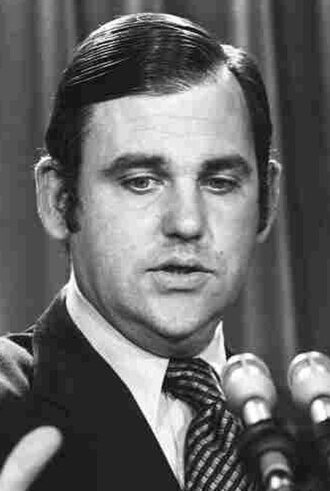
Ronald L. Ziegler served as White House Press Secretary from January 1969 to August 1974, acting as President Nixon's primary spokesperson throughout the taping period of February 1971 to July 1973. As the Watergate scandal escalated, Ziegler famously managed the administration's shifting public narratives and faced intense scrutiny from the press corps. In June 1973, his duties expanded when he was additionally named Assistant to the President following the resignation of Herbert Klein, holding both titles concurrently until the end of the administration in August 1974.
What Ziegler talks about on the tapes
Public relations 321Press relations 256Vietnam War 203Watergate 202Foreign Policy 129Congressional relations 105Media relations 97Henry Kissinger 95Economic policy 94Watergate scandal 80Media strategy 71Executive privilege 70
Conversations (1,199)
— Page 5 of 12President Nixon met with Billy Graham and H. R. Haldeman to discuss political strategy, the President's upcoming travel, and media relations heading into the 1972 election year. Graham provided advice on maintaining presidential dignity, focusing on controlled, televised appearances rather than frantic campaigning, and offered to help shore up support in key states like Pennsylvania and Texas. The participants also engaged in a lengthy, conspiratorial discussion regarding perceived media bias, specifically alleging that Jewish journalists and editors exerted undue influence on American cultural and political discourse.
President Nixon met with H. R. Haldeman and John Connally to strategize on domestic political messaging, potential 1972 election tactics, and managing the economy. The discussion covered the political necessity of targeting Democratic economic messaging regarding the 'rich versus the poor,' and the importance of using Republican surrogates to counter criticisms. Additionally, the President and Connally discussed the potential for organizing private, high-level outreach to congressional members and key staff, while planning for future presidential retreats to facilitate private planning away from media scrutiny.
President Nixon met with Press Secretary Ronald L. Ziegler to coordinate messaging regarding welfare reform and the administration's stance on state-level experimentation. They discussed recent interactions with Ronald Reagan and Washington Governor Daniel J. Evans, focusing on maintaining administrative control over welfare funding and federal waivers. The discussion aimed to ensure consistent public remarks during upcoming press conferences and Senate Finance Committee engagements.
President Nixon met with H. R. Haldeman, Henry Kissinger, and Ronald Ziegler to manage press relations, personnel issues, and foreign policy strategy. The participants discussed the upcoming China trip, handled internal friction regarding Secretary of State William Rogers’s management style, and addressed potential conflicts between John Connally and David Kennedy over economic policy. Furthermore, they coordinated the administration's position on the India-Pakistan conflict and the sensitive issue of diplomatic recognition for Bangladesh, emphasizing the need for consistency ahead of the President's scheduled travel.
President Nixon convened this meeting of the National Security Council to assess the potential for a major North Vietnamese military offensive and to coordinate U.S. support for South Vietnam. The participants, including Henry Kissinger, Melvin Laird, and Admiral Thomas Moorer, discussed enemy troop movements, the effectiveness of Vietnamization, and the need for enhanced military authorities for field commanders. Nixon directed the council to provide robust support while ensuring that South Vietnamese forces receive the primary public credit, emphasizing that the U.S. must remain committed to a successful outcome despite domestic political pressures.
President Nixon met with H.R. Haldeman, Ronald Ziegler, and Stephen Bull to coordinate administration responses to current political and national security issues. Key topics included developing a strategic rebuttal to Senator Edmund Muskie’s Vietnam peace plan, managing the fallout from a Justice Department antitrust suit against Associated Milk Producers, Inc., and refining the President’s approach to public appearances and advisory commissions. Nixon emphasized the need for a disciplined, pragmatic messaging strategy ahead of upcoming political challenges and instructed staff on handling these high-pressure administrative concerns.
President Nixon and Press Secretary Ronald L. Ziegler discussed the media reception of the President’s recent remarks at the National Prayer Breakfast, noting positive coverage on television and radio despite limited attention from the Washington Post and NBC. The conversation transitioned to the administration’s welfare reform strategy, specifically regarding an upcoming press conference by Elliot Richardson. Nixon emphasized framing the current legislative progress as a victory that reflects long-term administration efforts and fiscal constraints rather than a defeat.
President Nixon and Press Secretary Ronald Ziegler discuss media coverage and the administration's public relations strategy. Nixon emphasizes the importance of maintaining a strong political stance and not allowing external pressures to dictate their agenda. The brief exchange focuses on celebrating recent administrative progress and ensuring the staff remains focused on long-term policy goals despite congressional challenges.
President Nixon, along with H.R. Haldeman, Ronald Ziegler, and Peter Flanigan, discussed strategies for responding to Senator Muskie's criticisms of the President's Vietnam peace proposal. They debated the best approach for public rebuttal, considering television appearances, press statements, and the potential impact of various responses on public perception and political maneuvering. The conversation also touched upon the upcoming press conference of Secretary Rogers and the President's recent Vietnam speech, including its television ratings and public reaction.
President Nixon met with H.R. Haldeman, Ronald Ziegler, and Henry Kissinger to strategize the administration's public relations response to Senator Edmund Muskie’s Vietnam speech and to analyze the latest North Vietnamese negotiation proposals. Following these internal policy discussions, the President met with Soviet poet Yevgeny Yevtushenko and interpreter Demitir Zarechnak to discuss U.S.-Soviet cultural relations and the geopolitical significance of Nixon's upcoming diplomatic trips to the People's Republic of China and the USSR. The conversation emphasized the President's goal of leveraging personal diplomacy to improve international stability and establish a framework for long-term peaceful cooperation between world powers.
President Nixon, Charles Colson, and Ron Ziegler met to discuss domestic political strategy, focusing on exploiting the recent peace negotiation failures of Democratic candidate Edmund Muskie. Nixon directed his team to aggressively attack Muskie's public statements regarding the Vietnam War, arguing that they undermined the administration's ongoing diplomatic efforts. Additionally, the group reviewed positive economic indicators—specifically improvements in unemployment rates for married men—and strategized on how to promote these figures to the public to improve the President's image ahead of the 1972 campaign.
President Nixon met with various staff members and advisors to manage his schedule and coordinate messaging regarding his upcoming trip to the People's Republic of China. The participants discussed handling press inquiries, the timing of the announcement of the press list, and how to address potential questions about administration policy. Additionally, Nixon held a telephone conversation with Argentine General Alejandro A. Lanusse to discuss bilateral economic cooperation and regional diplomatic relations.
President Nixon and Rose Mary Woods engaged in a wide-ranging discussion regarding the personal dynamics and professional tensions among his Cabinet members and close associates. The President expressed frustration over the interpersonal conflict between Secretary of State William P. Rogers and National Security Advisor Henry A. Kissinger, as well as his irritation regarding Martha Mitchell. Ultimately, the conversation highlighted Nixon's sense of professional isolation and his struggle to identify close confidants who could provide companionship without bringing political or personal drama into his inner circle.
President Nixon and Press Secretary Ronald Ziegler met to discuss the fallout from a televised interview given by H. R. Haldeman, which drew significant criticism for his rhetoric regarding Vietnam War dissenters. The two strategized on how to manage the ensuing press inquiries, focusing on the need to emphasize the President's support for 'honest criticism' while distancing the administration from the more incendiary aspects of Haldeman's personal views. They also reviewed preparations for the President’s upcoming trip to the People's Republic of China, including logistical issues related to the press pool and upcoming media briefings.
President Nixon and Ronald Ziegler discussed upcoming press briefings, specifically addressing Henry Kissinger’s presentation of a foreign policy report and recent media coverage concerning H. R. Haldeman’s controversial remarks about critics of Vietnam War negotiations. They agreed that Ziegler should respond to George McGovern’s recent policy proposals by refusing to comment on the positions of presidential candidates while maintaining the right to correct factual errors. Additionally, Nixon categorically denied a rumor reported by Helen Thomas regarding his direct involvement in selecting journalists for the upcoming trip to the People's Republic of China, authorizing Ziegler to clarify that the selection process followed established criteria rather than personal influence.
President Nixon met with Press Secretary Ronald Ziegler to establish a media strategy regarding the 1972 presidential campaign. Nixon instructed Ziegler to adopt a policy of refusing to comment on statements made by other political candidates to avoid entanglement in campaign rhetoric. Additionally, the pair briefly discussed personnel and personal associations to ensure the administration maintained a clear public record regarding outside influences.
President Nixon met with key advisors and staff, including H. R. Haldeman and Henry Kissinger, to prepare for his upcoming historic trip to the People's Republic of China and discuss the 1972 campaign strategy. The participants reviewed sensitive internal polling data, evaluated the political risks posed by news stories from columnist Jack Anderson involving F. Donald Nixon, and analyzed public reaction to Vietnam policy and recent busing controversies. Additionally, the President provided guidance on managing press relations for the China trip and discussed the importance of maintaining a unified administration stance on foreign and domestic policy matters.
President Nixon, H. R. Haldeman, and various staff members met to discuss administrative scheduling, the quality and strategy of presidential speechwriting, and broader media relations. The conversation focused on the President's upcoming schedule, including interactions with congressional leaders and diplomatic representatives, while expressing significant frustration over the lack of emotional impact in current speech drafts. The participants further analyzed political messaging regarding the Vietnam War, strategizing on how to maintain public support by framing Nixon’s actions as fulfilling his executive responsibilities against political undercutting by critics.
President Nixon and Ronald Ziegler discussed the media fallout and criticism surrounding the selection process for reporters invited to cover upcoming administration events. Ziegler defended the administration's criteria for media selection against claims of regional bias, specifically addressing concerns from Texas figures like John Connally. They also reviewed public relations strategy, including how Ziegler successfully rebutted accusations that the selection process prioritized television coverage for spectacle.
President Nixon and Press Secretary Ronald Ziegler briefly reviewed the status of a recent press briefing and staffing challenges. The discussion focused on personnel recruitment difficulties, with Ziegler confirming that no suitable candidates meeting the administration's criteria were currently available for specific positions. Nixon expressed frustration regarding the quality of external associations while acknowledging the perceived fairness of the administration's public messaging strategy.
President Nixon and Press Secretary Ronald Ziegler met to coordinate the administration's public relations strategy following an interview given by H. R. Haldeman. They discussed whether to issue a formal statement regarding the controversy or simply allow the issue to fade, ultimately deciding against volunteering further information to the press. The conversation also touched on preparations for the President's upcoming trip to the People's Republic of China and the timing of a planned foreign policy address.
President Nixon met with John Connally, Robert McNamara, and Henry Kissinger to discuss the volatile political and economic situation on the Asian subcontinent, focusing on the aftermath of the India-Pakistan War, the instability in Bangladesh, and the need for a nuanced U.S. aid and diplomatic strategy. The conversation emphasized the importance of quiet diplomacy to stabilize the region and counter Soviet influence, while also touching upon domestic economic concerns, potential trade bill strategies, and upcoming travel itineraries. The participants agreed on the necessity of maintaining a balanced approach toward India and Pakistan as the administration prepares for the President's diplomatic initiatives.
President Nixon and H.R. Haldeman met to finalize the President's upcoming radio speech concerning his foreign policy report. They discussed the political strategy of criticizing presidential candidates who were undermining Vietnam peace negotiations, framing these candidates as irresponsible for potentially prolonging the war for electoral gain. Additionally, the President reviewed his public relations approach, deciding to minimize direct press interactions to avoid further controversy while emphasizing his role as the sole negotiator for an honorable peace.
President Nixon, Henry Kissinger, and Ronald Ziegler met to discuss the public and political reception of the President's recent radio address regarding the Vietnam War. Kissinger offered analysis on the motivations of administration critics, focusing on the intersection of patriotism and policy dissent. The participants framed the President’s withdrawal efforts as a significant achievement in reducing casualties and ending the conflict responsibly.
President Nixon, H.R. Haldeman, and Ronald Ziegler met to coordinate the administration’s response to media coverage regarding the President's recent foreign policy report and criticism of political opponents like Edmund Muskie and George McGovern. The participants discussed strategies for handling press inquiries, specifically reinforcing the President's stance that he critiques the wisdom, rather than the patriotism, of his critics. They also finalized details for the President’s upcoming Florida trip and the media press list for the upcoming trip to the People’s Republic of China, emphasizing the need for professional, controlled communication.
President Nixon met with Henry Kissinger, H. R. Haldeman, and other staff members to discuss media strategy, public messaging, and foreign policy, specifically regarding Vietnam and China. The participants deliberated on the effectiveness of Nixon's recent public statements, focusing on how to maintain a strong, authoritative image while navigating complex geopolitical tensions. They also addressed the importance of controlling the narrative through concise, impactful communication and the potential political implications of upcoming scheduled appearances and policy announcements.
President Nixon met with a bipartisan group of legislators and administration officials to discuss a coordinated strategy to address public opposition to forced busing for school desegregation. The participants evaluated various legal and legislative remedies, including executive intervention in pending court cases, the passage of restrictive legislation, and the potential adoption of a constitutional amendment. The meeting concluded without a final decision, as the President tasked his staff and advisors with synthesizing these diverse perspectives into a unified, formal policy proposal for the administration.
President Nixon met with Ronald Ziegler and Stephen Bull to coordinate strategy for the upcoming presidential trip to the People's Republic of China, specifically focusing on press management. They discussed maintaining an upbeat tone with the press corps to avoid frustration and deliberated on how to handle potential inquiries involving Henry Kissinger and Secretary of State William P. Rogers. The President ultimately decided against allowing Kissinger to conduct Q&A sessions with the press to prevent substantive leaks or conflicts, opting instead for controlled briefings that avoid policy details.
President Nixon met with H.R. Haldeman and Ronald Ziegler to coordinate press strategy regarding his upcoming trip to the People's Republic of China, including the production of a promotional film and the logistics of the presidential schedule. The discussion also addressed the administration's stance on school busing, with Nixon expressing a firm opposition to mandatory busing to achieve racial balance while critiquing the positions of political rivals. The participants decided to hold a leadership meeting to announce the China trip and opted to utilize the Cabinet Room for a more dramatic, televised presentation.
President Nixon and H.R. Haldeman discuss logistical arrangements for the upcoming trip to the People's Republic of China, emphasizing the need for strict control over media coverage to prevent unauthorized exclusives. They decide against granting early commitments to networks like ABC, opting instead to utilize a White House-contracted film unit to manage output. Additionally, the President deliberates on his post-trip schedule, specifically debating whether to stop in Anchorage to allow for a prime-time arrival in Washington, D.C., and expresses his personal disdain for hosting social dinners as a political outreach tool.
President Nixon met with a bipartisan group of Congressional leaders to discuss his upcoming historic trip to the People's Republic of China. The President sought to build support for the mission, briefing the group on communication protocols with Peking and his strategy for managing the international and domestic implications of the visit. The discussion emphasized the goal of establishing a new dialogue with the PRC to foster long-term global stability and balance regional power dynamics.
President Nixon and Press Secretary Ronald Ziegler discuss the positive public reception of the President's return from his historic trip to the People's Republic of China. The pair evaluates media coverage of the visit, specifically addressing inaccurate reporting by the Washington Post regarding U.S. defense commitments to Taiwan. Nixon directs Ziegler to deflect further press inquiries on the Taiwan issue by referring back to previous statements made by himself and Henry Kissinger to avoid complicating sensitive diplomatic relations.
President Nixon met with a bipartisan group of Congressional leaders to provide a firsthand report on his recent diplomatic mission to the People's Republic of China (PRC). During the briefing, the President discussed his interactions with Chinese leadership, the strategic importance of establishing communication channels, and the complex geopolitical dynamics concerning Taiwan and the broader Pacific region. The meeting emphasized the necessity of maintaining trust and diplomatic dialogue to navigate future international relations and manage long-term foreign policy objectives.
President Nixon met with Ronald Ziegler and Stephen Bull to finalize administrative arrangements for Peter G. Peterson’s swearing-in ceremony. Nixon explicitly directed that no talking points be provided for the event and instructed staff to ensure the press was quickly removed following the oath. The brief discussion also touched upon the scheduling of a Cabinet meeting and an associated photograph session.
President Nixon met with his Cabinet and senior staff to debrief them on the results and implications of his recent diplomatic trip to the People's Republic of China. The President emphasized that the primary success of the visit was the establishment of a new communication channel between the two nations, which he argued was essential for managing long-term stability and reducing the potential for future conflict. Nixon shared his impressions of Chinese leadership, particularly his discussions with Chou En-lai, noting the stark ideological differences while highlighting common strategic interests, such as peace in the Pacific and balancing influence against the Soviet Union. The discussion concluded with a focus on how this opening could be leveraged to reshape international relations and manage regional tensions across Asia.
President Nixon, Henry Kissinger, and H.R. Haldeman meet to discuss the fallout from the President’s recent trip to the People's Republic of China, expressing significant frustration with Secretary of State William P. Rogers. The President and Kissinger characterize Rogers's performance at recent Cabinet and Congressional briefings as self-serving, petty, and damaging to the administration’s foreign policy objectives. They decide that Rogers must be prevented from further undermining the trip’s significance, particularly regarding his negative depictions of the Chinese government, and discuss plans to marginalize his influence in future briefings and communications.
President Nixon and his advisors met to address the fallout from Secretary of State William P. Rogers's behavior and public statements during the recent presidential trip to the People's Republic of China. The participants expressed frustration with Rogers's perceived hostility toward their Chinese hosts, which they believed undermined delicate diplomatic progress and threatened to damage U.S. foreign policy interests. Consequently, the President instructed H. R. Haldeman and Alexander Haig to convey to Rogers that he must cease making independent remarks on Taiwan and adhere strictly to the established administration position to avoid further diplomatic friction.
President Nixon and H.R. Haldeman discussed logistics for an upcoming staff trip to Florida, including potential visits to Disney World and the management of staff accommodations. They reviewed political strategy regarding the 1972 campaign, specifically polling data against Republican challengers Paul McCloskey and John Ashbrook, and evaluated the impact of the President's recent trip to the People's Republic of China. The conversation also touched on the administration's stance on Taiwan, the President's upcoming travel to the Soviet Union, and arrangements for sending gifts to family and staff members following the China visit.
President Nixon met with the Cabinet Committee on Education to deliberate on federal education policy, with a primary focus on the political and constitutional challenges surrounding school busing and desegregation. The discussion addressed the need for improved quality of education in inner-city and rural schools, the complexities of federal financing, and the potential implementation of tax credits for private education. The participants explored ways to balance integration mandates with community-based solutions, emphasizing the importance of school accountability and the development of a coherent administration strategy to address public concerns.
President Nixon met with the Cabinet Committee on Education and the Council of Black Appointees to discuss the final report of the President’s Commission on School Finance. Participants examined the challenges of educational equity, focusing on funding disparities between urban and rural districts, the role of federal and state responsibilities, and the contentious issues of busing and support for non-public schools. The President expressed appreciation for the committee's research, and the discussion concluded with a commitment to further reviewing the commission's recommendations for legislative and policy implementation.
President Nixon met with his staff to manage the growing political fallout from the ITT antitrust case, specifically focusing on coordinating a formal statement for John N. Mitchell and managing the public narrative surrounding Dita Beard. Following these internal deliberations, the President met with James C. H. Shen, the Republic of China's ambassador, to address concerns regarding the administration's recent diplomatic outreach to the People's Republic of China. Nixon sought to reassure the Taiwanese government of the U.S. commitment to their security while emphasizing the need for patience and peaceful resolution in the region.
President Nixon met with Vice President Agnew and Republican Congressional leaders to coordinate legislative strategy on key domestic priorities, specifically revenue sharing, welfare reform, and Social Security legislation. The discussion focused on overcoming legislative stalemates in the Ways and Means Committee and the Senate, particularly regarding the influence of Chairman Wilbur Mills and the need for a unified Republican stance. The President urged the leadership to maintain pressure for compromise bills that align with administration goals while avoiding fiscally irresponsible mandates during an election year.
President Nixon met with Press Secretary Ronald Ziegler to coordinate White House messaging on domestic policy, the upcoming busing decision, and the ITT controversy. Following Ziegler's departure, Henry Kissinger joined the President to discuss foreign policy strategy, specifically addressing ongoing frustrations with Secretary of State William P. Rogers. The two leaders explored the potential for replacing Rogers and debated the political risks of personnel changes within the State Department during delicate international negotiations.
President Nixon and H.R. Haldeman discussed concerns regarding low morale at the State Department and the perceived marginalization of Secretary of State William P. Rogers following the China summit. They addressed the need to improve Rogers' public image, the upcoming Moscow trip, and the importance of ensuring Rogers plays a visible, substantive role in foreign policy to counter press narratives. The President also discussed the need to manage bureaucratic resistance and maintain control over trip logistics and public announcements to ensure they remain centrally directed from the White House.
President Nixon and Press Secretary Ronald Ziegler coordinated a meeting at the Executive Office Building to discuss strategy ahead of an upcoming press briefing. Nixon specifically sought to outline his position on the contentious issue of busing before the following Tuesday. They agreed to confer shortly to ensure Ziegler was prepared to handle potential media inquiries on the subject.
President Nixon met with Ronald Ziegler to coordinate the public messaging for his upcoming decision on busing, specifically aiming to avoid any perception of being influenced by the Florida primary. They discussed the timing of the announcement and the importance of presenting the policy as a national issue rather than a regional one. The conversation also touched on the ongoing Attorney General confirmation hearings for Richard Kleindienst and strategies for utilizing Henry Kissinger in television interviews to emphasize the President's personal role and achievements during the recent trip to China.
President Nixon consulted Press Secretary Ronald Ziegler regarding media inquiries addressed during the daily briefing to prepare for his upcoming press conference. Ziegler reported that he successfully navigated questions concerning controversial busing policies, the Florida primary, and potential rumors surrounding the China trip, including the ITT and Lockheed aircraft deals. The President approved of Ziegler’s strategy to delay the busing decision until after the Florida referendum and to maintain a low-key response to primary election results.
President Nixon consults Press Secretary Ronald Ziegler regarding whether an upcoming press briefing will impact his own scheduled preparations for the following day. The brief exchange focuses on ongoing media scrutiny surrounding the ITT Corporation and the potential necessity for the administration to manage the narrative effectively. Nixon prompts Ziegler to confirm the public status of the ITT inquiry to better inform his own strategy.
President Nixon coordinated with Press Secretary Ronald Ziegler regarding a logistical transition between the White House and the Old Executive Office Building. Nixon invited Ziegler to meet at his office to address pending questions and manage the schedule of staff members. The brief exchange served to facilitate immediate communication and address administrative movements ahead of the upcoming week.
President Nixon and Press Secretary Ronald Ziegler met to coordinate public messaging and press briefing strategy regarding several ongoing controversies. They discussed drafting a formal statement on the President’s China trade policy, managing public response to the ITT investigation, and framing the President's approach to school busing legislation. Additionally, the two reviewed the internal dynamics of the Democratic primary elections, focusing on the political vulnerabilities of Edmund Muskie and other candidates.
President Nixon met with Mark Andrews, Ronald Ziegler, and Henry Kissinger to coordinate the administration's public relations strategy regarding his upcoming trip to the Soviet Union and to manage political fallout from the ITT scandal. The participants discussed ensuring that details of potential bilateral agreements with the Soviets remain confidential to avoid premature disclosure or diplomatic friction involving Secretary of State William P. Rogers. Furthermore, they addressed the need for a unified response to media inquiries, specifically regarding allegations involving John N. Mitchell and the ITT case, emphasizing the importance of maintaining strict control over information leaked to the press.
President Nixon and Press Secretary Ronald Ziegler met to coordinate logistics for upcoming White House photography sessions and the handling of official press statements. They specifically discussed the framing of a meeting regarding school busing to avoid potential political fallout involving legal counsel. The conversation concluded with Nixon deciding to exclude Ziegler from certain photographic opportunities to maintain appropriate appearances.
President Nixon met with H.R. Haldeman and John Ehrlichman to strategize on political damage control regarding the ITT anti-trust case and the Dita Beard memorandum. They discussed mobilizing allies in Congress—specifically naming Senators Cook, Gurney, and Goldwater—to counter the investigation and redirect public attention toward the political motivations of Senator Edward Kennedy and columnist Jack Anderson. The President also finalized plans for upcoming briefings and a potential televised press conference, while reviewing legislative tactics related to school busing and Social Security.
President Nixon and Press Secretary Ronald Ziegler met to strategize on managing press coverage and public messaging ahead of upcoming political developments. They focused on drafting a formal statement regarding busing, addressing the political fallout from ITT hearings, and reviewing media reactions to the recent trip to the People's Republic of China. The discussion included the planning of future press conferences and coordinating the administration's stance on pending legislation and diplomatic communications.
President Nixon, H. R. Haldeman, and Henry Kissinger met to discuss managing the political fallout from Kissinger's secret diplomacy, his potential appearance before congressional committees, and the administration's stance on campaign finance reporting. The group expressed concern over leaks regarding the administration's foreign policy and the ongoing media attention surrounding potential cabinet resignations and the ITT investigation. Nixon and his advisors also strategized on how to frame campaign contribution disclosures to minimize political attacks from Democrats and the press.
President Nixon and Press Secretary Ronald Ziegler coordinate the administration's messaging strategy regarding upcoming policy decisions on busing and public inquiries into executive branch personnel. They agree that Nixon will address the busing issue via a formal message to Congress rather than a broadcast address to maintain procedural flexibility. Additionally, they strategize on how to dismiss media speculation and "backstage gossip" concerning the perceived rivalry between Secretary of State William Rogers and Henry Kissinger, emphasizing the President's authority over his own cabinet.
President Nixon and Press Secretary Ronald L. Ziegler coordinated messaging strategies for upcoming press briefings, specifically regarding contentious political issues like school busing and the ongoing ITT controversy. They analyzed the political implications of the ITT scandal, including potential connections to Peter M. Flanigan and the role of campaign contributions in the broader debate. Additionally, they touched upon the public reception of a book by James Keogh and addressed logistical details concerning the arrival of pandas at the National Zoo.
President Nixon and Press Secretary Ronald Ziegler discuss media coverage and political strategy, specifically regarding allegations of conflict of interest involving John Flanagan and the firm Dillon Reed. Nixon expresses frustration over the perceived reach of these accusations and questions the motivations behind the negative press coverage. The conversation concludes with the President instructing Ziegler to monitor these narratives closely and respond firmly to any further public criticism.
President Nixon met with H.R. Haldeman, John Ehrlichman, and others to discuss managing political fallout and public relations strategy, specifically regarding the ITT case and an unflattering Jack Anderson report about Arthur K. Watson. The conversation focused heavily on drafting a television address on school busing, where Nixon emphasized his desire to adopt a firm, hard-line stance against forced busing to appeal to his political base, despite internal opposition from some administration liberals. Nixon also finalized plans for his upcoming diplomatic trips and considered ways to energize his support in key states through targeted domestic appearances.
President Nixon and Press Secretary Ronald Ziegler met to coordinate the White House's public response to ongoing controversy surrounding the ITT case. They discussed strategies for defending staff member Peter M. Flanigan against political attacks, emphasizing that White House officials must maintain contact with various sectors of society as a standard professional duty. Nixon and Ziegler also reviewed the effectiveness of John N. Mitchell's recent testimony, agreeing to maintain a firm stance and frame the criticism from senators as politically motivated harassment.
President Nixon met with Press Secretary Ronald Ziegler and Chief of Staff H. R. Haldeman to review Ziegler's recent press briefing regarding the International Telephone and Telegraph (ITT) scandal and controversy surrounding Peter M. Flanigan. Nixon and Haldeman critiqued the media's performance and instructed the press team to adopt a more aggressive, combative stance against partisan critics rather than remaining on the defensive. They also briefly discussed the administration's upcoming television address on busing and potential strategies for the President’s participation in the Gridiron dinner.
President Nixon and Press Secretary Ronald L. Ziegler coordinated the communication strategy for an upcoming speech regarding school busing and a proposed constitutional amendment. They discussed the technical logistics of the broadcast, including lighting and delivery, while also strategizing on how to handle potential press reactions. Additionally, the pair touched upon the ongoing political fallout surrounding the ITT controversy.
President Nixon met with Ronald Ziegler and H.R. Haldeman to discuss the administration's political strategy regarding school busing and a proposed Constitutional amendment. The participants reviewed the public response to the President's recent policy announcement, focusing on favorable polling data and bipartisan support from congressional allies. They also discussed the utility of utilizing computer-categorized call data to gauge public opinion and counter critical news media coverage.
President Nixon met with Ronald Ziegler to discuss messaging strategies for the Equal Rights Amendment (ERA) and the administration's stance on school busing. Nixon instructed Ziegler to emphasize his broad support for a constitutional amendment while deferring the technical wording and legislative process to Congress to avoid getting bogged down in legal debates. Regarding busing, they reviewed the political impact of the issue, concluding that public sentiment largely aligned with the President's position despite opposition from the press and political liberals.
President Nixon met with H.R. Haldeman, John Ehrlichman, and Ronald Ziegler to review recent public relations strategies, including the effectiveness of his recent New York City trip and the upcoming schedule. The group discussed managing the press, navigating the political challenges of the 1972 campaign, and coordinating administrative responses to sensitive topics such as the ITT scandal and international drug trafficking. Nixon emphasized a hardline stance on drug penalties, suggesting that the administration should advocate for the death penalty for major distributors to project strength on law and order.
President Nixon met with his senior aides, including H.R. Haldeman, Charles Colson, and John Ehrlichman, to discuss a range of domestic political issues and scheduling conflicts. The participants addressed the ongoing ITT antitrust investigation and its potential for negative political fallout, as well as coordinating public relations strategies regarding Nixon’s upcoming press conference and his attendance at the Gridiron dinner. Nixon ultimately decided to prioritize his travel schedule and administration optics, weighing the pros and cons of official representation at the dinner versus managing the fallout from controversies involving campaign financing and the Justice Department.
President Nixon met with H. R. Haldeman, George Shultz, and Ronald Ziegler to coordinate administration messaging, particularly regarding the war on drugs and economic policy. They discussed the tactical advantages of conducting a televised "fireside chat" on drugs rather than a press conference, which Nixon feared would focus on negative or unrelated topics. Additionally, they reviewed various personnel matters and appointments, including strategies for handling potential ambassadors and managing interactions with business leaders to bolster the administration's public image.
President Nixon and Press Secretary Ronald Ziegler coordinated the logistics for a forthcoming meeting with the White House News Photographers Association. The discussion focused on scheduling, the sequence of photo opportunities, and how to handle potential inquiries regarding the President’s dinner attendance. Nixon instructed Ziegler to provide non-committal responses to any questions about his interactions with the attendees.
President Nixon and Press Secretary Ronald Ziegler consulted on a forthcoming public statement regarding organized labor's recent withdrawal from the Pay Board. The discussion focused on framing the actions of labor leaders, such as George Meany, as detrimental to the national fight against inflation. Nixon instructed Ziegler to emphasize that the administration would not allow powerful labor interests to supersede the law or sabotage the economic interests of the majority of American wage earners.
President Nixon met with H.R. Haldeman and John Ehrlichman to coordinate administration strategy on several high-stakes domestic and foreign policy issues. The discussion centered on legislative maneuvering to curb school busing, the management of economic messaging regarding the Pay Board's recent labor disputes, and the handling of the ITT controversy. They also deliberated on potential presidential travel, the projection of moral leadership, and the public relations strategy for the President’s recent trip to China.
President Nixon and Press Secretary Ronald L. Ziegler met to coordinate the President's upcoming speech regarding the Pay Board. The discussion focused on preparing Ziegler for potential press questions and ensuring the administration's messaging remained consistent. Nixon directed Ziegler to contact George P. Shultz to finalize the briefing strategy and clarify specific policy points.
President Nixon met with Ronald L. Ziegler to coordinate White House messaging regarding George Meany's resignation from the Pay Board and the broader administration strategy for handling public attacks on the economy and key officials. They discussed tactics for Nixon's upcoming press conference, specifically emphasizing a firm, "fight to the finish" stance against critics while deflecting questions about Arthur K. Watson and Peter M. Flanigan to subordinate departments. The conversation concluded with plans to frame the President’s weekend at Camp David as a period dedicated to reviewing stalled domestic policy initiatives, thereby pressuring Congress to act before the Democratic National Convention.
President Nixon met with H. R. Haldeman, Charles Colson, and others to strategize on managing the political fallout from George Meany’s resignation from the Pay Board and the ongoing ITT controversy. The participants discussed crafting the President’s public response to minimize criticism of his labor policies, focusing on the "special interests" narrative to isolate Meany and neutralize Democratic attacks. Additionally, the President issued directives to accelerate government spending through federal agencies and instructed his staff to aggressively challenge congressional misconduct, including the potential release of derogatory information on political opponents.
President Nixon consulted with Ronald Ziegler and Alexander Haig regarding the administration's public response to allegations of ITT involvement in Chilean politics. The discussion centered on a recent State Department denial concerning controversial statements attributed to Ambassador Edward M. Korry, which had been leaked by columnist Jack Anderson. Nixon and his aides agreed to deflect further inquiries by referencing the President’s previously stated policy positions on Latin America and Chile.
President Nixon and Press Secretary Ronald Ziegler coordinate a brief meeting to finalize preparations for an upcoming presidential press conference. The discussion focuses on reviewing last-minute questions and potential talking points to ensure the President is adequately briefed. Ziegler confirms his immediate availability to join Nixon for these final deliberations.
President Nixon and Press Secretary Ronald Ziegler discuss the strategic implications of avoiding televised presidential debates during the 1972 election cycle. Nixon expresses concern that agreeing to debates would inadvertently provide major television networks and opposing candidates with millions of dollars in free airtime. Ultimately, the President characterizes his refusal to debate as a tactical move to deny his political rivals a significant media advantage.
President Nixon met with Ronald Ziegler and H.R. Haldeman to strategically prepare for an upcoming press conference. The discussion focused on maintaining a firm but composed demeanor, particularly when addressing volatile topics like national economic policy, food prices, and busing legislation. The President also sought advice on handling potential political inquiries regarding the Soviet Union trip, the ITT controversy, and his interactions with the press corps to ensure effective communication of his administration's agenda.
President Nixon and Press Secretary Ronald Ziegler coordinate the sequence of questioning for an upcoming press conference. They finalize a strategy to prioritize the wire services, specifically directing that Frank Cormier of the Associated Press and the representative from United Press International be called upon first and second, respectively. Ziegler is tasked with relaying this order to the reporters and notifying the President of any necessary adjustments prior to the event.
President Nixon and Press Secretary Ronald L. Ziegler discuss strategies to counter criticism of the administration's economic policies, specifically regarding unemployment figures. Nixon emphasizes that critics are selectively highlighting specific statistical data to allege policy failure while ignoring the broader, more positive economic trajectory. They agree to adopt a more assertive messaging strategy to defend the administration's overall economic record.
President Nixon met with his senior staff, including H. R. Haldeman, Ronald Ziegler, and Charles Colson, to review the performance and content of his recent press conference. They discussed the effectiveness of his responses to various topics, specifically his firm stance on marijuana legalization, his handling of the ITT antitrust controversy, and his efforts to blame previous Democratic administrations for current economic and regulatory problems. The President and his advisors expressed satisfaction with the 'glass houses' rhetoric used to deflect criticism and finalized strategies to continue blaming the middleman for rising food prices.
Press Secretary Ronald Ziegler attempted to reach Special Counsel Charles Colson on behalf of President Nixon to discuss urgent matters regarding wire service reports and pending testimony. Upon learning that Colson was unavailable and attending to business on Capitol Hill, Ziegler requested an immediate return call once Colson became reachable. The dialogue highlights the administration's efforts to coordinate responses to sensitive press and legislative developments.
Ronald Ziegler and Charles Colson coordinate the White House's public response to the International Telephone and Telegraph (ITT) scandal. They agree to maintain a "no comment" position from the administration while tasking William R. Merriam with issuing a denial regarding allegations of inappropriate White House contacts. The pair seeks to confirm whether the improper communications originated from Edward J. Gerrity, Jr. or Merriam so that the appropriate individual can formally refute the claims.
President Nixon met with Republican congressional leaders and cabinet officials to strategize on the administration's legislative agenda, specifically focusing on revenue sharing, welfare reform, and the Equal Educational Opportunities Act. The discussion addressed the political and procedural challenges of implementing a busing moratorium and the importance of countering Democratic criticism regarding the economy. Nixon emphasized the need for a unified party strategy to leverage economic accomplishments and maintain pressure on Democratic opponents leading into the 1972 election cycle.
President Nixon met with Henry Kissinger and senior staff to discuss foreign policy developments, specifically focusing on Vietnam, Middle East peace strategies, and the logistics of upcoming summit travels to Russia, Poland, and Iran. The group deliberated on how to handle the political fallout from the ITT scandal and the associated legislative impacts, emphasizing the need for a more disciplined communication strategy. Nixon and his advisors also reviewed political maneuvering regarding the upcoming election, including the importance of tax rhetoric and the necessity of maintaining control over internal messaging.
President Nixon, Henry Kissinger, and King Hussein of Jordan met to discuss the volatile political and economic situation in the Middle East, specifically focusing on the Palestinian-Israeli conflict and Jordan's need for financial assistance. King Hussein detailed his proposed three-year development plan aimed at achieving economic self-sufficiency and mitigating refugee issues, while Nixon and Kissinger emphasized the importance of maintaining Jordan as a stable, independent ally. Nixon advised that any U.S. efforts to broker peace should be conducted through quiet, private diplomacy to avoid negative political blowback and obstructionism from hardline elements.
President Nixon met with Press Secretary Ronald L. Ziegler and personal secretary Rose Mary Woods to coordinate upcoming press logistics and limit the duration of presidential photo opportunities. Nixon expressed frustration over previous media encounters, specifically citing meetings with the American Cancer Society and King Hussein of Jordan, and directed Ziegler to keep upcoming sessions brief to avoid unproductive small talk. The group ultimately decided to restrict press coverage to wire services to ensure minimal disruption to the President’s schedule.
President Nixon met with his staff and Teamsters President Frank E. Fitzsimmons to discuss labor policy, the status of the Pay Board following George Meany's resignation, and negotiations regarding the West Coast dock strike. Nixon emphasized his desire to maintain open communication with labor leaders to avoid being perceived as anti-labor and sought Fitzsimmons's advice on navigating these disputes. Additionally, the President received an update from Henry Kissinger regarding delicate Vietnam peace negotiations and upcoming Soviet summit preparations, while later discussing internal Teamsters matters, including the status of Jimmy Hoffa.
President Nixon met with H.R. Haldeman, Ronald Ziegler, and others to strategize on public relations, specifically regarding the media appearances of Henry Kissinger and the Nixon family. They decided to postpone Kissinger's prime-time television appearances until after the upcoming Moscow summit to maximize impact and avoid premature foreign policy debates. The group also discussed the logistics of a potential television special featuring Pat Nixon's China trip, the strategy for handling press conferences, and ways to shift the narrative regarding the administration's performance.
President Nixon met with Ronald Ziegler and Rose Mary Woods to formulate a media strategy regarding the ongoing military offensive in South Vietnam. Nixon instructed Ziegler to maintain a posture of studied ambiguity, directing him to decline day-to-day commentary on the battle and instead defer military-specific evaluations to General Abrams in Saigon. The President emphasized a narrative that the South Vietnamese line was bending but not breaking, drawing historical parallels to maintain public resolve and avoid speculation about future US ground troop involvement or bombing campaigns.
President Nixon met with Henry Kissinger, Melvin Laird, and John Chafee to discuss the worsening North Vietnamese offensive and the military response required to protect South Vietnamese positions. Nixon emphasized the necessity of using intensified air and naval power to grind down invading forces, comparing the tactical retreat to historical battles like Ypres and Verdun to underscore his strategy of consolidation and counter-offensive. The President also discussed upcoming U.S.-Soviet relations and political messaging for his administration, while offering personal counsel to Chafee regarding his campaign for the U.S. Senate.
President Nixon met with H. R. Haldeman, Ronald Ziegler, and others to discuss a variety of administrative and policy matters, including the drafting of a speech for the National Catholic Education Association and strategies for publicizing a federal 'heroin hotline.' The participants also reviewed recent developments in the Vietnam War, particularly the North Vietnamese offensive and the government's military response, while considering the impact of upcoming diplomatic trips to the Soviet Union. Additionally, the President engaged in a wide-ranging discussion on the current state of American higher education, expressing concerns about the ideological climate on college campuses and the lack of emphasis on vocational training.
President Nixon, Ronald Ziegler, and H.R. Haldeman met to coordinate public relations strategies regarding the North Vietnamese offensive and potential violations of previous agreements. The discussion addressed the political implications of the ITT case and the management of 1972 campaign finances, specifically concerning donor disclosures and John Mitchell’s role in campaign control. Furthermore, the President reviewed plans for an upcoming speech to the National Catholic Education Association and assessed the broader implications of Vietnam policy on U.S. foreign credibility.
President Nixon and Press Secretary Ronald Ziegler discussed the administration's strategic messaging regarding the North Vietnamese offensive and the role of great powers. Nixon highlighted his recent remarks to an Associated Press reporter, emphasizing the responsibility of nations like the USSR to refrain from encouraging aggression. The President also analyzed the military situation in South Vietnam, expressing confidence that the ongoing North Vietnamese "Sunday punch" would fail while directing Ziegler to monitor media coverage closely.
President Nixon and Henry Kissinger discussed the logistical arrangements for upcoming U.S.-USSR relations, including a meeting between First Lady Pat Nixon and Mrs. Anatoliy Dobrynin, and the coordination of the President's planned Moscow summit. A significant portion of the conversation focused on the North Vietnamese offensive and the administration's strategic response, which included aggressive surveillance of Soviet ships and the potential use of naval mines. Kissinger and Nixon evaluated the geopolitical stakes of the Vietnam conflict, framing it as a critical test of U.S. credibility that could influence future Soviet actions in the Middle East and the viability of the Berlin treaties.
President Nixon and H. R. Haldeman met to coordinate the President's upcoming schedule, focusing on administrative changes, travel plans, and the finalization of a speech for his trip to Canada. The discussion moved to managing press relations for the upcoming Soviet summit, with Nixon expressing frustration over the administration's perceived tendency to court hostile media figures rather than supporting loyalist journalists. They also evaluated domestic policy messaging, particularly concerning food prices and the administration's response to the North Vietnamese offensive, while deciding to maintain a firm, proactive stance in their public communications.
President Nixon and Press Secretary Ronald Ziegler discussed the public messaging surrounding a bipartisan trip to the People's Republic of China by Senators Mike Mansfield and Hugh Scott. Nixon emphasized framing the visit as an approved, bipartisan mission and confirmed he would provide a personal letter to be delivered to Chinese leadership. Additionally, the two addressed administrative concerns regarding First Lady Pat Nixon's upcoming travels, focusing on the management of her speeches and the use of White House staff.
President Nixon met with Republican congressional leadership to coordinate administration talking points on sensitive domestic and foreign policy issues. The discussion focused primarily on the ongoing military situation in Vietnam, emphasizing the success of Vietnamization, the importance of maintaining public support, and the necessity of keeping political opposition from undermining the war effort. Additionally, the President and his advisors briefed members on key legislative priorities, specifically the administration's stance against forced busing and efforts to address rising food prices and drug-related crime. The participants discussed strategies for distributing these fact sheets and maintaining a unified front to influence public perception and legislative outcomes.
President Nixon met with Congressional leaders Hugh Scott, Gerald Ford, Clark MacGregor, and William Timmons to coordinate messaging regarding the ongoing Vietnam War and upcoming travel to the People's Republic of China. Nixon emphasized the necessity of projecting strength, instructing the group to underscore the administration's willingness to negotiate while firmly rejecting any appearance of negotiating a surrender under duress. The participants also discussed the importance of highlighting South Vietnamese resilience and Soviet support for the North Vietnamese offensive to ensure a unified public stance.
President Nixon and H. R. Haldeman met to coordinate administration messaging during the North Vietnamese Easter Offensive, specifically emphasizing a tough public stance against the invasion and a refusal to apologize for increased military pressure. They discussed strategies for managing press relations, including a directive to ignore specific inquiries about the President’s decision-making process and to boycott certain journalists. Additionally, the President and his staff coordinated upcoming scheduling, including the President's trip to Camp David and efforts to manage the public relations fallout regarding the nomination of Richard Kleindienst.
President Nixon and Henry Kissinger met to strategize on the Vietnam War, focusing on managing domestic political fallout from North Vietnam's offensive and the potential for a negotiated settlement involving the Soviet Union. Nixon emphasized the need for a firm public stance against Democratic critics and discussed the potential for linking the upcoming Moscow summit to progress in Paris peace negotiations. Following Kissinger's departure, Ronald Ziegler joined the President to discuss press reporting on the Moscow trip itinerary and to coordinate scheduling adjustments for First Lady Pat Nixon's upcoming events, including a table tennis exhibition.