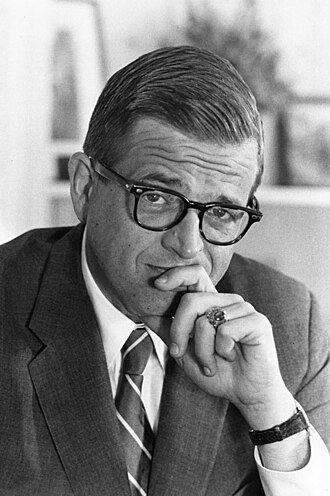
Colson, Charles W.
Charles W. Colson served as Special Counsel to the President from November 1969 to March 1973, and concurrently as the Director of the Office of Public Liaison from July 1970 to March 1973. During the White House taping period, Colson acted as Richard Nixon's ruthless political point man and "hatchet man," compiling the infamous "Enemies List" in 1971 and helping establish the White House Plumbers to discredit political opponents. He held both positions until his resignation in March 1973, when he transitioned out of the administration to return to private law practice just before the Watergate scandal fully erupted.
President Nixon met with VFW leadership, Donald E. Johnson, Charles W. Colson, and Alexander M. Haig, Jr. to discuss the administration's Vietnam War policies, including the status of U.S. Prisoners of War and the progress of Vietnamization. A significant portion of the discussion focused on domestic challenges facing returning veterans, particularly the high unemployment rates among Vietnam veterans and the need for improved federal job training and placement programs. Nixon directed his team to prioritize veteran employment initiatives and emphasized the importance of ensuring these programs served all veterans equitably, including minorities.
President Nixon met with H.R. Haldeman and various staff members, including Peter Flanigan, Henry Kissinger, and John Ehrlichman, to deliberate on high-level personnel appointments, government reorganization, and legislative strategy. A primary focus was identifying a strong, business-oriented candidate for an ambassadorial role to navigate international economic negotiations and counter State Department bureaucracy. The group also discussed managing the President’s public image regarding economic policy, the Alaska pipeline, and Vietnam, while addressing the need to discipline administration officials who publicly diverged from official policy. The President emphasized a preference for direct, high-level policy control and instructed his staff to bolster communication efforts and strengthen the administration’s political messaging.
President Nixon met with his advisors, including Secretary of Labor James Hodgson and George Shultz, to debate strategies for curbing inflation and rising construction costs, specifically focusing on the potential suspension of the Davis-Bacon Act. The participants weighed the political risks of appearing anti-union against the need to exert pressure on construction labor leaders to accept voluntary wage stabilization. Nixon ultimately favored a targeted approach to the construction industry over broad wage-price controls to avoid broader economic disruptions and political backlash. The group decided to finalize an announcement strategy for the suspension, potentially leveraging the upcoming Governors' Conference to bolster the administration's position.
President Nixon met with his senior aides and advisors to strategize the temporary suspension of the Davis-Bacon Act, framing the move as an emergency measure to combat inflation in the construction industry rather than an attack on labor unions. The group, including H.R. Haldeman, John Ehrlichman, Charles Colson, and George Shultz, worked to refine a public statement that would justify the suspension by drawing parallels to the administration's previous interventions in the steel and oil sectors. Nixon emphasized the need to maintain credibility with his political allies while ensuring the message clearly articulated that the suspension was a necessary response to rising costs rather than a permanent repeal of labor protections.
President Nixon met with Kenneth R. Lyons, leader of the National Association of Government Employees, and aide Charles W. Colson to discuss labor relations within the federal government. The President emphasized his desire for responsible union leadership, his opposition to strikes in essential services, and his support for addressing pay disparities between federal blue-collar workers and the private sector. The discussion also covered broader political topics, including the recent bombing of the U.S. Capitol and the importance of public support for law enforcement.
President Nixon and Charles Colson discussed the positive reception to the President’s recent press conference and the need to maintain momentum through strategic follow-up. They reviewed the effectiveness of the President's public comments regarding the press and Cambodia, specifically emphasizing a strategy to mobilize support from groups such as veterans and the American Legion. Nixon directed Colson to initiate a 'drumbeat' of public backing to pressure Congress and solidify his administration's messaging.
President Nixon met with his senior advisors, including H. R. Haldeman and Henry Kissinger, to review administrative priorities following his March 4, 1971, press conference. The discussion focused on managing public and media reactions to the Vietnam War and Laos operations, as well as addressing ongoing Middle East diplomatic developments. Additionally, Kissinger updated the President on his efforts to challenge anti-administration sentiment among the academic and policy "establishment" during a recent appearance at the Brookings Institution.
President Nixon met with top network executives, including William S. Paley and Frank Stanton, to discuss the administration's tense relationship with the media, the format of presidential television appearances, and upcoming campaign spending legislation. The conversation focused heavily on regulatory concerns, specifically the application of the Fairness Doctrine, FCC licensing policies, and the potential impact of campaign finance restrictions on broadcast media. Nixon sought to influence network coverage and industry standards, assigning follow-up tasks to Charles Colson and White House telecommunications advisors to manage these regulatory and media relations issues.
President Nixon met with various staff members and advisors to refine the administration's political and legislative strategy, specifically regarding the textile quota issue and relations with key Congressional leaders like Wilbur Mills and John Byrnes. The President finalized plans to issue a statement on textile legislation while balancing pressure from the industry against the strategic risks of legislative entanglement. Additionally, the President discussed methods for managing Republican Congressional relations through targeted meetings and evaluated strategies to counter negative media coverage through the use of news tapes.
President Nixon, H.R. Haldeman, and Charles Colson met to strategize regarding the President's upcoming press communications, specifically weighing the merits of a televised press conference versus an in-office domestic briefing. They determined that focusing solely on domestic issues would allow the President to control the narrative and avoid complex, high-pressure inquiries about foreign policy, particularly the Middle East. The group also discussed the logistics of utilizing regional press outlets in California and the ongoing public relations strategy to maintain media control.
President Nixon met with H. R. Haldeman and Charles Colson to discuss foreign policy messaging, the administration's defensive stance regarding the Vietnam War, and potential media strategies. A primary focus was the potential recruitment of journalist John A. Scali to assist in communications and press relations, despite concerns about how he would interact with Henry Kissinger and the National Security Council. The group also reviewed current Gallup poll trends and the impact of public-facing appearances, including the President's daughter’s engagement and media interviews, on the administration's approval ratings.
President Nixon and Charles Colson evaluated the public and congressional reception of the President's recent televised interview with Howard K. Smith. The discussion focused on the effectiveness of the interview format compared to traditional press conferences and the impact of the President's upcoming troop withdrawal announcement on political support. They also assessed the timing and potential political implications of a forthcoming Louis Harris poll.
President Nixon met with Harvey Firestone, General Emmett O'Donnell, Jr., and George T. Bell for a brief, informal session in the Oval Office that included a photo opportunity. The discussion touched on military service and the contributions of Bob Hope to the USO, with the President specifically criticizing religious leaders for their opposition to Hope's work. The participants also exchanged gifts, including photographs, and witnessed the President sign a proclamation.
President Nixon and Charles Colson discuss the positive reception among organized labor leaders regarding the President’s recent televised speech on Southeast Asia. Colson highlights favorable feedback from key figures like Frank Rafferty and Frank Fitzsimmons, suggesting that this support signals a potential strengthening of the administration's political coalition. Nixon instructs Colson to capitalize on this momentum by encouraging labor leaders, including George Meany and Peter Brennan, to issue public statements of support immediately.
President Nixon and Charles Colson discuss the reception of the President's recent dinner for donor W. Clement Stone and the positive reaction to his public remarks. Nixon specifically reviews his implicit criticism of Senator Charles H. Percy regarding the Supersonic Transport (SST) controversy, which Colson praises for its effective delivery. The conversation also highlights the strong approval from core supporters regarding the President's recent April 7th speech and his emphasis on American global leadership.
President Nixon and Charles Colson discuss the importance of fostering patriotism among a specific group of supporters who have demonstrated financial loyalty to the administration. Nixon reflects on the necessity of ensuring these individuals feel a broader sense of commitment to America's global role, emphasizing that this psychological alignment outweighs other political concerns. The brief exchange concludes with an affirmation of their shared belief in the effectiveness of this approach to maintaining supporter morale.
President Nixon and Charles Colson discuss the status of a forthcoming Louis Harris poll evaluating the public response to the President's April 7th speech. Colson confirms that he is in contact with Harris to monitor the polling data and ensure the President’s team remains informed. The two men agree that maintaining this collaborative relationship with Harris and sharing internal data helps manage the narrative and keep the polling process favorable to the administration.
President Nixon consults with Charles Colson regarding an upcoming meeting with Henry Kissinger and John Scali, ultimately deciding to speak with them privately to manage potential professional rivalries. Colson updates the President on the progress of Harris polling, noting that the White House has provided comparative data from the Opinion Research Corporation to ensure accuracy. Additionally, they discuss strategies to improve relations with POW wives, determining that Don Hughes should assist Kissinger in future meetings to provide a softer, more effective approach.
President Nixon and Charles Colson briefly coordinated their schedules regarding upcoming meetings and discussed ongoing efforts to monitor an unnamed individual. The dialogue touches on strategic surveillance and public perception management, suggesting that their oversight tactics were successfully keeping the subject cautious. No formal policy decisions were made, as the conversation focused primarily on operational logistics and the status of their intelligence activities.
President Nixon and Charles Colson discussed recent positive economic indicators, including stock market growth and a favorable Gross National Product increase, as a means to boost public confidence. The conversation then shifted to managing political opposition regarding the Vietnam War, with Nixon instructing Colson to pressure congressional "doves" and specifically requesting that Senator Edward Brooke hold off on public criticism for 30 days. Nixon planned to offer Brooke a private briefing on May 15, 1971, to secure this short-term cooperation while downplaying the administration's recent overtures toward the People's Republic of China as a concern to his political rivals.
President Nixon directs Charles W. Colson to contact Senator Edward W. Brooke to secure public support for the administration's initiative toward the People's Republic of China. Nixon instructs Colson to encourage Brooke to deliver a speech on the Senate floor praising the policy as a long-term strategic vision for future generations. Colson confirms his intention to execute this request, leveraging background information from journalist Howard K. Smith to bolster the argument.
President Nixon and Charles Colson discuss strategies for securing congressional support for the administration's policies, specifically focusing on neutralizing opposition to the Vietnam War and the China initiative. They review the loyalties of Republican senators like Edward Brooke and William Saxbe, noting that these members' public support is effectively confusing and stalling liberal critics. Furthermore, they discuss the political utility of forthcoming poll data and the potential for anti-war protests to inadvertently strengthen the administration's core coalition.
President Nixon and Charles Colson discuss strategies for managing legislative relationships within the House and Senate. The conversation touches on the necessity of maintaining firm positions with lawmakers and addresses concerns regarding public or political sentiment. Colson notes his intention to handle specific tasks, including a planned trip to Seattle, as part of the administration's broader outreach and political strategy.
President Nixon and Charles Colson discuss strategies for managing political dissent, focusing on silencing Republican "doves" who oppose the administration’s Vietnam policy and China initiative. The two evaluate the effectiveness of various spokesmen, including Treasury Secretary John Connally, and coordinate the President's upcoming meeting with "hard hat" workers to shore up blue-collar support. Nixon emphasizes maintaining a firm public stance on the war and economic issues while directing his staff to avoid dignifying critics like Rep. Pete McCloskey through high-level engagement.
President Nixon met with the executive council of the AFL-CIO Building and Construction Trades Department to discuss the state of the construction industry, economic growth, and the administration's recent suspension of the Davis-Bacon Act. The discussion addressed concerns regarding job stability, the rising costs of land and construction, and the need for continued labor-management cooperation under the administration's new wage stabilization policies. Nixon emphasized his support for the trades and sought their partnership in fostering economic stability, while also pivoting to broader topics of national security, international defense commitments, and the strategic importance of U.S. economic and military strength in the global landscape.
President Nixon met with H.R. Haldeman, Charles Colson, and other staff members to discuss political messaging strategies and the management of congressional relations. The group focused on fostering a more optimistic, disciplined tone among Republican supporters while strategizing ways to critique opposition figures like Senator Edmund Muskie. Additionally, they deliberated on media presentation tactics, specifically regarding public appearances with members of Congress and how to effectively highlight the administration's policy successes.
President Nixon and Charles Colson discussed strategies to bolster support for the administration, focusing on efforts to discredit anti-war veteran demonstrations by highlighting the presence of non-veteran infiltrators. They also reviewed political outreach, expressing frustration with Republican senators who remained pessimistic despite positive polling on the economy, the China initiative, and the Vietnam War. Consequently, Nixon directed Colson to instruct Clark MacGregor to share these favorable poll results directly with key lawmakers to discourage them from aligning with opposition positions.
President Nixon and Charles Colson discuss positive labor feedback regarding the President's recent welfare stance and his outreach efforts toward construction union leaders. They identify the public's frustration with welfare recipients as a politically potent theme and decide to distribute a revised, anecdote-heavy version of the President's speech to key legislative allies. Additionally, they discuss exploiting the political vulnerability of several Democratic presidential hopefuls—including Muskie, Kennedy, and Humphrey—who avoided voting on the Ribicoff amendment regarding school busing.
President Nixon and Charles Colson discuss strategies for managing public perception regarding anti-war protests and the welfare system. The President expresses concern over the political optics of demonstrators occupying the National Mall and emphasizes the need to leverage support from conservative factions. Nixon instructs Colson to monitor current legislative developments and mobilize political allies to take a firm stand on these divisive issues.
President Nixon and Charles Colson discuss strategies to discredit anti-war veterans' protests by emphasizing the presence of radical elements and the lack of authentic veteran status among participants. They review the success of congressional allies in publicizing pro-administration views, express frustration with Senator Charles Mathias, and praise the recent political alignment of Senator William Saxbe. Additionally, they discuss upcoming negative press regarding Senator Edmund Muskie and analyze the political implications of current anti-war demonstrations in Washington.
President Nixon met with leaders of the American Farm Bureau Federation, including William J. Kuhfuss and Roger Fleming, along with White House staff, to address tensions between the administration and the farm community. The discussion focused on agricultural trade policy, legislative challenges in a Democrat-controlled Congress, and the perceived failure of the administration to reduce farmer dependency on government programs. Nixon pledged closer communication through his staff and identified several legislative priorities, including farm labor relations and strengthening farmers' negotiating power, to foster a more cooperative political alliance.
President Nixon and Charles Colson discussed strategies for countering negative media coverage and handling anti-war demonstrations, particularly in light of recent testimony before the Senate Foreign Relations Committee. They reviewed tactics for exerting pressure on news networks, including utilizing antitrust concerns and leveraging internal allies like John Scali to influence reporting. Additionally, the President expressed satisfaction with the political resolve of Republican senators against demonstrators and emphasized the importance of maintaining a firm public stance on the Vietnam War and the economy.
President Nixon and Charles Colson met to discuss media strategy and public relations efforts in the face of ongoing political criticism. The conversation touched upon the necessity of maintaining a firm public stance and managing information provided to major news outlets like CBS. Nixon emphasized the importance of utilizing presidential authority to influence public perception and underscored the need for continued, persistent communication to counteract opposing political narratives.
President Nixon and Charles Colson discuss the aftermath of a recent press conference, focusing on the President’s assertive stance against media critics and anti-war protesters. Nixon emphasizes his commitment to upholding the rule of law while clarifying his position on peaceful versus unlawful demonstrations. To maintain momentum, the President instructs Colson to coordinate with supportive Republican senators, such as Hugh Scott and Robert Griffin, to publicly validate his performance and policy agenda.
President Nixon met with H.R. Haldeman and Charles Colson to discuss the administration's political strategy regarding recent anti-war protests and civil demonstrations in Washington, D.C. They focused on discrediting Democratic rivals—specifically Hubert Humphrey, Ted Kennedy, and Edmund Muskie—by highlighting their earlier endorsements of these movements, which the President characterized as hypocritical in light of the resulting violence and disorder. Additionally, the participants reviewed the effectiveness of local police leadership, discussed Rose Mary Woods’ recent trip to the Kentucky Derby, and touched upon logistical details for an upcoming meeting with Jeane Dixon and a gift donation from Walter Annenberg.
President Nixon and Charles Colson discuss strategies to leverage public support for the administration in the wake of anti-war demonstrations. They specifically examine the role of Peter J. Brennan and the potential for a 'hardhat' labor mobilization to counter protesters, including a proposed march on Wall Street. Additionally, the pair discusses the political implications of Edward M. Kennedy's involvement in recent demonstrations and the perceived need for congressional allies to speak out in support of the administration.
President Nixon met with Charles Colson, Ronald Ziegler, and Stephen Bull to discuss public perception of the administration's firm handling of recent anti-war protests in Washington, D.C. The participants reviewed strategies for countering criticism from political opponents and the media, specifically focusing on documenting evidence of communist support behind the demonstrations. Additionally, they coordinated plans to leverage political allies, such as labor leader Peter Brennan, to mobilize public support and ensure the administration’s narrative regarding the restoration of order remained dominant.
President Nixon and Charles Colson discussed political strategies for securing labor support heading into the 1972 election cycle. Their conversation focused on managing relationships with prominent labor leaders, specifically George Meany and the building trades unions, while assessing potential influence within the Teamsters and other labor organizations. They also addressed broader political concerns, including Vice President Agnew's media criticism, the administration’s economic policies, and strategies to distance labor from Democratic candidates like Edmund Muskie and George McGovern.
President Nixon and Charles Colson discuss media relations strategy, specifically how to criticize individual news outlets rather than the media industry as a whole to avoid broader political backlash. They also assess potential support from labor unions, evaluate political figures like Henry Jackson, and review the status of recent anti-war demonstrations. The conversation reflects the administration's ongoing efforts to manage public perception and build political coalitions among working-class voters.
President Nixon and Charles W. Colson discussed several political and media-related matters, including the ongoing controversy involving Al Capp and potential legal actions against him. The conversation also touched upon the administration's strategic efforts to secure political support from farm organizations and addressed internal reactions to political demonstrations. Additionally, the participants reviewed recent communications between Colson and other key figures, such as H.R. Haldeman and Dan Rather, to coordinate the administration's response to these evolving developments.
President Nixon, H.R. Haldeman, and Charles Colson met to discuss political strategy for the 1972 election, focusing on how to undermine potential Democratic rivals like Edward Kennedy and Edmund Muskie. They also assessed the legislative status of the Supersonic Transport (SST) and expressed frustration regarding the current leadership in the U.S. Senate. Henry Kissinger joined the latter portion of the meeting to finalize the timing and announcement strategy for the upcoming Strategic Arms Limitation Talks (SALT) negotiations with the USSR.
President Nixon met with his Cabinet and key advisors to announce a major breakthrough in Strategic Arms Limitation Talks (SALT) with the Soviet Union, culminating in a joint statement to be released simultaneously in both nations. The agreement establishes a framework to prioritize limiting anti-ballistic missile (ABM) systems while pursuing parallel measures for offensive weapons. Nixon emphasized that the breakthrough was achieved by maintaining a strong U.S. defense posture, and he urged his administration to avoid public speculation or detailed commentary that could complicate sensitive ongoing negotiations.
President Nixon, William P. Rogers, and Charles W. Colson met to discuss the political implications and public relations strategy surrounding the announcement of the Strategic Arms Limitation Talks (SALT) agreement. The participants analyzed how the agreement could undermine the positions of Democratic critics and presidential hopefuls like Edmund Muskie and Hubert Humphrey, who had previously advocated for positions the administration had now effectively bypassed. Nixon and Colson agreed to maintain a sense of mystery and confidence regarding foreign policy, concluding that keeping public commentary brief would reinforce the President's stature as a far-sighted leader in command of momentous international developments.
President Nixon and Charles Colson met to discuss the administration's political strategy regarding the recent killing of police officers, with Nixon expressing frustration over the Justice Department's failure to take aggressive legal action or project a sufficiently firm image. The two strategized on how to exploit the issue to court public support and push for new federal legislation against police killings, while also reviewing current polling data and congressional maneuvering on the Strategic Arms Limitation Talks (SALT) and the Antiballistic Missile (ABM) program. Nixon emphasized his desire for a hard-line, proactive stance to contrast with Democratic candidates, ultimately tasking Colson with finding ways to leverage these issues for electoral advantage.
President Nixon and Charles Colson discuss the President’s recent outreach to Edward J. Kiernan following the killing of New York City police officers. Nixon confirms he sent letters of condolence to the victims' families and expressed his formal support for the NYPD to boost morale and public appreciation for law enforcement. Colson agrees to coordinate further publicity for these actions, specifically through the New York Daily News, to capitalize on the potential political impact.
Charles W. Colson informs President Nixon that he has successfully contacted Karen regarding a note he had previously sent her. This brief exchange confirms the delivery of the correspondence and follows up on a pending administrative or personal task. No further policy-related actions were taken during this minute-long interaction.
President Nixon met with leaders of the Retail Clerks International Association, including James Suffridge, James Housewright, and William McGuire, alongside aide Charles W. Colson for a brief, ceremonial visit. The participants engaged in light conversation, exchanged gifts including golf balls and cuff links, and discussed a prayer shared by a local pastor. The interaction concluded with a photo opportunity and a brief discussion regarding a gift received from Saudi Arabia intended for the presidential library.
President Nixon and Charles Colson discussed strategies for bolstering administration support through public engagement, specifically highlighting a group of pro-administration Vietnam veterans and the national meetings held with police chiefs. They analyzed the current political landscape, including the 1972 election outlook and the impact of presidential polling data. Additionally, the pair strategized on managing relations with television networks, including potential quid pro quo arrangements to influence favorable media coverage.
President Nixon and Charles Colson discuss strategies for managing public relations and media narratives surrounding the administration's policy initiatives, particularly regarding law enforcement and Vietnam veterans. They review the political impact of recent meetings between the President and national police chiefs and sheriffs, viewing these engagements as successful tools for garnering support. The conversation reflects on the importance of sustaining media interest in key issues to maintain political momentum through the upcoming election cycle.
President Nixon met with executives from NBC and other network representatives to discuss the administration's concerns regarding the television industry, specifically focusing on cable television, regulatory oversight, and perceived media bias. The conversation covered the economic challenges posed by cable television, the implications of FCC "equal time" rules on political programming, and the role of advertising in shaping public perception. Nixon emphasized his belief in the importance of maintaining a competitive, private-sector broadcasting system while urging network leaders to ensure fairness and professionalism in their news coverage.
In this Oval Office meeting, President Nixon and Charles Colson discuss strategies for managing negative media coverage and handling the television networks. Nixon expresses his frustration with biased press reporting, particularly regarding economic data, and shares his approach of maintaining a cold, calm, and detached demeanor when confronting journalists. They also touch upon upcoming logistics for Tricia Nixon's wedding coverage and finalize plans for managing the president's appearances and press interactions to ensure maximum political impact.
President Nixon, Charles Colson, and H. R. Haldeman discuss the President’s recent meeting with NBC executives, focusing on the media's perceived liberal bias and the effectiveness of Nixon’s confrontational yet calm demeanor. The participants analyze the executives' reactions to Nixon's challenges regarding press coverage and his refusal to be intimidated by journalistic hostility. Additionally, they discuss media strategy, including the potential for using economic data to counter negative reporting, the management of public broadcasting, and efforts to secure equal time for administration viewpoints.
President Nixon met with staff members, including H. R. Haldeman and Charles Colson, to discuss his upcoming schedule, press relations, and political strategy against Democratic opponents. The group focused on capitalizing on the rift between Ted Kennedy and Hubert Humphrey, including Nixon’s brief congratulatory phone call to Humphrey for publicly defending the President's Vietnam policy. Additionally, Nixon and Colson strategized on weakening Kennedy's presidential prospects by initiating a book project regarding the Chappaquiddick incident and highlighting the financial struggles of Edmund Muskie's campaign.
President Nixon met with various railway union leaders, accompanied by Secretary of Transportation John A. Volpe and Secretary of Labor James D. Hodgson, to discuss the economic challenges facing the railroad industry. The discussion focused on the necessity of industry modernization, the impact of outdated government regulations, and the need for tax reforms to incentivize the reinvestment of profits into infrastructure and equipment. Both the administration and union representatives emphasized the importance of labor-management stability and the potential for a unified approach to ensure the future prosperity of the industry.
President Nixon, Charles Colson, and H.R. Haldeman met to discuss administration strategies regarding the unauthorized publication of the Pentagon Papers and ongoing political maneuvering. They resolved to take a hard-line stance on the New York Times by framing the leak as a reckless breach of national security, while emphasizing that the issue was a "family quarrel" belonging to the previous administration. Additionally, the participants reviewed the status of various Democratic presidential contenders—including Ted Kennedy, Hubert Humphrey, and Henry "Scoop" Jackson—and analyzed potential tactics to exploit their weaknesses and internal party divisions.
President Nixon and Charles W. Colson discussed strategies to generate public and political backlash against the New York Times following its publication of the Pentagon Papers. Nixon directed Colson to mobilize support from constituent groups like veterans and labor unions, while encouraging congressional allies to publicly condemn the leaks as a threat to national security and government integrity. The conversation focused on framing the issue not as a debate over the public's right to know, but as a dangerous act of disloyalty that compromised classified contingency plans and empowered the nation's enemies.
President Nixon and Charles Colson discuss strategies to counter the publication of the Pentagon Papers by the New York Times. Nixon asserts that the newspaper's actions jeopardize national security and represent an attempt to place the press above the law. To combat the "right to know" narrative, Nixon directs Colson to mobilize congressional allies to publicly frame the leaks as a disloyal threat to the integrity of government.
President Nixon met with John M. O'Neill and other representatives of Vietnam Veterans for a Just Peace to discuss the political challenges of the Vietnam War and efforts to counter anti-war sentiment led by figures like John Kerry. Nixon expressed his appreciation for the group's public support, framing the conflict as a test of national resolve and criticizing the media and 'Eastern establishment' for their lack of patriotism. The conversation emphasized the necessity of staying the course to avoid the geopolitical consequences of abandonment, with Nixon invoking the legacy of Munich to argue for presidential leadership over public opinion polls.
President Nixon and Charles Colson discuss the administration's political strategy regarding the New York Times' recent publication of the Pentagon Papers. Nixon instructs Colson to frame the controversy as a criminal issue by repeatedly labeling the leak as 'knowingly publishing stolen goods' that endanger national security, rather than a debate over press freedom. They emphasize the need to shift public perception by highlighting that the documents reflect the policies of the Kennedy and Johnson administrations, effectively distancing the Nixon White House from the scandal while attempting to discredit the Times as a political enemy.
President Nixon and Charles Colson discuss strategies to discredit the New York Times for publishing the Pentagon Papers, framing the newspaper's actions as the criminal act of knowingly publishing stolen government documents. Nixon directs Colson to aggressively disseminate this narrative to members of Congress, the press, and the public to shift focus away from the war and onto the legal and security implications of the leaks. Furthermore, Nixon emphasizes the need to frame the documents as a reflection of Kennedy and Johnson-era mismanagement rather than a current administration cover-up.
President Nixon met with his staff to orchestrate a coordinated public relations and legal counter-offensive against the New York Times regarding the publication of the Pentagon Papers, framing the leak as the trafficking of stolen goods and an act of providing aid and comfort to the enemy. He subsequently consulted with Senator Barry Goldwater and Clark MacGregor to discuss congressional support for the administration's stance on the war and security, while exploring ways to leverage Goldwater’s influence to shift the narrative. The meeting concluded with a broader review of foreign policy strategies, including relations with China, the Soviet Union, and the status of the U.S. aircraft industry.
President Nixon, Rose Mary Woods, Ronald Ziegler, and Charles Colson met to discuss press management, presidential scheduling, and the unfolding controversy surrounding the Pentagon Papers. A central focus was Nixon's insistence that former President Lyndon B. Johnson must publicly defend his administration's role in the Vietnam War, with Nixon stating he could no longer carry the political burden of defending Johnson if Johnson remained silent. Furthermore, Nixon directed his staff to exclude *The New York Times* from press access and briefings, citing his deep frustration with the publication.
President Nixon and Charles Colson discussed the urgent need for former President Lyndon B. Johnson to publicly defend his administration regarding the leaked Pentagon Papers. Nixon expressed frustration that he was bearing the political burden of defending Johnson against critics and threatened to stop doing so unless Johnson held a press conference to clarify the record. Additionally, the pair discussed potential strategies to undermine the New York Times, including a proposed Teamsters strike against the newspaper and the tactical release of damaging information concerning the death of Ngo Dinh Diem.
President Nixon instructed Charles Colson to deliver an ultimatum to former President Lyndon B. Johnson regarding the ongoing controversy surrounding the Pentagon Papers. Nixon informed Colson that he would only publicly defend Johnson during an upcoming press engagement in Rochester if Johnson concurrently committed to defending himself during his own scheduled press conference. Colson agreed to relay this demand immediately via Bryce Harlow to ensure Nixon received an answer by that evening.
President Nixon and Charles Colson briefly discussed the implementation of an undisclosed project, with the President emphasizing the need for a direct ultimatum to ensure progress. Nixon confirmed that he had already initiated the necessary actions and demanded clarity regarding the project's execution. Colson acknowledged the President's instructions, signaling his understanding of the urgent directive.
President Nixon and Charles Colson discuss efforts to coordinate outreach to former President Lyndon B. Johnson and Walt W. Rostow, facilitated by Bryce Harlow. The primary objective is to deliver a specific message to Johnson, but the team encounters delays in reaching him. They decide to wait until the following morning to establish direct contact, ensuring the message is delivered by someone with the appropriate standing.
President Nixon met with H. R. Haldeman and Charles Colson to develop a political strategy for responding to the Pentagon Papers, aiming to shift public attention away from the administration and toward the failures of the Kennedy and Johnson administrations. Nixon emphasized the importance of maintaining a calm, presidential demeanor while delegating aggressive attacks against the Democratic field, particularly targeting Edward Kennedy and Edmund Muskie, to subordinates and allies. The group also discussed using upcoming policy initiatives and economic indicators to bolster confidence, while Nixon directed his staff to demand significant financial contributions from potential ambassadorial appointees to secure necessary party funding.
President Nixon met with T. Warren Parker, facilitated by Charles W. Colson, to commend Parker's upcoming plans to attend the University of Maryland and his service in the Marine Corps. The brief meeting included a formal photo opportunity and the presentation of a presidential gift to honor Parker's service. During the exchange, Nixon shared personal reflections on his own World War II military experiences and expressed a desire to keep Parker out of future combat.
President Nixon met with Charles W. Colson to discuss the administration's political strategy regarding the ongoing Pentagon Papers controversy and the prosecution of Daniel Ellsberg. Nixon emphasized the importance of keeping the focus on Ellsberg’s theft of government documents to damage the credibility of the Democratic Party and potential 1972 challengers. They also analyzed the political impact of economic performance and polling data, with Nixon deciding to enforce tighter message discipline within his administration to prevent unauthorized leaks from economic advisors.
President Nixon, Charles Colson, and H.R. Haldeman discuss the administration’s strategy for countering political opposition regarding the Pentagon Papers and the Mansfield resolution. They prioritize the aggressive prosecution of Daniel Ellsberg to deter further leaks and discredit anti-war activists, referencing intelligence from Jay Lovestone regarding Ellsberg’s alleged ties to subversive groups. Additionally, the participants express satisfaction with recent favorable newspaper coverage and the positive outcome of a House vote on Southeast Asia policy despite pressure from lobbying groups.
President Nixon and Charles Colson discuss their strategy for handling the controversy surrounding the Daniel Ellsberg case and the publication of the Pentagon Papers. Nixon emphasizes the need to aggressively challenge internal government leakers, framing them as disloyal intellectuals who undermine the country's interests. The President instructs Colson to actively pursue evidence linking these individuals to subversive communist groups to discredit their motivations and control the political narrative.
President Nixon and Charles Colson discuss the Supreme Court’s decision regarding the Pentagon Papers, expressing frustration with Justice Potter Stewart’s stance and the broader legal outcome. Nixon emphasizes that the administration must continue to pursue the prosecution of Daniel Ellsberg, despite the court's ruling. The President also instructs Colson to follow up on the themes of law and order addressed in his recent speech at the FBI Academy.
President Nixon met with his senior aides, including H. R. Haldeman, Charles Colson, and John Ehrlichman, to discuss the political management of the Pentagon Papers case and the administration's public response. Nixon emphasized the need for a dedicated White House coordinator to spearhead an aggressive, clandestine effort to expose leaks and political adversaries, drawing on strategies he used during the Hiss case. The President directed staff to avoid appearing defensive while simultaneously undermining the credibility of the press and the political establishment, focusing on the potential for irreparable damage to national security.
President Nixon and Charles Colson discussed strategies to manage public perception regarding the Vietnam War, particularly by highlighting record-low casualty figures and positive employment data. They reviewed the political fallout of the Pentagon Papers, with Nixon confirming his decision to refrain from making a public statement to avoid being associated with the conflicts of previous administrations. Colson provided updates on efforts to encourage former President Lyndon B. Johnson to speak out against the leak, while the pair agreed that the current network media coverage primarily cast blame on the Kennedy and Johnson administrations rather than the current one.
President Nixon and Charles Colson discuss strategies for managing public perception regarding the Vietnam War, focusing specifically on the significantly reduced U.S. casualty figures. The President emphasizes the importance of publicizing these statistics and encourages Colson to pressure former President Lyndon B. Johnson to publicly support the administration's position on Vietnam. Nixon argues that Johnson has a historical stake in the conflict and urges him to request prime-time television access to present a convincing case to the American public.
President Nixon met with H. R. Haldeman, Charles Colson, and Peter Flanigan to address several pressing administrative and political challenges. Key discussions focused on responding to the Pentagon Papers, including the need for a rigorous conspiracy investigation and managing the fallout from Daniel Ellsberg's actions. The President also evaluated economic messaging regarding unemployment statistics, strategized the management of political funds and polling, and reviewed potential ambassadorial appointments for Japan and other key posts, emphasizing the need for loyal, business-oriented candidates. Finally, the group discussed using antitrust actions as political leverage against broadcasting networks and implementing funding cutbacks for public broadcasting.
President Nixon met with Charles Colson and labor leader Peter Brennan to discuss strengthening political support from construction unions, specifically regarding the administration's foreign policy and the Vietnam War. They addressed the controversy surrounding the recent publication of the Pentagon Papers and the perceived bias of mainstream media outlets. Additionally, the group reviewed domestic challenges including union frustrations with minority hiring initiatives, the management of urban issues in New York City, and the economic impact of environmental regulations on major construction projects.
President Nixon and Charles Colson discussed managing media narratives regarding positive economic and military indicators, specifically focusing on falling unemployment statistics and reduced Vietnam War casualties. The President expressed frustration with Bureau of Labor Statistics staff who characterized the positive unemployment data as a "statistical fluke" and ordered an immediate investigation to identify and potentially terminate the responsible party. Additionally, the pair strategized on securing labor support, specifically through Peter J. Brennan and organized labor groups, by prioritizing the replacement of Arthur A. Fletcher and emphasizing national security alignment.
President Nixon and Charles Colson discuss the coordination of administrative strategies and the implementation of specific reporting initiatives, potentially involving Dr. Scali. They deliberate on messaging tactics, including the necessity of planning inquiries to influence public or legislative opinion effectively. The conversation concludes with an emphasis on utilizing these refined methods to ensure the success of their objectives.
President Nixon directed Charles Colson to relay praise from Secretary of State William Rogers to John Scali regarding their collaboration on a joint press statement. Nixon further specified that Scali should be positioned as the primary advisor for future presidential trips to boost his morale and improve press coordination. Finally, the two discussed managing media coverage of recent unemployment data, with Nixon instructing Colson to minimize the narrative of a "statistical fluke" in upcoming NBC news reports.
President Nixon and Charles Colson held a brief consultation concerning the performance and work of an individual identified as John Skelly. The discussion touched upon professional evaluations and potential future assignments or projects. The exchange concluded with an agreement to proceed with established plans despite the brief nature of the deliberation.
President Nixon and Charles Colson discuss their extreme dissatisfaction with the handling of recent unemployment figures and the subsequent negative media coverage. Nixon demands accountability for the problematic press releases, specifically ordering that officials Geoffrey H. Moore and Harold Goldstein be subjected to polygraph tests. He makes it clear that if these individuals are found responsible for the unfavorable framing of the economic data, they must be terminated immediately.
President Nixon directs Charles Colson to initiate polygraph examinations for Department of Labor officials, specifically targeting Harold Goldstein, regarding unauthorized comments labeling recent unemployment figures a "statistical fluke." Nixon expresses extreme frustration with the perceived lack of resolve from George Shultz and James Hodgson in addressing internal leaks, viewing the incident as a test of his administration's authority. He mandates that any employee refusing the test or failing to pass it must be terminated immediately to ensure control over the bureaucracy.
President Nixon met with Charles Colson, George Shultz, and James Hodgson to discuss concerns over recent unemployment statistics released by the Bureau of Labor Statistics (BLS). Nixon expressed frustration with the BLS leadership, specifically targeting Assistant Commissioner Harold Goldstein and Commissioner Geoffrey Moore for their perceived lack of loyalty to the administration and their mishandling of reports. The group discussed plans to force a reorganization of the BLS to gain greater control over the reporting process, as well as the eventual replacement of Moore with a more reliable figure.
President Nixon and Charles Colson discuss methods to exert tighter control over executive branch messaging, specifically regarding unemployment figures from the Bureau of Labor Statistics and the public narrative surrounding the Pentagon Papers. The President emphasizes his constitutional obligation to enforce the law and protect national security, proposing a forceful public statement that prioritizes the lives of American servicemen and POWs over the sensationalism of the press. Additionally, they evaluate the political landscape for the 1972 election, focusing on building a coalition of labor union support and successfully managing negative press portrayals.
President Nixon and Charles Colson discuss their dissatisfaction with the Bureau of Labor Statistics (BLS) and specifically the recent handling of unemployment data, which they characterize as a politically damaging "statistical fluke." The President expresses deep distrust toward BLS leadership, suggesting the agency is intentionally undermining the administration, and they strategize ways to force a change in leadership. Colson is tasked with orchestrating quiet, indirect pressure through academic contacts like Milton Friedman and political allies to challenge the competence of BLS officials before the critical months of late summer and autumn.
President Nixon and Charles Colson discuss strategies for effectively communicating positive economic data following the upcoming release of unemployment figures. They highlight the importance of providing Republican legislators, such as Robert Dole and Hugh Scott, with simplified talking points to emphasize the record-breaking drop in unemployment and growth in job numbers. Colson confirms that a one-page summary has already been distributed to GOP leadership to ensure a unified and impactful public narrative.
President Nixon and Charles Colson discussed the positive political and public impact of the recent announcement regarding the opening of relations with the People’s Republic of China. They examined the domestic reception, noting enthusiastic support from the military and the administration's 'official family' while assessing the potential pressure this shift places on congressional and Democratic opponents. Additionally, the conversation touched upon media relations, specifically addressing biased television news coverage and their strategies for managing press perception.
President Nixon and Charles Colson discuss the political fallout and public reception of the upcoming China initiative, agreeing that the move has successfully bolstered the President’s image while putting Democratic rivals like Senator Edward Kennedy on the defensive. They also address the lack of vocal enthusiasm from Republican legislative leaders regarding the initiative, with Nixon directing Colson to pressure these leaders to adopt a more aggressive and supportive stance. Furthermore, the two touch upon media strategy, noting that the administration's assertive tactics are yielding more favorable coverage from major networks.
President Nixon and Charles Colson discuss strategies for managing public and political perceptions following the announcement of the President's upcoming trip to China. They express frustration with the lack of positive support from Republican legislators and the media, strategizing on how to pressure critics and ensure more favorable coverage. The conversation concludes with Nixon directing Colson to intensify efforts to demand support from party members and combat negative narratives regarding the administration's policies.
In this meeting, President Nixon and his advisors, including John Connally and George Shultz, strategized on economic messaging and labor relations ahead of the 1972 election. They discussed the political risks of wage and price controls, analyzed the shifting attitudes of the American working class compared to the intellectual elite, and explored ways to appeal directly to the labor rank-and-file. The President emphasized the need to frame his economic and foreign policy initiatives in terms of national strength and job security to consolidate his base against political opponents.
President Nixon, H. R. Haldeman, Charles Colson, and Henry Kissinger met to discuss the domestic and international implications of the administration's new initiative toward the People's Republic of China (PRC). The group evaluated the public’s fascination with the move, comparing its impact to the release of the Pentagon Papers, and strategized on how to leverage the policy to appeal to American youth ahead of the 1972 election. They also addressed political contingencies, including the potential for Vice President Spiro Agnew’s resignation, the political future of John Connally, and ongoing efforts to secure a resolution to the Vietnam War.
President Nixon and Charles Colson discussed strategies to manage media coverage, specifically focusing on cultivating more favorable reporting from CBS regarding the administration's economic and policy successes. They reviewed the political benefits of the recent People's Republic of China initiative, which they agreed served as a valuable tool for boosting support among youth and improving the administration's overall image. Additionally, they touched on ongoing political operations, including the strategic use of Pentagon Papers-related information against Democratic candidates and the importance of John B. Connally’s role in managing labor relations.
President Nixon met with Charles W. Colson to discuss administrative strategies, including the management of sensitive internal communications and public messaging. The dialogue focused on the importance of maintaining strict control over classified or restricted information to prevent unauthorized dissemination. The participants also briefly evaluated the performance and coverage of major television networks during the preceding period.
President Nixon and Charles Colson discussed strategies for improving public perception of the administration’s handling of the national economy and unemployment rates. They analyzed current polling data and examined how positive economic indicators might be better communicated to the public. Nixon directed Colson to coordinate with pollster Louis Harris to ensure that recent positive trends and public sentiments were more accurately reflected in upcoming survey results.
President Nixon and Charles Colson discuss recent favorable media coverage regarding Vietnam casualty figures and the success of Colson’s efforts to pressure CBS executive Frank Stanton into providing more balanced reporting. The two also analyze recent polling data, expressing skepticism toward George Gallup while planning to utilize Donald Rumsfeld to influence poll results regarding the President's upcoming initiative with the People's Republic of China. Ultimately, they agree that shifting media narratives is crucial to overcoming negative public sentiment surrounding the national economy.
President Nixon and Charles Colson discussed political strategy, focusing on public relations initiatives and legislative briefings. Key topics included coordinating Congressional briefings for George Shultz and John Connally, monitoring domestic reaction to foreign policy developments regarding China, and planning a symbolic Labor Day gesture involving a golf outing with union leader George Meany. Additionally, they reviewed positive economic indicators, specifically retail and automobile sales figures, to assess the administration's messaging effectiveness.
President Nixon met with American Legion officials, including National Commander Alfred P. Chamie and Charles W. Colson, to discuss international affairs and domestic relations. The conversation covered the Vietnam War, the American Legion's support for U.S. foreign policy—including the opening of relations with the People's Republic of China—and potential challenges regarding South Vietnamese elections. Additionally, the participants addressed the Legion's request for the President's attendance at their upcoming convention, which Nixon struggled to accommodate due to a prior commitment to the Veterans of Foreign Wars.
President Nixon and Charles Colson discuss the political fallout of recent administrative events, including the public reaction to the upcoming trip to the People's Republic of China and preparations for the 1972 presidential campaign. The conversation covers political intelligence regarding potential Democratic challengers such as Edmund Muskie and Ted Kennedy, alongside a briefing on economic indicators. Nixon emphasizes the need for an upbeat message regarding the economy while coordinating with George Shultz and John Connally to manage administrative messaging.
President Nixon and Charles Colson discuss their recent, contentious interaction with Federal Reserve Chairman Arthur Burns, focusing on the need to manage his influence and public messaging. The conversation shifts to evaluating positive indicators in the economy, such as strong retail sales data, which Colson reports from recent industry meetings. Nixon instructs Colson to distill these economic findings into concise flash bulletins rather than lengthy reports to better communicate the administration's economic narrative.