Kissinger, Henry A.
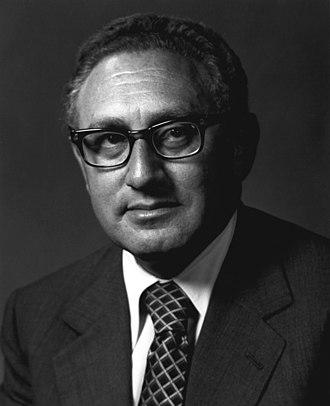
During the Nixon administration, Henry A. Kissinger served as the Assistant to the President for National Security Affairs from January 1969 through the end of Nixon's presidency, acting as the chief architect of U.S. foreign policy. Throughout the White House taping period (February 1971 to July 1973), he was captured extensively on tape advising the president on pivotal events such as the secret opening to China, détente with the Soviet Union, and the negotiation of the Paris Peace Accords. In September 1973, shortly after the taping system was dismantled, Kissinger was additionally appointed as Secretary of State, holding both powerful positions simultaneously until Nixon's resignation in August 1974.
What Kissinger talks about on the tapes
Vietnam War 628Foreign Policy 477Public relations 209People's Republic of China 138Congressional relations 135Diplomacy 122Press relations 92Soviet Union 90Military Strategy 81US-Soviet Relations 75Peace negotiations 74Economic policy 68
Conversations (1,504)
— Page 11 of 16President Nixon and Henry Kissinger met at Camp David to debrief on Kissinger’s recent trip to the People's Republic of China and coordinate strategy for upcoming Vietnam peace negotiations. Kissinger reported positive developments, including China's pressure on North Vietnam to negotiate and the North Vietnamese agreement to resume plenary and private sessions in mid-July. The two also discussed the 1972 election, specifically framing George McGovern's candidacy as a threat to national stability, and reviewed broader foreign policy maneuvers involving the Soviet Union, Iran, and European security.
President Nixon and Henry Kissinger met to analyze the ongoing military situation in Vietnam, specifically focusing on North Vietnamese offensives and South Vietnamese counter-operations. The discussion encompassed political strategy regarding the 1972 election, including criticisms of George McGovern’s defense proposals and the impact of the Watergate scandal on the administration. They also reviewed personnel issues, such as the potential replacement of General John D. Lavelle and staffing for diplomatic posts, while coordinating their messaging for upcoming press engagements.
President Nixon met with Henry Cabot Lodge, Charles Colson, and Henry Kissinger to review recent presidential press coverage, including his return from the Soviet Union and comparisons between George McGovern and Dwight Eisenhower. The discussion focused heavily on Lodge’s diplomatic experiences and personal relationship with the Vatican, particularly concerning the influence and support of American Cardinals. Furthermore, the group evaluated potential future diplomatic appointments for the Lodge family and discussed various strategic administrative staffing assignments.
President Nixon met with Peter Flanigan, Henry Kissinger, George Shultz, and H.R. Haldeman to discuss high-level diplomatic appointments and the restructuring of the Council on International Economic Policy (CIEP). The group deliberated on potential candidates for various ambassadorial posts, specifically evaluating qualifications for assignments in Spain, Pakistan, and other nations. Furthermore, the President provided directives regarding international economic strategy, including concerns over World Bank loans to Iraq and India and the formation of an executive committee to streamline CIEP operations.
President Nixon met with key staff members, including H. R. Haldeman, Henry Kissinger, and Ronald Ziegler, to manage his public schedule and coordinate campaign strategy for the 1972 election. The participants discussed legislative priorities, public relations efforts regarding the economy and Vietnam, and political outreach to counter George McGovern's candidacy. Additionally, the President devoted time to finalizing an article on baseball greats, coordinating with staff to ensure the accuracy of historical statistics and names.
President Nixon and Henry Kissinger discussed the political strategy for communicating potential domestic spending cuts to the public. They emphasized the need to frame these budget adjustments within a comprehensive package to avoid creating a perception of imbalance or unfairness toward specific sectors of society. Nixon stressed the importance of carefully crafting his public responses to maintain a balanced image while addressing economic constraints.
President Nixon and Henry Kissinger discuss strategies for managing federal budget cuts within a comprehensive framework to ensure economic balance. They evaluate the political risks of these fiscal measures, specifically weighing the necessity of unpopular decisions against their potential ineffectiveness. The conversation centers on the implementation of these cuts over a two-year period to mitigate negative impacts on various societal sectors.
President Nixon and Henry Kissinger met to refine strategy and talking points for an upcoming presidential press conference, focusing heavily on the Vietnam War and the Strategic Arms Limitation Treaty (SALT). They discussed how to address sensitive inquiries regarding the bombing of dikes, potential cloud seeding operations, the use of mercenaries, and the current status of North Vietnamese troop deployments. Kissinger provided counsel on managing public perception of these issues while emphasizing the administration's defensive stance on military parity and peace negotiations. The discussion served to prepare the President for likely media scrutiny while coordinating ongoing diplomatic efforts.
President Nixon and Henry Kissinger discuss the status of Vietnam peace negotiations following North Vietnam's apparent acceptance of recent U.S. proposals and indicators of a potential ceasefire. They analyze the political implications of the upcoming trip to Hanoi by journalist Joseph Kraft, with Nixon urging Kissinger to sternly warn Kraft against encouraging the North Vietnamese to wait for a potential victory by George McGovern. Additionally, they criticize the Democratic Party's foreign policy platform as dishonest and disjointed, while coordinating the timing of a forthcoming grain deal announcement with the Soviet Union to maximize political benefit for the President.
President Nixon and Henry Kissinger discuss strategies for managing media coverage of the Vietnam War and orchestrating a potential ceasefire. They specifically analyze how to influence columnist Joe Kraft, intending to pressure him to frame the opposition as responsible for prolonging the war rather than the administration. The President emphasizes that any diplomatic breakthrough or ceasefire must ensure he receives full political credit, specifically instructing Kissinger to manage perceptions of authority leading up to the election.
President Nixon met with H.R. Haldeman and Henry Kissinger to strategize for an upcoming press conference, focusing on Vietnam policy, troop withdrawals, and the handling of persistent Watergate-related questions. The conversation included significant discussion regarding John Mitchell’s resignation as campaign manager and the volatile public behavior of his wife, Martha Mitchell, following the break-in. Additionally, the participants reviewed the President's schedule, pending social security legislation, and internal administrative staffing matters within the White House.
President Nixon met with Charles Colson and Henry Kissinger to coordinate administration messaging and policy strategy. The discussion focused on preparing for an upcoming press conference, specifically regarding Vietnam negotiations, potential troop withdrawal announcements, and the current posture of North Vietnamese negotiators. The participants also consulted polling data and analysis from George Shultz concerning the political impact of economic price controls, particularly among the farming community.
President Nixon and Henry Kissinger met to discuss the legislative hurdles facing the ratification of the Strategic Arms Limitation Treaty (SALT), specifically addressing concerns from political critics like Senators Buckley and Goldwater. The conversation also touched upon the 1972 presidential campaign, the impact of the defense budget, and potential negotiating strategies regarding Vietnam. They focused on refining policy stances for an upcoming press conference, particularly concerning ceasefire conditions and the release of American prisoners of war.
President Nixon and Henry Kissinger met to review the President’s recent press conference, focusing heavily on Vietnam policy, peace negotiations, and the political implications of bombing campaigns. They discussed strategies for managing international arms control, specifically regarding submarine and ABM costs in coordination with Anatoliy Dobrynin. Furthermore, the two evaluated a broad array of foreign and domestic policy issues, including welfare reform, NATO, and the administration’s legislative agenda, while also touching upon recent internal administration personnel matters.
President Nixon, Henry Kissinger, and Alexander Haig met to review recent sensitive negotiations regarding the Vietnam War, including Kissinger's secret meetings with North Vietnamese negotiator Le Duc Tho. The discussion focused on evaluating North Vietnamese diplomatic maneuvering, the political impact of the upcoming 1972 election, and the administration's strategic posture toward the Soviet Union and China. Nixon and Kissinger also addressed concerns about the George McGovern campaign and debated how to manage international perceptions of U.S. foreign policy in Europe and the Middle East.
President Nixon and Henry Kissinger met to discuss the political implications of providing a security briefing to Democratic presidential candidate George McGovern. They evaluated the potential strategic impact of this action in light of concerns raised by H.R. Haldeman. Ultimately, the two men deliberated on whether to grant the request, weighing the political benefits and risks associated with engaging the opposition.
President Nixon and Henry Kissinger discussed sensitive foreign policy strategies, including the handling of negotiations with Armand Hammer and the management of sensitive documents to avoid bureaucratic leaks. They also analyzed the status of the Vietnam War, concluding that time was working against North Vietnam and that a potential diplomatic deal prior to the 1972 election remained a strategic possibility. Finally, they reviewed briefing arrangements for George McGovern, agreeing on the necessity of maintaining control over the process to avoid political pitfalls.
President Nixon met with H.R. Haldeman, Charles Colson, and Henry Kissinger to discuss sensitive political and national security matters, specifically the ongoing Watergate investigation and Vietnam peace negotiations. The group reviewed the potential for indictments involving Jeb Stuart Magruder and examined the strategic handling of federal investigations to protect the White House from entanglement. Additionally, the President and Kissinger discussed managing domestic opposition to the war, coordinating press strategy, and preparing for an upcoming meeting with congressional leaders regarding Vietnam.
President Nixon and Henry Kissinger discussed legislative and political strategies regarding the Vietnam War, specifically focusing on the potential passage of the Mansfield Amendment and its impact on ongoing peace negotiations. Kissinger provided a report on his recent interactions with Senator Mike Mansfield and Eugene McCarthy, noting their willingness to assist the administration. The conversation also covered upcoming diplomatic trips to Moscow and Japan, concerns over negative media coverage of bombing raids, and a review of recent polling data concerning the 1972 election and Senator George McGovern's platform.
President Nixon and Henry Kissinger discussed political strategy, including coordinating with John B. Connally regarding his upcoming media appearance and his appointment to the President’s Foreign Intelligence Advisory Board. They also reviewed ongoing military operations in Vietnam, agreeing that U.S. air power and B-52 strikes were successfully depleting North Vietnamese forces. Additionally, the pair strategized on how to counter potential campaign attacks from George McGovern concerning U.S. casualties, specifically by emphasizing that a significant portion of fatalities occurred during the previous administration.
President Nixon and Henry Kissinger discussed strategic communication tactics regarding the administration’s handling of political opponents and foreign policy optics. The discussion focused on coordinating messaging for an upcoming media appearance by John Connally, specifically regarding his potential appointments to advisory boards and his response to political inquiries. Furthermore, the two men addressed the necessity of maintaining a firm public stance against political criticism concerning the Vietnam War and the deployment of naval assets.
President Nixon and H. R. Haldeman met at Camp David to conduct a comprehensive review of the 1972 reelection campaign strategy. They discussed tactical decisions, including the refusal to debate George McGovern, the use of Clark MacGregor as a campaign surrogate, and managing media appearances to avoid providing McGovern with excessive national exposure. Additionally, they reviewed potential personnel changes within the administration and the Secret Service, and evaluated polling data regarding key states and voter attitudes toward campaign issues.
President Nixon and Henry Kissinger discussed whether to grant a meeting request from representatives of the Baltic republics, a move both men feared would provoke a hostile reaction from the Soviet Union. Nixon expressed his strong preference against a presidential audience, citing recent geopolitical tensions involving Lithuania. The two agreed that the meeting should be deferred to Vice President Spiro Agnew to maintain diplomatic discretion while still acknowledging the petitioners.
President Nixon dictates a memorandum to H. R. Haldeman and Henry Kissinger regarding follow-up actions from his recent discussion with Ronald Reagan, including potential adjustments to U.S. policy on Irish Airlines. The President also outlines strategic objectives for upcoming meetings with foreign leaders, specifically emphasizing the need for a unified Western stance on nuclear defense and European security ahead of negotiations with the Soviet Union. To manage his schedule, Nixon directs staff to limit foreign minister meetings, suggesting that his engagement with Sir Alec Douglas-Home be handled via a casual breakfast or a private trip on the presidential yacht, Sequoia.
President Nixon and Henry Kissinger met at Camp David to discuss ongoing military and diplomatic strategies, specifically focusing on the Vietnam War. A primary concern for the President was ensuring that U.S. forces avoid a public defeat, as he emphasized that while a tactical retreat is acceptable, any perceived loss would be politically damaging to domestic support. They also touched upon international diplomatic scheduling, including potential meetings with Italian leadership and managing trade negotiations to ensure positive outcomes prior to future summits.
President Nixon and Henry Kissinger discussed the potential political and military fallout of Senator George McGovern's campaign statements, specifically his proposals to cut foreign aid to Greece and withdraw U.S. troops from Thailand. They transitioned to logistical planning for an upcoming summit with Japanese Prime Minister Kakuei Tanaka, emphasizing the need for a private communication channel to bypass bureaucratic leaks. Finally, they addressed the volatile military situation in South Vietnam, agreeing that South Vietnamese forces should consider a tactical retreat from Quang Tri to avoid a potentially devastating defeat that could undermine ongoing peace negotiations.
President Nixon and Henry Kissinger briefly coordinated Kissinger's upcoming schedule regarding meetings with Secretary of Defense Melvin Laird and Admiral Thomas Moorer. The President instructed Kissinger to postpone his discussions with Laird until later in the year when his workload permitted. This short exchange served primarily to manage the National Security Advisor's executive calendar amid ongoing administrative priorities.
President Nixon consulted with Henry Kissinger regarding the Vietnam War, foreign policy, and campaign-related fundraising issues. Nixon also held a telephone conversation with former President Lyndon B. Johnson to ensure that members of Johnson's circle would not be embarrassed by their potential support for John Connally's pro-Nixon Democratic fundraising organization. The discussion with Johnson further touched on providing security and diplomatic courtesies for upcoming travel by Lady Bird and Luci B. Johnson, as well as acknowledging the quiet support Johnson had provided the administration on critical national security matters.
President Nixon and Henry Kissinger met to coordinate administrative logistics and manage scheduling priorities. The discussion focused on the management of Kissinger's upcoming agenda and professional obligations. No major policy shifts or strategic decisions were recorded during this brief administrative exchange.
President Nixon and Henry Kissinger met to discuss strategies for the 1972 election, focusing heavily on managing political opposition and framing the Vietnam War as a campaign asset. They reviewed potential diplomatic maneuvers, including a revised proposal for North Vietnam and approaches to Middle East tensions following the expulsion of Soviet advisors from Egypt. Nixon expressed deep frustration with the United Nations and the bureaucracy, directing Kissinger to adopt a colder, dismissive tone toward UN leadership and to initiate a post-election effort to purge unsupportive officials from the government.
President Nixon and Henry Kissinger discussed the ongoing Vietnam conflict, emphasizing the necessity of using sufficient force to counter North Vietnamese aggression. The pair also addressed trade negotiations with Japan, expressing frustration over public comments made by staff member Everly regarding the talks' progress. Nixon directed that administration officials maintain discretion with the press and ordered better preparation for upcoming trade discussions.
President Nixon met with H.R. Haldeman, Ronald Ziegler, and other staff members to strategize for the 1972 presidential campaign, specifically focusing on fundraising, speech preparation for the Republican National Convention, and managing press relations. They discussed the political fallout surrounding the Thomas Eagleton health controversy, the management of the Committee to Re-elect the President, and the ongoing investigation into the Watergate break-in. Nixon emphasized the importance of maintaining a presidential posture during press conferences while utilizing staff to counterattack the opposition on issues of incompetence and foreign policy.
President Nixon met with various staff members and officials to discuss a wide array of administrative, foreign policy, and political matters. The President reviewed his upcoming schedule and foreign affairs, including a review of the House Foreign Affairs Committee's narrow vote to mandate a U.S. military withdrawal from Vietnam. Additionally, H. R. Haldeman coordinated with the President and Vice President Agnew to enforce a strict no-comment policy regarding the personal affairs of Thomas Eagleton, while discussions also touched on campaign strategy and potential coordination with George Wallace's associates.
President Nixon met with his staff and advisors to review his recent press conference, assessing its effectiveness in countering criticism of his Vietnam policy and the perceived "double standard" of his critics. Nixon and his team discussed strategies to further neutralize opposition, including coordinating public relations efforts against negative media coverage and managing congressional resistance to his war policy. The President also reviewed his upcoming schedule, including golf outings and social engagements, while coordinating sensitive communication channels with key political allies like John Connally.
President Nixon held a series of brief, disconnected meetings and calls with Alexander P. Butterfield, Charles W. Colson, and Henry A. Kissinger. The discussions centered on internal scheduling logistics, including a request for a meeting between the President and Senator Hugh Scott. The participants coordinated administrative items related to the President's upcoming agenda.
President Nixon and Henry Kissinger discussed the political fallout and public reception of the President's press conference held earlier that day, specifically addressing comments regarding the bombing of North Vietnam and the targeting of dikes. The two evaluated the President's performance, compared historical precedents for the vice presidency, and touched upon political concerns involving Senator Hugh Scott and other congressional relations. Additionally, they reviewed the ongoing military situation in South Vietnam, including casualty counts and the impact of the conflict on future peace negotiations.
President Nixon, H. R. Haldeman, and Henry Kissinger met to coordinate the President's upcoming travel to Louisiana for the funeral of Senator Allen J. Ellender and to manage Congressional pressure regarding Vietnam peace negotiations. Nixon and Kissinger strategized on how to leverage the funeral to build bipartisan political support, while Kissinger updated the President on diplomatic efforts with British officials and observations from W. Averell Harriman regarding the 1972 election. The group concluded by emphasizing the need for a cautious public posture on Vietnam to prevent Congressional interference from undermining ongoing sensitive negotiations.
President Nixon met with his senior aides and advisors to manage his political schedule and address several pressing crises, including the 1972 presidential campaign, the Watergate investigation, and military policy in Vietnam. The group strategized on how to deflect negative press coverage, particularly concerning Senator Thomas Eagleton's status on the Democratic ticket, and sought to minimize the political fallout from the impending Watergate grand jury indictments by favoring legal delays until after the election. Additionally, they coordinated a messaging strategy to have the State Department, rather than the Defense Department, provide briefings on North Vietnamese dike bombings to maintain greater public credibility.
President Nixon met with Alexander Butterfield, H.R. Haldeman, Stephen Bull, Henry Kissinger, and James Eastland to address several administrative and political matters. The President instructed Butterfield to modify Secret Service protocols for Tricia Nixon Cox, emphasizing a desire for less intrusive protection during unannounced personal activities. Nixon also reviewed political developments regarding Thomas Eagleton’s status on the Democratic ticket and consulted with Kissinger on ongoing US-Soviet diplomatic relations and SALT negotiations. Additionally, Nixon coordinated travel arrangements with Senator Eastland to attend the funeral of Senator Allen Ellender.
President Nixon met with the Earl of Cromer, Sir Burke Trend, and Henry Kissinger to coordinate Western strategy regarding the upcoming European Security Conference and ongoing concerns about European nuclear planning. Nixon emphasized the necessity of maintaining a unified front with Britain, France, and West Germany to prevent the Soviet Union from exploiting potential divisions or illusions of détente. The discussion also addressed the international monetary situation, the importance of maintaining U.S. defense commitments despite domestic political pressure from the 1972 campaign, and the need for private diplomatic channels to manage these complex alliances.
President Nixon and Henry Kissinger discussed the military situation in Vietnam, focusing on defensive maneuvers near Firebase Birmingham and the administration's frustration with media coverage regarding the bombing of dikes. They also addressed concerns over unauthorized public comments made by trade negotiator William D. Eberle regarding upcoming negotiations with Japanese Prime Minister Kakuei Tanaka. Nixon instructed Kissinger to investigate the status of these trade talks and to better prepare for the summit to ensure substantive results.
President Nixon and Henry Kissinger met to evaluate progress in Vietnam negotiations following a complex and lengthy session in Paris. Kissinger detailed a significant shift in the North Vietnamese position, including their newfound willingness to negotiate directly with the Saigon government and the abandonment of fixed withdrawal deadlines. While noting that the current proposal remains unacceptable, they discussed using these negotiations to create an appearance of imminent peace to benefit Nixon’s reelection campaign, while simultaneously planning to maintain pressure and avoid a perceived "sellout." The conversation also touched upon broader foreign policy, including potential Middle East diplomacy and trade agreements with the Soviet Union.
President Nixon, H.R. Haldeman, and Henry Kissinger discuss strategies for maintaining Senate support for the administration’s Vietnam policy, specifically regarding an amendment sponsored by Senator George D. Aiken. Nixon and Kissinger emphasize the sensitivity of ongoing Paris peace negotiations and the necessity of preventing congressional interference that might undercut their diplomatic leverage. The participants also coordinate the President’s upcoming schedule, including logistical details for a potential weekend trip to the McCabe residence and medical arrangements involving Dr. W. Kenneth Riland.
President Nixon and Henry Kissinger coordinated with Senator George D. Aiken regarding the tactical implications of his proposed congressional amendment amidst ongoing secret peace negotiations with North Vietnam. The participants discussed the risk that the amendment might inadvertently signal weakness or encourage North Vietnamese stalling tactics, specifically emphasizing the need for a unified front against competing legislative efforts like the Brooke substitute. Ultimately, the administration sought to balance Aiken's support for the President's policy with the necessity of maintaining diplomatic leverage and preventing premature funding cutoffs that could undermine the peace process.
President Nixon and Henry Kissinger discussed the complexities of managing Vietnam peace negotiations while navigating domestic political pressures, specifically focusing on the Brooke amendment and growing Congressional skepticism. They debated the necessity of maintaining secrecy in private negotiating channels to avoid premature disclosure, which could undermine the Administration's leverage and exacerbate opposition from Congressional liberals. Ultimately, they resolved to continue pressuring North Vietnam while balancing the need to retain enough political support to avoid a legislative collapse during the 1972 election year.
In this meeting, President Nixon consulted with Alexander Butterfield and Henry Kissinger regarding logistics for his upcoming trip to Hawaii, which included plans for Admiral John S. McCain Jr.'s retirement ceremony and potential events with Clare Boothe Luce. The President and Kissinger also discussed domestic administration policy concerning the debt ceiling and frustrations regarding Secretary of Defense Melvin Laird’s public messaging. Finally, they reviewed sensitive foreign policy strategy, specifically coordinating with the People’s Republic of China regarding the Soviet Union and negotiating a potential path forward in Vietnam.
President Nixon met with H.R. Haldeman, Charles Colson, and Henry Kissinger to coordinate administration strategy regarding the 1972 reelection campaign, foreign policy outreach, and logistical planning for upcoming domestic travel. The group discussed utilizing surrogate outreach to build bipartisan support for the Strategic Arms Limitation Treaty (SALT) and managing the President's visits to flood-stricken areas in Wilkes-Barre and Elmira to highlight disaster relief legislation. Additionally, Nixon emphasized the need for aggressive political tactics—specifically the use of derogatory campaign literature linking opponents to George McGovern—and reviewed economic data concerning food prices and inflation with his staff.
President Nixon, along with advisors Kissinger, Haldeman, Ehrlichman, and Colson, discussed several key issues. They addressed concerns about the Strategic Arms Limitation Treaty (SALT) and potential congressional amendments, particularly from Senator Jackson, and debated strategies for managing these reservations with the Soviets. The conversation also delved into economic matters, focusing on rising food prices, the potential for a price freeze on hides and other goods, and the political implications of these economic trends. Additionally, the group touched upon the Arthur Bremer assassination attempt and its potential political fallout, as well as the upcoming presidential schedule involving youth and women leaders.
President Nixon, Henry Kissinger, and General Andrew Goodpaster met to discuss the strategic landscape of NATO, European security, and the necessity of maintaining a unified Atlantic alliance amidst potential political shifts. Goodpaster provided an assessment of European confidence in the United States, emphasizing the importance of continued U.S. force presence and the 'formula of comparable effort' to counter Soviet influence and prevent the 'Finlandization' of Europe. The President stressed that while the administration would continue to engage in diplomatic negotiations with the Soviet Union, it remained committed to a strong NATO, and he expressed frustration regarding European leaders' public hedging and the negative influence of domestic 'doves' on U.S. foreign policy.
President Nixon and Henry Kissinger met briefly in the Oval Office to coordinate their schedules and internal communications. The discussion centered on the preparation and review of a summary report regarding an ambassador. This brief exchange served as a logistical touchpoint to ensure the President was briefed on diplomatic documentation.
President Nixon met with John Ehrlichman and Henry Kissinger to refine the guest list and agenda for an upcoming Cabinet dinner, emphasizing the need to limit attendance to substantive advisors while managing political optics. Following these domestic discussions, the President and Kissinger reviewed ongoing foreign policy challenges, specifically exploring options for Vietnam peace negotiations and strategies to handle potential trade agreements with Japan. Nixon expressed a desire for a firm, principled approach to the Vietnam conflict, explicitly rejecting weak concessions and directing staff to maintain strict confidentiality regarding the sensitive status of these negotiations.
President Nixon, Henry Kissinger, and Arthur Burns coordinated the scheduling of a meeting between the President and Soviet Minister of Health Boris V. Petrovsky. The discussion focused on aligning the arrival of the Soviet official from Los Angeles with the President's upcoming departure for Camp David. Kissinger ultimately confirmed that a 15-minute window would be secured for the meeting on Wednesday before Petrovsky's scheduled return to the Soviet Union.
Henry A. Kissinger and Richard K. Cook discussed legislative strategy regarding a proposal to end the Vietnam War. They focused on coordinating with Republican leadership, specifically reviewing Cook’s recent consultations with Gerald R. Ford and Leslie C. Arends. The discussion aimed to align these legislative efforts with the President’s upcoming schedule and forecast potential congressional support.
President Nixon and Henry Kissinger discussed how to handle a request from Democratic presidential candidate George McGovern for foreign policy briefings. They decided to rebuff McGovern's specific demands—which they viewed as a political trap—by having staff facilitate the briefings at a lower level to avoid elevating the candidate's stature. The conversation also touched upon the political implications of Vietnam negotiations, frustration with Republican congressional "doves," and plans for an extensive post-election purge of personnel within the State Department, Defense Department, and CIA.
President Nixon consulted with Stephen B. Bull and Henry A. Kissinger regarding logistical arrangements for an upcoming trip to Camp David. The discussion focused on coordinating the departure schedule and the specific timing of helicopter transportation. No major policy decisions were reached, as the conversation served primarily to finalize travel logistics.
President Nixon met with Soviet Health Minister Boris V. Petrovsky, Ambassador Anatoliy F. Dobrynin, and Secretary of Health, Education, and Welfare Elliot L. Richardson to discuss international cooperation in medical research. The participants highlighted the importance of collaborative initiatives regarding cancer, cardiovascular diseases, and infectious diseases as a non-controversial bridge for broader U.S.-Soviet relations. The discussion also touched upon the health of Soviet leadership, the benefits of mandatory vacation policies for officials, and the potential for shared medical advancements to benefit humanity.
President Nixon met with key staff members, including H. R. Haldeman, John Ehrlichman, and Henry Kissinger, to coordinate administration messaging and political strategy ahead of the Republican National Convention. The discussion focused on managing media relations, attacking political opponent George McGovern—specifically regarding his potential appointment of Ramsey Clark as FBI director—and handling the resignation of Sargent Shriver. The President also reviewed progress on revenue sharing legislation, the administration's stance on busing, and ongoing diplomatic efforts concerning Vietnam and U.S.-Soviet relations.
President Nixon met with Henry Kissinger, Peter Flanigan, and Peter Peterson to discuss the status and strategic negotiation tactics for ongoing U.S.-Soviet trade agreements, including Lend-Lease settlements and potential gas deals. The participants analyzed how to leverage these economic discussions as bargaining chips while managing domestic political concerns, including the 1972 election and Congressional relations. Nixon directed the team to prepare concrete options for his review and emphasized that the administration should maintain a public appearance of optimism regarding the eventual conclusion of these agreements. Additionally, the group briefly touched upon trade interests involving Japan, Cuba-related maritime issues, and diplomatic gestures toward Poland.
President Nixon and Henry Kissinger discuss logistics for an upcoming trip and review ongoing foreign policy matters, specifically concerning Vietnam and Soviet-Egyptian relations. They analyze the risks associated with Ramsey Clark’s trip to North Vietnam and potential North Vietnamese attempts to influence the 1972 U.S. election by leveraging prisoner-of-war negotiations. Kissinger provides an intelligence update on North Vietnamese military attrition, suggesting that significant losses may hinder Hanoi's ability to launch a major offensive in October.
President Nixon and Henry Kissinger met at Camp David to review and refine the draft of the President's upcoming acceptance speech. The discussion focused on sharpening the rhetoric regarding foreign policy, specifically addressing Vietnam troop levels, the status of draft evaders, and the necessity of maintaining bipartisan support for international allies. They made several editorial adjustments to emphasize the administration's achievements, including the cessation of drafting men for combat and the pursuit of historic foreign policy initiatives despite the complexities of the war.
President Nixon, Charles Colson, and Henry Kissinger discuss George McGovern's recent interview, in which the Democratic candidate advocated for a communist-dominated coalition government in South Vietnam. The participants express disbelief at McGovern's political strategy, labeling his comments as extreme and amateurish, while predicting that such rhetoric will alienate voters. Nixon encourages Colson to bolster Kissinger's morale following recent public attacks, viewing the opposition's focus on his aides as a sign of desperation.
President Nixon met with Charles Colson and Henry Kissinger at Camp David to conduct a detailed review and refinement of his upcoming acceptance speech. The discussion focused on sharpening the address's rhetoric regarding defense spending, the necessity of negotiating from a position of strength, and contrasting the administration's vision against the platform of George McGovern. Additionally, the participants deliberated on the inclusion of the 'peace dividend' concept and agreed to excise certain segments to ensure the speech maintained a strong, patriotic, and positive tone.
President Nixon and Henry Kissinger met at Camp David to refine the closing remarks for Nixon's upcoming presidential nomination acceptance speech. They evaluated draft language, critiquing specific segments for sounding too "professorial" or "maudlin" while discussing the need to project a confident, strong, and forward-looking image. Ultimately, the two agreed on a rhetorical strategy that contrasted Nixon’s optimism against the perceived "whining" and frustration of his opponent, George McGovern.
President Nixon and Henry Kissinger discussed a proposal from Richard Goodwin to use figures like Eugene McCarthy or Edward Kennedy to communicate with the North Vietnamese regarding peace negotiations. Nixon dismissed involving Kennedy but agreed to have Kissinger potentially use McCarthy to emphasize the necessity of settling the war before the U.S. election. The two also addressed political strategies against George McGovern, refinements to the President’s upcoming acceptance speech, and their determination to reject calls for a unilateral bombing halt in Vietnam.
President Nixon and Henry Kissinger discussed the political landscape surrounding the 1972 election, including potential critiques from figures like Eugene McCarthy and the administration's strategic response. The conversation focused on refining the rhetoric for an upcoming presidential speech, with Nixon emphasizing a shift away from specific domestic policy promises in favor of broader, more cautious language. Additionally, Nixon firmly rejected the possibility of a bombing halt in Vietnam prior to the election, arguing that such a move would be strategically counterproductive and misaligned with public sentiment.
President Nixon and Henry Kissinger consulted regarding the rhetoric and messaging for the President’s upcoming acceptance speech, specifically addressing the number of draft evaders in Canada and the terminology used to describe U.S. foreign relations with allies in Europe, Asia, and Latin America. They further refined the language concerning the South Vietnamese military's defensive capabilities to ensure accuracy regarding the continued necessity of U.S. air support. Additionally, Kissinger provided a brief intelligence update on Soviet and Chinese attitudes toward the Vietnam War, noting that both nations are increasingly motivated to see a settlement reached.
President Nixon and Henry Kissinger reviewed specific language for an upcoming address, focusing on political messaging and foreign policy rhetoric. The pair finalized the phrasing regarding draft evaders and debated how to characterize U.S. relationships with various global regions to ensure diplomatic inclusion. They also reached a consensus on the wording used to describe South Vietnam's military capacity to resist enemy offensives.
President Nixon met with Henry Kissinger, William Rogers, Alexander Haig, and other advisors to coordinate the administration’s response to the terrorist murder of Israeli athletes at the Munich Olympics. The discussion focused on balancing a display of international concern and U.S. empathy with the need to avoid politicizing the games or creating a precedent for national mourning that could be exploited. Nixon decided against a formal national day of mourning but agreed to monitor the situation closely, coordinate with Israeli officials, and seek potential international action against states that harbor terrorist organizations through the UN Security Council.
President Nixon met with Henry Kissinger, H.R. Haldeman, and other staff to coordinate the administration's response to the murders of Israeli athletes at the Munich Olympics, prioritizing public diplomacy and private US support for Israel. The participants also strategized on the 1972 presidential campaign, focusing on delegating attacks against George McGovern to surrogates while emphasizing positive administration accomplishments. Finally, the group discussed ongoing foreign policy objectives, including Kissinger’s upcoming trip to Moscow and potential Vietnam peace negotiation tactics to ensure favorable optics for the election.
President Nixon and Henry Kissinger discussed a range of foreign policy and administrative issues, focusing on the U.S. approach to the recent murder of Israeli athletes at the Munich Olympics and the resulting diplomatic tensions. They coordinated strategy for Kissinger’s upcoming trip to Moscow, aiming to secure agreements on trade and security issues while ensuring the President receives credit for diplomatic breakthroughs. Additionally, the pair engaged in preliminary post-election planning, emphasizing the President's desire to overhaul personnel in the State Department and other key agencies to ensure greater loyalty and alignment with his administration's goals.
President Nixon met with Henry Kissinger and General Marader Panggabean of Indonesia to reinforce the United States' commitment to Indonesian security and military strength in Southeast Asia. Nixon identified Indonesia as a critical strategic partner against communist expansion and promised continued support, noting that formalizing specific military aid requests should be deferred until after the 1972 election to avoid political controversy in Congress. The meeting included a ceremonial photograph session and the exchange of presidential gifts, underscoring the personal and diplomatic ties between the two nations.
President Nixon and Henry Kissinger met to coordinate foreign policy strategies and political messaging leading up to the 1972 election. They discussed the administration's response to the Munich Olympic massacre, secret negotiations with Egypt, and the management of a proposed bipartisan delegation to the People's Republic of China. Additionally, the two finalized plans for upcoming Soviet relations, including high-level visits by Andrei Gromyko, prospective trade agreements, and the timing of announcements for SALT II and other diplomatic initiatives to maximize domestic political impact.
President Nixon met with Henry Kissinger and Alexander Haig to review breakthroughs in Soviet-American diplomacy, specifically the consolidation of trade and Lend-Lease negotiations into a single comprehensive package. Kissinger outlined successful efforts to secure Soviet cooperation on commercial agreements and timelines for European Security Conference and Mutual and Balanced Force Reductions (MBFR) talks, effectively bypassing standard State Department channels. The group also discussed the management of these announcements to maximize political credit for the President while minimizing potential leaks from Secretary of State William Rogers or other officials. Additionally, Kissinger provided a brief update on the shift in attitude observed during recent Vietnam peace negotiations.
President Nixon met with Henry Kissinger and Alexander Haig to evaluate the status of ongoing Vietnam peace negotiations following Kissinger’s discussions with North Vietnamese representative Le Duc Tho. The group assessed North Vietnam’s potential willingness to reach a settlement before the 1972 presidential election, while weighing the impact on South Vietnamese President Nguyen Van Thieu and domestic political considerations. Additionally, they reviewed progress on various U.S.-Soviet agreements, including trade, maritime, and arms control issues, to ensure timely coordination and public announcement strategies.
President Nixon and his advisors met to coordinate upcoming foreign policy announcements, specifically focusing on the timing of SALT II, maritime agreements, and trade deals with the Soviet Union to maximize domestic political impact. The President instructed H.R. Haldeman to identify and fire any staff members responsible for leaking CIA documents, while also assessing potential personnel changes for his second term. Additionally, Henry Kissinger briefed the President on ongoing secret peace negotiations with North Vietnam, discussing the scheduling of talks to avoid undermining the President's public appearances.
President Nixon met with H.R. Haldeman, Henry Kissinger, and other staff to discuss the messaging for upcoming speeches, particularly regarding international narcotics control and the administration's broader foreign policy achievements. The participants reviewed the status of Vietnam peace negotiations, the implications of Watergate-related news coverage, and the political necessity of contrasting Nixon's record against George McGovern's platform. Furthermore, Nixon and Kissinger strategized on diplomatic maneuvers concerning the Middle East, specifically addressing Israeli military actions in Lebanon and the need to maintain strong U.S. influence in international affairs.
President Nixon and Henry Kissinger met to coordinate the security and public messaging surrounding upcoming secret negotiations with North Vietnamese officials. They discussed the timing of these meetings in relation to Nixon's IMF speech and his re-election campaign, while also considering how to manage media inquiries and leaks regarding these diplomatic efforts. The pair consulted with Stephen B. Bull regarding the President's schedule to ensure these sensitive discussions remained prioritized and secure.
President Nixon met with Polish Foreign Minister Stefan Olszowski, Witold Trampczynski, and U.S. officials to discuss strengthening bilateral trade, scientific cooperation, and Poland's role in European security. The conversation touched upon the upcoming 1972 U.S. election, with the Polish delegation expressing support for Nixon's reelection. Additionally, the participants discussed Olszowski's recent, difficult negotiations with North Vietnamese representatives and the potential impact of the U.S. election results on the Vietnam peace process.
President Nixon met with George H.W. Bush, William Rogers, and Henry Kissinger to coordinate strategy regarding upcoming United Nations General Assembly issues, specifically focusing on international terrorism, the grain deal with the Soviet Union, and Soviet-Jewish emigration. They discussed the complexities of managing foreign policy while considering domestic political ramifications ahead of the 1972 election. The participants also reviewed security protocols for diplomats in Washington and coordinated the President’s upcoming diplomatic schedule with various international leaders.
President Nixon met with Marion Scully to discuss her background, her work in occupational therapy, and her family's connection to Ireland. The meeting included a brief photo opportunity on the Oval Office patio involving Henry Kissinger, the President’s Irish setter, King Timahoe, and handler Manolo Sanchez. The session concluded with the President presenting commemorative gifts, including Presidential seal pins and cufflinks, to Scully and her family members.
President Nixon met with Henry Kissinger and Stephen B. Bull to coordinate the National Security Advisor's upcoming schedule. The discussion focused on managing the logistical arrangements and priorities for Kissinger's ongoing activities. This meeting served to align the administrative support provided by Bull with the President’s strategic agenda regarding Kissinger's travel and engagements.
President Nixon and Henry Kissinger met to discuss several pressing foreign policy matters and campaign issues ahead of the 1972 election. They reviewed the status of U.S.-Soviet trade negotiations, the war in Vietnam, and the political implications of handling both the media and opposition figures like George McGovern. Kissinger provided updates on his upcoming diplomatic schedule, including meetings with Yitzhak Rabin and North Vietnamese officials, while both men expressed frustration with the liberal press and certain elements of the American Jewish community regarding their administration's foreign policy objectives.
President Nixon met with Charles Colson, John Ehrlichman, and Henry Kissinger to refine the 1972 reelection campaign strategy. The participants prioritized keeping the focus on national security and foreign policy while framing George McGovern's shifting positions as evidence of poor character and lack of trustworthiness. They also discussed attacking the financial disclosures of the Kennedy family and McGovern’s campaign to create a political liability for their opponents, while Nixon instructed his staff to focus on positive foreign policy outreach with international leaders.
President Nixon met with key advisors and political allies to strategize on the 1972 presidential campaign, the legislative handling of the Office of Economic Opportunity (OEO) bill, and security concerns regarding Henry Kissinger. The group discussed the political advisability of vetoing the OEO and water bills, emphasizing fiscal responsibility, and explored campaign messaging tactics, including the use of "mini-documentaries" highlighting the President's foreign policy achievements. A significant development was the focus on producing television spots that frame the President's leadership as nonpartisan and statesmanlike, contrasting his record with that of Senator George McGovern.
President Nixon met with Stephen B. Bull and Rose Mary Woods to discuss the feasibility of hosting a performance by members of the Bohemian Grove at the White House. While acknowledging that Secret Service security requirements and presidential duties preclude his personal attendance at the Grove's events, Nixon enthusiastically supported the idea of inviting the group to perform in the East Room after the 1973 inauguration. The discussion focused on the logistics of the event, including dinner arrangements and the potential for a themed campfire-style production.
President Nixon and Henry Kissinger met to discuss strategies for managing international relations and domestic political optics ahead of the 1972 election. They reviewed plans to use cultural exchanges with the People's Republic of China to boost the President's image, addressed the need for more effective, personalized presidential correspondence, and strategized on personnel changes to neutralize bureaucratic opposition within the Arms Control and Disarmament Agency and the State Department. Furthermore, they coordinated efforts to manage Jewish leaders and Israeli officials regarding regional stability, terrorism concerns, and military aid, while also planning to publicly condemn the exploitation of American prisoners of war by anti-war activists.
President Nixon and Henry Kissinger met to discuss managing domestic political pressure from Jewish organizations regarding Soviet emigration policies in the context of broader US-Soviet trade negotiations. Kissinger advised against the President directly calling activists, suggesting instead that they facilitate meetings between those groups and Secretary of State William Rogers to keep the administration at a distance. The pair also criticized what they perceived as a hypocritical double standard in American foreign policy and media coverage regarding human rights crises in Burundi, Pakistan, and Bangladesh, ultimately deciding to recall the U.S. Ambassador to Burundi.
President Nixon expressed strong dissatisfaction to Henry Kissinger regarding the State Department’s passive response to political violence in Uganda and Burundi. Decrying what he perceived as a double standard in dealing with African regimes, Nixon ordered the immediate evacuation of all Americans from Uganda and demanded the recall of U.S. Ambassador Thomas Patrick Melady. He further directed that the Burundi ambassador be expelled, signaling a shift toward more aggressive diplomatic actions in the region.
President Nixon and Henry Kissinger discussed a range of foreign policy issues, beginning with concerns about a decline in Vietnam bombing sorties, which Nixon ordered to be investigated by the Joint Chiefs of Staff. They also reviewed diplomatic maneuvers regarding North Vietnam, the status of POWs, and the President’s upcoming meeting with Jewish leaders in New York to address concerns about Israel and Soviet emigration policy. Additionally, Nixon expressed deep frustration with the State Department's handling of the mass killings in Burundi and demanded a comprehensive report on the situation.
President Nixon and Henry Kissinger discuss domestic political strategy ahead of the 1972 election, focusing on managing relations with Jewish leaders and neutralizing political opponents. The conversation also addresses frustrations regarding military operations, with Nixon demanding a full investigation into low sortie counts in Vietnam. Furthermore, Nixon expresses deep concern over the mass killings in Burundi and orders an urgent report, criticizing the State Department’s perceived indifference toward the humanitarian crisis.
President Nixon and Henry Kissinger discuss concerns regarding the safety of British citizens in Uganda amid political instability and the potential for a massacre. Nixon expresses deep frustration with the State Department's perceived pro-African bias and lack of transparency, particularly regarding atrocities in Burundi and past policy failures in Nigeria. To address the crisis, they decide to coordinate a secret, low-key logistics and evacuation plan with the British via General Andrew Goodpaster and a civilian Defense Department official, while also planning to gather intelligence from the Belgian ambassador.
President Nixon and Henry Kissinger discuss strategies for addressing instability in Uganda and the humanitarian crisis in Burundi, reflecting Nixon's intense frustration with the Department of State's perceived bias and lack of communication. Nixon directs Kissinger to coordinate secret contingency planning with the British to ensure the safety of foreign nationals in Uganda and to obtain an independent, private assessment of the situation in Burundi from the Belgian ambassador. Additionally, Nixon expresses deep irritation regarding leaks from the Arms Control and Disarmament Agency, promising to purge the bureaucracy following the upcoming election.
President Nixon and Henry Kissinger met to discuss managing the public narrative regarding North Vietnam's recent release of three American prisoners of war (POWs). Nixon directed his staff to counter George McGovern's criticisms by presenting the facts through press secretary Ron Ziegler rather than engaging in direct political combat. Additionally, the pair coordinated future diplomatic and military strategy, with Kissinger outlining his plan to warn North Vietnamese negotiators that continued exploitation of POWs for propaganda would result in severe U.S. repercussions, including intensified bombing campaigns post-election.
President Nixon met with Ronald Ziegler and Henry Kissinger to coordinate public messaging, campaign strategy, and foreign policy initiatives. They finalized plans for a Cabinet-level anti-terrorism committee to bolster the administration's image ahead of the President's meeting with Jewish leaders. Additionally, they strategized on how to address the 1972 election, emphasizing a disciplined response to George McGovern's comments on POWs and reinforcing the President’s commitment to supporting Israel through arms policy rather than public rhetoric.
President Nixon, Henry Kissinger, and Maurice Schumann met to coordinate diplomatic strategy regarding the Vietnam War and US-French relations. The discussion focused on the ongoing Paris Peace Talks, with Nixon and Kissinger emphasizing that they were approaching the limit of possible concessions before the upcoming presidential election. They expressed a desire to resolve the conflict to pivot the administration’s focus toward strengthening the Atlantic community and broader foreign policy goals in 1973. Additionally, they reviewed technical aspects of monetary policy and the potential for increased cooperation with France in facilitating a diplomatic breakthrough with North Vietnam.
President Nixon and Henry Kissinger met to discuss the strategic status of the ongoing Vietnam peace negotiations and the upcoming trip of General Alexander Haig to consult with South Vietnamese President Nguyen Van Thieu. The discussion focused on navigating complex political scenarios, including the potential for Thieu's resignation and the tension surrounding proposed changes to the South Vietnamese constitution and electoral processes. Nixon also expressed significant frustration regarding the inadequate supply of high-performance aircraft to the South Vietnamese military, attributing the shortfall to institutional opposition from the Department of Defense and military branches.
President Nixon met with Sir Alexander F. Douglas-Home and Henry Kissinger to discuss the necessity of strengthening communication and cooperative action within the Atlantic Alliance. The participants explored geopolitical concerns, specifically Soviet military expansion, the role of conventional forces, and the long-term strategic implications of the Sino-Soviet split. Nixon emphasized the importance of maintaining a united front with NATO allies while addressing internal domestic challenges, including inflation and the 1972 presidential election.
President Nixon met with his senior aides and advisors to discuss a broad range of political and foreign policy issues, including congressional strategy regarding a spending ceiling and potential budget vetoes. The group examined the political impact of the recent U.S.-Soviet grain deal and reviewed recent polling data ahead of the 1972 election. Additionally, Henry Kissinger and Alexander Haig provided an update on ongoing Vietnam peace negotiations and finalized plans for Haig's upcoming mission to Saigon to consult with President Nguyen Van Thieu.
President Nixon, H.R. Haldeman, and Henry Kissinger discussed strategies to manage media coverage, influence corporate advertising toward conservative outlets, and address political campaign logistics ahead of the 1972 election. The group explored ways to leverage administrative influence to discourage White House staff from attending a Washington Post dedication event hosted by Katharine Graham. Finally, Kissinger briefed the President on a new message from the Democratic Republic of Vietnam, which emphasized that upcoming negotiations represent a critical juncture for either achieving a peace agreement or facing a prolonged conflict.
President Nixon, Henry Kissinger, and Senator Henry "Scoop" Jackson met to coordinate strategies on national defense, force structure, and personnel appointments. The discussion emphasized the necessity of maintaining credible conventional forces, particularly given Soviet naval and military expansion, and identified concerns regarding staff disloyalty and incompetence within the Arms Control and Disarmament Agency (ACDA). Furthermore, they strategized on legislative maneuvers regarding the Jackson Amendment on Soviet Jewry, aiming to pressure the Soviet Union on exit visas without disrupting broader trade and diplomatic negotiations.