Kissinger, Henry A.
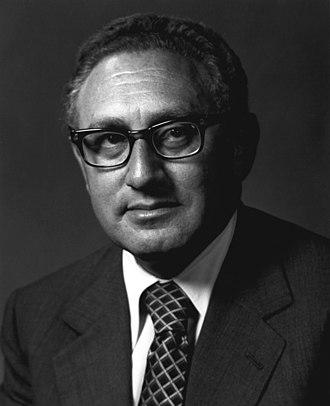
During the Nixon administration, Henry A. Kissinger served as the Assistant to the President for National Security Affairs from January 1969 through the end of Nixon's presidency, acting as the chief architect of U.S. foreign policy. Throughout the White House taping period (February 1971 to July 1973), he was captured extensively on tape advising the president on pivotal events such as the secret opening to China, détente with the Soviet Union, and the negotiation of the Paris Peace Accords. In September 1973, shortly after the taping system was dismantled, Kissinger was additionally appointed as Secretary of State, holding both powerful positions simultaneously until Nixon's resignation in August 1974.
What Kissinger talks about on the tapes
Vietnam War 628Foreign Policy 477Public relations 209People's Republic of China 138Congressional relations 135Diplomacy 122Press relations 92Soviet Union 90Military Strategy 81US-Soviet Relations 75Peace negotiations 74Economic policy 68
Conversations (1,504)
— Page 12 of 16President Nixon met with H.R. Haldeman and Henry Kissinger to strategize for the upcoming 1972 election, discuss public relations regarding the Vietnam War and POW returns, and plan for an upcoming diplomatic visit from Soviet Foreign Minister Andrei Gromyko. Nixon emphasized a rigid media strategy for Kissinger, demanding that briefings remain focused on one topic at a time to avoid conflicting headlines. The participants also reviewed campaign materials, including imagery of anti-war demonstrations, and solidified logistical plans for Gromyko’s meetings at the White House and Camp David to discuss potential peace settlements and arms control agreements.
President Nixon and Henry Kissinger discussed the status of Vietnam peace negotiations, specifically reporting on Alexander Haig's recent meeting with President Nguyen Van Thieu regarding U.S. withdrawal proposals and the political implications of a constituent assembly. The two also coordinated strategy for Nixon's upcoming meeting with Soviet Foreign Minister Andrei Gromyko, focusing on keeping Secretary of State William Rogers distanced from sensitive negotiation details. Finally, they finalized a timeline for initiating the second round of Strategic Arms Limitation Talks (SALT II) to ensure the administration maintained control over the diplomatic announcement schedule.
President Nixon and Henry Kissinger met to coordinate the agenda for an upcoming session with Soviet Foreign Minister Andrei A. Gromyko. During the brief discussion, they addressed the inclusion of Helmut Sonnenfeldt as the designated note-taker for the meeting. This consultation served to finalize personnel arrangements and ensure diplomatic preparations were set for the high-level engagement.
President Nixon met with Soviet Foreign Minister Andrei Gromyko and other high-ranking officials to review the state of U.S.-Soviet relations following the May 1972 Moscow summit. The discussion focused on progress in arms control, including the scheduling of upcoming SALT II talks, and the complexities of achieving peace in the Middle East and Vietnam. Nixon emphasized the constraints imposed by the ongoing U.S. election cycle, while both sides reaffirmed their commitment to maintaining the strategic course established during the Moscow summit despite lingering regional tensions.
President Nixon, Henry Kissinger, and William P. Rogers met to coordinate foreign policy strategy ahead of the 1972 election, focusing on the potential political backlash from the American Jewish community regarding Soviet exit visas and trade agreements. The participants discussed the 'linkage' of these issues and debated the necessity of maintaining a firm stance against congressional amendments that would tie trade status to Soviet emigration policies. Additionally, the President and Kissinger reviewed the status of Vietnam peace negotiations, with Nixon emphasizing his resolve to use a post-election mandate to finalize a settlement while refusing to halt bombing operations without a clear agreement on the release of prisoners of war.
Henry A. Kissinger coordinates with Stephen B. Bull to ensure the President receives a critical incoming telephone call from Admiral Elmo R. Zumwalt, Jr. The discussion centers on the necessity of the President taking the communication personally. The primary action item involves Bull facilitating the connection between the President and the Admiral.
Henry A. Kissinger contacted the Camp David operator to facilitate an urgent communication with Admiral Elmo R. Zumwalt, Jr. The brief exchange served as a logistical bridge to connect the National Security Advisor with the Chief of Naval Operations. No further policy discussions were recorded during this brief administrative request.
Henry Kissinger requested that Admiral Elmo R. Zumwalt Jr. contact him upon the Admiral’s return to his residence. The brief exchange served to facilitate a direct follow-up communication between the two officials. The operator confirmed the request and initiated the coordination of the call.
Henry A. Kissinger coordinates the logistics for an upcoming meeting with Admiral Elmo R. Zumwalt, Jr. at Camp David. He instructs the operator to ensure the Admiral is escorted to the Aspen Lodge upon arrival. Kissinger further requests that a staff aide be directed to notify him immediately once the Admiral has reached the location.
Henry A. Kissinger requested that the Camp David operator connect him via telephone to Admiral Elmo R. Zumwalt, Jr. This brief exchange functioned strictly as a logistical coordination to facilitate a direct conversation between the National Security Advisor and the Chief of Naval Operations. The communication was successfully established to initiate a high-level dialogue between the two officials.
Henry Kissinger and Admiral Elmo R. Zumwalt, Jr. discussed the logistical and political challenges of using civilian-manned ships for maritime operations in the context of ongoing Strategic Arms Limitation Talks (SALT). They evaluated the feasibility of transitioning ships from Navy to non-Navy status to appease Soviet demands while navigating potential obstacles, including maritime union opposition and congressional funding concerns. Ultimately, Kissinger expressed skepticism regarding the proposal's complexity and suggested the plan might be abandoned due to the difficulty of managing internal government stakeholders.
Henry A. Kissinger contacted the Camp David operator to request a technical modification to his phone system. He specifically asked that the line be switched into "real time mode" to facilitate his communications. This brief administrative interaction focused on ensuring the functionality of secure telecommunications equipment at the Aspen Lodge.
Henry Kissinger provides instructions to the Camp David operator regarding the arrival of Admiral Elmo Zumwalt. He specifies that he is to be notified by an aide immediately upon the Admiral's arrival at the Aspen Lodge. This logistical coordination ensures Kissinger is alerted as soon as his guest is ready for their meeting.
Henry A. Kissinger placed a call through the Camp David operator to facilitate communication while stationed at the Aspen Lodge. The interaction served as an administrative bridge for Kissinger to coordinate official outreach or logistical arrangements during his time at the retreat. No substantive policy matters were recorded, as the exchange remained restricted to operational connectivity.
Henry Kissinger and Admiral Elmo Zumwalt discuss a workaround to address concerns regarding the operation of naval jets while providing a face-saving diplomatic solution. They explore designating the Navy as an executive agent for a separate organization to manage these aircraft. Ultimately, they weigh the feasibility of this arrangement against the possibility of abandoning the proposal entirely due to its administrative complexity.
President Nixon and Henry Kissinger met at Camp David to discuss an urgent, sensitive message expected from the People's Republic of China, which they speculated concerned either the Vietnam War or issues regarding Japan. The conversation also touched upon the progress of negotiations with the Soviet Union, including upcoming discussions with Andrei Gromyko, and domestic political strategy regarding the 1972 election. Kissinger emphasized the need for a decisive approach to the Vietnam situation, noting that if current diplomatic efforts failed, the administration would need to escalate its military stance shortly after the election.
President Nixon instructs Henry Kissinger to emphasize to Soviet Ambassador Anatoliy Dobrynin that his past willingness to take decisive actions, such as the bombing of Cambodia and the Moscow summit, reflects a readiness to act despite political risks. Nixon intends to project a firm stance, signaling that while he prefers diplomatic restraint, the Soviets should not underestimate his resolve or his capacity for unilateral action. Kissinger agrees to convey this message of underlying strength to ensure the Soviets understand the President's commitment to his policies.
President Nixon instructed Henry Kissinger to convey a firm message to an unnamed interlocutor regarding the administration's political stability and resolve. Nixon emphasized that despite a measured, diplomatic tone, the other party must not underestimate his willingness to take decisive action. The conversation served to ensure that Kissinger explicitly articulated this posture of strength to prevent the President's intentions from being misread during ongoing negotiations.
President Nixon met with Henry Kissinger in the Oval Office to coordinate their respective schedules. During this brief exchange, Kissinger signaled his intent to provide a formal report to the President. The meeting served primarily as a logistical check-in to facilitate ongoing policy briefings.
President Nixon and Henry Kissinger discussed the status of Vietnam peace negotiations, including efforts to leverage Soviet influence on North Vietnam and the potential for a breakthrough before the 1972 election. Kissinger briefed the President on his recent meeting with Soviet Foreign Minister Andrei Gromyko, while they reviewed military strategies, including the use of B-52 air strikes, to pressure North Vietnam into a settlement. They also addressed broader political concerns, such as managing media and congressional relations, and planned the logistics for Kissinger's upcoming trip to Paris and potentially Saigon to finalize a peace agreement.
President Nixon met with Charles Colson, Henry Kissinger, and John Ehrlichman to coordinate the administration's political strategy against George McGovern's campaign. The discussion centered on countering McGovern’s accusations of moral corruption by projecting strength and avoiding defensive maneuvers, while also managing media relations and planning responses to legislative challenges. Key decisions included maintaining a firm stance on welfare reform legislation to avoid appearing inconsistent and preparing a strategic public response to potential developments in Vietnam peace negotiations.
President Nixon and Henry Kissinger met to coordinate their upcoming schedules and address pressing administrative matters. The discussion focused on establishing an agenda for future consultations and identifying specific policy items requiring immediate attention. They prioritized the refinement of these topics to streamline the executive decision-making process.
President Nixon and Henry Kissinger met to evaluate ongoing Vietnam peace negotiations and the challenge posed by South Vietnamese President Nguyen Van Thieu's recalcitrance. The discussion focused on the political risks of a settlement timing, particularly regarding the approaching 1972 presidential election and the potential influence of George McGovern's campaign rhetoric. Kissinger and Nixon also touched upon strategies for handling international relations, including Soviet Jewry and U.S. domestic policy, while coordinating their messaging for upcoming press conferences.
President Nixon and Henry Kissinger discussed the ongoing status of Vietnam peace negotiations, emphasizing the strategic importance of securing a deal that protects U.S. interests while maintaining stability in South Vietnam. They explored various diplomatic strategies regarding President Nguyen Van Thieu, the timing of a potential settlement in relation to the 1972 election, and the necessity of managing both allies and domestic political optics. The pair also assessed the effectiveness of recent military actions and the need to leverage their relationships with the Soviet Union and China to facilitate a favorable resolution.
President Nixon met with Henry Kissinger and Alexander Haig to discuss ongoing Vietnam peace negotiations and strategies to manage South Vietnamese President Nguyen Van Thieu's resistance to proposed compromises. The participants focused on the structure of a proposed 'Committee of National Reconciliation' and the delicate balance of seeking a settlement that preserves South Vietnamese sovereignty while avoiding the appearance of a coalition government with communists. The group ultimately decided to continue pursuing these diplomatic channels, tasking Kissinger with navigating the political risks while emphasizing the necessity of securing North Vietnamese concessions to ensure the long-term viability of the South Vietnamese government.
President Nixon met with Henry Kissinger, Charles Colson, and other staff to review favorable polling data and strategize for the final stages of the 1972 presidential campaign against George McGovern. The participants discussed leveraging specific "gut issues," such as amnesty for draft dodgers, busing, and law and order, to frame McGovern as an extreme candidate. Nixon directed his team to sharpen their messaging on economic issues—specifically taxes, prices, and welfare—while coordinating with cabinet surrogates to amplify these critiques in the media.
Henry A. Kissinger contacted the White House operator to facilitate an urgent communication with H.R. Haldeman. The primary objective of the call was to request that the operator locate Haldeman and connect him to Kissinger's office. This brief administrative interaction underscores the standard protocol Kissinger utilized to coordinate with key White House staff during the administration.
Henry Kissinger contacts the White House operator to confirm H.R. Haldeman's availability and current location. The operator verifies that Haldeman is occupied in a meeting with the President. Upon receiving this information, Kissinger determines that further communication is unnecessary, and the brief inquiry concludes without further action.
In this extensive meeting, President Nixon consulted with staff and advisors—including Charles Colson, H. R. Haldeman, Henry Kissinger, and Alexander Haig—to discuss political strategy for the 1972 campaign and the status of Vietnam peace negotiations. The President reviewed public reaction to his recent Atlanta trip and explored campaign themes centering on morality, social issues, and the perceived permissiveness of his opponent, George McGovern. Concurrently, Kissinger briefed the President on the intricacies of ongoing peace talks, specifically addressing the difficult diplomatic challenge of managing South Vietnamese President Nguyen Van Thieu's resistance to a potential ceasefire agreement. The conversation reflects the administration's dual focus on securing a reelection victory while attempting to finalize a 'peace with honor' in Vietnam.
President Nixon, H.R. Haldeman, and Henry Kissinger met to discuss political strategy regarding the upcoming 1972 presidential election, focusing on countering George McGovern's attacks on the administration's Vietnam policy. The group analyzed the status of peace negotiations with North Vietnam and the potential for a breakthrough, while also addressing the delicate diplomatic management of South Vietnamese President Nguyen Van Thieu. Nixon directed Kissinger to maintain a firm stance with Thieu to ensure cooperation while preparing for an imminent trip to Saigon to solidify the path toward a potential cease-fire.
President Nixon and Henry Kissinger discuss concerns over a news leak regarding sensitive Vietnam peace negotiations, specifically a report by Marvin Kalb that accurately detailed a potential standstill ceasefire and the necessity of President Nguyen Van Thieu's approval. Both men suspect Secretary of State William P. Rogers or his aide William H. Sullivan of leaking the information to ensure their involvement in the process. The conversation concludes with Kissinger updating the President on his work with Robert McNamara and confirming his readiness to execute upcoming diplomatic communications.
President Nixon met with a delegation of medical professionals from the People's Republic of China to discuss ongoing scientific and medical exchanges, a topic previously addressed during his trip to Beijing. Following the delegation's departure, Nixon and Henry Kissinger transitioned to a private discussion regarding sensitive geopolitical negotiations. They reviewed the status of U.S.-Soviet trade and maritime agreements and engaged in a detailed, strategic planning session concerning the impending Vietnam War settlement. Kissinger outlined a high-stakes itinerary involving visits to Saigon and Hanoi, aimed at finalizing a ceasefire agreement before the 1972 election while maintaining operational secrecy and managing the potential political fallout.
President Nixon and Henry Kissinger met to review the status of pending peace negotiations with North Vietnam and assess the viability of the proposed agreement. Kissinger walked the President through the deal's key provisions, including ceasefire terms, prisoner releases, the removal of U.S. mines, and the withdrawal of military personnel. The two discussed the political implications for South Vietnamese President Nguyen Van Thieu, ultimately deciding that a post-election meeting between Nixon and Thieu would be necessary to manage regional tensions and solidify the settlement.
President Nixon and Henry Kissinger met to strategize on ongoing Vietnam peace negotiations, specifically addressing the sensitive issue of prisoner release and the potential for post-settlement civilian violence. Nixon emphasized that despite his upcoming re-election, he lacked a mandate to continue the war and urged Kissinger to pressure South Vietnamese President Nguyen Van Thieu into accepting the proposed agreement. The President planned to offer Thieu significant long-term economic and military support, suggesting a high-profile meeting at the Western White House in San Clemente to project a unified front and secure Thieu's cooperation.
President Nixon and H.R. Haldeman met at Camp David to discuss the fallout from the Watergate scandal, specifically reports regarding Donald Segretti's activities and his ties to Dwight Chapin. The President expressed frustration with the press and the perceived disloyalty of some White House staff, while finalizing a strategy to distance the White House from Segretti's actions by shifting the focus to the Committee for the Re-Election of the President (CRP). Additionally, the two reviewed the status of Vietnam peace negotiations, with Nixon rejecting Henry Kissinger's suggestions to delay progress for tactical election purposes or to travel to Hanoi prematurely.
H. R. Haldeman coordinates with Henry Kissinger to arrange a meeting or phone call regarding the President's latest directives on Vietnam peace negotiations. Kissinger proposes a strategic delay in his upcoming Saigon itinerary to manage President Nguyen Van Thieu’s compliance and secure additional time to finalize agreement texts and Soviet diplomatic engagement. They weigh the political implications of delaying a potential presidential speech from October 25 to October 31, ultimately agreeing to prioritize a phone consultation to accommodate Kissinger’s busy schedule.
President Nixon and Henry Kissinger discussed the status and strategy of ongoing Vietnam peace negotiations, emphasizing that a potential settlement should be pursued based on its own merits rather than election-year political considerations. Kissinger reported on his consultations with military officials like General Creighton Abrams and his plans for upcoming meetings with North Vietnamese negotiators and South Vietnamese President Nguyen Van Thieu. The two agreed on the need to maintain flexibility to secure a viable deal while avoiding any appearance of a coalition government that could undermine the administration's position.
President Nixon and Henry Kissinger discussed the ongoing negotiations to end the Vietnam War, emphasizing the necessity of securing a settlement based on its merits rather than political expediency. Nixon explicitly instructed Kissinger to avoid any language suggesting the formation of a coalition government, which he feared would be politically damaging. The two agreed that the primary goal was to bring the conflict to a close, provided the agreement did not result in a collapse of the South Vietnamese government before the upcoming election.
Henry Kissinger and General Creighton W. Abrams, Jr. coordinated a scheduling conflict regarding a proposed meeting with President Nixon. While the President requested an immediate discussion to confirm specific information previously raised by Kissinger, Abrams was unavailable due to a prior ceremony. Consequently, Alexander Haig was tasked with arranging a follow-up meeting for that afternoon to ensure the President could consult directly with the General.
President Nixon and Henry Kissinger met to discuss high-stakes negotiations regarding Vietnam, including potential terms for a peace settlement, the role of South Vietnamese President Nguyen Van Thieu, and the strategic timing of public announcements. They evaluated the political risks of these negotiations—particularly regarding the upcoming election and public perception—while contemplating a secret diplomatic approach that might involve a private meeting with Thieu at Midway. Additionally, they coordinated Kissinger’s upcoming public appearance before the National League of Families of American Prisoners and Missing in Southeast Asia, aiming to bolster domestic support for the administration's 'peace with honor' policy without providing false hope or prematurely leaking the status of the ongoing talks.
President Nixon, H.R. Haldeman, and Henry Kissinger met to discuss managing presidential appearances and media strategy during the final weeks of the 1972 election campaign. They deliberated on whether the President or Kissinger should address the National League of Families of American Prisoners and Missing in Southeast Asia to avoid negative press perceptions. Additionally, Nixon decided to schedule a radio address on government philosophy for the upcoming Thursday, emphasizing that the administration should avoid the pressure of manufacturing daily news stories.
President Nixon and Henry Kissinger discussed the logistical arrangements for upcoming Vietnam peace negotiations, focusing on a potential secret meeting with South Vietnamese President Nguyen Van Thieu at Midway Island. They deliberated on travel schedules to Hanoi, Saigon, and Midway while strategizing how to keep these plans discreet, specifically aiming to exclude Secretary of State William P. Rogers from the core negotiations. The pair agreed to finalize the itinerary to ensure diplomatic secrecy and maintain control over the high-stakes peace process.
President Nixon and Henry Kissinger met briefly to coordinate administrative logistics regarding the President’s upcoming schedule, including a potential meeting with General William C. Westmoreland and an impending trip to Philadelphia. The pair touched upon the status of ongoing Vietnam negotiations, specifically mentioning reports involving Soviet Ambassador Anatoly Dobrynin. They concluded by aligning their focus on the current tactical outlook of these diplomatic efforts.
President Nixon met with Henry Kissinger and Alexander Haig to review the status of Vietnam peace negotiations following Kissinger's recent trip. The discussion focused on the favorable terms achieved in the draft agreement, contrasted with the erratic and obstructionist behavior of South Vietnamese President Nguyen Van Thieu, who feared the implications of the settlement. Nixon and his advisors decided to maintain a tactical delay in concluding the deal until after the upcoming presidential election, while agreeing to pressure Thieu into compliance and using military options as necessary leverage.
President Nixon met with Henry Kissinger, William Rogers, and Ronald Ziegler to discuss the status of stalled Vietnam peace negotiations following a volatile meeting between Kissinger and South Vietnamese President Nguyen Van Thieu. Kissinger reported that Thieu, reacting with intense emotional outbursts, perceived the proposed peace terms as a betrayal and a threat to his government. Nixon and his advisors weighed the risks of proceeding with a settlement against the possibility of domestic political fallout if they pushed too hard before the upcoming election, ultimately deciding to maintain a posture of cautious progress while managing the erratic behavior of both North and South Vietnamese leadership.
President Nixon, Henry Kissinger, and advisor Fritz Kraemer discussed the strategic complexities of ongoing Vietnam peace negotiations and the importance of maintaining a firm bargaining position despite the upcoming U.S. election. Kraemer emphasized the necessity of understanding communist psychology and ensuring that any cease-fire terms include effective international supervision to prevent North Vietnamese exploitation of the transition period. Nixon reaffirmed his commitment to securing an honorable settlement that protects U.S. credibility, noting that he would continue to utilize his advisors' intellect and character to navigate these delicate diplomatic and military challenges.
President Nixon and Henry Kissinger met to strategize on the final stages of the Vietnam peace negotiations and the potential for a bombing halt. They evaluated the political risks of the timing regarding the upcoming 1972 election, the concerns of South Vietnamese President Nguyen Van Thieu, and the necessity of maintaining secrecy to ensure a breakthrough. The pair ultimately reaffirmed their commitment to the existing negotiating strategy, emphasizing the importance of managing public perception while finalizing an agreement.
President Nixon and Henry Kissinger discussed strategies for managing public relations regarding the ongoing Vietnam peace settlement. They focused on reinforcing the administration's "peace with honor" narrative by engaging influential journalists and commentators, including William F. Buckley Jr. and Howard K. Smith. The discussion aimed to consolidate domestic support for the administration’s diplomatic strategy as negotiations reached a critical juncture.
President Nixon met with H. R. Haldeman, Ronald Ziegler, and Henry Kissinger to strategize against mounting political pressure, specifically regarding a damaging Washington Post report on campaign espionage and the ongoing Watergate investigations. The President and his staff discussed methods to counter these allegations, maintain administrative loyalty, and formulate an effective public response to Senator George McGovern's campaign rhetoric. Additionally, Kissinger provided an update on the status of Vietnam peace negotiations, focusing on the tactical challenges of reaching a settlement and coordinating the administration's messaging on the war.
President Nixon met with Charles Colson and Henry Kissinger to strategize for the final weeks of the 1972 presidential campaign. They analyzed polling data, discussed managing political attacks regarding the Watergate scandal, and evaluated aggressive media relations strategies. A significant portion of the discussion focused on the Vietnam peace negotiations, specifically the status of ceasefire talks and the political implications of South Vietnamese President Thieu’s cooperation before the election.
President Nixon and Henry Kissinger met to coordinate a public briefing regarding the North Vietnamese unilateral release of secret Vietnam peace settlement terms. Kissinger outlined a three-part strategy to explain the procedural status of negotiations, the substantive elements of the agreement, and the necessity of further refinements to ensure long-term enforceability. They agreed to frame the delay not as a failure, but as a commitment to a "right agreement" rather than a hurried one, while preparing to counter potential political criticism from George McGovern.
President Nixon and Henry Kissinger strategized on how to undermine Democratic challenger George McGovern regarding the ongoing Vietnam peace negotiations. Nixon instructed Kissinger to publicly emphasize that McGovern’s alternative peace terms would jeopardize the progress already achieved, particularly concerning the status of prisoners of war and the situation in Cambodia and Laos. The goal was to frame the administration’s existing diplomatic efforts as the most viable path toward a stable agreement.
President Nixon and Henry Kissinger discussed the highly positive public and media reception following Nixon’s recent remarks regarding progress toward a Vietnam peace settlement. They reviewed the administration's strategic focus on securing POW returns, a cease-fire, and South Vietnamese self-determination, while agreeing that keeping the negotiations ongoing avoids the appearance of a purely political maneuver. The conversation confirmed that the current diplomatic posture effectively neutralizes Vietnam as a major issue in the ongoing 1972 election campaign.
President Richard Nixon met with Henry Kissinger to briefly coordinate the National Security Advisor's upcoming schedule. The discussion focused on logistical planning for a forthcoming high-level meeting. No substantive policy decisions were reached during this brief exchange.
President Nixon, Patrick Buchanan, and Henry Kissinger met to strategize an aggressive public relations campaign in the final days before the 1972 election. Nixon instructed his team to produce a 'White Paper' that would contrast his administration's 'peace with honor' approach to Vietnam against the 'peace with surrender' policies of George McGovern, while also countering media narratives regarding Watergate and administration campaign practices. The participants emphasized the need to frame the recent Vietnam peace negotiations as a successful, hard-won achievement driven by the President's firm May 1972 policies, rather than as a rushed election-year political maneuver.
President Nixon met with Charles Colson, H.R. Haldeman, and Henry Kissinger to strategize for the final weeks of the 1972 presidential campaign. The discussion centered on monitoring polling data, countering George McGovern’s platform—particularly regarding Vietnam—and maintaining a strong public image of "peace with honor." Nixon emphasized the importance of aggressive political messaging, including the use of surrogates and media tactics to neutralize negative press and emphasize the administration's foreign policy achievements.
President Nixon met with Prime Minister Souvanna Phouma of Laos, accompanied by Henry Kissinger and Ambassador William Sullivan, to discuss the implications of the impending Vietnam peace settlement on the Laotian conflict. Phouma expressed concern that a ceasefire in Vietnam might allow North Vietnamese forces to exploit a timing lag to increase military pressure on Laos, and he requested continued U.S. military assistance to maintain defensive capabilities. Nixon reaffirmed U.S. commitment to regional stability and the independence of Southeast Asian nations, while both leaders agreed on the necessity of maintaining skepticism regarding North Vietnamese intentions despite any formal agreements.
President Nixon met with key advisors, including H.R. Haldeman, Henry Kissinger, and Charles Colson, to coordinate political messaging and media strategy in the final stretch of the 1972 presidential campaign. The discussion centered on countering recent CBS news reports regarding Watergate, managing public expectations for a Vietnam peace settlement, and finalizing the President’s radio speech schedule. Nixon emphasized the importance of aggressive, disciplined political messaging, instructing his team to ensure that surrogates and administration officials remained unified in their efforts to contrast his administration's position with George McGovern's campaign platforms.
President Nixon and Henry Kissinger discussed strategies for managing public and political perceptions of the ongoing Vietnam peace negotiations. Nixon emphasized the need to preemptively dismiss media claims that the proposed settlement amounted to a coalition government, coordinating efforts to have Vice President Agnew and conservative allies like the Buckleys publicly defend the administration's position. They also assessed the probability of a North Vietnamese walk-out and agreed that the administration should maintain a firm stance to ensure a favorable peace settlement.
President Nixon and Henry Kissinger discussed strategies to manage public perception and media support regarding the potential conclusion of the Vietnam War. They focused on leveraging influential figures such as William F. Buckley and Joe Alsop to shape the narrative within conservative circles. Nixon emphasized that the administration's goal extended beyond merely ending the war to achieving a lasting peace through a successful summit.
President Nixon and Henry Kissinger discussed the pending delivery of a message from North Vietnam and the administration's strategic response regarding the ongoing peace negotiations. Nixon emphasized his commitment to securing a lasting, satisfactory agreement over a rushed one and planned to articulate this position in a forthcoming Chicago speech. The two also coordinated political strategy, directing Vice President Spiro Agnew to criticize George McGovern's proposal to end aid to South Vietnam while deciding to delay any public statements from Secretary of State William Rogers until the content of the North Vietnamese message was confirmed.
President Nixon and Henry Kissinger discuss the ongoing Vietnam peace negotiations and the potential for a public backlash due to inflated media expectations. They weigh the necessity of securing a durable, long-term peace agreement against pressure to reach a quick settlement before the election. Nixon decides to personally handle public messaging in an upcoming Chicago speech rather than deploying Secretary of State William Rogers, while also authorizing Vice President Agnew to criticize George McGovern’s position on South Vietnamese aid.
President Nixon and Henry Kissinger discussed the delicate status of Vietnam peace negotiations and the challenge of managing public and political perceptions of the potential agreement just days before the 1972 election. They analyzed North Vietnamese signaling, the complexities of drafting a durable settlement, and the need to reassure conservative critics who feared the deal might mirror failed previous agreements. The two focused on developing a public relations strategy for the administration, including potential media briefings by Kissinger, to clarify the U.S. commitment to achieving a high-quality, long-term peace rather than a premature settlement.
President Nixon met with Henry Kissinger and Nelson Rockefeller to coordinate the administration’s public posture regarding stalled Vietnam peace negotiations ahead of the 1972 election. They discussed North Vietnamese attempts to force a hasty settlement, the status of key sticking points such as troop withdrawals and administrative structures, and the timing of a potential press briefing by Kissinger. Nixon decided to maintain a firm stance against being stampeded into a premature agreement, opting to portray the administration as protecting the national interest while exposing North Vietnamese intransigence.
President Nixon met with H.R. Haldeman and Henry Kissinger to navigate the delicate political and diplomatic challenges surrounding the Vietnam peace negotiations just days before the 1972 election. The discussion focused on analyzing Hanoi’s recent public statements, the diplomatic fallout involving South Vietnamese President Nguyen Van Thieu, and the risks of a potential 'build-up and let-down' effect among American voters. The participants assessed the impact of the peace talks on the campaign, specifically weighing the optics of a settlement against George McGovern's electoral strategy and current polling data.
President Nixon and Henry Kissinger discussed the status of ongoing peace negotiations with North Vietnam, focusing on their commitment to securing a definitive peace agreement rather than an armistice. They evaluated current public and media reaction to the administration's firm stance, noting the potential for political advantage leading up to the upcoming election. The President and Kissinger also coordinated plans to manage future diplomatic communications and signaled their intent to maintain military pressure until a satisfactory resolution is finalized.
President Nixon met with Henry Kissinger and Charles Colson to coordinate strategy for his 'Look to the Future' radio address and manage the final stretch of the 1972 presidential campaign. Discussions centered on Vietnam negotiations, with the President emphasizing the need to avoid a rushed settlement for political gain, and on countering George McGovern through aggressive messaging on social issues like busing and welfare. The group reviewed campaign tactics, including analyzing public sentiment in response to violent demonstrators in Boston and utilizing radio to maintain electoral pressure.
President Nixon and Henry Kissinger deliberate on potential diplomatic emissaries to South Vietnamese President Nguyen Van Thieu, considering figures such as William F. Buckley Jr. The discussion shifts to evaluating the qualifications and suitability of high-level diplomatic appointees, specifically debating the effectiveness of Ambassador Kenneth Rush. The conversation highlights the administration's strategic search for an envoy capable of managing delicate negotiations with the South Vietnamese government.
Henry A. Kissinger met briefly with an unidentified woman in the Oval Office to coordinate his upcoming schedule. The conversation focused on facilitating a private meeting between Kissinger and President Nixon. No substantive policy discussions were recorded during this brief administrative encounter.
President Nixon met with Henry Kissinger and later John Cardinal Krol to discuss the sensitive status of Vietnam peace negotiations and U.S.-Poland relations. Nixon and Kissinger evaluated the difficult diplomatic position of South Vietnamese President Nguyen Van Thieu, specifically addressing Thieu's resistance to a proposed settlement and the potential for a letter from the U.S. to compel his cooperation. Meanwhile, Cardinal Krol shared insights from his recent visit to Poland, highlighting the endurance of the Roman Catholic Church under communist rule and the Polish people's yearning for greater independence from Soviet influence. The conversation concluded with discussions on the necessity of maintaining pressure on North Vietnam while navigating the delicate geopolitical balance required to secure a peace agreement after the 1972 election.
President Nixon met with Raymond K. Price, Jr., and consulted with Henry Kissinger via telephone to finalize a draft of his upcoming "Look to the Future" speech. The discussion primarily focused on refining the Vietnam section of the address, specifically addressing the ongoing peace negotiations, South Vietnamese President Nguyen Van Thieu's concerns regarding U.S. withdrawal, and the planned cease-fire terms. Nixon provided revisions on the speech's tone and length to ensure the administration's stance on the conflict and political platform was clearly communicated before the 1972 election.
President Nixon, H.R. Haldeman, Henry Kissinger, and other staff members met to finalize the President's upcoming "Look to the Future" campaign speech and coordinate media strategy for the final days of the 1972 election. The discussion focused on television airtime purchases, speech pacing and editing, and managing campaign appearances in the context of ongoing Vietnam peace negotiations. The President also addressed organizational plans for the Republican National Committee and broader GOP candidate support efforts.
President Nixon and Henry Kissinger discussed the ongoing Vietnam peace negotiations, focusing on strategies for communicating with South Vietnamese President Nguyen Van Thieu and managing domestic press relations. The participants evaluated potential candidates for an emissary to Thieu, including John Connally, to deliver a firm message regarding the settlement agreement. Additionally, they reviewed the timing of the troop withdrawal plans and the political impact of the peace terms ahead of the 1972 election.
President Nixon met with Soviet Ambassador Anatoliy Dobrynin and Soviet scientist Mstislav Keldysh to discuss the expansion of U.S.-Soviet cooperation in non-military sectors, including science, health, space, and trade. The participants emphasized that fostering these positive collaborative ties was essential for building a lasting peace beyond mere arms control agreements like SALT I. Nixon also highlighted his intent to further develop these relationships and pursue productive diplomatic engagements, including a potential visit to the Soviet Union, during his anticipated second term.
President Nixon and Henry Kissinger met to strategize on public relations regarding the Vietnam War, specifically addressing potential criticism from George McGovern that the ongoing peace negotiations were a hoax. They evaluated the pros and cons of holding a background press briefing to counter these claims and reinforce the narrative that "peace is at hand." Ultimately, the President directed staff to coordinate the logistics for such a session while remaining cautious about the tone and timing of the messaging to ensure it served the administration's goals.
President Nixon met with key advisors, including H. R. Haldeman, Charles Colson, and Henry Kissinger, to strategize for the final days of the 1972 presidential campaign. The discussion focused on countering George McGovern's recent criticisms regarding Vietnam and the Watergate scandal, while analyzing polling data and state-by-state electoral projections. Nixon and his team also evaluated the status of Vietnam peace negotiations and determined how to leverage their progress toward a settlement to bolster the President's standing before Election Day.
Henry Kissinger calls President Nixon to offer congratulations on his overwhelming landslide victory in the 1972 presidential election. The two discuss George McGovern's ungracious concession statement and Nixon's subsequent decision to reject a draft telegram from his staff that was overly conciliatory toward his opponent. Additionally, they reflect on disappointing Republican losses in the Senate and interpret the election results as a definitive public rebuke of the media and liberal intelligentsia regarding the administration's Vietnam policy.
President Nixon and Henry Kissinger met to coordinate final preparations for a diplomatic mission to South Vietnam. The President confirmed he had signed a letter for President Nguyen Van Thieu and arranged for a briefing with Alexander Haig prior to Haig's departure for Saigon. They also discussed managing public perception through press secretary Ronald Ziegler to ensure the administration's narrative regarding the negotiations remained consistent.
President Nixon met with Henry Kissinger and Alexander Haig to deliberate on the timing and public announcement of upcoming peace negotiations with North Vietnam. The discussion focused on managing the logistics of these talks while coordinating a strategic message to South Vietnamese President Nguyen Van Thieu, whom Nixon insisted must not test his authority. The participants emphasized that the administration remained in a position of strength following the 1972 election and resolved to utilize the available time to ensure the peace settlement met their terms.
President Nixon met with his staff and Henry Kissinger to discuss the transition into his second term, the ongoing Vietnam peace negotiations, and various administrative matters. Nixon emphasized his desire to centralize control over foreign policy and White House personnel, signaling a move away from relying on State Department officials like William Rogers for Vietnam initiatives. The group also coordinated logistics for Kissinger's travel to Camp David and New York, reviewed recent election results, and addressed personal financial arrangements for White House staff.
President Nixon and Henry Kissinger discussed the recent warming of diplomatic relations with the People's Republic of China, highlighting Beijing's conciliatory tone regarding Vietnam and its willingness to influence the situation in Cambodia. Kissinger reported on his recent meeting with Chinese officials, who expressed strong anti-Soviet sentiment and reassured the U.S. that their growing ties with Japan would not undermine American military interests. The two men also strategized on how to address South Vietnamese President Nguyen Van Thieu’s security concerns regarding North Vietnamese troop presence, focusing on the use of diplomatic language to uphold principles without derailing the ongoing peace negotiations.
President Nixon and Henry Kissinger discuss diplomatic reassurances for Taiwan, including the preparation of talking points for Billy Gray to deliver to Madame Chiang Kai-shek. The two also confer on the diplomatic nuances of potential Vietnam peace agreements, specifically addressing President Thieu’s concerns regarding North Vietnamese troop presence in the South. Finally, the President touches upon potential diplomatic travel for David and Julie Eisenhower and dismisses the necessity of further political favors for Senator Mike Mansfield.
President Nixon and Henry Kissinger discuss coordinating an unofficial visit to the Soviet Union for Tricia Nixon Cox and Edward Cox, utilizing Kissinger's communication with Soviet Ambassador Anatoliy Dobrynin to facilitate arrangements. The two also confer on the administrative logistics of an upcoming press briefing at Camp David, where Ronald Ziegler will announce the resumption of Vietnam peace negotiations. Additionally, Nixon requests Kissinger’s prompt review of a forthcoming letter addressed to South Vietnamese President Nguyen Van Thieu.
President Nixon and Henry Kissinger discussed the logistical arrangements for upcoming travel, specifically regarding how to inform foreign capitals of prospective visit plans without creating a formal or official appearance. Nixon also focused on infrastructure improvements at Camp David, emphasizing the installation of secure communication equipment to facilitate working remotely. These efforts aimed to establish the retreat as a functional, long-term office space for administrative staff.
President Nixon and Henry Kissinger discuss the delivery and strategic framing of a letter addressed to South Vietnamese President Nguyen Van Thieu, intended to pressure him into accepting current peace terms. The conversation focuses on Thieu's ongoing stalling tactics and the potential, though undesirable, option of the United States pursuing a separate, bilateral settlement with North Vietnam if Thieu remains obstructionist. Both men analyze the diplomatic breakdown between the U.S. embassy and Saigon, ultimately agreeing to maintain pressure on Thieu while acknowledging the significant risks associated with unilateral U.S. withdrawal and the future of regional stability in Laos and Cambodia.
President Nixon and Henry Kissinger discussed the diplomatic strategy regarding a letter intended for North Vietnamese leadership, balancing firm demands with subtle overtures to maintain negotiations. They expressed concern over the breakdown of communication channels in South Vietnam, specifically noting the absence of effective intermediaries like Ellsworth Bunker and Creighton Abrams. The two men aimed to pressure their counterparts while avoiding public escalations that might undermine the perception of their negotiation efforts.
President Nixon and Henry Kissinger discussed the ongoing Vietnam peace negotiations, specifically addressing concerns that the South Vietnamese government was attempting to delay or obstruct the process. Kissinger reported that Ambassador Ellsworth Bunker was encountering resistance from South Vietnamese officials, but the pair agreed that the U.S. could not delay the Paris negotiations or risk an open break with Saigon at this stage. Nixon instructed Kissinger to maintain a firm stance and finalize the best possible agreement, opting to manage the South Vietnamese response after the terms in Paris were settled.
President Nixon and Henry Kissinger discuss strategies for managing South Vietnamese President Nguyen Van Thieu's resistance to the ongoing Vietnam peace negotiations. Nixon directs Kissinger to instruct Ambassador Ellsworth Bunker to inform Thieu that the U.S. will maintain its current bargaining position and will not accept further disruptive changes to the draft agreement or new emissaries. Additionally, the pair briefly touches upon the potential appointment of Peter G. Peterson to a role in the Commerce Department under George Shultz.
President Nixon and Henry Kissinger discuss the stalled Vietnam peace negotiations and the obstructionist bargaining tactics employed by South Vietnamese President Nguyen Van Thieu. Concerned that Thieu’s latest demands threaten to scuttle the agreement entirely, Nixon directs Kissinger to draft a firm letter emphasizing that the current U.S. aid programs will be jeopardized by the new Congress if a deal is not reached. The two leaders agree on the necessity of pressuring Thieu, acknowledging that the U.S. must take a tougher stance to force an resolution while avoiding an open, disastrous diplomatic break.
President Nixon and Henry Kissinger discussed the administration's second-term reorganization, noting Melvin Laird's acceptance of Elliot Richardson's appointment. The conversation then shifted to the surplus of U.S. military aid in South Vietnam and the potential for dispatching Laird on a diplomatic mission to deliver a firm ultimatum to President Nguyen Van Thieu. They agreed that such a mission, to be accompanied by Alexander Haig, should only occur following the finalization of the Vietnam peace agreement.
President Nixon and Henry Kissinger coordinate strategy for an upcoming meeting with South Vietnamese representatives regarding the ongoing Vietnam peace negotiations. Nixon emphasizes the need for a "tough" and "brutal" stance to ensure the South Vietnamese adhere to the proposed schedule and final agreement. They discuss the potential for a future meeting between Nixon and President Thieu, ultimately deciding to resist pressure for such a summit unless it is contingent upon Thieu's guaranteed cooperation.
President Nixon and Henry Kissinger met at Camp David to coordinate strategy for an upcoming, high-stakes meeting, emphasizing a firm and uncompromising tone to resolve lingering political or diplomatic frustrations. The discussion focused on narrowing the agenda to essential points to ensure maximum impact and maintaining a facade of lengthy, serious negotiations to signal the end of a conflict. Nixon also directed Kissinger to stay in a private residence in Florida to avoid media scrutiny while finalizing these sensitive arrangements.
President Nixon met with Henry Kissinger, Nguyen Phu Duc, and Tran Kim Phuong to discuss the final stages of the Vietnam peace negotiations and coordinate strategy for the upcoming agreement. Nixon emphasized the necessity of finalizing terms by December 1972 to secure Congressional support for military and economic aid, warning that failure to settle would likely lead to a legislative cutoff of funds. Nixon underscored his commitment to enforcing the agreement through resumed bombing if North Vietnam violated the ceasefire and urged the South Vietnamese leadership to present a unified, confident front to the American public and Congress.
President Nixon met with Ronald Ziegler, H. R. Haldeman, Henry Kissinger, and Stephen Bull to coordinate the second-term reorganization of the State Department and other federal agencies. The group discussed managing press leaks, the implementation of a 'youth movement' to bring fresh talent into government, and the strategic replacement of several senior officials, including the transition of leadership at the Republican National Committee from Robert Dole to George H. W. Bush. Additionally, the President reviewed the status of Vietnam peace negotiations with Kissinger, emphasizing the need for strict confidentiality and preparing contingency plans for responding to potential North Vietnamese treaty violations.
President Nixon met with his senior military and national security leadership, including Henry Kissinger, Melvin Laird, and the Joint Chiefs of Staff, to align the administration on the status and defense of pending Vietnam peace negotiations. The discussion focused on the current terms of the settlement agreement, the importance of maintaining public and congressional support, and the necessity of contingency planning should North Vietnam violate the terms. Nixon emphasized that the agreement was the best obtainable outcome and instructed his team to present a unified, positive front while preparing for potential retaliatory actions if the cease-fire collapsed.
President Nixon and Henry Kissinger discussed the ongoing negotiations regarding the Vietnam settlement agreement and the status of diplomatic communications with South Vietnamese officials, Nguyen Phu Duc and Tran Kim Phuong. Nixon emphasized his firm position that the North Vietnamese must accept the existing terms, ruling out further changes to the agreement. Furthermore, they considered the strategic necessity of a direct meeting between Nixon and President Nguyen Van Thieu to reinforce U.S. commitments regarding retaliatory action against potential cease-fire violations.
President Nixon met with Henry Kissinger, Alexander Haig, and South Vietnamese representatives Nguyen Phu Duc and Tran Kim Phuong to finalize the U.S. position on Vietnam peace negotiations. Nixon emphasized that the U.S. would not continue military or economic aid if the South Vietnamese government rejected the current settlement framework, stressing that congressional opposition made further support unsustainable. The President proposed a meeting with President Nguyen Van Thieu at Midway to provide personal assurances of U.S. retaliation against potential North Vietnamese ceasefire violations, while instructing his team to continue pressuring Saigon to accept the agreement terms.
President Nixon, Henry Kissinger, and key staff members met to discuss communication strategy and the status of ongoing peace negotiations. The discussion focused on managing public perception regarding diplomatic briefings and the potential implications of Congressional opposition to current foreign policy goals. Kissinger affirmed that the administration had achieved more success than initially projected, while the group considered the risks and tactical necessity of continuing high-level diplomatic meetings.
President Nixon met with his key advisors, including Henry Kissinger, Alexander Haig, and H.R. Haldeman, to discuss the deteriorating state of Vietnam peace negotiations following North Vietnamese intransigence and bad faith. Kissinger detailed the tactics used by the North Vietnamese, including reneging on previously agreed-upon points and introducing new, unacceptable demands, which led to an impasse. The group resolved to maintain a firm posture, agreeing to intensify military pressure through bombing campaigns while carefully managing public relations to ensure the responsibility for the stalled peace process remained with the North Vietnamese. Nixon decided against a televised address at that moment, opting for a low-key briefing to frame the situation as a failure of communist cooperation rather than a total breakdown of talks.
President Nixon and Henry Kissinger coordinated their schedules to arrange a follow-up meeting later that afternoon with Alexander Haig. The discussion focused on confirming the timing for this tripartite session, ultimately settling on 2:30 p.m. Kissinger was tasked with notifying Haig of the scheduling adjustment.