Kissinger, Henry A.
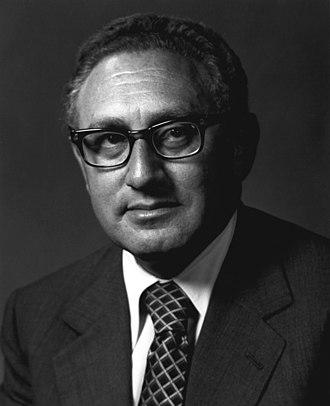
During the Nixon administration, Henry A. Kissinger served as the Assistant to the President for National Security Affairs from January 1969 through the end of Nixon's presidency, acting as the chief architect of U.S. foreign policy. Throughout the White House taping period (February 1971 to July 1973), he was captured extensively on tape advising the president on pivotal events such as the secret opening to China, détente with the Soviet Union, and the negotiation of the Paris Peace Accords. In September 1973, shortly after the taping system was dismantled, Kissinger was additionally appointed as Secretary of State, holding both powerful positions simultaneously until Nixon's resignation in August 1974.
What Kissinger talks about on the tapes
Vietnam War 628Foreign Policy 477Public relations 209People's Republic of China 138Congressional relations 135Diplomacy 122Press relations 92Soviet Union 90Military Strategy 81US-Soviet Relations 75Peace negotiations 74Economic policy 68
Conversations (1,504)
— Page 10 of 16President Nixon and Henry Kissinger discussed the deteriorating situation in Vietnam due to the North Vietnamese offensive and the potential for a U.S. response, including increased bombing or the cancellation of the upcoming Soviet summit. They analyzed the political risks of the summit, particularly regarding how appearing to accommodate the Soviet Union while Soviet-supplied weaponry was being used against U.S. forces would impact presidential credibility and domestic support. Nixon instructed Kissinger to prepare a draft speech that would allow for flexibility in the U.S. response, opting to delay final decisions on the summit and military actions until early the following week.
President Nixon met with his senior advisors and officials to manage the leadership transition at the FBI following J. Edgar Hoover’s death and to strategize regarding the upcoming Soviet summit amid the North Vietnamese invasion. The group discussed the political implications of L. Patrick Gray’s nomination as acting FBI director and debated whether to proceed with the summit given potential domestic backlash and the ongoing conflict. Ultimately, Nixon signaled his intent to project strength and maintain leadership, emphasizing that he would only cancel the summit if it demonstrably improved the prospects for ending the war in Vietnam.
President Nixon met with his senior advisors, including H. R. Haldeman and Henry Kissinger, to navigate the intensifying North Vietnamese offensive and its implications for the upcoming Soviet Summit. The group deliberated on military strategies—including the possibility of a naval blockade—and analyzed the political risks of cancelling the summit versus the need to maintain a firm negotiating stance. A key action item involved coordinating with John Connally to assess the administration's response to these crises, while also addressing concerns regarding domestic political fallout, press coverage, and security preparations for the upcoming national political conventions.
Henry Kissinger contacts the White House operator to facilitate an urgent communication with Admiral Thomas H. Moorer, the Chairman of the Joint Chiefs of Staff. This administrative call serves as the necessary step to bridge a secure line for high-level military consultations. The primary action item is the immediate placement of the call to the Admiral to address time-sensitive defense or strategic matters.
Henry Kissinger contacts the White House operator to secure an urgent return call from Admiral Thomas H. Moorer. The request follows a period of coordination between Kissinger and President Nixon regarding ongoing military or diplomatic affairs. Kissinger emphasizes the urgency of the communication, tasking the operator to ensure the Admiral reaches him immediately after attending a swearing-in ceremony.
President Nixon, Henry Kissinger, and H. R. Haldeman coordinated to secure an immediate meeting with John B. Connally at the Executive Office Building. The discussion touched upon military historical precedents, including the Battle of Verdun and the tactical legacies of commanders like Pétain, as they prepared for Connally's arrival. Haldeman ultimately contacted Connally to confirm the President's request for a face-to-face consultation.
Henry A. Kissinger contacted the White House operator to facilitate an urgent communication with Deputy Secretary of Defense Kenneth Rush. The brief interaction focused solely on placing the call, with the operator confirming the recipient's identity after a brief clarification. This exchange served as a logistical step to enable high-level coordination between the National Security Advisor and the Department of Defense.
Henry Kissinger consulted with the White House operator to coordinate communication with key officials, including Kenneth Rush and General Raymond B. Furlong. The discussion centered on locating these individuals, who were gathered at a ceremony, to facilitate urgent contact. Kissinger ultimately decided to leave messages for the parties rather than wait for a direct connection.
In this meeting, President Nixon confers with Henry Kissinger, H. R. Haldeman, John Connally, and Admiral Thomas Moorer to finalize plans for a military escalation in Vietnam. Frustrated by previous constraints, Nixon decides to implement a naval blockade of North Vietnam and launch intensive air strikes against key strategic targets, including rail yards, power plants, and oil supplies. Nixon emphasizes the necessity of this decisive action to prevent a U.S. defeat, secure the release of prisoners of war, and force a ceasefire, while explicitly directing Moorer to maintain the chain of command directly to him and bypass Secretary of Defense Melvin Laird. The group also discusses the potential cancellation of the upcoming Soviet summit as a consequence of these actions and addresses the possible replacement of General Creighton Abrams in theater.
Henry Kissinger contacts Admiral Thomas H. Moorer to coordinate a high-priority, clandestine meeting with President Nixon. Kissinger instructs Moorer to expedite the departure of a visiting Taiwanese admiral to ensure immediate availability for the President. The conversation emphasizes strict operational security, specifically warning Moorer not to disclose his movements to anyone.
Alexander P. Butterfield facilitated a telephone connection between Henry Kissinger and President Nixon, who was consulting with John B. Connally. The group discussed the logistics of handling an incoming call from Deputy Secretary of State Kenneth Rush. The President ultimately decided to defer speaking with Rush until a later time.
Henry A. Kissinger requested that the White House operator connect him with Admiral Thomas H. Moorer, the Chairman of the Joint Chiefs of Staff. This administrative coordination served as a precursor to a substantive discussion between the two officials. The conversation was limited to the initiation of this secure communication channel.
Henry Kissinger received a status update from the White House operator regarding the transit of Admiral Thomas H. Moorer. The call served to coordinate the logistics of the Admiral's arrival at the White House for a scheduled meeting. This brief exchange ensured that Kissinger was informed of the Chairman of the Joint Chiefs of Staff's proximity to the complex.
President Nixon met with Henry Kissinger and H.R. Haldeman to finalize the decision to initiate a naval blockade and intensified bombing campaign against North Vietnam, a move Nixon viewed as essential to prevent a defeat in the war and preserve American credibility. The discussion focused on coordinating the strategy to ensure secrecy, managing potential friction with Secretary of Defense Melvin Laird and Secretary of State William Rogers, and addressing the geopolitical implications of a confrontation with the Soviet Union. Nixon directed his team to maintain a facade of normalcy to mask the impending escalation while simultaneously emphasizing the necessity of absolute loyalty and silence from his staff to prevent leaks.
President Nixon met with H.R. Haldeman and Henry Kissinger to discuss the implementation of a naval blockade and intensified bombing campaign against North Vietnam. The President expressed deep frustration with the 'leader class'—specifically academia, religious leaders, and the media—for their lack of support and what he perceived as a failure of national resolve. Despite internal disagreement with Kissinger over the potential impact on civilian casualties and the upcoming Soviet summit, Nixon remained resolute in his decision to proceed, viewing the blockade as a necessary action to secure the release of POWs and ensure the survival of South Vietnam. The meeting also addressed long-term strategy for managing public opinion through media outreach and emphasizing the President's firm leadership.
President Nixon and Henry Kissinger met to discuss urgent changes to the U.S. military command structure in Vietnam, emphasizing the need for a more effective, unified allied command. Nixon expressed a firm desire to replace General Creighton Abrams and proposed installing General Bruce Palmer as the new leader to improve operational coordination. The President directed Kissinger to coordinate these plans with Secretary of Defense Melvin Laird and Secretary of State William Rogers, stressing that the administration must commit fully to these adjustments as part of its broader strategy.
President Nixon convened his National Security Council to weigh critical military options regarding the ongoing North Vietnamese offensive and the potential collapse of South Vietnamese forces. Key participants, including Henry Kissinger, Melvin Laird, and John Connally, debated the strategic risks of maintaining the status quo versus implementing a naval blockade and intensified air strikes on North Vietnam. While acknowledging the potential for a diplomatic crisis and the likely cancellation of the upcoming Moscow summit, the President and his advisors emphasized the necessity of demonstrating resolve to protect U.S. credibility and avoid a catastrophic military defeat. Ultimately, the discussion centered on whether a more aggressive military posture could provide the leverage required to salvage the situation in South Vietnam and secure the release of American prisoners of war.
President Nixon and Henry Kissinger met to discuss the implementation of a naval blockade of North Vietnam in anticipation of an upcoming presidential address. They reviewed the internal bureaucratic resistance to the plan, specifically noting opposition from intelligence officials and concerns regarding the military's logistical capabilities. The discussion emphasized that the blockade was necessary to bolster South Vietnamese morale, stress North Vietnamese command systems, and secure a stronger bargaining position regarding U.S. prisoners of war.
President Nixon and Henry Kissinger met briefly to address administrative arrangements for an upcoming National Security Council meeting. The conversation touched upon the participation of Press Secretary Ronald L. Ziegler and concerns regarding potential leaks. No final decisions were reached during this exchange, which primarily served to coordinate internal attendance and security protocols.
President Nixon met with Henry Kissinger, John Connally, and H. R. Haldeman to finalize the decision to initiate a naval blockade and increased bombing campaign against North Vietnam. Despite dissenting opinions from Secretary of State William Rogers and Secretary of Defense Melvin Laird, the President, strongly supported by Connally, determined that the operation was necessary to prevent a collapse in South Vietnam and to preserve American credibility. The group discussed the political risks, including the potential cancellation of the upcoming Soviet summit, and coordinated the logistics for notifying key cabinet members and Congressional leaders before the President's public announcement.
President Nixon met with H. R. Haldeman and Henry Kissinger to finalize the decision to mine and blockade Haiphong harbor in response to the North Vietnamese offensive. The group debated the risks of the escalation to the upcoming Soviet summit and the potential for a South Vietnamese military collapse, ultimately concluding that the blockade was necessary to maintain American credibility and bargaining leverage. Nixon also reviewed the draft of his televised address announcing the policy and discussed the strategy for briefing Congressional leaders to ensure support for his actions.
Henry Kissinger contacts the White House operator to place an urgent call to Deputy Secretary of Defense Kenneth Rush. This brief administrative interaction serves as the logistical precursor to a high-level diplomatic or military consultation between Kissinger and the Department of Defense. No policy discussions occur, as the exchange is strictly limited to the request for the connection.
Henry Kissinger and Ambassador Kenneth Rush discuss the volatile political situation in West Germany, specifically the intense pressure on Willy Brandt and Rainer Barzel to hold an immediate vote on the Moscow agreement. Kissinger explores the possibility of delaying this vote by one week to facilitate broader diplomatic maneuvering, including a potential presidential message linked to Soviet cooperation regarding the Vietnam blockade. Rush advises against direct American intervention, warning that such a move would be severely misunderstood and damaging to U.S.-German relations during a period of domestic political disarray.
President Nixon and Henry Kissinger discuss final revisions to an upcoming speech regarding the Vietnam War. They agree to include specific references to air and naval strikes and clarify that the U.S. continues to pursue a negotiated settlement despite having exhausted reasonable peace offers. Kissinger prepares to deliver additional minor technical suggestions to the drafting team, and Nixon instructs his staff to hold off on finalizing the document until these changes are integrated.
President Nixon and Henry Kissinger met to refine the phrasing of a specific policy proposal, identified as the "second course of action." They determined that the language should explicitly state the intent to "take over the facility" to ensure that the administration’s commitment to the relevant association is clearly communicated. This brief discussion focused on strengthening the clarity and perceived resolve of the administration's stated objectives.
President Nixon and Henry Kissinger discuss final revisions to the speech announcing a naval blockade of North Vietnam. They debate specific phrasing regarding the cessation of hostilities to ensure continued U.S. reconnaissance capabilities. Additionally, they refine the language concerning political settlements to make the terms more palatable for international audiences while maintaining the administration’s core peace proposal.
President Nixon and Henry Kissinger discuss the specific language and strategic implications of a pending speech regarding the Vietnam War. They debate the nuances of phrasing concerning the cessation of hostilities and the potential for a political settlement based on popular will in South Vietnam. The brief meeting concludes with the delivery of a speech draft to the President for final review.
President Nixon and Henry Kissinger discuss revisions to the President's upcoming speech regarding the blockade of North Vietnam and the North Vietnamese offensive. Concerned that certain rhetorical phrases could invite criticism regarding U.S. actions in Laos and Cambodia, Nixon orders the removal of lines referencing military escalation and territorial invasion. Additionally, they finalize technical adjustments to the President's statement regarding the timing of sea mine detonations to ensure accuracy.
President Nixon and Henry Kissinger deliberate on the strategic options for ending the Vietnam War, weighing the implications of immediate withdrawal against the continued pursuit of a negotiated settlement. They conclude that a total withdrawal would jeopardize American lives, abandon prisoners of war, and embolden global aggression. Ultimately, the two reject unilateral retreat, reaffirming their preference for persistent negotiation while acknowledging the difficulties posed by North Vietnamese intransigence regarding the South Vietnamese government.
President Nixon and Henry Kissinger met to finalize revisions for an upcoming televised address regarding the strategic blockade of North Vietnam. The discussion focused on refining the tone and strength of the President's rhetoric concerning the escalation of the conflict. Additionally, the two reviewed potential deletions and adjustments to the speech's language while briefly touching upon the status of German treaties.
President Nixon and Henry Kissinger discussed the messaging and strategic implications of the President’s upcoming speech concerning the war in Vietnam. They focused on the necessity of maintaining American credibility and military commitment to avoid the consequences of an abrupt withdrawal. The conversation served as a final review of the speech text, specifically addressing the editing of press copies and the removal of certain references to ensure the administration's policy position remained firm.
President Nixon and Henry Kissinger met to discuss revisions to the President's upcoming speech regarding the Vietnam War. The discussion focused on specific strategic content within the address, ultimately leading to the decision to delete certain passages. This meeting served as a final review session to refine the administration's public messaging during a critical juncture of the conflict.
President Nixon and Henry Kissinger met to discuss revisions to the President's upcoming speech regarding the Vietnam War. They specifically reviewed page 12 of the draft to ensure the description of organized actions was accurately articulated. This brief consultation focused on finalizing the rhetorical presentation of the administration's policy decisions before the public address.
President Nixon and Henry Kissinger discuss the strategic rationale behind the administration's recent escalation of the Vietnam War, specifically focusing on the decision to mine North Vietnamese harbors. Nixon emphasizes that these actions are not intended to expand the conflict, but are necessary measures to secure a lasting and honorable peace. He seeks Kissinger's alignment in maintaining national resolve to ensure the policy succeeds in achieving a favorable conclusion to the war.
President Nixon and Henry Kissinger discussed the messaging and strategic rationale for the upcoming presidential speech announcing a naval blockade of North Vietnam. They reviewed the presentation of various U.S. courses of action, focusing on how to address potential North Vietnamese rejection of withdrawal offers and POW negotiations. The discussion emphasized the importance of maintaining a firm tone regarding the blockade while managing press perceptions and briefing administration officials like Melvin Laird and William Rogers.
President Nixon and Henry Kissinger met to refine the text of Nixon’s televised address announcing the mining of North Vietnamese ports and the naval blockade. The discussion focused on balancing firm rhetoric against the North Vietnamese with specific peace offers, including a proposed cease-fire and the eventual withdrawal of American troops. The primary objective was to frame the escalation as a necessary measure to secure an honorable peace rather than a pursuit of military expansion.
President Nixon and Henry Kissinger discuss the strategic rationale behind American military commitments and the defense of allies. They emphasize that U.S. support for international partners is strictly intended for defensive purposes rather than expansionist goals. This dialogue underscores the administration's attempt to justify ongoing involvement while framing their actions within the broader cause of global peace.
President Nixon and Henry Kissinger discussed the military strategy for Vietnam, specifically focusing on the upcoming announcement of a blockade and intensified air strikes. They debated the strategic targeting of North Vietnamese petroleum, oil, and lubricant (POL) facilities to cripple supply lines, emphasizing the psychological impact of such strikes over other infrastructure targets. Additionally, they addressed the diplomatic fallout with the Soviet Union and managed preparations for briefing Congressional leaders on these aggressive military escalations.
President Nixon and his senior staff, including H.R. Haldeman, met to evaluate the public and political reaction to the President's recent televised speech regarding the mining of North Vietnamese harbors. The discussion focused on maintaining a firm, "hawkish" stance to emphasize the administration's resolve and ensuring that supporters mobilize to counteract potential criticism from Congress and the media. Nixon directed his team to maximize public displays of support and address logistical issues, such as jammed Western Union lines, to ensure his message of "iron determination" remained the dominant narrative.
President Nixon and Henry Kissinger met to discuss the tactical implementation of the U.S. blockade and mining of North Vietnamese ports following the President’s May 8 speech. The discussion focused on executing massive air strikes against strategic targets like rail bridges and POL (petroleum, oil, and lubricant) storage, while emphasizing a calculated approach to avoid direct confrontation with Soviet vessels. Nixon underscored the need for presidential resolve and noted with satisfaction that public and media reactions remained surprisingly restrained, tasking Kissinger with further preparation regarding diplomatic communications and potential Soviet responses.
President Nixon met with Henry Kissinger, Alexander Haig, and Admiral Thomas Moorer to evaluate the domestic and international reactions to his recent decision to blockade North Vietnam. The participants discussed the progress of North Vietnamese offensives, the effectiveness of ongoing U.S. air strikes against logistics targets, and the necessity of maintaining firm public and political resolve. Nixon emphasized his determination to continue the operation until the North Vietnamese offensive failed, while the group considered the potential impact on the upcoming Soviet summit and the importance of coordinating public messaging through administration officials like Melvin Laird.
President Nixon met with Rose Mary Woods to discuss the positive public reception following his recent televised speech announcing the blockade of North Vietnam. The two reflected on messages of support from prominent figures and the public, while also assessing the ongoing risks regarding a potential cancellation of the upcoming Soviet summit. Additionally, they touched upon political alliances, specifically praising Nelson Rockefeller’s steadfast loyalty compared to Ronald Reagan, and coordinated upcoming social functions at the White House.
President Nixon, H.R. Haldeman, and Henry Kissinger met to discuss strategies for countering domestic political opposition in the Senate following recent votes against administration policy regarding the Vietnam War. The participants focused on coordinating an aggressive public relations campaign and mobilizing supporters to attack the voting records of Democratic senators, while dismissing potential legislative threats as electorally motivated. Additionally, they reviewed ongoing military operations in Hanoi and Haiphong, including B-52 strikes and the mining of harbors, while assessing the diplomatic fallout regarding potential Soviet and Chinese reactions to these escalations.
President Nixon and Henry Kissinger discuss the President's personal fortitude and resolve during a period of high-stakes political pressure. The exchange focuses on Nixon's determination to remain steadfast in his leadership role despite the challenges facing his administration. This brief conversation serves primarily to affirm the President's commitment to maintaining his position and policies.
President Nixon and Henry Kissinger met to evaluate the ongoing military campaign in Vietnam, focusing specifically on the effectiveness of recent air strikes and the strategic impact of the U.S. naval blockade. They discussed the North Vietnamese offensive, the resilience of South Vietnamese forces, and the broader geopolitical implications concerning the Soviet Union and China. Nixon emphasized the necessity of maintaining public resolve, comparing the current situation favorably against past crises while stressing his determination to see the conflict through to a successful conclusion.
President Nixon met with H.R. Haldeman, Henry Kissinger, Charles Colson, and Melvin Laird to strategize the administration's public relations response to the recent decision to blockade and mine North Vietnamese harbors. The group focused heavily on leveraging favorable internal poll data to counter media skepticism and demonstrate widespread public support for the President's Vietnam policy. Key action items included coordinating the dissemination of these polls through congressional allies like Scott and Griffin, managing surrogate public appearances to criticize Democratic opposition, and mobilizing grassroots support to project a mandate for the President's military actions.
President Nixon and Henry Kissinger met to discuss the strategic implications of the recently implemented blockade of North Vietnam and the ongoing North Vietnamese offensive. They analyzed the potential impact on the upcoming Moscow summit, the status of domestic political opposition, and the military situation in regions like Hue and An Loc. The President reaffirmed his decision to maintain the blockade, viewing it as a necessary display of strength to prevent a collapse in South Vietnam and to secure his position during an election year.
President Nixon and Henry Kissinger discuss the efficacy of CIA-led propaganda efforts and military operations in Vietnam. Nixon expresses frustration with the intelligence agency's historical performance while emphasizing the need for improved coordination and higher-quality materials regarding U.S. air strikes. The conversation centers on leveraging psychological operations to impact the morale of North Vietnamese leadership and their forces.
President Nixon met with his senior advisors and staff to strategize on managing public opinion and political messaging following his recent decision to blockade and mine North Vietnamese ports. The discussion centered on utilizing favorable polling data, countering media criticism, and coordinating consistent rhetoric among administration officials and Republican allies. Nixon also made key decisions to restrict access to government facilities like the Sequoia and Camp David, while rejecting a proposal to meet with liberal Republican senators to avoid being put in a politically compromising position.
Henry Kissinger requested that the White House operator place a telephone call to Soviet Ambassador Anatoliy F. Dobrynin. This action indicates ongoing high-level diplomatic efforts between the United States and the Soviet Union during a period of critical foreign policy negotiations. The call was initiated to facilitate direct communication with the Soviet leadership.
Henry Kissinger and Soviet Ambassador Anatoliy Dobrynin coordinated a meeting between President Nixon and the Soviet Trade Minister to address commercial matters. The two officials confirmed the logistics for the upcoming discussion, specifying that Dobrynin would accompany the Minister to the White House. Kissinger also instructed Dobrynin to keep certain discussed principles confidential while permitting them to be reported internally within the Soviet government.
President Nixon and Henry Kissinger met briefly to coordinate logistical arrangements for an upcoming visit from a Soviet trade delegation. They specifically discussed the seating protocol and the intended duration for the President's meeting with the representatives. This discussion ensured that official interactions with the Soviet officials were properly structured before the delegation's arrival.
President Nixon met with Soviet Minister of Foreign Trade Nikolai Patolichev, Ambassador Anatoliy Dobrynin, and senior U.S. officials to discuss the expansion of U.S.-Soviet economic and trade relations ahead of the upcoming Moscow summit. Patolichev outlined Soviet interest in obtaining credit for large-scale projects and Most Favored Nation (MFN) status, while Nixon emphasized his desire to transcend specific technical hurdles to establish a historic, long-term economic partnership between the two superpowers. The meeting served to reaffirm high-level commitments to future cooperation, with Nixon signaling his willingness to use his executive authority to reach significant agreements with General Secretary Leonid Brezhnev.
President Nixon, Henry Kissinger, and Ronald Ziegler met to discuss the political fallout and public messaging strategy following Nixon's decision to mine North Vietnamese harbors. The group analyzed the unexpectedly mild reactions from the Soviet Union and China, concluding that a Soviet summit remains highly likely despite the escalating conflict. Nixon and Kissinger also reviewed military operations in South Vietnam, with the President proposing the strategic use of tank deployments based on his study of World War I tactics.
President Nixon, Henry Kissinger, and H.R. Haldeman met to coordinate strategy regarding the escalation of the Vietnam War and the upcoming Soviet Summit. The discussion focused on the effectiveness of recent U.S. air strikes against North Vietnamese infrastructure, the ongoing blockade of Haiphong Harbor, and the potential impact of these actions on relations with the Soviet Union. The participants decided to restrict public statements from Secretary of State William P. Rogers to avoid undermining the President's peace offer or creating diplomatic confusion as the administration prepared for the Moscow summit.
President Nixon and Henry Kissinger met to evaluate the Soviet Union's moderate response to the U.S. naval blockade and mining of North Vietnamese ports. They discussed managing diplomatic communications regarding the upcoming Moscow summit, specifically ensuring that Soviet interests and the German Treaty were handled without jeopardizing the President's scheduled visit. Kissinger provided updates on his recent interactions with Soviet Ambassador Anatoliy Dobrynin, and the two agreed to keep the State Department and Secretary of State William P. Rogers largely uninformed of these sensitive negotiations to maintain control over the administration's Vietnam policy.
President Nixon met with William Rogers, Henry Kissinger, and H. R. Haldeman to discuss the administration's strategic posture regarding the Vietnam War, the upcoming Soviet Summit, and managing congressional relations. Amidst concerns over potential leaks and the risk of the Soviets canceling the summit, the President emphasized the importance of maintaining a firm, low-key public stance to maximize pressure on North Vietnam. The group also evaluated the political risks associated with congressional attempts to limit presidential war powers and reviewed the ongoing naval and military operations, including B-52 strikes.
President Nixon and Henry Kissinger discussed the political and security implications of the attempted assassination of George C. Wallace, including the status of suspect Arthur H. Bremer and the intensification of candidate protection measures. They reviewed the impact of the shooting on upcoming diplomatic relations with the Soviet Union, specifically addressing progress on SALT negotiations and preparations for the impending Moscow summit. Additionally, the conversation touched upon the ongoing North Vietnamese offensive and the status of U.S. bombing operations in Vietnam.
President Nixon and Henry Kissinger discuss the security assessment and handling of the individual responsible for the attempted assassination of Governor George Wallace, who had occurred earlier that day. Nixon expresses concern regarding the potential for leaks and mismanagement, explicitly instructing Kissinger to withhold related information from Secretary of State William Rogers. The conversation focuses on ensuring the matter is handled securely and that the assailant’s radical background is contained without triggering the public scrutiny experienced during previous political assassinations.
President Nixon and Henry Kissinger met to discuss urgent matters of foreign policy and national security strategy during a critical period of the Vietnam War and ahead of the upcoming Moscow summit. The brief discussion focused on evaluating international developments and refining the administration's diplomatic maneuvers. This exchange highlights the close coordination between the President and his National Security Advisor regarding sensitive global engagements.
President Nixon and Henry Kissinger met to discuss domestic political support for the Vietnam War effort ahead of the President's upcoming Soviet trip, emphasizing the need for congressional unity rather than a cutoff of funds. The two discussed maintaining a firm negotiating stance with North Vietnam, specifically regarding the necessity of a ceasefire and the return of POWs as non-negotiable conditions. Additionally, they reviewed the upcoming resignation of Secretary of the Treasury John Connally and the subsequent appointment of George Shultz as his successor.
President Nixon met with Henry Kissinger to dictate a formal memorandum regarding the management of U.S. propaganda efforts concerning the Vietnam War. The discussion focused on coordinating the messaging between the White House and the Military Assistance Command, Vietnam (MACV) to ensure a unified public stance. Nixon explicitly outlined his preferred strategic direction for these communications to maintain consistency in official statements.
President Nixon met with Henry Kissinger to discuss the implementation of a more aggressive and centralized propaganda strategy regarding the Vietnam War. Drawing comparisons to previous conflicts, the President emphasized the need to appoint a director of propaganda within the White House staff to improve the administration's messaging. They evaluated the roles of key personnel, including Richard Helms, Ronald Ziegler, John Scali, and Herbert Klein, while considering how to better manage their relationship with the press.
President Nixon, Soviet Ambassador Anatoliy Dobrynin, and National Security Advisor Henry Kissinger met at Camp David to conduct high-level diplomatic discussions shortly before the 1972 Moscow Summit. The meeting served as a final preparation phase to address outstanding bilateral issues and stabilize U.S.-Soviet relations ahead of the President's upcoming state visit. Although the specific dialogue remains largely inaccessible due to recording gaps, the session functioned as a critical venue for managing the strategic agenda between the two superpowers.
President Nixon and Henry Kissinger discussed preparations for the upcoming Soviet summit, emphasizing the need for brevity in speeches and strict control over the back-channel communication with Soviet leaders to avoid involving Secretary of State William Rogers. The conversation also touched on the ongoing Vietnam War, with Nixon reiterating his commitment to the recent mining and blockade operations and expressing frustration with domestic political opposition, particularly from Senator Mike Mansfield. Kissinger received guidance on managing negotiations and public appearances, as the two aligned on maintaining a firm stance regarding potential agreements before the summit.
President Nixon and Henry Kissinger met to refine the strategy and messaging for the President’s upcoming trip to the Soviet Union. Nixon provided specific revisions for his prepared speech, emphasizing the importance of anecdotal material and a focus on mutual respect rather than ideological rhetoric, while also reviewing plans for his itinerary and plenary sessions. Furthermore, Nixon expressed clear preferences regarding the structure of diplomatic meetings, insisting that cabinet members like Secretary of State William P. Rogers should not have separate, unscripted meetings with Soviet leadership to ensure a disciplined, protocol-driven approach.
President Nixon and Henry Kissinger spoke via telephone to conduct a brief, routine check of the communication lines between the White House and Camp David. The conversation functioned as a technical verification to ensure secure connectivity for the President while at the retreat. No substantive policy matters were addressed during this call, as it was limited to establishing a clear signal between the participants.
President Nixon, Henry Kissinger, and H.R. Haldeman met at Camp David to coordinate strategy for the upcoming Moscow summit and address domestic concerns regarding Vietnam and institutional opposition. Kissinger detailed the successful navigation of complex negotiations with the Soviet Union, including the SALT agreement and various bilateral accords, emphasizing the necessity of Nixon's personal oversight in achieving these breakthroughs. The group also discussed the logistics of upcoming television addresses and public diplomacy, while Nixon expressed deep frustration with the Ivy League establishment and anti-war critics, vowing to shift federal funding away from resistant institutions.
President Nixon met with H. R. Haldeman and Henry Kissinger at Camp David to dictate memoranda regarding administrative management and foreign policy strategy. The discussion focused on establishing editorial accountability during absences, coordinating leaks through Richard Helms to counter negative reporting on North Vietnam, and planning a high-profile diplomatic trip for John B. Connally to Latin America and the Pacific. Nixon directed his staff to finalize recommendations for the Connally mission and strategic communication efforts by the end of the week.
President Nixon met with H. R. Haldeman, Vice President Spiro Agnew, Henry Kissinger, and Admiral Thomas Moorer to coordinate administration responses to the Vietnam War and manage the public narrative surrounding the conflict. The discussion focused on the effectiveness of recent bombing campaigns and the blockade of North Vietnam, as well as the need to address internal military resistance regarding bombing targets. Nixon also received a briefing from Agnew on his recent diplomatic trip to Japan, Thailand, and South Vietnam, and coordinated plans for the Vice President to visit the recently wounded George Wallace.
President Nixon and Henry Kissinger discuss the transition of duties to George Shultz in light of an upcoming ten-day window for Kissinger to finalize his outstanding responsibilities. They confirm that Shultz is prepared to assume his acting role, ensuring a seamless handover of tasks. The exchange serves to solidify the timeline for finalizing Kissinger's current portfolio before shifting focus to new priorities.
President Nixon met with his senior staff, including H.R. Haldeman, Henry Kissinger, and John Ehrlichman, to coordinate messaging and strategy ahead of his upcoming Soviet Summit. The group discussed controlling the flow of information to the press—specifically managing William Rogers's public statements to ensure they did not conflict with the President's own summit briefings—and addressed Vietnam military policy, including the President's frustration with air strike performance. Additionally, the President and his staff reviewed domestic legislative priorities, such as the black lung bill veto, busing policy, and welfare reform, while also discussing the investigation into Arthur Bremer following the assassination attempt on George Wallace.
President Nixon met with William J. Porter and Henry Kissinger to discuss the deteriorating state of the North Vietnamese offensive and the resulting strategic opportunities for the U.S. in Paris peace negotiations. Nixon expressed significant frustration with military leadership regarding air strike restrictions and ceiling limitations, demanding that bombing missions against North Vietnamese supply lines continue aggressively. The group ultimately agreed that the U.S. should maintain its current pressure and refuse a plenary session in Paris until private negotiations yield substantive progress.
President Nixon met with H. R. Haldeman and Henry Kissinger to refine talking points and press strategy for the upcoming Soviet summit, including plans for post-summit reports to the American public and the Senate. The discussion also addressed frustrations with bureaucratic resistance to the President's directives, specifically regarding psychological warfare and the procurement of equipment for South Vietnam. Nixon and Kissinger further evaluated military operations in Vietnam, expressing dissatisfaction with the military's target limitations and their perceived efforts to avoid responsibility for the ongoing conflict.
President Nixon met with Henry Kissinger and Alexander Haig to express intense frustration regarding the bureaucracy's failure to execute his orders concerning the Vietnam War. He sharply criticized the CIA for a lack of imagination in psychological warfare and denounced the Pentagon for harboring "McNamara-era" personnel who he claimed were sabotaging his policies. To rectify these performance issues, Nixon mandated an increase in B-52 deliveries and announced he would bypass standard command structures by selecting a naval commander to oversee specific bombing operations in North Vietnam.
President Nixon and Henry Kissinger met to strategize the domestic political management of the upcoming Soviet summit and the pending Strategic Arms Limitation Talks (SALT) agreement. They discussed the necessity of lobbying skeptical lawmakers, such as Senator Henry "Scoop" Jackson, to ensure support for ABM and offensive weapons provisions. Additionally, they reviewed messaging for the President’s upcoming speeches and press briefings to ensure a cautious, balanced tone that would satisfy both congressional hawks and international concerns.
President Nixon, H.R. Haldeman, and Henry Kissinger met to refine the President’s strategy for an upcoming briefing with bipartisan Congressional leaders regarding the recent summit in the Soviet Union. The participants strategized on how to frame the success of the summit and the Strategic Arms Limitation Treaty (SALT) while minimizing the political impact of congressional critics like Henry “Scoop” Jackson. Additionally, they reviewed positive public and media reactions to the President’s recent address and discussed the ongoing conflict in Vietnam.
President Nixon met with key staff members and Henry Kissinger to coordinate domestic political strategy and foreign policy initiatives. The participants discussed managing the Congressional reaction to the recently negotiated SALT agreement, securing support for defense spending, and balancing the Administration's position on welfare reform legislation. Additionally, the President and Kissinger reviewed the recent Moscow summit, focusing on the sophisticated nature of Communist leadership and strategies for countering international criticism of U.S. actions in Vietnam.
President Nixon and Henry Kissinger discuss perceived anti-administration bias and propaganda in media coverage of the Vietnam War and Cambodia. Nixon characterizes reports by journalists such as Anthony Lewis and Selig Harrison as aligned with Communist interests and aimed at influencing the 1972 election. Consequently, the President directs his staff, specifically Charles Colson and Kenneth Clawson, to initiate efforts to discredit these reporters and expose their backgrounds.
President Nixon directed Henry Kissinger to facilitate follow-up actions regarding diplomatic relations with Poland, specifically focusing on religious freedom and church-state interactions. The discussion centered on potential exchanges between high-ranking Catholic clergy, such as Cardinal Krol and Cardinal Wyszynski, to leverage the impression of openness conveyed by Polish leader Edward Gierek. Nixon emphasized bypassing the State Department to arrange these sensitive diplomatic channels, viewing the engagement as a significant opportunity for U.S. interests.
President Nixon met with H. R. Haldeman, John Ehrlichman, and Henry Kissinger to strategize his public relations posture ahead of the upcoming Democratic National Convention. The participants reached a consensus that the President should maintain a low-visibility, high-stature profile, focusing primarily on foreign policy successes—such as the recent trips to the Soviet Union and China—rather than engaging in domestic political spectacles. Additionally, they reviewed administrative appointments, including the confirmation of George Shultz and Richard Kleindienst, and discussed the President's upcoming travel and speaking schedule.
President Nixon, H.R. Haldeman, and Henry Kissinger met to coordinate the President's upcoming schedule, finalize foreign policy messaging regarding the recent Soviet Union summit, and discuss strategy for the Strategic Arms Limitation Treaty (SALT). The participants emphasized the need to control public relations and domestic messaging while avoiding overexposure of Kissinger to congressional testimony. Additionally, Nixon directed Kissinger to undertake personnel reforms within the CIA to ensure bureaucratic loyalty, while also evaluating potential diplomatic openings to resolve the Vietnam conflict before the upcoming Democratic National Convention.
President Nixon and Henry Kissinger discussed the positive results of the recent Moscow Summit, noting Soviet leaders' desire to strengthen personal ties with the President. They also assessed the deteriorating situation for North Vietnam, with Nixon reiterating the administration’s strategy to attack presidential candidate George McGovern's proposal to visit Hanoi as a form of surrender. Finally, they coordinated the logistics for announcing Kissinger's upcoming trip to China and his subsequent testimony before the Senate, aiming to minimize political backlash by controlling the timing and narrative.
President Nixon and Henry Kissinger discussed various administrative and political matters, including the successful promotion of the China exhibit and efforts to maintain positive relations with Philadelphia Mayor Frank Rizzo. The conversation shifted to political strategy regarding Democratic challenger George McGovern, with Nixon directing that McGovern be criticized for his potential visit to Hanoi. Finally, they coordinated the timing of an upcoming announcement and testimony to ensure maximum public relations impact and to project that the administration was acting proactively rather than under congressional pressure.
President Nixon and Henry Kissinger discuss the strategic importance of Kissinger’s upcoming trip to Japan, focusing on reassuring the Japanese while leveraging the visit to influence Chinese and Soviet relations. They review recent diplomatic channels with the Soviet Union, specifically noting the establishment of a productive, high-level personal relationship with Leonid Brezhnev. Additionally, they critique a draft foreign policy speech for being overly idealistic, agreeing that it requires more realistic language to differentiate their administration’s stance from the perceived surrender-oriented policies of George McGovern.
President Nixon and Henry Kissinger discuss the importance of personal diplomacy and the strategic benefits of Kissinger's upcoming trip to Japan. Nixon emphasizes that Kissinger’s presence will serve to reassure the Japanese government while simultaneously signaling a shift in geopolitical leverage against the Soviet Union and China. The conversation highlights the value of establishing direct, high-level channels to manage international crises, bypassing traditional diplomatic hierarchies to ensure more effective communication.
President Nixon met with John Mitchell, H. R. Haldeman, and Henry Kissinger in the Oval Office to address critical administrative and foreign policy matters. The discussion prioritized strategic coordination among top advisors regarding ongoing domestic issues and international diplomatic initiatives. This meeting served to align the President's key inner circle on sensitive executive priorities during a period of intense political and global pressure.
President Nixon and Henry Kissinger met to coordinate U.S. foreign policy strategy, specifically focusing on the ratification of the SALT treaty and managing diplomatic fallout from military actions in Vietnam. They discussed ongoing concerns regarding North Vietnamese bombing campaigns and the potential diplomatic impact of U.S. flight incursions on relations with the People's Republic of China. Additionally, the pair reviewed the President's upcoming public schedule, including potential press conferences to address these sensitive international issues and the administration’s re-election narrative.
President Nixon met with Henry Kissinger, Senator John Stennis, and White House staff to coordinate legislative strategy regarding defense policy and the Vietnam War. The discussion focused on securing support for the military procurement bill and countering congressional efforts, such as the Mansfield amendment, that sought to limit the administration's leverage in Vietnam negotiations. Nixon and Kissinger also updated Stennis on recent diplomatic communications with the Soviet Union and China to ensure a unified front in upcoming SALT II and defense authorization hearings.
President Nixon, H.R. Haldeman, and Henry Kissinger met to coordinate the administration's public relations strategy regarding the upcoming Strategic Arms Limitation Treaty (SALT) and Nixon's foreign policy initiatives. A primary focus was determining the best format for Kissinger to brief Congress on SALT, weighing the pros and cons of televised sessions versus private testimony to maximize public support and Senate ratification. Additionally, they discussed the timing and messaging for a potential presidential press conference to address domestic issues and updates on Vietnam, carefully synchronizing these announcements with Kissinger's upcoming trip to the People's Republic of China.
President Nixon met with his senior advisors, including H. R. Haldeman and Henry Kissinger, to coordinate political strategy for the 1972 election and prepare for an upcoming presidential press conference. The discussion focused on monitoring Democratic candidates, particularly the potential for shifting alliances and ticket configurations involving George McGovern, Ted Kennedy, and George Wallace. Additionally, the President and Kissinger refined the administration's messaging on foreign policy and Vietnam negotiations, focusing on maintaining U.S. credibility while managing domestic political pressure.
President Nixon, William P. Rogers, and Henry Kissinger met to coordinate a comprehensive foreign policy agenda, focusing heavily on the logistics of Secretary Rogers’s upcoming international tour and Congressional advocacy for the SALT I treaty. The participants discussed itinerary planning for Rogers's visits to Asia, the Middle East, and Europe, while simultaneously addressing personnel appointments and strategies to manage press and public perception. Additionally, the President engaged in outreach to Senator John L. McClellan to secure support for the defense budget and SALT-related military funding amidst potential opposition from other members of Congress.
President Nixon held a conference call with Secretary of State William P. Rogers and National Security Advisor Henry Kissinger to coordinate diplomatic or legislative strategy. Following this consultation, the President directed the White House operator to place a follow-up call to Senator John L. McClellan. This interaction suggests a high-level effort to align key administration officials and congressional leadership on sensitive policy matters.
President Nixon and Henry Kissinger discussed a broad range of foreign policy and administrative issues, including Secretary of State William Rogers’s upcoming diplomatic travel and the political implications of the unauthorized air strikes conducted by General John D. Lavelle. The conversation touched upon the administration's strategic objectives regarding SALT ratification, legislative maneuvers involving Senator Henry M. Jackson and George McGovern, and the evolving dynamics with the Soviet Union and China. Kissinger also provided updates on personnel matters and public relations strategies to manage potential fallout from military and diplomatic developments.
President Nixon met with Clark MacGregor, Henry Kissinger, and H.R. Haldeman to finalize the strategy and logistics for a forthcoming Congressional briefing on the Strategic Arms Limitation Treaty (SALT). The group discussed the coordination of testimony between the State Department and the Department of Defense, the specific roles of Kissinger and Cabinet members, and the format for managing inquiries from key legislators such as J. William Fulbright. Additionally, the conversation addressed broader administration concerns, including political strategy regarding a black lung bill and the President's firm position on amnesty for Vietnam-era draft resisters.
President Nixon met with H.R. Haldeman, Clark MacGregor, Henry Kissinger, and others to discuss a wide-ranging agenda involving domestic policy, legislative strategy, and the President's public image. Key topics included the potential for presidential vetoes on various bills, the administration's stance on military amnesty, preparations for a press conference, and the logistics for an upcoming Congressional briefing on the Strategic Arms Limitation Treaty (SALT). The group also reviewed intellectual commentary on higher education and debated campaign finance matters, ultimately coordinating the administration's messaging and travel schedule.
President Nixon met with Mexican President Luis Echeverria Alvarez, Henry Kissinger, and Alexander Haig to address bilateral tensions and the broader geopolitical stability of the Western Hemisphere. The primary bilateral issue discussed was the water salinity problem affecting the Colorado River, for which Nixon provided a personal commitment to reach a definitive, fair resolution by the end of the year. Beyond water rights, the participants discussed the threat of communist influence in Latin America, emphasizing the need for increased private investment and economic partnership to counter Soviet and Cuban-backed ideologies. The meeting underscored the shared necessity for stable economic development to prevent social unrest that could ultimately impact both nations.
President Nixon and Henry Kissinger met to review Kissinger's recent Congressional briefing on the Strategic Arms Limitation Talks (SALT). They discussed the positive reception from legislators, the administration's strategy for maintaining defense spending during negotiations, and the importance of asserting presidential leadership in foreign policy. Additionally, they reviewed global political developments, including the status of the Vietnam War and the upcoming 1972 election, while coordinating Kissinger’s travel schedule to the People’s Republic of China.
President Nixon met with H. R. Haldeman, Stephen Bull, and Henry Kissinger to discuss a variety of domestic and administrative matters, including the President's upcoming schedule, staff performance, and campaign media strategies. They reviewed the administration's stance on busing policies, concerns regarding the environmental regulation of DDT, and the professional management of personnel. Additionally, the participants coordinated details for the posthumous presentation of the Medal of Freedom to the family of John Paul Vann and finalized logistics for a potential presidential trip to Walker's Cay.
President Nixon and his advisors, including H. R. Haldeman and Henry Kissinger, discussed public relations strategies, specifically focusing on the effective use of documentary-style media and the positive reception of astronauts on tour. The group evaluated the political benefits of their recent international initiatives, including the high-profile China announcement and strategic congressional briefings. Additionally, they reviewed recent diplomatic interactions with Mexican officials and analyzed the military situation in Vietnam, noting the resilience of South Vietnamese forces in defensive operations.