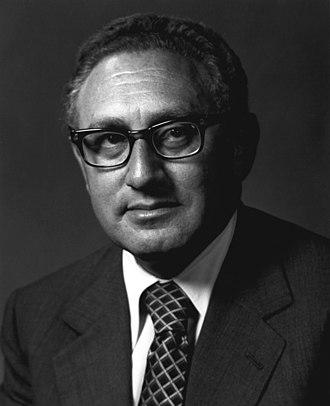
Kissinger, Henry A.
During the Nixon administration, Henry A. Kissinger served as the Assistant to the President for National Security Affairs from January 1969 through the end of Nixon's presidency, acting as the chief architect of U.S. foreign policy. Throughout the White House taping period (February 1971 to July 1973), he was captured extensively on tape advising the president on pivotal events such as the secret opening to China, détente with the Soviet Union, and the negotiation of the Paris Peace Accords. In September 1973, shortly after the taping system was dismantled, Kissinger was additionally appointed as Secretary of State, holding both powerful positions simultaneously until Nixon's resignation in August 1974.
What Kissinger talks about on the tapes
Vietnam War 628Foreign Policy 477Public relations 209People's Republic of China 138Congressional relations 135Diplomacy 122Press relations 92Soviet Union 90Military Strategy 81US-Soviet Relations 75Peace negotiations 74Economic policy 68
Conversations (1,504)
— Page 13 of 16President Nixon met with Henry Kissinger and Alexander Haig to discuss the current stalemate in Vietnam negotiations, specifically addressing North Vietnamese intransigence and bad-faith tactics regarding a potential cease-fire and the status of U.S. prisoners of war. Facing a breakdown in talks and an imminent congressional session that threatened to cut off war funding, Nixon decided to resume U.S. bombing and mining of North Vietnamese infrastructure. The President and his advisors concluded that this military pressure was necessary to force a settlement, maintain U.S. credibility, and ensure that South Vietnamese President Nguyen Van Thieu understood the necessity of a finalized agreement.
President Nixon met with Henry Kissinger and Alexander Haig to assess the stalled Vietnam peace negotiations and contemplate the strategic use of increased bombing campaigns, specifically targeting Hanoi and Haiphong, to compel North Vietnamese concessions. The discussion focused on maintaining U.S. leverage while navigating concerns regarding South Vietnamese President Nguyen Van Thieu's cooperation, domestic political pressures, and the potential impact on relations with the Soviet Union ahead of a planned 1973 summit with Leonid Brezhnev. Amidst these diplomatic maneuvers, Nixon also briefly paused the meeting to place a personal birthday call to J. Paul Getty.
In this extensive Oval Office meeting, President Nixon, H.R. Haldeman, Henry Kissinger, and other key advisors discussed the administration's second-term reorganization, personnel appointments (including John Scali as UN Ambassador), and public relations strategies. A significant portion of the conversation focused on the status of Vietnam peace negotiations, with Nixon emphasizing a hardline approach, including the escalation of bombing and mining operations to pressure North Vietnam. The President also provided specific directives for handling the press and managing the White House social schedule, including the exclusion of certain media outlets and the coordination of internal White House renovations.
President Nixon, Henry Kissinger, and Vice President Spiro Agnew met to coordinate their strategy regarding stalled Vietnam peace negotiations and the accompanying Congressional pressure to cut off war funding. The participants discussed the intransigence of South Vietnamese President Nguyen Van Thieu and the tactical duplicity of North Vietnam, which had hindered a finalized settlement agreement. Nixon and Kissinger decided that Kissinger would publicly brief the press on the status of the talks, aiming to shift blame for the delays onto North Vietnam while maintaining a firm stance on continued military support for the South.
President Nixon met with Henry Kissinger, Alexander Haig, and Ronald Ziegler to evaluate the stalemated Vietnam peace negotiations and consider military options to break the impasse. The participants discussed the frustrations of dealing with North Vietnamese duplicity and the political challenges posed by South Vietnamese President Nguyen Van Thieu's resistance to a potential settlement. Nixon emphasized the need for a decisive military response, including sustained bombing, to force a breakthrough, while also strategizing how to manage domestic public opinion and pressure from Congressional critics.
President Nixon and Henry Kissinger discussed the diplomatic and military strategy regarding the Vietnam peace negotiations, specifically focusing on the necessity of resuming air strikes to force Hanoi to settle. Nixon emphasized that taking military action now was critical, as it avoided the constraints of consulting with Congress and created an enforceable agreement before the upcoming inauguration. They also analyzed the lack of cooperation from South Vietnamese President Nguyen Van Thieu and finalized plans for a private dinner with Alice Roosevelt Longworth and other select guests.
President Nixon and Henry Kissinger coordinated logistics for a dinner event before pivoting to a critical discussion regarding stalled Vietnam peace negotiations. They debated the merits of pursuing a bilateral deal with North Vietnam while assessing the risks of a potential collapse of the South Vietnamese government under President Thieu. The two leaders also analyzed the psychological impact of recent U.S. mining and bombing campaigns on Hanoi, while strategizing how to manage domestic political pressure and potential leaks regarding the failed talks.
President Nixon and Henry Kissinger discuss the ongoing bombing and mining campaign against North Vietnam, specifically focusing on the operational impact of weather conditions, B-52 losses, and the destruction of North Vietnamese radio facilities. Kissinger provides updates on the progress of the air strikes while noting that the administration has initiated a new round of peace negotiations in hopes of achieving a settlement. The two also address concerns regarding leaked information about the campaign and the broader strategic necessity of maintaining American credibility with allies and adversaries alike.
President Nixon and Henry Kissinger discuss the tactical implementation and operational pace of an ongoing bombing campaign, specifically addressing the frequency and targeting of strikes. The conversation centers on maintaining operational intensity and ensuring military effectiveness, with the President explicitly instructing Kissinger to persist with the current offensive strategy. They assess the technical challenges of target selection and the implications of potential collateral damage in populated areas.
President Nixon and Henry Kissinger discuss the successful completion of the second wave of B-52 bombing raids over North Vietnam, noting that only one aircraft sustained damage. Kissinger reports that Soviet news agency TASS has already publicized the strikes on Hanoi’s marshalling yards, confirming the effectiveness of the attack. Both men justify the escalation as a necessary strategic response, concluding that they had no other viable options to force the North Vietnamese to take notice.
President Nixon and Henry Kissinger met briefly to assess the status of ongoing strategic negotiations, characterized by a mix of high expectations and subsequent complications. The participants discussed the uncertainty surrounding current initiatives, ultimately concluding that they had no viable alternative but to proceed with their chosen course of action. This brief exchange served to reaffirm the administration's resolve in the face of unpredictable diplomatic developments.
President Nixon met with his senior aides and advisors to discuss a wide range of personnel appointments, administrative reorganizations, and the ongoing situation in Vietnam. The group strategized on filling key government roles while simultaneously consolidating executive office functions to reduce staff and streamline bureaucracy. Additionally, they reviewed the military status of the Vietnam War, affirming their commitment to continue military pressure until a satisfactory peace agreement could be secured.
President Nixon met with H. R. Haldeman, John Ehrlichman, and Henry Kissinger to discuss the administration's ongoing challenges with press relations, particularly concerning the media's coverage of the Vietnam peace negotiations. The participants analyzed the political sensitivity surrounding Kissinger’s public comments and potential resignation, while also evaluating the President's credibility and the impact of the 1972 election results. Additionally, the conversation addressed the logistical complexities of the upcoming second-term reorganization and the need for effective communication strategies regarding legislative budget priorities.
President Nixon met with H.R. Haldeman, Maurice Stans, and others to discuss second-term administrative reorganizations, press strategy, and Vietnam policy, specifically the impact of renewed bombing. Much of the discussion focused on managing the aftermath of the 1972 campaign, including the handling of surplus funds and the recognition of major donors through social events and potential appointments. Nixon expressed frustration over the perceived political hostility of the press and the impact of the Watergate scandal on his administration's public reputation and fundraising efforts.
In this Oval Office meeting, President Nixon, Henry Kissinger, H. R. Haldeman, and others discussed the state of Vietnam peace negotiations following a breakdown in talks and North Vietnamese public charges. The participants reviewed the administration's strategic efforts to maintain pressure on Hanoi, including the impact of recent bombing campaigns and the tone of Congressional relations. Additionally, the President and his staff coordinated personnel and administrative matters for the second term, specifically addressing campaign contributor recognition, the vetting of nominees for the Securities and Exchange Commission, and the desire for greater loyalty and political reliability in key appointments.
President Nixon and Henry Kissinger discussed the progress and strategic effectiveness of the ongoing B-52 bombing campaign in Vietnam, noting the disruption of Radio Hanoi and minimal public backlash. Kissinger reported that Alexander Haig would soon provide updates from his meetings with South Vietnamese President Nguyen Van Thieu, with both men agreeing that the military pressure was necessary to enforce a potential peace agreement. Additionally, the President confirmed upcoming diplomatic appointments, including William Sullivan as ambassador to the Philippines and Marshall Green to Australia.
President Nixon met with H. R. Haldeman and Henry Kissinger to discuss the stalled Vietnam peace negotiations and the intense US bombing campaign north of the 20th parallel. The conversation centered on the continued intransigence of South Vietnamese President Nguyen Van Thieu, with the participants evaluating the strategic risks of either forcing Thieu to accept a settlement or pursuing a separate bilateral deal with North Vietnam. Despite mounting casualties from B-52 operations and criticism from some Congressional leaders, Nixon and Kissinger decided to maintain military pressure in hopes of securing a breakthrough in technical talks and achieving a final peace agreement.
President Nixon and Henry Kissinger discussed the status of ongoing peace negotiations with North Vietnam and the strategic impact of the current U.S. bombing campaign. Kissinger reported on a recent message sent to Hanoi, offering a 36-hour window for a bombing halt conditional upon North Vietnamese confirmation of specific meeting dates. Both men expressed confidence in the effectiveness of the military pressure being applied and agreed to remain firm in their negotiating stance regardless of media criticism or domestic public opinion.
President Nixon and Henry Kissinger discussed the resumption of Vietnam peace negotiations following North Vietnam's positive response to U.S. overtures. The two agreed on a schedule to announce a bombing halt of North Vietnam and the subsequent restart of technical talks. They also strategized on how to manage the South Vietnamese leadership and domestic U.S. political concerns, ultimately deciding to delay major diplomatic moves, including Vice President Agnew's trip to Saigon, until after the 1973 presidential inauguration to minimize the risk of a public confrontation.
President Nixon and Henry Kissinger coordinate the timing for a public announcement regarding the acceptance of a peace proposal, finalizing a Saturday morning deadline. They discuss the strategic necessity of adhering to their commitments and address the political optics of the ongoing bombing campaign. The conversation confirms that both parties have agreed to the terms, with Nixon emphasizing the importance of fulfilling their stated word.
President Nixon and Henry Kissinger discussed the logistical coordination of the upcoming announcement regarding the cessation of U.S. bombing north of the 20th Parallel in North Vietnam. They focused on maintaining a low-key, professional public tone to avoid appearing desperate while ensuring that congressional leaders were properly briefed without providing excessive detail. The two men also reviewed the status of peace negotiations and the strategic significance of the bombing campaign in pressuring North Vietnamese leadership to return to the bargaining table.
President Nixon and Henry Kissinger coordinated the messaging strategy for an upcoming, highly sensitive announcement regarding Vietnam peace negotiations. The President directed that the announcement be delivered in a strictly scripted, low-key manner by press secretary Ronald Ziegler to prevent unauthorized interpretations or deviations from official policy. Additionally, they strategized on managing Congressional leaders, specifically deciding to brief only Senator Mike Mansfield while withholding information from others to protect the delicate status of the ongoing talks.
President Nixon and Henry Kissinger discussed the communication strategy regarding the upcoming announcement of a pause in the bombing of North Vietnam. They aimed to frame the decision as a calculated step in an ongoing negotiation process rather than a reaction to domestic political pressure or public protests. Kissinger was tasked with briefing key Congressional leaders and influential media figures to maintain a posture of resolve while reinforcing the administration's serious commitment to ending the conflict.
President Nixon and Henry Kissinger met to coordinate the messaging strategy surrounding the upcoming announcement of resumed peace negotiations with North Vietnam. The discussion focused on how to frame the resumption of talks to avoid the perception that the U.S. had backed down due to public criticism or the recent bombing campaign. They decided on a plan to brief key political allies, including Republican and Democratic congressional leaders, to ensure a controlled and favorable narrative before the news broke.
President Nixon and Henry Kissinger discuss the international reaction to the U.S. bombing campaign in North Vietnam, specifically analyzing statements from Chou En-lai and concerns regarding Australian Prime Minister Gough Whitlam. They coordinate strategies for managing communications with various allied nations to ensure the administration maintains control over foreign policy messages. The two also resolve to keep the Australian leadership at a distance while managing tensions stemming from Whitlam's criticism of the U.S. military actions.
President Nixon and Henry Kissinger discuss retaliatory measures against the Australian government following its criticism of U.S. bombing operations during the Vietnam War. Nixon explicitly instructs Kissinger to exclude Australian officials from sensitive communications and mandates a diplomatic freeze that includes avoiding social functions and birthday messages. The conversation underscores the administration's intent to punish the Australian leadership for their political opposition to American military policy.
President Nixon and Henry Kissinger discuss the political management of the ongoing US bombing campaign in North Vietnam, specifically focusing on how to frame the rationale for the strikes to Congressional leaders and the public. They emphasize maintaining a hard-nosed stance to ensure North Vietnam returns to serious negotiations and secures the release of American POWs, while coordinating efforts to keep domestic supporters aligned. Additionally, the pair reviews diplomatic strategies regarding France, including potential support for President Georges Pompidou amidst his domestic political challenges, and touches upon the reception of a message from the People's Republic of China.
President Nixon and Henry Kissinger met to coordinate strategy regarding the recent bombing campaign in Vietnam and the resulting congressional and public pressure. Nixon expressed a determination to remain "hard-nosed" with critics and Congressional leadership, rejecting calls to justify the military actions, which he argued were necessary to force negotiations. Additionally, the pair discussed foreign policy, specifically reaffirming support for French President Georges Pompidou over his socialist opponents and planning for upcoming diplomatic visits.
President Nixon and Henry Kissinger coordinated the notification of congressional leaders regarding the upcoming suspension of U.S. bombing in North Vietnam. The discussion focused on managing political fallout, particularly pressure from liberal critics and figures like Hubert Humphrey and Mike Mansfield, while maintaining a restrained public message to avoid the perception of gloating over a military victory. Kissinger was tasked with briefing key members of Congress to ensure they were informed of the administration's decision prior to the official public announcement.
President Nixon and Henry Kissinger coordinate a strategy to brief congressional leaders regarding a pending major announcement related to the Vietnam War and the recent bombing campaigns. The President stresses the importance of personal outreach to key allies like Mansfield and Scott to manage legislative fallout and control the narrative surrounding the resumption of military operations. Kissinger outlines a justification for the bombing, emphasizing that the action was a necessary response to an impasse in peace negotiations, and confirms that legislative aides will be tasked with reaching out to remaining members of Congress.
President Nixon and Henry Kissinger discussed the political and public reception of the recent decision to cease U.S. bombing north of the 20th Parallel in North Vietnam. Kissinger updated the President on his outreach to congressional leaders and media figures, noting a surprisingly positive surge in public telegrams supporting the administration's actions. The two also addressed the status of peace negotiations, the potential for an eventual agreement in Paris, and the necessity of managing South Vietnamese President Nguyen Van Thieu's expectations through a low-profile visit by Alexander Haig.
President Nixon and Henry Kissinger met to coordinate their strategy regarding upcoming peace negotiations and the management of domestic political fallout. They discussed the importance of controlling the narrative by refusing to explain or defend recent bombing decisions to critics, focusing instead on presenting the finalized peace agreement as a fait accompli. Additionally, they reviewed key political allies and opponents, emphasizing the need to keep supportive congressional leaders informed while bypassing or ignoring critical media figures.
President Nixon met with Ronald Ziegler and Henry Kissinger to coordinate the administration's public and congressional messaging regarding ongoing Vietnam peace negotiations and recent military actions. They discussed refuting media narratives of presidential indecisiveness by emphasizing the consistency of the "May 8th policy" and the necessity of pressure tactics to achieve a "peace with honor." Nixon also expressed his deep resentment toward critical members of the press, academia, and Congress, instructing staff to exclude hostile media outlets from White House social functions while preparing to consolidate negotiating authority ahead of further Paris talks.
President Nixon and Henry Kissinger met to evaluate strategic options for concluding the Vietnam War amidst mounting congressional pressure and domestic controversy over bombing operations. They compared two primary approaches: "Option One," which involved pursuing an agreement similar to the stalled October 1972 proposal, and "Option Two," a more aggressive stance involving sustained military force. Ultimately, they leaned toward Option One, aiming to secure a deal while preparing to manage the political fallout and potential resistance from South Vietnamese President Thieu. Nixon decided to consult with bipartisan congressional leadership to reinforce his administration's position of seeking an honorable peace.
President Nixon met with his senior advisors, including H. R. Haldeman and Henry Kissinger, to coordinate White House press strategy, manage staff morale, and discuss the status of Vietnam peace negotiations. Nixon emphasized his desire for a disciplined administration that would avoid unauthorized media contacts and prioritize loyalist staffing appointments, particularly in the Defense Department and research sectors. A significant focus was placed on the sensitivity of the Paris peace talks, with Nixon maintaining a firm stance on the necessity of an honorable settlement and expressing frustration with the defense establishment's overlapping intelligence and tactical structures.
President Nixon met with Henry Kissinger, William Rogers, Melvin Laird, Admiral Thomas Moorer, and Colonel Richard Kennedy to coordinate the administration's public relations and congressional strategy regarding Vietnam. The participants discussed the military effectiveness of recent bombing campaigns, the necessity of countering negative media reports by highlighting North Vietnamese civilian destruction, and the importance of maintaining a unified front. Nixon directed his team to avoid a defensive posture and to provide briefings for key congressional allies using photographic evidence of military targets, while stressing that the administration must remain cautious about disclosures until upcoming negotiations conclude.
President Nixon met with Stephen B. Bull to finalize logistical details and media management for an upcoming award ceremony honoring Alexander M. Haig, Jr. The discussion focused on controlling press access during the event and perfecting the delivery of the official citation, which had been vetted by Melvin R. Laird. Henry A. Kissinger joined the brief session to coordinate the preparation of a statement regarding Secretary of State William P. Rogers.
President Nixon hosted a ceremony in the Oval Office to honor General Alexander M. Haig, Jr. with the Defense Distinguished Service Medal. The event, attended by Haig’s family and high-ranking administration officials, served as a formal recognition of Haig’s significant contributions to national security and his diplomatic efforts, including his work supporting Henry Kissinger. The gathering concluded with photo opportunities and brief discussions regarding Haig's transition out of his White House role.
President Nixon met with incoming Secretary of Defense Elliot Richardson and National Security Advisor Henry Kissinger to outline the President's expectations for a major overhaul of the Department of Defense. Nixon emphasized the need to dismantle the existing management systems, reduce the number of assistant secretaries, eliminate bureaucratic duplication, and assert civilian control over the military establishment. He also directed Richardson to prioritize strategic thinking over administrative brokering, specifically highlighting the importance of reevaluating defense spending, intelligence operations, and R&D programs in coordination with the National Security Council.
President Nixon and Henry Kissinger met with Gerard C. Smith to discuss Smith's transition out of government and his future plans involving international research councils. The conversation covered the development of a collaborative executive committee focused on US, European, and Japanese relations, with a particular emphasis on the critical role of energy security and the necessity of constructively integrating Japan into Middle Eastern diplomacy. Nixon expressed his support for Smith's new endeavors and promised to lend presidential backing to the formation of the research council, while also discussing the historical context of global governance and the League of Nations.
President Nixon and Henry Kissinger met to finalize scheduling arrangements for an upcoming visitor expected at 4:30 p.m. The brief discussion served to coordinate the logistics of the President's calendar and confirm the timing for the arrival of the undisclosed guest. No further substantive policy matters were recorded in this segment of the conversation.
President Nixon met with John Ehrlichman, H.R. Haldeman, and Henry Kissinger to discuss executive branch reorganization, judicial and FBI appointments, and legislative strategy. The President emphasized the need to streamline executive functions by empowering cabinet-level counselors and reducing the White House staff to improve efficiency and minimize concerns regarding executive privilege. Additionally, the group addressed the ongoing Vietnam peace negotiations and the importance of maintaining a unified stance with key administration officials as they prepared to brief Congress on these domestic and foreign policy priorities.
President Nixon met with Charles Colson, Henry Kissinger, and other staff members to discuss political messaging, legislative relations with Congress, and the strategic direction of his administration. The participants addressed the difficulties of maintaining secrecy during delicate negotiations, particularly concerning military actions and public perception of the war effort. The conversation reflects the President's frustration with congressional opposition and his intent to navigate these political challenges through careful control of the administration's public narrative.
President Nixon, H. R. Haldeman, Henry Kissinger, and Ronald Ziegler met to discuss the administration's Vietnam strategy, focusing on congressional management and public relations in the lead-up to critical peace negotiations. Nixon and Kissinger evaluated the political fallout from recent bombing campaigns and their impact on Senate support, with the President emphasizing the need for congressional allies to defend his policy while avoiding public disclosures that might jeopardize potential diplomatic breakthroughs. They also addressed personnel matters and the ongoing frustration with the legislative branch's efforts to influence war policy, ultimately deciding to maintain a disciplined public stance while coordinating more effectively with loyalists in Congress.
President Nixon met with John Ehrlichman and later Henry Kissinger to discuss public perception of the Vietnam War negotiations, the administration's strategy for managing Congressional criticism, and the government's approach to domestic reorganization. Nixon and his advisors emphasized the necessity of maintaining a firm stance in peace negotiations while framing the conflict as a defense of South Vietnamese civilians against North Vietnamese aggression. The group also evaluated the impact of international criticism—specifically from Canada regarding U.S. bombing campaigns—and determined that while the administration would not be deterred, they would explore methods to exert diplomatic and economic pressure on such critics.
President Nixon directs Henry Kissinger to adopt a cold, confrontational demeanor during an upcoming meeting with Senator Mike Mansfield to pressure him regarding Congressional opposition to the Vietnam War. Nixon insists that Kissinger blame Mansfield and other Democrats for jeopardizing peace negotiations by threatening to cut off war funding, warning that the President will publicly address the nation to assign blame if the Senate persists. The President emphasizes that Kissinger must abandon conciliatory tactics and clearly communicate that Senate actions have undermined the administration's leverage in ongoing talks.
President Nixon directs Henry Kissinger to take an icy, confrontational stance with Senator Mike Mansfield regarding congressional interference in Vietnam peace negotiations. Nixon tasks Kissinger with informing Mansfield that his legislative actions have jeopardized the potential for an honorable peace and forced the President to consider a national televised address to hold Congress accountable. This strategy aims to shift public blame toward Senate Democrats for any future failure in the ongoing peace talks.
President Nixon and Henry Kissinger discussed the status of Vietnam peace negotiations and the potential for Chinese and Soviet influence on Hanoi's leadership. They evaluated the persistent demands for changes in the agreement and the role of North Vietnamese negotiator Le Duc Tho. Nixon instructed Kissinger to utilize presidential messaging to strengthen his bargaining position during upcoming sessions.
President Nixon and Henry Kissinger conferred at Camp David to coordinate their messaging strategies regarding ongoing diplomatic or policy negotiations. Nixon emphasized his confidence in Kissinger’s previous communications and granted him full authorization to utilize and reference existing administration policy statements as needed. The brief discussion served to align their public posture and ensure consistency in their upcoming correspondence.
President Nixon met with speechwriter Raymond Price and National Security Advisor Henry Kissinger to refine the language of his upcoming inaugural address and strategize the final stages of the Vietnam peace negotiations. The discussion focused on emphasizing foreign policy successes, specifically the breakthroughs with the Soviet Union and China, while balancing the tone regarding South Vietnamese President Nguyen Van Thieu's resistance to the proposed peace terms. Nixon and Kissinger also evaluated the political implications of a potential cease-fire and the necessity of maintaining a firm stance to ensure a stable exit from the conflict.
President Nixon and Henry Kissinger met to coordinate administrative logistics and staffing, specifically regarding Kissinger's upcoming schedule. The discussion focused on coordinating meetings with White House aides Raymond K. Price, Jr. and Alexander M. Haig, Jr. These personnel arrangements were prioritized to manage the workflow within the Executive Office Building during this period.
President Nixon, Henry Kissinger, and Ronald Ziegler met to discuss the final preparations for the 1973 Inaugural address and the critical timing surrounding the Vietnam peace settlement. They reviewed revisions to the speech, specifically focusing on the characterization of U.S. alliances and diplomatic references to Beijing and Moscow. Additionally, the participants coordinated media strategies for the Vietnam announcement, emphasizing the importance of controlling information flow to the press and ensuring that key political figures were properly briefed.
President Nixon and Henry Kissinger discussed the final stages of the Vietnam peace negotiations, focusing on overcoming President Nguyen Van Thieu's resistance to the proposed agreement. They agreed that Nixon would send a firm message to Thieu emphasizing that the U.S. will proceed with initialing the agreement by Tuesday, while leveraging the threat of a potential Congressional aid cutoff to secure his cooperation. Nixon also issued strict orders to withhold information about the deal from international allies, including Canada and Australia, until shortly before the public announcement.
President Nixon and Henry Kissinger discussed the progress of negotiations with South Vietnamese President Nguyen Van Thieu regarding the Vietnam peace agreement. Kissinger reported that Thieu had effectively moved past his objections to the accord and was likely maneuvering for domestic political optics. The two finalized plans to meet the following morning at the Executive Office Building to consolidate the final facts before Kissinger's departure and the President’s anticipated public announcement.
President Nixon and Henry Kissinger discuss the final stages of the Vietnam peace negotiations, focusing on ensuring South Vietnamese President Nguyen Van Thieu’s compliance with the impending agreement. Kissinger briefs the President on technical details, including language regarding personal weapons and the planned schedule for his upcoming meetings in Paris. The two leaders agree on the strategic value of including the South Vietnamese Foreign Minister in these talks to provide Thieu with a face-saving "fig leaf" while finalizing the transition toward a ceasefire.
President Nixon and Henry Kissinger discuss the complexities of diplomatic communications and the perceived dishonesty of foreign counterparts regarding official correspondence. The two explore the necessity of maintaining a firm public stance while coordinating their strategic approach to upcoming negotiations. They conclude by scheduling a follow-up meeting at the Executive Office Building for the following evening to further assess their position.
President Nixon and Henry Kissinger met to coordinate the final stages of the Vietnam peace negotiations and manage the associated public relations strategy. They discussed the complexities of the agreement, the handling of South Vietnamese President Nguyen Van Thieu, and the necessity of maintaining presidential authority against domestic political opposition. The pair also addressed the logistics of the upcoming formal announcement and the importance of briefing Congressional leaders and Cabinet members to secure unified support for the peace settlement.
President Nixon and Henry Kissinger met to finalize the messaging surrounding the upcoming Vietnam settlement. The two discussed the inclusion of the phrase "peace with honor" in the official public announcement. Ultimately, they reached an understanding regarding the strategic use of this specific terminology in addressing the end of the conflict.
President Nixon met with Charles Colson and Henry Kissinger to discuss public relations strategies regarding the impending Vietnam peace settlement and the anticipated political fallout from domestic critics. The participants reviewed plans to coordinate with congressional leaders and labor figures to build support, while also addressing a recent Supreme Court ruling on abortion and Colson's ongoing legal dispute with Time magazine. Nixon and Kissinger finalized preparations and messaging for an upcoming televised speech intended to address the war's conclusion and defend the administration's past policies.
President Nixon, Henry Kissinger, and Press Secretary Ronald Ziegler coordinated the final revisions and distribution protocol for the President's upcoming speech regarding the Vietnam peace settlement. The participants emphasized strict security for the announcement text, mandating that no media access or 'sneak previews' occur until after the President’s delivery. Nixon and Kissinger finalized specific phrasing edits to ensure the speech's tone and message were accurate before its release.
President Nixon met with bipartisan Congressional leadership, Vice President Agnew, and Henry Kissinger to discuss the imminent Vietnam peace settlement and the subsequent withdrawal of U.S. forces. The participants reviewed key provisions of the agreement, including cease-fire terms, the release of prisoners of war, and the complexities surrounding continuing conflicts in Laos and Cambodia. Nixon coordinated with the congressional delegation regarding the distribution of briefings to broader legislative members and finalized plans for his public address announcing the agreement.
President Nixon and Henry Kissinger discuss the overwhelmingly positive public and political reception of the Vietnam peace settlement, contrasting it with the visible frustration of the news media, specifically CBS reporters. Nixon expresses satisfaction at having outmaneuvered congressional critics like Mike Mansfield and Tip O'Neill, while affirming his intent to bypass the established intellectual elite. The two agree on the effectiveness of Nixon's recent address and coordinate Kissinger’s upcoming schedule for congressional briefings.
President Nixon, Henry Kissinger, and Ronald Ziegler met to discuss public relations strategies surrounding the recently announced Vietnam peace settlement. The participants focused on managing the press, specifically addressing how to handle potentially hostile questioning from journalists like Marvin Kalb and Helen Thomas regarding the agreement. Nixon emphasized the importance of controlling the narrative regarding the release of Prisoners of War (POWs) and directed Kissinger on how to present these details during his upcoming briefings.
President Nixon met with outgoing Israeli Ambassador Yitzhak Rabin to discuss the state of U.S.-Israel relations and Middle East regional stability. Following Rabin's departure, Nixon and Henry Kissinger transitioned to a tactical review of the recent Vietnam peace settlement, emphasizing the necessity of maintaining a firm stance with Congress and the media. The conversation also touched upon the political implications of Lyndon B. Johnson’s death and the President's upcoming diplomatic strategy regarding the war's conclusion.
President Nixon met with H.R. Haldeman and John Ehrlichman to discuss personnel staffing, legislative strategy, and the administration’s approach to managing congressional relations following his reelection. A significant portion of the discussion centered on Vice President Spiro Agnew’s recent attempts to assert independent policy initiatives, with Nixon and his aides expressing concern about Agnew's lack of coordination with the White House and his pursuit of public attention. The group also evaluated strategies for promoting the administration's budget and legislative agenda, specifically focusing on how to handle executive privilege claims and the confirmation of presidential assistants by Congress.
President Nixon, Henry Kissinger, and Indonesian Foreign Minister Adam Malik met to discuss the positive international reaction to the recently signed Vietnam peace agreement. The participants reviewed favorable responses from various global powers and the perceived strengthening of Nixon's political position. Additionally, the group touched upon the strategic importance of Indonesia and Southeast Asia, with Nixon emphasizing a commitment to continued economic and geopolitical cooperation.
President Nixon met with his senior advisors and South Vietnamese officials, Tran Kim Phuong and Tran Van Lam, to discuss the recent Vietnam ceasefire and the importance of continued U.S. military and economic support for South Vietnam. Nixon emphasized the necessity of a strong, unified front against North Vietnamese aggression while expressing frustration with domestic media coverage and political opposition regarding the war. During the meeting, the participants coordinated plans for future high-level visits and strategies to maintain the stability of the South Vietnamese government under President Thieu.
President Richard M. Nixon met with British Prime Minister Edward Heath, Sir Burke Trend, Henry Kissinger, and George Shultz to discuss diplomatic and policy matters. Due to the highly fragmentary and incoherent nature of the provided transcript, it is impossible to discern substantive policy developments or specific action items from this record. The conversation appears to lack a coherent topical focus, precluding a meaningful historical summary of the proceedings.
President Richard Nixon and Henry Kissinger met to discuss the status and implementation of the Vietnam peace settlement following the Paris Accords. They analyzed specific provisions regarding elections, the National Council, and the management of prisoner of war (POW) returns. Additionally, the pair coordinated strategies for managing press relations and briefed each other on upcoming diplomatic travel and internal scheduling requirements.
Henry Kissinger informs President Nixon that Senator John Stennis was shot twice during a robbery outside his home and is currently undergoing surgery at Walter Reed Army Hospital. The two discuss the potential political implications of the shooting, specifically noting that the incident elevates Senator Stuart Symington to acting chairman of the Armed Services Committee. Nixon decides to personally contact Mrs. Stennis to express his concern regarding the Senator’s condition.
President Nixon and Henry Kissinger engaged in a brief, lighthearted exchange to share a laugh regarding a recent event. The conversation served as a casual follow-up to a previous discussion, focusing on the perceived humor and successful outcome of the incident. No substantive policy matters or formal decisions were addressed during this short interaction.
President Nixon and Henry Kissinger discussed preparations for an upcoming press conference, focusing on addressing the status of North Vietnamese prisoners of war and recent military activities in Vietnam and Cambodia. They reviewed the implementation of the ceasefire, analyzed the diplomatic statements from the Soviet Union and China, and coordinated their public messaging regarding the efficacy of the peace agreement. Additionally, the pair addressed administrative details, including the potential scheduling of a summit with Leonid Brezhnev and the planned meeting with Nguyen Van Thieu.
President Nixon and Henry Kissinger met to discuss military strategy and logistical concerns regarding the ongoing conflict, specifically focusing on the supply and replacement of weaponry. The discussion touched upon the restraint exercised in current operations and addressed potential bombing activities related to Cambodia. Nixon reaffirmed his commitment to proceeding with a planned military operation.
President Nixon met with Ronald Ziegler, Peter Brennan, and Henry Kissinger to prepare for an upcoming press conference. The discussion focused on crafting responses to inquiries regarding the Vietnam peace settlement, postwar diplomatic and economic relations, and the Watergate scandal. The participants evaluated how to address potential questions about Watergate investigations while maintaining a stance of cooperation with Congress and avoiding premature comments on ongoing legal proceedings.
President Nixon and Henry Kissinger met to discuss scheduling and logistics related to upcoming travel arrangements. The conversation focused on the coordination of potential presidential trips and the necessary preparations for diplomatic engagement. No definitive outcomes were reached, as the discussion served primarily to sync the President's calendar with his National Security Advisor.
President Nixon and Henry Kissinger met to prepare for an upcoming press conference by anticipating potential questions regarding the administration's past communications with Lyndon B. Johnson. They focused specifically on establishing a clear timeline and confirmation of calls made by Kissinger, H.R. Haldeman, and the President to Johnson following the recent Vietnam peace settlement. The discussion functioned as a briefing to ensure the President could accurately address inquiries concerning these sensitive political contacts.
President Nixon met with former Japanese Prime Minister Eisaku Sato and his delegation to reflect on the strength of the U.S.-Japan alliance and the geopolitical significance of the recently negotiated Vietnam peace settlement. The participants emphasized the necessity of military and diplomatic strength to deter potential aggression and discussed the importance of maintaining international commitments to ensure global stability. Nixon underscored the personal nature of his relationship with Sato and highlighted the vital role that mutual trust and strong, unified alliances play in navigating relations with other global powers.
President Nixon and Henry Kissinger met to coordinate strategy for upcoming diplomatic engagements, including meetings with British Prime Minister Edward Heath and potential high-level discussions regarding the Middle East, the Soviet Union, and China. They discussed managing economic tensions with Europe, timing future summits to maximize leverage, and maintaining a strategic approach to sensitive issues like Taiwan and nuclear treaties. The conversation also included logistical planning for Kissinger’s upcoming international travel and adjustments to the President's schedule to facilitate these diplomatic goals.
President Nixon met with British Prime Minister Edward Heath, accompanied by Henry Kissinger and Sir Burke Trend, to discuss international diplomacy and foreign policy objectives. The discussion focused on the recent Vietnam settlement, including the status of Cambodia and Laos, the importance of US reliability as an ally, and the complexities of managing relations with the Soviet Union and China. The participants also touched upon Commonwealth affairs, Indian subcontinent tensions, and the domestic challenges surrounding the intake of Ugandan Asian refugees in Great Britain.
President Nixon met with Ronald Ziegler and Henry Kissinger to strategize on managing press relations and public perception following the recent Vietnam settlement. The discussion focused on reinforcing the President’s tough, decisive image, countering critics of his stance on amnesty, and maximizing the effectiveness of Kissinger’s upcoming television appearances. They finalized a scheduling adjustment for Kissinger to ensure he could fulfill his media obligations while remaining available for a critical upcoming meeting with British Prime Minister Edward Heath.
President Nixon and Henry Kissinger coordinate a follow-up meeting to address European-American economic relations. They reach a consensus to include Treasury Secretary George Shultz in these discussions, noting his proximity within the building. The participants finalize plans to relocate the meeting to another office to facilitate a more productive environment.
President Nixon met with British Prime Minister Edward Heath, along with Henry Kissinger, George Shultz, and Sir Burke Trend, to discuss bilateral trade relations and domestic economic challenges. The conversation focused on the political difficulties of agricultural trade policy and the nuances of unemployment statistics as they related to the broader American welfare landscape. The group also touched upon the competitive pressures posed by Japanese manufacturing and the need for ongoing cooperation between the United States and its European allies.
President Nixon and Henry Kissinger met to discuss upcoming diplomatic strategy, specifically focusing on an impending meeting with British Prime Minister Edward Heath regarding trade, monetary issues, and nuclear treaties. The discussion also addressed the administration's global strategy concerning the Soviet Union and China, alongside managing the shifting public sentiment regarding the Vietnam War. Additionally, they reviewed logistical concerns for upcoming travel, including coordinating Kissinger’s schedule and addressing the problematic behavior and public statements of Vice President Spiro Agnew.
Henry Kissinger placed a personal call from Camp David to his father, Louis Kissinger, and his sister-in-law, Paula Stern Kissinger, to wish his father a happy birthday and discuss recent events. The family members praised Kissinger’s recent television appearance and discussed his upcoming diplomatic trip to Hanoi. Despite his family’s concerns regarding his safety, Kissinger expressed confidence in his security detail and promised to call again before his departure.
Henry Kissinger consulted with his staff to review recent messages and professional feedback following his well-received television appearance on the CBS program with Marvin Kalb. He subsequently coordinated with General Brent Scowcroft to confirm the successful transmission of a communiqué regarding the implementation of the Paris Peace Accords with the Soviet Union. The conversation concluded with Kissinger arranging for an assistant to explain his scheduling constraints to Catherine Hoffman due to ongoing meetings with President Nixon and Prime Minister Edward Heath.
Henry Kissinger contacted Cmdr. Jonathan T. Howe to organize an urgent diplomatic notification strategy regarding the upcoming announcement of his February 1973 trip to the People's Republic of China. Kissinger directed Howe to send back-channel communications to key diplomatic personnel and foreign governments, including representatives in South Korea, Japan, France, West Germany, Great Britain, and Laos. The instructions emphasized framing these notifications as routine consultations following the recent Vietnam settlement and maintaining strict confidentiality under the guise of contributing to peace in Asia.
Henry Kissinger met with Sir Burke Trend at Camp David to coordinate U.S. and British policy regarding nuclear negotiations with the Soviet Union, including potential strategies for the upcoming summit. The participants discussed managing scientific input from outside experts and streamlining policy planning to avoid bureaucratic friction among Cabinet departments. Kissinger also briefly interrupted the professional deliberations to place a personal call to his father, Louis Kissinger, for his 86th birthday. Ultimately, Kissinger committed to taking direct control of the nuclear policy working group to ensure a unified position for forthcoming communications with the Soviets.
Henry Kissinger consulted with the Camp David operator to review incoming correspondence and clarify details regarding specific documentation. He prioritized his official duties, citing his ongoing engagement with the President and the Prime Minister as the reason for his restricted availability. Furthermore, he directed the operator to contact Ms. Hartman to explain his inability to make personal calls due to these demanding diplomatic responsibilities.
Henry Kissinger instructed Commander Jonathan T. Howe to coordinate a high-level notification process regarding an upcoming policy announcement following the Vietnam settlement. Kissinger directed that critical diplomatic channels, including Ingersoll, Bunker, and LaPete, be informed of the text and timing of the statement to ensure a unified message during consultations. The communication was to be handled with strict confidentiality, framing the announcement as a move toward international peace.
President Nixon met with his senior advisors, including Henry Kissinger and Ronald Ziegler, to manage public perception and diplomatic strategy following the announcement of Kissinger's upcoming trip to North Vietnam. The discussion focused on maintaining strict control over press coverage to ensure the secrecy and productivity of the negotiations, while simultaneously addressing the sensitive reintegration of returning POWs and the ongoing cease-fire efforts in Laos and Cambodia. Additionally, the President engaged in a wide-ranging geopolitical review, discussing potential appointments to the Arms Control and Disarmament Agency, strategies for dealing with European allies like Great Britain, and the administration’s mounting frustration with the United Nations.
President Nixon, H. R. Haldeman, and Henry Kissinger discussed the ongoing Southeast Asia trip of Vice President Spiro Agnew, specifically focusing on scheduling his return and managing his public itinerary to avoid negative optics. The President and his advisors expressed concern that Agnew's potential visits to military commands or unauthorized stops in Hawaii could undermine peace efforts during a sensitive period involving Kissinger's travel to Hanoi. Ultimately, Nixon decided that Agnew should bypass sensitive military sites and proceed to California rather than returning immediately to Washington, effectively controlling the Vice President's narrative and ensuring his activities remained aligned with administration policy.
President Nixon and Henry Kissinger coordinated logistics for upcoming travel schedules, including Vice President Agnew's itinerary and Kissinger's planned return from Asia. They discussed the Vietnam peace process, specifically authorizing Ronald Ziegler to announce negotiations for a ceasefire in Paris, and agreed that Kissinger should visit Laos to leverage a ceasefire there. Additionally, they deliberated on diplomatic strategy regarding King Hussein of Jordan and how to manage a potential secret meeting with Egyptian representatives without triggering excessive interference from the State Department.
L. Dean Brown and Henry A. Kissinger met to finalize the complex logistics and protocol for a state dinner hosted by President Nixon for King Hussein ibn Talal of Jordan. The discussion covered sensitive arrangements for the arrival ceremony, seating protocols for the King and Queen, and the selection of entertainment to ensure the event's success. The participants also touched upon broader diplomatic concerns, including the status of foreign dignitaries and the presentation of credentials by various ambassadors.
President Nixon, King Hussein of Jordan, Henry Kissinger, and Zaid al-Rifai met to discuss the Middle East peace process and bilateral US-Jordanian relations, including military and economic aid requirements. The participants analyzed the regional security environment, specifically the influence of the Soviet Union, the threat posed by Iraq and Syria, and the potential for private, rather than public, negotiations between Jordan and Israel. Nixon committed to reviewing Jordan's urgent budgetary and military aid requests sympathetically, while Kissinger coordinated follow-up channels to maintain progress on peace negotiations.
President Nixon met with Charles W. Colson and later Henry Kissinger to discuss White House political strategy, administration appointments, and foreign policy objectives. The discussions focused on managing labor union relations, controlling the narrative through press and polling, and navigating congressional opposition to the administration's budget and reconstruction aid plans for North Vietnam. The President emphasized his desire to implement reorganization in his second term by replacing bureaucrats with political appointees and solidified plans for his upcoming diplomatic initiatives.
President Nixon and Henry Kissinger met to discuss strategy for Kissinger’s upcoming trip to Hanoi and the People’s Republic of China, as well as the ongoing effort to secure economic aid for North Vietnam. They addressed the necessity of managing Congressional resistance by emphasizing international participation in reconstruction funds and agreed on a firm, controlled approach toward critics and foreign leaders like Indira Gandhi. Nixon also expressed a desire to pivot his administration’s public focus toward a new diplomatic initiative for Europe once the Vietnam settlement was finalized.
President Nixon and Henry Kissinger met to review the geopolitical implications of Kissinger's recent trip to the People's Republic of China, specifically focusing on the personal messages exchanged with Chairman Mao Zedong and the state of U.S.-PRC relations. They discussed the nuances of a potential peace settlement in Vietnam, including the complexities of managing domestic opposition and maintaining support for the administration's policies as prisoners of war prepared to return. Additionally, the President and Kissinger coordinated on press strategy and international diplomacy, with instructions to involve William P. Rogers in subsequent briefings to maintain unified messaging on these sensitive foreign policy developments.
President Nixon and Henry Kissinger called Philadelphia Symphony Orchestra conductor Eugene Ormandy to share the exclusive news that the People's Republic of China had selected his orchestra to be the first Western symphony to perform in China. Kissinger explained that the invitation was a direct result of the President's personal advocacy for the ensemble during recent diplomatic discussions with Chou En-lai. Ormandy was instructed to maintain strict confidentiality regarding the development until the official public announcement on Thursday.
President Nixon and Henry Kissinger discussed the management of Secretary of State William P. Rogers regarding the upcoming announcement of a U.S.-PRC liaison office, as well as the difficult legislative challenge of securing Congressional approval for bilateral aid to North Vietnam. They strategized on how to frame the aid as essential leverage to ensure North Vietnamese compliance with peace agreements and regional troop withdrawals, while debating how to overcome opposition from both conservative skeptics and liberal critics. Ultimately, the pair resolved to lobby key Senators individually to emphasize that failing to support the aid program would effectively invite further regional instability.
President Nixon and Henry Kissinger coordinated the preparation for Secretary of State William P. Rogers' upcoming testimony regarding foreign relations. The discussion confirmed that Rogers had been briefed on the imminent release of a U.S.-People's Republic of China communiqué. They agreed that providing Rogers with the text by the following afternoon was the appropriate strategy to handle potential congressional inquiries on the matter.