Kissinger, Henry A.
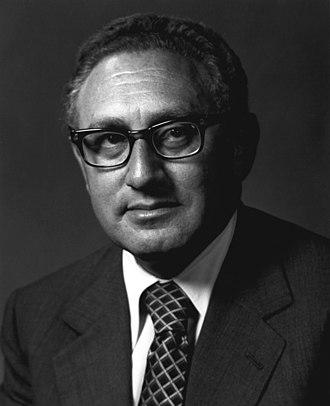
During the Nixon administration, Henry A. Kissinger served as the Assistant to the President for National Security Affairs from January 1969 through the end of Nixon's presidency, acting as the chief architect of U.S. foreign policy. Throughout the White House taping period (February 1971 to July 1973), he was captured extensively on tape advising the president on pivotal events such as the secret opening to China, détente with the Soviet Union, and the negotiation of the Paris Peace Accords. In September 1973, shortly after the taping system was dismantled, Kissinger was additionally appointed as Secretary of State, holding both powerful positions simultaneously until Nixon's resignation in August 1974.
What Kissinger talks about on the tapes
Vietnam War 628Foreign Policy 477Public relations 209People's Republic of China 138Congressional relations 135Diplomacy 122Press relations 92Soviet Union 90Military Strategy 81US-Soviet Relations 75Peace negotiations 74Economic policy 68
Conversations (1,504)
— Page 14 of 16President Nixon met with Ronald Ziegler and Henry Kissinger to coordinate the administration's public schedule, specifically addressing the timing of President Nguyen Van Thieu's visit and the President's upcoming press conference regarding troop withdrawals. The group discussed logistical and political considerations for various correspondents' dinners, including whether the President should attend the Gridiron dinner given the hostile posture of Democratic leaders like George McGovern. Additionally, Nixon and Kissinger reviewed foreign policy developments involving the Soviet Union and the People's Republic of China, emphasizing the need for strict confidentiality regarding these sensitive diplomatic channels.
President Nixon and Henry Kissinger met to coordinate administrative and diplomatic matters, including the President's decision to skip the Gridiron dinner due to his disdain for George McGovern's political conduct. They discussed the logistics of hosting South Vietnamese President Nguyen Van Thieu and selecting an ambassador for the People's Republic of China, with Nixon emphasizing the need for a high-level political appointee rather than a career diplomat to maintain White House control. Additionally, they coordinated a confidential update for William Downey regarding the impending release of his brother, John Downey, from imprisonment in China, and reflected on the success of the administration's Vietnam policy and the resulting strengthening of Nixon's public standing.
President Nixon and Henry Kissinger spoke with William Downey to convey promising news regarding the impending release of his brother, John Downey, from captivity in the People's Republic of China. Based on Kissinger's negotiations with Zhou Enlai, the Chinese agreed to review John Downey's sentence in the second half of the year due to his exemplary behavior, with potential for an earlier release if Nixon personally appeals regarding the illness of Downey's mother. Kissinger advised William Downey to maintain strict confidentiality until a formal public announcement was made the following day.
President Nixon met with USIA Director James Keogh and National Security Advisor Henry Kissinger to discuss the agency's mission, budget, and strategy for improving America's image abroad. Nixon emphasized the need for the USIA to provide a balanced narrative of the United States to counter the negative, sensationalized reporting prevalent in international media. The President directed Keogh to collaborate closely with Kissinger and the National Security Council to ensure USIA programs effectively support administration foreign policy objectives.
President Nixon and Henry Kissinger met to briefly coordinate the scheduling of upcoming appointments with John B. Connally and John D. Ehrlichman. The discussion focused on adjusting the timing of these meetings to align with the President's availability for the remainder of the afternoon. The participants ultimately decided to reschedule the consultations for 5:00 p.m.
President Nixon met with key advisors and staff, including H.R. Haldeman, John Ehrlichman, and Henry Kissinger, to manage several pressing domestic and foreign policy issues. The discussion covered the President's upcoming appearance at the Gridiron dinner, strategic coordination for the proposed energy message and potential deregulation of gas prices, and the finalization of a tax reform package. Additionally, the President and his team addressed personnel matters regarding ACTION, debated the best approach for congressional relations, and received a comprehensive briefing from Kissinger on international developments, specifically regarding Vietnam, the Middle East, and relations with the People's Republic of China.
President Nixon and Henry Kissinger discuss the successful leverage of U.S.-China relations to expedite a visit from Soviet leader Leonid Brezhnev, tentatively scheduled for June. Kissinger outlines potential bilateral agreements regarding SALT, health, and energy, while advising caution on nuclear weapons proposals to avoid alienating NATO allies and China. Additionally, the two address the recent Israeli shootdown of a commercial airliner, with Nixon stressing the need for Israel to offer financial compensation to mitigate diplomatic fallout.
Henry Kissinger and Secretary of State William Rogers coordinate a breakfast meeting with President Nixon to discuss the upcoming international conference, involving key diplomats William J. Porter and William H. Sullivan. Kissinger also provides a status report on his recent press conference, noting that his briefings on foreign aid were well-received. Furthermore, both men express confidence that political opposition, specifically from George McGovern, will remain ineffective as they anticipate minimal resistance to their foreign policy agenda.
President Nixon and Henry Kissinger met to coordinate foreign policy strategies and manage domestic political optics regarding the Vietnam peace process and relations with the Soviet Union. The discussion centered on countering press and congressional opposition to administration policies in Southeast Asia, as well as planning logistics for an upcoming televised interview with Barbara Walters. Additionally, the pair strategized on managing upcoming meetings with international figures, including Soviet leader Leonid Brezhnev’s representatives and other foreign dignitaries, to ensure continued diplomatic momentum.
President Nixon met with his staff and Secretary of State William P. Rogers to coordinate legislative strategy regarding White House social events and foreign policy initiatives. The discussion focused on managing congressional relations, particularly concerning aid to North Vietnam and the framing of the recent peace settlement, with Kissinger briefing the President on his recent press engagement. The group emphasized the need to build public and congressional support for reconstruction aid by drawing parallels to past U.S. efforts in Japan and Germany while navigating hostility from liberal critics.
President Nixon and H.R. Haldeman met to discuss a wide-ranging agenda of personnel appointments, political strategy, and the ongoing Watergate investigation. Key topics included coordinating legislative strategy with Senator Howard Baker regarding the Ervin Committee hearings, managing the public image of the administration, and navigating staffing transitions within the Justice Department and the Bicentennial Commission. The President also deliberated on the handling of upcoming public appearances, potential executive privilege claims, and campaign funds, ultimately deciding to maintain a firm stance on staff loyalty and the strategic use of political assets.
President Nixon and Henry Kissinger coordinated the communication strategy regarding upcoming air strikes in Laos and Cambodia, specifically ensuring that Secretary of State William P. Rogers and Elliot Richardson were properly briefed. The strikes were framed as necessary responses to cease-fire violations, justified by formal requests from Souvanna Phouma. Additionally, the pair discussed the political strategy for securing future Congressional support for economic aid in Southeast Asia, with plans to delay formal requests until the performance of the peace agreements could be evaluated.
President Nixon and Henry Kissinger discussed the enforcement of the Vietnam peace agreements, focusing on the potential consequences for violations. The conversation emphasized the necessity of a firm stance regarding military breaches to ensure adherence to established protocols. Kissinger later met with an unidentified individual, marking a transition in the morning's proceedings.
President Nixon and Henry Kissinger met to discuss various personnel appointments and high-stakes foreign policy strategies in the Middle East and Southeast Asia. The conversation focused on the loyalty of potential administration appointees, such as J. William Middendorf and William P. Clements, as well as the need to manage Secretary of State William P. Rogers's involvement in Egyptian negotiations. Nixon emphasized the importance of maintaining a firm, strategic negotiating posture and expressed concern that Israeli leadership adopt a more conciliatory approach to facilitate progress toward a peace settlement.
President Nixon met with Egyptian officials Hafez Ismail and M. Hafez Ghanem, along with Henry Kissinger and Brent Scowcroft, to discuss the Middle East conflict and the potential for peace. Ismail conveyed a message from Sadat and emphasized Egypt's desire for normalized relations with the US and a balanced approach to regional stability. Key topics included the origins of the Arab-Israeli conflict, the Palestinian question, security concerns for Israel, and the US role as a peace guarantor, with a focus on establishing a clear process for future negotiations.
President Nixon met briefly with White House photographer John A. Volpe and Henry Kissinger in the Oval Office. The primary purpose of the meeting was to arrange a photograph session for Volpe before his departure, with Nixon suggesting a walk in the Rose Garden to allow press photographers to take pictures. The conversation also touched upon Volpe's schedule and briefly mentioned upcoming visits and personnel matters.
President Nixon met with outgoing Secretary of Transportation John A. Volpe and Henry Kissinger to discuss Volpe’s transition to his new role as U.S. Ambassador to Italy. They reviewed strategic objectives for the ambassadorship, focusing on strengthening ties with Italian political factions to ensure stability and navigating the country's complex economic and political climate. The discussion also addressed broader administration goals, including improving outreach to ethnic communities, managing public perception of domestic achievements, and the logistical challenges of a potential presidential tour of Europe.
President Nixon and his advisors, including H. R. Haldeman and Henry Kissinger, held a wide-ranging meeting to discuss executive appointments, staff management, and domestic economic strategy. They specifically vetted candidates for the IRS, reviewed the organizational structure and personnel assignments for figures like Anne Armstrong, and strategized on maintaining public confidence in the face of inflation and price controls. Furthermore, Kissinger provided updates on diplomatic initiatives with the People's Republic of China, and the group analyzed the political impact of ongoing military developments in Laos and Cambodia.
President Nixon and Henry Kissinger spoke via telephone to coordinate communications while the President was at Camp David. The brief exchange served primarily to initiate a secure line for further high-level deliberations between the two leaders. No substantive policy matters were recorded, as the call functioned as a procedural step to establish contact.
President Nixon and Henry Kissinger met to discuss current press coverage and ongoing geopolitical tensions. The two men reviewed the positive reception of returning American POWs, noted the effectiveness of recent military strikes in Laos, and expressed frustration with critical media reports. Furthermore, Nixon criticized the Israeli government's lack of diplomatic flexibility in regional peace negotiations, contrasting it with more favorable recent developments in other international discussions.
President Nixon met with H.R. Haldeman and William Safire to refine the administration's public relations and media strategy, specifically debating the merits of scripted Q&A sessions versus unrehearsed press conferences. The President emphasized a desire to control the narrative and minimize traps from adversarial reporters. Following these discussions, Henry Kissinger joined to brief the President on sensitive Middle East peace negotiations with Egypt, detailing plans for an interim settlement that could potentially involve the Soviet Union and eventually leverage Israel into deeper engagement.
President Nixon and Henry Kissinger discussed the positive public reception following the return of prisoners of war and evaluated the shifting climate regarding potential amnesty for draft resisters. They analyzed media criticism of recent bombing campaigns, specifically targeting coverage by the New York Times and Washington Post, while dismissing these critiques as out of touch with broader public sentiment. The conversation also touched upon Kissinger's recent social engagements and his ongoing diplomatic interactions regarding China.
President Nixon and Henry Kissinger discussed the administration's public response to reports that North Vietnam might delay the release of American prisoners of war (POWs). They agreed that the POW issue was of paramount domestic importance and decided to adopt a tough stance, instructing Secretary of State William Rogers to prioritize this issue at the Paris Peace Conference over all other matters. Kissinger was tasked with drafting a firm statement for the President’s upcoming press conference, emphasizing that the U.S. has strictly adhered to the peace agreement and will not discuss other issues until the POW situation is resolved.
President Nixon and Henry Kissinger met to coordinate their strategy regarding North Vietnamese ceasefire violations ahead of a scheduled public address. They evaluated the extent of these violations and discussed the necessity of framing their response carefully while managing expectations for future diplomatic engagements. The two agreed to maintain a measured approach as they prepared for the evening’s events.
President Nixon met with Henry Kissinger and Ronald Ziegler to manage the fallout from the Vietnam cease-fire agreement, focusing specifically on North Vietnam's delays in releasing prisoners of war (POWs) and potential violations of the treaty. The participants discussed strategies for public communications, including the timing of press conferences and statements regarding the administration's firm stance on North Vietnamese compliance. Additionally, they reviewed press relations, expressed frustration with negative media coverage, and touched upon ongoing concerns related to the Watergate investigation and the legal maneuvering of the Committee to Re-elect the President.
President Nixon and H. R. Haldeman met to discuss White House staff management, media relations, and administrative strategy, with Henry Kissinger and Ronald Ziegler briefly joining to address the ongoing Vietnam peace settlement. The participants reviewed the importance of the prisoner of war (POW) issue in upcoming international conferences and the necessity of maintaining tough public rhetoric. Nixon and Haldeman also evaluated the effectiveness of recent news summaries, the handling of budget cut messaging, and internal concerns regarding staff leaks and the Watergate investigation.
President Nixon met with CIA Director Richard Helms and National Security Advisor Henry Kissinger to discuss several critical foreign policy issues. Key topics included the Shah of Iran's potential visit to the US, the ongoing situation in Oman, and Israel's weapon requests, with particular attention to air power. The conversation also touched upon the complexities of the Vietnam settlement, including ceasefire violations and POW releases, and the strategic importance of oil and US relations with Saudi Arabia and Iran.
President Nixon, Henry Kissinger, and Ronald Ziegler discussed the ongoing negotiations and press management related to the Vietnam War, including potential cease-fire violations and the status of POWs. They also touched upon US military aid to Israel, the upcoming press conference, and a critical review of John F. Kennedy's presidency. A key action item involved strategizing how Ziegler should handle press inquiries regarding troop withdrawal and mine removal.
President Nixon, Henry Kissinger, and Ronald Ziegler discussed the aftermath of Secretary Rogers' meeting with North Vietnamese Foreign Minister Nguyen Duy Trinh regarding the Paris Agreement. The primary focus was on North Vietnam's assurances about the full release of POWs within the 60-day period and their commitment to discuss the next phase of releases through the Joint Military Commission. Nixon expressed dissatisfaction with the perceived softness of the public statement and the lack of progress on key issues like mining, while also considering how to frame the developments for the press.
President Nixon and Henry Kissinger discuss the successful resolution of a standoff regarding the release of U.S. prisoners of war (POWs) in Vietnam. Kissinger reports that firm U.S. diplomatic pressure and military posturing—specifically the relocation of minesweeping assets—compelled North Vietnamese officials to agree to resume the prisoner releases. Nixon expresses relief and satisfaction in overcoming the stalling tactics, noting that this victory undermines media criticism that had suggested the peace process was collapsing. The two also briefly coordinate the President's upcoming meeting with Israeli Prime Minister Golda Meir.
President Nixon, Henry Kissinger, Ronald Ziegler, and John Dean discussed the upcoming signing of international agreements on Vietnam, including the release of POWs and the implementation of the ceasefire. They also reviewed President Kennedy's foreign policy decisions, particularly regarding Europe and the Skybolt missile crisis, contrasting them with Nixon's approach. Additionally, the conversation touched upon National Security Council meeting protocols, potential personnel changes within the Treasury Department, and the ongoing diplomatic efforts concerning Golda Meir's visit and Middle East arms sales.
Henry Kissinger initiates a call through the White House operator to contact Israeli Ambassador Yitzhak Rabin at Blair House. The brief exchange serves as a logistical step to facilitate direct communication between the National Security Advisor and the Israeli diplomat. No substantive policy discussions occur during this operator-assisted request.
Henry A. Kissinger and Israeli Ambassador Yitzhak Rabin coordinate the strategy for an upcoming meeting between President Nixon and Prime Minister Golda Meir. They finalize the approach for discussing a potential interim agreement and formalize the U.S. commitment to address Israel's request for additional A-4 and F-4 aircraft. Kissinger confirms that the administration is prepared to approve a production figure of 100 planes, with further technical details to be managed through established diplomatic channels.
President Nixon met with Israeli Prime Minister Golda Meir, Ambassador Simcha Dinitz, Yitzhak Rabin, and National Security Advisor Henry Kissinger to discuss the geopolitical situation in the Middle East and ongoing US-Israel relations. The participants focused on negotiating strategies for peace with Egypt, the potential role of the Soviet Union, and the continuation of US military and economic support for Israel. Nixon emphasized a 'two-track' approach, utilizing both public diplomatic channels and private, high-level discussions led by Kissinger to maintain Israeli security while exploring opportunities for a regional settlement.
President Nixon met with Ronald Ziegler and Henry Kissinger to coordinate the administration's public messaging regarding ongoing Middle East negotiations and the President's recent meetings with foreign leaders. They discussed managing expectations to avoid premature hopes for peace while maintaining a firm diplomatic stance that emphasizes eventual direct talks between the involved parties. Additionally, Nixon and Kissinger reviewed Soviet relations, the strategic arms balance, and their shared concern that domestic political pressure regarding the emigration of Soviet Jews could undermine U.S. foreign policy objectives.
President Nixon and Henry Kissinger met to discuss the status of Vietnam cease-fire negotiations, the upcoming release of prisoners of war (POWs), and preparations for the President's press conference. They analyzed international geopolitical trends, including the impact of foreign elections and historical lessons from the Versailles Treaty on modern power dynamics. During the meeting, Ronald Ziegler joined to coordinate messaging for the press, while administrative discussions regarding ambassadorial appointments were also addressed.
President Nixon and Henry Kissinger met to discuss the status and timing of the upcoming release of prisoners of war (POWs) held by the Vietcong. The President sought confirmation on whether the administration should maintain the March 4th deadline for these releases. They reviewed intelligence and expected timelines to ensure the North Vietnamese and Vietcong would adhere to the established schedule.
President Nixon, along with Ronald Ziegler and Henry Kissinger, discussed strategy for an upcoming press conference, focusing on how to address questions regarding Watergate, specifically John Dean's role, Donald Segretti, and Maurice Stans, with a plan to refer inquiries about the Committee to Re-elect the President to that organization. They also touched upon the Khartoum hostage incident and the upcoming visit of President Thieu, as well as the release of POWs.
Henry Kissinger contacts the White House operator to request a meeting with Press Secretary Ronald L. Ziegler. The conversation serves as a brief administrative directive to facilitate communication between the two officials. No substantive policy matters are addressed in this short exchange.
President Nixon and Henry Kissinger met to discuss the tragic killing of U.S. diplomats in Khartoum, Sudan, and to reaffirm the administration’s firm policy against paying ransom or yielding to terrorist blackmail. The discussion touched upon the strategic challenges of protecting ambassadors in volatile regions and the necessity of maintaining pressure on Arab governments to control terrorist factions. Additionally, the President reviewed various diplomatic appointments and personnel matters, including potential candidates for ambassadorial posts in Pakistan, Thailand, and other nations.
President Nixon and Henry Kissinger spoke to discuss the hostage crisis in Sudan involving the Black September organization and the status of American and Belgian diplomats. Nixon sought clarification on conflicting reports regarding the casualties provided by Press Secretary Ronald Ziegler. Kissinger agreed to verify the details of the incident and report back to the President immediately, while the two also briefly addressed Secretary of State William P. Rogers's travel schedule.
President Nixon and Henry Kissinger discussed the ongoing hostage crisis in Sudan involving Black September terrorists, noting the conflicting and fragmentary reports regarding the status of the American diplomats. Despite uncertainty about the hostages' fate, Nixon reaffirmed his administration’s hardline stance against negotiating ransom demands or granting concessions to terrorists. The pair also addressed the logistics of official notifications and discussed the potential need for improved safety and insurance protocols for American officials stationed in high-risk global regions.
President Nixon met with his economic advisors—including George Shultz, Arthur Burns, and Paul Volcker—to discuss the state of the domestic economy, concerns regarding inflation, and the ongoing volatility in international monetary markets. The participants debated the merits of federal intervention in currency exchange rates versus allowing a transition to a more flexible floating regime. Nixon emphasized that any economic strategy must account for his broader foreign policy objectives and the need to maintain strong political relationships with European allies, ultimately tasking Henry Kissinger to join the group to further weigh these options.
President Nixon, Henry Kissinger, and George Shultz met to discuss the administration's strategic response to a European proposal for a "common float" of currencies. Kissinger and Shultz expressed concern that European leaders were attempting to force a policy shift without adequate U.S. consultation, using rhetoric about European integration to obscure potential damage to American interests. The President decided to draft firm letters to Willy Brandt and Edward Heath insisting on formal consultation and asserting that European integration should not serve as a substitute for Atlantic cooperation. They also addressed Shultz's upcoming trip to Europe and the Soviet Union, specifically regarding trade authority and the Jackson Amendment.
President Nixon and Henry Kissinger discussed various foreign policy matters, including the successful release of American POWs from Vietnam and the positive reception of Kissinger's recent dinner with China correspondents. They analyzed global monetary instability, agreeing that the U.S. should adopt a firm posture toward European nations regarding currency negotiations while leveraging recent positive developments with Japan. Additionally, they reviewed logistical adjustments to the President's schedule and diplomatic obligations, including a planned visit to the State Department and the rescheduling of a White House diplomatic dinner.
President Nixon and Henry Kissinger met to coordinate their respective calendars and discuss their immediate availability for consultation. The discussion functioned as a brief logistical check-in to manage the President’s and the National Security Advisor's upcoming schedules. No substantive policy decisions were reached during this short interaction.
President Nixon and Henry Kissinger met to discuss international affairs, specifically focusing on a proposed Agreement on the Prevention of Nuclear War (APNW) and the potential for reforming the international monetary system. They reviewed the political implications of recent elections in France and Chile, and the President provided guidance on managing relations with the Cuban-American community following the Johnny Express freighter incident. Furthermore, the two discussed the President's upcoming foreign policy outreach, including potential visits to Latin America and Africa, and coordinated strategies for handling upcoming visits from world leaders such as Kakuei Tanaka.
President Nixon met with several returned prisoners of war (POWs) and their spouses, followed by a separate meeting with a Sudanese delegation led by Ambassador Abdel Aziz al-Nasri Hamza. During the POW meeting, the group discussed their experiences in North Vietnamese captivity, their support for the administration's Vietnam policies, and preparations for a future White House reception. Subsequently, the President engaged with the Sudanese representatives regarding the recent killing of U.S. diplomats in Khartoum, focusing on strengthening bilateral security cooperation and affirming a firm U.S. stance against international terrorism.
President Nixon and Henry Kissinger discussed the administration's political challenges with Congress and coordinated a upcoming briefing for business leaders to ensure the President's foreign policy remarks would not be undermined by Secretary of State William Rogers. The conversation pivoted to the volatile situation in Vietnam, where the two addressed North Vietnamese treaty violations regarding military infiltration. Nixon and Kissinger contemplated authorizing a retaliatory "turkey shoot" bombing raid on the Ho Chi Minh Trail to demonstrate resolve and deter a potential communist offensive.
President Nixon and John Dean discussed strategies for the upcoming Senate hearings regarding L. Patrick Gray’s nomination to head the FBI, focusing on methods to expose past FBI abuses under previous administrations to deflect criticism. Following Dean’s departure, H. R. Haldeman joined to review presidential scheduling, including the management of state dinners and the necessity of engaging more effectively with Congress members. The conversation also covered foreign policy planning with Henry Kissinger, specifically regarding upcoming summits with Leonid Brezhnev and the careful navigation of international relations and domestic PR initiatives.
President Nixon and Henry Kissinger met with outgoing West German Ambassador Rolf Pauls to discuss his upcoming diplomatic assignment to the People's Republic of China and the importance of maintaining strong U.S.-West German relations. The discussion emphasized the critical need to link economic stability—specifically regarding the U.S. dollar and trade—with broader military and NATO security commitments. Nixon expressed concern that European economic protectionism could feed American isolationist sentiment, and both parties reaffirmed their shared commitment to maintaining the cohesion of the Atlantic alliance.
President Nixon and Henry Kissinger discussed the strategic signaling of the administration's foreign policy following a meeting with German Ambassador Rolf Pauls. They evaluated the diplomatic necessity of pressing Chancellor Willy Brandt to ensure consistency between his private and public stances. Additionally, the President authorized an intensified aerial bombing campaign in Cambodia, insisting that strikes must be operationally significant rather than targeting minor assets like individual trucks.
President Nixon, George Shultz, and Henry Kissinger met to discuss international economic and diplomatic strategy, specifically focusing on the upcoming European monetary crisis and U.S.-Soviet relations. The group strategized how Shultz should handle European leaders, such as Helmut Schmidt, by providing leadership on currency stability without committing to unsustainable massive interventions. Regarding the Soviet Union, the participants agreed to prioritize trade and rapprochement while tactfully avoiding public focus on the issue of Soviet Jewry to ensure the success of pending trade agreements and upcoming summits. Additionally, the President provided guidance on managing relations with France during its upcoming elections and discussed administrative appointments and labor-management initiatives.
President Nixon met with members of the National Security Council and other senior officials to discuss the strategic balance of power between the U.S. and the USSR, specifically in anticipation of the SALT II negotiations. The discussion focused on the impact of qualitative and quantitative disparities in throw-weight, bombers, and MIRV technology on U.S. and Soviet first- and second-strike capabilities. Nixon emphasized the importance of maintaining an appearance of strategic equivalence to preserve the confidence of U.S. allies and domestic support, directing his team to refine their negotiating strategy without rushing into a premature moratorium on weapons testing.
President Nixon and Henry Kissinger met to review the President's performance in a recent National Security Council meeting and discuss upcoming foreign policy maneuvers. They analyzed complex strategic issues, including the potential for a nuclear test ban, Soviet missile throw-weight advantages, and the impact of the Trident program on future negotiations. Additionally, they coordinated a strategy for releasing military contracts to Pakistan, emphasizing the need to manage diplomatic friction with India and prioritize broader geopolitical interests involving the People's Republic of China.
President Nixon and Henry Kissinger met with a Pakistani delegation led by Mustafa Khar and Aziz Ahmed to discuss strengthening U.S.-Pakistan relations following the 1971 India-Pakistan War. The participants addressed the ongoing deadlock between India and Pakistan regarding the repatriation of prisoners of war, the recognition of Bangladesh, and concerns over Soviet influence and military buildup in the region. Nixon and Kissinger expressed a commitment to providing military aid to Pakistan but emphasized the need for a cautious, incremental approach to navigate domestic political opposition in Congress and the media.
President Nixon met with Henry Kissinger and Soviet Ambassador Anatoliy Dobrynin to finalize arrangements for Leonid Brezhnev’s upcoming visit to the United States. The participants discussed the summit's itinerary, including social events at San Clemente and Camp David, while emphasizing the importance of a successful outcome to solidify US-USSR relations. They also addressed major policy objectives, specifically negotiating a binding agreement on the prevention of nuclear war and managing strategic arms limitations.
President Nixon met with entertainer Bob Hope to discuss plans for a national televised tribute to returning prisoners of war (POWs) and the potential establishment of a scholarship fund for the children of Vietnam veterans. Nixon emphasized his administration's desire to honor these servicemen while avoiding exploitative fundraising tactics, instead suggesting a coordinated event involving celebrities and potential network broadcasts. The conversation also touched upon the President's recent golf activities, foreign policy developments regarding China, and lighthearted anecdotes about Hope's recent travels.
President Nixon consulted with Henry Kissinger regarding the logistical requirements for comedian Bob Hope’s proposed visit to the People's Republic of China. Kissinger confirmed he had already received film footage from Hope and requested a formal letter detailing the specific objectives and materials associated with the entertainer's trip. This documentation was deemed necessary to finalize arrangements and maintain the positive rapport Kissinger had established with Chinese officials.
President Nixon, Henry Kissinger, and Stephen Bull met to coordinate the President’s schedule, streamline upcoming National Security Council (NSC) meetings, and address sensitive foreign policy matters. The discussion centered on managing U.S. obligations to Pakistan and India, with Kissinger advising the release of previously blocked military contracts to fulfill long-standing commitments. Additionally, the participants reviewed the logistics of U.S. troop withdrawals in Vietnam and the importance of timing those departures to maintain leverage for the release of prisoners of war.
President Nixon and his advisors discussed strategic communication, particularly the need for effective framing and "phrasemaking" for the administration’s legislative agenda, including a forthcoming crime speech. The participants reviewed the status of high-level ambassadorial appointments, aiming to balance career diplomats with political appointees and prioritizing the inclusion of minority representatives. Additionally, Nixon and Kissinger finalized plans regarding the release of prisoners from the People's Republic of China, emphasizing the need to manage the announcement to maximize political credit and handle sensitive diplomatic back-channel communications.
President Nixon and Henry Kissinger spoke with William Downey to inform him that the People's Republic of China, following negotiations with Chou En-lai, had agreed to release his brother, John T. Downey, on the following Monday. The participants discussed the timing of the official White House announcement scheduled for 3:00 p.m. and acknowledged the urgency of the release due to concerns regarding the health of John Downey’s mother. The call concluded with William Downey expressing gratitude for the administration's successful intervention.
Henry A. Kissinger contacted the White House operator to facilitate a telephone connection with Press Secretary Ronald L. Ziegler. The brief exchange served as a routine administrative request to initiate communication between the two officials. No substantive policy discussions took place during this brief operational task.
Henry Kissinger informs Press Secretary Ronald Ziegler that the People's Republic of China has agreed to release American prisoner John T. Downey on March 12, as well as prisoners Robert J. Flynn and Philip E. Smith on March 15. Kissinger instructs Ziegler to announce the news publicly, framing Downey's release as a result of a direct humanitarian appeal to Chou En-lai regarding the prisoner's mother's illness. The two discuss potential strategies for the President to comment on the development during an upcoming photo opportunity with William Rogers.
President Nixon met with his economic advisors to address rising inflation, specifically focusing on the political and economic instability caused by soaring food prices and labor's wage demands. He instructed his team to aggressively bypass bureaucratic resistance and increase the supply of commodities by selling off federal stockpiles and grain surpluses to stabilize the market. Nixon emphasized the need for a more visible and proactive administration stance, including the possibility of issuing a white paper on the food situation to reassure the public and unions.
President Nixon and Henry Kissinger met to discuss a wide range of international issues, focusing on the recent election results in France, ongoing concerns in Cambodia and Vietnam, and the strategic complexities of the "three-corner" relationship between the U.S., the Soviet Union, and China. They reviewed U.S. military responses to cease-fire violations, including planned B-52 strikes, and the necessity of managing Congressional and public opinion regarding Vietnam. Additionally, the pair discussed long-term foreign policy philosophy, the importance of retaining sensitive diplomatic records for security, and the challenge of maintaining their unique geopolitical strategy after they leave office.
President Nixon, H. R. Haldeman, and Henry Kissinger met to coordinate the President's upcoming schedule, focusing on state visits, foreign policy, and domestic priorities. They discussed specific ambassadorial appointments—most notably for Germany and Taiwan—and planned the sequence of visits for international leaders including the Shah of Iran, Willy Brandt, and African heads of state to build momentum before the USSR summit. Additionally, the group reviewed strategies for managing the press, addressing congressional relations, and navigating domestic economic concerns, with Nixon emphasizing the need for his staff to focus on capitalizing on opportunities rather than merely managing crises.
President Nixon and Henry Kissinger met to coordinate foreign policy strategy, specifically addressing the management of congressional visits to the People’s Republic of China to ensure the administration retains control over these diplomatic channels. They also evaluated military risks in Southeast Asia, discussing the timing of potential bombing campaigns against North Vietnamese infiltration along the Ho Chi Minh Trail and the status of cease-fire violations in Cambodia and Laos. Ultimately, the discussion centered on utilizing the President's reputation for unpredictability to pressure North Vietnam while securing the return of American prisoners of war.
President Nixon and Henry Kissinger met with John J. McCloy to discuss the future of the Arms Control Advisory Committee and broader U.S. foreign policy challenges. The participants evaluated potential candidates for the committee—including David Packard and William Scranton—while expressing frustration over bureaucratic resistance and the tendency of some members to leak information or lobby against administration policy. Nixon emphasized his desire to move beyond passive reactions and actively shape world events, specifically addressing concerns regarding the shift in the balance of power in Western Europe, the need to maintain strong defense capabilities, and the implications of the Vietnam settlement.
President Nixon met with H.R. Haldeman and John Ehrlichman to coordinate administration strategy regarding ongoing Watergate investigations and to manage the President’s public messaging. The participants discussed the necessity of maintaining a firm stance on executive privilege while emphasizing full cooperation through sworn written statements to congressional committees. Additionally, they reviewed plans for upcoming speeches, personnel appointments, and strategies to address inflation and spending concerns by framing the administration’s agenda as a divestiture of power from the executive branch back to Congress.
President Nixon and Henry Kissinger met to evaluate ongoing cease-fire violations by North Vietnam and determine the appropriate U.S. response. They discussed potential retaliatory measures, including the threat of renewed bombing, while balancing domestic political concerns and the need to ensure the viability of the South Vietnamese government. Additionally, they reviewed reports from recently released POWs regarding their treatment and the psychological impact of U.S. bombing campaigns on their captors, ultimately reaffirming the need for a firm posture against North Vietnamese aggression.
President Nixon met with his staff and Henry Kissinger to strategize for an upcoming press conference, focusing heavily on managing the Watergate scandal and defending the administration against congressional investigations. The discussion centered on maintaining executive privilege, handling inquiries regarding political sabotage and the Segretti case, and establishing a consistent, firm posture to avoid being drawn into speculative or partisan questioning. Additionally, the President reviewed foreign policy messaging, specifically regarding Vietnam, U.S.-Soviet trade relations, and concerns over military aid, while refining his public stance on 'shield laws' and press relations.
President Nixon and Henry Kissinger coordinate a hardline public stance to counter critics of the Vietnam peace settlement and the administration's proposed economic aid. They specifically discuss leveraging Senator Henry Jackson and others to frame opposition as a sabotage of peace efforts, while dismissing concerns regarding the stability of the cease-fire. Additionally, they review the logistics and leverage strategy concerning the final withdrawal of U.S. troops and the release of the remaining prisoners of war.
President Nixon and Henry Kissinger met to review a wide range of sensitive foreign policy issues, including diplomatic relations with the People's Republic of China, the ongoing Vietnam peace settlement, and negotiations with the Soviet Union. The discussion centered on the status of American prisoners of war, economic aid, and the strategic management of international trade and nuclear treaty talks. Additionally, they addressed domestic political concerns, such as the impact of the Mansfield Amendment on their foreign policy agenda.
President Nixon met with Henry Kissinger and Ronald Ziegler to review the President’s recent press conference performance regarding the Watergate scandal and ongoing geopolitical issues. They discussed the administration's defensive posture toward press inquiries, including the involvement of John Mitchell and the Committee to Re-elect the President, as well as the status of military aid to India and Pakistan. The group also touched upon future international travel plans and the announcement of a U.S. liaison office in the People's Republic of China.
In this meeting, President Nixon and Henry Kissinger discussed sensitive foreign policy developments involving the People's Republic of China (PRC) and the Soviet Union. They coordinated their diplomatic strategy regarding the high-level Chinese mission to the United States and reviewed a proposed nuclear treaty with the USSR. Additionally, Nixon and Kissinger strategized on how to frame US-Soviet relations and the issue of Soviet Jewish emigration in the face of domestic political pressure from figures like Senator Edward Kennedy.
President Nixon met with his senior advisors and staff to evaluate recent press relations and coordinate messaging regarding his administration's foreign and domestic agendas. Discussions focused on the successful announcement of the China liaison office, the ongoing Watergate controversy, and a planned response to North Vietnamese infiltration. The participants also debated the strategic implications of detente with the Soviet Union, including the drafting of a nuclear war prevention agreement, and reviewed potential ambassadorial appointments to navigate international diplomatic tensions.
President Nixon and Henry Kissinger met to coordinate their strategy regarding a problematic Human Rights Commission resolution on Jewish emigration from the Soviet Union, which had been submitted without White House authorization. They also discussed potential military responses to North Vietnamese treaty violations and reviewed the domestic political fallout of the Watergate scandal. The meeting concluded with a consensus to focus on major foreign policy initiatives, such as the upcoming Brezhnev visit, to maintain momentum and distract from ongoing administrative controversies.
President Nixon met with his aides and consultant Herman Kahn to discuss public perception, press relations, and the administration's long-term strategy for communicating with the American public, particularly the "leader class." Nixon emphasized the need for better communication strategies, noting that the press and academia often misinterpreted his policies and favored a "joy-love" culture over the values of the silent majority. The conversation included a request for Kahn to prepare a formal research proposal for a study on the long-term prospects of mankind to provide intellectual weight for the upcoming U.S. Bicentennial, as well as an assessment of how the administration could more effectively challenge the narratives promoted by outlets like The New York Times.
President Nixon and Henry Kissinger discuss North Vietnamese cease-fire violations and the potential effectiveness of resuming U.S. bombing operations in response. The conversation highlights the administration's strategic use of the President's perceived irrationality as a deterrent, as well as the support Nixon is receiving from Chinese leadership in contrast to domestic opposition from Senate Democrats. Nixon expresses frustration with the ineffectiveness of previous air campaigns and emphasizes the need for a surprise-based military plan, while also directing Kissinger to mobilize sympathetic columnists to counter the partisan pressure on his foreign policy.
President Nixon and Henry Kissinger met to coordinate strategy for the President's upcoming public address and evaluate the status of the Vietnam settlement, including the release of prisoners of war (POWs) and ongoing military enforcement. The discussion emphasized the necessity of a strong, firm posture to deter further North Vietnamese aggression and maintain the credibility of U.S. foreign policy. Additionally, they reviewed plans for future diplomatic outreach, including potential summits with European and Latin American leaders, and discussed the political landscape surrounding the Watergate investigation.
President Nixon met with John Ehrlichman, H.R. Haldeman, and others to discuss management strategies for the ongoing Wounded Knee incident and the unfolding Watergate scandal. The participants deliberated on whether to involve White House staff directly in PR for Wounded Knee, weighing the benefits of projecting control against long-term political risks. Regarding Watergate, they explored the possibility of the President appointing a special commission or cooperating with a grand jury to regain the initiative, while also addressing concerns about potential testimony from staff members like John Dean and Jeb Magruder.
President Nixon and Henry Kissinger discuss political strategy regarding the administration's aggressive stance on bombing in Cambodia and the enforcement of the Vietnam cease-fire. Nixon emphasizes the importance of maintaining an offensive posture against congressional opponents who threaten to cut funding, while also commending Ron Ziegler’s handling of the press. Additionally, the pair discusses scheduling conflicts for an upcoming Soviet summit, ultimately deciding to propose a June date to avoid interference with a concurrent NATO meeting.
President Nixon and Henry Kissinger met to coordinate media strategy and public messaging regarding ongoing military operations in Cambodia and South Vietnam. They discussed managing the press, specifically focusing on how Press Secretary Ron Ziegler should handle challenging inquiries during briefings to maintain a firm, offensive posture. Despite internal concerns over mounting political pressure, both men agreed on the necessity of staying disciplined and unified in their public defense of administration policy.
President Nixon and Henry Kissinger discussed the messaging and content for an upcoming presidential speech regarding the Vietnam War, focusing on the enforcement of the cease-fire agreement. They collectively decided to remove references to economic aid for North Vietnam while incorporating stronger language to threaten consequences for ongoing cease-fire violations and infiltration. Additionally, they addressed the need to pressure the bureaucracy to take a more vigilant stance against potential Communist offensives and coordinated on Kissinger's upcoming diplomatic meeting with Soviet Ambassador Anatoliy Dobrynin.
President Nixon and Henry Kissinger discussed public communication strategy regarding the ongoing enforcement of the Paris Peace Accords in Vietnam. Nixon aimed to frame the administration’s narrative by emphasizing that the U.S. has achieved its core goals while warning against further North Vietnamese violations of the agreement. The President decided to adopt a firm public stance, asserting that the administration would not tolerate non-compliance and dismissing the need for extensive public justification regarding aid to South Vietnam.
President Nixon and Henry Kissinger coordinate a secure, in-person meeting at the White House to discuss sensitive matters. After confirming the current phone line's privacy limitations, Nixon directs Kissinger to proceed to the Oval Office immediately. The brief exchange serves as logistical preparation for a private consultation between the two men.
President Nixon and Henry Kissinger met briefly to address operational concerns regarding the effectiveness of their ongoing communication channels. The participants briefly acknowledged technical or procedural difficulties with their current discussion methods. The meeting concluded with an agreement to shift or consolidate their exchange to more secure or functional arrangements.
President Nixon and Henry Kissinger discussed the political fallout of the Watergate scandal, with Nixon expressing concern over the potential involvement of John Dean and questioning the appropriateness of White House Counsel having access to FBI reports. The conversation also covered foreign policy strategy, specifically the administration's ongoing efforts to navigate Congressional opposition regarding the bombing of Cambodia and the necessity of maintaining stability in Vietnam following the peace agreement. Kissinger and the President additionally reviewed upcoming international diplomatic schedules, including meetings with British and French officials and plans for future summits to address economic and defense policies.
President Nixon met with Henry Kissinger and Rose Mary Woods to refine the final text of an upcoming address regarding his administration's foreign policy and national defense strategies. Nixon and Kissinger reviewed phrasing related to the Vietnam War, relations with China and the USSR, and the importance of maintaining military strength to ensure successful arms reduction negotiations. The President expressed a desire to justify the current defense budget while addressing mounting political pressure from critics concerning both Vietnam and the Watergate scandal.
President Nixon met with Soviet Minister of Culture Yekaterina Furtseva, Ambassador Anatoliy Dobrynin, and Henry Kissinger to discuss the state of US-USSR cultural exchanges and diplomatic relations. The participants exchanged gifts, including a Russian painting for the President, and reflected on the improved climate of cooperation between the two nations since 1959. Nixon emphasized that strengthening US-Soviet relations remains a primary goal of his presidency, expressing mutual respect for the leadership of Leonid Brezhnev and Aleksei Kosygin.
President Nixon met with Henry Kissinger to discuss the geopolitical implications of Jewish immigration to the USSR and the potential for a visit by Leonid Brezhnev. Following this, outgoing Indian Ambassador Lakshmi Kant Jha joined the President for a farewell discussion aimed at improving strained U.S.-India relations. Nixon emphasized the necessity of a constructive partnership between the world's two largest democracies, citing shared interests in peace and freedom while seeking to dispel perceptions of personal anti-Indian bias.
President Nixon and Henry Kissinger met to discuss diplomatic strategy, specifically focusing on the status of Vietnam and the upcoming schedule for General Alexander M. Haig, Jr. The discussion included the formulation of official statements and considerations regarding U.S. relations with the Soviet Union. The participants evaluated the effectiveness of recent diplomatic maneuvers and established parameters for future communications.
President Nixon and Henry A. Kissinger met briefly in the Oval Office to coordinate logistics regarding Kissinger’s upcoming travel schedule. The discussion focused on finalizing the details of his itinerary and ensuring proper administrative alignment for his pending departure. No major policy shifts were recorded during this brief exchange, which functioned primarily as a scheduling consultation.
President Nixon and Henry Kissinger met to discuss urgent foreign policy challenges, particularly regarding the unstable situation in Cambodia and the enforcement of the Vietnam cease-fire agreement. They also analyzed domestic political pressures, specifically focusing on the mounting impact of the Watergate scandal on the administration's authority and staff integrity. Nixon expressed a determination to maintain executive resolve in the face of intense criticism from political opponents and the media, viewing his foreign policy achievements as the defining legacy of his presidency.
President Richard Nixon met with Singaporean Prime Minister Lee Kuan Yew and Henry Kissinger to discuss the geopolitical landscape of Southeast Asia and the challenges of sustaining U.S. foreign policy. The conversation focused on the North Vietnamese violation of the Paris Peace Accords, the necessity of maintaining U.S. credibility in the region, and the isolationist trends emerging within the American media and Congress. Nixon and Lee analyzed the evolving roles of China, Japan, and the Soviet Union, ultimately agreeing that strong, consistent American leadership is essential to maintaining global stability and discouraging further communist expansion.
President Nixon met with Henry Kissinger and Stephen B. Bull to coordinate the presidential schedule and manage upcoming diplomatic engagements. Discussions focused on arrangements for a meeting with Singaporean Prime Minister Lee Kuan Yew, the status of trade reform legislation, and logistical planning for a trip to Camp David. The participants also reviewed internal administrative items requiring the President's signature and finalized specific appointments involving staff.
President Nixon met with Henry Kissinger to discuss foreign policy objectives, specifically regarding negotiations with the Soviet Union, the status of Vietnam, and strategic ambassadorship appointments. Kissinger briefed the President on a proposed treaty on the prevention of nuclear war and the management of sensitive domestic and international concerns, including Jewish emigration issues. Additionally, the pair evaluated potential diplomatic candidates, such as William Kintner and Richard Stilwell, for key postings in Pakistan and Cambodia to strengthen U.S. influence.
President Nixon and Henry Kissinger met to coordinate administrative and foreign policy matters, including scheduling a meeting with the Spanish representative to accept a letter from Francisco Franco. They discussed ambassadorial appointments in Thailand and Pakistan, emphasizing the need for absolute loyalty to the administration, and reviewed the domestic political situation in Cambodia. Finally, the two assessed upcoming diplomatic engagements, specifically focusing on Lee Kuan Yew’s perspectives on global leadership and the potential for leadership instability within the Soviet Union ahead of a planned summit.
President Nixon and Spanish Foreign Minister Gregorio Lopez Bravo de Castro, accompanied by Henry Kissinger, met to reaffirm the U.S.-Spain relationship and discuss integrating Spain more fully into the Atlantic community. The conversation focused on establishing a working group to proactively address geopolitical crises and security cooperation, moving beyond historical legacies to recognize Spain's modern economic and political status. Nixon emphasized his desire to facilitate Spain's greater role in European affairs and expressed his personal commitment to maintaining strong bilateral ties.