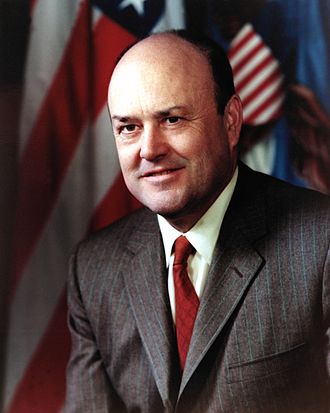
Laird, Melvin R.
Melvin R. Laird, previously a Republican Representative from Wisconsin, served as President Richard Nixon's Secretary of Defense from January 1969 to January 1973. During this time, which covers the majority of the White House taping system's operation, Laird was the chief architect of the 'Vietnamization' policy and oversaw the gradual withdrawal of U.S. forces from Vietnam. After a brief departure from the administration, he returned as Counselor to the President for Domestic Affairs from June 1973 to February 1974, acting as a crucial legislative liaison to Congress during the final weeks of the taping period and the escalating Watergate crisis.
President Nixon and his Cabinet met to discuss the ongoing military operations in Indochina and the development of the administration's national health reform agenda. Regarding the war, officials reviewed the progress of South Vietnamese incursions into Laos and Cambodia, noting that the strategy was successfully disrupting enemy supply lines while shifting the burden of ground operations away from American forces. The conversation then transitioned to a detailed proposal from Secretary of Health, Education, and Welfare Elliot Richardson regarding healthcare reform, with the group debating the costs, tax implications, and administrative feasibility of implementing Health Maintenance Organizations (HMOs) and national health insurance standards.
President Nixon met with Secretary of Defense Melvin Laird, Admiral Thomas Moorer, Henry Kissinger, and Chairman of the NATO Military Committee Admiral Sir Nigel Henderson to discuss the strategic importance of NATO and global defense priorities. The participants analyzed the role of conventional versus nuclear deterrents and evaluated international security concerns in regions including Vietnam, the Middle East, and South Africa. Nixon emphasized the necessity of maintaining alliance cohesion and credible defense capabilities while monitoring Soviet geopolitical ambitions and SALT negotiations.
President Nixon met with his senior national security and military advisors, including Henry Kissinger, Melvin Laird, and Admiral Thomas Moorer, to receive an update on the ongoing Lam Son 719 operation in Laos. The discussion focused on the military situation on the ground, the effectiveness of South Vietnamese forces, and strategies to manage press coverage regarding the conflict. Nixon emphasized the importance of maintaining a unified administration message and advised his team to treat the press as an adversarial force rather than providing direct, vulnerable answers to speculative inquiries.
President Nixon met with his national security team, including Vice President Agnew, Henry Kissinger, and William Rogers, to review the status of ongoing military operations in Southeast Asia and the complex diplomatic situation in the Middle East. Military leadership provided a detailed briefing on Operation Lam Son 719 and related efforts to interdict the Ho Chi Minh Trail, emphasizing that while the fighting is intense, the operations are effectively disrupting enemy logistics and protecting American withdrawal interests. The discussion subsequently shifted to the Middle East, where the President expressed frustration over Israel's reluctance to offer a concrete negotiating position despite Egypt's concessions. Nixon concluded by stressing the importance of maintaining a firm stance, noting that while the U.S. remains a reliable ally, it will not offer unconditional support without a reciprocal commitment to a serious peace process.
President Nixon met with Henry Kissinger, Alexander Haig, William Rogers, Melvin Laird, Admiral Thomas Moorer, and Richard Helms to coordinate strategy following the President's March 4, 1971, press conference. The discussion focused on maintaining public and political momentum for the ongoing Vietnamization effort and the military operations in Laos (Lam Son), specifically addressing potential responses to North Vietnamese missile fire and troop movements. Nixon emphasized the necessity of success in Southeast Asia to maintain American global credibility, while the participants reviewed intelligence on enemy capabilities and planned upcoming Congressional testimony and media appearances to manage the narrative surrounding the war.
President Nixon met with his National Security Council and key cabinet officials to receive a high-level briefing on developments in Soviet strategic capabilities, particularly concerning new ICBM silo construction and ballistic missile test programs. The participants evaluated the implications of these technological advancements for U.S. defense posture, including the necessity of maintaining a robust anti-ballistic missile (ABM) system. Discussions emphasized the need for a coordinated approach to strategic negotiations and the potential impact of Soviet military growth on current arms limitation efforts.
President Nixon and his Cabinet met to discuss the ongoing challenge of inflation and rising construction costs, focusing on the administration's strategic options for economic stabilization. Dr. Paul McCracken reviewed current inflationary trends and labor market data, outlining a spectrum of potential responses ranging from maintaining current fiscal policies and targeted interventions to implementing more aggressive measures like wage and price controls. The meeting served as a forum to evaluate the efficacy of various regulatory mechanisms, such as the National Commission on Productivity and the suspension of the Davis-Bacon Act, while weighing the political and practical risks of further government intervention in the economy.
President Nixon met with his national security team and Secretary of the Treasury John Connally to discuss the ongoing Vietnamization strategy, the military situation in Laos, and the administration's efforts to manage Congressional and media opposition. Nixon emphasized the importance of maintaining his planned withdrawal schedule to ensure the stability of South Vietnam and warned that setting an arbitrary Congressional deadline would lead to a strategic failure. The group also addressed the inaccuracies in press coverage regarding South Vietnamese troop casualties and coordinated their messaging for upcoming legislative briefings.
President Nixon met with his senior advisors, including Kissinger, Rogers, and Laird, to finalize the strategy and messaging for a televised address regarding the Vietnam War. They analyzed recent public opinion polling, which showed a significant, though potentially temporary, boost in the President's approval ratings following his intervention in the William Calley case. Nixon emphasized the need for simplified, slogan-based communication to gain public support for his administration's policies, specifically criticizing his own staff's tendency to over-complicate policy presentations. The President decided against allowing film coverage for an upcoming social event, expressing frustration with the constant focus on minor PR details.
President Nixon and a wide-ranging group of Cabinet members, advisors, and Congressional representatives met to discuss the growing national energy crisis and the necessity of transitioning to nuclear power. AEC Chairman Glenn Seaborg and other experts detailed the technological, environmental, and economic advantages of the liquid metal fast breeder reactor, emphasizing its ability to maximize fuel efficiency and provide long-term, pollution-free energy. The participants concluded that a strong national commitment, including significant federal funding and industry collaboration, is essential to accelerate the development of demonstration reactors and ensure future energy independence.
President Nixon met with his Cabinet and key staff to coordinate legislative strategies and manage domestic policy agendas. The discussion focused on securing passage for welfare reform and other administration priorities by engaging directly with congressional leadership and balancing competing interests within the labor market. Participants assessed the challenges of mobilizing support among both Democrats and Republicans and emphasized the necessity of persistent lobbying and effective communication with legislative committees.
President Nixon met with Melvin Laird, James Johnson, and other officials to discuss personnel appointments, specifically the nomination of James Johnson and the broader administration policy regarding minority representation in the military. The group reviewed the qualifications of black officers, including Admiral Samuel Gravely and General Daniel 'Chappie' James, while emphasizing that selection criteria were based on merit rather than race. The discussion also covered the President's recent speech on welfare reform and strategic scheduling for upcoming appearances by Navy officials.
President Nixon met with Vice President Agnew, Treasury Secretary John Connally, and Republican Congressional leaders to address critical economic and legislative challenges. The primary focus was the potential bankruptcy of the Lockheed Corporation and the necessary legislative strategy to secure government loan guarantees to prevent a ripple effect of industrial failures and job losses. Additionally, the group reviewed the administration's legislative priorities, including welfare reform, general and special revenue sharing, and the status of various appropriations bills.
President Nixon and Secretary of Defense Melvin Laird discuss the recent handling of anti-war demonstrations in Washington, D.C., as well as the proposed restructuring of the U.S. Military Command in South America (ComSouth). Nixon commends the security response to the protests and emphasizes the need to avoid any public perception that U.S. military engagement in Latin America is being downgraded. The two agree to postpone a final decision on the ComSouth command structure and staffing until Laird returns to the office, at which point they will convene a small group to evaluate the foreign policy implications.
President Nixon and Secretary of Defense Melvin Laird discuss the successful handling of recent anti-war demonstrations in Washington, noting the effective performance of law enforcement and military personnel. They transition to discussing the timing of proposed military command changes, specifically regarding the Nixon Doctrine and military assistance programs in Latin America. Nixon decides to postpone a final decision on these structural reorganizations until he can consult with a select group of advisors, including Laird, Henry Kissinger, and David Packard, to ensure the policy does not signal an unwanted withdrawal from foreign commitments.
President Nixon met with a large group of senior military and diplomatic officials to discuss the current state of NATO and the importance of maintaining U.S. commitment to the alliance. The participants focused on the economic and political strength of Europe, the potential for future unity, and the necessity of preventing unilateral troop reductions that could jeopardize geopolitical stability. The discussion highlighted the administration's efforts to influence congressional opinion, specifically regarding legislative proposals like the Mansfield Amendment, while emphasizing the administration's resolve to sustain a strong, collective defense posture.
President Nixon met with his Cabinet and Republican Congressional leaders to coordinate the administration's legislative agenda, specifically addressing the ongoing national railroad strike and the upcoming Congressional vote on the military draft. The discussion also focused on foreign policy, with Secretary of Defense Melvin Laird and Henry Kissinger providing briefings on the status of NATO, the credibility of U.S. military commitments in Europe, and the implications of recent Soviet statements regarding mutual force reductions. The President urged the Congressional leaders to maintain a firm stance against unilateral U.S. force withdrawals while emphasizing the need to handle these matters through stable, negotiated frameworks rather than disruptive legislative amendments.
President Nixon, Melvin Laird, and Henry Kissinger discussed the administration's strategic approach to upcoming NATO defense meetings, emphasizing the need to avoid being pressured into premature agreements regarding Mutual and Balanced Force Reductions (MBFR). The participants reviewed the status of the SALT negotiations, highlighting the necessity of maintaining the Anti-Ballistic Missile (ABM) program as a critical bargaining chip against Soviet offensive weapons. They also addressed personnel changes within the Department of Defense, including potential replacements for Deputy Secretary David Packard and the Secretary of the Army, while coordinating strategy for managing Congressional relations and ongoing military assistance in Vietnam and Cambodia.
President Nixon met with his Cabinet and key advisors to announce a major breakthrough in Strategic Arms Limitation Talks (SALT) with the Soviet Union, culminating in a joint statement to be released simultaneously in both nations. The agreement establishes a framework to prioritize limiting anti-ballistic missile (ABM) systems while pursuing parallel measures for offensive weapons. Nixon emphasized that the breakthrough was achieved by maintaining a strong U.S. defense posture, and he urged his administration to avoid public speculation or detailed commentary that could complicate sensitive ongoing negotiations.
President Nixon met with Vice President Agnew and a bipartisan group of Congressional leaders to announce a significant diplomatic breakthrough in the Strategic Arms Limitation Talks (SALT). Nixon informed the attendees of a forthcoming joint statement with the Soviet Union pledging to focus on limiting anti-ballistic missile (ABM) systems and certain offensive strategic weapons. While some lawmakers advocated for immediate unilateral U.S. defense cuts to demonstrate good faith, the President and his advisors successfully urged the leaders to maintain existing defense programs during the negotiations to avoid losing vital bargaining leverage.
President Nixon, Vice President Agnew, and a large group of Cabinet members and senior staff met to establish a strategic framework for domestic policy, budget planning for the 1973 fiscal year, and the development of the 1972 Republican legislative and election platform. Participants reviewed polling data regarding national, community, and family concerns, noting that the economy, inflation, and unemployment are primary public priorities while other issues like pollution and consumerism are often driven by media visibility. The President and attendees emphasized the need for better communication to receive credit for administration accomplishments, focusing on a limited number of 'gut issues' rather than overextending on too many programs. Ultimately, the group discussed the necessity of coordinating policy initiatives and messaging to ensure visible progress on key economic and social concerns ahead of the 1972 election.
President Nixon met with his National Security Council to discuss strategy for Mutual and Balanced Force Reduction (MBFR) negotiations with the Soviet Union, emphasizing the importance of verification and maintaining allied unity. The President and his advisors examined how to use these potential force reductions to counter domestic congressional pressure for unilateral troop withdrawals. Additionally, the group addressed the ongoing crisis surrounding the publication of the Pentagon Papers, with Nixon expressing a need to strengthen penalties for leaking classified information and to defend the executive branch's ability to maintain secure communications.
President Nixon met with his senior advisors and Cabinet members to discuss managing the political and legal fallout of the Pentagon Papers release. The group strategized how to handle demands for document declassification and congressional access without appearing to capitulate to leakers or damaging the ongoing criminal prosecution of the New York Times. Nixon decided to distance himself from direct negotiations with congressional leaders, opting instead to have Secretaries Laird and Rogers manage the process through administrative channels, while firmly limiting the scope of declassification to prevent broader security compromises.
President Nixon and his senior advisors and business leaders convened to formalize a national strategy for increasing veteran employment, emphasizing the need for businesses to provide veterans with a hiring advantage. The discussion included strategies for managing the fallout from the recently leaked Pentagon Papers, with Nixon directing his team to resist congressional hearings on war conduct while ensuring the documents were securely channeled to responsible leadership. Nixon also expressed a desire to keep the focus of the controversy on the previous administrations and away from current operations, tasking officials with maintaining a unified, firm stance against political opportunists.
President Nixon consulted with House Armed Services Committee Chairman F. Edward Hébert and Secretary of Defense Melvin Laird regarding legislative strategies and the security of classified documents. Nixon expressed gratitude for Hébert’s support in the upcoming House-Senate conference on Vietnam withdrawal language, emphasizing the need to prevent legislative mandates that could undermine ongoing peace negotiations. Additionally, the participants discussed the handling of leaked government documents, with Hébert assuring the President that he would implement strict security protocols to prevent further disclosures if the materials were referred to his committee.
President Nixon met with his Cabinet to address the persistent problem of unauthorized leaks within the federal bureaucracy and to establish clear expectations for departmental discipline. He emphasized that decision-making must remain internal and closed to prevent political sabotage, specifically citing the negative impact of leaks on economic policy and administrative unity. Nixon announced that H.R. "Bob" Haldeman would oversee efforts to tighten internal controls, while Secretary John Connally was designated to handle the official announcement of upcoming economic policy decisions.
President Nixon met with his senior advisors, including H.R. Haldeman, Henry Kissinger, John Mitchell, and Melvin Laird, to determine the administration's strategy following the Supreme Court's ruling allowing the publication of the Pentagon Papers. The President rejected the idea of broad declassification as a response to the court defeat, fearing it would appear like an admission that the government's classification system was worthless. Instead, he decided to maintain a hard line on the prosecution of Daniel Ellsberg, pursue investigations into potential leaks and conspiracies within the government, and direct his staff to target the Brookings Institution to recover classified materials.
President Nixon met with his Cabinet members to discuss the delicate political landscape surrounding the administration's efforts to open communications with the People's Republic of China. The conversation centered on the necessity of maintaining strict discretion to avoid premature public speculation, which could jeopardize sensitive diplomatic negotiations and create political vulnerabilities. Nixon emphasized the importance of a unified front among Cabinet members to manage domestic and international expectations as the policy shift progressed.
President Nixon met with Secretary of Defense Melvin Laird and National Security Advisor Henry Kissinger to review recent foreign policy developments, specifically Laird's trip to Japan and South Korea. The discussion focused on Japanese defense modernization, the status of U.S. military commitments in Korea, and the implementation of the Nixon Doctrine in light of the administration’s secret initiative to open relations with the People's Republic of China. Additionally, the participants addressed the Vietnam War, including the importance of maintaining robust supplies for South Vietnamese forces, and explored strategies for consolidating political support from moderate figures like Nelson Rockefeller.
President Nixon met with Vice President Agnew and his Cabinet to discuss the administration's foreign policy objectives and the state of the national economy. Agnew briefed the attendees on his recent international tour, highlighting the global reception of the Nixon Doctrine and the challenges posed by the Arab-Israeli conflict, East Pakistan, and the increasing Soviet and Chinese presence in various regions. Nixon and his advisers subsequently addressed the economic outlook, emphasizing the need for an aggressive, unified defense of administration policies regarding inflation and unemployment, while dismissing the viability of permanent wage and price controls. Finally, the President mandated a strict reduction in government personnel and grade-level escalation to improve budget management across executive departments.
President Nixon met with the Joint Chiefs of Staff, Vice President Agnew, and key defense officials to review the military’s fiscal year 1973 budget and strategic posture. The Joint Chiefs presented briefings on the shifting global military balance, particularly the expansion of Soviet strategic and conventional forces, and argued that current fiscal constraints threatened the effectiveness of the Nixon Doctrine. The President emphasized the need to build a compelling public and congressional case for defense requirements to counter an anti-military climate, while acknowledging the severe domestic fiscal pressures he faced.
President Nixon and members of the National Security Council met to review the Fiscal Year 1973 defense budget and evaluate U.S. strategic capabilities relative to the USSR. The discussion centered on balancing budgetary constraints with the requirements of the Nixon Doctrine, specifically regarding troop deployments in Europe, East Asia, and the need for flexible "swing forces." The participants assessed the modernization of strategic forces, naval requirements, and the political implications of U.S. military presence abroad in the context of ongoing diplomatic negotiations with China and the Soviet Union.
President Nixon met with the Council on International Economic Policy (CIEP) and key economic advisors to discuss the administration's post-August 15 New Economic Policy (NEP) and future international trade strategy. Peter G. Peterson led a presentation analyzing the shortcomings of global liberal trading systems and the challenges posed by foreign competitors like Japan, while other officials addressed the domestic economic impact, labor relations, and the status of ongoing monetary negotiations. The President emphasized the need for a firm but diplomatic approach toward Japan and directed his team to maintain the offensive on domestic economic policy while keeping options flexible regarding international monetary reform.
President Nixon, Pat Nixon, and the Cabinet met with their spouses to discuss the implementation and public perception of the administration’s New Economic Policy. Secretary of the Treasury John Connally led a comprehensive briefing on the wage-price freeze, tax reforms, and international monetary adjustments aimed at curbing inflation. The discussion emphasized the necessity of these economic measures for restoring national growth, managing federal expenditures, and building public and congressional support for the administration's program.
President Nixon met with the National Security Council and senior advisors to conduct an extensive assessment of the deteriorating political and military situation in South Vietnam, focusing on the stability of the Nguyen Van Thieu administration and the threat posed by opposition factions and communist forces. The discussion covered strategic military planning for the upcoming dry season in Cambodia and Laos, the progress of Vietnamization, and the implications of U.S. troop withdrawal timelines on both the battlefield and domestic public opinion. Participants also evaluated the potential impact of diplomatic initiatives, including the President's announcement regarding Henry Kissinger’s trip to Peking, on North Vietnam's strategic calculations and internal morale.
President Nixon met with Secretary of Defense Melvin Laird and several high-ranking Black military officers to discuss promoting equal opportunity and advancement within the armed forces. The President emphasized that officer promotions should be merit-based rather than tokenistic, citing historical precedents of minority groups finding success in specific professional fields. He encouraged the officers to serve as ambassadors for the military’s All-Volunteer Force, urging them to demonstrate that genuine career advancement for minority personnel is both possible and prioritized.
President Nixon met with congressional leaders and administration officials, including John C. Stennis and Melvin R. Laird, to coordinate legislative strategy regarding HR 6531 and the broader Military Procurement Bill. The participants discussed the status of the bill in Congress, specifically focusing on managing the Mansfield amendment and navigating the conference committee process. The discussion emphasized building support for the administration's military objectives and preparing for legislative action items in the coming week.
President Nixon met with his Cabinet and key staff members to review the administration’s domestic and foreign policy priorities, primarily focusing on the economic transition to 'Phase II' and the announcement of a 1972 Soviet summit. Officials discussed the successful implementation of the wage-price freeze and the strategy for securing organized labor's cooperation on the newly formed Pay Board and Price Commission to curb inflation. Additionally, the President addressed the importance of linking economic policy to job growth through his pending tax proposals, while Secretary of State Rogers and the President emphasized that international diplomatic overtures toward the Soviet Union and China were part of a cohesive, long-term strategy for global peace.
President Nixon met with Henry Kissinger and Melvin Laird to discuss legislative strategies for securing foreign aid funding and maintaining support for the administration's defense and foreign policy agenda. They addressed the challenges of navigating congressional opposition while managing alliance relationships, particularly regarding German financial contributions to U.S. forces in Europe. The group also evaluated the timing of Vietnam troop withdrawals and personnel staffing needs within the Department of Defense.
President Nixon, Secretary of Defense Melvin Laird, and National Security Advisor Henry Kissinger met to discuss the status of the Vietnam War following Laird's recent trip to South Vietnam, specifically focusing on the military situation, Vietnamization progress, and future troop withdrawal strategies. Laird expressed confidence in the combat effectiveness of the South Vietnamese forces and their improved logistical capabilities, while the group evaluated the political ramifications of the recent South Vietnamese election and the need for continued U.S. financial support. The participants also debated the timing and logistics of future troop withdrawal announcements to balance domestic political pressures with ongoing negotiations with North Vietnam.
President Nixon and members of the National Security Council met to coordinate the United States' strategy regarding ongoing arms control negotiations with the Soviet Union. The discussion centered on the complexities of Anti-Ballistic Missile (ABM) systems, the status of Safeguard and hard site defenses, and the comparative capabilities of Soviet and American submarine-launched ballistic missiles (SLBMs) and ICBMs. Participants evaluated potential congressional reactions and internal administration messaging while addressing the strategic implications of Soviet negotiating positions.
President Nixon met with his Cabinet officers to discuss a variety of domestic and international issues, including transportation leadership, government funding through a continuing resolution, and the cultivation of opium poppies in Turkey. The conversation also touched upon administrative transitions, such as the departure of Secretary of Agriculture Clifford Hardin, and strategies for managing the national economy and price controls. Nixon emphasized the importance of maintaining clear leadership and coordination across departments to ensure the success of his domestic policy initiatives.
President Nixon and the National Security Council met to coordinate U.S. strategy regarding European security, specifically focusing on the upcoming ministerial meetings in Brussels and the push for Mutual and Balanced Force Reduction (MBFR) talks. Participants discussed the complexities of navigating negotiations with Soviet counterparts, managing the varying interests of NATO allies, and addressing the political pressures surrounding troop levels and defense burden-sharing. The conversation concluded with a consensus on the need to maintain a unified diplomatic front while carefully managing the timing and scope of potential force reductions.
Vice President Spiro Agnew met with members of the Nixon Cabinet and congressional leadership to provide a detailed briefing on his recent diplomatic and trade-focused trip to the Soviet Union. The discussion centered on potential economic collaboration, the strategic importance of trade with the Soviets, and the ongoing international monetary negotiations regarding the devaluation of the dollar. Participants debated the risks of transferring technology to the Soviet Union, the necessity of bipartisan congressional support for upcoming trade and fiscal legislation, and the impact of the U.S. surcharge on global trade relations.
President Nixon and Secretary of Defense Melvin Laird exchanged Christmas greetings and transitioned into a discussion regarding an ongoing internal military scandal. Nixon emphasized the need to shield the military establishment from reputational damage, characterizing the personnel involved as victims of a flawed system rather than malicious actors. Both agreed that the White House should distance itself from the matter, deferring to Attorney General John Mitchell to handle the situation while ensuring the continued support of leadership figures like Admiral Thomas Moorer.
President Nixon consulted with various administration officials and advisors, including Billy Graham, Melvin Laird, and Raymond Price, to discuss personnel appointments, campaign strategy, and foreign policy communication. Key subjects included potential roles for Edward Korry and Kenneth Rush, the public relations strategy regarding First Lady Pat Nixon's Africa trip, and managing the perceived credibility issues surrounding Henry Kissinger's influence on Middle East and India-Pakistan policy. Additionally, Nixon and Laird deliberated on Vietnam troop withdrawal levels, finalizing a strategy to manage public expectations while maintaining administration control over national security messaging.
President Nixon and Secretary of Defense Melvin Laird discuss the potential appointment of Kenneth Rush to a high-level position, emphasizing the need to resolve his potential conflicts of interest. The conversation also focuses on finalizing the logistics for an upcoming public announcement regarding the reduction of U.S. troop levels in Vietnam to a 69,000 ceiling by May 1st. Finally, the two address the need for a coordinated response to ongoing intelligence leaks involving the Joint Chiefs of Staff and plan to meet with John Mitchell to formalize their strategy.
President Nixon met with Melvin Laird, Alexander Haig, and later Ronald Ziegler to coordinate the public messaging strategy for an upcoming announcement regarding U.S. troop withdrawals from Vietnam. The participants focused on framing the reduction as a sign of confidence in the progress of Vietnamization and the South Vietnamese military's defensive capabilities, while minimizing concerns over North Vietnamese tactical maneuvers. They also prepared responses for anticipated press questions concerning prisoners of war, the end of the U.S. ground combat role, and the potential future use of American air and sea power.
President Nixon met with Cardinal Cooke, administration officials, and military leadership to discuss several pressing national and international issues. The conversation covered the morale of U.S. troops in Vietnam, the administration's efforts to provide government aid to private and parochial schools, and upcoming high-level diplomatic trips to China and the Soviet Union. Nixon also coordinated with General Westmoreland regarding the strategic importance of U.S. military security assistance programs, specifically for Indonesia and Latin America, as a means to maintain global influence.
President Nixon convened this meeting of the National Security Council to assess the potential for a major North Vietnamese military offensive and to coordinate U.S. support for South Vietnam. The participants, including Henry Kissinger, Melvin Laird, and Admiral Thomas Moorer, discussed enemy troop movements, the effectiveness of Vietnamization, and the need for enhanced military authorities for field commanders. Nixon directed the council to provide robust support while ensuring that South Vietnamese forces receive the primary public credit, emphasizing that the U.S. must remain committed to a successful outcome despite domestic political pressures.
President Nixon met with his Cabinet and senior staff to debrief them on the results and implications of his recent diplomatic trip to the People's Republic of China. The President emphasized that the primary success of the visit was the establishment of a new communication channel between the two nations, which he argued was essential for managing long-term stability and reducing the potential for future conflict. Nixon shared his impressions of Chinese leadership, particularly his discussions with Chou En-lai, noting the stark ideological differences while highlighting common strategic interests, such as peace in the Pacific and balancing influence against the Soviet Union. The discussion concluded with a focus on how this opening could be leveraged to reshape international relations and manage regional tensions across Asia.
President Nixon held an Oval Office meeting with Peter G. Peterson, his family, and members of the Cabinet to commemorate Peterson's recent Senate confirmation. The event served primarily as a formal ceremony for the administration of the oath of office and a subsequent photograph session with White House photographer Ollie Atkins. The interaction concluded with informal social conversation regarding Camp David and scheduling logistics.
President Nixon and members of the National Security Council met to evaluate strategic options for the ongoing Strategic Arms Limitation Talks (SALT), focusing on ABM site deployments and the potential inclusion of submarine-launched ballistic missiles (SLBMs). Nixon emphasized the political necessity of securing an agreement that prevents Soviet strategic superiority, while participants debated the relative merits of "hard-site" defense versus current safeguard proposals and the impact of these negotiations on Congressional support. The discussion underscored a shared concern regarding the erosion of U.S. bargaining leverage and established a firm directive to pursue an agreement based on the principle of strategic equivalency.
President Nixon met with the Cabinet Committee on International Narcotics Control to evaluate the administration's progress and strategies in combating the global drug trade. The participants discussed international trafficking routes, the effectiveness of law enforcement efforts in countries like Turkey and Southeast Asia, and the need for improved coordination between federal agencies. The meeting served to reinforce the priority of drug interdiction and treatment programs while addressing inter-agency conflicts that hindered unified action.
President Nixon met with Henry Kissinger, Melvin Laird, and John Chafee to discuss the worsening North Vietnamese offensive and the military response required to protect South Vietnamese positions. Nixon emphasized the necessity of using intensified air and naval power to grind down invading forces, comparing the tactical retreat to historical battles like Ypres and Verdun to underscore his strategy of consolidation and counter-offensive. The President also discussed upcoming U.S.-Soviet relations and political messaging for his administration, while offering personal counsel to Chafee regarding his campaign for the U.S. Senate.
President Nixon met with Henry Kissinger, H. R. Haldeman, Melvin Laird, and Admiral Thomas Moorer to coordinate the administration's public and military response to the North Vietnamese Easter Offensive. The group discussed the importance of maintaining a firm stance to protect U.S. credibility and ensure the success of the President's upcoming Moscow trip, while emphasizing that the ongoing conflict was a Soviet-backed "massive communist invasion." Significant decisions included Laird’s plan to publicly highlight the effectiveness of South Vietnamese forces and U.S. air support, while maintaining strategic ambiguity regarding potential naval blockades or mining operations.
President Nixon, Henry Kissinger, and Secretary of Defense Melvin Laird met to evaluate the ongoing military situation in Vietnam and coordinate strategy ahead of Kissinger's upcoming summit preparations in Moscow. The participants expressed frustration over unauthorized press reports suggesting internal administration discord regarding air strikes, emphasizing the need for a unified front to project strength and pressure North Vietnam. Nixon sought to maintain leverage for his potential Moscow visit, specifically discussing the tactical efficacy of air campaigns, the strategic value of a potential naval blockade, and the importance of maintaining a firm stance against North Vietnamese aggression to ensure favorable negotiation outcomes.
President Nixon and Secretary of Defense Melvin Laird coordinated their public response to a New York Times report falsely claiming that U.S. bombing in Vietnam had been reduced for diplomatic purposes. Nixon directed Laird to aggressively deny these reports to maintain strategic ambiguity, stressing the importance of this stance for ongoing diplomatic efforts. Laird confirmed that he had already refuted the story during recent testimony before the Senate Armed Services Committee and had prepared a media clip to ensure the denial reached a wider audience.
President Nixon met with his national security team, including Henry Kissinger, Admiral Thomas Moorer, and Secretary of Defense Melvin Laird, to receive a comprehensive military briefing on the ongoing North Vietnamese Easter Offensive. Admiral Moorer provided a detailed regional analysis of the conflict, noting that while South Vietnamese forces were facing intense pressure and heavy casualties, they were holding key positions with the crucial assistance of U.S. air power and naval support. The President emphasized that the conflict would remain difficult but reaffirmed his commitment to maintaining air support and striking military targets in North Vietnam until the offensive subsided.
President Nixon convened his National Security Council to weigh critical military options regarding the ongoing North Vietnamese offensive and the potential collapse of South Vietnamese forces. Key participants, including Henry Kissinger, Melvin Laird, and John Connally, debated the strategic risks of maintaining the status quo versus implementing a naval blockade and intensified air strikes on North Vietnam. While acknowledging the potential for a diplomatic crisis and the likely cancellation of the upcoming Moscow summit, the President and his advisors emphasized the necessity of demonstrating resolve to protect U.S. credibility and avoid a catastrophic military defeat. Ultimately, the discussion centered on whether a more aggressive military posture could provide the leverage required to salvage the situation in South Vietnam and secure the release of American prisoners of war.
President Nixon and his senior staff, including H.R. Haldeman, met to evaluate the public and political reaction to the President's recent televised speech regarding the mining of North Vietnamese harbors. The discussion focused on maintaining a firm, "hawkish" stance to emphasize the administration's resolve and ensuring that supporters mobilize to counteract potential criticism from Congress and the media. Nixon directed his team to maximize public displays of support and address logistical issues, such as jammed Western Union lines, to ensure his message of "iron determination" remained the dominant narrative.
President Nixon and Secretary of Defense Melvin Laird discuss the public and political reception of the recent escalation in Vietnam, specifically the mining of harbors and expansion of airstrikes. Nixon encourages Laird to adopt a more aggressive, "hawkish" public stance regarding the military operations to deter North Vietnam, rather than emphasizing what the blockade is not. Laird confirms the successful initial deployment of mines and reports that airstrikes against critical targets like railroads and petroleum, oil, and lubricant (POL) depots are underway, prompting Nixon to request that commendations be sent to the forces involved.
President Nixon and Secretary of Defense Melvin Laird discuss the implementation of a naval blockade and intensified air strikes against North Vietnam. Nixon urges Laird to manage public relations aggressively, focusing on the strategic necessity of the operation and its psychological impact on the North Vietnamese leadership. They coordinate upcoming press appearances and congressional testimony to ensure a unified, authoritative message regarding the administration's resolve.
President Nixon and Secretary of Defense Melvin Laird met to coordinate the public relations strategy and military planning surrounding the Vietnam War, specifically focusing on the recent escalation of operations. Nixon emphasized the necessity of achieving a strong psychological impact through targeted strikes on infrastructure, such as power lines, and requested photographic evidence of enemy naval activity. They further discussed managing congressional testimony and media appearances to ensure a unified, aggressive message that conveys the administration's resolve and authorization to achieve victory.
President Nixon met with H.R. Haldeman, Henry Kissinger, Charles Colson, and Melvin Laird to strategize the administration's public relations response to the recent decision to blockade and mine North Vietnamese harbors. The group focused heavily on leveraging favorable internal poll data to counter media skepticism and demonstrate widespread public support for the President's Vietnam policy. Key action items included coordinating the dissemination of these polls through congressional allies like Scott and Griffin, managing surrogate public appearances to criticize Democratic opposition, and mobilizing grassroots support to project a mandate for the President's military actions.
Charles Colson coordinates with Secretary of Defense Melvin Laird to address public reports of internal administration dissent regarding President Nixon’s decision to blockade Vietnam. The participants express frustration over media attempts to create division between the President and his staff, specifically involving John B. Connally. Colson informs Laird that the President is outraged by these leaks and instructs Press Secretary Ronald Ziegler to publicly debunk the claims, while also sharing favorable ORC poll results to bolster Laird’s confidence for his upcoming press conference.
President Nixon met with Saudi Prince Sultan ibn Abd al-Aziz, along with Secretary of Defense Melvin Laird and Alexander Haig, to solidify the strategic security partnership between the United States and Saudi Arabia. The discussion focused on regional stability, particularly the need for military cooperation between Saudi Arabia, Iran, and Kuwait to counter subversive threats from Iraq. The meeting concluded with a commitment to the ongoing Saudi military modernization program, including the F-5 aircraft contract and naval equipment, reinforcing a mutual desire for regional peace and security.
President Nixon hosted the family of John Paul Vann, a distinguished military and civilian advisor in Vietnam, to formally present the Presidential Medal of Freedom. During the meeting, which included key administration officials and journalist Joseph Alsop, the President lauded Vann’s dedication and selfless service, comparing his contributions to those of the Marquis de Lafayette. The event served to honor Vann's legacy following his recent death and to highlight his critical role in the efforts to secure South Vietnamese sovereignty.
President Nixon met with his Cabinet and senior staff to discuss strategies for achieving a balanced federal budget by 1975, emphasizing the necessity of immediate spending cuts and potential vetoes of congressional legislation to curb inflation. Budget Director George Shultz outlined the administration’s plan to issue "ceiling letters" to agency heads to enforce strict fiscal guidelines and reduce government deficits. The participants also reviewed recent positive economic indicators, including growth in the Gross National Product and declining unemployment, while noting that the public generally views government spending as a primary driver of inflation.
President Nixon met with Secretary of Defense Melvin Laird and various congressional leaders to discuss the signing of the Uniformed Services Health Provisions Revitalization Act (HR 2) and the promotion of defense-related legislation. The conversation transitioned into campaign strategy for the 1972 election, with Nixon and Laird analyzing the political implications of George McGovern's defense platform and coordinating appearances to target specific demographics in key states like Massachusetts and Wisconsin. Additionally, they praised the public speaking skills of Brigadier General Daniel 'Chappie' James Jr. and discussed administrative efforts to bolster military support through strategic announcements, such as new contracts for the Quincy shipyards.
President Nixon hosted a bipartisan group of Congressional members and Department of Defense officials in the Cabinet Room for the formal signing of HR 10670, a bill establishing a survivor benefit plan for retired military personnel. The discussion emphasized the necessity of providing military families with benefits comparable to those in the Foreign Service and other civilian sectors. The President utilized the event to express his administration's gratitude for Congressional support and to stress the importance of national respect for those serving in an all-volunteer armed force.
President Nixon and Secretary of Defense Melvin Laird discuss political strategy for countering George McGovern's Vietnam policy and defense budget proposals during the 1972 election campaign. Nixon encourages Laird to aggressively challenge the Democratic platform by characterizing McGovern's peace plan as an endorsement of a communist takeover in South Vietnam. They agree that Laird should utilize upcoming media opportunities to emphasize the administration's foreign policy record and criticize McGovern's proposed military spending cuts as detrimental to national security.
President Nixon and Secretary of Defense Melvin Laird met briefly to discuss political messaging and the strategic framing of administration policies in response to critics. They focused on countering adversarial rhetoric by emphasizing the administration's accomplishments rather than allowing opponents to define the public narrative. The President stressed the importance of seizing control of the debate to ensure his administration's perspective on national priorities takes precedence.
President Nixon met with General Creighton Abrams and Melvin Laird to strategize on the ongoing Vietnam peace negotiations and secure South Vietnamese President Nguyen Van Thieu's cooperation. Nixon emphasized that the U.S. would not accept a coalition government, a firm stance he insisted must be communicated to Thieu to ensure South Vietnam's long-term survivability. The participants assessed the military and political pressures facing Hanoi and the urgency of reaching a settlement, while acknowledging the sensitive psychological need to manage Thieu’s concerns regarding U.S. support and his political future.
President Nixon met with his senior military and national security leadership, including Henry Kissinger, Melvin Laird, and the Joint Chiefs of Staff, to align the administration on the status and defense of pending Vietnam peace negotiations. The discussion focused on the current terms of the settlement agreement, the importance of maintaining public and congressional support, and the necessity of contingency planning should North Vietnam violate the terms. Nixon emphasized that the agreement was the best obtainable outcome and instructed his team to present a unified, positive front while preparing for potential retaliatory actions if the cease-fire collapsed.
President Nixon met with Henry Kissinger, William Rogers, Melvin Laird, Admiral Thomas Moorer, and Colonel Richard Kennedy to coordinate the administration's public relations and congressional strategy regarding Vietnam. The participants discussed the military effectiveness of recent bombing campaigns, the necessity of countering negative media reports by highlighting North Vietnamese civilian destruction, and the importance of maintaining a unified front. Nixon directed his team to avoid a defensive posture and to provide briefings for key congressional allies using photographic evidence of military targets, while stressing that the administration must remain cautious about disclosures until upcoming negotiations conclude.
President Nixon hosted a ceremony in the Oval Office to honor General Alexander M. Haig, Jr. with the Defense Distinguished Service Medal. The event, attended by Haig’s family and high-ranking administration officials, served as a formal recognition of Haig’s significant contributions to national security and his diplomatic efforts, including his work supporting Henry Kissinger. The gathering concluded with photo opportunities and brief discussions regarding Haig's transition out of his White House role.
President Nixon consulted with the White House operator in an attempt to reach Secretary of Defense Melvin R. Laird. The conversation was intended to facilitate a direct communication between the two officials. Ultimately, the attempt to connect with Laird proved unsuccessful and the call was canceled.
In this meeting, President Nixon met with his Vice President, Cabinet, and senior staff to provide a briefing on the impending Vietnam cease-fire agreement, scheduled for signing on January 27, 1973. National Security Advisor Henry Kissinger detailed the arduous negotiation process, emphasizing that the agreement achieved key U.S. objectives including the return of POWs, the withdrawal of American forces, and the right of South Vietnamese self-determination. Following the Vietnam discussion, the President transitioned to a briefing on the fiscal year 1974 budget, where Director Caspar Weinberger presented plans for spending cuts and program terminations designed to maintain a full-employment balance and avoid tax increases.
President Nixon, Alexander Haig, and Melvin Laird met to coordinate the announcement of Laird's return to the administration as Counselor for Domestic Affairs. They discussed strategies for managing press inquiries, particularly regarding Watergate, and debated potential economic interventions like a wage-price freeze. The group also planned Laird's forthcoming schedule, which included meetings with key congressional figures and labor leader George Meany to ensure a smooth transition and maintain party unity.
President Nixon and Melvin R. Laird called AFL-CIO President George Meany to personally inform him of Laird's appointment as Counselor to the President for Domestic Affairs. During the conversation, Laird clarified that his new role would include overseeing the Cost of Living Council and wage-price policy. The participants agreed to meet once Meany recovered from a recent bout of tendinitis to discuss these economic issues in greater detail.
President Nixon met with Melvin Laird and Alexander Haig to discuss personnel shifts and the restructuring of responsibilities within the White House staff. The conversation focused on reassigning George Shultz’s duties, specifically moving him out of his energy portfolio to prioritize trade policy. The participants also touched upon the organizational roles of Roy Ash and other administrative adjustments to long-term policy management.
President Nixon met with his legal team and senior advisors, including Charles Wright, Alexander Haig, and J. Fred Buzhardt, to formulate a legal and public relations strategy regarding the intensifying Watergate investigation. The discussion focused on countering potential testimony from John Dean, particularly regarding his meetings with the President, and managing the risks posed by the Ervin Committee's upcoming hearings. The participants strategized on how to undermine Dean's credibility through targeted cross-examination by Fred Thompson and agreed on the necessity of maintaining a firm stance on executive privilege while preparing for further investigative challenges.
President Nixon met with his Cabinet and key legislative leaders to discuss the restructuring of domestic policy operations, the appointment of Clarence M. Kelley as FBI Director, and strategies for improving congressional cooperation. Nixon emphasized a team-based approach to policy formulation, delegating significant oversight to Mel Laird, and urged Cabinet members to actively engage with Congress to pass the administration's legislative agenda. The discussion also addressed the administration's response to inflation, the importance of maintaining public morale amidst the Watergate crisis, and the necessity of presenting a unified, forward-looking policy front to the American people.
President Nixon met with Alexander Haig, J. Fred Buzhardt, and Melvin Laird to discuss ongoing challenges including the Watergate scandal and upcoming administrative transitions. They reviewed the status of John Dean's legal situation, focusing on his handling of campaign funds and the political advantage of exposing his alleged financial impropriety through press coverage. Furthermore, the group discussed personnel adjustments, including bringing Bryce Harlow onto the White House staff, and coordinated legislative strategies regarding a pending House vote on Cambodia funding and the implementation of the Phase IV economic program.
President Nixon met with Vice President Agnew, Secretary of State William Rogers, Henry Kissinger, and bipartisan congressional leaders to discuss recent foreign policy breakthroughs and the administration's ongoing diplomatic strategy. The discussion focused on the significance of newly negotiated agreements with the Soviet Union, specifically regarding the prevention of nuclear war and the management of bilateral relations. Nixon emphasized that these diplomatic efforts represent a move toward global stability and stressed the necessity of maintaining bipartisan support as his administration continues these critical negotiations with Soviet leadership.
President Nixon met with Vice President Agnew, top economic advisors, and a large group of Republican Congressional leaders to discuss the administration's current 60-day economic freeze and the development of a subsequent "Phase IV" program. The primary challenge identified was managing inflation and supply shortages—particularly in food—while avoiding the long-term economic damage of permanent price and wage controls. The President and his advisors sought Congressional support for a balanced budget and specific legislative measures, such as the release of strategic stockpiles, while acknowledging the significant political difficulty of passing unpopular fiscal reforms. Participants emphasized the need for a careful balance between short-term political relief and long-term economic stability to avoid the pitfalls of past rationing and supply-side distortions.
President Nixon met with his economic advisors and Cabinet members to debate the design of 'Phase IV' of his economic program, focusing on the appropriate speed for removing wage and price controls. The discussion centered on balancing the political need to curb inflation with the economic necessity of incentivizing production, particularly in the agricultural sector, where export controls and price ceilings had created supply shortages. The President and his team also addressed the critical need for a balanced federal budget to bolster business confidence, ultimately agreeing on the necessity of a tough, credible policy to stabilize the economy.
President Nixon met with Vice President Agnew and his Cabinet to discuss the transition from the current wage and price freeze to a "Phase IV" economic policy. The President emphasized the need to balance controlling inflation with maintaining domestic production, while acknowledging the political difficulty of removing controls due to congressional and public pressure. Key developments included the administration's resolve to move toward a free-market economy as quickly as possible, coupled with a renewed commitment to fiscal austerity and a balanced federal budget to bolster economic confidence.