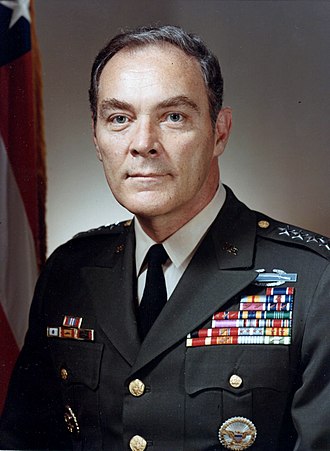
Haig, Alexander M., Jr.
Alexander M. Haig, Jr. began his service in the Nixon administration as a military assistant to National Security Advisor Henry Kissinger from January 1969 to June 1970, before being promoted to Deputy Assistant to the President for National Security Affairs. He held this deputy role for the majority of the White House taping period, from June 1970 until January 1973, when he transitioned to the Pentagon to become Vice Chief of Staff of the U.S. Army. As the Watergate scandal forced the resignation of H.R. Haldeman, Nixon recalled Haig to serve as White House Chief of Staff from May 1973 until the president's resignation in August 1974.
President Nixon and Alexander Haig held a brief administrative exchange to coordinate an upcoming meeting at the Old Executive Office Building. The conversation served primarily as a logistical check to confirm Haig’s availability for the President's schedule. No substantive policy matters were addressed beyond the arrangement of this appointment.
President Nixon and Alexander Haig met to coordinate administrative foreign policy, specifically addressing the upcoming Moscow summit and the management of Henry Kissinger's role. They discussed delicate geopolitical issues, including Soviet-American relations, potential arms control negotiations (SALT), and the need to maneuver around domestic political pressures regarding Israel and Northern Ireland. Nixon emphasized the importance of maintaining tight control over the substance of foreign policy negotiations to ensure they align with his strategic objectives rather than becoming subject to outside interference or Congressional criticism.
President Nixon met with his advisors to discuss the political and economic complexities of the proposed Trans-Alaska Pipeline, specifically the potential for an alternative pipeline route through Canada. While facing significant pressure from environmentalists and ongoing court battles, Nixon expressed a desire to maintain administrative control over the narrative and avoid being forced into a reactive position by the Canadian government. The participants decided to handle negotiations with Canadian energy officials through Secretary of the Interior Rogers Morton and other staff rather than directly involving the White House, while keeping options open to protect U.S. oil interests and investment.
President Nixon met with Clark MacGregor and Alexander Butterfield to coordinate a messaging strategy for Republican members of Congress regarding the economy and the administration's price stabilization program ahead of their recess. The discussion also addressed the stalled confirmation of Richard G. Kleindienst and the ongoing ITT controversy, with Nixon pushing for a swift committee vote to resolve the matter. Finally, Nixon and Alexander Haig discussed the geopolitical risks and potential benefits of including a stop in Poland during the President's upcoming trip to the Soviet Union.
President Nixon, Henry Kissinger, and Alexander Haig met to discuss the worsening military situation in South Vietnam following a major North Vietnamese offensive across the Demilitarized Zone. The participants evaluated the effectiveness of South Vietnamese forces, criticized the lack of aggressive air support usage, and coordinated a public relations strategy to frame the conflict as an illegal North Vietnamese invasion. Nixon emphasized the necessity of using U.S. air power to inflict heavy casualties on the enemy, while the group considered the geopolitical risks of the offensive regarding upcoming diplomatic engagements with the Soviet Union and China.
President Nixon, Henry Kissinger, and Alexander Haig met to analyze the North Vietnamese offensive and coordinate U.S. military and diplomatic responses. Nixon emphasized the necessity of using concentrated air and naval power to counter the invasion, explicitly rejecting a televised address to avoid signaling weakness or inviting domestic criticism. The participants discussed the progress of South Vietnamese forces, the effectiveness of B-52 strikes against North Vietnamese logistics, and the strategic importance of signaling resolve to the Soviet Union prior to the upcoming summit.
President Nixon and Henry Kissinger met to discuss the escalating military situation in Vietnam, specifically evaluating the impact of recent B-52 strikes and the performance of South Vietnamese forces against the North Vietnamese offensive. They strategized on managing domestic political fallout and media messaging, agreeing that Nixon should delay a formal speech to avoid appearing overly defensive or anxious. Additionally, they reviewed diplomatic maneuvers regarding the Soviet Union and China, emphasizing the need for firm resolve in maintaining foreign policy objectives despite potential criticism.
President Nixon met with Ronald Ziegler and Alexander Haig to coordinate the administration's messaging on the Vietnam War, specifically directing staff to label North Vietnamese forces as "the enemy" rather than the "other side." The group discussed the political implications of a recent House Democratic resolution regarding Vietnam and planned the President's upcoming press conference. Additionally, Nixon instructed Ziegler on how to handle press inquiries regarding Henry Kissinger's whereabouts over the weekend and confirmed his decision to stop attending various press association dinners.
President Nixon initiated this brief call to coordinate with Alexander M. Haig, Jr. regarding an ongoing discussion with Press Secretary Ronald L. Ziegler. Nixon instructed Haig to remain in his office, signaling that he intended to follow up shortly to address specific administrative matters. The conversation served primarily as a logistical check-in to prepare for a subsequent, more detailed briefing.
President Nixon and Alexander M. Haig, Jr. met to discuss the status of the ongoing North Vietnamese offensive and coordinate communication with Henry Kissinger, who was currently in Moscow. The conversation focused on the tactical efficacy of B-52 bombing strikes, the performance of South Vietnamese forces in areas like An Loc, and the psychological impact of these actions on North Vietnamese morale. Nixon and Haig also strategized on how to frame these military efforts to the American press and Congress, aiming to counter domestic opposition while maintaining pressure on the North through sustained air operations.
President Nixon met with Henry Kissinger, Alexander Haig, and other staff members to finalize the strategy for an upcoming televised address regarding the worsening military situation in Vietnam. The President emphasized his desire for a simple, direct speech that would frame the North Vietnamese invasion as a clear act of aggression while preparing the public for potential military losses. A significant portion of the conversation focused on the necessity of matching tough rhetoric with decisive air and naval strikes, as well as the importance of maintaining diplomatic credibility ahead of the upcoming Soviet summit. Nixon also instructed his team to improve their public relations efforts, expressing deep frustration with the lack of aggressive messaging from the State Department and the Pentagon regarding the conflict.
President Nixon met with South Korean officials Kim Yong-sik and Dong Jo Kim, along with Alexander Haig, to reaffirm U.S. security commitments to the Republic of Korea (ROK) amidst the ongoing North Vietnamese invasion. The discussion centered on maintaining a strong defense posture, the modernization of ROK forces, and coordinating strategy ahead of Nixon's upcoming summit in Moscow. Nixon assured the delegation of continued U.S. support despite domestic congressional opposition and emphasized the strategic importance of resisting communist aggression in both Vietnam and Korea.
President Nixon met with Henry Kissinger, William Rogers, and several senior staff members to coordinate U.S. strategy regarding the upcoming Soviet Summit, the Strategic Arms Limitation Talks (SALT), and the ongoing North Vietnamese offensive. The discussions focused on ensuring a firm stance against Soviet-backed North Vietnamese aggression while maintaining diplomatic progress toward a SALT agreement. Nixon directed staff to prepare specific messaging for Ambassador Gerard Smith to ensure that U.S. negotiating positions were clearly defined as presidential directives, and he emphasized the need for a decisive military response—including a significant B-52 strike—should the North Vietnamese fail to halt their offensive operations.
President Nixon met with Alexander M. Haig, Jr. to coordinate scheduling and logistical arrangements for upcoming executive meetings. The brief exchange focused primarily on confirming the President's availability and managing his immediate briefing agenda. No major policy decisions were reached, as the discussion was confined to administrative movement and sequence of appointments.
President Nixon met with H. R. Haldeman and Alexander Haig to discuss the death of J. Edgar Hoover and the ongoing military crisis in Vietnam. The group addressed administrative arrangements for Hoover's funeral while focusing heavily on the deteriorating situation in Quang Tri and the performance of South Vietnamese forces. Nixon pushed for intensified U.S. air strikes against Hanoi and Haiphong, rejecting recommendations for caution from his advisors and insisting that such action was vital to restore domestic support and strengthen the U.S. bargaining position ahead of upcoming international summits.
President Nixon met with his senior aides and Alexander Haig to address the immediate logistical arrangements following the death of J. Edgar Hoover and to deliberate on the critical military and diplomatic situation in Vietnam. The group finalized plans for Hoover’s burial at Arlington National Cemetery and discussed the failure of recent negotiations with North Vietnam. Consequently, Nixon directed the intensification of U.S. military strikes, including B-52 operations, while planning to issue a statement to South Vietnamese President Thieu to reaffirm American support and dismiss rumors regarding a potential coalition government.
President Nixon hosted a ceremony in the Oval Office for Vernon A. Walters to mark his promotion and official swearing-in as Deputy Director of the Central Intelligence Agency. Joined by Walters's family, Judge Edward Tamm, and CIA Director Richard Helms, the President administered the oath of office and acknowledged Walters's 31 years of military service. The meeting concluded with a photography session and the distribution of presidential gifts to the attendees.
President Nixon met with a Danish delegation led by Erik Emborg and accompanied by U.S. Representative Ancher Nelsen to foster international goodwill and discuss American-Danish relations. The meeting, which included a formal photo session, focused on the President's personal memories of Denmark, including the country's farming culture and its people. Nixon concluded the visit by presenting the delegates with presidential mementos and arranging for a tour of the White House grounds.
President Nixon and Alexander Haig met to discuss the precarious military situation in Vietnam, specifically the South Vietnamese defense against a major North Vietnamese offensive. Nixon expressed deep skepticism regarding the upcoming Moscow summit, questioning the morality and political viability of hosting Soviet leaders while their military aid fueled the ongoing assault on U.S. allies. The two men evaluated the strategic options, including a potential intensification of American air strikes and the possibility of canceling the summit entirely to demonstrate resolve. Ultimately, Nixon emphasized that the primary objective was to bolster the South Vietnamese military's will to fight while acknowledging the significant risks and political fallout associated with their military response.
President Nixon and Alexander Haig coordinate the logistics for Henry Kissinger’s arrival in Washington and a subsequent private meeting. They confirm that Kissinger will be met by Haig upon landing and transported via helicopter to the presidential yacht, the Sequoia. The participants finalize the schedule for this three-way meeting to take place at 6:30 pm.
President Nixon and Alexander Haig coordinate the logistics for a private evening meeting aboard the presidential yacht, the Sequoia. They confirm a 6:30 p.m. arrival time to meet with an unnamed third participant. The discussion focuses exclusively on finalizing these arrangements for the small, confidential gathering.
President Nixon met with H. R. Haldeman, John Ehrlichman, and others to manage the political fallout and transition following the death of FBI Director J. Edgar Hoover. The group discussed the necessity of appointing an interim director to avoid a controversial Senate confirmation process during an election year. Additionally, they coordinated a strategy for the President's upcoming trip to Annapolis, emphasizing planned interactions with young people and potential public appearances to bolster his public image.
President Nixon and Alexander Haig discuss the deteriorating military situation in South Vietnam, specifically focusing on the evacuation of officials from Hue and the status of defensive forces. Nixon directs Haig to reconsider the tactical distribution of U.S. air power, urging a shift in concentration toward critical battlefronts rather than peripheral skirmishes. Furthermore, Nixon establishes a clear policy that North Vietnamese shelling of Hue will trigger an immediate removal of restrictions on bombing North Vietnamese dikes.
President Nixon met with Republican congressional leadership to coordinate strategy on key domestic and foreign policy issues during an election year. The discussion focused on distributing fact sheets regarding economic improvements, crime reduction, and unemployment to bolster support, while also strategizing to defeat restrictive anti-war amendments in Congress. Additionally, the President announced his decision to appoint an acting FBI director to ensure institutional stability following the death of J. Edgar Hoover, aiming to shield the bureau from partisan political controversy.
President Nixon and Alexander Haig met to receive a tactical update on the North Vietnamese spring offensive and to discuss the strategic importance of holding Hue. They reviewed the effectiveness of U.S. air strikes and naval gunfire against North Vietnamese forces, as well as the progress of ARVN counterattacks in various military regions. Additionally, Nixon expressed frustration with negative press reporting in South Vietnam and emphasized the symbolic necessity of defending Hue, while Haig reported on his efforts to secure congressional support for the administration's military policies.
In this meeting, President Nixon confers with Henry Kissinger, H. R. Haldeman, John Connally, and Admiral Thomas Moorer to finalize plans for a military escalation in Vietnam. Frustrated by previous constraints, Nixon decides to implement a naval blockade of North Vietnam and launch intensive air strikes against key strategic targets, including rail yards, power plants, and oil supplies. Nixon emphasizes the necessity of this decisive action to prevent a U.S. defeat, secure the release of prisoners of war, and force a ceasefire, while explicitly directing Moorer to maintain the chain of command directly to him and bypass Secretary of Defense Melvin Laird. The group also discusses the potential cancellation of the upcoming Soviet summit as a consequence of these actions and addresses the possible replacement of General Creighton Abrams in theater.
Alexander M. Haig, Jr. contacts staff to coordinate urgent helicopter transport for Henry A. Kissinger. Despite reports of potential delays due to inclement weather and shower activity, Haig directs Muriel Hartley to secure the aircraft at the Pentagon pad immediately. The exchange highlights the logistical pressure and command style involved in managing Kissinger's time-sensitive travel arrangements.
President Nixon met with his senior advisors and military officials to coordinate an aggressive military response to the North Vietnamese offensive. The discussion centered on implementing a naval blockade of North Vietnam and intensifying air strikes, with Nixon emphasizing the necessity of a decisive victory to protect American prestige and prevent a communist takeover in Southeast Asia. The President also consulted with his staff on the strategic messaging for a forthcoming public announcement, weighing the psychological impact of a blockade against traditional bombing campaigns.
General Alexander M. Haig, Jr. hosted a tour group in the Cabinet Room, providing an informal briefing on the functions and physical layout of the executive space. Haig explained the seating arrangements for the President and Vice President, while also clarifying the standard meeting frequency for both the Cabinet and the National Security Council. The interaction served as a public relations overview of the operational procedures within the White House.
President Richard Nixon met with Alexander M. Haig, Jr. at the Old Executive Office Building to discuss ongoing administrative business and national security developments. While a transcript is not available, these brief sessions typically focused on coordinating military policy and internal White House strategy during a critical period of the Vietnam War. No specific policy shifts or outcomes are documented for this short exchange.
President Nixon and Alexander Haig discuss the critical military situation in Vietnam, focusing on the planned implementation of a naval blockade and intensified bombing to halt North Vietnamese advances. Frustrated with the current command structure under General Creighton Abrams, Nixon explores the possibility of appointing a Supreme Allied Commander for Southeast Asia to streamline operations and ensure his directives are executed without interference. The conversation emphasizes the president's determination to take personal control of military communications, bypass traditional bureaucratic channels, and exert maximum pressure on North Vietnam prior to the upcoming Soviet summit.
President Nixon instructed Alexander Haig to arrange an urgent meeting with Henry Kissinger immediately upon Kissinger's return to the White House. Concerned about his impending departure for Camp David, the President emphasized the necessity of consulting with Kissinger without further delay. Haig confirmed he would relay the message and facilitate the meeting right away.
President Nixon consulted with Alexander Haig regarding the urgent need for a high-level meeting with an unnamed individual before his impending departure. Expressing significant personal agitation, Nixon insisted that he could no longer delay this interaction. The conversation centers on the necessity of providing immediate feedback or instructions to this individual despite the President's palpable frustration with the situation.
President Nixon convened his National Security Council to weigh critical military options regarding the ongoing North Vietnamese offensive and the potential collapse of South Vietnamese forces. Key participants, including Henry Kissinger, Melvin Laird, and John Connally, debated the strategic risks of maintaining the status quo versus implementing a naval blockade and intensified air strikes on North Vietnam. While acknowledging the potential for a diplomatic crisis and the likely cancellation of the upcoming Moscow summit, the President and his advisors emphasized the necessity of demonstrating resolve to protect U.S. credibility and avoid a catastrophic military defeat. Ultimately, the discussion centered on whether a more aggressive military posture could provide the leverage required to salvage the situation in South Vietnam and secure the release of American prisoners of war.
President Nixon met with Vice President Agnew, Cabinet members, and senior staff to discuss the administration's recent escalation in Vietnam, specifically the blockade of North Vietnamese ports. The President articulated his rationale for the decision and sought unified support from his team to manage potential congressional and public opposition. He emphasized the necessity of leadership during difficult times and urged his Cabinet to present a cohesive front in defending the policy to the public.
President Nixon met with Henry Kissinger, Alexander Haig, and Admiral Thomas Moorer to evaluate the domestic and international reactions to his recent decision to blockade North Vietnam. The participants discussed the progress of North Vietnamese offensives, the effectiveness of ongoing U.S. air strikes against logistics targets, and the necessity of maintaining firm public and political resolve. Nixon emphasized his determination to continue the operation until the North Vietnamese offensive failed, while the group considered the potential impact on the upcoming Soviet summit and the importance of coordinating public messaging through administration officials like Melvin Laird.
President Nixon and Alexander Haig reviewed the ongoing military situation in Vietnam, focusing on the effectiveness of ground operations, South Vietnamese resistance, and the psychological impact of recent U.S. air strikes. They discussed the tactical deployment of B-52s and the positive morale shifts resulting from recent military successes and the blockade policy. Nixon emphasized the importance of aggressive counter-offensive action, while Haig provided updates on enemy attrition and the strategic positioning of naval assets to deter Soviet interference.
President Nixon consulted with Alexander M. Haig, Jr. regarding ongoing administrative and logistical matters. While the transcript is fragmentary, the discussion centers on internal communication protocols and the coordination of presidential affairs. No major policy shifts or strategic decisions were finalized during this brief exchange.
President Nixon consulted with his physician, Dr. William Lukash, regarding the medical status of Governor George Wallace following the recent assassination attempt. They discussed the extent of Wallace's injuries, including the risk of paralysis, his prognosis for recovery, and the logistics of potentially transferring the governor to Bethesda Naval Hospital. Additionally, the President inquired about the condition of the Secret Service agent wounded in the attack and reviewed public relations strategies with his staff to manage the dissemination of these sensitive updates.
President Nixon consulted with Alexander Haig to determine the current location of Henry Kissinger. The primary objective was to coordinate logistics regarding Kissinger’s scheduled briefing for members of the Senate. The discussion concluded with arrangements for a subsequent meeting between the President and Haig.
President Nixon and General Alexander Haig discussed the ongoing Vietnam War, emphasizing the success of current U.S. military operations, including air strikes and the use of anti-tank weapons against North Vietnamese forces. Nixon reviewed the positive psychological and strategic impact of his recent blockade speech on domestic opinion and international relations with the Soviet Union and China. The President also instructed Haig to pressure General Abrams to improve the strategic deployment of tanks, citing historical military tactics. Additionally, Nixon received a brief update on the condition of George Wallace following an assassination attempt and directed staff to offer him the use of the presidential suite during his recovery.
President Nixon met with key advisors, including H. R. Haldeman, John Ehrlichman, and Charles Colson, to discuss the political and psychological fallout following the attempted assassination of George Wallace and the administration's military strategy in Vietnam. The group deliberated on how to leverage the shooting to push for tougher gun control legislation while managing the negative public perception of White House-led investigations. Additionally, the President issued firm instructions to General Alexander Haig regarding military promotions and leadership, emphasizing a policy of rewarding personnel who take risks over those who strictly adhere to bureaucratic caution.
President Nixon and Alexander Haig discussed the positive reception among military cadets at West Point to the President's recent speech announcing a naval blockade in Vietnam. Haig reported that the cadets were enthusiastic and buoyed by the administration's decisive stance against the conflict. The two also coordinated administrative details regarding upcoming announcements and meeting logistics for later that day.
President Nixon and Alexander Haig reviewed the status of ongoing military operations in South Vietnam, specifically noting that North Vietnamese attacks at An Loc and Kontum appeared to be faltering. Expressing deep frustration with the lack of creativity from the CIA and State Department, Nixon ordered Haig to intensify psychological warfare efforts to exploit the enemy's morale. The President directed that the intelligence community develop new, aggressive propaganda initiatives, including false reports about additional B-52 deployments, to instill fear and hasten the enemy's collapse.
President Nixon and Alexander Haig discuss military operations and psychological warfare tactics concerning the conflict in Vietnam. Nixon expresses frustration with the lack of aggressive propaganda efforts and urges Haig to initiate a deception campaign aimed at demoralizing enemy forces through misinformation and exaggerated reports of increased B-52 bomber deployments. Additionally, Nixon suggests retaliatory air strikes in response to recent attacks on American equipment and personnel.
President Nixon met with Henry Kissinger and Alexander Haig to express intense frustration regarding the bureaucracy's failure to execute his orders concerning the Vietnam War. He sharply criticized the CIA for a lack of imagination in psychological warfare and denounced the Pentagon for harboring "McNamara-era" personnel who he claimed were sabotaging his policies. To rectify these performance issues, Nixon mandated an increase in B-52 deliveries and announced he would bypass standard command structures by selecting a naval commander to oversee specific bombing operations in North Vietnam.
General Alexander M. Haig, Jr. convened a meeting with administration officials, including representatives from the State Department, Department of Defense, and the NSC, to establish strict coordination protocols for public communications following a potential arms limitation agreement in Moscow. Participants were instructed to centralize all public statements and congressional briefings through White House channels to ensure consistency and to minimize unauthorized commentary until the President returned. The group also discussed creating target lists of supporters and preparing rationale papers to manage public and legislative reception of the agreement once it was officially announced.
President Nixon and Alexander Haig met to review positive military developments in Vietnam, including successful operations against North Vietnamese forces and the effectiveness of the ongoing bombing campaign. The conversation shifted to Nixon’s deep frustration with the Central Intelligence Agency, specifically criticizing its personnel for being overly cautious, unreliable, and obstructionist. Nixon and Haig discussed plans to aggressively purge the agency of the established 'Georgetown' and 'OSS' crowd, emphasizing the need to cut staff and forcibly reassign those deemed to be problematic.
President Nixon and Alexander Haig met to review the positive status of the Vietnam conflict, specifically noting that U.S. air and naval strikes were effectively disrupting North Vietnamese supply lines and morale. They discussed diplomatic responses to a recent Chinese grievance in Stockholm, with Nixon deciding on a restrained approach to avoid unnecessary public escalation while maintaining a private channel with Beijing. Additionally, the President and Haig evaluated the successful impact of the U.S. bombing campaign, addressed plans for a posthumous Medal of Freedom for John Paul Vann, and reviewed the favorable political fallout from the President's recent international initiatives.
President Nixon requested that Alexander Haig return to the Oval Office to address a brief, previously overlooked matter. The discussion was cut short as the transcript captures only the initial invitation to reconvene. No substantive policy decisions or specific topics were elaborated upon in this brief interaction.
President Nixon and Alexander Haig met to discuss concerns regarding Secretary of Defense Melvin Laird and his stance on an ongoing, sensitive political or military issue. Nixon expressed a desire to move away from Laird’s current position and instructed Haig to coordinate with relevant staff members to quiet the matter. The pair agreed that maintaining positive reporting would be essential to successfully distancing the administration from this long-term liability.
President Nixon met with outgoing South Vietnamese Ambassador Bui Diem and Alexander Haig to discuss the status of the North Vietnamese Easter Offensive and the effectiveness of current U.S. military operations. The discussion focused on the resilience of the Army of the Republic of Vietnam (ARVN) at critical locations like An Loc and the broader international implications of the conflict regarding the Soviet Union and China. Nixon underscored his commitment to air power and naval blockades while expressing confidence in the eventual collapse of the North Vietnamese offensive.
President Nixon met with Vice President Agnew and key Republican Congressional leaders to coordinate legislative strategy on critical administration priorities, specifically revenue sharing, the defense procurement bill, and Vietnam-related war powers resolutions. The discussion focused on overcoming Democratic resistance to the President’s revenue-sharing program and maintaining a firm legislative stance on maintaining military strength. Nixon emphasized that American foreign policy, including negotiations with the Soviet Union, remains contingent upon the credibility of U.S. defenses and a unified national commitment.
President Nixon met with Vice President Agnew and Republican Congressional leaders to analyze the current political landscape and formulate electoral strategies heading into the 1972 campaign. A significant portion of the discussion focused on the perceived bias of the media in their treatment of Democratic candidate George McGovern compared to historical GOP figures like Barry Goldwater. Nixon encouraged leadership to coordinate closely on legislative and campaign messaging, noting that the Republican party must remain disciplined to capitalize on the internal divisions within the Democratic party.
President Nixon met with Mexican President Luis Echeverria Alvarez, Henry Kissinger, and Alexander Haig to address bilateral tensions and the broader geopolitical stability of the Western Hemisphere. The primary bilateral issue discussed was the water salinity problem affecting the Colorado River, for which Nixon provided a personal commitment to reach a definitive, fair resolution by the end of the year. Beyond water rights, the participants discussed the threat of communist influence in Latin America, emphasizing the need for increased private investment and economic partnership to counter Soviet and Cuban-backed ideologies. The meeting underscored the shared necessity for stable economic development to prevent social unrest that could ultimately impact both nations.
President Nixon met with Saudi Prince Sultan ibn Abd al-Aziz, along with Secretary of Defense Melvin Laird and Alexander Haig, to solidify the strategic security partnership between the United States and Saudi Arabia. The discussion focused on regional stability, particularly the need for military cooperation between Saudi Arabia, Iran, and Kuwait to counter subversive threats from Iraq. The meeting concluded with a commitment to the ongoing Saudi military modernization program, including the F-5 aircraft contract and naval equipment, reinforcing a mutual desire for regional peace and security.
President Nixon met with Mexican President Luis Echeverria Alvarez to discuss strengthening U.S.-Mexican relations and establishing a more pragmatic, "new era" approach to Latin American policy. The leaders also addressed the persistent issue of water salinity in the Colorado River, with Nixon pledging a personal commitment to reaching a definitive, equitable solution before the end of the year. Additionally, Nixon provided Echeverria with insights into his recent diplomatic missions to the Soviet Union and the People's Republic of China, framing these interactions as essential "neo-realist" strategies for maintaining global stability and restraining communist aggression.
President Nixon met with Alexander Haig to assess the status of the Vietnam War, discuss legislative strategy, and review international relations with the Soviet Union and China. They focused on countering North Vietnamese public relations efforts in the U.S. press, managing congressional support for administration policies, and evaluating the military preparedness of South Vietnamese forces. Nixon ultimately decided against engaging with Senator J. William Fulbright, choosing instead to maintain a firm stance on foreign policy and arms control negotiations.
President Nixon and Alexander Haig discuss the status of ceasefire negotiations and the implications of Henry Kissinger's recent reporting from Moscow. The conversation focuses on the strategic positioning of involved parties in the theater and the management of sensitive intelligence. Nixon concludes by emphasizing his approach to operational security and the distribution of information among his staff.
President Nixon and H. R. Haldeman met to discuss various political strategies, focusing heavily on managing the public response to the Watergate break-in and minimizing perceived White House involvement. They coordinated efforts to frame the incident as a "comic" amateur operation while deflecting scrutiny toward Jack Anderson and the Democrats. Additionally, the President reviewed his schedule, addressed policy initiatives regarding school aid and Social Security, and evaluated the performance of key staff members like Ronald Ziegler.
President Nixon and Henry Kissinger met to refine strategy and talking points for an upcoming presidential press conference, focusing heavily on the Vietnam War and the Strategic Arms Limitation Treaty (SALT). They discussed how to address sensitive inquiries regarding the bombing of dikes, potential cloud seeding operations, the use of mercenaries, and the current status of North Vietnamese troop deployments. Kissinger provided counsel on managing public perception of these issues while emphasizing the administration's defensive stance on military parity and peace negotiations. The discussion served to prepare the President for likely media scrutiny while coordinating ongoing diplomatic efforts.
President Nixon and Alexander M. Haig, Jr. met in the Oval Office to facilitate communication with domestic advisor John D. Ehrlichman. The primary action taken during this brief interaction was an unsuccessful attempt to contact Ehrlichman by telephone. The session concluded following a technical error resulting in the party reaching the wrong telephone line.
President Nixon held consultations with Philadelphia Mayor Frank Rizzo, Charles Colson, and Alexander Haig to discuss political strategy and upcoming events. Nixon praised Rizzo’s recent public performance and sought his counsel regarding the political risks of involving Frank Sinatra in an upcoming state event for the Italian Prime Minister. The participants evaluated the potential fallout regarding Sinatra’s rumored associations and considered the optics of his inclusion in a high-profile Kennedy Center performance.
President Nixon and Alexander Haig held a brief discussion regarding the coordination of Henry Kissinger’s schedule as it pertained to ongoing Vietnam negotiations. The exchange focused on managing the timing and logistics of these high-level diplomatic efforts. No formal policy decisions were recorded during this short administrative check-in.
President Nixon met with Alexander M. Haig, Jr. to coordinate logistics regarding an upcoming meeting with Henry Kissinger. The brief discussion centered on the President's current location within the Old Executive Office Building to ensure the meeting proceeded as scheduled. No broader policy decisions were reached during this short logistical exchange.
President Nixon, Henry Kissinger, and Alexander Haig met to review recent sensitive negotiations regarding the Vietnam War, including Kissinger's secret meetings with North Vietnamese negotiator Le Duc Tho. The discussion focused on evaluating North Vietnamese diplomatic maneuvering, the political impact of the upcoming 1972 election, and the administration's strategic posture toward the Soviet Union and China. Nixon and Kissinger also addressed concerns about the George McGovern campaign and debated how to manage international perceptions of U.S. foreign policy in Europe and the Middle East.
President Nixon met with Dr. John A. Hannah, Alexander M. Haig, Jr., and Peter M. Flanigan to evaluate the performance of the Agency for International Development (AID) and discuss its future direction. Nixon emphasized that foreign aid must prioritize U.S. national interests over humanitarian idealism and expressed skepticism toward multilateral aid programs, favoring a shift toward bilateral arrangements. The group further analyzed congressional strategies for passing upcoming authorization and appropriations bills, focusing on managing bureaucratic obstacles and securing necessary legislative support before the Republican National Convention.
Kenneth R. Cole, Jr., Alexander M. Haig, Jr., and others met to discuss administrative staff duties, specifically concerning Lewis A. Engman. The participants also addressed logistics for an upcoming group photo session, expressing frustration regarding previous failed photography attempts. They ultimately decided to reschedule a photographer to ensure successful commemorative images.
President Richard M. Nixon and Alexander M. Haig, Jr. engaged in a brief telephone conversation to coordinate internal administration matters. The discussion remained private and brief, involving a reference to a follow-up conversation for further deliberation. No definitive policy decisions were recorded during this brief exchange.
President Nixon tasked Alexander Haig with gathering specific statistical data regarding the Vietnam War to support administration messaging. Nixon requested figures on total civilian casualties throughout the conflict, recent civilian casualty counts, and the current number of refugees displaced by the war. This exchange highlights the President’s focus on utilizing quantitative data to influence the public narrative surrounding the war's human impact.
President Nixon and Alexander Haig met to coordinate the President's upcoming press conference strategy. They discussed potential inquiries regarding international relations, specifically focusing on the political standing of Egyptian leader Anwar el-Sadat and the situation in Northern Ireland. The discussion centered on preparing the administration's messaging for these key geopolitical issues.
President Nixon met with Brazilian representatives Antonio D. Neto and Joao Augusto de Araujo Castro, along with Alexander Haig, to discuss strengthening U.S.-Brazilian economic relations and regional political stability. The conversation focused on Brazil’s economic development, including their efforts to combat inflation, manage interior agricultural projects, and address regional income inequality. Nixon emphasized the importance of Brazil's example in the hemisphere and recommended that the visitors coordinate with Deputy CIA Director Vernon Walters on regional concerns regarding neighboring nations like Chile and Bolivia.
President Nixon, Soviet Ambassador Anatoliy Dobrynin, and Alexander Haig met to discuss logistical preparations for a forthcoming signing ceremony and to manage the diplomatic fallout from Egypt’s recent expulsion of Soviet military advisers. Nixon sought to reassure Dobrynin that the U.S. had no foreknowledge of or involvement in the Egyptian decision, emphasizing his commitment to preserving U.S.-Soviet relations ahead of the 1972 election. The President stressed his desire for transparency and requested that Dobrynin trust his personal commitment to honor existing bilateral agreements despite bureaucratic pressures.
President Nixon met with Alexander M. Haig, Jr. and John D. Ehrlichman to discuss military strategy in Vietnam and the administration's political agenda during the 1972 election year. Nixon expressed frustration with the lack of progress in peace negotiations and advocated for intensified bombing campaigns, including the potential targeting of North Vietnamese dikes to force a resolution. Additionally, the participants addressed the need to counter criticism from the United Nations and discussed strategies for promoting the administration's economic record to voters.
President Nixon and Alexander Haig coordinate the logistics of Henry Kissinger's upcoming diplomatic itinerary, which includes stops in Paris, Saigon, and Tokyo. The conversation also addresses the administration's public relations strategy regarding recent partisan claims about Vietnam peace offers, specifically praising the counter-narratives provided by William Rogers, Melvin Laird, and Henry Cabot Lodge. The two agree that after the scheduled announcements, the administration should remain silent to avoid building public expectations during the opposition's platform hearings.
President Nixon and Alexander Haig coordinate the logistics for Henry Kissinger’s upcoming diplomatic travel to Saigon and Tokyo. The discussion touches upon recent political critiques from Cyrus Vance and Averell Harriman regarding administration policy. Nixon emphasizes the need for strategic silence during the upcoming week to manage public expectations and avoid distracting from the party platform.
President Nixon met with William D. Eberle, Peter M. Flanigan, and Alexander M. Haig, Jr. to discuss the status of US-Japan trade relations ahead of an upcoming meeting with Prime Minister Kakuei Tanaka. The discussion focused on addressing the trade imbalance, managing Japanese internal political factions, and evaluating a potential joint US-Japan uranium enrichment plant proposal. The President emphasized the need to maintain pressure on Japanese trade policy while Eberle provided updates on ongoing negotiations and legislative developments concerning the U.S. Senate.
President Nixon met with departing Ambassador to India Kenneth B. Keating and Alexander M. Haig, Jr. to discuss Keating's tenure in India, his upcoming domestic political activities, and foreign policy strategy for the 1972 election. They reviewed Keating's conversations with Prime Minister Indira Gandhi and analyzed the political risks of George McGovern's defense proposals, specifically regarding Israel and nuclear deterrence. The meeting concluded with President Nixon presenting Keating with an commemorative watch in recognition of his service.
President Nixon and H.R. Haldeman met to coordinate political strategy, focusing on discrediting Sargent Shriver's claims regarding Vietnam peace negotiations by questioning his honesty and knowledge of the process. They also discussed administrative business, including the signing of a federal firefighters' bill and the planning of the President’s upcoming acceptance speech. Finally, the group reviewed the timing of impending Watergate-related indictments in relation to the Republican National Convention to minimize political fallout.
President Nixon directs Alexander M. Haig, Jr. to implement a strict, uncooperative approach regarding any potential security briefings for Paul C. Warnke, citing Warnke’s dismissive public statements about previous interactions with Henry Kissinger. Nixon explicitly orders that CIA Director Richard Helms subject Warnke to aggressive, sworn questioning concerning his possible connections to Daniel Ellsberg and the Pentagon Papers. The conversation also touches on the President's satisfaction with current Vietnam negotiation delays as a tactic to manage domestic political critics, noting that anti-war rhetoric from figures like Ramsey Clark has begun to backfire.
President Nixon directs Alexander Haig to instruct CIA Director Richard Helms to conduct a rigorous, sworn investigation into the involvement of individuals associated with the Pentagon Papers and Daniel Ellsberg. Nixon emphasizes the need for a sanitized, restrictive approach when dealing with outside inquiries, explicitly ordering that no sensitive information be leaked to the press or unauthorized parties. Additionally, the President critiques Henry Kissinger’s negotiation strategy regarding the Vietnam War, arguing that minor concessions should not distract from the necessity of securing a favorable political settlement.
President Nixon met with Henry Kissinger, William Rogers, Alexander Haig, and other advisors to coordinate the administration’s response to the terrorist murder of Israeli athletes at the Munich Olympics. The discussion focused on balancing a display of international concern and U.S. empathy with the need to avoid politicizing the games or creating a precedent for national mourning that could be exploited. Nixon decided against a formal national day of mourning but agreed to monitor the situation closely, coordinate with Israeli officials, and seek potential international action against states that harbor terrorist organizations through the UN Security Council.
President Nixon met with the Council on International Economic Policy and senior advisors to discuss U.S. trade relations with an expanding European Community. The group debated four strategic options ranging from maintaining the status quo to aggressive confrontation, with the President ultimately directing that the administration maintain a firm, "tough" stance while avoiding specific, provocative threats until after the upcoming election. Nixon emphasized that trade policy should not be viewed in isolation but as a component of a broader strategy concerning global power balances and U.S. national security commitments in Europe.
President Nixon and Alexander Haig discussed critical foreign policy strategy, focusing primarily on the ongoing Vietnam peace negotiations and upcoming diplomatic initiatives with the Soviet Union. Regarding Vietnam, they agreed to override objections from South Vietnamese President Nguyen Van Thieu concerning the composition of the proposed National Committee for Reconciliation, concluding that the political stakes of a potential breakthrough outweighed Thieu's concerns. Additionally, they planned the coordination of sensitive U.S.-Soviet trade and security negotiations, specifically addressing how to brief Secretary of State William P. Rogers to ensure that the White House maintained control over the messaging and credit for these diplomatic advancements.
President Nixon held a series of meetings and calls with H.R. Haldeman, John Connally, and Alexander Haig to coordinate 1972 presidential campaign strategy and discuss pressing foreign policy issues. The discussions focused on finalizing campaign speeches and messaging, reviewing the military situation in Vietnam, and monitoring diplomatic developments regarding U.S.-Soviet relations. Additionally, the participants addressed the political fallout from a recent grain sale to the Soviet Union and investigated suspicious reports of potential electronic surveillance at the Democratic National Committee headquarters.
President Nixon met with U.S. Ambassador to Taiwan Walter P. McConaughy and Alexander Haig to discuss the status of U.S. relations with Taiwan in light of shifting geopolitical dynamics and Nixon’s China policy. The discussion focused on Taiwan's economic resilience, the political transition regarding Chiang Kai-shek, and the challenges of maintaining Taiwan's international standing amid growing diplomatic isolation. Nixon reaffirmed his commitment to the U.S.-Taiwan mutual defense treaty and encouraged McConaughy to continue providing diplomatic reassurance to the Taiwanese leadership.
President Nixon met with Henry Kissinger and Alexander Haig to review breakthroughs in Soviet-American diplomacy, specifically the consolidation of trade and Lend-Lease negotiations into a single comprehensive package. Kissinger outlined successful efforts to secure Soviet cooperation on commercial agreements and timelines for European Security Conference and Mutual and Balanced Force Reductions (MBFR) talks, effectively bypassing standard State Department channels. The group also discussed the management of these announcements to maximize political credit for the President while minimizing potential leaks from Secretary of State William Rogers or other officials. Additionally, Kissinger provided a brief update on the shift in attitude observed during recent Vietnam peace negotiations.
President Nixon met with Henry Kissinger and Alexander Haig to evaluate the status of ongoing Vietnam peace negotiations following Kissinger’s discussions with North Vietnamese representative Le Duc Tho. The group assessed North Vietnam’s potential willingness to reach a settlement before the 1972 presidential election, while weighing the impact on South Vietnamese President Nguyen Van Thieu and domestic political considerations. Additionally, they reviewed progress on various U.S.-Soviet agreements, including trade, maritime, and arms control issues, to ensure timely coordination and public announcement strategies.
President Nixon and First Lady Pat Nixon hosted the British Ambassador, George R. S. Baring (The Earl of Cromer), and his wife in the Oval Office for a diplomatic courtesy visit. The discussion primarily centered on the exchange of commemorative gifts, including a medal and a box associated with St. Paul’s Cathedral and architect Christopher Wren. The participants also reminisced about the President’s past visits to London and briefly compared the differences in campaign finance and electoral processes between the United States and the United Kingdom.
President Nixon met with his senior aides and advisors to discuss a broad range of political and foreign policy issues, including congressional strategy regarding a spending ceiling and potential budget vetoes. The group examined the political impact of the recent U.S.-Soviet grain deal and reviewed recent polling data ahead of the 1972 election. Additionally, Henry Kissinger and Alexander Haig provided an update on ongoing Vietnam peace negotiations and finalized plans for Haig's upcoming mission to Saigon to consult with President Nguyen Van Thieu.
President Nixon met with Henry Kissinger and Alexander Haig to discuss ongoing Vietnam peace negotiations and strategies to manage South Vietnamese President Nguyen Van Thieu's resistance to proposed compromises. The participants focused on the structure of a proposed 'Committee of National Reconciliation' and the delicate balance of seeking a settlement that preserves South Vietnamese sovereignty while avoiding the appearance of a coalition government with communists. The group ultimately decided to continue pursuing these diplomatic channels, tasking Kissinger with navigating the political risks while emphasizing the necessity of securing North Vietnamese concessions to ensure the long-term viability of the South Vietnamese government.
In this extensive meeting, President Nixon consulted with staff and advisors—including Charles Colson, H. R. Haldeman, Henry Kissinger, and Alexander Haig—to discuss political strategy for the 1972 campaign and the status of Vietnam peace negotiations. The President reviewed public reaction to his recent Atlanta trip and explored campaign themes centering on morality, social issues, and the perceived permissiveness of his opponent, George McGovern. Concurrently, Kissinger briefed the President on the intricacies of ongoing peace talks, specifically addressing the difficult diplomatic challenge of managing South Vietnamese President Nguyen Van Thieu's resistance to a potential ceasefire agreement. The conversation reflects the administration's dual focus on securing a reelection victory while attempting to finalize a 'peace with honor' in Vietnam.
President Nixon and Alexander M. Haig, Jr. coordinated the President’s upcoming schedule and discussed the logistics of potential meetings, specifically regarding General Creighton W. Abrams, Jr. The discussion included brief administrative oversight and planning for late afternoon appointments. No major policy decisions were reached, as the dialogue remained focused on agenda management.
President Nixon met with General Creighton Abrams and Melvin Laird to strategize on the ongoing Vietnam peace negotiations and secure South Vietnamese President Nguyen Van Thieu's cooperation. Nixon emphasized that the U.S. would not accept a coalition government, a firm stance he insisted must be communicated to Thieu to ensure South Vietnam's long-term survivability. The participants assessed the military and political pressures facing Hanoi and the urgency of reaching a settlement, while acknowledging the sensitive psychological need to manage Thieu’s concerns regarding U.S. support and his political future.
President Nixon and Alexander Haig met to strategize on the Vietnam peace negotiations, specifically focusing on pressuring South Vietnamese President Nguyen Van Thieu to accept a proposed settlement. Nixon directed that General Creighton Abrams act as a primary advocate to convince Thieu that the deal was honorable and necessary, while explicitly stating that rejection of the agreement would result in a loss of presidential confidence and support. The discussion also addressed the timing of a potential announcement ahead of the 1972 election and the importance of maintaining the support of POW families by ensuring the terms prevented the collapse of South Vietnam.
President Nixon and Alexander Haig coordinate telephone logistics involving Robert Galvin while managing ongoing communication regarding sensitive Vietnam negotiations. The discussion touches upon the strategic posture of South Vietnamese President Nguyen Van Thieu amidst the delicate diplomatic climate. The call concludes with administrative directives to ensure the President remains reachable for further updates on these high-stakes foreign policy matters.
President Nixon met with H. R. Haldeman and Alexander Haig to discuss the critical state of Vietnam peace negotiations, emphasizing that any potential bombing halt or move to Hanoi by Henry Kissinger must be strictly contingent upon a finalized, successful agreement. The participants expressed deep frustration with South Vietnamese leader Nguyen Van Thieu's resistance to settlement terms and discussed the necessity of maintaining leverage without allowing electoral politics to dictate foreign policy. Nixon also instructed that proposed settlement documents be tightly controlled within the White House to prevent unauthorized leaks or critiques from State Department officials. Beyond the Vietnam situation, the group addressed the timing of potential military aircraft deals with Israel, the political implications of upcoming congressional vetoes, and strategic messaging to ensure positive public reception of the President's actions through the final stretch of the election cycle.
President Nixon met with H.R. Haldeman and other aides to manage the political fallout of the Watergate scandal and coordinate the public messaging regarding Vietnam peace negotiations. Nixon emphasized adopting a low-key, defensive posture toward Watergate allegations while directing staff to manage public perception of Henry Kissinger's upcoming trip to Saigon. Additionally, the President stressed the importance of maintaining a stern public image for Kissinger during his diplomatic travels, specifically warning against any optics that might suggest friendliness toward the North Vietnamese.
President Nixon met with his senior advisors and staff to coordinate public relations messaging and diplomatic strategy. The discussion focused on refining the narrative surrounding the administration's recent outreach to labor leaders and establishing talking points for Ron Ziegler regarding Henry Kissinger's upcoming trip to Saigon. Nixon emphasized the importance of framing Kissinger's travel as a routine, pre-planned mission to avoid public speculation about a diplomatic "breakthrough" or a shift in policy toward South Vietnamese President Nguyen Van Thieu.
President Nixon met with Alexander M. Haig, Jr. to coordinate the flow of information regarding ongoing Vietnam peace negotiations. The President directed Haig to ensure that all relevant reports and updates from Henry Kissinger are immediately relayed to him. Nixon emphasized his desire to remain personally involved and informed by reviewing all incoming intelligence on the diplomatic progress.